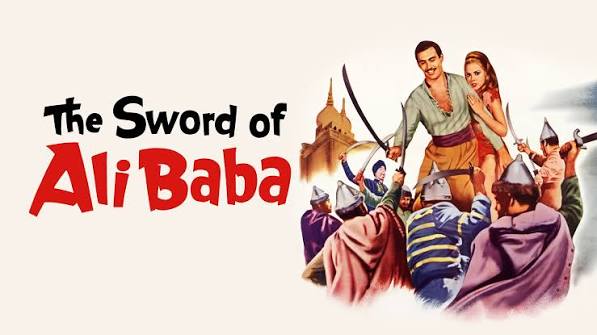
• Blu-ray review: “The Sword of Ali Baba” (1965)

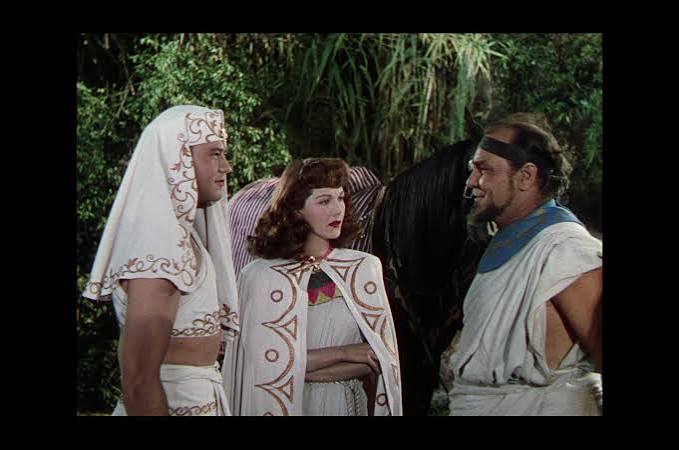
    “The Sword of Ali Baba” (1965)

    Fantasy

    Running Time: 81 minutes

    Written by: Edmund Hartmann and Oscar Brodney

    Directed by: Virgil W. Vogel

    Featuring: Peter Mann, Jocelyn Lane, Frank McGrath and Peter Whitney

    There is something wonderfully old-fashioned about sitting down to watch a 1960s Universal adventure film. Even when the film itself is relatively modest, there is usually a sense that you are entering a cinematic world where stories could still be built around exotic locations, secret caves, sinister rulers, beautiful princesses, heroic swordsmen and villains who could be defeated by a well-timed sword fight.

    The Sword of Ali Baba is very much one of those films.

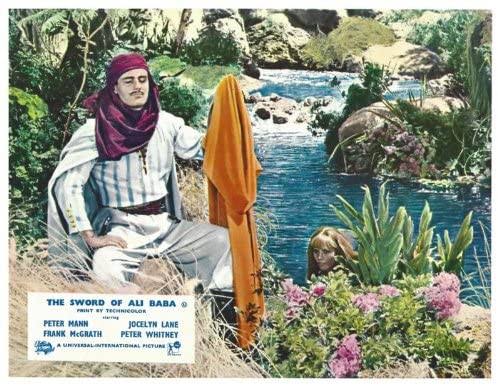
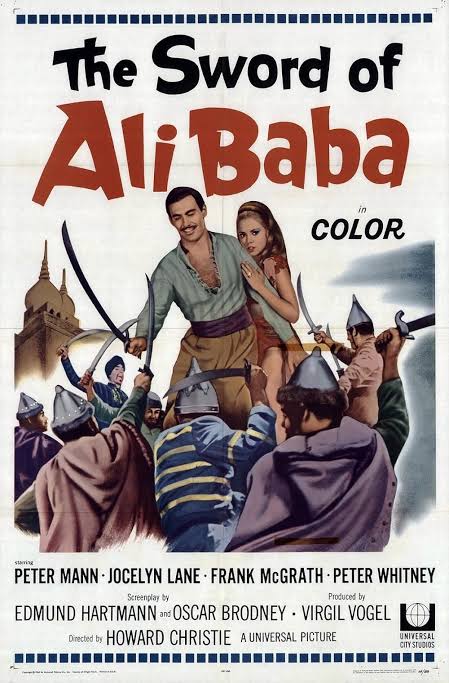
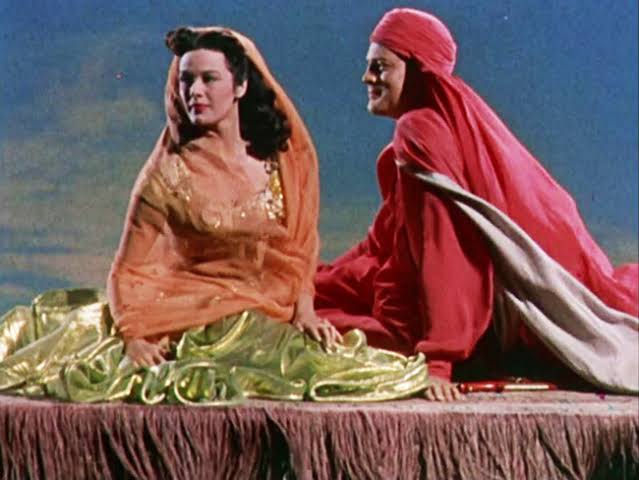
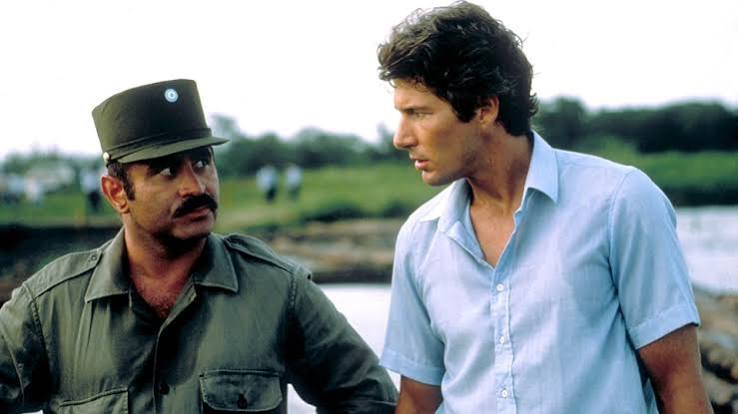
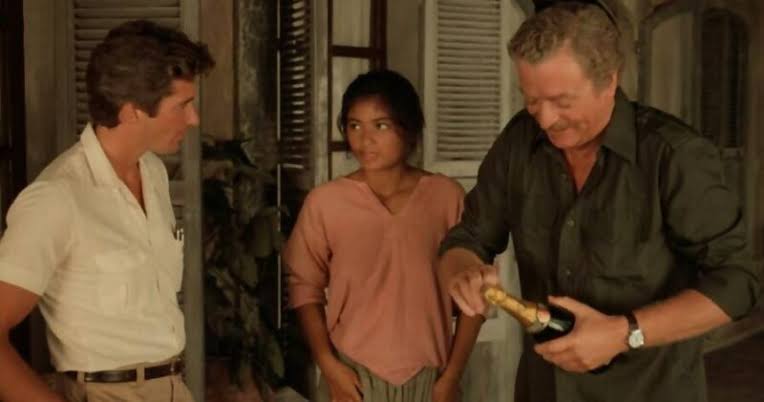
    Directed by Virgil W. Vogel and released by Universal Pictures in 1965, the film stars Peter Mann as Ali Baba, Jocelyn Lane as Princess Amara, Frank McGrath as Pindar, Gavin MacLeod as Hulagu Khan, Frank Puglia as Cassim and Peter Whitney as Abou. It runs approximately 81 minutes and was produced by Howard Christie, with a screenplay by Edmund Hartmann and Oscar Brodney.

    At first glance, The Sword of Ali Baba looks like a straightforward Arabian Nights adventure. It has the familiar ingredients: Baghdad, a cruel invading force, a beautiful princess, an evil traitor, a band of thieves, romance, disguises, swordplay and the famous concept of Ali Baba and his forty thieves.

    But there is considerably more going on here than meets the eye.

    The most immediately fascinating aspect of the film is that it is not simply another adaptation of the familiar Ali Baba story. It is, to a very substantial degree, a reconstruction and reworking of the 1944 Universal film Ali Baba and the Forty Thieves. The American Film Institute catalogue specifically notes that stock footage from the earlier film is incorporated into the 1965 production.

    That fact gives The Sword of Ali Baba a peculiar identity. It is simultaneously a new film, a remake, a recycling exercise and a time capsule of the way Hollywood sometimes attempted to make new entertainment out of existing material.

    And that makes the Imprint release particularly interesting.

    The story

    The film begins with the young Ali caught up in the violent upheaval surrounding the invasion of Baghdad by the Mongols. Hulagu Khan has seized power, aided by the treachery of Prince Cassim. Ali escapes and eventually finds refuge with the forty thieves.

    Rather than becoming simply another outlaw, Ali grows into a heroic figure. The thieves become his family, and their activities acquire a Robin Hood-like quality as they resist the occupying forces and redistribute wealth among the oppressed.

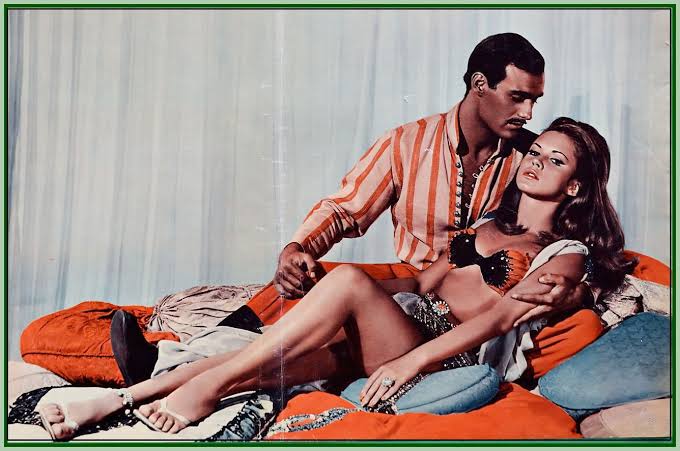
    Meanwhile, Ali’s childhood sweetheart, Princess Amara, has become caught up in the political machinations surrounding the conquerors. She is destined to marry Hulagu Khan, creating the central romantic and political conflict of the story.

    The structure is therefore extremely familiar. The hero has been separated from his rightful destiny, the princess is threatened by an unwanted marriage, the villain has political power, and the hero must gather his allies and strike back.

    It is not a complicated narrative, but complexity was never really the point.

    The attraction lies in the atmosphere and the succession of adventures.

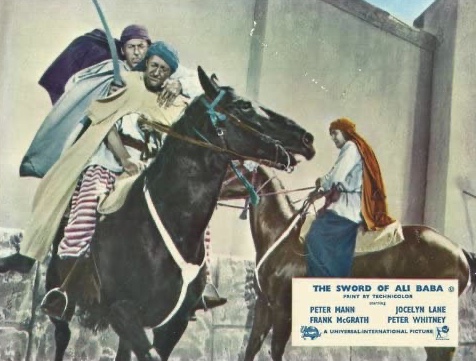
    There are escapes, confrontations, sword fights, romantic encounters, villainous plotting and the inevitable return to the legendary cave of the forty thieves. The film moves briskly, never becoming particularly heavy or philosophical.

    At approximately 81 minutes, it knows when to move on.

    That is one of its greatest virtues.

    A curious remake

    The relationship between The Sword of Ali Baba and the 1944 Ali Baba and the Forty Thieves is arguably the most fascinating thing about the production.

    The earlier film starred Jon Hall and Maria Montez and was one of the more colourful examples of Universal’s wartime Arabian Nights cycle. Twenty-one years later, Universal returned to essentially the same material, but rather than constructing the entire production from scratch, substantial amounts of the earlier film were incorporated into the new movie.

    Some sources have suggested that an extraordinarily large proportion of the 1965 film consists of recycled footage. Contemporary film enthusiasts have even estimated figures as high as 70 percent, although such percentages should be treated cautiously rather than as definitive production statistics. What is indisputable is that footage from the 1944 film is present, and Frank Puglia actually appears as Cassim in both productions.

    This produces some fascinating visual contrasts.

    The newly filmed material belongs unmistakably to the mid-1960s. The costumes, photography and performances have a different character from those of the earlier production. Then suddenly the film cuts to footage from 1944.

    The effect can be slightly jarring.

    It can also be strangely charming.

    Instead of trying to hide the seams completely, the movie becomes an accidental conversation between two different eras of Universal filmmaking.

    The 1944 footage has the larger-than-life quality of studio-era fantasy filmmaking. The 1965 material feels more economical and television-oriented. The contrast is sometimes obvious, but that contrast is precisely what makes the film historically interesting.

    Peter Mann as Ali Baba

    Peter Mann is not the sort of larger-than-life swashbuckling star who immediately dominates the screen.

    That is perhaps both the film’s limitation and part of its charm.

    Mann plays Ali as a straightforward heroic figure. There is little of the flamboyant theatricality associated with some earlier Arabian adventure heroes. His performance is earnest and uncomplicated, and the character is fundamentally decent, courageous and determined.

    Ali is less an antihero than a traditional adventure hero.

    He has a clear moral purpose. He fights oppression, protects Amara and attempts to restore justice. The character therefore functions very much as the audience’s guide through the story.

    Mann’s relative lack of flamboyance means that some viewers may find him less charismatic than the stars of the earlier Universal adventures. Yet he fits the film’s economical style.

    The film isn’t trying to turn Ali into a complicated psychological character.

    He is the hero.

    He has a sword.

    He has a cause.

    He has a princess to rescue.

    And he has a gang of thieves ready to help him.

    Sometimes that is enough.

    Jocelyn Lane

    If the film has a particularly strong visual presence, it comes from Jocelyn Lane as Princess Amara.

    Lane brings glamour and energy to the role, and the film clearly understands the importance of presenting Amara as more than simply a prize for the hero. She is caught inside the political machinations of the story and provides the romantic centre around which the action revolves.

    Lane had an appearance perfectly suited to the colourful adventure genre.

    She belongs to that wonderful tradition of 1960s fantasy heroines whose presence could transform a relatively inexpensive production into something much more visually appealing.

    Her chemistry with Mann is pleasant rather than electrifying, but that is not necessarily a criticism. The romance is presented in broad adventure-film terms rather than as a deeply developed love story.

    The important thing is that we understand the history between Ali and Amara.

    They were connected before the events of the main story, and that gives their eventual reunion a sense of inevitability.

    Gavin MacLeod as Hulagu Khan

    One of the film’s most interesting casting choices is Gavin MacLeod as Hulagu Khan.

    MacLeod is perhaps better remembered today for television roles such as The Mary Tyler Moore Show and The Love Boat, making it particularly enjoyable to see him in this earlier villainous role.

    Hulagu is the sort of villain that adventure films of this period understood perfectly.

    He is powerful, arrogant and ruthless, but he is not presented as an especially complicated human being. He represents the oppressive force that Ali must overcome.

    MacLeod plays him with appropriate theatricality.

    There is something inherently enjoyable about watching an actor later associated with comedy and television playing an outright adventure villain.

    The film becomes a small snapshot of an actor at an earlier stage in his career.

    The supporting cast

    The supporting cast is one of the film’s real pleasures.

    Frank McGrath plays Pindar, while Peter Whitney is Abou. Frank Puglia returns as Cassim, and other recognizable faces include Greg Morris, Frank DeKova and Irene Tsu.

    For viewers familiar with American television, the film becomes something of a spot-the-face exercise.

    Greg Morris, for example, would become widely known for Mission: Impossible, while Gavin MacLeod would later become associated with major American sitcom and comedy roles.

    These performers help give the film an unexpectedly strong supporting ensemble.

    Peter Whitney in particular contributes the sort of broad comic energy that was common in adventure films of the period.

    There is no great attempt at subtle realism here.

    The characters exist within a heightened fantasy world.

    That is appropriate.

    The forty thieves

    The forty thieves themselves are perhaps the most entertaining element of the story.

    They provide the film with its sense of camaraderie.

    Ali is not operating alone. He has a group of colourful companions who can provide assistance, humour and muscle when required.

    This is important because it prevents the movie from becoming simply a series of confrontations between Ali and the villains.

    The thieves create a small community.

    They also reinforce the Robin Hood quality of the narrative. These are technically criminals, but the film is interested in the distinction between legal authority and moral authority.

    The rulers may possess official power, but Ali and his companions possess the audience’s sympathy.

    It is a very traditional adventure-film idea, but it works.

    The visual style

    Virgil W. Vogel was an experienced director whose career included considerable television work, and there is a clear economy to the filmmaking.

    The movie is not attempting to recreate the monumental scale of a David Lean epic.

    Nor is it trying to compete with the enormous colour extravaganzas that Hollywood had produced during the peak years of the historical-adventure cycle.

    Instead, it operates on a smaller scale.

    That gives the film an almost television-adventure quality.

    This isn’t necessarily a negative.

    Indeed, there is something very appealing about the straightforwardness of the presentation.

    The action is there to advance the story rather than to become an elaborate spectacle in itself.

    The photography by William Margulies provides the film with the visual foundation it needs, while the production design by Alexander Golitzen and William D. DeCinces creates the necessary fantasy environment.

    The film is never ashamed of its artificiality.

    And that is exactly right.

    The recycled footage

    The reused footage deserves further consideration because it is what makes The Sword of Ali Baba such an unusual viewing experience.

    At times, the older material fits remarkably well.

    At other moments, the difference between the 1944 footage and the new material becomes unmistakable.

    The age difference between the productions becomes part of the visual texture.

    The older material possesses the atmosphere of classic studio fantasy, while the newer footage carries the more economical character of mid-1960s filmmaking.

    Instead of seeing this solely as a production shortcut, it is more rewarding to regard the movie as a fascinating piece of cinematic archaeology.

    Here is Universal effectively rebuilding one of its earlier adventure films for a new generation.

    The film becomes evidence of how studios reused their own libraries.

    The practice is nothing new, of course, but rarely is it quite so visible.

    The adventure elements

    Despite all of its peculiarities, The Sword of Ali Baba remains fundamentally entertaining.

    The film understands what its audience wants.

    There must be danger.

    There must be romance.

    There must be villains.

    There must be swordplay.

    There must be a secret cave.

    And there must be a final confrontation.

    The screenplay by Edmund Hartmann and Oscar Brodney keeps the story moving without getting bogged down in unnecessary complications. The plot may be familiar, but familiarity is not necessarily a problem in this genre.

    Indeed, one of the pleasures of these films is their predictability.

    You know Ali will fight back.

    You know Amara and Ali will be reunited.

    You know the villains will eventually receive their punishment.

    The fun is watching how the film gets there.

    The Universal connection

    One of the pleasures of watching this release is recognising that The Sword of Ali Baba belongs to a much larger tradition within Universal’s history.

    Universal had been making Arabian Nights and historical adventure pictures for decades.

    By 1965, however, the Hollywood landscape had changed dramatically.

    The old studio system was weakening, television was becoming increasingly important and audiences were being offered different kinds of spectacle.

    The Sword of Ali Baba therefore feels like a late survivor.

    It looks backwards.

    Its story belongs to an earlier cinematic tradition, even though it was produced in the middle of the 1960s.

    That makes it more interesting than its reputation might suggest.

    It is a film caught between eras.

    The Imprint Blu-ray

    For collectors, the most exciting aspect of this release is simple:

    this is the worldwide first Blu-ray release of The Sword of Ali Baba.

    That alone makes it significant for fans of obscure Universal genre films. Imprint has once again gone into an area of the studio library that might easily have remained unavailable in high-definition and given it a proper physical-media presentation.

    The film is presented in 1080p high definition, with an aspect ratio of 1.37:1. The audio is English LPCM 2.0 dual mono, and optional English hearing-impaired subtitles are included.

    The 1.37:1 presentation is particularly welcome because it respects the film’s original television-era/studio-era framing rather than attempting to impose a modern widescreen presentation.

    For a film like this, framing matters.

    The compositions were designed around the Academy ratio, and the narrower image gives the picture a suitably classic appearance.

    Picture quality

    The high-definition presentation is one of the most important reasons to welcome the release.

    This is not a modern production with pristine digital photography, and expectations should therefore be realistic.

    The film contains older photographic material as well as the newly shot 1965 footage, meaning that differences in image quality are inevitable.

    That is particularly important when the recycled footage appears.

    The older sections naturally look different from the 1965 material.

    But rather than regarding this as a failure of the Blu-ray, it is an intrinsic part of the film’s production history.

    A high-definition presentation allows the viewer to appreciate the detail and texture of the surviving material more clearly than lower-resolution presentations could.

    Costumes, sets, facial expressions and production design become easier to appreciate.

    The film also benefits from being viewed in its correct original framing.

    For collectors who have previously encountered The Sword of Ali Baba in inferior copies, the Blu-ray represents a considerable upgrade simply because the film can now be properly examined.

    Audio

    The English LPCM 2.0 dual-mono soundtrack is appropriate to the period.

    This isn’t a movie that needs a modern surround remix.

    The mono soundtrack is part of the film’s historical character.

    Dialogue remains the primary consideration, while the music and effects provide the necessary adventure atmosphere.

    The presentation is straightforward and authentic.

    The optional English hearing-impaired subtitles are also a welcome inclusion, particularly for viewers watching older films where dialogue recordings can sometimes be less distinct than those of contemporary productions.

    Gary Gerani commentary

    Perhaps the most valuable extra is the new audio commentary by screenwriter and film historian Gary Gerani.

    This is precisely the kind of film that benefits from contextual commentary.

    Without some background knowledge, a viewer might simply wonder why a 1965 movie suddenly appears to contain footage that looks considerably older.

    Gerani’s participation makes the release more valuable as a piece of film history rather than simply another catalogue title.

    A commentary from a screenwriter and film historian is especially appropriate for a film whose production history is arguably more fascinating than its conventional reputation suggests.

    The commentary helps place the movie within the tradition of fantasy and adventure filmmaking and provides an additional reason for collectors to revisit the film even after they have already seen it.

    For a boutique release, this is exactly the kind of extra that makes sense.

    Rather than loading the disc with generic promotional material, Imprint has chosen a feature that actually adds context.

    Why this film matters

    It would be easy to dismiss The Sword of Ali Baba as a minor Universal adventure picture.

    And, in terms of its place within the history of major Hollywood productions, it certainly is minor.

    But minor films can be extremely interesting.

    Sometimes they reveal more about the practical workings of a studio than the prestige productions do.

    The Sword of Ali Baba tells us something about how Universal could exploit existing material, revive an established property and construct an adventure film economically.

    It also demonstrates the longevity of certain genre formulas.

    The Arabian Nights adventure was still commercially useful in 1965.

    The audience might have changed, the actors might have changed and the production methods might have changed, but the basic ingredients remained.

    Heroes, villains, romance and adventure were still enough to sustain an 81-minute feature.

    The film as a time capsule

    Perhaps the best way to approach The Sword of Ali Baba is as a time capsule.

    It belongs to 1965, but part of it belongs to 1944.

    It contains actors who would later become much more familiar through television.

    It features a filmmaking style that was already beginning to look old-fashioned.

    It uses older material to create new entertainment.

    And it tells a story that had already been adapted many times.

    All of those elements make it an unusually fascinating little movie.

    It is almost as though two generations of Hollywood adventure cinema have been placed inside the same 81-minute feature.

    That makes the film considerably more interesting for the collector than its reputation might imply.

    Final thoughts

    The Sword of Ali Baba is not a masterpiece.

    It isn’t trying to be.

    It is a modest, colourful, briskly paced adventure film whose greatest virtues are its sincerity, its old-fashioned entertainment value and its wonderfully strange production history.

    The recycled footage from the 1944 Ali Baba and the Forty Thieves is both its greatest curiosity and its greatest limitation. The seams between the two productions can sometimes be obvious, but they also give the movie its unique character.

    Peter Mann provides a straightforward hero, Jocelyn Lane supplies glamour and romantic interest, Gavin MacLeod has fun as the villainous Hulagu Khan, and the supporting cast is packed with familiar faces.

    The result is a film that feels like a surviving fragment of a Hollywood tradition that was already disappearing.

    And that makes the Imprint Blu-ray particularly welcome.

    As the worldwide first Blu-ray release, it rescues the movie from obscurity and presents it in a much more appropriate form for modern collectors. The 1080p presentation, original 1.37:1 aspect ratio, LPCM 2.0 mono soundtrack and English HOH subtitles provide the essential technical foundation, while Gary Gerani’s new commentary adds substantial historical value.

    The release also fits beautifully into Imprint’s continuing interest in films that larger labels might overlook.

    For anyone interested in Universal’s genre history, 1960s adventure films, Arabian Nights cinema, recycled studio footage or simply obscure Hollywood productions, this is a fascinating addition to the collection.

    The Sword of Ali Baba may never be mistaken for one of Universal’s great adventure classics.

    But perhaps that is beside the point.

    Its pleasures are smaller and stranger.

    It is a colourful adventure film.

    It is an unusual remake.

    It is a piece of studio archaeology.

    It is a fascinating example of how old Hollywood footage could be given a new life.

    And, thanks to Imprint, it is finally available on Blu-ray in a presentation that allows collectors to appreciate all of those things.

    For fans of obscure 1950s and 1960s adventure cinema, that makes this release considerably more valuable than the film’s relatively modest reputation might suggest.
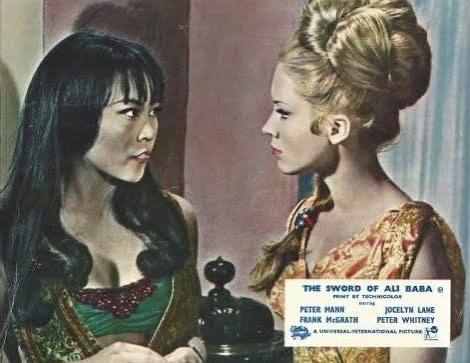
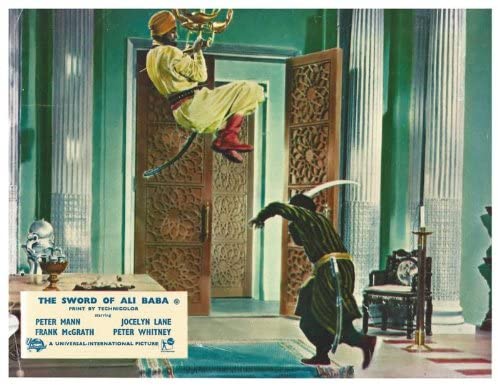
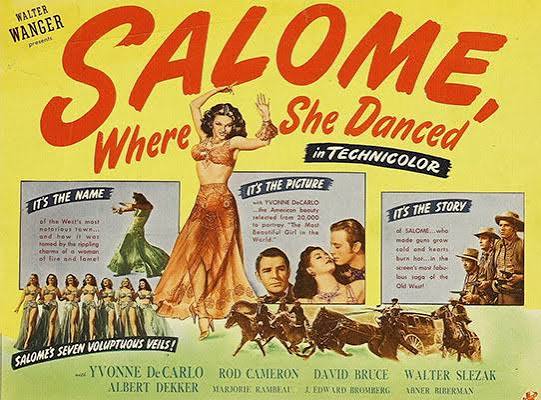
  • Blu-ray review: “Salome” (1953)

    “Salome” (1953)

    Fantasy

    Running Time: 76 minutes

    Written by: Harry Kleiner

    Directed by: William Dieterle

    Featuring: Rita Hayworth, Stewart Granger, Charles Laughton, Judith Anderson, Sir Cedric Hardwicke, Basil Sydney, Maurice Schwartz, Arnold Moss and Alan Badel

    Queen Herodias: “The desperate can only survive by taking desperate measures.”

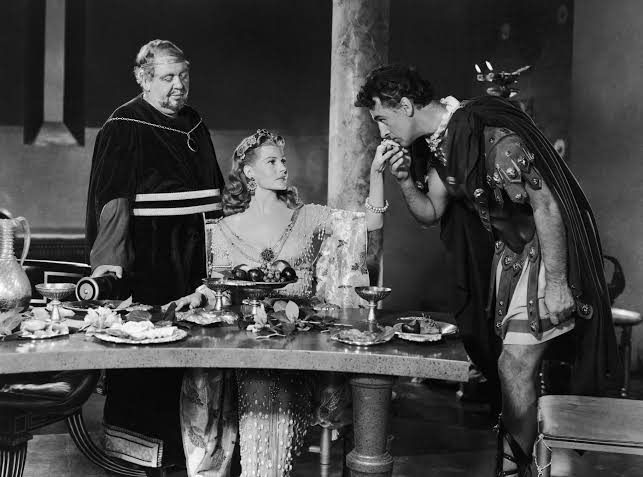
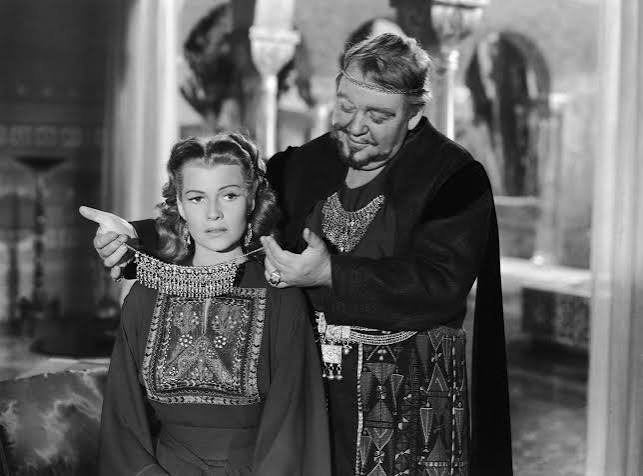
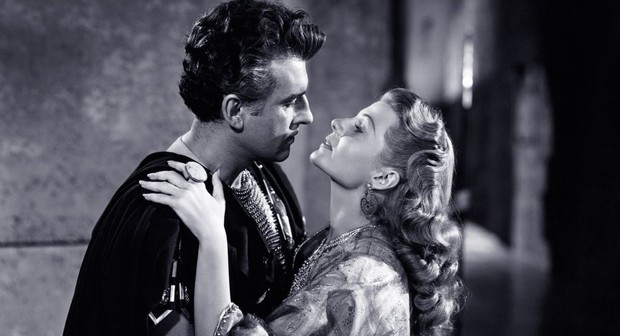
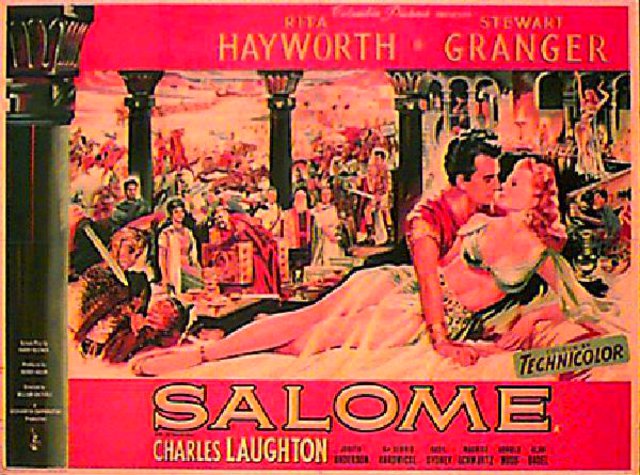
    There is something wonderfully excessive about Salome. Almost everything about the film seems to have been designed to make the audience look twice. Rita Hayworth is presented as a spectacular Technicolor goddess; Stewart Granger arrives as the handsome, heroic romantic lead; Charles Laughton and Judith Anderson play Herod and Herodias with enormous theatrical gusto; Cedric Hardwicke and Basil Sydney add further prestige; the sets are lavish; the costumes are extravagant; and somewhere in the middle of all this grandeur is one of the most famous dance sequences of Hayworth’s career.

    It is a very 1950s Hollywood film.

    More importantly, it is a film that was constructed around a star. Salome was produced by Hayworth’s own Beckworth Corporation and distributed by Columbia Pictures, making it not merely another studio assignment but an important project in the actress’s career. It was also the final production made by her company.

    The Imprint Blu-ray is therefore more than just another catalogue release. It gives collectors the opportunity to revisit an unusually extravagant chapter in Hayworth’s career and to appreciate the movie as a piece of Hollywood craftsmanship as well as a rather eccentric biblical drama.

    The film

    The screenplay by Harry Kleiner, from a story by Kleiner and Jesse Lasky Jr., takes considerable liberties with the familiar biblical story. Rather than simply presenting Salome as the temptress who dances for Herod and demands the head of John the Baptist, the film turns her into a sympathetic romantic heroine caught between the political and religious forces surrounding her.

    That decision is fundamental to understanding the movie.

    This is not really the traditional story of Salome. It is a romantic adventure constructed around the name, imagery and mythology of Salome.

    The film begins in the world of Tiberius Caesar and the Roman Empire. Salome, played by Hayworth, has been living away from Galilee after being banished from Rome. When she returns, she becomes entangled in the increasingly dangerous situation involving her family, John the Baptist and the Roman authorities.

    Herod and Herodias are already locked in a poisonous domestic and political relationship. John the Baptist has condemned Herodias for her marriage to Herod, and Herodias wants him silenced.

    Salome’s position is complicated further by her relationship with Claudius, the Roman commander played by Stewart Granger.

    The result is a mixture of romance, palace intrigue, religious drama and adventure.

    It is not subtle.

    But subtlety is hardly what Salome is attempting to deliver.

    Rita Hayworth

    The entire production revolves around Rita Hayworth.

    Hayworth was one of Hollywood’s great screen stars, and Salome arrives during an interesting period of her career. She had already established herself through musicals, romances, film noir and dramatic roles, but this picture gives her a particularly old-fashioned star showcase.

    The camera adores her.

    That is not a criticism. In a movie such as this, it is part of the entire point.

    Hayworth’s Salome is glamorous, determined, vulnerable and romantic. The character is considerably removed from the traditional image of Salome as a dangerous seductress. Instead, she becomes a woman attempting to protect John the Baptist while navigating a dangerous political environment.

    The transformation is quite remarkable.

    The film asks the audience to accept Hayworth not as a biblical villain but as its heroine. She is the moral centre of the story, even though the surrounding characters continually attempt to manipulate her.

    Hayworth handles the role with considerable charm.

    There are moments when the dialogue is plainly old-fashioned and the drama becomes highly theatrical, but Hayworth possesses something that cannot be manufactured by production design or expensive costumes: genuine screen presence.

    Even when she is simply standing in a room, the movie seems to revolve around her.

    That was one of the great gifts of the Hollywood star system.

    The Dance of the Seven Veils

    Inevitably, the great attraction is the famous dance.

    The sequence is the film’s centrepiece and the reason Salome remains of interest even to viewers who might otherwise have little enthusiasm for 1950s biblical epics.

    Hayworth’s dancing is extraordinary.

    The choreography was created by Valerie Bettis, who had previously worked with Hayworth, and the production placed considerable emphasis on making the dance a major spectacle.

    What makes the sequence fascinating is the way it combines sensuality with strict Hollywood-era presentation.

    The production could suggest much more than it was actually permitted to show.

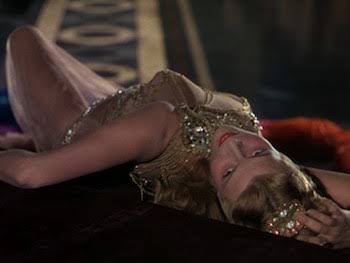
    Hayworth’s costume, lighting, choreography and camera placement all work together to create an atmosphere of eroticism without allowing the sequence to become explicitly sexual. The famous dance therefore becomes a lesson in the visual language of 1950s Hollywood censorship.

    The result is still spectacular.

    Hayworth moves with astonishing control and confidence. There is an athletic quality to the performance as well as the obvious sensuality. The sequence does not merely rely on her beauty; it demonstrates genuine dancing ability.

    Hayworth herself later regarded the dance as one of the most demanding of her career, requiring extensive rehearsal and repeated takes.

    Watching the sequence today, it is easy to understand why it became such a major selling point.

    The movie essentially stops everything to let Rita Hayworth perform.

    And audiences were presumably quite happy with that arrangement.

    A star-studded supporting cast

    The supporting cast is extraordinary.

    Charles Laughton plays Herod.

    This is a role that gives Laughton the opportunity to be larger than life, and he takes it. His Herod is unstable, powerful, frightened and increasingly trapped by circumstances he cannot control.

    Laughton was one of the great actors of his generation, and his presence gives the picture a level of dramatic weight that it might otherwise lack.

    He also understands that this is not a restrained historical drama.

    He plays to the back row.

    And that is exactly what the movie requires.

    Judith Anderson is equally memorable as Herodias.

    Anderson’s screen persona was already strongly associated with severe, intimidating and psychologically formidable women, most famously through Rebecca. Here she uses that same intensity to create a Herodias who is manipulative and dangerous.

    The scenes between Anderson and Laughton are among the movie’s most entertaining.

    They have the feeling of two great stage actors being given permission to go completely over the top.

    Stewart Granger, meanwhile, provides the romantic adventure component.

    Granger was perfectly suited to this kind of role. He had already established himself in swashbuckling and adventure films, and his presence gives Salome a conventional Hollywood hero around whom the romance can develop.

    He and Hayworth make an attractive couple.

    Granger is not asked to do anything particularly radical, but that is not necessarily a problem. He is there to provide romance, action and masculine heroism while Hayworth remains the centre of attention.

    The film also benefits enormously from Cedric Hardwicke as Tiberius Caesar and Basil Sydney as Pontius Pilate.

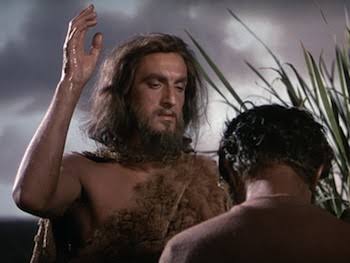
    Then there is Alan Badel as John the Baptist.

    Badel’s performance is an interesting contrast to the flamboyance elsewhere. John is supposed to represent spiritual conviction in a world dominated by political ambition, lust and power. His presence gives the story its moral and religious dimension.

    The cast is one of the great attractions of the movie.

    Even when the material becomes ridiculous, there is pleasure in watching performers of this calibre attack it with such commitment.

    William Dieterle’s direction

    William Dieterle was an interesting choice to direct a production such as this.

    He had already demonstrated his ability to handle prestige material and major stars, and he brought a strong visual sense to Salome. AFI credits him as director, with Buddy Adler producing and Charles Lang handling the cinematography.

    Dieterle does not attempt to disguise the artificiality of the production.

    Instead, he embraces it.

    The film is constructed from enormous sets, carefully arranged crowds, lavish costumes and dramatic compositions. The result is unmistakably studio-made Hollywood spectacle.

    There is little interest in gritty historical realism.

    This is mythology as imagined by Columbia Pictures.

    That is one reason the film remains so enjoyable.

    Modern viewers may look at the story and see historical inaccuracies and melodramatic inventions, but that misses part of the appeal. The film was never really attempting to function as a history lesson.

    It is fantasy.

    The ancient world becomes a stage upon which Hollywood can display its stars.

    Charles Lang’s cinematography

    The Technicolor photography is one of the film’s major attractions.

    Charles Lang was an enormously experienced cinematographer, and the production gives him plenty to work with. The film is filled with elaborate costumes, architectural spaces, desert landscapes, Roman interiors and large crowd scenes.

    The colour is especially important.

    Hayworth’s costumes are designed to stand out against the architecture and landscapes, while the production makes extensive use of contrasting textures and tones.

    The result is exactly what one wants from a classic Hollywood epic.

    It looks expensive.

    Even when the narrative slows down, the visual design keeps providing things to look at.

    The film’s 1.33:1 presentation on the Imprint disc is also significant. Via Vision lists the release as a 1080p high-definition presentation with a 1.33:1 aspect ratio, English LPCM 2.0 dual-mono audio and optional English hearing-impaired subtitles.

    That presentation is particularly appropriate for a film of this vintage.

    The Imprint Blu-ray presentation

    The most important reason to welcome this release is simple: Salome deserves to be seen in a presentation that allows its Technicolor photography and production design to breathe.

    The Imprint release provides a 1080p high-definition presentation.

    This is not one of those modern restorations where every frame has been scrubbed until the film begins to look digitally manufactured. Classic films need texture. They need the slight softness, grain and photographic character associated with their original film elements.

    With Salome, that is particularly important.

    The picture is built around colour and texture.

    Costumes need to look like costumes rather than digital shapes. Faces need to retain their photographic quality. The large sets need to possess depth.

    The high-definition presentation makes it much easier to appreciate the craftsmanship involved.

    The Technicolor photography remains the star of the image.

    The desert exteriors have an impressive sense of scale, while the interiors benefit from the richness of the production design.

    Hayworth herself looks spectacular.

    That is hardly surprising, but high-definition presentation makes the difference between simply knowing that Hayworth was a glamorous movie star and actually seeing why.

    Aspect ratio

    Imprint presents the film in 1.33:1, which is an important specification for collectors.

    This is especially worth noting because some databases and modern listings can provide inconsistent aspect-ratio information for older films.

    The Imprint release therefore gives collectors a clearly specified presentation rather than leaving the viewer wondering whether a cropped image has been used.

    The Academy-style framing suits the compositions.

    The characters are often arranged in layers, with large groups surrounding the central performers. The vertical space is useful for the elaborate sets and costumes, and the dance sequences benefit from having room for Hayworth’s full body to be seen.

    For a performance-based film, that matters enormously.

    Sound

    The audio is presented in English LPCM 2.0 dual mono, with English hearing-impaired subtitles.

    Again, this is exactly the sort of presentation that makes sense for a 1953 production.

    There is no reason to artificially inflate a vintage mono soundtrack into some kind of fake modern surround experience.

    The original sound design is perfectly adequate for the material.

    Dialogue remains central, and the music has an important role in establishing the film’s epic atmosphere.

    George Duning’s score contributes substantially to the movie’s sense of grandeur, while the dance material has its own musical identity. The soundtrack therefore plays a major role in transforming the picture from a conventional romantic drama into something approaching spectacle.

    The music

    The score deserves more attention than it sometimes receives.

    George Duning understood the requirements of a picture such as this. The music needs to make everything feel important.

    A conversation is important.

    A character entering a room is important.

    A Roman procession is important.

    A romantic encounter is important.

    And, naturally, Hayworth’s dance is extremely important.

    The music gives the picture its emotional scale.

    Without it, some scenes would probably feel much more ordinary.

    With it, they acquire the kind of heightened atmosphere that audiences expected from biblical epics during the period.

    The screenplay’s greatest weakness

    The biggest problem with Salome is undoubtedly the screenplay.

    The movie has an interesting premise but spends much of its running time constructing a romantic adventure around historical and biblical events that are already familiar to the audience.

    The film’s decision to make Salome sympathetic is intriguing, but it also means that the story becomes somewhat convoluted.

    Instead of embracing the darker implications of the traditional story, the screenplay continually tries to make its heroine admirable.

    This makes the film more conventional but arguably less interesting.

    The traditional Salome is a figure associated with danger, sexuality, manipulation and death.

    Hayworth’s Salome is essentially a good woman caught in a bad situation.

    There is nothing wrong with that approach, but it removes much of the ambiguity that makes the legend so powerful.

    The film’s melodrama

    The melodramatic quality of Salome is both its weakness and its charm.

    Characters announce their intentions.

    Villains plot.

    Heroes declare their principles.

    Romance develops rapidly.

    Political developments occur with extraordinary convenience.

    And every emotional reaction seems to be accompanied by music.

    It is glorious.

    If one approaches the movie expecting historical realism, it may be frustrating.

    If one approaches it as a 1950s Hollywood spectacle, it becomes much easier to appreciate.

    The film is not embarrassed by its own artificiality.

    It wants to entertain.

    Rita Hayworth and the question of age

    One aspect that modern audiences may notice is Hayworth’s age relative to the character.

    Hayworth was in her mid-thirties when she made the picture, and she was playing a character whose traditional associations are considerably younger. Contemporary and later commentary has sometimes drawn attention to this issue.

    Yet this is another situation where the Hollywood star system changes the rules.

    The movie does not really ask the audience to believe that Hayworth is an ordinary young woman.

    It asks the audience to believe that she is Rita Hayworth.

    And that distinction matters.

    She is presented as a mature Hollywood goddess, and the film builds its entire visual strategy around that fact.

    The costumes, lighting and choreography are designed to emphasise her glamour.

    Rather than attempting realism, the production creates an idealised fantasy version of its star.

    The costumes

    Jean Louis’ costume work is another major reason to watch the film.

    The costumes are spectacular without necessarily being historically accurate.

    But historical accuracy is clearly not the primary objective.

    The costumes are designed for Rita Hayworth.

    They create silhouettes.

    They emphasise movement.

    They provide colour.

    They allow the dance sequences to work.

    And they transform Hayworth into the larger-than-life figure the production requires.

    The famous dance is particularly dependent on costume design.

    Every movement has been considered.

    Every reveal is carefully controlled.

    Every moment is calculated to maintain the illusion of danger and sensuality while remaining within the restrictions of the period.

    The supporting performers

    Another pleasure of the film is spotting the supporting players.

    This is one of those productions where virtually every character seems to have been cast by someone who understood the value of a distinctive face.

    Laughton, Anderson, Hardwicke, Sydney and Badel all bring different forms of authority to the movie.

    That variety keeps the film lively.

    Even when the story becomes predictable, the performances provide texture.

    Judith Anderson in particular is terrific.

    Her Herodias is almost a force of nature.

    There is an operatic quality to her performance, and her scenes with Laughton provide some of the movie’s best theatrical entertainment.

    The religious dimension

    The film’s treatment of John the Baptist is also interesting.

    Rather than making him simply a background religious figure, the screenplay places him at the centre of the political conflict.

    His condemnation of Herodias threatens the existing order.

    He represents a moral authority that cannot be controlled through ordinary political means.

    This allows the film to create a conflict between spiritual conviction and political power.

    Thematically, it is one of the stronger aspects of the screenplay.

    Unfortunately, the movie is often so distracted by romance and spectacle that the theme does not receive the full dramatic development it might have had.

    Still, Alan Badel gives John a strong presence.

    The final act

    As the story moves toward its inevitable conclusion, the film becomes increasingly dramatic.

    The palace intrigue reaches its peak, Salome’s relationship with John becomes more important, and the various political tensions finally collide.

    The conclusion is considerably more optimistic than the traditional story would suggest.

    This is deliberate.

    The filmmakers wanted a heroic romantic conclusion rather than a tragedy centred entirely on Salome’s corruption.

    Whether one prefers this interpretation or the darker traditional version will depend largely on one’s expectations.

    But it is certainly an unusual way to approach the material.

    A fascinating piece of Hollywood history

    Perhaps the best way to appreciate Salome today is as a document of the Hollywood star system.

    This was a period when a major star could essentially become the organising principle of an entire production.

    Rita Hayworth was not merely cast in Salome.

    The movie was constructed around her.

    Her dancing.

    Her beauty.

    Her costumes.

    Her romance.

    Her close-ups.

    Her dramatic scenes.

    Her relationship with the audience.

    Everything leads back to Hayworth.

    That makes the film fascinating even when the story itself becomes somewhat ridiculous.

    Imprint’s place in the restoration landscape

    Imprint has developed a particularly useful niche for collectors by bringing a wide range of catalogue titles to Blu-ray, including films that might otherwise have remained difficult to obtain in high definition.

    Salome is an excellent example.

    It is not the sort of film that routinely receives the same attention as Gilda or The Lady from Shanghai. Yet it is an important Rita Hayworth title, a Technicolor production, a biblical epic and a showcase for several major performers.

    The fact that it has been given its own catalogue number within the Tales of Adventure series demonstrates how broad Imprint’s approach to classic cinema has become. The release is part of a limited-edition four-disc hardbox containing The Magic Carpet, Sudan, Salome, The Sword of Ali Baba, and the high-definition bonus presentation of 1001 Arabian Nights. The set was limited to 1,500 copies.

    That context is important.

    Salome is not being treated as an isolated prestige title.

    It is being rediscovered as part of the great tradition of Hollywood adventure and spectacle.

    And that is arguably the perfect home for it.

    Extras

    One unusual aspect of this particular release is that Salome itself is presented primarily as a feature presentation rather than being loaded down with newly commissioned extras.

    Via Vision’s official specifications list the 1080p presentation, LPCM 2.0 mono soundtrack and English HOH subtitles for the film.

    The more extensive newly commissioned material in the overall collection is attached to The Magic Carpet and The Sword of Ali Baba, including new commentaries and a video essay.

    For Salome, therefore, the main attraction is the film itself.

    And that is not necessarily a negative.

    Sometimes the best extra a catalogue release can provide is simply a substantially better opportunity to see an important old film.

    Final assessment of the film

    Salome is an imperfect movie.

    Its screenplay is often clumsy.

    Its historical liberties are substantial.

    Its romantic subplot can feel conventional.

    Its melodrama is frequently excessive.

    And its interpretation of the Salome story is much more interested in creating a sympathetic heroine than exploring the darker implications of the legend.

    But none of those criticisms entirely diminish its appeal.

    Because the movie is spectacular.

    It has Rita Hayworth.

    It has Charles Laughton.

    It has Judith Anderson.

    It has Stewart Granger.

    It has Cedric Hardwicke.

    It has Technicolor.

    It has lavish costumes.

    It has elaborate sets.

    It has biblical spectacle.

    And, of course, it has Rita Hayworth’s extraordinary dance.

    That combination makes Salome impossible to dismiss.

    It is exactly the sort of film that becomes more enjoyable when approached on its own terms.

    Do not watch it expecting a serious historical reconstruction.

    Do not watch it expecting psychological realism.

    Watch it as a great Hollywood star vehicle.

    Watch it as a Technicolor fantasy.

    Watch it for Hayworth.

    Watch it for Laughton and Anderson chewing through their scenes.

    Watch it for the production design.

    Watch it for the costumes.

    And watch it for the extraordinary spectacle of a major Hollywood studio taking one of the most famous stories in religious history and reshaping it into a romantic adventure.

    Final thoughts on the Imprint Blu-ray

    The Imprint release is a valuable addition to any collection devoted to Rita Hayworth, classic Hollywood or 1950s biblical cinema.

    The 1080p high-definition presentation, 1.33:1 aspect ratio, English LPCM 2.0 dual-mono soundtrack and English hearing-impaired subtitles provide the essential technical specifications expected from a modern catalogue Blu-ray.

    Most importantly, the release allows the film’s Technicolor photography to become a major part of the viewing experience.

    And that is where Salome really comes alive.

    The film may not be one of the absolute masterpieces of the biblical epic, but it is a hugely entertaining example of the era’s ability to turn star power, colour, music, costumes and spectacle into cinema.

    Rita Hayworth dominates every frame.

    The movie belongs to her.

    Even Charles Laughton’s enormous performance, Judith Anderson’s formidable presence and Stewart Granger’s heroic romanticism ultimately orbit around the central attraction of Hayworth.

    That makes Salome a fascinating film in the history of the Hollywood star vehicle.

    It is also a particularly good candidate for rediscovery on Blu-ray.

    Imprint’s release ensures that this flamboyant, extravagant and occasionally wonderfully silly piece of 1950s filmmaking can be appreciated again not simply as an old biblical epic, but as a showcase for one of Hollywood’s greatest stars.

    For collectors, it is another strong example of why catalogue releases matter. Films that once seemed peripheral to the history of classic Hollywood can suddenly become much more interesting when presented properly and given a place alongside better-known titles.

    Salome may not be Rita Hayworth’s greatest film.

    But it is unmistakably one of her most visually spectacular.

    And for Hayworth fans, Technicolor enthusiasts and admirers of old-fashioned Hollywood spectacle, the Imprint Blu-ray offers a very welcome opportunity to return to this lavish and wonderfully excessive production.

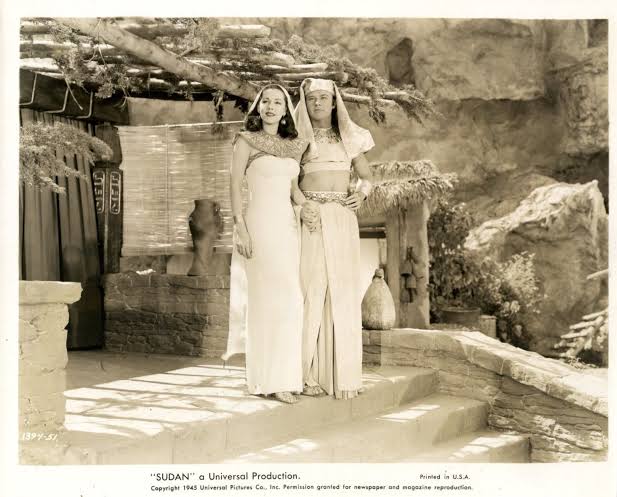
  • Blu-ray review: “Sudan” (1945)

    “Sudan” (1945)

    Fantasy

    Running Time: 76 minutes

    Written by: Edmund L. Hartmann

    Directed by: John Rawlins

    Featuring: Maria Montez, Jon Hall and Turhan Bey

    Nebka: “An unruly horse and a dangerous woman – only evil can come of this!”

    There are some films that seem to have been made primarily to tell a story, some that were designed around performances, and others that exist because the filmmakers wanted to create an entire world of colour, spectacle, romance, danger and adventure. John Rawlins’ Sudan, released by Universal Pictures in 1945, belongs very firmly in that third category.It is a movie in which reality is secondary to fantasy, historical accuracy is cheerfully sacrificed to Hollywood glamour, and the desert becomes a vast playground for slave revolts, secret identities, palace intrigue, horse chases, sword fights, romance and treachery. It is exactly the kind of film that modern viewers can either dismiss as ridiculous or embrace as enormously entertaining cinematic escapism.The latter approach is by far the more rewarding.And Imprint’s Blu-ray is a terrific opportunity to rediscover it.Released as Imprint Collection #579, Sudan forms part of the label’s Tales of Adventure – Collection 10, alongside The Magic Carpet, Salome and The Sword of Ali Baba, with 1001 Arabian Nights included as a high-definition bonus film. The collection is housed in a limited-edition four-disc hardbox, with 1,500 copies produced. Sudan itself receives a 1080p high-definition presentation, English LPCM 2.0 dual-mono audio, optional English HOH subtitles, a new audio commentary by writer and Cereal at Midnight host Heath Holland, and a new video essay, Golden Days of the Arabian Nights, by film scholar Josh Nelson.For admirers of Maria Montez, classic Hollywood fantasy adventure or Technicolor spectacle, this is exactly the sort of release that boutique labels exist to produce.

    The Queen of Technicolor

    Maria Montez occupies a fascinating place in Hollywood history.She was never treated by the studio system in quite the same way as a Bette Davis, Barbara Stanwyck or Joan Crawford. Her particular talent was something different. Montez became one of the great stars of Hollywood’s exotic adventure cycle, films designed around her extraordinary screen presence and the promise of another world.She could walk into a frame wearing an elaborate costume and immediately make the surrounding sets seem secondary.That quality is essential to Sudan.Montez plays Naila, the young queen of the fictional Egyptian kingdom of Khemis. After her father is killed during a slave revolt, she assumes the throne. But rather than sitting safely inside her palace and leaving the dangerous business of rebellion and revenge to her advisers, Naila goes out among her people in disguise in an attempt to discover the truth.This decision leads her directly into danger.The rebel leader Herua, played by Turhan Bey, becomes central to the story, while Jon Hall plays Merab, a rather different kind of adventurer. Andy Devine is Nebka, Merab’s comic sidekick, and George Zucco plays Horadef, one of those wonderful Hollywood villains who appears to have been born knowing how to plot against a queen.The cast also includes Robert Warwick, Philip Van Zandt, Harry Cording and, memorably for horror fans, Tor Johnson.The film’s casting tells you almost everything you need to know about the sort of movie Sudan is.This is not archaeology.This is Hollywood mythology.

    An Egypt That Never Existed

    One of the most entertaining aspects of Sudan is its complete lack of concern with historical realism.The film’s fictional kingdom of Khemis exists somewhere in a fantasy version of ancient Egypt, populated by beautiful queens, sinister advisers, rebellious slaves, wandering adventurers, slave traders and assorted colourful villains and heroes.The film itself even acknowledges this approach. According to the AFI catalogue, Sudan opens with a spoken foreword explaining that stories from ancient Egypt have become mixtures of truth and fantasy through the passage of centuries.That introduction effectively gives the filmmakers permission to do whatever they want.And they certainly do.The costumes are extravagant. The sets are theatrical. The dialogue is heightened. Characters have names that sound as though they were created specifically to appear in an adventure serial. Every palace corridor looks like it was designed to conceal a secret passage, and every desert landscape appears to be waiting for somebody to gallop across it.That is the appeal.Trying to watch Sudan as a realistic reconstruction of ancient Egypt would be missing the point completely. This is fantasy adventure in the tradition of Arabian Nights, The Thief of Bagdad and the many sword-and-sandal entertainments that Hollywood produced for audiences who wanted to escape into a world of spectacle.

    Maria Montez and the Art of Being a Movie Star

    The most important reason the film works is Maria Montez.Montez had an almost surreal quality on Technicolor film. Her beauty was not merely photographic. It became part of the film’s production design.Every costume seems to have been created to make her stand out from the scenery. Every close-up is an opportunity to display her face against a sea of colour. She doesn’t need to deliver a complicated psychological performance because the role isn’t really written that way.Naila is a heroine of adventure rather than introspection.She is courageous, determined, impulsive and capable of taking matters into her own hands. She is also constantly placed in situations in which she must escape, deceive, fight or outwit her enemies.That makes Montez the centre of the entire production.She understands the genre.She knows that the audience has come to see Maria Montez in a spectacular costume in a spectacular landscape doing spectacular things.And she gives them exactly that.

    Turhan Bey’s Herua

    One of the most interesting elements of Sudan is that the conventional romantic pairing between Montez and Jon Hall is disrupted.Hall had been Montez’s familiar leading man in this cycle of Universal adventures, but here Turhan Bey’s Herua becomes the romantic figure.That makes Sudan something of an unusual entry in the Montez-Hall partnership.Bey brings a different quality to the film. He has the darkly romantic screen presence necessary for the role, and the relationship between Herua and Naila gives the picture more emotional interest than its rather formulaic plot might initially suggest.Herua is not simply the standard villainous rebel that Naila expects to find. He becomes someone whose motivations are considerably more complicated.The result is a romantic adventure in which attraction develops alongside suspicion, political conflict and the struggle between revenge and justice.It is one of the film’s more successful elements.

    Jon Hall and Andy Devine

    Jon Hall’s Merab is a very different kind of hero.Rather than playing the grand romantic adventurer, Hall is involved in a lighter and more comic strand of the story. He is essentially an opportunist, and his relationship with Andy Devine’s Nebka gives the movie much of its humour.Devine is particularly entertaining.His physical presence, voice and comic timing are almost impossible to suppress, and the film makes excellent use of him as a contrast to the elaborate melodrama surrounding Montez and Bey.The comedy is broad, but that is appropriate.Sudan is not a subtle film.It wants its villainous plotting to be obvious, its romance to be romantic, its adventures to be adventurous and its jokes to be jokes.There is something wonderfully uncomplicated about that.

    George Zucco Steals the Movie

    If Maria Montez owns the film visually, George Zucco practically steals it whenever he appears.Zucco was one of those magnificent character actors who could turn even the most ridiculous dialogue into something memorable.As Horadef, he plays the sort of villain who seems permanently surrounded by shadows.He is ambitious, manipulative and dangerous, and Zucco understands that the character needs to be played with absolute seriousness.This is crucial.If Zucco had treated Horadef as a joke, the character would have collapsed.Instead, he behaves as though the fate of civilisation genuinely depends upon his latest scheme.The contrast between Zucco’s seriousness and the inherent absurdity of the material makes the character wonderfully entertaining.

    Adventure Rather Than History

    The story itself is deliberately straightforward.Naila’s father is killed.Naila becomes queen.A rebellion threatens the kingdom.There are conspiracies within the palace.Naila seeks the truth.She goes undercover.She is captured.Herua becomes involved.Merab and Nebka provide comic complications.The villain reveals himself.The heroes eventually confront the forces working against them.And everything builds towards the inevitable final confrontation.It is classic adventure-story architecture.The pleasure comes not from wondering whether the good characters will ultimately triumph, but from discovering exactly how the film will get them there.There are escapes, betrayals, chases, disguises, revelations and confrontations.The movie moves rapidly from one episode to another.At only around 76 minutes, Sudan does not have time to become excessively complicated. The original film was released in 1945 and runs approximately 76 minutes.That short running time works in its favour.There is very little padding.The picture arrives, delivers its spectacle and adventure, and gets out.

    The Technicolor Experience

    The real star of Sudan, however, may be Technicolor itself.The film belongs to an era when colour photography was still sufficiently expensive and special that filmmakers had to justify its use.Sudan certainly does.Costumes, architecture, landscapes, props and lighting are all designed to create an intensely colourful fantasy environment.The colour isn’t merely decorative.It is part of the storytelling.Naila’s costumes help establish her identity as royalty. The palace interiors have a richness that separates them from the rougher environments outside the court. The desert landscapes provide a visual contrast to the enclosed interiors.This is cinema designed to be looked at.And the film’s outdoor photography is particularly impressive.Some of the locations give the picture an unexpectedly epic scale. Rather than relying entirely on studio sets and rear projection, the production makes use of spectacular American landscapes to create its fantasy version of Egypt.The result is one of the film’s greatest strengths.You can occasionally see the limitations of the production, but you can also see why audiences of the period would have found this enormously attractive.

    John Rawlins’ Direction

    Director John Rawlins deserves more credit than he usually receives.His filmography includes a considerable amount of adventure, western and action material, and that experience serves Sudan well.He understands movement.The film is rarely static for long.Characters ride, run, fight, escape, pursue and scheme.The camera is frequently required to accommodate the movement of horses and people across large landscapes, and Rawlins gives the picture a useful sense of momentum.He also knows when to allow the spectacle to dominate.Rather than constantly cutting away from the environment, the film sometimes allows the landscapes to become part of the attraction.That gives Sudan a surprisingly expansive quality.

    The Production Design

    The sets are pure Hollywood fantasy.They are not convincing in a documentary sense, but they are convincing as movie sets.This distinction is important.The palace of Khemis looks like a palace because the filmmakers have created an environment full of columns, decorative elements, arches, costumes and extras.The slave markets look like movie slave markets.The royal chambers look like movie royal chambers.The secret locations look like movie secret locations.Everything is slightly exaggerated.But exaggeration is precisely what the genre requires.This is not an attempt to recreate the ancient world as accurately as possible. It is an attempt to create the ancient world as the audience imagined it.

    The Romance

    The romantic dimension is also important.Naila’s relationship with Herua gives the story its emotional centre.Initially, she believes she is pursuing someone connected to the death of her father. Herua is therefore both a political enemy and a potential romantic interest.That contradiction provides the film with a useful dramatic engine.The romance develops through danger rather than conversation.Characters learn about each other because circumstances force them together.This is romance as adventure.It is not especially psychological, but it doesn’t need to be.The performances are broad enough to fit the style, and Montez and Bey have enough chemistry to make the relationship believable within the heightened conventions of the film.

    The Film’s Problematic Elements

    Watching Sudan today inevitably raises questions about Hollywood’s treatment of race, ethnicity and the Middle East/North Africa.The film’s ancient Egypt is fundamentally a Hollywood fantasy, and much of the casting reflects the racial conventions of the era rather than historical authenticity. Jon Hall and Andy Devine, in particular, are conspicuous examples of the genre’s tendency to cast white American stars in roles supposedly representing Middle Eastern or North African characters.This is something modern viewers are likely to notice immediately.The film also treats slavery and rebellion primarily as adventure-story material rather than exploring their human consequences in the way a modern historical drama might.That doesn’t make the film historically authoritative.Quite the opposite.It makes Sudan an interesting document of the fantasy conventions and cultural assumptions of 1940s Hollywood.The best way to appreciate it today is therefore to understand what it is rather than pretending that it is something it isn’t.

    A Surprisingly Influential Style

    There is something fascinating about the visual language of Sudan when viewed from the perspective of later fantasy-adventure cinema.The combination of vast landscapes, colourful costumes, heroic rebels, princesses, villains, comic sidekicks and exotic settings would become part of the visual vocabulary of countless later adventure films.It is easy to see why viewers interested in the history of fantasy cinema might find Sudan rewarding.The film belongs to the same broad tradition that would eventually feed into television adventure series, European sword-and-sandal pictures, fantasy films and even the visual language of later space opera.The basic storytelling grammar is remarkably durable:A powerful ruler.A threatened kingdom.A heroic outsider.A beautiful queen.An evil adviser.A rebellion.A secret identity.A romantic complication.A spectacular climax.It is a formula because it works.

    The Imprint Presentation

    This is where Imprint’s release becomes particularly attractive.The film has been given a 1080p high-definition presentation, with its original 1.37:1 aspect ratio preserved. Audio is presented in English LPCM 2.0 dual mono, with optional English HOH subtitles.That is exactly the sort of technical presentation a film like this deserves.The 1.37:1 ratio preserves the Academy-frame appearance of the original theatrical presentation, while high-definition allows the extraordinary amount of detail in the costumes, sets and locations to become much more apparent.The colour photography is the main attraction.A good presentation of Sudan should allow the Technicolor palette to dominate without making the image look artificially modern.This is not a film that needs to be scrubbed of its age.Its age is part of its character.The slight softness, photographic texture and characteristics of the original image belong to the experience of watching a 1945 Technicolor production.The high-definition presentation allows the film to look considerably more impressive than it might have done on older television prints or previous home-video editions.

    The Audio

    The English LPCM 2.0 dual-mono soundtrack is equally appropriate.This isn’t a film designed around elaborate stereo effects.The original soundtrack is a traditional Hollywood mono presentation, and preserving that character is preferable to artificially expanding it.The dialogue is central, the music is important, and the effects provide the necessary punctuation for sword fights, horse chases and other action sequences.For a 1945 film, the soundtrack comes across as perfectly suited to the material.The inclusion of English HOH subtitles is also useful, particularly for viewers who want to follow every line of dialogue or are watching the film at lower volume.

    Heath Holland’s Commentary

    One of the major attractions of this particular release is the new audio commentary by writer and Cereal at Midnighthost Heath Holland.Commentaries can be especially valuable on films such as Sudan because there is so much surrounding context to discuss.The Montez-Hall partnership.Universal’s adventure cycle.The history of Technicolor.The production’s relationship to the Arabian Nights tradition.The careers of the supporting cast.The genre’s conventions.The cultural assumptions of 1940s Hollywood.The production history.The development of the film.All of these subjects add another dimension to a picture that can initially appear to be nothing more than colourful escapism.Holland’s involvement makes the release feel considerably more substantial than a barebones catalogue presentation.

    Golden Days of the Arabian Nights

    The other significant extra is Golden Days of the Arabian Nights, a new video essay by film scholar Josh Nelson.This is an especially appropriate inclusion.Sudan is best understood as part of a larger tradition rather than as an isolated movie.The Hollywood Arabian adventure was a genre unto itself, drawing on literary fantasy, theatrical spectacle, colonial-era adventure stories and earlier cinematic traditions.Films such as these helped establish a visual shorthand for exotic adventure that remained influential for decades.A video essay examining that tradition gives viewers a useful opportunity to place Sudan within its historical context.It also makes the release much more valuable for collectors interested in film history rather than simply in the movie itself.

    The Imprint Packaging

    The fact that Sudan appears within Tales of Adventure – Collection 10 is appropriate.The collection contains The Magic Carpet (1951), Sudan (1945), Salome (1953), The Sword of Ali Baba (1965), and the high-definition bonus film 1001 Arabian Nights (1959). It is a four-disc limited-edition hardbox, restricted to 1,500 copies.There is something pleasing about this approach.Instead of treating Sudan as an isolated curiosity, Imprint places it within a broader history of Hollywood adventure.That allows viewers to compare different periods of the genre and see how the visual and narrative conventions developed.For collectors, the hardbox presentation also gives the release the physical presence expected from a boutique Blu-ray.

    Why Sudan Works

    The great virtue of Sudan is that it doesn’t pretend to be sophisticated.It is entertainment.Pure, unapologetic, brightly coloured, melodramatic entertainment.The film wants you to cheer for Naila.It wants you to dislike Horadef.It wants you to be intrigued by Herua.It wants you to laugh at Merab and Nebka.It wants you to admire the costumes.It wants you to enjoy the scenery.It wants you to wait for the inevitable confrontation.And it wants the whole thing to be over within roughly 76 minutes.There is something refreshing about that economy.Modern blockbusters can take two and a half hours to tell stories that could probably have been told in 90 minutes.Sudan wastes no time.Something happens.Then something else happens.Then there is a chase.Then a revelation.Then a fight.Then another complication.The pace is wonderfully old-fashioned.

    The Camp Factor

    There is also an undeniable camp quality to the picture.But “camp” shouldn’t necessarily be used as a criticism.Maria Montez’s costumes are extravagant.George Zucco’s villainy is deliciously excessive.The dialogue can be wonderfully theatrical.The sets are larger than life.The historical inaccuracies are spectacular.The entire production seems to exist in a heightened state of unreality.And that is precisely why the film remains fun.There is a difference between a film being unintentionally funny and a film becoming enjoyable because its conventions are so exaggerated.Sudan frequently occupies that wonderful territory where sincerity and absurdity coexist.The filmmakers are completely serious.The audience doesn’t have to be.

    A Film Made for Saturday Afternoon

    Perhaps the best description of Sudan is that it is a Saturday-afternoon movie.It belongs to an era when audiences could walk into a cinema and be transported somewhere else for a little over an hour.No complicated cinematic universe.No lengthy mythology.No elaborate backstory.Just Maria Montez, a desert, a palace, a rebellion, a villain, a romance and plenty of adventure.It is cinema as escape.And that is something worth preserving.

    Final Thoughts

    Sudan is not a film that should be approached expecting historical realism, psychological depth or sophisticated drama.It is a fantasy adventure.More specifically, it is one of the colourful, flamboyant Technicolor adventures that made Maria Montez such an enduring cult figure.The movie has plenty of weaknesses.Some of the acting is exaggerated.The historical setting is essentially fantasy.The racial and cultural assumptions are very much those of 1940s Hollywood.Some of the special effects have aged considerably.The plot is predictable.But none of those things prevent the film from being enormous fun.Indeed, many of them are part of the reason it remains so entertaining.Maria Montez is magnificent.Turhan Bey provides a strong romantic presence.Jon Hall fits comfortably into the adventure formula.Andy Devine supplies the comedy.George Zucco gives the film a superb villain.The Technicolor photography is the real visual attraction.The locations provide genuine scale.And John Rawlins keeps the whole thing moving at a brisk pace.Imprint’s Blu-ray is therefore a very welcome release.The 1080p presentation, original 1.37:1 framing, LPCM 2.0 dual-mono audio and English HOH subtitles provide a solid technical foundation, while the new Heath Holland commentary and Josh Nelson’s Golden Days of the Arabian Nights video essay provide the historical and critical context that turns the release into something considerably more substantial.For fans of Maria Montez, classic Universal adventure films and vintage Technicolor, this is exactly the kind of title that deserves to be rescued from obscurity.Sudan may not be historically accurate.It may not be sophisticated.It may not even be particularly interested in reality.But it is colourful, energetic, romantic, theatrical and gloriously old-fashioned.And sometimes that is precisely what an adventure film should be.Imprint’s presentation reminds us that there was a time when a movie could simply promise spectacle, romance and adventure—and then deliver all three.

    For anyone with an affection for the great Technicolor fantasy adventures of Hollywood’s golden age, Sudan remains a wonderfully entertaining piece of cinematic escapism, and this Imprint release gives it the kind of respectful treatment that allows its particular brand of old-fashioned magic to shine again.

  • Blu-ray review: “The Magic Carpet” (1951)

    “The Magic Carpet” (1951)

    Fantasy

    Running Time: 84 minutes

    Written by: David Mathews

    Directed by: Lew Landers

    Featuring: Lucille Ball, John Agar, Patricia Medina, George Tobias, Raymond Burr, Gregory Gaye, Rick Vallin and Gary Klein

    Grand Vizier Boreg al Buzzar: [waving his scimitar] “This time. Doctor, you must tend to a man and not on the ladies of the Harem!”

    There are some films that seem almost tailor-made for the home-video collector. They may not be regarded as major works of cinema, they may never have received the critical attention given to the acknowledged classics of their era, and they may have disappeared almost completely from mainstream circulation. Yet when they finally appear in a good-quality Blu-ray edition, their very obscurity becomes part of the attraction. The Magic Carpet is exactly that kind of film.

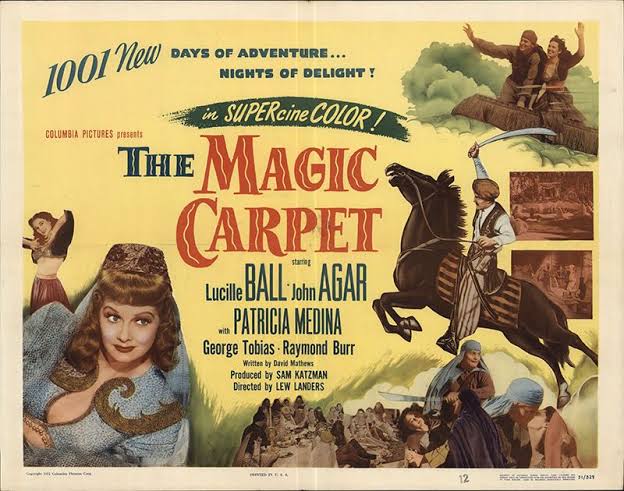
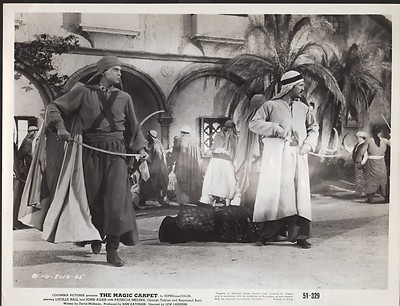
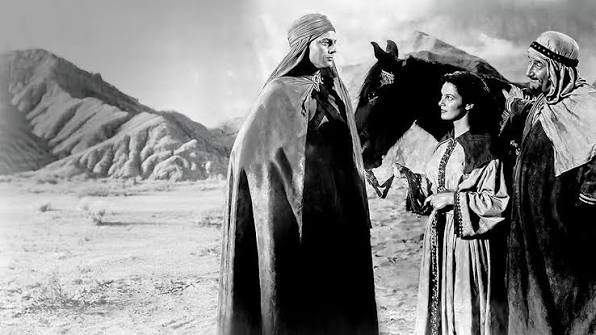
    Released by Columbia Pictures in 1951 and directed by Lew Landers, The Magic Carpet belongs to the colourful cycle of Arabian Nights-inspired adventures that flourished in Hollywood during the 1940s and 1950s. It is a film of magic carpets, evil rulers, secret identities, beautiful women, palace intrigues, sword fights, imprisoned heroes and conveniently timed rescues. It is also a film featuring the extraordinary combination of John Agar, Patricia Medina, Raymond Burr, George Tobias and, most intriguingly of all, Lucille Ball.

    The Imprint Blu-ray, part of Imprint’s Tales of Adventure collection, gives this neglected fantasy an especially welcome new lease of life. Imprint’s release is significant because it is the worldwide first Blu-ray edition of the film. The disc presents the movie in 1080p, in its original 1.37:1 aspect ratio, with LPCM 2.0 mono sound and English SDH subtitles.

    For collectors of vintage adventure cinema, that alone makes the release interesting. But the greater pleasure comes from discovering just how entertaining this strange little film can be when approached on its own terms.

    A lost world of Hollywood fantasy

    By 1951, Hollywood had become extremely comfortable with the Arabian adventure formula. These movies were designed as escapist entertainment, offering audiences exotic locations, colourful costumes, romance, action and fantasy at a time when the studios were increasingly competing with television for the public’s attention.

    The Magic Carpet was released on 18 October 1951, and its production dates back to December 1950. It was made in SuperCinecolor, photographed by Ellis W. Carter, with sets designed by Paul Palmentola and costumes by Jean Louis.

    That combination tells you quite a lot about the film. This is not supposed to be historical drama. It is a fantasy playground. The costumes, palace interiors, villains and heroic disguises are all deliberately larger than life. The film takes the mythology of the Arabian Nights and combines it with the conventions of the Saturday matinee adventure.

    There is something wonderfully uncomplicated about that approach.

    The story begins with political treachery. Caliph Omar and Queen Yasmina are preparing to establish their infant son as heir when the ambitious Ali stages a coup. The royal family is destroyed, but the baby escapes on the titular magic carpet and is eventually raised by his uncle Ahkmid.

    The child grows into Ramoth, unaware of his royal identity. Eventually he learns the truth and becomes the mysterious Scarlet Falcon, fighting against the tyrannical regime that has taken control of his homeland.

    It is an old-fashioned adventure structure, but it works because the film understands that these stories are fundamentally about identity. The hero is an orphan who discovers that he is a prince. The villain is an impostor who has stolen the throne. The woman he loves becomes involved in the struggle. The magic carpet itself becomes both a symbol of his royal destiny and a practical device for getting the characters out of impossible situations.

    In other words, the film is operating in fairy-tale territory rather than attempting realism.

    John Agar as the reluctant hero

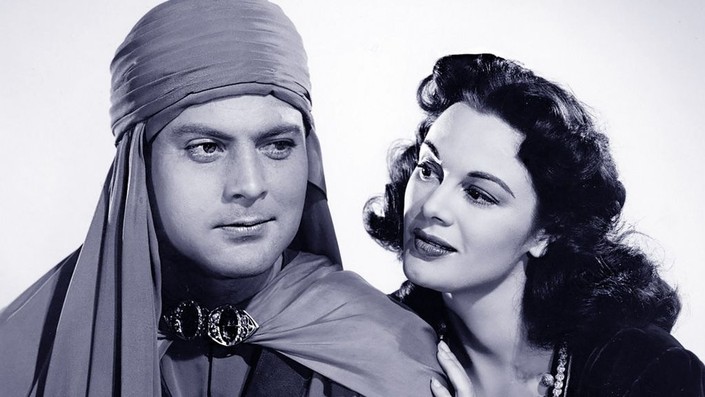
    John Agar is an interesting choice for Ramoth. He had established himself in Hollywood in a variety of roles, including military and adventure parts, and he possesses the straightforward screen presence necessary for this kind of hero.

    Ramoth is essentially the classic lost prince. He has strength, courage and a natural sense of justice, but he does not initially know who he really is.

    Agar plays him without excessive self-consciousness. That is important because the film itself never winks at the audience. There is no attempt to make the material ironic. Agar simply plays the hero and allows the story to carry him from one adventure to the next.

    His transformation into the Scarlet Falcon gives the film one of its most enjoyable pulp-adventure elements. The masked or disguised hero was a familiar figure in serials and adventure films, and The Magic Carpet happily embraces the tradition.

    Ramoth is not particularly psychologically complicated, but that isn’t really the point. He is the embodiment of the righteous hero who discovers that he has both the responsibility and the opportunity to restore justice.

    And in a film like this, that is enough.

    Patricia Medina brings warmth to the adventure

    Patricia Medina plays Lida, Ramoth’s love interest, and she gets considerably more to do than simply stand around waiting for the hero to rescue her.

    One of the pleasant aspects of The Magic Carpet is that Lida becomes an active participant in the adventure. She infiltrates the enemy’s forces, disguises herself and becomes involved in the attempt to free Ramoth.

    Medina brings an appealing combination of glamour and determination to the role. She fits perfectly into the visual style of the film, but she is never merely decorative.

    That is particularly important because the movie is packed with the conventions of the era. There are palace dances, elaborate costumes and beautiful women, but the story repeatedly allows its female characters to influence the action.

    Lida is especially effective because her relationship with Ramoth gives the fantasy a romantic centre. The stakes are not simply political. The characters are fighting for a future together.

    Lucille Ball before I Love Lucy

    Perhaps the most fascinating element for modern viewers is Lucille Ball.

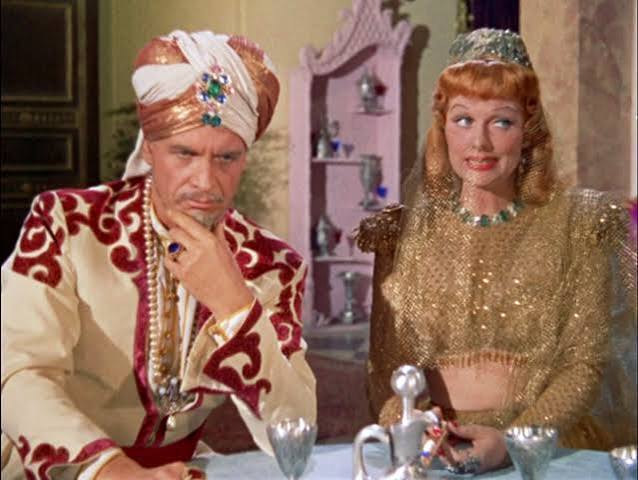
    The Magic Carpet arrived in cinemas in October 1951, just three days after the premiere of I Love Lucy. That coincidence makes the film an especially interesting snapshot of Ball’s career. According to the AFI, it was her final film before she and Desi Arnaz began their hugely successful television series.

    Watching Ball here is fascinating because she is not playing Lucy Ricardo.

    She plays Narah, the daughter of the usurper Ali, and the character is positioned on the villainous side of the story. Ball is glamorous, serious and occasionally threatening. It is a reminder that before television transformed her into one of the most famous comic performers in American history, she had spent years working in a wide variety of movie roles.

    There is something almost surreal about seeing Lucille Ball in this environment.

    Modern audiences inevitably bring I Love Lucy with them. It is almost impossible not to imagine Lucy Ricardo appearing somewhere in the middle of the palace. But Ball does not play Narah as a sitcom character. She belongs to the melodramatic world of the film.

    That makes The Magic Carpet a fascinating piece of Ball’s filmography.

    The movie also benefits from the fact that Narah is not simply a cardboard villain. Ball gives her an element of personality and sensuality that makes the character memorable even when the screenplay is functioning according to familiar adventure conventions.

    For fans of Lucille Ball, the film alone makes the Blu-ray worth investigating.

    Raymond Burr as the villain

    Raymond Burr is another major attraction.

    Long before Perry Mason made him a television institution, Burr was one of Hollywood’s great character actors, and his imposing physical presence made him an ideal villain.

    Here he plays Boreg, the grand vizier and one of the principal agents of the evil regime.

    Burr understands exactly what kind of movie he is in.

    He does not attempt subtle realism. He gives the character the necessary authority, menace and theatricality. His voice, posture and imposing frame immediately communicate that this is someone who should not be trusted.

    Burr was particularly good at playing men who appeared respectable on the surface but were actually ruthless underneath. The Magic Carpet gives him a more openly villainous role, but the basic appeal remains the same.

    His scenes add a welcome sense of danger to the film.

    George Tobias and the supporting cast

    George Tobias plays Razi, Ramoth’s friend and ally. Tobias was a wonderfully versatile character actor, and his presence helps give the film some personality outside the central romantic and heroic story.

    There is also Gregory Gaye as Ali, the usurping ruler.

    The supporting cast is important because films like The Magic Carpet depend on a sense of a complete fantasy world. The characters do not need complicated backstories. They need to establish the atmosphere of the kingdom and keep the plot moving.

    The film does exactly that.

    Sam Katzman’s fingerprints

    Producer Sam Katzman was one of the great craftsmen of economical Hollywood exploitation and genre entertainment.

    His films were rarely intended to be expensive prestige productions. They were designed to deliver the goods.

    That philosophy is visible throughout The Magic Carpet.

    The film has spectacle, but it is economical spectacle. It has palace sets, but they are studio sets. It has action, but the action is efficiently staged. It has romance, dancing, villains and fantasy without allowing any single element to become too expensive or elaborate.

    There is something charming about this economy.

    The movie is constantly trying to convince the audience that they are somewhere exotic and far away, and for much of its running time it succeeds.

    This is Hollywood fantasy assembled by professionals who understood that audiences did not necessarily need realism. They needed imagination.

    Lew Landers and efficient direction

    Director Lew Landers had a long career across many genres, and The Magic Carpet suits his ability to keep a production moving.

    The film is not interested in lingering over atmosphere for too long. The plot progresses rapidly from one development to another.

    A betrayal leads to an escape.

    The escape leads to the hero’s upbringing.

    The hero discovers his identity.

    The villain attempts to stop him.

    The heroine becomes involved.

    The magic carpet eventually becomes crucial.

    There is a very appealing efficiency to the storytelling.

    At around 82–84 minutes, depending on the source listing, the film does not have much room for padding. The AFI catalogue records a running time of 82 minutes, while the Imprint/Blu-ray listings give approximately 84 minutes.

    Either way, it is a compact adventure.

    And that is probably the best way to experience it.

    The SuperCinecolor experience

    One of the great pleasures of vintage fantasy cinema is colour, and The Magic Carpet was photographed in SuperCinecolor.

    This is important because colour in early-1950s adventure films is not simply a technical feature. It is part of the storytelling.

    The costumes, palace interiors, deserts and theatrical sets all benefit from the heightened colour palette. The movie is intended to look like an illustrated storybook brought to life.

    The colours have an appropriately old-fashioned quality. They are not necessarily the immaculate, ultra-refined colours that modern viewers associate with contemporary digital cinematography. Instead, they possess the character of period colour photography.

    That is exactly what one wants from a film like this.

    The Imprint Blu-ray

    For collectors, the most important question is how the movie fares in this new presentation.

    Imprint’s release is particularly significant because it represents the worldwide first Blu-ray release of The Magic Carpet.

    The disc uses an AVC 1080p presentation and preserves the film’s approximately 1.37:1 original aspect ratio. Audio is presented in LPCM 2.0 mono, with English SDH subtitles.

    That is precisely the kind of presentation this film deserves.

    The 1.37:1 framing is especially important. A movie from 1951 should not be cropped into a modern widescreen shape simply because contemporary home-video displays are widescreen. Retaining the original proportions preserves the visual composition of the film.

    The SuperCinecolor photography is allowed to breathe, and the image has considerably more presence than an old standard-definition presentation would provide.

    Naturally, expectations need to be realistic.

    This is an approximately seventy-five-year-old film, not a modern production photographed yesterday. Vintage elements can display signs of age, and collectors approaching a release such as this should appreciate the restoration and presentation within the context of the surviving source material.

    But that is part of the fascination.

    The Blu-ray does not need to make The Magic Carpet look as though it was photographed in 2026. It needs to make it look like a well-preserved 1951 adventure film.

    That is the ideal.

    Sound

    The original mono soundtrack is presented in LPCM 2.0.

    Again, this is the correct approach.

    There is no reason to artificially manufacture a modern surround presentation for a film that was designed for a mono theatrical soundtrack.

    The music and dialogue have the character expected of a period recording, while the lossless presentation gives the soundtrack a clean and direct quality.

    The score is particularly important because the music helps create the film’s fantasy atmosphere. Adventure movies of this era relied heavily on orchestral scoring to turn relatively modest sets into places of excitement and danger.

    The soundtrack therefore contributes enormously to the sense of period authenticity.

    English subtitles

    English SDH subtitles are included, which is another useful feature for a film of this vintage.

    Dialogue in older movies can sometimes be difficult to catch because of recording characteristics, orchestral scoring or variations in vocal delivery. Subtitles provide an excellent alternative for viewers who want to make sure they do not miss anything.

    For collectors, it is another indication that Imprint is treating this as a proper catalogue presentation rather than simply putting an old movie onto a disc.

    Part of the Tales of Adventure collection

    The Magic Carpet forms part of Imprint’s Tales of Adventure – Collection 10, alongside Sudan, Salome, The Sword of Ali Baba and the bonus film 1001 Arabian Nights. The collection was issued as a limited-edition four-disc hardbox, with 1,500 copies produced.

    This context is particularly appropriate.

    These films belong to a fascinating area of Hollywood history in which studios repeatedly returned to stories of exotic kingdoms, adventure and romance.

    They may not always be sophisticated, but they possess a visual and cultural identity that is increasingly difficult to find in contemporary cinema.

    For collectors of classic adventure films, the collection provides a useful snapshot of the genre.

    The magic carpet itself

    The title object is, of course, one of the film’s biggest attractions.

    The magic carpet is a perfect example of the way fantasy cinema of the period could transform a relatively simple effect into something magical.

    Today, audiences are accustomed to digital effects in which practically anything can be created. In 1951, the limitations of special-effects technology meant that filmmakers had to rely on ingenuity, staging and suggestion.

    The result can be more charming.

    The carpet becomes a physical symbol of Ramoth’s destiny. It is connected to his royal heritage, his survival and ultimately his escape.

    It is also simply fun.

    There is something inherently appealing about a movie in which a hero can eventually escape danger by taking to the skies on a flying carpet.

    That is the sort of fantasy premise that makes The Magic Carpet worthwhile.

    A film that knows what it is

    One of the greatest virtues of The Magic Carpet is that it does not apologise for its own simplicity.

    It is not attempting to be Lawrence of Arabia. It is not attempting to reconstruct an authentic historical Middle East. It is a fantasy adventure assembled from fairy tales, melodrama, serials and Hollywood spectacle.

    Judged by those standards, it becomes much more enjoyable.

    The plot is straightforward.

    The heroes are heroic.

    The villains are villainous.

    The romance is romantic.

    The costumes are extravagant.

    The palace intrigue is uncomplicated.

    The magic carpet flies.

    That is the contract between the film and its audience.

    And once you accept that contract, there is considerable pleasure to be found.

    Historical interest

    The film is also valuable as a document of Hollywood’s changing landscape.

    The fact that The Magic Carpet was released almost simultaneously with the beginning of I Love Lucy gives it a fascinating historical position. Lucille Ball was about to become a television superstar, and the nature of American entertainment was changing rapidly.

    Television would soon transform the way audiences consumed comedy, drama and entertainment.

    Yet The Magic Carpet represents the older Hollywood model: a theatrical feature designed to offer an escape into a brightly coloured fantasy world.

    That makes the film more interesting with every passing year.

    It is not simply an adventure film.

    It is a time capsule.

    Why the film deserves rediscovery

    It would be easy to dismiss The Magic Carpet as minor Hollywood fantasy.

    And, on one level, that description is fair.

    It is not a masterpiece.

    The characters are conventional, the plot is familiar and the special effects are obviously products of their period.

    But those limitations are also part of its charm.

    There is a particular pleasure in discovering films that existed outside the canon.

    Not every film needs to be a masterpiece.

    Some movies are valuable because they capture an era, a genre or a style of filmmaking that has disappeared.

    The Magic Carpet is one of those films.

    It demonstrates how Hollywood could take a familiar fairy-tale formula and turn it into an economical adventure feature. It showcases actors who would go on to become much more famous for other work. It preserves the visual style of early-1950s SuperCinecolor filmmaking. And, thanks to Imprint, it can now be experienced in high definition.

    Final thoughts

    Imprint’s Blu-ray release of The Magic Carpet is precisely the kind of catalogue release that makes physical media so rewarding.

    The film itself may never have been one of Columbia’s most celebrated productions, but its combination of fantasy, adventure, romance and eccentric casting makes it a fascinating rediscovery.

    John Agar provides the square-jawed heroism the story requires. Patricia Medina gives the romance warmth and adventure. Raymond Burr is thoroughly enjoyable as the villainous Boreg. George Tobias provides welcome character support. And Lucille Ball is the real curiosity, offering a glimpse of the actress immediately before I Love Lucy changed her career forever.

    The movie’s 1951 setting is equally important. This is Hollywood fantasy before the genre became dominated by the increasingly sophisticated visual-effects techniques of later decades. Its magic is created through costumes, sets, performance, music, colour and imagination.

    And that is exactly why the film remains enjoyable.

    The Imprint presentation gives this forgotten adventure a level of respect it has rarely received. The 1080p image, original 1.37:1 framing, LPCM mono soundtrack and English SDH subtitles make it a very welcome upgrade for collectors. Most importantly, the release preserves the character of the original film rather than attempting to modernise it.

    For anyone interested in Lucille Ball’s film career, the release is particularly attractive. For fans of John Agar, Raymond Burr, Patricia Medina or Sam Katzman’s genre productions, it is another worthwhile piece of the puzzle. And for collectors of vintage fantasy and Arabian adventure films, it is an unusually welcome addition to the Blu-ray catalogue.

    The Magic Carpet may be a modest film, but modest films can have enormous charm.

    It is colourful, silly, romantic, melodramatic and thoroughly old-fashioned. It belongs to a Hollywood that was perfectly happy to send audiences into an imaginary world for eighty-odd minutes and ask them simply to enjoy the ride.

    And perhaps that is the most appropriate way to approach it.

    Forget realism.

    Forget historical accuracy.

    Forget modern special effects.

    Spread out the carpet, settle back, and allow this wonderfully old-fashioned piece of Hollywood fantasy to take you somewhere else.

  • Blu-ray review: “Cabin Fever” (2016)

    “Cabin Fever” (2016)

    Drama / Thriller

    Running Time: 99 minutes

    Written by: Eli Roth and Randy Pearlstein

    Directed by: Travis Z

    Featuring: Samuel Davis, Gage Golightly, Matthew Daddario, Nadine Crocke and Dustin Ingram

    Karen: “When you’ve known someone a long time, you just want to kiss them just to see if they’re a good kisser. There’s nothing wrong with that, right?”

    There are few horror films that seem to have been born to provoke an argument quite like Cabin Fever. Eli Roth’s 2002 original was never a particularly restrained piece of filmmaking, but it became a minor cult phenomenon precisely because of its combination of gruesome body horror, nasty black comedy, unpleasant characters, and a deliberately diseased atmosphere. It was crude, frequently disgusting and occasionally very funny, but it had an identity of its own. It also arrived at a moment when the American horror genre was beginning to rediscover the pleasures of practical gore and unapologetic nastiness.

    So when Cabin Fever was remade in 2016, only fourteen years after the original, the immediate question was obvious: why?

    Directed by Travis Zariwny and written by Randy Pearlstein and Eli Roth, the 2016 Cabin Fever is one of those remakes that makes its existence difficult to justify because it follows its predecessor remarkably closely. It takes the basic story, many of the same situations, much of the same dialogue and even several of the original’s character dynamics, and essentially reconstructs the movie for a new generation.

    That makes the 2016 film an unusual proposition. It isn’t a radical reinvention. It isn’t a sequel. It isn’t a reinterpretation that takes the basic premise somewhere unexpected. It is, for much of its running time, a remarkably faithful recreation of the 2002 film.

    And yet, despite its reputation, the 2016 Cabin Fever is not quite the disaster that its detractors sometimes suggest.

    It is certainly inferior to the original. There is no question about that. But viewed independently of the enormous shadow cast by Roth’s film, it is an efficiently made, reasonably attractive and occasionally effective piece of modern body horror. Its greatest problem is not necessarily that it is badly made. Its greatest problem is that it has already been made.

    The Imprint Blu-ray, however, provides an opportunity to reassess the film as part of the Cabin Fever franchise and to appreciate the production on its own technical merits.

    The Story

    The basic premise remains almost unchanged.

    Five college friends travel to an isolated cabin in the woods for a vacation. Paul, Karen, Jeff, Marcy and Bert expect alcohol, sex, relaxation and the usual teenage/young-adult escapism associated with the backwoods horror movie.

    Instead, they encounter something considerably worse.

    A mysterious flesh-eating infection begins spreading among them. Their bodies begin deteriorating, their paranoia increases and their already-fragile relationships begin to collapse. The danger is not merely the disease itself. They have to contend with their own fear, ignorance, selfishness and desperation.

    The concept is extremely simple, which is precisely why it works.

    There is something inherently disturbing about an infection that attacks the human body from the inside out. Traditional slasher films give the audience a clearly identifiable killer. Here the enemy is invisible. It can be transmitted through bodily fluids, contaminated surfaces and close contact. The characters cannot simply defeat it with a weapon.

    The disease itself becomes the monster.

    That was one of the strongest elements of the 2002 film, and the remake understands that the physical deterioration of the characters is central to the horror.

    The problem is that almost every major beat is already familiar to anyone who knows the original.

    The cabin.

    The arrival.

    The infected stranger.

    The increasingly desperate attempts to avoid contamination.

    The fear of drinking water.

    The escalating paranoia.

    The deteriorating bodies.

    The grotesque deaths.

    The increasingly ugly behaviour.

    The final collapse.

    It is less a remake in the conventional sense than a recreation.

    A Remake Almost Too Faithful

    The most interesting thing about the 2016 Cabin Fever is the degree to which it tries to reproduce the original.

    Many remakes take an established story and update it for contemporary audiences. They might alter the characters, relocate the action, change the tone or reinterpret the themes.

    This film does comparatively little of that.

    The screenplay remains very close to Roth’s original structure. Even the crude humour and unpleasant characterisation are retained.

    That makes the film something of a cinematic photocopy.

    There are moments when this approach works surprisingly well. The basic Cabin Fever story is strong enough to survive another telling. The idea of five young people becoming trapped in a remote location while a flesh-eating disease spreads among them is still an effective horror premise.

    But the original had the advantage of surprise.

    When Roth made the first film, audiences didn’t know exactly what was going to happen. The film’s grotesque discoveries, escalating infection and increasingly strange behaviour were genuinely unpredictable.

    By 2016, however, the audience already knew where the story was going.

    The remake therefore has an almost impossible task. It has to reproduce the original while simultaneously competing with the memory of the original.

    And memory is difficult to beat.

    Travis Zariwny’s Direction

    Director Travis Zariwny, credited as Travis Z, does a competent job with the material.

    There is nothing amateurish about the filmmaking.

    The locations are attractive, the cinematography is polished and the production has a considerably more contemporary visual style than the original. Zariwny clearly understands how to photograph the isolation of the woods and the physical vulnerability of the characters.

    The contrast between the beautiful environment and the disgusting infection is particularly effective.

    The cabin is surrounded by natural beauty, but that beauty becomes increasingly threatening as the story develops.

    The lake, trees and open spaces initially suggest freedom. As the infection takes hold, however, the same environment becomes a trap.

    This is one of the things that the film gets right.

    The best cabin-in-the-woods horror depends on the location becoming psychologically oppressive. The characters may technically be surrounded by acres of wilderness, but there is nowhere safe to go.

    Zariwny also understands the importance of visual detail.

    The film’s infected bodies receive plenty of attention. Skin becomes irritated, damaged and eventually horrifying. The practical-effects work is one of the remake’s more successful elements, even if the movie doesn’t always exploit the effects as imaginatively as the original did.

    The cinematography gives the film a polished contemporary appearance, with strong colour and good definition.

    That visual polish is particularly welcome on Blu-ray.

    The Cast

    The young cast does a respectable job with material that doesn’t always give them much room to develop their characters.

    Samuel Davis plays Paul, the central protagonist, while Gage Golightly is Karen. Matthew Daddario plays Jeff, Nadine Crocker is Marcy and Dustin Ingram plays Bert.

    One of the difficulties with the characters is that they are deliberately unpleasant.

    That was true of the original as well.

    The Cabin Fever formula relies partly on putting obnoxious young people into increasingly horrible circumstances and then asking the audience to watch them fall apart.

    There is a dark pleasure in seeing selfish people become even more selfish when confronted with a genuine crisis.

    But the 2016 cast sometimes struggles to make these characters distinctive enough to escape the comparison with the original performers.

    Dustin Ingram’s Bert is perhaps the most memorable of the group because the character is designed to be particularly obnoxious. His behaviour is frequently appalling, but that is also part of the film’s black humour.

    Gage Golightly gives Karen a more sympathetic presence, while Samuel Davis provides Paul with the necessary sense of uncertainty as the situation becomes increasingly catastrophic.

    Matthew Daddario and Nadine Crocker also make the most of their roles.

    The performances aren’t the primary reason to watch the film, but they are certainly not the catastrophe that some reviews have suggested.

    The Horror

    The real question is whether Cabin Fever 2016 works as horror.

    The answer is: sometimes.

    It is much more effective as body horror than as suspense.

    The infection provides the film with its most memorable imagery. The sight of flesh becoming damaged, infected and increasingly grotesque is unpleasant in exactly the way the film intends.

    There is also something particularly effective about the progression of the disease.

    At first the characters don’t understand what is happening.

    Then they begin to realise that something is seriously wrong.

    Then they become frightened.

    Then they become desperate.

    Eventually, they become dangerous to one another.

    That progression remains effective because it taps into a very primal fear: the fear that your own body can suddenly become your enemy.

    The film also understands the horror of contamination.

    Who is infected?

    Who isn’t?

    Can you touch somebody?

    Can you trust them?

    Can you drink the water?

    Can you get away?

    These questions provide the movie with its underlying tension.

    Unfortunately, the familiarity of the story reduces much of the suspense.

    If you’ve seen the original, you already know many of the answers.

    The Gore

    For a film called Cabin Fever, the gore is obviously important.

    Fortunately, the remake doesn’t completely disappoint in this department.

    There are some genuinely nasty sequences, and the practical makeup effects provide the film with much of its personality.

    The infected skin looks appropriately revolting, and the progression of the disease is one of the movie’s strongest visual ideas.

    Yet there is a curious restraint compared with what one might expect.

    The 2002 Cabin Fever had an almost gleefully anarchic quality. It could be disgusting one moment and absurd the next.

    The remake feels more controlled.

    That isn’t necessarily a bad thing, but it does make the movie feel less dangerous.

    The gore is technically effective, but it rarely has the shock value of its predecessor.

    This is particularly noticeable because modern horror audiences had become considerably more accustomed to extreme imagery by 2016.

    The remake therefore needed to do something distinctive with its violence.

    Instead, it generally settles for reproducing what came before.

    The Black Comedy

    Another important ingredient is the humour.

    The original Cabin Fever was never simply a serious horror film. Roth mixed genuine disgust with broad, sometimes outrageous comedy.

    That tonal instability was part of its appeal.

    The remake attempts to preserve this aspect but doesn’t always succeed.

    Some of the comedy works because the situations themselves are ridiculous.

    Other jokes feel like reminders that the filmmakers know audiences have seen the original.

    The result is uneven.

    There are amusing moments, but the film doesn’t possess the same bizarre personality as its predecessor.

    The original could feel like it was spiralling out of control.

    The remake feels more calculated.

    That difference matters.

    The Supporting Characters

    One of the pleasures of both films is the collection of strange people surrounding the central group.

    The locals, law-enforcement figures and other inhabitants of the area help create the feeling that the protagonists have wandered into a world that operates according to its own rules.

    The remake revisits several of these elements.

    Some of the supporting performances are memorable precisely because they are so strange.

    The film understands that Cabin Fever needs more than just five attractive young people in a cabin. The surrounding community has to feel unsettling.

    Unfortunately, some of the eccentricity feels diluted compared with the original.

    The 2002 film had an especially grubby, unpredictable atmosphere.

    The remake is cleaner.

    That is perhaps the best way to describe the difference.

    The original feels dirty.

    The remake looks dirty.

    Those are not quite the same thing.

    The Music

    Kevin Riepl provides the score, giving the film a conventional modern horror soundtrack.

    The music performs its job effectively enough, supporting the suspense and emphasizing the more violent sequences.

    It doesn’t, however, become particularly memorable.

    This is another area where the remake is perfectly competent but rarely distinctive.

    The score serves the film rather than defining it.

    The Visual Style

    One of the strongest aspects of the production is its photography.

    The wilderness locations are beautifully captured.

    The contrast between natural beauty and physical corruption is central to the film’s visual identity.

    The forest and lake sequences have a bright, almost inviting quality early in the story. As the infection progresses, those same locations become increasingly oppressive.

    The film also benefits from a crisp contemporary digital look.

    There is a clean sharpness to the photography that makes the special effects easy to see.

    That may sound like a minor compliment, but with body horror it matters.

    The audience needs to see the texture of the infected skin.

    The image needs enough clarity to reveal the makeup effects.

    And the Blu-ray does an excellent job of preserving that detail.

    The Imprint Blu-ray Presentation

    This is where the Imprint release becomes particularly interesting for collectors.

    Imprint has built a reputation around bringing genre and catalogue titles to the Australian home-video market in attractive editions, and the Cabin Fever films make natural additions to that catalogue.

    The film itself was already released on Blu-ray in North America by Scream Factory in 2016, where it received a 1080p presentation and DTS-HD Master Audio options. Contemporary reviews were generally positive about the picture quality, even when they were much less enthusiastic about the film itself.

    The 2016 film is presented in its widescreen theatrical format, and the high-definition transfer is particularly good at showing the natural detail of the locations.

    The forest photography benefits enormously from Blu-ray.

    Leaves, branches, clothing textures and facial detail are all clearly resolved.

    The contrast between the bright outdoor photography and darker interior scenes is also handled well.

    The infection effects look suitably unpleasant in high definition.

    There is no reason to watch a movie like this on a soft, poorly compressed presentation when the whole point is to appreciate the physical detail of the makeup effects.

    The picture quality is therefore one of the major strengths of the release.

    Audio

    The audio presentation is equally appropriate for the material.

    The film’s dialogue remains clear, while the score and effects provide the necessary atmosphere.

    The sound design becomes increasingly important as the film progresses.

    Small environmental sounds help create the feeling of isolation.

    The woods aren’t silent.

    The cabin isn’t silent.

    The infected bodies aren’t silent.

    The soundscape gradually becomes another reminder that something is wrong.

    The Blu-ray’s lossless presentation gives the film a solid sense of presence without making the soundtrack unnecessarily aggressive.

    Special Features

    The original 2016 Blu-ray contained a relatively modest selection of extras, including an approximately eleven-minute making-of featurette and the theatrical trailer.

    That is worth mentioning because it illustrates the unusual status of this film within the Cabin Fever franchise.

    There is considerably more behind-the-scenes material available on releases of the 2002 film than on the 2016 remake. The extensive legacy extras associated with the original include commentaries, making-of material, deleted scenes and other production features.

    The 2016 remake’s behind-the-scenes featurette is nevertheless worthwhile for anyone interested in how the production was assembled.

    The opportunity to see the filmmakers and cast discussing the project provides some context for why the remake was made and how the production approached recreating such a familiar story.

    It also makes one thing clear: this wasn’t an accidental or careless production.

    There was genuine enthusiasm behind it.

    The filmmakers obviously wanted to make a Cabin Fever film.

    The problem is that enthusiasm cannot solve the fundamental issue of originality.

    Why Was It Remade?

    This is the question that hangs over the entire film.

    The original was only fourteen years old.

    It was readily available.

    It had already become a recognised horror title.

    And the remake follows it so closely that it frequently feels unnecessary.

    There is an argument that the film was intended to introduce the concept to younger viewers who might not have seen Roth’s movie.

    That is certainly plausible.

    Horror has always been cyclical.

    Stories are remade for new generations, often because studios believe a contemporary audience will respond better to a new cast and updated production values.

    The 2016 Cabin Fever is essentially that kind of project.

    But for longtime fans, the experience is frustrating.

    It doesn’t replace the original.

    It doesn’t expand the mythology.

    It doesn’t reinterpret the concept.

    It simply repeats it.

    The Relationship With Eli Roth

    Eli Roth’s involvement is another fascinating element.

    Roth wrote the screenplay with Randy Pearlstein and remained connected to the project as executive producer.

    This isn’t therefore a situation where someone simply took his movie away and remade it without his involvement.

    He was part of the process.

    That makes the remake more interesting from a franchise perspective.

    The film almost feels like an attempt to preserve the Cabin Fever formula rather than reinvent it.

    It also explains why certain elements feel so familiar.

    The remake isn’t trying to escape the original.

    It is deliberately embracing it.

    Comparing the Two Films

    The 2002 film wins almost every major comparison.

    It has more personality.

    It feels nastier.

    It is stranger.

    It has stronger characterisation.

    It has more distinctive performances.

    And most importantly, it was original.

    The 2016 film has advantages of its own.

    It looks better.

    The cinematography is polished.

    The special effects are effective.

    The production values are stronger in some respects.

    The younger cast brings a different energy to the material.

    But technical improvements don’t necessarily make for a better horror film.

    Sometimes roughness is part of a movie’s identity.

    The original Cabin Fever had a grubby quality that made its world feel more dangerous.

    The remake is more polished and therefore slightly less threatening.

    Is It Actually a Bad Film?

    This is where the 2016 film deserves some reconsideration.

    Calling it a bad remake is understandable.

    Calling it a terrible movie is more questionable.

    If someone watches the 2016 Cabin Fever without having seen the original, the film works reasonably well as a straightforward body-horror picture.

    The premise is easy to understand.

    The pacing is generally brisk.

    The cinematography is good.

    The performances are adequate.

    The gore is effective.

    The location works.

    There are some unpleasant images.

    There are a few decent scares.

    It doesn’t reinvent horror, but it doesn’t completely collapse either.

    The problem is that horror films don’t exist in isolation.

    A remake has to be judged in relation to what it is remaking.

    And here the comparison is unavoidable.

    The Importance of Context

    The Cabin Fever franchise is an interesting example of how horror movies can become trapped by their own success.

    The first film established a very specific formula.

    The sequels attempted to continue it.

    Then the remake returned to the beginning.

    Rather than moving forward, the franchise effectively reset itself.

    That makes the 2016 film feel less like the next chapter and more like a parallel version of something audiences had already experienced.

    It is almost a cinematic alternate universe.

    What if the same story were told with a different cast, different photography and slightly different emphasis?

    That isn’t necessarily useless.

    But it is difficult to justify as essential.

    The Body Horror Still Works

    Despite all of these criticisms, the central idea remains powerful.

    There is something inherently disturbing about watching a healthy body become diseased.

    The film takes advantage of our fear of contamination.

    Skin is normally something we barely think about.

    It protects us.

    We trust it.

    But once the infection begins, that protective barrier becomes a visual representation of everything going wrong inside the body.

    The horror is intimate.

    It isn’t simply about being killed.

    It is about becoming physically repulsive.

    That is why Cabin Fever remains a useful vehicle for horror even when its story is familiar.

    The infection itself is an excellent monster.

    The Atmosphere of Isolation

    The film also succeeds whenever it focuses on isolation.

    The cabin is far enough from civilisation to make outside assistance difficult.

    The characters are therefore forced to depend on one another.

    But they don’t particularly like one another.

    That creates an effective contradiction.

    The people who need each other most are the people least capable of trusting each other.

    As the infection spreads, this becomes increasingly important.

    Every person becomes a potential threat.

    The psychological horror therefore develops naturally from the physical horror.

    A Film About Paranoia

    Underneath all the gore, Cabin Fever is really a story about paranoia.

    The disease gives the characters a reason to suspect everyone around them.

    But the infection also reveals their existing flaws.

    Fear makes them selfish.

    Panic makes them irrational.

    And desperation removes whatever social restraints they initially possessed.

    The film’s characters aren’t heroic figures calmly solving a crisis.

    They’re ordinary people behaving badly.

    That remains one of the most interesting aspects of the concept.

    The Final Verdict

    Cabin Fever (2016) is a difficult film to recommend without qualification.

    If you are a fan of Eli Roth’s 2002 original, the remake can be frustrating.

    It is too close to the original to feel fresh, but not quite close enough to reproduce the strange energy that made the first film memorable.

    It copies the structure without fully reproducing the personality.

    However, if approached as an isolated horror film, it is considerably more competent than its reputation suggests.

    The cast is perfectly serviceable.

    The cinematography is attractive.

    The gore effects are worthwhile.

    The location is excellent.

    The sound design works.

    The pacing is generally efficient.

    And the underlying premise remains effective.

    The film’s greatest weakness is therefore not incompetence.

    It is redundancy.

    There simply isn’t enough reason for this particular version to exist.

    The Imprint Blu-ray is another matter.

    For collectors, fans of the franchise and those interested in completing the Cabin Fever series, it is a worthwhile addition. The high-definition presentation gives the film the opportunity to show off its photography and practical effects, and the release allows the 2016 remake to be considered as part of the franchise rather than simply dismissed as an unnecessary copy.

    Ultimately, Cabin Fever 2016 is a strange cinematic specimen.

    It is a remake of a film that was itself already a relatively simple horror story.

    It contains many of the same scenes.

    It revisits many of the same ideas.

    It recreates many of the same moments.

    And yet it is not completely without merit.

    There is an attractive visual quality to the production, the body horror remains effective, and the central concept of an apparently unstoppable infection spreading among a group of isolated young people still has the power to make the skin crawl.

    The problem is that the 2002 film got there first.

    And it got there with more personality.

    So the best way to view the 2016 Cabin Fever is not as a replacement for the original but as an interesting companion piece — an alternate interpretation of the same basic nightmare.

    It is a good-looking, competently performed, occasionally disgusting horror film that suffers enormously from being almost exactly the film it is remaking.

    As a standalone horror movie, it is serviceable.

    As a remake, it is unnecessary.

    As a Blu-ray for Cabin Fever completists, however, it is a welcome opportunity to revisit one of the more curious entries in the franchise and reconsider a movie that has perhaps been dismissed too quickly simply because of the enormous shadow cast by its predecessor.

  • Blu-ray review: “Cabin Fever 2: Spring Fever” (2009)

    “Cabin Fever 2: Spring Fever” (2009)

    Drama / Thriller

    Running Time: 97 minutes

    Written by: Joshua Malkin

    Directed by: Ti West

    Featuring: Noah Segan, Alexi Wasser, Rusty Kelley, Marc Senter and Giuseppe Andrews

    Toby: “Water here is bullshit!”

    There are horror sequels that attempt to recapture the atmosphere and formula of their predecessors, and then there are sequels that seem to take the original film, throw it into a blender, pour the remains into a punch bowl and invite everybody to the prom. Cabin Fever 2: Spring Fever belongs very firmly in the latter category.

    Released in 2009 and directed by Ti West, Cabin Fever 2 has become one of those fascinatingly troubled horror films whose reputation is almost as interesting as the movie itself. It was conceived as a follow-up to Eli Roth’s 2002 Cabin Fever, but the finished film bears the unmistakable scars of a difficult production and extensive studio intervention. West himself has subsequently distanced himself from the completed picture, and that history inevitably colours any discussion of it.

    Yet there is something wonderfully perverse about the fact that the film has survived. What was once regarded largely as an unwanted sequel or an unfortunate entry in a popular horror franchise has gradually developed a small but enthusiastic cult following. Its combination of grotesque practical effects, adolescent nastiness, black comedy, outrageous characters and a spectacularly disgusting prom sequence gives it a personality all its own.

    The arrival of the film in the Via Vision/Imprint ecosystem is therefore particularly welcome for horror collectors. The Cabin Fever Collection places Cabin Fever 2 alongside Eli Roth’s original and the 2016 remake, with the sequel receiving a 1080p high-definition Blu-ray presentation. The disc uses the original 2.35:1 aspect ratio and carries English DTS-HD 5.1 audio and optional English subtitles. The supplementary material consists of a gore reel, behind-the-scenes featurette and theatrical trailer.

    For a film that spent so long being treated almost like the embarrassing relative of the Cabin Fever franchise, this is a rather satisfying resurrection.

    The original Cabin Fever was essentially a backwoods infection movie. A group of college students travel to an isolated cabin and encounter a horrifying flesh-eating disease. Eli Roth combined elements of body horror, comedy, teen movie conventions and survival horror to create something deliberately unpleasant but also strangely funny.

    Cabin Fever 2 takes that basic infection concept and moves it into an entirely different environment.

    The sequel begins with the aftermath of the original film before shifting its attention to a local high school. The infected blood has found its way into bottled water, and as the students prepare for their high-school prom, the disease begins spreading through the school.

    It is a simple premise, but one that gives the filmmakers considerably more room for carnage.

    The school becomes the new cabin.

    Instead of a handful of people trapped in the woods, we have a building filled with teenagers, teachers, administrators and assorted adults who are completely unprepared for what is about to happen. The prom provides the perfect enclosed environment for a plague movie. Everyone is dressed up, music is playing, hormones are raging and social hierarchies are temporarily more important than survival.

    Then the disease arrives.

    And when it does, Cabin Fever 2 makes very little attempt to be tasteful.

    One of the most intriguing aspects of the movie is the presence of Ti West.

    Today West is recognised as one of the major contemporary American horror filmmakers, particularly for films such as The House of the Devil, The Innkeepers, X, Pearl and MaXXXine. Looking back at Cabin Fever 2 in the context of his later career makes the movie considerably more interesting.

    There are flashes of the filmmaker West would become.

    The school setting provides him with an opportunity to create a strangely stylised horror environment, and there are moments where the film feels like an exaggerated, corrupted version of an old-school teen horror picture.

    There is also a streak of grim humour running throughout the movie that feels compatible with West’s later fascination with genre conventions.

    But it is equally clear that the finished film is not an uncomplicated representation of his vision.

    The film has an uneven quality that suggests competing creative personalities. Some scenes feel like outrageous exploitation cinema, others resemble a conventional studio horror sequel, while still others appear to be deliberately absurd.

    The result is messy.

    But sometimes messy is precisely what makes a horror film memorable.

    The decision to move the story from the countryside to a school is one of the film’s best ideas.

    A school is already an environment filled with social anxiety. Teenagers worry about popularity, sex, relationships, appearance and acceptance. Teachers are trying to maintain order while simultaneously dealing with students who are barely capable of controlling themselves.

    Then Cabin Fever 2 introduces a flesh-eating infection.

    The movie takes those existing tensions and turns them into horror.

    The prom itself is particularly effective as a setting. The brightly decorated gymnasium, the formal clothes, the music and the teenage excitement provide a deliberately inappropriate backdrop for the bloodshed that follows.

    There is a strong Carrie-like quality to the sequence, although Cabin Fever 2 is far less interested in tragedy than Brian De Palma’s film. This is essentially a splatter-comedy prom from hell.

    And hell is probably an understatement.

    If there is one reason to own Cabin Fever 2, it is the gore.

    This is not subtle horror.

    The infection produces all manner of disgusting physical symptoms, and the filmmakers take enormous pleasure in showing them. The movie is packed with blood, pus, vomiting, mutilation, bodily deterioration and various forms of physical degradation.

    There is something almost proudly juvenile about the approach.

    The film wants to make you say, “That’s disgusting.”

    Then it wants to make the next scene even more disgusting.

    And then it wants to make you laugh at how disgusting it has become.

    This is where Cabin Fever 2 occasionally succeeds brilliantly. Its practical effects have a tactile quality that remains appealing in an age when computer-generated gore can sometimes feel weightless.

    There is real physicality to the blood.

    People splatter.

    Bodies rupture.

    Skin deteriorates.

    The disease looks horrible.

    And the film isn’t afraid to linger on the consequences.

    For horror collectors who enjoy old-fashioned splatter, the movie can be surprisingly rewarding.

    The humour is much more divisive.

    Some of it works because it is so ridiculous. Some of the characters are deliberately exaggerated, and several situations are pushed far beyond anything resembling realism.

    The movie knows that the premise is ridiculous.

    Contaminated bottled water causes a flesh-eating plague at a high-school prom.

    That is not exactly the starting point for restrained social commentary.

    The film therefore embraces its own lunacy.

    At its best, this creates a kind of infectious energy. At its worst, the comedy becomes irritating and the characters can seem deliberately obnoxious.

    But Cabin Fever 2 is rarely boring.

    Even when the humour doesn’t work, there is generally another grotesque effect, bizarre character or completely unexpected development waiting around the corner.

    Characterisation is probably the weakest part of the film.

    The first Cabin Fever had characters who were not necessarily sympathetic, but they were recognisable. Their relationships provided a foundation for the horror.

    The sequel is much more interested in caricature.

    The students are exaggerated versions of high-school stereotypes. The adults are often equally eccentric. Some characters are introduced primarily because they can be subjected to some particularly horrible fate.

    That makes it difficult to care about who survives.

    But perhaps that is part of the film’s design.

    This isn’t really a survival drama.

    It’s a massacre.

    The characters are essentially pieces on a particularly disgusting chessboard.

    One exception is Alexi Wasser’s Cassie, who provides a degree of emotional grounding, while Noah Segan’s Rusty Kelley is positioned at the centre of the chaos. Segan is particularly effective because he plays the character with enough nervous energy to survive the movie’s increasingly ridiculous tone.

    Then there is Giuseppe Andrews.

    Andrews returns from the original film as Deputy Winston, and his presence immediately links the sequel to Roth’s movie. Winston is one of those characters who seems to have wandered into the wrong film and somehow become essential to it.

    His bizarre behaviour fits the sequel’s deranged atmosphere perfectly.

    The opening connection to the first movie is important because Cabin Fever 2 otherwise becomes almost completely independent of it.

    The disease is established as the continuing threat, but the sequel quickly expands the mythology in its own direction.

    Rather than simply repeating the cabin scenario, the film asks what would happen if the infection escaped.

    The answer is: high-school prom.

    That is a surprisingly effective escalation.

    The original movie’s isolated setting meant that the disease was frightening because there was nowhere to escape.

    The sequel makes the disease frightening because there are too many people.

    Once contamination enters the school’s water supply, containment becomes almost impossible.

    The centrepiece of Cabin Fever 2 is undoubtedly the prom.

    This is where the movie’s various personalities collide.

    The teen comedy becomes horror.

    The romance becomes infection.

    The dance becomes slaughter.

    The punch bowl becomes a potential weapon.

    The music continues while people begin falling apart.

    It is deliberately excessive and frequently hilarious in a very dark way.

    The prom sequence is also the clearest indication of why the film has developed a cult reputation.

    You may dislike Cabin Fever 2.

    You may find it crude.

    You may find the characters annoying.

    You may think the story is ridiculous.

    But it is difficult to argue that the film is timid.

    It commits completely to its concept.

    The Imprint/Via Vision Blu-ray presentation is a significant improvement over the sort of presentation one might expect from a film that has historically been treated as a lesser sequel.

    The film is presented in 1080p high definition and retains its 2.35:1 aspect ratio.

    The widescreen image is particularly useful because West and cinematographer Eliot Rockett give the school environment a surprisingly cinematic appearance.

    There is an intentionally strange quality to the photography.

    The image can be dark, murky and occasionally slightly oppressive, which is appropriate for the material. The film is not supposed to look pristine or cheerful. Much of its atmosphere comes from the contrast between the apparently ordinary world of school life and the increasingly grotesque infection.

    The HD presentation gives the viewer a substantially better opportunity to appreciate the physical effects.

    Blood has texture.

    Makeup effects are more apparent.

    Faces and environments have greater definition.

    The school interiors have enough detail to reveal the production design, while the darker sequences retain the oppressive quality that the film requires.

    This is not the sort of movie where the objective should be to make everything look glossy.

    The ugliness is part of the aesthetic.

    The colour palette is interesting.

    There is a deliberately warm, somewhat dirty appearance to many of the scenes, which contrasts nicely with the blood.

    The school environment is full of browns, creams and muted colours, while the infected characters become progressively more visually shocking.

    The film’s strange visual identity has previously been noted by critics and filmmakers discussing West’s troubled experience with the production. One analysis specifically highlights the film’s unusual warm colour palette, crushed blacks and gauzy highlights.

    Those characteristics are still evident here.

    It isn’t a reference-quality showcase disc in the manner of a major classic restoration, but that isn’t really the point.

    It is a strong HD presentation of a deliberately grubby horror movie.

    The English DTS-HD 5.1 soundtrack gives the movie the sonic aggression it needs.

    The surround presentation helps the school setting feel larger than it otherwise might.

    Music, screams, effects and general environmental noise occupy the soundstage effectively, and the soundtrack becomes particularly useful during the chaotic prom sequence.

    This is a movie in which sound is an important part of the experience.

    The audience needs to hear the screaming.

    The splatter needs impact.

    The music needs to create a sense of increasingly inappropriate celebration.

    And the soundtrack succeeds in giving the film the required energy.

    Optional English subtitles are also included, which is welcome for dialogue-heavy scenes and for viewers who prefer subtitles with their horror movies.

    The gore reel is exactly what one would expect from Cabin Fever 2.

    For fans of practical effects, this is arguably the most immediately attractive bonus.

    The movie’s gore is one of its major selling points, and seeing the effects isolated from the narrative provides an opportunity to appreciate the craftsmanship involved.

    The effects may be deliberately disgusting, but that doesn’t make them technically insignificant.

    There is considerable work behind the blood, makeup and prosthetics.

    The behind-the-scenes featurette is particularly useful because the production history of Cabin Fever 2 is so unusual.

    The film’s troubled relationship with its director has become an important part of its history, and anything that provides additional production context makes the disc more valuable.

    It is fascinating to consider the film not simply as a bad sequel, but as a movie caught between competing visions.

    The theatrical trailer completes the package and provides an entertaining reminder of how the movie was originally marketed.

    For collectors, trailers are always welcome on catalogue releases, particularly when they are presented alongside films that have had complicated home-video histories.

    It is impossible to review Cabin Fever 2 without discussing its production difficulties.

    Ti West’s experience on the movie reportedly became extremely frustrating, with extensive changes made to his work.

    That context explains some of the film’s strange tonal shifts.

    At times you can almost feel different versions of the movie fighting each other.

    One version wants to be an old-fashioned teen horror movie.

    Another wants to be a gross-out comedy.

    Another wants to be an extreme splatter film.

    Another wants to be a conventional studio sequel.

    The final film contains pieces of all four.

    And yet, strangely, that may be why it has survived.

    A completely coherent Cabin Fever 2 might have been a more polished movie, but perhaps it would not have been nearly as distinctive.

    The original Cabin Fever remains the stronger film.

    There is no real argument about that.

    Eli Roth’s movie has a stronger sense of atmosphere and a better balance between horror, humour and character.

    But Cabin Fever 2 doesn’t simply copy it.

    It takes the infection concept somewhere else.

    The original asks what happens when a group of people become trapped with a disease.

    The sequel asks what happens when that disease enters a populated environment.

    The answer is significantly messier.

    And more entertaining

    Part of the answer is simple.

    It is outrageous.

    There are plenty of horror movies that are technically better than Cabin Fever 2.

    There are better written films.

    Better acted films.

    Better directed films.

    Better structured films.

    But there aren’t many that are quite like this.

    The movie has an anarchic quality that can be enormously entertaining if you approach it in the right spirit.

    This is not a movie to watch expecting sophistication.

    It is not subtle.

    It is not elegant.

    It isn’t particularly interested in realism.

    It wants to make you uncomfortable, disgust you, and occasionally make you laugh at something you probably shouldn’t find funny.

    In that respect, it is a very traditional piece of exploitation horror.

    Perhaps the most appropriate way to describe Cabin Fever 2 is as a fascinating failure.

    As a straightforward sequel, it is uneven.

    As an example of Ti West’s intended filmmaking style, it is compromised.

    As a character-driven horror movie, it is weak.

    As a polished studio production, it is questionable.

    But as an outrageous piece of splatter cinema, it has considerable charm.

    There are sequences that are genuinely memorable.

    There are effects that remain wonderfully disgusting.

    There are characters that are impossible to forget.

    And there is an almost admirable determination to keep escalating the insanity.

    That is why the movie is considerably more interesting today than its initial reputation might suggest.
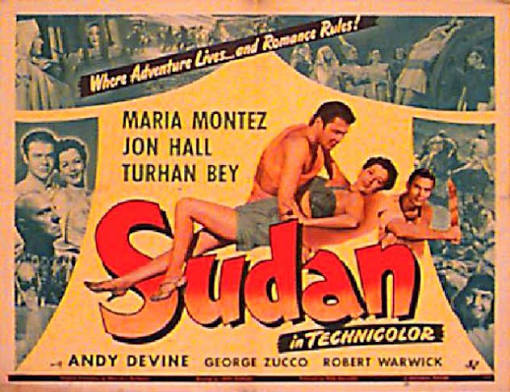
    For collectors, the new release is particularly valuable because it gives Cabin Fever 2 a proper place within a larger franchise collection.

    The Cabin Fever Collection includes the original film on 4K UHD and Blu-ray, Cabin Fever 2: Spring Fever on Blu-ray, and the 2016 remake on Blu-ray. The package also includes a booklet and collector-oriented packaging, making it much more substantial than the sort of disposable home-video release that the sequel originally seemed destined to remain.

    The sequel itself receives the 1080p treatment, DTS-HD 5.1 audio and English subtitles, while retaining its 2.35:1 presentation.

    That is exactly the kind of treatment the movie deserves.

    Not because Cabin Fever 2 is a masterpiece.

    It isn’t.

    Rather, because cult horror deserves preservation too.

    Cabin Fever 2: Spring Fever is one of those movies that becomes more interesting the more you know about it.

    Viewed simply as a sequel to Eli Roth’s Cabin Fever, it is a chaotic, uneven and frequently obnoxious horror comedy.

    Viewed as a Ti West film, it is a fascinating glimpse at a filmmaker working inside a studio production before moving toward the much more controlled independent filmmaking style that would eventually make him one of modern horror’s most respected directors.

    Viewed as exploitation cinema, however, it is an absolute blast.

    The film is bloody.

    It is crude.

    It is juvenile.

    It is sometimes genuinely disgusting.

    It is often very funny.

    And occasionally it is all of those things simultaneously.

    The prom sequence alone is enough to justify its existence.

    The Imprint/Via Vision Blu-ray finally allows the movie to be appreciated in the kind of high-definition presentation that makes its practical effects, production design and deliberately unpleasant visual style much easier to appreciate. The inclusion of the gore reel, behind-the-scenes material and trailer adds useful value, even if the extras aren’t as extensive as those accompanying the original film.

    Ultimately, Cabin Fever 2 is a movie that has outlived its reputation.

    It isn’t the disaster that its early reviews suggested.

    Nor is it some misunderstood masterpiece.

    It occupies the much more interesting territory in between: a deeply compromised, occasionally inspired, frequently revolting and surprisingly entertaining piece of horror exploitation.

    For fans of Ti West, it is an essential curiosity.

    For fans of the Cabin Fever franchise, it is an obvious addition.

    For gorehounds, it offers plenty to enjoy.

    And for collectors, this Blu-ray represents a welcome opportunity to revisit one of the strangest and most notorious sequels of the 2000s.

  • 4K Blu-ray review: “Cabin Fever” (2002)

    “Cabin Fever” (2002)

    Horror

    Running Time: 133 minutes

    Written by: Eli Roth and Randy Pearlstein

    Directed by: Eli Roth

    Featuring: Rider Strong, Jordan Ladd, James DeBello, Cerina Vincent, Joey Kern, Arie Verveen and Giuseppe Andrews

    Justin: “Yeah, he’s a professor… OF BEING A DOG! OOOH, FACED!… Scratch moded!”

    .There is something particularly effective about horror films that take an ordinary, familiar situation and turn it into something profoundly unpleasant. A group of friends going away for a few days, staying in an isolated cabin in the woods, drinking, partying and enjoying their freedom sounds like the perfect setup for a carefree weekend. In horror cinema, however, the isolated cabin has become one of the most dependable locations for disaster. With Cabin Fever, Eli Roth took that familiar scenario and injected it with something altogether more uncomfortable: disease.

    Released in 2002, Cabin Fever arrived at an interesting point in the history of American horror. The big-budget teenage slasher had largely run its course, while a new generation of filmmakers was beginning to rediscover the pleasures of low-budget, visceral horror. Roth’s film belongs firmly to that transitional period. It is part teen comedy, part gross-out body horror, part survival movie and part black comedy, with an infectious sense of nastiness running through almost every frame.

    More than two decades later, Cabin Fever remains an unusually divisive horror film. Some viewers admire its simplicity, practical effects and willingness to be disgusting. Others have been frustrated by its characters, deliberately unpleasant humour and tonal inconsistencies. Yet those very qualities are also what make the film distinctive. It is not polished horror, nor is it particularly interested in behaving itself. It is an aggressive, grubby and frequently grotesque movie that seems determined to make the audience uncomfortable.

    The arrival of a 4K release from Imprint Films provides an excellent opportunity to revisit the film. Whatever one’s opinion of the movie itself, there is no denying that Cabin Fever is a fascinating time capsule of early-2000s horror. Seeing it in a carefully presented high-definition or 4K environment allows its cinematography, production design, practical effects and deliberately ugly textures to be appreciated in a way that earlier home-video presentations could not always provide.

    The premise is remarkably straightforward.

    Paul, Bert, Marcy, Jeff and Karen are five college friends who travel to a remote cabin in the woods for a holiday. They want to drink, have sex, relax and escape the pressures of everyday life. Unfortunately, their idyllic getaway is interrupted when they encounter a strange infected man who appears to be suffering from some kind of horrifying skin disease.

    The danger initially seems distant. Then Karen becomes infected.

    From there, the film steadily strips away the group’s sense of security. The cabin, which initially represents freedom and privacy, becomes a prison. The woods, which appeared peaceful, become threatening. Their own bodies become sources of fear.

    The simplicity of the premise is one of the film’s greatest strengths. There is no elaborate mythology to learn, no supernatural explanation and no complicated conspiracy. The enemy is microscopic, invisible and completely indifferent.

    That makes the disease particularly frightening.

    A vampire can be seen. A masked killer can be fought. A supernatural creature can potentially be defeated. Infection is different. The characters cannot see what is happening inside their bodies until the consequences become impossible to ignore.

    That basic idea gives Cabin Fever a surprisingly effective psychological dimension.

    Eli Roth’s direction is rough around the edges, but that roughness is an important part of the film’s personality.

    There is a clear desire to make Cabin Fever feel like a dirty, unpredictable genre movie rather than a slick Hollywood production. Roth constantly moves between different horror traditions. One moment the movie resembles a conventional slasher; the next it becomes body horror; then it veers into comedy.

    The film’s tonal instability can be frustrating, but it is also unmistakably deliberate.

    Roth was obviously fascinated by the horror movies he had grown up watching, and Cabin Fever often feels like a young filmmaker enthusiastically throwing different influences into a blender. There are echoes of The Evil Dead, The Texas Chain Saw Massacre, The Thing, zombie movies and classic seventies survival horror.

    Yet the film does not simply imitate those movies.

    The central idea of infection gives Cabin Fever its own identity.

    Roth also understands the value of anticipation. The film does not immediately reveal everything about the disease. Instead, it gradually introduces disturbing symptoms: skin irritation, sores, bleeding and eventually horrific physical deterioration.

    The progression is important because the audience is given time to imagine how bad the disease might become before the film actually shows us.

    And when it does show us, it does not hold back.

    This is where Cabin Fever remains most memorable.

    The film’s greatest strength is its physicality.

    The disease is not abstract. It affects the skin, the flesh and eventually the entire human body. The audience is forced to look at infected skin, peeling flesh, blood and other unpleasant symptoms.

    The practical effects give these moments an unpleasant immediacy.

    Modern horror can sometimes become overly dependent on digital effects, and there is something refreshing about watching a movie in which the horror feels tangible. The makeup effects have texture. The wounds look physical. The infected flesh appears like something that could actually be touched.

    That quality is particularly important when revisiting the film on a modern format.

    High-resolution presentation can sometimes make practical effects look even more convincing because the viewer can appreciate the texture and workmanship involved. At the same time, it can reveal the limitations of older effects work. In the case of Cabin Fever, however, that is part of the charm.

    The effects do not need to look perfect.

    They need to look disgusting.

    And they do.

    The infamous shaving scene is perhaps the clearest example of Roth’s approach. The film takes something completely ordinary and turns it into an ordeal. A simple act of removing hair becomes an act of self-mutilation and panic.

    The audience understands exactly what is happening and yet wants to look away.

    That is effective body horror.

    The characters in Cabin Fever are intentionally flawed.

    Paul is the central figure, played by Rider Strong, and he is probably the most recognisable protagonist. Strong gives Paul enough vulnerability to make him sympathetic without turning him into a conventional heroic character.

    Bert, played by James DeBello, is considerably less sympathetic.

    He is selfish, irresponsible and frequently obnoxious. Yet this is an important part of the film’s social dynamic. These are not perfectly likeable horror protagonists who always make sensible decisions. They are young people, and they behave like young people who believe they are largely invulnerable.

    Marcy, played by Cerina Vincent, provides another dimension to the group, while Giuseppe Andrews’ performance as Deputy Winston adds an almost surreal comic energy.

    Perhaps the most interesting aspect of the characters is how the disease gradually destroys their ability to trust one another.

    At first, they are simply friends on holiday.

    Then one becomes infected.

    Then everyone becomes suspicious.

    Who has been exposed?

    Who is contagious?

    Who is lying?

    Who should be allowed inside the cabin?

    The film’s real horror eventually becomes less about the disease itself and more about what fear of infection does to human behaviour.

    Isolation

    Isolation has always been one of horror cinema’s most powerful weapons.

    Cabin Fever understands that isolation does not necessarily mean being hundreds of miles from civilisation. The characters are technically surrounded by other people, but they are effectively trapped.

    The woods prevent easy escape. Their vehicle becomes unreliable. Communication is limited. Local people are strange and unhelpful.

    The result is a growing sense that the normal rules of society no longer apply.

    The cabin gradually changes from a holiday destination into a contaminated space.

    This is particularly effective because the cabin initially feels comfortable. It is warm, rustic and inviting. It represents everything the characters think they want.

    As the disease spreads, however, every surface becomes potentially contaminated.

    The floor.

    The bed.

    The bathroom.

    The kitchen.

    The characters themselves.

    The familiar becomes threatening.

    That transformation is central to the film’s success.

    The Horror of Contamination

    There is something remarkably universal about the fear at the centre of Cabin Fever.

    The characters are not merely afraid of dying. They are afraid of touching one another.

    They are afraid of sharing food.

    They are afraid of bodily fluids.

    They are afraid of their own skin.

    That gives the film a particular psychological unpleasantness.

    The infection is also democratic. It does not care whether somebody is attractive, wealthy, intelligent or morally good. Everyone is vulnerable.

    In that respect, the film’s horror is almost existential.

    The characters have no meaningful control over their fate.

    Once infection begins, the question is not simply whether somebody will die.

    It is whether they can remain human while they are dying.

    Black Comedy

    One of the more controversial aspects of Cabin Fever is its humour.

    The film can be genuinely funny, but it can also be extremely crude and intentionally juvenile.

    Roth seems to enjoy making the audience laugh immediately before making them uncomfortable. This produces a peculiar rhythm in which scenes can move from comedy to horror with little warning.

    Some viewers will find this entertaining.

    Others will find it irritating.

    Personally, the tonal instability is one of the reasons the movie remains interesting. A straightforward serious horror film about infectious disease would probably be more consistent, but it might also be less distinctive.

    Cabin Fever is messy.

    Its sense of humour is messy.

    Its characters are messy.

    Its storytelling is messy.

    The disease itself is messy.

    There is an almost thematic relationship between the film’s content and its filmmaking style.

    Everything is contaminated.

    The Importance of the Setting

    The location work is another major strength.

    The rural setting gives the film a sense of physical isolation without requiring a huge production budget. The woods appear beautiful during daylight but threatening at night.

    Roth makes effective use of the contrast between natural beauty and human vulnerability.

    The characters are surrounded by trees, fresh air and open space, yet none of those things can save them.

    The cabin becomes increasingly claustrophobic as the film progresses.

    This contrast between wide exterior landscapes and cramped interiors is important to the film’s visual identity.

    The woods promise escape.

    The cabin promises safety.

    Neither delivers.

    Cinematography

    The cinematography has an earthy, naturalistic quality that suits the story.

    Rather than making everything look glossy, the film embraces a somewhat dirty visual palette. The rural environment feels tangible, and the interiors often appear warm but slightly oppressive.

    The high-definition presentation makes this especially apparent.

    Textures in wood, walls, clothing and skin become much more visible. The visual contrast between the natural environment and the increasingly diseased bodies of the characters is particularly effective.

    The film’s visual style is not necessarily beautiful in a traditional sense.

    It is tactile.

    And for a body-horror film, that is more important.

    Sound and Atmosphere

    Sound plays an important role in creating the film’s unease.

    The sound design often emphasises physical discomfort. Scratching, coughing, breathing, movement and other bodily sounds become increasingly significant as the infection spreads.

    The score also helps maintain the uneasy mixture of horror and dark comedy.

    The soundtrack never allows the movie to settle comfortably into one genre.

    That is appropriate.

    Cabin Fever is fundamentally a movie about discomfort, and its soundscape frequently reinforces that feeling.

    Rewatching the Film in 4K

    The biggest question for collectors is, of course, what the film gains from the 4K treatment.

    The answer is that Cabin Fever is an unexpectedly good candidate for a modern restoration.

    This is not a film whose appeal depends on pristine, immaculate imagery. Instead, its rough textures and naturalistic cinematography benefit from greater resolution.

    The wood grain of the cabin becomes more apparent.

    The foliage in the woods has greater definition.

    Faces reveal more detail.

    And, perhaps most importantly, the makeup effects gain a physical presence.

    The diseased skin and practical effects have considerably more impact when the image has sufficient resolution and contrast to reveal their texture.

    The film’s darker scenes also benefit from improved presentation when compared with older, less capable transfers.

    Of course, viewers should not expect Cabin Fever to suddenly look like a modern digitally photographed blockbuster. The source material and original production impose their own limitations.

    That is not a criticism.

    A good restoration should preserve the character of a film rather than make it look artificially new.

    In that respect, Cabin Fever remains recognisably a 2002 horror movie.

    And that is exactly how it should look.

    The Imprint Presentation

    Imprint Films has established a reputation among physical-media collectors for treating catalogue titles with considerable respect, and Cabin Fever is a welcome addition to that philosophy.

    The appeal of an Imprint release is not simply the promise of a higher-resolution picture. It is the idea that a film once regarded as disposable genre entertainment can be given the sort of presentation normally reserved for more prestigious titles.

    Cabin Fever deserves that treatment.

    The film may be crude and occasionally ridiculous, but it is an important example of early-2000s independent horror.

    A release such as this encourages viewers to reconsider it as more than simply a gross-out movie.

    The improved presentation also makes the production design easier to appreciate.

    The cabin itself is an important visual element, and the details of its construction, furniture and surroundings contribute substantially to the atmosphere.

    Likewise, the rural environment feels much more convincing when the transfer retains fine detail rather than reducing everything to a soft mass of green and brown.

    Special Features and Collector Appeal

    For collectors, the supplementary material is an important part of the package.

    A film like Cabin Fever is particularly suited to behind-the-scenes material because its production history is fascinating. The movie represents the beginning of Eli Roth’s career and became an important stepping stone toward his later work.

    Looking back at the film from the perspective of Roth’s subsequent career adds considerable interest.

    It is possible to see the filmmaker experimenting with ideas that would become more pronounced in his later films: extreme physical horror, uncomfortable humour, confrontational imagery and an interest in provoking strong audience reactions.

    The extras also provide an opportunity to reconsider the film’s place within the evolution of horror cinema.

    In the early 2000s, horror was beginning to change.

    Cabin Fever arrived before the full explosion of what would later be labelled “torture horror”, but it helped establish an appetite for more physically explicit and confrontational genre filmmaking.

    Its influence should not be exaggerated, but its timing is significant.

    The Film’s Legacy

    Perhaps the most interesting thing about Cabin Fever is that it has aged better than one might expect.

    Not necessarily because every element works perfectly.

    It doesn’t.

    The film is uneven.

    Some characters are irritating.

    Some jokes have aged badly.

    The tonal shifts can be jarring.

    And there are moments when Roth’s desire to shock seems more important than narrative logic.

    But the basic horror concept remains effective.

    Disease is still frightening.

    Isolation is still frightening.

    Contamination is still frightening.

    And the sight of a human body deteriorating remains one of the most primal images horror cinema can offer.

    The movie’s greatest achievement is therefore not its plot.

    It is its ability to make the audience physically uncomfortable.

    Cabin Fever as a Product of Its Time

    There is also something fascinating about watching Cabin Fever today as a period piece.

    The early 2000s are all over it.

    The clothing.

    The hairstyles.

    The attitudes.

    The humour.

    The music.

    The technology.

    Even the way the characters interact feels distinctly pre-social-media.

    That gives the film an unexpected nostalgic quality.

    Of course, nobody watching Cabin Fever in 2026 is likely to describe a movie about people being infected by a flesh-eating disease as “comfort viewing”, but there is nevertheless something strangely appealing about revisiting a horror movie from an era when digital technology had not yet transformed every aspect of filmmaking.

    The movie feels handmade.

    It feels physical.

    And it feels like a group of filmmakers trying to get away with something.

    Final Thoughts

    Cabin Fever is not a perfect horror film.

    In fact, it is precisely the sort of movie that invites argument.

    Its mixture of body horror, comedy, teen drama, survival horror and social paranoia will either entertain you or drive you crazy depending on your tolerance for tonal experimentation.

    But it is impossible to deny that the movie has personality.

    There are countless horror films about people trapped in remote locations.

    There are countless films about mysterious diseases.

    There are countless films about groups of attractive young people making terrible decisions.

    Yet Cabin Fever manages to combine those familiar ingredients into something recognisably its own.

    The film’s greatest weapon is its disgust.

    Roth understands that horror is not always about making the audience jump.

    Sometimes it is about making them squirm.

    Sometimes it is about making them cover their eyes.

    Sometimes it is about making them think twice about touching the person sitting beside them.

    And sometimes the simplest idea is the most effective: something is inside your body, you cannot see it, you cannot reason with it, and you cannot easily escape it.

    The Imprint 4K release gives the film an opportunity to be rediscovered in the best possible environment. The increased resolution and improved presentation allow the physical textures of the movie to become more apparent, while the practical makeup effects benefit enormously from being presented with greater clarity.

    For fans of early-2000s horror, Eli Roth, practical effects or cult cinema, this is a particularly worthwhile revisit.

    It may not be elegant.

    It may not be subtle.

    It may not always be tasteful.

    But Cabin Fever was never designed to be any of those things.

    It is designed to get under your skin.

    And more than twenty years later, it still does.

  • 4K Blu-ray review: “The Ninth Gate” (1999)

    “The Ninth Gate” (1999)

    Horror

    Running Time: 133 minutes

    Written by: John Brownjohn, Roman Polanski and Enrique Urbizu

    Directed by: Roman Polanski

    Featuring: Johnny Depp, Lena Olin, Frank Langella, James Russo, Jack Taylor and Emmanuelle Seigner

    Boris Balkan: “There’s nothing more reliable than a man whose loyalty can be bought for hard cash.”

    Roman Polanski’s The Ninth Gate stands as a dark, atmospheric blend of mystery and occultism, exploring themes of greed, power, and the seductive allure of forbidden knowledge. Adapted from Arturo Pérez-Reverte’s novel The Club Dumas, the film follows rare book dealer Dean Corso (Johnny Depp) on a journey to authenticate a diabolical text said to grant its reader access to the gates of hell. It is a slow-burning thriller that straddles the line between supernatural intrigue and existential dread, enveloped in Polanski’s signature tone of ambiguity and unease.

    The film’s narrative is built around Corso’s commission by a wealthy collector, Boris Balkan (Frank Langella), to verify the authenticity of The Nine Gates of the Kingdom of Shadows. This rare 17th-century book is rumored to have been co-authored by Satan himself. Balkan owns one of the only three known copies and is obsessed with uncovering its secrets. Corso embarks on a globetrotting investigation, comparing Balkan’s copy to the other two, which are held by eccentric collectors in Portugal and France. Along the way, he encounters mysterious deaths, cryptic symbols, and a seductive, unnamed woman (Emmanuelle Seigner), whose supernatural nature becomes increasingly evident.

    The film thrives on its slow pace, methodically unraveling layers of intrigue while immersing viewers in the arcane world of rare books and Satanic lore. The plot’s ambiguity is both its strength and its weakness. While it compels audiences to question what is real versus imagined, the lack of definitive answers may frustrate viewers seeking concrete resolutions.

    Johnny Depp’s portrayal of Corso is a highlight. He eschews the heroic tropes often associated with lead characters, presenting Corso as a morally ambiguous, self-serving antihero. Depp’s understated performance captures Corso’s cynicism and gradual unraveling as he delves deeper into the book’s mysteries. Frank Langella is captivating as Balkan, exuding an imposing presence and megalomania that perfectly complements the film’s dark tone.

    Emmanuelle Seigner’s enigmatic character remains one of the film’s most puzzling elements. Her otherworldly demeanor and cryptic role in Corso’s journey add to the film’s supernatural allure, though her character often feels underexplored. Lena Olin’s portrayal of Liana Telfer, the seductive widow with her own stake in the book’s secrets, is deliciously over-the-top, injecting moments of theatrical flair into the narrative.

    Visually, The Ninth Gate excels in creating an oppressive, Gothic atmosphere. The cinematography by Darius Khondji bathes the film in muted tones, creating a sense of unease that permeates every frame. The European locales—crumbling libraries, dimly lit mansions, and foggy countryside—serve as perfect backdrops for the story’s occult underpinnings. Polanski’s meticulous attention to detail is evident in the design of the book itself, with its woodcut illustrations playing a pivotal role in the narrative.

    Wojciech Kilar’s haunting score underscores the film’s unsettling mood. The music shifts seamlessly between subtle, eerie undertones and dramatic crescendos, enhancing the tension without overpowering the visuals.

    The film explores themes of ambition, the corrupting nature of power, and humanity’s eternal fascination with the unknown. Corso’s journey is as much an exploration of his own moral boundaries as it is a quest for the book’s secrets. The titular gates symbolize the dual nature of human curiosity—both the pursuit of knowledge and the temptation to overreach.

    The ambiguity surrounding the supernatural elements is a key aspect of the film’s thematic depth. While the narrative hints at demonic forces and divine interventions, it refrains from providing definitive proof, leaving the audience to ponder the true nature of Corso’s journey.

    Despite its strengths, The Ninth Gate is not without flaws. The film’s deliberate pacing may feel sluggish, particularly for viewers expecting a more action-driven narrative. The climax, while visually striking, leaves many questions unanswered, which can feel unsatisfying after the intricate buildup. Additionally, some secondary characters lack depth, serving more as plot devices than fully realized individuals.

    The film’s reliance on ambiguity is a double-edged sword. While it invites interpretation and discussion, it risks alienating viewers who prefer clarity in storytelling. For instance, the exact role of Seigner’s character and the true nature of Balkan’s fate are left frustratingly vague.

    Expanding on The Ninth Gate, the film’s allure lies in how it integrates layers of storytelling, character development, and thematic exploration, challenging audiences to navigate a maze of intellectual and emotional engagement. Its enigmatic quality makes it a rewarding study for those willing to invest deeply in its subtext and aesthetic choices.

    The central mystery of The Ninth Gate revolves around uncovering the authenticity and purpose of The Nine Gates of the Kingdom of Shadows. Unlike conventional thrillers that rely on overt supernatural manifestations or dramatic action sequences, the film’s power comes from its subtler elements: coded messages, symbolic illustrations, and nuanced character interactions. Each woodcut illustration in the book plays a pivotal role, not just as plot devices but as riddles within riddles that demand interpretation.

    The narrative operates on dual levels: the surface plot of Corso’s quest and the underlying exploration of metaphysical themes like the price of knowledge and the boundaries of human ambition. The film intertwines these layers without spelling them out, giving viewers the sense that they, too, are participants in unraveling the mystery. This approach mirrors the works of Stanley Kubrick, where meaning is often implied rather than directly presented.

    Corso as the Antihero: A Study in Moral Ambiguity

    Dean Corso is a refreshingly atypical protagonist. In most films of this nature, the lead might be a heroic figure battling against forces of evil. Not so with Corso. He begins as a purely transactional character—a rare book dealer willing to exploit his expertise for profit without a moral compass. Depp’s portrayal makes Corso both relatable and repellent, grounding his character in a gritty realism that makes his transformation throughout the film more compelling.

    Unlike Balkan, whose ambitions are grandiose and apocalyptic, Corso’s motivations are more self-serving. This contrast between the characters serves as a meditation on the degrees of human ambition. Corso’s journey, from cynicism to genuine curiosity and, finally, to obsession, mirrors the audience’s own shifting engagement with the narrative.

    Polanski’s decision to leave much of the supernatural elements ambiguous is central to the film’s appeal. The audience is never fully sure if the events they’re witnessing are genuinely occult in nature or simply the result of human greed and manipulation. This deliberate vagueness invites multiple interpretations:

    Is the woman (Emmanuelle Seigner) truly a supernatural entity? Her physical prowess, cryptic advice, and eerie calm suggest that she might be a demonic guide—or even Satan themselves. Yet the film provides no concrete evidence.

    Does the book hold actual power? While Balkan’s climactic ritual appears to fail spectacularly, Corso’s final discovery and apparent ascension to the ninth gate imply that the book does contain otherworldly truths. This dichotomy raises questions about Balkan’s failure—was it due to human arrogance or a deeper truth about the nature of evil?

    The ambiguity allows the film to transcend the confines of a typical horror-thriller and venture into philosophical territory. It reflects Polanski’s broader thematic concerns, seen in his other works like Rosemary’s Baby, where the line between the psychological and supernatural is intentionally blurred.

    One of The Ninth Gate’s most compelling aspects is its atmosphere. The film leans heavily on its setting to create tension and immerse the viewer in its world. Each location, from dusty bookshops to opulent mansions, is richly textured and alive with subtle details. Polanski uses space to evoke both wonder and dread—libraries feel like temples to hidden knowledge, and shadowy corridors seem to stretch endlessly, hinting at the mysteries lurking within.

    Lighting plays a crucial role in building this atmosphere. Scenes are often shrouded in dim light, with flickering candles and muted sunlight creating a chiaroscuro effect that evokes the works of Baroque painters. The interplay between light and shadow mirrors the film’s thematic concerns: the eternal struggle between knowledge and ignorance, good and evil.

    As a director, Polanski brings a distinctive sensibility to The Ninth Gate. Known for his ability to blend psychological horror with visual elegance, he uses these talents to create a world that feels simultaneously grounded and otherworldly. Polanski’s pacing is deliberate, allowing the story to unfold organically and giving the audience time to absorb the film’s nuances.

    His framing choices are particularly notable. Polanski often uses symmetrical compositions to evoke a sense of order and control, only to subvert them when chaos or violence intrudes. This visual technique mirrors the film’s thematic tension between humanity’s desire for order (represented by the quest for knowledge) and the inherent chaos of the unknown.

    At its core, The Ninth Gate is a study of humanity’s insatiable desire for power and the lengths to which individuals will go to obtain it. Each character represents a different facet of this desire:

    Boris Balkan: The archetypal megalomaniac, Balkan is willing to sacrifice everything—including his humanity—in his pursuit of ultimate knowledge. His failure is a cautionary tale about the dangers of hubris.

    Liana Telfer: Liana’s obsession with reclaiming the book reflects a more personal form of ambition, rooted in lust and vanity. She serves as a foil to Balkan’s grandiose goals, illustrating the varied ways ambition manifests.

    Dean Corso: Initially indifferent to the book’s supposed power, Corso’s growing fascination reveals how easily even the most cynical individuals can be drawn into the allure of the unknown.

    These characters, combined with the film’s ambiguous ending, suggest that the pursuit of forbidden knowledge is not inherently evil but deeply human. It is the choices we make in that pursuit—and the motivations driving us—that determine our fate.

    The Ninth Gate is not a film for everyone. Its leisurely pace, open-ended narrative, and cerebral approach to horror may alienate viewers seeking instant gratification or conventional scares. However, for those willing to engage with its layers of meaning and immerse themselves in its haunting atmosphere, it offers a richly rewarding experience.

    Roman Polanski crafts a film that is both timeless and timely, a meditation on the eternal struggle between knowledge and ignorance, ambition and humility. It is a film that invites—and rewards—repeated viewings, each one uncovering new layers of meaning and symbolism. In the end, The Ninth Gate stands as a testament to the power of storytelling to probe the darkest corners of the human soul.

    The Ninth Gate is a polarizing film, its appeal lying in its atmospheric storytelling, strong performances, and thematic richness. While its deliberate pacing and ambiguous narrative may not suit everyone’s taste, it remains a compelling exploration of the dark intersections of human ambition and the occult. Roman Polanski crafts a cinematic experience that lingers in the mind long after the credits roll—a testament to his ability to weave psychological intrigue with visual artistry.

    For those who appreciate cerebral, slow-burn thrillers that challenge rather than coddle their audience, The Ninth Gate is a devilishly intriguing ride. For others, its cryptic nature may leave them stranded at the gates, yearning for answers that lie just out of reach.

  • Blu-ray review: “City of Industry” (1997)

    “City of Industry” (1997)

    Drama / Thriller

    Running Time: 97 minutes

    Written by: Ken Solarz

    Directed by: John Irvin

    Featuring: Harvey Keitel, Stephen Dorff, Timothy Hutton, Famke Janssen and Wade Dominguez

    Lee Egan: “We’ll give him a little crash course in free enterprise. Besides, it’s the black market. What’s he gonna do? Go to the consulate?”

    City of Industry is the kind of film that seems almost designed to be rediscovered years after its original release. Arriving in 1997 at a time when American crime cinema was overflowing with gangsters, professional thieves, double-crosses, sudden violence and stylish Los Angeles locations, John Irvin’s film was easily overlooked. It had Harvey Keitel in the lead, Timothy Hutton, Stephen Dorff and Famke Janssen in major roles, and a story involving diamonds, betrayal and revenge, yet it never achieved the cult status of some of its contemporaries.

    That is a shame, because City of Industry is a considerably tougher, stranger and more melancholy film than its basic premise suggests.

    It is also exactly the sort of film that makes an ideal candidate for a label such as Imprint Films. The movie is not a forgotten masterpiece, and it certainly has imperfections, but it is a fascinating late-1990s crime picture with a distinctive atmosphere, a terrific central performance from Harvey Keitel and an unusually bleak view of the professional criminal world. Imprint’s new Blu-ray gives the film the kind of collector-oriented presentation it has long deserved, while the substantial collection of supplementary material provides an opportunity to reassess a film that has spent far too long in the shadows.

    The release features a 1080p high-definition presentation, English LPCM 2.0 audio and optional English SDH subtitles. More importantly for collectors, it includes a new audio commentary from director John Irvin, a second commentary carried over from the earlier Kino Lorber release, new interviews with Famke Janssen and composer Stephen Endelman, archival interviews and featurettes, behind-the-scenes material and the theatrical trailers.

    There is even a 126-page hardback book accompanying the collection, with an essay on City of Industry by Roxana Hadadi.

    For anyone who appreciates overlooked 1990s crime cinema, this is an exceptionally welcome release.

    At first glance, City of Industry seems to promise a familiar story.

    Roy Egan, played by Harvey Keitel, is an experienced professional thief who has retired from the business. His younger brother Lee, played by Timothy Hutton, persuades him to participate in one final job. The target is a shipment of diamonds in Palm Springs, and the plan involves Lee, Roy, Jorge Montana and Skip Kovich.

    The robbery itself is not really the film’s destination.

    It is the starting point.

    The heist succeeds, but the group immediately falls apart when Skip betrays the others and attempts to take the diamonds for himself. Lee and Jorge are murdered, while Roy survives, badly wounded. From that point forward, the movie becomes a pursuit narrative as Roy begins hunting Skip.

    That structure allows Irvin to strip away the conventional pleasures of the heist film. The audience does not get an elaborate extended sequence in which everyone survives, celebrates the success of the robbery and then watches the complications develop. Instead, the movie effectively destroys its own ensemble almost as soon as it has established it.

    This is one of the film’s most unusual decisions.

    Timothy Hutton, Wade Dominguez and Stephen Dorff initially appear to be members of a four-man ensemble, while Keitel seems almost like the veteran actor brought in to provide additional weight. But after the betrayal, City of Industrybecomes almost entirely Keitel’s movie.

    And that is where it becomes interesting.

    Roy is not a glamorous criminal. He does not behave like the witty, sophisticated thieves found in countless other crime movies. He does not deliver endless speeches about professionalism or honour. He simply knows what he is doing.

    He is old-school.

    He is patient.

    And he is frightening.

    The film’s memorable line, “I’m my own police,” neatly encapsulates Roy’s philosophy. It is not merely a tough-guy statement. Roy exists outside conventional authority. He doesn’t expect the police to solve his problems because he has spent his life operating outside the law. His morality is personal rather than institutional.

    That makes the revenge story more complicated than it initially appears.

    There are many reasons to watch City of Industry, but Harvey Keitel is the biggest.

    Keitel was already one of the defining faces of American independent and crime cinema by the time this film appeared. His career had included Mean Streets, Taxi Driver, The Piano, Reservoir Dogs, Bad Lieutenant and countless other performances in which he could suggest violence, vulnerability, rage and moral uncertainty simultaneously.

    Roy Egan is another variation on that persona, but Keitel gives him an unusual degree of restraint.

    He barely needs to speak.

    His face tells us that Roy has seen everything.

    The character is tired rather than simply angry. His revenge mission is not fuelled by the exuberance of a younger man. There is no sense that Roy is enjoying himself. He is doing what he believes has to be done.

    That distinction makes the violence considerably more disturbing.

    When Roy hurts someone, Irvin doesn’t generally present the moment as a crowd-pleasing action spectacle. The violence is abrupt, ugly and uncomfortable. Roy gets injured himself, and the film makes a point of showing the physical consequences of what he is doing.

    This is one of the qualities that separates City of Industry from the more fashionable crime films of the period.

    After Reservoir Dogs and Pulp Fiction, there was an enormous appetite for crime movies featuring colourful criminals, pop-cultural dialogue and stylised violence. City of Industry superficially belongs to the same generation, but its sensibility is very different. As critics have noted, Irvin’s film is closer in spirit to older hard-edged crime pictures and urban Westerns than to Tarantino’s deliberately self-conscious style.

    Irvin himself discusses this approach in his new commentary, including his desire to make something closer to the smaller genre films he remembered from his youth rather than simply assembling a cast of major stars.

    That philosophy is important.

    City of Industry isn’t trying to convince us that its criminals are cool.

    It wants us to understand them.

    And occasionally to fear them.

    If Keitel represents the old generation of professional criminals, Stephen Dorff’s Skip represents something younger, more reckless and more dangerous.

    Skip is volatile.

    He is arrogant.

    He is unpredictable.

    Most importantly, he doesn’t possess Roy’s code.

    That makes their conflict about more than stolen diamonds.

    It is a conflict between two approaches to criminal life.

    Roy believes in professionalism. Skip believes in opportunity.

    Roy understands that the people around him are dangerous. Skip seems to believe that he is the most dangerous person in the room.

    Dorff plays him with an almost reptilian energy. His appearance, mannerisms and body language immediately suggest somebody who is permanently on edge. There is something deliberately unpleasant about him, and Dorff wisely doesn’t attempt to make the character sympathetic.

    It is a very good performance.

    Dorff was still relatively early in his career when he made the film, and the contrast between his youthful energy and Keitel’s weathered physicality gives the picture much of its tension.

    Whenever the two men are moving toward each other, the film becomes more interesting.

    Timothy Hutton’s Lee Egan is one of the film’s more intriguing elements precisely because the character disappears so early.

    Hutton is excellent at suggesting that Lee is competent but perhaps not quite as experienced as his older brother. He is the younger man who thinks he has discovered a perfect opportunity.

    The opening sections allow us to see Roy operating alongside Lee, Jorge and Skip, and there is an almost old-fashioned quality to the way the group prepares for the robbery.

    The film initially appears to be heading toward a conventional ensemble heist movie.

    Then Irvin pulls the rug out from underneath us.

    The robbery succeeds, but the aftermath becomes a slaughter.

    The decision has divided viewers because it removes several potentially interesting characters from the story. Roger Ebert, for example, criticised the film for introducing numerous characters and relationships without always providing satisfying development or payoff.

    That criticism is fair.

    There are moments when City of Industry feels like it contains the remains of a larger film.

    But there is also something compelling about the emptiness created by the early deaths.

    Roy is suddenly alone.

    And the world feels much larger because of it.

    Famke Janssen is particularly good as Rachel Montana, Jorge’s wife.

    Rachel could easily have become the conventional female character in a male-dominated crime thriller: the widow who needs protection and gradually becomes romantically involved with the protagonist.

    Fortunately, the movie doesn’t push the relationship in that direction too aggressively.

    There is attraction between Roy and Rachel, but it remains understated. What matters more is their shared understanding of loss.

    Both have been damaged by the criminal world.

    Both understand what Jorge’s death means.

    And Roy’s relationship with Rachel introduces something that the rest of the film largely suppresses: tenderness.

    Janssen’s performance is remarkably grounded. She had already appeared in GoldenEye, but City of Industry deliberately strips away much of the glamour associated with her Bond role. Here she is vulnerable, suspicious and exhausted.

    The new Imprint interview, A Different Light, is therefore an especially welcome addition. Janssen discusses her background, her move from Holland to America, her career, GoldenEye and City of Industry. She also talks about her difficult working relationship with Keitel during the production. The interview runs approximately 21 minutes.

    It is one of the most valuable new additions on the disc because Janssen’s contribution to the film is often overlooked.

    The title City of Industry is particularly appropriate because the film’s environment feels almost as important as its characters.

    This is not the glamorous Los Angeles of Hollywood fantasies.

    It is industrial Los Angeles.

    Factories, warehouses, motels, strip clubs, rundown streets, parking lots and anonymous buildings replace the familiar postcard imagery.

    The city feels exhausted.

    It is a place where people are constantly buying, selling, stealing, hiding and negotiating.

    That atmosphere gives the film its neo-noir identity.

    Cinematographer Thomas Burstyn photographs Los Angeles in a way that emphasises texture rather than beauty. The city frequently seems harsh and artificial, with brightly coloured neon and harsh lighting contrasting with grimy interiors.

    There are plenty of striking locations, and one of the pleasures of the film is simply watching Roy move through this strange underworld.

    Roger Ebert complained that the film sometimes seemed to move through too many exotic locations, but that very quality can also be viewed as part of its dreamlike noir atmosphere.

    The city seems endless.

    Roy keeps moving.

    Skip keeps running.

    And neither man appears capable of escaping the world that produced them.

    City of Industry is violent.

    Very violent.

    But its violence is not especially glamorous.

    That distinction is crucial.

    There is a bluntness to the film’s action that makes it feel closer to a hard-edged 1970s crime picture than the knowingly stylised violence that dominated much of the 1990s.

    Gunshots hurt.

    People bleed.

    Bodies collapse.

    Roy is injured repeatedly.

    And the film does not treat his injuries as minor inconveniences.

    This gives the revenge narrative a physical weight.

    Roy is not a superhero.

    He is an ageing criminal who is increasingly battered by the pursuit.

    The more he hunts Skip, the more damaged he becomes.

    There is something almost tragic about watching him continue.

    Another major strength is Stephen Endelman’s music.

    The score gives City of Industry much of its identity.

    Instead of turning every violent scene into a conventional action-movie cue, the music often creates an uneasy atmosphere of alienation and danger.

    Electronic sounds and darker tonal textures reinforce the film’s urban nightmare.

    The Imprint release includes a new interview with Endelman, Dissonance and Melody, running approximately 16 minutes. He discusses how Irvin persuaded him to join the project and explains the musical approach to the film, including the intention to support its dark film-noir atmosphere.

    This is exactly the sort of supplementary feature that a collector wants.

    It doesn’t simply say, “I composed the music.”

    It helps explain why the music sounds the way it does.

    And hearing the composer discuss the creative process makes the soundtrack easier to appreciate.

    John Irvin is an interesting filmmaker.

    His career doesn’t immediately suggest that City of Industry should have become one of his signature films. He had worked across television and film and had demonstrated an ability to handle action, military drama and genre material.

    His direction here is deliberately unfussy.

    He doesn’t try to impress us with elaborate camera movements.

    Instead, he concentrates on atmosphere, location and physicality.

    The action is generally easy to follow.

    The violence is not romanticised.

    And the characters are allowed to inhabit the environments rather than constantly performing for the camera.

    There are certainly weaknesses.

    The screenplay occasionally feels overstuffed.

    Some of the criminal subplots involving different groups and associates aren’t developed as fully as they might have been.

    Several characters appear briefly and then disappear.

    Some of the narrative transitions are abrupt.

    And there are continuity issues that critics have pointed out over the years.

    But the film’s overall atmosphere is remarkably consistent.

    It feels like a dirty, exhausted world.

    That counts for a lot.

    One reason City of Industry has remained obscure is that it occupies an awkward position.

    It isn’t a straightforward action film.

    It isn’t quite a character drama.

    It isn’t as stylish as the best neo-noir.

    It isn’t as narratively tight as the best revenge thrillers.

    And it isn’t trying to be funny.

    The result is a film that can seem oddly unfashionable.

    Roger Ebert was particularly critical of its narrative construction, arguing that the pieces did not always fit together.

    Other critics have been much more enthusiastic.

    Slant’s later reassessment described it as a nasty and woefully underappreciated crime thriller, praising Irvin’s ability to use Keitel’s screen presence and describing the performance as one of the actor’s particularly ferocious lead turns.

    That difference in critical response makes perfect sense.

    If you approach the movie expecting a perfectly engineered crime narrative, you may become frustrated.

    If you approach it as an atmospheric piece of 1990s neo-noir built around Harvey Keitel, it works considerably better.

    This is where the new Imprint release becomes especially important.

    Previous Blu-ray editions have existed, but they have not necessarily treated the film as the significant piece of 1990s genre cinema that it deserves to be.

    The new release presents the movie in 1080p high definition at its original 1.85:1 aspect ratio. The audio is English LPCM 2.0, with optional English SDH subtitles.

    The improvement is particularly valuable for a film that depends so heavily on atmosphere.

    The cinematography contains a mixture of harsh daylight, dark interiors, neon, industrial locations and night photography. A good high-definition presentation allows the texture of those locations to become much more apparent.

    The film’s gritty appearance is not something that should be cleaned away.

    Grain is part of the experience.

    The image should look like a 1990s film.

    And that is particularly important with City of Industry, because its roughness contributes to the mood.

    Earlier home-video presentations have not always represented the film particularly well. The previous Kino Lorber release, for example, was criticised for relying on a weak older master.

    The Imprint presentation is therefore a significant upgrade in terms of the overall collector experience.

    The LPCM 2.0 soundtrack is another important aspect of the release.

    Endelman’s music benefits from a clean presentation, while the gunshots and environmental effects have considerably more impact when the soundtrack is properly reproduced.

    The film’s quieter moments also benefit.

    Footsteps.

    Cars.

    Doors.

    Voices.

    Distant city noise.

    Cigarettes being lit.

    The little details help establish the atmosphere.

    This is not a movie that needs an enormous multichannel remix.

    The original stereo presentation is perfectly appropriate.

    Indeed, preserving the original character of the soundtrack is preferable to artificially expanding it.

    For me, the single most important extra on the release is John Irvin’s new commentary.

    Whenever a director returns to a film decades later, there is the possibility that the commentary will be either defensive or superficial.

    Fortunately, Irvin provides useful insight.

    He discusses the film’s controversial title, his approach to casting, the kind of older crime pictures that influenced him, Harvey Keitel’s transformation for the role, the action sequences and Endelman’s electronic score.

    The commentary is valuable because it changes the way we understand the movie.

    What might initially seem like a slightly awkward attempt at 1990s neo-noir begins to look more like a deliberate attempt to recreate the atmosphere of the leaner crime pictures Irvin admired.

    That doesn’t magically eliminate the film’s flaws.

    But it makes the choices more comprehensible.

    And that is what a good commentary should do.

    The archival extras are also useful.

    The making-of featurette is brief, running approximately six minutes, but features Keitel, Hutton, Dorff, Dominguez and Janssen discussing their characters, along with comments from Irvin.

    There are also longer archival interviews with the cast, as well as approximately five minutes of behind-the-scenes footage.

    None of this is likely to revolutionise our understanding of the film, but together it provides a fascinating snapshot of a production from the late 1990s.

    It is also interesting to see the younger versions of actors who would become much more familiar to audiences in later years.

    Lucy Liu’s presence is another nice reminder of the film’s eclectic cast, while Michael Jai White is also featured.

    The cast list makes the movie seem considerably more prestigious in retrospect than it did upon release.

    The release also carries over the earlier commentary by Steve Mitchell and film critic Nathaniel Thompson.

    This provides a useful companion to Irvin’s own commentary.

    Where Irvin talks about making the movie, Mitchell and Thompson place it in a broader cinematic context.

    They discuss the locations, the actors, the crime-film landscape of the 1990s and the film’s visual style.

    Having both commentaries is therefore a genuine advantage.

    One provides production history.

    The other provides critical context.

    They complement each other rather than simply repeating the same information.

    One of the more unusual extras is an alternate UK version of the film.

    This version is presented in standard definition, 1.33:1 and LPCM 2.0, running approximately 97 minutes.

    For collectors, this is exactly the kind of oddity that makes a special-edition release more interesting.

    It isn’t the preferred way to watch the movie, particularly when the main presentation is available in high definition and the correct 1.85:1 ratio, but having the alternate version included provides useful documentation of the film’s home-video history.

    Imprint’s physical packaging is another attraction.

    The release includes an exclusive 126-page hardback book containing production stills and essays on the films included in the wider collection. The City of Industry essay is written by Roxana Hadadi.

    This is becoming one of Imprint’s strengths.

    The company isn’t simply putting a film onto a disc.

    It is treating the release as an archival object.

    For collectors of 1990s cinema, that makes a difference.

    Perhaps the most interesting thing about City of Industry is how different it feels now.

    In 1997, the film could easily be dismissed as another violent crime picture arriving in the wake of Heat, Reservoir Dogs, Pulp Fiction and the broader explosion of American independent crime cinema.

    Today, it looks less derivative.

    The genre landscape has changed.

    We have seen countless imitators.

    We have watched the stylish crime film become a familiar commodity.

    Against that background, Irvin’s film’s refusal to glamorise its criminals becomes more distinctive.

    It is dirty.

    It is cold.

    It is melancholy.

    And it is surprisingly interested in the consequences of violence.

    Roy isn’t trying to build a criminal empire.

    He isn’t trying to become rich.

    He isn’t trying to become famous.

    He is trying to settle a score.

    And by the time he reaches the end of that journey, it is difficult to say whether he has gained anything.

    That sense of emptiness is perhaps the movie’s defining characteristic.

    City of Industry is not perfect.

    The screenplay could be tighter.

    Some of the supporting characters deserved more development.

    Certain plot mechanics are questionable.

    The film occasionally seems to introduce ideas it doesn’t have enough time to explore.

    And the narrative can feel episodic.

    But those weaknesses shouldn’t obscure what works.

    Harvey Keitel is magnificent.

    Stephen Dorff is memorable.

    Famke Janssen is excellent.

    The Los Angeles locations are superb.

    The violence has genuine impact.

    Stephen Endelman’s music gives the movie a distinctive identity.

    And John Irvin’s direction gives the entire production a hard, grimy atmosphere that has aged surprisingly well.

    Most importantly, City of Industry feels like a genuine film rather than a product manufactured to imitate the latest crime-movie trend.

    It may borrow familiar ingredients, but it has its own personality.

    The Imprint Blu-ray is therefore an excellent opportunity to revisit it.

    The new Irvin commentary is the headline extra, but the Janssen and Endelman interviews, archival material, alternate UK version, trailers and substantial hardback book make this a far more satisfying package than a bare-bones catalogue release. The inclusion of both new and previously available contextual material means that the disc works not only as a way of watching the film but also as a document of its production and its place in 1990s neo-noir.

    In some ways, the film’s obscurity is appropriate.

    City of Industry is about people operating in the shadows.

    It is about criminals who are already disappearing.

    It is about an older generation being replaced by a younger, more reckless one.

    And it is about a man pursuing revenge through a world that seems increasingly empty.

    Nearly thirty years after its theatrical release, that bleakness has become one of its greatest strengths.

    It is not Heat.

    It is not Reservoir Dogs.

    It is not Pulp Fiction.

    And perhaps that is exactly why it deserves another look.

    It is City of Industry—a tough, atmospheric, sometimes flawed, frequently compelling piece of late-1990s neo-noir anchored by one of Harvey Keitel’s most underrated performances.

  • Blu-ray review: “Freeway” (1996)

    “Freeway” (1996)

    Drama / Thriller

    Running Time: 104 minutes

    Written and directed by: Matthew Bright

    Featuring: Kiefer Sutherland, Reese Witherspoon, Wolfgang Bodison, Dan Hedaya, Amanda Plummer, Brooke Shields, Michael T. Weiss, Bokeem Woodbine and Brittany Murphy

    Vanessa Lutz: “Holy shit! Look who got beaten with the ugly stick! Is that you, Bob? I can’t believe such a teeny weeny little gun made such a big mess out of someone! You are so ugly, Bob! And, hey, I heard you have one of those big poop bags that’s like attached to where the shit comes out the side, you’re just a big old shitbag ain’t you, Bob! You just think of me every time you empty that motherfucking thing, motherfucker!”

    There are films that age gracefully, films that become dated curiosities, and films that somehow become even more outrageous with the passage of time. Matthew Bright’s Freeway belongs very firmly in the third category. Released in 1996, this vicious, profane and frequently hilarious reworking of Little Red Riding Hood is one of the great cult movies of the 1990s: a film that takes the familiar structure of a fairy tale and drags it through the gutters of contemporary Los Angeles.

    Imprint’s Blu-ray release, issued as part of the company’s After Dark: Neo-Noir Cinema Collection Four, gives this extraordinary little film another welcome opportunity to be discovered. Freeway is Imprint Collection #572 in the six-film set, which also includes Wild at Heart, Unlawful Entry, The Getaway, Mulholland Falls and City of Industry. The collection was released in April 2026 as a limited-edition hardbox set. 

    What makes Freeway particularly fascinating is that it doesn’t merely transpose a fairy tale into a modern setting. Bright understands the underlying brutality of the original story and exaggerates it until the film becomes a grotesque collision of crime thriller, black comedy, exploitation movie, road movie and social satire. At the centre of it all is Reese Witherspoon, giving one of the most fearless performances of her career, and Kiefer Sutherland, playing against his established screen persona as one of the most disturbingly charming predators of the decade.

    The result is funny, ugly, disturbing, exhilarating and surprisingly intelligent.

    At first glance, Freeway sounds like one of those high-concept ideas that should collapse almost immediately. Take Little Red Riding Hood, replace the woods with the freeways and suburbs of California, turn Red Riding Hood into an angry, illiterate teenage girl, and make the Big Bad Wolf a respectable-looking serial killer.

    Yet somehow Bright makes the idea work.

    Vanessa Lutz, played by Witherspoon, is a product of a society that has essentially abandoned her. Her mother is a prostitute, her stepfather is abusive, and the world around her is defined by poverty, violence and institutional indifference. When her mother is arrested, Vanessa decides to travel to find her grandmother.

    This is where the fairy tale begins.

    Vanessa’s journey puts her into the path of Bob Wolverton, a seemingly respectable school counsellor played by Kiefer Sutherland. Bob is articulate, polite and apparently concerned about Vanessa’s welfare. He is also the notorious I-5 Killer.

    The contrast between the two characters is one of the film’s greatest strengths. Vanessa looks like the vulnerable one. Bob looks like the respectable one. Bright proceeds to dismantle those assumptions.

    Vanessa may be rough, violent, foul-mouthed and barely capable of navigating conventional society, but she possesses something Bob desperately lacks: an instinct for survival.

    The film consequently becomes a battle between two kinds of predators.

    The film simply would not work without Reese Witherspoon.

    Before Freeway, Witherspoon was already establishing herself as a talented young actress, but this performance demonstrates a ferocity that wasn’t necessarily associated with the star she would eventually become.

    Vanessa Lutz is an astonishing creation.

    She is loud. She is aggressive. She is ignorant. She is funny. She is frightened. She is vulnerable. She is capable of extraordinary violence. And she is almost completely incapable of expressing herself in the polite language expected by respectable society.

    Witherspoon doesn’t attempt to make Vanessa conventionally sympathetic. Instead, she makes her believable.

    That distinction is crucial.

    Vanessa doesn’t behave like a Hollywood teenager. She behaves like someone who has spent her entire life learning that politeness doesn’t protect you. Her language is crude because that’s the language she knows. Her worldview is distorted because the world that produced her is distorted.

    There is also a wonderful physicality to the performance. Witherspoon gives Vanessa an almost feral quality. Her body language, facial expressions and delivery of Bright’s aggressively profane dialogue create a character who seems permanently ready either to run away or attack.

    And then there are the moments when Vanessa’s bravado cracks.

    Those moments are important because they reveal the frightened child beneath the armour. Without them, Freeway could easily become a two-hour exercise in attitude. With them, Vanessa becomes a tragic figure.

    Witherspoon somehow manages to make her both terrifying and enormously funny.

    If Witherspoon gives the film its explosive energy, Kiefer Sutherland gives it its sinister centre.

    Bob Wolverton is one of Sutherland’s most memorable performances precisely because the character initially seems so ordinary.

    He isn’t a traditional cinematic monster.

    He isn’t lurking in an abandoned building wearing a mask. He isn’t announcing his evil intentions. He is a clean-cut, articulate professional who knows how to appear trustworthy.

    That makes him considerably more frightening.

    Sutherland understands the importance of understatement. Bob doesn’t need to shout to establish his authority. He talks. He listens. He smiles. He manipulates.

    Then, gradually, the mask slips.

    The film’s central confrontation between Vanessa and Bob is essentially the moment when the fairy tale reveals itself. The supposedly helpless Red Riding Hood has encountered the Wolf, except this Red Riding Hood isn’t innocent and the Wolf has discovered that his intended victim isn’t quite as defenceless as expected.

    Sutherland plays Bob with an almost gleeful perversity. He understands that the character’s respectability is part of his weaponry.

    It is one of the performances that makes Freeway considerably more interesting than a simple exploitation film.

    Matthew Bright’s direction is deliberately abrasive.

    He doesn’t want the audience to settle into one genre.

    One moment Freeway is a thriller. The next it is a black comedy. Then it becomes an exploitation picture. Then a road movie. Then an almost absurd satire of American social structures.

    This instability is part of its identity.

    Bright was never interested in making conventional films. His career as a writer-director was relatively small, but Freeway remains his defining achievement. The film takes the fairy-tale structure and fills it with the vocabulary of 1990s American trash culture.

    There is a punk attitude running through the entire production.

    The film is not polished in the traditional Hollywood sense. Nor should it be. Its ugliness is part of the aesthetic.

    Bright wants Los Angeles to feel like a landscape where people are constantly moving but rarely escaping. The freeway becomes a perfect metaphor. Everybody is going somewhere, but Vanessa has no real destination beyond survival.

    One reason Freeway has endured is that it refuses to fit neatly into any category.

    Calling it a thriller is inadequate.

    Calling it a comedy is equally inadequate.

    Calling it horror isn’t quite right either.

    It is all of these things, but none of them exclusively.

    That is precisely what makes cult cinema work.

    The film is also very much a product of its time. The mid-1990s were a fascinating period for American independent cinema, when filmmakers could take enormous stylistic risks and actors could use relatively low-budget projects to demonstrate how far they could stretch.

    Freeway belongs in the same broad cultural landscape as the era’s other aggressively unconventional movies, but it is much more deliberately trashy.

    Its influences include fairy tales, exploitation cinema, film noir, road movies and television crime drama. Bright throws these influences into a blender and refuses to clean up the resulting mess.

    The supporting cast is another major pleasure.

    Amanda Plummer is perfectly cast as Vanessa’s mother. Her performance contributes enormously to the film’s strange combination of misery and comedy.

    Brooke Shields is also memorable in a role that plays against the glamorous image with which she had become associated. Her presence helps reinforce one of Bright’s recurring themes: respectable appearances are often meaningless.

    Bokeem Woodbine, Dan Hedaya, Alanna Ubach and a young Brittany Murphy also contribute to the film’s eccentric ensemble.

    Murphy’s appearance is particularly interesting from a retrospective perspective. Seeing her in the film adds another layer of fascination for viewers familiar with her later career.

    But this is fundamentally Witherspoon and Sutherland’s film.

    Their performances give Freeway its unforgettable personality.

    There is no pretending that Freeway is a gentle film.

    The violence is frequently nasty, and Bright is happy to make the audience uncomfortable. Yet the film’s humour is just as important as its brutality.

    The comedy doesn’t come from clever one-liners alone. It comes from the collision between Vanessa’s worldview and the conventions of respectable society.

    She simply doesn’t understand why she is supposed to behave differently.

    That gives the movie a wonderfully anarchic quality.

    At times the humour is almost cartoonish. At other times it becomes deeply uncomfortable because the joke is sitting directly beside something genuinely disturbing.

    This is a difficult tonal balance to achieve, and Bright occasionally pushes it too far. But even when the film becomes excessive, that excess is part of its appeal.

    Freeway isn’t trying to make the audience comfortable.

    Imprint’s decision to include Freeway in an After Dark: Neo-Noir Cinema collection is entirely appropriate.

    The film may initially look like a garish exploitation picture, but underneath the profanity and violence it possesses many characteristics of noir.

    There is a morally compromised world.

    There are damaged characters.

    There is a journey through a hostile urban landscape.

    There is deception.

    There is violence.

    There is an atmosphere of social decay.

    Most importantly, there is the sense that the conventional institutions supposedly protecting people have already failed.

    Vanessa’s journey is therefore not simply a trip to visit her grandmother. It is a journey through a society that has abandoned her.

    That gives the movie considerably more weight than its reputation as a “crazy Reese Witherspoon movie” might suggest.

    Imprint presents Freeway on Blu-ray in 1080p high definition with a 1.78:1 aspect ratio and English LPCM 2.0 stereo audio. English HOH subtitles are also provided. 

    For collectors, it is worth noting that this Imprint release is distinct from Vinegar Syndrome’s earlier 4K edition. Vinegar Syndrome’s release presented a newly scanned and restored version from the 35mm original camera negative, in 4K UHD with HDR, and included a substantially larger collection of new interviews and archival material. 

    The Imprint release should therefore be viewed on its own terms rather than as a replacement for that UHD edition.

    The Blu-ray image is attractive and appropriately filmic. Freeway isn’t the sort of movie that should be scrubbed clean of its photographic texture. The grain, somewhat harsh lighting and slightly dirty visual character are integral to the movie’s atmosphere.

    The high-definition presentation brings out considerably more detail than older DVD presentations, particularly in faces and outdoor sequences. The urban environments benefit enormously from the upgrade because the film contains so many textures: concrete, asphalt, vehicles, shabby interiors and suburban locations.

    The colours also have greater presence.

    The reds are particularly effective, which is fitting for a film inspired by Little Red Riding Hood. Bright’s visual palette frequently juxtaposes ordinary California daylight with much darker material.

    Black levels are strong enough to preserve the mood during the nighttime sequences, while shadow detail remains reasonably visible.

    Most importantly, the image still looks like film.

    That is exactly what a movie such as Freeway needs.

    The LPCM 2.0 stereo soundtrack is clean and perfectly suited to the film.

    Dialogue is the priority, and that is important because Bright’s script is so dependent on rapid exchanges and Witherspoon’s delivery.

    Vanessa’s voice is essentially an instrument in the soundtrack. Her shrieks, insults, threats and confused observations need to remain intelligible.

    The soundtrack also handles Danny Elfman’s score effectively.

    Elfman’s music adds another strange dimension to the movie. It doesn’t simply underline the suspense. It contributes to the heightened, almost fairy-tale quality of the film.

    The combination of score, dialogue and environmental sound creates a pleasingly aggressive presentation.

    Imprint’s extras are particularly worthwhile for fans.

    The release includes Matthew Bright’s 1997 audio commentary, which is an important archival piece because Bright was the person most responsible for the film’s peculiar vision. 

    There are also archival interviews with Bright, executive producer Oliver Stone, executive producer Samuel Hadida, Amanda Plummer and composer Danny Elfman. 

    These interviews provide useful historical context, particularly for viewers interested in how this strange project came together.

    The Trailers from Hell segment featuring Josh Olson discussing Freeway is another welcome addition, while the making-of featurette offers further background. The theatrical trailer rounds out the package. 

    One thing collectors should appreciate is that Imprint hasn’t simply thrown the film onto a disc with a trailer and called it a day. There is genuine archival material here.

    At the same time, those who have seen Vinegar Syndrome’s 4K release will know that the latter contains a much more extensive supplemental package, including new interviews with Bright, producer Brad Wyman, editor Maysie Hoy and several members of the supporting cast. 

    That doesn’t diminish the value of Imprint’s release. It simply means collectors who own multiple editions have legitimate reasons to keep both.

    One of the most interesting aspects of Freeway‘s home-video history concerns censorship.

    The film has existed in various versions, and some releases were cut. The history is particularly complicated in Australia, where the uncut version encountered classification problems while a shorter version was approved. 

    This is significant because Freeway is a film in which the extremity is part of the artistic point.

    The ugliness, profanity and violence aren’t incidental decorations. Bright is deliberately confronting the audience with a world that is itself grotesque.

    Consequently, having access to the fullest presentation possible is important for collectors.

    It also makes the film’s history as a cult object even more interesting.

    Part of the reason is that the film has become increasingly easy to identify as a product of its era while simultaneously feeling strangely timeless.

    The fashions are unmistakably 1990s.

    The dialogue is unmistakably 1990s.

    The soundtrack and visual style belong to that period.

    But the film’s central concerns remain remarkably relevant: poverty, abuse, institutional failure, sexual predators hiding behind respectable identities and the way society treats people who don’t fit conventional expectations.

    Vanessa is an extreme character, but she represents something recognisable. She has been failed by almost everyone around her.

    Bob, meanwhile, represents the opposite problem: the respectable person who is secretly monstrous.

    That inversion is the film’s most intelligent idea.

    The supposedly dangerous teenager is ultimately the person who survives.

    The respectable adult is the monster.

    The fairy tale has simply been rewritten for a world where appearances are no longer reliable.

    Freeway is one of those wonderful cult movies that cannot be recommended to everybody — but for the right audience, it is unforgettable.

    It is crude, violent, profane, tasteless, funny, disturbing and wildly entertaining.

    And beneath all that is a surprisingly sophisticated piece of filmmaking.

    Matthew Bright takes the most recognisable fairy tale imaginable and transforms it into a nightmare version of contemporary America. Reese Witherspoon gives an astonishing performance as Vanessa Lutz, creating a character who is simultaneously repellent, hilarious, vulnerable and heroic. Kiefer Sutherland is equally memorable as Bob Wolverton, a predator whose respectable exterior makes him considerably more frightening than a conventional movie monster.

    The Imprint Blu-ray is a very welcome addition to the company’s After Dark collection. Its high-definition presentation gives the movie the kind of upgrade it deserves, the LPCM stereo soundtrack is clean and effective, and the collection of archival extras provides valuable background on the production and its key participants. The 1.78:1 presentation, English HOH subtitles and substantial archival material make it an attractive package for fans and newcomers alike. 

    It is also particularly satisfying to see Freeway alongside the other films in Imprint’s neo-noir collection. Although it may initially seem like the odd one out, its themes of corruption, violence, damaged individuals and morally compromised society make it a surprisingly appropriate companion to Wild at Heart, Unlawful Entry, The Getaway, Mulholland Fallsand City of Industry. 

    Ultimately, Freeway survives because it has personality.

    There are hundreds of crime thrillers.

    There are hundreds of black comedies.

    There are countless films about serial killers.

    But there is only one Freeway.

    It is a filthy, funny, vicious fairy tale for adults, powered by two extraordinary performances and the singular imagination of Matthew Bright. Nearly thirty years after its release, it remains just as confrontational, just as strange and just as impossible to forget.

    For anyone who appreciates 1990s cult cinema, neo-noir, exploitation filmmaking or fearless performances, the Imprint Blu-ray is an excellent opportunity to revisit one of the decade’s most gloriously unhinged films.

  • Blu-ray review: “Mulholland Falls” (1996)

    “Mulholland Falls” (1996)

    Drama / Thriller

    Running Time: 107 minutes

    Written by: Pete Dexter

    Directed by: Lee Tamahori

    Featuring: Nick Nolte, Melanie Griffith, Chazz Palminteri, Michael Madsen, Chris Penn, Treat Williams, Jennifer Connelly, Andrew McCarthy and John Malkovich

    Lieutenant Max Hoover: “See, that’s federal property. This isn’t. This is L.A. This is my town. Out here you’re a trespasser. Out here I can pick you up, burn your house, fuck your wife, and kill your dog. And the only thing that’ll protect you is if I can’t find you. And I already found you.”

    There is something wonderfully old-fashioned about Mulholland Falls. Released in 1996 and directed by Lee Tamahori, the film arrives from a period when Hollywood was still willing to spend serious money on adult-oriented crime dramas populated by difficult characters, morally compromised heroes and stories that were not necessarily interested in making their protagonists particularly likeable. It is a film that looks back towards the great film noirs of the 1940s and 1950s while simultaneously embracing the glossy, muscular filmmaking style of the 1990s. The result is an intriguing hybrid: part police thriller, part period noir, part gangster picture and part character study.

    Imprint’s Blu-ray release provides an excellent opportunity to revisit this ambitious and frequently underrated crime film. Mulholland Falls may not have received the critical or commercial recognition that it perhaps deserved upon release, but time has been reasonably kind to it. Its atmosphere remains its greatest strength, its cast is exceptionally good, and its portrait of 1950s Los Angeles is sufficiently dark and unsettling to give the movie an identity all its own.

    At the centre of the film is Los Angeles in 1954, a city that is rapidly expanding but is still capable of feeling isolated, corrupt and dangerous. The film’s police department is represented by an elite group of detectives known as the “Hat Squad”, led by Lieutenant Max Hoover, played by Nick Nolte. Hoover and his colleagues are not conventional lawmen. They operate according to their own rules, dispensing brutal street justice to criminals who cross them. They are effective because they are feared, and feared because they are prepared to do things that respectable police officers would never contemplate.

    Hoover’s colleagues include Coolidge, played by Chazz Palminteri, Eddie Hall, played by Michael Madsen, and Arthur Relyea, played by Chris Penn. Together they form a particularly unpleasant but fascinating police unit. They are corrupt by modern standards, casually violent and frequently contemptuous of due process. Yet the film does not portray them simply as monsters. They exist within a particular moral environment, and the movie understands that the distinction between the police and the criminals they pursue can sometimes be remarkably thin.

    The murder of a young woman changes everything.

    When a mysterious woman is discovered dead after apparently falling from a considerable height, Hoover begins investigating. The dead woman is Allison Pond, played by Jennifer Connelly, and it soon becomes clear that her relationship with Hoover was far more intimate than anyone initially understands. The investigation therefore becomes both professional and deeply personal.

    This is where Mulholland Falls becomes considerably more interesting than a standard police procedural. Hoover is not simply attempting to discover who killed Allison. He is attempting to understand why she was murdered, what secrets she possessed and how those secrets might threaten not only him but also powerful figures within Los Angeles.

    The screenplay, written by Pete Dexter, deliberately builds an atmosphere of conspiracy. Government officials, businessmen, police officers and organised criminals occupy overlapping worlds, and the closer Hoover gets to the truth, the more dangerous his investigation becomes.

    The film’s title itself evokes the geography of Los Angeles. Mulholland Drive and its surrounding hills become a symbolic landscape: beautiful from a distance, but isolated and dangerous once you venture away from the city. Tamahori makes tremendous use of the Los Angeles locations, presenting the city as a place of contrasts. There are bright streets, glamorous nightclubs and expensive homes, but there are also empty roads, dark interiors and enormous stretches of wilderness.

    One of the most impressive things about Mulholland Falls is its visual style. Tamahori had already demonstrated a strong interest in masculine crime stories with Once Were Warriors, and here he brings a similarly forceful visual sensibility to Hollywood noir. The film looks expensive, polished and deliberately cinematic.

    The cinematography by Haskell Wexler is particularly important. Los Angeles is photographed in a way that recalls classic noir without simply attempting to imitate it. There are shadows, stark contrasts and night-time exteriors, but the film also takes advantage of widescreen compositions and the possibilities of a much larger production budget.

    The result is a Los Angeles that feels simultaneously authentic and heightened. The movie is not trying to reproduce the exact visual language of The Big Sleep or Chinatown. Instead, it creates its own version of 1950s Los Angeles, one that exists somewhere between historical reality and Hollywood mythology.

    The production design is another major asset. Cars, clothing, offices, restaurants, police stations and residential properties all contribute to the period atmosphere. The movie understands that period crime films depend heavily on physical detail. It is not enough for actors to wear appropriate costumes. The entire environment needs to feel as though it belongs to another era.

    Fortunately, Mulholland Falls succeeds in that respect.

    The costumes are especially effective. The detectives look like men who belong to a particular masculine culture: expensive suits, broad shoulders, hats and an almost deliberately intimidating physical presence. Hoover is not dressed like a modern action hero transported backwards in time. He looks like a policeman of his period who happens to be unusually ruthless.

    Nick Nolte is extremely well cast.

    His performance as Max Hoover is one of the film’s major strengths. Nolte possesses a naturally weathered physicality that makes him convincing as a man who has spent years operating on the wrong side of conventional morality. His Hoover is tough without being cartoonishly macho. There is an exhaustion behind the character’s eyes, as though he has spent so long fighting criminals that he has gradually begun to resemble them.

    Nolte also understands that Hoover cannot simply be played as an invincible tough guy. The murder of Allison exposes his vulnerability. He is haunted by what happened and increasingly desperate to find answers. The character’s emotional contradictions give the film much of its dramatic weight.

    Hoover is also a fascinatingly old-fashioned protagonist. He believes in loyalty above almost everything else. His loyalty to his fellow detectives is stronger than his loyalty to the law, and his personal relationship with Allison complicates everything further.

    The character is therefore caught between several worlds. He is a policeman, but he behaves like a gangster. He is a husband, but he has been unfaithful. He is a detective seeking justice, but he is perfectly comfortable using torture and violence. He is simultaneously the person trying to uncover corruption and a participant in a corrupt system.

    That contradiction is central to the film.

    Chazz Palminteri is equally effective as Coolidge. Palminteri was particularly well suited to the crime genre during this period, possessing a commanding presence that could suggest menace even when he was doing very little. His performance here gives the Hat Squad a sense of camaraderie that makes their brutality all the more disturbing.

    Michael Madsen is another strong presence. His performance is understated in the way that suits him best, and he contributes to the group’s sense of dangerous professionalism. Chris Penn rounds out the team effectively, giving the unit another dimension.

    The casting throughout is impressive.

    John Malkovich appears as General Timms, while Treat Williams plays General Thomas Timms, depending on the character’s place within the narrative, and Melanie Griffith has an important role as Max’s wife Katherine. The film’s supporting cast is packed with familiar faces, and this contributes to its larger-than-life quality.

    Jennifer Connelly is particularly memorable despite appearing primarily through the mystery surrounding Allison. Her presence is crucial because she needs to represent more than simply a murder victim. Allison becomes the mysterious centre of the film, and the fact that Hoover knew her intimately gives the investigation a personal urgency.

    The film’s portrayal of sexuality is also very much of its era. Allison is presented through an eroticised noir aesthetic, with the movie using her beauty and sexuality as part of the mystery. Some aspects of this approach now feel dated, but they are nevertheless consistent with the film’s attempt to position itself within the tradition of classic noir.

    If there is a major weakness in Mulholland Falls, it is the screenplay.

    Pete Dexter’s story has plenty of good ideas, but the plotting can occasionally feel overcomplicated. The film introduces several layers of conspiracy and political intrigue, and not every element receives the dramatic development it deserves. There are moments when the story seems to be rushing to explain information that would perhaps have been more effective if it had been allowed to remain mysterious.

    This is one reason the film can feel slightly uneven.

    The first half is extremely atmospheric. The characters are introduced, the murder establishes the mystery, and the movie builds an increasingly sinister portrait of Los Angeles. The second half becomes more plot-driven, and some of the subtlety of the early sections gives way to exposition and conventional thriller mechanics.

    Nevertheless, the film remains compelling because the central mystery is surrounded by such strong characters and atmosphere.

    The violence is another important component. Mulholland Falls does not romanticise the Hat Squad’s methods, but neither does it apologise for them. These men routinely use physical intimidation and violence as part of their investigations. They beat suspects, threaten criminals and operate outside the normal boundaries of police procedure.

    For modern audiences, this can make the protagonists difficult to embrace.

    But that is also part of what makes the movie interesting. The Hat Squad represents an era when certain forms of police brutality could be portrayed as evidence of toughness rather than incompetence. The film is clearly aware of the moral ugliness of this world, even if it sometimes enjoys the macho spectacle of it.

    The movie therefore sits in an interesting position between admiration and criticism.

    Hoover and his colleagues are undeniably cool in the traditional Hollywood sense. They drive impressive cars, wear expensive clothes, enter rooms with confidence and terrify criminals. Yet they are also damaged men. Their methods have consequences, and the film repeatedly suggests that their seemingly absolute control over Los Angeles is an illusion.

    This is where the noir influence becomes most apparent.

    Classic noir is fundamentally concerned with corruption. The hero discovers that the world is not what it appears to be, that institutions cannot necessarily be trusted and that personal morality becomes increasingly difficult to maintain. Mulholland Falls embraces all of those ideas.

    The film also has a strong political dimension, particularly in its treatment of the relationship between the police, organised crime and government power. The implication is that the official version of history is often constructed by those powerful enough to control the evidence.

    That makes the film surprisingly relevant.

    Its central question is not simply “Who killed Allison?” It is also “Who gets to decide what the truth is?”

    The answer, inevitably, is complicated.

    One of the pleasures of revisiting Mulholland Falls is seeing how much of the film depends on atmosphere rather than dialogue. Tamahori understands the value of silence. Long drives through Los Angeles, isolated locations and ominous interiors allow the movie to breathe.

    The landscape becomes almost another character.

    The hills around Los Angeles are especially effective. They provide an extraordinary contrast with the city below. The hills are beautiful, but the film repeatedly associates them with death and secrecy. The famous Mulholland landscape becomes a place where people can disappear.

    That idea gives the title its significance.

    The soundtrack by Dave Grusin also contributes considerably to the film’s atmosphere. It is a sophisticated score that combines period sensibilities with the darker emotional demands of the thriller. Rather than simply reproducing a 1950s sound, Grusin creates something that feels cinematic and contemporary to the film’s production period while still supporting its historical setting.

    The music is particularly effective during the quieter investigative sequences. It helps create the feeling that Hoover is descending deeper and deeper into a conspiracy from which there may be no easy escape.

    Imprint’s presentation of Mulholland Falls is very welcome for collectors and fans of 1990s crime cinema. The label has developed an enviable reputation for giving catalogue titles the attention they deserve, and Mulholland Falls is exactly the kind of film that benefits from being revisited in a carefully presented home-video edition.

    The film’s cinematography makes high-definition presentation particularly valuable. The widescreen compositions, dark interiors and Los Angeles night scenes all benefit from a good transfer. The visual texture of the movie is important: it needs to retain the slightly filmic quality of its 1990s production rather than being scrubbed clean into an artificially digital-looking image.

    The Imprint presentation allows the movie’s period production design and photography to shine.

    Fine detail is strong, particularly in close-ups. Faces, clothing and environmental textures are rendered with pleasing clarity. The various suits and period interiors are especially impressive in high definition because there is so much visual information in the production design.

    The darker sequences are perhaps the most important test. Noir-inspired films live or die by their shadows, and Mulholland Falls contains plenty of them. A good presentation needs to preserve shadow detail without flattening the contrast, and the Blu-ray gives the film the kind of presentation that makes revisiting these sequences especially rewarding.

    Colours also have an important role. The film is not simply monochromatic noir. Its Los Angeles landscapes, period costumes and interiors contain plenty of colour, and the presentation allows these elements to retain their richness without overwhelming the darker mood.

    The result is a transfer that respects the film’s original visual identity.

    The soundtrack is equally important. Dialogue is clear, the score has appropriate presence and the sound effects provide the necessary impact during the more violent sequences. This is not a film that depends upon wall-to-wall action, so clarity and atmosphere are more important than sheer volume.

    For collectors, the physical presentation is another attraction of the Imprint release. Imprint has established itself as a label willing to seek out films that might otherwise receive little attention on physical media, and Mulholland Falls fits neatly into that philosophy.

    This is exactly the kind of catalogue title that benefits from a boutique Blu-ray release.

    Perhaps the biggest surprise when revisiting Mulholland Falls is how well it captures the particular character of 1990s adult Hollywood cinema.

    There is something almost extinct about this kind of movie today.

    It is an expensive studio production aimed at adults, featuring a serious cast, a complicated story, period production design and a deliberately sombre tone. It is neither a straightforward blockbuster nor an independent art film. It occupies that middle ground that was once a significant part of American cinema.

    That alone makes the movie historically interesting.

    But it is more than an artefact.

    The performances remain strong. The visual design remains impressive. The Los Angeles locations remain evocative. The central mystery continues to work, even if some of the conspiracy elements become increasingly elaborate. And Nick Nolte gives the movie a bruised, world-weary centre.

    The film is also fascinating because it arrived at the tail end of a particular cycle of neo-noir filmmaking. The 1970s had produced films such as Chinatown, The Long Goodbye and Night Moves. The 1980s continued the tradition in different forms, while the early and mid-1990s brought a new generation of crime films influenced by both classical noir and contemporary thrillers.

    Mulholland Falls belongs firmly within that lineage.

    It is not as psychologically intricate as Chinatown, nor as formally radical as some of the great neo-noirs. But it has its own identity. Its greatest achievement is the creation of a believable cinematic Los Angeles where the police are almost as frightening as the criminals.

    The film’s moral ambiguity is perhaps its most enduring quality.

    Hoover is not a hero in the conventional sense. He is a man trying to navigate a world that has taught him violence is the most effective solution to violence. His methods have worked for him for years, but Allison’s death forces him to confront the limitations of that philosophy.

    The question becomes whether a man who has spent his career ignoring the rules can suddenly expect the truth to be delivered through conventional justice.

    That is an excellent noir dilemma.

    The supporting characters also benefit from repeated viewing. The Hat Squad’s relationships become more interesting as the film progresses, particularly because their friendship is based upon shared experience and mutual trust rather than conventional morality. They have spent years protecting one another, and that loyalty is simultaneously their greatest strength and their greatest weakness.

    There is a tragic inevitability to the way their world begins to collapse.

    Mulholland Falls is an underrated 1990s crime thriller that deserves to be rediscovered. It is not a perfect film. The conspiracy becomes somewhat convoluted, the screenplay occasionally explains too much, and some of the sexual politics and macho attitudes belong very clearly to the period in which the movie was made.

    But its strengths considerably outweigh its weaknesses.

    Nick Nolte is excellent as the damaged and morally compromised Max Hoover. Chazz Palminteri, Michael Madsen and Chris Penn give the Hat Squad an intimidating collective presence. Jennifer Connelly provides the mystery at the heart of the story, while the supporting cast gives the film the sense of scale appropriate to a major Hollywood production.

    Most importantly, Lee Tamahori creates a film with a strong visual personality.

    The Los Angeles locations are beautifully photographed, the period production design is convincing and the film consistently maintains an atmosphere of corruption, secrecy and impending violence. It may not always be subtle, but it is rarely dull.

    Imprint’s Blu-ray is therefore a very welcome release. The high-definition presentation gives the film the opportunity to look as good as it should, allowing the cinematography, production design and performances to receive the attention they deserve. For fans of 1990s cinema, neo-noir, police thrillers or Nick Nolte, this is precisely the sort of catalogue title that belongs in a serious collection.

    There is also something satisfying about seeing Mulholland Falls receive this kind of second life. Films do not necessarily become classics because they were universally acclaimed when they were first released. Sometimes they need time. Sometimes changing tastes allow audiences to appreciate qualities that were overlooked. Sometimes a good physical-media release simply gives a neglected film another opportunity to be seen properly.

    Mulholland Falls deserves that opportunity.

    It is stylish, atmospheric, violent, occasionally excessive and thoroughly steeped in the mythology of Los Angeles. It captures a city where glamour and corruption exist side by side and where the people responsible for enforcing the law can be every bit as compromised as the people they arrest.

  • Blu-ray review: “The Getaway” (1994)

    “The Getaway” (1994)

    Drama / Action

    Running Time: 116 minutes

    Written by: Walter Hill and Amy Holden Jones

    Directed by: Roger Donaldson

    Featuring: Alec Baldwin, Kim Basinger, Michael Madsen, Jennifer Tilly, Richard Farnsworth and James Woods

    Carol: “I’m not spending the next twenty years without you.”

    There are some films that exist almost entirely in the shadow of another movie. Roger Donaldson’s 1994 The Getaway is one of them. The original 1972 film, directed by Sam Peckinpah and starring Steve McQueen and Ali MacGraw, has long been regarded as one of the defining crime pictures of its era, and the decision to remake it was always going to invite comparisons. Add Alec Baldwin and Kim Basinger, who were married at the time and were already major Hollywood stars, and the remake had all the ingredients of a major commercial action film.

    Yet dismissing the 1994 The Getaway simply because it is a remake would be a mistake.

    It is a bruising, fast-moving, sometimes surprisingly nasty crime thriller that deserves to be considered on its own terms. It may not possess the rough-edged poetry or violent individuality of Peckinpah’s film, but Roger Donaldson brings considerable craftsmanship to the material, Walter Hill’s screenplay retains the basic architecture of Jim Thompson’s story, and the cast gives the film a muscular, star-driven personality. The new Imprint Blu-ray, included as part of the label’s After Dark: Neo-Noir Cinema – Collection Four, provides a welcome opportunity to revisit a film that has spent far too much time being treated as merely “the remake of The Getaway.”

    The film is presented by Imprint as part of a limited-edition seven-disc collection containing six films from the 1990s neo-noir cycle. The Getaway occupies one of the Blu-ray discs and is presented in 1080p high definition with English DTS-HD Master Audio 5.1 and LPCM 2.0 options, along with English hearing-impaired subtitles. The disc also contains a useful collection of new and archival supplementary material.

    At the centre of The Getaway are Doc McCoy and his wife Carol.

    Alec Baldwin plays Doc as a physically imposing, intelligent and dangerous criminal who has spent time in prison and knows exactly what he is capable of. He is not presented as an innocent man caught in circumstances beyond his control. He is a professional thief, a man accustomed to violence and deception, and somebody who understands that the criminal world operates according to its own rules.

    Kim Basinger’s Carol is equally important. She is not simply the devoted wife waiting at home for her husband to return. She is deeply involved in Doc’s life and understands the world he inhabits. Her relationship with Doc is complicated by the compromises she has made to secure his release and by the fact that survival in their world frequently requires betrayal.

    The central relationship therefore becomes much more interesting than the conventional action-movie romance might suggest.

    Doc and Carol genuinely love each other, but theirs is not a healthy or uncomplicated relationship. Trust is continually tested. Both characters know that the other is capable of making difficult choices when survival is at stake. The film’s suspense consequently comes not just from police officers and criminals chasing them, but from the possibility that the two people at the centre of the story may not be able to trust each other completely.

    That is one of the strongest elements of the remake.

    Baldwin was an interesting choice for Doc. He does not have Steve McQueen’s effortless cool, and that is probably a good thing. Baldwin’s Doc is more physically aggressive and intimidating. There is a sense that violence is never very far beneath the surface. He can be charming, but he can also become frighteningly cold.

    Basinger, meanwhile, gives Carol a mixture of vulnerability and determination. The actress had already demonstrated her ability to play characters who could move between glamour and danger, and the film makes considerable use of her star persona without allowing Carol to become simply an accessory to Doc.

    Their chemistry is one of the movie’s selling points, and there is an unmistakable intensity to the scenes between them.

    Roger Donaldson is sometimes an underrated director.

    His filmography includes No Way Out, White Sands, Species, Dante’s Peak and the original The Bounty, and one of the things that connects many of his films is his ability to take commercial material and give it a solid visual and dramatic structure.

    With The Getaway, Donaldson understands that the movie has to move.

    This is a road movie, a crime movie, a romantic thriller and an action film simultaneously. The narrative constantly changes location and circumstance, with the protagonists moving from one dangerous situation to another. Donaldson keeps the pace brisk without turning the entire film into an exhausting succession of explosions.

    There is a welcome physicality to the filmmaking.

    Cars move through real environments. Characters run, fight, hide and improvise. The film has an appropriately dirty and uncomfortable quality in its locations. This is not a glossy fantasy version of criminal life in which every getaway vehicle looks immaculate and every criminal has a perfectly designed wardrobe.

    There is sweat, dust, blood and desperation.

    The director also understands that action works best when the audience can understand geography. The chases are not simply collections of spectacular images. We generally understand where the characters are, where they are trying to go and what stands in their way.

    That makes the larger action sequences considerably more effective.

    The screenplay is credited to Walter Hill and Amy Holden Jones, adapting Jim Thompson’s original novel.

    Hill’s involvement is particularly significant because he has spent much of his career exploring men, violence, crime and survival. His writing frequently strips stories down to their essential components, and The Getaway benefits from that directness.

    The characters want something.

    They want money.

    They want freedom.

    They want revenge.

    They want each other.

    And virtually everybody standing between them and those objectives represents another potential problem.

    This simplicity gives the film its propulsion.

    There is also a pleasingly old-fashioned quality to the story. The characters cannot simply solve their problems with a smartphone, a satellite tracker or some convenient piece of computer technology. They have to physically travel from one place to another. They have to find people. They have to steal cars. They have to hide in motels and abandoned locations.

    The physicality of the plot is one reason the movie still works.

    One of the great pleasures of this version of The Getaway is its supporting cast.

    Michael Madsen is perfectly suited to the world of the film. He has the ability to make even relatively quiet scenes feel dangerous, and his presence contributes considerably to the film’s sense of menace.

    James Woods is another major attraction. Woods has always been an actor who can make intelligence and instability coexist within the same character, and he gives the movie an unpredictable energy.

    Jennifer Tilly also makes an impression, bringing a very different personality to the film.

    And then there is the pleasure of seeing Philip Seymour Hoffman in one of his earlier film roles. His appearance is relatively small compared with what would come later in his extraordinary career, but it is fascinating to watch an actor of such immense eventual reputation beginning to establish himself.

    The ensemble helps make the movie feel larger than its central romance.

    If the 1972 Getaway is famous for Peckinpah’s approach to violence, the 1994 film takes a somewhat different route.

    The violence is still brutal, but Donaldson’s approach is more conventional. There is less of Peckinpah’s abstract editing and less of the fascination with violence as a visual language.

    Instead, the violence is designed primarily to push the narrative forward.

    People are shot because they represent obstacles.

    People are beaten because somebody needs information.

    People are killed because the characters are operating within a criminal ecosystem where human life is expendable.

    The film does not attempt to turn Doc into a romantic outlaw in the traditional Hollywood sense. He is a dangerous man who happens to love his wife.

    That distinction is important.

    The movie’s emotional investment in Doc and Carol does not erase their criminality. It simply asks the audience to remain interested in whether these two people can escape the consequences of their choices.

    The decision by Imprint to include the movie within its After Dark: Neo-Noir Cinema collection makes considerable sense.

    The 1990s were an especially interesting period for neo-noir. Hollywood was rediscovering the visual language of classic crime movies while mixing it with more explicit sexuality, violence and psychological darkness.

    The Getaway sits comfortably within that tradition.

    It has the familiar ingredients of noir: criminals, betrayal, doomed relationships, greed, corruption, double-crosses and people trying to escape from a world that seems designed to trap them.

    The major difference is scale.

    This is not a small, claustrophobic film about a private detective wandering through dark streets. It is an expansive action picture.

    But beneath the action is a noir story.

    Doc and Carol are trapped by the choices they have made. Their future depends upon their ability to stay ahead of people who want them dead. The further they travel, the more difficult it becomes to distinguish between freedom and another form of imprisonment.

    That makes the movie a much better fit for neo-noir than its reputation might suggest.
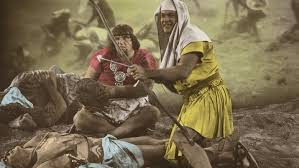
    Baldwin’s performance deserves particular appreciation.

    There is something deliberately physical about his interpretation of Doc. He looks like someone who could survive a fight, and the film repeatedly uses his imposing screen presence.

    Baldwin was also in an interesting period of his career when The Getaway was made. He could still play romantic leads, but he was increasingly demonstrating his ability to inhabit darker and more complicated characters.

    Doc is not necessarily a likable man.

    But he is compelling.

    Baldwin also understands that the character’s relationship with Carol is essential. Without that emotional connection, the film would simply become another chase movie.

    His best moments are therefore not necessarily the shoot-outs or car chases. They are the quieter scenes in which Doc and Carol have to decide whether they can continue trusting one another.

    Kim Basinger is equally important to the film’s success.

    Carol could easily have been written as the stereotypical action-film wife: somebody who screams, cries and waits for the hero to rescue her.

    Instead, she has her own moral compromises and survival instincts.

    Basinger gives her an appealing mixture of toughness and vulnerability.

    She also brings glamour to the film without making Carol seem disconnected from the world around her. This is still a woman who has to deal with criminals, violence and constant danger.

    The marriage between Baldwin and Basinger inevitably adds an extra layer to the film for modern viewers because the two actors were married in real life when the film was made. Their relationship therefore has a certain immediacy that is difficult to separate entirely from the movie itself.

    The action remains the principal reason to revisit The Getaway.

    The film has car chases, shoot-outs, robberies, escapes and violent confrontations, but it is the sense of momentum that really holds everything together.

    Donaldson knows how to build an action sequence.

    There is usually a clear objective.

    The characters are trying to get somewhere.

    Something goes wrong.

    The situation becomes worse.

    They improvise.

    And then another problem emerges.

    That structure gives the action genuine suspense.

    It is also why the film works so well as entertainment even when the story occasionally becomes melodramatic. Once the chase gets underway, the movie knows exactly what it wants to be.

    The Imprint Blu-ray is particularly welcome because the film has never had quite the same home-video profile as some of its contemporaries.

    This is not a 4K UHD presentation; the film is presented on Blu-ray in 1080p high definition. Imprint supplies English DTS-HD Master Audio 5.1 as well as an LPCM 2.0 option, with English hearing-impaired subtitles.

    The picture is pleasing and appropriate for the film’s gritty 1990s aesthetic.

    The cinematography has enough depth and contrast to make the film’s darker interiors work effectively, while the brighter outdoor sequences retain the hard, contemporary look associated with the period. The image does not suddenly transform The Getaway into a pristine modern production, nor should it. The texture of the film is part of its identity.

    What matters is that the presentation allows the viewer to appreciate the cinematography, performances and action without the distractions associated with poor catalogue transfers.

    The 5.1 soundtrack is particularly useful for an action film of this type.

    Gunfire, engines, explosions and the score have room to breathe, while dialogue remains central. The alternative LPCM 2.0 track is a welcome inclusion for viewers who prefer a more straightforward presentation.

    Imprint has given the film a considerably more interesting package than simply dropping the movie onto a bare disc.

    The major new attraction is an audio commentary by film critic Travis Woods. There is also Ambushed: Scoring The Getaway, an interview concerning composer Mark Isham, and Double Crossed: Inside The Getaway, an interview with author and film historian C. Courtney Joyner. These are joined by archival making-of material, behind-the-scenes footage, interviews with Alec Baldwin and Kim Basinger, the theatrical trailer and an image gallery.

    For collectors, these extras significantly increase the value of the release.

    The commentary is especially welcome because the remake is a film that benefits from reassessment. There is so much baggage surrounding it because of Peckinpah’s original that a thoughtful discussion of Donaldson’s version is useful.

    The Mark Isham material is also a nice addition. Music is an important part of the identity of any crime thriller, and the score helps establish the film’s emotional atmosphere.

    The archival interviews provide another reason to keep the disc rather than simply stream the movie. Modern streaming releases frequently give audiences only the feature itself, whereas boutique Blu-ray labels have increasingly become repositories for the history surrounding older films.

    That is exactly what makes an Imprint release attractive.

    The film is part of Imprint’s After Dark: Neo-Noir Cinema – Collection Four, which brings together six films from 1990 to 1997: Wild at Heart, Unlawful Entry, The Getaway, Mulholland Falls, Freeway and City of Industry. Imprint released the collection as a limited-edition seven-disc hardbox with only 1,500 copies produced.

    It is a particularly appropriate home for The Getaway.

    The other movies demonstrate the diversity of 1990s neo-noir, and The Getaway occupies the more traditionally commercial action-oriented end of the spectrum.

    That variety is one of the collection’s strengths.

    It also means that the film can finally be appreciated in the context of the decade that produced it rather than solely through comparison with the 1972 original.

    It is impossible to discuss the 1994 Getaway without mentioning Peckinpah.

    The original is the more historically important film. Steve McQueen’s presence is iconic, Peckinpah’s direction is unmistakable and the movie occupies an important place in early-1970s American cinema.

    But the remake does not need to defeat its predecessor.

    It needs to entertain.

    And it does.

    The 1994 film is slicker, more conventionally structured and more recognisably a mainstream Hollywood action thriller. It lacks some of the strange, abrasive qualities of Peckinpah’s filmmaking, but it compensates with strong production values, an impressive cast and a propulsive narrative.

    In some respects, comparing them is like comparing two different generations of action filmmaking.

    The 1972 film belongs to an era when American directors were experimenting with violence, morality and narrative structure.

    The 1994 film belongs to an era when Hollywood had refined the action genre into a highly efficient commercial machine.

    Both approaches have their merits.

    One of the pleasures of revisiting The Getaway today is discovering that it is considerably more enjoyable than its reputation might suggest.
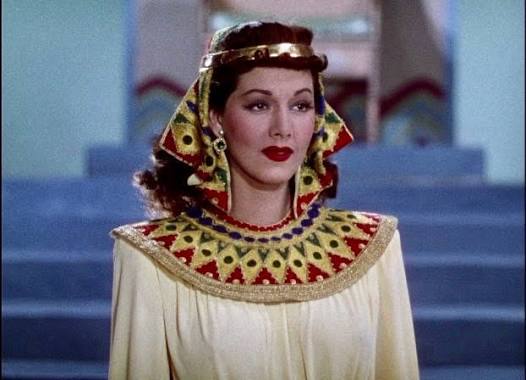
    The movie has never completely escaped the accusation that it was an unnecessary remake.

    That criticism is understandable.

    But unnecessary does not mean unsuccessful.

    There are countless remakes that have nothing to offer. The Getaway at least has the advantage of being competently made and strongly cast.

    The action sequences work.

    The central relationship works.

    The locations work.

    The supporting cast is excellent.

    The film moves.

    And most importantly, it understands the pleasures of the crime genre.

    It is not trying to reinvent cinema.

    It is trying to tell a tough, violent, romantic story about two criminals attempting to survive.

    Sometimes that is enough.

    Imprint’s release of The Getaway is a welcome reassessment of a film that has spent decades living in the shadow of its predecessor.

    Roger Donaldson’s 1994 remake is not Sam Peckinpah’s 1972 classic, nor does it pretend to be. It is a different kind of crime movie: faster, glossier and more conventionally constructed, but still packed with violence, betrayal, romance and suspense.

    Alec Baldwin gives the film a strong central presence, while Kim Basinger brings emotional weight to Carol. The supporting cast is loaded with memorable performers, and the film benefits enormously from the talents of Michael Madsen, James Woods, Jennifer Tilly and an early Philip Seymour Hoffman appearance.

    The action remains entertaining, the production is impressive and the neo-noir atmosphere makes the film a natural companion to the other titles in Imprint’s After Dark collection.

    Most importantly, the film deserves to be judged as more than simply “the remake of The Getaway.”

    It is an enjoyable, tough, occasionally brutal 1990s crime thriller in its own right.

    And the Imprint edition is an excellent way to rediscover it.

    The 1080p presentation is solid, the lossless audio options are welcome, and the collection of new and archival extras gives the release genuine collector appeal. The film is not presented on 4K UHD, but within the context of this particular box set, the Blu-ray presentation is a worthwhile upgrade and a satisfying archival edition.

    For fans of Alec Baldwin, Kim Basinger, Roger Donaldson, Walter Hill, 1990s action cinema or neo-noir, this is a release worth seeking out.

    And for anyone who has always dismissed the 1994 Getaway simply because Steve McQueen got there first, this Imprint edition provides a very good excuse to give the remake another chance.

  • Blu-ray review: “Unlawful Entry” (1992)

    “Unlawful Entry” (1992)

    Drama

    Running Time: 112 minutes

    Written by: Lewis Colick

    Directed by: Jonathan Kaplan

    Featuring: Kurt Russell, Ray Liotta and Madeleine Stowe

    Officer Pete Davis: “Arrest you? I could kill you.”

    There is something particularly effective about a thriller that takes an ordinary source of security and turns it into a source of fear. In Unlawful Entry, the danger does not initially come from some anonymous killer hiding in the shadows or a criminal mastermind plotting an elaborate scheme. It comes wearing a police uniform. More unsettlingly, it comes into the home because the victims themselves have invited it in.

    Jonathan Kaplan’s 1992 psychological thriller is a very entertaining example of the early-1990s domestic thriller, built around a simple but potent idea: what happens when the person who is supposed to protect you becomes the person you need protecting from? Kurt Russell, Madeleine Stowe and Ray Liotta make an exceptionally strong trio, with Liotta delivering one of his most memorable performances as the increasingly obsessive Officer Pete Davis. The film may not always be subtle, and some of its plotting belongs firmly to the world of commercial Hollywood thrillers, but when it works, it works extremely well.

    Imprint’s Blu-ray release gives the film the sort of attention that collectors have come to expect from the label. More importantly, this edition makes Unlawful Entry look and sound considerably better than its reputation as a somewhat forgotten early-’90s thriller might suggest. The release also comes with a generous collection of archival and newly produced extras, making it an especially attractive package for fans of the film, Kaplan, Liotta, or the neo-noir thrillers of the period. The release is presented as part of Imprint’s continuing commitment to rescuing genre titles that deserve another look.
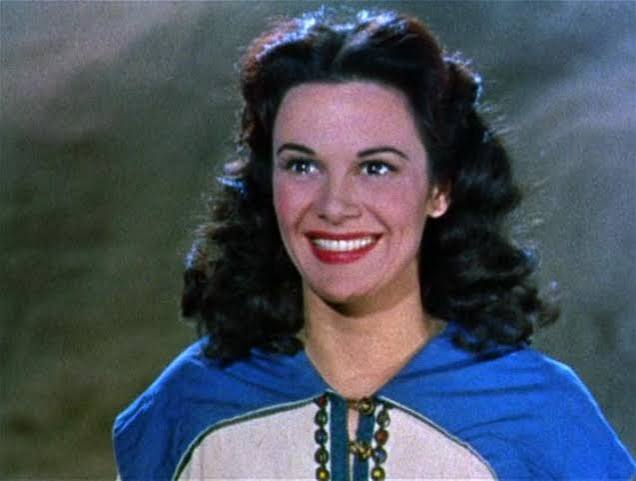
    Unlawful Entry opens with a home invasion. Michael and Karen Carr are a happily married couple living a comfortable Los Angeles life. Their sense of security is suddenly destroyed when a burglar breaks into their home. The sequence is deliberately frightening because the house, normally the place where they should feel safest, is transformed into a trap.

    They call the police, and Officer Pete Davis arrives.

    At first, Davis appears to be precisely the sort of policeman anyone would want responding to a crisis. He is friendly, reassuring and apparently sympathetic to the Carrs’ situation. He helps arrange improvements to their security and becomes sufficiently friendly with Michael and Karen that the relationship begins to extend beyond the original police call.

    That is where the nightmare begins.

    The brilliance of the premise is that Pete does not immediately appear dangerous. If he had arrived as an obviously sinister character, the film would have become much less interesting. Instead, Liotta plays him as somebody who can move effortlessly between friendliness and menace. There is always something slightly wrong about him, but it takes time for that wrongness to become unmistakable.

    Pete becomes fascinated by Karen and increasingly resentful of Michael. What begins as admiration gradually becomes possession. He wants the life the Carrs have, and particularly wants Karen. His obsession becomes so extreme that he begins manipulating circumstances around the couple, using his position as a police officer to undermine Michael and make himself indispensable to Karen.

    The premise plays directly into one of the most effective fears of the domestic thriller: the fear that nobody will believe you.

    That element gives Unlawful Entry considerably more substance than its exploitation-style premise might initially suggest. Michael cannot simply confront Pete. Pete is a police officer. He has authority, credibility and institutional protection. If Michael becomes aggressive, Pete can portray him as unstable. If Michael complains, Pete can dismiss the allegations. If Michael attempts to expose him, Pete can manipulate the system.
    This is what makes the film’s title so appropriate. Pete’s intrusion is not merely physical. He gradually invades every part of the Carrs’ lives.

    The film belongs to Ray Liotta.

    There is no question that Kurt Russell is an excellent leading man, and Madeleine Stowe provides an important emotional centre, but Liotta is the actor who gives Unlawful Entry its electricity. Officer Pete Davis is one of those characters who could easily have become a generic movie psychopath. Liotta makes him considerably more disturbing.

    Pete does not behave like a lunatic from the beginning. He behaves like a man who believes he is completely justified.

    That distinction is crucial.

    Liotta’s performance is based on small shifts in behaviour. Pete can smile warmly, speak politely and appear completely reasonable. Then something changes in his eyes or his tone, and suddenly the audience understands that there is something deeply unhealthy beneath the surface.

    His performance also benefits from the character’s professional competence. Pete is not frightening merely because he is violent. He is frightening because he understands the machinery of authority. He knows how police procedures work. He knows how evidence can be interpreted. He understands how a uniform affects people’s perceptions.

    That makes him much more dangerous than a conventional stalker.

    Liotta had already demonstrated his ability to play volatile and morally complicated characters, but Unlawful Entry gives him an opportunity to build a villain almost entirely through psychological manipulation. The eventual violence is effective precisely because so much of the character’s menace has been established beforehand.

    The film also makes good use of Liotta’s physical presence. There is something inherently unsettling about the way Pete occupies the Carr household. He becomes increasingly comfortable there, and his confidence grows as Michael becomes more suspicious.

    It is almost as though Pete is gradually rehearsing the role of Michael.

    Kurt Russell is often associated with tougher, more overtly heroic characters, which makes his performance as Michael Carr particularly interesting.

    Michael is not an action hero. He is an ordinary successful man who finds himself in a situation he cannot control. Russell therefore has to spend much of the movie playing frustration, uncertainty and fear rather than confidence.

    The character’s problem is that he initially believes rational behaviour will solve the situation. He tries talking to Pete. He tries avoiding him. He tries explaining the problem. But every attempt to push Pete away seems to make things worse.

    Russell handles the gradual transformation effectively.

    Michael becomes increasingly angry, but the audience can understand why. The film is essentially watching a reasonable man being pushed into unreasonable behaviour. Pete is deliberately provoking him, and Michael eventually reaches the point where his anger becomes a weapon that Pete can use against him.

    There is an important contrast between Russell and Liotta. Russell’s performance is grounded and restrained, while Liotta’s is increasingly theatrical and unpredictable. The tension comes from watching these two personalities collide.

    Madeleine Stowe’s Karen is sometimes criticised for being less developed than the two male characters, and there is some truth in that criticism. The film is primarily constructed around Michael and Pete, with Karen becoming the object around which their conflict revolves.

    Nevertheless, Stowe gives Karen warmth and intelligence.

    Her mistake is not that she is deliberately encouraging Pete. Rather, she fails to recognise the seriousness of his behaviour quickly enough. Pete initially appears to be a lonely, helpful policeman, and Karen responds to that apparent friendliness. The tragedy is that she gradually discovers that the friendliness was a disguise.

    This is important because it prevents Karen from simply becoming a stereotypical helpless victim. She is an active participant in the story, even though the film ultimately places her in an increasingly dangerous position.

    Stowe’s performance is also useful in making Pete’s obsession believable. If Karen were cold or hostile from the beginning, his fixation would become more difficult to understand. Instead, she behaves like a normal person dealing with someone she assumes is fundamentally decent.

    And that is exactly how Pete gets inside the family.

    Jonathan Kaplan approaches the material as a commercial thriller, but there is a genuine Hitchcockian influence running throughout the film.

    Kaplan himself discusses his admiration for Alfred Hitchcock in the archival commentary included on this release, explaining how Hitchcock’s ideas about character and mise-en-scène influenced his approach.

    That influence is evident in the way Kaplan turns ordinary environments into threatening spaces.

    The Carrs’ house is especially important. At first it represents comfort, wealth and security. Following the burglary, however, the same environment becomes psychologically contaminated. Doors, windows, hallways and rooms acquire different meanings.

    The film understands that a thriller does not always need to show the villain. Sometimes it is enough to know that he has been there.

    Kaplan also does a good job of allowing Pete’s presence to grow gradually. The first half of Unlawful Entry is arguably the strongest because it relies more heavily on psychological tension. Once the audience understands what Pete wants, the film becomes more conventional, but Kaplan maintains enough momentum to carry the story through its more familiar later stages.

    The movie’s Los Angeles setting is also effectively used. Rather than presenting the city purely as an anonymous urban landscape, Kaplan gives the story a very specific early-1990s atmosphere. The Carrs’ comfortable lifestyle, security technology, police culture and suburban anxiety all belong unmistakably to the period.

    One of the most interesting aspects of Unlawful Entry is its obsession with security.

    The entire story begins because the Carrs’ security has failed. They respond by attempting to improve it. Yet the person who becomes involved in that process is precisely the individual who ultimately destroys their sense of safety.

    The film therefore creates an ironic cycle.

    The Carrs want better locks.

    They want an alarm.

    They want protection.

    And they trust a policeman.

    But the greatest threat comes through the very systems designed to protect them.

    This gives the film an unexpectedly cynical edge. It is not simply saying that dangerous individuals exist. It is suggesting that institutions and systems can be exploited by dangerous individuals.

    That idea remains one of the movie’s most effective qualities.

    Watching Unlawful Entry today is also an enjoyable trip back to the commercial thriller cinema of the early 1990s.

    This was an era when Hollywood produced a remarkable number of films built around domestic paranoia, obsession and apparently respectable people whose lives suddenly become nightmares.

    The genre often involved professional middle-class protagonists whose comfortable lives were threatened by outsiders. Unlawful Entry fits perfectly into that tradition.

    The film is also part of a fascinating period in which Hollywood thrillers became increasingly interested in corrupt or psychologically unstable law-enforcement characters. Its themes have an obvious relationship to films such as Internal Affairs, which appeared only a couple of years earlier.

    The similarities are difficult to ignore, but Unlawful Entry has its own identity because the central conflict is so personal. Pete is not simply a corrupt policeman. He wants Michael’s life.

    That makes the story feel more intimate.

    James Horner’s score is another important part of the film’s atmosphere.

    Horner was one of the defining composers of Hollywood cinema during this period, and his work here provides the thriller with an appropriately uneasy musical identity.

    The score does not constantly announce itself. Instead, it helps establish the psychological instability beneath the seemingly ordinary situations.

    Imprint’s release is particularly useful in this regard because the extras include Symphonic Intruder: Inside the Thriller Scores of James Horner, a featurette in which music historian Daniel Schweiger discusses Horner’s career, musical style and the characteristics of his score for Unlawful Entry.

    It is exactly the kind of supplement that adds value to a catalogue release.

    The major attraction of this Imprint release is, of course, the presentation.

    The current Imprint edition is actually a two-disc 4K Ultra HD and Blu-ray package rather than a standard Blu-ray-only release. The restoration is presented in native 4K with Dolby Vision and HDR10, in the original 1.85:1 aspect ratio, with English DTS-HD Master Audio 5.1 and LPCM 2.0 options. Both discs are region free.

    For collectors who specifically describe it as the Imprint Blu-ray, the important point is that the Blu-ray disc is included as part of this combo package and contains a substantial portion of the supplementary material.

    The restoration is particularly impressive.

    The 4K restoration was sourced from the original camera negative, and the resulting image offers substantially improved clarity, depth and tonal separation. The period appearance of the film has been retained rather than being subjected to an excessively modern digital makeover.

    That is exactly what you want from a restoration of a 1992 thriller.

    The film should look like a beautifully preserved 1992 film, not like something shot yesterday.

    Grain remains visible, colours are convincing and the darker scenes retain an appropriate sense of atmosphere. Flesh tones and production design benefit enormously from the increased resolution. The Los Angeles locations acquire greater dimensionality, while interiors have substantially more texture.

    The 1080p Blu-ray presentation also benefits from the new restoration, although the 4K disc is naturally the preferred way to experience the movie.

    One minor criticism concerns the Blu-ray disc itself. Because it carries a large quantity of supplementary material, some darker sequences can show slightly less than ideal grain presentation and encoding. It is a relatively minor issue, but it is worth mentioning for those expecting absolute perfection.

    The audio presentation is equally strong.

    The English DTS-HD Master Audio 5.1 track gives the film a fuller and more immersive soundscape than one might expect from a 1992 thriller.

    Dialogue is clean and stable, which is particularly important in a film where so much tension comes from conversation. Pete’s seemingly innocent remarks become increasingly threatening, and having clean dialogue makes those scenes considerably more effective.

    The action sequences also benefit. The home invasion, confrontations and pursuit sequences have greater dynamic impact, while Horner’s score receives enough separation to occupy the surrounding channels effectively.

    For purists, the inclusion of the LPCM 2.0 option is welcome, allowing viewers to experience the soundtrack in a more traditional presentation.

    This is where the Imprint release becomes especially impressive.

    The archival commentary by Jonathan Kaplan is an essential extra. Kaplan discusses his Hitchcock influences, the casting of Russell and Liotta, the construction of individual scenes and decisions concerning editing.

    For anyone interested in how commercial thrillers are made, it is extremely valuable.

    The newer interview material is equally worthwhile.

    Unrestrained Realism features Kaplan discussing his career and the development of Unlawful Entry, including the fact that Liotta was already attached when Kaplan became involved. Kaplan also discusses changes made to the original screenplay.

    Too Tightly Wound: Inside the Filming of Unlawful Entry focuses on cinematographer Jamie Anderson and his collaboration with Kaplan. The discussion of locations and the visual construction of the movie is particularly welcome.

    There are also archival featurettes, interviews with Russell, Liotta, Stowe and other members of the production, behind-the-scenes material, B-roll, the theatrical trailer and television spots.

    The Ray Liotta interview is especially interesting today. His discussion of how he prepared to play Pete offers another perspective on a performance that remains the film’s greatest asset.

    The package is rounded out by a substantial 126-page hardback book containing production stills and essays on Unlawful Entry and several other films in the collection.

    That is an extraordinary amount of supplementary material for a title that might once have been regarded as merely another early-’90s thriller.

    Despite all its strengths, Unlawful Entry is not a perfect film.

    The biggest weakness is that the screenplay eventually becomes predictable.

    Once Pete’s true intentions become clear, the audience is largely waiting for Michael and Karen to catch up. Some of the plot mechanics are also rather convenient. Pete’s ability to manipulate circumstances occasionally stretches credibility, and certain developments feel more like requirements of the thriller formula than organic consequences of the characters’ behaviour.

    The final section also becomes more conventional than the excellent early material.

    The film is strongest when it is about uncertainty.

    Is Pete merely friendly?

    Is Michael becoming paranoid?

    Will anyone believe him?

    How much authority does Pete actually have?

    Those questions create genuine tension.

    Once the movie answers them, it has fewer surprises available.

    Yet this is hardly fatal. The performances remain strong enough to keep the film engaging, and Kaplan’s direction ensures that the movie never becomes completely routine.

    The reason Unlawful Entry has survived better than many of its contemporaries is simple: Ray Liotta.

    Pete Davis is an unforgettable character.

    There is something almost frighteningly plausible about the way he moves from helpful policeman to obsessive stalker. His uniform gives him instant credibility, and his ability to weaponise that credibility is what makes him so dangerous.

    The film also benefits from Kurt Russell’s grounded performance. Russell gives the audience someone to identify with while Liotta gives them someone to fear.

    That combination works.

    The film was released theatrically on June 26, 1992, and runs approximately 111 minutes. Its principal cast consists of Russell, Liotta and Stowe, with Roger E. Mosley and Ken Lerner among the supporting players.

    It received a reasonably positive critical response when released, and the basic consensus remains understandable: the story may not be particularly original, but the cast and direction make it effective.

    Roger Ebert, in his contemporary review, particularly recognised the movie’s central fear: being trapped in a situation where the authorities themselves are arrayed against you and proving what is happening becomes almost impossible.

    That remains the film’s strongest idea.

    Unlawful Entry is exactly the kind of film that benefits from the attention of a boutique label.

    It is not a forgotten masterpiece, nor is it an especially revolutionary thriller. Its story borrows heavily from familiar psychological-thriller territory, and its later stages occasionally surrender the subtlety of its opening half to conventional action and suspense.

    But it is a very good commercial thriller.

    Jonathan Kaplan understands how to build tension from ordinary surroundings. Kurt Russell provides a convincing portrait of a man gradually losing control of his life. Madeleine Stowe gives the film emotional credibility. And Ray Liotta delivers a superbly sinister performance that elevates the entire production.

    The Imprint release is therefore easy to recommend.

    The new restoration provides a handsome presentation of the film, with the 4K disc offering excellent clarity, depth and HDR/Dolby Vision options, while the accompanying Blu-ray provides a strong 1080p presentation and houses an impressive collection of supplementary material. The DTS-HD Master Audio 5.1 soundtrack is clean and dynamic, and the archival and newly produced extras make this considerably more than a bare-bones catalogue release.

    Most importantly, the package encourages a reassessment of a film that has too often been reduced to “the Ray Liotta psycho-cop movie.”

    It is more than that.

    Unlawful Entry is an entertaining, atmospheric and occasionally genuinely unsettling portrait of misplaced trust. Its central nightmare remains remarkably simple: you call the police because someone has invaded your home, only to discover that the person you trusted to protect you has decided that your home, your wife and your entire life should belong to him.

    That is a pretty effective nightmare.

    And thanks to Imprint’s excellent presentation, Unlawful Entry has rarely looked better.

  • Blu-ray review: “Wild at Heart” (1990)

    “Wild at Heart” (1990)

    Drama

    Running Time: 124 minutes

    Written & Directed by: David Lynch

    Featuring: Nicolas Cage, Laura Dern, Willem Dafoe, Crispin Glover, Diane Ladd, Isabella Rossellini and Harry Dean Stanton

    Lula: “This whole world’s wild at heart and weird on top.”

    David Lynch’s Wild at Heart is one of those films that seems to become more fascinating the further it gets from the period in which it was made. When it arrived in 1990, following the critical and commercial impact of Blue Velvet and the television phenomenon of Twin Peaks, Lynch was already established as one of American cinema’s great outsiders. Yet Wild at Heart proved to be a particularly strange proposition even by Lynch’s standards. It was a romantic road movie, a crime picture, a grotesque black comedy, a dream fantasy, a celebration of rock ’n’ roll and an unapologetically excessive melodrama, all wrapped around a surprisingly sincere love story.

    The new Imprint Blu-ray, released as part of the label’s After Dark: Neo-Noir Cinema – Collection Four, gives this extraordinary film another opportunity to be appreciated in high definition. Imprint Collection #568 is included in the seven-disc limited-edition hardbox alongside Unlawful Entry, The Getaway, Mulholland Falls, Freeway and City of Industry. The collection was limited to 1,500 copies, and Wild at Heart itself receives a substantial collection of supplementary material, including several new interviews, a new commentary and, most significantly for collectors, the uncensored Bobby Peru scene.

    What makes this release especially welcome is that Wild at Heart has never really been a film that benefited from being treated as simply another catalogue title. Lynch’s imagery, colour, music and sound design are so important to the experience that a good presentation can dramatically change the way the film is perceived. At its best, this is a movie that assaults the senses while simultaneously presenting an almost old-fashioned story about two people who simply refuse to stop loving one another.

    At its heart, Wild at Heart is the story of Sailor Ripley and Lula Fortune, played by Nicolas Cage and Laura Dern. They are young lovers who want to escape together after Lula’s mother, Marietta Fortune, played by Diane Ladd, attempts to destroy their relationship. Sailor has already served time in prison after killing a man in self-defence, and Marietta considers him entirely unsuitable for her daughter.

    After Sailor is released, Lula joins him on the road despite her mother’s objections. They head towards California, with the intention of building a life together, but their journey becomes increasingly complicated by criminals, bounty hunters, jealous lovers, mysterious strangers and the increasingly unhinged behaviour of Marietta.

    On paper, it sounds like a conventional lovers-on-the-run story.

    In Lynch’s hands, it becomes something else entirely.

    There are moments of genuine tenderness followed almost immediately by grotesque violence. Characters seem to wander in from another film. Time and reality frequently appear unstable. The characters inhabit a recognisable America of highways, motels, bars, diners and dusty towns, but Lynch transforms that America into something closer to a fever dream.

    The film’s connection with The Wizard of Oz is particularly important. Lula repeatedly invokes the movie, while the yellow brick road becomes an almost subconscious metaphor for the journey undertaken by the two lovers. Lynch takes one of the most comforting fantasies in American popular culture and places it alongside murder, sexual menace, drug abuse, violence and psychological trauma.

    It is a deliberately contradictory movie.

    It is romantic and ugly.

    It is funny and horrifying.

    It is sentimental and cynical.

    It is artificial and strangely emotionally honest.
    That contradiction is precisely what makes it so memorable.

    The film simply would not work without Nicolas Cage and Laura Dern.

    Cage’s Sailor is one of his great early performances because he understands that the character must be ridiculous and heroic at exactly the same time. Sailor wears his famous snakeskin jacket as though it were a suit of armour. He is fiercely protective of Lula, stubborn, vain, violent when necessary and completely devoted to his own image.

    Cage plays Sailor as a man who has constructed his personality from rock ’n’ roll mythology.

    There is Elvis in the swagger, James Dean in the rebellion and something almost comic-book-like in the way he carries himself. Sailor does not merely listen to music; he appears to believe that music has given him a code by which to live.

    The wonderful thing about Cage’s performance is that he never completely mocks Sailor. The character may be absurd, but Cage treats his feelings as genuine. When Sailor sings Elvis Presley’s “Love Me,” the sequence could easily have become a joke. Instead, it becomes one of the film’s defining expressions of romantic devotion.

    Laura Dern is equally good, and arguably has the more difficult role.

    Lula has to live in a world of Lynchian extremes while still providing the emotional centre of the film. Dern gives her enormous vulnerability but also considerable strength. Lula is not merely a frightened young woman being dragged around by a dangerous man. She is making choices, taking risks and deliberately choosing Sailor despite the consequences.

    Dern also understands the film’s tonal instability. Lula can be frightened in one scene, sexually confident in another, hysterically funny somewhere else and genuinely traumatised a few minutes later.

    The chemistry between Cage and Dern is essential.

    Their relationship is excessive, but that is the point. They love each other with the kind of absolute commitment normally reserved for fairy tales. In a world where almost every other relationship is contaminated by manipulation, violence or betrayal, their devotion becomes strangely pure.

    Diane Ladd’s Marietta Fortune is one of the great pieces of casting in Lynch’s filmography.

    Ladd, Dern’s real-life mother, gives a performance so enormous that it threatens to overwhelm every scene in which she appears. Marietta is hysterical, manipulative, sexually repressed, sexually obsessive, violent and completely consumed by her hatred of Sailor.

    Yet she is not simply a comic villain.

    There is something deeply damaged about Marietta. Her hatred is bound up with jealousy, desire, fear and the inability to accept that her daughter is becoming an independent adult.

    Ladd plays all of this at maximum volume.

    The result is one of those performances that could have been disastrous in another film but is completely appropriate here. Marietta does not behave like a realistic human being because Wild at Heart is not particularly interested in realism. She behaves like an emotional force of nature.

    Ladd deservedly received an Academy Award nomination for the performance, and watching the film again makes it easy to understand why.

    If Diane Ladd represents the film’s hysterical emotional energy, Willem Dafoe’s Bobby Peru represents its purest nightmare.

    Bobby Peru is one of the most repulsive characters Lynch ever created.

    Dafoe completely disappears into the part. The greasy hair, rotten teeth, strange facial expressions and unpleasant mannerisms are only the surface details. What makes Bobby Peru so disturbing is the way Dafoe plays him as somebody who appears to enjoy making other people uncomfortable.

    He is not merely dangerous.

    He enjoys danger.

    His appearance in the film changes the atmosphere immediately. Suddenly the surreal comedy becomes genuinely threatening.

    The extended Bobby Peru sequence is among the film’s most notorious passages, and the Imprint release’s inclusion of the uncensored version is therefore particularly significant. Earlier home-video editions have presented different configurations of the material, making the inclusion here especially interesting for collectors and Lynch devotees. The Imprint disc specifically lists the “Uncensored Bobby Peru Scene” among its extras.

    Dafoe’s performance remains one of the most unforgettable supporting performances in American cinema of the early 1990s.

    Harry Dean Stanton brings a completely different quality to the film.

    As Johnnie Farragut, he is caught up in the nightmare created by Marietta, but Stanton gives the character a weary humanity that helps ground the movie. His presence is also important because Stanton was such a natural Lynch performer. He could communicate sadness, eccentricity and mystery without appearing to be acting at all.

    The supporting cast is extraordinary.

    Crispin Glover appears as Dell, bringing his own peculiar energy to the film. Isabella Rossellini, Sherilyn Fenn, J. E. Freeman, Grace Zabriskie, Calvin Lockhart and a host of familiar faces populate the strange universe through which Sailor and Lula travel.

    One of the pleasures of Wild at Heart is simply watching these performers appear and wondering what Lynch is going to do with them.

    The film is visually extraordinary.

    Frederick Elmes’ cinematography captures an America that looks both familiar and unreal. Neon lights, dark highways, desert landscapes, cheap motels and garish interiors become part of Lynch’s visual vocabulary.

    Colour is especially important.

    Red is everywhere.

    Fire is everywhere.

    Black leather, yellow lights, blue night skies and intensely saturated interiors create a world that feels closer to an illustrated nightmare than documentary reality.

    The famous opening sequence immediately establishes this approach. Violence erupts suddenly, accompanied by Lula’s scream, before the film moves into the intensely stylised world of Sailor and Lula.

    Lynch never wants the viewer to forget that they are watching a constructed fantasy.

    That is why the snakeskin jacket matters.

    It is not merely a piece of clothing. It becomes Sailor’s declaration of identity. When he tells Lula that it is a symbol of his individuality and belief in personal freedom, the ridiculousness and sincerity of the statement exist simultaneously.

    That is Wild at Heart in miniature.

    Imprint presents Wild at Heart on Blu-ray in 1080p high definition with its 2.35:1 presentation, retaining the film’s widescreen cinematic appearance. The disc carries English DTS-HD Master Audio 5.1 and LPCM 2.0 audio options, with optional English hearing-impaired subtitles.

    The important point here is that the film’s visual character is not merely about resolution.

    A modern presentation of Wild at Heart needs to preserve the film’s grain, contrast, colour intensity and deep blacks without attempting to make it look like a digitally photographed movie. The earlier Blu-ray editions were generally regarded as solid but ultimately dependent on older HD masters. Reviews of the Twilight Time edition, for example, praised its vibrant colours and detail while noting that some darker sequences exhibited heavier grain and that the transfer was not quite definitive by Blu-ray standards.

    The Imprint presentation is therefore welcome primarily because it provides another high-definition opportunity to appreciate Lynch’s deliberately heightened imagery.

    The colours are fundamental to the film.

    The reds need to look red rather than brown.

    The night scenes need to retain atmosphere without crushing everything into featureless black.

    The desert sequences need to have texture and depth.

    And the numerous interiors need to retain the deliberately artificial quality of Lynch’s production design.

    This is not a movie that should be scrubbed clean of its cinematic texture. Grain is part of its personality.

    If the image is important, the soundtrack is absolutely essential.

    Angelo Badalamenti’s music is one of the defining components of Wild at Heart. His score can be romantic, threatening, mournful or completely surreal, often within the same sequence.

    Then there is the rock music.

    Lynch uses music almost like dialogue.

    The songs tell us who these characters are.

    Sailor’s relationship with Elvis Presley is part of his mythology, while the broader soundtrack creates the film’s emotional landscape. Chris Isaak’s “Wicked Game” is particularly memorable and became permanently associated with the movie.

    The DTS-HD Master Audio 5.1 presentation is well suited to this material. The film contains enough music, effects and environmental sound to benefit from a strong surround presentation, while the LPCM 2.0 option provides an alternative for viewers who prefer a more straightforward stereo presentation. The isolated music-and-effects track is another valuable inclusion for enthusiasts.

    This is the kind of movie where a good sound system makes a substantial difference.

    The roar of engines, the sound of gunfire, the music emerging from bars and jukeboxes, the ambience of motels and diners and Badalamenti’s score all contribute to the sense that the characters are travelling through a heightened version of America.

    One of the major attractions of the Imprint edition is the new audio commentary by producer Monty Montgomery.

    For a film like Wild at Heart, a commentary from someone involved in the production is particularly valuable because the movie has generated so much mythology over the years.

    Montgomery’s perspective offers an opportunity to understand the practical realities behind Lynch’s surrealism: the casting, production, adaptation of Barry Gifford’s novel and the process of transforming the material into something unmistakably Lynchian.

    The commentary is also useful because Wild at Heart can sometimes appear effortless.

    It is anything but.

    The apparently chaotic nature of the film is the result of enormous amounts of filmmaking craft. Production design, cinematography, music, editing, performances and sound all have to work together to sustain Lynch’s unstable tonal balance.

    A commentary from the producer helps reveal the machinery behind the madness.

    The Imprint release also adds three particularly welcome new interviews.

    There is a new interview with Willem Dafoe, a new interview with editor Duwayne Dunham, and a new interview with casting director Johanna Ray.

    These are excellent choices.

    Dafoe’s participation is especially desirable because Bobby Peru is one of the film’s most discussed characters. Understanding how Dafoe approached such an extreme role gives the viewer another way of looking at the performance.

    Dunham’s involvement is equally important because editing is often overlooked in discussions of Lynch. Wild at Heart is filled with abrupt tonal transitions, unusual rhythms and strange juxtapositions. The editing helps make those transitions feel natural within Lynch’s dream logic.

    Johanna Ray’s interview adds another useful perspective because casting is fundamental to the film’s success. It is difficult to imagine anyone other than Cage, Dern, Ladd and Dafoe inhabiting these roles with such commitment.

    Imprint has also carried over a considerable amount of previously released material.

    Love, Death, Elvis & Oz: The Making of Wild at Heart remains one of the most worthwhile extras. Originally produced for the earlier DVD release, it includes contributions from Lynch, Cage, Dern, Dafoe, Ladd, Barry Gifford, Frederick Elmes and other members of the production.

    Dell’s Lunch Counter collects extended interview material, while Specific Spontaneity: Focus on Lynch explores the director’s working methods and personality.

    There is also the original 1990 making-of featurette, the Barry Gifford interview, the theatrical trailer, television spots and image gallery.

    Some of this material is obviously archival and does not have the visual polish of a modern production.

    That is not necessarily a weakness.

    In fact, the older material has considerable historical value because it captures the film and its creators much closer to the time of production.

    Barry Gifford’s contribution to Wild at Heart should never be underestimated.

    Lynch adapted Gifford’s novel but transformed it considerably, making the film much more recognisably his own. The relationship between the book and movie is therefore fascinating.

    Gifford’s presence in the supplementary material gives viewers an opportunity to consider what was gained and lost in the adaptation.

    The film feels like Lynch reading Gifford through the prism of his own cinematic obsessions.

    The result is not a straightforward literary adaptation.

    It is a collision between two artists.

    The new and archival material surrounding Gifford helps illuminate that relationship.

    Perhaps the most remarkable thing about Wild at Heart is that underneath all the screaming, violence, surreal imagery and grotesque comedy is a remarkably simple love story.

    Sailor and Lula want to be together.

    Everything else gets in the way.

    That simplicity is crucial.

    If the film were merely an exercise in Lynchian eccentricity, it would eventually become exhausting. Instead, the emotional sincerity of Cage and Dern gives the movie a surprisingly warm centre.

    The characters may live in a world of nightmares, but their love is real.

    That is why the ending works.

    Lynch has spent most of the movie showing us a world where goodness is constantly threatened. Then, rather unexpectedly, he allows Sailor and Lula a moment of genuine emotional release.

    The appearance of the Good Witch, played by Sheryl Lee, pushes the film completely into fairy-tale territory.

    It is sentimental.

    It is ridiculous.

    It is beautiful.

    And it is completely right.

    Wild at Heart remains difficult to classify.

    Calling it a neo-noir is accurate but inadequate.

    Calling it a road movie is accurate but inadequate.

    Calling it a romance is accurate but inadequate.

    Calling it a comedy is sometimes accurate and sometimes completely wrong.

    It is a film that deliberately refuses to settle into one genre.

    That is also why it can be divisive.

    Lynch pushes almost every aspect of the movie beyond conventional boundaries. The violence is heightened. The performances are heightened. The colours are heightened. The dialogue is heightened. The music is heightened.

    Some viewers will find this exhilarating.

    Others will find it exhausting.

    But that is part of the film’s identity.

    There is no halfway version of Wild at Heart.

    You either accept Lynch’s particular wavelength or you spend two hours wondering why everyone is behaving so strangely.

    The movie itself would probably consider the second reaction a compliment.

    For collectors who already own an earlier Blu-ray, the question is whether this edition offers enough to justify another purchase.

    The answer depends largely on how important supplementary material is to you.

    Earlier Blu-ray releases, particularly the Twilight Time and Shout Select editions, already offered solid HD presentations and substantial archival extras. The Shout Select release also included the extended and deleted scenes, while earlier editions carried the making-of material and other archival features.

    Imprint’s major advantages are the new commentary, the new Dafoe, Dunham and Ray interviews, the uncensored Bobby Peru scene and the fact that it places the film within an attractive limited-edition neo-noir collection.

    There is also an interesting historical footnote here. The new Criterion edition announced for November 2026 will use a new 4K restoration of the unrated international version, supervised by cinematographer Frederick Elmes and approved by the David Lynch Estate.

    That means the Imprint Blu-ray is unlikely to be the final word on Wild at Heart as a home-video presentation.

    But that does not make it irrelevant.

    Quite the opposite.

    For Australian collectors and fans of Imprint’s neo-noir line, this is a very appealing package, particularly because the film itself is accompanied by meaningful new material rather than simply being recycled as another catalogue title.

    Wild at Heart remains one of David Lynch’s strangest and most emotionally direct films.

    It is not as perfectly controlled as Blue Velvet, as mysterious as Mulholland Drive or as dreamlike as Lost Highway. It is messier, louder and more deliberately excessive.

    But that is precisely its charm.

    It is a film about two lovers travelling through an America populated by monsters, criminals, eccentrics and damaged people. It is a movie in which Elvis Presley, The Wizard of Oz, snakeskin jackets, road movies, murder, sex, violence, romance and surrealism can somehow coexist.
    Nicolas Cage and Laura Dern are magnificent together. Diane Ladd is unforgettable. Willem Dafoe is terrifying. Harry Dean Stanton provides genuine emotional weight. Angelo Badalamenti’s music is superb. Frederick Elmes’ cinematography gives the film its feverish visual identity. And Lynch somehow holds all of these wildly different elements together.
    The Imprint Blu-ray is a strong package for collectors. The 1080p presentation, DTS-HD Master Audio 5.1 and LPCM 2.0 soundtracks provide the necessary technical foundation, while the combination of archival material and new extras makes this considerably more than a bare-bones catalogue release. The new Monty Montgomery commentary and interviews with Dafoe, Dunham and Ray are particularly welcome, while the inclusion of the uncensored Bobby Peru scene adds genuine value for dedicated fans.

    It is worth remembering that a more definitive 4K restoration is now on the horizon from Criterion, so collectors who are primarily concerned with having the very best possible image may reasonably decide to wait.

    But judged on its own terms, the Imprint release is an excellent celebration of a film that deserves to be rediscovered.

    Wild at Heart is excessive, bizarre, funny, violent, romantic, disturbing and occasionally absurd.

    In other words, it is pure David Lynch.

    And beneath all the madness is the film’s simplest and most enduring idea: the world may be completely insane, but sometimes two people can find each other and decide that they are going to keep loving one another anyway.

    That is what gives Wild at Heart its beating heart.

    And after more than three decades, it is still beating wildly.

  • 4K Blu-ray review: “1408” (2007)

    “1408” (2007)

    Horror

    Running Time: 104 minutes

    Written by: Matt Greenberg, Scott Alexander and Larry Karaszewski

    Directed by: Mikael Håfström

    Featuring: John Cusack, Samuel L. Jackson, Mary McCormack and Tony Shalhoub

    Room 1408: “Even if you leave this room, you can never leave this room!”

    Few Stephen King adaptations have surprised audiences quite like 1408. Released in 2007 and directed by Mikael Håfström, the film arrived during a period when Hollywood was producing a steady stream of King adaptations with mixed success. While many expected another conventional haunted house movie, 1408 proved to be something much richer—a deeply psychological horror film that relies less on monsters and jump scares than on grief, guilt, and emotional trauma. Nearly two decades later, the film remains one of the finest modern Stephen King adaptations, and Imprint Films’ new 4K Ultra HD release gives this underrated classic the premium presentation it has long deserved.

    Based on King’s short story of the same name, 1408 follows paranormal investigator and author Mike Enslin (John Cusack), a cynical writer who travels across America debunking supposedly haunted locations. Having built a career exposing fraudulent ghost stories, Enslin receives an anonymous postcard warning him not to enter Room 1408 at New York’s Dolphin Hotel. Naturally, curiosity gets the better of him.

    Despite repeated warnings from hotel manager Gerald Olin (Samuel L. Jackson), Enslin insists on spending the night in the infamous room. What begins as another routine investigation soon becomes an unrelenting descent into psychological terror as Room 1408 manipulates reality itself, forcing Enslin to confront the darkest memories of his life.

    Unlike many supernatural horror films, 1408 spends surprisingly little time explaining the evil inside the room. There are no elaborate mythologies, cursed artifacts, or ghostly villains with tragic backstories. The room simply exists as an unknowable force of malevolence, and that mystery makes it infinitely more frightening.

    John Cusack carries virtually the entire film on his shoulders, delivering one of the strongest performances of his career. Much of the movie features him alone, reacting to invisible threats and impossible situations. Lesser actors might have struggled to maintain audience engagement, but Cusack effortlessly commands every frame.

    Mike Enslin begins the story as a man who believes nothing. His scepticism has become both his profession and his emotional defence mechanism. Following the death of his daughter Katie, he has emotionally withdrawn from everyone around him, including his estranged wife Lily. The horrors inside Room 1408 are terrifying not because they threaten his life, but because they force him to relive the emotional pain he has spent years trying to suppress.

    Cusack perfectly balances sarcasm, arrogance, vulnerability and complete emotional collapse. Watching his confidence slowly disappear as the room dismantles his sense of reality is genuinely unsettling. His gradual descent into panic never feels theatrical or exaggerated—it feels painfully human.

    Samuel L. Jackson appears relatively briefly but makes a lasting impression as hotel manager Gerald Olin. His famous warning—”It’s an evil fucking room”—has become one of the film’s defining moments. Jackson wisely avoids overplaying the role. Olin genuinely wants to protect Enslin, not because of superstition, but because experience has convinced him that no one survives Room 1408 unchanged.

    Director Mikael Håfström deserves enormous credit for resisting the temptation to turn 1408 into a conventional haunted house movie. Instead, the film constantly shifts between psychological horror, supernatural nightmare and emotional drama.

    The room itself becomes a character.

    It changes shape.

    It alters time.

    It manipulates memories.

    It bends reality.

    Every apparent escape only leads to another layer of psychological imprisonment. Viewers never know whether what they’re seeing is real or another illusion created by the room.

    That constant uncertainty keeps the audience as disoriented as Enslin himself.

    One particularly brilliant aspect of the screenplay is how the room gradually escalates its attacks. At first the disturbances seem almost amusing—a radio turning on by itself, strange noises, minor temperature changes. But once the famous countdown begins, the room becomes an unstoppable force.

    From that point forward, the film rarely allows the audience a chance to breathe.

    Unlike many horror films that rely primarily on gore, 1408 creates fear through atmosphere and emotional devastation. The room weaponises memories, regret and grief. Some of the most disturbing scenes involve Enslin’s deceased daughter rather than any supernatural monster.

    Those emotional moments elevate 1408 far above standard horror fare.

    The production design is remarkable considering most of the movie takes place inside one hotel room. Every subtle transformation of Room 1408 reflects Enslin’s deteriorating mental state.

    Walls move.

    Windows disappear.

    Furniture changes.

    The room shifts from elegant luxury suite to living nightmare without ever losing its essential identity.

    The visual effects have aged surprisingly well because they support the storytelling rather than overwhelm it. Practical effects combine seamlessly with digital enhancements to create surreal imagery that remains effective nearly twenty years later.

    Gabriel Yared’s haunting musical score deserves special mention. Rather than overwhelming scenes with loud orchestration, the music quietly builds unease before giving way to silence when needed. Combined with exceptional sound design, every creaking floorboard, whispered voice and distant echo becomes unnerving.

    Imprint’s new 4K presentation is a significant upgrade over previous Blu-ray editions. The film’s intentionally subdued colour palette remains faithful to its original appearance while benefiting enormously from HDR grading.

    Fine textures throughout the hotel are substantially improved. Wallpaper patterns, wood grain, clothing fabrics and facial detail all reveal levels of sharpness never previously visible on home video.

    Black levels are particularly impressive—a critical factor for a film that spends so much time in dimly lit interiors. Shadow detail is excellent without crushing darker areas into featureless black. The room’s darkest corners retain subtle detail while maintaining the oppressive atmosphere.

    HDR enhances lighting beautifully. Candlelight, practical lamps, lightning flashes and sunlight streaming through windows all display impressive dynamic range. Highlights never appear exaggerated but provide additional depth and realism.

    Film grain appears natural and consistent throughout, preserving the movie’s cinematic appearance without excessive digital noise reduction or artificial sharpening.

    Overall, this is a wonderfully film-like presentation that respects the source material.

    The Dolby Atmos soundtrack is equally impressive.

    Atmospheric effects become wonderfully immersive as whispers move through the listening space, thunder rolls overhead and the room itself seems to come alive around the audience.

    Dialogue remains consistently clear even during the film’s loudest sequences.

    Low-frequency effects provide substantial impact during supernatural events without becoming overwhelming. Every slam, explosion and structural collapse carries convincing weight.

    Surround activity is constant but intelligently restrained. Rather than using the rear speakers for gimmicky effects, the soundtrack builds an enveloping atmosphere that enhances tension throughout.

    Fans with capable home theatre systems will find this one of the strongest horror sound mixes available.

    Imprint has developed an excellent reputation for collector-focused releases, and this edition continues that tradition.

    The release includes a generous selection of interviews, archival material and newly produced extras that examine the production, Stephen King’s original story, the adaptation process and the film’s enduring popularity among horror fans.

    Particularly welcome is the inclusion of multiple versions of the film, allowing viewers to appreciate the different endings and editorial choices that have been discussed since the movie’s original release. 1408 has long been known for its alternate conclusions, and having them available in a premium edition makes this release especially attractive for collectors.

    The packaging itself reflects Imprint’s usual high standards, with attractive artwork, sturdy presentation and the premium feel collectors have come to expect from the label.

    Nearly twenty years after its original release, 1408 has only grown in reputation. What initially appeared to be another Stephen King horror adaptation has become recognised as one of the author’s finest cinematic translations.

    The film succeeds because it understands that genuine horror comes not from monsters hiding in the shadows but from confronting personal grief and emotional pain. Room 1408 doesn’t simply haunt its victims—it knows them.

    John Cusack delivers one of his career-best performances, Mikael Håfström directs with remarkable confidence, and the screenplay constantly surprises without sacrificing emotional depth.

    Imprint’s 4K Ultra HD release presents the film in outstanding fashion. Excellent picture quality, immersive Dolby Atmos audio, strong supplementary material and premium packaging combine to create what is easily the definitive home video edition of this modern horror classic.

    For Stephen King fans, horror enthusiasts and collectors of premium physical media, this release comes highly recommended. It not only showcases how effective psychological horror can be but also demonstrates why 1408 deserves its place among the very best Stephen King adaptations ever brought to the screen.

  • 4K Blu-ray review: “Dark Blue” (2002)

    “Dark Blue” (2002)

    Drama

    Running Time: 118 minutes

    Written by: David Ayer

    Directed by: Ron Shelton

    Featuring: Kurt Russell, Brendan Gleeson, Scott Speedman, Michael Michele, Lolita Davidovich and Ving Rhames

    Det. Sgt. Eldon Perry Jr.: “That’s my daddy’s gun… and the only reason this city’s here is because they built it with bullets!”

    There are crime thrillers that entertain, and then there are crime thrillers that leave an uncomfortable residue long after the credits have rolled. Ron Shelton’s Dark Blue belongs firmly in the latter category. Released in 2002 but set during the volatile days immediately before the Rodney King verdict, the film is a bleak examination of corruption, racism, institutional violence and moral decay. Although it received respectable reviews upon release, it never quite achieved the same reputation as other police dramas of the era such as Training Day, L.A. Confidential or Narc. Time has been kind to Dark Blue, however, and it now stands as one of the finest overlooked neo-noirs of the early 2000s.

    This new Limited Edition 4K Ultra HD release finally gives the film the premium presentation it has long deserved. Restored from the original 35mm camera negative and presented in Dolby Vision HDR, the release is accompanied by a generous selection of new interviews, archival documentaries, commentaries and a substantial collector’s booklet, making it one of the strongest boutique releases of the year.

    The story unfolds over several tense days in Los Angeles during April 1992. The city is waiting anxiously for the verdict in the Rodney King beating trial, while beneath the surface decades of racial tension threaten to explode.

    Veteran LAPD Sergeant Eldon Perry, played magnificently by Kurt Russell, is an experienced detective whose methods are not simply questionable—they are outright criminal. Perry plants evidence, intimidates witnesses, manipulates suspects and works within a culture where corruption is viewed as an acceptable shortcut toward maintaining control.

    His mentor, Jack Van Meter (Brendan Gleeson), represents an older generation of officers who have completely abandoned any pretence of justice. Together they operate almost like a criminal organisation wearing police badges.

    When Perry is partnered with idealistic young detective Bobby Keough (Scott Speedman), the generational divide within the department becomes increasingly apparent. Keough still believes policing should serve justice, while Perry has long convinced himself that results matter more than ethics.

    The backdrop of the Rodney King verdict transforms what could have been a routine police thriller into something far more unsettling. As the city edges toward violence, the corruption inside the police department mirrors the chaos waiting outside.

    Even more than twenty years later, Dark Blue feels remarkably contemporary. Discussions surrounding police accountability, institutional racism and abuse of power have only become more urgent, giving the film renewed relevance.

    If there is one reason to revisit Dark Blue, it is Kurt Russell.

    Known largely for charismatic antiheroes throughout the 1980s and 1990s, Russell delivers perhaps the darkest performance of his career. Eldon Perry is not remotely likable. He drinks heavily, lies effortlessly, brutalises suspects and hides behind decades of institutional corruption.

    Yet Russell refuses to play him as a simple villain.

    Instead, Perry emerges as a tragic figure—a man who slowly realises the moral compromises he once justified have consumed every aspect of his life. Russell allows tiny moments of regret to surface beneath Perry’s hardened exterior, making his gradual awakening believable rather than sentimental.

    It is an extraordinarily layered performance that deserved considerably more recognition than it received in 2002.

    The supporting cast is equally impressive.

    Brendan Gleeson is quietly terrifying as Van Meter. Unlike Perry, who occasionally questions himself, Van Meter never doubts the righteousness of his actions. Gleeson underplays the role, making him all the more frightening.

    Scott Speedman provides an effective moral counterweight, while Michael Michele delivers one of the film’s strongest performances as Assistant Chief Beth Williamson, whose determination to expose corruption places her directly against Perry and Van Meter.

    Lolita Davidovich also gives welcome emotional weight as Perry’s wife, showing the devastating personal consequences of living alongside a man consumed by violence and alcoholism.

    Every performance contributes to the film’s atmosphere of moral exhaustion.

    Although directed by Ron Shelton, much of Dark Blue‘s identity comes from David Ayer’s screenplay, developed from a story by James Ellroy.

    Ayer had already established himself as one of Hollywood’s premier chroniclers of urban policing, and his dialogue here crackles with authenticity. The officers sound like people who have spent decades living inside an institution where loyalty matters more than legality.

    James Ellroy’s influence is equally apparent. Like L.A. Confidential, the film explores corruption not as isolated misconduct but as something embedded within the entire system.

    Rather than offering simple heroes and villains, the screenplay examines how institutions gradually reshape individual morality.

    Ron Shelton may seem an unusual choice to direct such dark material given his reputation for sports dramas and comedies, but his restrained approach serves the film exceptionally well.

    He avoids flashy editing or exaggerated action sequences.

    Shootouts are messy and frightening rather than exciting.

    Violence carries genuine consequences.

    The pacing deliberately builds tension toward the inevitable eruption following the Rodney King verdict.

    When the riots finally begin, Shelton resists sensationalism, instead presenting them almost as the unavoidable consequence of everything the film has spent two hours exploring.

    The greatest surprise of this release is just how impressive the restoration proves to be.

    Presented in Dolby Vision from a new restoration of the original 35mm camera negative, Dark Blue immediately reveals significantly improved detail over previous home video editions.

    Fine facial textures become visible throughout.

    Clothing fibres, concrete surfaces and urban architecture display remarkable clarity without appearing artificially sharpened.

    Film grain remains completely intact, preserving the movie’s cinematic appearance.

    Colour grading appears intentionally restrained.

    Los Angeles possesses dusty browns, muted blues and burnt orange sunsets rather than exaggerated HDR spectacle. The Dolby Vision grading enhances contrast and shadow detail while respecting the original photography. Night sequences exhibit deeper blacks without crushing important detail.

    Some viewers have debated the darker grading, but many reviewers note that the presentation appears faithful to the film’s intended look rather than artificially brightened.

    This is exactly the sort of presentation collectors hope for—a restoration that respects the source instead of trying to modernise it.

    Audio is provided via DTS-HD Master Audio 5.1 alongside an LPCM 2.0 option. Gunfire carries convincing impact, environmental ambience fills the surrounds effectively, and Terence Blanchard’s understated jazz-influenced score benefits from improved clarity. Dialogue remains clean and intelligible throughout, although some listeners may prefer the balance of the stereo track during busier scenes.

    Collectors are particularly well served.

    The release includes two audio commentaries, including a newly recorded track by film historians Alain Silver and Jim Ursini alongside Ron Shelton’s existing commentary.

    Brand-new interviews with Ron Shelton, producers Caldecot Chubb and David Blocker, actress Lolita Davidovich and composer Terence Blanchard provide thoughtful retrospective discussions covering the production and the film’s enduring themes.

    Archival featurettes explore production design, costume work and police procedures, while trailers, television spots and a behind-the-scenes gallery round out the package. A beautifully produced hardback booklet featuring essays and production notes completes what feels like a definitive collector’s edition.

    Dark Blue deserves rediscovery.

    Far more than a conventional police thriller, it is an uncompromising examination of institutional corruption, personal responsibility and the moral compromises people make in the pursuit of power. The film refuses easy answers, presenting policing as an institution capable of both protection and profound abuse.

    Kurt Russell delivers one of the greatest performances of his career, supported by Brendan Gleeson, Scott Speedman and Michael Michele in a cast that never strikes a false note.

    This Limited Edition 4K release finally gives the film the presentation it has always deserved. The restoration beautifully preserves the gritty texture of early-1990s Los Angeles while offering substantial improvements in detail, contrast and colour stability. Combined with an excellent collection of supplements, it represents a model boutique release.

    For fans of intelligent crime dramas, neo-noir cinema or Kurt Russell’s remarkable career, this edition is easy to recommend. Dark Blue may have slipped under many viewers’ radar in 2002, but this superb 4K restoration proves that it has lost none of its power. If anything, its themes resonate even more strongly today, making it not only one of the finest police dramas of its era but also one of the most essential catalogue releases to arrive on Ultra HD this year.

  • Blu-ray review: “Ruby” (1992)

    “Ruby” (1992)

    Drama

    Running Time: 110 minutes

    Written by: Stephen Davis

    Directed by: John Mackenzie

    Featuring: Danny Aiello, Sherilyn Fenn and Arliss Howard

    Sheryl Ann DuJean: [to Ruby] “I’m Candy Cane, fresh out of nowhere. An hour ago you billed me as Las Vegas hot sauce. Tomorrow you headline me as a virgin schoolgirl from Carolina. I’m whatever you say.”

    John Mackenzie’s Ruby (1992) is one of those fascinating Hollywood films that seemed destined to live in the shadow of larger, more celebrated productions. Released only months after Oliver Stone’s JFK reignited public fascination with the assassination of President John F. Kennedy, Ruby attempted to tell the story from the perspective of the man who forever altered the investigation by killing Lee Harvey Oswald. Despite an impressive cast led by Danny Aiello and an experienced director whose résumé included The Long Good Friday, the film failed to make much of an impact upon its original release. Over the years, however, it has developed a modest following among conspiracy enthusiasts and admirers of intelligent political thrillers.

    Imprint’s Blu-ray finally gives this overlooked drama the high-definition presentation it has long deserved, allowing viewers to reassess both the film itself and its place within the wave of early 1990s JFK-related cinema.

    Unlike many films centred on the Kennedy assassination, Ruby doesn’t attempt to recreate Dealey Plaza minute by minute or endlessly speculate about the identity of the gunmen. Instead, Stephen Davis’ screenplay imagines the life of Jack Ruby in the months leading up to November 1963, portraying him as a nightclub owner caught between organised crime, intelligence agencies, and political forces far beyond his understanding. The film presents a fictionalised account built around conspiracy theories while remaining grounded in Ruby’s personal struggles.

    Danny Aiello plays Jack Ruby not as a villain or a madman but as a deeply flawed man desperately trying to maintain control over his nightclub and his relationships. His Ruby is loud, emotional, loyal, and ultimately manipulated by people who understand the larger game far better than he ever could.

    Rather than depicting him as a willing participant in history’s greatest conspiracy, the film portrays Ruby as someone trapped by circumstance. Whether audiences accept this interpretation depends largely upon their willingness to embrace the speculative nature of the screenplay, but it certainly makes for compelling drama.

    Danny Aiello delivers what is arguably one of the strongest performances of his career. Fresh from acclaimed roles throughout the late 1980s, including Do the Right Thing, Aiello completely inhabits Jack Ruby without resorting to caricature.

    His Ruby possesses enormous charisma while revealing increasing vulnerability as events spiral beyond his control. Aiello successfully balances toughness with insecurity, allowing viewers to sympathise with a man who history generally remembers only for one shocking act.

    His performance anchors the entire film, ensuring that even when the conspiracy elements become increasingly elaborate, the emotional core remains believable.

    Sherilyn Fenn provides warmth and humanity as Candy Cane, the dancer whose relationship with Ruby adds emotional depth to the story. Their connection gives the film a surprisingly tender centre amid the political intrigue.

    Jeffrey Nordling, Frank Orsatti, Tobin Bell, Joe Santos, and Brian Dennehy all contribute memorable supporting performances, while eagle-eyed viewers will spot an early appearance by David Duchovny before The X-Files made him a household name.

    Each actor contributes to the atmosphere of paranoia. Nobody appears entirely trustworthy, and every conversation seems loaded with hidden meaning.

    Director John Mackenzie wisely avoids imitating Oliver Stone’s hyperactive editing style from JFK. Instead, he opts for a slower, moodier approach that allows tension to build naturally.

    Known for his remarkable work on The Long Good Friday, Mackenzie again demonstrates his gift for depicting organised crime as a business filled with dangerous personalities rather than glamorous gangsters.

    Dallas becomes a city of smoky nightclubs, back-room deals, and whispered conversations. The atmosphere feels authentic without becoming overly nostalgic.

    Although the pacing occasionally slows during the middle act, Mackenzie maintains suspense through character interactions rather than action sequences.

    The greatest challenge facing Ruby is its relationship with historical fact.

    The film openly embraces conspiracy theories surrounding the Kennedy assassination, presenting intelligence agencies, the Mafia, anti-Castro operations, and political intrigue as interconnected pieces of a vast hidden puzzle.

    Modern audiences may find some of these ideas dated, while others will appreciate the film as a fascinating snapshot of early 1990s fascination with JFK conspiracies.

    Rather than functioning as a documentary, Ruby should be viewed as historical fiction inspired by real people and real events. In that context, it becomes considerably more enjoyable.

    The screenplay asks “What if?” far more often than it claims “This is what happened.”

    Cinematographer Lajos Koltai gives Ruby an appropriately shadowy appearance.

    Nightclubs glow with neon reds and blues, smoke hangs in the air, and Dallas feels permanently overcast by impending tragedy. Interiors dominate much of the running time, creating an almost claustrophobic atmosphere.

    The production design effectively recreates early 1960s America without drawing attention to itself. Cars, costumes, signage, and period detail all contribute to the illusion.

    Rather than overwhelming viewers with spectacle, the visuals quietly support the film’s atmosphere of uncertainty.

    Imprint continues its reputation for rescuing overlooked studio titles that have been difficult to see in quality editions.

    Presented in 1080p with the original 1.85:1 aspect ratio, Ruby receives a presentation that respects the source while showcasing noticeable improvements over previous home video editions.

    Film grain remains intact throughout, providing a natural cinematic appearance instead of excessive digital processing. Detail is significantly improved, especially in facial close-ups, clothing textures, and production design.

    Colours remain intentionally restrained, reflecting the film’s sombre visual palette rather than appearing artificially vibrant.

    Black levels are generally strong, an important consideration for a film containing numerous dimly lit nightclub interiors and evening scenes.

    There are occasional limitations reflecting the age of the original materials, but these never become distracting. Overall, the transfer represents the film exceptionally well.

    Dialogue remains consistently clear throughout the presentation.

    The soundtrack naturally emphasises conversations over aggressive surround effects, reflecting the film’s dialogue-driven structure.

    Jerry Goldsmith’s atmospheric musical score benefits from the lossless presentation, providing subtle emotional support without overwhelming quieter scenes.

    Ambient nightclub sounds, crowd noise and environmental effects create an immersive listening experience while remaining faithful to the film’s original sound design.

    As collectors have come to expect from Imprint, the release is designed to celebrate an underappreciated film rather than simply place it onto disc.

    The label’s editions typically feature newly produced interviews, scholarly appreciation pieces, archival promotional material, trailers, and collectible packaging, giving boutique Blu-ray enthusiasts additional context for reassessing forgotten titles. While supplements vary by edition, Imprint’s overall approach consistently treats overlooked films with the same respect afforded to acknowledged classics.

    Ruby remains an intriguing curiosity more than thirty years after its release. It never achieves the cultural significance or cinematic ambition of JFK, but it was never really trying to. Instead, it offers a more intimate character study wrapped inside a speculative political thriller.

    Danny Aiello delivers an exceptional lead performance that deserved far more recognition, John Mackenzie directs with confidence and restraint, and the supporting cast consistently elevates the material. Although the screenplay occasionally struggles to balance history and conjecture, it remains engrossing throughout.

    Imprint deserves considerable praise for bringing this neglected film back into circulation in high definition. Boutique labels play an essential role in preserving cinema that larger studios often overlook, and Ruby is precisely the kind of title that benefits from careful restoration and presentation.

    For fans of political thrillers, Kennedy assassination dramas, Danny Aiello, or John Mackenzie’s work, this Blu-ray is highly recommended. It may not rewrite history, but it certainly deserves to be rediscovered.

  • Blu-ray review: “The Fourth Protocol” (1987)

    “The Fourth Protocol” (1987)

    Drama / Thriller

    Running Time: 119 minutes

    Written by: Frederick Forsyth

    Directed by: John Mackenzie

    Featuring: Michael Caine, Pierce Brosnan, Ned Beatty, Ian Richardson and Joanna Cassidy

    Tom McWhirter: “Don’t tell me you reached your limit, Jimmy boy.”

    Valeri Petrofsky: “I usually try to keep my limit to a gallon or so.”

    During the height of the Cold War, few writers captured the atmosphere of international espionage quite like Frederick Forsyth. His novels combined painstaking research with believable geopolitical intrigue, creating thrillers that felt less like fiction and more like classified intelligence reports. The Fourth Protocol, published in 1984, was one of his biggest successes, and its 1987 film adaptation remains one of the most intelligent and understated spy thrillers of its era. Directed by John Mackenzie, fresh from the success of The Long Good Friday, and starring Michael Caine and Pierce Brosnan in one of his final major roles before becoming James Bond, the film delivers suspense through intelligence rather than spectacle.

    Imprint Films has now given The Fourth Protocol a welcome Blu-ray release, allowing audiences to rediscover a tense, mature espionage thriller that has perhaps been overshadowed by more glamorous entries in the genre. Featuring a strong high-definition presentation and an excellent collection of archival extras, this release reminds viewers just how effective thoughtful Cold War cinema can be. The disc includes a 1080p high-definition transfer, audio commentary by Frederick Forsyth, archival interviews, featurettes on the production and Forsyth’s career, and both DTS-HD 5.1 and LPCM 2.0 audio options.

    Unlike the James Bond adventures that Pierce Brosnan would later become famous for, The Fourth Protocol is almost entirely devoid of glamorous gadgets, exotic locations or outrageous villains. Instead, it presents espionage as meticulous, patient work where victory often depends upon observation, persistence and psychological endurance.

    The story centres on British intelligence officer John Preston (Michael Caine), an experienced but unconventional MI5 investigator whose disregard for bureaucracy frequently places him at odds with his superiors. When fragments of intelligence suggest that the Soviet Union may be planning something unprecedented inside Britain, Preston slowly uncovers a terrifying conspiracy involving the illegal transport and assembly of a nuclear device on British soil.

    Opposing him is Soviet agent Valeri Petrofsky, played with icy restraint by Pierce Brosnan. Operating under a carefully constructed identity, Petrofsky infiltrates an ordinary English community while secretly assembling components for a devastating nuclear weapon designed to influence British politics and undermine NATO.

    Rather than racing from one action sequence to another, the film patiently builds tension through investigation. Every discovery feels earned, and every mistake carries genuine consequences.

    Michael Caine has always excelled at portraying professionals. Whether playing soldiers, detectives or intelligence officers, he has a remarkable ability to suggest decades of experience through subtle gestures rather than lengthy speeches.

    His John Preston is wonderfully understated. He’s stubborn, occasionally abrasive and politically inconvenient, but always committed to uncovering the truth. Caine wisely avoids turning Preston into an action hero. Instead, he relies upon intelligence, instinct and persistence.

    There’s a quiet confidence in the performance that anchors the entire film. Even during scenes consisting largely of conversations between intelligence officials, Caine keeps the audience invested through his understated charisma.

    Watching Pierce Brosnan today offers a fascinating glimpse of what made him an ideal choice for James Bond only a few years later.

    His Petrofsky possesses all the elegance, sophistication and physical confidence audiences would later associate with 007—but those qualities are employed for far darker purposes.

    Rather than portraying a theatrical villain, Brosnan creates an intelligent, disciplined operative whose professionalism mirrors Preston’s own. Petrofsky rarely loses control emotionally, making him all the more intimidating.

    The duel between Caine and Brosnan isn’t based on physical confrontation but intellectual competition. Both men constantly attempt to stay several moves ahead of the other, giving the film the feel of an elaborate chess match.

    Director John Mackenzie understands exactly what kind of film he’s making.

    Having demonstrated his ability to generate enormous tension in The Long Good Friday, Mackenzie again proves remarkably adept at maintaining suspense without relying on constant violence.

    The pacing is deliberate but never sluggish. Every scene contributes another piece to the larger puzzle, gradually tightening the narrative until the inevitable confrontation.

    Mackenzie also captures Britain during the late Cold War with impressive authenticity. Government offices, suburban streets and anonymous industrial locations all become plausible battlegrounds in a conflict fought largely in secret.

    Unlike many modern thrillers, The Fourth Protocol allows silence and observation to generate suspense.

    One reason the adaptation works so well is Frederick Forsyth’s own involvement with the screenplay.

    The film retains much of the procedural realism that made the novel so successful. Intelligence work is presented as detailed analysis rather than cinematic fantasy.

    The central conspiracy itself feels frighteningly plausible. Rather than world domination, the Soviet objective is carefully calculated political destabilisation.

    That sense of realism remains one of the film’s greatest strengths nearly forty years later.

    The supporting cast is filled with distinguished British performers.

    Ian Richardson brings quiet authority to Whitehall politics.

    Michael Gough contributes his usual elegance.

    Julian Glover lends gravitas whenever he appears.

    Joanna Cassidy provides an emotional dimension that helps prevent the story from becoming entirely procedural.

    Ray McAnally is, as always, memorable despite limited screen time.

    Collectively they create a believable intelligence community populated by professionals rather than movie stereotypes.

    Imprint’s presentation is impressive.

    The 1080p transfer reproduces the film’s restrained visual style very effectively. This isn’t a colourful or flashy production. Cinematographer Phil Meheux deliberately embraces muted blues, greys and earth tones that reinforce the atmosphere of Cold War paranoia.

    Detail is consistently strong throughout the image. Facial textures, clothing and production design all benefit from the increased resolution, while film grain remains natural and stable.

    Black levels are particularly effective during numerous night-time sequences, maintaining shadow detail without crushing darker areas.

    Colours remain intentionally subdued, accurately reflecting the original photography.

    The presentation avoids excessive digital manipulation, preserving the cinematic texture audiences expect from a catalogue release.

    The DTS-HD Master Audio 5.1 track offers subtle improvements without fundamentally altering the film’s original sound design, while the LPCM stereo option preserves the original listening experience. Dialogue remains consistently clear, which is essential given the film’s reliance on conversations and investigative exchanges. Jerry Goldsmith’s restrained score enjoys pleasing fidelity, supporting the tension without overwhelming the quieter moments.

    Imprint has assembled an excellent selection of archival supplements.

    The highlight is Frederick Forsyth’s feature-length audio commentary. As both novelist and screenwriter, his insights into adapting the book, developing the screenplay and balancing authenticity with cinematic storytelling are consistently engaging.

    The featurettes The Forsyth Protocol: The Career of Frederick Forsyth and The Fourth Protocol: Filming the Novelprovide worthwhile historical context, examining both the author’s influence on the espionage genre and the production of the film itself.

    The archival interviews with Michael Caine, John Mackenzie and Frederick Forsyth are particularly enjoyable, offering reflections from the key creative figures involved.

    An on-location featurette and stills gallery round out a package that complements the film without feeling padded.

    The Fourth Protocol deserves far more recognition than it often receives. While it lacks the flashy action of many modern spy thrillers, it compensates through intelligence, atmosphere and outstanding performances from Michael Caine and Pierce Brosnan.

    John Mackenzie crafts a remarkably controlled thriller that trusts its audience to follow complex political intrigue without excessive exposition. Frederick Forsyth’s intricate plotting remains compelling, and the film’s realistic depiction of espionage has aged exceptionally well.

    Imprint’s Blu-ray gives this underrated Cold War classic the presentation it has long deserved. The high-definition transfer is faithful to the source, the audio is strong, and the archival supplements—particularly Frederick Forsyth’s commentary—provide valuable insight into the adaptation.

    For fans of mature espionage cinema, Cold War thrillers, or simply intelligent filmmaking driven by character rather than spectacle, this release is highly recommended. It stands as another fine addition to Imprint’s growing catalogue of classic British and international cinema and is an essential purchase for collectors who appreciate sophisticated thrillers that reward careful attention.

  • Blu-ray review: “The Honorary Consul” (1983)

    “The Honorary Consul” (1983)

    Drama

    Running Time: 114 minutes

    Written by: Christopher Hampton

    Directed by: John Mackenzie

    Featuring: Michael Caine, Richard Gere, Bob Hoskins and Elpidia Carrillo

    Colonel Perez: “I have to take every possibility into account, doctor. Even a crime of passion.”

    Dr. Eduardo Plarr: “Passion? I’m an Englishman.”

    When discussing the career of director John Mackenzie, the conversation almost always begins with The Long Good Friday, the landmark British gangster film that established him as one of Britain’s finest filmmakers. Yet Mackenzie’s career extended far beyond that single masterpiece, encompassing political thrillers, literary adaptations, and intelligent dramas that often deserve far greater recognition than they have received. One of the most overlooked entries in his filmography is The Honorary Consul (released in some territories as Beyond the Limit), a 1983 adaptation of Graham Greene’s acclaimed novel. Starring Michael Caine, Richard Gere, Bob Hoskins, and Elpidia Carrillo, the film combines romance, political intrigue, and moral ambiguity in a manner that is unmistakably Greene.

    For decades, The Honorary Consul remained difficult to see in a presentation worthy of its pedigree. Imprint Films has finally rectified that situation with an excellent Blu-ray release that not only presents the film in high definition but also surrounds it with a substantial collection of bonus features that place the production into proper historical context. The release forms part of Imprint’s John Mackenzie collection, celebrating one of Britain’s most accomplished yet underrated directors.

    Like many of Graham Greene’s finest novels, The Honorary Consul is less interested in conventional thriller mechanics than in the moral failings of its characters. Politics serves as the backdrop, but Greene’s real fascination lies with guilt, compromised ideals, love, and spiritual uncertainty.

    Set within a politically unstable South American nation, the story follows Dr. Eduardo Plarr (Richard Gere), a physician who has spent years distancing himself emotionally from both his homeland and his troubled past. His comfortable detachment begins to unravel after he becomes involved with Clara (Elpidia Carrillo), the neglected wife of British Honorary Consul Charley Fortnum (Michael Caine).

    When local revolutionaries mistakenly kidnap Fortnum instead of the American ambassador they intended to seize, every character is forced into impossible moral choices. The resulting drama is neither action spectacle nor straightforward political thriller. Instead, it is a melancholy examination of loyalty, responsibility and the tragic consequences of emotional cowardice.

    Greene’s fascination with flawed human beings remains completely intact throughout Christopher Hampton’s screenplay, even if some of the novel’s internal psychological detail inevitably becomes more difficult to express on screen.

    Mackenzie approaches the material with considerable restraint. Rather than attempting to manufacture suspense through constant action, he allows the tension to emerge naturally from character interaction and the increasingly desperate political situation.

    His direction emphasizes realism throughout. The dusty locations, oppressive heat and ever-present military presence create an atmosphere where violence always feels imminent without needing to dominate every scene.

    Unlike many political thrillers of the early 1980s, The Honorary Consul avoids simplistic portrayals of heroes and villains. Government officials, rebels, diplomats and civilians are all shown as morally compromised to varying degrees. That ambiguity gives the film a sophistication that continues to reward repeat viewings.

    Mackenzie also demonstrates remarkable confidence in allowing quiet scenes to breathe. Conversations frequently carry more dramatic weight than the moments of violence, reflecting Greene’s belief that human weakness is ultimately more fascinating than political ideology.

    Although Richard Gere receives top billing, it is Michael Caine who delivers the film’s emotional centre.

    As Charley Fortnum, the alcoholic honorary consul whose position carries more ceremonial value than genuine political influence, Caine gives one of the most touching performances of his career. Fortnum is humorous, lonely, self-deprecating and painfully aware that he is no longer taken seriously by either his government or his wife.

    Rather than playing him as comic relief, Caine reveals enormous dignity beneath the character’s shabby exterior. His warmth makes the tragedy that unfolds all the more affecting.

    Bob Hoskins, reunited with Mackenzie after The Long Good Friday, is equally impressive as Colonel Perez. Hoskins avoids making the military officer a simple authoritarian villain, instead presenting a man shaped by political violence and impossible responsibilities. His scenes crackle with intelligence and restrained menace.

    Richard Gere remains the film’s most controversial element. Fresh from the enormous success of An Officer and a Gentleman, Gere was clearly viewed as an international star capable of broadening the film’s commercial appeal. While he is sincere and committed, his occasionally uncertain accent and understated performance sometimes make Plarr appear emotionally distant in ways that may not always have been intentional. Nevertheless, he captures the character’s internal conflict reasonably well and settles into the role as the story progresses.

    Audiences expecting a conventional hostage thriller may initially find the film slow.

    Its pacing deliberately mirrors Greene’s novel, allowing relationships and ethical dilemmas to take precedence over plot mechanics. As a result, the eventual kidnapping sequence possesses genuine emotional impact because viewers understand what each character stands to lose.

    The screenplay raises difficult questions regarding love, faithfulness, political responsibility and personal identity without offering comfortable answers.

    Even decades after its original release, these themes remain strikingly relevant.

    Imprint presents the film in a 1080p high-definition transfer framed at its original 1.85:1 aspect ratio.

    Given the relative obscurity of the title, expectations should remain realistic, but the presentation proves consistently satisfying.

    Film grain remains intact throughout, preserving the cinematic appearance rather than relying on excessive digital processing. Detail is noticeably improved over previous home-video editions, particularly in facial close-ups and costume textures.

    The colourful South American locations benefit from richer, more stable colour reproduction, while contrast levels remain natural without crushing shadow detail.

    Occasional signs of the source’s age remain visible, but these never become distracting. Instead, they reinforce the organic appearance of a well-preserved film element.

    The presentation feels faithful to the original theatrical experience rather than artificially modernised.

    The LPCM 2.0 mono/stereo presentation (depending on original source configuration) is clean and appropriately balanced.

    Dialogue remains consistently intelligible, an important achievement for a film driven primarily by conversation.

    Patrick Doyle did not compose the score—Paul McCartney’s understated musical contribution blends effectively with ambient sound to support the drama without overwhelming it.

    While no one expects an immersive surround experience from a dialogue-driven film of this era, the audio faithfully reproduces the original mix and exhibits very little distortion or background noise.

    One area where Imprint consistently excels is supplementary material, and The Honorary Consul receives generous treatment.

    The newly recorded audio commentary offers valuable production analysis, exploring the film’s literary origins, Mackenzie’s directing style, the performances, and the production history.

    The collection of newly produced interviews proves especially rewarding. Crew members discuss Mackenzie’s collaborative directing methods, the practical realities of location filming, makeup effects, editing challenges, and cinematographer Phil Méheux’s visual approach. These interviews reveal how ambitious the production actually was despite its modest profile today.

    For admirers of John Mackenzie, these extras provide fascinating insight into a filmmaker whose contribution to British cinema deserves considerably greater recognition.

    The Honorary Consul remains one of the hidden gems of 1980s British cinema.

    Although overshadowed by both The Long Good Friday and The Fourth Protocol, it represents John Mackenzie at his most mature and thoughtful. Graham Greene’s morally complex storytelling receives an intelligent adaptation anchored by superb performances from Michael Caine and Bob Hoskins, while Richard Gere delivers a respectable if occasionally uneven central performance.

    This is not a fast-paced political thriller designed to provide easy entertainment. Instead, it is an intelligent, melancholy character study that examines personal failure against the backdrop of political unrest. Its themes of compromise, loyalty and moral uncertainty remain just as compelling today as they were more than forty years ago.
    Imprint’s Blu-ray finally gives this neglected film the presentation it has long deserved. The high-definition transfer respects the film’s photographic integrity, the audio is solid, and the extensive supplements substantially enhance appreciation of both the production and John Mackenzie’s career.

    For collectors of British cinema, admirers of Graham Greene adaptations, or anyone interested in intelligent political dramas, this Blu-ray is an essential addition to the shelf. It is another reminder that Imprint continues to rescue overlooked classics from obscurity, ensuring that important films like The Honorary Consul can finally be appreciated by a new generation of viewers.

  • Blu-ray review: “The Long Good Friday” (1980)

    “The Long Good Friday” (1980)

    Drama

    Running Time: 114 minutes

    Written by: Barrie Keeffe

    Directed by: John Mackenzie

    Featuring: Bob Hoskins, Helen Mirren, Dave King, Bryan Marshall, Derek Thompson and Eddie Constantine

    Harold: “What I’m looking for is someone who can contribute to what England has given to the world: culture, sophistication, genius. A little bit more than an ‘ot dog, know what I mean?”

    Few British crime films have achieved the legendary status of The Long Good Friday. Released in 1980 and directed by John Mackenzie from a screenplay by Barrie Keeffe, it remains one of the defining gangster films ever made. Combining political commentary, razor-sharp dialogue, unforgettable performances and one of cinema’s greatest endings, it stands comfortably alongside American classics like The Godfather, Mean Streets, and Once Upon a Time in America while remaining unmistakably British.

    Imprint Films’ Blu-ray release gives collectors another opportunity to own this masterpiece in an attractive edition. While several impressive editions have appeared internationally over the years, including releases from Arrow and Criterion based on a modern restoration, Imprint’s presentation continues the label’s reputation for producing handsome collector-focused editions for Australian and New Zealand audiences. The release presents the film in high definition with an excellent selection of supplements that celebrate one of Britain’s greatest modern classics.

    At first glance, The Long Good Friday appears to be another gangster picture.

    Harold Shand (Bob Hoskins) is London’s most successful criminal entrepreneur. Unlike traditional gangsters, Harold sees himself as a businessman rather than merely a mob boss. His ambition extends beyond protection rackets and organized crime. He dreams of transforming London’s Docklands into an international financial centre with American investment backing—a remarkably prophetic concept considering what eventually happened to London’s Docklands during the 1980s.

    Everything appears to be falling into place during the Easter weekend. Then disaster strikes.

    Bombings, assassinations and attacks begin targeting Harold’s organisation. Nobody knows who is responsible, and as the violence escalates Harold becomes increasingly desperate to discover who’s attempting to destroy everything he has built.
    The story unfolds almost in real time over one catastrophic weekend, creating extraordinary tension as Harold’s empire slowly crumbles around him.
    Unlike many gangster films that celebrate criminal excess, The Long Good Friday constantly reminds us that power built through violence can disappear overnight.

    If there is one overwhelming reason the film remains unforgettable, it is Bob Hoskins.

    His portrayal of Harold Shand ranks among the greatest performances in British cinema.

    Hoskins presents Harold as charismatic, terrifying, intelligent, funny, vulnerable and explosive—often within the same scene. He can charm American businessmen over lunch before brutally beating a subordinate minutes later.

    What makes Harold fascinating is that he genuinely believes he’s dragging Britain into a prosperous future. In his own mind he isn’t simply a criminal—he’s a visionary entrepreneur.

    Hoskins never asks audiences to sympathise with Harold’s crimes, but he makes us understand the man’s enormous ego, ambition and desperation.

    His physical presence dominates every frame. His expressive face constantly reveals the calculations occurring behind Harold’s confident exterior.

    The famous final sequence—virtually wordless—has become one of cinema’s greatest endings. As Harold realises exactly what his future holds, Hoskins conveys disbelief, rage, fear, calculation and resignation without uttering a single word.

    It remains a masterclass in screen acting.

    Although Bob Hoskins deservedly receives most of the attention, Helen Mirren delivers equally remarkable work as Victoria.

    Unlike many gangster wives of the period, Victoria isn’t decorative.

    She is Harold’s adviser, confidante and intellectual equal.

    Mirren gives Victoria elegance, confidence and emotional strength. She understands both the criminal world and the legitimate business world, frequently providing Harold with calmer, more rational advice.

    The chemistry between Hoskins and Mirren is exceptional. Their relationship feels believable because it is built on genuine mutual respect rather than fear or dependence.

    Victoria’s intelligence provides an essential counterbalance to Harold’s increasing volatility.

    John Mackenzie directs with remarkable confidence.

    The violence arrives suddenly and realistically.

    Rather than relying on elaborate action sequences, Mackenzie builds suspense through atmosphere, pacing and uncertainty.

    Every conversation feels important.

    Every new attack increases the sense that Harold is losing control.

    London itself becomes another character.

    The city captured here is dirty, changing and economically uncertain—a far cry from the polished international capital it would later become.

    The Docklands, abandoned warehouses and industrial landscapes reinforce the film’s themes of transformation, ambition and decay.

    Mackenzie understands that crime films are most effective when grounded in reality.

    Nothing feels exaggerated.

    Everything feels frighteningly plausible.

    Barrie Keeffe’s screenplay remains astonishingly modern.

    Rather than simply constructing a revenge thriller, Keeffe explores politics, economics, terrorism, class and national identity.

    The emergence of international terrorism dramatically alters the rules of organised crime.

    Harold assumes every problem can be solved through intimidation or negotiation.

    He slowly discovers that a new political reality has emerged—one beyond his understanding or control.

    The dialogue sparkles throughout.

    Harold’s speeches combine humour, menace and frustration.

    Many lines have become iconic among fans of British cinema.

    Keeffe also deserves enormous credit for creating characters who feel authentic rather than stereotypical.

    Viewed today, The Long Good Friday has become an invaluable historical document.

    It captures Britain standing at the threshold of enormous change.

    Economic uncertainty, political instability and urban redevelopment all influence the story.

    Harold represents old-fashioned British organised crime attempting to evolve into international capitalism.

    Ironically, many of his ambitions would become reality during the Thatcher years.

    The film therefore works simultaneously as thriller, political commentary and social history.

    Imprint’s Blu-ray presents the film with a strong high-definition image that showcases the gritty cinematography while respecting the original appearance of the production.

    Film grain remains natural throughout.

    Detail is significantly improved over DVD presentations, particularly in facial textures, clothing and the many location shots around London.

    Colours remain appropriately restrained.

    Rather than artificially modernising the image, the transfer preserves the muted palette that suits the bleak atmosphere.

    Black levels are stable, while shadow detail during darker interiors remains impressive.

    The presentation respects the original cinematography rather than attempting excessive digital enhancement, allowing viewers to appreciate Phil Méheux’s photography as intended. Later restorations undertaken from the original camera negative have similarly aimed to preserve the film’s natural photographic appearance.

    The lossless soundtrack faithfully reproduces the original mono mix.

    Dialogue remains consistently clear, which is particularly important given the screenplay’s rich use of regional accents and rapid exchanges.

    Francis Monkman’s outstanding score sounds especially effective.

    His electronic themes create an atmosphere of mounting paranoia while never overwhelming dialogue.

    Gunshots, explosions and street ambience all possess greater clarity than earlier home-video editions.

    The audio presentation remains authentic without unnecessary modern remixing.

    Imprint has assembled a worthwhile package of supplements that explores both the production and the film’s lasting cultural impact.

    Interviews, archival material and production features provide valuable insight into the making of the film, while the inclusion of scholarly and historical material helps place The Long Good Friday within the wider history of British crime cinema. Across various premium editions, the film has also benefited from commentaries, making-of documentaries, interviews with cast and crew, and material examining the production history and differing soundtrack versions.

    For collectors who enjoy learning about filmmaking rather than simply watching the feature, these supplements considerably enhance the overall value of the release.

    Imprint continues its tradition of attractive collector-friendly packaging.

    The presentation feels premium without becoming excessive.

    Artwork reproduction is sharp, the case is sturdy, and the overall release reflects the label’s commitment to physical media collectors.

    For many enthusiasts, Imprint’s releases have become desirable not only because of the films themselves but because of the consistent care given to presentation.

    More than forty years after its release, The Long Good Friday has lost none of its power.

    It remains one of Britain’s greatest films.

    Bob Hoskins delivers an unforgettable performance that deserves recognition among the finest acting achievements in cinema history.

    John Mackenzie’s assured direction, Barrie Keeffe’s intelligent screenplay and Helen Mirren’s superb supporting performance combine to create a crime drama that is simultaneously thrilling, tragic and deeply insightful.

    The film’s influence can still be seen in countless British gangster productions, yet few have equalled its intelligence or emotional impact.

    Imprint’s Blu-ray provides an excellent way to experience this classic. Strong picture quality, faithful audio, informative supplements and attractive packaging make it a welcome addition to the label’s catalogue and to any serious film collection.

    Whether discovering Harold Shand for the first time or revisiting one of British cinema’s most unforgettable antiheroes, this release reminds us exactly why The Long Good Friday continues to be regarded as one of the greatest gangster films ever made.