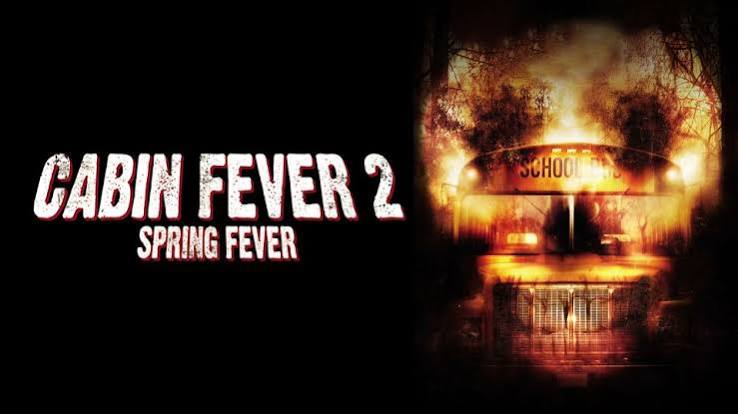
“Cabin Fever 2: Spring Fever” (2009)
Drama / Thriller

Running Time: 97 minutes
Written by: Joshua Malkin
Directed by: Ti West
Featuring: Noah Segan, Alexi Wasser, Rusty Kelley, Marc Senter and Giuseppe Andrews
Toby: “Water here is bullshit!”
There are horror sequels that attempt to recapture the atmosphere and formula of their predecessors, and then there are sequels that seem to take the original film, throw it into a blender, pour the remains into a punch bowl and invite everybody to the prom. Cabin Fever 2: Spring Fever belongs very firmly in the latter category.
Released in 2009 and directed by Ti West, Cabin Fever 2 has become one of those fascinatingly troubled horror films whose reputation is almost as interesting as the movie itself. It was conceived as a follow-up to Eli Roth’s 2002 Cabin Fever, but the finished film bears the unmistakable scars of a difficult production and extensive studio intervention. West himself has subsequently distanced himself from the completed picture, and that history inevitably colours any discussion of it.
Yet there is something wonderfully perverse about the fact that the film has survived. What was once regarded largely as an unwanted sequel or an unfortunate entry in a popular horror franchise has gradually developed a small but enthusiastic cult following. Its combination of grotesque practical effects, adolescent nastiness, black comedy, outrageous characters and a spectacularly disgusting prom sequence gives it a personality all its own.
The arrival of the film in the Via Vision/Imprint ecosystem is therefore particularly welcome for horror collectors. The Cabin Fever Collection places Cabin Fever 2 alongside Eli Roth’s original and the 2016 remake, with the sequel receiving a 1080p high-definition Blu-ray presentation. The disc uses the original 2.35:1 aspect ratio and carries English DTS-HD 5.1 audio and optional English subtitles. The supplementary material consists of a gore reel, behind-the-scenes featurette and theatrical trailer.
For a film that spent so long being treated almost like the embarrassing relative of the Cabin Fever franchise, this is a rather satisfying resurrection.
The original Cabin Fever was essentially a backwoods infection movie. A group of college students travel to an isolated cabin and encounter a horrifying flesh-eating disease. Eli Roth combined elements of body horror, comedy, teen movie conventions and survival horror to create something deliberately unpleasant but also strangely funny.
Cabin Fever 2 takes that basic infection concept and moves it into an entirely different environment.
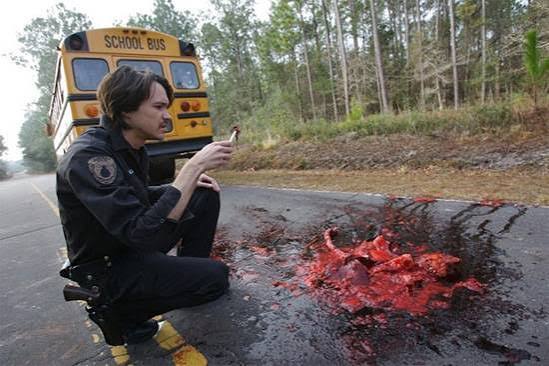
The sequel begins with the aftermath of the original film before shifting its attention to a local high school. The infected blood has found its way into bottled water, and as the students prepare for their high-school prom, the disease begins spreading through the school.
It is a simple premise, but one that gives the filmmakers considerably more room for carnage.
The school becomes the new cabin.
Instead of a handful of people trapped in the woods, we have a building filled with teenagers, teachers, administrators and assorted adults who are completely unprepared for what is about to happen. The prom provides the perfect enclosed environment for a plague movie. Everyone is dressed up, music is playing, hormones are raging and social hierarchies are temporarily more important than survival.
Then the disease arrives.
And when it does, Cabin Fever 2 makes very little attempt to be tasteful.
One of the most intriguing aspects of the movie is the presence of Ti West.
Today West is recognised as one of the major contemporary American horror filmmakers, particularly for films such as The House of the Devil, The Innkeepers, X, Pearl and MaXXXine. Looking back at Cabin Fever 2 in the context of his later career makes the movie considerably more interesting.
There are flashes of the filmmaker West would become.
The school setting provides him with an opportunity to create a strangely stylised horror environment, and there are moments where the film feels like an exaggerated, corrupted version of an old-school teen horror picture.
There is also a streak of grim humour running throughout the movie that feels compatible with West’s later fascination with genre conventions.
But it is equally clear that the finished film is not an uncomplicated representation of his vision.
The film has an uneven quality that suggests competing creative personalities. Some scenes feel like outrageous exploitation cinema, others resemble a conventional studio horror sequel, while still others appear to be deliberately absurd.
The result is messy.
But sometimes messy is precisely what makes a horror film memorable.
The decision to move the story from the countryside to a school is one of the film’s best ideas.
A school is already an environment filled with social anxiety. Teenagers worry about popularity, sex, relationships, appearance and acceptance. Teachers are trying to maintain order while simultaneously dealing with students who are barely capable of controlling themselves.
Then Cabin Fever 2 introduces a flesh-eating infection.
The movie takes those existing tensions and turns them into horror.
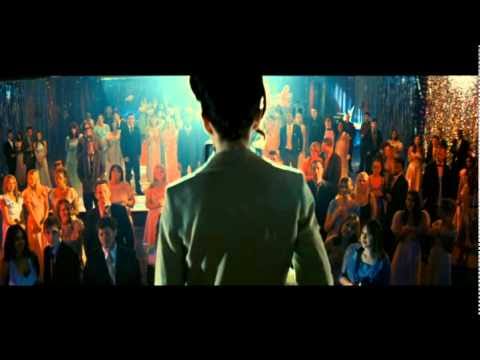
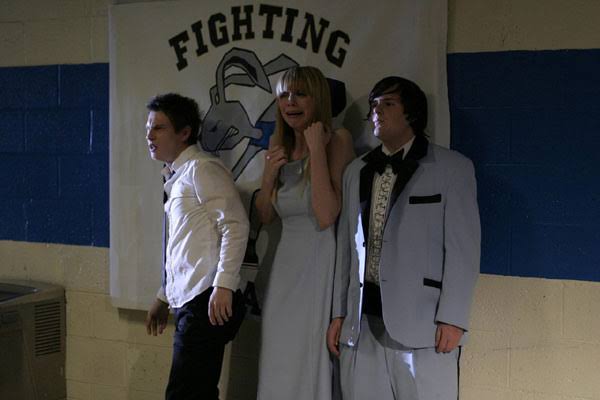
The prom itself is particularly effective as a setting. The brightly decorated gymnasium, the formal clothes, the music and the teenage excitement provide a deliberately inappropriate backdrop for the bloodshed that follows.
There is a strong Carrie-like quality to the sequence, although Cabin Fever 2 is far less interested in tragedy than Brian De Palma’s film. This is essentially a splatter-comedy prom from hell.
And hell is probably an understatement.
If there is one reason to own Cabin Fever 2, it is the gore.
This is not subtle horror.
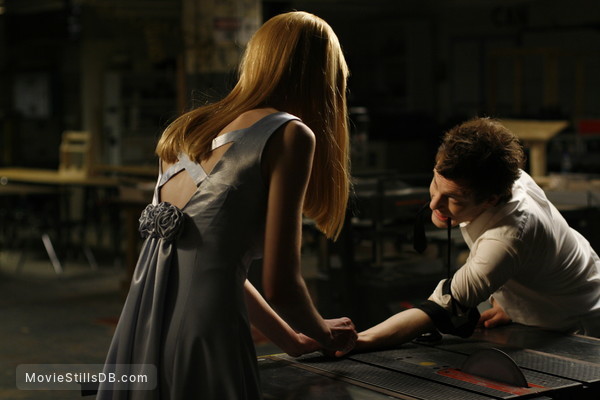
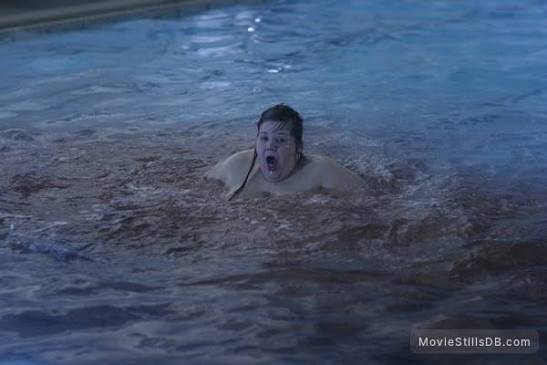
The infection produces all manner of disgusting physical symptoms, and the filmmakers take enormous pleasure in showing them. The movie is packed with blood, pus, vomiting, mutilation, bodily deterioration and various forms of physical degradation.
There is something almost proudly juvenile about the approach.
The film wants to make you say, “That’s disgusting.”
Then it wants to make the next scene even more disgusting.
And then it wants to make you laugh at how disgusting it has become.
This is where Cabin Fever 2 occasionally succeeds brilliantly. Its practical effects have a tactile quality that remains appealing in an age when computer-generated gore can sometimes feel weightless.
There is real physicality to the blood.
People splatter.
Bodies rupture.
Skin deteriorates.
The disease looks horrible.
And the film isn’t afraid to linger on the consequences.
For horror collectors who enjoy old-fashioned splatter, the movie can be surprisingly rewarding.
The humour is much more divisive.
Some of it works because it is so ridiculous. Some of the characters are deliberately exaggerated, and several situations are pushed far beyond anything resembling realism.
The movie knows that the premise is ridiculous.
Contaminated bottled water causes a flesh-eating plague at a high-school prom.
That is not exactly the starting point for restrained social commentary.
The film therefore embraces its own lunacy.
At its best, this creates a kind of infectious energy. At its worst, the comedy becomes irritating and the characters can seem deliberately obnoxious.
But Cabin Fever 2 is rarely boring.
Even when the humour doesn’t work, there is generally another grotesque effect, bizarre character or completely unexpected development waiting around the corner.
Characterisation is probably the weakest part of the film.
The first Cabin Fever had characters who were not necessarily sympathetic, but they were recognisable. Their relationships provided a foundation for the horror.
The sequel is much more interested in caricature.
The students are exaggerated versions of high-school stereotypes. The adults are often equally eccentric. Some characters are introduced primarily because they can be subjected to some particularly horrible fate.
That makes it difficult to care about who survives.
But perhaps that is part of the film’s design.
This isn’t really a survival drama.
It’s a massacre.
The characters are essentially pieces on a particularly disgusting chessboard.
One exception is Alexi Wasser’s Cassie, who provides a degree of emotional grounding, while Noah Segan’s Rusty Kelley is positioned at the centre of the chaos. Segan is particularly effective because he plays the character with enough nervous energy to survive the movie’s increasingly ridiculous tone.
Then there is Giuseppe Andrews.
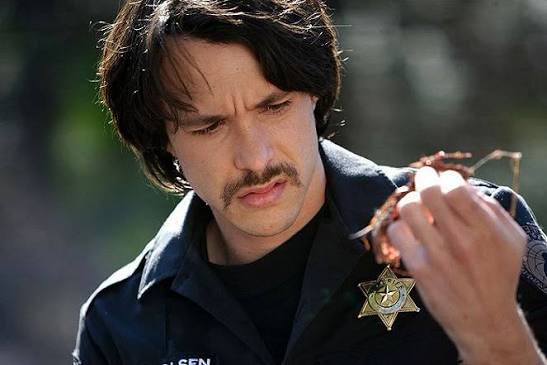
Andrews returns from the original film as Deputy Winston, and his presence immediately links the sequel to Roth’s movie. Winston is one of those characters who seems to have wandered into the wrong film and somehow become essential to it.
His bizarre behaviour fits the sequel’s deranged atmosphere perfectly.
The opening connection to the first movie is important because Cabin Fever 2 otherwise becomes almost completely independent of it.
The disease is established as the continuing threat, but the sequel quickly expands the mythology in its own direction.
Rather than simply repeating the cabin scenario, the film asks what would happen if the infection escaped.
The answer is: high-school prom.
That is a surprisingly effective escalation.
The original movie’s isolated setting meant that the disease was frightening because there was nowhere to escape.
The sequel makes the disease frightening because there are too many people.
Once contamination enters the school’s water supply, containment becomes almost impossible.
The centrepiece of Cabin Fever 2 is undoubtedly the prom.
This is where the movie’s various personalities collide.
The teen comedy becomes horror.
The romance becomes infection.
The dance becomes slaughter.
The punch bowl becomes a potential weapon.
The music continues while people begin falling apart.
It is deliberately excessive and frequently hilarious in a very dark way.
The prom sequence is also the clearest indication of why the film has developed a cult reputation.
You may dislike Cabin Fever 2.
You may find it crude.
You may find the characters annoying.
You may think the story is ridiculous.
But it is difficult to argue that the film is timid.
It commits completely to its concept.
The Imprint/Via Vision Blu-ray presentation is a significant improvement over the sort of presentation one might expect from a film that has historically been treated as a lesser sequel.
The film is presented in 1080p high definition and retains its 2.35:1 aspect ratio.
The widescreen image is particularly useful because West and cinematographer Eliot Rockett give the school environment a surprisingly cinematic appearance.
There is an intentionally strange quality to the photography.
The image can be dark, murky and occasionally slightly oppressive, which is appropriate for the material. The film is not supposed to look pristine or cheerful. Much of its atmosphere comes from the contrast between the apparently ordinary world of school life and the increasingly grotesque infection.
The HD presentation gives the viewer a substantially better opportunity to appreciate the physical effects.
Blood has texture.
Makeup effects are more apparent.
Faces and environments have greater definition.
The school interiors have enough detail to reveal the production design, while the darker sequences retain the oppressive quality that the film requires.
This is not the sort of movie where the objective should be to make everything look glossy.
The ugliness is part of the aesthetic.
The colour palette is interesting.
There is a deliberately warm, somewhat dirty appearance to many of the scenes, which contrasts nicely with the blood.
The school environment is full of browns, creams and muted colours, while the infected characters become progressively more visually shocking.
The film’s strange visual identity has previously been noted by critics and filmmakers discussing West’s troubled experience with the production. One analysis specifically highlights the film’s unusual warm colour palette, crushed blacks and gauzy highlights.
Those characteristics are still evident here.
It isn’t a reference-quality showcase disc in the manner of a major classic restoration, but that isn’t really the point.
It is a strong HD presentation of a deliberately grubby horror movie.
The English DTS-HD 5.1 soundtrack gives the movie the sonic aggression it needs.
The surround presentation helps the school setting feel larger than it otherwise might.
Music, screams, effects and general environmental noise occupy the soundstage effectively, and the soundtrack becomes particularly useful during the chaotic prom sequence.
This is a movie in which sound is an important part of the experience.
The audience needs to hear the screaming.
The splatter needs impact.
The music needs to create a sense of increasingly inappropriate celebration.
And the soundtrack succeeds in giving the film the required energy.
Optional English subtitles are also included, which is welcome for dialogue-heavy scenes and for viewers who prefer subtitles with their horror movies.
The gore reel is exactly what one would expect from Cabin Fever 2.
For fans of practical effects, this is arguably the most immediately attractive bonus.
The movie’s gore is one of its major selling points, and seeing the effects isolated from the narrative provides an opportunity to appreciate the craftsmanship involved.
The effects may be deliberately disgusting, but that doesn’t make them technically insignificant.
There is considerable work behind the blood, makeup and prosthetics.
The behind-the-scenes featurette is particularly useful because the production history of Cabin Fever 2 is so unusual.
The film’s troubled relationship with its director has become an important part of its history, and anything that provides additional production context makes the disc more valuable.
It is fascinating to consider the film not simply as a bad sequel, but as a movie caught between competing visions.
The theatrical trailer completes the package and provides an entertaining reminder of how the movie was originally marketed.
For collectors, trailers are always welcome on catalogue releases, particularly when they are presented alongside films that have had complicated home-video histories.
It is impossible to review Cabin Fever 2 without discussing its production difficulties.
Ti West’s experience on the movie reportedly became extremely frustrating, with extensive changes made to his work.
That context explains some of the film’s strange tonal shifts.
At times you can almost feel different versions of the movie fighting each other.
One version wants to be an old-fashioned teen horror movie.
Another wants to be a gross-out comedy.
Another wants to be an extreme splatter film.
Another wants to be a conventional studio sequel.
The final film contains pieces of all four.
And yet, strangely, that may be why it has survived.
A completely coherent Cabin Fever 2 might have been a more polished movie, but perhaps it would not have been nearly as distinctive.
The original Cabin Fever remains the stronger film.
There is no real argument about that.
Eli Roth’s movie has a stronger sense of atmosphere and a better balance between horror, humour and character.
But Cabin Fever 2 doesn’t simply copy it.
It takes the infection concept somewhere else.
The original asks what happens when a group of people become trapped with a disease.
The sequel asks what happens when that disease enters a populated environment.
The answer is significantly messier.
And more entertaining
Part of the answer is simple.
It is outrageous.
There are plenty of horror movies that are technically better than Cabin Fever 2.
There are better written films.
Better acted films.
Better directed films.
Better structured films.
But there aren’t many that are quite like this.
The movie has an anarchic quality that can be enormously entertaining if you approach it in the right spirit.
This is not a movie to watch expecting sophistication.
It is not subtle.
It is not elegant.
It isn’t particularly interested in realism.
It wants to make you uncomfortable, disgust you, and occasionally make you laugh at something you probably shouldn’t find funny.
In that respect, it is a very traditional piece of exploitation horror.
Perhaps the most appropriate way to describe Cabin Fever 2 is as a fascinating failure.
As a straightforward sequel, it is uneven.
As an example of Ti West’s intended filmmaking style, it is compromised.
As a character-driven horror movie, it is weak.
As a polished studio production, it is questionable.
But as an outrageous piece of splatter cinema, it has considerable charm.
There are sequences that are genuinely memorable.
There are effects that remain wonderfully disgusting.
There are characters that are impossible to forget.
And there is an almost admirable determination to keep escalating the insanity.
That is why the movie is considerably more interesting today than its initial reputation might suggest.
For collectors, the new release is particularly valuable because it gives Cabin Fever 2 a proper place within a larger franchise collection.
The Cabin Fever Collection includes the original film on 4K UHD and Blu-ray, Cabin Fever 2: Spring Fever on Blu-ray, and the 2016 remake on Blu-ray. The package also includes a booklet and collector-oriented packaging, making it much more substantial than the sort of disposable home-video release that the sequel originally seemed destined to remain.
The sequel itself receives the 1080p treatment, DTS-HD 5.1 audio and English subtitles, while retaining its 2.35:1 presentation.
That is exactly the kind of treatment the movie deserves.
Not because Cabin Fever 2 is a masterpiece.
It isn’t.
Rather, because cult horror deserves preservation too.
Cabin Fever 2: Spring Fever is one of those movies that becomes more interesting the more you know about it.
Viewed simply as a sequel to Eli Roth’s Cabin Fever, it is a chaotic, uneven and frequently obnoxious horror comedy.
Viewed as a Ti West film, it is a fascinating glimpse at a filmmaker working inside a studio production before moving toward the much more controlled independent filmmaking style that would eventually make him one of modern horror’s most respected directors.
Viewed as exploitation cinema, however, it is an absolute blast.
The film is bloody.
It is crude.
It is juvenile.
It is sometimes genuinely disgusting.
It is often very funny.
And occasionally it is all of those things simultaneously.
The prom sequence alone is enough to justify its existence.
The Imprint/Via Vision Blu-ray finally allows the movie to be appreciated in the kind of high-definition presentation that makes its practical effects, production design and deliberately unpleasant visual style much easier to appreciate. The inclusion of the gore reel, behind-the-scenes material and trailer adds useful value, even if the extras aren’t as extensive as those accompanying the original film.
Ultimately, Cabin Fever 2 is a movie that has outlived its reputation.
It isn’t the disaster that its early reviews suggested.
Nor is it some misunderstood masterpiece.
It occupies the much more interesting territory in between: a deeply compromised, occasionally inspired, frequently revolting and surprisingly entertaining piece of horror exploitation.
For fans of Ti West, it is an essential curiosity.
For fans of the Cabin Fever franchise, it is an obvious addition.
For gorehounds, it offers plenty to enjoy.
And for collectors, this Blu-ray represents a welcome opportunity to revisit one of the strangest and most notorious sequels of the 2000s.


Leave a Reply