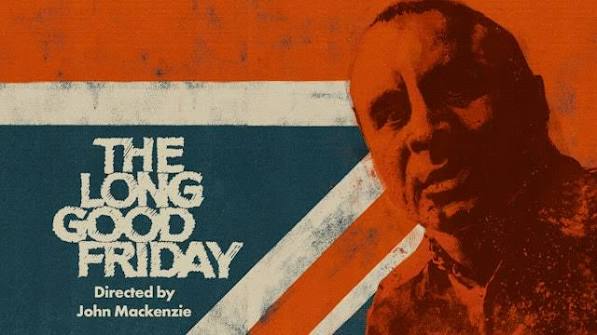
“The Long Good Friday” (1980)
Drama

Running Time: 114 minutes
Written by: Barrie Keeffe
Directed by: John Mackenzie
Featuring: Bob Hoskins, Helen Mirren, Dave King, Bryan Marshall, Derek Thompson and Eddie Constantine
Harold: “What I’m looking for is someone who can contribute to what England has given to the world: culture, sophistication, genius. A little bit more than an ‘ot dog, know what I mean?”
Few British crime films have achieved the legendary status of The Long Good Friday. Released in 1980 and directed by John Mackenzie from a screenplay by Barrie Keeffe, it remains one of the defining gangster films ever made. Combining political commentary, razor-sharp dialogue, unforgettable performances and one of cinema’s greatest endings, it stands comfortably alongside American classics like The Godfather, Mean Streets, and Once Upon a Time in America while remaining unmistakably British.
Imprint Films’ Blu-ray release gives collectors another opportunity to own this masterpiece in an attractive edition. While several impressive editions have appeared internationally over the years, including releases from Arrow and Criterion based on a modern restoration, Imprint’s presentation continues the label’s reputation for producing handsome collector-focused editions for Australian and New Zealand audiences. The release presents the film in high definition with an excellent selection of supplements that celebrate one of Britain’s greatest modern classics.
At first glance, The Long Good Friday appears to be another gangster picture.
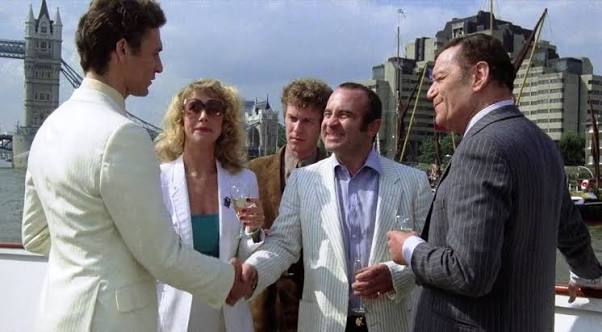
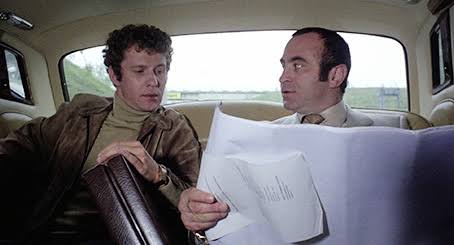
Harold Shand (Bob Hoskins) is London’s most successful criminal entrepreneur. Unlike traditional gangsters, Harold sees himself as a businessman rather than merely a mob boss. His ambition extends beyond protection rackets and organized crime. He dreams of transforming London’s Docklands into an international financial centre with American investment backing—a remarkably prophetic concept considering what eventually happened to London’s Docklands during the 1980s.
Everything appears to be falling into place during the Easter weekend. Then disaster strikes.
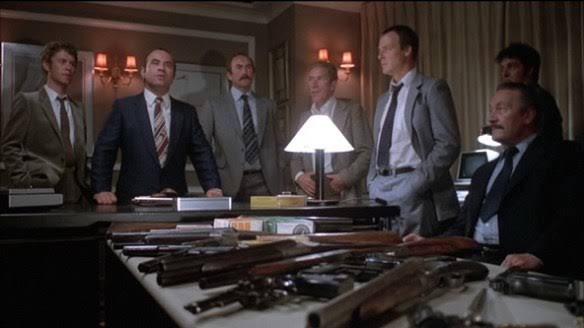
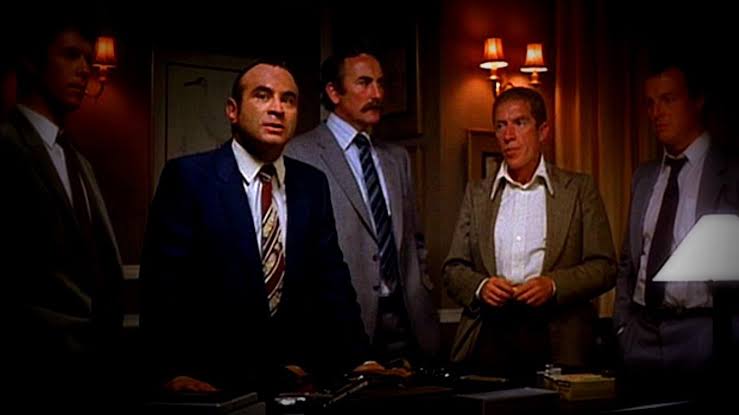
Bombings, assassinations and attacks begin targeting Harold’s organisation. Nobody knows who is responsible, and as the violence escalates Harold becomes increasingly desperate to discover who’s attempting to destroy everything he has built.
The story unfolds almost in real time over one catastrophic weekend, creating extraordinary tension as Harold’s empire slowly crumbles around him.
Unlike many gangster films that celebrate criminal excess, The Long Good Friday constantly reminds us that power built through violence can disappear overnight.
If there is one overwhelming reason the film remains unforgettable, it is Bob Hoskins.
His portrayal of Harold Shand ranks among the greatest performances in British cinema.
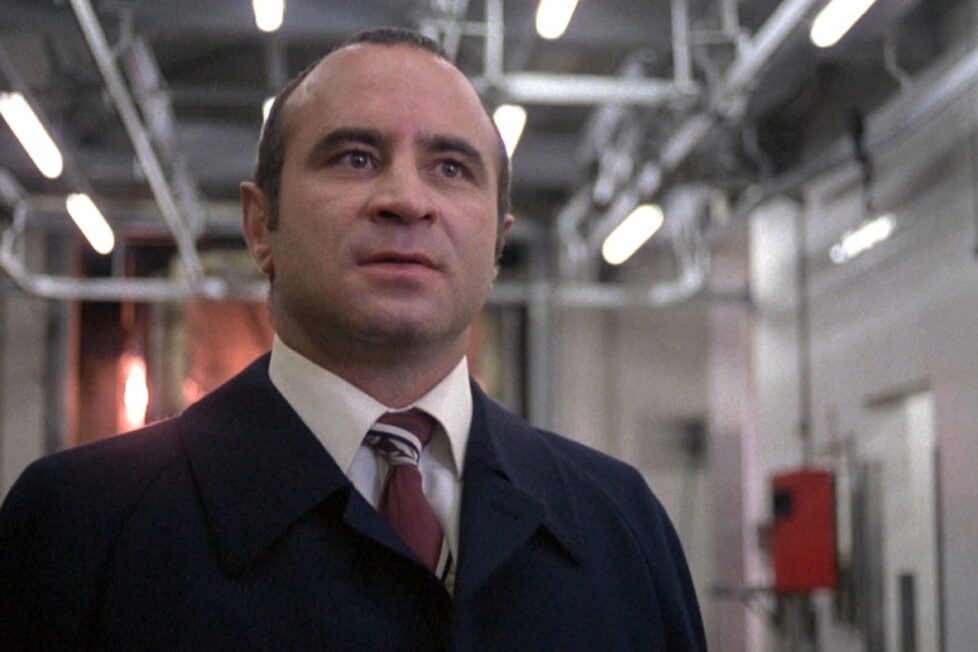
Hoskins presents Harold as charismatic, terrifying, intelligent, funny, vulnerable and explosive—often within the same scene. He can charm American businessmen over lunch before brutally beating a subordinate minutes later.
What makes Harold fascinating is that he genuinely believes he’s dragging Britain into a prosperous future. In his own mind he isn’t simply a criminal—he’s a visionary entrepreneur.
Hoskins never asks audiences to sympathise with Harold’s crimes, but he makes us understand the man’s enormous ego, ambition and desperation.
His physical presence dominates every frame. His expressive face constantly reveals the calculations occurring behind Harold’s confident exterior.
The famous final sequence—virtually wordless—has become one of cinema’s greatest endings. As Harold realises exactly what his future holds, Hoskins conveys disbelief, rage, fear, calculation and resignation without uttering a single word.
It remains a masterclass in screen acting.
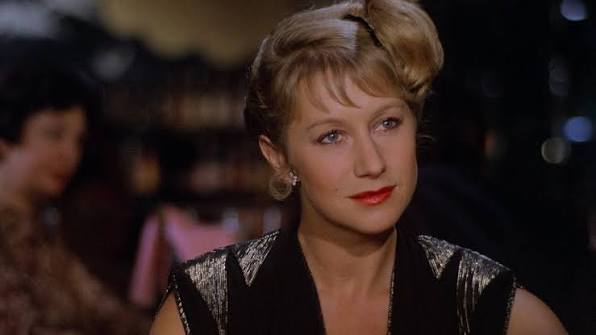
Although Bob Hoskins deservedly receives most of the attention, Helen Mirren delivers equally remarkable work as Victoria.
Unlike many gangster wives of the period, Victoria isn’t decorative.
She is Harold’s adviser, confidante and intellectual equal.
Mirren gives Victoria elegance, confidence and emotional strength. She understands both the criminal world and the legitimate business world, frequently providing Harold with calmer, more rational advice.
The chemistry between Hoskins and Mirren is exceptional. Their relationship feels believable because it is built on genuine mutual respect rather than fear or dependence.
Victoria’s intelligence provides an essential counterbalance to Harold’s increasing volatility.
John Mackenzie directs with remarkable confidence.
The violence arrives suddenly and realistically.
Rather than relying on elaborate action sequences, Mackenzie builds suspense through atmosphere, pacing and uncertainty.
Every conversation feels important.
Every new attack increases the sense that Harold is losing control.
London itself becomes another character.
The city captured here is dirty, changing and economically uncertain—a far cry from the polished international capital it would later become.
The Docklands, abandoned warehouses and industrial landscapes reinforce the film’s themes of transformation, ambition and decay.
Mackenzie understands that crime films are most effective when grounded in reality.
Nothing feels exaggerated.
Everything feels frighteningly plausible.
Barrie Keeffe’s screenplay remains astonishingly modern.
Rather than simply constructing a revenge thriller, Keeffe explores politics, economics, terrorism, class and national identity.
The emergence of international terrorism dramatically alters the rules of organised crime.
Harold assumes every problem can be solved through intimidation or negotiation.
He slowly discovers that a new political reality has emerged—one beyond his understanding or control.
The dialogue sparkles throughout.
Harold’s speeches combine humour, menace and frustration.
Many lines have become iconic among fans of British cinema.
Keeffe also deserves enormous credit for creating characters who feel authentic rather than stereotypical.
Viewed today, The Long Good Friday has become an invaluable historical document.
It captures Britain standing at the threshold of enormous change.
Economic uncertainty, political instability and urban redevelopment all influence the story.
Harold represents old-fashioned British organised crime attempting to evolve into international capitalism.
Ironically, many of his ambitions would become reality during the Thatcher years.
The film therefore works simultaneously as thriller, political commentary and social history.
Imprint’s Blu-ray presents the film with a strong high-definition image that showcases the gritty cinematography while respecting the original appearance of the production.
Film grain remains natural throughout.
Detail is significantly improved over DVD presentations, particularly in facial textures, clothing and the many location shots around London.
Colours remain appropriately restrained.
Rather than artificially modernising the image, the transfer preserves the muted palette that suits the bleak atmosphere.
Black levels are stable, while shadow detail during darker interiors remains impressive.
The presentation respects the original cinematography rather than attempting excessive digital enhancement, allowing viewers to appreciate Phil Méheux’s photography as intended. Later restorations undertaken from the original camera negative have similarly aimed to preserve the film’s natural photographic appearance.
The lossless soundtrack faithfully reproduces the original mono mix.
Dialogue remains consistently clear, which is particularly important given the screenplay’s rich use of regional accents and rapid exchanges.
Francis Monkman’s outstanding score sounds especially effective.
His electronic themes create an atmosphere of mounting paranoia while never overwhelming dialogue.
Gunshots, explosions and street ambience all possess greater clarity than earlier home-video editions.
The audio presentation remains authentic without unnecessary modern remixing.
Imprint has assembled a worthwhile package of supplements that explores both the production and the film’s lasting cultural impact.
Interviews, archival material and production features provide valuable insight into the making of the film, while the inclusion of scholarly and historical material helps place The Long Good Friday within the wider history of British crime cinema. Across various premium editions, the film has also benefited from commentaries, making-of documentaries, interviews with cast and crew, and material examining the production history and differing soundtrack versions.
For collectors who enjoy learning about filmmaking rather than simply watching the feature, these supplements considerably enhance the overall value of the release.
Imprint continues its tradition of attractive collector-friendly packaging.
The presentation feels premium without becoming excessive.
Artwork reproduction is sharp, the case is sturdy, and the overall release reflects the label’s commitment to physical media collectors.
For many enthusiasts, Imprint’s releases have become desirable not only because of the films themselves but because of the consistent care given to presentation.
More than forty years after its release, The Long Good Friday has lost none of its power.
It remains one of Britain’s greatest films.
Bob Hoskins delivers an unforgettable performance that deserves recognition among the finest acting achievements in cinema history.
John Mackenzie’s assured direction, Barrie Keeffe’s intelligent screenplay and Helen Mirren’s superb supporting performance combine to create a crime drama that is simultaneously thrilling, tragic and deeply insightful.
The film’s influence can still be seen in countless British gangster productions, yet few have equalled its intelligence or emotional impact.
Imprint’s Blu-ray provides an excellent way to experience this classic. Strong picture quality, faithful audio, informative supplements and attractive packaging make it a welcome addition to the label’s catalogue and to any serious film collection.
Whether discovering Harold Shand for the first time or revisiting one of British cinema’s most unforgettable antiheroes, this release reminds us exactly why The Long Good Friday continues to be regarded as one of the greatest gangster films ever made.


Leave a Reply