“A Better Tomorrow Trilogy” (1986)
Action

Written by: John Woo, Chan Hing-ka and Leung Suk-wah
Directed by: John Woo
Featuring: Ti Lung, Leslie Cheung, Chow Yun-fat, Emily Chu, Waise Lee and Kenneth Tsang
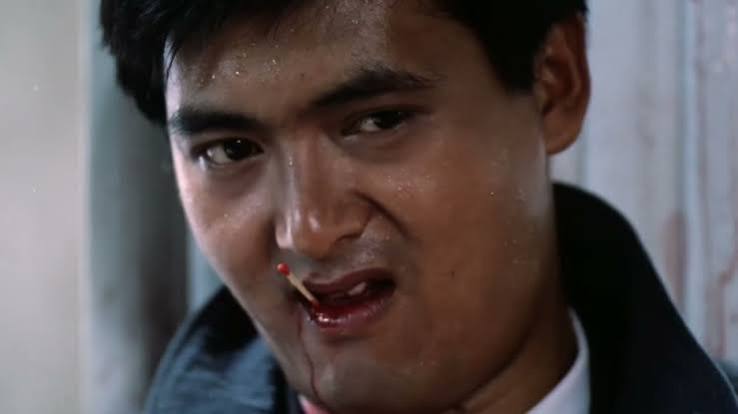
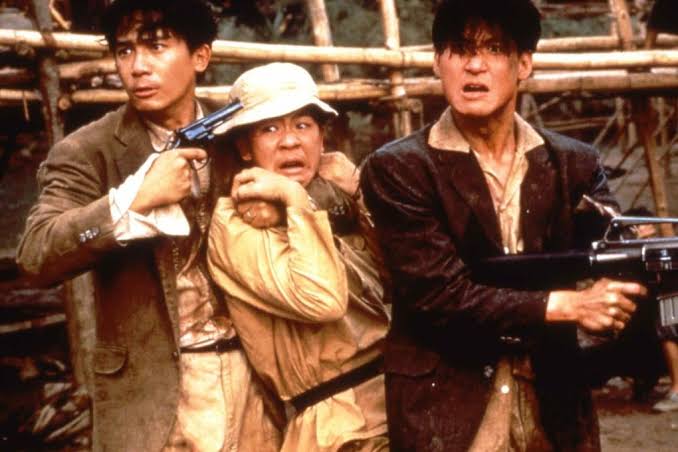
Ken: “You don’t like my rice? What’s wrong with with it? It’s beautiful to me, but to you, rice is nothing… to us, it’s just like my father and mother. Don’t fuck with my family. If you have any dignity, apologize to the rice RIGHT NOW!”
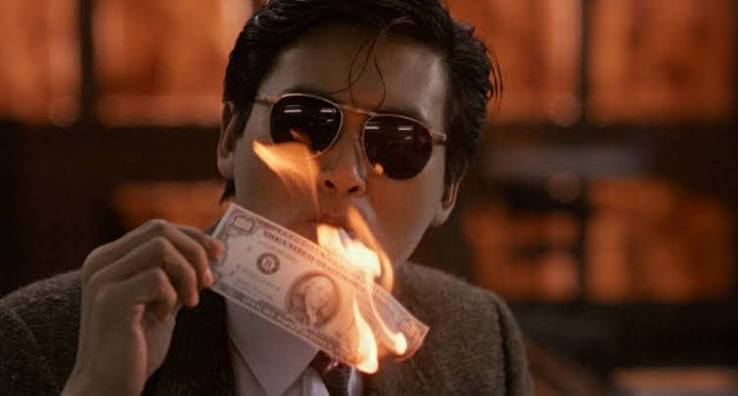
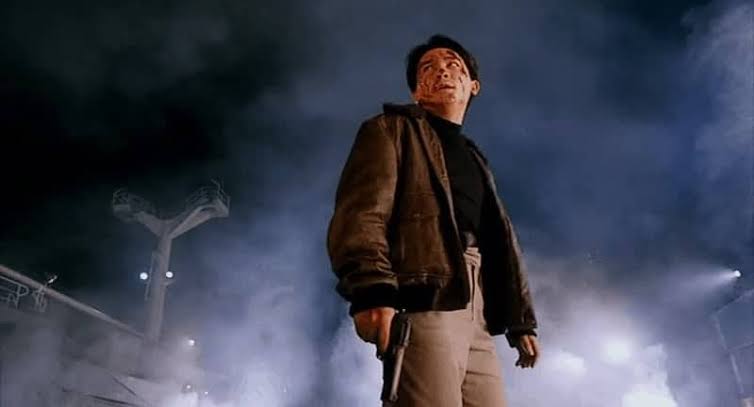
Few filmmakers have changed the language of action cinema as dramatically as John Woo. With 1986’s A Better Tomorrow, Woo transformed the Hong Kong crime thriller into something operatic, emotional and unmistakably stylish. Gunfights became elaborate ballets of violence, loyalty became a matter of life and death, and the image of Chow Yun-fat wearing sunglasses and a long coat while wielding two pistols became one of the most enduring icons of action cinema.
The film’s success led to two sequels, creating a trilogy that remains fascinating not only for its explosive action but also for its shifting themes, changing creative personnel and increasingly ambitious storytelling.
Imprint Films’ 4K Ultra HD presentation of the A Better Tomorrow trilogy provides an opportunity to revisit these influential films and appreciate how much they contributed to the development of modern action filmmaking. From the emotional intensity of the original to the extravagant excess of the second film and the romantic tragedy of the third, the trilogy offers a compelling portrait of Hong Kong cinema during one of its most exciting creative periods.
These are not simply films about criminals shooting at one another. They are stories about brotherhood, sacrifice, honour, regret and the impossible desire to escape a violent past. Their characters may operate outside the law, but they follow deeply personal moral codes, often placing loyalty above their own survival.
What makes the trilogy particularly interesting today is how differently each instalment approaches these ideas. The original is a tightly constructed crime melodrama, the sequel is a wildly excessive action spectacle, and the third is a sweeping, politically charged romantic prequel. Together, they form an uneven but endlessly entertaining collection whose influence can still be felt in contemporary cinema.
The original A Better Tomorrow remains the strongest film in the trilogy and arguably one of the most important Hong Kong action pictures ever made.
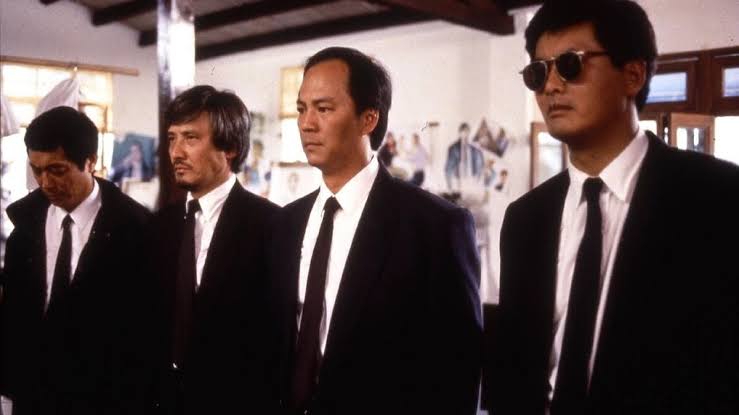
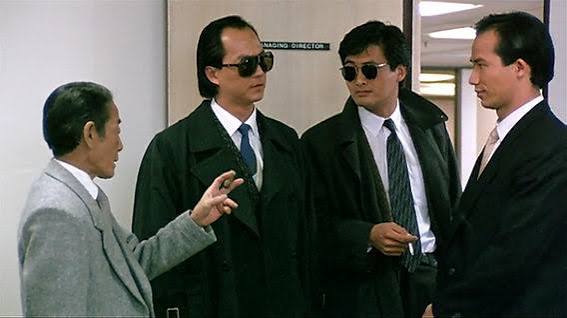
At its centre is the fractured relationship between two brothers. Sung Tse-ho, played with tremendous dignity by Ti Lung, is a successful counterfeiter whose criminal activities have devastating consequences for his family. His younger brother Kit, portrayed by Leslie Cheung, is an idealistic police officer who despises everything Ho represents. Caught between them is Mark, Ho’s fiercely loyal friend and criminal associate, played by Chow Yun-fat in the performance that helped transform him into an international superstar.
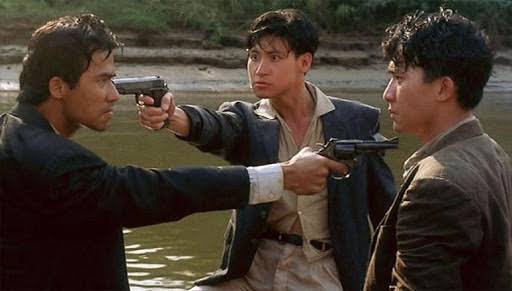
The story is deceptively simple, but Woo invests it with extraordinary emotional weight. Ho wants to leave his criminal past behind, Kit cannot forgive him, and Mark is determined to reclaim the honour and respect that he has lost. Their conflicting desires propel the film towards an inevitable and tragic confrontation.
What distinguishes A Better Tomorrow from countless other gangster films is the sincerity of its emotions. Woo is completely unafraid of melodrama. Characters cry, embrace, sacrifice themselves and express their loyalty with an intensity that might seem excessive in a more restrained production. Here, however, that emotional openness is essential to the film’s identity.
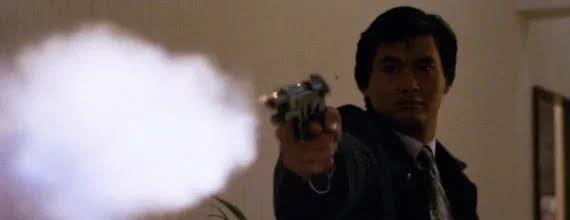
The violence is equally expressive. Rather than treating action as a simple interruption to the narrative, Woo uses it to reveal character and communicate emotion. The celebrated restaurant shootout involving Mark remains a masterclass in staging, editing and cinematic cool. Chow Yun-fat moves through the sequence with effortless confidence, his character simultaneously elegant, ruthless and strangely vulnerable.
The gunplay is exhilarating, but the consequences are never forgotten. Mark’s physical and emotional deterioration gives the film much of its pathos, while Ho’s attempts at redemption provide its moral centre.
Ti Lung deserves particular praise. Although Chow Yun-fat understandably became the film’s breakout star, Ti Lung delivers an equally important performance, conveying shame, exhaustion and determination with remarkable subtlety. Leslie Cheung also brings youthful intensity to Kit, making his anger understandable even when his stubbornness becomes frustrating.
Visually, Woo combines gritty urban locations with stylised compositions, dramatic slow motion and sudden explosions of violence. The film has a rough, energetic texture that is inseparable from its appeal. Its emotional directness, combined with its groundbreaking action choreography, gives it a timeless quality.
Nearly four decades after its release, A Better Tomorrow remains a gripping, moving and enormously influential work. Its reputation is thoroughly deserved.
If the first film established the template for heroic bloodshed, A Better Tomorrow II takes that template and pushes it to the point of near absurdity.
The sequel is an unusual film, even by the standards of Hong Kong action cinema. Its narrative is frequently convoluted, its tonal shifts can be jarring, and its attempts to connect itself to the original sometimes require considerable suspension of disbelief. Yet it also contains moments of extraordinary cinematic excitement, culminating in one of the most spectacular gun battles of Woo’s career.
Chow Yun-fat returns, this time playing Ken, the twin brother of Mark from the first film. It is an audacious narrative decision, clearly designed to restore the charismatic presence that had become essential to the series’ identity. Although the explanation is hardly convincing, Chow’s performance is so enjoyable that it becomes easy to accept.
Ti Lung and Leslie Cheung reprise their roles as Ho and Kit, while Dean Shek plays Lung, a former crime boss whose psychological collapse becomes one of the film’s central dramatic threads.
The sequel attempts to combine undercover police intrigue, family drama, psychological trauma, revenge and extravagant action. Not all these elements fit comfortably together. The film sometimes feels like several different productions competing for attention, and its dramatic structure lacks the elegance and coherence of its predecessor.
Nevertheless, there is something irresistible about its sheer ambition.
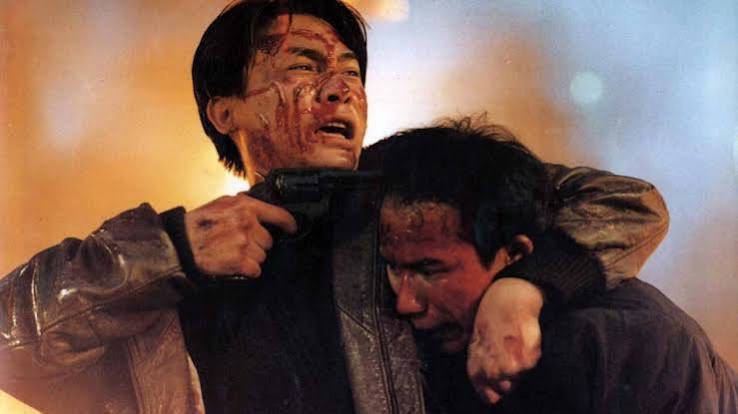
Woo’s visual style is more pronounced, the action is more elaborate, and the violence is considerably more extreme. Gunfights become increasingly theatrical, with bodies flying through the air, furniture disintegrating under gunfire and characters surviving seemingly impossible punishment.
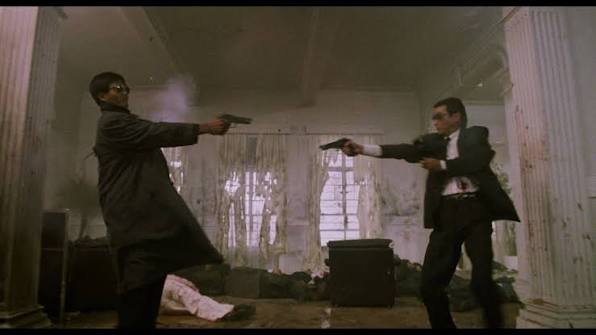
The climactic mansion assault is the film’s crowning achievement. It is an astonishing display of choreographed mayhem, featuring an almost continuous barrage of gunfire, shattered glass, spectacular stunt work and operatic sacrifice.
Where the original film used violence sparingly enough to maximise its emotional impact, the sequel embraces excess as an aesthetic principle. The result is less disciplined but frequently more exhilarating.
There are also genuinely affecting moments, particularly those involving Kit and his family. Leslie Cheung brings considerable emotional credibility to material that could easily have become overwrought.
Ultimately, A Better Tomorrow II is a flawed sequel, but its flaws are inseparable from its personality. It lacks the narrative precision and emotional balance of the original, yet compensates with extraordinary energy and some of the most memorable action sequences in Hong Kong cinema.
For viewers who appreciate Woo at his most extravagant, it may even become a personal favourite.
The third film marks a significant departure from its predecessors. John Woo did not return to direct, with producer and filmmaker Tsui Hark taking control of the project and moving the story into the turbulent final years of the Vietnam War.
Rather than continuing the events of the second film, A Better Tomorrow III functions as a prequel exploring an earlier period in Mark’s life.
Chow Yun-fat returns as Mark, but this is a younger, less confident version of the character. He is not yet the effortlessly cool gunman familiar from the original film. Instead, he is a man shaped by dangerous circumstances, complicated loyalties and a deeply affecting romantic relationship.
The film’s most important addition is Anita Mui as Chow Ying-kit, a resourceful and formidable woman whose influence on Mark is central to the story. Mui delivers a commanding performance, combining elegance, toughness and emotional vulnerability. Her character is far more than a conventional romantic interest; she is arguably the driving force of the entire film.
Tony Leung Ka-fai provides strong support as Mark’s cousin Mun, whose involvement in the central love triangle adds another layer of tension.
Tsui Hark approaches the material differently from Woo. Although the film contains explosive gunfights and moments of familiar heroic-bloodshed spectacle, its primary interests are romance, displacement and political upheaval.
The Vietnam setting gives the film a distinctive atmosphere. Against a backdrop of collapsing institutions, military conflict and social uncertainty, the characters struggle to establish some sense of personal security. Their romantic and criminal entanglements become inseparable from the chaos surrounding them.
There is a broader historical canvas here than in the previous films, and Tsui makes effective use of it. The story moves between intimate emotional encounters and large-scale violence, creating an atmosphere of impending catastrophe.
However, the film also suffers from uneven pacing and an occasionally unwieldy narrative. The political backdrop is more evocative than deeply examined, and some developments feel driven by melodramatic necessity rather than organic character progression.
The absence of Woo is noticeable. Tsui’s action sequences have energy and visual flair, but they do not always possess the same rhythmic precision or emotional clarity. The film is less concerned with masculine brotherhood and more interested in romantic tragedy, making it feel somewhat disconnected from the first two instalments.
That difference, however, is also what makes it worthwhile.
Anita Mui is exceptional, Chow Yun-fat gives Mark an appealing sense of youthful vulnerability, and the film’s melancholy atmosphere provides a distinctive conclusion to the trilogy as a viewing experience, even though its story takes place before the original.
A Better Tomorrow III is not quite the neglected masterpiece some admirers suggest, but neither is it the disposable sequel it is sometimes dismissed as. It is an ambitious, frequently beautiful and emotionally involving film that deserves to be evaluated on its own terms.
Imprint Asia Limited Edition
3 × 4K UHD discs, 4 × Blu-ray discs
2160p · Dolby Vision · HDR10
Original 1.85:1 aspect ratio
Limited to 1,500 copies
The most significant attraction of this Imprint Films collection is undoubtedly the opportunity to experience all three films in native 4K presentations sourced from their original camera negatives.
Hong Kong films from the 1980s have not always received the most sympathetic treatment on home video. Older masters frequently suffered from excessive digital noise reduction, inconsistent colour timing, crushed shadow detail and artificial sharpening. For films as visually distinctive as these, such problems can be particularly damaging.
The newer 4K restorations represent a major improvement over the limitations associated with many previous home-video presentations. They preserve the films’ photographic character while revealing textures and details that older masters struggled to reproduce.
Importantly, these are still 1980s Hong Kong productions. The cinematography can be gritty, lighting conditions are occasionally challenging, and optical effects and photographic softness remain part of the source material. A successful restoration should respect those characteristics rather than attempt to transform the films into something they were never intended to be.
The original A Better Tomorrow benefits enormously from the additional resolution. Facial textures, clothing, urban environments and production design gain greater definition. Mark’s famous coat, the smoky interiors and the bustling Hong Kong streets have a more convincing photographic presence.
The HDR grading is particularly valuable during the film’s nighttime sequences. Highlights from streetlights, reflective surfaces and bursts of gunfire have greater intensity, while the darker portions of the image can retain more nuance.
A Better Tomorrow II arguably provides the most immediate visual spectacle of the trilogy. Its elaborate action sequences, particularly the climactic mansion gunfight, are well suited to the enhanced resolution and dynamic range of UHD.
The destruction of furniture, flying debris, shattered glass and rapid bursts of muzzle flash become even more visually engaging. The additional image information also helps clarify the choreography during particularly chaotic passages.
The third film offers a different visual experience. Its period environments, military settings, warmer colours and expansive outdoor sequences create opportunities for a more varied presentation. The contrast between romantic intimacy and wartime destruction gives the restoration a distinctive appeal.
The Dolby Vision presentations are not about making every colour aggressively bright or every shadow unnaturally deep. The real advantage is the greater flexibility in reproducing the original photographic material with convincing tonal separation.
Contemporary reviews of the shared restoration work have praised its fine detail, film-like grain and improved contrast. Those observations support high expectations for Imprint’s release, although they should not be mistaken for a direct, frame-by-frame assessment of Imprint’s individual encodes.
Although the image restorations are the main selling point, the soundtracks are equally important to the experience.
The trilogy’s audio identity is unmistakably rooted in the 1980s. Gunshots are exaggerated, punches and impacts have an almost theatrical quality, and musical cues frequently emphasise the emotional significance of a scene.
Imprint provides an impressive range of audio options, including Cantonese LPCM mono, Cantonese DTS-HD 7.1 surround, Mandarin DTS-HD 5.1 surround and English LPCM mono tracks, as applicable across the films.
For authenticity, the original Cantonese mono tracks are particularly appealing. They preserve the period sound design without attempting to modernise the films excessively.
The surround options provide an alternative for viewers who prefer a more expansive home-theatre experience. The possibility of hearing Woo’s extravagant gunfights with a wider soundstage is certainly attractive, although the original mixes remain valuable reference points.
The first film’s soundtrack is especially effective because of its combination of action and music. Joseph Koo’s score contributes enormously to the emotional atmosphere, providing a memorable accompaniment to the film’s themes of loyalty and sacrifice.
The second film relies heavily on the impact of its action effects. Its climactic confrontation is a relentless assault of gunfire, explosions and destruction, and the availability of lossless soundtracks is welcome.
The third film benefits from its more romantic musical character, with the score helping to establish the tragic atmosphere of Mark’s earlier life.
One should not expect the pristine dialogue recording or low-frequency impact of a modern Hollywood production. These films have the sonic limitations of their era, and those limitations are part of their character.
What matters most is that the soundtracks remain engaging, intelligible and faithful to the spirit of the original productions.
Rather than simply presenting three restored films and a handful of trailers, the collection assembles interviews, commentaries, archival material and alternative versions that provide valuable historical context.
The original film is accompanied by a commentary from Hong Kong cinema critic James Mudge, along with interviews featuring John Woo, producer Terence Chang, screenwriter Chan Hing-ka, filmmaker Gordon Chan and director Gareth Evans.
These contributions are especially welcome because A Better Tomorrow is a film whose significance extends well beyond its box-office success. Its influence on later action directors, its role in reviving Ti Lung’s career and its contribution to Chow Yun-fat’s stardom all warrant detailed examination.
The Gareth Evans interview is a particularly interesting inclusion. As the director of The Raid and The Raid 2, Evans belongs to a generation of filmmakers whose approach to action owes a considerable debt to Hong Kong cinema.
The second film receives further contextual material, including contributions from Woo and film historian Frank Djeng.
Perhaps the most fascinating extra in the entire package, however, is the rediscovered workprint version of A Better Tomorrow II.
Featuring more than 30 minutes of previously unseen footage, this alternative version offers an opportunity to examine the film’s troubled and complicated development. It is precisely the sort of archival discovery that makes boutique physical-media collecting worthwhile.
The third film also receives substantial attention, including interviews with its screenwriters, academic commentary and historical discussion of the Vietnam War setting. The inclusion of the Taiwanese cut is particularly valuable because it allows viewers to explore another version of Tsui Hark’s ambitious prequel.
The supplementary material is not merely decorative. It helps explain the creative decisions, industrial circumstances and historical influences that shaped the trilogy.
The seven-disc configuration also means that the bonus features have space to breathe rather than being reduced to a token selection of promotional material.
Imprint’s official specification confirms the alternate cuts, newly produced interviews, commentaries and archival supplements included in the collection.
Imprint Films has built a reputation among physical-media enthusiasts for attractive limited editions, and this trilogy has the ingredients of a particularly desirable collector’s release.
The presentation includes an exclusive SteelBook containing the three UHD discs, a separate case for the four Blu-rays, and an 80-page hardcover booklet featuring production stills and new essays. Everything is housed inside a rigid lid-style hardbox.
The limitation of 1,500 copies adds to its collectability, although scarcity alone should never determine the quality of a release.
More important is the sense that the physical presentation matches the cultural significance of the films. The hardcover book offers an opportunity to engage with the trilogy beyond simply watching it, while the extensive supplements turn the package into a miniature archive of Hong Kong action cinema.
At its original premium price point, this is clearly aimed at dedicated collectors rather than casual viewers. However, the combination of three UHD presentations, additional Blu-rays, alternate cuts and substantial printed material makes the asking price easier to understand.
For those who appreciate the tactile pleasure of a carefully assembled physical-media edition, the Imprint collection has considerable appeal.
The A Better Tomorrow trilogy remains one of the most important collections of films in the history of Hong Kong action cinema.
The original is an undisputed classic, a beautifully judged combination of crime drama, emotional melodrama and groundbreaking action. The sequel is less coherent but spectacularly entertaining, offering some of the most extravagant gunplay ever committed to film. The third is a fascinating departure, replacing much of Woo’s brotherhood-driven intensity with romance, historical upheaval and a memorable performance from Anita Mui.
Viewed together, the films reveal both the strengths and contradictions of the heroic-bloodshed genre. They are sentimental and brutal, elegant and excessive, intimate and spectacular. Their characters may be criminals, but their emotional struggles are recognisably human.
Imprint’s limited-edition 4K Ultra HD collection appears to be an exceptionally comprehensive celebration of that legacy. The original-negative restorations, Dolby Vision presentations, extensive audio options, alternate cuts and impressive archival supplements make it an extremely attractive proposition.
There are limitations inherent in the films themselves. The sequel’s narrative is frequently ridiculous, the third film lacks the distinctive touch of John Woo, and the trilogy as a whole is far from narratively consistent. Yet those imperfections do little to diminish its historical importance or entertainment value.
For established fans, the opportunity to own these films in carefully restored UHD presentations is a major attraction. For newcomers, the collection provides an excellent introduction to an era when Hong Kong filmmakers were redefining what action cinema could achieve.
Above all, A Better Tomorrow reminds us that the most memorable action films are not defined simply by the number of bullets fired or bodies falling to the ground. They endure because there is something emotionally meaningful beneath the spectacle.
John Woo understood that better than almost anyone.