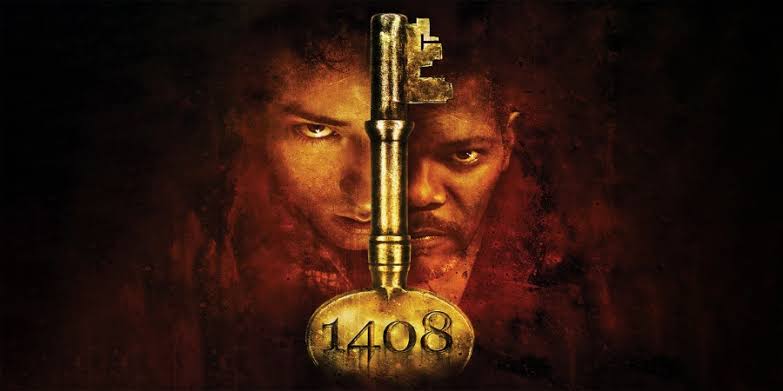
“1408” (2007)
Horror

Running Time: 104 minutes
Written by: Matt Greenberg, Scott Alexander and Larry Karaszewski
Directed by: Mikael Håfström
Featuring: John Cusack, Samuel L. Jackson, Mary McCormack and Tony Shalhoub
Room 1408: “Even if you leave this room, you can never leave this room!”
Few Stephen King adaptations have surprised audiences quite like 1408. Released in 2007 and directed by Mikael Håfström, the film arrived during a period when Hollywood was producing a steady stream of King adaptations with mixed success. While many expected another conventional haunted house movie, 1408 proved to be something much richer—a deeply psychological horror film that relies less on monsters and jump scares than on grief, guilt, and emotional trauma. Nearly two decades later, the film remains one of the finest modern Stephen King adaptations, and Imprint Films’ new 4K Ultra HD release gives this underrated classic the premium presentation it has long deserved.
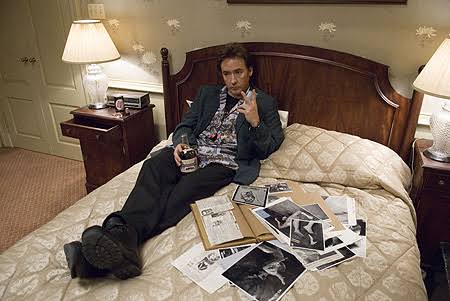
Based on King’s short story of the same name, 1408 follows paranormal investigator and author Mike Enslin (John Cusack), a cynical writer who travels across America debunking supposedly haunted locations. Having built a career exposing fraudulent ghost stories, Enslin receives an anonymous postcard warning him not to enter Room 1408 at New York’s Dolphin Hotel. Naturally, curiosity gets the better of him.
Despite repeated warnings from hotel manager Gerald Olin (Samuel L. Jackson), Enslin insists on spending the night in the infamous room. What begins as another routine investigation soon becomes an unrelenting descent into psychological terror as Room 1408 manipulates reality itself, forcing Enslin to confront the darkest memories of his life.
Unlike many supernatural horror films, 1408 spends surprisingly little time explaining the evil inside the room. There are no elaborate mythologies, cursed artifacts, or ghostly villains with tragic backstories. The room simply exists as an unknowable force of malevolence, and that mystery makes it infinitely more frightening.
John Cusack carries virtually the entire film on his shoulders, delivering one of the strongest performances of his career. Much of the movie features him alone, reacting to invisible threats and impossible situations. Lesser actors might have struggled to maintain audience engagement, but Cusack effortlessly commands every frame.
Mike Enslin begins the story as a man who believes nothing. His scepticism has become both his profession and his emotional defence mechanism. Following the death of his daughter Katie, he has emotionally withdrawn from everyone around him, including his estranged wife Lily. The horrors inside Room 1408 are terrifying not because they threaten his life, but because they force him to relive the emotional pain he has spent years trying to suppress.
Cusack perfectly balances sarcasm, arrogance, vulnerability and complete emotional collapse. Watching his confidence slowly disappear as the room dismantles his sense of reality is genuinely unsettling. His gradual descent into panic never feels theatrical or exaggerated—it feels painfully human.
Samuel L. Jackson appears relatively briefly but makes a lasting impression as hotel manager Gerald Olin. His famous warning—”It’s an evil fucking room”—has become one of the film’s defining moments. Jackson wisely avoids overplaying the role. Olin genuinely wants to protect Enslin, not because of superstition, but because experience has convinced him that no one survives Room 1408 unchanged.
Director Mikael Håfström deserves enormous credit for resisting the temptation to turn 1408 into a conventional haunted house movie. Instead, the film constantly shifts between psychological horror, supernatural nightmare and emotional drama.
The room itself becomes a character.
It changes shape.
It alters time.
It manipulates memories.
It bends reality.
Every apparent escape only leads to another layer of psychological imprisonment. Viewers never know whether what they’re seeing is real or another illusion created by the room.
That constant uncertainty keeps the audience as disoriented as Enslin himself.
One particularly brilliant aspect of the screenplay is how the room gradually escalates its attacks. At first the disturbances seem almost amusing—a radio turning on by itself, strange noises, minor temperature changes. But once the famous countdown begins, the room becomes an unstoppable force.
From that point forward, the film rarely allows the audience a chance to breathe.
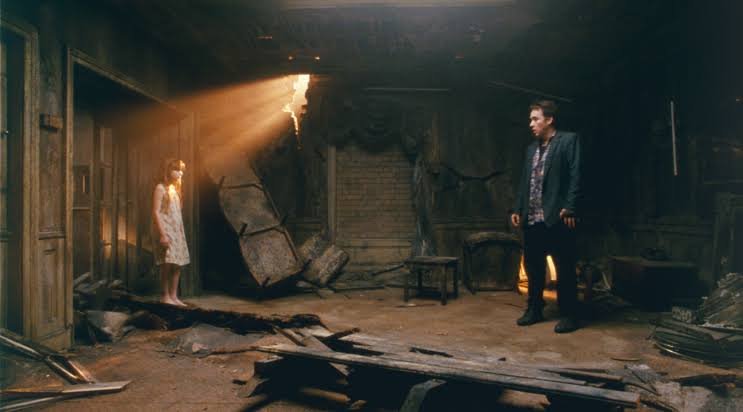
Unlike many horror films that rely primarily on gore, 1408 creates fear through atmosphere and emotional devastation. The room weaponises memories, regret and grief. Some of the most disturbing scenes involve Enslin’s deceased daughter rather than any supernatural monster.
Those emotional moments elevate 1408 far above standard horror fare.
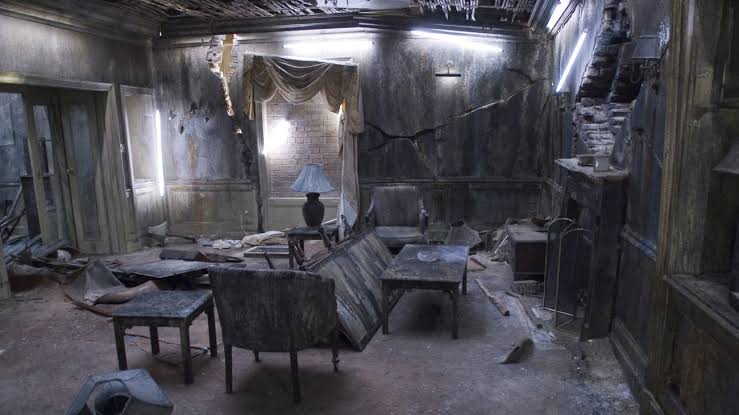
The production design is remarkable considering most of the movie takes place inside one hotel room. Every subtle transformation of Room 1408 reflects Enslin’s deteriorating mental state.
Walls move.
Windows disappear.
Furniture changes.
The room shifts from elegant luxury suite to living nightmare without ever losing its essential identity.
The visual effects have aged surprisingly well because they support the storytelling rather than overwhelm it. Practical effects combine seamlessly with digital enhancements to create surreal imagery that remains effective nearly twenty years later.
Gabriel Yared’s haunting musical score deserves special mention. Rather than overwhelming scenes with loud orchestration, the music quietly builds unease before giving way to silence when needed. Combined with exceptional sound design, every creaking floorboard, whispered voice and distant echo becomes unnerving.
Imprint’s new 4K presentation is a significant upgrade over previous Blu-ray editions. The film’s intentionally subdued colour palette remains faithful to its original appearance while benefiting enormously from HDR grading.
Fine textures throughout the hotel are substantially improved. Wallpaper patterns, wood grain, clothing fabrics and facial detail all reveal levels of sharpness never previously visible on home video.
Black levels are particularly impressive—a critical factor for a film that spends so much time in dimly lit interiors. Shadow detail is excellent without crushing darker areas into featureless black. The room’s darkest corners retain subtle detail while maintaining the oppressive atmosphere.
HDR enhances lighting beautifully. Candlelight, practical lamps, lightning flashes and sunlight streaming through windows all display impressive dynamic range. Highlights never appear exaggerated but provide additional depth and realism.
Film grain appears natural and consistent throughout, preserving the movie’s cinematic appearance without excessive digital noise reduction or artificial sharpening.
Overall, this is a wonderfully film-like presentation that respects the source material.
The Dolby Atmos soundtrack is equally impressive.
Atmospheric effects become wonderfully immersive as whispers move through the listening space, thunder rolls overhead and the room itself seems to come alive around the audience.
Dialogue remains consistently clear even during the film’s loudest sequences.
Low-frequency effects provide substantial impact during supernatural events without becoming overwhelming. Every slam, explosion and structural collapse carries convincing weight.
Surround activity is constant but intelligently restrained. Rather than using the rear speakers for gimmicky effects, the soundtrack builds an enveloping atmosphere that enhances tension throughout.
Fans with capable home theatre systems will find this one of the strongest horror sound mixes available.
Imprint has developed an excellent reputation for collector-focused releases, and this edition continues that tradition.
The release includes a generous selection of interviews, archival material and newly produced extras that examine the production, Stephen King’s original story, the adaptation process and the film’s enduring popularity among horror fans.
Particularly welcome is the inclusion of multiple versions of the film, allowing viewers to appreciate the different endings and editorial choices that have been discussed since the movie’s original release. 1408 has long been known for its alternate conclusions, and having them available in a premium edition makes this release especially attractive for collectors.
The packaging itself reflects Imprint’s usual high standards, with attractive artwork, sturdy presentation and the premium feel collectors have come to expect from the label.
Nearly twenty years after its original release, 1408 has only grown in reputation. What initially appeared to be another Stephen King horror adaptation has become recognised as one of the author’s finest cinematic translations.
The film succeeds because it understands that genuine horror comes not from monsters hiding in the shadows but from confronting personal grief and emotional pain. Room 1408 doesn’t simply haunt its victims—it knows them.
John Cusack delivers one of his career-best performances, Mikael Håfström directs with remarkable confidence, and the screenplay constantly surprises without sacrificing emotional depth.
Imprint’s 4K Ultra HD release presents the film in outstanding fashion. Excellent picture quality, immersive Dolby Atmos audio, strong supplementary material and premium packaging combine to create what is easily the definitive home video edition of this modern horror classic.
For Stephen King fans, horror enthusiasts and collectors of premium physical media, this release comes highly recommended. It not only showcases how effective psychological horror can be but also demonstrates why 1408 deserves its place among the very best Stephen King adaptations ever brought to the screen.





Leave a Reply