
“Ruby” (1992)
Drama

Running Time: 110 minutes
Written by: Stephen Davis
Directed by: John Mackenzie
Featuring: Danny Aiello, Sherilyn Fenn and Arliss Howard
Sheryl Ann DuJean: [to Ruby] “I’m Candy Cane, fresh out of nowhere. An hour ago you billed me as Las Vegas hot sauce. Tomorrow you headline me as a virgin schoolgirl from Carolina. I’m whatever you say.”
John Mackenzie’s Ruby (1992) is one of those fascinating Hollywood films that seemed destined to live in the shadow of larger, more celebrated productions. Released only months after Oliver Stone’s JFK reignited public fascination with the assassination of President John F. Kennedy, Ruby attempted to tell the story from the perspective of the man who forever altered the investigation by killing Lee Harvey Oswald. Despite an impressive cast led by Danny Aiello and an experienced director whose résumé included The Long Good Friday, the film failed to make much of an impact upon its original release. Over the years, however, it has developed a modest following among conspiracy enthusiasts and admirers of intelligent political thrillers.
Imprint’s Blu-ray finally gives this overlooked drama the high-definition presentation it has long deserved, allowing viewers to reassess both the film itself and its place within the wave of early 1990s JFK-related cinema.
Unlike many films centred on the Kennedy assassination, Ruby doesn’t attempt to recreate Dealey Plaza minute by minute or endlessly speculate about the identity of the gunmen. Instead, Stephen Davis’ screenplay imagines the life of Jack Ruby in the months leading up to November 1963, portraying him as a nightclub owner caught between organised crime, intelligence agencies, and political forces far beyond his understanding. The film presents a fictionalised account built around conspiracy theories while remaining grounded in Ruby’s personal struggles.
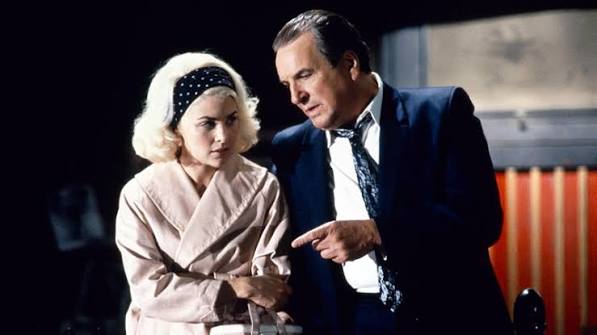
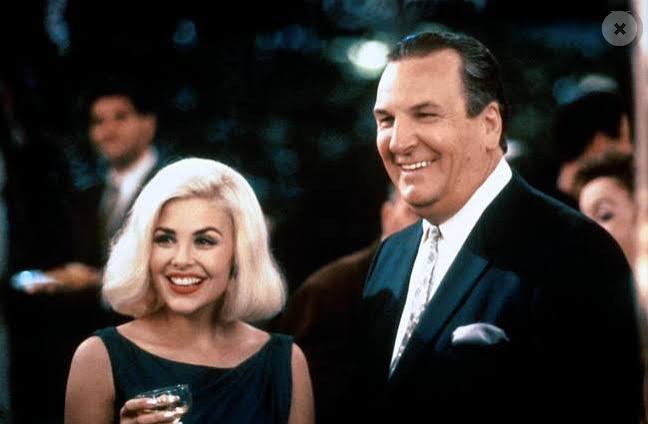
Danny Aiello plays Jack Ruby not as a villain or a madman but as a deeply flawed man desperately trying to maintain control over his nightclub and his relationships. His Ruby is loud, emotional, loyal, and ultimately manipulated by people who understand the larger game far better than he ever could.
Rather than depicting him as a willing participant in history’s greatest conspiracy, the film portrays Ruby as someone trapped by circumstance. Whether audiences accept this interpretation depends largely upon their willingness to embrace the speculative nature of the screenplay, but it certainly makes for compelling drama.
Danny Aiello delivers what is arguably one of the strongest performances of his career. Fresh from acclaimed roles throughout the late 1980s, including Do the Right Thing, Aiello completely inhabits Jack Ruby without resorting to caricature.
His Ruby possesses enormous charisma while revealing increasing vulnerability as events spiral beyond his control. Aiello successfully balances toughness with insecurity, allowing viewers to sympathise with a man who history generally remembers only for one shocking act.
His performance anchors the entire film, ensuring that even when the conspiracy elements become increasingly elaborate, the emotional core remains believable.
Sherilyn Fenn provides warmth and humanity as Candy Cane, the dancer whose relationship with Ruby adds emotional depth to the story. Their connection gives the film a surprisingly tender centre amid the political intrigue.
Jeffrey Nordling, Frank Orsatti, Tobin Bell, Joe Santos, and Brian Dennehy all contribute memorable supporting performances, while eagle-eyed viewers will spot an early appearance by David Duchovny before The X-Files made him a household name.
Each actor contributes to the atmosphere of paranoia. Nobody appears entirely trustworthy, and every conversation seems loaded with hidden meaning.
Director John Mackenzie wisely avoids imitating Oliver Stone’s hyperactive editing style from JFK. Instead, he opts for a slower, moodier approach that allows tension to build naturally.
Known for his remarkable work on The Long Good Friday, Mackenzie again demonstrates his gift for depicting organised crime as a business filled with dangerous personalities rather than glamorous gangsters.
Dallas becomes a city of smoky nightclubs, back-room deals, and whispered conversations. The atmosphere feels authentic without becoming overly nostalgic.
Although the pacing occasionally slows during the middle act, Mackenzie maintains suspense through character interactions rather than action sequences.
The greatest challenge facing Ruby is its relationship with historical fact.
The film openly embraces conspiracy theories surrounding the Kennedy assassination, presenting intelligence agencies, the Mafia, anti-Castro operations, and political intrigue as interconnected pieces of a vast hidden puzzle.
Modern audiences may find some of these ideas dated, while others will appreciate the film as a fascinating snapshot of early 1990s fascination with JFK conspiracies.
Rather than functioning as a documentary, Ruby should be viewed as historical fiction inspired by real people and real events. In that context, it becomes considerably more enjoyable.
The screenplay asks “What if?” far more often than it claims “This is what happened.”
Cinematographer Lajos Koltai gives Ruby an appropriately shadowy appearance.
Nightclubs glow with neon reds and blues, smoke hangs in the air, and Dallas feels permanently overcast by impending tragedy. Interiors dominate much of the running time, creating an almost claustrophobic atmosphere.
The production design effectively recreates early 1960s America without drawing attention to itself. Cars, costumes, signage, and period detail all contribute to the illusion.
Rather than overwhelming viewers with spectacle, the visuals quietly support the film’s atmosphere of uncertainty.
Imprint continues its reputation for rescuing overlooked studio titles that have been difficult to see in quality editions.
Presented in 1080p with the original 1.85:1 aspect ratio, Ruby receives a presentation that respects the source while showcasing noticeable improvements over previous home video editions.
Film grain remains intact throughout, providing a natural cinematic appearance instead of excessive digital processing. Detail is significantly improved, especially in facial close-ups, clothing textures, and production design.
Colours remain intentionally restrained, reflecting the film’s sombre visual palette rather than appearing artificially vibrant.
Black levels are generally strong, an important consideration for a film containing numerous dimly lit nightclub interiors and evening scenes.
There are occasional limitations reflecting the age of the original materials, but these never become distracting. Overall, the transfer represents the film exceptionally well.
Dialogue remains consistently clear throughout the presentation.
The soundtrack naturally emphasises conversations over aggressive surround effects, reflecting the film’s dialogue-driven structure.
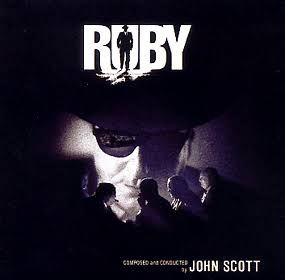
Jerry Goldsmith’s atmospheric musical score benefits from the lossless presentation, providing subtle emotional support without overwhelming quieter scenes.
Ambient nightclub sounds, crowd noise and environmental effects create an immersive listening experience while remaining faithful to the film’s original sound design.
As collectors have come to expect from Imprint, the release is designed to celebrate an underappreciated film rather than simply place it onto disc.
The label’s editions typically feature newly produced interviews, scholarly appreciation pieces, archival promotional material, trailers, and collectible packaging, giving boutique Blu-ray enthusiasts additional context for reassessing forgotten titles. While supplements vary by edition, Imprint’s overall approach consistently treats overlooked films with the same respect afforded to acknowledged classics.
Ruby remains an intriguing curiosity more than thirty years after its release. It never achieves the cultural significance or cinematic ambition of JFK, but it was never really trying to. Instead, it offers a more intimate character study wrapped inside a speculative political thriller.
Danny Aiello delivers an exceptional lead performance that deserved far more recognition, John Mackenzie directs with confidence and restraint, and the supporting cast consistently elevates the material. Although the screenplay occasionally struggles to balance history and conjecture, it remains engrossing throughout.
Imprint deserves considerable praise for bringing this neglected film back into circulation in high definition. Boutique labels play an essential role in preserving cinema that larger studios often overlook, and Ruby is precisely the kind of title that benefits from careful restoration and presentation.
For fans of political thrillers, Kennedy assassination dramas, Danny Aiello, or John Mackenzie’s work, this Blu-ray is highly recommended. It may not rewrite history, but it certainly deserves to be rediscovered.




Leave a Reply