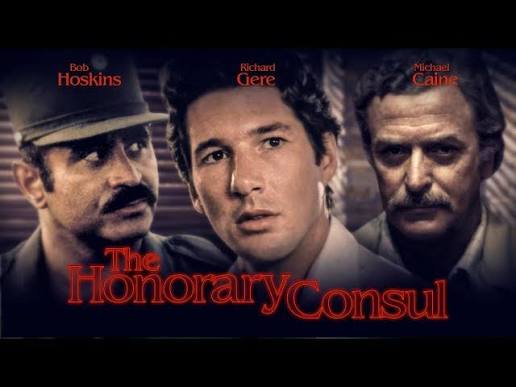
“The Honorary Consul” (1983)
Drama

Running Time: 114 minutes
Written by: Christopher Hampton
Directed by: John Mackenzie
Featuring: Michael Caine, Richard Gere, Bob Hoskins and Elpidia Carrillo
Colonel Perez: “I have to take every possibility into account, doctor. Even a crime of passion.”
Dr. Eduardo Plarr: “Passion? I’m an Englishman.”
When discussing the career of director John Mackenzie, the conversation almost always begins with The Long Good Friday, the landmark British gangster film that established him as one of Britain’s finest filmmakers. Yet Mackenzie’s career extended far beyond that single masterpiece, encompassing political thrillers, literary adaptations, and intelligent dramas that often deserve far greater recognition than they have received. One of the most overlooked entries in his filmography is The Honorary Consul (released in some territories as Beyond the Limit), a 1983 adaptation of Graham Greene’s acclaimed novel. Starring Michael Caine, Richard Gere, Bob Hoskins, and Elpidia Carrillo, the film combines romance, political intrigue, and moral ambiguity in a manner that is unmistakably Greene.
For decades, The Honorary Consul remained difficult to see in a presentation worthy of its pedigree. Imprint Films has finally rectified that situation with an excellent Blu-ray release that not only presents the film in high definition but also surrounds it with a substantial collection of bonus features that place the production into proper historical context. The release forms part of Imprint’s John Mackenzie collection, celebrating one of Britain’s most accomplished yet underrated directors.
Like many of Graham Greene’s finest novels, The Honorary Consul is less interested in conventional thriller mechanics than in the moral failings of its characters. Politics serves as the backdrop, but Greene’s real fascination lies with guilt, compromised ideals, love, and spiritual uncertainty.
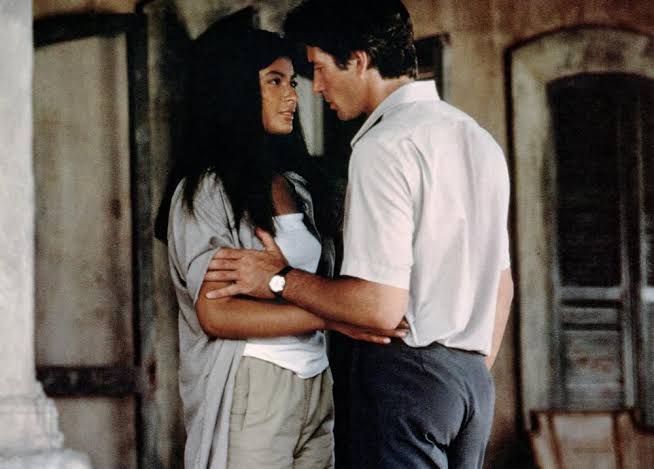
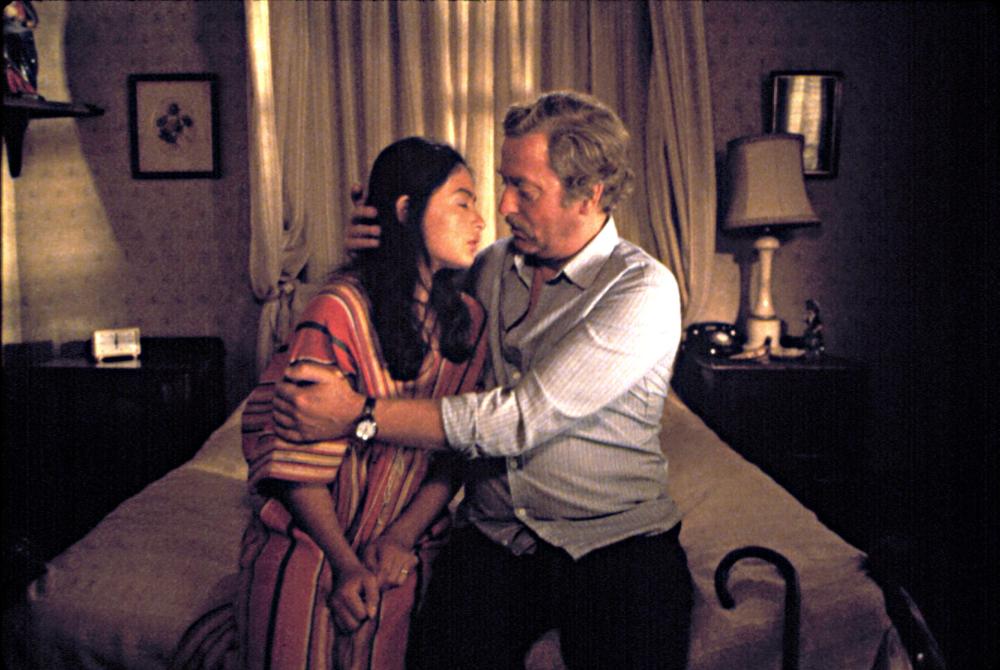
Set within a politically unstable South American nation, the story follows Dr. Eduardo Plarr (Richard Gere), a physician who has spent years distancing himself emotionally from both his homeland and his troubled past. His comfortable detachment begins to unravel after he becomes involved with Clara (Elpidia Carrillo), the neglected wife of British Honorary Consul Charley Fortnum (Michael Caine).
When local revolutionaries mistakenly kidnap Fortnum instead of the American ambassador they intended to seize, every character is forced into impossible moral choices. The resulting drama is neither action spectacle nor straightforward political thriller. Instead, it is a melancholy examination of loyalty, responsibility and the tragic consequences of emotional cowardice.
Greene’s fascination with flawed human beings remains completely intact throughout Christopher Hampton’s screenplay, even if some of the novel’s internal psychological detail inevitably becomes more difficult to express on screen.
Mackenzie approaches the material with considerable restraint. Rather than attempting to manufacture suspense through constant action, he allows the tension to emerge naturally from character interaction and the increasingly desperate political situation.
His direction emphasizes realism throughout. The dusty locations, oppressive heat and ever-present military presence create an atmosphere where violence always feels imminent without needing to dominate every scene.
Unlike many political thrillers of the early 1980s, The Honorary Consul avoids simplistic portrayals of heroes and villains. Government officials, rebels, diplomats and civilians are all shown as morally compromised to varying degrees. That ambiguity gives the film a sophistication that continues to reward repeat viewings.
Mackenzie also demonstrates remarkable confidence in allowing quiet scenes to breathe. Conversations frequently carry more dramatic weight than the moments of violence, reflecting Greene’s belief that human weakness is ultimately more fascinating than political ideology.
Although Richard Gere receives top billing, it is Michael Caine who delivers the film’s emotional centre.
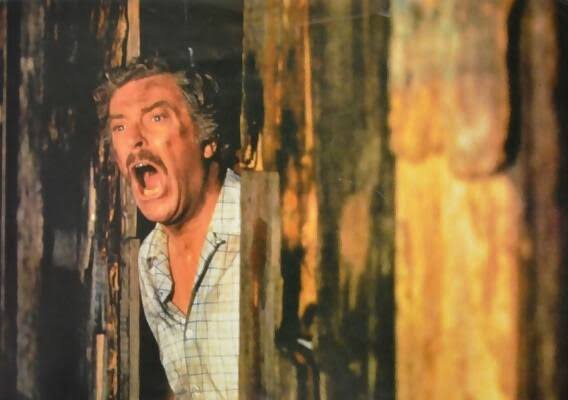
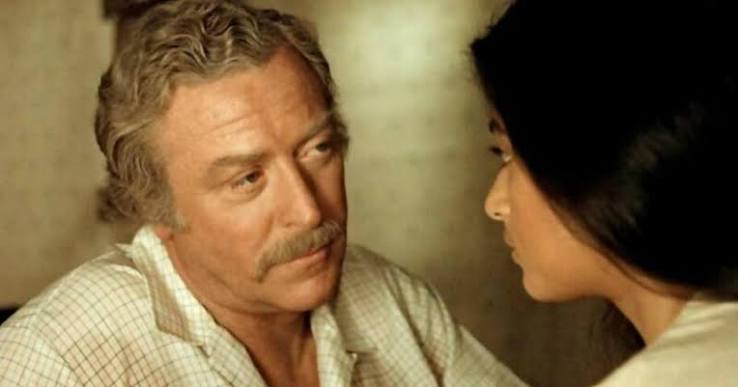
As Charley Fortnum, the alcoholic honorary consul whose position carries more ceremonial value than genuine political influence, Caine gives one of the most touching performances of his career. Fortnum is humorous, lonely, self-deprecating and painfully aware that he is no longer taken seriously by either his government or his wife.
Rather than playing him as comic relief, Caine reveals enormous dignity beneath the character’s shabby exterior. His warmth makes the tragedy that unfolds all the more affecting.
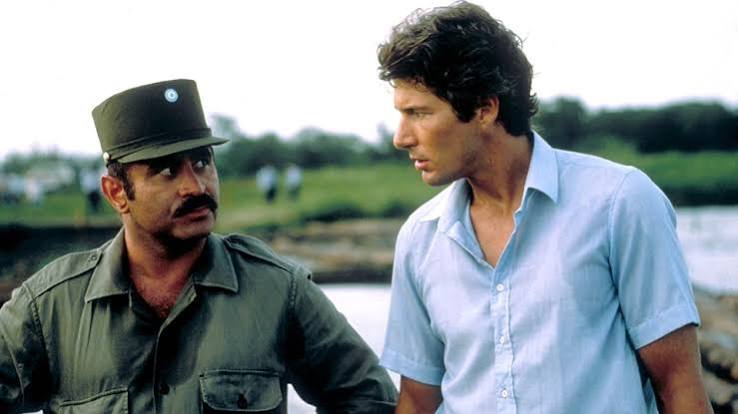
Bob Hoskins, reunited with Mackenzie after The Long Good Friday, is equally impressive as Colonel Perez. Hoskins avoids making the military officer a simple authoritarian villain, instead presenting a man shaped by political violence and impossible responsibilities. His scenes crackle with intelligence and restrained menace.
Richard Gere remains the film’s most controversial element. Fresh from the enormous success of An Officer and a Gentleman, Gere was clearly viewed as an international star capable of broadening the film’s commercial appeal. While he is sincere and committed, his occasionally uncertain accent and understated performance sometimes make Plarr appear emotionally distant in ways that may not always have been intentional. Nevertheless, he captures the character’s internal conflict reasonably well and settles into the role as the story progresses.
Audiences expecting a conventional hostage thriller may initially find the film slow.
Its pacing deliberately mirrors Greene’s novel, allowing relationships and ethical dilemmas to take precedence over plot mechanics. As a result, the eventual kidnapping sequence possesses genuine emotional impact because viewers understand what each character stands to lose.
The screenplay raises difficult questions regarding love, faithfulness, political responsibility and personal identity without offering comfortable answers.
Even decades after its original release, these themes remain strikingly relevant.
Imprint presents the film in a 1080p high-definition transfer framed at its original 1.85:1 aspect ratio.
Given the relative obscurity of the title, expectations should remain realistic, but the presentation proves consistently satisfying.
Film grain remains intact throughout, preserving the cinematic appearance rather than relying on excessive digital processing. Detail is noticeably improved over previous home-video editions, particularly in facial close-ups and costume textures.
The colourful South American locations benefit from richer, more stable colour reproduction, while contrast levels remain natural without crushing shadow detail.
Occasional signs of the source’s age remain visible, but these never become distracting. Instead, they reinforce the organic appearance of a well-preserved film element.
The presentation feels faithful to the original theatrical experience rather than artificially modernised.
The LPCM 2.0 mono/stereo presentation (depending on original source configuration) is clean and appropriately balanced.
Dialogue remains consistently intelligible, an important achievement for a film driven primarily by conversation.
Patrick Doyle did not compose the score—Paul McCartney’s understated musical contribution blends effectively with ambient sound to support the drama without overwhelming it.
While no one expects an immersive surround experience from a dialogue-driven film of this era, the audio faithfully reproduces the original mix and exhibits very little distortion or background noise.
One area where Imprint consistently excels is supplementary material, and The Honorary Consul receives generous treatment.
The newly recorded audio commentary offers valuable production analysis, exploring the film’s literary origins, Mackenzie’s directing style, the performances, and the production history.
The collection of newly produced interviews proves especially rewarding. Crew members discuss Mackenzie’s collaborative directing methods, the practical realities of location filming, makeup effects, editing challenges, and cinematographer Phil Méheux’s visual approach. These interviews reveal how ambitious the production actually was despite its modest profile today.
For admirers of John Mackenzie, these extras provide fascinating insight into a filmmaker whose contribution to British cinema deserves considerably greater recognition.
The Honorary Consul remains one of the hidden gems of 1980s British cinema.
Although overshadowed by both The Long Good Friday and The Fourth Protocol, it represents John Mackenzie at his most mature and thoughtful. Graham Greene’s morally complex storytelling receives an intelligent adaptation anchored by superb performances from Michael Caine and Bob Hoskins, while Richard Gere delivers a respectable if occasionally uneven central performance.
This is not a fast-paced political thriller designed to provide easy entertainment. Instead, it is an intelligent, melancholy character study that examines personal failure against the backdrop of political unrest. Its themes of compromise, loyalty and moral uncertainty remain just as compelling today as they were more than forty years ago.
Imprint’s Blu-ray finally gives this neglected film the presentation it has long deserved. The high-definition transfer respects the film’s photographic integrity, the audio is solid, and the extensive supplements substantially enhance appreciation of both the production and John Mackenzie’s career.
For collectors of British cinema, admirers of Graham Greene adaptations, or anyone interested in intelligent political dramas, this Blu-ray is an essential addition to the shelf. It is another reminder that Imprint continues to rescue overlooked classics from obscurity, ensuring that important films like The Honorary Consul can finally be appreciated by a new generation of viewers.



Leave a Reply