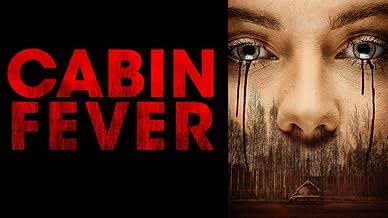
“Cabin Fever” (2016)
Drama / Thriller

Running Time: 99 minutes
Written by: Eli Roth and Randy Pearlstein
Directed by: Travis Z
Featuring: Samuel Davis, Gage Golightly, Matthew Daddario, Nadine Crocke and Dustin Ingram
Karen: “When you’ve known someone a long time, you just want to kiss them just to see if they’re a good kisser. There’s nothing wrong with that, right?”
There are few horror films that seem to have been born to provoke an argument quite like Cabin Fever. Eli Roth’s 2002 original was never a particularly restrained piece of filmmaking, but it became a minor cult phenomenon precisely because of its combination of gruesome body horror, nasty black comedy, unpleasant characters, and a deliberately diseased atmosphere. It was crude, frequently disgusting and occasionally very funny, but it had an identity of its own. It also arrived at a moment when the American horror genre was beginning to rediscover the pleasures of practical gore and unapologetic nastiness.
So when Cabin Fever was remade in 2016, only fourteen years after the original, the immediate question was obvious: why?
Directed by Travis Zariwny and written by Randy Pearlstein and Eli Roth, the 2016 Cabin Fever is one of those remakes that makes its existence difficult to justify because it follows its predecessor remarkably closely. It takes the basic story, many of the same situations, much of the same dialogue and even several of the original’s character dynamics, and essentially reconstructs the movie for a new generation.
That makes the 2016 film an unusual proposition. It isn’t a radical reinvention. It isn’t a sequel. It isn’t a reinterpretation that takes the basic premise somewhere unexpected. It is, for much of its running time, a remarkably faithful recreation of the 2002 film.
And yet, despite its reputation, the 2016 Cabin Fever is not quite the disaster that its detractors sometimes suggest.
It is certainly inferior to the original. There is no question about that. But viewed independently of the enormous shadow cast by Roth’s film, it is an efficiently made, reasonably attractive and occasionally effective piece of modern body horror. Its greatest problem is not necessarily that it is badly made. Its greatest problem is that it has already been made.
The Imprint Blu-ray, however, provides an opportunity to reassess the film as part of the Cabin Fever franchise and to appreciate the production on its own technical merits.
The Story
The basic premise remains almost unchanged.
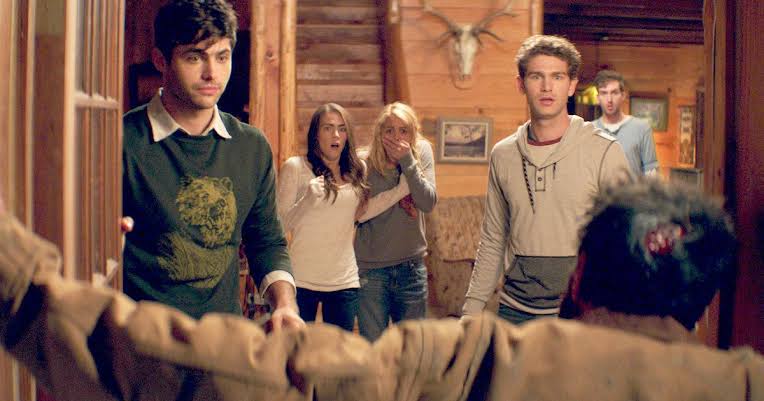
Five college friends travel to an isolated cabin in the woods for a vacation. Paul, Karen, Jeff, Marcy and Bert expect alcohol, sex, relaxation and the usual teenage/young-adult escapism associated with the backwoods horror movie.
Instead, they encounter something considerably worse.
A mysterious flesh-eating infection begins spreading among them. Their bodies begin deteriorating, their paranoia increases and their already-fragile relationships begin to collapse. The danger is not merely the disease itself. They have to contend with their own fear, ignorance, selfishness and desperation.
The concept is extremely simple, which is precisely why it works.
There is something inherently disturbing about an infection that attacks the human body from the inside out. Traditional slasher films give the audience a clearly identifiable killer. Here the enemy is invisible. It can be transmitted through bodily fluids, contaminated surfaces and close contact. The characters cannot simply defeat it with a weapon.
The disease itself becomes the monster.
That was one of the strongest elements of the 2002 film, and the remake understands that the physical deterioration of the characters is central to the horror.
The problem is that almost every major beat is already familiar to anyone who knows the original.
The cabin.
The arrival.
The infected stranger.
The increasingly desperate attempts to avoid contamination.
The fear of drinking water.
The escalating paranoia.
The deteriorating bodies.
The grotesque deaths.
The increasingly ugly behaviour.
The final collapse.
It is less a remake in the conventional sense than a recreation.
A Remake Almost Too Faithful
The most interesting thing about the 2016 Cabin Fever is the degree to which it tries to reproduce the original.
Many remakes take an established story and update it for contemporary audiences. They might alter the characters, relocate the action, change the tone or reinterpret the themes.
This film does comparatively little of that.
The screenplay remains very close to Roth’s original structure. Even the crude humour and unpleasant characterisation are retained.
That makes the film something of a cinematic photocopy.
There are moments when this approach works surprisingly well. The basic Cabin Fever story is strong enough to survive another telling. The idea of five young people becoming trapped in a remote location while a flesh-eating disease spreads among them is still an effective horror premise.
But the original had the advantage of surprise.
When Roth made the first film, audiences didn’t know exactly what was going to happen. The film’s grotesque discoveries, escalating infection and increasingly strange behaviour were genuinely unpredictable.
By 2016, however, the audience already knew where the story was going.
The remake therefore has an almost impossible task. It has to reproduce the original while simultaneously competing with the memory of the original.
And memory is difficult to beat.
Travis Zariwny’s Direction
Director Travis Zariwny, credited as Travis Z, does a competent job with the material.
There is nothing amateurish about the filmmaking.
The locations are attractive, the cinematography is polished and the production has a considerably more contemporary visual style than the original. Zariwny clearly understands how to photograph the isolation of the woods and the physical vulnerability of the characters.
The contrast between the beautiful environment and the disgusting infection is particularly effective.
The cabin is surrounded by natural beauty, but that beauty becomes increasingly threatening as the story develops.
The lake, trees and open spaces initially suggest freedom. As the infection takes hold, however, the same environment becomes a trap.
This is one of the things that the film gets right.
The best cabin-in-the-woods horror depends on the location becoming psychologically oppressive. The characters may technically be surrounded by acres of wilderness, but there is nowhere safe to go.
Zariwny also understands the importance of visual detail.
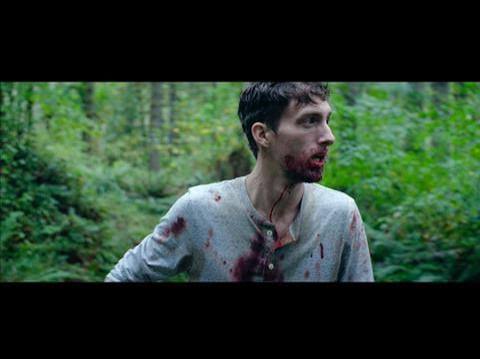
The film’s infected bodies receive plenty of attention. Skin becomes irritated, damaged and eventually horrifying. The practical-effects work is one of the remake’s more successful elements, even if the movie doesn’t always exploit the effects as imaginatively as the original did.
The cinematography gives the film a polished contemporary appearance, with strong colour and good definition.
That visual polish is particularly welcome on Blu-ray.
The Cast
The young cast does a respectable job with material that doesn’t always give them much room to develop their characters.
Samuel Davis plays Paul, the central protagonist, while Gage Golightly is Karen. Matthew Daddario plays Jeff, Nadine Crocker is Marcy and Dustin Ingram plays Bert.
One of the difficulties with the characters is that they are deliberately unpleasant.
That was true of the original as well.
The Cabin Fever formula relies partly on putting obnoxious young people into increasingly horrible circumstances and then asking the audience to watch them fall apart.
There is a dark pleasure in seeing selfish people become even more selfish when confronted with a genuine crisis.
But the 2016 cast sometimes struggles to make these characters distinctive enough to escape the comparison with the original performers.
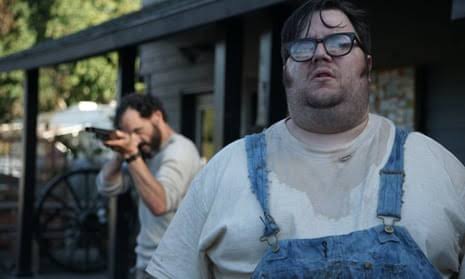
Dustin Ingram’s Bert is perhaps the most memorable of the group because the character is designed to be particularly obnoxious. His behaviour is frequently appalling, but that is also part of the film’s black humour.
Gage Golightly gives Karen a more sympathetic presence, while Samuel Davis provides Paul with the necessary sense of uncertainty as the situation becomes increasingly catastrophic.
Matthew Daddario and Nadine Crocker also make the most of their roles.
The performances aren’t the primary reason to watch the film, but they are certainly not the catastrophe that some reviews have suggested.
The Horror
The real question is whether Cabin Fever 2016 works as horror.
The answer is: sometimes.
It is much more effective as body horror than as suspense.
The infection provides the film with its most memorable imagery. The sight of flesh becoming damaged, infected and increasingly grotesque is unpleasant in exactly the way the film intends.
There is also something particularly effective about the progression of the disease.
At first the characters don’t understand what is happening.
Then they begin to realise that something is seriously wrong.
Then they become frightened.
Then they become desperate.
Eventually, they become dangerous to one another.
That progression remains effective because it taps into a very primal fear: the fear that your own body can suddenly become your enemy.
The film also understands the horror of contamination.
Who is infected?
Who isn’t?
Can you touch somebody?
Can you trust them?
Can you drink the water?
Can you get away?
These questions provide the movie with its underlying tension.
Unfortunately, the familiarity of the story reduces much of the suspense.
If you’ve seen the original, you already know many of the answers.
The Gore
For a film called Cabin Fever, the gore is obviously important.
Fortunately, the remake doesn’t completely disappoint in this department.
There are some genuinely nasty sequences, and the practical makeup effects provide the film with much of its personality.
The infected skin looks appropriately revolting, and the progression of the disease is one of the movie’s strongest visual ideas.
Yet there is a curious restraint compared with what one might expect.
The 2002 Cabin Fever had an almost gleefully anarchic quality. It could be disgusting one moment and absurd the next.
The remake feels more controlled.
That isn’t necessarily a bad thing, but it does make the movie feel less dangerous.
The gore is technically effective, but it rarely has the shock value of its predecessor.
This is particularly noticeable because modern horror audiences had become considerably more accustomed to extreme imagery by 2016.
The remake therefore needed to do something distinctive with its violence.
Instead, it generally settles for reproducing what came before.
The Black Comedy
Another important ingredient is the humour.
The original Cabin Fever was never simply a serious horror film. Roth mixed genuine disgust with broad, sometimes outrageous comedy.
That tonal instability was part of its appeal.
The remake attempts to preserve this aspect but doesn’t always succeed.
Some of the comedy works because the situations themselves are ridiculous.
Other jokes feel like reminders that the filmmakers know audiences have seen the original.
The result is uneven.
There are amusing moments, but the film doesn’t possess the same bizarre personality as its predecessor.
The original could feel like it was spiralling out of control.
The remake feels more calculated.
That difference matters.
The Supporting Characters
One of the pleasures of both films is the collection of strange people surrounding the central group.
The locals, law-enforcement figures and other inhabitants of the area help create the feeling that the protagonists have wandered into a world that operates according to its own rules.
The remake revisits several of these elements.
Some of the supporting performances are memorable precisely because they are so strange.
The film understands that Cabin Fever needs more than just five attractive young people in a cabin. The surrounding community has to feel unsettling.
Unfortunately, some of the eccentricity feels diluted compared with the original.
The 2002 film had an especially grubby, unpredictable atmosphere.
The remake is cleaner.
That is perhaps the best way to describe the difference.
The original feels dirty.
The remake looks dirty.
Those are not quite the same thing.
The Music
Kevin Riepl provides the score, giving the film a conventional modern horror soundtrack.
The music performs its job effectively enough, supporting the suspense and emphasizing the more violent sequences.
It doesn’t, however, become particularly memorable.
This is another area where the remake is perfectly competent but rarely distinctive.
The score serves the film rather than defining it.
The Visual Style
One of the strongest aspects of the production is its photography.
The wilderness locations are beautifully captured.
The contrast between natural beauty and physical corruption is central to the film’s visual identity.
The forest and lake sequences have a bright, almost inviting quality early in the story. As the infection progresses, those same locations become increasingly oppressive.
The film also benefits from a crisp contemporary digital look.
There is a clean sharpness to the photography that makes the special effects easy to see.
That may sound like a minor compliment, but with body horror it matters.
The audience needs to see the texture of the infected skin.
The image needs enough clarity to reveal the makeup effects.
And the Blu-ray does an excellent job of preserving that detail.
The Imprint Blu-ray Presentation
This is where the Imprint release becomes particularly interesting for collectors.
Imprint has built a reputation around bringing genre and catalogue titles to the Australian home-video market in attractive editions, and the Cabin Fever films make natural additions to that catalogue.
The film itself was already released on Blu-ray in North America by Scream Factory in 2016, where it received a 1080p presentation and DTS-HD Master Audio options. Contemporary reviews were generally positive about the picture quality, even when they were much less enthusiastic about the film itself.
The 2016 film is presented in its widescreen theatrical format, and the high-definition transfer is particularly good at showing the natural detail of the locations.
The forest photography benefits enormously from Blu-ray.
Leaves, branches, clothing textures and facial detail are all clearly resolved.
The contrast between the bright outdoor photography and darker interior scenes is also handled well.
The infection effects look suitably unpleasant in high definition.
There is no reason to watch a movie like this on a soft, poorly compressed presentation when the whole point is to appreciate the physical detail of the makeup effects.
The picture quality is therefore one of the major strengths of the release.
Audio
The audio presentation is equally appropriate for the material.
The film’s dialogue remains clear, while the score and effects provide the necessary atmosphere.
The sound design becomes increasingly important as the film progresses.
Small environmental sounds help create the feeling of isolation.
The woods aren’t silent.
The cabin isn’t silent.
The infected bodies aren’t silent.
The soundscape gradually becomes another reminder that something is wrong.
The Blu-ray’s lossless presentation gives the film a solid sense of presence without making the soundtrack unnecessarily aggressive.
Special Features
The original 2016 Blu-ray contained a relatively modest selection of extras, including an approximately eleven-minute making-of featurette and the theatrical trailer.
That is worth mentioning because it illustrates the unusual status of this film within the Cabin Fever franchise.
There is considerably more behind-the-scenes material available on releases of the 2002 film than on the 2016 remake. The extensive legacy extras associated with the original include commentaries, making-of material, deleted scenes and other production features.
The 2016 remake’s behind-the-scenes featurette is nevertheless worthwhile for anyone interested in how the production was assembled.
The opportunity to see the filmmakers and cast discussing the project provides some context for why the remake was made and how the production approached recreating such a familiar story.
It also makes one thing clear: this wasn’t an accidental or careless production.
There was genuine enthusiasm behind it.
The filmmakers obviously wanted to make a Cabin Fever film.
The problem is that enthusiasm cannot solve the fundamental issue of originality.
Why Was It Remade?
This is the question that hangs over the entire film.
The original was only fourteen years old.
It was readily available.
It had already become a recognised horror title.
And the remake follows it so closely that it frequently feels unnecessary.
There is an argument that the film was intended to introduce the concept to younger viewers who might not have seen Roth’s movie.
That is certainly plausible.
Horror has always been cyclical.
Stories are remade for new generations, often because studios believe a contemporary audience will respond better to a new cast and updated production values.
The 2016 Cabin Fever is essentially that kind of project.
But for longtime fans, the experience is frustrating.
It doesn’t replace the original.
It doesn’t expand the mythology.
It doesn’t reinterpret the concept.
It simply repeats it.
The Relationship With Eli Roth
Eli Roth’s involvement is another fascinating element.
Roth wrote the screenplay with Randy Pearlstein and remained connected to the project as executive producer.
This isn’t therefore a situation where someone simply took his movie away and remade it without his involvement.
He was part of the process.
That makes the remake more interesting from a franchise perspective.
The film almost feels like an attempt to preserve the Cabin Fever formula rather than reinvent it.
It also explains why certain elements feel so familiar.
The remake isn’t trying to escape the original.
It is deliberately embracing it.
Comparing the Two Films
The 2002 film wins almost every major comparison.
It has more personality.
It feels nastier.
It is stranger.
It has stronger characterisation.
It has more distinctive performances.
And most importantly, it was original.
The 2016 film has advantages of its own.
It looks better.
The cinematography is polished.
The special effects are effective.
The production values are stronger in some respects.
The younger cast brings a different energy to the material.
But technical improvements don’t necessarily make for a better horror film.
Sometimes roughness is part of a movie’s identity.
The original Cabin Fever had a grubby quality that made its world feel more dangerous.
The remake is more polished and therefore slightly less threatening.
Is It Actually a Bad Film?
This is where the 2016 film deserves some reconsideration.
Calling it a bad remake is understandable.
Calling it a terrible movie is more questionable.
If someone watches the 2016 Cabin Fever without having seen the original, the film works reasonably well as a straightforward body-horror picture.
The premise is easy to understand.
The pacing is generally brisk.
The cinematography is good.
The performances are adequate.
The gore is effective.
The location works.
There are some unpleasant images.
There are a few decent scares.
It doesn’t reinvent horror, but it doesn’t completely collapse either.
The problem is that horror films don’t exist in isolation.
A remake has to be judged in relation to what it is remaking.
And here the comparison is unavoidable.
The Importance of Context
The Cabin Fever franchise is an interesting example of how horror movies can become trapped by their own success.
The first film established a very specific formula.
The sequels attempted to continue it.
Then the remake returned to the beginning.
Rather than moving forward, the franchise effectively reset itself.
That makes the 2016 film feel less like the next chapter and more like a parallel version of something audiences had already experienced.
It is almost a cinematic alternate universe.
What if the same story were told with a different cast, different photography and slightly different emphasis?
That isn’t necessarily useless.
But it is difficult to justify as essential.
The Body Horror Still Works
Despite all of these criticisms, the central idea remains powerful.
There is something inherently disturbing about watching a healthy body become diseased.
The film takes advantage of our fear of contamination.
Skin is normally something we barely think about.
It protects us.
We trust it.
But once the infection begins, that protective barrier becomes a visual representation of everything going wrong inside the body.
The horror is intimate.
It isn’t simply about being killed.
It is about becoming physically repulsive.
That is why Cabin Fever remains a useful vehicle for horror even when its story is familiar.
The infection itself is an excellent monster.
The Atmosphere of Isolation
The film also succeeds whenever it focuses on isolation.
The cabin is far enough from civilisation to make outside assistance difficult.
The characters are therefore forced to depend on one another.
But they don’t particularly like one another.
That creates an effective contradiction.
The people who need each other most are the people least capable of trusting each other.
As the infection spreads, this becomes increasingly important.
Every person becomes a potential threat.
The psychological horror therefore develops naturally from the physical horror.
A Film About Paranoia
Underneath all the gore, Cabin Fever is really a story about paranoia.
The disease gives the characters a reason to suspect everyone around them.
But the infection also reveals their existing flaws.
Fear makes them selfish.
Panic makes them irrational.
And desperation removes whatever social restraints they initially possessed.
The film’s characters aren’t heroic figures calmly solving a crisis.
They’re ordinary people behaving badly.
That remains one of the most interesting aspects of the concept.
The Final Verdict
Cabin Fever (2016) is a difficult film to recommend without qualification.
If you are a fan of Eli Roth’s 2002 original, the remake can be frustrating.
It is too close to the original to feel fresh, but not quite close enough to reproduce the strange energy that made the first film memorable.
It copies the structure without fully reproducing the personality.
However, if approached as an isolated horror film, it is considerably more competent than its reputation suggests.
The cast is perfectly serviceable.
The cinematography is attractive.
The gore effects are worthwhile.
The location is excellent.
The sound design works.
The pacing is generally efficient.
And the underlying premise remains effective.
The film’s greatest weakness is therefore not incompetence.
It is redundancy.
There simply isn’t enough reason for this particular version to exist.
The Imprint Blu-ray is another matter.
For collectors, fans of the franchise and those interested in completing the Cabin Fever series, it is a worthwhile addition. The high-definition presentation gives the film the opportunity to show off its photography and practical effects, and the release allows the 2016 remake to be considered as part of the franchise rather than simply dismissed as an unnecessary copy.
Ultimately, Cabin Fever 2016 is a strange cinematic specimen.
It is a remake of a film that was itself already a relatively simple horror story.
It contains many of the same scenes.
It revisits many of the same ideas.
It recreates many of the same moments.
And yet it is not completely without merit.
There is an attractive visual quality to the production, the body horror remains effective, and the central concept of an apparently unstoppable infection spreading among a group of isolated young people still has the power to make the skin crawl.
The problem is that the 2002 film got there first.
And it got there with more personality.
So the best way to view the 2016 Cabin Fever is not as a replacement for the original but as an interesting companion piece — an alternate interpretation of the same basic nightmare.
It is a good-looking, competently performed, occasionally disgusting horror film that suffers enormously from being almost exactly the film it is remaking.
As a standalone horror movie, it is serviceable.
As a remake, it is unnecessary.
As a Blu-ray for Cabin Fever completists, however, it is a welcome opportunity to revisit one of the more curious entries in the franchise and reconsider a movie that has perhaps been dismissed too quickly simply because of the enormous shadow cast by its predecessor.


Leave a Reply