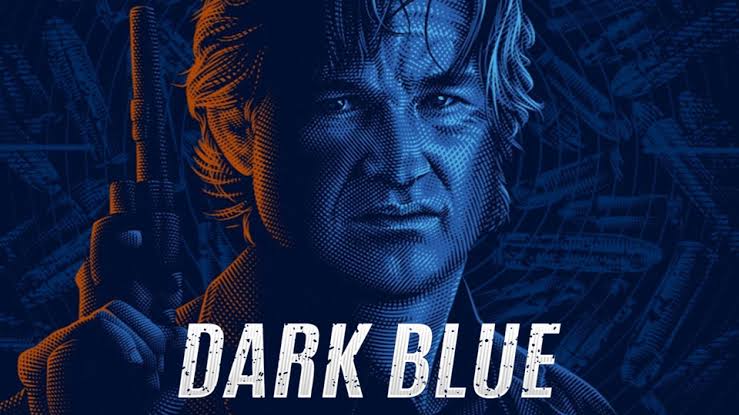
“Dark Blue” (2002)
Drama

Running Time: 118 minutes
Written by: David Ayer
Directed by: Ron Shelton
Featuring: Kurt Russell, Brendan Gleeson, Scott Speedman, Michael Michele, Lolita Davidovich and Ving Rhames
Det. Sgt. Eldon Perry Jr.: “That’s my daddy’s gun… and the only reason this city’s here is because they built it with bullets!”
There are crime thrillers that entertain, and then there are crime thrillers that leave an uncomfortable residue long after the credits have rolled. Ron Shelton’s Dark Blue belongs firmly in the latter category. Released in 2002 but set during the volatile days immediately before the Rodney King verdict, the film is a bleak examination of corruption, racism, institutional violence and moral decay. Although it received respectable reviews upon release, it never quite achieved the same reputation as other police dramas of the era such as Training Day, L.A. Confidential or Narc. Time has been kind to Dark Blue, however, and it now stands as one of the finest overlooked neo-noirs of the early 2000s.
This new Limited Edition 4K Ultra HD release finally gives the film the premium presentation it has long deserved. Restored from the original 35mm camera negative and presented in Dolby Vision HDR, the release is accompanied by a generous selection of new interviews, archival documentaries, commentaries and a substantial collector’s booklet, making it one of the strongest boutique releases of the year.
The story unfolds over several tense days in Los Angeles during April 1992. The city is waiting anxiously for the verdict in the Rodney King beating trial, while beneath the surface decades of racial tension threaten to explode.
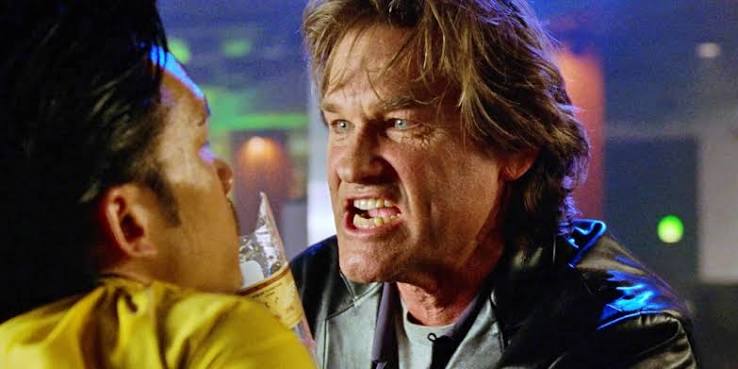
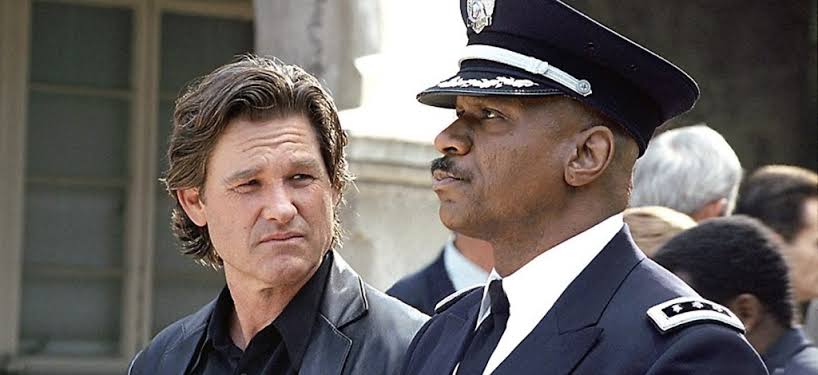
Veteran LAPD Sergeant Eldon Perry, played magnificently by Kurt Russell, is an experienced detective whose methods are not simply questionable—they are outright criminal. Perry plants evidence, intimidates witnesses, manipulates suspects and works within a culture where corruption is viewed as an acceptable shortcut toward maintaining control.
His mentor, Jack Van Meter (Brendan Gleeson), represents an older generation of officers who have completely abandoned any pretence of justice. Together they operate almost like a criminal organisation wearing police badges.
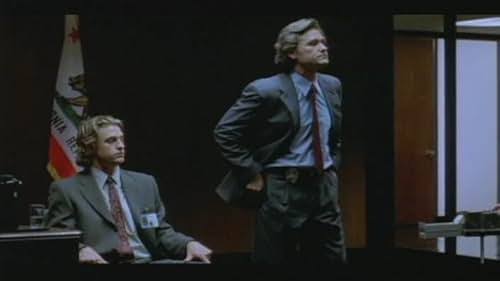
When Perry is partnered with idealistic young detective Bobby Keough (Scott Speedman), the generational divide within the department becomes increasingly apparent. Keough still believes policing should serve justice, while Perry has long convinced himself that results matter more than ethics.
The backdrop of the Rodney King verdict transforms what could have been a routine police thriller into something far more unsettling. As the city edges toward violence, the corruption inside the police department mirrors the chaos waiting outside.
Even more than twenty years later, Dark Blue feels remarkably contemporary. Discussions surrounding police accountability, institutional racism and abuse of power have only become more urgent, giving the film renewed relevance.
If there is one reason to revisit Dark Blue, it is Kurt Russell.
Known largely for charismatic antiheroes throughout the 1980s and 1990s, Russell delivers perhaps the darkest performance of his career. Eldon Perry is not remotely likable. He drinks heavily, lies effortlessly, brutalises suspects and hides behind decades of institutional corruption.
Yet Russell refuses to play him as a simple villain.
Instead, Perry emerges as a tragic figure—a man who slowly realises the moral compromises he once justified have consumed every aspect of his life. Russell allows tiny moments of regret to surface beneath Perry’s hardened exterior, making his gradual awakening believable rather than sentimental.
It is an extraordinarily layered performance that deserved considerably more recognition than it received in 2002.
The supporting cast is equally impressive.
Brendan Gleeson is quietly terrifying as Van Meter. Unlike Perry, who occasionally questions himself, Van Meter never doubts the righteousness of his actions. Gleeson underplays the role, making him all the more frightening.
Scott Speedman provides an effective moral counterweight, while Michael Michele delivers one of the film’s strongest performances as Assistant Chief Beth Williamson, whose determination to expose corruption places her directly against Perry and Van Meter.
Lolita Davidovich also gives welcome emotional weight as Perry’s wife, showing the devastating personal consequences of living alongside a man consumed by violence and alcoholism.
Every performance contributes to the film’s atmosphere of moral exhaustion.
Although directed by Ron Shelton, much of Dark Blue‘s identity comes from David Ayer’s screenplay, developed from a story by James Ellroy.
Ayer had already established himself as one of Hollywood’s premier chroniclers of urban policing, and his dialogue here crackles with authenticity. The officers sound like people who have spent decades living inside an institution where loyalty matters more than legality.
James Ellroy’s influence is equally apparent. Like L.A. Confidential, the film explores corruption not as isolated misconduct but as something embedded within the entire system.
Rather than offering simple heroes and villains, the screenplay examines how institutions gradually reshape individual morality.
Ron Shelton may seem an unusual choice to direct such dark material given his reputation for sports dramas and comedies, but his restrained approach serves the film exceptionally well.
He avoids flashy editing or exaggerated action sequences.
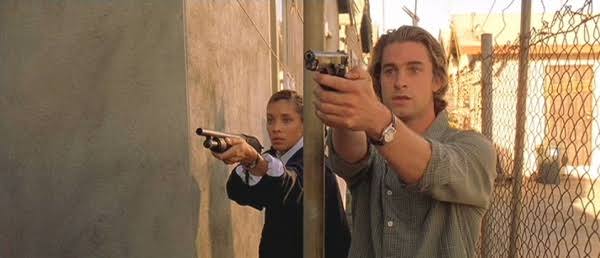
Shootouts are messy and frightening rather than exciting.
Violence carries genuine consequences.
The pacing deliberately builds tension toward the inevitable eruption following the Rodney King verdict.
When the riots finally begin, Shelton resists sensationalism, instead presenting them almost as the unavoidable consequence of everything the film has spent two hours exploring.
The greatest surprise of this release is just how impressive the restoration proves to be.
Presented in Dolby Vision from a new restoration of the original 35mm camera negative, Dark Blue immediately reveals significantly improved detail over previous home video editions.
Fine facial textures become visible throughout.
Clothing fibres, concrete surfaces and urban architecture display remarkable clarity without appearing artificially sharpened.
Film grain remains completely intact, preserving the movie’s cinematic appearance.
Colour grading appears intentionally restrained.
Los Angeles possesses dusty browns, muted blues and burnt orange sunsets rather than exaggerated HDR spectacle. The Dolby Vision grading enhances contrast and shadow detail while respecting the original photography. Night sequences exhibit deeper blacks without crushing important detail.
Some viewers have debated the darker grading, but many reviewers note that the presentation appears faithful to the film’s intended look rather than artificially brightened.
This is exactly the sort of presentation collectors hope for—a restoration that respects the source instead of trying to modernise it.
Audio is provided via DTS-HD Master Audio 5.1 alongside an LPCM 2.0 option. Gunfire carries convincing impact, environmental ambience fills the surrounds effectively, and Terence Blanchard’s understated jazz-influenced score benefits from improved clarity. Dialogue remains clean and intelligible throughout, although some listeners may prefer the balance of the stereo track during busier scenes.
Collectors are particularly well served.
The release includes two audio commentaries, including a newly recorded track by film historians Alain Silver and Jim Ursini alongside Ron Shelton’s existing commentary.
Brand-new interviews with Ron Shelton, producers Caldecot Chubb and David Blocker, actress Lolita Davidovich and composer Terence Blanchard provide thoughtful retrospective discussions covering the production and the film’s enduring themes.
Archival featurettes explore production design, costume work and police procedures, while trailers, television spots and a behind-the-scenes gallery round out the package. A beautifully produced hardback booklet featuring essays and production notes completes what feels like a definitive collector’s edition.
Dark Blue deserves rediscovery.
Far more than a conventional police thriller, it is an uncompromising examination of institutional corruption, personal responsibility and the moral compromises people make in the pursuit of power. The film refuses easy answers, presenting policing as an institution capable of both protection and profound abuse.
Kurt Russell delivers one of the greatest performances of his career, supported by Brendan Gleeson, Scott Speedman and Michael Michele in a cast that never strikes a false note.
This Limited Edition 4K release finally gives the film the presentation it has always deserved. The restoration beautifully preserves the gritty texture of early-1990s Los Angeles while offering substantial improvements in detail, contrast and colour stability. Combined with an excellent collection of supplements, it represents a model boutique release.
For fans of intelligent crime dramas, neo-noir cinema or Kurt Russell’s remarkable career, this edition is easy to recommend. Dark Blue may have slipped under many viewers’ radar in 2002, but this superb 4K restoration proves that it has lost none of its power. If anything, its themes resonate even more strongly today, making it not only one of the finest police dramas of its era but also one of the most essential catalogue releases to arrive on Ultra HD this year.



Leave a Reply