Category: Reviews
-
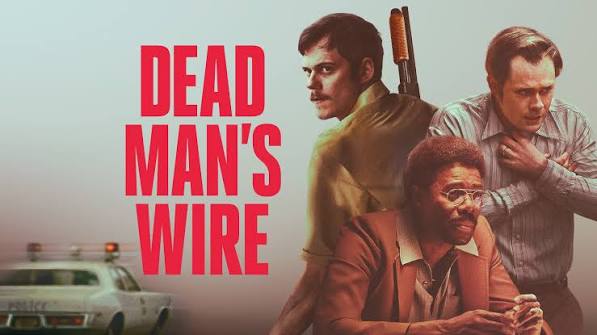
“Dead Man’s Wire” (2025) Drama / Action Running Time: 122 minutes Written by: Austin Kolodney Directed by: Gus Van Sant Featuring: Bill Skarsgård, Dacre Montgomery, Cary Elwes, Myha’la, Colman Domingo and Al Pacino Fred Temple: “Okay, listen, I’m gonna need you to call my wife. Tell her I’m gonna be late. I don’t know which call…
-
“The Death of Robin Hood” (2026) Drama / Action Running Time: 122 minutes Written & directed by: Michael Sarnoski Featuring: Hugh Jackman, Jodie Comer, Bill Skarsgård, Murray Bartlett and Noah Jupe Robin: “He never prayed once in his life. These tales spread across the land are lies upon lies. He were a murderous brigand, who perhaps…
-
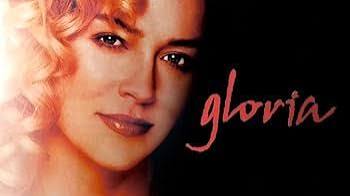
“Gloria” (1999) Drama Running Time: 108 minutes Written by: Steve Antin Directed by: Sidney Lumet Featuring: Sharon Stone, Jeremy Northam, Cathy Moriarty, Jean-Luke Figueroa, Mike Starr and George C. Scott Kevin: “Sean, if you were any dumber, I’d have to water you.” There is something rather fascinating about Gloria, Sidney Lumet’s 1999 crime thriller starring Sharon Stone.…
-
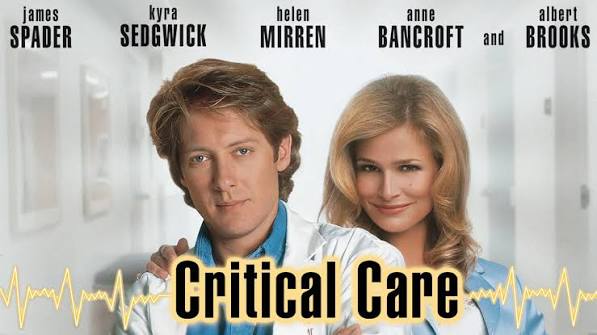
“Critical Care” (1997) Drama Running Time: 107 minutes Written by: Steven Schwartz Directed by: Sidney Lumet Featuring: James Spader, Kyra Sedgwick, Helen Mirren, Margo Martindale, Jeffrey Wright, Wallace Shawn, Anne Bancroft, Albert Brooks, Philip Bosco and Colm Feore Dr. Butz: “When those lawyers start crawling all over you, that’s when you know you’re a doctor.” Sidney…
-
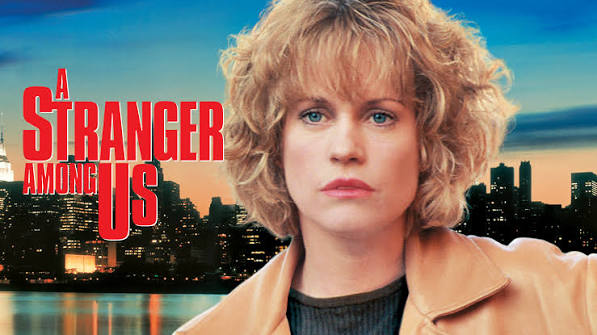
“A Stranger Among Us” (1992) Drama Running Time: 109 minutes Written by: Robert J. Avrech Directed by: Sidney Lumet Featuring: Melanie Griffith Shayna: “It’s in the Kabbalah. Women understand the world better than men do. And that is why they weep more often.” Sidney Lumet’s A Stranger Among Us is an unusual mixture of crime thriller, romantic drama…
-
“Daniel” (1983) Drama Running Time: 129 minutes Written by: E. L. Doctorow Directed by: Sidney Lumet Featuring: Timothy Hutton, Mandy Patinkin, Lindsay Crouse and Edward Asner Paul Isaacson: “If they didn’t arrest people, they’d have nothing to do.” There are films that entertain, films that provoke, and films that leave you emotionally exhausted long after the closing credits have finished rolling. Sidney Lumet’s Daniel (1983) firmly belongs in the third category. This is a challenging, politically charged and deeply unsettling drama that examines the consequences of political persecution, the destruction of a family and the emotional scars inherited by children who grow up surrounded by tragedy. Now available on Blu-ray through Imprint Films, Daniel is an interesting addition to the home-video catalogue of one of American cinema’s most respected directors. It is certainly not an easy film to watch, nor is it particularly interested in making itself accessible to a casual audience. However, for admirers of serious adult filmmaking, politically conscious cinema and outstanding character performances, there is plenty here to appreciate. Based on E.L. Doctorow’s novel The Book of Daniel, the film is inspired by the notorious Julius and Ethel Rosenberg espionage case of the 1950s. Doctorow fictionalises the circumstances and changes the family name to Isaacson, allowing the story to explore the wider political and emotional consequences of the events rather than simply recreate historical proceedings. The story follows Daniel Isaacson, played by Timothy Hutton, whose parents Paul and Rochelle were convicted of espionage and executed by the American government. Their deaths leave behind two children whose lives are permanently shaped by the experience. Years later, Daniel is an adult struggling to reconcile his childhood memories with the political circumstances surrounding his parents’ execution. He is involved in the protest movements of the 1960s and increasingly obsessed with understanding what really happened to his family. His search for answers becomes something much more personal. He is not simply trying to establish whether his parents were guilty or innocent. He is attempting to understand the people they were, the decisions they made and the consequences those decisions had for their children. Lumet structures the film through an intricate series of flashbacks, moving between different periods of the family’s history. We see the Isaacsons during their idealistic political involvement, their arrests, their imprisonment and the devastating consequences for their children. This approach gives the film an almost fragmented quality. Memories, political arguments and personal experiences overlap, creating a picture of a family that can never really escape its past. It is an ambitious storytelling technique, although it occasionally makes the narrative difficult to follow. The film deliberately avoids providing simple answers, and that uncertainty is both one of its greatest strengths and one of its most frustrating weaknesses. Timothy Hutton delivers an excellent central performance as Daniel. He captures the character’s intellectual intensity, emotional confusion and growing obsession with his parents’ history. Daniel is not necessarily an immediately sympathetic character. He can be distant, argumentative and emotionally unavailable, particularly towards the people closest to him. Hutton understands these contradictions and creates a convincing portrait of someone whose childhood trauma has followed him into adulthood. Mandy Patinkin is particularly impressive as Paul Isaacson. He brings considerable energy and conviction to the role, portraying a man whose political beliefs are inseparable from his identity. His idealism is sincere, but there is also something troubling about the way his political commitments dominate his understanding of family life. Lindsay Crouse is equally effective as Rochelle. Her performance gives the film much of its emotional weight, especially during the flashback sequences. She portrays a woman who believes deeply in her political convictions but whose decisions have consequences that extend far beyond her own life. Amanda Plummer is another standout as Daniel’s troubled sister, Susan. Her character is arguably the most visibly damaged by the family’s history, and Plummer brings an unpredictable, unsettling intensity to the performance. Ed Asner provides another strong contribution as Jacob Ascher, while Ellen Barkin makes a welcome impression as Daniel’s wife, Phyllis. The supporting cast is excellent throughout, with Lumet assembling a group of performers capable of handling the film’s occasionally demanding dialogue. Lumet was never a director who shied away from uncomfortable subjects. His filmography includes 12 Angry…
-
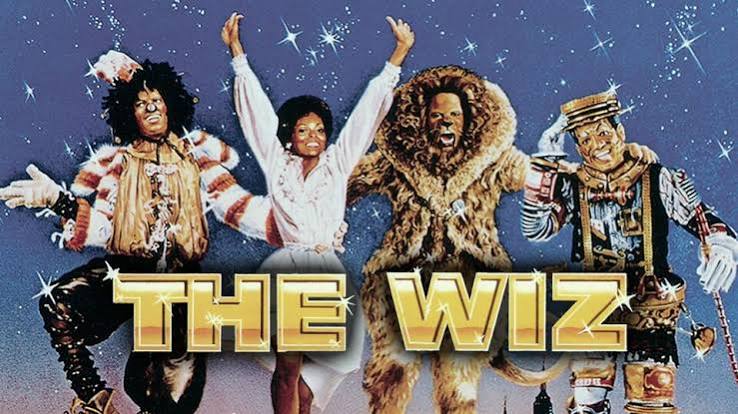
“The Wiz” (1978) Musical Written by: Joel Schumacher Directed by: Sidney Lumet Featuring: Diana Ross, Michael Jackson, Nipsey Russell, Ted Ross, Lena Horne and Richard Pryor Scarecrow: “Public office is the last refuge of the incompetent!” There are certain films that become more interesting, more distinctive and perhaps even more enjoyable with the passage of time. Sidney Lumet’s 1978 adaptation of The Wiz is undoubtedly one of them. Originally greeted with a somewhat mixed reception, this ambitious reimagining of L. Frank Baum’s familiar Oz story has gradually developed a devoted following, thanks to its extraordinary musical numbers, colourful visual imagination, wonderful cast and its place in the history of Black American cinema. The basic story will be familiar to anyone who knows The Wizard of Oz, but Lumet and screenwriter Joel Schumacher take the opportunity to give the material a very different identity. Dorothy Gale, played by Diana Ross, is a shy schoolteacher from Harlem who finds herself transported to a strange, fantastical version of Oz. Rather than the traditional Technicolor landscapes of the 1939 classic, this Oz is a surreal urban environment, heavily inspired by New York City. As Dorothy journeys towards the Emerald City in search of the mysterious Wiz, she encounters a collection of unforgettable characters, including the Scarecrow, the Tin Man and the Cowardly Lion. Along the way, the familiar themes of friendship, courage, self-belief and discovering where you belong are explored through a distinctly African-American cultural perspective. What makes The Wiz so interesting is its willingness to completely rethink the visual language of the original story. Oz becomes an enormous urban fantasy playground, filled with abandoned streets, subway stations, extraordinary architecture, bizarre characters and some wonderfully imaginative set designs. The result is a film that often feels like a strange dream. Sometimes that works brilliantly; sometimes the sheer ambition threatens to overwhelm the storytelling. Nevertheless, there is very little else quite like it. The casting is one of the film’s greatest attractions, although it is also one of its more interesting talking points. Diana Ross takes on Dorothy with a performance that is quite different from the traditional interpretation. There was considerable discussion surrounding her casting, particularly because she was considerably older than the character traditionally portrayed in the story. Nevertheless, Ross brings a vulnerability and emotional sincerity to the role that gradually becomes more convincing as the film progresses. Her musical performance of “Home” is particularly beautiful, providing the film with its most emotionally satisfying moment. It is a wonderful showcase for her voice, and arguably the sequence that best communicates what the entire story is trying to say. Michael Jackson is arguably the film’s biggest attraction. Playing the Scarecrow, he brings an infectious enthusiasm, physical comedy and natural charm to the character. His performance is full of personality, and his dancing is every bit as impressive as one would expect. The chemistry between Jackson and Ross is especially enjoyable, and their scenes together provide much of the film’s warmth. His rendition of “You Can’t Win” is one of the musical highlights, while his later performance of “Ease on Down the Road” with Ross is an absolute delight. Knowing what Jackson would go on to achieve in the years immediately following this production makes watching him here particularly fascinating. Nipsey Russell is excellent as the Tin Man, delivering a wonderfully relaxed performance with plenty of humour and personality. Ted Ross, reprising his Broadway role as the Cowardly Lion, is equally entertaining. He provides some of the film’s funniest moments while also giving the character a genuine emotional vulnerability. However, it is Mabel King who arguably steals the show. Her portrayal of Evilene, the Wicked Witch of the West, is absolutely magnificent. She brings an enormous amount of theatrical energy to the role, and her musical number “No Bad News” is one of the most memorable sequences in the entire film. King has a commanding screen presence, and whenever she appears, the film suddenly comes alive. Lena Horne makes a welcome appearance as Glinda, although her screen time is disappointingly limited. Richard Pryor plays the Wiz himself, bringing his distinctive personality to a character who could perhaps have benefited from a little more screen time. Ultimately, the cast is one of the film’s greatest strengths. Even when the narrative becomes rather cumbersome, these performers make the journey worthwhile. Sidney Lumet is an interesting choice to direct a large-scale musical fantasy. Best known for gritty, socially conscious dramas such as 12 Angry Men, Serpico, Dog Day Afternoon and Network, Lumet was not exactly the obvious filmmaker to bring this extravagant Broadway production to the screen. Yet his decision to approach Oz as an urban fantasy is what gives the film its distinctive identity. Rather than attempting to recreate the familiar countryside and fantasy landscapes of the 1939 film, Lumet transforms New York into a surreal version of Oz. The subway becomes a dangerous passage into another world, the streets are populated by extraordinary characters, and the Emerald City is an elaborate celebration of music, dance and colour. The production design by Tony Walton is particularly impressive. The sets are frequently enormous, imaginative and wonderfully theatrical. There is a real sense that the filmmakers wanted to create something that audiences had never experienced before. The Emerald City sequences are especially memorable, with their elaborate choreography, colourful costumes and extravagant visual arrangements. The subway sequence, meanwhile, remains one of the film’s most striking passages. Its combination of eerie atmosphere, unusual imagery and surreal movement makes it genuinely unsettling, particularly when viewed through the eyes of a younger audience. The costumes are another major highlight. Walton’s work gives the film an unmistakable visual identity, with each character receiving an individual look that complements their personality. The Scarecrow, Tin Man and Cowardly Lion are all wonderfully realised, while Evilene’s appearance is particularly striking. The film is certainly not perfect. Some of the sets look artificial, certain sequences go on longer than necessary, and Lumet occasionally seems uncertain about how to balance the theatrical elements with the demands of cinematic storytelling. There are moments when the production feels more like a filmed stage spectacle than a fully realised movie.…
-
“A Better Tomorrow Trilogy” (1986) Action Written by: John Woo, Chan Hing-ka and Leung Suk-wah Directed by: John Woo Featuring: Ti Lung, Leslie Cheung, Chow Yun-fat, Emily Chu, Waise Lee and Kenneth Tsang Ken: “You don’t like my rice? What’s wrong with with it? It’s beautiful to me, but to you, rice is nothing… to us,…
-
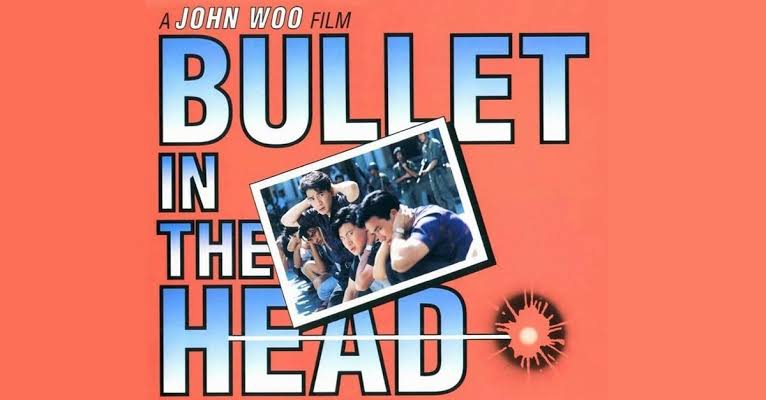
“Bullet in the Head” (1990) Action Running Time: 136 minutes Written by: John Woo, Patrick Leung and Janet Chun Directed by: John Woo Featuring: Tony Leung, Jacky Cheung, Waise Lee and Simon Yam Paul: “Today I saw a soldier kill a man and I learnt something. In this world, we can do anything if we have…
-
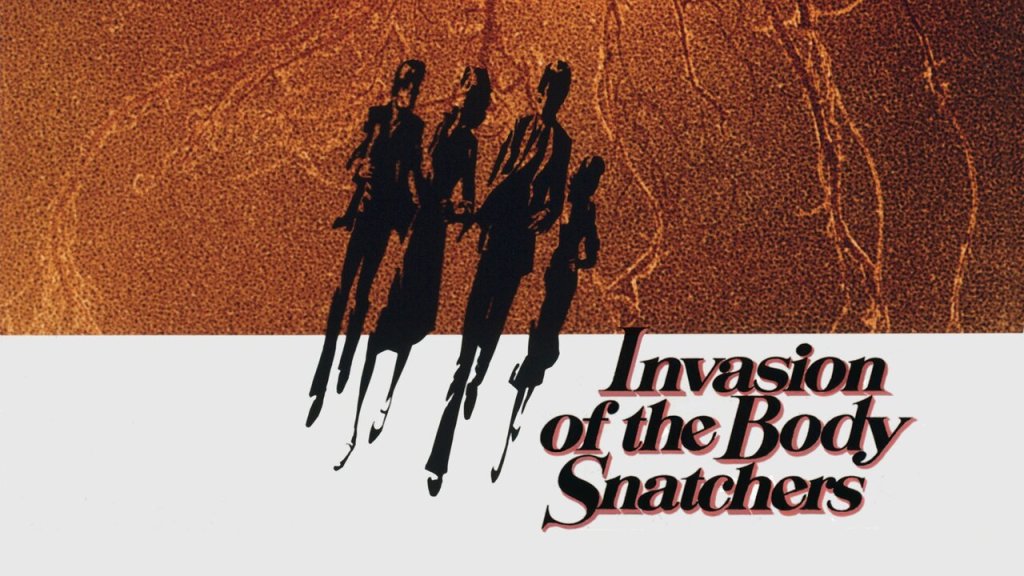
“Invasion of the Body Snatchers” (1978) Science Fiction Running Time: 136 minutes Written by: W. D. Richter Directed by: Philip Kaufman Featuring: Donald Sutherland, Brooke Adams, Leonard Nimoy, Jeff Goldblum and Veronica Cartwright Dr. David Kibner: “We came here from a dying world. We drift through the universe, from planet to planet, pushed on by the…
-
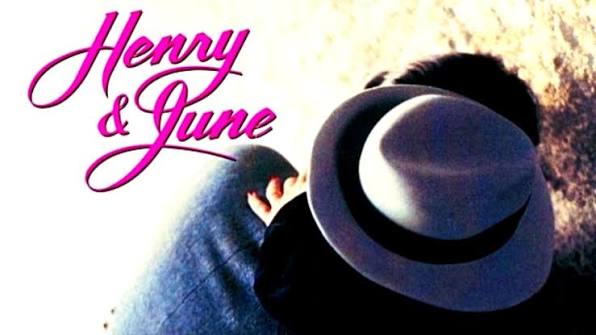
“Henry & June” (1990) Drama Running Time: 136 minutes Written by: Philip Kaufman and Rose Kaufman Directed by: Philip Kaufman Featuring: Fred Ward, Uma Thurman, Maria de Medeiros, Richard E. Grant and Kevin Spacey June Miller: “I’ve done the vilest things – the foulest things – but I’ve done them… superbly.” There are films that become notorious because of their subject matter, films that earn their reputation through genuine artistic achievement, and films that occupy an intriguing space somewhere between the two. Philip Kaufman’s Henry & June belongs firmly in the third category. Released in 1990, this ambitious period drama explores the intertwined lives of writers Anaïs Nin and Henry Miller and Miller’s wife, June, against the bohemian backdrop of 1930s Paris. It became a landmark in American film history as the first motion picture to receive the MPAA’s NC-17 rating, a distinction that inevitably drew attention to its erotic content while sometimes overshadowing its more interesting artistic ambitions. Imprint Films’ limited-edition Blu-ray offers collectors an opportunity to revisit this unconventional work in high definition, with a presentation that gives the film’s atmospheric cinematography and carefully constructed period detail a welcome home-video showcase. The Australian boutique label has included a new interview with leading actress Maria de Medeiros, alongside the theatrical trailer and a television spot. The package is attractive, although the supplementary material is relatively modest for a film with such a fascinating production history and cultural legacy. The film: desire, literature and the search for identity Set in Paris in 1931, Henry & June follows Anaïs Nin, a married woman whose outwardly comfortable existence conceals a growing dissatisfaction with her life. Her marriage offers stability, but she yearns for something more intellectually stimulating, emotionally liberating and creatively fulfilling. Her introduction to the American writer Henry Miller opens a door into a world of artistic rebellion, sexual experimentation and unconventional relationships. Miller represents a particular kind of bohemian freedom. He is ambitious, provocative, frequently selfish and seemingly unconcerned with conventional respectability. His writing is raw and confrontational, reflecting a personality that challenges social expectations as readily as it challenges literary conventions. Through him, Anaïs encounters possibilities that her previous existence has largely kept at a distance.…
-
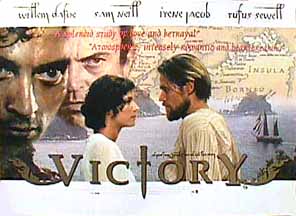
“Victory” (1996) Drama Running Time: 99 minutes Written by: Mark Peploe and Frederick Seidel Directed by: Mark Peploe Featuring: Willem Dafoe, Irène Jacob, Sam Neill and Rufus Sewell Capt. Davidson: “Where ever he is, she really did save his life. She taught him how to love. That was her victory.” There is something particularly satisfying about…
-
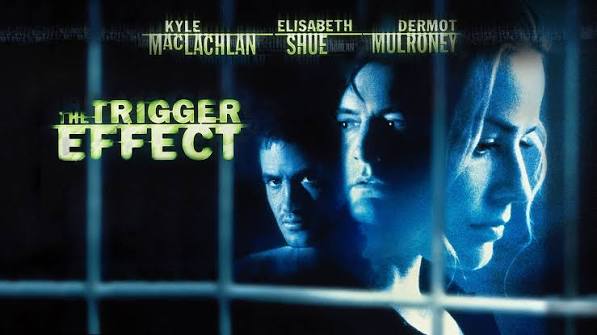
“The Trigger Effect” (1996) Drama Running Time: 94 minutes Written & directed by: David Koepp Featuring: Kyle MacLachlan, Elisabeth Shue, Dermot Mulroney and Michael Rooker Annie: “Boys, if you can’t play nice, we’re not gonna have any more of these little sleepovers.” There is something particularly unsettling about The Trigger Effect. It is not a film that…
-
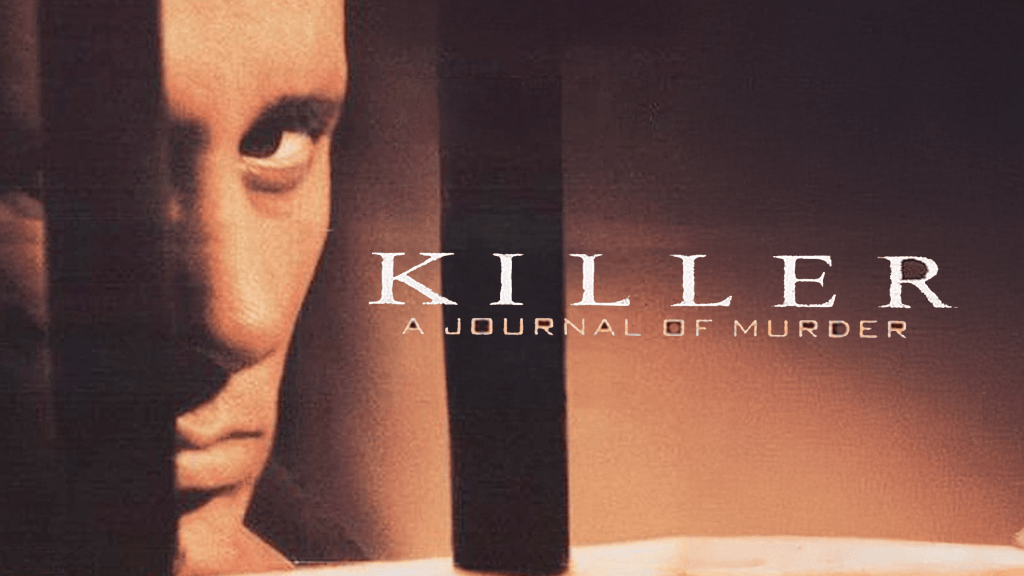
“Killer: A Journal of Murder” (1995) Drama Running Time: 90 minutes Written & directed by: Tim Metcalfe Featuring: James Woods, Robert Sean Leonard, Cara Buono, Ellen Greene, Robert John Burke and Steve Forrest Carl Panzram: “I don’t want to be alive. I want out of these clothes. I want out of this body. I want out…
-
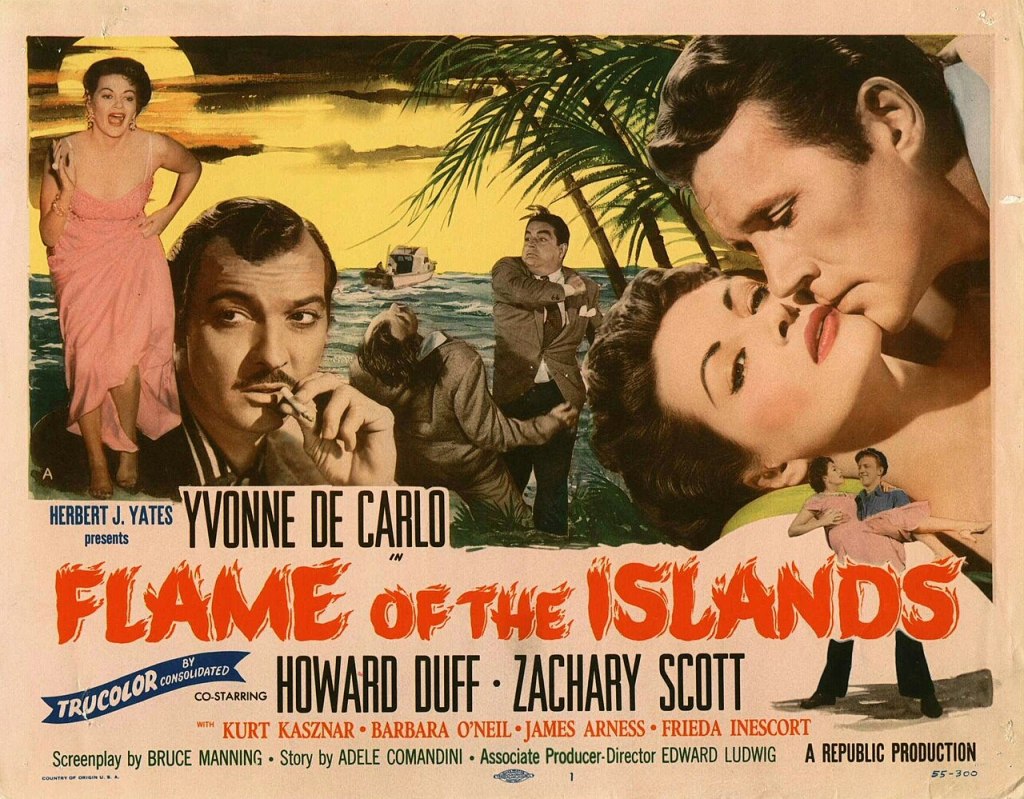
“Flame of the Islands” (1956) Film Noir Running Time: 90 minutes Written by: Bruce Manning Directed by: Edward Ludwig Featuring: Yvonne De Carlo, Howard Duff and Zachary Scott Evelyn Hammond: “Had I died, he would’ve married you I’m sure. But I didn’t die. Please, take this.” Rosalind Dee: “There is no need for that.” Evelyn Hammond:…
-
“Hell’s Island” (1955) Film Noir Running Time: 84 minutes Written by: Maxwell Shane Directed by: Phil Karlson Featuring: John Payne and Mary Murphy Mike Cormack: “I’ve been beaten, badgered, hit over the head, and mixed up in three killings, and believe me, I’m going to find out why.” There is something wonderfully peculiar about Hell’s Island. On…
-
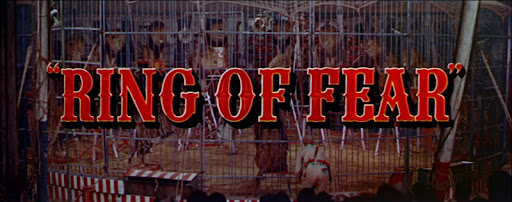
“Ring of Fear” (1954) Film Noir Running Time: 86 minutes Written by: Paul Fix and Philip MacDonald Directed by: James Edward Grant and William A. Wellman Featuring: Clyde Beatty, Mickey Spillane and Pat O’Brien There is something wonderfully strange about Ring of Fear. Released in 1964, this little-seen American thriller occupies an unusual place somewhere between a…
-
“Naked Alibi” (1954) Film Noir Running Time: 86 minutes Written by: Lawrence Roman Directed by: Jerry Hopper Featuring: Sterling Hayden, Gloria Grahame and Gene Barry Marianna: [to Joe] Funny… “I don’t understand you and you don’t understand me. You know, we got a lot in common.” There is something wonderfully disreputable about Naked Alibi. Released in 1954,…
-
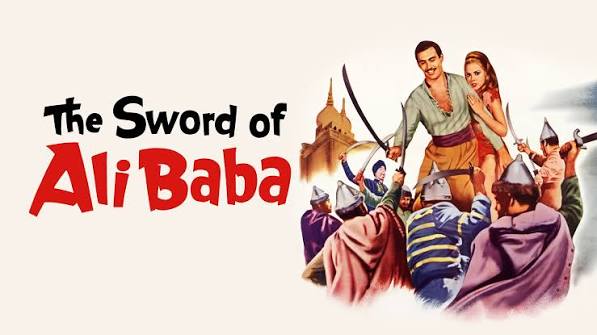
“The Sword of Ali Baba” (1965) Fantasy Running Time: 81 minutes Written by: Edmund Hartmann and Oscar Brodney Directed by: Virgil W. Vogel Featuring: Peter Mann, Jocelyn Lane, Frank McGrath and Peter Whitney There is something wonderfully old-fashioned about sitting down to watch a 1960s Universal adventure film. Even when the film itself is relatively modest,…
-
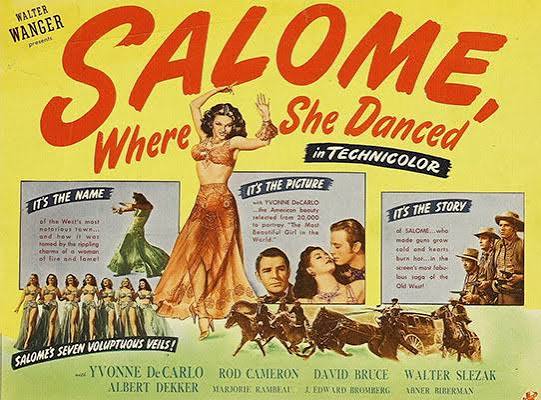
“Salome” (1953) Fantasy Running Time: 76 minutes Written by: Harry Kleiner Directed by: William Dieterle Featuring: Rita Hayworth, Stewart Granger, Charles Laughton, Judith Anderson, Sir Cedric Hardwicke, Basil Sydney, Maurice Schwartz, Arnold Moss and Alan Badel Queen Herodias: “The desperate can only survive by taking desperate measures.” There is something wonderfully excessive about Salome. Almost everything…

