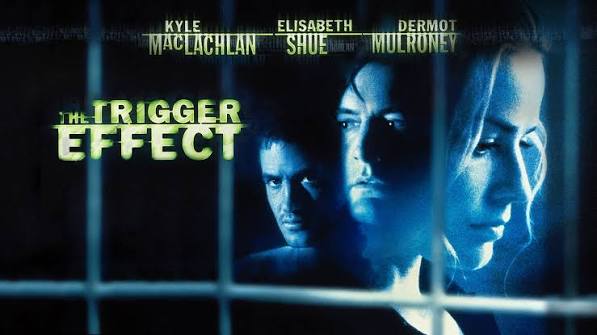
“The Trigger Effect” (1996)
Drama

Running Time: 94 minutes
Written & directed by: David Koepp
Featuring: Kyle MacLachlan, Elisabeth Shue, Dermot Mulroney and Michael Rooker
Annie: “Boys, if you can’t play nice, we’re not gonna have any more of these little sleepovers.”
There is something particularly unsettling about The Trigger Effect. It is not a film that needs an apocalyptic event, a supernatural menace, or an army of villains to create fear. Instead, it takes something extraordinarily ordinary — the loss of electricity — and asks a much more uncomfortable question: what happens to ordinary people when the systems they depend upon suddenly stop working?
Released in 1996 and directed by David Koepp, The Trigger Effect is an intelligent, increasingly tense thriller about a young suburban couple whose comfortable existence begins to unravel during a prolonged blackout. What starts as an inconvenience gradually becomes something far more dangerous as uncertainty, paranoia, shortages and fear begin to erode the assumptions that hold everyday society together.
Imprint’s Blu-ray gives the film an opportunity to be rediscovered by viewers who may have overlooked it when it was originally released. And rediscovery is exactly what The Trigger Effect deserves, because while the film certainly has some flaws, its central ideas feel remarkably relevant.
A remarkably simple premise
The brilliance of The Trigger Effect is its simplicity.
Matthew and Annie are a married couple living a comfortable life with their young child. They have the kind of existence that many people take for granted: electricity, supermarkets, telephones, cars, security and the expectation that these things will continue to function tomorrow just as they did today.
Then the power goes out.
At first, there is nothing particularly frightening about that. People have experienced blackouts for generations. You light a candle, find a flashlight, wait for the power company to fix the problem and carry on.
But the blackout in The Trigger Effect lasts.
And the longer it continues, the more frightening the situation becomes.
Supermarkets cannot operate normally. Communication becomes difficult. Fuel becomes scarce. People become nervous. Rumours begin to circulate. The police are increasingly stretched. Familiar neighbourhoods suddenly feel unfamiliar.
The film understands that civilization is, to a large extent, built upon routine and mutual trust. Remove enough of the infrastructure that supports that trust and the social contract begins to look considerably more fragile.
That idea gives the movie its power.
The darkness is psychological as much as physical
The blackout obviously provides the film with its literal darkness, but the real darkness comes from the behaviour of the characters.
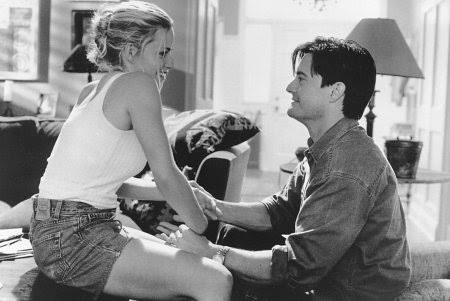
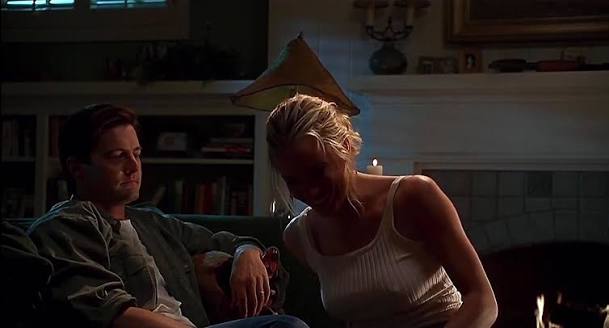
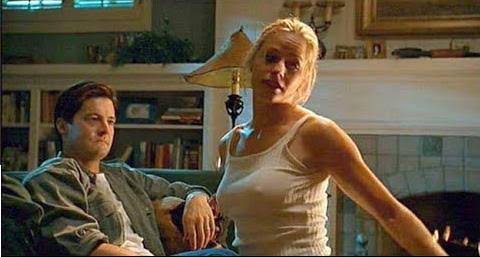
Matthew, played by Kyle MacLachlan, initially seems like a relatively ordinary, reasonable man. He wants to protect his family and make sensible decisions. Annie, played by Elisabeth Shue, is equally recognizable as someone trying to maintain some degree of normality while becoming increasingly frightened by the circumstances around her.
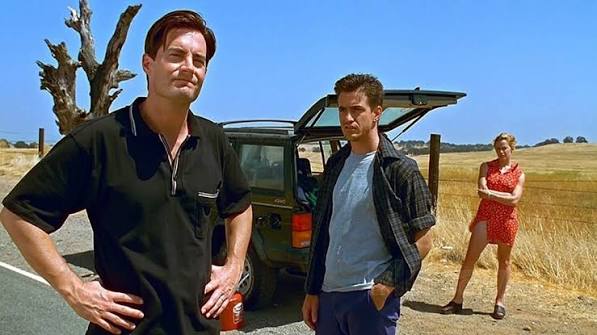
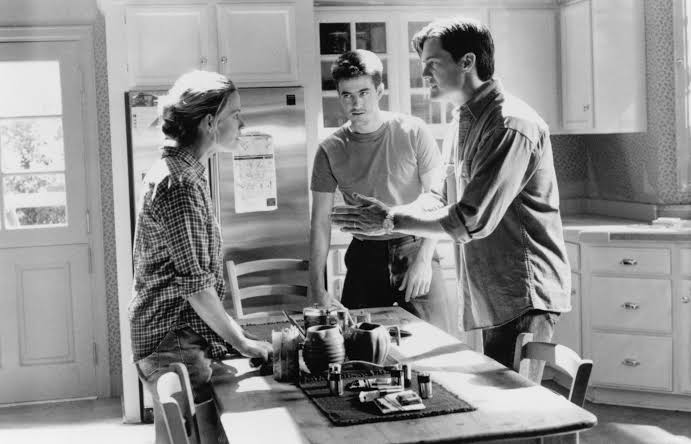
Their friend Joe, played by Dermot Mulroney, complicates matters considerably.
Joe represents a different response to the crisis. He is more aggressive, more prepared to challenge people and increasingly willing to contemplate actions that Matthew finds morally questionable. The friendship between the two men becomes one of the film’s most interesting elements because neither is presented as a straightforward hero or villain.
Instead, the movie asks how far each man is prepared to go.
That is where The Trigger Effect becomes more than a simple disaster thriller.
The central danger is not necessarily the blackout itself. The danger is what the blackout reveals about people.
Kyle MacLachlan is excellent
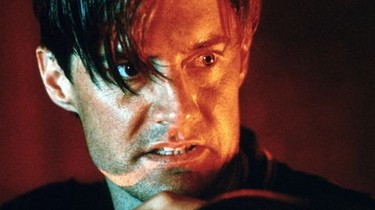
Kyle MacLachlan gives the film an understated performance that works particularly well because Matthew is not initially an action hero.
He is simply a husband and father.
There is a gradual transformation in his behaviour as the situation deteriorates, and MacLachlan does a good job of communicating that change without turning Matthew into a caricature of paranoia or machismo.
He is frightened, frustrated and increasingly desperate. Yet he still wants to believe that there is a rational solution to the situation.
That makes his eventual decisions more uncomfortable.
Elisabeth Shue is equally effective as Annie. Her character is not simply there to react to the men around her. Annie has her own fears and instincts, and Shue gives her a convincing mixture of vulnerability and determination.
Dermot Mulroney, meanwhile, gives Joe an energy that immediately changes the atmosphere whenever he is on screen. He is charismatic but unsettling, and the film deliberately leaves us wondering how much of his behaviour is justified by the circumstances and how much represents a genuine moral decline.
The three performances form the backbone of the movie.
A very 1990s film — in the best possible way
One of the pleasures of watching The Trigger Effect today is seeing just how much the film belongs to the 1990s.
There are no smartphones.
There is no internet that everybody carries around in their pockets.
Information is harder to obtain. Communication is much more dependent upon landlines, television, radio and face-to-face interaction.
That gives the blackout a greater sense of isolation than a similar story would necessarily have today.
At the same time, the film’s concerns have become strangely contemporary.
The idea of supermarket shelves emptying, fuel becoming difficult to obtain, people becoming suspicious of their neighbours and authorities struggling to maintain order feels completely believable. Modern audiences have also become considerably more familiar with the possibility of disruptions to infrastructure, supply chains and communication networks.
Consequently, The Trigger Effect can feel less like an old thriller and more like an unsettling thought experiment.
David Koepp keeps things grounded
David Koepp is probably better known for his screenwriting work, but The Trigger Effect demonstrates a strong understanding of suspense through relatively ordinary situations.
There are no spectacular set pieces designed to overwhelm the audience.
Instead, the tension comes from uncertainty.
A trip to a shop becomes dangerous.
A journey in a car becomes threatening.
A conversation with a stranger can suddenly feel like a confrontation.
The film repeatedly takes situations that would normally be completely mundane and strips away the safety net surrounding them.
That approach works because the audience understands exactly how quickly ordinary life can become unfamiliar.
The movie’s best moments are consequently not necessarily the loudest ones. Often it is the anticipation of something going wrong that creates the greatest tension.
The film’s moral questions are its strongest feature
What would you do if you could no longer assume that help was coming?
That is the question at the heart of The Trigger Effect.
Would you take something that you needed?
Would you defend your home with violence?
Would you trust a stranger?
Would you trust your friends?
Would you obey the law if the law was no longer capable of protecting you?
And perhaps most importantly: how much of civilized behaviour depends upon the expectation that everyone else will behave in a civilized manner?
The movie doesn’t always provide satisfying answers.
That is both a strength and a weakness.
There are times when the characters’ decisions can seem frustrating, and some of the escalation feels somewhat engineered for dramatic effect. The film occasionally pushes its premise toward melodrama rather than allowing every development to arise completely naturally.
Nevertheless, the underlying questions are compelling enough to carry the movie.
The pacing is deliberately restrained
Viewers expecting a conventional thriller may be surprised by how slowly The Trigger Effect develops.
The film spends considerable time establishing the normality of Matthew and Annie’s lives before things begin to fall apart.
This is important because the movie wants us to understand what is being lost.
The first portion is therefore relatively quiet. The tension accumulates gradually rather than arriving immediately.
Some viewers may find the pacing too measured, particularly during the early stages. Personally, I think the slow build is one of the film’s strengths. The longer the audience waits for the situation to deteriorate, the more uncomfortable the eventual breakdown becomes.
It feels like watching a crack spread across glass.
At first it is barely noticeable.
Then suddenly you realize the entire structure is compromised.
The Imprint Blu-ray
For fans of overlooked 1990s thrillers, an Imprint release is particularly welcome because films like The Trigger Effect are exactly the sort of titles that can disappear from the conversation despite having considerable merit.
Imprint has built a reputation for giving catalogue titles a second life on Blu-ray, and the appeal here is less about transforming The Trigger Effect into something it never was and more about making the film available in a presentation worthy of revisiting.
The movie’s visual style is fairly restrained, so this isn’t the kind of title where one expects a reference-quality demonstration disc. Its aesthetic is grounded in realism rather than elaborate cinematography.
That said, a good high-definition presentation suits the film.
The suburban locations, interiors and nighttime sequences benefit from a cleaner presentation, while the darker portions of the movie are particularly important because atmosphere depends heavily on shadow and limited illumination.
The film’s muted look also contributes to its sense of realism. It doesn’t feel glossy or artificially stylized. Instead, the cinematography reinforces the impression that these events could be happening in an ordinary neighbourhood.
Sound
The sound design is another important component because The Trigger Effect isn’t dependent upon a constant musical assault to create tension.
Silence becomes significant.
The absence of the familiar sounds of modern infrastructure contributes to the movie’s atmosphere. When the power goes out, the world doesn’t simply become darker — it becomes quieter.
That is an effective idea.
The film’s soundtrack and dialogue benefit from a clean presentation, allowing the smaller environmental details and performances to do their work without being overwhelmed.
It is the kind of movie where an appropriate sound presentation helps preserve the atmosphere rather than simply showcasing technical fireworks.
Why the film still works
Perhaps the most impressive thing about The Trigger Effect is how little it relies on technology to remain relevant.
The technology in the film has obviously aged.
The characters’ dependence on payphones, television, older cars and other 1990s technology is now part of the film’s period flavour.
But the central issue hasn’t aged at all.
People are still dependent upon infrastructure.
People still panic when essential goods become unavailable.
People still make decisions based upon incomplete information.
People still have different ideas about how to protect themselves and their families.
And people still have the capacity to become frightened of one another.
That makes the film surprisingly durable.
Not a perfect film
It is important not to oversell The Trigger Effect.
There are moments where the movie’s social commentary is a little too obvious. Some character decisions can feel convenient, and the film occasionally seems to be pushing the audience toward a particular conclusion rather than trusting the situation to speak for itself.
There is also an unmistakable sense that this is a mid-1990s thriller. Some of its dramatic conventions and characterisation are firmly rooted in that era.
But these weaknesses don’t erase what makes the film interesting.
In fact, they make it more interesting as a time capsule.
It is a movie made during a period when concerns about social stability, crime and technological dependence were already present, but before the internet and smartphones completely transformed how people interact with the world.
Watching it now adds another layer to the experience.
A thriller worth rediscovering
The Trigger Effect isn’t a spectacular film.
It doesn’t need to be.
Its strength comes from taking an ordinary situation and gradually removing all the things that make ordinary life feel safe.
The result is a tense, pessimistic and occasionally uncomfortable character thriller that asks some surprisingly serious questions about morality, responsibility and social order.
The performances are strong, particularly from Kyle MacLachlan, Elisabeth Shue and Dermot Mulroney. David Koepp’s direction keeps the film grounded, while the relatively restrained approach makes the more intense moments considerably more effective.
The Imprint Blu-ray is therefore a welcome opportunity to revisit a film that deserves more attention than it generally receives. It may not be a forgotten masterpiece, but it is an intelligent and atmospheric 1990s thriller with a premise that has arguably become more relevant with time.
Most importantly, The Trigger Effect leaves you with an uncomfortable thought.
Civilization can look extremely solid when everything is working.
Take away the electricity, the phones, the shops, the fuel and the expectation that somebody else will come and fix the problem — and suddenly the boundaries between ordinary life and chaos don’t seem quite so wide.
That is what makes the film linger.


Leave a Reply