
“Daniel” (1983)
Drama

Running Time: 129 minutes
Written by: E. L. Doctorow
Directed by: Sidney Lumet
Featuring: Timothy Hutton, Mandy Patinkin, Lindsay Crouse and Edward Asner
Paul Isaacson: “If they didn’t arrest people, they’d have nothing to do.”
There are films that entertain, films that provoke, and films that leave you emotionally exhausted long after the closing credits have finished rolling. Sidney Lumet’s Daniel (1983) firmly belongs in the third category. This is a challenging, politically charged and deeply unsettling drama that examines the consequences of political persecution, the destruction of a family and the emotional scars inherited by children who grow up surrounded by tragedy.
Now available on Blu-ray through Imprint Films, Daniel is an interesting addition to the home-video catalogue of one of American cinema’s most respected directors. It is certainly not an easy film to watch, nor is it particularly interested in making itself accessible to a casual audience. However, for admirers of serious adult filmmaking, politically conscious cinema and outstanding character performances, there is plenty here to appreciate.
Based on E.L. Doctorow’s novel The Book of Daniel, the film is inspired by the notorious Julius and Ethel Rosenberg espionage case of the 1950s. Doctorow fictionalises the circumstances and changes the family name to Isaacson, allowing the story to explore the wider political and emotional consequences of the events rather than simply recreate historical proceedings.
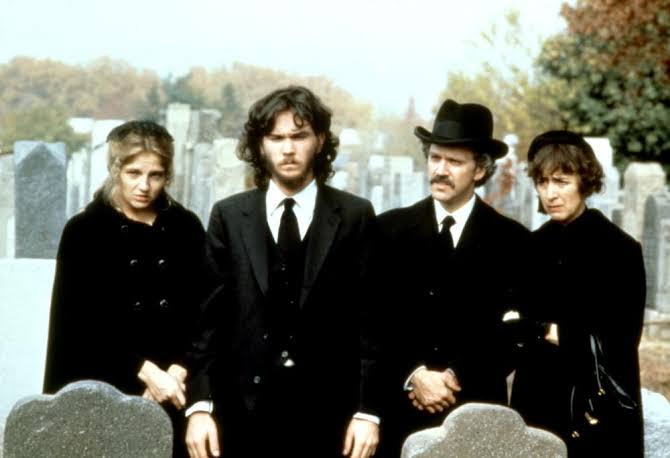
The story follows Daniel Isaacson, played by Timothy Hutton, whose parents Paul and Rochelle were convicted of espionage and executed by the American government. Their deaths leave behind two children whose lives are permanently shaped by the experience.
Years later, Daniel is an adult struggling to reconcile his childhood memories with the political circumstances surrounding his parents’ execution. He is involved in the protest movements of the 1960s and increasingly obsessed with understanding what really happened to his family.
His search for answers becomes something much more personal. He is not simply trying to establish whether his parents were guilty or innocent. He is attempting to understand the people they were, the decisions they made and the consequences those decisions had for their children.
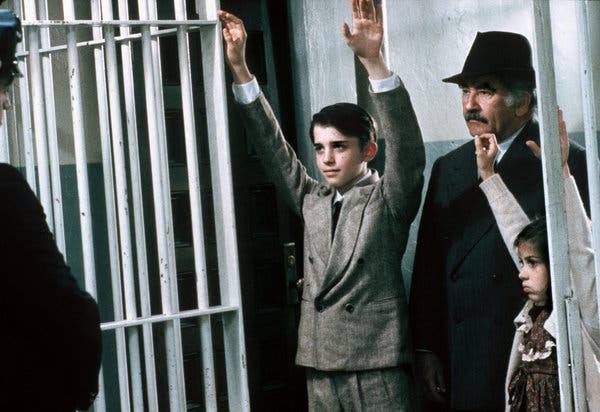
Lumet structures the film through an intricate series of flashbacks, moving between different periods of the family’s history. We see the Isaacsons during their idealistic political involvement, their arrests, their imprisonment and the devastating consequences for their children.
This approach gives the film an almost fragmented quality. Memories, political arguments and personal experiences overlap, creating a picture of a family that can never really escape its past.
It is an ambitious storytelling technique, although it occasionally makes the narrative difficult to follow. The film deliberately avoids providing simple answers, and that uncertainty is both one of its greatest strengths and one of its most frustrating weaknesses.
Timothy Hutton delivers an excellent central performance as Daniel. He captures the character’s intellectual intensity, emotional confusion and growing obsession with his parents’ history.
Daniel is not necessarily an immediately sympathetic character. He can be distant, argumentative and emotionally unavailable, particularly towards the people closest to him. Hutton understands these contradictions and creates a convincing portrait of someone whose childhood trauma has followed him into adulthood.
Mandy Patinkin is particularly impressive as Paul Isaacson. He brings considerable energy and conviction to the role, portraying a man whose political beliefs are inseparable from his identity. His idealism is sincere, but there is also something troubling about the way his political commitments dominate his understanding of family life.
Lindsay Crouse is equally effective as Rochelle. Her performance gives the film much of its emotional weight, especially during the flashback sequences. She portrays a woman who believes deeply in her political convictions but whose decisions have consequences that extend far beyond her own life.
Amanda Plummer is another standout as Daniel’s troubled sister, Susan. Her character is arguably the most visibly damaged by the family’s history, and Plummer brings an unpredictable, unsettling intensity to the performance.
Ed Asner provides another strong contribution as Jacob Ascher, while Ellen Barkin makes a welcome impression as Daniel’s wife, Phyllis.
The supporting cast is excellent throughout, with Lumet assembling a group of performers capable of handling the film’s occasionally demanding dialogue.
Lumet was never a director who shied away from uncomfortable subjects. His filmography includes 12 Angry Men, Serpico, Dog Day Afternoon, Network and The Verdict, all of which demonstrate his interest in institutions, authority, justice and the complicated moral choices people make.
Daniel fits comfortably within that tradition, although it is considerably less immediately engaging than some of his better-known films.
What makes the direction interesting is Lumet’s refusal to turn the story into a conventional courtroom drama or straightforward political thriller. Instead, he concentrates on the psychological consequences of the family’s experiences.
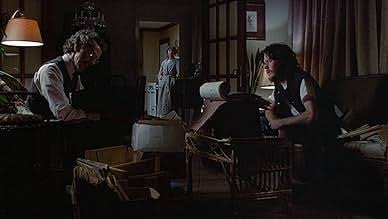
The film’s atmosphere is frequently bleak. The flashbacks have a different visual character from the later material, and cinematographer Andrzej Bartkowiak uses changes in colour and lighting to distinguish the different periods.
The result is a film that feels emotionally fractured, reflecting Daniel’s own inability to separate his childhood memories from his adult identity.
At times, however, Lumet’s approach becomes overly heavy-handed. The film is so determined to communicate its political and philosophical concerns that certain conversations feel more like essays than natural exchanges between characters.
Nevertheless, there is something admirable about the film’s seriousness. It is an ambitious piece of filmmaking that refuses to simplify its subject matter.
One of the most interesting aspects of Daniel is its examination of political idealism and the price paid by those closest to people who devote their lives to political causes.
The Isaacsons believe they are fighting for something important. Their political convictions give their lives meaning, but those convictions also contribute to decisions that ultimately destroy their family.
The children are left to deal with the consequences of choices they never made.
This is where the film becomes particularly affecting. Daniel and Susan are not simply dealing with the deaths of their parents. They are dealing with the loss of their childhood, their sense of security and their ability to understand the world around them.
There is also an interesting examination of how history is remembered. Daniel wants definitive answers, but the further he investigates, the more complicated the situation becomes.
Lumet and Doctorow are not especially interested in providing a neat resolution. The film raises questions about political persecution, government authority, personal responsibility and the limits of historical understanding without necessarily answering all of them.
Some viewers will find this frustrating. Others will appreciate the fact that the film trusts its audience to think about what it has presented.
For me, the strongest element is its examination of generational trauma. The political events may belong to the past, but their emotional consequences continue to affect the people left behind.
Imprint Films deserves credit for bringing another interesting Sidney Lumet title back into circulation on Blu-ray.
The Daniel release is Imprint Collection #543 and forms part of the limited-edition Directed By… Sidney Lumet: Volume Two (1978–1999) collection.
The presentation is attractive, with a clear Blu-ray case, reversible artwork and a production still on the interior. The individual packaging is housed in a sturdy collector’s box.
The overall presentation is in keeping with the quality collectors have come to expect from Imprint’s more substantial releases.
Picture quality
1080p High Definition
The film is presented in its original 1.85:1 aspect ratio using an AVC-encoded 1080p transfer.
This is a respectable presentation, although it is not a particularly spectacular one.
The image is generally clean, with acceptable levels of detail and reasonably good definition in close-ups. Facial details and clothing textures are visible, and the image is a noticeable improvement over older standard-definition presentations.
However, there are limitations. The transfer appears to use an older master, and there are occasional signs of age, including minor dirt, scratches and other print-related imperfections.
Some scenes also look somewhat faded, with contrast and colour reproduction lacking the consistency one might hope for from a newly restored presentation.
This is especially noticeable given the film’s varied visual palette. The different colour treatments used for the various time periods are an important part of Lumet’s storytelling, and a more substantial restoration might have brought out these distinctions more effectively.
Nevertheless, the image is perfectly watchable, and the original theatrical framing is appreciated.
It is not a reference-quality Blu-ray, but it represents a worthwhile improvement for anyone upgrading from DVD.
Sound quality
The soundtrack is presented in English 2.0 LPCM mono, with English hearing-impaired subtitles available.
This is an appropriate presentation for a film originally produced with a mono soundtrack.
Dialogue is the most important element of the audio, and fortunately it comes across clearly and naturally. The performances are allowed to dominate, with the dialogue generally well balanced against Bob James’s musical score.
There is no unnecessary attempt to create an artificial surround experience, which is something I appreciate when dealing with older films.
The original mono presentation is perfectly satisfactory and does the job without drawing unwanted attention to itself.
This is perhaps the most disappointing aspect of the release.
The principal supplement is a feature-length audio commentary by film critic and historian Adrian Martin.
Martin provides a thoughtful and scholarly discussion of the film, examining its themes, performances, political background and Lumet’s filmmaking techniques.
His commentary is particularly useful because Daniel is the sort of film that benefits from additional context. There are numerous details and visual decisions that might otherwise go unnoticed, and his observations help explain why Lumet approached the material in the way he did.
It is not necessarily the most lively commentary track, but it is informative and worthwhile for serious film enthusiasts.
One unfortunate issue concerns the advertised supplements. Although the packaging and release information mention a theatrical trailer and an archival interview with Sidney Lumet and Timothy Hutton, a dedicated Blu-ray review reports that neither is actually present on the disc.
The commentary is therefore the principal available extra, which makes the bonus package rather disappointing for a collector-oriented release.
A film of this historical and political importance would certainly have benefited from more archival material, particularly an interview with Lumet discussing his intentions and the adaptation of Doctorow’s novel.
Daniel is not one of Sidney Lumet’s most accessible films, and it is unlikely to become everyone’s favourite entry in his filmography.
It is lengthy, occasionally over-intellectualised and sometimes frustrating in its refusal to provide straightforward answers. Its political themes can be heavy-handed, and the fragmented narrative occasionally works against the emotional impact of the story.
However, there is also a great deal to admire.
The performances are consistently strong, particularly those of Timothy Hutton, Mandy Patinkin and Lindsay Crouse. Amanda Plummer is memorable, and Lumet’s direction gives the film a distinctive atmosphere of melancholy and uncertainty.
Most importantly, the film explores an interesting and frequently neglected subject: the emotional damage suffered by children whose parents’ political convictions and personal decisions shape their entire lives.
The Imprint Films Blu-ray is a welcome opportunity to revisit this ambitious 1983 production. The picture presentation is respectable rather than exceptional, the original mono soundtrack is perfectly adequate, and Adrian Martin’s commentary provides worthwhile additional insight.
The limited extras and lack of a new restoration prevent this from being an outstanding disc, but the release remains a worthwhile acquisition for admirers of Lumet and collectors interested in politically themed American cinema.
It is not an easy film, nor is it always a successful one, but it is certainly a film worth discussing.





Leave a Reply