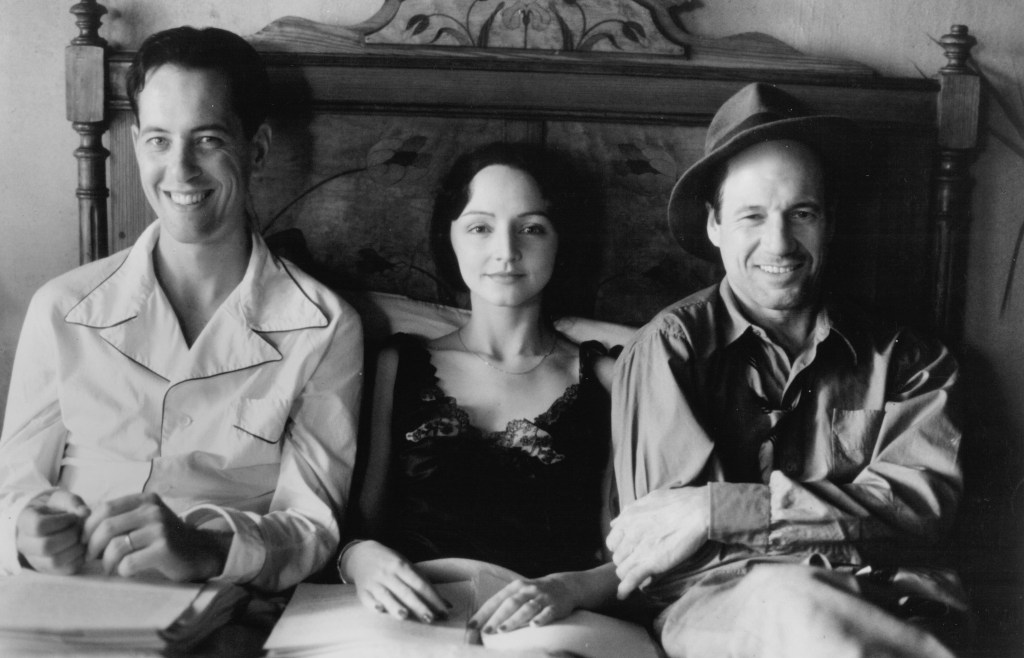
“Henry & June” (1990)
Drama

Running Time: 136 minutes
Written by: Philip Kaufman and Rose Kaufman
Directed by: Philip Kaufman
Featuring: Fred Ward, Uma Thurman, Maria de Medeiros, Richard E. Grant and Kevin Spacey
June Miller: “I’ve done the vilest things – the foulest things – but I’ve done them… superbly.”
There are films that become notorious because of their subject matter, films that earn their reputation through genuine artistic achievement, and films that occupy an intriguing space somewhere between the two. Philip Kaufman’s Henry & June belongs firmly in the third category. Released in 1990, this ambitious period drama explores the intertwined lives of writers Anaïs Nin and Henry Miller and Miller’s wife, June, against the bohemian backdrop of 1930s Paris. It became a landmark in American film history as the first motion picture to receive the MPAA’s NC-17 rating, a distinction that inevitably drew attention to its erotic content while sometimes overshadowing its more interesting artistic ambitions.
Imprint Films’ limited-edition Blu-ray offers collectors an opportunity to revisit this unconventional work in high definition, with a presentation that gives the film’s atmospheric cinematography and carefully constructed period detail a welcome home-video showcase. The Australian boutique label has included a new interview with leading actress Maria de Medeiros, alongside the theatrical trailer and a television spot. The package is attractive, although the supplementary material is relatively modest for a film with such a fascinating production history and cultural legacy.
The film: desire, literature and the search for identity
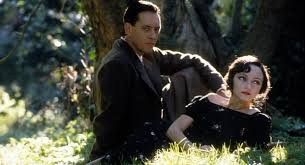
Set in Paris in 1931, Henry & June follows Anaïs Nin, a married woman whose outwardly comfortable existence conceals a growing dissatisfaction with her life. Her marriage offers stability, but she yearns for something more intellectually stimulating, emotionally liberating and creatively fulfilling. Her introduction to the American writer Henry Miller opens a door into a world of artistic rebellion, sexual experimentation and unconventional relationships.
Miller represents a particular kind of bohemian freedom. He is ambitious, provocative, frequently selfish and seemingly unconcerned with conventional respectability. His writing is raw and confrontational, reflecting a personality that challenges social expectations as readily as it challenges literary conventions. Through him, Anaïs encounters possibilities that her previous existence has largely kept at a distance.
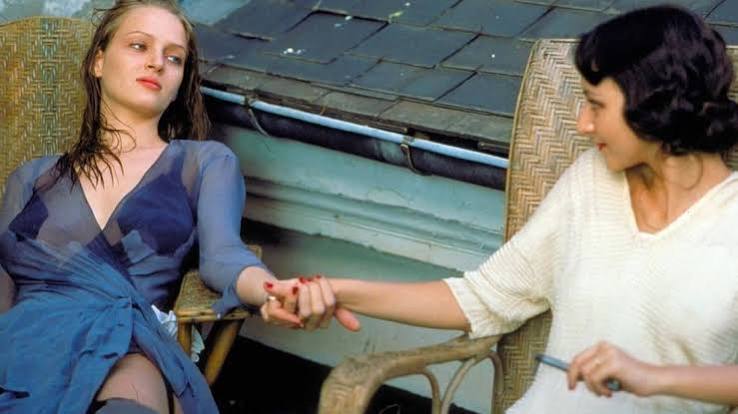
Yet it is June Miller who gives the film much of its fascination. Beautiful, enigmatic and difficult to pin down, June possesses an allure that extends beyond conventional romantic attraction. Anaïs is captivated by her, and her fascination gradually becomes inseparable from her feelings for Henry. What begins as an encounter with an exciting literary couple develops into a complicated emotional entanglement in which desire, admiration, jealousy and artistic ambition continually overlap.
The film is adapted from Anaïs Nin’s published diaries, although any cinematic interpretation of autobiographical material inevitably involves selection, reconstruction and dramatic compression. Kaufman and co-writer Rose Kaufman transform an intensely personal literary source into a narrative about the relationship between lived experience and creative expression.
The result is less a conventional romantic drama than a study of people attempting to understand themselves through their relationships with others.
That distinction is important. Anyone approaching Henry & June expecting a straightforward erotic film may be surprised by how much of its running time is devoted to conversation, introspection, literary ambition and the shifting balance of power between its central characters. The erotic material is integral to the story, but it is not the entirety of the story.
Indeed, the film’s most compelling moments often occur when the characters are talking, watching one another or struggling to articulate feelings they barely understand themselves.
Performances: three characters caught between fascination and frustration
The performances are among the film’s strongest assets, and the casting is particularly effective because each of the three central characters brings a different kind of energy to the screen.
Maria de Medeiros as Anaïs Nin
De Medeiros gives the film its emotional centre. Her Anaïs is observant, curious and increasingly restless, a woman who has spent much of her life attempting to reconcile her respectable public identity with a far more adventurous private imagination. Rather than playing her transformation as a sudden, dramatic rebellion, de Medeiros allows it to unfold gradually through changes in her expressions, posture and interactions with the people around her.
Her performance is especially effective in the quieter passages. Anaïs is often watching rather than acting, absorbing the personalities and philosophies of Henry and June before attempting to make sense of what they awaken in her. This gives the character a convincing sense of intellectual curiosity, although her fascination can sometimes appear stronger than the film’s ability to explain it.
De Medeiros also brings a welcome vulnerability to the role. Anaïs is not simply an independent woman discovering sexual freedom; she is someone who risks confusing liberation with the pursuit of other people’s approval. Her desire to become a more adventurous person can make her susceptible to the very personalities she admires.
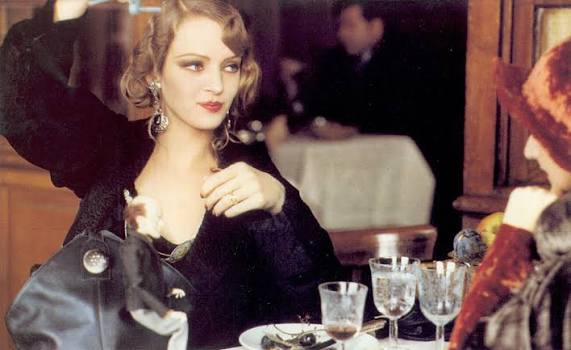
Thurman’s June is arguably the most enigmatic character in the film. She possesses an almost hypnotic screen presence, and the performance relies as much on what she withholds as on what she reveals. June can be affectionate one moment and emotionally distant the next, inviting intimacy while remaining frustratingly difficult to understand.
This ambiguity is central to Anaïs’s fascination with her. June seems to embody a freedom that Anaïs desires but cannot quite define. Yet she is not merely a fantasy figure placed in the story to facilitate Anaïs’s awakening. Her own insecurity, volatility and complicated relationship with Henry suggest that the apparent freedom of the Miller household comes with considerable emotional costs.
Thurman gives June an intriguing combination of glamour and instability. There is a sense that she is continually performing a version of herself, even when she appears most spontaneous. This makes her relationship with Anaïs compelling, although the screenplay occasionally leaves June feeling more like an object of fascination than a fully developed person with an independent narrative.
Ward brings an earthy, confrontational quality to Henry. Where Anaïs is reflective and June is elusive, Henry is direct, opinionated and often unapologetically self-centred. He is an aspiring writer who believes in his own artistic importance, and Ward makes that conviction both attractive and irritating.
His portrayal avoids turning Miller into a conventional romantic hero. Henry’s confidence can be exhilarating, particularly when he challenges Anaïs’s assumptions about literature, sexuality and respectable society. But his disregard for other people’s emotional boundaries is equally apparent.
Ward is at his best when Henry’s charisma and selfishness emerge simultaneously. He can make the character seem genuinely liberating without asking the audience to overlook his flaws. The performance gives the central relationship a necessary degree of friction, even when the script does not fully explore the consequences of Henry’s behaviour.
Richard E. Grant is excellent as Hugo, Anaïs’s husband. He provides a contrast to Henry’s bohemian recklessness, portraying a man whose affection and relative conventionality do not necessarily make him emotionally equipped to understand his wife’s changing desires.
Hugo could easily have become a disposable obstacle in a story about sexual liberation, but Grant gives him enough dignity and personality to make Anaïs’s choices more complicated. His presence reminds us that personal freedom can have consequences for people who are not necessarily villains.
Kevin Spacey also appears in a supporting role as Richard Osborne, adding another recognisable face to an already interesting ensemble. The cast is one of the film’s most enduring strengths, even if the screenplay does not always give every character sufficient room to develop.
Direction and cinematography: a seductive portrait of 1930s Paris
Philip Kaufman approaches the material with a strong sense of atmosphere. Rather than treating 1930s Paris as a collection of picturesque backgrounds, he presents it as a social and artistic environment in which people are continually negotiating the relationship between public respectability and private desire.
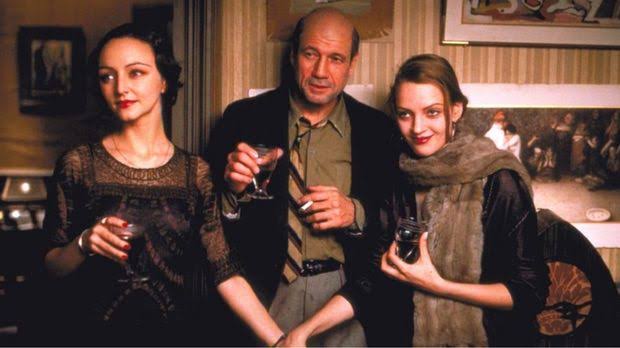
The film’s interiors are particularly effective. Apartments, cafés, writing rooms and intimate gathering places become extensions of the characters’ psychological states. These spaces feel lived in rather than artificially arranged, with period furnishings and costumes contributing to the impression of a world in which artistic ambition and personal indulgence coexist.
Cinematographer Philippe Rousselot gives the film a rich visual identity. Lighting and composition frequently create a sense of intimacy, placing the viewer close to the characters while allowing shadows, reflections and background details to preserve a degree of mystery. The visual approach suits a story drawn from private diaries, where personal experience is always filtered through memory, interpretation and imagination.
The camera also contributes to the film’s sensual atmosphere without making every scene feel explicitly erotic. A glance across a room, the positioning of two characters in relation to one another, or the quiet observation of someone who does not realise they are being watched can carry considerable emotional weight.
This is one of the film’s most successful qualities: it understands that desire is not simply a matter of physical attraction. It is also anticipation, curiosity, projection and the fascination that develops when another person seems to possess qualities we feel are missing from ourselves.
Nevertheless, Kaufman’s leisurely approach has its limitations. At 136 minutes, the film is a substantial commitment, and certain passages feel more concerned with sustaining an atmosphere than advancing the drama. The accumulation of encounters and emotional complications does not always produce a corresponding deepening of character.
The direction is frequently elegant, but elegance occasionally becomes a substitute for dramatic momentum.
The screenplay: ambitious ideas, uneven execution
The central premise gives the filmmakers plenty to explore. Anaïs Nin’s story raises questions about sexual identity, artistic freedom, marriage, jealousy and the relationship between personal experience and creative work. These are substantial subjects, and the film is at its most interesting when it considers how they influence one another.
For Anaïs, sexual experimentation is not entirely separate from her artistic development. Her desire to experience life more intensely is connected to her desire to write more honestly. Henry and June appear to offer an alternative to the cautious, socially acceptable existence she has been leading.
However, the film also recognises that liberation is not automatically transformative. Pursuing new experiences does not guarantee wisdom, and rejecting conventional morality does not necessarily make someone more considerate or emotionally mature.
This is where Henry & June has the potential to be a genuinely complex drama. Its characters are not simply choosing between freedom and repression. They are trying to determine what freedom means, how much responsibility they owe one another and whether artistic self-discovery can justify the emotional damage it causes.
Unfortunately, the screenplay sometimes skims over the very questions it raises. Relationships change, attractions intensify and emotional tensions develop, but the psychological transitions are not always sufficiently explored. The film occasionally feels like a sequence of evocative episodes rather than a fully integrated dramatic progression.
Its treatment of June is particularly revealing. She is essential to the film’s emotional and erotic dynamic, yet her inner life remains comparatively elusive. This may partly reflect the way Anaïs perceives her, but it also means the film sometimes privileges fascination over understanding.
The result is an intelligent but imperfect work. It has more on its mind than its reputation as an erotic drama might suggest, yet it does not always translate its ideas into a satisfying narrative.
The NC-17 rating: reputation versus reality
The historical significance of Henry & June cannot be separated from its original American rating. It was the first film to receive the newly introduced NC-17 classification, which replaced the X rating as an attempt to distinguish adult-oriented mainstream cinema from pornography.
That distinction inevitably shaped the film’s reputation. The rating became a marketing talking point and a source of curiosity, attracting viewers who might otherwise have overlooked a relatively unconventional literary drama.
Watching the film today, however, it becomes apparent that the rating tells us as much about the cultural climate surrounding its release as it does about the film’s overall character.
Its eroticism is woven into a larger narrative about identity, relationships and artistic ambition. There is sensuality and sexual frankness, but the film is also filled with conversations about writing, scenes of domestic tension and moments of quiet introspection. It is not a relentlessly provocative experience.
This difference between expectation and reality may disappoint viewers drawn primarily by the film’s notoriety. Those approaching it as a period drama about the complexities of desire are more likely to appreciate what it offers.
The film is also an interesting historical document in the evolution of mainstream cinema’s treatment of adult themes. Its willingness to centre female sexual awakening and attraction between women was significant in the context of its original release, even if some aspects of its characterisation now feel limited.
Rather than treating the NC-17 label as proof of artistic daring, it is more rewarding to consider how the film uses its adult subject matter to examine the difficulties of living honestly in a society shaped by conventional expectations.
Imprint Films Blu-ray: picture quality
The visual presentation is one of the more appealing aspects of the release, although it deserves a little qualification.
The film’s photographic style depends on subtle lighting, carefully controlled colour and a certain softness that complements its period setting. A good high-definition presentation should preserve these characteristics while revealing sufficient detail in faces, costumes, furnishings and architectural backgrounds.
Reviews of the Imprint disc have been positive overall about its ability to present the film attractively in HD. One reviewer describes the transfer as particularly impressive, while another is more critical, noting a dark image and some edge enhancement that may indicate limitations in the source or transfer process.
That difference in assessment is worth keeping in mind. A transfer can look pleasing on a television while still exhibiting shortcomings that become more apparent on a larger screen or with closer scrutiny.
The film’s relatively dark photography is not necessarily a defect in itself. Shadow plays an important role in its visual design, and brightening every scene would risk compromising the intended atmosphere. The more important question is whether shadow detail remains visible and whether the darkest passages retain enough information to distinguish faces, clothing and backgrounds.
The reported edge enhancement is a more legitimate concern for image purists. Excessive sharpening can introduce artificial outlines around objects and faces, making an image appear superficially crisp without actually revealing more genuine detail.
Likewise, a clean-looking presentation is not automatically proof of a new restoration or an exceptionally faithful transfer. Film grain, fine textures and the natural character of the original photography all contribute to the appearance of a film from this period.
Without a direct technical examination of the disc and its source master, it would be unwise to claim that this is a definitive restoration. The available reviews instead suggest a generally pleasing HD presentation with some potential limitations.
For collectors upgrading from an older standard-definition edition, the increased resolution should make the film more enjoyable to watch. However, those expecting the dramatic leap in clarity, contrast and colour associated with a carefully restored 4K presentation should temper their expectations.
Picture verdict: A worthwhile high-definition presentation, with attractive period photography and some reported limitations in sharpness and shadow detail.
Audio quality
The disc includes English LPCM 2.0 stereo audio. This is an appropriate configuration for a dialogue-driven drama in which the subtleties of conversation, the performers’ vocal delivery and the musical score are more important than spectacular surround effects.
The film relies heavily on dialogue to communicate its ideas and develop its relationships. Consequently, intelligibility and a natural balance between voices, music and ambient sound are the most important considerations.
A well-presented stereo track can be perfectly satisfying for this type of material. It does not need to create artificial surround activity or exaggerate the soundtrack’s dynamics to provide an effective listening experience.
The LPCM format also offers lossless audio encoding, meaning the soundtrack is not subjected to the kind of lossy compression associated with some other formats. That is a technical advantage, although it should not be confused with proof that the source recording itself is exceptional.
The film’s score and period music contribute substantially to its atmosphere. The soundtrack helps establish the rhythm of the Parisian setting, while the quieter passages benefit from a presentation that allows dialogue to remain clear and intelligible.
There is no advertised multichannel surround option on this edition, so home-cinema enthusiasts looking for a more expansive audio presentation may find the specifications relatively basic. However, the stereo configuration is entirely reasonable for a film of this nature.
English hard-of-hearing subtitles are also included, providing a useful accessibility option and making dialogue easier to follow.
Audio verdict: A sensible, lossless stereo presentation suited to the film’s dialogue-heavy character, though it offers little in the way of modern home-cinema spectacle.
Special features: a welcome interview, but little else
The supplementary material is the area in which Imprint’s release feels most limited.
The disc contains three advertised extras:
- Becoming Anaïs — a new interview with Maria de Medeiros, approximately 47 minutes long.
- The theatrical trailer.
- A television spot.
The Maria de Medeiros interview is easily the most substantial inclusion. At nearly three-quarters of an hour, it is much more than a brief promotional clip, and it gives the release a meaningful piece of contextual material.
De Medeiros discusses her work as an actress, her background and her involvement with the film. Her reflections on portraying a real person are particularly relevant to a production adapted from intimate autobiographical writing. The challenge is not simply to recreate a historical figure’s outward appearance, but to construct a convincing interpretation of her personality and inner life.
For a film whose success depends so heavily on its central performance, hearing from the actor herself adds value beyond the usual retrospective publicity.
It is also an appropriate feature for collectors who want to understand how an actress approaches a role involving sexuality, literary ambition and personal transformation without reducing the character to any single one of those elements.
The trailer and television spot provide a small amount of historical promotional context. They are welcome additions, but neither offers the depth of a commentary or a substantial documentary.
What is missing is more noticeable.
An audio commentary by Philip Kaufman could have explored the adaptation process, the historical research and the challenges of directing such intimate material. A contribution from a film historian could have examined the NC-17 rating and the film’s place in the history of adult-oriented American cinema.
Additional interviews with Uma Thurman, Fred Ward or members of the production team would also have helped illuminate the performances, costume design, cinematography and period reconstruction.
The lack of these materials does not make the Blu-ray a poor release, but it does limit its value as an archival package.
For collectors who primarily want the film in high definition, the interview is a worthwhile bonus. For those who expect boutique labels to provide extensive contextual material, the disc is comparatively modest.
Packaging and collector appeal
Imprint Films has developed a following among physical-media collectors through its limited editions and its interest in films that might otherwise receive little attention in the home-video market.
The Henry & June release follows that approach. The edition is advertised as a limited run of 1,500 copies and uses the label’s familiar collector-oriented packaging presentation.
For a film with an unusual place in American cinema history, the physical edition has an obvious appeal. It is the sort of title that fits comfortably into a collection focused on adult dramas, literary adaptations and provocative films from the late 1980s and early 1990s.
The limited-edition status adds some collectible interest, although scarcity alone should never be mistaken for evidence of superior technical quality or long-term investment value.
The more important consideration is that Imprint has brought renewed attention to a film whose reputation can easily be reduced to a single historical fact about its rating.
A boutique Blu-ray can be valuable simply because it keeps an interesting film available in a format that enthusiasts can own, revisit and examine without relying on streaming availability.
In this respect, the edition succeeds. Its limitations are mainly related to the relatively restrained selection of extras rather than a lack of thought behind the release itself.
Overall assessment
Henry & June remains a fascinating, if uneven, film. Its greatest strengths lie in its performances, its richly atmospheric photography and its willingness to explore the uncomfortable overlap between desire, artistic ambition and emotional vulnerability.
De Medeiros anchors the film with an engaging performance, while Thurman gives June an alluring ambiguity and Ward makes Henry both charismatic and exasperating. Kaufman’s direction creates an immersive period setting, even when the screenplay occasionally struggles to develop its characters beyond their roles in Anaïs’s awakening.
The film is less successful as a sustained drama. Its leisurely pacing and episodic structure sometimes undermine its psychological ambitions, and its historical notoriety can create expectations that the finished work does not entirely fulfil.
Imprint Films’ Blu-ray is a useful opportunity to rediscover the film. Its 1080p presentation is generally well regarded, the lossless stereo soundtrack is appropriate for the material, and the lengthy Maria de Medeiros interview adds genuine value. The absence of a commentary and more extensive historical supplements is disappointing, particularly given the film’s unusual cultural significance.
For existing admirers, the release is an appealing addition to a physical-media collection. For newcomers, it provides a convenient way to discover a film that is more contemplative and intellectually curious than its reputation might suggest.
I would recommend it most strongly to viewers who appreciate character-driven period dramas and collectors who value overlooked films with an interesting cinematic history. Those primarily seeking an erotic thriller or a lavishly documented boutique release may find it less satisfying.