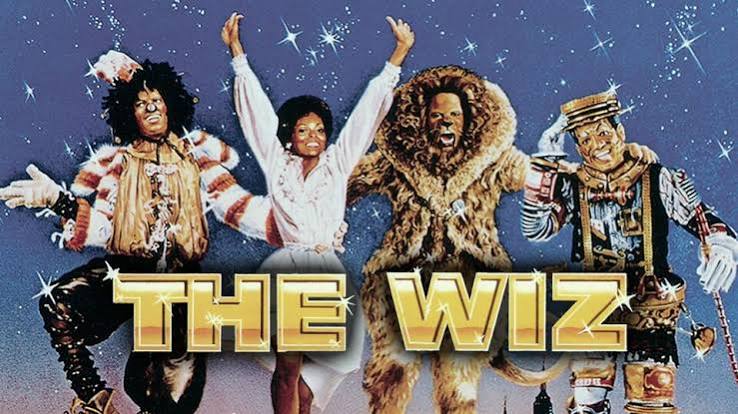
“The Wiz” (1978)
Musical

Written by: Joel Schumacher
Directed by: Sidney Lumet
Featuring: Diana Ross, Michael Jackson, Nipsey Russell, Ted Ross, Lena Horne and Richard Pryor
Scarecrow: “Public office is the last refuge of the incompetent!”
There are certain films that become more interesting, more distinctive and perhaps even more enjoyable with the passage of time. Sidney Lumet’s 1978 adaptation of The Wiz is undoubtedly one of them. Originally greeted with a somewhat mixed reception, this ambitious reimagining of L. Frank Baum’s familiar Oz story has gradually developed a devoted following, thanks to its extraordinary musical numbers, colourful visual imagination, wonderful cast and its place in the history of Black American cinema.
The basic story will be familiar to anyone who knows The Wizard of Oz, but Lumet and screenwriter Joel Schumacher take the opportunity to give the material a very different identity. Dorothy Gale, played by Diana Ross, is a shy schoolteacher from Harlem who finds herself transported to a strange, fantastical version of Oz. Rather than the traditional Technicolor landscapes of the 1939 classic, this Oz is a surreal urban environment, heavily inspired by New York City.
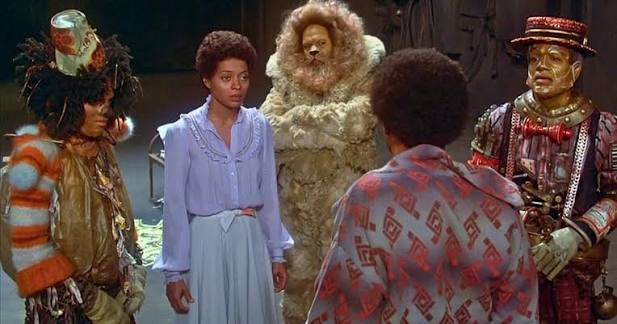
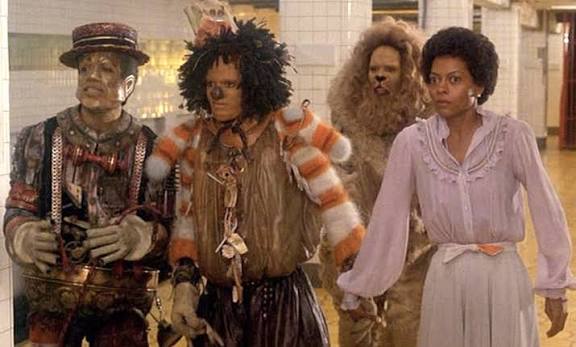
As Dorothy journeys towards the Emerald City in search of the mysterious Wiz, she encounters a collection of unforgettable characters, including the Scarecrow, the Tin Man and the Cowardly Lion. Along the way, the familiar themes of friendship, courage, self-belief and discovering where you belong are explored through a distinctly African-American cultural perspective.
What makes The Wiz so interesting is its willingness to completely rethink the visual language of the original story. Oz becomes an enormous urban fantasy playground, filled with abandoned streets, subway stations, extraordinary architecture, bizarre characters and some wonderfully imaginative set designs.
The result is a film that often feels like a strange dream. Sometimes that works brilliantly; sometimes the sheer ambition threatens to overwhelm the storytelling. Nevertheless, there is very little else quite like it.
The casting is one of the film’s greatest attractions, although it is also one of its more interesting talking points.
Diana Ross takes on Dorothy with a performance that is quite different from the traditional interpretation. There was considerable discussion surrounding her casting, particularly because she was considerably older than the character traditionally portrayed in the story. Nevertheless, Ross brings a vulnerability and emotional sincerity to the role that gradually becomes more convincing as the film progresses. Her musical performance of “Home” is particularly beautiful, providing the film with its most emotionally satisfying moment. It is a wonderful showcase for her voice, and arguably the sequence that best communicates what the entire story is trying to say.
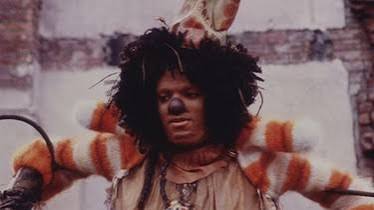
Michael Jackson is arguably the film’s biggest attraction. Playing the Scarecrow, he brings an infectious enthusiasm, physical comedy and natural charm to the character. His performance is full of personality, and his dancing is every bit as impressive as one would expect. The chemistry between Jackson and Ross is especially enjoyable, and their scenes together provide much of the film’s warmth.
His rendition of “You Can’t Win” is one of the musical highlights, while his later performance of “Ease on Down the Road” with Ross is an absolute delight. Knowing what Jackson would go on to achieve in the years immediately following this production makes watching him here particularly fascinating.
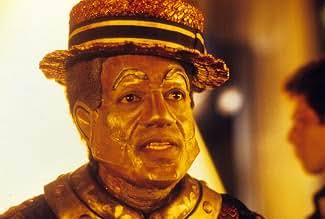
Nipsey Russell is excellent as the Tin Man, delivering a wonderfully relaxed performance with plenty of humour and personality. Ted Ross, reprising his Broadway role as the Cowardly Lion, is equally entertaining. He provides some of the film’s funniest moments while also giving the character a genuine emotional vulnerability.
However, it is Mabel King who arguably steals the show. Her portrayal of Evilene, the Wicked Witch of the West, is absolutely magnificent. She brings an enormous amount of theatrical energy to the role, and her musical number “No Bad News” is one of the most memorable sequences in the entire film. King has a commanding screen presence, and whenever she appears, the film suddenly comes alive.
Lena Horne makes a welcome appearance as Glinda, although her screen time is disappointingly limited. Richard Pryor plays the Wiz himself, bringing his distinctive personality to a character who could perhaps have benefited from a little more screen time.
Ultimately, the cast is one of the film’s greatest strengths. Even when the narrative becomes rather cumbersome, these performers make the journey worthwhile.
Sidney Lumet is an interesting choice to direct a large-scale musical fantasy. Best known for gritty, socially conscious dramas such as 12 Angry Men, Serpico, Dog Day Afternoon and Network, Lumet was not exactly the obvious filmmaker to bring this extravagant Broadway production to the screen.
Yet his decision to approach Oz as an urban fantasy is what gives the film its distinctive identity.
Rather than attempting to recreate the familiar countryside and fantasy landscapes of the 1939 film, Lumet transforms New York into a surreal version of Oz. The subway becomes a dangerous passage into another world, the streets are populated by extraordinary characters, and the Emerald City is an elaborate celebration of music, dance and colour.
The production design by Tony Walton is particularly impressive. The sets are frequently enormous, imaginative and wonderfully theatrical. There is a real sense that the filmmakers wanted to create something that audiences had never experienced before.
The Emerald City sequences are especially memorable, with their elaborate choreography, colourful costumes and extravagant visual arrangements. The subway sequence, meanwhile, remains one of the film’s most striking passages. Its combination of eerie atmosphere, unusual imagery and surreal movement makes it genuinely unsettling, particularly when viewed through the eyes of a younger audience.
The costumes are another major highlight. Walton’s work gives the film an unmistakable visual identity, with each character receiving an individual look that complements their personality. The Scarecrow, Tin Man and Cowardly Lion are all wonderfully realised, while Evilene’s appearance is particularly striking.
The film is certainly not perfect. Some of the sets look artificial, certain sequences go on longer than necessary, and Lumet occasionally seems uncertain about how to balance the theatrical elements with the demands of cinematic storytelling. There are moments when the production feels more like a filmed stage spectacle than a fully realised movie.
Nevertheless, I would much rather see a film take these kinds of creative risks than settle for something safe and predictable. The Wiz has imagination in abundance, and that alone makes it worth revisiting.
The music is undoubtedly one of the film’s biggest selling points.
With Quincy Jones overseeing the musical arrangements, the soundtrack has a wonderful mixture of soul, funk, gospel, disco and traditional Broadway influences. The songs give the production much of its energy, and several have become firmly associated with the film over the years.
“Ease on Down the Road” is an infectious number that immediately establishes the film’s upbeat personality. Its repeated appearances provide a musical thread throughout Dorothy’s journey, and the performances by Ross and Jackson are particularly enjoyable.
“You Can’t Win” is another standout, allowing Michael Jackson to demonstrate his remarkable vocal and performance abilities. It is one of those sequences that makes you wish he had been given even more musical material.
“No Bad News” is an absolute showstopper, with Mabel King delivering a wonderfully theatrical performance that is impossible to forget.
“Brand New Day” is another highlight, bursting with energy and optimism, while Diana Ross’s “Home” provides the emotional centrepiece. It is a beautiful song, delivered with real feeling, and remains one of the most memorable moments in the film.
The musical sequences are not always perfectly integrated into the narrative, and some numbers feel rather disconnected from the surrounding action. However, there is enough outstanding material here to make the soundtrack an essential part of the experience.
Excellent restoration-based presentation
The most immediately impressive aspect of Imprint’s release is its picture quality.
The Blu-ray presents the film in 1080p high definition, in its original 1.85:1 aspect ratio, using a new 4K restoration sourced from the original 35mm camera negative.
This is a considerable improvement over the older Universal Blu-ray, and the results are extremely satisfying.
The image is clean, sharp and wonderfully detailed. Fine textures are clearly visible throughout, particularly in the elaborate costumes, production design and the various fantasy environments. The original photography has a pleasing level of depth, and the restoration does an excellent job of retaining the film’s natural cinematic appearance.
The colour reproduction is particularly important for a film like this, and thankfully the results are impressive. The Emerald City sequences benefit enormously from the improved colour presentation, with the greens, reds, golds and other vibrant shades looking rich and well balanced.
The costumes also look terrific, with considerably more detail visible than on older home-video presentations. The various textures and materials are beautifully reproduced, and the improved clarity allows the production design to be appreciated in a way that simply wasn’t possible with earlier releases.
Importantly, the image retains a film-like appearance rather than looking artificially processed. Grain is present, as it should be, and the overall presentation avoids the overly digital appearance that can sometimes affect older films receiving modern restorations.
The darker sequences also benefit from the improved presentation. The subway scenes and various interiors maintain good contrast, while the lighting effects retain their atmosphere.
There may be occasional minor imperfections inherent in the original photography, but nothing that significantly detracts from the experience.
It is worth emphasising that this is a restoration-based 1080p presentation, not a native 4K UHD disc. Nevertheless, the results are excellent, and the Imprint transfer is reported to be very close to Criterion’s Blu-ray presentation, which uses the same restoration.
For a film whose visual appeal is such an important part of its identity, this is precisely the sort of treatment it deserves.
The audio presentation is another considerable strength of this release.
Imprint provides a Dolby Atmos soundtrack alongside the original theatrical 70mm six-track audio presentation in DTS-HD Master Audio.
Having the Atmos option is a welcome addition, particularly given the film’s musical nature. The songs benefit from a spacious and energetic presentation, with the orchestral arrangements, vocals and accompanying instrumentation receiving plenty of room to breathe.
Dialogue remains clear, while the musical sequences have a satisfying sense of scale. The Emerald City numbers are particularly enjoyable, with the additional spatial presentation helping to create a more immersive experience.
However, the inclusion of the original theatrical audio option is arguably just as important. For enthusiasts who prefer to experience older films with their original sound presentation, this is a very welcome inclusion.
Both tracks offer excellent sound quality, and the choice between them allows viewers to select the presentation they prefer.
The film’s music is such a crucial component that a strong soundtrack is essential. Fortunately, Imprint delivers an audio presentation that does the material justice.
A worthwhile selection of extras
Imprint has assembled a reasonably attractive collection of supplementary material, with some particularly interesting contributions from people involved in the production.
The extras include:
Audio Commentary with Lee Gambin, Mike Hayes, Lewis Gould and Dr Alfred L. Martin Jr.
This is arguably the most important extra on the disc. Film historian Lee Gambin and Dr Alfred L. Martin Jr. provide an enthusiastic discussion of the film, examining its place in musical cinema, its cultural significance and the differences between the Broadway production and the film adaptation.
Mike Hayes, who appeared in the film, and assistant director Lewis Gould also contribute personal recollections. Their involvement gives the commentary some additional historical interest, particularly when discussing the production and the famous World Trade Center sequence.
The commentary is a fitting inclusion, especially as it represents one of the final produced special features involving Lee Gambin, who sadly passed away in 2024. His enthusiasm for the film comes through clearly.
Library of Congress Interview and Q&A with Tony Walton (2018) – 84 minutes
This is a particularly welcome inclusion.
Production and costume designer Tony Walton discusses his career and his work on The Wiz, providing a fascinating insight into the creative thinking behind the film’s extraordinary visual presentation.
Given how important the sets and costumes are to the film’s overall identity, this extended interview is arguably the most valuable individual supplement on the disc.
Wiz on Down the Road – 12 minutes
This archival promotional featurette includes an interview with producer Rob Cohen alongside various behind-the-scenes snippets.
Although relatively brief, it provides some interesting glimpses into the production and is worth watching for anyone interested in the film’s history.
Going South of 125th Street – 14 minutes
Film critic Michelle Kisner provides a video essay exploring the film and its cultural and cinematic background.
The presentation incorporates archival photographs, material from the original Broadway production and clips from different screen adaptations of the Oz story.
It is a worthwhile addition, even if the narration and delivery are not always particularly engaging.
Original Theatrical Trailer – 3 minutes
The original trailer rounds out the selection. It is an interesting historical curiosity, showing how the studio originally attempted to sell this unusual musical to cinema audiences.
Overall, the extras are good, although there is room for improvement. I would have welcomed more interviews with the surviving cast members, particularly Diana Ross and Michael Jackson, alongside a more extensive examination of Sidney Lumet’s approach to directing his only major musical.
It is also worth noting that Criterion’s separate release includes some material not carried over to Imprint, including an additional commentary with Michael B. Gillespie and Alfred L. Martin Jr., archival interviews with Sidney Lumet and Diana Ross, and an essay by Aisha Harris.
Nevertheless, Imprint has put together a respectable selection, with the Tony Walton interview and the Lee Gambin commentary being particularly welcome. Bluray – Metaluna Store+2
Imprint has a reputation for producing attractive boutique Blu-ray releases, and this edition continues that tradition.
The Wiz is included in the five-disc limited-edition Directed By… Sidney Lumet: Volume Two (1978–1999) collection. The box set contains five films: The Wiz, Daniel, A Stranger Among Us, Critical Care and Gloria.
The collection features an attractive hardbox, while the individual films are housed in clear Blu-ray cases with reversible artwork and printed interior images.
The packaging is sturdy and gives the collection a premium boutique-label presentation. It is particularly appealing for collectors who appreciate having a director’s work presented together in a consistent format.
The set was advertised as a limited edition of 1,500 copies, making it an appealing proposition for collectors interested in Lumet’s filmography.
One important consideration is that The Wiz is not being sold as a separate Imprint release in this collection. It is part of the larger five-film package, so buyers should take that into account when considering the purchase. Blu-ray Downlow+1
There is something wonderfully unique about The Wiz. It is an ambitious, occasionally frustrating, frequently entertaining and visually extraordinary musical that never quite achieves everything it sets out to accomplish.
Sidney Lumet was undoubtedly an unusual choice to direct this kind of production, and the film sometimes struggles to find the right balance between its theatrical origins and cinematic ambitions. The storytelling is uneven, some sequences are considerably more successful than others, and certain performances occasionally feel more suited to the stage than the screen.
But these imperfections are also part of what makes the film so interesting.
The production design is spectacular, the costumes are memorable, and the musical performances provide plenty of entertainment. Diana Ross brings an emotional sincerity to Dorothy, Michael Jackson is an absolute delight as the Scarecrow, and Mabel King delivers a terrific performance as Evilene. Quincy Jones’s musical contributions also ensure that the film remains a rewarding experience for fans of soul, funk and Broadway musicals.
Most importantly, The Wiz deserves to be appreciated on its own terms rather than constantly being measured against the 1939 Judy Garland classic. It is a very different interpretation of the Oz story, with its own cultural identity, visual imagination and musical personality.
As for the Imprint Blu-ray, this is an excellent high-definition presentation. The new 4K restoration provides a beautiful foundation for the 1080p transfer, the colour reproduction is impressive, and the sound options are particularly welcome. The inclusion of the original theatrical audio is a nice touch, while the supplementary material provides some worthwhile historical context.
The only real disappointment is that the extras could have been more extensive, and the fact that the film is available only as part of a five-film box set means that collectors interested solely in The Wiz will need to consider whether the larger package represents good value.
Nevertheless, Imprint has treated the film with considerable respect, and this is a release that should satisfy fans who want to see the movie looking and sounding better than ever on Blu-ray.


Leave a Reply