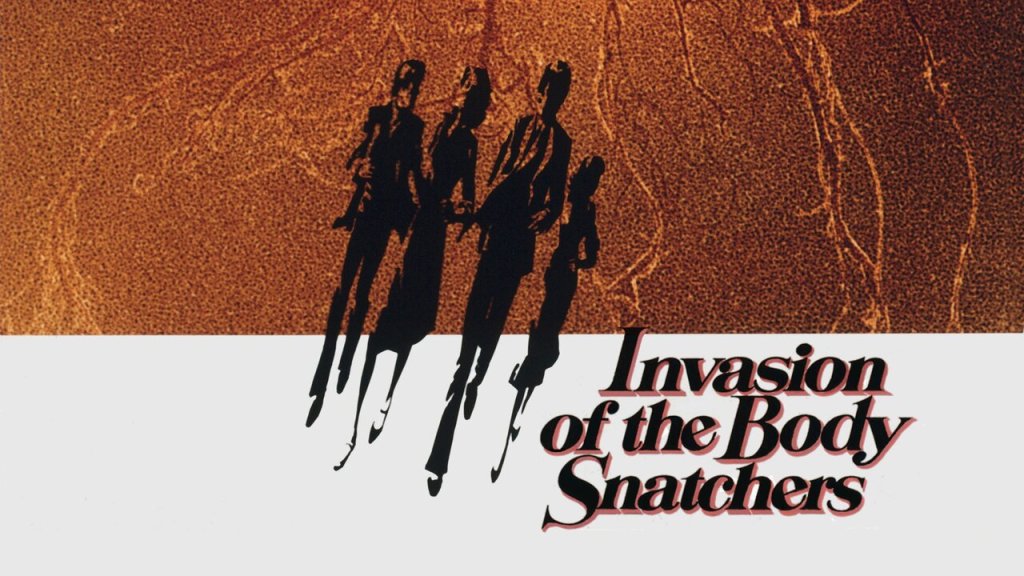
“Invasion of the Body Snatchers” (1978)
Science Fiction

Running Time: 136 minutes
Written by: W. D. Richter
Directed by: Philip Kaufman
Featuring: Donald Sutherland, Brooke Adams, Leonard Nimoy, Jeff Goldblum and Veronica Cartwright
Dr. David Kibner: “We came here from a dying world. We drift through the universe, from planet to planet, pushed on by the solar winds. We adapt and we survive. The function of life is survival.”
Philip Kaufman’s Invasion of the Body Snatchers is one of those rare remakes that not only justifies its existence but arguably stands alongside the original as a masterpiece in its own right. Released in 1978, this chilling science-fiction horror film takes the basic premise of the 1956 classic and transforms it into something distinctly more unsettling, paranoid and psychologically disturbing. Imprint’s 4K Ultra HD release offers an excellent opportunity to revisit this landmark of seventies cinema, allowing the film’s atmospheric cinematography, shadowy interiors and grim vision of humanity to be appreciated in a presentation that feels particularly suited to its slow-building sense of dread.
The film stars Donald Sutherland as Matthew Bennell, a San Francisco health inspector who gradually becomes aware that something deeply disturbing is happening around him. People are changing. Friends, colleagues and loved ones are behaving strangely, losing their emotional warmth and individuality. Their bodies appear perfectly normal, but their personalities have been replaced by something cold, detached and frighteningly efficient. As Matthew and a small group of increasingly desperate allies investigate the phenomenon, they discover that an alien life form is reproducing human beings through mysterious pods, creating exact physical duplicates while eliminating the emotional qualities that make people human.
On paper, the premise sounds like conventional science fiction, but Kaufman’s direction makes it feel far more intimate and disturbing than a straightforward invasion narrative. The horror comes not simply from the threat of being killed and replaced, but from the growing suspicion that the people closest to you might already be gone. The film turns everyday interactions into potential sources of terror, making a familiar face, a casual conversation or an apparently innocent smile feel deeply sinister. It is an extraordinarily effective approach, and one that has lost remarkably little of its power.
What makes this version especially compelling is its use of San Francisco as a setting. The city feels alive, crowded and recognisably ordinary, yet there is an underlying sense of alienation that gradually becomes impossible to ignore. Streets, offices, public spaces and apartment buildings become part of an increasingly oppressive environment in which nobody can be trusted. Kaufman understands that the most effective horror often emerges from ordinary surroundings rather than obviously threatening locations. The city itself seems to be undergoing a transformation, with the invasion spreading quietly through its population while most people remain oblivious to what is happening.
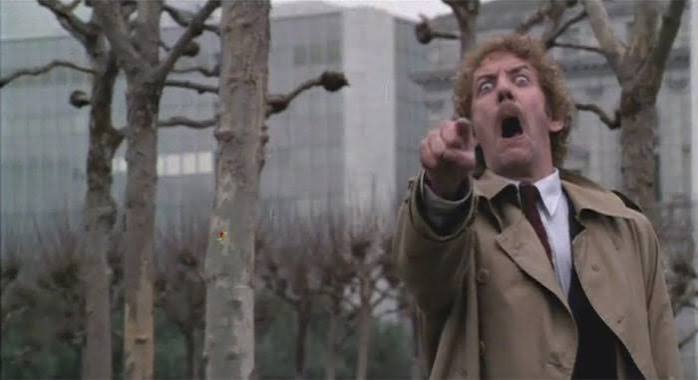
Donald Sutherland gives one of his finest performances as Matthew Bennell. His understated approach is central to the film’s effectiveness. Rather than portraying the character as an obvious action hero, Sutherland makes him feel like an ordinary man attempting to rationalise increasingly irrational events. His initial scepticism, gradual unease and eventual desperation develop naturally, allowing the audience to experience the unfolding nightmare alongside him. His distinctive physical presence and slightly awkward manner also contribute to the film’s peculiar atmosphere, making Matthew feel believable even as the world around him becomes increasingly nightmarish.
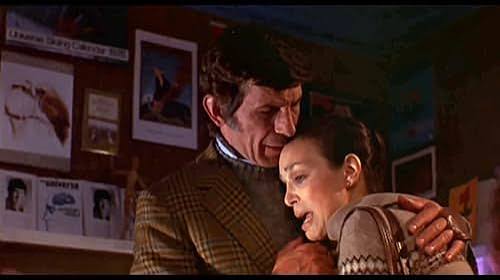
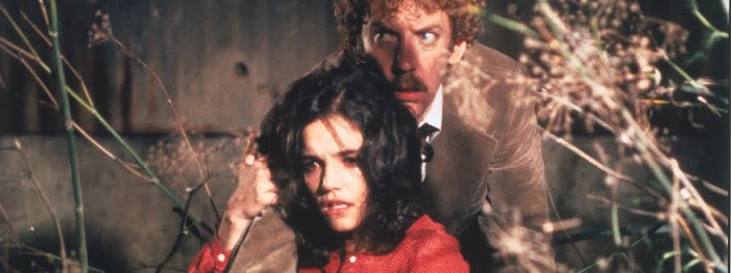
Brooke Adams is equally effective as Elizabeth Driscoll, whose discovery of her boyfriend’s disturbing transformation provides one of the film’s earliest emotional anchors. Adams conveys vulnerability without making Elizabeth seem helpless, and her growing fear gives the story a deeply personal dimension. The relationship between Elizabeth and Matthew becomes increasingly important as the threat expands, providing a human connection that stands in stark contrast to the emotional emptiness of the duplicates.
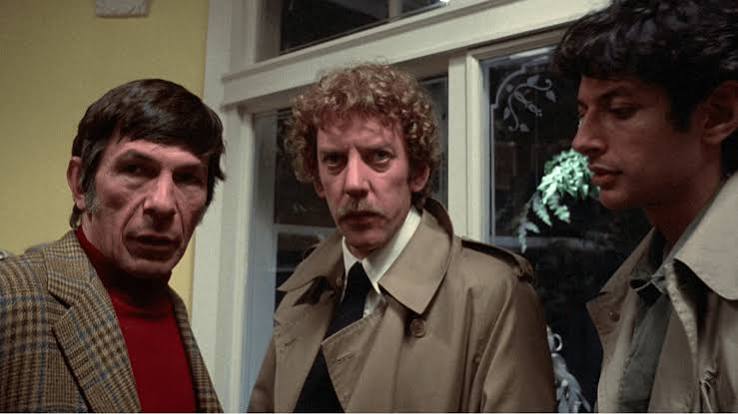
Leonard Nimoy is particularly memorable as Dr David Kibner, a psychiatrist whose reassuring manner and rational explanations initially make him seem like a voice of reason. Nimoy brings an unsettling calmness to the role, creating a character whose apparent understanding of human behaviour becomes progressively more suspicious. His performance is especially effective because he never needs to resort to overt villainy. Instead, the character’s composure becomes increasingly unnerving, suggesting that the most dangerous form of evil might be one that genuinely believes it is offering people something better.
Jeff Goldblum also makes a strong impression as Jack Bellicec, a writer and bathhouse owner who becomes caught up in the unfolding crisis alongside his wife, Nancy, played by Veronica Cartwright. Goldblum’s distinctive nervous energy provides moments of dark humour and human warmth, while Cartwright gives Nancy an appealing mixture of intelligence, anxiety and determination. Together, the supporting cast helps establish a group of recognisable individuals whose ordinary human qualities become increasingly precious as the story progresses.
One of the film’s greatest achievements is its treatment of emotion. The pod people do not simply look different or behave like conventional monsters. They are physically indistinguishable from their human counterparts, yet they lack the emotional spontaneity that gives human relationships meaning. They do not love, grieve or experience compassion in the way their originals did. Their apparent calmness and efficiency are presented as a horrifying alternative to the complications of ordinary existence.
This idea gives the film a depth that extends well beyond its science-fiction premise. The invasion can be interpreted as a nightmare about conformity, political repression, social alienation and the loss of individuality. It is tempting to read the film through the anxieties of its own decade, particularly the distrust and uncertainty that characterised American society during the 1970s. However, its themes are broad enough to remain relevant regardless of the historical moment. The fear of losing one’s identity to an impersonal system is hardly limited to any particular generation.
Kaufman never allows these ideas to overwhelm the narrative. The film remains a suspenseful horror story, and its most memorable sequences work because they are so carefully constructed. The discovery of the pods is handled with disturbing restraint, while the gradual spread of the invasion creates a sense of inevitability that becomes increasingly difficult to escape. Rather than relying on constant action, the film builds tension through atmosphere, composition, sound and the unsettling behaviour of people who should be familiar.
The sound design deserves particular praise. Everyday noises take on an ominous quality, and the film uses periods of relative quiet to make its more disturbing moments considerably more effective. The atmosphere is enhanced by Denny Zeitlin’s score, which combines disquieting musical textures with an almost abstract sense of unease. The music rarely offers the comforting emotional guidance associated with more conventional horror scores. Instead, it reinforces the impression that something fundamental has gone wrong with the world.
Visually, the film is a superb example of atmospheric seventies filmmaking. Michael Chapman’s cinematography makes excellent use of naturalistic lighting, muted colours and carefully composed frames. The result is a world that initially feels grounded in reality but gradually becomes more oppressive as the characters’ situation deteriorates. The film’s images often seem deceptively simple, yet they are filled with small details that contribute to its unsettling effect. Background figures, crowded streets and apparently insignificant movements can suddenly acquire a sinister meaning once the viewer understands what is happening.
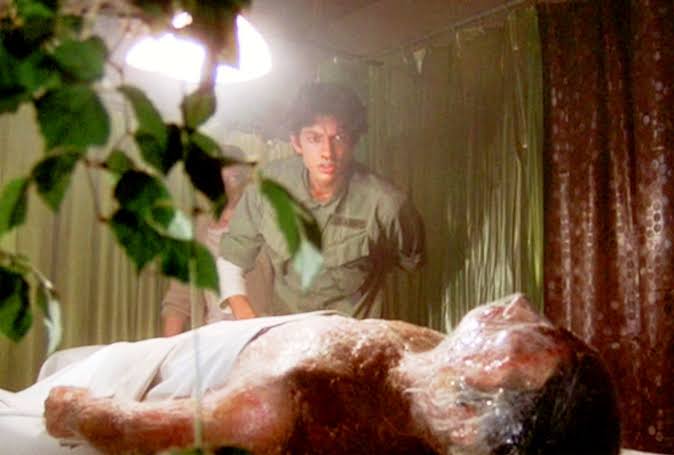
The practical effects are another major strength. The transformation of human beings into pod duplicates is presented with a tactile physicality that gives the science-fiction concept an unpleasantly convincing quality. The pods themselves are particularly effective, looking organic and alien without becoming overly elaborate. Their presence creates a disturbing contrast between biological reproduction and the artificial creation of human identity. These effects have aged remarkably well because they are integrated into the film’s atmosphere rather than presented as spectacles in their own right.
The film’s pacing is deliberate, and viewers expecting a relentlessly fast-moving science-fiction thriller may initially find its approach unusually patient. Kaufman allows the mystery to develop gradually, spending time establishing character relationships and the peculiar atmosphere of the city before escalating the danger. This patience is essential to the film’s success. The invasion feels frightening precisely because it does not announce itself through an immediate catastrophe. It advances quietly, one person at a time, until the characters realise that the world they recognise may already be disappearing.
Of course, the film’s reputation rests in no small part on its extraordinary ending. Without spoiling its full impact, the final moments bring the story’s themes of paranoia, helplessness and the destruction of human connection to a devastating conclusion. It is an ending that feels both shocking and completely consistent with everything that has come before. Rather than providing the reassuring resolution expected from many mainstream genre films, Kaufman leaves the viewer with an image that lingers long after the credits have rolled. Few horror films have managed to close their stories with such economy and such lasting emotional force.
Turning to Imprint’s 4K Ultra HD edition, the format is particularly appropriate for a film whose visual character depends so heavily on texture, lighting and atmosphere. Invasion of the Body Snatchers is not a glossy, brightly photographed science-fiction production. Its aesthetic is rooted in the naturalistic look of 1970s American cinema, with carefully controlled shadows, subdued colours and a slightly gritty photographic texture. A successful 4K presentation should preserve those qualities rather than attempt to modernise the image into something artificially pristine.
The increased resolution can be especially rewarding in a film like this, where facial expressions and background details are essential to the storytelling. Much of the suspense depends on noticing subtle changes in behaviour and recognising the difference between genuine human warmth and the blank composure of the pod people. A presentation that maintains fine detail without sacrificing the original cinematography helps reinforce the film’s unsettling realism.
The photographic texture is also important. Film grain is not an imperfection that needs to be eliminated; it is part of the original image and contributes to the film’s organic appearance. The best 4K treatment preserves this texture while allowing the underlying detail to remain clear and natural. Overly aggressive noise reduction or excessive sharpening would risk undermining the very qualities that make the film so visually distinctive. For this title, fidelity to the original photographic character is far more valuable than an artificially smooth image.
High dynamic range can potentially enhance the contrast between the film’s darker environments and its brighter exterior scenes, particularly in sequences where the lighting contributes to a sense of uncertainty. The subdued visual palette should remain subdued, however. This is a film that benefits from restraint, and any restoration should respect its original colour balance and lighting choices. The goal is not to make San Francisco look more colourful or the shadows more dramatic than intended, but to present the photography with as much nuance as possible.
It is worth distinguishing the general strengths of the 4K format from the verified performance of this particular disc. Without confirmed technical information about Imprint’s master, HDR grading, encoding, audio options and supplementary material, it would be unfair to claim specific improvements or to declare the transfer definitive. Those details matter, especially for collectors deciding whether an upgrade is worthwhile. Nevertheless, the film itself is an excellent candidate for a carefully handled 4K presentation, and its visual and sonic qualities make it particularly deserving of a high-quality home-video edition.
The audio presentation is similarly important to the film’s effectiveness. Invasion of the Body Snatchers relies on subtle sound design, carefully placed musical cues and dialogue that often carries more menace than its apparent content would suggest. The quiet moments are as important as the dramatic ones, and preserving the distinction between ambient sounds, voices and the score is essential to maintaining the film’s atmosphere. A good home presentation should allow these elements to remain clear and balanced without making the soundtrack feel unnaturally modern.
For physical-media collectors, the attraction of an Imprint release also lies in the opportunity to preserve and revisit an important film in a dedicated edition. Imprint has established a presence among collectors interested in curated genre cinema and notable titles from film history. The value of any particular edition, however, depends on its actual contents, including the quality of the transfer, the soundtrack options, any accompanying extras and the physical packaging. Without confirming the specifications of this release, those elements should be regarded as things to evaluate rather than assumed selling points.
Ultimately, the greatest argument for owning Invasion of the Body Snatchers in 4K is the film itself. This is not simply a nostalgic science-fiction curiosity or a remake that survives on the strength of its famous premise. It is a remarkably accomplished piece of filmmaking that combines intelligent social commentary, understated performances, inventive practical effects and genuinely disturbing horror. Its influence can be felt in countless later films and television stories about hidden threats, compromised identities and the terrifying possibility that familiar people may no longer be who they appear to be.
What makes it particularly impressive is how little it needs to explain. The film trusts its audience to recognise the significance of a strange expression, an unexpected reaction or an apparently ordinary encounter that feels subtly wrong. It understands that paranoia is most powerful when certainty is impossible, and that the fear of losing one’s humanity can be far more disturbing than the threat of physical destruction alone.
There are moments when the film’s measured pacing and seventies sensibility may feel unfamiliar to viewers accustomed to modern, effects-driven horror. Some of its narrative developments are deliberately understated, and the film allows its atmosphere to carry considerable weight. These are not weaknesses so much as defining characteristics. Its patience gives the horror room to grow, while its restraint makes the moments of outright terror all the more effective.
As a film, Invasion of the Body Snatchers remains essential viewing for anyone with an interest in intelligent science-fiction horror. As a candidate for 4K Ultra HD, it offers the kind of material that rewards careful presentation, from its textured cinematography and shadowy compositions to its subtle sound design and unforgettable performances. Imprint’s edition is therefore an appealing prospect for collectors, although the precise quality and value of the disc ultimately depend on the confirmed technical specifications and included extras.
Final verdict: Invasion of the Body Snatchers is a masterclass in paranoia, atmosphere and psychological horror. Philip Kaufman’s direction, Donald Sutherland’s superb central performance and the film’s devastating conclusion combine to create a work that remains as unsettling today as it was in 1978. Its themes of conformity, emotional emptiness and the erosion of individuality give it a depth that elevates it well above ordinary genre filmmaking. For fans of classic science-fiction horror, this is a film that deserves a place in any serious collection, and a well-executed 4K presentation is an ideal way to revisit its chilling world.


Leave a Reply