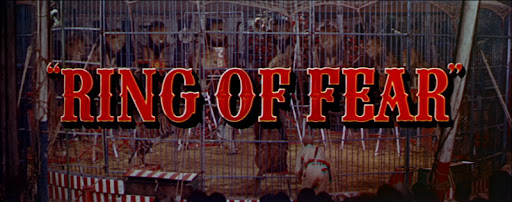
“Ring of Fear” (1954)
Film Noir

Running Time: 86 minutes
Written by: Paul Fix and Philip MacDonald
Directed by: James Edward Grant and William A. Wellman
Featuring: Clyde Beatty, Mickey Spillane and Pat O’Brien
There is something wonderfully strange about Ring of Fear. Released in 1964, this little-seen American thriller occupies an unusual place somewhere between a circus melodrama, a murder mystery, a psychological thriller and a piece of old-fashioned show-business entertainment. It is not a film that fits comfortably into one particular genre, and that very quality is part of its fascination. In the hands of another production team, the combination of circus spectacle, murder, obsessive behaviour and backstage intrigue might have become routine, but Ring of Fear has an odd personality all of its own.
The film is particularly interesting today because it captures a world that has largely disappeared. The travelling circus is presented not simply as a backdrop but as a complete environment, with its performers, animals, mechanics, managers and endless movement from one location to another. Into this world comes a dangerous and increasingly unstable individual whose presence threatens to destroy the fragile equilibrium of the circus community. The result is a modest but atmospheric thriller that benefits enormously from its unusual setting.
The Imprint Blu-ray provides an excellent opportunity to revisit Ring of Fear, particularly for viewers with an interest in obscure American genre cinema and films that exist outside the better-known studio classics of the period. This is precisely the sort of title that physical-media labels can rescue from obscurity. It may never have been regarded as a major film, but that does not mean that it lacks value. Quite the opposite: Ring of Fear is the kind of curious, eccentric film that becomes increasingly enjoyable when seen on its own terms.
A circus becomes the perfect setting for a thriller
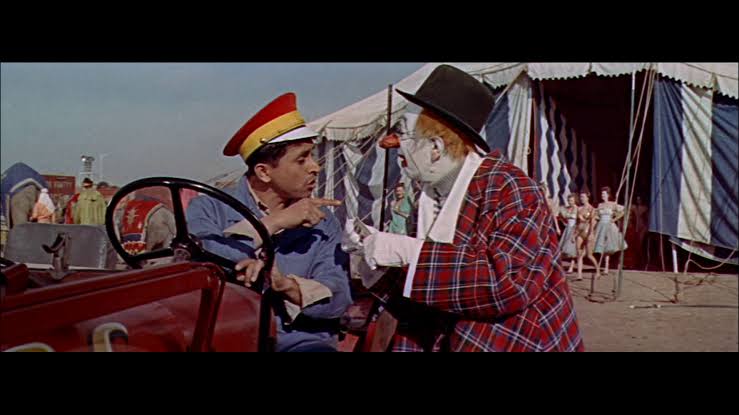
At the heart of Ring of Fear is the circus itself. The film understands that a circus is an inherently cinematic environment. There are tents, performers, animals, crowds, rehearsals, travelling equipment, backstage areas and a constant sense of movement. It is a world where extraordinary behaviour is normal, which makes it an ideal environment for a story involving secrecy and menace.
The circus also provides an interesting contrast between public performance and private reality. In front of an audience, everything is carefully controlled. Performers smile, animals perform their routines and the spectacle proceeds according to plan. Behind the scenes, however, there are rivalries, anxieties, personal relationships and dangers that the audience never sees.
That distinction gives Ring of Fear much of its atmosphere.
The circus becomes almost a character in its own right. It is colourful and exciting on the surface but potentially dangerous underneath. The performers are required to trust one another, particularly when their acts involve heights, animals or dangerous equipment. A breakdown in that trust can have fatal consequences.
This makes the film’s central threat especially effective. The villain does not have to bring danger into an ordinary environment. He enters an environment that is already full of potentially lethal situations. A circus contains knives, ropes, cages, animals, vehicles, high wires and elaborate machinery. The possibilities for an accident—or something made to look like one—are almost endless.
The unusual presence of Clyde Beatty
One of the most distinctive aspects of Ring of Fear is its association with legendary circus performer and animal trainer Clyde Beatty. Beatty’s presence gives the film an authenticity that a conventional Hollywood production about circus life might not possess.
Beatty was an enormously important figure in the history of American circus entertainment, particularly because of his famous wild-animal acts. His participation helps give the film an almost documentary quality at times. Rather than merely constructing a fictional circus from sets and props, the filmmakers are able to show the working environment of an actual circus performer.
This gives Ring of Fear a fascinating historical dimension.
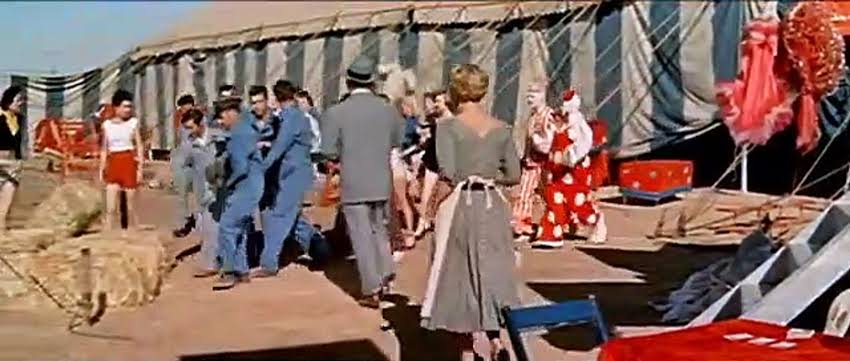
For modern viewers, some of the circus footage is arguably just as interesting as the fictional story. The film preserves a particular form of entertainment culture that has become increasingly distant from contemporary life. The circus presented here is a huge travelling operation, with performers and equipment constantly moving from one place to another.
There is a tactile quality to the production that makes it appealing. The tents, wagons, costumes and performers create an environment that feels lived-in rather than artificially constructed.
The story
The narrative revolves around the arrival of danger within this circus world. The central character is surrounded by people who are initially more concerned with maintaining the show than with recognising the threat developing around them.
That is one of the film’s strengths. Ring of Fear does not immediately become a conventional chase thriller. Instead, it gradually establishes the personalities and relationships within the circus, allowing the audience to become familiar with the environment before the danger escalates.
The film’s mystery element is therefore important. The audience is encouraged to wonder what is really happening, who can be trusted and what lies behind the increasingly disturbing behaviour.
The screenplay is not particularly complicated by modern standards, but simplicity can work in its favour. The film is primarily interested in atmosphere and character rather than constructing an elaborate puzzle. It wants the viewer to spend time inside this unusual environment and gradually become aware that something is wrong.
There is also an appealing old-fashioned quality to the storytelling. Ring of Fear belongs to a period when genre films could take their time establishing a setting and introducing their characters. It does not have the frantic pace of a contemporary thriller.
Instead, tension builds through observation.
A fascinating portrait of show-business life
One of the most enjoyable aspects of the film is its depiction of performers.
The circus is presented as a community in which everyone has a particular role. The performers depend on one another, but they are also competing for attention and professional success. There is a strong sense that the circus is both a workplace and a way of life.
This gives the film a social dimension that makes it more interesting than its basic thriller plot might suggest.
There is also something inherently melancholic about the world being depicted. The circus is travelling from town to town, constantly dismantling and rebuilding itself. Everything is temporary. The audience arrives, watches the performance and leaves. The performers remain behind to repeat the process somewhere else.
Ring of Fear captures that repetitive existence surprisingly well.
The film consequently works as a small historical document. Even when the dramatic material becomes conventional, the glimpses of circus life remain fascinating.
The atmosphere
Atmosphere is arguably the film’s greatest asset.
There is something inherently unsettling about a circus after dark. During a performance, the environment is bright, noisy and crowded. Once the audience has gone, the same location can suddenly become mysterious and threatening.
The film makes effective use of that contrast.
The tents and equipment that look exciting during a performance become much more sinister when empty. The cages and animal enclosures acquire a threatening quality. The backstage areas seem like labyrinths where anything might happen.
This is precisely why the circus setting works so well for a thriller.
The film also benefits from its physical locations. There is a sense of real space that is often missing from studio-bound productions. The performers appear to be working in an actual environment rather than merely standing in front of painted backgrounds.
That authenticity contributes considerably to the film’s appeal.
Performances
The acting style is recognisably of its period. There is a certain theatrical quality to some of the performances, and viewers accustomed to contemporary naturalism may initially find the characterisation somewhat broad.
But that style suits the film.
The circus itself is a theatrical environment, and the performers naturally exist in a world of exaggerated gestures and larger-than-life personalities. The actors therefore fit comfortably into the film’s slightly heightened reality.
The central performances are especially important because the film depends on the contrast between ordinary circus life and the disturbing behaviour of the antagonist.
Rather than turning the villain into a conventional movie monster, the film makes him unsettling because of his ability to operate within an ordinary social environment. He is surrounded by people who initially have no reason to believe that anything is seriously wrong.
That makes the eventual danger more effective.
The film’s psychological element
Although Ring of Fear is often described primarily as a circus thriller, there is an interesting psychological component running through the story.
The film is fascinated by obsession and instability. The threat comes not simply from physical violence but from the possibility that someone within the group is behaving irrationally.
That gives the story a paranoid quality.
The characters cannot simply rely on the normal rules of their profession. They have to consider the possibility that ordinary accidents may not be accidents at all.
This is particularly effective in a circus environment because accidents are always plausible. A performer can fall. An animal can become uncontrollable. Equipment can fail. A vehicle can crash.
The film therefore has an unusually effective built-in mechanism for suspense.
Violence and danger
By modern standards, Ring of Fear is relatively restrained. The film does not depend upon graphic violence or explicit gore.
Instead, it derives tension from anticipation.
The viewer knows that something could happen at any moment, and the circus environment provides endless opportunities for disaster.
This is one of the reasons the film remains entertaining. It understands that suggestion can sometimes be more effective than explicit violence.
The danger surrounding the performers feels credible precisely because their jobs are already dangerous.
A time capsule of 1960s America
Another major attraction of the film is its period detail.
Ring of Fear captures an America that now feels historically remote. The clothing, vehicles, hairstyles, language and entertainment culture all contribute to its period atmosphere.
The circus itself is particularly valuable as a record of a form of popular entertainment that was already changing.
Watching the film today, one becomes increasingly conscious that it is preserving something that cannot easily be recreated. The performers, the equipment and the relationship between the circus and its audience belong to another era.
This gives the film a value beyond its plot.
Even if the mystery itself is not particularly challenging, the surrounding world makes the experience worthwhile.
The Imprint Blu-ray
For collectors, the greatest attraction of this release is the opportunity to experience Ring of Fear in a presentation designed specifically for modern home viewing.
Imprint has developed a strong reputation for bringing unusual catalogue titles to physical media, and a film such as Ring of Fear fits naturally into that programme. It is precisely the kind of title that might otherwise remain difficult to find outside specialist collections.
The Blu-ray format also makes it much easier to appreciate the film’s visual qualities.
Picture quality
The picture presentation is particularly important with an older film such as this.
The source material inevitably retains some of the characteristics associated with its age. Film grain, fluctuations and occasional signs of wear are part of the historical nature of the material.
However, those characteristics should not automatically be regarded as defects.
In fact, maintaining an appropriate filmic appearance is essential. A film such as Ring of Fear should look like a film rather than an artificially processed digital product.
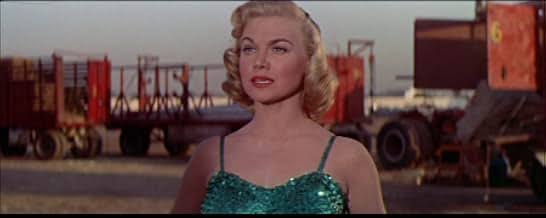
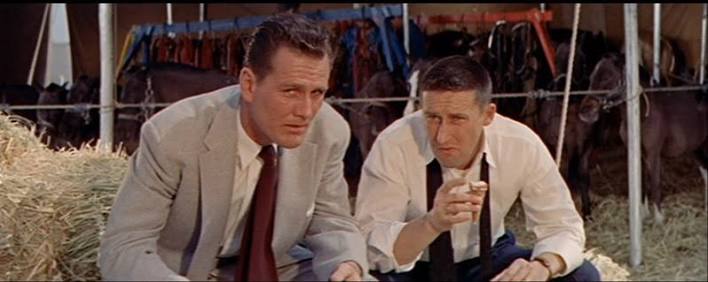
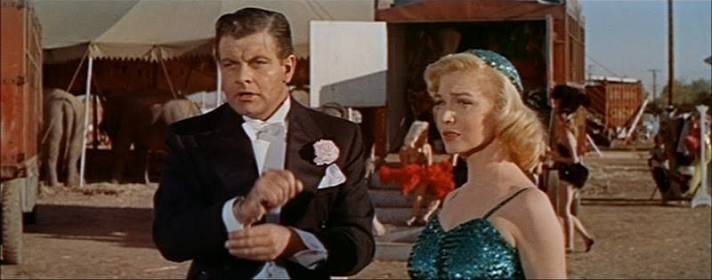
The Blu-ray provides substantially more detail and stability than viewers accustomed to older television or low-quality digital copies may expect. Faces, costumes, circus equipment and background details benefit from the increased resolution.
The texture of the film stock is also visible, helping preserve the period appearance.
The circus sequences particularly benefit from the improved presentation. There is plenty of visual information in the frame, from the performers and animals to the tents and equipment.
For a film whose setting is so important, this additional detail is extremely welcome.
Black levels and contrast
The darker sequences are also important because Ring of Fear relies on atmosphere.
A good home-video presentation needs to retain detail in shadows without making the picture look artificially bright. The Blu-ray allows the nighttime and backstage sequences to retain their darker character while still providing sufficient visual information.
This helps considerably with the suspense.
The circus looks particularly attractive when viewed in its period context. The contrast between brightly lit performances and darker backstage environments creates much of the film’s visual personality.
Sound
The soundtrack is understandably modest by modern standards, but that is hardly surprising given the film’s age.
The Blu-ray’s presentation allows dialogue, music and effects to come through clearly while retaining the character of the original recording.
There is no reason to expect the sort of expansive surround-sound experience associated with contemporary productions. Ring of Fear is an older mono-era production, and the appropriate approach is to preserve that original character rather than artificially modernising it.
For a dialogue-driven thriller, clarity is the most important consideration, and the presentation serves the film well in that respect.
Why this release matters
The most important quality of an Imprint release like this is not simply technical improvement.
It is preservation.
Films such as Ring of Fear are easily overlooked. They are not among the most famous titles of their decade, and they do not have the cultural profile of major Hollywood productions.
But cinema history is made up of more than canonical masterpieces.
There are thousands of smaller films that document particular periods, performers, production methods and popular tastes. Some are successful artistically; others are interesting because of their historical context. Some are simply unusual.
Ring of Fear belongs to the latter category.
It is an entertaining thriller, but it is also a fascinating record of circus culture and American popular entertainment in the early 1960s.
The pleasures of rediscovery
Part of the fun of watching a film like this on Blu-ray is approaching it without enormous expectations.
There is no need to pretend that Ring of Fear is a lost masterpiece. It is not.
Its storytelling can be straightforward, some of its characterisation is dated and its pacing may seem leisurely to contemporary audiences.
But those qualities are also part of its charm.
The film belongs to a particular tradition of American genre filmmaking in which an unusual occupation or environment becomes the basis for a thriller. Similar films have used hospitals, newspapers, amusement parks, hotels, trains and travelling shows as their central environments.
What distinguishes Ring of Fear is the authenticity of its circus setting.
The viewer is given access to a world that is much more interesting than the basic plot might initially suggest.
Final thoughts
Ring of Fear is a wonderfully eccentric piece of 1960s American genre cinema.
It may not be one of the great thrillers of its era, but judging it purely by that standard would miss much of what makes it worthwhile. Its real strengths lie in its atmosphere, its unusual setting, its circus performers and its ability to preserve a disappearing form of American entertainment.
The film combines mystery, melodrama, psychological tension and circus spectacle in a way that is unmistakably of its period. It is sometimes strange, sometimes suspenseful and frequently fascinating.
Most importantly, it is different.
That matters enormously in an era when so much genre cinema can feel interchangeable. Ring of Fear has a particular personality because it grows out of a very specific world.
The Imprint Blu-ray gives collectors an opportunity to rediscover that world in a presentation that does justice to the film’s age and character. The improved image makes the circus environment considerably more rewarding to explore, while the soundtrack remains clear and appropriate to the original production.
For fans of obscure 1960s thrillers, circus movies, American exploitation cinema and catalogue discoveries, the release is particularly appealing. It is the sort of Blu-ray that rewards curiosity: a film you may approach because the title is unfamiliar, only to discover that its setting, historical value and peculiar atmosphere make it surprisingly memorable.
Ultimately, Ring of Fear is best appreciated not as a forgotten blockbuster waiting to be rediscovered, but as a fascinating cinematic time capsule.
It preserves a vanished world of travelling circuses, performers and dangerous spectacle, wraps that world in a murder mystery and gives us a glimpse of an entertainment culture that is now largely historical.
That makes the Imprint Blu-ray more than simply another catalogue release. It is an invitation to revisit an unusual corner of American cinema—and for viewers who enjoy discovering films that have slipped through the cracks of conventional film history, that is a very good reason to step inside the ring.


Leave a Reply