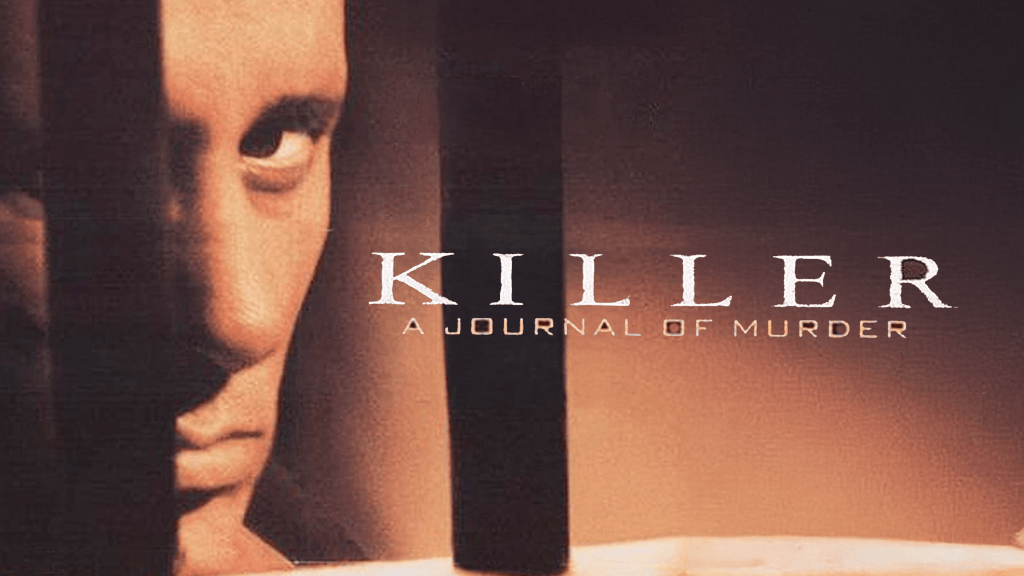
“Killer: A Journal of Murder” (1995)
Drama

Running Time: 90 minutes
Written & directed by: Tim Metcalfe
Featuring: James Woods, Robert Sean Leonard, Cara Buono, Ellen Greene, Robert John Burke and Steve Forrest
Carl Panzram: “I don’t want to be alive. I want out of these clothes. I want out of this body. I want out of this world.”
There are some films that are difficult to describe as enjoyable, because the subject matter is simply too grim, too disturbing and too morally complicated to allow conventional entertainment to be the primary response. Killer: A Journal of Murder is one of those films. Directed by Tim Metcalfe and released in 1995, this dark and unusually serious prison drama takes the real-life story of Carl Panzram and turns it into a stark examination of violence, punishment, redemption and the frightening possibility that some human beings may be beyond saving.
It is also a film that has spent far too long existing in the shadow of its subject matter. Panzram is not presented as a conventional cinematic villain, and the movie has no interest in transforming his story into a sensational serial-killer thriller. Instead, Killer: A Journal of Murder is interested in the relationship between Panzram and Henry Lesser, the prison guard who becomes fascinated by the man’s extraordinary and horrifying life story. That relationship provides the movie with its emotional and philosophical centre.
At the heart of the film is James Woods, giving one of those performances that reminds us just how extraordinarily intense he can be when given material that allows him to disappear inside an unstable, contradictory character. Woods plays Panzram as a man who seems to have abandoned every conventional connection with humanity while simultaneously possessing an extraordinary awareness of his own nature. Robert Sean Leonard, meanwhile, provides the necessary counterpoint as Henry Lesser, the young guard who believes that people can change.
The resulting film is grim, intelligent, unsettling and often surprisingly moving.
For collectors, the arrival of the film on Imprint Blu-ray is particularly welcome because this is the worldwide first Blu-ray release. It is exactly the sort of relatively obscure catalogue title that benefits from the attention of a label willing to look beyond the obvious mainstream favourites.
A Story About Evil — But Also About the Desire to Understand It
The central premise is deceptively simple.
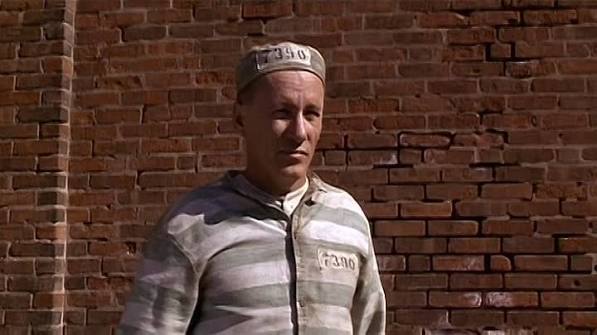
Carl Panzram is an inmate at Leavenworth prison. He has committed numerous crimes and has little apparent interest in presenting himself as an innocent man. Instead, when he begins interacting with Henry Lesser, he gradually starts recounting his life story.
Lesser is fascinated.
More importantly, he believes that allowing Panzram to write his story may provide some kind of therapeutic or rehabilitative purpose. He supplies him with writing materials, and Panzram begins putting his memories onto paper.
What emerges is horrifying.
But the movie’s real subject isn’t simply the crimes. It is the question of why Lesser continues to engage with Panzram after hearing what he has done.
That is where Killer: A Journal of Murder becomes much more interesting than a conventional true-crime movie.
The easy approach would have been to make Panzram into a monster and Lesser into the heroic man who attempts to tame him. Metcalfe’s film is considerably more ambiguous. Lesser wants to believe in rehabilitation, but Panzram continually tests the limits of that belief.
Can somebody who has committed terrible acts genuinely change?
Can society understand someone without excusing them?
Does understanding a criminal make that person more sympathetic, or does it simply provide a more detailed explanation for the damage he has caused?
And perhaps most importantly, what happens when compassion meets somebody who doesn’t appear to want compassion?
These questions give the film a seriousness that separates it from exploitation cinema.
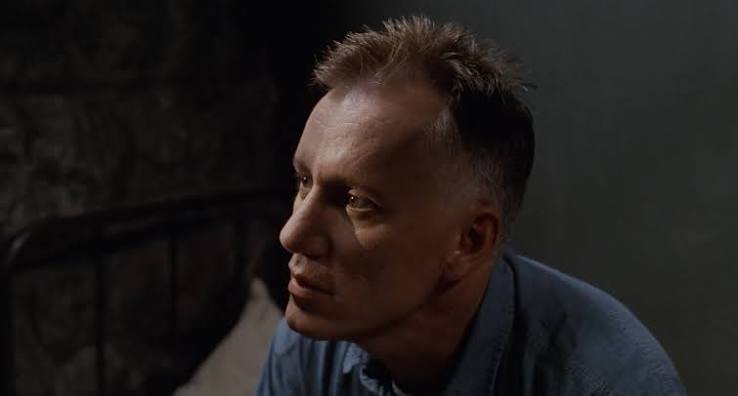
James Woods as Carl Panzram
James Woods is the major reason to see the film.
Panzram is an exceptionally difficult character to play because the performance must avoid two opposing traps. Woods cannot make him too sympathetic, because that would distort the character. But he also cannot play him as a simple monster, because then the relationship with Lesser would become dramatically meaningless.
Instead, Woods creates somebody who is frightening precisely because he can be intelligent, articulate and occasionally vulnerable.
There is a fascinating unpredictability to his performance.
Panzram can be calm one moment and vicious the next. He can appear almost amused by Lesser’s idealism, before suddenly revealing just how much darkness lies underneath his words. Woods also understands that Panzram’s hostility is not merely theatrical. This is a man who has constructed an entire worldview around his hatred of humanity.
The performance therefore becomes a battle of wills.
Lesser believes that somewhere underneath the violence there must be a human being capable of rehabilitation.
Panzram appears determined to prove him wrong.
Woods does not ask the audience to like Panzram. Instead, he forces us to watch him.
That is considerably more uncomfortable.
There are moments when Woods seems almost physically trapped inside the character. His posture, facial expressions and voice all contribute to the impression of a man who has spent years constructing emotional armour. When cracks appear in that armour, the moments are consequently much more powerful.
It is a performance built on contradictions.
Panzram is repellent but fascinating. Intelligent but destructive. Self-aware but seemingly incapable of meaningful change. He understands the consequences of his actions while simultaneously refusing to accept the moral framework through which other people judge him.
Woods captures all of that without turning the character into a caricature.
Robert Sean Leonard’s Henry Lesser
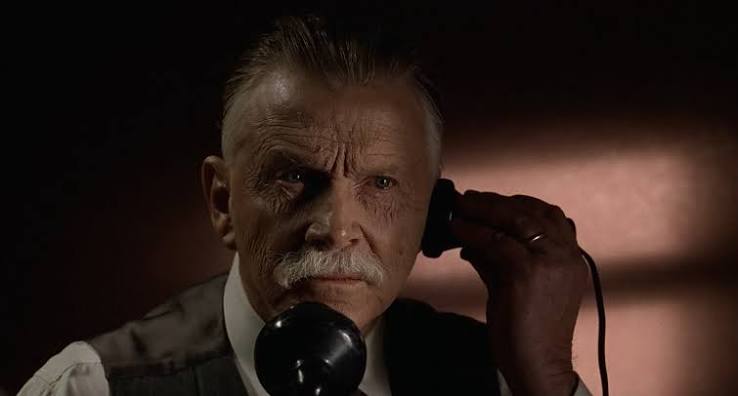
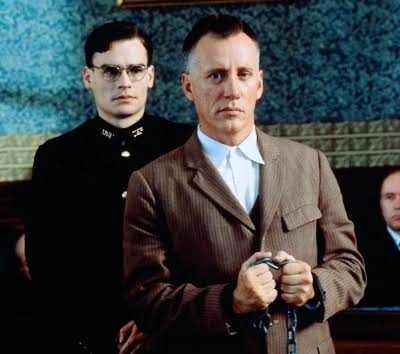
Robert Sean Leonard has the much less showy role, but it is an essential one.
Henry Lesser could easily have become a bland moralistic character whose only purpose was to listen to Panzram’s story. Leonard gives him enough personality to make his fascination believable.
Lesser is young, idealistic and convinced that rehabilitation matters. His interest in Panzram isn’t simply morbid curiosity. He genuinely wants to understand whether there is still something salvageable in this man.
That makes the character vulnerable.
The more Panzram reveals, the more Lesser’s philosophy is tested.
Leonard plays this progression subtly. He doesn’t suddenly transform from optimism into despair. Instead, the performance gradually accumulates doubt. The audience can see that Lesser wants to maintain his belief in humanity, even when Panzram gives him increasingly compelling reasons not to.
The contrast between Woods and Leonard is consequently one of the film’s greatest strengths.
Woods dominates the screen, but Leonard gives him something to push against.
Without Lesser, Panzram’s monologues would simply be horrifying stories.
With Lesser listening, questioning and reacting, they become moral confrontations.
The Film’s Refusal to Exploit Its Subject
One of the most admirable aspects of Killer: A Journal of Murder is its relative restraint.
This is a story that could have been made as lurid exploitation.
The filmmakers had all the necessary ingredients: a notorious criminal, murder, violence, imprisonment and a disturbing autobiography.
Instead, the film concentrates largely on the psychological relationship between its central characters.
The violence is important, but the film is more interested in its consequences than in depicting violence for its own sake.
That gives the movie a sombre atmosphere.
There is very little sense of the excitement that often accompanies crime thrillers. Nobody is trying to turn Panzram’s crimes into glamorous mythology. There is no romanticisation of his lifestyle. The film is instead interested in the miserable consequences of a life dominated by violence.
That approach also makes the movie considerably more disturbing.
Showing less can sometimes be more effective than showing everything.
The audience is forced to imagine some of what Panzram describes, and the imagination can be considerably more frightening than graphic images.
Tim Metcalfe’s Direction
Tim Metcalfe approaches the material with a seriousness that suits the story.
There is no need for flashy visual technique. The drama depends on faces, performances, dialogue and atmosphere.
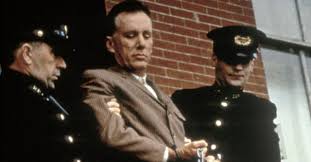
The prison environment becomes particularly important. It is not simply a location but a psychological extension of the characters. The walls, corridors and cells reinforce the sense that everyone in the story is trapped.
Panzram is physically imprisoned.
Lesser is psychologically trapped by his belief that he can help him.
And the audience becomes trapped inside Panzram’s memories.
Metcalfe understands that the movie works best when it allows conversations to breathe. The film does not constantly interrupt its characters with dramatic flourishes. Instead, it allows the uncomfortable pauses and confrontations to build tension.
That restraint also gives James Woods room to work.
The movie is ultimately a performance-driven piece, and Metcalfe wisely understands that.
The Prison Setting
Prison films are often built around hierarchy.
There are prisoners and guards, victims and aggressors, authority figures and rebels. Killer: A Journal of Murder initially appears to fit into that tradition, but gradually complicates those relationships.
Panzram is a prisoner, but Lesser’s fascination with him begins to blur the expected boundaries between guard and inmate.
The prison becomes a strange environment in which ordinary social rules are suspended.
Lesser is technically the authority figure, but Panzram possesses an unusual psychological power over him.
Panzram is physically confined, yet his words allow him to control the conversations.
Lesser has freedom outside the cell, but increasingly becomes psychologically absorbed by the prisoner inside it.
This inversion gives the film much of its tension.
The Meaning of the Journal
The journal itself is an important device.
Writing becomes a means by which Panzram controls his own narrative.
That raises another fascinating question: how much should we believe?
A memoir is always a construction. Even when somebody is recounting real events, they are selecting memories, emphasising certain experiences and presenting themselves in a particular way.
Panzram’s writing therefore becomes another form of performance.
Is he confessing?
Is he boasting?
Is he trying to shock Lesser?
Is he attempting to explain himself?
Or is he simply creating the most frightening possible version of his own identity?
The film doesn’t provide easy answers.
That ambiguity makes the journal more interesting than a simple collection of criminal confessions.
The Moral Argument
Ultimately, Killer: A Journal of Murder is about rehabilitation.
But it does not provide a comfortable answer.
Lesser represents the belief that people can change.
Panzram represents the possibility that some people cannot, or will not, change.
The film doesn’t turn this into a simplistic argument. Instead, it allows the two positions to collide repeatedly.
There is something admirable about Lesser’s faith.
There is also something dangerous about assuming that everybody can be saved.
Conversely, Panzram’s cynicism sometimes sounds intellectually persuasive, but the consequences of his worldview are catastrophic.
The film therefore refuses to give either man complete victory.
That is one of its greatest strengths.
The Supporting Cast
The supporting performances are generally strong and contribute to the movie’s believable period atmosphere.
Ellen Greene, Cara Buono, Robert John Burke and Richard Riehle help populate the world around the central relationship without distracting from it.
The film knows where its centre of gravity lies.
This is Panzram and Lesser’s story.
Everybody else exists largely to illuminate or complicate that relationship.
That concentrated approach helps the relatively short running time.
At approximately 91 minutes, Killer: A Journal of Murder is not an expansive prison epic. It is a tightly focused character study.
A Dark 1990s Drama
There is something distinctive about serious American dramas from the 1990s that dealt with crime, punishment and damaged personalities.
They were often willing to be slower and more conversational than contemporary thrillers. They could spend time allowing characters to explain themselves rather than simply moving from one plot development to another.
Killer: A Journal of Murder belongs firmly in that tradition.
It feels like a film made for an audience prepared to listen.
It isn’t interested in turning Panzram’s life into a roller-coaster ride. Instead, it asks the audience to sit with the ugliness.
That can make the movie challenging, but it also gives it staying power.
The Imprint Blu-ray
For fans of obscure 1990s cinema, the Blu-ray is particularly significant because this is the film’s first appearance on Blu-ray worldwide.
The presentation is in 1080p high definition and preserves the film’s 1.85:1 aspect ratio. The release also provides English DTS-HD 5.1 surround and LPCM 2.0 stereo options, with English HOH subtitles.
The choice of soundtracks is appropriate for the movie. This is not a soundtrack-driven spectacle, so there is no reason to expect the kind of aggressive surround presentation associated with an action film. Dialogue is the crucial element, and the two audio options give collectors flexibility.
The film’s dark visual atmosphere is also well suited to high-definition presentation.
This is not a bright, colourful production. Much of its power comes from shadows, institutional interiors, prison corridors and subdued colours. A good presentation therefore needs to preserve the textures and contrasts without making the darker sequences look artificially harsh.
The Imprint edition is exactly the kind of release that demonstrates why catalogue films deserve proper Blu-ray treatment.
The New Special Features
The release is also accompanied by a useful selection of newly produced material.
Among the advertised extras are “Killing It,” an interview with James Woods; “Killer Direction,” an interview with director Tim Metcalfe; “Reel Stories,” an interview with producer Janet Yang; and “Murder Journals,” an interview with author James Long.
These are particularly welcome because Killer: A Journal of Murder is the sort of film where background information can significantly enhance appreciation.
Hearing Woods discuss the role provides an opportunity to consider how he approached a character as psychologically extreme as Panzram.
Metcalfe’s contribution is equally valuable because the film’s restrained approach is one of its defining qualities.
Janet Yang’s involvement provides another perspective on how the production came together, while James Long’s contribution is particularly appropriate given the film’s relationship with the written record of Panzram’s life.
The special features therefore complement the film rather than simply padding out the disc.
The Historical Dimension
There is also something particularly fascinating about watching the film today.
True crime has become an enormous part of popular culture. There are documentaries, podcasts, television series, books and films devoted to notorious criminals.
Killer: A Journal of Murder comes from a period when the treatment of such material could still feel comparatively unusual.
It doesn’t have the slickness of modern true-crime entertainment.
That is a compliment.
The film feels uncomfortable with its own subject.
It doesn’t seem entirely certain that Panzram’s story should be turned into entertainment, and that tension contributes to its effectiveness.
There is a sense that the filmmakers understand the danger of becoming fascinated by the criminal rather than the consequences of his crimes.
What Makes James Woods’ Performance So Memorable?
The answer may be that Woods never tries to make Panzram conventionally likable.
There is no attempt to find an easy sentimental explanation for everything he does.
Instead, Woods plays a man who has become profoundly alienated from the rest of humanity.
Yet the performance is not empty.
There are glimpses of pain, intelligence, humour and self-awareness.
That is what makes him frightening.
A purely monstrous character is easy to dismiss.
A complicated human being who has committed monstrous acts is much harder to process.
Woods makes Panzram recognisably human without asking us to excuse him.
That distinction is crucial.
A Film About the Limits of Compassion
The relationship between Panzram and Lesser is ultimately what gives the film its emotional power.
Lesser’s compassion is sincere.
But compassion is not the same thing as absolution.
The film understands this.
To listen to someone is not to forgive them.
To understand someone’s childhood or circumstances is not necessarily to excuse their later actions.
And to believe in rehabilitation does not mean ignoring the harm caused by the person who needs rehabilitating.
Those distinctions give the movie a maturity that many crime dramas lack.
Why the Film Deserves Rediscovery
Killer: A Journal of Murder is not a perfect film.
Its deliberate pacing may seem slow to viewers expecting a conventional serial-killer thriller. Some of the exposition can feel heavy, and the film’s serious tone leaves little room for relief.
But those qualities are also part of its identity.
It is a difficult film about difficult questions.
It isn’t designed to provide escapism.
And that is precisely why it is worth rediscovering.
James Woods gives one of his strongest performances, Robert Sean Leonard provides an effective emotional counterbalance, and Tim Metcalfe keeps the material grounded in character rather than sensationalism.
The result is a bleak but compelling piece of 1990s cinema.
Final Thoughts
The most remarkable thing about Killer: A Journal of Murder is that it doesn’t really play as a conventional serial-killer movie.
It is a prison drama.
It is a character study.
It is a meditation on rehabilitation.
It is a film about the seductive power of a story.
And it is an uncomfortable examination of what happens when somebody who has done terrible things is given the opportunity to tell his own version of his life.
James Woods is exceptional as Carl Panzram. His performance is disturbing without becoming cartoonish, and his ability to shift between menace, intelligence, bitterness and vulnerability gives the film much of its power. Robert Sean Leonard’s Henry Lesser is equally important because his optimism provides the moral challenge that Panzram constantly attempts to destroy.
The film’s greatest achievement is that it doesn’t resolve the argument too easily.
Can everybody be saved?
Can understanding replace punishment?
Does telling one’s story constitute confession, manipulation, or simply another form of self-invention?
Killer: A Journal of Murder leaves those questions hanging in the air.
For many years, this has been the kind of film that could easily disappear from view: a serious, low-key 1990s drama without the profile of a major studio classic. That makes Imprint’s decision to give it its worldwide Blu-ray debut particularly welcome.
The 1080p presentation, original framing, multiple audio options, subtitles and newly produced interviews make this a substantial upgrade in accessibility for anyone interested in the film. The limited edition is also capped at 1,500 copies, making it a particularly interesting catalogue release for collectors of Imprint’s more unusual titles.
Ultimately, Killer: A Journal of Murder isn’t an easy film, and it isn’t supposed to be.
It is grim, uncomfortable and morally challenging.
But it is also intelligent, exceptionally well acted and far more thoughtful than its title might suggest.
And above all, it gives James Woods the kind of demanding role at which he excels.
For anyone interested in serious 1990s crime dramas, prison films, true-crime cinema, James Woods, or the increasingly impressive catalogue of films being rescued and preserved by Imprint, this Blu-ray represents an important opportunity to rediscover a film that deserves considerably more attention than it has traditionally received.
Killer: A Journal of Murder may be about a killer, but its real subject is the much more difficult question of whether we can understand evil without attempting to excuse it.
That is what makes the film linger long after the final scene.
And that is why this Imprint release is such a welcome addition to the collection.


Leave a Reply