• Film review: “Coco” (2017)

    “Coco” (2017)

    Animated/Pixar

    5stars_small

    Running Time: 109 minutes

    Written by: Adrian Molina & Matthew Aldrich

    Directed by: Lee Unkrich & Adrian Molina

    Featuring:   Anthony Gonzalez, Gael García Bernal, Benjamin Bratt, Alanna Ubach, Renée Victor, Ana Ofelia Murguía, and Edward James Olmos

    Abuelita: “No music!”

    It may be difficult to believe but it has been over twenty years since the first Pixar full-length film was released, the always great and timeless “Toy Story” (1995). That movie ushered in not only the cutting edge computer animation but also featuring of A-list celebrity voice talent that Pixar would become famous for. “Toy Story” was also a new breed of film that would not talk down to children, taking for granted that the themes, that were sometime adult, or at least relatable to adults, would be understood by the young as well as the old. There have been some ups and downs over the years with the quality and success of Pixar’s output, but their foray into mining material outside of the US has been very successful with “Moana”(2016) set in the Pacific Islands, and now with their Mexican based “Coco”(2017) – which highlights some truly unique and wonderful aspects of Mexican culture.

    In breaking new ground in terms of not only introducing many to the Mexican culture, Pixar has to be seen not to be exploiting another culture for pure profits, so bringing in veteran director Lee Unkrich seems like a no-brainer. Unkrich who shepherded Pixar’s first sequel, “Toy Story 2” (1999), as well as the sequel that made it their only true franchise “Toy Story 3” (2010) is someone who is skilled enough to not only break a story, but to deal with a narrative that is layered, as well as morally complex at the same time making a film fun enough to be enjoyed by children. What is great is that Unkrich has been wise enough to being in an assistant in the form of writer Adrian Molina who lends not only credibility but the skill in advising on the Mexican culture – something Pixar should be applauded for which worked so well in “Moana” – which this film is easily as good as.

    “Coco” is set in Mexico where her musician husband left Imelda Rivera and her daughter, Coco. She banned music in the family and opened a shoemaking family business. In the present, her great-great-grandson, Miguel, now lives with the elderly Coco and their family. He secretly dreams of becoming a musician like Ernesto de la Cruz, a popular actor and singer of Imelda’s generation. One day, Miguel inadvertently damages the photo of Imelda at the center of the family ofrenda and removes it, discovering that her husband (whose face is torn out) was holding Ernesto’s famous guitar.

    Concluding that he is Ernesto’s descendant, Miguel leaves to enter a talent show for the Day of the Dead. He enters Ernesto’s mausoleum and steals his guitar to use in the show, but becomes invisible to everyone in the village plaza. However, he can see and be seen by his skeletal dead relatives who are visiting from the Land of the Dead for the holiday. Taking him there, they realize that Imelda cannot visit as Miguel removed her photo from the ofrenda. Discovering that he is cursed for stealing from the dead, Miguel must return to the Land of the Living before sunrise or he will become one of the dead.

    There are so many places to look at when talking about “Coco”, the first being that this  film looks and sounds incredible – that’s saying something considering other Pixar output. Not only does it pop in terms of the ‘living’ side in Mexico with its brightness as well as the look of the people and their homes, it looks just fantastic especially for a brand new undiscovered new environment. However it is in the ‘death’ side of the film where the look not only becomes unique but is possibly the most colorful and fantastic elements ever witnessed in any animated film ever made. The way in which the afterlife is depicted with its nod to border controls, its bureaucracy with many rules that act against families, incongruous official loopholes that benefit nobody and many more elements that make fun of, as well as comment on border issues, it was only missing some bizarre wall that the hero could have found his way over (or under). There is also the familial element that shines through from the very beginning to the conclusion, that is the treatment of not only the elderly but of those people that have died, who should never be forgotten.

    “Coco” is definitely about family as well as what it means to have family and what it also means to understand where family has come from, the idea of knowing who has come before you, how that shapes a person consciously or not. Miguel goes on a heroes journey becoming aware of where he has come from as well as why his own direct family behaves in certain dogmatic ways that make no sense to him – all he wants to do is  make his own choices not being trapped by others – his journey of discovery not only opens his mind but blasts open preconceptions about his way of like that have knock on effects for his entire community, as well as the country at large. What I found refreshing about this was that through respect of others Miguel is able to ask some basic questions that members of his family have never asked before – if they had have or even followed Miguel’s train of thought then maybe their lives would have been made better. These are basic tools that people could learn not only when they are young but when they get older as well, it might make for better communities if others were honest when asked questions by their relatives as well as others.

    As with many works of art this film speaks on a variety of levels as well as numerous themes. The keeping of secrets that bind people to not only live their lives in shadows but to ask others to not live their lives is a major part of this. The other element is the harm that people do to others to keep their secrets or those that victimize others much like one character does in “Coco”. There is a definite correlation through to the scandal that is raging in the entertainment world now that started with Miramax and Harvey Weinstein where he victimized people through corruption and power relations. As you would expect the corrupter in Coco like Weinstein receives his comeuppance.

    Like “Moana”, “Coco” makes use of voice talent from the region, so we have the excellent Benjamin Bratt and Gael García Bernal in the two adult lead roles not only playing memorable people but in the leads of a global reaching film highlighting their talents as actors as well as creating roles that are as original as anything going. They get to play characters that are multi faceted with motivations that feel real as well as behaving how real people behave given the earthly situations that they face in this film. One thing that recent Pixar films have been doing is breaking new talent in high profile movies, which is no more truer than here, where the main part of Miguel is played by newcomer Anthony Gonzalez who gives the character authentic agency in his search for the truth.

    This is one of Pixar’s best films yet with a great cast as well as some themes revolving around family, friends, life, death and answering a call you may feel at a young age. It also asks us to question what is happening in our lives, the motivations of people as well as our own motivations. This is a lesson that could be learned from people in all walks of life especially those in power. “Coco” also not only asks us to look at a culture we may not know or understand, viewing it from the people of that culture’s perspective. It also does not make judgments about those people as well as not exploiting it or reducing it to stereotypes something others may not have been successful at. I recommend this highly to all especially those with families it might make you ask some questions of your own.

    “Coco” is out now in cinemas.

  • “Game Night”(2018) – Trailer
    Error
    This video doesn’t exist

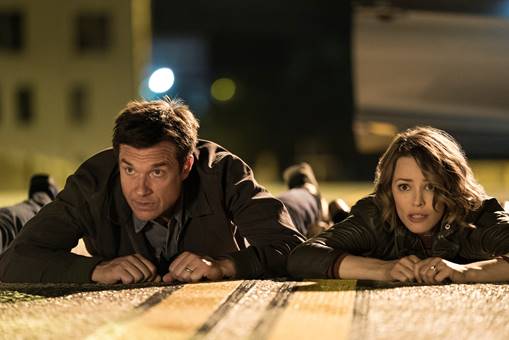
    Bateman and McAdams star as Max and Annie, whose weekly couples game night gets kicked up a notch when Max’s charismatic brother, Brooks, arranges a murder mystery party, complete with fake thugs and faux federal agents. So, when Brooks gets kidnapped, it’s all part of the game…right? But as the six uber-competitive gamers set out to solve the case and win, they begin to discover that neither this “game”—nor Brooks—are what they seem to be. Over the course of one chaotic night, the friends find themselves increasingly in over their heads as each twist leads to another unexpected turn. With no rules, no points, and no idea who all the players are, this could turn out to be the most fun they’ve ever had…or, it’s game over.

    GAME NIGHT is directed by John Francis Daley & Jonathan Goldstein and stars Jason Bateman and Oscar nominee Rachel McAdams. Also starring are Billy Magnussen, Sharon Horgan, Lamorne Morris, Kylie Bunbury, Jesse Plemons, Danny Huston, Chelsea Peretti, with Michael C. Hall and Kyle Chandler.

    GAME NIGHT releases in New Zealand cinemas on February 22, 2018.

    image007

  • Film review: “Lady Bird” (2017)

    “Lady Bird” (2017)

    Drama

    images

    Running Time: 93 minutes

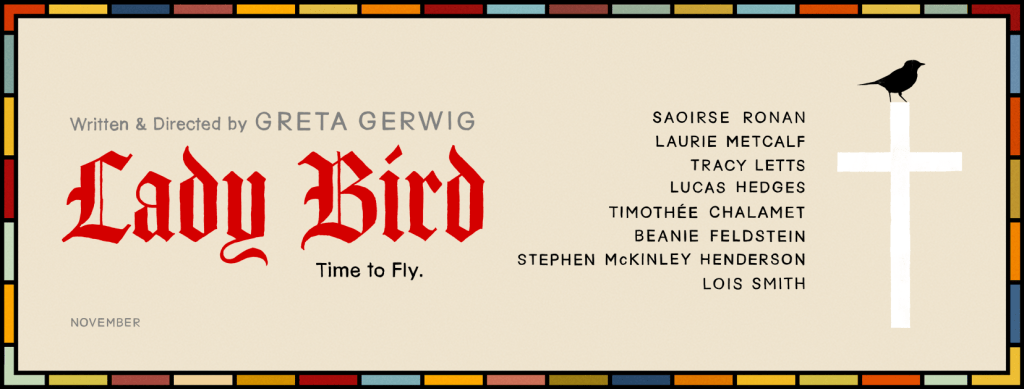
    Written & Directed by:  Greta Gerwig

    Featuring: Saoirse Ronan, Laurie Metcalf, Lucas Hedges, Timothée Chalamet, Tracy Letts, Beanie Feldstein, Stephen McKinley Henderson, and Lois Smith

    Marion McPherson: “I want you to be the very best version of yourself that you can be.” 

    Christine ‘Lady Bird’ McPherson: “What if this is the best version?”

    You may be forgiven in thinking that this new film written and directed by Greta Gerwig has come out of the blue from an actress who has lit up the world of US independent cinema for the past decade, but in fact it is exactly what should have been expected of her. This new film “Lady Bird” (2017) is not even the first film Gerwig has written or even directed, she has been working away for years, in fact the only surprise is that the announcement of her undeniable talent has taken this long, but the reason for that is more political than anything else. As you might expect this is a low budget indie that touches many bases a feature like this should do, it is a personal story from Gerwig’s own experiences, has many great performances from talented actors but is told from the point of view of its female lead – this is something that is as unique as Gerwig herself, it is refreshing, new and speaks to Gerwigs own truth about aspects of her life to a certain point.

    It has to be said that over the past four decades there have been many independent films that have seemingly announced new talents that are expected to go on and prove that their first or second movies are no fluke, that they have something to say and will be present in the making of films for some time to come. In fact every year after many festivals new talents emerge but just as fast they seem to disappear. Few original voices remain, but Gerwig has something going for her that so many do not, that is experience in the industry as well as another full acting career in many films that have not only been annual highlights but have remained in the lexicon long after their eventual home releases. Movies like “Jackie” (2016), “20th Century Women” (2016), “Mistress America” (2015), “Frances Ha” (2012) and so many more, not only inform individual characters but also Gerwigs own sensibility that come across in this unique film that brings to the fore a spirit that hopefully will be seen in the years to follow.

    “Lady Bird” revolves around an outspoken teen learning to navigate a loving but turbulent relationship with her strong-willed mother over the course of an eventful and poignant senior year of high school.

    “Lady Bird” is such an easy film to view as well as really enjoy that you could be forgiven for not looking past the surface story to dig beneath the plot and see what lies there. This is most definitely a character study of the lead, the formation of her persona showing what trajectory she is on, but never really getting there, I would think she is still on that journey now. Lady Bird is a headstrong young lady who knows what her endgame is but is not sure how to get there. All she sees is what she does not have thinking the grass is greener on the other side of the fence without knowing the inherent letdowns and dangers that exist there. Lady Bird also doesn’t realize that the it is the journey that is the experience not the getting there, as we will see towards the end of the film with her initial experiences in another place.

    This is so well written by Gerwig that you can tell it is from her own experience whether or not the extreme characterizations are embellished or not, they ring so true that you will find yourself identifying with not one character but many. This is a personal story and as such it touches on many uncomfortable traits not only of Lady Bird but her mother and father as well as well as her fellow classmates. Interestingly it does paint a loving memory of Catholic School, being taught by Nuns, Priests as well as the lay teachers that fill out the staff numbers. This last point is most interesting as it illustrates openness on the part of the Catholic institution that is rarely seen in popular culture or in society in general. It shows a school that is open and not closed to new ideas, one with a sense of humor and a lack of dourness – we see Lady Bird hanging real conversations about life with the Nuns as well as doubts and emotion from some of the Priests. The other aspect Lady Bird captures, which many films based around adolescents do., is that everything at this age is amplified beyond anything else felt in life, this goes more so for Lady Bird whose mother features so highly in her life with similar thought patterns.

    As this is almost entirely based around characters it is the performances that come to the front and center of this film, they have to be honest as well as believable, with the ability of the cast to believe in what they are doing as well as what they are saying, this is where motivation is so important. In this, Gerwig has recruited two extremely good actresses in Saoirse Ronan as the title character and the always-fantastic Laurie Metcalf as mother dearest. Ronan has proven over the years to be a most dedicated actress appearing in a variety of genres as well as varied budgeted films, but this must stand as her best performance, one that is fully realised from beginning to end, rightly nominated for an Oscar, she may even win if the tide turns in her favor by just a little. Then there is stage actress and “Roseanne” (1988 – 1997) veteran Laurie Metcalfe who has not made many appearances on the big screen, but here shines as a mother who almost cares too much and hangs on too long to her daughter. It may be hard to believe but this is Metcalf’s first film since “Stop-Loss” (2008) almost ten years ago, one can only hope that after this Oscar nominated performance there will more to follow. The rest of the cast is full of surprise as well with Tracy Letts as the patriarch of the family who gives a willowy vulnerable performance as a man caught between his life not quite beginning with a middle age crises looming, he plays the part as a man of his stature can. Also appearing are stars on the rise Lucas Hedges and Timothée Chalamet as Lady Bird’s sometime confused beaus, they are both great in very different roles pushing the lead along to some startling realizations about herself as well her relationship with future men.

    It would be reductive to describe this as a coming of age film as it transcends that with the smart screenplay as well as fully realized flawed characters that explode off the screen in ways that audiences might not be prepared for. You will  definitley come to know the truth of the characters as well as their motivations. This is another in a list of great films to be released over the past few months that are a welcome relief to the male dominated vanity projects that come in time for the Oscars. This is a film written and directed as well as featuring women in all the main parts, it is a perspective rarely seen in movies but gives it the originality to rise from a good movie to a great one, it will be interesting to see where Gerwig goes to from here, but I for one hope that her next effort is not too far away.

    “Lady Bird” has been nominated for five Academy Awards including Best Actress – Saoirse Ronan , Best Supporting Actress – Laurie Metcalf, Best Director – Greta Gerwig, Best Original Screenplay – Great Gerwig and Best Picture.

    “Lady Bird” is out in cinemas from the 14th February 2018.


  • “Ant-Man and the Wasp” (2018) – Trailer
    Error
    This video doesn’t exist

    From the Marvel Cinematic Universe comes “Ant-Man and the Wasp”, a new chapter featuring heroes with the astonishing ability to shrink. In the aftermath of “Captain America: Civil War,” Scott Lang grapples with the consequences of his choices as both a Super Hero and a father. As he struggles to rebalance his home life with his responsibilities as Ant-Man, he’s confronted by Hope van Dyne and Dr. Hank Pym with an urgent new mission. Scott must once again put on the suit and learn to fight alongside the Wasp as the team works together to uncover secrets from the past.

    “Ant-Man and the Wasp” is directed by Peyton Reed and stars Paul Rudd, Evangeline Lilly, Michael Pena, Walton Goggins, Bobby Cannavale,  Judy Greer, Tip “T.I.” Harris, David Dastmalchian, Hannah John Kamen, Abby Ryder-Fortson, Randall Park, with Michelle Pfeiffer, with Laurence Fishburne, and Michael Douglas.. .Kevin Feige is producing with Louis D’Esposito, Victoria Alonso, Stephen Broussard, Charles Newirth, and Stan Lee serving as executive producers. Chris McKenna & Erik Sommers, Paul Rudd, Andrew Barrer & Gabriel Ferrari wrote the screenplay. “Ant-Man and the Wasp” hits NZ cinemas on July 5, 2018.

    01_CB_DomTeaser_Online

  • Film review: “The Post” (2017)

    “The Post” (2017)

    Drama

    images

    Written by: Liz Hannah & Josh Singer

    Directed by: Steven Spielberg

    Featuring:  Meryl Streep, Tom Hanks, Sarah Paulson, Bob Odenkirk, Tracy Letts, Bradley Whitford, Bruce Greenwood, Carrie Coon, and Matthew Rhys

    Ben Bradlee: The way they lied, those days have to be over.

    This should have been a year of protest, where Hollywood made comments on the past two years of US politics as well as the social injustice that has taken on new meaning, not only in America, but on the global stage. All I can say is that I am happy Steven Spielberg decided not only to say something, but to make one of the best movies of 2017, with only a few days to spare. After a lackluster 2016 with the poorly received as well as poorly adapted “The BFG” (2016) it was inevitable that Spielberg would bounce back, he has with this period piece, featuring a stunning story set over a short amount of time to remind us that we have been here before, not only that but we will probably be here again. The US is not the only country divided in the world, there seems to be many movements worldwide where people are split down the middle, one need only look at recent election results. This film reminds us of a time in US history where the divide was the norm, not the exception – in these Trumpian times “The Post” (2017) tells us the fifth estate was a beacon to be listened to, trusted as well as truly ground breaking – not the hollow institution that is touted from the White House with their own version of the ‘truth’.

    There is no doubt that Steven Spielberg is not only the most successful producer/director of all time, with numerous box office hits dating back to the 1970s, but he is also one of the few people who is able to choose his projects as well as get any movie green lit on a whim. He has nothing left to prove to anyone which gives him the freedom to make movies like the completely underrated and prescient “Bridge of Spies” (2015) and now “The Post”. Of course because Spielberg seems to have alwas been at the top of his game he is able to work with longtime collaborators Tom Hanks, Janusz Kaminski, John Williams, Michael Kahn and so many more, all legendary figures in their own right. He is also able to corral new co-workers, Meryl Streep stands out here in her first Spielberg film.

    “The Post” tells the story of a cover-up that spanned four U.S. Presidents pushed the country’s first female newspaper publisher, Kay Graham (Streep) of The Washington Post, and its hard-driving editor, Ben Bradlee (Hanks), to join an unprecedented battle between journalist and government in publishing the Pentagon Papers.

    In terms of the world in which we live right now “The Post” may be producer/director Steven Spielberg’s most important film to date, which is saying something, not only about his own oeuvre but also the very real themes and subjects this film deals with. Not only does the film address one of the central tenants of US life, that is the freedom of the press, it also attempts to show how one of the branches of government can and does try to suppress it, to protect itself from truths that could tear the country apart. Of course this has repercussions right through to the present where we have a President who is potentially infringing on the rights of the media as well as calling out legitimate organization as fake news, something his supporters are behind and of course his many detractors against. All these years on from the period of the film, the two newspapers, ‘The Washington Post’ as well as ‘The New York Times’ are two of the largest papers Trump has an issue with as they go after him in a huge ways, not seen since those years of the Nixon White House. The unfortunate aspect of todays media world is that with the rise of Social Media newspapers have been depowered as well as devalued to a point where many people view feeds rather than purchase and read actual newspapers. We are witnessing a slow erosion of what it is to be in the media as well as how these outlets operate in a society where officials can make up facts and lie to their constituents without any repercussions or harm to their standing in society – something that Nixon attempted to do but failed as there were a few reporters asking some basic questions, not receiving answers that added up.

    There is of course a flipside to this pro-media film, which is not pretty, and exists because of a shift towards news organizations serving a profit motive in the pursuit of ratings as well as clicks, likes and shares. The larger question is where was this fourth estate in 2015 and 2016 when Trump was making his move to the Presidency as well as showing exactly what kind of person he is, and has lived up to be – a clueless sexist racist slob who has no real right to run a country or even be listened to. The answer of course is that the media not only pandered to him but gave him time to make a case for the Presidency while not warning the public to the real threat to the people (and the world) that would eventually vote him to the highest seat of power in the US. This is something that this film does not address even though it could through the lens of history by juxtaposing the power of the media as well as its possible blindness to issues that were not treated with any real seriousness.

    “The Post” also is quick to point out through its highlighting of how huge the ‘Pentagon Papers’ were, that in fact it was the Wiki-leaks of its day, not only that but the resources that the newspapers had was limited, there were no computers to crunch data or sort through thousands of pages to bring information to the front – this was an analogue time when digital technology would have been a price above rubies. There is also a strong thread of public responsibility versus government secrets that is talked about as well as illustrated through the use of lawyers. It also follows the common sense that leads to the release of the papers, knowing the impact this will have on the public at large as well as what it will mean for the government – this to is something that news organizations had to deal with when Assange leaked information to the world – these are somber thoughts knowing how close information is guarded by those in power.

    Of course apart from the meanings behind the film there are some great performances, as you would expect from Meryl Streep and Tom Hanks, the leads, marking the first time they have appeared onscreen together. At this stage of both actors careers there is no real need to say how great or talented they are, both inhabit their roles interpreting these real life characters who were both much larger than life, as well as having more to them than what is seen onscreen. What is needed to be said however is that as an audience we have seen these two so much that there is the possibility that we take their skill as two of the greatest film actors as granted – we expect the excellence we see so it is diminished somewhat which is a fault of the audience and not the performers. Whilst Streep has attracted yet another Oscar nomination this year, it is Hanks who has not received a nomination since “Cast Away” (2000) which is a crime, one that needs to be rectified in the coming years. As you would expect the film is rounded out with multiple character actors who give voice to the secondary players in this tumultuous story, in particular it is Bob Odenkirk, Tracy Letts, Bradley Whitford and Bruce Greenwood who stand out with roles that seem to have been made for them, they are all fantastic.

    Spielberg as director, with cinematographer Janusz Kaminski and John Williams utilizing score keep this film as low key as possible, there are no tricks to move attention from actors or the story which are the real stars of this film. All three have worked together for so long that they know what is required in a true story, they have made multiple films based on real events or people, they know that anything that is done is carried out in the name of their subjects. The strength that they have is that the motivation to forgo plot for something that might be more palatable is not needed as the champion this film has in Spielberg means profit is not the only motive unlike other true stories – something I think news organizations could take a cue from.

    The past few months has seen the release of many excellent films, all tackling very real as well as very different subjects, some have been contemporary, whilst others have been period pieces, there have been many different themes explored, maybe more so than any other time in the history of Hollywood which speaks to the creative as well as producers who help fund these movies. What is most interesting is that “The Post” is a film that is about white men within the corridors of power with one exception that is the character of Kay Graham who as the lone woman in this story is operating in and around men who are not used to deferring to powerful women – in this the film really enters its stride in particular with the scenes between Graham and Robert McNamara who spar about the truth rarely seen on film.

    If you have not yet seen “The Post” you are missing out on a great film with equally great performances, it is not too be missed and in any other year would be odds on favorite for a clutch if awards, but sadly I think these will mostly go elsewhere – it best hope it Streep, but that could be said in any year. This is a must see and may make you look at the media in a different light.

    “The Post” is out now only in cinemas.

  • DVD & Blu-ray review: “Geostorm” (2017)

    “Geostorm” (2017)

    Sci-Fi/Action

    2,0

    Running Time: 109 minutes

    Written by: Dean Devlin & Paul Guyot

    Directed by: Dean Devlin

    Featuring:  Gerard Butler, Jim Sturgess, Abbie Cornish, Alexandra Maria Lara, Richard Schiff, Robert Sheehan, Daniel Wu, Eugenio Derbez, Ed Harris, and Andy García

    Cheng: “There’s potential for catastrophic weather events on a global scale. A geostorm.”

    There is no doubt in my mind that this has to be one of the worst movies to be released into cinemas this year. What I am not sure about is how this movie turned out this way, sure it had a troubled production, the director and producer were replaced when reshoots had to be done to attempt to make “Geostorm” (2017) at least watchable – but judging from the finished product no one really knew what to do with it – it is a mess of film with a muddled plot, narrative and no real logical elements that make this compelling viewing at all. The blame can be put at the studio who trusting a US$100 million plus budget to a debut director who had produced some profitable movies but had no right in being put in charge of this mess.

    “Geostorm” had a kind of competent idea behind it, solving the issues of global warming through technology, with a bunch of countries coming together to build the solution – if only we lived in that world now. The problem is when the story turned to a way to put people as well as the world into peril so that someone could emerge to save the day – a typical Hollywood story, it has been done many times – the most recent movie that did this was “2012” (2009) the disaster porn film that seemed to end the endless scenes of cities being destroyed wholesale – it was a monster of a movie with a large cast that get picked off until a family is left at the end to look forward to a brighter future together. Unfortunately Devlin has taken a movie that could have been interesting miscast the hell out of it, supplied endless tropes that do not work, supplied endless plot holes, had ridiculous twists that make no sense and then supplied special effects that seem not only sub par but offer nothing new in terms of spectacle at all.

    “Geostorm” is set in 2019, a coalition of 18 nations, spearheaded by the US and China, band together and commission “Dutch Boy”, a system of satellites designed to control climate on a global scale, following numerous extreme natural disasters that have left millions dead.

    Three years later, a United Nations field team stationed in Afghanistan comes across a village that has been frozen, along with its inhabitants. U.S. President Andrew Palma calls an emergency meeting of his Cabinet, where the blame is placed on a malfunction in Afghanistan’s weather satellite. Back up on the ICSS, a satellite engineer suspecting foul play secretly and preemptively copies the log data from the Afghanistan satellite and stores it in a locker, but dies when he is suddenly ejected into space in an apparent accident. The designer of ‘Dutch Boy’ is sent to the satellite is sort of what is going on, while his brother who works in the White House attempts to find out what is going on in terms of a conspiracy he has uncovered.

    Frankly from the opening scenes of real life disastrous weather patterns to the CGI creations, the writing is on the wall, with a voice over narration that explains everything that is going on to dialogue like “Sorry I’m late, I literally just flew in from space”, delivered in the most stilted way by Gerard Butlers character Max. From there it only gets worse by taking the two leads, Butler and Jim Sturgess (playing brothers) and separating them with their only interaction being on some kind of video link, that is the worst conceived piece of technology I have ever seen. If that wasn’t bad enough there are way too many subplots that are all superfluous to the plot, and are only there to get people from point A to point B in the easiest way possible – the best example is the relationship  between Sturgess and Abbie Cornish, that only exists to make it easier to get to the President without having to bend the narrative too far. Another example is at the climax of the movie in the space scenes a character who left the space station in a shuttle, which you are shown onscreen, literally turns up out of nowhere to save the day – I mean it is ridiculous to the extreme.

    Another aspect of this movie is the casting that is a little odd to say the least. Firstly Gerard Butler is the hero of the piece but pretty much disappears at key moments and at times is restricted to yelling at a giant monitor and pushing buttons. Jim Sturgess seems all at sea as well, with no time to cement his relationship with his brother or his fiancee, he seems to be offering at least two different performances – which hinders the tone of the movie. Abbie Cornish plays a Secret Service agent who is supposed to be the partner of Sturgess, but this comes off as one note, as well as completely mishandled. Cornish who has been in some very good films (and who is possibly the most talented person in this film) seems to have signed on to a different movie, one where she has some agency and is not being ordered around by Sturgess, not really being asked just told to do things that serve the plot. The rest of the cast led by Ed Harris, also has Andy Garcia, Richard Schiff and Mare Winningham who show up for a few ridiculous scenes then all but disappear leaving the heavy lifting to some dodgy effects. To be able to get so many great film actors together in supporting roles there must have been a better script floating around, one where they were playing three dimensional characters, but the movie has ended up with really stilted meaningless performances which is a missed opportunity. The movie attempts to do what many Roland Emmerich movies do, that is to show the carnage from a street level, with the audience identifying with ‘normal’ people as they face the disasters in separate countries. But Emmerich does this through a slow build where we meet people to give them background then the disaster happens. Here Devlin has just headed straight to the action sequences with people we don’t know, but are supposed to feel empathy for – it does not work.

    The final aspect that needs to be addressed is the ham fisted way global warming and extreme weather events are handled, as well as what a missed opportunity this was in terms of framing what could have been a much better movie. “Geostorm” instead of making the story about the extreme weather conditions, solves this problem in the first ten minutes with a voice over. This is a missed opportunity to create something special, an actual commentary on global warming in what should have been a major tent pole movie. Instead they have produced a movie about a giant gun, then as the movie progresses we see the technology causing damage through different kinds of weather. By the time the end of the movie arrives even the director has reduced the ‘weather machine’ to a laser ripping through Moscow destroying and killing people and property – hang on I thought this was about killer weather not a giant laser.

    There is so much else that could be written about “Geostorm” and there normally is about really bad movies that are released in cinemas where they are asking people to pay quite a lot to see them. I would not recommend this movie at all – give it a miss and watch any other disaster movie; you will have a much better time and be more rewarded.

    “Geostorm” is currently in out on DVD & Blu-ray.

  • Film review: “Molly’s Game”(2017)

    “Molly’s Game” (2017)

    Drama

    voting-concept-rating-two-golden-stars-d-render-illustration-white-background-60907242

    Running Time: 140 minutes

    Written & Directed by: Aaron Sorkin

    Featuring:  Jessica Chastain, Idris Elba, Kevin Costner, Michael Cera, Brian d’Arcy James, Chris O’Dowd, Bill Camp, Graham Greene, Claire Rankin, Joe Keery, and Jeremy Strong

    Molly Bloom: “I’ll be hosting a game in this suite every Tuesday night. The first buy-in, two hundred and fifty thousand.”

    Disappointment is the word that comes to mind after watching Aaron Sorkin’s directorial debut, “Molly’s Game” (2017) a film that is so unsure of itself and what it wants to be that the writer/director seems to have included just about every kind of plot device possible to make a coherent movie, none of which really come together, making this something that reflects everything that is wrong with Sorkin’s writing. That is the way in which characters communicate between themselves, as well explaining the plot to an audience, just a word of advice Mr. Sorkin, film is a visual medium, if I wanted almost two and a half hours of people talking I would listen to a podcast or audiobook, both would be more original and entertaining than this movie based on the memoir ‘Molly’s Game: From Hollywood’s Elite to Wall Street’s Billionaire Boys Club, My High-Stakes Adventure in the World of Underground Poker’ by Molly Bloom.

    There is no doubt that Aaron Sorkin, at his best, can deliver a great television show like “The West Wing” (1999-2006) or an equally compelling film like “The Social Network” (2010), high minded liberal projects that not only attract great actors but are helmed by even greater producers and directors. Of course when Sorkin himself has control we get “Studio 60 on Sunset Strip” (2006-2007) and “Steve Jobs” (2015) two disappointing projects that both fell in love with dialogue over visuals as well as coolness over substance. Even though they had other directors these two pieces were utter disappointments, which suffer from similar issues to “Molly’s Game”.

    This is the true story of Molly Bloom, a young woman who ran the world’s most exclusive high-stakes poker game in Los Angeles and New York City, for nearly a decade, before being arrested by the FBI. Her players included Hollywood celebrities, athletes, business titans and the Russian mob. With the help of her lawyer, Molly must face federal charges.

    I have no doubt that when actors are offered or are aware that an Aaron Sorkin script is in the offering there must be a queue a mile long, after all if there is even a chance to appear in something that could be a ‘West Wing’ or ‘Social Network’ then you must grab it. That explains how the two leads; Jessica Chastain and Idris Elba are able to come aboard, as well as supporting actors Kevin Costner, Michael Cera, Chris O’Dowd and Graham Greene are cast. Chastain plays the title character of Molly as a vampish raccoon eyed femme fatale who seems to be smarter than everyone, except for the male lead of course, Idris Elba as her lawyer that acts as an audience substitute, who is explained to what is going on in the plot, with a narrative that is so full of flashbacks you will be forgiven for leaving the cinema with a case of whiplash. Both Chastain and Elba have suffered from the same fate in recent years, after bursting onto the scene with some memorable roles they have either had the leads in fairly ordinary as well as forgettable films, or, had flashy supporting roles in good films, but been relegated while the leads get all the glory. With “Molly’s Game” they are playing frankly unbelievable people who every time they want to make a point have to point out some arbitrary metaphor then meander to the point, supplying  voiceover to action that is described then acted out – it is frankly a waste of their talents to ask them to perform these roles in a movie that begs to be directed by someone who knows the craft. The same can be said of the supporting actors who to have to act like characters out of a rat pack film, all too cool and knowing to be treated as real people.

    That brings me to the script as well as the way the film has been structured, edited and shot. This should have been a slam-dunk of a film to direct but somehow Sorkin takes what is on the surface an interesting real life story turning it into a never-ending mess of constant set up, with very little pay off. In fact I struggled to see what the film was attempting to say but was just happy it ended after its marathon like running time. Not only does the main character constantly explain almost every flashback scene in voice over, but then the exact thing she talked about is acted out so we have many aspects of the movie done twice. As if that were not bad enough within each scene everything is painstakingly explained literally as well as in metaphor. Another aspect of the film is the meandering nature of it as well as the multiple sub plots that go nowhere as well as being reexamined at many points throughout the narrative, which lends to the running time of this quasi drama that wishes it were in fact a thriller – which it is not. There is a distinct lack of editorial decision making, firstly in the script, which I shudder to think how long that was, then in the actual edit room where I also do not want to think how long the possible first cut was. At times I found myself asking why certain scenes were present when they obviously should have been cut to streamline the movie into something that is actually compelling.

    While this film is about Molly as a character as well as some kind of cautionary tale, one of the key problems is that there is often talk about the rich and famous but there are no real revelations about who these people were. Not only that there is too much time explaining (literally once again) why these names are not being mentioned which leads to a meta narrative that unfortunately does not work within the confines of this film. I can see it working in a book, but here it just falls victim to the narrative as a pointless endeavor.

    Molly’s Game should have been a very good movie, with performances that could have captured the imagination; instead they are rote as well as staid and boring. When you have Jessica Chastain and Idris Elba the screen should be crackling and the audience transfixed to what is happening, not wondering when will this movie end. Not only that but for a film about poker it may have added to the narrative if Molly actually played the game. There is a section in the movie where the obviousness of her lack of agency exists where the players just decide to play somewhere different thereby negating any power she has. What is interesting about that is that audiences can do the same thing to Sorkin, that is leave and go to a better well thought out and visual film.

    “Molly’s Game” is released on 1st February 2018 only in cinemas.

  • “A Wrinkle in Time” (2018) – Trailer
    Error
    This video doesn’t exist

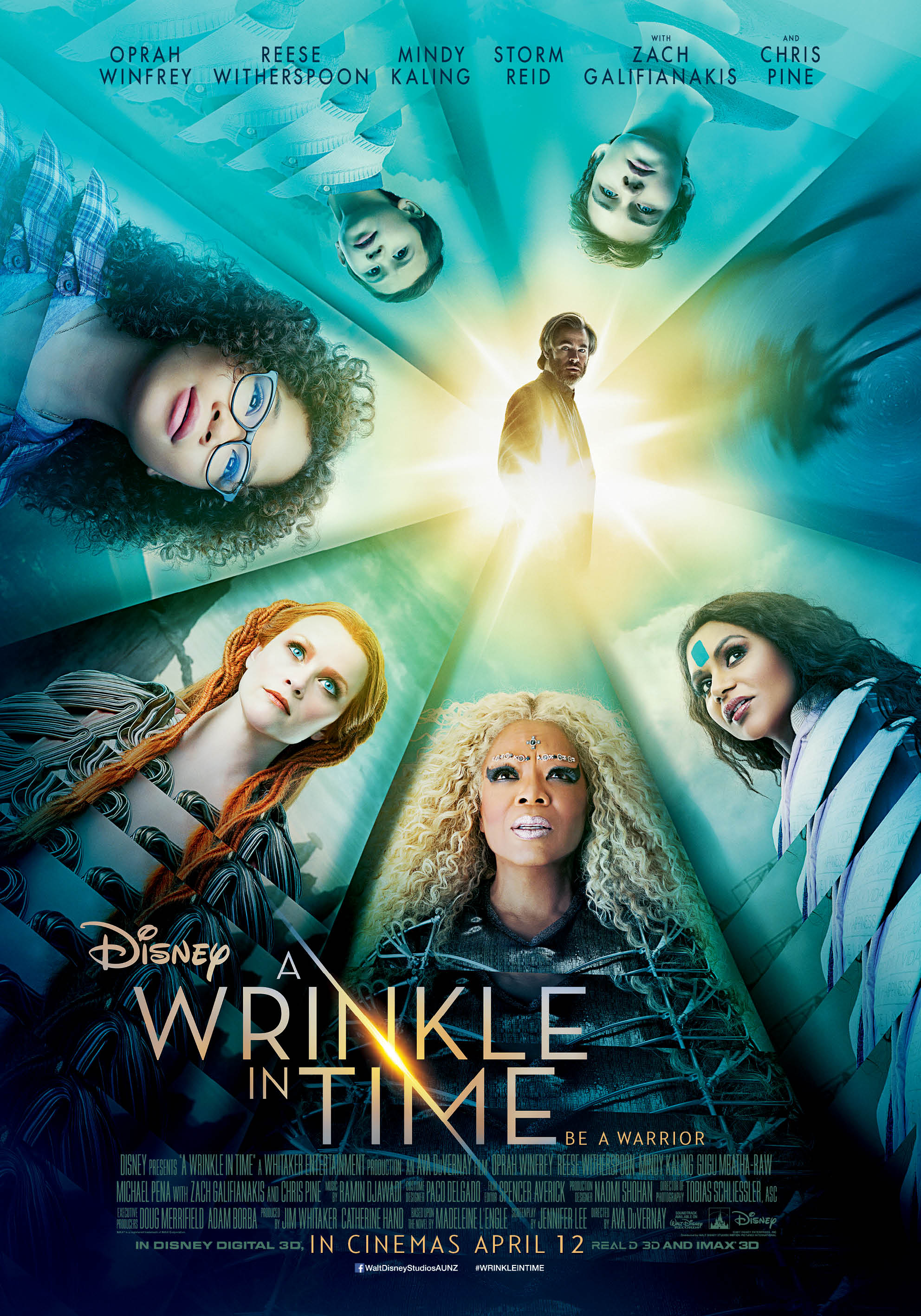
    Meg Murry (Storm Reid) is a typical middle school student struggling with issues of self-worth who is desperate to fit in. As the daughter of two world-renowned physicists, she is intelligent and uniquely gifted, as is Meg’s younger brother Charles Wallace (Deric McCabe), but she has yet to realize it for herself.

    Making matters even worse is the baffling disappearance of Mr. Murry (Chris Pine), which torments Meg and has left her mother (Gugu Mbatha-Raw) heartbroken. Charles Wallace introduces Meg and her fellow classmate Calvin (Levi Miller) to three celestial guides—Mrs. Which (Oprah Winfrey), Mrs. Whatsit (Reese Witherspoon) and Mrs. Who (Mindy Kaling)—who have journeyed to Earth to help search for their father, and together they set off on their formidable quest. Traveling via a wrinkling of time and space known as tessering, they are soon transported to worlds beyond their imagination where they must confront a powerful evil. To make it back home to Earth, Meg must look deep within herself and embrace her flaws to harness the strength necessary to defeat the darkness closing in on them.

    “A Wrinkle in Time” opens nationwide April 12, 2018.

    AWINT_NZ1Sht_Payoff

  • DVD & Blu-ray review: “mother!” (2017)

    “mother!” (2017)

    Drama/Thriller/Horror

    images

    Running Time: 121 minutes

    Written and Directed by: Darren Aronofsky

    Featuring:  Jennifer Lawrence, Javier Bardem, Ed Harris and Michelle Pfeiffer

    Woman: “You give, and you give, and you give. It’s just never enough.”

    It has been far too long since Darren Aronofsky has graced us with a film, the last being the Russell Crowe starrer “Noah” (2014) which was monumentally underrated as well as a surprise left turn after the Oscar nominated masterpiece “Black Swan” (2010). Even this new film “mother!” (2017) was a surprise for audiences as well as the filmmaker who was working on writing a children’s film (if you can believe that after watching this) but was unable to crack it, so wrote “mother!” in a matter of days – some would say that it shows, with a paper thin plot, but a narrative (Aronofsky’s specialty in my mind) that really does show how gifted a filmmaker he has become.

    “mother!” is something of an enigma, it covers many genres within its almost two hour running time, but no matter what genre you try to define it by there is absolutely no doubt that it is one hundred percent original – it also illustrates what a director can accomplish with a willing cast and crew. This is a film that begs to be rewatched as the narrative is really something to behold. This film is really short on plot, something that all original Darren Aronofsky films have in common, while being long on themes, visual trickery and layered meanings, you will be left to sort these out some time after the end credits roll. I am going to say right up front that I loved this film from the house coming alive in the opening to the incredible performances that really do show Aronofsky cares as much about his actors as he does about the look and feel of his films – I would not be surprised if this was going to feature heavily in next years Academy Awards.

    As I have said the plot of “mother!” is scarce but the official synopsis is thus: A young woman’s (Jennifer Lawrence) tranquil life with her husband (Javier Bardem) at their remote country home is challenged by an unnamed couple (Ed Harris and Michelle Pfeiffer) who arrive and lodge with them. To say that this just scratches the surface of what actually happens in the film is an understatement, but the narrative moves in a seemingly straight line but it is obvious there are some pretty heavy fantastical sequences particulacy in the third act – it really does go bonkers, just strap in and enjoy the ride.

    There are three elements that are almost immediately apparent after we see the woman played by Jennifer Lawrence get out of bed at the outset of “mother!”, the photography/cinematography has been designed with the story in mind, there is a noticeable fuzz or grain that gives the feeling of almost blurriness that leads to the confusion of the main character which in itself is vital for this story. Longtime Aronofsky collaborator cinematographer Matthew Libatique knows just what is required, which leads me to another element, which again is visual. That is that the shots of Jennifer Lawrence are almost always close ups of her head, when we follow her we are almost always just seeing the neck upwards which brings me to the fact that this film is told from her point of view, there are really only two times when it is not and they are brief – it leads to a tour de force performance by Lawrence, not entirely dissimilar from Natalie Portman’s performance in “Black swan”. This film is so dense with so much going on that you are still thinking about what you have seen even when we move on to the next scene, there is much more to say but I don’t want to spoil this great film too much.

    It has to be said that the music by Jóhann Jóhannsson is suitably atmospheric as it usually is, and it is great to see him working outside of his usual collaborator Denis Villeneuve on something that he has probably never seem before a true surrealist nightmare of biblical proportions and he is up to the challenge making it seem easy and not a task.

    To be honest I am not sure where to begin with what the film is actually about, but it is definitely metaphorical as well as allegorical on a number of issues that have had an effect on the director as well as possibly his cast. It is extremely dense and layered, which means there are very different ways of reading what is going on at any given time. One example is that the film on one level, is about marriage and the domestic nature of what that means, when one person seems to be the only one trying to make a real relationship work. I also could not help but think that the directors own relationship with Rachel Weisz was also a contributing factor to many of the aspects of the narrative such as someone who has a partner who is more successful and is being pulled away by external factors – the solution is to sometimes have a child but then they too are often under public scrutiny. Does this sound familiar? Try comparing this section of “mother!” to any celebrity marriage, you start to see similarities, there is the cult of personality as well as people who start to believe the hype that surrounds them – almost any reality star can share that story. Whether or not this film is about a hell that is run by someone who requires the adoration of the masses like some devil is open to consideration as well – to make something he perhaps requires a muse whose energy he uses up and spits out, in this case it is just a never ending cycle, a man who uses women over and over again – this last analysis almost sounds political in nature as well.

    As you come to expect from any, in fact all of Aronofsky’s films, is that the people who want to work with him are all of the highest caliber. This is no more so than here where we have Oscar winners Jennifer Lawrence and Javier Bardem playing husband and wife, both giving, what I think are career best performances in roles that could have been cyphers or tropes that could exist in other films that have touches of surrealism. In early supporting roles there are the great Oscar nominated actors Ed Harris and Michelle Pfeiffer, playing husband and wife as well. Both of these veterans bring something very different to their roles, Harris plays a willing victim while it is Pfeiffer who really has a role to sink her teeth into, and has some menace to play with, baring her teeth at Lawrence in attempting to undermine her position as the matriarch of the household.

    Darren Aronofsky has created something really special with this film but it requires a leap of faith if you are going to really enjoy it. It has madness, horror, hunour and violence that hover around the somewhat unreliable central figure. This is the work of someone who has the buy in from his producers, actors and crew in creating one of the most unique Hollywood films ever. “mother!” is the bastard child of David Lynch and Ken Russell with a touch of Werner Herzog for good value. It is a film that is open to interpretation and in fact seems to welcome it, you can imprint many meanings onto it, from marriage to politics to celebrity to Hollywood itself – I absolutely loved it, just don’t try and work out what’s going on in any traditional sense.

    “mother!” is out now on DVD & Blu-ray.

  • “Tomb Raider” (2018) – Official Trailer
    Error
    This video doesn’t exist

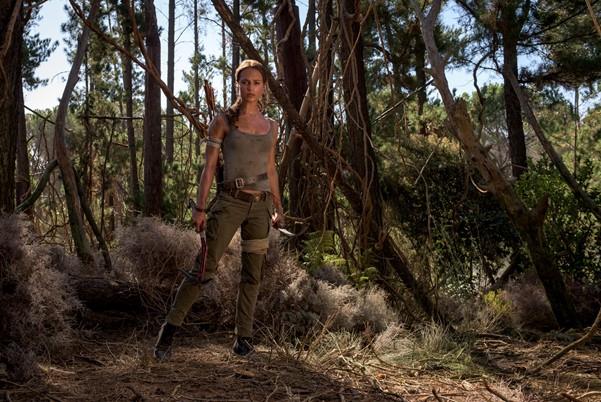
    Lara Croft is the fiercely independent daughter of an eccentric adventurer who vanished when she was scarcely a teen. Now a young woman of 21 without any real focus or purpose, Lara navigates the chaotic streets of trendy East London as a bike courier, barely making the rent. Determined to forge her own path, she refuses to take the reins of her father’s global empire just as staunchly as she rejects the idea that he’s truly gone. Advised to face the facts and move forward after seven years without him, even Lara can’t understand what drives her to finally solve the puzzle of his mysterious death.
    Leaving everything she knows behind, Lara goes in search of her dad’s last-known destination: a fabled tomb on a mythical island that might be somewhere off the coast of Japan. But her mission will not be an easy one; just reaching the island will be extremely treacherous. Suddenly, the stakes couldn’t be higher for Lara, who—against the odds and armed with only her sharp mind, blind faith and inherently stubborn spirit—must learn to push herself beyond her limits as she journeys into the unknown. If she survives this perilous adventure, it could be the making of her, earning her the name tomb raider.

    TOMB RAIDER is directed by Roar Uthaug and stars Oscar winner Alicia Vikander, Dominic West, Walton Goggins, Daniel Wu and Oscar nominee Kristin Scott Thomas.

    TOMB RAIDER releases in New Zealand cinemas on March 15, 2018.

    image007

  • DVD Review: “Maudie” (2016)

    “Maudie” (2017)

    Drama

    images

    Running Time: 116 minutes

    Written by: Sherry White

    Directed by: Aisling Walsh

    Featuring: Sally Hawkins and Ethan Hawke

    Mr. Davis (Shopkeeper): “I don’t know why people pay money for these, my 5-year-old could do better.”

    Everett Lewis: “Maybe. Maybe he could, but he didn’t – Maud did.”

    Films about real people can be routine affairs, especially when they revolve around subjects that end up feeling self-important or, are in actuality quite dull. I often do not see the point in putting lives onscreen that have already been documented in news programs or documentaries. So it is when a film arrives like “Maudie” (2016) that you realize that a persons life is not just measured in money, or fame, but in what they do with their time, and sometimes what they leave behind. “Maudie” is based on the real life of Maud Dowley an original if ever there was one. Maud was a painter in the town of Marshalltown, Nova Scotia who left behind a legacy that lives to this very day, this is a film worth paying to see.

    “Maudie” is a truly touching, as well as moving film, that unlike many other of its genre does not douse itself in nostalgia or show a life that was better in the ‘old days’. In fact if anything it illustrates just how hard life was, as well as the gender politics that may have existed in some small isolated towns in the 1930s. “Maudie” also goes out of its way to paint a picture of the harshness of the main characters reality – she is not only being controlled by an Aunt, but is actually financially victimized by her brother, something she never forgot or recovered from. It may appear that Maud moves from bad to worse, but in actuality she joins with a person who had not had a great time of it either.

    “Maudie” is all about Maud Dowley an arthritic woman who having lived with her Aunt Ida and brother Charles is told that her brother has sold their family home, which their parents had left to him. In the meantime, Ida berates her about visiting the local nightclub. The next day at the local store, Maud sees the inarticulate and rough fish peddler Everett Lewis place an advertisement for a cleaning lady. Maud answers the call and takes the position for room and board.

    This is a truly remarkable film about an original woman, the time she spent with her husband who were more or less forced together by circumstances, somewhat out of their control. They forged a loving relationship that lasted decades, it produced not only works of art, but also a home that ended up unknowingly being her lifetime’s work that once she passed away was (and is) a testament to her talent. This film treats not only her but her husband with respect, even when as an audience member you may feel some animosity towards him. There are definite gender roles at play, that are fluid, which is impressive considering this film is set from the 1930s onwards. We witness a nice scene towards the middle of the narrative, where after Maud is painting more full time, her husband is peeling potatoes, something once you are introduced to him, he would never do – that’s what he initially hired her for – a truly lovely moment, played authentically by both leads.

    “Maudie” is a co-production between Canada (where it was filmed) and Ireland; this shows onscreen as many shots feel like they have been lifted out of an Irish landscape. The film is directed by Aisling Walsh, who has a long history in both English television as well as film – this is not her first go around. In saying that Walsh has her steady hand on this film, it holds together so well, looks amazing and sounds great. Walsh knows exactly what she is doing as well as what she wants to show onscreen, a brilliant painter who had a difficult life – with a man who had no idea how to treat her or to understand how to deal with issues in life that arise for everyone. He was a man who did not know how to express himself, lucky he had Maud who not only knew how to feel, but she could express it in her paintings both on canvass as well as in her home. It would be easy to say that the landscape is a character in the film, but it is actually the home not the landscape that is the third main character. Interestingly it is the couple’s home that is the true lasting proof of their love and relationship – it is now in an Art Gallery, fully restored in Nova Scotia since 1984.

    The two main actors that have been cast are extremely experienced in a variety of genres, but this film sees them playing real people, where they have many of their mannerisms, this makes up for the fact that they really look nothing like their subjects. Not that this matters one iota, Sally Hawkins as Maud holds the camera the entire time she is onscreen, she is captivating and her talent has never been more evident as it is in “Maudie”. To me it felt like she was authentic as well as fully in command of every scene – it is a showy role but it never felt like she was out of her depth – an Oscar worthy performance. Hawkins foil is the ever-reliable Ethan Hawke who is so talented that he seems to coast through each scene with ease, but he knows he is there to support the main player, Hawkins. At this stage of his career it should surprise no one that Hawke is at home onscreen here as much as he has ever been – I hope his performance is highlighted as one of the best of his career.

    Something that is often overlooked in film is the music, but here it is integral to the plot, it helps to move the story along without telling an audience how to feel. So it is unsurprising the composer is Michael Timmins from the band ‘Cowboy Junkies’. Like their best music this soundtrack is subtle, not overbearing but contains music that is present in each scene that it is needed to be in. There are also some vocalists appearing and the movie closes with a ‘Cowboy Junkies’ song “Something more beside you” which like the film is understated as well as moving.

    This is one of the better films that has been released this year, if it were not for its limited platform and lack of appearances at festivals it may have been an Oscar contender, especially for Sally Hawkins – it does appear she will be making an appearance at the Oscars with another film so all is not lost for her. I would say that if you want to watch a movie that illustrates what life can be about with its triumphs and tragedies for two people that find each other then this is the film for you – I can highly recommend.

    “Maudie” is out now on DVD.

  • DVD & Blu-ray review: “Blade Runner 2049” (2017)

    “Blade Runner 2049” (2017)

    Sci-Fi

    images

    Running Time: 163 minutes

    Written by: Hampton Fancher and Michael Green

    Directed by: Denis Villeneuve

    Featuring:  Ryan Gosling, Harrison Ford, Ana de Armas, Sylvia Hoeks, Robin Wright, Mackenzie Davis, Carla Juri, Lennie James, Dave Bautista, and Jared Leto

    Niander Wallace: “Humanity cannot survive. Replicants are the future of the species. But I can only make so many.”

    Was anyone actually waiting for a sequel to “Blade Runner” (1982) the (now) seminal piece of Sci-Fi directed by Ridley Scott who at the time was coming off his masterpiece “Alien” (1979). At the time “Blade Runner” was considered a major disappointment, which was compounded by the disaster that was “Legend” (1985), Scott’s follow-up. It actually appeared at the time that “Alien” may have been a fluke, sure Scott was one the great stylists but could he tell a story? This is a pertinent question as this is something that probably has not been answered to anyone’s satisfaction. After his relative unsuccessful go at revisiting his ‘Alien’ origins I was not looking forward to a Scott directed “Blade Runner” sequel, but because of timing he is a producer here, the director is French Canadian auteur Denis Villeneuve.

    The good news for people wanting a film that was able to capture the originals look and feel is that Villeneuve has the skills to make this happen. Whilst he is no slouch in the visual department it is his story telling ability as well his attention to detail that is needed to not make this a carbon copy (albeit a generation removed) of the original – a ‘replicant’ if you will. If you need a taster before you watch this new film, there are three prequel shorts that have been created; “Nexus Dawn”, “2048” and “Blade Runner: Black Out 2022”. These shorts will give a bit of background as well as little more understanding to this new movie, they act as a small bridge, each one progressively moving backwards to the end of the orginal “Blade Runner”.

    This new film follows a newly appointed blade runner, Officer K (Ryan Gosling) of the LAPD, discovers a dark secret that could bring an end to humanity. The discovery leads him to Rick Deckard (Harrison Ford), a former blade runner who had disappeared 30 years earlier.

    This really is all you really need to know about the film itself, if you have seen the trailers then you will have a pretty good idea about the story, as well as the main players the pepper the narrative. So there is no need to go to deep with any revelations, but this is a movie that will be enjoyed by those who have a love for the original, but want to keep an eye on the future. This movie is all about the humanity repeating the mistakes of the past while trying to forge ahead on new worlds.

    Villeneuve as a director really is an original, he has tackled high concept dramas as well as extremely high concept science fiction so for him to be involved in this film seems obvious. He places, like Christopher Nolan, a high importance of in camera special effects, trying not to rely on CGI as much as possible. Of course with the canvas he has to paint on here there is going to be a heavy dose of special effects. What he has done is to have master shots that have a depth of field not normally associated with this kind of movie, where you are able to see physical, practical props and facades. The production designers have their work cut out as well as I imagine a huge budget that pays off when viewed on a large screen.

    To give the film a really decent chance of looking different as well as original, at the same time the original Villeneuve has recruited his usual cinematographer, the legendary Roger Deakins (who surely must finally win his Oscar for his work here). Deakins has not just replicated Jordan Cronenweth’s stellar work from the original, instead he has used that as a base and has created his own palate over several different locations so as to almost offer separate lighting and camera set ups depending on the mood and stage of the story – it looks amazing, if there is one thing Deakins was born to do and that is to make his director look very good, this he does like a pro.

    What is surprising is that the story constructed by original writer Hampton Fancher and newcomer (to the franchise that is) Michael Green is like the first film, noir inspired, which of course helped to inspire an entire Sci-Fi noir sub genre that obviously is alive and well today. Now I wouldn’t say that this story is the most original, nor does it push any real boundaries within the genre, but it does serve a purpose, that is to frame the movie with something that is not only interesting but makes logical sense. The original themes of the first film are present here, what does it mean to be human? Who is humanity to judge life? What is the purpose of a soul? Is any kind of slavery just? What does it mean to create? Are corporations going to govern more than people? Will populations be told what and how to think? There is more but I think you get the general idea. Does the film answer any of those questions? Of course it doesn’t, it leaves conclusions up to the viewer, it is up to the filmmakers to ensure that points are made as well as remembered. The narrative is fairly straight forward, with Gosling as a detective hunting down clues to mysteries that he didn’t even know existed, with the film eschewing big action showdowns for a satisfying personal touch that is what the original was all about.

    Like the first movie casting is of paramount importance, in saying that it is pretty great that Harrison Ford has returned to the role of Deckard, however it is also a treat to see Edward James Olmos return as Gaff, surely one of the more memorable characters from the original. Make no mistake the main character here is ‘K’ played with noirish ease by Ryan Gosling who slinks through the movie making a mark wherever he turns his gaze. The rest of the cast is led by Jared Leto, as Niander Wallace, who seems to be trying to get the “Suicide Squad” (2016) out of his mouth (and ours), playing a Tyrrell clone for want of a better description. There are appearances by character actors Lennie James, Robin Wright, Mackenzie Davis, Dave Bautista and many others. As per the marketing Harrison Ford is back as Deckard who looks great, here at ease not needing to play the lead just to show up and do what he does best.

    The music by Hans Zimmer is well suited, here he echoes the “Blade Runner” score by Vangelis, but makes it his own. At times it was easy just to relax into the score, sometimes just forgetting about music. This would be a great watch sans dialogue with the music just playing to the action. This has to be one the best scores of the year, as well as one of Zimmers best, and thats saying something as he is one of the greatest composers working in film today.

    There are no two ways about it this is a great movie, definitely one of the best of the year so far. In saying that it is not without its faults, it is too long at least by half an hour, it is also a little too in love with not only being a sequel to one of the best science fiction films, but it also wants you to know two things; one, this is an important film, and two, this is its own film, standing apart from the Scott masterpiece. One of the great moments of “Blade Runner” was the last fifteen minutes with the face off against Deckard (Harrison Ford) and Roy Batty (Rutger Hauer), as well the incredible dialogue, “I’ve seen things you people wouldn’t believe. Attack ships on fire off the shoulder of Orion. I watched C-beams glitter in the dark near the Tannhauser gate. All those moments will be lost in time… like tears in rain… Time to die.” It is unfortunate then that this movie lacks anything that will be remembered like that or have at least two actors in their prime, both Ford and Hauer who could match anyone, anytime.

    In saying all that this a movie that should be seen in cinemas, it could also be rewatched rather easily thanks to good actors, a decent script and one heck of a great director. Villeneuve is the MVP of this film, he had the audacious task to not only direct a sequel to one amaing movie, but had to marshal everyone to be on the same page at the same time. Just wonderful. I would recommend  this to anyone that loves mysteries, science fiction or both, you will not be disappointed!

    “Blade Runner 2049” is out now on DVD & Blu-ray.

  • DVD review: “Outrageous Fortune ” (2005 – 2010)

    “Outrageous Fortune ” (2005 – 2010)

    Television

    images

    107 Episodes

    Created by: James Griffin & Rachel Lang

    Featuring:   Robyn Malcolm, Antony Starr, Siobhan Marshall, Antonia Prebble, Frank Whitten and Kirk Torrance; Grant Bowler

    Munter: “Yeah, it was float like a butterfly, sting like a wasp.” 

    Eric: “Bee.” 

    Munter: “What?”

    Eric: “Nah, the saying goes ‘float like a butterfly, sting like a bee.’” 

    Munter: “How do you know how it goes? I only just made it up.”


    Believe it or not there was a time when any kind of drama that was about New Zealanders that would or could air on New Zealand television was unthinkable unless it was a soap in the vein of Shortland Street (1992 – present) or going back further Close to Home (1975 – 1983). So it is amazing that after many television embarrassments as well as failures a show like “Outrageous Fortune ” (2005 – 2010) not only found a home but also was successful and well reviewed.

    This is not a great reflection on New Zealand at all with a mostly white cast, very low rent characters which are all played for laughs as well as the treatment of women and minorities, it is made for people that are listeners of sports talk radio or people who have no interest in seeing past their own class, gender or culture.

    The series followed the lives of the West family, headed by Cheryl (Robyn Malcolm) and Wolf West (Grant Bowler). The family relied on crime for an income, with Cheryl working at a stolen goods shop. When Wolf is incarcerated, Cheryl informs her family, Van (Antony Starr), Jethro (Antony Starr), Pascalle(Siobhan Marshall), Loretta (Antonia Prebble) and Ted (Frank Whitten) that they will obey the law and play it straight.

    Season one (2005)

    When career criminal Wolf West is jailed for four years for assorted criminal acts, his wife Cheryl makes the decision that the family will get honest employment, instead of continuing their life of crime. Wolf is not pleased about this, but there’s not much he can do from jail. Cheryl is initially disillusioned by her attempts at earning a legal living, but she and a couple of her friends start a business called “Hoochie Mama” making and selling sexy underwear, all the while resisting the newly found attraction of policeman Wayne Judd. The West children Jethro, Van, Pascalle and Loretta all struggle to cope with the new-found rules in their own ways, while Ted struggles to come to terms with his late wife.

    Season two (2006)

    In season two, Wolf has been released on home detention. He has no intention of keeping to Cheryl’s new rules on life. Judd is determined to tear him away from Cheryl, and attempts to entice Wolf to break his parole so that he is returned to prison. Wolf escapes home detention and Judd moves in, much to the horror of the children. Pascalle starts to date Pakistani doctor Bruce, Van finds the love of his life Aurora and Loretta starts to date much older man Hayden. Jethro shocks his mother when he reveals he is still a criminal and only doing law to learn how to break the law more successfully. The season ends on Wolf framing Judd for a robbery he committed.

    Outrageous Fortune: The Movie

    This one-off two-hour TV movie followed on from season 2.

    The West family, as well as Aurora, Eric and Munter go camping at Tutaekuri Bay, a magical place where they have gone camping every year at Christmas. Tutaekuri means “dog shit” in Māori and is a fictional place for the purpose of the movie.

    Season three (2007)

    The third Season sees Cheryl still battling to keep her family on the straight and narrow. Both the men in her life are inside – Wolf after turning himself in to the cops as part of his master plan to frame Judd; Judd from being framed by Wolf. She borrows money from Gary Savage to pay for a better lawyer for Judd, which results in his release but the debt causes a strain in their relationship. Aurora dies in a road accident while trying to hide her ex-boyfriend’s drugs after Van called the police on him, spiraling Van into depression. Loretta is outraged when Hayden edits their film to be more explicit for commercial gain, breaks up with him as punishment, and harasses him after he flatly accepts it instead of trying to win her back. This escalates until he leaves, and she burns down his house. After Hayden has left, she discovers she is pregnant by him. Bruce breaks up with Pascalle after he sees her (edited to be more explicit than she actually performed) porn movie. Jethro finds love in Danielle, a single mother and ex-wife of Gary. Ted becomes suspicious of Gary and tracks down Wolf, only to find Gary is Wolf’s half brother. Over the season Munter develops a relationship with Kasey and marries her in the final episode.

    Season four (2008)

    The family is brought together when Cheryl talks Loretta out of adopting out her baby, whom she names Jane. Cheryl having broken up with Judd, starts to have feelings for Wolf again, who is in a rocky relationship with the much younger ex-stripper named Sheree. Sheree’s dodgy brother Nicky arrives and stars a relationship with Loretta. Pascalle returns from a trip abroad, having married the wealthy Milt. Milt eventually dies, leaving Pascalle a fortune. Sheree and Nicky conspire to get access to her money by having Nicky break up with Loretta and start a relationship with Pascalle. Wolf attempts to earn some money by facilitating a shipment of drugs for Nicky in a container, which Jethro steals to ransom, but Van and Munter destroy the drugs. Jethro is forced to run away when he takes the blame for the drugs being destroyed. Van starts an affair with Sheree. Loretta and Jethro set Wolf up for burglary and Cheryl returns to Judd, becoming pregnant. Sheree also becomes pregnant, either to Van, Wolf or Jethro (it is strongly implied that it is Jethro, but not confirmed). After Hayden’s sister finds out about baby Jane, she forced Hayden to return to care for his child. Ted courts and at the end of the season, marries the scheming Ngaire. Pascalle becomes engaged to the dodgy Nicky much to her family’s disbelief.

    Season five (2009)

    Zane Gerard (Charles Mesure) fires three shots at Cheryl and Pascalle after being stabbed in the neck by Cheryl. New policemen Zane Gerard becomes a fixture in the West’s lives, due to his past involvement with Sheree and Nicky Greegan. Van is pressured into becoming a police informant (behind the backs of all), infuriating Sheree when she finds out. Jethro starts up a business selling legal party pills. Nicky truly falls for Pascalle, enraging Sheree who makes off with Pascalle’s millions and attempts to murder Van (to claim life insurance). After a rogue job robbing a Chinese money lender, Pascalle breaks up with Nicky. Loretta gets back together with Hayden and the two decide to marry as so they get custody of Jane. Ted ends up in prison for robbery and is helped out by Nicky, causing him and Pascalle to get back together. Near the end of the season, Cheryl has a stillbirth. The season ends with Gerard trying to arrest Pascalle for offensive language, resulting in a brawl (in the midst of Loretta and Hayden’s wedding), only to be stabbed in the neck by Cheryl and turning round to fire three bullets in her direction.

    Season six (2010)

    In the aftermath of Loretta and Hayden’s wedding, it is revealed that; Pascalle takes a bullet, but survives, Cheryl is arrested for assault with a deadly weapon, Munter, Kasey, Van and Ted are arrested for various crimes, and Eric, who returned in the last series, has taken residence in the Wests’ home. Over the course of the first episode, Officer Zane Gerard dies, leaving Cheryl to be charged with murder. Van starts to see his lawyer Bailey, only to learn she is dating Jethro. Loretta opens up a brothel while Nicky escapes prison and tries to take Pascalle with him. The two break up and Sheree reveals where her children are, with Van becoming a part-time father to them. Judd and Pascalle develop feelings for each other and start an affair, disgusting Ted. Cheryl’s charges are dropped and she is devastated to learn about Judd, finally forgiving him in the season finale. Pascalle and Judd leave, while Van marries the Russian Elena. Loretta, Hayden and Jane continue to be a happy family and Jethro fulfills his mother fixation.

  • “Show Dogs” (2018) – Official Trailer
    Error
    This video doesn’t exist

    SHOW DOGS is a family comedy about the unlikely pairing of a human detective and his canine partner, who has to go undercover at the world’s most exclusive dog show to solve his biggest case yet.

    SHOW DOGS is directed by Raja Gosnell and stars Will Arnett, Chris “Ludacris” Bridges, Natasha Lyonne, Jordin Sparks, Gabriel Iglesias, Shaquille O’Neal, Alan Cumming, and Stanley Tucci.

    SHOW DOGS releases in New Zealand on 5th July, 2018.

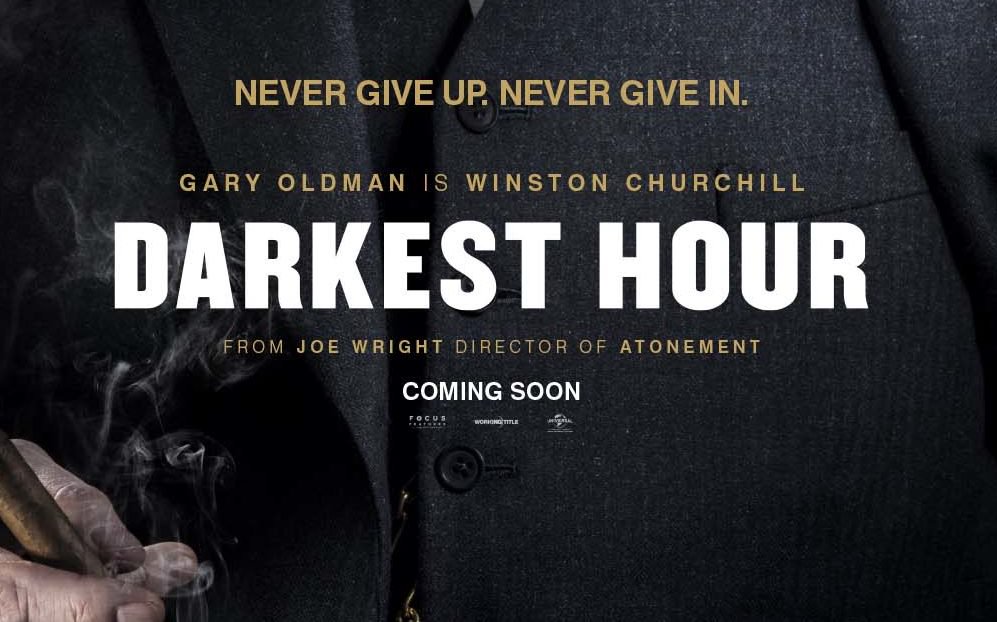
  • Film review: “Darkest Hour” (2017)

    “Darkest Hour”(2017)

    Drama

    images

    Written by: Anthony McCarten

    Directed by: Joe Wright

    Featuring: Gary Oldman, Ben Mendelsohn, Kristin Scott Thomas, Lily James, Stephen Dillane, and Ronald Pickup

    Winston Churchill: “You can not reason with a Tiger when your head is in its mouth.”

    There should be no mistake made, this film is dominated by two elements, they are, Gary Oldmans career defining performance as well as the character he plays, that of Winston Churchill. Sure there are other actors involved and a writer and a director as well as a myriad amount of other people who you can tell all have done great work, but it is all, and I mean all behind Oldman’s interpretation of a true life one of kind man who has to be the person of the twentieth century. I am not reducing this film to just one performance although it does sound like I am, but this film exists in two shadows, one the aforementioned performance and two (which is bad timing) the Christopher Nolan directed “Dunkirk” (2017) which covers similar ground that here takes up about a third of the “Darkest Hour” (2017).

    “Darkest Hour” is directed by Joe Wright who is no stranger to Dunkirk, he had a major section of his Oscar nominated “Atonement” (2007) devoted to the event, so it takes some bravery to return to it. Wright who has made some very good movies is coming off a major disappointment with the big budget bomb that was “Pan” (2015), so it is good to see him directing this film that is about a specific time in recent English history, that is so good, with many great performances as well as some excellent flourishes in his directing style. Wright has made all the right moves here, he has made a personal story about a major event in history, as well as giving Churchill the center stage and getting out of Oldman’s way who gives a master class in movie acting.

    “Darkest Hour” begins in May 1940 Britain and France are allies against Nazi Germany. Before the German invasions of Belgium and the Netherlands, the Opposition Labour Party in Parliament demands the resignation of British Prime Minister Neville Chamberlain for being too weak to protect national security. Chamberlain tells Conservative Party advisors that he wants Edward Wood, 1st Earl of Halifax, as his successor, but Halifax does not yet want to become prime minister. Chamberlain must choose the only other man whom other parties will support: Winston Churchill.

    Although he was right about the danger from Adolf Hitler, Churchill has a poor reputation from the Gallipoli Campaign and supporting Edward VIII during the Abdication Crisis. Parliament dislikes the new prime minister’s first speech promising “Blood, toil, tears, and sweat”, and Churchill refuses to negotiate for peace. He believes that the Germans are untrustworthy, but the French call him delusional for not admitting that the Allies are losing the Battle of France. Halifax and Chamberlain agree, and want to use Italian Ambassador Giuseppe Bastianini as intermediary to negotiate with Germany. The British Expeditionary Force is trapped at Dunkirk and Calais.

    The construction of this film is competent and professional; Wright has constructed a narrative that boldly moves forward through not only some very real drama but historic events that if the audience is not aware of what happened they will have an idea once the film is finished. Coming to make this film there must have been questions about how long the period that is covered should be, how to tell what has happened before we are seeing Churchill as well as how much information should be supplied once the film has actually ended. The reasons for these questions is that there is no need to bombard the audience with too much information otherwise they will not only get lost, lose interest but will feel they are being lectured to – this movie has enough dialogue already. Instead we are explained certain plot points as they happen, so when the decision to make Churchill Prime Minister occurs we are being told not only the ramifications but also the ramifications behind the decision and all that happens after – it is a wise move to keep us informed and entertained. This is a tool used through the film, as well as moving the camera as much as possible to give the feeling of action and not just showing many old men sitting around talking.

    The other device that is used is that of the audience substitute, the typist played by Lily James, it is no coincidence for example the she starts her first day with Winston as the film starts, as she is introduced to Churchill so are we. From there we see the story from two levels one from a micro level with the typist and then from a macro level with Winston himself, it is a useful tool to show two sides to a story as well as again making it easy for an audience to gain access to a story that may be foreign to them.

    As I have said this film is built around the central performance of Gary Oldman who has been a presence in film both in the US as well as Europe and of course the UK. Oldman has been delivering great performance on television, the stage and in film, he is one of the greatest living actors, he has nothing to prove to anyone, he is one of the ultimate acting professionals working today – yet he has only ever been nominated for one Oscar, that was in 2011 for the great remake of “Tinker, Tailor, Soldier, Spy” (2011) – he lost then, should have won but now it looks that will be corrected with this defining performance. Of course Oldman looks the part because of some excellent make-up and wardrobe which goes along way to the feel of the character, but it is Oldman who inhabits the spirit of Churchill like few before him, he captures a spirit as well as an interpretation that feels like you are viewing a real period. Other greats that have portayed Churchill like Brian Cox, Michael Gambon, Timothy Spall and Brendan Gleeson have the look and size correct but they always feel like they are attempting to mimic the great man but here Oldman seems to differ with a naturalness not seen to date, by me anyway.

    Something director Joe Wright has done to complement Oldman’s lead performance is to drop in talented character actors, that once Oldman enters a scene know this is his film and drop back, none of them steal scenes, wisely, as who could steal the floor from Churchill in full flight. So we have the marvelously underrated, back in the UK finally, Kristin Scott Thomas as Clementine his wife, Ben Mendelsohn as King George VI, Stephen Dillane as Halifax and Lily James as his typist all fitting in very well, knowing their roles, taking them seriously but all in service to Oldman.

    In terms of style this feels like a claustrophobic film with many scenes in the war rooms that Churchill and his cohorts inhabited, there is the sense that the world is closing in on him, as he has to fight a war on multiple fronts with many enemies at home and abroad. In fact the most closed in scene is one of fiction where Winston travels on the tube to talk to his public, the brightest scene is towards the end of the film where he makes the decision to fight the Germans and gets the support of his wider cabinet – it is a scene that refreshes him and us to the point that we recognize some of the dialogue that follows in Parliament later on.

    What I really enjoyed about this film was that it was unashamedly built around one character and one performance that works so well. It is also about a real Nationalism that works, it is about defending a country and countries against a real threat, and a person that could bring others together to work towards a common real goal where the outcome was the fate of millions of real people. I wonder how many leaders today would destroy others to defeat a perceived threat, without a real analysis of what would be a real outcome of twenty first century total war.

    I can wholeheartedly recommend this film as a mostly accurate account of the first month of Churchill’s rise to power, as well the obstacles he had to face to start the turn the would eventually lead to World War II as well as the victory that would take place because of his leadership. If you enjoy dramas where the central performance will I have no doubt be Oscar winning then this is for you.

    “Darkest Hour” (2017) is out now only in cinemas.


  • Film review: “The Shape of Water”(2017)

    “The Shape of Water” (2017)

    Drama/Horror

    images

    Written by: Guillermo del Toro & Vanessa Taylor

    Directed by: Guillermo del Toro

    Featuring: Sally Hawkins, Michael Shannon, Richard Jenkins, Doug Jones, Michael Stuhlbarg, Octavia Spencer

    Giles: [interpreting Elisa] “When he looks at me, he does not know – how – I am incomplete. He sees me… as I am.”

    I am under no illusions as to the talent of Guillermo del Toro, that it is very real, I also know that he loves film, its history, and all that entails. If you have been lucky to hear any of his interviews or commentaries it is obvious when he speaks it is from not only a place of knowledge but of love as well. That love is not limited to his own creations or even his finished films but to all the actors and technicians he works with. It is well known how close he is to Ron Perlman as well as Doug Jones, but also to cinematographer Guillermo Navarro, he is also a lover of the horror and fantasy genre, as well as a fan of the great H.P. Lovecraft, it is no coincidence then that his latest film “The Shape of Water” (2017) is a mix of all these elements, as well as having a specific point of view, that is del Toro’s own, and maybe his most personal.

    Its no secret that de Toro’s nadir was his 2006 foreign language film “Pan’s Labyrinth” (2006), nominated for six Oscars, winning three – pretty good for a foreign language fantasy film set during the war. It also appeared on many top ten lists for the year, as well as being a modest worldwide box office success. Since then though it has been a mixed bag, he has written/directed three more films that have disappointed at the box office as well as not being reviewed overly well. The problem is that everyone wants to like his movies, but he has been the victim of some bad luck with projects disappearing on him, the two biggest and most well known being his version of The Hobbit, and his dream project, an adaption of Lovecraft’s ‘At the Mountains of Madness’. Now I think he has directed his best film since “Pan’s Labyrinth”, in fact it might be his most accomplished project of his career, it couldn’t have come at a better time for him, the genre or the world.

    The film is based around Elisa Esposito who was rendered mute by a neck injury she had sustained as an infant, and communicates using sign language. Living alone in an apartment above a movie theater, she works as a janitor at a secret government laboratory in Baltimore during the Cold War in the early 1960s. Her two closest friends are her next-door neighbor Giles, who is an artist and closeted gay man, and Zelda, an African-American co-worker who also serves as her interpreter at work.

    The facility receives a creature in a tank, which has been captured from a South American river by Colonel Richard Strickland. Curious, Elisa discovers that the creature is a humanoid amphibian. She begins visiting the creature in secret and the two form a close bond.

    One of the strengths of genre movies in general is that they can serve as metaphors for just about anything a writer or director wants to say, not only that, but it can act as a metaphor for whatever the audience wants to take from a genre movie as well. In that this new film from del Toro is a complete success, it not only tackles a variety of subjects and themes but there is enough ambiguity that it can mean a lot to a great many, as well as acting as a very good monster movie.

    Of course one of the central elements of this film (that is a physical element) can be found in its title, that of water, which features heavily within the movie, as well as referring to many themes of the plot, it is a place of freedom as well as a prison for the two main characters. There are also allusions to the barriers that exist with water, that being land, which are always in opposition, something that we find as the movie moves forward, it is even referred to when we see a spy eating a meal, ‘Surf and Turf’. We also see many water receptacles within the movie from pots boiling water to a pool within a metal construction, both at points transparent so you can see what is contained within – not only that the eggs end up in the larger ‘pot’ with the creature – maybe we all end up in the same place whether an egg or a creature from a lagoon. Water acts as a medium for not only joy but sexual gratification, on the earliest scenes which is repeated is Elisa masturbating in her bath, later we see her make love to the creature in water, in fact in the very same tub.

    There is also a theme of living a life of quiet desperation, which many of the characters within this movie are actively doing, living routine lives with little deviation as well as denying who they truly are. The main character of Elisa is stuck in a dead end job cleaning, looking after her gay neighbor Giles as well as listening to her friend at work Zelda – it is not until the monster enters her life that she not only sees a new way to live but to be free with something that sees her for what she is and not what she lacks. The same thing can be said of Giles who actually lives closeted from himself (and others) as well as the world until he realizes that he has someone who sees him for who he really is. The entire film is filled with these people who are being told to act one way but in fact their own true selves are in opposition to that very fact.

    The fact that “The Shape of Water” (2017) takes place in the late early 1960s is of most importance as well as all the production design that is inherent in that time period. There are so many political as well as social aspects of the time that resonate within this film that are echoed in the lives we live today. This was a cold war period that imbued society with extreme paranoia as well as hatred and callousness for anyone that was different to dominant hegemonic forces that still exists for the most part today. The best example that takes place outside of the fantasy environment is when Giles is in his pie shop and is shunned because of his sexuality, at the same time an African American couple are told to leave – really is there any more blatant example of the behavior of a white man in the US in this time period (some would argue any time period). The entire movie is part homage to the Sci-Fi and Horror genres that permeated US movies in the 1950s and 1960s to the extent that del Toro really is standing on the shoulders of giants with this film, I am sure he would agree. One need not look to far past “The Creature from the Black Lagoon” (1954) to see just superficial similarities. We also see some technological affectations such as mass consumption, television as well with the kind of content that is being broadcast, the idea of media as well as the nascent mix of government and the military, the new science that would permeate our culture now, the power of film as well its firm place in US society, religion and so much more that as audiences we will unpack long after we leave the cinemas. This is a movie that demands to be seen more than once, there is so much going on that it is almost too much, but the ending pulls us through.

    How great this film is, as well as how successful it is comes down to Del Toro as well as the cast he has assembled. This cast is led by the magical Sally Hawkins who as Elisa doesn’t utter a word but has so much to say to all those in her life, as well as finding a scene partner in Doug Jones’ creature who also offers no dialogue. One of the great things del Toro has done is to make Elisa mute and not deaf, which he may have been tempting, but it works so much better as it to is a metaphor for almost everyone in the film. Everyone in this movie is powerless to some extent so are as mute as the two main characters, the difference being that in the end they put their lack of voice into action that frees not only them but their friends as well – once you witness this it is a sight to see. The supporting cast is full of previous Oscar nominees Michael Shannon, Richard Jenkins as well as Oscar winner Octavia Spencer who all are so original in their parts nothing seems derivative even if you have seen similar charters previously, they are worth watching just for their own moments no matter how brief.

    This is Guillermo del Toro’s most accomplished film yet, it is masterfully directed with a killer script as well as this he deploys all other aspects of his arsenal expertly, that is the art direction, costuming and most impressively the score by Alexandre Desplat that is sublime in its simplicity but lends to the narrative in ways that are not manipulative as well as almost being so light you may have been forgiven for not noticing it. One of the aspects of del Toro’s direction was the way he movies the camera, lots of fluid (that is not a pun) movements with low panning shots as well as push ins that feel like you are moving in a liquid, much like our prisoner – there is of course a lot of shots involving water which are persistent and in line with many of the themes and meanings of the film.

    There is so much more to say about this film, it is the gift that keeps on giving, if you love genre films as well as love stories or just think del Toro is one of the best film makers around then this is for you. It says so much about us as human beings, how we treat each other as well as this planet the in short you should see this as soon as possible. There is another nice homage in the two movies playing in the cinemas below the apartments in which our heroes live – it is worth checking out.

    “The Shape of Water” is released on the 18th January 2018 only in cinemas.

  • “Teen Titans GO! To The Movies” (2018) – Official Teaser Trailer

    “Teen Titans GO! To The Movies” (2018)

    Error
    This video doesn’t exist

    When the Teen Titans go to the big screen, they go big! “Teen Titans GO! to the Movies” finds our egocentric, wildly satirical Super Heroes in their first feature film extravaganza—a fresh, gleefully clever, kid-appropriately crass and tongue-in-cheek play on the superhero genre, complete with musical numbers.

    It seems to the Teens that all the major superheroes out there are starring in their own movies—everyone but the Teen Titans, that is! But de facto leader Robin is determined to remedy the situation, and be seen as a star instead of a sidekick. If only they could get the hottest Hollywood film director to notice them. With a few madcap ideas and a song in their heart, the Teen Titans head to Tinsel Town, certain to pull off their dream. But when the group is radically misdirected by a seriously Super-Villain and his maniacal plan to take over the Earth, things really go awry. The team finds their friendship and their fighting spirit failing, putting the very fate of the Teen Titans themselves on the line!

    TEEN TITANS GO! TO THE MOVIES is directed by Aaron Horvath and Peter Rida Michail and stars Will Arnett, Kristen Bell, Greg Cipes, Scott Menville, Khary Payton, Tara Strong and Hynden Walch.

    TEEN TITANS GO! TO THE MOVIES releases in New Zealand on July 26, 2018

    teen titans go spry film review 2


  • Film review: “The Disaster Artist” (2017)

    “The Disaster Artist” (2017)

    Drama/Comedy

    images

    Written by: Scott Neustadter & Michael H. Weber

    Based on: ‘The Disaster Artist: My Life Inside The Room, the Greatest Bad Movie Ever Made’ by Greg Sestero & Tom Bissell

    Directed by: James Franco

    Featuring:  James Franco, Dave Franco, Seth Rogen, Alison Brie, Ari Graynor, Josh Hutcherson and Jacki Weaver

    Greg Sestero: Tommy, dude, this really isn’t necessary. 

    Tommy Wiseau: No, no! Very necessary. I need to show my ass to sell this picture.

    The one thing Hollywood loves are films about making films, from “The Bad and the Beautiful” (1952) to “The Player” (1992) to this years “The Disaster Artist” (2017) people love to see not only the magic behind making good films, but also the possible calamities that occur when novices don’t have a clue, but do have passion. The story of Tommy Wiseau and his sidekick Greg Sestero is akin to the great Ed Wood’s story, one if misplaced passion, misplaced talent and misplaced money – although many great endeavors have started with less. This movie is most definitely a comedy more broad than you might imagine it to be, it is pretty much wall to wall laughs in one way shape or form from the beginning to the end – make no mistake this is also a very smart and canny film from James Franco who has spent years perfecting his art so he could competently make a film like “The Disaster Artist”.

    This new movie written/produced/directed by multi-hyphenate James Franco really is like many other films of its genre, a love letter to movie making, all the ups and downs, the failures as well as the successes. This film would not exist if the subject of it, Wiseau, was not seen as a laughing stock or his own movie on which this is based, “The Room” (2003) had not been such a failure or an in-joke in Hollywood. To be fair to Wiseau, Franco treats him as a real person and does not burn him at the stake for his talent. In fact this movie has much in common with Tim Burton’s best film “Ed Wood” (1994) about a man who would not let talent get in his way.

    “The Disaster Artist” starts it story in San Francisco, 1998, 19-year-old Greg Sestero meets a mysterious man, Tommy Wiseau, in acting classes with Jean Shelton. Shelton rips apart Tommy’s performance of a scene from A Streetcar Named Desire, but Greg is impressed by Tommy’s fearlessness and the two become friends. On Tommy’s suggestion, they move to Los Angeles to pursue acting careers.

    Greg signs with Iris Burton, a talent agent, while Tommy faces rejection from agencies, casting directors, and Hollywood insiders. Greg develops a relationship with Amber, whom he meets at a nightclub, and Tommy grows jealous; as he fails to find work, he becomes disheartened. As Greg’s auditions also dry up, he shares his frustrations with Tommy, who decides to make a movie for them both to star in.

    The cast of this film is huge, wisely Franco has filled out the minor parts with comedians or actors known for their comedy chops. This is definitely a study of both Greg Sestero and Tommy Wiseau who meet form a friendship of sorts, and chase their dreams in the sunny city of LA, both without a clue. Franco who plays the enigmatic and frankly strange Wiseau seems made for not only the part, but a wise choice to direct the film. Franco has directed at least four low budget and not well received independent films, seemingly learning how to direct on the job so when it came to something special he knew what he was doing, as well as how to deal with a subject that we witness in “The Disaster Artist”. Playing the co-lead is James Franco’s brother Dave who started acting after his big brother but is enough of a talent that his casting here is definitely not nepotism, particularly if you have seen Dave in a few of his other roles, he has some of the same cheeky charm that his brother has and isn’t afraid to deploy it.

    If you have seen “The Room” then you will recognize many of the scenes you witness being filmed here, of course here you get to see some of the behind the scenes shenanigans that go on. Here they are doubly funny as you have someone like Wiseau who has not a clue about what he is doing, relying on others to actually carry out the technical aspects of the movie while he attempts to perform. These scenes are where “The Disaster Artist” really comes alive when we have Wiseau acting his heart out not really aware of what he is doing – imagine if Ed Wood acted as well as directed, its that kind of reckless abandon where you feel like there should be a sign saying ‘Quiet, genius at work’. The trick here is that everyone on the set of the “The Room” realize they are making something terrible, while Wiseau is under the impression it is not only a work of art but will be his calling card into the Hollywood elite. Like his cast and crew we know that is not the case, I did find myself wanting to stop watching this movie and start watching the one they were making – but that is how it should make you feel, a part of the process.

    I am not sure about others but I did find myself asking what makes “The Disaster Artist ” different from any making of or a special behind the scenes feature that you can find on any DVD or Blu-ray. There is even a proliferation of documentaries looking back at truly legendary films; the best is the Eleanor Coppola film “Hearts of Darkness: A filmmakers apocalypse” (1991). Of course the answer is that this film’s subject is about a failure of sorts, as well as a success that is proven in an A-list actor bringing together like minded people to honor an independent movie from a maverick (of sorts) who put his money where his mouth was creating something few peple get to actually do, that is have 100% creative control and freedom to express himself in the way he wanted to, never ever apologizing for it.

    There is so much to say about The Disaster Artist that it will be talked about long after it disappears from cinemas and this awards season is through. The truth is that this is a very good film made by someone, James Franco, who is as unique a personality as Wiseau himself is, to this day. Franco had a great introduction to show business, floundered a little then seemed to find himself, garnering an Oscar nomination for best actor for the great 127 Hours (2010), now he has started to choose projects more wisely as well as directing, this movie proving he has talent and taste to offer. What is great to see is that Franco has embraced the narrative and goes with it to the point where he plays the part without irony or any knowing winks to the camera, which many people may have thought to play it – here Wiseau does not become the hero or a misunderstood genius, he is just a man finding his way without any real guidebook or assistance.

    I recommend this movie highly it is a fantastic comedy with real emotion as well as heart and it shows what is possible and one of life’s most important lessons, be true to yourself.

    “The Disaster Artist” is out in cinemas now.

  • DVD & Blu-ray review: “Battle of the Sexes” (2017)

    “Battle of the Sexes” (2017)

    Drama

    images

    Running Time: 121 minutes

    Written by: Simon Beaufoy

    Directed by:  Jonathan Dayton & Valerie Faris

    Featuring: Emma Stone, Steve Carell, Sarah Silverman, Bill Pullman, Alan Cumming, Elisabeth Shue, Austin Stowell, Eric Christian Olsen

    Bobby Riggs: I’m the ladies number one. I’m the champ. Why would I lose? 

    Billie Jean King: Because dinosaurs can’t play tennis. 

    With last year seemingly being a watershed for women in film for a variety of reasons, the sexual scandals that have been uncovered, the great roles that have come about as well as the record breaking super hero movie “Wonder Woman” (2017), this new film from Jonathan Dayton & Valerie Faris may seem like an after thought, but it is actually something more enigmatic than at first glance. Not only is “Battle of the Sexes” (2017) a film about rampant sexism and the battle to fight that, it is also about the prejudices of the time, when people could not follow their hearts as society at large would persecute as well as hound them into the ground. This last aspect has huge echoes through to today, especially in the US where civil as well as social rights are under attack from the highest levels of government as well as Middle America.

    Directors Jonathan Dayton & Valerie Faris who are known for their Oscar nominated (winning for Alan Arkin and Best Screenplay) “Little Miss Sunshine” (2006) which, like this new film dealt with gender issues as well as challenging societal norms in terms of beauty pageants as well as familial roles. It was a huge success in terms of box office, critical acclaim and annual awards. What this new film does of course is to act as a period piece that is based around a real event, fictionalizing some aspects as well as highlighting others. To its credit it maintains a balancing act between at least three separate main narratives, as well as a few minor ones. To be fair the one major criticism of mine is that the various narrative strands become a bit attenuated so the audience ends up getting pieces of each one, but never a full deep dive, which is a disservice to the real people that are being portrayed.

    “Battle of the Sexes” dramatizes the events leading up to the 1973 match between Billie Jean King (Emma Stone) and Robert Larimore Riggs (Steve Carell), and their personal lives. After a tumultuous personal life that ends with Riggs in a broken marriage he hits upon the idea of a challenge match against the top woman player, boasting that even at age 55 he can beat any woman. King declines, but Margaret Court (Jessica McNamee), who recently beat King in a match, accepts. Riggs easily defeats Court and King decides she has to accept his challenge.

    Don’t get me wrong, this is a thoroughly enjoyable film led by its two stars Emma Stone as King and Steve Carell as Riggs who at this stage of their careers have proven that they can do anything. Both of these actors inhabit their roles as well as echoing the real personalities in a very eerie way, which works in the movies favor, legitimizing them as well as being exceptionally believable. Not only do both of the actors have to play the parts of famous people they also have to show a few sides to their personalities giving three dimensional performances that jump off the screen and make this a must see film. Their preparation as well as execution is flawless, it is only a shame the film was not more successful as they are worth the admission price alone. When portraying real people who are larger than life it is imperative to make them human and not some other larger than life character, this has been done here effectively enough that after a while you do start to empathize with both.

    The film is rounded out with a stellar supporting cast led by Brit Andrea Riseborough as King’s lover Marilyn Barnett who meet when Bennett is Kings hairdresser. They have to hide their relationship from everyone, as a Lesbian affair would have ruined King, who was married to a man at the time. Riseborough who has been around for some time working in the US as well as in the UK has made a name for herself in great supporting roles, which is her role in this film. This could have been a showy performance but Riseborough internalizes much of the emotion underplaying the part so as to not have to match Stone’s flashiness so that you understand what each person is going through. The rest of the cast is rounded out with a colorful performance by comedienne Sarah Silverman (coming off her great performance in “I Smile Back” (2017)), the always reliable Bill Pullman as a sexist tennis official and commentator, Elisabeth Shue as Riggs wife, Alan Cumming as a fashion designer and Natalie Morales as Rosie Casals, a tennis player. There are many more terrific minor performances but these are definitly the highlights.

    The problem with the film is that there is so much plot to mine that the screenwriter Simon Beaufoy doesn’t know how much to concentrate on each aspect, or what the most important is, which means we do not spend enough time on any one arc. That is not to say that the main thread, the game between Riggs and King is not played out with a conclusion coming from that, it is, but it seems like an afterthought in the end. In fact there could be entire films given over to almost each element of this story, which is how important and big each plot point is. What we get is paint by numbers story that whilst it is extremely important each part seems relegated to another, without a central thread running through it.

    As this is a period film, which is set in the 1970s the look and feel of “Battle of the Sexes” is of utmost importance as it is the glue that holds it all together. If the audience does not buy the world in which it operates then this impacts on all sections of the movie. The first aspect of the movie is the costumes which all look authentic with their style and colors which are in direct contrast to many other movies today, they are unique and work well. The sets and locations look like they could be straight out of a documentary, it is refreshing to see the use of CGI to enhance the picture to give a look of authenticity, it places the era precisely.

    The other elements I enjoyed within the film was the setting up of the women’s tour, as well as all the issues the women had with that, getting a sponsor, paying their own way as well as pay equity which haunts the workplace today. The fact that King had to hide her sexual identity for decades is a major part as well, with her leading a triple life, one on the tour, one with her husband and one with her lover which would have been torture, again something that is echoed today, with the added twist that things have not progressed much further. You need only see how many people are still closeted who are public figures. Finally the gender equality issue where women are seen as equals to men is something that the film is supposed to be primarily about, when it focuses on that it comes alive mainly when Riggs and King are jabbing at each other – it is no surprise to know they were friendly in real life.

    The quality of this film is plain to see, it has amazing performance which both Stone and Carrel have been nominated for in a variety of different guilds. The only real issue is the overall story which is a little muddled as well as unfocused. I recommend this though as it is very good at balancing the drama as well as the humor of which it has in abundance. It is very well directed and the dialogue is terrific with the subject matter taken very seriously as the stakes for everyone were high. It may seem along time ago when this game occurred but the echoes through time are evident in our present day.

    “Battle of the Sexes” is out on DVD & Blu-ray on the 11th January 2018.


  • Film review: “Downsizing” (2017)

    “Downsizing” (2017)

    Sci-Fi/Drama

    3-stars

    Written by: Alexander Payne & Jim Taylor

    Directed by: Alexander Payne

    Featuring: Matt Damon, Christoph Waltz, Hong Chau, Kristen Wiig

    Paul Safranek: “I’ll see you on the other side.”

    High concept movies either work, become talking points which can reflect societal, political or economic norms either challenging them or reinforcing ideas or concepts that may exist now, or in times to come. One of the more successful in recent times was the excellent Spike Jonze “Her” (2013) featuring Joachim Phoenix falling in love with the voice on his smartphone – it even garnered an Oscar for its screenplay. Now we have the release of “Downsizing” (2017) which is a quasi sci-fi mixed with drama as well as some black comedy thrown in which all work to greater and lesser extents throughout its two hour plus running time. To be fair I think it was supposed to be a satire but that element has been squeezed out as other genre elements have taken over. There is no doubt that some of the ideas, as well as the central premise of the film seem interesting, but it becomes bland as well as dull quite quickly. Also a note to the director if you have to advertise that your movie is a satire then that element has not worked.

    The film is co-written and directed by Alexander Payne who has been seen at points in his career as a smart, quirky and in touch director with his first few films like “Election” (1999), “About Schmidt” (2002) and “Sideways” (2004), but lost his way with the underwhelming “The Descendants” (2011), then got back on track with the excellent Bruce Dern starring “Nebraska” (2013). To say that he has a type of movie is an understatement, so it was with delight that he seemed to be entering the aforementioned Spike Jonze territory of “Downsizing”, unfortunately he does not have the inventiveness as well as general strangeness of that director to pull this off effectively.

    “Downsizing” is set in a possible near future, Paul and Audrey Safranek are a married couple in Omaha with financial issues. At a high-school reunion, they encounter Dave and Carol Johnson who have “downsized,” an irreversible process invented 15 years earlier that involves shrinking humans to a height of five inches. While the inventors advocate that downsizing is environmentally friendly through the reduction of waste, Dave argues its benefits extend far beyond that, and improve one’s life through the increase in value of their money.

    Exploring the possibilities of downsizing, Paul and Audrey agree to undergo the process and move to Leisureland, one of the most popular communities for small individuals. After undergoing downsizing, Paul receives a call from Audrey, saying that she was unable to go through the procedure and opting out at the last minute, and will be leaving him.

    The film moves on from here much like Payne’s previous film “About Schmidt” where it becomes a kind of road movie where characters are introduced then dispensed with which means that there is an excuse to cast cameos such as Christoph Waltz, Laura Dern, Jason Sudekis, Neil Patrick Harris, Niecy Nash, Udo Kier, Margo Martindale, Joaquim de Almeida and James Van Der Beek, just to name the obvious ones. Cameos in movies can be great, but when it is on overload like it is here it removes you from a narrative that is tenuous in the first place, which is a shame because it subtracts from the enjoyment of a film like this. There is precedent though for a movie where the main character starts in a place where he seems to be hard done by, then meanders through a plot that sees him continually being stripped of who he thought he was to become someone he can actually stand. Again that is something that happens to the Jack Nicholson character in “About Schmidt”. The problem is that I get the feeling that Payne wanted to remake that film, but this film lacks a real spark like Nicholson to keep an audience involved for long.

    That brings me to the main character of Paul played by Matt Damon who takes his role seriously, looking like he might be playing his age, not glamming it up for the cameras at all. I never doubt the sincerity of any of Damon’s performances, he has worked with some of the best modern directors of our time, yet I somehow feel something lacking in his performances which is a shame, as I have grown up with him as a constant in my movie watching life. Damon appears in almost every scene so this is his movie, he has two main co-stars in his wife Audrey played by Kristen Wiig and later Ngoc Lan Tran played by Hong Chau.

    In terms of both female characters to say they lend anything to the film would be a compliment. Both of these paper thin characters are shrill harpies, or actively depressing, as well as acting as either a way to hurt Paul or to nag him to get him motivated to move to his next scene. I am not really sure what Payne was thinking when he wrote these two, but I wouldn’t be happy owning up to writing them, or frankly playing them. To say that either of them have any agency at all would be giving them too much credit, his wife tags along with him until she doesn’t, as does Ngoc from the time she meets him and he (spoiler) breaks her leg. What is worse for me is the way the Chinese character of Ngoc is portrayed as an almost caricature of a real person, her accent is something you would expect to hear from a movie made in the 1980s, all racial stereotyping as well a mystery as to her actual motivation. In saying that I did not really understand Ngoc’s purpose within the narrative as well as her contribution to the plot, Paul could have arrived at all the same points without her character existing, so there is that.

    There is little to say about Payne’s style, as it seems to be swallowed up in this film, with a budget above US$60 million it is his largest to date. It would be nice to have seen it on the screen but the miniaturization aspect of the movie, while it plays a large part, goes mostly unnoticed which is a shame as the movie is long on process but short on spectacle.

    As for the themes of the film, they are a little lost, with mixed messages throughout the plot. I get that the idea was to save the planet through shrinking people so that they needed less as well as wasted less (in actual size that is) but as smaller people their appetite for consumption gets even larger with the increase in wealth as well as the decrease in costs for all goods and services. Not only that but the idea of getting smaller is not the magic bullet it seems, as there is a massive lower class of people who for one reason or another live in slums which is in stark contrast to the advertising that normal people are given to entice them into downsizing. All these points are not made with any real subtly, we are told everything, not shown, which again makes for a rather staid film, I really expect more from Payne.

    Ultimately once you get past the special effects as well as the gimmick that is the heart of this movie it really does drag, as it meanders from one scene to another without any real passion behind it. I was expecting so much more than what was here; it really is a case that this is less than the sum of its many small parts. If you enjoy the actors you might get a thrill out of them combined with the high concept but you may feel drained at the end of it.

    “Downsizing”opens on the 25th January 2018.