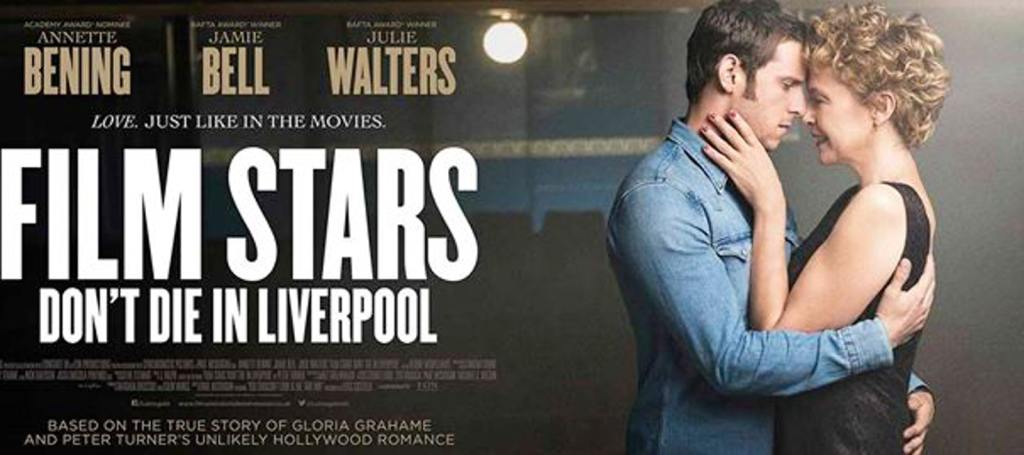
• Film review: “Film Stars Don’t Die in Liverpool” (2017)

    “Film Stars Don’t Die in Liverpool” (2017)

    Drama

    images

    Running Time: 106 minutes

    Written by: Matt Greenhalgh

    Directed by:  Paul McGuigan

    Featuring:  Annette Bening, Jamie Bell, Vanessa Redgrave, Julie Walters, Kenneth Cranham, Stephen Graham, Frances Barber and Leanne Best

    Peter Turner: “Has anyone ever told you that you look like Lauren Bacall when you smoke?”

    Gloria Grahame: “Humphrey Bogart. And I didn’t like it then either.”

    Each year there are a number of films that are lost in the awards race, with coverage really only given to those films deemed ‘important’ or topical so that there can be conversations about issues that are important to parts of society, this year there were many of those with topics such as race, gender, human identity and a variety of others. The problem is that many other films are brushed aside, only to be discovered in other mediums, “Film Stars Don’t Die in Liverpool” (2017) is possibly one of those films. This film is a period piece, set in an non-sexy part of England as well as addressing something most people do not like to think of, old age as well as death – it also deals with an aging actress as well as her much younger paramour. Of course, like many films there is so much more than initially meets the eye, making it a touching, romantic story without cynicism or melancholy, certainly not attached to sentimentality. What is striking is the way in which there is a realness to the topics, an almost kitchen sink aspect that is to uncommon in film, found mostly in English televison.

    This is yet another late year (from 2017) adaption of not only a novel but something based around real events, the book written by Pete Turner (played by Jamie Bell) and adapted by screenwriter Matt Greenhalgh, directed by veteran Paul McGuigan is a textbook example on how to bring to life not an entire story but part of two peoples interactions that ended up having huge impacts on both in very different and meaningful ways. This movie is full of surprises with a deft touch behind the camera as well as some truly memorable performances that will stay with you long after the credits roll. Given that the budget of this film is modest, there is much done with the resources that are available – sometimes the cracks show, but not too often.

    The film concerns Hollywood actress Gloria Grahame (Annette Bening) who finds romance and happiness with a younger man (Jamie Bell), but her life changes forever when she is diagnosed with breast cancer in the 1970s. The film is actually full of twists with a narrative that uses a flash back interspaced with moments from the ‘present’ which works incredibly well as there is a mystery at the center, albeit one that most can relate to, in the finding of love, then the mystery of its breakdown for the basest of reasons.

    This may seem like an oversimplification or trite to say but it is not easy being a movie star, in any time. There is a reason that many have addiction issues, go under the knife, have extremely volatile relationships and tragedy can be a bedfellow. It is their face (and body) that is on a large screen as large as a side of a building, being judged continuously by friends, colleagues and the public itself. A star may find acceptance for a while but the public can be fickle and if they stop showing up at your movies then the slide occurs and your career can be tough indeed. There are reasons why box office success can be fleeting even if it seems to last for a while, just ask action stars of the 1980s and 1990s, or dramatic actors who now either are in small parts or always trying to make comebacks.

    “Film Stars Don’t Die in Liverpool” concerns Oscar winning actress Gloria Grahame who had been in big Hollywood dramas as well as a film noir actress from 1946 to through to 1981, although her final Hollywood film of any real note was 1955. The movie does act as a kind of cautionary tale not only about Hollywood but also health care as well as the importance of seeing things through, professionally, personally and in terms of keeping good health.

    One of the first elements of this film that is striking is the cast who are all outstanding as well as committed and completely dedicated which leads to the believability of the situations each of them find themselves in. Firstly, is leading lady Annette Bening who is close to Grahams age when she died so there a double meaning here, it shows that while in Grahams day the parts dried up as she approached forty, Bening has never been short of parts, in fact since turning forty she has had three Oscar nominations. Here Bening has to play a part on many levels she has to show someone who is strong, has been through the ringer, seen many of her friends die as well as be fragile with a sensuality that bursts off the screen into a young man’s life – we have to believe that we could fall in love with her. Then there is the leading man in Jamie Bell who is playing someone who is struggling as an actor then meets someone who he knows as a. legend, gets to know her then falls in love with her not caring about the age difference. Bell is playing possibly the first real character of his career, set in a time when he is unable to rely on complex effects or other more experienced actors, in my mind this is his first grown up, real role and he succeeds in every aspect of it. The cast is rounded out by acting legends Vanessa Redgrave, Julie Walters and Kenneth Cranham who all do what they do best as characters supporting the story, they all steal the scenes they are in. Finally, in an all too fleeting appearance is Stephen Graham as Bell’s brother who as you would expect is a breath of fresh air as well as realism in very tense situations.

    This film has been expertly adapted and directed by Matt Greenhalgh and Paul McGuigan two artists who have much experience in their respective fields so it is no surprise that “Film Stars Don’t Die in Liverpool” has turned out as well as it has. The use of music as well as well as the settings are expertly deployed as are the themes that are examined throughout the running time. Not once do you ever wonder why the emotions that are being felt by the two leads are so fierce, they just are, we are lucky enough to see their experiences and in some cases from different perspectives, and really isn’t that what life is all about. Without giving too much away it is obvious from the opening moments of the movie that we are dealing with a person in Graham that has lived most of her life either on a stage or in front of a camera, carefully manipulating what her family, friends and the public see of her – there is everything to hide, almost nothing is true, even with her new beau, he is on the outside looking in at what she wants him to know – a façade which we see employed expertly in the opening five minutes of the film. Look closely at the use of music and the application of Grahams stage make-up, that will let you know what you are in for.

    This is simply one of the best dramas of the past year that is a period piece not content to rely on a veiled history or tinged look at Hollywood – in fact the entire film that is about a star is as far away from that Babylon as possible. This is about people who love each other but are hindered by what is perceived to be real or important, this should be seen on the big screen as the mise en scène is so well thought out and the use of colour so deep that the widest screen is your best option

    “Film Stars Don’t Die in Liverpool” is on release in New Zealand right now.

  • DVD review: “Ingrid goes West” (2017)

    “Ingrid goes West” (2017)

    Comedy

    3-stars

    Running Time: 98 minutes

    Written by: David Branson Smith & Matt Spicer

    Directed by: Matt Spicer

    Featuring: Aubrey Plaza, Elizabeth Olsen, Billy Magnussen, Wyatt Russell, Pom Klementieff and O’Shea Jackson Jr.

    Dan Pinto: “Can we restart like a reboot?“

    Ingrid Thorburn: “Yes, like a reboot.”

    There have been many movies made that deal with the idea of stalkers, either shadowing normal people or celebrities (which of course are more popular), where this movie slightly differs is the idea of someone stalking a low level social media user. To be fair there is nothing really that original about “Ingrid goes West” (2017), in fact while watching it I was a little disappointed by the unoriginality of the plot, that involved L.A. based characters doing nothing new with their lives except being majorly impressed with themselves, as vacuous as possible with little regard for either their general environment or other people – which possibly explains Ingrid’s attempted integration into their lives.

    When writing and directing your first movie it can be a great short cut to take an old story, or even preexisting theme, tarting it up for a new generation and presenting it as new, which is what has happened here. If you are looking for a classic predated version to this tray Martin Scorsese’s “The King of Comedy” (1982), it is probably the best example, but by no means the first. The other aspect is that if you are also looking for an actor or actress that is trying to broaden their horizons, with new projects then this can change up the narrative for the better, hiding any possible unoriginal origins. It is with luck then that Aubrey Plaza as well as the talented Elizabeth Olsen were able to be cast to show new sides to their exisiting work.

    The movie is set sround Ingrid Thorburn (Aubrey Plaza) who is a mentally unstable young woman in Pennsylvania. After discovering on Instagram that an unrequited friend of hers named Charlotte (Meredith Hagner) did not invite her to her wedding, Ingrid crashes the reception and maces her in the face. Ingrid undergoes a brief stay at a mental hospital and, writing letters to Charlotte, explains that she has been having difficulties dealing with the death of her mother, who was the only person who was ever kind to her. After her release, Ingrid encounters a guest of the wedding. She says that Charlotte was never friends with Ingrid but simply commented on one of her posts, leading Ingrid to pursue a one-sided friendship with her.

    Later Ingrid learns of a social media influencer named Taylor Sloane (Elizabeth Olsen). Beguiled by her seemingly perfect life, Ingrid comments on one of her photographs and receives a slight response from Sloane. With an inheritance of over $60,000 from her mother, Ingrid decides to move to Los Angeles to become friends with Taylor. Upon arrival, she rents a house in Venice from Dan Pinto (O’Shea Jackson Jr.), an aspiring screenwriter and Batman enthusiast. She visits Taylor’s regular hangouts and restaurants, and gets a makeover in her style.

    I find it completely perplexing that while watching a movie that is primarily about the characters that Aubrey Plaza and Elizabeth Olsen play I was completely transfixed by the actors Wyatt Russell and O’Shea Jackson Jr. who for me were the real stars of this movie, and not having them appear more was a real disservice to them, as well as to the audience watching. By now you should be aware of the talents of both Aubrey Plaza and Elizabeth Olsen, who over the past few years have either made impacts on television, Plaza with the still underrated “Parks and Recreation” (2009-2015), Olsen in a variety of film roles including this years excellent “Wind River” (2017) – so it was with a small bit of disappointment that here they are playing one note characters with little surprise or revelation, even though it seems at times the screenplay is hinting at some kind of twist or even major third act revelation.

    What I enjoyed about the two male characters was they were the more interesting depictions of people who were not really involved in any meaningful social media, so were easy to understand as well being more grounded. These two also had arcs, small ones that is, that could be followed from the points of their introduction to almost their exiting of the narrative. Both Wyatt Russell and O’Shea Jackson Jr. are second generation L.A. actors (the sons of Kurt Russell & Goldie Hawn and Ice Cube respectively) so they have innate charm as well as screen presence that lit up when they appeared – something that could not be said for the leads. I feel it is important that the men were second generation L.A. based actors, they could easily, in my mind, inhabit the people they are portraying as they have probably interacted with many similar real life people.

    Surprisingly for a movie that portends to be about Social Media it only really appears fleetingly, it is left unexplained, more of a macguffin than anything else –there is no comment made about its use or impact – except for the obvious. I wonder what someone like Paddy Chayefsky would have made of rich material like this; I don’t think it would have been a halfhearted drama/thriller with little bite or social commentary. That leads into the relative inexperience of the writers and director David Branson Smith & Matt Spicer who have taken a plot that is trope laden, then layered it with an aspect of social media passing this off as new. What may have been more original, as well as a touch transgressive, may have been to write what they know, making the main characters male instead of female, thereby taking what is a feminine touch and adding masculinity as the protagonist – this would have at least made it a bit more original in the eyes of the social media peons.

    I have no doubt the reason the movie is set in L.A. is one of budget, it is also an easy place to light, there are few days that are lost because of inclement weather, it also makes it interesting if the main character is supposed to be coming from another part of the US – it makes it a fish out of water story as well, which means you can layer up on the character with little effort – which is a good descriptor of this movie – little effort.

    With all that said this is not a bad movie, in fact it is a pretty good movie, but that may be more down to the talent in front of the camera, which is excellent, so you will not be let down because of that. This is a good movie to watch at home where you can talk about it, I cannot help but think it is not really a go out to the cinemas and watch. If you have Netflix and it pops up on there you will have a good time with it.

  • DVD/Blu-ray review: “Paddington 2” (2017)

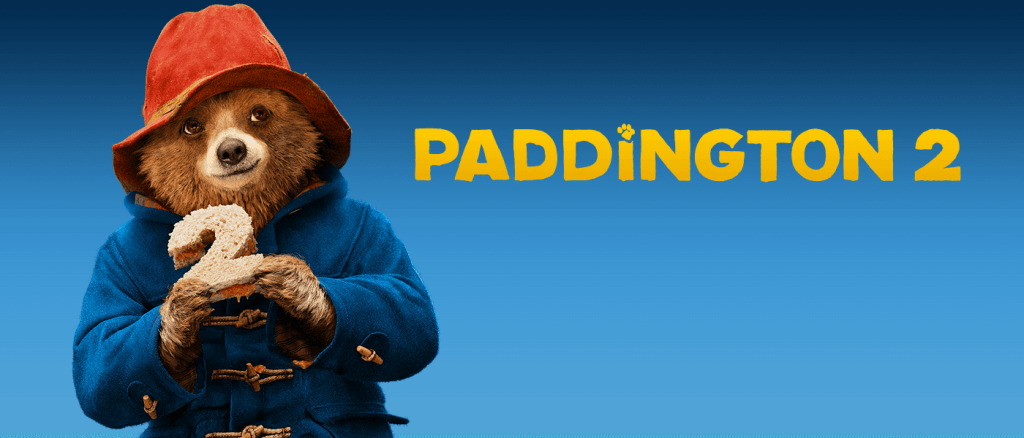
    “Paddington 2” (2017)

    Animated Comedy

    images

    Written by: Paul King & Simon Farnaby

    Directed by: Paul King

    Featuring: Ben Wishaw, Hugh Bonneville, Sally Hawkins, Brendan Gleeson, Julie Walters, Jim Broadbent, Peter Capaldi and Hugh Grant

    Henry Brown: Paddington wouldn’t hesitate if any of us needed help! He looks for the good in all of us.

    There is no doubt that the release of “Paddington” in 2016 was not only a huge success but defied odds to become one of the best films of that year. When the original trailer was released with not great animation as well as Colin Firth woefully miscast as the voice of our furry hero there was not much to look forward to. But with some time and the recasting of Ben Wishaw as the almost too perfect voice of Paddington the film became a real success story – with a sequel sure to arrive, and it has with bells on. It not only lives up to the original hit, but surpasses it by moving the story forward, with a goal based plot as well as upping the villain stakes with Hugh Grant, here showing why he can play pretty much anything without any ironic detachment that can haunt some actors in similar kinds of films.

    The great news is that writer/director Paul King has retuned to not only bring a new story to life but also reinvigorate the narrative with his unique visual style, which canny viewers will recognize from his stellar work on “The Mighty Boosh” (2005-2012), as well as the cast which is rounded out with many of his cohorts from the same show or similar projects. Of course with the first movie firmly planted in peoples minds there has to be something to not only remind viewers of the greatness, as well as uniqueness, and their introduction to Paddington but there needs to be an addition to keep the story fresh as well as the supporting characters real – this has been and King makes it looks easy.

    The story begins with Paddington, having settled with the Brown family in London’s Windsor Gardens, has become popular in his community, offering people emotional support in various ways, apart from Mr. Curry who still distrusts him. The Browns have changed in many ways. Mary Brown is training to swim the English channel; Henry Brown does not get the promotion at work he has hoped for; Judy has broken up with her boyfriend, Tony, and has started a newspaper; Jonathan has dropped his old, independent self and has become a classic teenage boy. To purchase a unique pop-up book of London in Samuel Gruber’s antique shop for Aunt Lucy’s 100th birthday, Paddington performs several odd jobs and saves his wages over time, finding a good niche as a window-cleaner after a failed attempt as a hair dresser.

    When he is just a day away from having enough money for the book, he witnesses it being stolen from the shop by a bearded thief, and is accused of the crime when the true culprit flees after a brief chase. Unable to obtain evidence of the thief’s existence, Paddington is wrongfully convicted and detained. The thief soon returns home, removing a disguise to be revealed as Phoenix Buchanan, an egotistical has been actor who lives opposite the Browns and whom Paddington met at a carnival opening ceremony some days prior and had shared the existence of the pop-up book, which Buchanan had thought to have been lost.

    When any film relies completely on a CGI created central character as its hero, as well as acting as the point of view of the audience there is a requirement that everything else looks completely real as well as having a supporting cast that can make you believe that a talking bear exists and is able to interact with the world around him. Of course like the first film, in fact like almost all reasonably budgeted UK based movies, “Paddington 2” has an outstanding cast that is peppered with successful actors in their own right. Starting with Paddington’s adopted families led by Hugh Bonneville and Sally Phillips who lend an authenticity as parents, so much so that you feel they are three dimensional characters that are more than paper thin stereotypes. Then there are the two new major character’s that have been added for this new adventure, those being Hugh Grant as actor (and villain) Phoenix Buchanan and Brendan Gleeson as convict (and Paddington ally) Knuckles McGinty. There are far too many actors to specifically identify as well as many marvelous cameos to go into here, so I will make a few comments about Grant and Gleeson.

    It has been a real joy to see Hugh Grant making a comeback (but was he ever away?), which in my mind began with the massively underrated “The Pirates! Band of Misfits” (2012) and continued through to his scene stealing performance “Florence Foster Jenkins” (2016), here he plays what must be an original character creation based I am sure on some unkind descriptions of him or an actor like him. Grant here is not only attempting to make a myriad of characterizations, but he is also being very physical as well as funny, when you think of Hugh Grant the words ‘physical comedy’ do not immediately spring to mind, but he is successful in everything he tries here – much like Nicole Kidman in the first film. Then there is the always-terrific Irish actor Brendan Gleeson who here is playing his part for big laughs as a cook in a prison, his friendship of Paddington has some clear messages for children as well as adults, if only people would be as accepting of everyone as Paddington is we would all be better off. Gleeson is a force onscreen, completely in charge of his performance as well as being brave enough to expose himself to some comedy greats.

    The MVP of this movie is definitely Paul King who had only directed one other film, the quirky “Bunny and the Bull” (2009) before writing and directing the first Paddington movie. What King has done is to take his knack of being able to take real life situations and skew them so that they turn to fantasy. The director has applied this to a fictional character, taken an existing property, used the current time as well as a real location, that being London and created a world where a talking bear is the norm, as well as being accepted by the general populace. The other aspect of the film is that while this is a children’s film there is more to the narrative than a simple story, everything within the plot can be understood by young and old so that all audiences can be fully engaged with a story about a talking bear.

    Much like the first movie Paddington 2 has so much to offer audiences of all ages, while the first movie acted as a kind of origin movie of sorts, we see Paddington and his entire family moving on from their initial adventure into new places where they have all grown individually as well as a family which all people can relate to. This is highly recommended to all audiences, the CGI is top notch, the performance are all excellent and the action as well as thrills are original but at the same time offer fitting homages to other action movies, something the original did brilliantly.

  • Streaming review: “Annihilation” (2018)

    “Annihilation” (2018)

    Sci-Fi/Horror

    images

    Running Time: 115 minutes

    Written & Directed by: Alex Garland

    Featuring: Natalie Portman, Jennifer Jason Leigh, Gina Rodriguez, Tessa Thompson, Tuva Novotny, and Oscar Isaac

    The Psychologist: “It’s destroying everything.”

    The Biologist: “It’s not destroying… It’s making something new.”

    When it comes to genre television and films Netflix really runs the gamut from incredibly complex high quality projects like last years “Stranger Things” (2017- present) and the release this month of the Alex Garland written and directed “Annihilation” (2018), to a high amount of unwatchable dreck that fills out their catalog, which changes from month to month. In terms of quality “Annihilation” has it all, absolutely great actors, an adaption from a series of popular highly regarded novels, one of the better novelists of the past twenty years who is now a well regarded screenwriter turned director and a film that operates on a number of levels, that pulls no punches for the audience. Garland challenges you to get on board, keep up or be left behind – which is a theme in the film.

    The film itself is one of the best if not the best film this year, and if you live outside the US you can view it as part of your Netflix subscription, which is a blessing as well as a curse. On one hand we get to see a film that is excellent on all levels as well as being directed by a true visionary with a very distinct point of view, not only that but the film looks incredible with a vivid landscape. On the other hand we do not get to see it how the director intended, on the big screen which is a crime as the palette used begs for a big screen experience. This is actually a conundrum that faces Netflix on all its big ambitious movies, one need only look at the Oscar nominated “Mudbound” (2017) from last year that deserved a wide big screen release as well. Netflix is still a disrupter in the film space, but it is also not recognized as much as it should be as a creator/distributor of high quality films. That be changing with the Oscar winning documentary “Icarus” (2017).

    “Annihilation” based on the novel of the same name by Jeff Van der Meer, spearheaded by Alex Garland who burst on the literary scene with his own novel ‘The Beach’, famously turned into a movie featuring then superstar Leonardo DiCaprio. Garland then burst onto the filmmaking scene with his Danny Boyle directed script “28 Days Later” (2003), which redefined the Zombie genre. Garland has since once again made a splash as director with his Oscar winning film “Ex-Machina” (2015) that featured stars on the rise Oscar Isaac, Alicia Vikander and Domhnall Gleeson. With this sophomore effort it appears that Garland knows his way not only around a story but many of the other elements that make great films.

    “Annihilation” begins at the U.S. government’s Area X facility on a Southern coast, cellular biology professor and former U.S. Army soldier Lena undergoes quarantined debriefing about an expedition into an anomaly called “the shimmer”, from which she is the only survivor.

    In a flashback, Lena’s husband, an Army Special Forces soldier named Kane, returns without warning to their home after having gone missing on a mission. He remembers nothing of that time and suddenly becomes very ill. A government security force intercepts Lena and Kane on the way to a hospital and brings them to Area X, near where a shimmering electromagnetic field began to spread three years earlier. Psychologist Dr. Ventress recruits Lena into the project, explaining that military teams, including one with Kane, ventured into the shimmer. No one except Kane, now in a coma, ever returned. Lena joins Ventress on a research expedition consisting of them, physicist Josie Radeck, geomorphologist Cass Sheppard, and paramedic Anya Thorensen.

    In terms of an adaption Garland has executed this very well, taking the ideas as well as some of the themes of the original novel, and creating something new that flows better in its new form than it would have if he had been dogmatic with the adaptation. Some of these choices I assume were for the actors, as the scope of their parts has increased and become more formal with flashbacks as well as motivations for choices being made clear from the outset, in particular with Natalie Portman’s character. The very fact that this film has attracted not only Portman, but Oscar Issac as well as rising stars Tessa Thompson, Gina Rodriguez, Tessa Thompson and recent Oscar nominee Jennifer Jason Leigh speaks highly of this genre movie, that not only exceeds expectations but breaks out of genre conventions. All of these actors excel in their parts, you can tell from the off that they are not only aware of their characters but understand how they fit into the overall narrative.

    Not that I am going to spoil this film as the least said the better as it contains some incredible surprises as well as some very beautiful moments, some are majestic, some poetic and some incredibly shocking. The word that comes to my mind when describing as well as thinking about this film is inevitable. The inevitability of death, of constant change, of life to not only survive but persist, as well as the nature of human beings to not only want to explore but to destroy at the same time. This film as well as the novel also postulates that human beings are not the center of the universe and life as well as nature does not revolve around us, we are servants to it – events that happen in nature are not motivated, they just happen, we need to roll with it or as a species we will not survive. Without giving to much away it becomes pretty clear early on that entering the shimmer does not necessarily mean death, it means change, that change however is on a cellular level, so that what makes us conscious entities may not mean what we think it means – we see this through not only the change the characters go through, but also some of the evidence left behind by others as well as the changing animal and plant life that is reflected in some of the trailers. Like life this film does end on a conclusion but on something ethereal that permeates the entire narrative as well as some of the left turns that “Annihilation” takes, in fact the name of the film is not a pejorative, it is a complimentary way of looking at the conclusions of the film. What we see as the film moves forward is that there might be a new way of looking at life, human life in particular – the inevitable change that nature has brought to us that we must embrace or face the consequences.

    While “Ex-Machina” Garland’s previous effort is a very nice, layered looking film that on first watch is impressive for its subtly as well as subject matter, it is for all intents and purposes a film set in one place. With “Annihilation” Garland has taken a huge step forward not only in the themes involved but the scope and look of the film as well as the character interactions and what effect these have on the story. I find it difficult to remember a more narratively complex as well as assured second film ever, in fact after his debut it may have been tempting to direct something simpler, but the decision not to speaks volumes of the writer/director’s talent as well as assuredness. Garland has used a cinematographer, Rob Hardy who not only has an impressive list of credits but works a lot in film which means he is adept at making quick good decisions. This has paid off as “Annihilation” not only looks incredible but it also looks original which in 2018 is a very tall order.

    Finally there are multiple homages to other Sci-Fi films as well as a few other genres, the most blatant is inherent in the novel, that is John Carpenters remake “The Thing” (1982) which tackled some of the same things that are present here. In fact the film opens similarly to that film as well as a myriad of other Sci-Fi films, a streaking meteor (or something) crashing into the planet. One of the major differences is that we see where the meteor lands, into a lighthouse, which is loaded, like the rest of the film, with meaning both overtly as well as hidden. The use of a lighthouse is important as it symbolizes the best of man, his most lofty of ideals, proximity ever closer to the heavens and God, and a towering signpost to guide the way and warn of danger. The beacon, shining out over the roughest and stormiest of seas, symbols of salvation and direction, leading those in danger to safety and security whether it be a danger of physical manifestations or of spiritual and moral trials and tribulation. This can be no more true than this film and as you watch you will see the importance of its use as well as the centre it takes in this movie.

    If you live in the US then you need to head to your nearest cinema and see this film, if you live outside the US you need to subscribe to Netflix as soon as possible, with the added benefit of being able to watch “Annihilation” multiple times – you will not be disappointed

    “Annihilation” is streaming on Netflix now outside the US, and in cinemas in the US.


  • DVD/Blu-ray review: “Justice League” (2017)

    “Justice League” (2017)

    Action/Fantasy

    stars-2-5

    Running Time: 120 minutes

    Written by: Chris Terrio and Joss Whedon

    Directed by:  Zack Snyder

    Featuring: Ben Affleck, Henry Cavill, Amy Adams, Gal Gadot, Ezra Miller, Jason Momoa, Ray Fisher, Jeremy Irons, Diane Lane, Connie Nielsen, J. K. Simmons and Ciarán Hinds

    Diana Prince: “People said the Age of Heroes would never come again.“

    Bruce Wayne: “It has to. We don’t have any more time!“

    Has there ever been any more problems in modern movie history than the struggles that Warner Brothers has had with the DCEU attempting to get a comic book universe off the ground that will rival the mighty marvel comic book universe? It really isn’t a faor comparison, Marvel are into their seventeenth movie with this years “Thor: Ragnarok”(2017), while this weeks “Justice League”(2017) is just the fifth – with at least four of the previous being major disappointments – of course their only real bright spot is that they have continued to make money. But audiences as well as critics have not held back with their own opinions on how dreadful they really are.

    Now comes the second team movie to be under the DCEU banner after the horrible “Suicide Squad”(2016) that seeks to unite at least three of the biggest superheroes ever, along with three definite B characters to form the titular ‘Justice League’. This was kind of teased in the derided “Batman v Superman: Dawn of Justice”(2016). Of course even before “Justice League “is released it has had its share of issues, massive amounts of reshoots, changing directors for at least a quarter of the movie, mandated running time of less than two hours as well as heightening the humor, decreasing the darkness, finally not forgetting to increase the amount of Wonder Woman in the movie. This really does not bode well, especially as many of these issues and changes faced “Suicide Squad”, however “Justice League “has turned out much better – for the most part. There is a large  caveat, that is this is still not a coherent movie, not only that I had pretty much forgotten about it as soon as I left the theatre.

    The bare bones plot takes place months after the events of “Batman v Superman: Dawn of Justice”, inspired by Superman’s sacrifice for humanity, Bruce Wayne and Diana Prince unite a team consisting of Barry Allen, Arthur Curry, and Victor Stone to face the catastrophic threat of Steppenwolf and his army of Para demons, who are on the hunt for three Mother Boxes on Earth, while the world reflects on Superman’s death.

    The good news is that this movie for the most part holds together, (that is being kind)  serving as a kind of origin movie as well as a look to the future as to what to expect in the coming years. It also serves to introduce Cyborg, Flash and Aquaman to an audience so as to show what those individuals offer. This is accomplished through the recruitment that Batman as well as Wonder Woman attempt to accomplish so as to give the audience someone they do know making the introductions for us. This works quite well overall, but I could not help feel that out of all this that Aquaman is the one best served (although not the deepest character) which could have something to do with his own movie arriving next year – while Flash and Cyborg are given the scraps off the table, as it were.

    Other than the bringing together of the team, there is what feels like a necessary call back to “Batman v Superman: Dawn of Justice” in the fact that the main villain here is Steppenwolf and his army of Parademons who made appearances in that movie (actually Steppenwolf only appears in the directors cut which to me is odd to say the least) – does this work? For me the answer is no, but antagonists in all comic book movies do seem to be an issue – there are a few exceptions but it does not necessarily mean that this makes for a negative experience – origin movies tend to be forgiven more, which this for all intents and purposes is.

    The trailers for this movie have been out for months so we have all known what to expect casting wise, there is Gal Gadot and Ben Affleck as Wonder Woman and Batman who have appeared in their own features so we know what to expect from them. In this movie Affleck has taken a step forward, Gadot a step back. However this is the first time we are spending an extended amount of time with Jason Momoa (Aquaman), Ezra Miller (Flash) and Ray Fisher (Cyborg). While Momoa and Miller are known genre actors and know how to play to the cameras in big films, it was Fisher for me who is an unknown element, he acquits himself well with the role as Cyborg, but the issue for me is that this just seems like an Iron Man rip-off with the exception that his amour is bonded to his skin, which for me makes a hollow hero – maybe in time I will grow to like this character, but for now he seems a little redundant. The supporting cast is rounded out with highly experienced character actors that we have seen in previous movies, the likes of Connie Neilsen as Queen Hippolyta, Amy Adams as Lois Lane, Diane Lane as MAARRTTHHAAA Kent (no jokes please), Jeremy Irons as Alfred, Jesse Eisenberg as Lex, who all do their jobs well, although they seem to be there as identifiers of earlier movies. There is now the arrival of new supporting characters (assuming we are supposed to see more of them in the next standalone movies) such as Amber Heard as Mera, Billy Crudup as Henry Allen, J.K. Simmons as Commissioner Gordon and Joe Morton as Dr. Silas Stone. Now while these actors are all great I cannot help think that they were appearing as some kind of preview to possible standalone movies, whether they eventuate or not – Marvel got bashed for this. See “Iron Man 2”(2010) for the reaction to their version of this.

    Famously the original director, Zack Snyder left the movie late in the game so screenwriter Joss Whedon was given the job of completing the shooting as well as being solely in charge of reshoots. For many movies this might be an issue, however because the story is so simple it meant that it was relatively easy to marry the two directors work making a story that is what the creatives wanted – to me it seemed fairly standard with little in the way of surprise or real stakes. As with most DCEU movies they seem to be overcooked with too many chefs as well as creators who seem to lack any vision for what they are doing. Snyder has proved again and again an overreliance on tropes as well as storylines that existed in the 1980s with the inability to be able to movie forward modernizing these wonderful characters. With Snyder gone (apparently never to return thank goodness) Whedon has picked up the mantle adding his signature dialogue and humor as well as a shorter tighter movie that is brisk with its narrative – no pondering heroes here or heavy handed dialogue, just a lot more fun in general – thank goodness because really the plot makes little sense or bears no relation to any real situations you can think of. The other screenwriter who is credited is Chris Terrio who believe it or not received an Oscar for “Argo” (2012) but revealed the kind of messy uneditable writer he actually is with “Batman v Superman: Dawn of Justice”. Of course when you have someone like Whedon who has always been about a plot with character moments you can see his fingerprints here – Terrio like his friend Affleck to have been cut out of any production decisions since their first disaster was released.

    As you would expect the movie looks like a Snyder movie, mostly, although there are cracks in the seams with some fairly ordinary CGI, again an over reliance on these which makes for a rather blurry action movie. This is a shame but comes from late reshoots as well as a general feeling that the people behind the scenes were all making different movies – something it seems all the DCEU movies have in common. What we end up watching is an OK movie that rates probably third (maybe) behind this years “Wonder Woman” and “Man of Steel”(2009) – although they had plenty of issues as well – it is also a small reset which is welcome, showing a way forward. I have to admit that after this movie I am hoping that next years “Aquaman” (2018) will improve and should be a treat in particular because it will not involve Terrio, Snyder but will involve Geoff Johns.

    The big question to ask is – should you see “Justice League “in cinemas? The answer is I guess, especially if you have made the trip for previous movies. “Justice League” is a sign that even though Warner Brothers will have you believe that they make these movies in a vacuum, they most certainly in reality do not. They have looking at feedback as well as reviews and are making course corrections on the fly – which can be good as in “Wonder Woman” or can be disastrous as in “Suicide Squad”. In the case of this movie it has worked out somewhere in between but it is a sign of things to come, so take the chance and enjoy a rare thing, a pretty good Joss Whedon inspired super hero movie.

  • Streaming review: “The Ritual” (2017)

    “The Ritual” (2017)

    Horror

    3-stars

    Running Time: 94 minutes

    Written by: Joe Barton

    Directed by: David Bruckner

    Featuring:  Rafe Spall, Arsher Ali, Robert James-Collier and Sam Troughton

    Dom: “My old scoutmaster used to say ‘If the shortcut was a shortcut, it wouldn’t be called a shortcut, it would be called a route’.”

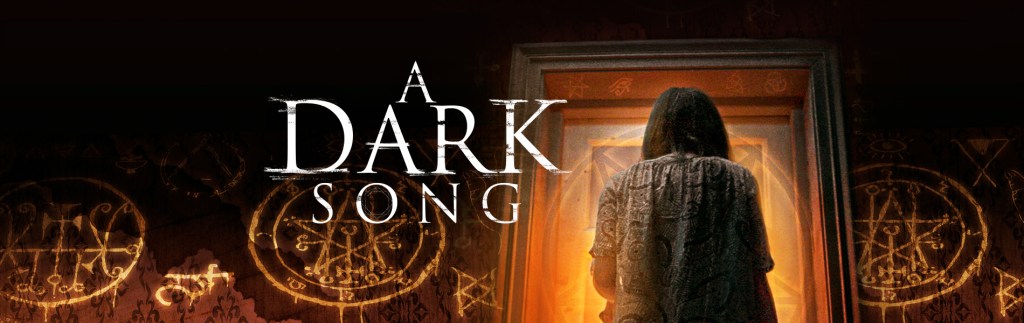
    It seems like 2017 was a banner year for horror movies all over the world, I wonder if it could be a result of people reacting to the fractious political environment that reared its head from 2016 onwards. This new horror film follows on from the excellent “A Dark Song” (2017), both horror movies having recently been released on Netflix outside of the UK. “The Ritual”(2017) is best as well as easily described as a mixture of the timeless classic “The Wicker Man” (1973) as well as the more recent, and equally as classic “Descent” (2005). Whilst this horror film can be reduced to a pretty easy description this should not put any prospective audiences off, as there are truly some highlights to be enjoyed as well as being experienced. In fact the opening scenes are intense enough for not only the characters, but the audience as well, that they haunt the narrative right up until the end credits roll. The movie itself is predicated on an event that haunts not only the main character but his friends as well, something that leaves him (as well as the audience) clinging to his own identity for the rest of his life. We are all shaped by our past, our own experiences as well as those that we experiences in groups.

    “The Ritual” is based on the book written by novelist Adam Nevill, experienced screenwriter Joe Barton who up to this project has primarily been a television writer has adapted it. The director, David Bruckner whose previous full length film is the horror/sci-fi “The Signal” (2007) from quite a few years ago, who has now retuned with a genre experience that is at once familiar but stunningly original in its execution for most of its running time.

    The film involves a group of four friends, Phil, Dom, Hutch, and Luke, embark on a hiking trip in Sarek National Park, in northern Sweden to honor their friend Rob, who was killed six months earlier in a convenience store robbery. After Dom falls and injures his knee, Hutch consults the group’s map and decides on an alternate route through the woods that will take them half the time. The group begins to encounter unexplained phenomena, including a gutted deer and strange symbols carved on trees. As night falls, they come upon a rundown cabin and stay in it for the night. The cabin is mostly empty, save a strange wooden effigy in the attic shaped like a human torso, with antlers for hands. During the night, each is plagued by nightmares, and Luke wakes up with a strange set of puncture wounds on his chest while Phil is compelled to pray to the effigy inside the cabin. They continue their travels deeper into the woods trying to find a way out.

    Like many great genre films “The Ritual” operates on a number of different levels incorporating many different themes as well as ideas that reflect what it is like to be human, both the fears as well as the bravery that makes us who we are on any given day in any given moment. It is no spoiler to say that the movie begins with a robbery that leaves one of the group of friends dead, while another is unable to escape the event, in his eyes he was a coward, doing nothing to help his friend or to stop the robbery – it does not help that it was in a liquor store, and both had been drinking. In fact this entire action hangs over the surviving friend like a sword of Damocles, much like the roof top scene from Hitchcock’s masterpiece “Vertigo” (1958) where the Jimmy Stewart character is left hanging on a rooftop where he metaphorically remains for the remainder of the film.

    Another aspect of “The Ritual” is the way in which as people or in particular groups of people from former lives attempt to keep an older life going which we see in this film, in fact it happens twice once at the beginning where we see real life intruding on this attempt and then later when the group attempts to go for their misjudged hike in the Scandinavian wilderness. Of course if this sounds familiar within the genre it is a major plot point from the previously mentioned genre film “Descent”, which handled group tensions much better, here in “The Ritual” it is much more blunt as well as generic – maybe something to do with the different make up of male/female group dynamics. The reality of course is that invariably friends that are close in groups or cliques when they are younger split going of to do their own things and members of the group that are unable to make lives for themselves try and keep the dynamics stable. This is the role of Luke (Rafe Spall) who is at the very centre of the story as well as the one trying to maintain a status quo of sorts, of course it is him that is at the centre of the story who must make many of the life altering decisions and ends up being the reason for just about everything that happens not only to himself but everyone he comes into contact with for the entire film.

    This film is based on a novel of the same name by experienced novelist Adam Nevill, it has been written for the screen by Joe Barton and directed by David Bruckner. Like many adaptations there have been alterations made to the film, which do work quite well, although the plot has been reduced to a fairly standard genre standard, this could be because of the relative inexperience of both director and screenwriter. In saying all of that this is a fairly reductive film that as I have said is an easily hybrid of both “The Wicker Man” (1973) and “Descent” (2005) (with a touch of “The Blair Witch Project” (1999) thrown in for good measure). Normally for me being able to see the common similarities to other films would be the kiss of death, however in this case I find “The Ritual” to be a most compelling genre film, in fact one of the best English films of last year. The elements that make it superior to many genre films are the psychological aspects as well as the group dynamics that are absent from the novel. The very fact that these changes have been made speaks to the upcoming talents of all those involved, not only the writer and director but the producers as well.

    This is a very well executed film that takes advantage of superior locations that contribute to the mise en scène that reflects both isolation as well as a true sense of dread that follows the entire cast of characters and reveals itself to be true particularly in the final third of the movie. I can honestly recommend this as a fine watch that will stay with you long after the movie has ended, it is a truly creepy and bewildering and genuinely frightening film.

    “The Ritual” is streaming on Netflix right now, check it out!


  • Film review: “The Death of Stalin” (2017)

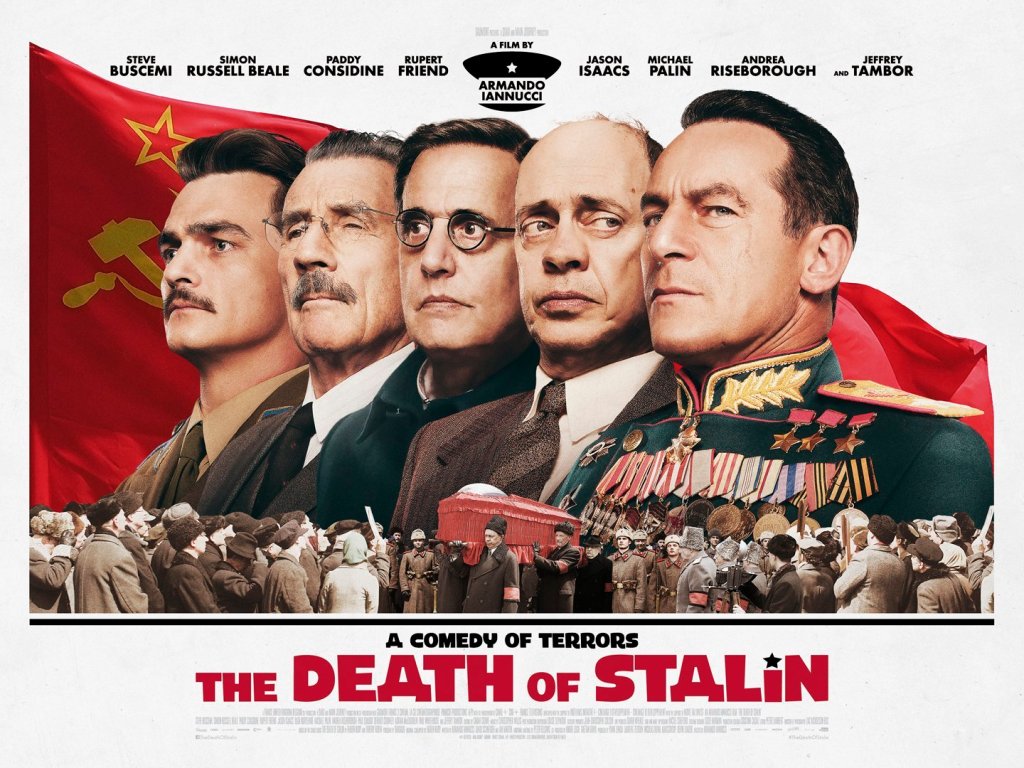
    “The Death of Stalin” (2017)

    Comedy/Drama

    images

    Written by: Armando Iannucci, David Schneider, Ian Martin & Peter Fellows

    Directed by: Armando Iannucci

    Featuring: Steve Buscemi, Simon Russell Beale, Paddy Considine, Rupert Friend, Jason Isaacs, Michael Palin, Andrea Riseborough and Jeffrey Tambor

    Vasily Stalin: I know the drill. Smile, shake hands and try not to call them cunts. 

    This week sees the release of a bit of an enigmatic film, one that is mired in truth yet seeks to mine laughs from one of the worst times in the history of a country that is littered with harsh times, mostly driven from positions of power onto people who were victimized left, right and center. No I am talking about China or the US, I am referring to Armando Iannucci’s adaptation of “The Death of Stalin” (2017) based on a graphic novel. In fact I can think of no better person than Iannucci who has satirized two governments in two very different countries in his BBC show “The Thick of it” (2005-2012) as well as his HBO show “Veep” (2012-present), not forgetting his Oscar nominated “In the Loop” (2009).

    The difference here of course is that Iannucci with this film is basing his work around very real people who are all historic figures that are revered in today’s Russia. The complexity comes in those elements that are satirical to not undermine the millions of people that were murdered and/or silenced by a totalitarian regime that for all intents and purposes exists right now in Russia, and I am sure Trump would love to have one in the US. This is the challenge that the film faces, to Iannucci’s credit for the most part it has to be said that he meets his own lofty goals, the balance is executed well, however viewers may have to search this balance out and come to their own conclusions – particularly if that audience has some historical context of this time.

    To say that this film comes at a time when world politics is not only at its most complex but also divided would be an understatement, we live in precarious times much similar to the times people lived under with Stalin, although it would be safe to say without the soldiers taking away loved ones at night. What is interesting is that this film had wrapped production before Trump took power or there was an election in the UK, however it is simple to draw comparisons between the head of state here to Trump or May, who are unpopular leaders that seem to utter idiotic statements almost every day without accountability or consequence much like Stalin. Whereas Stalin operated through fear and murder, Trump and May seem to ignore popular opinion marching to their own beat as well as truth – in fact Trump has made many statements that are actually from the Stalinist playbook.

    “The Death of Stalin” as you might expect revolves around the events after Stalin is paralysed by a cerebral haemorrhage. When Stalin dies, Committee members rush back to Moscow, to say the least chaos ensues with many underlings positioning themselves for power as well as eliminating not only rivals but evidence of discontent as well as reveling truths about the previous Stalinist regime.

    Apart from the plot as well as the narrative structure the element that stands out the most from this story is the casting of the actors as well as the choices to use extremely different accents throughout the movie. There should be no mistake made this is a deliberate choice on the part of Iannucci as well as his entire cast. What this choice reflects is, the way in which the Kremlin itself, as well as Stalin, (who was not Russian at all) and his cronies were constructed, all from vastly different backgrounds, geographic areas and education. In reality it would not have been uncommon to hear multiple languages as well as accents in the halls of the base of Russian power, and so this varied cast all speak in different accents, we hear American, Welsh, parts of England and Scottish – with a smattering of some Russian as well. What this does is highlight audibly the kind of place the Kremlin must have – confusion as well as fear reigning supreme.

    The casting process must have been interesting for Iannucci as he has recruited extremely talented character actors both from the US and the UK with a mixture of dramatic as well as comedic actors. The great surprise of the cast is eminent stage actor Simon Russell Beale as Lavrentiy Beria who is a delight to see onscreen as his main medium is the stage, he matches up when you consider the actors he is portayed against including Steve Buscemi as Nikita Khrushchev, who must be the highest profile real life figure other than Stalin himself, Jeffrey Tambor the legendary comic actor as dimwitted Georgy Malenkov, the rising stars of Andrea Riseborough and Rupert Friend as Stalin’s children. Finally there is the wonderfully talented true character actor Jason Isaacs as Georgy Zhukov who looks like he is having the most fun with a broad accent overplaying the part to such an extent that he rivals Malcolm Tucker in his audacity – the fall cannot be far away. As with many Iannucci projects he is not afraid to cast big names in cameo roles, “The Death of Stalin” is no different with Paddy Considine, Olga Kurylenko, Michael Palin and Tom Brooke all playing colorful roles that are as unique as any in the film.

    Like his debut “In the Loop” Iannucci has directed a film that takes place in a few key geographic areas but moves the camera like a pro making it seem like the characters are always pushing not standing around hurling abuse at each other. This is key to the film, one that fellow show runner, scriptwriter and now director Aaron Sorkin learned early on, you can have dialogue heavy scenes that operate more like action scenes than anything else. The challenge for Iannucci is three fold he has to give each of his cast enough time and space to make an impact, he has to balance satire as well as humor with events that are hideous and make the film look grand as well as big on a very small budget. To his credit Iannucci almost gets away with it, except he has possibly misjudged too many moments of humor, he could have actually made more dramatic choices but that might lay in future work. At this stage Iannucci has a shtick (that by the way is not an insult at all) and it works for him as can be seen by all of his work, which is more than most have ever been able to accomplish, he embraces his strengths while attempting to mitigate weaknesses possibly overcompensating in some situations.

    If you are able to leave certain emotions at the door as well as ignoring some historical inaccuracies, if you are a fan of any of Iannucci’s other work then this will be an enjoyable trip to the cinema. It has enough of just about every aspect a satire should have to work, my only real critique is the way the subject matter is treated overall, in saying that I did enjoy “The Death of Stalin” immensely although it may have been because of little parts of each element that I really liked. Regardless if you need to have a giggle at events that are not to dissimilar to what some countries are going through at the moment (China, Russia, UK and of course Trumpland) then this may help to see what real despots looked like not that long ago.

    “The Death of Stalin” is out now only in cinemas.


  • New Trailer: “Fantastic Beasts: The Crimes of Grindelwald” (2018)

    Warner Bros. Pictures’ “Fantastic Beasts: The Crimes of Grindelwald” is the second of five all new adventures in J.K. Rowling’s Wizarding World.”

    Error
    This video doesn’t exist

    At the end of the first film, the powerful Dark wizard Gellert Grindelwald was captured by MACUSA (Magical Congress of the United States of America), with the help of Newt Scamander. But, making good on his threat, Grindelwald escaped custody and has set about gathering followers, most unsuspecting of his true agenda: to raise pure-blood wizards up to rule over all non-magical beings.
    In an effort to thwart Grindelwald’s plans, Albus Dumbledore enlists his former student Newt Scamander, who agrees to help, unaware of the dangers that lie ahead. Lines are drawn as love and loyalty are tested, even among the truest friends and family, in an increasingly divided wizarding world.

    FANTASTIC BEASTS: THE CRIMES OF GRINDELWALD is directed by David Yates and stars Eddie Redmayne, Katherine Waterston, Dan Fogler, Alison Sudol, Ezra Miller, with Jude Law and Johnny Depp, Zoë Kravitz, Callum Turner, Claudia Kim, William Nadylam, Kevin Guthrie, Carmen Ejogo, and Poppy Corby-Tuech.

    FANTASTIC BEASTS: THE CRIMES OF GRINDELWALD releases in New Zealand cinemas on November 15, 2018.

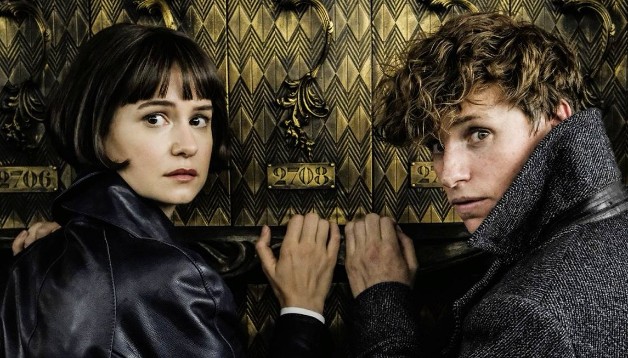
    Fantastic-Beasts-The-Crimes-of-Grindelwald-Image-Eddie-Redmayne-Katherine-Waterston-banner

  • Film review: “Tomb Raider” (2018)

    “Tomb Raider” (2018)

    Action

    3-stars

    Written by: Geneva Robertson-Dworet & Alastair Siddons

    Directed by: Roar Uthaug

    Featuring: Alicia Vikander, Dominic West, Walton Goggins, Daniel Wu, and Kristin Scott Thomas

    Receptionist: “What’s your name?”

    Lara Croft: “Lara.”

    Receptionist: “Surname?”

    Lara Croft: “Croft.”

    As we get closer to the lucrative summer movie season in the US there are more and more movies trying to get in early, attempting to make an impact at the box office. The one thing that has been proven by the recent “Black Panther” (2018) release date is that anytime can be a good time for the right movie. Enter the re-booted video game adaption from the best selling ‘Tomb Raider/Lara Croft’ series made famous in the 90s by the iconic game, then brought to life by the then recently Oscar awarded Angelina Jolie, firstly in the successful “Lara Croft: Tomb Raider” (2001) then in the follow up “Lara Croft Tomb Raider: Cradle of Life” (2003). Now after a successfully rebooted game it was inevitable that another movie be produced based around this, with the aptly titled “Tomb Raider” (2018), recast with the recent Oscar winner Alicia Vikander. Eschewing the fantasy elements of the first two movies this new incarnation seems willing to settle for a hodge podge of ideas that within themselves never really come off, but it is Vikander who carries this movie on her back, any kind of success can be credited to her rising star power as well as inhabiting the role far differently to Jolie.

    The decision making in regards to how this film has been constructed has to be commended in giving Vikander her first real starring role after many turns in character roles, as well as bringing on board Norwegian director Roar Uthaug who while experienced in his homeland has never helmed a movie of this size or importance. What has been an odd, and has to be said unwise decision was handing over the screenwriting reins to the extremely inexperienced duo of Geneva Robertson-Dworet and Alastair Siddons who seem to use just about every cliché under the sun as well as borrowing from any ‘Mummy’ movie from the past ninety years as well as the first five seasons of the CW superhero show “Arrow” (2012–present).

    “Tomb Raider” involves Lara Croft who following the disappearance of her father Richard, lives a reckless and carefree life. When she is arrested after an accident involving a police car, Richard’s business partner Ana Miller posts her bail and warns her that if she does not claim her inheritance, her father’s estate will be sold off. Lara reluctantly accepts and comes into possession of the key to her father’s office. There she finds a pre-recorded message from Richard detailing his research into Himiko, the mythical Queen of Yamatai who was said to command the power over life and death. Richard warns Lara to destroy all of his research but Lara decides to investigate further.

    Lara travels to Hong Kong where she bribes Lu Ren, captain of the ship Endurance, to sail to an island believed to have once been Yamatai. The ship capsizes in a violent storm and Lara is washed ashore where she is knocked unconscious.

    The strength of this movie is in the casting and to a lessor extent the way the director has marshaled the script to easily produce a movie that while mostly fast paced as well as containing some surprises, definitely offers nothing of any real originality but hints at a solid future if this movie makes enough of an impact at the box office or in critical circles. In fact many of the lessor characters seemed destined for a return in much larger roles if the franchise moves forward in the coming years.

    This is easily the biggest film that Alicia Vikander has appeared in, you can tell from her first scene she has welcomed the casting as Croft by making herself into a physically imposing specimen through the use of her smallish frame making her interpretation of Croft as a quick footed, quick fisted as well as quick witted hero that can hold her own in any situation as well as against any opposition. What is appealing in terms of this movie is that Vikander is not setting herself up in opposition to the Jolie character, but sidesteps that by creating her own mostly fully developed three dimensional character that solves her Father issues about halfway through the film, unlike the original movie which had them hanging over the entire runtime. In support of Vikander we have a few top-notch character actors that have proved themselves to be most able over the past twenty years including Dominic West, Kristin Scott Thomas, Derek Jacobi and the always-enchanting Walton Goggins. It is imperative when creating a possible new franchise or reboot that they lead actor has reliable talent not only to accentuate their own performance but for the audience to have something to latch onto in introducing a new property. It is Walton Goggins who really shines as the villain of the piece as well as someone who over the years has given more than just arch performances in all his great roles including standouts in “The Shield” (2002-2008) and “Justified” (2010-2015) – here he excels with material that is frankly beneath him, but he rises above it to give one of the better performances in the film.

    The picking of Roar Uthaug as director is actually an inspired choice as can be seen by his last as well as his biggest success “The Wave” (2015) which not only balanced a family drama but also was a tense thriller and ultimately part action movie, it also involved some subtle as well as obvious CGI, for a foreign film it was accomplished which explained its success on the world stage. Here Uthaug does something similar in attempting to make “Tomb Raider” all about Lara Croft, painting her as an outsider shunning her family money to make it on her own, in fact in the opening scene we see her as vulnerable but determined, a new millennial woman (but still girlish, complicated by the odd timeline incorporated in flashbacks) attractive to all – there is definitely something political about Croft but it is not handled well at all. Thrown into the mix is a family drama as well as old-fashioned soap opera with a hint of mysticism. Overall “Tomb Raider” is very well directed, with many of the action scenes handled as well as one could expect with budget and geographic restrictions – without having too much CGI – there are for example no training robots or time travel.

    All the issues with “Tomb Raider” are around narrative and plot which lands squarely at the feet of screenwriters Geneva Robertson-Dworet & Alastair Siddons who not only are re-telling Crofts origins story which are not a million miles from the original “Lara Croft: Tomb Raider” but many elements seem stitched together from other adventure movies as well, as does the ending of the movie which seems to be borrowed from “Lara Croft Tomb Raider: Cradle of Life” a far better sequel that does not bear up in the box office receipts of the day. I mean these writers even give Lara her very own Bat Cave in the tomb of her dead family with maps, boxes neatly labeled with the information she requires, not only that after the eight years that have passed all the batteries on the equipment she uses still work, it may have been nice if logic had played a part in this script.

    Whilst there is much to enjoy about this film, in particular the casting elements as well as many of the environments used it will not be something that stays with an audience for long which is down to the plot that is fairly feeble. This is not the all knowing multiple language speaking Croft from the previous movies, we are shown someone who is smart as well as someone who wants to make it on her own, although by the end of the movie she is more Oliver Queen than anyone else – I suspect she will get her own Scooby gang if a sequel is to follow. That is not to say that you should steer clear of Tomb Raider, in fact it might be the perfect entrée to the main course that is to follow in the coming months.

    “Tomb Raider” is out now only in cinemas.

  • Film review: “Goodbye Christopher Robin” (2016)

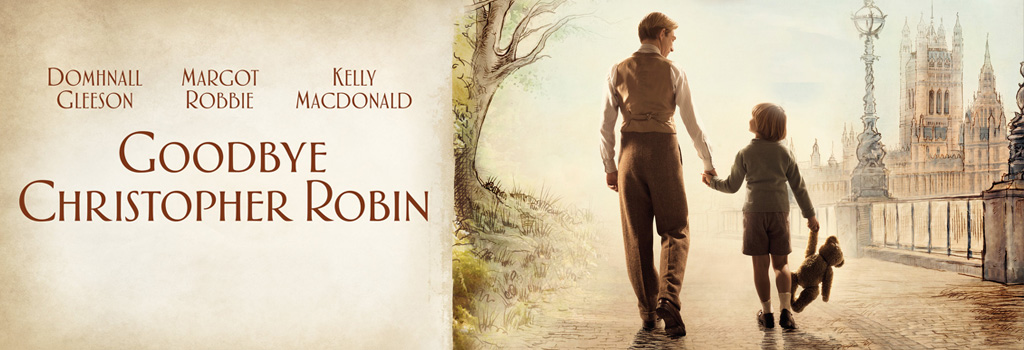
    “Goodbye Christopher Robin” (2016)

    Drama

    3-stars

    Running Time: 107 minutes

    Written by: Frank Cottrell-Boyce & Simon Vaughan

    Directed by: Simon Curtis

    Featuring: Domhnall Gleeson, Margot Robbie, and Kelly Macdonald

    Daphne Milne: “You know what writing a book against war is like? It’s like writing a book against Wednesdays. Wednesdays… are a fact of life, and if you don’t like them, you could just stay in bed, but you can’t stop them because Wednesdays are coming and if today isn’t actually a Wednesday it soon will be.”

    There are many films produced, in particular period pieces that cover events or play out like biographies that trade heavily on sentimentality, they attempt to get an audience on side by substituting fact or reality for some sort of imagined time where everything was better, when what you had in the past is lost in the present, whether that is music, family, places or anything else. In my mind this is cheap, quick, as well as being extremely unhealthy for a variety of reasons, the foremost being that this leads to people living in the past, ignoring the present and being afraid of a future. This new film “Goodbye Christopher Robin” (2017) could have traded on this but opts for a different narrative where there is a reality taking place, for the most part anyway – it works well, and may surprise audiences who are unaware of the true story behind one of the most beloved children’s stories of any age, ‘Winnie the Pooh’.

    What screenwriters Frank Cottrell-Boyce & Simon Vaughan have done long with director Simon Curtis, is to bring to light the origins of A.A. Milne’s ‘Winnie the Pooh’, where the inspiration came from as well as what was happening within the Milne family at the time. It is also a statement of not only how A.A. Milne felt about war after his experiences in World War I, but how many survivors of that war had to come home, carrying on like life was back to normal – of course they were all dealing with emotions that they were taught were meant to be locked away. The creators of this film have (almost) all had experiences in bringing true stories to the screen with varying results, mostly they are tinged with reality so as to bring the idea of conflict in creation to audiences – they seem to say that creation comes from conflict or unhappiness in some form – which judging from this film may be true.

    The film begins with A. A. Milne (Domhnall Gleeson) – nicknamed “Blue” by his friends and family fighting in the Battle of the Somme, then resuming his life in England while suffering shell shock, and having a child with wife Daphne (Margot Robbie). She was hoping for a girl and is disappointed to instead have a son whom they name Christopher Robin Milne but call “Billy.” They hire a nanny Olive (Kelly Macdonald) who is given primary responsibility for raising the child.

    Blue is having difficulty resuming his writing and relocates the family to a house in the country with wooded acreage. Daphne resents the move and at one point returns to London for an extended period. When Olive takes leave to care for her dying mother, Blue and Billy (Will Tilston) are left to fend for themselves for a time. Reluctantly at first, Blue takes Billy along on walks in the woods and begins making up stories about the boy’s adventures with the stuffed animals the parents have bought for him along the way.

    This film has so many themes as well as narrative flourishes that at times it threatens to come off the rails but ties all its plot points into a tidy conclusion that while it skirts the truth, does illustrate a family at a precarious time with many faults that did create something completely unique in ‘Winnie the Pooh’ that survives today, despite obstacles as well as true family tragedy.

    This is first and foremost a story about family, that shows three very unique individuals who battle with each other for the entirety of their lives which I am sure many families can identify with. All good stories will have reflections of real life, this one does too, but with an added twist. The twist is of course how the father and son create a world of their own that is then turned into a publishing phenomenon that still exists today, not only within books, but toys, many movies and almost any other form you can think of in ‘Winnie the Pooh’ and his world including his human confidant Christopher Robin.

    The parents here seem to be the ultimate party couple of the 1920s, with a social life as well as status that many would kill for even by todays standards – they figure, without any real thought, that they should have a child as they think this is what is expected of them. However like many young parents they have no idea what they are getting themselves in for, are unwillingly to let go of their pre-child lifestyle, so let the nanny raise the boy – he really is looked on as an aspect of their lives, not part of it and certainly not central to it. Of course this has the effect of alienating Billy, which leads to the issues that will complicate all of their lives later on in the story.

    The relationships that exist between parents and their children is not only a strong one but can also at the same time be fragile. We witness this first hand in “Goodbye Christopher Robin” where both mother and father love their child but somehow find it difficult to be parents, instead they opt as entertainer (mother) and absent father which means Billy is constantly craving attention or mimicking them in everyday life. It is not until the creation of ‘Pooh’ that we see some king of loving relationship between Blue and Billy, which actually only lasts a few weeks, but the memory is kept alive up until Blue decides to really push the bear in the mass market thereby betraying his son, which in this film he learns too late. This betrayal as well as the effect this has on the relationships between Billy and his parents is not fully explored in this film, which is one of the inconsistences between reality, and fiction, which cannot be overlooked in deciding on whether this film is worth watching.

    This is where the sentimentality of the film does some damage particularly in the conclusion of the narrative, which seems to indicate that Billy once back from the war returns home to his parents, thereby mending fences. This actually bellies what happened in truth, in fact Billy and his parents had a fractious relationship which lasted their entire lives, they were estranged, even mother and son did not talk for the last fifteen years of her life – which is extremely sad, not what the film would like you to think. There is a hint of how Billy felt about he commercialization of ‘Winnie’ in the closing moments of “Goodbye Christopher Robin” with one of the coda’s being:

    “Christopher Robin never took any money for himself from the vast income generated by the stories.”

    This has to be one of the most important pieces of information as it reflects how Billy felt about his and Blue’s creation. In fact there is a piece in the film where Billy reflects on how he experiences while in the Army during World War II how people felt about ‘Pooh’, in that they felt happiness in that fictionalized world – in reality the War opened his eyes more to the mass marketing that took place as well as the loss he felt of an intimate story that he thought he owned. The question is does any of this matter, when watching what is a part of someone’s life, as well as the creation that made them household names? The simple answer is not really as the movie does exactly what it set out to do and that is tell a whimsical story about a family, their relationships as well as the creation of ‘Winnie the Pooh’, which it does while doing what hundreds of movies have done in the past, that is bend the truth to make the fiction seem like fact.

    Apart from the amazing story this film tells, it also has a great cast that are all superb in their roles, with Domhnall Gleeson as A.A Milne, Margot Robbie as Daphne, Will Tilston as Billy and the most experienced actor in the cast Kelly Macdonald as Olive. There is no doubt that it is Gleeson and Tilston who have the most to do as father and son, they have to navigate their way through some very different emotions together which that execute extremely well. It is also not surprising that while Robbie is growing as an actress, taking on bigger and flashier roles (like “I, Tonya” (2017) she does not have a huge amount to do in this role, in fact she comes across as a flaky, selfish wife and mother. What was pleasing to see was Kelly McDonald cast in a smaller role than you might think, but is the emotional anchor to the film as well a conduit for parents and son to operate through, her character is also the audiences way into this world of highly charged emotion. McDonald was surely the right choice as one of the loves of Billy’s life. In saying that in regard to the adults, it is newcomer Will Tilston as eight-year-old Billy who shines and steals the movie from the more experienced adults. The movie comes alive whenever Tilston is onscreen playing Billy like a pro, never dropping the veneer of the boy who had such a complicated childhood as well as seemingly indifferent parents – he shines in a role that proves casting is so important when trying to convince audiences of a complicated boy whose childhood stories were shared with the world.

    “Goodbye Christopher Robin” is definitely a flawed film in terms of its relationship with the truth but this shouldn’t be something that dissuades audiences from seeing it, especially in cinemas as it does hold some universal truths about love, familial ties as well as being a story about one of the true phenomenon’s of the 20th century. What I also loved about the film is that it shares some of the same story telling DNA as other movies this year based around real people, Darkest Hour (2017) comes to mind immediately that trades some of its truth for audience pleasing moments. Not only that I was struck by the parents to Billy who echoed another Oscar nominated film Lady-Bird (2017) in the depiction of parents who do not have a clue how to even talk to their children on the most basic of levels. There is a lesson to all current and prospective parents to not take children for granted or to ignore their feelings as the price paid in their adulthood may be to much to bear in later life.

    “Goodbye Christopher Robin” is in cinemas now.


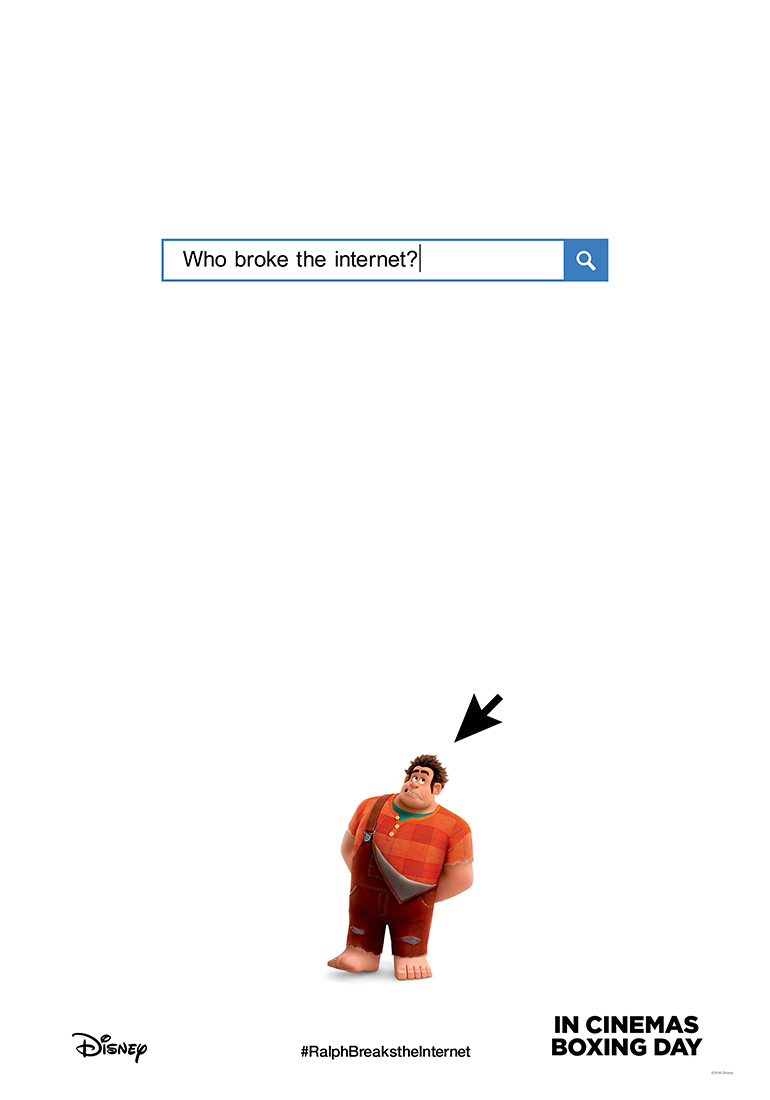
  • Trailer: “Ralph Breaks the Internet: Wreck-It Ralph 2” (2018)
    Error
    This video doesn’t exist

    “Ralph Breaks the Internet: Wreck-It Ralph 2” leaves Litwak’s video arcade behind, venturing into the uncharted, expansive and thrilling world of the internet—which may or may not survive Ralph’s wrecking. Video game bad guy Ralph (voice of John C. Reilly) and fellow misfit Vanellope von Schweetz (voice of Sarah Silverman) must risk it all by traveling to the world wide web in search of a replacement part to save Vanellope’s video game, Sugar Rush. In way over their heads, Ralph and Vanellope rely on the citizens of the internet—the netizens—to help navigate their way, including a webite entrepreneur named Yesss (voice of Taraji P. Henson), who is the head algorithm and the heart and soul of trend-making site “BuzzzTube.” Directed by Rich Moore (“Zootopia,” “Wreck-It Ralph”) and Phil Johnston (co-writer “Wreck-It Ralph,” “Cedar Rapids,” co-writer “Zootopia,”), and produced by Clark Spencer (“Zootopia,” “Wreck-It Ralph,” “Bolt”), “Ralph Breaks the Internet: Wreck-Ralph 2” hits NZ cinemas on Boxing Day, 2018.

    WIR2_TEASER_NEW_ZEALAND

  • Sneak peek: “Incredibles 2” (2018)

    Sneak peek: “Incredibles 2” (2018)

    Error
    This video doesn’t exist


    In “Incredibles 2,” Helen (voice of Holly Hunter) is called on to lead a campaign to bring Supers back, while Bob (voice of Craig T. Nelson) navigates the day-to-day heroics of “normal” life at home with Violet (voice of Sarah Vowell), Dash (voice of Huck Milner) and baby Jack-Jack—whose superpowers are about to be discovered. Their mission is derailed, however, when a new villain emerges with a brilliant and dangerous plot that threatens everything. But the Parrs don’t shy away from a challenge, especially with Frozone (voice of Samuel L. Jackson) by their side. That’s what makes this family so Incredible. Written and directed by Brad Bird (“Iron Giant,” “The Incredibles,” “Ratatouille”) and produced by John Walker (“The Incredibles,” “Tomorrowland”) and Nicole Grindle (“Sanjay’s Super Team” short, “Toy Story 3” associate producer).

    Disney•Pixar’s “Incredibles 2” busts into NZ cinemas on June 28, 2018.

    INCR2_TEASER_NZ

  • Trailer: “Rampage” (2018)
    Error
    This video doesn’t exist

    ABOUT RAMPAGE
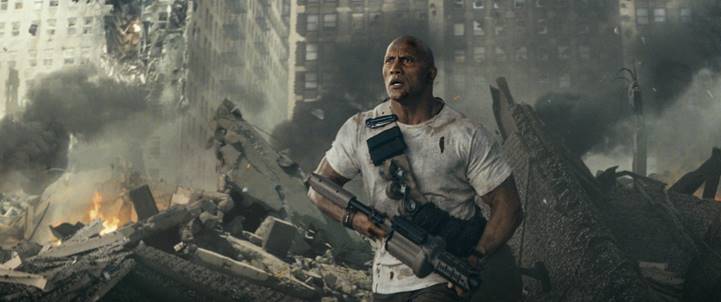
    Primatologist Davis Okoye, a man who keeps people at a distance, shares an unshakable bond with George, the extraordinarily intelligent, silverback gorilla who has been in his care since birth. But a rogue genetic experiment gone awry mutates this gentle ape into a raging creature of enormous size. To make matters worse, it’s soon discovered there are other similarly altered animals. As these newly created alpha predators tear across North America, destroying everything in their path, Okoye teams with a discredited genetic engineer to secure an antidote, fighting his way through an ever-changing battlefield, not only to halt a global catastrophe but to save the fearsome creature that was once his friend.

    RAMPAGE is directed by Brad Peyton and stars Dwayne Johnson, Naomie Harris, Malin Akerman, Jake Lacy, Joe Manganiello, Jeffrey Dean Morgan, P.J. Byrne, Marley Shelton, Breanne Hill, Jack Quaid, Matt Gerald, Jason Liles, Demetrius Grosse, Will Yun Lee.

    RAMPAGE releases in New Zealand cinemas on April 12, 2018.

    rampage spry film review 1

  • Film review: “Black Panther” (2018)

    “Black Panther” (2018)

    Action

    images

    Written by: Ryan Coogler & Joe Robert Cole

    Directed by: Ryan Coogler

    Featuring: Chadwick Boseman, Michael B. Jordan, Lupita Nyong’o, Danai Gurira, Martin Freeman, Daniel Kaluuya, Letitia Wright, Winston Duke, Angela Bassett, Forest Whitaker, and Andy Serkis

    Ulysses Klaue: “Tell me something. What do you know about Wakanda?”

    Everett K. Ross: “It’s a Third-World country. Textiles, shepherds, cool outfits.” 

    Ulysses Klaue: “All a front. Explorers have searched for it, called it “El Dorado”. They looked for it in South America, but it was in Africa the whole time. I’m the only one who’s seen it, and made it out alive.”

    “Black Panther” (2018) has to be one of the most anticipated superhero movies yet, with a bold director, a huge cast, some mavericks behind the scenes as well as a against the grain release date, this has all the markings of not only something new but a deviation as well as breaking new ground for Marvel Studios as well as parent Disney. Whilst the first few MCU movies laid the foundation for what was to follow, introducing new characters, integrating storylines and breaking new actors the middle movies were a little ho-hum treading water, attempting to let the ‘Avengers’ movies handle the heavy lifting. “The Avengers” (2012) was an unmitigated success, it did something that no one had ever seen before, but it was the follow up “Avengers: Age of Ultron” (2015) which was less than successful that changed things. It showed that audiences craved more, a little less integration, as well as maybe moving away from the infinity gems that had been holding everything together. Marvel films then pivoted slightly attempting to change what an MCU movie was by attempting to subvert expectations as well as what would be considered the norm for comic book movies.

    Which brings us to the movies that followed that were a little more self contained, had real stakes, better villains as well as not shying away from humor while maintaining a serious streak that would follow through to other movies and characters which has led to the rebirth of characters as well as breaking new ground. All of these aspects can be seen in “Guardians of the Galaxy” (2014), “Thor: Ragnarok” (2017), “Captain America: Civil War” (2016) “Ant-Man” (2015) and “Doctor Strange” (2016).

    Now comes what might be the MCU’s biggest gamble yet, the full length debut of the ‘Black Panther’ character, the first African, as well as African set character who was first introduced in “Captain America: Civil War” to great success, not only jump starting the movie but giving it a heart that it could rest its conclusion on. While this is not the first time an African American has directed a comic book film, that honor goes to the Hughes Brothers for “From Hell” (2001), which was based on a graphic novel. However “Black Panther” is the highest profiled film ever to be directed by an African American as well as having a majority of African Americans featuring in all the main roles. The leader of this movie is undoubtedly co-writer/director Ryan Coogler who will receive much of the acclaim or blame depending on how this is received, he seemed the obvious choice as he not only brings an immense amount of talent which can easily be seen in his previous efforts, his incredible debut “Fruitvale Station” (2013), as well as the Oscar nominated reboot “Creed” (2015). Coogler also brings his frequent co-star Michael B. Jordan (himself no stranger to superhero movies) as well as a host of willing collaborators, among them cinematographer Rachel Morrison (the first woman nominated for a cinematography Oscar this year) who lends the movie a shot in the arm visually, a departure from other MCU movies.

    “Black Panther” begins centuries ago, a meteorite of vibranium lands in the heart of Africa. Five tribes warred over the alien metal, until one warrior discovered the “heart-shaped herb”—a plant affected by the vibranium—which when ingested, gave him superhuman strength and reflexes. With these new abilities, he became the first “Black Panther” uniting the five tribes to found the nation of Wakanda. Using vibranium, the Wakandans developed highly advanced technology, but shut themselves off from the rest of the world, posing as a Third World country.

    In the present day, following the death of T’Chaka, T’Challa is to be crowned king of Wakanda. With help from Okoye, head of Wakanda’s royal guard the Dora Milaje, he extracts his ex-lover Nakia from her undercover assignment among human traffickers so that she can attend the ceremony. T’Challa is challenged for the crown by M’Baku, leader of the rival J’Bari tribe, but T’Challa defeats him in ritual combat and assumes the throne. This is when the movie really gets going and the narrative settles down to what might typically be a MCU origin movie, the plot then takes centre stage with some great deviations and revelations.

    The striking thing about “Black Panther” is that it is actually one of the more stand alone movies that the MCU has produced to date, it is an isolating movie in theme as well as practically. It is set in Africa in the fictitious country of Wakanda, with most of its running time restricted to that country, this works extremely well as it is concerned with its main character as well as the conflict he has both with his enemies and himself, as well as his place among his ancestors. This film portrays an African country with autonomy, agency as well as a King who is concerned with the protection of his people, who has a worldview that is narrow, so much so that there is little time for the outside world. Interestingly this is a stance that many right wing governments throughout the world are identifying with. There is no doubt that there is both a liberal and conservative streak existing in this film, with room for both – a lesson many could learn, there is no need for extremism as many live in the middle.

    At the heart of this movie is the central character of T’Challa (Black Panther) played by Chadwick Boseman who has not had the longest acting career in movies or television but to his credit has played many real life icons in US history such as Jackie Robinson in the underrated “42” (2013), Thurgood Marshall in “Marshall” (2017) and in what could have been a mistake the magnificent James Brown in “Get on up” (2014) where Boseman shines in what should have been an Oscar nominated role. What these roles have done in my mind is to prepare an actor like Boseman in playing people that are all larger than life, hold a very public profile, are seen as outsiders as well as having incredible drive to be successful as well as seeing others as real people. From the outside it may seem like easy casting, just get any black guy and put him in a suit, but the astute will see why Boseman was cast. As a Prince then King, Boseman exudes what it must be for a leader that could set millions free but knows to do this would exact a terrible toll – he seems to know when to bring what emotion and I cannot think of a better actor to play this part. The rest of the cast is excellent especially Michael B. Jordan who as a flawed version of T’Challa plays him as human as possible something Daniel Brühl did so well in a previous film. This is such a rich cast from a variety of backgrounds that all of them lend their own unique talents, adding to the overall tapestry of the film, which is excellent – I hope to see some of these supporting characters in other films.

    This is a wonderfully directed film with some real flourishes of the camera, as well as original digital backdrops and digital paintings, the colors are as you would expect rich as well as deep, which nods to the African colors that we are used to seeing in other productions. As well as all this the technology that Wakanda uses with all that entails mixed with some of the older weapons and buildings is very well done – nothing dominates too much, when you see Shuri’s lab there is a wonderful African mural in the background, or the energy weapons on the shapes of spears – all thought out so that there is real cultural representation. As you would expect the special effects, choreography and CGI are all at their very best with the Panther suit taking centre stage as well as some new gimmicks thanks to the incorporation of vibranium.

    The story as mentioned is as self contained as any previous MCU film has been, which is great because as the audience we are concerned only with the characters onscreen, they are all we need, as well as the issues that they are facing which are all too real and relatable to the world we live in. “Black Panther” touches on colonialism, interference in sovereign states, the military, cultural artifacts, the role of democracies as well as how best to help other countries and people without hegemonic domination as well as war. What is great is that it gives the main character the time and space needed to come to a compromise that will have the best effect all the while utilizing Wakanda’s vast resources.

    There is so much to this film; it is the gift that keeps giving. If you have the chance to get to this movie you should grab it. It is a chance to see a culture not seen in big budget comic book films; it borrows from African Nations but never seems to be just using a cultire but illustyrating how they work. It teaches that there is a price for honor that honor without sacrifice is worthless and living up to a promise is important. I recommend this to all and I cannot wait for more stories about Wakanda, the Black Panther and T’Challa himself.

    “Black Panther” is out now in cinemas only.

  • DVD & Streaming review: “A Dark Song” (2016)

    “A Dark Song” (2016)

    Horror/Fantasy/Drama

    images

    Running Time: 99 minutes

    Written & Directed by: Liam Gavin

    Featuring: Steve Oram and Catherine Walker

    Joseph Solomon: “You’ve been looking shit up on the Internet. No, this is Gnosticism.” 

    Sophia Howard: “I was told it was based on the Kabbalah.” 

    Joseph Solomon: “It’s there as grammar. A structure. The Kabbalah is an exploration of god. We’re doing something much darker…”

    The horror genre is absolutely full of unoriginal ideas, rehashed stories, half hearted attempts at telling what may seem like original ideas, but aren’t – each year sees more and more low budget time wasters that really needn’t have bothered – but sometimes, just sometimes something magical happens, a film comes along that not only breaks the mould but aims to rise above not just filling a horror narrative with jump scares and retreads – I am happy to say that “A Dark Song” (2016) is just that kind of movie. This is what genre films should be, metaphors for something real as well as adult, that has ramifications in the real world, with characters who are not only believable but also have agency as well as have real risk to what they are doing. This is such a well crafted horror film with pacing that belies its scares that you would be forgiven for thinking this was an experienced director and not a first timer.

    This is a stunning debut from Liam Gavin who seems to have come out of nowhere to deliver a film that has one toe firmly in reality, while skimming the borders of horror as well as fantasy as easy as anyone ever has. Gavin has not only written a tightly plotted story with a fairly simple story as well as employing only two characters, but has also made something that is pretty unique within not only the genre but also for first time directors. This is a story about isolation, love, anger as well as forgiveness. There is so much that is so right about this film that it will stay with the viewer long after the end credits roll. “A Dark Song” is something the horror genre lacks, a memorable experience that will leave a viewer wanting more.

    The film is based around Sophia (Catherine Walker), a middle-aged English woman grieving the death of her murdered son, seven-year-old Jack, who was abducted by a group of teenagers for a cult ritual. She rents a house in rural Wales and hires occultist Joseph Solomon (Steve Oram) to perform a months-long rite detailed in the Abramelin, European Kabbalistic grimoire, used to summon one’s guardian angel.

    The one word that I would use to describe “A Dark Song” is authentic, it is a film that takes itself seriously for its entire running time, which it has to if it is to work on any level at all. Gavin seems to have researched and written this film so well that it is easy to believe that the enchantments, spells and dogmatic rules that the main characters follow are all authentic and could be done by an experienced practitioner. That is something that is missing from many horror films which may seem odd but there is a large proportion of this film that is dedicated to process while ratcheting up the tension between the two characters as well as all the actual horror they both endure. “A Dark Song” is more than jump scrares, gore and creaking floorboards, there is an unsettling amount of reality and low-fi effects that add to the general eeriness inherent within the film.

    This is for all intents and purposes a two hander that is full of dialogue between the two extremely capable actors, Steve Oram and Catherine Walker who have been a staple of many independent movies as well as television in the UK for many years. Both are playing co-leads here and their experience counts for so much as does the trust they obviously have not only in each other but also in their director. It falls on Oram to do much of the heavy lifting for the first half of the film where he has to play his character on two levels, while being a manipulator throughout. It is up to Walker to be the instigator as well as antagonist and protagonist to almost everyone and everything else in the film, she also acts as not only a kind of femme fatale but unreliable narrator to the audience and Oram’s character as well. Without giving too much away this erstwhile revenge story takes Walker’s character on a journey to places she may never have really believed in or wanted to face about herself – she has to convince the audience of a variety of motives that lead to an original emotionally satisfying ending that much of the genre do not face up to, that is reality in relation to living life after tragedy.

    “A Dark Song” is all about loss and what that can mean to people, their identities as well as what they are willing to do to negate that loss. Of course at the heart of this film is a mother mourning the loss of her child, what that means to her as well as her inability to move on from that loss. Sophia hides aspects of her loss from Joseph, which makes things difficult between them, but it is not until she comes clean with him that the story really takes off as does Sophia’s journey into darkness. Throughout the film Sophia also loses her inhibitions, her innocence, her identity, her partner and ultimately choses to lose guilt as well as her hatred and want for some kind of revenge. Of course the story would not be complete without her gaining something as well, but it is with the loss that she really gains something, but that is for audiences to experience, which again is something unique about this film and has to be experienced.

    It is a joy to watch a film that is so perfectly paced as this one is, especially by a debut director who has the courage to stick to his guns in relation to not rushing the narrative to get to the plot. If anything this film is light on plot in terms of the actual story as well as the aims of the main characters, this is all accomplished naturally as there are only two characters to contend with, their own motivations are in fact relatively simple. This comes from the fact that there are few revelations or false starts as we see everything on the screen as it happens so it is a natural style of storytelling following a cause and effect style narrative which does have a natural conclusion. This to is something refreshing in the horror genre, as many films either set up some ambiguous ending, as the writers or directors either want to set a future up, or do not know how to end a story.

    The music by Ray Harman is an aspect of this film that is so impressive, Harman has a huge amount of experience in film and television, which shows when you experience how this movie is put together. This is not the normal horror soundtrack with a deep bass, loud then silent effects to influence an audience, not once does this soundtrack get manipulative, it is all subtly and atmosphere, which is also how the sound mix is – it is one eerie sounding film, I dare you to watch this in a dark room at night then try not to think about it as you go to sleep.

    This is not only one of the best as well as more enjoyable horror films I have ever seen, it has to stand as one of the best movies of 2017 in my opinion. For its budget, its small cast, the subtle effects as well as sound design and the fact it is a debut from a new writer/director this is a truly great film. This is just the latest horror film that the UK is producing seemingly at will. I cannot recommend this film highly enough, it proves that no matter how mined a genre is there is always something original to say with thought, emotion and originality – go and get this now, it is eminently rewatchable.

    “A Dark Song” is released on DVD on 18th March 2018.


  • DVD & Blu-ray review: “Bad Moms 2″(2017)

    “Bad Moms 2” (2017)

    Comedy

    stars-2-5

    Running Time: 104 minutes

    Written & directed by:  Jon Lucas and Scott Moore

    Featuring:  Mila Kunis, Kristen Bell, Kathryn Hahn,  Christine Baranski, Cheryl Hines and Susan Sarandon, Jay Hernandez , Justin Hartley and Peter Gallagher

    Kiki: “I spend months picking out the perfect present for everyone. You know the only thing I get in return? Coupons, free back rubs.”

    Amy: “That’s not okay.”

    Kiki: “Shitty back rubs.”

    I am not sure I really cared if there was ever going to be a sequel to the surprise hit from last year “Bad Moms” (2016), that on a meager budget of US$20 million grossed over US$190 million worldwide, which was a fantastic result for independent STX production as well as female led films – so it is really no surprise that it was decided to double down, with the aim of repeating the success of that first film – what studio would not want to try for a franchise, especially based around female characters, attempting to say something about empowerment of a sort. Of course that first movie leveraged off the natural talent and likeability of stars Mila Kunis, Kristen Bell, Kathryn Hahn as well as the movies antagonists in the shape of Christina Applegate, Jada Pinkett Smith and Annie Mumolo. This time around the previous cast has been slimmed down, only the ‘bad’ Moms have returned, the antagonists (of a sort) are their mothers, played by Cheryl Hines, Christine Baranski and Oscar winner Susan Sarandon, who in their own disparate ways attempt to make their time memorable.

    What is interesting about this sequel is that it was rushed into production, arriving just over a year after the release of the first movie. Not only that it has been written and directed by the same team of Jon Lucas and Scott Moore who are from the Todd Phillips stable of creatives, in case you are wondering, that is the guy who directed the now classic (tongue firmly in cheek) “Hangover Trilogy” (2009 – 2013). Like the first movie “A Bad Moms Christmas” (2017) seems to be attempting to make a statement about mothers as well as the stresses that come with that, but actually misses out on saying anything of real substance, that may be because too much attention is given to getting laughs, as well as concentrating on shock comedy, how many ‘fucks’ any one character can say per minute of screen time – in case you are wondering if that was the bar of success they surpass it with ease.

    The movie revolves around under-appreciated and overburdened moms Amy (Mila Kunis), Kiki (Kristen Bell) and Carla (Kathryn Hahn) rebel against the challenges and expectations of the Super Bowl for Moms: Christmas. As if creating the perfect holiday for their families isn’t hard enough, they’ll have to do it while hosting and entertaining their own respective mothers (Christine Baranski, Cheryl Hines and Susan Sarandon) when they come to visit.

    I wouldn’t call this movie a complete gross out comedy because there is really only one scene where this could even be considered gross out, and its not really that gross or offensive – it involves waxing. The fact is that for some reason women swearing as well as saying the word ‘pussy’ repetitively seems to be Jon Lucas and Scott Moore’s, the writer/directors, idea of humor. Of course to me there seems to be something at odds with men writing about a semblance of motherhood that is supposed to be, I assume, insightful – I have news for you just because you had a mother doesn’t mean you know what it is to be a mother or can relate to that individual stress.

    The narrative as well as the plot for this movie is deceptively simple, only half heartedly referencing the original movie in an awkward scene in a mall where the moms are drinking beer – this is a poor imitation of the genuinely funny scene in the first movie where the moms all commiserated over alcohol in a bar. The plot is so simple that I could not help but think that when the device of having the elder mothers make an appearance the writers took the rest of the day off, thinking they had discovered something original. Unfortunately this just meant that their device could fit snugly into a three-act structure, which it does, as well as try and say something about mother/daughter relationships, but it turns out to be unimaginative with little consequences for anyone. As with the first movie it seems that all these families have an endless supply of money to call on in a moments notice, thereby making this a movie for the 1% – there is actually a sickening amount of product placement as well as consumerism that speaks to excesses that maybe should have been examined instead of the faux ‘relationship problems’ that these people have. This is also relates to how the children in this movie come across, like spoilt kids that seem eager to blame their parents for their own shortcomings – I don’t think I would have ever treated my mother like they do, if I did my father would have said something about it – unlike the men here who all seem to have their balls chopped off.

    There is no denying that the movie is full of at least very good actors as well as people that are portraying characters that were built up from the previous movie – well almost, the elder mothers seem to be playing caricatures, which means that the writing has been weak or there has been no depth given to their parts. Even though “A Bad Moms Christmas” is billed as an ensemble, this is Mila Kunis’ movie, with her character being the center around which the other two moms, Kristen Bell and Kathryn Hahn, orbit. In fact Hahn is there to be the ‘rough’ mother, while Bell is some kind of ditzy blonde one – talk about all surface and no depth.

    All in all this is not a bad comedy, at least compared to the awful comedies that have been produced this year by major studios. To be fair this could have been at least as good as “Bad Moms” but I think the rush into production to meet a deadline had meant aspects of the movie are weak, which is a shame as I think these actresses deserve better. In saying that there are laughs to be had throughout the movie, but the plot is a little non-existent.

  • DVD & Blu-ray review: “The Snowman” (2017)

    “The Snowman” (2017)

    Thriller

    2-star-rating

    Running Time: 119 minutes

    Written by: Hossein Amini, Peter Straughan & Søren Sveistrup

    Directed by: Tomas Alfredson

    Featuring: Michael Fassbender, Rebecca Ferguson, Charlotte Gainsbourg, Val Kilmer, J. K. Simmons

    Katrine Bratt: “I think it’s the falling snow that sets the killer off.”

    This film should have been a slam-dunk from the outset, an adaptation of one of a series of novels written by superstar author Jo Nesbø, based around his alcoholic cop, Harry Hole, set in Norway within its breathtaking landscape and isolation. It had a stellar cast that any director would kill for, that would draw immediate attention to the film, ensuring that it would have the best chance of success. Speaking of directors “The Snowman” (2017) has at its helm a very good one in Tomas Alfredson, who had made an impact with his first major international hit “Let the right one in” (2008) following that up with the Oscar nominated remake as well as new adaptation of “Tinker, Tailor, Soldier, Spy” (2011). Unfortunately the wheels came off this production before it even started with a script that was not completed as well as timing issues with cast members and funding issues for what really is a modest production. The writing was on the wall for “The Snowman”, it was all bad which may spell the end for any more Harry Hole stories in the immediate future.

    “The Snowman” should have been a mid level adult thriller about a serial killer as well as the character of Harry Hole who sets out to catch him after being tormented by him. Alfredson had so much good will after his last film (“Tinker, Tailor, Soldier, Spy”) that he seemed like the logical choice to make this big screen adaptation, with a large international cast, hopefully balancing performance with tension, introducing an audience to a new flawed hero that would serve as the first in a line of movies for years to come. However after a failed start by Martin Scorsese, who serves as a producer in name only on this film, it seemed that this new director would be able to right the ship, but he has failed, delivering a mess that makes little sense, does not follow through on many plots or characters and wastes talent hand over fist.

    “The Snowman” is all about Harry Hole (Fassbender), an elite crime squad’s lead detective, investigates the disappearance of a victim on the first snow of winter, he fears an elusive serial killer nicknamed “The Snowman” may be active again. With the help of a brilliant recruit (Ferguson), the detective must connect decades-old cold cases to the brutal new one if he hopes to outwit this unthinkable evil before the next snowfall.

    Going into viewing this movie I was willing to give it a good chance, I mean how bad could this film be, really? Well the answer is very bad, of course the cast is just amazing, which goes a long way to understanding how good the source material is, as well as explaining that there was a good movie here somewhere. In the main role we have charismatic leading man Michael Fassbender who after many failed movies over the last few years looked to be onto a winner, as well as a character audiences could come to know, however this was a giant misstep for him as with such a flawed film it damaged his reputation as a solid leading man as well as someone audiences can trust to be in a good film – such a missed opportunity. This is not saying this is his fault, but maybe he needs to rethink his quality control so that these types of projects pass him by. The rest of the cast is made up of Rebecca Ferguson, Charlotte Gainsbourg, Val Kilmer, J. K. Simmons, Toby Jones, James Darcy, Adrian Dunbar and Chloë Sevigny all either given tiny parts, their plot threads left dangling or used in baffling ways that also impact on what this movie is trying to be, but ends up being less than the sum of its parts. These actors are all so talented that it is painful to see them misused in so many ways that are frankly baffling to me.

    To address the direction as well as the screenplay is an exercise in futility, the film begins with a tacked on beginning which half way through becomes boring adding little to what is to follow. There is supposed to be some deeper meaning within but honestly it lacks any real cohesive elements, which is something it has in common with the rest of the movie. There are actual characters introduced that once you follow their progression and their journey you realize pretty quickly that they make appearances for what must have been a completely different film. In fact even the killings that should be a progression of the plot seem pointless as well as, in some cases death is the only way any of the actors can be released from this off the rails movie. The logic to the movie seems to be make no sense either as characters make decisions that defy logic not only for people in real life but even for movie logic.

    There may be a tendency to see this film advertised to either purchase, rent or stream, however you will not be able to get the time back after watching it, and there are so many better versions of this film around at the moment. “The Snowman” is a serious exercise in futility as you watch it you may think it will get better, but it doesn’t, it starts bad and finishes that way as well. Once the end credits roll the inconsistencies as well as the plot holes, logical holes and the waste of talented people will hit you, and it should make you mad as the effort put into making this film has been a waste – there are not many movies that are made like this one anymore. In the 1980s and 1990s there were an abundance of adult thriller with great casts that served audiences as well as making real money but studios stopped making them, instead focusing on mega budgeted franchise films. Of late there have been a few mid level thrillers made, but if more end up like “The Snowman” then they will cease to be made and we will have to put up with more standard vanilla blockbusters instead of something smarter which is what we need.

    In saying all of that please don’t waste your time and money with “The Snowman” it does not deserve it one iota.

    “The Snowman” is out now on DVD & Blu-ray.

  • Streaming Review: “Altered Carbon – Season One” (2018)

    “Altered Carbon” (2018)

    TV Series/Sci-Fi

    3-stars

    Episodes: 10

    Created by: Laeta Kalogridis based on ‘Altered Carbon’ by Richard K. Morgan

    Featuring: Joel Kinnaman, Renée Elise Goldsberry, James Purefoy, Martha Higareda, Dichen Lachman, Leonardo Nam, Chris Connor, Ato Essandoh, Trieu Tran

    Laurens Bancroft: “This is where I was murdered.”

    The nadir of cyberpunk themed films is most definitely Ridley Scotts now classic “Blade Runner”(1982), that featured a dystopian future when artificial humans wanted to break free of slavery from their human masters. That film is closely followed by “The Matrix”(1999) which not only reinvented the Sci-Fi genre but like the former film has had to endure many imitators that were inferior to the originals. Now comes an adaptation of Richard K. Morgan’s novel ‘Altered Carbon’ into a ten episode Netflix television series. This is a sprawling messy adaptation that never reaches the heights of “Blade Runner” or “The Matrix”, (that might actually be asking too much) it lacks the originality of those two films but co-opts some of their visuals as well as ideas to create a tech-noir that never really lands or knows what it wants to be or where it wants to fit. The show trades on tropes from a variety of genres as you might expect, in fact after the first episodes you will have an idea of how this series will operate, with its writing, the noir aesthetic using bait and switches with plot as well as narrative through its entire run. The real question is does it work, is it satisfying and does it all make sense?

    There is no doubt that parts of the show work, in particular the action which leads to violence as well as the mise-en-scène which is co-opted from any number of cyber-pink movies, but if you thought you were watching a ‘Blade Runner’ television series at points you would be forgiven – ten years ago that may have been acceptable but considering the release of “Blade Runner 2049” (2017) it seems less like homage and more like rip-off. Wisely the showrunners have employed experienced television directors to helm the dense episodes so as to be able to communicate what is actually occurring in the plot as the narrative takes place not only over a number of timelines but a huge array of characters as well as gender bending, and identity blurring technology – it is a wonder that the plot can keep up at times, much less the audience watching.

    The series takes place approximately 350 years in the future, in the year 2384. In the future, people’s consciousnesses are contained in “stacks,” storage devices attached to the back of a person’s neck. Physical bodies are turned into “sleeves,” mere disposable vessels. Takeshi Kovacs (Joel Kinnaman), a violent mercenary, wakes up 250 years after his sleeve is killed, and he is given the choice to either spend the rest of his life in prison for his crimes, or help solve the murder of the wealthiest man in the world (James Purefoy). Takeshi was the sole surviving soldier of those defeated in an uprising against the new world order 250 years prior. This is probably as much as anyone going in needs to know as the plot takes off from the second episode and you had better be prepared to keep up.

    One of the major strengths of “Altered Carbon” is not only the direction, but the action that is contained within each episode. There has obviously been a considerable amount of time and resources spent on getting the action right, as well as how that action is portrayed by not only the actors, but the CGI elements as well, which for a genre show like this is vital as these episodes have to be sold on the look and feel of the environments. It is lucky then that they have been able to get physical actors like Joel Kinneman and Will Yun Lee who in their pasts have played some very physical parts so here they excel more than anyone else in this series. They are completely believable as the same person inhabiting very different bodies, both are intimidating in different ways, Kinneman with his size, Lee with his stature, he also uses above average acting skills as well.

    There are two other aspects of the series that are exceptional, they are linked, the first one is the look of the show as well as the settings that are by themselves exceptional, you can see that the budget of the series was well used as the physical as well as CGI environments are excellent – they do not do an old trick of reusing shots from show to show – binging was on the creators and producers minds obviously. The second aspect is the Hotel that Takeshi ends up occupying that is run by an AI, as well as that the Hotel is themed around the works of Edgar Allan Poe, it is even called ‘The Raven’ – the only staff member is the Manager, who of course is supposed to be Poe himself – he is also a bit overprotective of Takeshi which lends a bit of humor to the series, and in the final episode some real humanity.

    “Altered Carbon” has a very large and varied cast which is a nice experience to have, there are many cultures represented so we are able to have a varied experience with each of the original characters that are portrayed. What the series has gotten right is the casting of genre actors all who have extensive experience with the sci-fi genre as well as action orientated roles, it is also pleasing to see the cast made up of very different ages as well which again helps to give some authenticity to the characters they all play. The chemistry that grows throughout the series seems natural as well which is no mean feat, we feel at the end of the series we are not witnessing a new world but a community that has come together as naturally as any other.

    As we begin the series and for the first six or so episodes there is a dual narrative taking place where we are in the present for the main story but flash back to at least two other time periods and locations, where as the audience we are witnessing Takeshi’s origins and the reason he is in the situation he finds himself in. The idea of multiple narrative strands gives the series some depth at least on the surface but once it is dispensed with the show does become extremely formulaic, in fact even as the final episode ends there are traces of a story for a possible season two which seems to be a little trite as the viewer should be rewarded for staying with the show for ten hours.

    Which leads me to some of the downsides to the series as a whole, the first is that if you have seen the Joss Whedon series “Angel” (1999-2004) then you will have an idea of how “Altered Carbon” works, I mean it even takes place in a Hotel, the main character wears a trench coat for most of it, and he has a main side kick who obviously is in love with him, there is also a Scooby gang that end up helping him on his missions. Not only that but the plot is pretty standard nourish fair where there are unreliable narrators, femme fatales, betrayals and moving allegiances, the good guys are the bad guys and vice versa. The series is so nourish it even rips its episode titles from classic noir movies, which seems like a real afterthought. I can see the appeal of watching this series, particularly if you don’t have the knowledge or language to see the routine story as well as the plot devices that are used to push the story along – if however you have a working knowledge of noir as well as cyber stories you will recognize many of the elements that occur from episode to episode.

    For a series that is about personality, souls and what it means to be able to survive beyond a kind of death the series spends very little time actually analyzing what this might mean to an individual, or a society at large. There are some allusions to social justice, social welfare as well as the poor and the rich, what that means to a society when money and status still exists. However, that is framed by what the rich can still do to the poor as well as what they can get away with. Of course what this means is the show has an excuse to show men being violent towards women, which has to be the laziest trope in the entire series. It gives the show runners an excuse to have sex scenes, naked women and the aforementioned violence to them dressed up in some kind of girl power metaphor. In fact the skin technology that is used means there is just more of an excuse to treat women as just that, skins, for men to do with what they want, something the main character is in fact guilty of with regards to his sister.

    On the surface this is a show that is worth watching in fact if you have not seen anything like it before you will probably really enjoy it – but if you have seen other stories like this then it will not be anything new which is a shame because the main technology that exists really begs to be exploited in more og a philosophical way. I did find myself wishing the Wachowskis had have been behind it because the creator of the series, Laeta Kalogridis, does not seem to have the experience or skill to bring a decent adaptation out of the source material.

    Episode Guide:

    1. Out of the Past: Waking up in a new body 250 years after his death, Takeshi Kovacs discovers he’s been resurrected to help a titan of industry solve his own murder.
    2. Fallen Angel: While Kovacs tracks down a man who sent Bancroft a death threat, Lt. Ortega bends the rules to keep tabs on his whereabouts.
    3. In a Lonely Place: Kovacs recruits an unlikely partner to watch his back during a banquet at the Bancroft home, where Ortega oversees the night’s grisly entertainment.
    4. Force of Evil: Tortured by his captor, Kovacs taps into his Envoy training to survive. Ortega springs a surprise on her family for Día de los Muertos.
    5. The Wrong Man: After learning his sleeve’s identity, Kovacs demands the full story from Ortega. A tip from Poe leads to a major breakthrough in the Bancroft case.
    6. Man with My Face: With Ortega’s fate hanging in the balance, Kovacs drops a bombshell on the Bancrofts. Later, he comes face to face with an unsettling opponent.
    7. Nora Inu: As Kovacs reconnects with a figure from his past, his tangled history with the Protectorate, the Uprising and Quell plays out in flashbacks.
    8. Clash by Night: His world rocked, Kovacs requests a dipper to help him sew up the Bancroft case quickly. Ortega races to identify the mystery woman from Fight Drome.
    9. Rage in Heaven: After a devastating rampage, Kovacs and his allies hatch a bold – and very risky – scheme to infiltrate Head in the Clouds.
    10. The Killers: As a cornered Kovacs braces for a final showdown in the sky, a new hero emerges and more buried secrets come to light.

    “Altered Carbon” (2018) is streaming now on Netflix.


  • Streaming review: “The Cloverfield Paradox” (2018)

    “The Cloverfield Paradox” (2018)

    Sci-Fi/Horror

    3-stars

    Running Time: 102 minutes

    Written by: Oren Uziel and Doug Jung

    Directed by: Julius Onah

    Featuring: Daniel Brühl, Elizabeth Debicki, Aksel Hennie, Gugu Mbatha-Raw, Chris O’Dowd, John Ortiz, David Oyelowo, and Zhang Ziyi

    Mundy: “That’s my fucking arm!”

    In this modern age can a movie still be surprising, when there is twenty four hour coverage of behind the scenes stories as well as castings, announcements with every film production company trying to get the edge over another. I would have thought not, even when a fake movie is marketed like the possible “Crocodile Dundee” sequel that turned out to be a marketing campaign for Tourism Australia – I don’t think I have been more let down in some time when that was revealed. On the flipside of that there is the new ‘Cloverfield’ movie, “The Cloverfield Paradox” (2018), that has been teased for over a year, a release date announced of February then changed to April – with the big news as well as huge surprise that it would be hitting Netflix today (New Zealand time 5th February) – a shocking twist you might expect from a M. Night Shyamalan, not a Cloverfield film. This may be Netflix’s biggest gamble yet in terms of a high profile genre project, directly fighting its closest direct competitor, Amazon studios, by being able to surpise an audience, while being able to measure if a possible audience will sign up just to view this highly anticipated franchise genre entry.

    Of course there would be no franchise without super producer J.J. Abrams (he who is a hugely successful writer/director in his own right) who has seemingly handpicked the writers and director for this new film – all three being relatively untested in genre films, but who have an atheistic that is closer to Abrams own than at first glance. What is refreshing to see is that Abrams has tried to keep things fresh much like the first two films where relative unknowns steered the ship to create two of the more memorable as well as original hybrid horror/Sci-Fi movies around. Not only that but whilst the first movie was a found footage movie Abrams had the courage to deviate from that genre into more of a narrative feel that reflected the cold war Sci-Fi’s of the 1950s and 1960s. So now comes what must be the latest installment after title changes, date changes, as well as plot details that have constantly been revised in very public ways – the questions is of course does “The Cloverfield Paradox” live up to the hype, is it any good and will audiences be happy with this effort?

    In the near future, Earth is suffering from a global energy crisis. The collective space agencies of the world launch the Cloverfield station to perfect the Shepard particle accelerator, which if successful, would providing an unlimited supply of energy for Earth, but would be far too dangerous to test on Earth, some pundits arguing this would create the “Cloverfield Paradox” and open up portals to other dimensions to let monsters onto Earth. One of the crew includes Hamilton, who frets about leaving her husband Michael for potentially many years; the two have struggled with the death of their children years prior which has left their relationship cold. They are unable to get the accelerator working for about two years, but eventually, they are successful. However, the system overloads, causing a massive power surge on the station. When they restore basic functions, they find that Earth is nowhere to be found, and the station’s gyroscope, necessary for navigation, has gone missing.

    As each installment has progressed the actors that have been recruited have bigger name recognition to tie audiences into the characters that they portray. So with “The Cloverfield Paradox” it comes as no surprise that the large ensemble cast is not only international in flavor but has possibly the biggest names yet. There is no doubt that both David Oyelowo and Daniel Brühl are the anchors of this film who as you would expect are excellent in their roles as Commander and scientist respectively, they have been in enough films to know their characters as well as their roles in a genre piece like this – although it is safe to say that none of the cast involved have been in a movie quite like this. In saying that this is most definitely Gugu Mbatha-Raw’s film, she is the emotional lynchpin to this entire story, without her or her performance this film would be dead in the water. There is absolutely no doubt that with all the weird happenings within this film that Mbatha-Raw’s role is indispensible not only to the film but for the audience as well – her character is the one that we learn most about so is the one we care about, and it works extremely well – I can only assume this is Abrams influence as it comes across as very Spielbergian, who Abrams is a great fan of. The cast is rounded out with Chris O’Dowd as the comic relief and as usual he steals many scenes, there is also John Ortiz, Zhang Ziyi and Elizabeth Debicki who have their own motivations serving the plot extremely well, it is worth noting that all of the actors in this film could easily be leads of their own films – that is how strong this cast is. They all carry their loads well without once overplaying their own parts, it is a well oiled machine that operates effectively.

    The film does make the wise decision of only having only two locations so as to maximize tension as well as the budget that is required to make this type of film not only believable in its environments, but to give the characters something to work with that is solid. Julius Onah, the director, makes excellent decisions about the way he has shot this as well as how he reveals the plot through narrative although parts of this movie do feel like “Life” (2017) from last year, but with a steadier hand as well as working within an overall pre-existing narrative. I found it to be an excellent second film and look forward to more form this talented director.

    This film like the previous two entries in this franchise deals with isolation, the effect this has on people as well as how it is dealt with from a variety of perspectives. Many horror movies deal with isolated victims who are attempting to dodge certain death from an unknown entity or person – think about any horror film and many of them follow this trope. Mix in the technology angle that a Sci-Fi has at its heart and then you can add a variety of unknowns, which is what “The Cloverfield Paradox” plays off of. “The Cloverfield Paradox” also takes a trope that has been used in Sci-Fi films for years, the alternate universe and multiverse theory to power the plot as well as making it the reason for many of the action as well as horror. At this stage I would say it is not amazingly original but combined with a plot device that gives a solid reason for many of the characters decisions it is a good one – it is also a good move to make this movie about something other than tension, monsters and the unknown as it provides stakes the audience understands and we do not have to wade through plot to get to some twist or a ‘to be continued’ device like 10 Cloverfield Lane (2016).

    By itself “The Cloverfield Paradox” would be a very good Sci-Fi movie with a morality tale woven in to the narrative, but because it is part of the Cloverfield franchise it has some other heavy lifting to do which it does admirably. It goes along way to explain some of the events of the previous to movies although it does have the hard task of following those two excellent movies which it succeeds at considering it is making it up as it goes along – with an ending that could be considered routine as far as the genre goes. However this is a very good film from a novice writer and director with a killer cast that begs to be watched, possibly more than once, do yourself a favor.

    “The Cloverfield Paradox” (2018) is streaming on Netflix now.

  • DVD review: “Brigsby Bear” (2017)

    “Brigsby Bear” (2017)

    Comedy/Drama

    images

    Running Time: 97 minutes

    Written by: Kyle Mooney & Kevin Costello

    Directed by: Dave McCary

    Featuring: Kyle Mooney, Mark Hamill, Greg Kinnear, Matt Walsh, Michaela Watkins, Jorge Lendeborg Jr. and Ryan Simpkins

    It can sometimes be refreshing to watch a comedy that has a real heart but does not compromise on its set up, it characters or its eventual payoff. So many times movies trade off of a kind of nostalgia either using the past as a catalyst especially through media like music or other movies as well, which is a narrative short cut to enter a plot that otherwise may be simply a retread of another movie. I will not give an example of where this is unoriginal, but one when it is used effectively it works well much like the excellent and timeless “Galaxy Quest” (2005).

    Enter the world of the titular as well as fictional character of Brigsby Bear, a creation of a couple of addled minds as well as kidnappers of a child they have kept for years until his discovery. Writers Kyle Mooney and Kevin Costello have constructed an original movie around a kidnapping, a fictional television series as well as the way in which people construct their own realities (as well as others) around complex fictions that may seem real but are artificial in every way.

    “Brigsby Bear” (2017) is built around James who at the beginning of the movie lives in an underground home with his parents Ted and April Mitchum. Forced to stay underground by his parents, James’ only connection with the outside world is an educational children’s show called Brigsby Bear. James is obsessed with the show, owning every cassette, and filling most of his room with memorabilia. One night, while sneaking out to hang out on the roof, James sees several police cars approach the home and is taken away from Ted and April, who are arrested.

    James is then brought to the police station and meets Detective Vogel, who has been working on James’ case. Vogel informs James that Ted and April are not his real parents, and that he has been held captive ever since he was a baby. He also informs James that Brigsby Bear is not real, and was entirely made up by the Mitchums, with Vogel explaining that they tracked Ted from the studio where the show is made. Vogel then introduces James to his real parents, Greg and Louise Pope, and their teenage daughter Aubrey.

    The narrative is fairly straightforward following a simple story that is actually more like a fish out of water plot, wherein the hero of the story ends up enriching the lives of all those people he touches on his journey. In fact one could say that the director and writer of the film have seen the great Peter Sellers “Being There”(1979) one too many times. I am not saying that they have created copies the story, as the themes that are within both movies are universal. However in saying that the invention of the Brigsby Bear fake television show is inspired, a cross between any number of children’s shows as well as any genre show, in particular the comparisons to Star Trek cannot be underestimated. One of the more interesting aspects is the first ten minutes of the movie as we are introduced to what may seem like an odd family to say the least, as well as the environment they are all living in. Once the façade is broken and the ‘real world’ breaks through James has to be confronted by many different truths, which could break someone weaker, of course after a small period of adjustment he consciously or unconsciously finds a way to move on, accepting although not forgetting.

    This is a well-written movie from star/writer Kyle Mooney, co writer Kevin Costello as well as director David McCary who believe it or not are all first time feature filmmakers. While Mooney and McCary have previous experience in skit television as well as short movies they have never produced something on this scale or this emotionally complex, it is a feat to be sure. There are reasons why novice filmmakers make genre movies, they are (normally) inexpensive, have small casts, follow genre rules, take place in locations that are easy to light and are compact in plot. This first time movie breaks many of those rules or assumptions by casting really well, with some extremely well known actors, has a narrative built on many layers, has a complex central character as well as satellite characters and involves a few different locations, both inside as well as well as outside, with explosions. The movie does operate using genre to tell a story but it is a metanarrative that exists, it is used perfectly to act as a metaphor for the plot as well as the main character.

    The casting in this movie is perfectly done starting with Mooney who is playing an outsized character, a man-child that never feels hollow or false, which just illustrates what a terrific talent he is. The supporting cast is deep but it was the choice of Mark Hamill on a break from his ‘Star Wars’ duties that was the highlight for me, who in a just a few scenes has to portray a very complicated character, one that looms large in James past, present and future. The rest of the cast is rounded out with the always fantastic Matt Walsh and Michaela Watkins as James parents who are rightly worried confused by their son; previous Oscar nominee as well as perennially underrated Greg Kinnear as a Detective as well as somewhat supporter/enabler who harbors a secret of his own; Ryan Simpkins as James somewhat suffering younger sister, Jorge Lendeborg Jr. as a new friend for James, Jane Adams as his foster mother and Claire Danes as a mental health professional – just great as always.

    Of course the story would not be anywhere neat as fun and original without the titular creation, Brigsby Bear who exists as a childhood friend for James as well as the obsession that many childhood creations can become, just ask any ‘Star Trek’, ‘Star Wars’ or any other genre show that exists. Not only does Brigsby act as a friend in childhood as well as a distraction when he is older, but he is a link that exists between James and his foster (that is a kind term) parents – they can talk to him about the Bear at dinner as well as bond like few parents can, over a genre that many older people just do not understand. Of course when James attempts to explain the Bear to others most just don’t get it at all and think is unhealthy – except for Spencer who as a younger adult ‘gets it’. This friendship that forms between James, Spencer as well as Brigsby to be sure is something special, which grows in a way that nicely exploits social media, online video as well as the low cost technology that is required to do what eventually becomes the driving force behind the movie.

    Sure the movie itself is a little transparent as well as mining tropes as well as sentimentality but these are not totally negative developments as the heart that resonates comes from a pure place of comedy, drama and love for the differences that makes us all human. If you would like to watch a movie that wears its heart on its sleeve then this is highly recommended, it has some great performances, announces a couple of great talents to international audiences as well as creating something truly original in its central conceit.

    “Brigsby Bear” is currently available on DVD.

    Error
    This video doesn’t exist

    brigsby bear spry film review 6brigsby bear spry film review 5brigsby bear spry film review 4brigsby bear spry film review 2brigsby bear spry film review 1

    Brigsby Bear - Still 1
    Kyle Mooney appears in Brigsby Bear by Dave McCary, an official selection of the U.S. Dramatic Competition at the 2017 Sundance Film Festival. Courtesy of Sundance Institute | photo by Christian Sprenger.