• Trailer: “Second Act” (2018)

    “Second Act” (2018)

    Error
    This video doesn’t exist

    Second Act is a comedy in the vein of Working Girl and Maid In Manhattan. Jennifer Lopez stars as Maya, a 40-year-old woman struggling with frustrations from unfulfilled dreams. Until, that is, she gets the chance to prove to Madison Avenue that street smarts are as valuable as book smarts, and that it is never too late for a Second Act.

    SECOND ACT is directed by Peter Segal and stars Jennifer Lopez, Leah Remini, Vanessa Hudgens with Treat Williams and Milo Ventimiglia.

    SECOND ACT releases in New Zealand on 29 November, 2018.

    second act spry film review 1

  • DVD review: “Shōgun” (1980)

    “Shōgun” (1980)

    Television

    5stars_small

    5 Episodes

    Created by: James Clavell

    Featuring: Richard Chamberlain, Toshiro Mifune, Yoko Shimadav,Damien Thomasv,John Rhys-Davies

    Father Alvito:“You are a heretic Dutchman pirate! You’re going to die.”

    “Shōgun” (1980) has recently been released on DVD for at least the third time, the reason is clear it was one of the defining miniseries from a time that will never be seen again, when there was no CGI, everything had to be carried practically, audiences were massive and there was a genuine thirst for new stories and narratives.

    “Shōgun”  was primarly about John Blackthorne  and his adventures after his Dutch trading ship Erasmus and its surviving crew were blown ashore by a violent storm at Anjiro on the east coast of Japan. Blackthorne, the ship’s English navigator, is taken prisoner by samurai warriors. When he is later temporarily released, he must juggle his self-identity as an Englishman associated with other Europeans in Japan, namely Portuguese traders and Jesuit priests, with the alien Japanese culture into which he has been thrust and now must adapt to in order to survive. Being an Englishman, Blackthorne is at both religious and political odds with his enemy, the Portuguese, and the Catholic Church’s Jesuit order. The Catholic foothold in Japan puts Blackthorne, a Protestant and therefore a heretic, at a political disadvantage. But this same situation also brings him to the attention of the influential Lord Toranaga, who mistrusts this foreign religion now spreading in Japan. He is competing with other samurai warlords of similar high-born rank, among them Catholic converts, for the very powerful position of Shōgun, the military governor of Japan.

    “Shōgun” was produced after the massively successful television miniseries “Roots” (1977) ,  that success, as well as “Jesus of Nazareth” (1977), resulted in the production of many other miniseries during the 1980s. “Shōgun”, which first aired in 1980, also became a highly rated program and continued the wave of miniseries over the next few years as networks clamored to capitalize on the format’s success.

    “Shōgun” aired on NBC which achieved its highest weekly Nielsen ratings in its history, in fact its 26.3 average rating was the second highest in television history after ABC’s with “Roots”. An average of 32.9% of all television households watched at least part of the series. The miniseries’ success was credited with causing the mass-market paperback edition of Clavell’s novel to become the best-selling paperback in the United States, with 2.1 million copies in print during 1980, and increased awareness of Japanese culture in America. Interestingly the Japanese characters speak in Japanese throughout, except when translating for Blackthorne; the original broadcast did not use subtitles for the Japanese dialog. As it was presented from Blackthorne’s point of view, the producers felt that “what he doesn’t understand, we [shouldn’t] understand”.

    Shōgun broke several broadcast taboos and contained several firsts for American television. It was the first network show allowed to use the word “piss” in dialogue and actually to show the act of urination as a symbolic act of Blackthorne’s subservience to the Japanese ruling class and to punish him for saying “I piss on you and your country”, Blackthorne is urinated upon by a samurai. In the first episode Blackthorne’s stranded shipmate is suspended in a cargo net and dunked, screaming, into a boiling vat of soy sauce and water until Blackthorne acquiesces to the Japanese nobility. A man is shown beheaded early in the first chapter, another first for network TV. Men are shown wearing fundoshi. Mariko is shown naked in a bath scene, and when Blackthorne is reunited with his men, a woman’s breast is visible. Shōgun was also noted for its frank discussion of sexuality (e.g., pederasty), and matters such as Japanese ritual suicide (seppuku).

    If you have never seen “Shōgun” then you are in for a treat as it is a look back at how television used to be as well as the power of it to be a medium that people paid attention to in the tens of millions unlike in todays world where viewership is a fraction of that time. Not only that but it is interesting to see the technical changes as well as how the quality of the picture has altered over the intervening years. If you have a chance then purchasing this DVD will be ideal as well as a thoroughly entertaining watch, this was made for binge watching.

    Episodes:

    1. Set in early 17th-century Japan, shipwrecked English navigator John Blackthorne finds intrigue and culture shock in a feudal society that puts a premium on honor. A rival Lord sentences Blackthorne to death.
    2. After Lord Toronaga rescues Blackthorn from prison, he enlists him as his aide and names him, ‘Anjin-san’. Mariko is directed to tutor Anjin-san in the language and customs of Japan.
    3. Blackthorne and Mariko begin a romance; Toronaga continues to build his army for a battle with Ishido. Anjin-san proves his mettle during an earthquake and is honored by Toranaga for bravery. Mariko’s husband Buntaro, arrives in Anjiro.
    4. Anjin-san’s assimilation of Japanese ways is evident in his exemplary conduct. Toranaga decides to return the Erasmus to Anjin-san. Mariko tells Father Alvito of a plot to murder a Christian lord on the Council of Regents.
    5. Treachery, tragedy and turns of events occur. Toronaga becomes SHOGUN after the defeat of Lord Ishido. Mariko is killed in the final battle at Osaka Castle. Heartbroken, but resolute, Blackthorne begins construction of another ship.


  • DVD review: “Mum – Series 1 & 2” (2016 – 2018)

    “Mum” (2016 – 2018)

    Television

    images

    12 Episodes

    Created, written and Directed by: Stefan Golaszewski

    Featuring: Lesley Manville, Peter Mullan, Sam Swainsbury, Lisa McGrillis

    English television shows about singular characters are not new or even that original especially in this day and age which means that if you are wanting to watch new similarly themed shows then they had better have something to say that is at least original, hopefully compelling to audiences that may have at this stage feel like they have seen it all. This brings me to the new series “Mum” (2016-2018) which has just been released on DVD in New Zealand and Australia in one set containing both series.

    The show concerns a sixty-year-old woman who has become a widow in a time of her life where she should be enjoying not only her life but the remainder of it with her partner as well as her family and friends. It also shows how life can pass people by, one day they wake up, they are getting old, wondering where their life went as well as the shock that what they may have expected has been taken away in a very real way that signals the finite state of our existence. Of course these are pretty serious themes that are explored but are done so within the framework of what is a fairly standard British comedy framework that has been seen numerous times over the past decades. So the question that really needs answering is does this show succeed, is it worth watching and is it funny?

    “Mum” is a 2016 British sitcom written by Stefan Golaszewski centred around recently widowed, suburban 59-year-old Cathy (played by Lesley Manville) and her family, during the year following her husband’s death. Each episode is named after a calendar month in this year. Each episode is set in Cathy’s house and features her supportive lifelong friend Michael (played by Peter Mullan), and her family: son Jason and his girlfriend Kelly, Cathy’s brother Derek and his new partner Pauline, and Cathy’s in-laws.

    There is no doubt that this show is made all the better by the lead performance of Lesley Manville who has always been a great stage and screen actress but there gets to play a real person as well as being funny in a very dry kind of way, it is truly a subtle performance. It’s a quiet triumph, made all the more affecting by its attention to small detail next to the exaggerated portraits of those around her. It’s very funny, very affecting and reveals real insight into the ways humans covers up pain with brashness, silence, laughter or a smile.

    This show really looks at what happens when a partner dies and your life is changed forever. Consequently, a person may feel like they have also lost their purpose, certainly, there is a large element of confusion about what role you should play in the world going forward. The redefining of life after loss is one of the more overwhelming aspects of losing a spouse. As part of the grief process, it’s necessary to accept that your life will never return to the way it was before your loss.

    While you may have to figure out “what to do” rather quickly, figuring out the “who you are now” is usually a slow process. Often, it starts to happen naturally less from any deliberate actions that are taken consciously. So there may be an identifiable way that dynamics of old time friendships begin to shift. Beyond relationships there are other facets of life that people need to change. There is a bottom line – grieving is hard, and the inevitable changes that come packaged with your initial loss make it even harder to bear.

    There are elements of “Mum” that do seem out of place or reactionary, also sometimes the show does not seem to know what it is in terms of genre so there can be some inconsistency in terms of feel as well as humor. Is this a love story, a drama, a comedy, a social or political commentary, who really knows, these are things that should have been sorted out in the creation, maybe it will be something that is ironed out as the show movies forward, I hope so as the actor’s are better than the material for long stretches.

    The real reason to watch the show is Manville who has been such a great actress, it is easy to see why she is Mike Leigh’s most used actress, she adds some realism to the show that is needed, in a way I do wish that this was a one person show where we witness who journey after the loss of her husband with small appearances from her support people. This would really make the show about something many of us have or will go through at points in our lives, but it would also fit thematically as if this happens we are ultimately left alone no matter how many friends or family we have, we are the ones that either have to move on or remain stuck in some sort of limbo, which is what this show is about.

    I do recommend this show as a very good entertaining watch that does show there is life after sixty as well as life after the loss of a persons partner in life.

    Episodes:

    Series One:

    1. Cathy’s family gather at her house on the day of her husband’s funeral.
    2. It’s Cathy’s first Valentine’s Day without her husband, and her family come round to keep her company.
    3. The family help Cathy clear out her garage.
    4. Cathy gets ready to go for lunch with a new friend.
    5. Kelly is worried about moving to Australia, and Michael and Derek are recovering from a night out.
    6. Cathy hosts a New Year’s Eve party.

    Series Two:

    1. It is Cathy’s 60th birthday and to celebrate the family are going out to lunch.
    2. It is Easter Sunday and Cathy and Michael have plans to clear the front room together. Jason and Kelly have other ideas.
    3. It is early summer and Cathy has invited everyone around for a barbecue. Pauline and Derek bring his punk daughter, Danielle.
    4. Kelly and Jason are leaving early on holiday. Michael has had a bad night.
    5. Maureen is in hospital. Cathy sees Michael for the first time in months.
    6. Cathy is having a bonfire. Michael is moving on but Cathy has something to tell him.

    “Mum” is out now on DVD.


  • DVD Review: “The Prisoner” (1967 – 1968)

    “The Prisoner” (1967 – 1968)

    Television

    5stars_small

    17 Episodes

    Created by: Patrick McGoohan and George Markstein

    Written by: Patrick McGoohan, David Tomblin, Anthony Skene, Terence Feely, Vincent Tilsley, George Markstein

    Directed by: Patrick McGoohan, Pat Jackson, Don Chaffey, David Tomblin

    Featuring: Patrick McGoohan

    Number 6: “I will not make any deals with you. I’ve resigned. I will not be pushed, filed, stamped, indexed, briefed, debriefed or numbered. My life is my own. I resign.”

    Arriving once again on DVD this month is the British television series “The Prisoner” (1967-1968) which was a 17-episode series first broadcast in the United Kingdom in September 1967. It stars and was co-created by Patrick McGoohan, combining spy fiction with elements of science fiction, social and political metaphors with a psychological twist that reflected some of the concerns of its time as well as being prescient to the times that would follow over the coming decades from the time of its production.

    The series followed a British former secret agent who is abducted and imprisoned in a mysterious coastal village resort, where his captors try to find out why he abruptly resigned from his job. Although the show was sold as a thriller in the mould of the previous series starring McGoohan, Danger Man (1960–68; retitled as Secret Agent in the US), its combination of 1960s counter cultural themes and surrealistic setting had a far-reaching influence on science fiction and fantasy TV programming, and on narrative popular culture in general.

    The series follows an unnamed man (played by Patrick McGoohan) who, after abruptly and angrily resigning from his job, apparently prepares to make a hurried departure from the country. While packing his luggage, he is rendered unconscious by knockout gaspiped into his London flat. When he wakes, he finds himself in a re-creation of his apartment, located in a mysterious seaside “village” within which he is held captive, isolated from the mainland by mountains and sea. The Village is further secured by numerous monitoring systems and security forces including a militarised, balloon-based device called Rover that recaptures or destroys those who attempt escape. The man encounters the Village’s population: hundreds of people from all walks of life and cultures, all seeming to be peacefully living out their lives. They do not use names, but have been assigned numbers, which give no clue as to any person’s status within the Village, whether as inmate or guard. Potential escapees therefore have no idea whom they can and cannot trust. The protagonist is assigned Number Six, but he repeatedly refuses the pretence of his new identity.

    “The Prisoner” over the past six decades has been one of the most analyzed shows ever created, it has at times been unavailable after its broadcast then when the the VCR became popular shows like this were reintroduced to a new market, the same thing with DVDs especially with the relative low cost which meant that these types of series that ere cultish. became the property of a mass market, so once again were asking to be analyzed. Probably the most cultist and analysed show in television history. Of course it helps the longevity of the series that the themes are linked to society that has changed so much through social, political and technological upheaval that audiences today can glean as much today as people were able to in the 1960s.

    The series was seen by many as a direct follow on from McGoohan’s previous series in which he played secret agent John Drake, and although McGoohan himself insisted that it wasn’t the same character, it has been suggested that this claim may have been made to avoid having to pay a hefty royalty to Danger Man creator Ralph Smart. There has always been dispute over who originally came up with the idea for The Prisoner, both McGoohan and script editor George Markstein laying claim. From the formers point of view, an isolation camp for British Agents who knew too much had figured in the Danger Man episode ‘Colony Three’, and it was whilst on location for this series that McGoohan discovered Portmeirion in South Wales, which featured as ‘The Village’. However, whilst serving with Army Intelligence during the second World War, Markstein had supposedly discovered the existence of a remote Scottish castle which acted very much as an isolation centre for military personnel, whose knowledge of classified material made it impossible to allow them their freedom during such a sensitively dangerous period. (Many years after, Markstein would cite this as his prime inspiration for The Prisoner’s core concept).

    The Prisoner was a stylish production with the star as executive producer and very much in control of the direction the series took, indeed it was McGoohan himself who penned the final episode, “Fall Out” which promised to give all the answers -but ended up asking more questions. We never actually discovered who Number One was although at the beginning of each show when McGoohan asked the question, ‘Who is Number One?’ he received the reply, ‘You, are Number Six’. Or could it have been “You are, Number Six!”?, for certainly in the final episode Number 6 actually removes a mask from the face of the supposed Number One -only to reveal himself underneath it.

    This of course is a prime example of the ambiguity that has kept fans of the series debating for years hence, even after (many years later) Patrick McGoohan claimed that his intention was for The Prisoner to be an allegory in which the people, places and happenings hide a message, the message here being that we are all prisoners of ourselves. By turns infuriating, complex, oblique and thought provoking, The Prisoner stands, even today, as a perfect example of original and entertaining television storytelling, as well as the almost overpowering need of one complexly gifted man to challenge the limits of a too often ephemeral and trivial medium.

    The fundamental political, social and technological conflict in the world today is, as it has been for a much of the past hundred or so years is individualism versus collectivism. Does the individual’s life belong to him—or does it belong to the group, the community, society, or the state?

    Individualism is the idea that the individual’s life belongs to him and that he has an inalienable right to live it as he sees fit, to act on his own judgment, to keep and use the product of his effort, and to pursue the values of his choosing. It’s the idea that the individual is sovereign, an end in himself, and the fundamental unit of moral concern.

    Collectivism is the idea that the individual’s life belongs not to him but to the group or society of which he is merely a part, that he has no rights, and that he must sacrifice his values and goals for the group’s “greater good.” According to collectivism, the group or society is the basic unit of moral concern, and the individual is of value only insofar as he serves the group.

    When we look out at the world and see people, we see separate, distinct individuals. The individuals may be in groups (say, on a soccer team or in a business venture), but the indivisible beings we see are individual people. Each has his own body, his own mind, his own life. Groups, insofar as they exist, are nothing more than individuals who have come together to interact for some purpose. This is an observable fact about the way the world is. It is not a matter of personal opinion or social convention, and it is not rationally debatable.

    These ideas are at the very heart of “The Prisoner” which is one of the reasons why after decades it is still a fascinating watch that never gets old, in fact it is probably one of the most important as well as one of the greatest shows ever created.

    Episodes:

    1. “Arrival” – After waking up in the Village and discovering his captivity there, Number Six encounters a friend from the outside who may have a possible escape.
    2. “The Chimes of Big Ben”– A new prisoner, Nadia, may have information about the Village that makes an escape attempt possible.
    3. “A, B and C” – A desperate Number Two tampers with Number Six’s dreams to discover where his loyalties lie.
    4. “Free for All” – Presented with the opportunity, Number Six runs for election to the post of Number Two.
    5. “The Schizoid Man” – Number Two replaces Number Six with a duplicate to weaken the real Six’s sense of identity.
    6. “The General” – An important prisoner’s new speed-teaching machine poses perhaps the greatest threat to Number Six’s independence.
    7. “Many Happy Returns” – After waking to find the Village deserted, Number Six returns to England but does not know whom he can trust there.
    8. “Dance of the Dead” – Number Six tries to save an old friend who is headed for destruction at the hands of the Village.
    9. “Checkmate” -Number Six thinks he has a means to tell the prisoners from the wardens.
    10. “Hammer into Anvil” – Number Six takes revenge on a sadistic Number Two for the death of another prisoner.
    11. “Its your Funeral” – To save the prisoner who is being set up to take the fall, Number Six must intervene in a Village power struggle and prevent the assassination of a Number Two.
    12. “A Change of Mind” – Number Two stirs the Village to ostracize Number Six, and then takes even more drastic measures to cure Six’s “unmutuality”.
    13. “Do not forsake me oh my darling” – Deprived of his memory and placed in another man’s body, Number Six travels back to England to seek a missing scientist. Nigel Stock portrays Six for most of this episode.
    14. “Living in harmony”- In an Old West setting, a lawman who resigned is trapped in a town called Harmony where the Judge wants him to be the new sheriff — by hook or by crook.
    15. “The girl who was death” – Number Six avoids the assassination attempts of a beautiful woman while foiling the plots of her megalomaniac father.
    16. “Once upon a time” – Number Two subjects Number Six to a desperate, last-ditch effort to subdue him, Degree Absolute — an ordeal that will not end until it breaks one of them.
    17. “Fall out” – Number Six encounters the forces behind the Village, but can he finally escape?

    “The Prisoner” is out now on DVD.


  • New Trailer: “A Simple Favour” (2018)
    Error
    This video doesn’t exist

    “A Simple Favour”, centres around Stephanie, a mommy vlogger who seeks to uncover the truth behind her best friend Emily’s sudden disappearance from their small town. Stephanie is joined by Emily’s husband Sean in this stylish thriller filled with twists and betrayals, secrets and revelations, love and loyalty, murder and revenge.

    A SIMPLE FAVOUR is directed by Paul Feig and stars Anna Kendrick, Blake Lively, Henry Golding, Andrew Rannells, Linda Cardellini, Jean Smart and Rupert Friend.

    A SIMPLE FAVOUR releases in New Zealand cinemas on September 20, 2018.

  • DVD Review: “Sapphire & Steel” (1979-1982)

    “Sapphire & Steel” (1979 – 1982)

    Television

    5stars_small

    70 Episodes

    Created by: Peter J. Hammond

    Featuring: David McCallum and Joanna Lumley

    Narrator: “All irregularities will be handled by the forces controlling each dimension. Transuranic heavy elements may not be used where there is life. Medium atomic weights are available: Gold, Lead, Copper, Jet, Diamond, Radium, Sapphire, Silver and Steel. Sapphire and Steel have been assigned.”

    There really is something very special about British science fiction television series of any age really, but the period of the 1970s through to the mid 1980s saw some of not only the most iconic or greatest shows but also some of the most unfathomable, in particular the series “Sapphire and Steel” (1979 – 1982) which has been released on DVD for at least the third time still shows no sign of aging. In fact it seems to be a smart more aloof diversion to more popular serials of the day such as the juggernaut that was “Doctor Who” (1963-present), the most obvious series to compare it to. When viewing the series the show was more Nigel Kneale’s ‘Quatermass’ than the aforementioned ‘Dotor Who’ as it asked the viewer to invest some of their own sci-fi expertise to fully internalise what was going on with the lead characters, which for someone young was baffeling. Over the intervening years I have gron to love the series with its existentialist narrative as well as the very little known backgrounds of its titular chaarters, there was even a question around whether they were heroes or villians. Of course the figuring out was part of the fun, as it remains to this very day, it helps the show that David McCallum and Joanna Lumley portrayed the leads that then and now are absolutely fascinating in their portrayal as well as their endless charisma that informs their roles.

    The series itself centered on a pair of interdimensional operatives, the titular ‘Sapphire and Steel’. There is not much revealed about their actual purpose or backgrounds in the course of the series but they appear to be engaged in guarding the continuing flow of time. They are two of several elements that assume human form and are sent to investigate strange events; others include Lead, who takes the aspect of a jovial, friendly giant, and Silver, a technician who can melt metals in his hands.

    In the series, it is explained that Time is like a progressing corridor that surrounds everything, but there are weak spots where Time – implied to be a malignant force – can break into the present and take things. There are also creatures from the beginnings and ends of time that roam the corridor looking for the same weak spots to break through.

    These breaks are most often triggered by the presence of something old in a modern situation, for example a traditional nursery rhyme, an old photograph, or a house decorated with antiques. Holding onto something of the past opposes progress and allows ‘Time’ to break into the present – the more old things present, the easier it is for this to occur (such as is seen in episode 1 where the house is full of antiques in which a traditional nursery rhyme is read). When this breaking-in of ‘Time’ occurs, Investigators will be sent to assess the situation and then, if intervention is warranted, Operators are assigned to deal with the problem by a mysterious unseen authority, to be assisted by Specialists if necessary.

    What made “Sapphire and Steel” so special was the top notch writing, production as well as the acting that combined to make an incredibly restrained yet knife-edged and electric atmosphere that was readily apparent whenever an episode is viewed, this atmosphere remains one of the prime constants of the entire series

    Written by Peter J. Hammond as well as featured writers Don Houghton and Antony Read took very familiar ghost stories, emphasising atmosphere and as such favouring patient, delectable build-up that drew out the tension masterfully. This is coupled with the use of small, intimate groups of characters often confined to tight, boxed-in locations like railway stations and lost & found stores to ramp up the feeling of claustrophobia.

    The fact that so little is made explicit in the show helps drive the feeling of being beset by abstract, incomprehensible forces that seem to skirt reality in ways many lessor shows attempt to do now but rarely succeed in the ways “Sapphire & Steel” did for surely too short a time which is the real shame of the series.

    To be fair along with the great writing and the amazing production as well as the attention to detail would be for nothing without the genius casting in the leads with Joanna Lumley and David McCallum. The cool detachment and aloof natures of the agents reinforce the sense that events are beyond the humans both in the series and viewing it. Yet, when on the rare occasions that these calm, measured performances are broken this only serves to heighten the importance and tension of the proceedings.

    The fact that this series works at all almost forty years later is a mark of the quality of it as well as the daring that existed in its creation. With so many science fiction properties caught up in the never-ending explanations or deep background narratives that exist it is a treat as well as a promise of quality that there never needed to be explanations which goes to the existence of life itself within a time narrative. As with a narrative device such as time there is a concentration on the importance of artifacts, much like in our daily lives where as we age there is am importance on old photos, or items that relatives and friends have either owned or given us that have the power to make us reminisce – something that is powerful in the way we as humans think and operate in our day to day lives. Imagine if these items had real power to literally physically break into the present, there would be nothing more powerful, now imagine if that breaking in had the effect of being destructive; this is what the series is about. Taking this one step further the power lies in asking a question that if there was a break in time, this would lead to being able to revisit older times with people long gone, who would not want this?

    So this is the genius behind “Sapphire & Steel” which is out now on DVD, a show worth owning to view, then view again, it is that good as well as overlooked, possibly taken for granted.

    Series Breakdown:

    Series 1:

    Serial One: A happy family lives in an 18th-century house filled with clocks and antiques. One night, a nursery rhyme (“Ring a Ring o’ Roses”) read aloud to Helen, the little girl, triggers a time fracture that takes away her parents. As Rob, Helen’s older brother, tries to understand what has happened, two mysterious strangers appear, promising to fix things. Sapphire and Steel eventually gain Rob’s trust and work out a solution to the problem. Lead also arrives to provide assistance.

    Serial Two: In an abandoned railway station, ghost hunter George Tully conducts an investigation. His solitary task is interrupted by the two interdimensional operators, who have an investigation of their own. A sinister, growing force known as the Darkness is feeding on the resentment of the dead, using as a focus Private Sam Pearce, the apparition of a World War I soldier shot and killed eleven minutes after the armistice had been signed at the eleventh hour of the eleventh day of the eleventh month in 1918. The Darkness ‘recruits’ other resentful shades from the past who also died ‘unfairly’ as a result of a coming or completed conflict — such as the crew of an experimental submarine whose air-pumps failed, and a World War II bomber pilot killed in a crash just one flight away from being demobbed. It is up to Sapphire and Steel to decide if the life of one living human is worth the price of the danger presented to Reality.

    Series 2:

    Serial Three: Rothwyn and Eldred, a couple living in a modern apartment, are not what they seem. In fact, they are from the 35th Century, the apartment is their time capsule, which is situated on the roof of a modern day tower block, and the experiment is to live as 20th Century humans. But trouble starts when the couple discover that they can neither contact their controllers in the future nor two other similar time capsules in the present day. The biomechanical system that runs the capsule has experiments of its own that it plans to perform on the occupants – resenting the fact that in the 35th century, Mankind is the only animal not extinct; all other creatures, flora, fauna and even germs having been ruthlessly eradicated in order to preserve the purity of the human race. This time, Sapphire and Steel have help in the form of Silver, an interdimensional technician.

    Serial Four: Phantom children with sepia-toned skin play in an almost deserted apartment building. Both the landlord and a tenant have mysteriously disappeared. A man without a face appears on the stairs. Something has emerged from a photograph; something which has appeared in every photograph ever taken anywhere in the world and is powerful enough to turn Sapphire and Steel into literal two-dimensional versions of themselves.

    Series 3:

    Serial 5: Dressing up and pretending that it was once again the 1930s seemed to be a novel idea for a dinner party hosted by Lord Mullrine, a wealthy industrialist, at his country mansion to celebrate fifty years since his company was founded with the late Dr. George McDee. Mullrine has even gone so far as to have every room in the house, with the exception of his office, put back to its original style. Then, strange things start to happen: McDee himself turns up at the party along with other anachronisms, and then, one by one, the guests begin to be murdered – their bodies vanishing shortly afterwards. Secrets and lies involving McDee from fifty years before are resurfacing, Time is trying to rewrite history, and the only ones who can stop it are two uninvited guests — Sapphire and Steel.

    Series 4:

    Serial 6: The scene for Sapphire and Steel’s latest investigation is an abandoned roadside café where time has stopped. However, they find that Silver has arrived before them – which is against normal procedure. The interdimensional operatives remain uncertain as to exactly what they are supposed to be investigating. The key may lie in two humans in the café who claim to be from 1948.


  • DVD & Blu-ray review: “Ready Player One” (2018)

    “Ready Player One” (2018)

    Sci-Fi

    3-stars

    Running Time: 140 minutes

    Written by: Zak Penn & Ernest Cline

    Directed by: Steven Spielberg

    Featuring:  Tye Sheridan, Olivia Cooke, Ben Mendelsohn, Lena Waithe, Letitia Wright, T.J. Miller, Simon Pegg, and Mark Rylance

    James Halliday: “Hello, if you’re watching this, I’m dead. I created a hidden object, an Easter egg. The first person to find the egg will inherit half a trillion dollars and total control of The Oasis itself.”

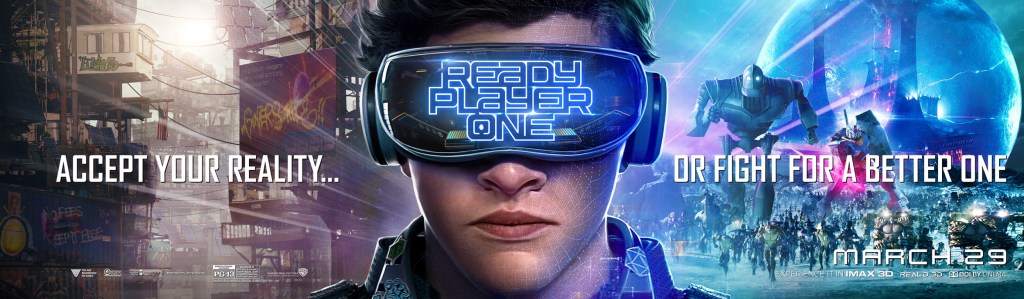
    I have to admit to being guilty of building this new Steven Spielberg film up in my mind particularly after the first trailer, with it nod to popular culture of the 1980s as well as its gamer sensibility, of course not forgetting its name which many young men first witnessed in that same time period. “Ready Player One” (2018) seems genuinely designed for those people that thought rebooting “Ghostbusters” (1986) as an all-female group was a bad idea, those middle class white morons who think that liking genre material is just for them, and if you are any different then look out – have a look at the hatred that was laid on Leslie Jones a few years ago. In fact, with Spielberg doing the rounds at the moment and his references to new media you might be forgiven for thinking that he might be one of those people. This is a movie full of white people (with some token minority sidekicks) with problems that will be foreign to most, it is set in the future built around some of those same characters Spielberg made famous and made him one of the richest and most successful filmmakers ever. This film is a love letter to that audience that think their childhoods are sacrosanct and should remain how they remember them – so this isn’t really that original, not only that it is homogenized. Also, it is following one of the most successful films ever in the genre breaking culture smashing “Black Panther” (2018) – to me “Ready Player One” does not just look out of place but even with all the special effects and IP just looks white and tired.

    There is no doubt that this film is being sold on one word, that is ‘sentimentality’, while that in itself is not a bad thing, it can be when that it is used as a way to misremember the past or brush over the negative aspects of it – which of course there are, we do not live in a perfect world, we certainly don’t love in a fictionalized one. There is no doubt that this movie is a lot of fun, it has big screen action that only someone like Spielberg can deliver, it is based on a best-selling novel that seems to have been created with this movie in mind, it offers so much that after a while it becomes a little tedious – I get it, large corporations are bad, individuality is good – but really is this something that I haven’t heard before, I mean I studied it in school with “1984”, and even then it wasn’t an original thought. Ultimately while a lot of fun I could not help but think that the film is far less than the sum of its varied and colorful parts. Problems occur when there is such a broad story told without the real close up on individuals and their motivations for their own actions.

    The film is set in 2045, much of Earth’s population centers have become slum-like cities due to overpopulation, pollution, corruption, and climate change. To escape their desolation, people engage in the virtual reality world of the OASIS (Ontologically Anthropocentric Sensory Immersive Simulation), where they can engage in numerous activities for work, education, and entertainment. Users have discovered hidden with OASIS “Anorak’s Quest”, a game created by the late James Halliday (Rylance), the creator of OASIS. The first to find the Easter Eggs with Anorak’s Quest is promised full ownership of OASIS among other gifts. This has attracted a number of Gunters (“egg hunters”) to play the game. Innovative Online Industries (IOI), the manufacturer of most virtual reality equipment, also seeks ownership of OASIS, and its CEO, Nolan Sorrento (Mendelsohn) has amassed an army of indentured players, known as Sixers (due to their six-digit identification), to seek the prize. However, to date, no one has been able to complete the first quest, finishing a vehicle race across an ever-shifting dangerous cityscape. From here sides are drawn and we are witness to the race for the golden ticket.

    There is no doubt that the stars of this movie are the genre pieces that have been brought together under one roof as well as the involvement of super producer/director Steven Spielberg whose own oeuvre is noticeably absent – there are no Gremlins, velociraptors, evil trucks, ‘War of the World’ style aliens or even a Dr. Jones anywhere to be seen, in fact there are lots of Warner Brothers properties (although no DCEU or LOTR) and a bunch of Universal properties as well (although no Fast and Furious, Classic Monsters). It’s an odd thing to think of the world in thirty years with some major properties absent as well as no ‘Star Wars’, MCU or Pixar characters which seems like an obvious flaw – Disney for good reason didn’t want to lend out their IP.

    For my mind I was struck by how reductive as well as fairly ho hum this film ends up being, I am actually at a loss as to why Spielberg even wanted to be part of it. His films lately have fallen flat to say the least, following on what should have been a slam dunk with “The BFG” (2016) disappointed not only at the box office but critics shunned it as well. Last year there was the project that should have been at least an Oscar contender, “The Post” (2017) was shunned in favor of newer more relevant films, now we have a big budget genre piece that while a younger Spielberg may have taken chances, the director now 72 seems to be showing his age, perhaps questioning relevance as well as seemingly second guessing himself with choices of projects. Even his next two movies, a remake of “West Side Story” (1964) and another Indiana Jones movie – in 2018 do we really deserve these two movies? While it’s true that there are few directors in Spielberg’s class, certainly there are few of any age that could get any movie they wanted greenlit. In saying that when Clint Eastwood was 72 he directed Oscar Winner and box office hit “Mystic River” (2003) and was about to direct Oscar Winner and box office hit “Million Dollar Baby” (2004), even now Eastwood at age 88 he is making more interesting choices as well as original movies than Spielberg has since the 1990s. A person closer to Spielberg’s age is Martin Scorsese whose own oeuvre is littered with odd choices although continues to make a huge impact in other ways, such as his excellent documentaries, and could you ever imagine Spielberg making a movie like the thematically rich period piece “Silence” (2016)?

    It feels to me that having been so successful Mr. Spielberg seems lost in what he wants to make as well as the kind of films that he has left in him. His record is envious both as director and producer but his output recently has been not only questionable but his lack of not only his own self, but the changing culture he is living through leaves much to be desired. “Ready Player One” looks like a movie that itself is lost, it covers broad themes in ways a more juvenile director might push them, it has at its heart a white savior surrounded by sidekicks that smack of Short Round from one of his more mistake ridden and narratively flawed movies “Indiana Jones and the Temple of Doom” (1984). As I mentioned the idea that white people can solve the world’s problems is an idea from a much older generation, one that we see reflected in positions of power whether it be Trump, Weinstein or any right wing government going – I would have thought with Spielberg’s own background he would have known better – but this is a person that was a little cerebral than his other classmates, such as Coppola who while more maverick tackled issues far more complex than Spielberg ever has – he paid a price for his bravery, maybe it’s time for Spielberg to pay a price for his pop culture ideas.

    The film itself takes far too long to get to its point as well as endlessly explain itself in at the beginning to set up the entire world as well as an ending that is narrated to a point that there can be no guessing as to what we are witnessing. In fact, the entire movie is filled with exposition, so much so that I almost though old Basil may turn up to give a half time lecture. The old adage is that cinemas is a visual medium, it may have been a better idea all round if this has been embraced.

    The cast is young and has to carry much of the film, one of the only adult characters that is given any real time is Australian Ben Mendelsohn who seems to be asleep through most of the running time, he comes off like many of the adults as one note and paper thin. In fact the entire narrative is taken from Road Dahl’s ‘Charlie and the Chocolate Factory’, which has been made twice into movies, that contain more surprises and depth of character than this one. The explanation behind that is easy, the film is co-written by hack in the making Zak Penn who has never met a script he couldn’t dumb down and reduce to its basic elements, as well as being a franchise killer – we can thank him for “X-Men: The Last Stand” (2006).

    This may have come off like bashing a movie but actually “Ready Player One” is an enjoyable romp if you don’t look too deep – the interplay between the characters is as you would expect very well executed. The world of the OASIS is rendered perfectly and the characters from different genres and times mix well together. The highlight of the film for was the section where the gang enter the world of Kubrick’s “The Shining” (1982) where things go wrong for all involved, as well as revealing one of the secrets that the gang are searching for. There are many moments like this, with throwbacks galore, like the high-tech world that most of the world lives in, which is juxtaposed by the fact that when searching for films videocassette covers are used – then they enter the relevant world through a cinema. Of course, as we are learning less and less people actually go the movies and video cassettes left us as a viable medium twenty years ago. One wonders if Kubrick would have appreciated the use of his movie in this way, lucky he never found out.

    There is enough pop culture touchstones to keep anyone amused for the runtime of “Ready Player One”, even at almost two and half hours, I did find myself clockwatching a little, but it does crack along so there are few down times. This will not be your first run in with many of the properties in this movie and they are for the most part used well, my favorite was seeing the Iron Giant again, part Terminator and part Pinocchio he was a welcome return to cinemas, one I have been waiting for some time. It may have been more appropriate for an up and coming director to really bring some originality as well as zest to this, maybe Spielberg at this stage of his career should be reaching for the stars and not looking at tropes that have been around for some time and executed better, if you want to see how it should be done go and watch “The Matrix” (1999).

    “Ready Player One” is out now on DVD & Blu-ray.

  • 4K Blu-ray review: “A Quiet Place” (2018)

    “A Quiet Place” (2018)

    Thriller/Horror

    images

    Running Time: 90 minutes

    Written by: John Krasinski, Bryan Woods and Scott Beck

    Directed by:  John Krasinski

    Featuring: John Krasinski, Emily Blunt, Millicent Simmonds, Noah Jupe

    Evelyn: “Who are we if we can’t protect them? We have to protect them.”

    Critical Commentary:

    Thanks to various decisions as well as new production companies, I am looking at you Blumhouse, there seems to be more and more quality horror movies being produced each year, as well as finding success with audiences and critics, most importantly this is happening in theatres. It appeared that with last years “Get Out” (2017) which was produced for US$4.5 million dollars and generated over US$255 million at the box office as well as being nominated for a slew of Oscars (winning Jordan Peele the best screenplay award) the limit may have been reached for measuring success in the genre – it appears that the top has not been reached for this genre, not even close. Now comes the release of not only a great horror movie but of a great film, in “A Quiet Place” (2018). Firstly, surprise of surprises this is not a Blumhouse film, it is a production company known for Horror remakes, Platinum Dunes who counts director Michael Bay as one of its main owners, as well as counting its biggest success as the remake, “A Nightmare on Elm Street” (2011) – not a great pedigree at all or an example of the promise of producing what must be the Hollywood movie of the year so far, at least on a par with the critical and box office success of “Black Panther” (2018), look for a possible screenplay nomination come awards time for Krasinski and co.

    “A Quiet Place” owes much of its success in terms of quality to co-writer, director and star John Krasinski whose talent he seems to have been hiding in even though he has written and directed other projects. He seems to have shinned the idea of making genre movies which after this home run appear that he has a natural talent for as well as a calling. This movie is so well written and directed that it is an almost perfect genre film feel, not only that it has a great central idea with much of the narrative naturally built around it as well as taking it further to producing something truly rare, an original monster movie that is actually hard to compare it to any other film of its kind. It cannot be understated how impressive this movie is as well as the incredible job that Krasinski has been able to pull off not only with an original script but also with a relatively low budget that is shot on location with some studio work. Not only that but one of the central aspects of the film is the use of sign language and Krasinski as well as his producers have done something that few have done before, that is to actually cast a deaf actress in the part of a deaf character, making that person the central character that not only the narrative is based around but the plot is as well. “A Quiet Place” is an example of taking a script, casting it perfectly, operating within a low budget as well as creating a visual style that suits the genre.

    The film is set in 2020, most of Earth’s human population has been wiped out by sightless creatures with hypersensitive hearing and a seemingly impenetrable armoured shell that attack anything that makes noise. The Abbott family — husband Lee, wife Evelyn, congenitally deaf daughter Regan, and sons Marcus and Beau — silently scavenge for supplies in a deserted town. Though skilled in American Sign Language, the family must nonetheless be vigilant lest they make accidental noise. Four-year-old Beau is drawn to a battery-operated space shuttle toy, but his father takes it away. Regan returns the toy to Beau, who unbeknownst to her has also taken the batteries his father removed. Beau activates the shuttle when the family is walking home through the woods, near a bridge. Its noise makes him an instant target for a nearby creature, and he is swiftly killed.

    There is no doubt in my mind that this movie is perfectly cast with a mixture of experienced as well as great actors, juxtaposed with some new talent that prove themselves to be well chosen as well as being able to match talents with the more experienced cast members. As well as John Krasinski in the role of the father there is his real life wife Emily Blunt in the role of the mother. Krasinski is just wonderful as the father who only has one job, protect his family at all costs; he is a smart resourceful man who speaks very little, as all good actors do conveys emotion as well as plot details through his face as well as sign language. Emily Blunt as the mother of the family has more speaking parts but also carries much of the emotion of the film; she also has to do a lot of physically nuanced acting which is a challenge in its own right. It would not be fair to the other cast members to say she is the central character or hero of the piece but she as an actress is rewarded by a great script as well as a solidly written character. The cast is rounded out by three children Millicent Simmonds, Noah Jupe and Cade Woodward who are all excellent as well as perfectly cast, but it is Simmonds who steals the movie as the oldest child as well as the chief agent of change who really comes through by the end of the movie. Simmonds is also really deaf so of course there is an authenticity to her role, which informs the entire film as well one of the main reasons the family, has lasted so long, surviving on wits as well as intelligence. She is also a revelation although she has appeared in other movies before it has to be said that “A Quiet Place” is one of those special films that allows her to show a full range of emotions as well as acting both physically and emotionally in a very good movie, one of the best of the year so far.

    Whilst this is definitely not Krasinski’s directorial debut there was little hint that he had a film like “A Quiet Place” within him or ready to be made. It is an old adage that film is a visual medium but when the subject of the movie is being is silent then there is no room for endless exposition, which has become a hallmark of Hollywood movies in recent years with exceptionally lazy film-making. In fact from the opening scene this movie represents itself as something that has seldom been seen, an English language movie that uses American Sign Language as its language with the need for almost total sub-titles throughout. The conceit that almost any noise could be met with death is an almost primal feeling of what could be represented as isolation. Imagine being surrounded by people but not being able to speak, not being able to communicate the most basic pieces of information – even though you are with someone it is isolating bur anything else will effect everyones survival. The question remains is that without human communication do we survive or just prolonging the inevitable. From the very beginning we realise that something has happened to the world, the family we see is terrified, it is not until the use of newspapers as prime information both in the streets as well as at the family’s home do we know what is occurring, as well as the reason why there is fear of noise of any kind which has been replaced by silence, deafening in a way.

    What Krasinski has done is to take a conceit like aliens or monsters hunting through the use of sound and expanded on that with many issues and solutions that are extremely well thought out as well as being told in a very compact and economical way. I will not spoil anything but there are many situations that have been mapped out in full, with obstacles as well as solutions, which fit well with the overall narrative as well as plot. This is something many genre movies could learn from, come up with a story that will fit within a narrative then realise the strengths and weaknesses of any antagonist as well as the protagonists – exactly what Krasinski has done as co-writer and of course director.

    In many ways “A Quiet Place” does nothing that hasn’t been seen in many genre movies before but where it deviates from a vast majority is to take the typical monster movie, then give it a twist in terms of not only its narrative but the way the rules operate in its particular universe. It also heightens the mood and atmosphere by making this a family drama not as a result of the invasion but making this the central aspect of the plot, which again differentiates itself from other genre movies. The themes of family protection as well as the idea of familial loss and the ability to move past tragedy is as important as fighting the aliens or surviving in a hostile world. I recommend “A Quiet Place” highly and am not being original or alone as one of the best movies of the year so far, go and see it in a cinema where hopefully the audience will play along with the great narrative.

    Technical Commentary:

    Vital Disc Stats:

    “A Quiet Place” arrives on 4K Ultra HD Blu-ray as a two-disc combo pack with an UltraViolet Digital Copy. At startup, viewers are taken directly to a static screen with the usual selection along the bottom and music playing in the background.

    The Video: 

    “A Quiet Place” has a great-looking HEVC H.265 encode that offers an excellent step-up over its Blu-ray counterpart. The difference is obvious, notable and extremely enjoyable, making it the endorsed medium for viewing the movie.

    Coming from a 35mm source that was later mastered to a 2K digital intermediate, the freshly-minted 2160p transfer is highly-detailed for a majority of the runtime, exposing each element that is available in close up as well as a depth of field like few low budget movies around. However, there are a few moments that noticeably dip in resolution, most of which are extreme long shots and likely the result of the creative choices. Nevertheless, a visibly thin and stable grain structure, which can be a bit more prominent during several wide shots at night, which is a big chunk of the movie, provides a beautiful film-like quality.

    Presented in its original 2.39:1 aspect ratio, the 4K presentation comes with a slightly warmer than normal contrast balance, which tends to lightly bloom some of the hottest areas. This appears to be a deliberate visual style meant to reflect the family’s hot country surroundings. In either case, whites are crisp as the brightest spots are revealing especially with the times during the day, however as the movie heads into darkness these become rare.

    Thankfully, brightness levels are not affected by the stylized photography, which is important in a movie mostly unfolding at night. Deeply rich and silky blacks are in abundance and show distinct gradational differences between the various shades, providing the image with appreciable dimensionality. Meanwhile, inky, dismally bleak shadows penetrate deep into the background, but sadly, the finer aspects are occasionally engulfed by the pitch-black darkness.

    Audio:

    “A Quiet Place” arrives with a reference-quality Dolby Atmos soundtrack that takes full advantage of the object-based format. The design utilizes silence and noise for generating a particular experience. It’s not meant for bombarding the audience with the typical loudness as well as brute force expected of the genre, of which there are a few, but for creating a sense of dread and apprehension. So, various ambient effects, like the rustling of leaves, birds chirping or crickets singing in the distance, are endlessly occupying the surrounds and the ceiling channels. The better moments are those when the creatures are on the prowl or to give a greater sense of their menacing size. Their hungry growls and slow, determined footsteps flawlessly pan from the sides and rears into the back heights and continue directly overhead into the fronts.

    The Supplements:

    Reading the Quiet (HD, 15 min): Standard EPK-like featurette made of BTS footage and cast & crew interviews discussing the plot, its themes, the performances and other aspects of the production.

    The Sound of Darkness (HD, 12 min): As the title implies, a short piece on creating and editing the sound design with particular attention on the film’s creative effects, lack of dialogue and the ominous musical score.

    A Reason for Silence (HD, 8 min): Devoted to the specifics of designing the alien creatures

  • Trailer: “The Wife” (2018)

    Trailer: “The Wife” (2018)

    Error
    This video doesn’t exist

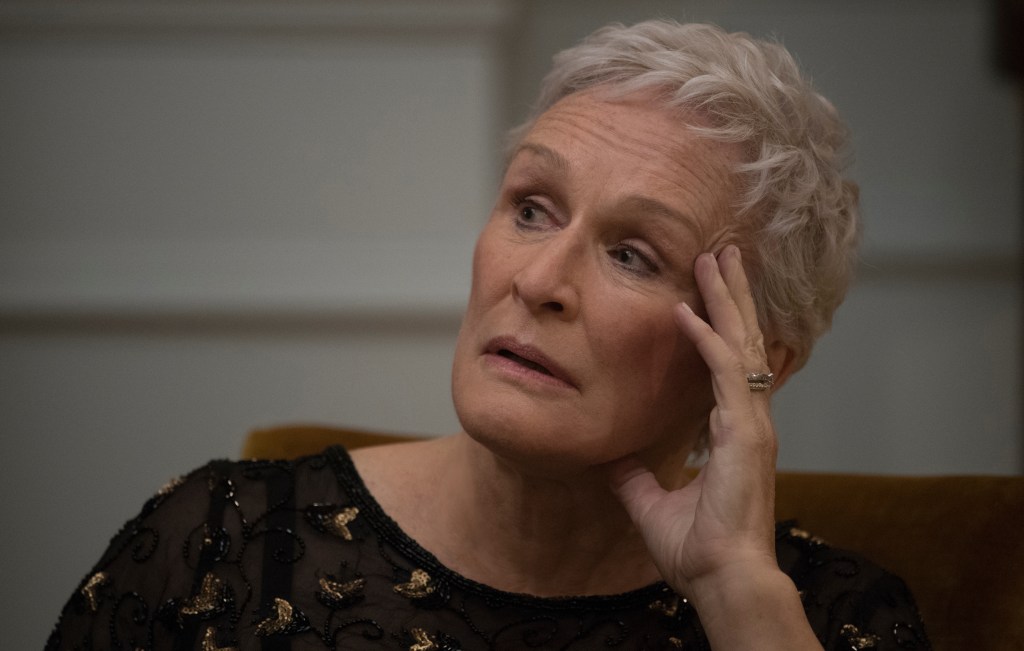
    Joan Castleman is a highly intelligent and still-striking beauty — the perfect devoted wife. She has spent 40 years sacrificing her own talent, dreams and ambitions to fan the flames of her charismatic husband and his skyrocketing literary career, ignoring his infidelities and excuses because of his art with grace and humor. Their fateful pact has built a marriage upon uneven compromises, and Joan has reached her breaking point.

    “The Wife” is released in New Zealand on 2nd August


  • DVD review: “Blockers” (2018)

    “Blockers” (2018)

    Comedy

    images

    Running Time: 102 minutes

    Written by: Brian Kehoe & Jim Kehoe

    Directed by: Kay Cannon

    Featuring: Leslie Mann, Ike Barinholtz, John Cena , Kathryn Newton, Geraldine Viswanathan, and Gideon Adlon

    Mitchell: “I used to hold that girl in the palm of my hand.”

    Marcie: “Kayla’s becoming a woman; you’re going to have to deal with that.”

    There is no doubt that last year was a terrible time for the comedy genre, while many of the best laughs in movies came from action and comic book movies, the best example being  the MCU movie “Thor: Ragnarok” (2017) with actors more synonymous with drama than comedy, giving some of the lighter moments of 2017. Now comes the DVD release of one of the better comedies from the past 12 months in “Blockers” (2018), although it is following some very good examples of the genre from 2018, including the surprisingly funny “Game Night” (2018). However unlike many comedies this one is a great example of a movie that is very definitely set in the present as well as being a movie that is not afraid to embrace reality with some biting satire that touches on the very real relevance of being an adolescent today coupled with being a parent. We are  also equally shown what it is like being a parent in very different ways to very different children and how that landscape has changed over the past twenty-five years. “Blockers” is something that is quite rare, a comedy that is R-rated, that is at times smutty, at times audacious but is told from a very feminine point of view, whether that comes from the script (I doubt it), from the female director or from the experienced female producer (Tina Fey) we may never really know, one thing is for certain, this is a great comedy that tells us something about our children that grow up fast as well as their parents who sometimes just have to accept that fact or risk alienating them forever.

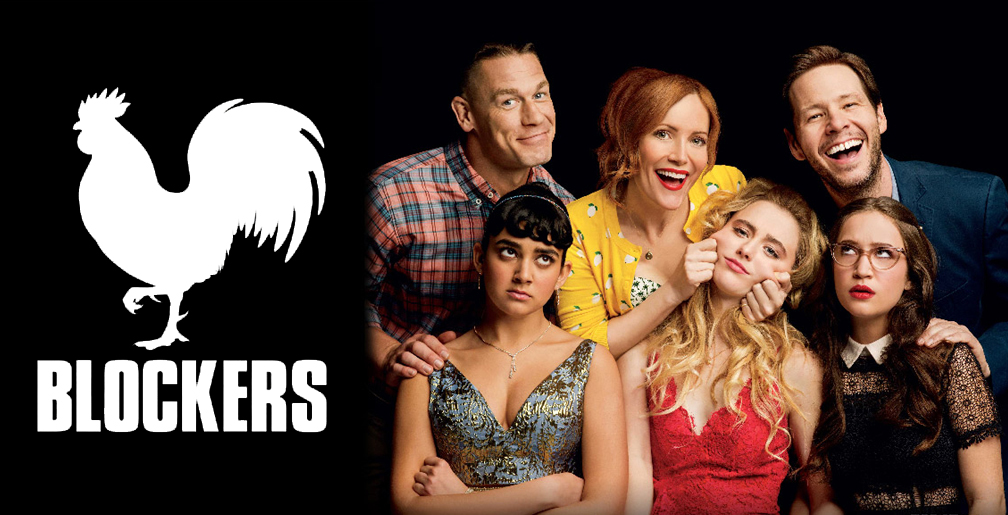
    There is so much within this movie that on the surface is a complete misfire which explains why it was only a modest success at the box office, the initial trailers were not good as well as not being a great reflection of what was at the heart of the movie. The title is not fantastic either with a rooster then the name blockers on the advertising material (in case you missed it that’s ‘Cock Blockers’) which only lends to the image of this being a misogynistic movie about sex, with comedy thrown in which is not a reflection of the past two years of social and political commentary. However, when watching the movie it becomes apparent that there is more going on than meets the eye or in the advertising, in that we witness some not only gross out comedy but a plot that has something to say about roles of people in society as well as how we choose to interact with our children, other people who may be important to us in the short and long term.

    “Blockers” has been written by Brian & Jim Kehoe who have very little experience in making movies but it has been directed by first timer Kay Cannon who has left her stamp all over this comedy in such a good way. The good news is that Cannon is probably better known for writing the screenplay to the excellent “Pitch Perfect” (2015) which like this movie is more than what can be seen in a trailer or on a poster, the bad news is that she is also responsible for the two sequels which are as reductive as a movie can get as well as being a product of ever diminishing returns. What is of particular excitement in regard to “Blockers” is that Cannon has been able to take a story that on the surface is seemingly as reductive as the two ‘Pitch Perfect’ sequels and put an original spin as well as her stamp on it and make it not only original but fun.

    The movie revolves around Julie, Kayla and Sam who are three high school seniors that make a pact to lose their virginity on prom night. Lisa, Mitchell and Hunter are three overprotective parents who flip out when they find out about their daughters’ plans. They soon join forces for a wild and chaotic quest to stop the girls from sealing the deal — no matter what the cost.

    In many ways there are two sets of casts, one are the children, one are the parents, all of them are exceptional with the movie really being stolen by the parents, as they have all the heavy lifting to do as well as reaping the laughs. So it is important that the parents were cast well, boy were they, starting with John Cena who proved how funny he could be with “Trainwreck” (2015). Here he is actually playing a character who while in some ways is not a million miles away from himself, importantly he is playing a three dimensional fully formed father who in many ways is like real fathers everywhere but who has a very real arc that helps inform the movie in many ways. Then there is Leslie Mann who is the defacto lead of the movie as well as the parent who seems to have the most to lose with her daughter, who has to come to terms with her own daughter as well as the fact that she might be leaving, so coping is something she has to learn to deal with. Finally there is the very broad Ike Barinholtz who like many of the movies he appears in really steals the show, here he is not only playing a very outrageous character but someone who accepts people for who they are, which is a very post modern thing for a father to do, especially when you see his daughters arc which is very special indeed. The rest of the cast is made up of Kathryn Newton, Geraldine Viswanathan, and Gideon Adlon who all play the daughters and are all exceptionally different as well as uniquely talented to play their respective parts that are all a joy to watch for any prospective audience.

    What I loved about “Blockers” was the relationship between the three girls who are loyal to a fault, not only that but they are not three Hollywood idealised versions of what girls at the age should be. They are all three very different people who we get to know as people with a variety of personalities that have very different aims in their lives. Not only that they are all independent thinkers with actions that match, not only are their ideas as well as motives different from their parents but they are also different from each other but remain strong friends even as the end credits roll. Another element that is rarely seen is the idea of parents, whether single or not, having to let their children (who are now adults) go into the world by themselves letting them make their own decisions with the mistakes on their heads not the parents. It should be no surprise that by the end of the movie all of the characters are back in some kind of equilibrium with not only each other but also their own lives.

    I recommend “Blockers” highly, if you missed it in theatres then you should definitely catch it on DVD, it is a great example of what a R-Rated comedy should be, it does not rely on its adult material but uses it to accentuate the plot and narrative to bring to the screen something that is truly special, a movie that makes a comment on life, shows differences in people as well as the commonalities that we have as well. This is a movie that could be viewed by the entire family in terms of how decisions are made in the heat of the moment and then how they can be walked back later. Something many people could learn a lesson from.

    “Blockers” is out now on DVD.

  • DVD review: “Love, Simon” (2018)

    “Love, Simon” (2018)

    Drama/Comedy

    images

    Running Time: 110 minutes

    Written by: Isaac Aptaker & Elizabeth Berger

    Directed by: Greg Berlanti

    Featuring:  Nick Robinson, Katherine Langford, Alexandra Shipp, Josh Duhamel, and Jennifer Garner

    Simon: “Did you know?”

    Emily: “I knew you had a secret. When you were little, you were so carefree. But these last few years, more and more, it almost like I can feel you holding your breath. I wanted to ask you about it, but I didn’t wan to pry. Maybe I made a mistake.”

    Simon: “No. No, mom, you didn’t make a mistake.” 

    Emily: “Being gay is your thing. There are parts of it you have to go through alone. I hate that. As soon as you came out, you said, “Mom, I’m still me.” I need you to hear this: You are still you, Simon. You are still the same son who I love to tease and who your father depends on for just about everything. And you’re the same brother who always complements his sister on her food, even when it sucks. You get to exhale now, Simon. You get to be more you than you have been in… in a very long time. You deserve everything you want.”

    Time is a constant which means in the modern world life can be cyclical, more so in terms of cinema where certain points in life that many people relate to can be re-examined as well as reinvigorated to the point that they become recognisable genres. So almost every year audiences can be introduced or reintroduced to the high school movie genre that like its audience never gets old, just seemingly smarter, funnier and in some cases more grown up. Within that genre there are multiple sub genres such as horror, drama, comedy as well as a host of others that actually at this stage, seem endless. There are many reasons that this genre remains popular, such as any pop culture aspects of society can be laid over the top to make them seem culturally relevant, high school itself is a microcosm where larger society can be examined, it is a genre that welcomes tropes as well as subverting those tropes and, as society changes, so these movies are able to easily illustrate those changes to audiences everywhere.

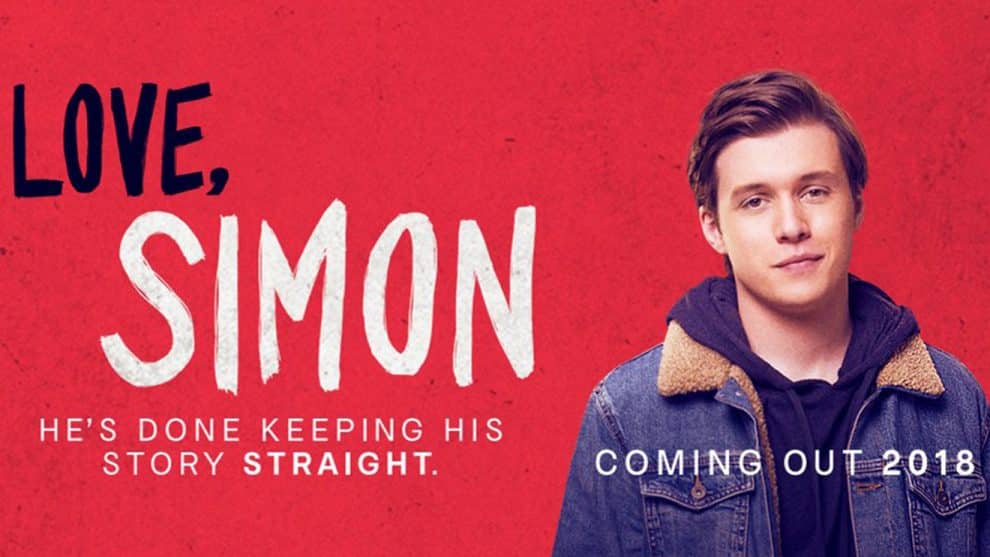
    The latest high school movie, released on DVD this week, is “Love, Simon” (2018), a love story that has elements of comedy as well as drama that features at its heart the titular character, Simon, who is also gay. Now there have been many high school movies with gay characters in them so this is not new, in fact last year with “Call Me by Your Name” (2017) there was a lead who was a high school aged boy that was gay, but this might mark the first time a Hollywood movie has had a gay protagonist as the main character, not only that but whose name is in the title. One of the elements of “Love, Simon” that I really enjoyed was that it had been very well made with a great young cast and an extremely competent and in touch director in Greg Berlanti who is an undeniable talent as well as someone who is interested in telling different stories about the world we live in now, although there are some conditions to that which I will look at later.

    “Love, Simon” has been directed by Greg Berlanti who is known for his stellar work on CW/DC Universe television shows “Supergirl” (2015 – ), “The Flash” (2014 – ), “Arrow” (2012 – ) as well as the teen drama “Dawson’s Creek” (1998-2003) to name but a few of his credits. One of the elements of Berlanti as a story teller that seem to stand out is his ability to create memorable characters that stay mostly true to their innate personalities as well as creating plots for these characters to naturally inhabit, these are the stand out reasons why Berlanti has been able to have such a varied career. “Love, Simon” is an adaption of the novel ‘Simon vs. the Homo Sapiens Agenda’ by Becky Albertalli, which has been written for the screen by Isaac Aptaker & Elizabeth Berger who it may not be a surprise to learn that they are behind the televiios show “This is us” (2016 – ) whose story is not a million miles removed from this mvie.

    Simon Spier is a closeted gay high school boy in a suburb of Atlanta, Georgia. He has a close and loving family: parents Emily and Jack, and sister Nora, as well as three best friends: Nick and Leah, whom he has known most of his life, and newcomer Abby. One day, Leah informs Simon about an online confession of a closeted gay student at their high school, known only by the pseudonym “Blue”. As “Jacques”, Simon begins communicating with him via email. The two confide personal details and form a connection. However, their emails are accidentally discovered by another student, Martin, who is infatuated with Abby. After learning his secret, Martin blackmails Simon by threatening to make his emails public unless he agrees to help Martin win over Abby. Simon begins to suspect that his classmate Bram is Blue.

    The trio of young actors that make up the cast of “Love, Simon” are all impressive in their roles that are like most high school movies very different as well as trope laden. In the title role is Nick Robinson who has film and television experience, here creates a character from a novel but is charming as well as inventive enough to make a compelling lead as well as someone who has to play very different aspects of the same character. His friends Katherine Langford and Alexandra Shipp are both very convincing in sharing the spotlight, both have come from different backgrounds as well as projects that in their own way are very extreme in their subject matter, so it is great to see them in something that is light-hearted but important as well. Rounding out the cast are two experienced character actors in Josh Duhamel and Jennifer Garner who are the experienced rock that this movie is set against, they both are liberal leading parents as you might expect but of course are both a joy to see and have some chemistry with each other as well as Nick Robinson.

    This movie serves a purpose, one that is to create a high school love story with a lead that is gay which is a step that has needed to be taken in Hollywood movies, it reflects segments of society that are relatively rarely seen onscreen which is not only welcome but also creates more originality in what must be a tired genre. My only real criticism is one that haunts many movies that are trying something new which is the concentration on the new aspect to the detriment of reality as well as some of the more common issues that are present in peoples lives. In terms of this movie to avoid complications Simon needs to have parents that are not only liberal but very well off with no other issues that might be present in real peoples lives like, money issues, political pressures, social pressures, making bill payments and other aspects of life that are very ordinary. Also Simon attends what must be a progressive school with little pushback from many teachers or students, which is a great thing to be able to have, but even in 2018 this might not be too realistic. Much like the recent movie “Wonder” (2017) which had similar issues where the family as well as the school are so liberal and have so much money that there were no other real issues for people to face. These aspects do not stop the enjoyment of the movie but they do paint a picture of liberal acceptance being linked to affluence as well as whiteness which to me is a problem in the long term as it seems to say that rich white people are liberal as well as educated and are above pettiness which is reductive as well as not true. What may have been more realistic as well as adding more variation in the plot would have had been to have more pushback from school, some marital issues or jeopardy that other characters may have had to face, it is not that big of a challenge but could open the story up for others.

    While this might not be the perfect movie it is a very welcome entry into the comedy/drama/relationship high school movie that not only will appeal to the younger demographic it might also be an entry way to having awkward conversations with parents and their children. It illustrates that in this life there is not just one way to be but opens up avenues that others may have never thought of as adolescence starts or comes to an end. This is a very good watch, one that should be seen in groups, as it is a communal experience that should be shared. It also asks to be viewed more than once so don’t be shy go out and get this now.

    “Love, Simon” is released on the 11th July 2018 on DVD.


  • Film review: “Ant-Man and the Wasp” (2018)

    “Ant-Man and the Wasp” (2018)

    Action

    images

    Running Time: 105 minutes

    Written by: Chris McKenna, Erik Sommers, Paul Rudd, Andrew Barrer, Gabriel Ferrari

    Directed by: Peyton Reed

    Featuring: Paul Rudd,  Evangeline Lilly,  Michael Peña, Walton Goggins, Bobby Cannavale, Judy Greer, Tip “T.I.” Harris, David Dastmalchian, Hannah John-Kamen, Abby Ryder Fortson, Randall Park, Michelle Pfeiffer, Laurence Fishburne, and Michael Douglas

    Scott Lang: “I do some dumb things, and the people I love the most – they pay the price.”

    It may be difficult to believe but the release this month of “Ant-Man and the Wasp” (2018) is the third MCU movie to arrive in theatres in 2018 after the culture reflecting “Black Panther” (2018) that at the time broke box office records, followed by the critical and box office behemoth “Avengers: Infinity War” (2018). This is also a sequel to the modestly budgeted (by MCU standards) “Ant-Man” (2016) that had been on the back burner for years, meaning it had a troubled production with original writer/director Edgar Wright being fired and replaced by an unproven director Peyton Reid. All signs had that first movie possibly being the biggest disappointment in the MCU franchise since the lamentable misfire that was “The Incredible Hulk” (2008). However don’t let it be said that producer Kevin Feige does not learn from mistakes or doesn’t have the experience to deal with a troubled production, turning “Ant-Man” into a hit, launching Paul Rudd as well as Evangeline Lilly into the Marvel Universe, making the aforementioned one of the scene stealers of “Captain America: Civil War” (2016) with that movie surviving here as a kind of prequel to this new movie.

    As with many of the MCU movies “Ant-Man and the Wasp” merges a few genres into one, making a movie that serves many purposes as well as fleshing out characters in a three dimensional way through drama, action and in particular comedy. What made the original as well as this new entry different than other MCU movies is the addition of Scott Lang’s family as real people who he has to try mending his relationship with, as well as attempt to be some kind of honest, caring and present father to his daughter. These themes are echoed with Hank Pym, his daughter, Hope as well as his maybe not missing wife Janet. In these “Ant-Man” movies it is family that is the key to unlocking the importance as well as success of these stories, which serves to underline the standalone nature, which is becoming more common within the MCU movies.

    One of the important aspects of these movies that cannot be underestimated is director Peyton Reed who previous to “Ant-Man” would not have been on anyone’s list of people  that would be a competent director of any MCU movie, let alone a niche property like “Ant-Man”. It required something special if it were to be a success especially after the exiting of fan favourite Edgar Wright. What Reed has been able to do in both movies is to harness a large cast that are committed to telling a story about family whether that be familial, unrelated or disparate in a way not explored in the MCU before or explored to the depths this has. This can be seen to be why Reed was recruited as well as remained for the sequel, he has been able to explore these themes without losing the comedy, drama or thrills perhaps in the way James Gunn missed the mark a little in his own ‘Guardians’ sequel. Reed has also seen fit to make the villain’s of the piece seem relatable as well as improving on that aspect from the first outing.

    “Ant-Man and the Wasp” is et two years after the events of “Captain America: Civil War”, and before the events of “Avengers: Infinity War”, Scott Lang, now under house arrest after the events of ‘Civil War’, tries to balance his home life as a father with his responsibilities as Ant-Man. When Hope van Dyne and Hank Pym present him with a new mission to bring to light secrets from their past, Lang teams up with Van Dyne as the new Wasp.

    If Reed is one of the most important factors behind the camera then it is Paul Rudd in front of the camera that is equally as important with a wit, charm and ability to play action that is rarely seen in these kinds of movies with the dramatic flair to be able to pull the story all together seemingly at ease with his new role onscreen, the hero. What works for Rudd in this role is the same thing that potentially holds him back in others, that is his roguish natural wit that shines through almost everywhere but with such an unusual hero in Ant-Man works extremely well, especially in contrast to his other co-stars, in particular Evangeline Lilly as Hope Van Dyne. Lilly who in many ways is his superior in almost every way, was always going to get an upgraded part from the first movie, she had great chemistry with all the cast, was an imposing presence, so she now becomes a titular hero, the first female hero to be named in a main title, she shows no sign of slowing down, embracing her character to be one of the best aspects of this movie. As with all the fantastic returning cast members including Michael Peña, Bobby Cannavale, Judy Greer, Tip “T.I.” Harris, David Dastmalchian, and Michael Douglas who are all just as great as they were in the first movie, they welcome a handful of new actors who all perform specific roles. So we have, Walton Goggins, Hannah John-Kamen, Randall Park, Michelle Pfeiffer and Laurence Fishburne who have all almost been leads in their own movies, here they are playing the driving force behind the plot of this new movie, not only that they are all exceptionally great actors who lend this new movie some air of quality as well as legitimacy in terms of making the ‘Ant-Man’ franchise one to be respected.

    “Ant-Man and the Wasp” is most definitely a stand-alone movie, much like many of the recent MCU movies, which is great for all audiences, especially those people that do not follow the wider story, which was reflected in the latest ‘Avengers’ movie. This instalment also answers the question regarding where the character of Ant-Man was when Thanos rid half the Universe of resource sucking life. What is refreshing to see is the delineation between both heroes, their abilities as well as their roles within the story, not only that this might be the first super hero movie where the female character is actually more powerful and cooler than the male, which given the actors talents they play with extremely well, which I hope follows through in the upcoming ‘Avengers’ sequel. The other important aspect of this movie is the reintroduction of the quantum/micro/multiverse, which was also touched upon in the “Doctor Strange” (2016) a few years ago. This side of the MCU is set to become important as it is a maguffin that not only is explored here but also might be important for future movies especially if there is another instalment of this franchise.

    Finally, the Ant-Man character was always going to be a tough sell, not only because of who he is but his troubled comic book history especially when he was inhabited by Henry Pym. It was a masterstroke to let Scott Lang be the ‘first’ Ant-Man as this meant we did not have to go through some of the hoops that Pym went through, skipping the ‘Yellowjacket’ persona, logically going straight to ‘Giant-Man’ who I was a big fan of. It was fun seeing that identity in ‘Civil War’ and I have to say I welcome his return here and in the future. The other element of this new movie is to retcon the idea of a Giant-Man with the introduction of Bill Foster who was an instrumental part of the Marvel comics, hopefully now he will be a part of the MCU on some level as a scientist as well as possible hero or villain.

    What is refreshing is the lack of plot holes or characters making stupid decisions just to drive the plot forward which is something I am sick of, I am looking at you “Jurassic World: Fallen Kingdom” (2018) and “Solo: A Star Wars Story” (2018) where there were plot holes big enough to drive a Giant-Man through as well paper thin characterisations that audiences were supposed to buy into just because they were onscreen. With this new movie at least the story as well as characters are all coherent three dimensional as well as believable inhabiting the world they do. This is a solid MCU movie that never rises to some of the greatest but it is a smaller story being an antidote to some of the massively budgeted disappointments that we have seen recently. It is a nice stopgap between ‘Avengers’ movies without being too sweet.

    “Ant-Man and the Wasp” is out now only in cinemas.


  • Featurette: “The spy who dumped me” (2018)

    Featurette:”The spy who dumped me” (2018)

    Error
    This video doesn’t exist

    Audrey and Morgan, two thirty-year-old best friends in Los Angeles, are thrust unexpectedly into an international conspiracy when Audrey’s ex-boyfriend shows up at their apartment with a team of deadly assassins on his trail. Surprising even themselves, the duo jump into action, on the run throughout Europe from assassins and a suspicious-but-charming British agent, as they hatch a plan to save the world.

    THE SPY WHO DUMPED ME is directed by Susanna Fogel and stars Mila Kunis, Kate McKinnon, Justin Theroux, Gillian Anderson, Hasan Minhaj, Ivanna Sakhno, and Sam Heughan.

    THE SPY WHO DUMPED ME releases in New Zealand cinemas on August 9, 2018.

    The spy who dumped me spry film review 2

  • 4K Blu-ray review: “Pacfic Rim: Uprising” (2018)

    “Pacfic Rim: Uprising” (2018)

    Action/Science Fiction

    2-star-rating

    Running Time: 111 minutes

    Written by: Emily Carmichael, Kira Snyder, Steven S. DeKnight & T.S. Nowlin

    Directed by: Steven S. DeKnight

    Featuring: John Boyega, Scott Eastwood, Cailee Spaeny, Jing Tian, Adria Arjona, Zhang Jin, Rinko Kikuchi, Charlie Day, Burn Gorman

    Voice: “What is a Jaeger? A Jaeger is the pinnacle of human invention. When the monsters came we did now wait for heroes to fall from the sky and save us, we saved ourselves. Innovation is our superpower. What is a Jaeger? It’s you times a thousand. Tall as a mountain with a beating heart that burns as bright as the sun, enabling us all to become the most heroic versions of ourselves.”

    Critical Commentary:

    How times change, after the release of “Pacific Rim” (2013) a Guillermo del Toro directed piece of science fiction that wanted to straddle the worlds of Wells and Lovecraft, that featured some of the hottest up and coming stars of that year in Charlie Hunnam, Idris Elba as well as some fine characters actors in Ron Pearlman, Max Martini, Clifton Collins Jr., Burn Gorman and Charlie Day, it seemed the stories of Kaiju’s and Jaeger would never have another outing. With an outsized budget of US$200 million dollars and a really rather middling box office of US$411 million (most coming from International markets) there was little appetite for a sequel. Come 2018 with the more expensive actors as well as production people replaced by what really are B and C actors we now have a sequel in “Pacific Rim: Uprising” (2018), with a budget far less at US$150 million (even less when factoring in inflation) this has not been the hit that the studio (Legendary /Universal) or the producers had hoped for. With all the best intentions in the world, no matter how much story or plot that is attempted this potential franchise is still built around monsters fighting giant machines, which is of course its greatest strength, but also remains its greatest weakness, as does the unbelievable amount of collateral damage that is caused in every single action set piece of which there are more than a few, maybe too many as it transpires.

    This sequel co-written and directed by Steven S. DeKnight who is possibly best known as a genre television writer has never been at the helm of a movie either as writer or director – for most of “Pacific Rim: Uprising” he makes a decent enough fist of it, although I do question handing the reigns of such a large budget to someone with very little actual experience. Where the lack of ideas as well as originality does show is in the general story and action that appears onscreen as well as the plot reasons as to why there is even a need for this sequel, when the original itself was not only uninspiring but very middle of the road with no real genre flourishes or originality beyond the fact that there were giant machines fighting giant monsters. I have pointed out continuously that just because there is a great idea for a movie, and don’t get me wrong the general conceit behind both ‘Pacific Rim’ movies is very good, it is the small details that make that good idea into a great film. Unfortunately, there is just too much of a plot to fit comfortably into the modest running time and budget. What is amusing is that it is the exact opposite problem that the first movie had, not enough plot, too much confusing fighting and issues with the world building as well as clearly defining not only the antagonists but too little seen of them and their location.

    “Pacific Rim: Uprising” is set ten years after the Battle of the Breach, former Jaeger pilot Jake Pentecost – son of deceased Kaiju War hero Stacker Pentecost – makes a living by stealing and selling Jaeger parts on the black market. After he tracks part of a disabled Jaeger’s power core to the secret workshop of fifteen year old Jaeger enthusiast Amara Namani, both are arrested and are given a choice between the prison or return to PPDC as an instructor with Amara as his recruit.

    Upon arriving at a Shatterdome in China, Jake starts training Jaeger program cadets with his estranged former co-pilot Nate Lambert. Nate and Mako reveal to him that the Jaeger program is threatened by Shao Corporation’s drone program. Mako is due to deliver a final assessment to determine the authorization of the drones at a PPDC council meeting in Sydney, but is killed by rogue Jaeger Obsidian Fury before she can report. Her death prompts the PPDC council to authorize the drone program and order their immediate deployment. Upon destroying its reactor, they find that Obsidian Fury was controlled by a Kaiju’s secondary brain, which testing shows was grown on Earth.

    What is the stand out element for me, in fact for pretty much the entire movie is the casting (as well as co-producer) of John Boyega who proves he is going to be a big star of the future outside his ‘Star Wars’ appearances, which is no mean feat, as type casting is not just a thing of the past. Here Boyega has to live up to the memory of not only his characters father but the fact that his father was portrayed by the fantastic Idris Elba who maintains a presence in all the movies he has appeared in. Boyega in this movie is equally charming as well as being caddish, a boy growing into a man, even while he is teaching others far younger than himself. Therein lies one of the problems with the movie, which is the fact that this movie relies far too much on younger actors as well as the miscast Scott Eastwood who while he has pedigree (his father is Clint Eastwood) is not a great actor at all – the only saving grace is that his father matured with age as an actor so there is hope for him yet. The two actors that seem to know what movie they are in as well as stealing the show are the holdouts from the previous instalment in Charlie Day and Burn Gorman who are at opposite ends of the spectrum in terms of performance but complement each other exceptionally well. As for the rest of the cast they are mostly unknowns who serve a purpose but are really just filling to the massive CGI fights that take place for a majority of the running time.

    Of course the real stars of this movie are the Jaeger’s and to a lesser extent the rival Kaiju’s who are all CGI creations. Carrying on from the previous movie the world has already been built and it is obvious to see that the bulk of the budget has gone on rendering these giants of destruction. My only real criticism is that the actual world that these giants operate in is pretty drab, faceless and lifeless. It seems like the flaws of movies like “Man of Steel” (2013) and “Batman v Superman: Dawn of Justice” (2016) have been ignored here, as we are witness to hundreds of buildings in multiple cities being destroyed with little time being spent on the human cost or even the social cost which is a major mistake on the filmmakers part – surely audiences are beyond this, perhaps this is a reason why the movie is bland as well as fairly unsuccessful at the box office.

    One of the aspects of the movie that is unforgiveable, something Marvel movies learnt after “Iron Man 2” (2010) is the setting up of sequels before the first or second movies are good enough or successful enough to earn these on their own. So we see in the closing moments of the movie a blatant attempt to set up another ‘Pacific Rim’ instalment which is ludicrous as this one was never going to be able to spawn one with these filmmakers attached. This, coupled with a rather too expansive plot means that this movie at times is a hard watch as it really does bite off more than it can chew in terms of establishing brand new characters as well as new versions of antagonists from the previous movie, again while dangling even more story for a sequel.

    The question in my mind is simply should this be viewed in cinemas and I would say that “Pacific Rim: Uprising” is worth a watch but maybe at home on Blu-ray or a streaming service. This is a movie that in the ‘old days’ would have been a direct to video release at best, which would have been a nice surprise especially with the edition of John Boyega. So wait and watch at home, you will enjoy much more.

    Technical Commentary:

    Vital Disc Stats:

    Universal brings “Pacific Rim: Uprising” to 4K Ultra HD Blu-ray as a two-disc combo pack with a flyer code for a Digital Copy. The triple-layered UHD100 disc sits comfortably opposite a Region Free, BD50 disc inside a black, eco-vortex case with a glossy slipcover. At startup, the disc goes straight to a menu screen with an image of the cover art and music playing in the background.

    The Video: 

    There is no doubt that the picture is alive with the range of colors available when viewing this 4K Ultra HD Blu-ray, it has a with a lavish HEVC H.265 encode that never seems to shortchange the movie.

    As soon as the movie begins it is easy to identify within the picture the rich greens, electrifying blues, and splendid full-bodied reds, which complement the over the top visuals, giving it just the right feel for the story it is telling. The Jaegers all look amazing on a large screen TV, they shine and shimmer never losing their majestic awe that should be standard when watching Sci-Fi life this. What I love to witness though are the backgrounds that shine as clear as anything else, the skyscrapers, water, signs and of course the Kaiju themselves. Most impressive has to be the actual breach where viewers can be bewitched by the ecstatic mix of blistering yellow, fiery orange, vibrant crimson and flaming magenta.

    The 4K presentation also comes with perfect contrast that’s consistent and well-balanced while also delivering intensely hot, radiant whites, from the super-hygienically clean suits of Liwen Shao and the bright sterile labs to the luminously brilliant glow of various light sources and the soft, fluffy clouds.

    Brightness levels are rich and luxurious with blacks that reveal superb gradational variances between the numerous shades, nicely separating the gear and straps from the rest of the uniforms. Silky, midnight shadows penetrate deep into the screen without hampering the finer aspects of the background, providing the 2.39:1 image with a stunning, cinematic appeal and three-dimensional quality. Shot exclusively on the Arri Alexa camera system with a max 3.4K resolution, the freshly-minted transfer, upscaled from a 2K digital intermediate, arrives in the nick of time with razor-sharp definition in every scene.


    The Supplements:

    Audio Commentary: Director Steven S. DeKnight rides solo for this fairly informative commentary on various aspects of the production, the performances, visual effects and overall story.

    Becoming Cadets (4K, 6 min): A few minutes on Amara’s fellow recruits.

    Unexpected Villain (4K, 6 min): Interviews on one character’s surprise twist.

    Bridge to Uprising (4K, 5 min): Cast & crew interviews on connecting the sequel to the first.

    Next Level Jaegers (4K, 5 min): Closer look and technical discussion on the new mecha characters.

    The Underworld of Uprising (4K, 4 min): Discussion on the first act & surviving in the aftermath.

    Hall of Heroes (4K, 3 min): John Boyega comments on specific details of each Jaeger.

    I Am Scrapper (4K, 3 min): Brief look on the small Jaeger and its role in the movie.

    Going Mega (4K, 3 min): Some time on the mother of all Kaijus.

    Secrets of Shao (4K, 3 min): Focused on the ruthless businesswoman.

    Mako Returns (4K, 2 min): Pretty much exactly as the title implies.

    “Pacific Rim: Uprising” is out now on 4K Blu-ray, Blu-ray & DVD.

  • Film review: “Paterno” (2018)

    “Paterno” (2018)

    Drama

    images

    Running Time: 105 minutes

    Written by: Debora Cahn & John C. Richards

    Directed by: Barry Levinson

    Featuring: Al Pacino, Riley Keough, Kathy Baker, Greg Grunberg, Annie Parisse

    Sara Ganim: “Uh, I’m sorry. You said… 1976?”

    Movies about sports teams or personalities are a dime a dozen, every year in many formats they are released, normally very tightly controlled affairs, following familiar tropes, normally either about underdogs or legacy teams, coaches or players of importance to that relative sport. Of course one the most successful as well as sequelised is “Rocky” (1976) which was not only an underdog story but also was set in a realistic world with a somewhat realistic conclusion, it was about the start of a career that would last five decades and is still going strong which can be seen with the release of this years “Creed 2” (2018). Now we have a different kind of sports movie, one that is built around one of the more terrifying and destructive scandals in US sports history, that is the Penn State sexual abuse scandal that not only destroyed the football programme but ended many legendary careers, including then Coach Joe Paterno who is the titular character in this new HBO film directed by Barry Levinson and featuring Al Pacino in a devastating character study, which must be viewed  as the highlight of this new film. Going into this film I was not sure what to expect, in fact it answers few questions about the actual scandal, or lay the blame or the responsibility at Paterno’s feet. Paterno was in his seventies when these events were brought to light, so his tenure was coming to an end, he was never asked any real questions, in fact he died not long after the scandal broke which is itself a crime as he would have known more than he ever admitted. In fact it was later proven that Paterno did know more, had known more for years but did very little to bring these crimes to any real authority which means there are still victims who will never be acknowledged or make the College pay for these misdeeds.

    No matter how well “Paterno” the movie covers what occurred at Penn State, or the actual culpability that Joe Paterno had there is no doubt that this is a well produced movie that covers a snapshot of the time period that the entire scandal or events took place over, that is the movies strength. It does not bite off more than it can chew in terms of narrative although possibly the same thing cannot be said in terms of the actual plot. What it sets out to do is to take for granted the greatness of the ‘Coach’ as just that, a coach who became the most successful college coach of all time, his tenure and shadow was large, his success started in 1960s, lasting until 2010. The movie does seem to ask the question of the audience, does all the ‘good’ work done over decades fall away because of the despicable acts of others? Of course as the plot gives way to the narrative it becomes obvious that both of these things are intertwined with revelations being made right to the closing credits which speak to not only the institutional corruption of Penn but to Paterno’s role in looking the other way for almost his entire tenure.

    “Paterno” has two superstars in its ranks, they are actor Al Pacino and director Barry Levinson, who have both worked together before as well as being legends and Oscar winners in their earlier lives. Levinson who made his name as a Baltimore native put that city on the map as a place that is full of all kinds of stories, he has made both movies and television shows being partly responsible for the kind of stories we now see nightly on the small screen with his ahead of the curve “Homicide: Life in the Street” (1993-1999). Lately as he has gotten older he has turned his hand to directing television movies in particular “You don’t know Jack” (2010), “The Wizard of Lies” (2017) and now “Paterno”. Say what you will about the subject matter of each of these, a loose trilogy, there is no argument with the skill, the actual subjects and the performances he is able to illicit from his leads. Levinson here does what he has always done, that is take a story and let his actors tell it in their own way. With Pacino, not the most obvious choice, he has struck gold – if the best this movie does is to remind audiences what can happen in a closed group where vulnerabilities are exposed then it has executed its job, like his previous HBO films it is a service to all involved.

    “Paterno” centers on Penn State’s Joe Paterno (played by Al Pacino) in the aftermath of the Jerry Sandusky sexual abuse scandal. After becoming the winningest coach in college football history, Paterno’s legacy is challenged and he is forced to face questions of institutional failure in regard to the victims.

    Don’t let this movie fool you, even though there are some terrific performances, most notably from rising star Riley Keough as well as veteran Kathy Baker, this is most definitely the Al Pacino show. I write this not as a dis on his star power but as a comment related to his talent that when he needs to, is one of the greatest screen actors ever. This movie is a lesson in building a character from the ground up, showing audiences the type of person Paterno was at the end of his life as well as what he had to lose when his back was against the wall. Pacino has to visually and verbally show an audience who Paterno is, with no warm up, no flashbacks back to childhood, just who he was then, it is a credit to him how he is able to do this. Not only that but in this performance, like his other great ones he jettisons all the ‘Pacino’ ticks, facial expressions, verbal queues and other trope laden performance elements we have grown to witness over the past three decades. If there was ever a performance worthy of accolades and awards, then this is it; Pacino is stunning unlike many performances of recent years. The other two standouts are the previously mentioned Riley Keough and Kathy Baker as a reporter who broke the molestation story and Sue Paterno who supports her husband through to the end of his life. Both actors are worthy foils to Pacino who offer something unique in opposition of his performance, they are both strong determined women who want to know the truth but are at the same time terrified as to the ramifications if it is all real, as well as the damage will do to Penn as well as Joe himself. These are fine lines for actors to walk so as to be believable but not pander to how the real people would like to be portrayed.

    In terms of the narrative this movie is bookended by Paterno’s stay in hospital where he eventually died of cancer, but the meat of the plot takes place over a period of a week as we witness the molestation story come to light. It is a credit to the director that he begins the movie with Paterno obviously suffering from cancer where as an audience we have sympathy for him, a beloved figure laid low. As the movie moves on and elements of what was known about the crimes come to the fore there is a certain loss of innocence as we are let in on secrets that others in the story are not aware of, which reaches its nadir in the final moments of the movie where reporter Sara Ganim receives a call from a victim that goes back five decades, at this point any sympathies for anyone involved at Penn should go away very quickly as the size of the offending becomes obvious, a frightening reality.

    I have to admit to not really looking forward to this movie, I find the subject matter upsetting as I have first hand knowledge of situations similar to the ones that went on at Penn. In saying that this is a timely reminder that making idols out of people that are coaches, teachers, priests or anyoe else that you can never truly know is a mistake. Human nature is such that we always want to protect ourselves as well as situations that we think we know or we think are above the law. The Penn State crimes are proof as well as reminder that we must question places that are cut off from reality as well as places that control of children which can lead to treatment we would not stand for in other places. “Paterno” is a cautionary story that should be seen to be believed as well as a warning to families about what is important and who is important.

    “Paterno” is available now on HBO.


  • Trailer: “Mile 22” (2018)

    “Mile 22” (2018):
    An elite American intelligence officer, aided by a top-secret tactical command unit, tries to smuggle a mysterious police officer with sensitive information out of the country.

    Error
    This video doesn’t exist

    MILE 22 is directed by Peter Berg and stars Mark Wahlberg, Lauren Cohan, Iko Uwais, Ronda Rousey and John Malkovich.

    MILE 22 releases in New Zealand cinemas on August 30, 2018.

  • Film review: “Sicario: Day of the Soldado” (2018)

    “Sicario: Day of the Soldado” (2018)

    Drama/Thriller

    images

    Running Time: 122 minutes

    Written by: Taylor Sheridan

    Directed by: Stefano Sollima

    Featuring:  Benicio del Toro, Josh Brolin, Jeffrey Donovan, Isabela Moner, Catherine Keener, and Manuel Garcia-Rulfo

    Alejandro: [to Isabela] “You have no reason to trust me, but trusting me is how you’re going to survive.”

    There is no doubt in my mind that the release of “Sicario” (2015) three years ago not only announced a few new talents but also solidified quite a number more in front of, as well as behind the camera, it also was possibly the most underrated film of that year. It should have scored multiple Oscar nominations but for the most part flew under many peoples radar which is a crime. On the surface it was a film about drug cartels, revenge as well as the journey of a young idealistic DEA agent, of course it was much more than that as well as a precursor to the unruly politics that would follow just a year later. It also stated that the war on Mexico was just beginning, one that would not only rage at the border but on nightly television, ultimately right now in the White House itself. “Sicario” was that rare breed of film that had at its heart a female protagonist surrounded by men who were undermining her at almost every point, it had a well thought out plot as well as an almost Cinéma vérité narrative but with a look that was stunning in its widescreen lushness and not afraid to, at times pull back for the big picture eschewing star power and good looks for some kind of grittiness even though at times it was still a Hollywood film. The one aspect of the film that was overwhelming was that I know when I saw it I wanted more, now three years later the sequel has arrived, “Sicario: Day of the Soldado” (2018).

    On the surface this sequel may seem like a real mixed bag, undoubtedly the star of the first film has returned in Taylor Sheridan the screenwriter, who has gone from strength to strength in his career having written the magnificent Oscar nominated “Hell or High Water” (2016), writing and directing his magnificent noirsh “Wind River” (2017) as well as the upcoming series “Yellowstone” (2018). Also returning are the definitely now great character actors, Benicio del Toro, Josh Brolin and Jeffrey Donovan in the same roles. Unfortunately there is a downside with the loss of Denis Villeneuve, Emily Blunt, Daniel Kaluuya, Roger Deakinsand Jóhann Jóhannssonare all not returning which does lessen the impact of the sequel but it is still a fascinating affair to be sure. What is great to see is that new fresh talent has replaced these non returnees to the betterment of the film overall.

    “Sicario: Day of the Soldado” has been directed by Stefano Sollima an Italina filmmaker who is possibly best known for directing a large proportion of the series “Gomorrah” (2014 – ) based on the film of the same name, so the subject matter is not far removed from this new film. The great aspect of both films was to have foreign directors in charge as it always seems to be a benefit to politically charged movies, that to have someone removed from the situation in charge, opens up the narrative as well as the plot in ways someone who has a stake in the subject matter might do. This is accentuated by the look of the film, here Deakin’s has been replaced by Ridley Scott’s long-time cinematographer Dariusz Wolski who like his predesscor is an expert at creating both interior as well as exterior palate that are not only original but subject sensitive and eye catching.

    The film is set fter discovering that Mexican drug cartels are smuggling terrorists across the United States border, the CIA sends Matt Graver (Josh Brolin) and former undercover operative Alejandro Gillick (Benicio del Toro) to eliminate the problem. They kidnap Isabela Reyes (Isabela Moner), the daughter of a drug lord, in a false flag operation designed to incite war between rival cartels. The mission goes awry when it is discovered by the Mexican government, prompting Graver to order Reyes’ death; when Gillick refuses, he turns rogue to protect her as Graver assembles a new team to hunt them both.

    The quality of the leads goes without saying in Oscar winner Benicio del Toro who has become one of the great character actors as well as someone who can play physically imposing men that with the subtly in his face can play deep emotion, while Josh Brolin has aged well into his middle age and someone who knows how to build a character from the ground up, one need only look at his increasingly complex roles over the past five years to see the evidence in that. While they are both playing the same characters from the first film, it is del Toro who is the one with real growth especially when thinking about his arc from “Sicario”. Added to the mix are Isabela Moner, Catherine Keener, Mathew Modine, Shea Whigam and Manuel Garcia-Rulfo who all play new characters designed to reinvigorate the film with the light shining directly on Moner as the maguffin of this new story. Moner has to show a range of very tough emotions as well as starting her character in one place of dominance but winding up with her persona changed in a very extreme way with layers peeled back for all to witness. The other relative newcomer is Manuel Garcia-Rulfo who like his co-star is a changed character from beginning to end, something that is a very rare to witness not just in film but also for minority characters that are normally marginalised or reduced to stereotypes. All of the actors do incredibly nuanced work with material that is not only complex but much of the narrative just have been found in the edit so to see performances as good these is rare indeed.

    There is no doubt that this is a narratively as well as plot heavy film that rewards those that stick with the complex goings on within the story, following different characters at different times with varying objectives as well as never losing sight of the human drama at the core of this challenging piece of work. The ways in which the story begins to unfold on different fronts of the world may seem scattershot but they are executed in a way that the audience witness how in the dark, law enforcement can be losing sight of the people they are trying to protect so that lines are blurred between the good of the many against destroying the rights and loves of the few, especially when we are talking about cross border skirmishes. For me the key to the film is the returning character of Alejandro Gillick who as we know from the previous entry lost his family to the drug war in particular one cartel leader who is one the plot points of this film. In fact the key scene and one I imagine the writer loved creating involves sign language, a family in the middle of nowhere and a small explanation of his past which for me was one of the two best scenes of the movie. This is a film loaded with meaning as well as motivations of everyone involved, one scene sees Matt Graver going to meet the Secretary of Defence a comment is made about him being sunburnt as he is always in the field carrying out covert actions. The next scene we see a roomful of Generals and politicians, it is easy to see the pale faced men who make decisions sending the tanned men out into the danger to do the dirty work, something that should not be lost on viewers especially as we hear and see these politicians changing their minds on a whim without a thought of those doing the work in the field. It could also be seen as a comment on those holding high office especially the Presidency who have never served in their life.

    As far as this years films go “Sicario: Day of the Soldado” is one of the best so far, it is a truly great sequel that stands on its own in every way. It transcends the first film in that it is about so many elements of not only human nature but incorporates social, political and personal issues that are as relevant today as they have ever been. We see the fingers of the White House through an unnamed President who fears impeachment over public support or anything else, sound familiar? Another important aspect of the film that cannot be underestimated is the mix of genre that takes place within its narrative, at points it is a road movie, a drama, a political movie, a thriller and at times even has some comedy, it melds all these genres into one coherent narrative that never lets up from its shock beginning to its almost ultimate conclusion that is at once revealing, shocking but expected.

    This is a film that must be seem and seen on a big screen it takes risks with its plot and narrative which pay off for the audience it is almost all believable in its own way with nary a false move which is something to behold. Even though it is missing some key figures in front of as well as behind the camera, the screenwriter has wisely pivoted the plot to make it more of an original movie with familiar characters than attempting to make it a fully fledged sequel which seeing this movie now would have been a major error. I recommend this even for those that have not seen the first movie as it stands on its own in almost all ways which is not something that can be said of all movies even though that is how it should be, something that has been lost over the past few decades.

    “Sicario: Day of the Soldado” is out now only in cinemas.

  • DVD/Blu-ray review: “Peter Rabbit” (2018)

    “Peter Rabbit” (2018)

    Comedy

    images

    Running Time: 95 minutes

    Written by: Rob Lieber & Will Gluck

    Directed by: Will Gluck

    Featuring:  Domhnall Gleeson, Rose Byrne, and Sam Neill, with the voices of James Corden, Daisy Ridley, Margot Robbie, and Elizabeth Debicki

    Thomas McGregor: “I’m allergic to blackberries.”

    Peter Rabbit: [From above]”Allergic to blackberries?”

    Peter Rabbit: “Is that even a thing? Is that where we’ve gone to? I mean, suddenly everyone is allergic to everything!”

    Peter Rabbit: [yelling at Thomas] “Stop using it as a crutch!”

    Benjamin Bunny: “You know, some people do have legitimate medical conditions.”

    Peter Rabbit: “Of course, of course, it’s a real struggle, my heart goes out to them, it’s very tough, very sad, I don’t want to get any letters [looks at camera]”

    In my mind there is almost no better reason to see a move than when people want to boycott it, so I was very pleased to go along to my multiplex (with many other families) and enjoy this new version of “Peter Rabbit” (2018), when the above quote was issued forth (the reason for said boycott) it got a healthy knowing laugh from young and old – just priceless, Mr Gluck and Lieber deserved all the praise for not only that line but much of the enjoyment of Beatrix Potter’s timeless creations brought to life in a very unique way. The very fact that in 2018 it is possible to make a movie about Peter and his friends as well as being a truly touching as well as emotionally satisfying narrative speaks not only to Gluck and Co. but to Potter as well, not forgetting the incredible cast that has been lined up for this new adaptation. Of course being set in a post-modern world it is not a straight adaption but one that channels the feelings behind the characters as well as being a meta-narrative, with not only actual winks to the audience but bringing in a spirt of an origin story for the actual paintings of Peter as well as the writing of the books, albeit in a post millennium world.

    This is a truly unique movie from the creative mind of Will Gluck who has had a nice career so far, he remade “Annie” (2014) which was actually pretty good considering the classic status of the original, turned Emma Stone into a star with one of the better comedies of the past ten years in “Easy A” (2010) which if you have not seen, stop reading, go and watch, I will wait. Gluck here has harnessed the best parts of both movies and combined it with a classic children’s character to deliver one of the better  films of its genre in recent memory – it has themes that are timeless and should not be shied away from, in particular the loss of parents, the reality of growing up, accepting people for who they are and a myriad of others that are touched on in unsentimental ways which for a movie like this is welcome relief. The movie uses real locations as well as a deft mix of CGI and real people to make you believe in what occurs onscreen. What I thought was wonderful was the motivations for all animals and humans are extremely simple and unconvoluted, there are no hidden meanings or grand third act reveals, just that learning and growing are parts of life and sometimes honesty is the best policy.

    The movie is set in England’s Lake District Peter Rabbit, his cousin Benjamin, and his triplet sisters Flopsy, Mopsy and Cottontail, spend most of their days picking on Mr. McGregor and stealing vegetables from his garden. They are friends with a local woman named Bea who spends her time painting pictures of the rabbits as well as the surrounding nature. Bea takes on a mother-like relationship with the rabbits due to the death of their mother and father. One day Peter accidentally leaves his jacket in McGregor’s garden and goes back to retrieve it. McGregor spots and catches him, but suddenly dies of a heart attack. Enthralled, Peter invites all of the woodland critters, and then takes over McGregor’s old house.

    Meanwhile in London, McGregor’s nephew Thomas works at Harrods department store where he waits for a promotion. He coldly accepts the news about his uncle’s death, but is infuriated over not getting the promotion and is fired. When he learns that his uncle’s house is valuable, he decides to refurbish it so he can sell it and start his own toy store to rival Harrods. He kicks out Peter and his friends and begins to secretly wall up the garden, despite Bea’s objections.

    The cast of “Peter Rabbit” led by comedian James Corden who over the years has proven himself to be an able singer, dancer and actor, here he has to inhabit a role that is a bit of everything in terms of voice acting and he does it as well as anyone could or has before. The live cast is led by Rose Byrne and Domhnall Gleeson who play love interests of a sort, but are at opposite ends when it comes to the treatment of animals and where they belong in society. They are both accomplished comedians and have real chemistry as well as being able to act with CGI co-stars – not the easiest skill in the world. The voice cast is rounded out by Daisy Ridley, Margot Robbie, and Elizabeth Debickias as Flopsy, Mopsy and Cottontail also acting as the real comic relief as well as Peters younger sisters. These actresses all play very different roles with their obvious comic timing and understanding of the characters is key. All three almost steal the movie from Peter but it is his movie, and their own subplot is well written as to not overshadow the main plot.

    The movie really is non-stop from the humorous beginning to the wonderful ending that lends itself to a possible sequel set in an entirely new location – maybe. What is unique is the way it treats it audience of (knowingly) young people who may be or know others that are going through changes that Peter and his siblings have and are going through. The biggie is of course the loss of a parent or parents, how that takes an emotional toll on those left behind as well the sense of unfinished business – how that thrusts children into a very different role to the one that they dreamed they would be in. It also illustrates the role of animals in our society as well as their complex relationships with each other and to humans – the encroaching human environment on the natural world, reminding us who was here first, and how that interaction is not black and white, cut and dry but complex and getting more so as human populations increase. Another part I loved was the interaction between Peter and Thomas who are at odds for most of the movie, treating each other with disdain and contempt, but what is interesting is how this relationship not only changes but reverses so that you feel sorry for Thomas and possibly see Peter in a new light. This is not a simple movie, it has humour that will appeal to a variety of ages as well as a variety of audiences of different levels of understanding as to what they are seeing.

    One important aspect of this movie is the music used which is all imported from popular artists, it is used for the most part quite well, you will find it hard not to smile as music matches the story or the actions that are occurring onscreen. The fantastic thing is that the music is not only popular music, but original and classical which again is not common for a children’s movie in this day and age. Director/writer Gluck has experience and history in the music fraternity and it shows here, listen out for Sia as one of the voices, as well as singing. The music combined with the fast that Bea is a painter which is used to bring in the original Beatrix Potter’s artwork is a touch that while was not needed is welcome as it also opens the door to Peter’s parents as well as illustrating the monumental loss that he feels when he (and his family) look at the pictures – this is one of the strengths of the movie and will stay with long after you leave the cinema.

    This is a comedy primarily, even though yes, it is a children’s movie, but the humour works one hundred percent of the time, so much so that this is the key into the movie as well as what makes the poignant parts so emotionally driven, which again is something that is great as it means the narrative is not being driven by sentimentality.

    “Peter Rabbit” is one of my movies of the year, it has the right amount of everything, yes the CGI can be a little ropey but by the time you may notice that you will be too deep and invested to care. This is a movie for the entire family as well as a great jumping off point for conversations that may be driven by this film – go and see now, you will laugh and cry, I know I did.

    “Peter Rabbit” is in cinemas now.

    Soundtrack Listing:

    1. Small As Your Dreams – Katharine Hoye, Jessica Freedman, Chad C. Reisser and Fletcher Sheridan
    2. We No Speak Americano – Yolanda Be Cool & DCUP
    3. M79 – Vampire Weekend
    4. Steal My Sunshine – Len
    5. Steal My Sunshine (Peter Rabbit 2018 Film Version) – Len
    6. Roll Up – Fitz And The Tantrums
    7. Feel It Still – Portugal. The Man
    8. Flashdance… What A Feeling – David Das
    9. Time Bomb – Rancid
    10. Schwanengesang, D.957: No. 4. Ständchen – Franz Schubert
    11. Do Your Thing – Basement Jaxx
    12. In A Big Country – Big Country
    13. Crash Into Me – Dave Matthews Band
    14. Anvil Chorus” from “Il Trovatore – Hungarian State Opera Orchestra and Budapest Festival Chorus
    15. The Kids Don’t Stand A Chance – Vampire Weekend
    16. Love Love Love – Avalanche City
    17. Rock-A-Bye Baby (Traditional)
  • DVD & Blu-ray review: “Winchester” (2018)

    “Winchester” (2018)

    Horror

    3-stars

    Running Time: 99 minutes

    Written by: Tom Vaughan & The Spierig Brothers

    Directed by: The Spierig Brothers

    Featuring: Helen Mirren, Jason Clarke and Sarah Snook

    Arthur Gates: “It’s a gargantuan seven storied structure with no apparent rhyme or reason. Each maze of halls more confusing than the next. It’s under never ending construction. It’s built on the orders of a grieving widow. Sarah Winchester is the majority shareholder of the Winchester Repeating Arms Company.”

    Eric Price: “You want to take it away from her.”

    Arthur Gates: “We’re worried about her sanity, Dr. Price.”

    The new horror movie “Winchester” (2018) should have been a slam dunk, it had so much going for it, based on a real person, on a real location, featuring a very accomplished cast with Helen Mirren, Jason Clarke and Sarah Snook all in original roles as well as being based on real people that were in some way involved in actual events. However, unfortunately what we get is just another haunted house story that revolves around some interesting charters, but with a narrative that is fairly unimaginative, which is a shame as the plot, as well as the general conceit, is really rather good. Not only that but the themes on display are as timely as could be, the way in which they are incorporated is unique as well. It is a real missed opportunity, in terms of the direction as well as the use of horror tropes, (not good ones) why these could not have been sidestepped for more originality as well as real scares baffles me as there was a relatively large budget for a genre movie made in Australia.

    The talent behind “Winchester” is the Australian Spierig Brothers, who have been dabbling in horror for most of their career, with the interesting and surprisingly good “Daybreakers” (2009) that positioned vampires in a very different light as well as the excellent science fiction “Predestination” (2014) that played with the age old story of time travel. What both of these movies had in common was taking standard horror as well as science fiction and twisting it into what are thematically interesting stories. It seems though from there the Spierig’s have taken a wrong turn, with last years reboot/sequel of the ‘Saw’ franchise, the unimaginative and worst of all boring, “Jigsaw” (2017), as well as now with “Winchester” which as I have mentioned fails to have any real directorial drive as well as originality within the narrative.

    “Winchester”  revolves around Sarah Winchester who is the widow of famed gun manufacturer William Wirt Winchester. Her husband’s sudden death and the previous death of their child Annie have left her in grief. Having received more than $20-million dollars in inheritance, Winchester convinces herself she is cursed by the ghosts and ends up building an enormous, seemingly never-ending mansion. The house is under constant construction and Sarah’s relative Marion Marriott lives in the house with her son Henry.

    The Winchester company hires Doctor Eric Price to stay at the house and assess Sarah, believing she is mentally unfit to remain in charge of the company. Eric is grieving from the death of his wife Ruby and reliant on drugs. He arrives at the house and has a ghostly vision that he believes is a side effect of the drugs he has taken.

    The very worst thing a movie can be is indifferent, which is what “Winchester” ends up being as the lazy choices made by its directors really do make this a mundane uninspiring viewing, which for a movie in the horror genre is a real crime. I have to say that the story on which this movie is based was known to me through a podcast, once I realised this the movie really piqued my curiosity, it made me genuinly look forward to watching something not only inspired by real events but with enough of the ‘real’ to make this scary as well as chilling – as the house still exists to this very day, you can go and see the haunting location.

    Not only that, but for a horror movie to be able to cast Helen Mirren in the titular role is a very real coup for not only the genre but for the filmmakers as well. Mirren has made genre pieces before but this could have been a special role, she plays the part perfectly, all knowing ,as well as bringing a real character to life, that could have been played in a very arch way. Mirren also brings something else, that is directly to the production itself, quality, as it legitimises the movie before cameras even start rolling as she is an A list actor all the way. Mirren also challenges the rest of the cast thereby raising their own performances, so we have Jason Clarke and Sarah Snook in roles, performing as well as they ever have in other movie. Clarke in particular spars with Mirren for almost the entire running time, he is excellent as a Doctor with his own demons who has to not only be believable as a strong man, but also as someone who has definite chinks in his armour.

    The main theme beyond the horror of “Winchester” is of course quite obviously gun control, as well as the ultimate use of guns, that is shooting people either harming them or killing them. The mere fact that the main character of the movie has taken it on herself to act as the guilty party in gun deaths is something that may be unthinkable to certain segments of the population, but to others who are victims of this kind of violence I am sure that it is not only refreshing but something they would dearly like to witness in their lifetimes. The only time I can think where this has happened or at least as close as one could get is the recent decision of a large chain of stores in the US ceasing selling a certain type of firearm after the latest mass shooting there. The guilt as well as the decisions that Sarah Winchester makes in order to make changes to her company, such as attempting to mass produce roller skates, is admirable but in the end defeated. The reasoning is simple, these products will not make the money that producing and selling arms does, in the end there is no better profit maker than weapons, whether they be big or small. What I found refreshing was the personal responsibility that Sarah took on behalf of not only the victims but the perpetrators, much like J. Robert Oppenheimer did after realising he had helped develop the A-bomb. If more people did that then maybe the world would not only be a safer place but a happier one as well.

    As I have said this is not a bad movie, in fact it has moments of real promise, the plot is very well put together, there is enough character development in terms of back story, motivation as well as the predicament that all find themselves in that I was engaged from almost the beginning through to the end of the movie. For me the issues lie in the execution of the movie itself as well as the choices that have been made to drove the plot along, that is the formulaic as well as trope ridden narrative that exists. There is no doubt in my mind that the The Spierig Brothers are capable directors who are no doubt able to make interesting movies, and they have. However when they have a property as good as this they really need to match it with more originality than jump scares or tired old techniques such as flashbacks to reveal the reasons why events are unfolding the way they are. There needs to be some more inspired reasoning as well as actual frights that come from logic as well as underlying stresses related to the main themes. The issue for the directors is that in the past twelve months there have been some truly great and memorable genre pieces not restricted to horror, like “Get Out” (2017) and more recently “Black Panther” (2018) where the narratives are as original as the plots themselves.

    In saying all of that this is still a movie worth watching for the general story as well as the performances which are all excellent, it will open audiences up to a real story that transcends this movie. It will also hopefully open minds as to the damage that is the outcome of the proliferation of not only the production of guns but the violence that goes along with it. I only wish the talent behind the camera would have matched the talent onscreen as well as the quality of the story which would have made this movie something very special indeed.

  • Film review: “The Leisure Seeker” (2017)

    “The Leisure Seeker” (2017)

    Drama/Comedy

    images

    Running Time: 112 minutes

    Written by: Paolo Virzì, Francesca Archibugi, Francesco Piccolo and Stephen Amidon

    Directed by: Paolo Virzì

    Featuring: Donald Sutherland and Helen Mirren

    Will Spencer: “So you know what happened, when was it, last year? I opened their bedroom door and she was on the bed and he was kneeling in front of her and… I can’t even say it.”

    Jane Spencer: “Dad was muff diving? Yodelling in the canyon?”

    Will Spencer: “I wanted to vomit.” 

    Jane Spencer: “Why? I hope it happens to me when I’m their age.”

    This new film featuring two true acting legends, Donald Sutherland and Helen Mirren is a must see for not only people in their senior years but for people of any age, it illustrates the truth behind getting old, mortality as well as the love one can feel for someone else in their life, in this case a spouse but this is also a metaphor as it can be between anyone. This is a movie about surviving as well as seeing where we all eventually end up towards the final years of life, the acceptance of that as well as the choices that are made in that time of life. These decisions are not only social, but economic as well as political but ultimately they are personal choices that we should all be so lucky to be able to make as far as these two characters. “The Leisure Seeker” also visually sets out issues of old age, the sicknesses that can occur in people, which have changed over the years with people living longer lives in society as well as how the elderly are treated by different sections of society both familial and not. We also see on the road trip that we are part of how society has changed for the better and worse, as well as how the very nature of change affects others, as they grow old, but also how this change can have very little effect on people. Make no mistake about it this is a true drama as well as a very real comedy, of course depending on who the audience is as well their own personal experience will alter which parts are viewed as drama and which are viewed as comedy. There is no doubt that this has been perfectly cast with both Sutherland and Mirren who are playing older than their real ages but as they are both magnificent actors their characters ring true. What could have been a routine movie about a married couple on a road trip becomes more than the sum of its parts by tackling some real truths, it transcends its genre to become a film about the truth of getting old especially with a partner who you cannot imagine a life without, this is a stunning movie in that regard.

    “The Leisure Seeker” is co-written and directed by Paolo Virzì an Italian filmmaker making his English language debut with this challenging and inspired adaption of a novel written by Michael Zadoorian. It may seem like an odd choice for an Italian director to adapt a novel that is so American but in fact it is a timeless story as well as the fact that it was a best seller in Virzì’s home country of Italy so has obviously struck a cord with him. Interestingly many of the themes and topics that are covered within this film are ones many of the population internationally will have to face at some point in their lives and to marry a road movie to the journey of life is a novel and interesting one, it is not an accident that the end of the journey in this film is loaded with meaning on a practical, spiritual as well as metaphorical level. The film has not been directed with a heavy hand in fact for a large part of the film there is laughter much like I think both author and director think that life should be filled with, but not discounting the very real drama of life.

    The film sees a road movie of sorts where we see a journey take place by John and Ella Spencer in their family Leisure Seeker vintage recreational vehicle, it is one last road trip from Boston to the Hemingway House in the Florida Keys before his Alzheimer’s and her cancer can catch up with them.

    For all intents and purposes this is a film about two people as well as their lives together where they have been, ultimately where they going to end up together, it is a love story as well as a comment on the world we live in as well as what remains important to people in the latter part of their lives. In telling this story the producers have harnessed two great actors who have portrayed just about every type of person around, Helen Mirren and Donald Sutherland. What is great is that this is one of those times in a movie where playing age appropriate roles is a benefit as both of these actors are in their senior years, they are perfectly cast as well as having incredible chemistry something other larger budgeted movies could learn from, I am thinking specifically about the recent blockbuster “Jurassic World: Fallen Kingdom” (2018). Both Mirren and Sutherland inhabit their roles, as you might expect Mirren is looking after Sutherland so it is mostly Sutherland that plays the sympathetic role, which is logical as he suffers from Alzheimer’s within the plot. Because of this, to me, it is Sutherland’s performance that makes this movie, he has to play many different aspects of his character as the symptoms of the disease are varied with people having lucid moments then plunging into quietness or depression, he does a truly great job of getting it just right.

    This is very much a road movie where like most stories that are based around this genre the trip is very much the point whereas the destination is just an ending, in this case that ending is a finality of sorts. Of course the ending is one that many may not enjoy but it is realistic and is carried out on the couple’s own terms with no fear and no looking back. The other great aspect of this movie is that it illustrates clearly how time is a constant, it stops for no one no matter who they are, in that everything changes, inherently that means that this couple cannot revisit a place or reminisce as that place is not the same one they knew when they were younger and possibly healthier. We also see that change is inevitable which is clearly illustrated by the interaction with the Trump campaign as well as the visit to the tourist attraction at Hemingway House which both involve the couple who have completely different reactions to their experiences which do not meet expectations. In these two events Sutherland’s Alzheimer’s plays a large part as he is oblivious to the reality around him whereas Mirren has to be the true emotion, that is being disgusted by the Trump supporters as well as being let down and distraught by the tourist trap at Hemingway House. The quicker that a person accepts change is a part of life the happier time will be had by all, the fact the change happens and is happening faster and faster is also something that we all must come to grips with, maybe it would be better if we all had a form of Alzheimer’s to enable us to absorb these facts of life.

    As an audience member I appreciated what this film set out to do as well as show how life can be, as well as saying nothing is guaranteed so if you find someone you are able to share a large proportion of your life with then you have won. If you are able to see out your life with that same person as well as remember the times you had together then you are a double winner. For so many people this is not a fact of life, many people do not stay together and whilst this movie does not take any position on that there are bonds that are built up over time, which this movie does illustrate especially in the final scenes.

    I enjoyed this movie and it is one that can be enjoyed by the entire family from young to old, it also reminds us of who we are so if that sounds like your kind of movie you should seek this out in cinemas, it is funny, dramatic and sad but it is also a celebration of life as well as love.

    “The Leisure Seeker” is out now only in cinemas.