• Film review: “Jurassic World: Fallen Kingdom” (2018)

    “Jurassic World: Fallen Kingdom” (2018)

    Action

    3-stars

    Running Time: 128 minutes

    Written by: Colin Trevorrow & Derek Connolly

    Directed by: J. A. Bayona

    Featuring:  Chris Pratt, Bryce Dallas Howard, B. D. Wong, Jeff Goldblum , Rafe Spall, Justice Smith, Daniella Pineda, James Cromwell, Toby Jones, Ted Levine, Isabella Sermon, and Geraldine Chaplin

    Senator Sherwood: “Do these animals deserve the same protection given to other species? Or should they just be left to die?”

    Ian Malcolm: “These creatures were here before us. And if we’re not careful… they’re going to be here after. Life cannot be contained. Life breaks free. Life… finds a way.”

    I was not really looking forward to “Jurassic World: Fallen Kingdom” (2018) as I was not sure what was left in this franchise that would make a compelling story that had not been told before, or that could actually be interesting when there are many story restrictions that exist that make this a ‘Jurassic’ story. I mean even the previous movie, “Jurassic World” (2015), was just a souped up re-tread of “Jurassic Park” (1993) with the added plot development of a gene spliced super dinosaur in the indominus rex which really added very little to the overall plot, just an artificial (both uses) way of attempting to introduce more peril. What Universal Studios as well as much of the public did not see coming was an opening weekend at the US Box office that not only trumped expectations but set a then opening weekend record of US$208 million which meant there would be more sequels to follow. It also solidified Chris Pratt as an A list star as well as introducing writer/director Colin Trevorrow to the big leagues although his own star has fallen dramatically since then, making a panned movie as well as being fired from the ‘Star Wars’ franchise. The question is does this new movie head in some actual new directions or is it like its predecessor just a mix up of previous ideas and presented as something new and original? The bad news is like many franchises based on one idea it is more of the latter than the former.

    There is no doubt that much of the plot of “Jurassic World: Fallen Kingdom” has been given away in the trailers that have been released with almost every major scene appearing already but with a promise of a more macro story that would see the dinosaurs leaving their home to be brought to the mainland. What we end up receiving even with all the hoopla as well as the added bells and whistles is a more micro plot that takes pieces from “Jurassic World: The Lost World” (1997) as well as elements from the previous movie, “Jurassic World”, all dressed up as something new with a pair of leads in Chris Pratt and Bryce Dallas Howard who share no chemistry whatsoever. Now don’t confuse their own talent with chemistry as the two are mutually exclusive, they are both fine actors if not a little one note, but together as a couple, I am simply not buying it. We also get in the very end an element of blockbusters that I thought may have been played out, that is the promise of a sequel that links to this movie which to me is a cheap trick, one that seems to almost negate anything gone before within the confines of this movie, as well as pointless plots, which they are if this was where we were going to end up anyway.

    “Jurassic World: Fallen Kingdom” is directed by J.A. Bayona a Spanish born director whose last big screen effort was the wonderful “A Monster Calls” (2016) a film that delivered on its promise as a child’s story that takes place in the imagination, so his choosing this movie as a follow up had me excited from the beginning. Bayona is a true visualist who does wonders here with some exciting touches not seen before in a ‘Jurassic’ movie, there are certain scenes people are talking about already which will stay in the memory far longer than the actual plot. That is the problem Bayona has, he is operating at another level far above this mediocre and pedestrian script that offers nothing new in favour of plot falling short of being a daring leap into the future. In fact Bayona is such an assured director one could almost forgive the paper thin plot as the way he uses tension as well as the use of the dinosaurs at times is almost Hitchcockian, this is how a dinosaur movie should be directed. Of course he uses manipulation as well as anthropomorphising the dinos to such an extent that they at times are more sympathetic than the humans, but it is their movie so that is a forgivable offense.

    The movie is set three years after the destruction of the Jurassic World theme park, Owen Grady and Claire Dearing return to the island of Isla Nublar to save the remaining dinosaurs from a volcano that’s about to erupt. They soon encounter terrifying new breeds of gigantic dinosaurs, while uncovering a conspiracy that threatens the entire planet. This plot is best left here as the viewer should have some kind of surprise going into the movie as there are some minor revelations that could be important to a potential viewer.

    As with all the ‘Jurassic’ movies there is no shortage of stars and character actors who appear in these movies, this one is no different. Returning from the previous instalment are Chris Pratt and Bryce Dallas Howard who have both appeared in Summer Blockbusters before so this is not new to them, however as I have said I was surprised by how little actual chemistry they have, also to me Pratt was just showing up here doing his thing, not very convincingly and heading off. For all his charisma and self deprecating humour he is capable of I found him flat as well as a little boring, maybe he thought letting the dinosaurs and others drive the personality of the plot was a way to go, for me it did not work. Howard on the other hand seemed to be doing her best even though I was not sure why she was present, she had little to do, apparently they needed her handprint as well as her two assistants but the reasoning was not that clear as were the motivations for her character – there is even an offhand remark on the island when things go wrong that they got the dinosaurs without them or her. The rest of the cast is made up of great character actors in Rafe Spall, B.D. Wong, Jeff Goldblum, James Cromwell, Toby Jones, Ted Levine and Geraldine Chaplin all criminally underused as well as making illogical as well as stupid character decisions that defy what real people would do. In fact their actual decisions as well as lack of decisions are the things that drive this plot which is a narrative shortcut that is a direct result of lazy writing. The final actor and new arrival to acting which shows up is Isabella Sermon as a maguffin of sorts who seems to be the child in jeopardy that all ‘Jurassic’ movies seem in need of. She does her best with a character that is supposed to have some narrative consequence but like most of the movie is not really fleshed out so comes across as an afterthought.

    I would have loved to really like this movie but there is so much that within the script makes little sense or is just cribbed from previous movies I could not help but think of all the lost opportunity that was squandered either for a speedy production or to save for the third movie in the now second trilogy of movies. Either way this to me is unforgiveable as it short-changes the audience on something that could have been special. Now because I do care about spoilers I will not go into specifics but I will say that when watching a movie like this what I really do not want to see are paper thin characters that exist for no other reason than to show up to fix a plot problem then completely disappear when they are no longer required much like Claire’s assistants do just randomly which was confusing. I also do not want to see an entire story line that is ripped off from the previous movie, I get it I really do, humans can cross breed dinosaurs. The increasing need to turn this ‘Jurassic’ franchise into some kind of ‘How to train your dinosaur’, and not even being able to get that correct seems like a misstep with the now introduced and ongoing character of the raptor ‘Blue’. Introducing characters whose main purpose is to either die because they are bad, die because they are good or die because they are stupid – have we not had enough of these people from the first, second, third and fourth movies? Finally having the temerity to retcon the entire franchise as to introduce some partner that Hammond had who we have not heard of once but to be introduced to the series like we have known who he is all along, then to kill him off for no reason but for the fact that he could not reach a telephone from his bed. This is a movie that may not have gotten out of the first act if someone could have made a phone call, to have someone who is elderly represented as not having the ability to make a call from his bed is not only insulting to an audience but to the elderly. There are so many more issues but if I spoke to them here it would far to many spoilers.

    As with all the ‘Jurassic’ movies the special effects are excellent, they have to be when measured against themselves as well as other blockbusters. All the dinosaurs look incredible with possibly an overreliance on CGI, but there are some great animatronics with an especially good scene with Pratt and Howard in a cage with a T-Rex that was very funny and a highlight, some of this is seen in the trailers. For me personally there is no better special effect than seeing the T-Rex in all its glory, taking up the entire screen either attacking something, eating something or just roaring, making sure you remember who he is, as well as how powerful he is as well. That is why it is boring to see an overreliance on the man made dinosaurs which look made up as well as artificial both on the screen as well as in a design sense, so much so that they take me out of the movie and are an obvious way to attempt to top the T-Rex as well as possibly the greatest addition to dinosaur lore from the first film, the Velociraptor. There was a good reason Michael Crichton chose them as a protagonost and why Spielberg kept them around, they are truly original scary creatures who take hold in the imagination like no other cinematic creation, they were real and deadly, we all recognize that. There is not need to create a hodgepodge of new dinosaurs as the orginals should be enough as well as driving an original story not some some kind of Frankenflm.

    It may sound like I am not recommending this movie, on the contrary the ‘Jurassic’ movies still hold a place in my heart, its not because of the actors or the plots, it is because of the dinosaurs as well as the people who actually love them in the movies who strive to protect them or just want to be around them. These movies are still compelling because they do capture the imagination as to what it would have been like to walk with dinosaurs, they inhabit our imagination like no other extinct creature because they dominated the earth like no other creature, we have proof they existed but are now gone. There is a reason what we are obsessed with these creatures and have been since the first fossils were discovered as well as why they will live on far longer than they should have. That is why all of the ‘Jurassic’ movies have been so successful and why after almost thirty years we still pay money to see them, this one is no different.

    “Jurassic World: Fallen Kingdom” is out now only in cinemas.

  • Film review: “Hereditary” (2018)

    “Hereditary” (2018)

    Horror

    stars-2-5

    Running Time: 127 minutes

    Written & Directed by: Ari Aster

    Featuring:  Toni Collette, Alex Wolff, Milly Shapiro, Ann Dowd, and Gabriel Byrne

    Charlie: “Who’s gonna take care of me?”

    Annie: “Uh, excuse me? You don’t think I’m gonna take care of you?”

    Charlie: “But when you die?”

    While watching the new familial horror movie “Hereditary” (2018) I could not help but think of a few things, that there are two different kinds of horror audiences and there is a desperate need to anoint the next “Get Out” (2017) by critics as well as audiences which this is definitely not. I had such high hopes for “Hereditary” that I have to admit about half way through viewing it my thoughts were that this was a seemingly familiar plot, but I ignored my feelings and settled in for the inevitability that played out over the two hour plus running time of this genre piece. In my opinion if you are new to the horror genre or do not frequent the genre very often then this will be an excellent watch as well as something original for you to enjoy, I have no doubt of that at all, in that it succeeds. But for the more astute viewer or the follower of the genre this may seem all to familiar with some pivot points that still make it rather enjoyable and not just a straight cross between “Rosemary’s Baby” (1972) and “Paranormal Activity 3” (2011). The odd part about those two movies was that the protagonists are women or girls, this new movie makes it all about men which seems out of step with the current cultural zeitgeist as well as dating it somewhat to the point that when the end comes I could not help but feel that the masculinity that is played out is also sexist as well as of course, very very white. My one thought when the credits rolled was ‘only white people could get themselves into that much trouble’.

    I am not going to give away too much as this is still an enjoyable movie without saying anything too original or ground-breaking, however some of the similarities to “Paranormal Activity 3” are undeniable. After all these years as well as the multiple entries into the ‘Paranormal Activity’ franchise there is much to roll your eyes at as well as just hating, but the highlight of the entire run, and the movie that actually made it harder to create more entries is the excellent “Paranormal Activity 3”. This was the movie that introduced plot points such as the origins of the demon that haunts the sisters, it also gave us the idea of a multi generational conspiracy that would bring about some sort of demon coming into the ‘real’ world, it made a coven of witches the force behind the conspiracy, it made it a feminist horror movie, it also in the end showed how ceremony was important and many other aspects. Not only did it do all of that, it made the movie a prequel set in the 1980s as well as introducing a true story about family that shows a young step father coping with his new family – although this does take a back seat at some point. What is interesting is that all of these points are present in this new movie “Hereditary”, with a few major differences, it is not a found footage film, it embraces the family aspect a little more, it has more up front tragedy, there is a much larger budget, it has some stars as well experienced character actors and it becomes a very white male centered movie, with some disturbing violence towards women. On the surface none of these similarities should make much difference to the enjoyment of “Hereditary” but in this political climate I am left wondering who this movie is actuallly made for.

    “Hereditary” has been written and directed by Ari Aster who has seemingly come out of nowhere to create a movie that was a hit at this years Sundance, so coming into the general release he and his movie had some great buzz. There is not doubt that Aster has ticked all the boxes with his first movie, he has directed a genre movie, set in a limited location, with a modest budget and a somewhat good if not original idea, but this has paid off for him as his movie has been a critical hit as well as making money at the box office. Aster has a very good eye not only for detail but for letting his actors take centre stage without the need for many of the genre gimmicks that can sometimes let horror movies down. Not only that he has concentrated on the family drama questioning ideas that families have to face in regards to the loss of family members, the fear of being there for your family and a myriad of other true horrors that face families when there are issues or problems in life, that has to be applauded as the actual horror elements only come in effect in the last quarter of the movie. When these elements are introduced they hit the audience like a sledgehammer.

    The movie is based around Annie Graham (Toni Collette), a miniaturist artist, who lives with her husband Steve (Gabriel Byrne), their teenage son Peter (Alex Wolff), and their 13-year-old daughter Charlie (Milly Shapiro). At the funeral of her mother, Ellen, Annie delivers a eulogy explaining her fraught relationship with her mother, who was extremely secretive. Shortly after, Steve is informed that the grave has been desecrated, while Annie thinks she sees Ellen in her workshop. At a support group for those who have lost loved ones, Annie reveals that, growing up, the rest of her family including Ellen suffered from a variety of mental illnesses that resulted in their deaths. The movie from this point takes off becoming part drama, conspiracy thriller and ultimately a horror with surprising gore as well as a twist.

    The central element of this movie is the performance by Toni Collette who has over the years been terrific in some very good television and movie projects but it is in this movie where things have come together for her. Sure she is playing a mother, a sometimes thankless role right up there with the girlfriend but Collette makes it her own with some of the most excellent physical and emotional acting seen this year in any genre. This is a movie with few actual special effects so all the story and emotion has to be portrayed with some strong acting, it is here Collette succeeds so well with a part that could have been archetypical in someone else’s hands but she is able to transcend the shortcomings of the movie to really rise above it, expressing very real emotion throughout the running time. The only unfortunate aspect is the ending of the movie as well as her exit from it as it seems lazy and not worthy of her performance. Collette is supported by her three family members in actors Alex Wolff, Milly Shapiro and Gabriel Byrne who all are very different in their roles offering real character support to Collette while maintaining their own plot points so they all feel like three dimensional characters which cannot be said for a majority of horror movies, so again the movie succeeds here in a big way. The final actor, and in a way someone who almost steals the movie is the amazing Ann Dowd who has made such an impact in the series “The Handmaids Tale” (2017-), here plays a duplicitous role, on one hand a friend or saviour on the other something else indeed, Dowd plays the part like a master character actor knowing just what to do in every scene.

    As with all good horror movies there is a general feeling of unease as well as isolation, which is reinforced by the families home which is in a wooded area, it alos takes time to drive anywhere and we also see some wide open landscapes which speaks to this ongoing sparseness and again, isolation. The feeling of the world being a small one with little choices to be made is reinforced by the job/hobby that Annie performs, it seems that at some point was out of choice but now is something she must do for others, a reminder of that is made by phone calls and post it notes on her work which is making miniatures of her as well as her families life, something unique in the horror genre I believe. What these miniatures do is first and foremost act as almost as bookends of the movie which is a nice circular theme, as well as that they seem to show that the family but in particular Annie is unable to move forward beyond thoughts and actions which will ultimately lead to the climax of the movie which is signposted throughout the narrative, what we see in conclusion has been working its way through the entire movie.

    “Hereditary” has been likened to recent genre films “The Witch” (2016) and “It comes at night” (2017) which is unfair on those two films as they are much more original as well as gripping and more part of the horror genre than the one here. That is not to say that this is a bad movie per se but there are more original stories around, this one will certainly not set the world alight with its originality but if you are wanting to have some scares that are built around a real family derma then this is for you. However if you are wanting a horror or some good scares with some originality the  seek out this years big genre success “The Quite Place” (2018).

    “Hereditary” is out now only in cinemas.


  • New Trailer: “Creed II” (2018)

    About “Creed II” (2018):

    Error
    This video doesn’t exist

    Life has become a balancing act for Adonis Creed. Between personal obligations and training for his next big fight, he is up against the challenge of his life. Facing an opponent with ties to his family’s past only intensifies his impending battle in the ring. Rocky Balboa is there by his side through it all and, together, Rocky and Adonis will confront their shared legacy, question what’s worth fighting for, and discover that nothing’s more important than family. Creed II is about going back to basics to rediscover what made you a champion in the first place, and remembering that, no matter where you go, you can’t escape your history.

    CREED II is directed by Steven Caple Jr. and stars Michael B. Jordan, Sylvester Stallone, Tessa Thompson, Wood Harris, Russell Hornsby, Florian “Big Nasty” Munteanu, Andre Ward, Phylicia Rashad and Dolph Lundgren.

    CREED II releases in New Zealand on November 29, 2018.

  • Official Featurette: “Sicario: Day of the Soldado” (2018)

    About “Sicario: Day of the Soldado” (2018)

    Error
    This video doesn’t exist

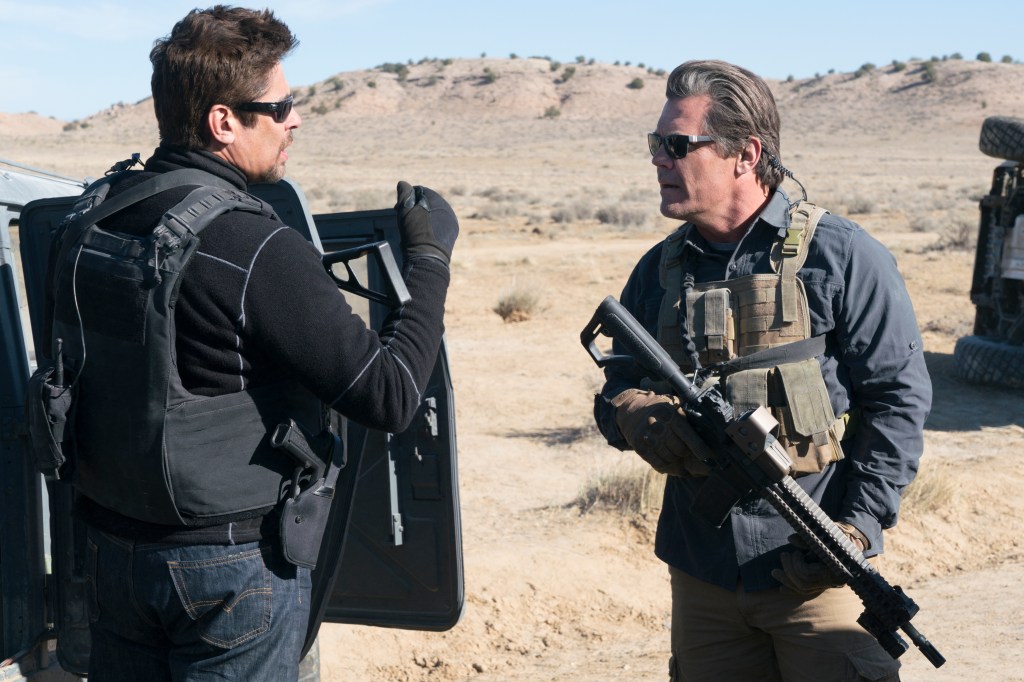
    In” Sicario: Day of the Soldado” (2018), the series begins a new chapter. In the drug war, there are no rules – and when the US government begins to suspect that cartels have started trafficking terrorists across the US border, federal agent Matt Graver (Josh Brolin) calls on the mysterious Alejandro (Benicio Del Toro), whose family was murdered by a cartel kingpin, to escalate the war in nefarious ways. Alejandro kidnaps the kingpin’s daughter to inflame the conflict – but when the girl is seen as collateral damage, her fate will come between the two men as they question everything they are fighting for.

    The film stars Benicio Del Toro, Josh Brolin, Isabela Moner,  Jeffrey Donovan, Manuel Garcia-Rulfo, and Catherine Keener. The film is directed by Stefano Sollima and written by Taylor Sheridan.

    SICARIO: DAY OF THE SOLDADO releases nationally on June 28th, 2018.

  • DVD review: “Game Night” (2018)

    “Game Night” (2018)

    Comedy

    3-stars

    Running Time: 110  minutes

    Written by: Mark Perez

    Directed by: John Francis Daley & Jonathan Goldstein

    Featuring:   Jason Bateman, Rachel McAdams, Billy Magnussen, Sharon Horgan, Lamorne Morris, Kylie Bunbury, Jesse Plemons, Michael C. Hall and Kyle Chandler

    Annie: [as Annie is playing with a fake gun, she quotes Pulp Fiction] “Any of you fucking pricks move, I’m gonna execute every motherfucking last one of you!”

    There is no doubt that last year was a terrible time for the comedy genre, while many of the best laughs in movies came from action and comic book movies, the best example being  the MCU movie “Thor: Ragnarok” (2017) with actors more synonymous with drama than comedy, giving some of the lighter moments of 2017. Now comes the release of one of the better comedies from the past 12 months, a road movie, come caper narrative with a range of well known actors from varying backgrounds, led strongly by both Jason Bateman and surprising to some Oscar nominee Rachel McAdams. “Game Night” (2018) is not only a refreshingly funny movie, but McAdams shines in what must be her first straight comedy role in a long time. McAdams shows some exquisite timing as well as understanding of the material, sharing some natural chemistry with Bateman, they both shine together onscreen. While the narrative as well as some of the plot borrows thematically from many previous movies, such as “The Wizard of Oz” (1939), “After Hours” (1985) or really any other road movie you can think of, it is the separate situations that all the characters find themselves in that sets this apart from many other recent comedies.

    Movies that at their heart are mistaken identity movies are either exceptionally flawed, or are so complex as to be lost in their own contrivance, the classic, possibly greatest is the Hitchcock thriller “North by Northwest” (1959), almost all others are pale imitations. Where “Game Night” (2018) shines is in its embrace of humor as well as the theater of the absurd, which is what makes this movie the comedy of the past twelve months. It believes in its own story which is a real strength that it follows through on for its running time.

    “Game Night” directed by John Francis Daley & Jonathan Goldstein are the pair who are possibly best known for writing the MCU/Sony movie “Spider-Man: Homecoming” (2017) which not only launched that franchise but also gave the duo another shot after the epic misfire that was the reboot, “Vacation” (2016), a bust with critics as well as at the box office. There is no doubt that the two are able screenwriters but their directing credentials were definitely questionable. Directing is all about decision making, the buck stops with that person or persons in charge, with their previous movie it was all bad, but with their new movie they have embraced what makes them unique, run with it and have created what must be an unmitigated success. Believing in their actors as well as the characters they portray is possibly their biggest strength with this movie.

    “Game Night” revolves around competitive gamers Max and Annie who are trying to have a child, but their attempts are unsuccessful due to Max’s stress surrounding his feelings of inadequacy when compared to his vastly more successful, attractive brother Brooks. During Max and Annie’s routine weekend game night with their friends Ryan, and married couple Kevin and Michelle, Brooks shows up and immediately shows Max up by arriving in a Corvette Stingray and sharing an embarrassing childhood story during charades. Annie decides to work together with Max to defeat Brooks at the upcoming game night, which Brooks offers to host at his house.

    When the guests arrive, including Ryan’s new date, Sarah, Brooks says he’s initiated an interactive role-playing mystery game, promising the winner his Stingray. After a while, an actor playing an FBI agent informs them of the narrative of the mystery, only for two masked men to break in and assault him and Brooks. The guests, believing it to be part of the game, idly watch. After Brooks is dragged out of the house, the couples begin to solve the mystery using the clues left behind by the actor.

    On the surface it could be easily overlooked how the casting of this movie adds to the general conceit as well as the story, but to cast some very well known people primarily accepted for their comedy acumen opposite actors who are very well know for their dramatic skills is a very canny decision indeed. So we have Jason Bateman who is close to being a truly great comic actor playing against not only Rachel McAdams, but, Jesse Plemons, Michael C. Hall and Kyle Chandler, who are all gifted film as well as television actors more noted for drama than comedy. What this means for the movie as well as the performances is that all of these characters are imbued with believability not only in their portrayal but the treatment they receive from the rest of the stellar cast. The extreme characters that each of them play are so outlandish, McAdams as a wife wanting a baby, Chandler as the giver the top older brother, Hall as a cruel hit man and Plemons as a weird divorced cop that it is a requirement the cast are not only able to play them straight but the rest of the cast are funny enough to be able to run with their own characters which then paper over any believability issues that may exist within the narrative – of course these are all highly over the top as we as styled characters that are not only tropes but definite comedic archetypes.

    One of the may strengths of “Game Night” like many similar road movies or mistaken identity movies is the short amount of time that it takes place over, which also means that it is self contained to the point that all plot points are explained as well as being tidily wrapped up. The narrative is fairly simple, we are introduced to all the main as well as supporting characters early on, all of their flaws as well as any plot points are all laid out within moments of meeting them, so of course any issues are dealt with so that at the conclusion of the movie we have changed as well as essentially happy characters getting on with their lives. In terms of the actual running time this movie really races along so that there is little time wasted on anything but the essentials within the movie. Something that became commonplace since the early 2000s was the extremely long running time of comedies thanks to producers and directors like Judd Apatow who took it on themselves to over engineer plots as well as narratives, which is acceptable in small doses. However what it led to was an overstuffing that meant that the editing process was ham-fisted leading to unfunny long movies with very little direction. It is pleasing after a number of years to view a movie like “Game Night” that as I have mentioned cracks along at a great pace.

    Another aspect of the movie that is undeniably great is the humor, now I know that this should be a given, a comedy should be funny, but the one thing that 2017 proved was that even though a movie may call itself a comedy, actually being funny is something else entirely. Each of the many comedic moments stem naturally from the honesty of the characters so that they all feel as real as they could in a movie like “Game Night”, which is something many comedies miss, in that they initially go for laughs instead of real moments which this movie is actually full of. There are many examples of the humor, which is not only verbal but very physical as well without having to resort to mindless scenes of action. One early example is Jason Bateman being accidentally shot, then being stitched up by McAdams in one crazy but excellent scene – if you look closely I am almost positive both are laughing, but trying to hide it unsuccessfully to be sure. The movie is full of moments like this, which is refreshing especially in a movie that has such a large cast, everyone at one time or another has their own moment to shine, sometimes more than one – which again in a movie that runs mush less than two hours should be something the directors should be commended for.

    If you want to watch a very funny movie, with some great story beats, a cast full of great dramatic as well as comedic actors, coupled with the fact that most of the family can watch it then “Game Night” is the movie for you. It has genuine laughs, not only that but also offer some lessons without preaching which is something many Hollywood comedies could learn a lot from. Finally it also offers some hint, I hope, as to what John Francis Daley& Jonathan Goldstein could be capable of.

  • DVD review: “Duckman: Private Dick/Family Man” (1994 – 1997)

    “Duckman: Private Dick/Family Man” (1994 – 1997)

    Television

    images

    70 Episodes

    Created by: Everett Peck

    Featuring: Jason Alexander, Gregg Berger, Nancy Travis, Dana Hill, Pat Musick, E.G. Daily, Dweezil Zappa

    Duckman: “Did I ever tell you my Dad’s last words to me”

    Cornfed: “Careful, son, I don’t think the safety is on.”

    Duckman: “Before that.”

    Never one to look back on ‘the good old days’ as there is little to be gained, especially when viewing older television shows, which on the most part have not aged very well I was extra pleased to see that one of the great adult animated shows “Duckman” (1994-1997) was being released on DVD, to, hopefully, a new audience which this hilarious as well as truly groundbreaking show deserves. Before the proliferation of more grown up animation there were only a handful of similarly veined shows viewers could turn to in the 1990s, of course those shows like this one broke rules, commented on the day as well as being truly funny. You may recognize the names, “Beavis and Butt-head” (1993-2011), “The Maxx” (1995), “Aeon Flux” (1991-1995), “Ren and Stimpy” (1991-1996) and “The Critic” (1994-1995), these were all in different ways genre defying as well as genre breaking something that happens all to rarely in the homogenized present we find ourselves in. Of course, some of these shows were more successful than others with the nadir being “Beavis and Butt-head” and “Ren and Stimpy”, but my personal favorite was always “Duckman”.

    “Duckman”, the series centers on Eric T. Duckman (voiced by Jason Alexander), a lascivious, widowed, self-hating, grouchy anthropomorphic duck who lives with his family in Los Angeles (as mentioned in the episode “Bev Takes a Holiday”) and works as a private detective. The tagline of the show, seen in the opening credits, is “Private Dick/Family Man” (“dick” is a triple entendre).

    Main characters include Cornfed (voiced by Gregg Berger), a pig who is Duckman’s Joe Friday-esque business partner and best friend, Ajax (voiced by Dweezil Zappa), Duckman’s eldest, mentally-slow teenage son; Charles (voiced by Dana Hill and later Pat Musick) and Mambo (voiced by E. G. Daily), Duckman’s Conjoined twin child genius sons whose heads share a body; Bernice (voiced by Nancy Travis), Duckman’s sister-in-law and the identical twin of Beatrice who is a fanatic fitness buff and hates Duckman with a passion; Grandma-ma (voiced by Travis), Duckman’s comatose, immensely flatulent mother-in-law; Agnes Delrooney (voiced by Brian Doyle-Murray), Grandma-ma’s doppelgänger who kidnaps her and poses as her for several episodes; Fluffy and Uranus (voiced by Pat Musick), Duckman’s two Care Bear-esque teddy-bear office assistants.

    Everett Peck is the sole creator of the television show, his drawings have appeared in The New Yorker, Playboy and Time, as well as numerous books, comics and movie posters. He has participated in gallery shows in Tokyo, Los Angeles, New York, and Washington, D.C., and has written animated cartoons for Rugrats and The Critic. “Duckman” was originally created as a comic book that was first published by Dark Horse in 1990, in 1994 Duckman was turned into an animated series.

    The show was animated by Clasky-Csupo, and like their better-remembered, kid-focused shows “Rugrats” (1990-2006) it has an expressive, super-deformed art style that’s somewhat reminiscent of independent syndicated comics like those of Lynda Barry and early Matt Groening. The opening credits are super 90s with colorful collages and very stilted drop-frame animation, in this case with a backup theme by Frank Zappa, whose son Dweezil voices Duckman’s charmingly vacant surf-speaking son Ajax.

    Like “The Critic”, “Duckman” encounters random celebrities at times. Like “Ren and Stimpy”, he’s insanely, cartoonishly violent, mostly to his two assistants, Fluffy and Uranus; Care Bear parodies who are sweetly naive and always bounce back from whatever lethal end they meet at their boss’ hands in any given scene. Like “Aeon Flux”, the show was not shy about showing as much animated female flesh as could be gotten away with. But all that was just sizzle on the steak: Duckman balanced the humor with pathos, rubbing in the fact that the lead character’s life is miserable, but also that he loves his three sons and deeply mourns his wife.

    And then, at its best, “Duckman” contained utterly scathing satire that would raise eyebrows even today. Satire is extremely important to animation espepcially those series from the 1990s, it is a technique employed by writers to expose and criticize foolishness and corruption of an individual or a society, by using humor, irony, exaggeration, or ridicule. It intends to improve humanity by criticizing its follies and foibles.

    In the intervening years, either by way of generational change, or just increasing conformity, we’ve lost that desire to mock. Cartoons today are safe. They may proffer to highlight social justice issues, or even raise awareness of important causes, but they do so in a neutral inoffensive manner.

    Televison shows like “Duckman” are important beucase its seems like we have lost the tendancy to create proper satires espceiclly in animation. Shows (even web series) are focusing more on entertainment. Animation and cartoons in general are the perfect vehicle with which to mock the deservedly mockable. Politicians, silicon valley wonks, terrorists; all are so very ripe for plunder yet remain untouched. Has western society embraced a degree of political correctness that emasculates satire? It seems that way doesn’t it? Of course provoking unwanted responses isn’t helping. Not everyone enjoys having their faults and weaknesses exposed and many are wont to seek revenge on those who do. Yet animation’s unique place in the entertainment and art spheres means that it can tackle such complex issues without losing its humurous appeal. Satire is the most accessible way of doing so, and it’s a shame it seems to have vanished form contemporary shows and films. Here’s hoping it comes back.

    Interestingly there are reasons why animal based animations are popular as well as extremely popular and they are:

     –  The so-called ‘Bambi effect’ suggests that humans find animals easier to empathise with, rather than other humans, on account of their ‘cuteness’.  Indeed, this phenomenon could also possibly be explained by Sigmund Freud’s theory that as children we consider ourselves equal to animals and so find it easy to empathise with them. Although this perception often does not last into adulthood, it still positively impacts upon adults’ attitudes towards animals.

     –  Animated animals, even more so than animated humans, are able to transcend these arbitrary distinctions to become universally appealing.

     – They are universal without being bland. However, their universality does not make them bland. Because they are not human, they can be attributed other interesting and defining characteristics that do not have cultural significance.

     –  Animals are similar enough to us to allow us to empathise with them, but not so similar that we feel their pain as if it were our own. This means animated animal characters provide an excellent way to explore difficult topics whilst maintaining a slight emotional distance.

     – Unlike human stereotypes, animal species stereotypes are unlikely to offend audiences.  By using animated, anthropomorphized characters, animators are able to use stereotypes to humorous effect.  Animal stereotypes can simultaneously provide satirical humour to adults and appear humorous to children simply on account of their ‘silliness’ or ‘cuteness’.

     – As much as the use of species stereotype can be important in helping to provide humour and further the plot, subverting tropes is also an effective way to create humour.

     – As human beings we like to consider ourselves as being at the centre of the universe.  This leads us to assume in our narcissism that all species have the same characteristics as us and so we project our characteristics onto animals almost unthinkingly.

     –  Humans expect less detail in the depiction of animals than they do in the portrayal of humans.  This means that animated animals can function as allegories in a way that human characters could not.

     – A lot of the comedy of animation tends to derive from exaggeration.  It is much easier to achieve this without causing offence when the characters aren’t human.

    All in all “Duckman” was not only an entertaining show but one that spoke to people in terms of society, celebrity, economics and politics of the time. What is unique is that with the intervening years as well as the changes in technology this show still stands up as well as having something to say about the world we live in today.

    “Duckman” is available now on DVD and is worth checking out.

    Episodes:

    Season 1:

    1. “I, Duckman”– Feeling underappreciated by his family, Duckman hunts down the man mailing him bombs thinking he’s the only one who cares.
    2. “T.V. or Not to Be”– Duckman is hired by a televangelist to find a missing painting and has a near-death experience after being captured and suffocated with cellophane.
    3. “Gripes of Wrath”– Duckman takes his children to the unveiling of a supercomputer named Loretta. However, during the unveiling, Loretta overhears a comment Duckman makes and alters reality to make everything go Duckman’s way… for a while.
    4. “Psyche”– Feeling insecure about himself, Duckman gets plastic surgery for his bill. Not long after, two buxom blondes hire him and Cornfed to investigate why they only attract men who only want them for their bodies causing Duckman to have a crisis of conscience.
    5. “Gland of Opportunity”– After an accident at an amusement park, the cowardly Duckman has the adrenal gland of a daredevil transplanted into his body giving him a new outlook on life.
    6. “Ride the High School”– Ajax is offered a scholarship to an exclusive boarding school, which Duckman sends him to, unaware that the scholarship is part of a plan by his arch-nemesis King Chicken.
    7. “A Civil War”– Duckman gets jealous when his family showers Cornfed with attention, so he fires him during their next case: a death investigation for an insurance company.
    8. “Not So Easy Riders”– To escape paying years of Duckman’s back taxes he and Cornfed flee on motorcycles.
    9. “It’s the Thing of the Principal”– Ajax and his vice-principal fall in love and elope, leaving Bernice and Duckman to track them down, posing as a married couple themselves.
    10. “Cellar Beware”– A home security expert gets Duckman to buy an elaborate security system—the “Interlopen Fuhrer 2000″—which first fails to prevent a burglary, then locks the whole family in the basement.
    11. “American Dicks”– An episode of the reality show American Dicks films a day in the life of Duckman (chosen as the only agency not affected by a nationwide detective union’s strike) as he and Cornfed try to find the mayor after he’s been kidnapped.
    12. “About Face”– Duckman dates an ugly woman whose voice he fell in love with when calling 911. People’s reactions, however, prompt her to seek a full makeover, making her gorgeous to everyone.
    13. “Joking the Chicken”– A group of rude stand-up comics hire Duckman to stop Iggy Catalpa; a clean, mild-mannered, politically correct comedian whose bland, inoffensive brand of comedy becomes a sensation, thanks to his agent — King Chicken.

    Season 2:

    1. “Papa Oom M.O.W. M.O.W.”– Duckman becomes a national hero after saving the President from an assassination attempt, until it’s revealed that his “heroics” were an accident and he was merely trying to grope two women. Nonetheless he capitalizes on his newfound fame, penning a film for USA and planning a run for the Senate.
    2. “Married Alive”– Bernice returns home from a European vacation and announces that she is marrying a self-made billionaire who plans to take her, Grandma-ma, and the kids away with him to Switzerland, leaving Duckman alone.
    3. “Days of Whining and Neurosis”– Duckman and Cornfed go undercover at an exclusive celebrity-filled health and rehab spa to investigate the murder of a doctor. While there, Duckman detoxes from his various addictions.
    4. “Inherit the Judgement: The Dope’s Trial”– In search of a free clock radio, Duckman takes the family across five states through the desert. On their trek they wind up in the small town of Coopville, where everyone is related, King Chicken is the sheriff, and Duckman is put on trial for heresy.
    5. “America the Beautiful”– In an episode “not recommended for small children or certain Congressmen from the South” that’s “full of heavy-handed and over-obvious allegory” (according to the beginning disclaimer), a multi-ethnic group of children hire Duckman and Cornfed to find their idol, a gorgeous model named America. The investigation involves speaking to four of her ex-boyfriends, men who represent American life in the 1950s, 1960s, 1970s, and 1980s, while Duckman falls deeper in love with the idea of her.
    6. “The Germ Turns”– At a new age fair, Duckman gets a visits from his dead mother (voiced by Katey Sagal)–reincarnated as a highly infectious germ because of how terrible of a mother she was. Hoping to escape the same fate, Duckman begins smothering his sons with affection, much to their chagrin.
    7. “In the Nam of the Father”– The son Cornfed never knew he had arrives at the office and Cornfed travels back to Vietnam to find the mother and the truth. Duckman takes his family along on the trip for a much needed vacation and must also deal with the flashbacks he is experiencing.
    8. “Research and Destroy”– When Ajax shows a natural talent for poetry, Duckman gets him to sign a contract for a greeting card company in search of a new writer.
    9. “Clip Job”– Henry Melfly (voiced by Ben Stiller) kidnaps Duckman; blaming him for the decline in moral, family-friendly shows, resulting in a clip show as he argues his point.

    Season 3:

    1. “Noir Gang”– In a black-and-white, film noir-style episode, Cornfed and Duckman fall for the same woman — femme fatale client Tamara LaBoinque (voiced by Bebe Neuwirth) — raising conflicting feelings in Cornfed.
    2. “Forbidden Fruit”– The family hires a French live-in tutor (King Chicken in disguise) to help the children with their study skills and social development, who sues Duckman for sexual harassment after he gives her an apple, which, according to Judeo-Christian ideology, is considered sexual as the apple is the forbidden fruit Eve ate and tempted Adam with. Ostracized by the public, Duckman is forced to hide out with Fluffy and Uranus while a feminist group begins forcing pro-female political correctness on the town.
    3. “Grandma-ma’s Flatulent Adventure”– When the family fears they can no longer care for Grandma-ma, they decide to place her in a retirement home. Unfortunately, Duckman loses her while dropping her off, sending her on a wild adventure, which ultimately kills her.
    4. “Color of Naught”– Tony Sterling (self-made millionaire and entrepreneur) and his assistant/supermodel Angela (the 911 operator from “About Face”) begins advertising “Beautex”, a beautifying cream to the city and its denizens. In truth, however, Sterling is King Chicken and Beautex (which doesn’t work on Duckman) is a virus which eventually devolves everything it touches.
    5. “Sperms of Endearment”– After caring for a small girl (that calls her “mom”) in the park, Bernice decides it’s time to have children of her own. Her hunt for a father doesn’t go well, however, so she settles on artificial insemination— with sperm that turns out to be from Duckman.
    6. “A Room with a Bellevue”– After an incredibly bad day, Duckman simply wants to make it to Charles and Mambo’s birthday dinner, but gets pushed too far by a dry cleaner. His ranting in the street (without wearing a starched collar) gets him arrested and committed to a state mental hospital for thirty days, where he settles into the routine and decides to stay, forcing Cornfed to break him out.
    7. “Apocalypse Not”– While everyone in the city goes underground for a disaster preparedness drill, an oblivious Duckman thinks he’s the last man alive and wreaks havoc — until he finds a beautiful, deaf gymnast and falls for her. The trapped city folk, meanwhile, begin to turn on each other during their attempted escape back to the surface.
    8. “Clear and Presidente Danger”– Duckman scams a vacation to a South American country, where a passionate Duckman rant about pay toilets leads to a people’s revolution and has him installed as dictator. After his first hundred days he’s just as corrupt a leader as the government he replaced, and it’s up to Cornfed to lead another revolution to bring him down.
    9. “The Girls of Route Canal”– Charles and Mambo ask Duckman to tell them how he won over their mother to help build their confidence in approaching their dreamgirls. The story he tells turns out to be a spoof of The Bridges of Madison County.
    10. “The Mallardian Candidate”– Iggy Catalpa hires Duckman to investigate a conspiracy: every time he does his laundry he loses one sock. However, the case is actually a ruse to kidnap Duckman and turn him on Cornfed by Catalpa’s World Domination League.
    • “Pig Amok”– Because of a previously unknown genetic problem, Cornfed has 24 hours to lose his virginity or he will die. After he fails to connect with multiple women (thanks to Duckman’s sleazy pick-up lines), Bernice has sex with him to save his life, but Cornfed thinks Bernice is in love with him.
    1. “The Once and Future Duck”– Ajax accidentally opens a rift in the time/space continuum with his clock radio, bringing various future versions of Duckman to the past to see him, all different depending on different decisions he can make, causing him to fall into a paranoid spiral.
    2. “The One with Lisa Kudrow in a Small Role”
      “Planet of the Dopes”– Feeling unappreciated by his family, Ajax leaves the house for a walk and is abducted by two redneck aliens from the planet Betamax. On Betamax, Ajax is treated like a genius and worshiped as a deity, while on Earth, Duckman realizes he knows nothing about his son — or any of his family.
    3. “Aged Heat”– After his family mocks his detective skills, they refuse to take him seriously when he accuses Grandma-ma of acting suspiciously, though she has, in fact, been replaced by Agnes DelRooney (voiced by Brian Doyle-Murray), a robber who looks just like her.
    4. “They Craved Duckman’s Brain!”– Duckman is cast in a hospital educational film. After being left in an active MRI chamber for hours, a mutant part of his brain grows an isotope that can cure cancer, which everyone wants.
    5. “The Road to Dendron”– In a parody of the Bing Crosby/Bob Hope “Road to…”films, Duckman and Cornfed chaperon Ajax’s class trip to the Dendron in Sudan, where Ajax is kidnapped and held hostage by a Sultan, his Fakir, and a beautiful princess.
    6. “Exile in Guyville”– In a distant future, a mother’s (voiced by former Fridays cast member Maryedith Burrell) bed-time story for her son involves Duckman and Bernice leading a nationwide division of the sexes after Bernice lambastes Duckman for developing raunchy lingerie with no thought to what a real woman would want to wear.
    7. “The Longest Weekend”– Fed up with the shabby treatment of local government, Duckman and his North Phlegm neighbors form a block association to take on the nearby Dutch Elm Street block association–which has been lobbying the Mayor’s office–eventually leading to all out war.
    8. “The Amazing Colossal Duckman”– Duckman contracts a very rare blood condition through a unique combination of chemicals which causes his blood to literally boil and his body to grow several inches every time he gets angry. After exploiting his new stature for a while, he realizes he is unable to control himself and exiles himself to a secluded island.
    9. “Cock Tales for Four”– Duckman and Bernice attend a dinner party to meet Ajax’s new girlfriend Tammy’s parents, King Chicken and drunken wife Honey. Over the course of the evening their relationships change in unexpected ways.

    Season 4:

    1. “Dammit, Hollywood”– After seeing a bad movie Duckman sneaks into the studio head’s office to get his $7 back. The studio head, however, makes him an executive to sabotage the studio.
    2. “Coolio Runnings”– Duckman adopts rap star Coolio (voicing himself) as his son to compete in the local father/son games over Ajax, hurting Ajax’s feelings.
    3. “Aged Heat 2: Women in Heat”– Duckman is arrested for killing Fluffy and Uranus again and accidentally sent to a woman’s prison. There he becomes the star attraction of an illegal dance ring, until another girl arrives and bumps him from his slot.
    4. “All About Elliott”– Duckman and Cornfed hire the college-aged Elliott (voiced by Chris Elliott) to be their office intern. Immediately he warms himself to Duckman by feeding his destructive side and pushing Cornfed away by sabotaging his personal life and commitments.
    5. “From Brad to Worse”– Duckman is reunited with a man he made homeless 20 years ago and decides to try to help him get back on his feet.
    6. “Bonfire of the Panties”– Cornfed, Charles and Mambo create an aphrodisiac to revive Duckman’s waning love life. When he forgets to wear it, Courtney Thorne-Smith(voicing herself) falls for him, but the family isn’t sure what to believe.
    7. “Role With It”– Duckman, his family and staff, vacation together at an Indian casino, during which they’re approached by a psychiatrist who offers them treatment involving roleplaying to prevent them from what she sees as inevitable violent self-destruction and uncovers real issues among them.
    8. “Ajax and Ajaxer”– While investigating a laboratory, Cornfed accidentally ingests a “Get Dumb” potion, which lowers his IQ to the point that he becomes best friends with Ajax, who is feeling left out of his family again.
    9. “With Friends Like These”– After convincing himself again that he’s having a surprise party only to come home to just Cornfed, Duckman realizes he has no friends. Vowing to use his clean slate and try again to be the “best friend possible” he stumbles upon a group of culturally diverse, laugh tracked, 20-somethings at a coffee shop who immediately take a shine to him.
    10. “A Trophied Duck”– Duckman drags the family to Dickcon ’97 in San Francisco to see him get an award. Unbeknownst to him, he’s actually being set up by Lauren Simone, a rival from his days at “Don Galloway’s Famous Detective School”.
    • “A Star is Abhorred”– During a night out, Bernice becomes an angry female music starafter yelling at Duckman for insulting her singing at a karaoke. Her life begins to go downhill, however, when she and the family go on tour and she gets sucked into the rock & roll life style.
    1. “Bev Takes a Holiday”– Continuing from the previous episode, Bernice travels to Washington, D.C.to assume her new role as Congresswoman. Meanwhile, Beverly—long lost triplet of Beatrice and Bernice—hires a detective to find her family and seeks them out. Duckman spots her spying on him and, mistaking her for Beatrice, runs to her, only to be struck by a bus. In the hospital, Bev must pretend to be Beatrice for Duckman’s sake when he wakes and mistakes her for same.
    2. “Love! Anger! Kvetching!”
      “Ain’t Gonna Be No Mo No Mo”– On the night of a big poker game Duckman has planned with Joe Walsh, Bob Guccionne and others, his Uncle Mo arrives and claims to be dying from heart cancer.
    3. “Duckman and Cornfed in ‘Haunted Society Plumbers’”– In an episode with hints of Marx Brothers, Three Stooges, and Martin and Lewis classics, Duckman and Cornfed—temporarily plumbers—are hired as at a high-society party celebrating the unveiling of a “cursed” jewel: “The Sharon Stone”. Before the ceremony, though, the stone goes missing.
    4. “Ebony, Baby”– Cornfed goes on vacation—his first in 11 years—Duckman works as the sidekick to a black female private investigator Ebony Sable (voiced by Tisha Campbell) who gets him involved in a world of murder, power, lust and blaxploitation clichés.
    5. “Vuuck, as in Duck”– Duckman inherits a AAA baseball team as the last minute action of owner Gene Vuuck—who overhears him bemoaning the current status of the game and decides he’s a “real fan”—who is trying to keep the team out of the hands of a banker. Unfortunately, the team has no following and is losing money rapidly so he replaces the whole team with supermodels.
    6. “Crime, Punishment, War, Peace, and the Idiot”– Beverly asks Bernice if she knows anything about Grandma-ma’s life, prompting Grandma-ma to begin a series of flashbacks of her life, with the main cast filling in for past friends, acquaintances and lovers.
    7. “Kidney, Popsicle, and Nuts”– Duckman is in need of a kidney transplant from a blood relative, but the children are out for various reasons (Ajax doesn’t have any, Charles and Mambo share one) so he turns to his cryogenically frozen father whom, it turns out, wasn’t his father at all. He tracks down his real father (voiced by Brian Keith), a paranoiac in the sticks with his “own country,” and while he’s staying with him a standoff with the government develops.
    8. “The Tami Show”– Duckman backs his car into Tami, a cute girl who claims her family died in a sleighing accident leaving her on her own. The family invites her to stay with them and she quickly begins incapacitating Bev and taking over the family.
    9. “My Feral Lady”– A depressed Duckman purchases a mail-order bride, but upon delivery finds her to be a feral jungle savage. With Cornfed’s help, Duckman attempts to turn her (Kathy Lee) into a proper lady he can marry.
    10. “Westward, No!”– While the boys are visiting Beatrice in D.C., Cornfed invites Beverly to a catfish ranch in Louisiana owned by his Aunt Jane (voiced by Estelle Getty), and a jealous Duckman tags along. After getting the ranch hands fired, Duckman and the gang must help the foreman, Big Jack McBastard (voiced by Jim Cummings), drive the 2,000 head of catfish to Texas.
    11. “Short, Plush and Deadly”– During a taxpayer financed dream vacation Duckman, Cornfed, Fluffy and Uranus are kicked out of camp, stung by bees, and lost. The bee stings paralyze Cornfed and cause his head to swell, but turn turning Fluffy and Uranus into large, homicidal monsters. It’s up to Beatrice and Beverly to find and save them.
    12. “How to Suck in Business Without Really Trying”– Duckman sells his last name to the VarieCom corporation for $1,000, which he immediately wastes, leaving him penniless and jobless.
    13. “You’ve Come a Wrong Way, Baby”– After catching Mambo with a cigarette in his mouth, Bernice challenges the tobacco industry on the floor of Congress. During testimony she’s invited to a tobacco plantation by Walt Evergreen (voiced by Jim Varney)—president of an unnamed tobacco company—which doesn’t go well for the family.
    14. “Hamlet 2: This Time It’s Personal”– Duckman sees the ghost of his Uncle Mo, who says that Duckman’s father was murdered by King Chicken and Duckman should take revenge. To do so he decides to act crazy to get King Chicken—with whom he has formed a truce to allow King Chicken time around Bernice—to admit his guilt so he can kill him with impunity. Cornfed realizes that Duckman is living out the plot of Hamlet, which will eventually lead to his death.
    15. “Das Sub”
      “Class Warfare”
      – Convicted of fraud, Duckman is sentenced to 5,000 hours of community service, but accidentally finds himself substituting for a teacher he injures and teaching a group of intellectual high schoolers how to be “street smart”.
    16. “Where No Duckman Has Gone Before”– A Star Trek parody where Captain Duckman (as Captain Kirk) does battle against King Khan Chicken in an episode similar to “Arena” among others.
    17. “Four Weddings Inconceivable”– At the wedding of Dr. Stein, a series of emotional epiphanies lead to an amazing set of marriage proposals: King Chicken proposes to Bernice; Cornfed proposes to Beverly; Duckman proposes to Honey, King Chicken’s ex. After arguments between the principles, Duckman volunteers to make the arrangements for the triple wedding, purposely putting any blame on himself. Despite his arrangements, the ceremony goes off without a hitch — until Duckman’s supposedly deceased wife, Beatrice, returns.
  • DVD review: “And Then There Were None” (2015)

    “And Then There Were None” (2015)

    Thriller

    images

    Three Episodes

    Written by: Sarah Phelps

    Directed by: Craig Viveiros

    Featuring:   Douglas Booth, Charles Dance, Maeve Dermody, Burn Gorman, Anna Maxwell Martin, Sam Neill, Miranda Richardson, Toby Stephens, Noah Taylor, Aidan Turner

    “Ten little Indian boys went out to dine; One choked his little self and then there were nine.
    Nine little Indian boys sat up very late; One overslept himself and then there were eight.
    Eight little Indian boys travelling in Devon; One said he’d stay there and then there were seven.
    Seven little Indian boys chopping up sticks; One chopped himself in halves and then there were six.
    Six little Indian boys playing with a hive; A bumblebee stung one and then there were five.
    Five little Indian boys going in for law; One got in Chancery and then there were four.
    Four little Indian boys going out to sea; A red herring swallowed one and then there were three.
    Three little Indian boys walking in the Zoo; A big bear hugged one and then there were two.
    Two little Indian boys sitting in the sun; One got frizzled up and then there was one.
    One little Indian boy left all alone; He went and hanged himself and then there were none.” 

    ― Agatha Christie, “And Then There Were None”

    The last few years has seen a resurgence in the adaptations of Agatha Christie novels into television shows/movies as well as cinematic movies, this could be the spin-off of so many mystery shows being developed internationally that there really is no story like an old story. In fact, what is unique is that many of these adaptations are not being updated but produced in the time period in which they were written, or at least very close to them. To fully encapsulate some of the minutiae of Christies stories it falls to the format of a miniseries to explore these properly so in 2015 the BBC produced one of the better as well as more faithful versions of what has to be the greatest Christie story of all, ‘And Then There Were None, first published in 1939. Over the years since its first publication there have been a myriad of adaptations for almost every media, not only that the general plot has been used time and again in other genres as it easily fits almost any other genre, providing a framework for others to fill in with their own characters, situations and geographic areas.

    Agatha Christie, as well as her work, remain to this very day, a strong part of popular culture, in fact it has been for almost a hundred years. In a writing career lasting more than 55 years, she wrote 72 novels and 15 short story collections, to be sure a massive accomplishment, which will no doubt stand the test of time. What made her stories stand out were, of course, the characters. She created memorable and dignified characters which any class of readers could relate to. Her most memorable and popular characters, Hercule Poirot and Miss Marple, are great examples of her skill to develop “high society” characters with mainstream appeal.

    Agatha regularly looked for “creative inspiration” by studying the people around her; however, her chosen genre, the murder mystery, stunted her writing process because it was difficult at times to put reality into fictional environments; for example, she sometimes had trouble using attributes of acquaintances to do things she couldn’t imagine them doing, like murder, and this often caused writer’s block. To overcome this obstacle, she would develop many characters from scratch. She would note physical appearances of strangers whom she saw and met in public and then would use their likeness and subtle mannerisms to develop relatable characters for her mysteries.

    This new adaptation has been directed by Craig Viveiro, written by Sarah Phelps who are both very experienced in the medium of television, in particular for the UK audience that this has primarily been made for. The challenge that faces both of them are numerous, this is the latest in a long line of adaptations that people know very well, the location is essentially the same for the run of the story, there needs to be tension as well as heightened emotions as this is a ‘who done it’, there is a large cast so characters need to be fleshed out as well as given their own space to shine and this needs to be visually as well as narratively original so as to engage audiences and keep them for the entire series. The good news is that they have executed in almost every way so that this seems like a fresh story as well as something that must be seen, in fact this had some extremely strong viewing numbers when it aired in the UK which is not surprising as it is as fresh as any Christie adaptions that has ever been including some of the classic versions from previous years.

    The story takes place in late August 1939, eight people, all strangers to each other, are invited to a small, isolated island off the coast of Devon, England, by a “Mr and Mrs Owen”. The guests settle in at a mansion tended by two newly hired servants, Thomas and Ethel Rogers, but their hosts are absent. When the guests sit down to dinner, they notice the centerpiece, ten figurines of soldiers arranged in a circle. Afterward, Thomas Rogers puts on a gramophone record, from which a voice accuses everyone present of murder. Shortly after this, one of the party dies from poisoning, and then more and more people are murdered, all in methods synonymous with a nursery rhyme the island is named after, and the murderer removes a figurine from the dining table each time someone is killed. The remaining people decide to work together. They must discover who the murderer is before they run out of time and nobody remains.

    As with many of Christie’s greatest stories that have been transferred to other mediums there are always great actors that see the timeless quality of her writing as well as challenge that is present when one her novels is adapted. The other element that seems to be more and more prevalent are the extremely large casts that are assembled to bring these adaptations to life, here “And Then There Were None” is no different. In terms of great casts this one is right up there featuring not only some excellent actors but actors that are relevant appearing in some of the biggest hits and best received films and television shows of the past decade. Some of the highlights for me in this series are some talented character actors in Burn Gorman, Noah Taylor and Toby Stephens who have proven themselves time and again with their interpretations of some very original and interesting characters that prove why they are in demand as well as why they are so memorable in almost everything they appear in. What is refreshing was that some of the best parts are portrayed by veterans including the great Charles Dance, Sam Neill, Miranda Richardson as well as the incredibly talented Aidan Turner who seems to be on a high career wise in terms of television roles. All of these actors are excellent in their own ways, which speaks to the great casting and is one of the reasons why this miniseries is so compelling.

    What is interesting with Agatha Christie adaptions are the changes that are made and while this is a mostly faithful adaption there are some changes and in my mind the most important ones are as follows:

    • Edward Seton, the man Justice Wargrave is accused of having hanged for crimes he did not commit (but was in fact guilty), was, in the original novel, executed for the murder of his landlady to get her money. Here, he is said by Wargrave to have killed multiple people, believing he was doing the world a favour by getting rid of them.
    • In the book, Detective Sergeant William Blore is accused of having committed perjury, with the result that an innocent man was wrongly sent to jail for life, where he died. In this series, Blore is accused of beating a homosexual man to death. In the book, he is killed by a clock in the shape of a bear being dropped on his head, whereas in this production he is killed by being stabbed and draped with a bear rug.
    • In the book, Philip Lombard is a soldier of fortune responsible for the deaths of 21 men in East Africa by abandoning them in the desert and taking the food and supplies with him, which he does not deny. In this series, he kills the men to get diamonds.
    • In the book, there is no explicit romance between Vera and Lombard and they never become physically intimate with one another.
    • In the book, Vera hangs herself in a post-hypnotic trance after shooting Lombard dead, and never discovers the true identity of “U.N. Owen”, and the reader only finds out in the postscript that Owen was Wargrave. In this production, Wargrave walks into the room while Vera is about to hang herself, explains his actions and motivations, and informs her that he intends to shoot himself and create an unsolvable mystery. She tries to bargain with him but he suddenly yanks the chair from under her feet, causing her seemingly self-inflicted death.
    • Wargrave’s death is very different from the novel. In the book, he sets up his death in his bedroom to reflect how he was last found, by shooting himself in the forehead, with a cord tied to the revolver and door knob, allowing the gun to be pulled away after firing. Here, after killing Vera, he goes to the dining room, where he sets up two place settings, presumably for himself and “U.N. Owen”. He fires the bullet just under his chin, and the revolver’s recoil propels the gun away, landing at the empty place setting.
    • In the novel, after the deaths and the arrival of help from the mainland, two policemen sit to discuss the case and ultimately are unable to solve the mystery. Later, a note from the murderer in a bottle is caught in a fishing trawler’s net and the mystery is solved. Neither occurs in this version.

    Back in 2015 when this miniseries was first broadcast it heralded the arrival of new productions of Christies work, in fact since this was produced there have been multiple adaption’s produced of her work including “Chorabali” (2016), “Locked Doors”(2016), “The Witness for the Prosecution” (2016), “Crooked House” and “The Murder of the Orient Express” (2017) which have all been met with various amounts of success. This has not stopped and over the next few years we will see the following being produced and being brought to the large and small screen, “Ordeal by Innocence” (2018), “The ABC Murders” (2018), “Death on the Nile” (2019) and “Death Comes as the End”(2019), so we can see that the Estate for Agatha Christie is still making money as well as being verty successful.

    What I love about this adaptation and the many others is that is an invitation into not only Christie’s world but her mind as well as the period in which she lived. It is also the feminine as aspect that I enjoy as it is certainly wanting in many oher parts of our lives, Christie was yearning to break free of her time period and in a way she has done just that being as relevant now as she was in her lifetime now over a hundred years ago, here is to more of her work being produced as my feeling is it will never get old.

    “And Then There Were None” is available now on DVD.


  • DVD & Blu-ray: “Tomb Raider” (2018)

    “Tomb Raider” (2018)

    Action

    stars-2-5

    Written by: Geneva Robertson-Dworet & Alastair Siddons

    Directed by: Roar Uthaug

    Featuring: Alicia Vikander, Dominic West, Walton Goggins, Daniel Wu, and Kristin Scott Thomas

    Receptionist: “What’s your name?”

    Lara Croft: “Lara.”

    Receptionist: “Surname?”

    Lara Croft: “Croft.”

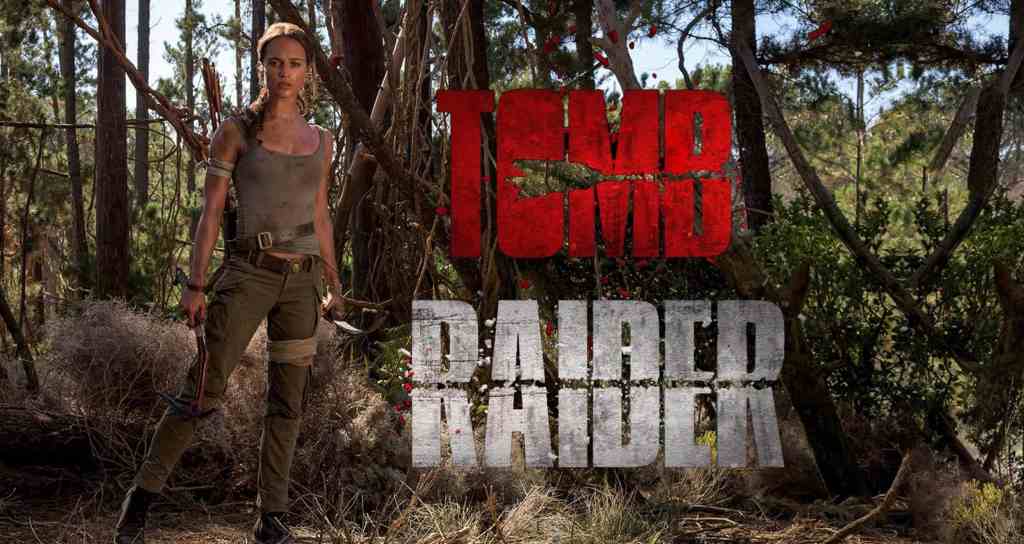
    As we get closer to the lucrative summer movie season in the US there are more and more movies trying to get in early, attempting to make an impact at the box office. The one thing that has been proven by the recent “Black Panther” (2018) release date is that anytime can be a good time for the right movie. Enter the re-booted video game adaption from the best selling ‘Tomb Raider/Lara Croft’ series made famous in the 90s by the iconic game, then brought to life by the then recently Oscar awarded Angelina Jolie, firstly in the successful “Lara Croft: Tomb Raider” (2001) then in the follow up “Lara Croft Tomb Raider: Cradle of Life” (2003). Now after a successfully rebooted game it was inevitable that another movie be produced based around this, with the aptly titled “Tomb Raider” (2018), recast with the recent Oscar winner Alicia Vikander. Eschewing the fantasy elements of the first two movies this new incarnation seems willing to settle for a hodge podge of ideas that within themselves never really come off, but it is Vikander who carries this movie on her back, any kind of success can be credited to her rising star power as well as inhabiting the role far differently to Jolie.

    The decision making in regards to how this film has been constructed has to be commended in giving Vikander her first real starring role after many turns in character roles, as well as bringing on board Norwegian director Roar Uthaug who while experienced in his homeland has never helmed a movie of this size or importance. What has been an odd, and has to be said unwise decision was handing over the screenwriting reins to the extremely inexperienced duo of Geneva Robertson-Dworet and Alastair Siddons who seem to use just about every cliché under the sun as well as borrowing from any ‘Mummy’ movie from the past ninety years as well as the first five seasons of the CW superhero show “Arrow” (2012–present).

    “Tomb Raider” involves Lara Croft who following the disappearance of her father Richard, lives a reckless and carefree life. When she is arrested after an accident involving a police car, Richard’s business partner Ana Miller posts her bail and warns her that if she does not claim her inheritance, her father’s estate will be sold off. Lara reluctantly accepts and comes into possession of the key to her father’s office. There she finds a pre-recorded message from Richard detailing his research into Himiko, the mythical Queen of Yamatai who was said to command the power over life and death. Richard warns Lara to destroy all of his research but Lara decides to investigate further.

    Lara travels to Hong Kong where she bribes Lu Ren, captain of the ship Endurance, to sail to an island believed to have once been Yamatai. The ship capsizes in a violent storm and Lara is washed ashore where she is knocked unconscious.

    The strength of this movie is in the casting and to a lessor extent the way the director has marshaled the script to easily produce a movie that while mostly fast paced as well as containing some surprises, definitely offers nothing of any real originality but hints at a solid future if this movie makes enough of an impact at the box office or in critical circles. In fact many of the lessor characters seemed destined for a return in much larger roles if the franchise moves forward in the coming years.

    This is easily the biggest film that Alicia Vikander has appeared in, you can tell from her first scene she has welcomed the casting as Croft by making herself into a physically imposing specimen through the use of her smallish frame making her interpretation of Croft as a quick footed, quick fisted as well as quick witted hero that can hold her own in any situation as well as against any opposition. What is appealing in terms of this movie is that Vikander is not setting herself up in opposition to the Jolie character, but sidesteps that by creating her own mostly fully developed three dimensional character that solves her Father issues about halfway through the film, unlike the original movie which had them hanging over the entire runtime. In support of Vikander we have a few top-notch character actors that have proved themselves to be most able over the past twenty years including Dominic West, Kristin Scott Thomas, Derek Jacobi and the always-enchanting Walton Goggins. It is imperative when creating a possible new franchise or reboot that they lead actor has reliable talent not only to accentuate their own performance but for the audience to have something to latch onto in introducing a new property. It is Walton Goggins who really shines as the villain of the piece as well as someone who over the years has given more than just arch performances in all his great roles including standouts in “The Shield” (2002-2008) and “Justified” (2010-2015) – here he excels with material that is frankly beneath him, but he rises above it to give one of the better performances in the film.

    The picking of Roar Uthaug as director is actually an inspired choice as can be seen by his last as well as his biggest success “The Wave” (2015) which not only balanced a family drama but also was a tense thriller and ultimately part action movie, it also involved some subtle as well as obvious CGI, for a foreign film it was accomplished which explained its success on the world stage. Here Uthaug does something similar in attempting to make “Tomb Raider” all about Lara Croft, painting her as an outsider shunning her family money to make it on her own, in fact in the opening scene we see her as vulnerable but determined, a new millennial woman (but still girlish, complicated by the odd timeline incorporated in flashbacks) attractive to all – there is definitely something political about Croft but it is not handled well at all. Thrown into the mix is a family drama as well as old-fashioned soap opera with a hint of mysticism. Overall “Tomb Raider” is very well directed, with many of the action scenes handled as well as one could expect with budget and geographic restrictions – without having too much CGI – there are for example no training robots or time travel.

    All the issues with “Tomb Raider” are around narrative and plot which lands squarely at the feet of screenwriters Geneva Robertson-Dworet & Alastair Siddons who not only are re-telling Crofts origins story which are not a million miles from the original “Lara Croft: Tomb Raider” but many elements seem stitched together from other adventure movies as well, as does the ending of the movie which seems to be borrowed from “Lara Croft Tomb Raider: Cradle of Life” a far better sequel that does not bear up in the box office receipts of the day. I mean these writers even give Lara her very own Bat Cave in the tomb of her dead family with maps, boxes neatly labeled with the information she requires, not only that after the eight years that have passed all the batteries on the equipment she uses still work, it may have been nice if logic had played a part in this script.

    Whilst there is much to enjoy about this film, in particular the casting elements as well as many of the environments used it will not be something that stays with an audience for long which is down to the plot that is fairly feeble. This is not the all knowing multiple language speaking Croft from the previous movies, we are shown someone who is smart as well as someone who wants to make it on her own, although by the end of the movie she is more Oliver Queen than anyone else – I suspect she will get her own Scooby gang if a sequel is to follow. That is not to say that you should steer clear of Tomb Raider, in fact it might be the perfect entrée to the main course that is to follow in the coming months.

    “Tomb Raider” is out now on DVD & Blu-ray.

  • DVD & Blu-ray review: “Insidious: The Last Key” (2018)

    “Insidious: The Last Key” (2018)

    Horror

    stars-2-5

    Running Time: 103 minutes

    Written by: Leigh Whannell

    Directed by: Adam Robitel

    Featuring:  Lin Shaye, Angus Sampson, Leigh Whannell, Spencer Locke, Caitlin Gerard, and Bruce Davison

    Elise Rainier: “I’m going to get the attention of all the spirits in this house. I need things that were important to Garza. Specs, go upstairs. There is a bible he held very dear to him. It was a red, King James version; I need you to find it. Take Imogen with you.”

    You can’t blame Blumhouse studios for flogging a dead horse even when it looks like a horror franchise may be dead or has run out of steam, there is always a way to bring it back to life. With their now infamous stringent low budgets there is very little risk of producing any movie, if it fails it is not a big loss so as the saying goes nothing ventured nothing gained. After a stupendous 2017 with two massive international hits in “Get Out” (2017) and “Split” (2017) it may have seemed that success could not get much better or bigger. But with their first release this year, the fourth entry into the ‘Insidious’ franchise, the aptly named “Insidious: The Last Key” (2018) Blumhouse has once again hit gold with a global take of US$166 million on a US$10 million budget, they must be laughing all the way to the bank. Of course box office receipts does not always translate to a good movie, here we have what is critically the case of ever decreasing returns, on a franchise that story wise probably ran out of puff after the second instalment. When watching this new movie it is obvious that building a franchise around an interesting character from the first two movies, that being Lin Shaye, is a mistake as is retrofitting an origin story around her that seems tacked on at best, as well as destroying any mystery from the first two instalments.

    Of course the real person behind these movies creatively is screenwriter come actor Leigh Whannell who has over the course of this century launched this franchise as well as the “Saw” (2003-2017) franchise – both of these being a blessing and a curse. When “Saw”(2003) burst onto the screens it was a somewhat breath of fresh air with the post 9/11 malaise that existed as well as something that was welcomed after the breakout horror of “The Blair Witch Project”(1999). It was all visceral and blood with some great B list actors thrown in for fun. It ushered in the way for torture porn and gave birth to Eli Roth and his non subtle version “Hostel“ (2005). For the next few years he was in horror hell until reteaming with James Wan (who it has to be said has now transcended horror) to bring “Insidious” (2010) to the screen (along with super horror producer Jason Blum) – now with the fourth film and Wan off to do better things Whannell is the sole driving force – for much worse. As you would expect with the first two movies being essentially Parts 1 & 2, as well as being directed by Wan, they are the best and most compelling. However Whannell himself directed the third which is was a major let-down, now for this latest edition they have enlisted relative newcomer Adam Robitel – whose only previous credit is the semi-interesting low-budget “The Taking of Deborah Logan” (2014), it shows as this new movie is in a similar vein as that with no new creative ground – except maybe a bigger budget.

    This new movie begins before the events of the first three movies as Elise (Lin Shaye) works as a paranormal investigator with her two colleagues, Specs and Tucker, taking clients via phone calls. One day, Elise receives a phone call seeking for help. The client, Ted Garza, claims that he has been experiencing paranormal activity since moving into his house. While on the phone, he reveals that he is living in Elise’s childhood home. Hesitant at first, she explains to her colleagues what happened to her during her childhood, then deciding to accept the job in order to make things right.

    Firstly as a budding filmmaker I give all respect to Blumhouse for what they have been able to do, not only as a business model but also to make the horror genre as successful as well as accessible in multiplexes not only in North America but globally, it is a feat of epic proportions. The production budgets on all these ‘Insidious’ movies has been less than US$40 million dollars, globally they have grossed more than US$500 million, in anyone’s books that is a win – game over, thanks for playing, I now look forward to “Insidious 17: Welcome to the Attic” (2033) – thank you audiences!

    However there is another side to this success, that is, are these movies good, watchable or even worth going to see at the movies as opposed to say Netflix where Blumhouse has a deal where you could see baby-Blumhouse productions like the very good (and micro-budgeted) “Creep” (2014) and its sequel “Creep 2” (2017). My answer is pretty simple, that is I would not go to the movies to see any of the sequels to the excellent “Insidious” (2011), which like many firsts was stacked with great talent as well as an up and coming director with a story that was pure horror invention – ‘the further’. A place that can spawn any number of horrors, the only limit is imagination.

    “Insidious: The Last Key” (2018) attempts to cast well, but when the lead of your movie is Lin Shaye whose entire career is predicted on nepotism it is hard to see her performance as anything but strictly routine as well as one note – which in fact all of her performances are – looking back she really does play one note characters. So here she just plays the person from the first movie without a real hint of difference, the only saving grace is that if any more movies are to come her character might not be around as they have quasi replaced her here with a younger version – although still not a great actress. The issue here is contrast – in the first movie the cast was Rose Byrne, Patrick Wilson and Barbara Hershey who all did the heavy lifting for Shaye who just had to show up and be herself for a small amount of the running time – here she appears in a major proportion of the movie which makes it significantly worse – the same can be said of her sidekicks Tucker (Angus Sampson) and Specs (Leigh Whannell). Wisley though character actors Bruce Davison, Kirk Acevedo and the always surprising Josh Stewart are along for the ride illustrating perfectly the how horror characters should be portrayed realising immediately what kind of movie they are in as well as adjusting performance when needed – for me it is seeing these three that makes the movie even watchable.

    Sure I get it this is a prequel made to explore Elise’s story as well as her sidekicks, it also serves as a ham fisted way to directly link to the first film, which it does. However the execution as well as the horror tropes that are evident are unsurprising and ham-fisted which is a weakness of the horror genre which is why when making one, and for it to be considered good it is vital that themes are explored and it is somehow different, no matter how small that difference is – none of that is evident here. This is a standard haunted house story with a mean father, put upon mother, resentful siblings and a niece who is clueless, until the end of course where there are revelations galore. This is a missed opportunity to recast Elise in her 20s or 30s or even 40s giving us some real insight into her as well as bringing some original scares to the series, also with a way to easily greenlight cheap sequels – Shaye herself could bookend these thereby still having her appear and anchoring the series.

    If you are looking for entertainment in the way of horror then you could worse than “Insidious: The Last Key” but I would wait until the release of “The Quiet Place” (2018).

  • Movie review: “Tag” (2018)

    “Crooked House”  (2018)

    Comedy

    stars-2-5

    Running Time: 95 minutes

    Written by: Rob McKittrick & Mark Steilen

    Directed by:  Jeff Tomsic

    Featuring: Ed Helms, Jake Johnson, Annabelle Wallis, Hannibal Buress, Isla Fisher, Rashida Jones, Jon Hamm, Leslie Bibb, Jeremy Renner

    Sable: “What’s the difference between Episcopalian and Lutheran?”

    Randy: “Episcopalians don’t eat fish.”

    Sable: “That’s… pescatarian, that’s… not a religion.”

    Randy: “They’re all fanatics, I don’t know.”

    If one thing has been proven over the past few years it is that if you make a comedy then it had better have a strong original idea at its heart, an idea that permeates the narrative but also has something else as well, that is some kind of human drama or stakes to keep it honest. It has definitely been a very good year so far for comedies with “Blockers” (2018), “Book Club” (2018), “Game Night” (2018), “Life of the Party”(2018), along with many others, as well as the promise of more to come before the year is out. The question is: Where does “Tag” (2018) fall? Is it a great high concept comedy or does it stop at the idea and execute a nosedive into banality like so many comedies from the past few years? The answer is that it depends what you want from your comedies, a softer gentle story or something with a harder edge, like this R rated effort from what must be one of the better ensembles assembled, that all have multi genre experience. Now whilst “Tag” does have an action element to it this is definitely a physical comedy that does for the most part deliver on the promise seen in the trailers, which I have to say I thought sold the movie very well. However it does not shy away from trying to shock viewers and so it reminded me of “Bad Moms 2” (2017), which is not a great comparison as that movie had the some of the same kind of feeling that this one did – started with a good idea but then took a left turn with its R rating, relying on the adult content to see it through once the initial idea of the plot had worn of – which it does, early on.

    The issue with “Tag”, one that haunts many movies that are based on newspaper or magazine articles is that they seem to be short changed in the plot department, as in an article, there is not much need to have either depth or secondary strands of plot. In a movie though these things are most important and can make or break a movie, in this case it is probably more on the break side, but it is definitely not a disaster, in fact it does have some memorable as well as some very funny sections. The issue is that it is difficult to not outright like this movie because of its winning cast, that for me has some of my favourite character actors, the issue is that the plot is pretty paper thin, it relies totally on the characterisations of players within the movie, which is almost always recipe for disaster. There are some adhoc B stories that start seemingly randomly, then just stop for no apparent reason.

    For me the negative issues arise mainly because of the writers, Mark Steilen and Rob McKittrick, and the direcotr Jeff Tomsic are far too inexperianced in the making and moulding of a high concept movie like “Tag”. When taking a story like this there is a requirement for the writers then director to ensure that the narrative as well as the story is solid enough to ensure that the movie will be accepted as an entire piece and not just a good idea. This means that depth has to be given to the plot so as to broaden the appeal as well as make a story that is complex enough to keep the audience engaged. An excellent recent example is the comedy “Game Night” that took an idea, that of a group game night expanding the story into something that was not only hilarious but kept audiences engaged introducing charters as well as sub plots and more or less resolving them at the conclusion, something that could have been learned here.

    “Tag” is based around a group of tight-knit friends–Hoagie, Jerry, Bob, Chili and Kevin–who at nine years old created a game of tag that they played through the month of May. After thirty years, it was the thing that brought them together, even when their lives took them in different directions. However, this might be the last, as it seems like Jerry–who’s never been tagged–might quit.

    The real reason to go and see this movie is most definitely the cast, which is fantastic, while the movie is not led by Jeremy Renner he is the maguffin of sorts so holds a special place within the narrative, which I really enjoyed. Renner who is not only a gifted actor, having been nominated for two Oscars, but is also a very good physical actor with great comic timing and instincts proven time and again over the past three decades. Here he plays a person who has to outwit and outsmart a group of people, whom he plays magnificently, he knows exactly what to do and how to do it. The person who I loved seeing was Jake Johnson who was so underserved in last years “The Mummy” (2017), here delivers on a promise with some great lines and of course his timing is as good as his reputation would suggest. To be fair the rest of the cast has been chosen because they are all great comic character actors who have a depth of experience in just the roles they are playing which is both a positive as well as negative. When the rest of the cast is made up of Ed Helms, Hannibal Buress, Isla Fisher, Rashida Jonesand Jon Hamm it may have been much more original to have these talented comedians playing different types to what they have played in numerous other movies before, in a way it is a disservice to not only them but the audience – essentially there is little suspense in terms of motivations as we have kind of  been there, done that. What may have assisted the movie in terms of characters may have been casting the actors to different roles or to even rewriting the charters to more original types so that there were surprises as the narrative unfolded, but unfortunately we are stuck with some fairly ordinary archetypes.

    “Tag” is not far from being a good movie, but it does have some weaknesses which all seem to stem from its limited source material, I get it really I do, a group of friends have a game of tag that’s gone on for over thirty years, but that in and of itself. this is not enough of a story to have as the entire plot of the movie. Sure we see life events unfold within the game but they are not plot, just more narrative ideas to move the plot along of which there realy is none at all. The best solution to this problem is not to do a bait and switch which so many other movies do, that is make it an R-rated comedy and try and cover the plot with irreverence – this only works for so long as after a while the audience becomes immune to that. The only way to solve plot issues is to actually have a definite plot that starts in one place, ending in another with actions in between, but that plot has to mean something, here it means very little.

    “Tag” is not a bad movie but it is fairly run of the mill, it lacks a strong plot or a narrative bite but it does have funny moments that include verbal and physical comedy, it also has a strong cast that are all talented so there are positive to it, just don’t expect to be amazed. There is no doubt that you will have a laugh but the movie will be forgotten once you leave the cinema, its not bad just average with an R-rating.

    “Tag” is out now only in cinemas.


  • “Wonder Woman 1984” (2019)

    “Wonder Woman 1984” (2019)

    CAMERAS ROLL ON WARNER BROS. PICTURES’ “WONDER WOMAN 1984”

    WW2 First Look Image - Chris Pine

    Director Patty Jenkins Reteams with Star Gal Gadot for the DC Super Hero’s Return to the Big Screen

    BURBANK, CA, June 13, 2018 – Fast forward to the 1980s as Wonder Woman’s next big screen adventure finds her facing an all-new foe: The Cheetah. Principal photography is underway on Warner Bros. Pictures’ follow up to the Super Hero’s first outing, last summer’s record-breaking “Wonder Woman,” which took in $822 million at the worldwide box office. “Wonder Woman 1984” will also be helmed by acclaimed director Patty Jenkins, and star Gal Gadot in the title role.

    As previously announced, the film also stars Kristen Wiig in the role of the Super-Villain The Cheetah, as well as Pedro Pascal. And Chris Pine returns as Steve Trevor.

    Charles Roven, Deborah Snyder, Zack Snyder, Patty Jenkins, Stephen Jones and Gal Gadot are producing the film. Rebecca Roven Oakley, Richard Suckle, Wesley Coller, Geoff Johns and Walter Hamada are the executive producers.

    Joining her behind the scenes are several members of Jenkins’ “Wonder Woman” team, including director of photography Matthew Jensen, Oscar-nominated production designer Aline Bonetto (“Amélie”), and Oscar-winning costume designer Lindy Hemming (“Topsy-Turvy”). Oscar-nominated editor Richard Pearson (“United 93”) will cut the film.

    Production will take place in Washington, D.C., Alexandria, Virginia, and in the UK, Spain and the Canary Islands.

    Set to open in theaters October 31, 2019 in New Zealand, “Wonder Woman 1984” is based on the character created by William Moulton Marston, appearing in comic books published by DC Entertainment. It will be distributed worldwide by Warner Bros. Pictures, a Warner Bros. Entertainment Company.

    WW2 First Look Image - Gal Gadot

  • Teaser Trailer: “Dumbo” (2019)

    Teaser Trailer: “Dumbo” (2019)

    Error
    This video doesn’t exist

    From Disney and visionary director Tim Burton, the all-new grand live-action adventure “Dumbo” expands on the beloved classic story where differences are celebrated, family is cherished and dreams take flight. Circus owner Max Medici (Danny DeVito) enlists former star Holt Farrier (Colin Farrell) and his children Milly (Nico Parker) and Joe (Finley Hobbins) to care for a newborn elephant whose oversized ears make him a laughingstock in an already struggling circus. But when they discover that Dumbo can fly, the circus makes an incredible comeback, attracting persuasive entrepreneur V.A. Vandevere (Michael Keaton), who recruits the peculiar pachyderm for his newest, larger-than-life entertainment venture, Dreamland. Dumbo soars to new heights alongside a charming and spectacular aerial artist, Colette Marchant (Eva Green), until Holt learns that beneath its shiny veneer, Dreamland is full of dark secrets.

    Directed by Tim Burton (“Alice in Wonderland,” “Charlie and the Chocolate Factory”) from a screenplay by Ehren Kruger (“Ophelia,” “Dream House”), and produced by Justin Springer (“TRON: Legacy”), Kruger, Katterli Frauenfelder (“Miss Peregrine’s Home for Peculiar Children,” “Big Eyes”) and Derek Frey (“Miss Peregrine’s Home for Peculiar Children,” “Frankenweenie”), “Dumbo” flies into NZ cinemas on March 28, 2019.

    dumbo spry film review 2

  • Trailer: “The Nun” (2018)

    Trailer: “The Nun” (2018)

    Error
    This video doesn’t exist

    When a young nun at a cloistered abbey in Romania takes her own life, a priest with a haunted past and a novitiate on the threshold of her final vows are sent by the Vatican to investigate. Together they uncover the order’s unholy secret. Risking not only their lives but their faith and their very souls, they confront a malevolent force in the form of the same demonic nun that first terrorized audiences in “The Conjuring 2,” as the abbey becomes a horrific battleground between the living and the damned.

    THE NUN is directed by Corin Hardy and stars Demian Bichir, Taissa Farmiga, Jonas Bloquet, Charlotte Hope, Ingrid Bisu and Bonnie Aarons.

    THE NUN releases in New Zealand cinemas on September 6, 2018.

    DfgOWQgUcAAXDNl.jpg-large

  • DVD review: “Lady Bird” (2017)

    “Lady Bird” (2017)

    Drama

    images

    Running Time: 93 minutes

    Written & Directed by:  Greta Gerwig

    Featuring: Saoirse Ronan, Laurie Metcalf, Lucas Hedges, Timothée Chalamet, Tracy Letts, Beanie Feldstein, Stephen McKinley Henderson, and Lois Smith

    Marion McPherson: “I want you to be the very best version of yourself that you can be.” 

    Christine ‘Lady Bird’ McPherson: “What if this is the best version?”

    You may be forgiven in thinking that this new film written and directed by Greta Gerwig has come out of the blue from an actress who has lit up the world of US independent cinema for the past decade, but in fact it is exactly what should have been expected of her. This new film “Lady Bird” (2017) is not even the first film Gerwig has written or even directed, she has been working away for years, in fact the only surprise is that the announcement of her undeniable talent has taken this long, but the reason for that is more political than anything else. As you might expect this is a low budget indie that touches many bases a feature like this should do, it is a personal story from Gerwig’s own experiences, has many great performances from talented actors but is told from the point of view of its female lead – this is something that is as unique as Gerwig herself, it is refreshing, new and speaks to Gerwigs own truth about aspects of her life to a certain point.

    It has to be said that over the past four decades there have been many independent films that have seemingly announced new talents that are expected to go on and prove that their first or second movies are no fluke, that they have something to say and will be present in the making of films for some time to come. In fact every year after many festivals new talents emerge but just as fast they seem to disappear. Few original voices remain, but Gerwig has something going for her that so many do not, that is experience in the industry as well as another full acting career in many films that have not only been annual highlights but have remained in the lexicon long after their eventual home releases. Movies like “Jackie” (2016), “20th Century Women” (2016), “Mistress America” (2015), “Frances Ha” (2012) and so many more, not only inform individual characters but also Gerwigs own sensibility that come across in this unique film that brings to the fore a spirit that hopefully will be seen in the years to follow.

    “Lady Bird” revolves around an outspoken teen learning to navigate a loving but turbulent relationship with her strong-willed mother over the course of an eventful and poignant senior year of high school.

    “Lady Bird” is such an easy film to view as well as really enjoy that you could be forgiven for not looking past the surface story to dig beneath the plot and see what lies there. This is most definitely a character study of the lead, the formation of her persona showing what trajectory she is on, but never really getting there, I would think she is still on that journey now. Lady Bird is a headstrong young lady who knows what her endgame is but is not sure how to get there. All she sees is what she does not have thinking the grass is greener on the other side of the fence without knowing the inherent letdowns and dangers that exist there. Lady Bird also doesn’t realize that the it is the journey that is the experience not the getting there, as we will see towards the end of the film with her initial experiences in another place.

    This is so well written by Gerwig that you can tell it is from her own experience whether or not the extreme characterizations are embellished or not, they ring so true that you will find yourself identifying with not one character but many. This is a personal story and as such it touches on many uncomfortable traits not only of Lady Bird but her mother and father as well as well as her fellow classmates. Interestingly it does paint a loving memory of Catholic School, being taught by Nuns, Priests as well as the lay teachers that fill out the staff numbers. This last point is most interesting as it illustrates openness on the part of the Catholic institution that is rarely seen in popular culture or in society in general. It shows a school that is open and not closed to new ideas, one with a sense of humor and a lack of dourness – we see Lady Bird hanging real conversations about life with the Nuns as well as doubts and emotion from some of the Priests. The other aspect Lady Bird captures, which many films based around adolescents do., is that everything at this age is amplified beyond anything else felt in life, this goes more so for Lady Bird whose mother features so highly in her life with similar thought patterns.

    As this is almost entirely based around characters it is the performances that come to the front and center of this film, they have to be honest as well as believable, with the ability of the cast to believe in what they are doing as well as what they are saying, this is where motivation is so important. In this, Gerwig has recruited two extremely good actresses in Saoirse Ronan as the title character and the always-fantastic Laurie Metcalf as mother dearest. Ronan has proven over the years to be a most dedicated actress appearing in a variety of genres as well as varied budgeted films, but this must stand as her best performance, one that is fully realised from beginning to end, rightly nominated for an Oscar, she may even win if the tide turns in her favor by just a little. Then there is stage actress and “Roseanne” (1988 – 1997) veteran Laurie Metcalfe who has not made many appearances on the big screen, but here shines as a mother who almost cares too much and hangs on too long to her daughter. It may be hard to believe but this is Metcalf’s first film since “Stop-Loss” (2008) almost ten years ago, one can only hope that after this Oscar nominated performance there will more to follow. The rest of the cast is full of surprise as well with Tracy Letts as the patriarch of the family who gives a willowy vulnerable performance as a man caught between his life not quite beginning with a middle age crises looming, he plays the part as a man of his stature can. Also appearing are stars on the rise Lucas Hedges and Timothée Chalamet as Lady Bird’s sometime confused beaus, they are both great in very different roles pushing the lead along to some startling realizations about herself as well her relationship with future men.

    It would be reductive to describe this as a coming of age film as it transcends that with the smart screenplay as well as fully realized flawed characters that explode off the screen in ways that audiences might not be prepared for. You will  definitley come to know the truth of the characters as well as their motivations. This is another in a list of great films to be released over the past few months that are a welcome relief to the male dominated vanity projects that come in time for the Oscars. This is a film written and directed as well as featuring women in all the main parts, it is a perspective rarely seen in movies but gives it the originality to rise from a good movie to a great one, it will be interesting to see where Gerwig goes to from here, but I for one hope that her next effort is not too far away.

    “Lady Bird” is out now on DVD.

  • Film review: “Crooked House” (2017)

    “Crooked House” (2017)

    Drama/Mystery

    3-stars

    Running Time: 95 minutes

    Written by: Julian Fellowes & Tim Rose Price & Gilles Paquet-Brenner

    Directed by:  Gilles Paquet-Brenner

    Featuring:  Max Irons, Terence Stamp, Glenn Close, Gillian Anderson, Amanda Abbington, Christina Hendricks, Julian Sands and Stefanie Martini

    Josephine: “The murderer is never the one you initially suspect.”

    The last few years has seen a resurgence in the adaptation’s of Agatha Christie novels into television shows/movies as well as cinematic movies, this could be the spin off of so many mystery shows being developed internationally that there really is no story like an old story. In fact what is unique is that many of these adaptations are not being updated but produced in the time period in which they were written, or at least very close to them. So now we have the release of a movie that was originally on television in the U.K. but is in New Zealand cinemas now, that is the mystery “Crooked House” (2017), which boasts a large cast of very well known actors that all suit Christies narrative tricks as well as arguably being the best thing about this adaptation that weaves a plot very carefully around peoples lives after the tragic death of the patriarch of a very wealthily English family, who, of course in the grand tradition, are all suspects at one time or another. Like many of Christie’s stories this does have a twist, almost a double one but it should leave you guessing until the end.

    Agatha Christie as well as her work remain a strong part of popular culture, in fact it has been for almost a hundred years. In a writing career lasting more than 55 years, she wrote 72 novels and 15 short story collections, to be sure a massive accomplishment, which will no doubt stand the test of time. What made her stories stand out were, of course, the characters. She created memorable and dignified characters which any class of readers could relate to. Her most memorable and popular characters, Hercule Poirot and Miss Marple, are great examples of her skill to develop “high society” characters with mainstream appeal.

    Agatha regularly looked for “creative inspiration” by studying the people around her; however, her chosen genre, the murder mystery, stunted her writing process because it was difficult at times to put reality into fictional environments; for example, she sometimes had trouble using attributes of acquaintances to do things she couldn’t imagine them doing, like murder, and this often caused writer’s block. To overcome this obstacle, she would develop many characters from scratch. She would note physical appearances of strangers whom she saw and met in public and then would use their likeness and subtle mannerisms to develop relatable characters for her mysteries.

    “Crooked House” is co-written/directed by Gilles Paquet-Brenner who has quite a bit of experience with thrillers, the highlight of his oeuvre is the excellent and underrated Gillian Flynn adaptation “Dark Places” (2015) which was a psychological thriller featuring Charlize Theron, so an Agatha Christie adaption does not feel outside his wheelhouse at all, for the most part he makes a very good job of it, he may have been a little short-changed with his lead, which is a missed opportunity. The other interesting element is one of the other credited screenwriters is Julian Fellows who is no stranger to the period or to the type of story that is being told here. Fellows is just the person to lend some credibility about the time period as well as some of the motivations for the characters, their behaviour as well, which is evident in his timeless screenplay for the relatively similar “Gosford Park” (2001), for which he received a well-deserved Oscar. There are many similar elements within this script but where it diverges besides the time period and setting is the pedestrian direction as well as the straight forward classic narrative, which is where cracks appear at the seams of the production. What “Crooked House” misses is some kind of unique narrative to pull audiences in as well as keeping them focused on this movie that really should be a must see as it touches on many elements that are meaningful today, one of those is tolerance and love instead of hate.

    “Crooked House” revolves around the granddaughter of late business tycoon Aristide Leonides, Sophia Leonides, visits private investigator Charles Hayward in his office. Sophia hires Charles to investigate Aristide’s death, for she believes he was murdered by a member of his sprawling and idiosyncratic family. Sophia notes that Leonides’ regular insulin injection had been laced with eserine from his eye drops, the resulting chemicals in them causing him to die. Sophia believes this to have been a deliberate switch rather than accidental. Charles begrudgingly agrees to take on the case as a result of his feelings for Sophia as the two had enjoyed a brief love affair when they had met sometime prior in Cairo.

    In many Agatha Christie adaptations one of the attractive elements is the normally star-studded cast that is assembled, “Crooked House” is no different with some fantastic talent from all levels of television, stage and movies. However, where this film drops the ball is with the lead in Max Irons as Charles who while trying his best is not really up to the material or is not really able to match up with the rest of the cast who are almost all more talented as well as more recognisable which only diverts attention away from the lead. The best protagonists who play private investigators always seem to have duality to their very nature whereas Irons does seem a bit bland as well as non-committal with his character, which, as it is the main part does impact the narrative as well as the feeling that a viewer may get from the plot. The remainder of the cast is filled out with some impressive actors led by the inimitable superstar Glenn Close as the matriarch of the family who plays the part with such wit and fierce, at times I found myself wishing the movie had centred on her, she is always great to watch and like her recent cinematic roles she leaves everything on the table. Then there are the rest who all prove why they are in such high demand as well as how professional they are with original characterisations as well as knowing whose movie this is, Agatha Christies to be sure. With actors like a true legend Terence Stamp, genre experts in Gillian Anderson, Amanda Abbington, Christina Hendricks, and Julian Sands it’s no wonder the supporting cast are a wonder to watch.

    Sometimes I wonder how and why certain movies are produced, or, when there are literally hundreds of stories available why some are chosen over others. To be fair and without giving away any spoilers it is the final act that is the reason why this movie exists, it is relatively original as well as shocking in as much as it is also a tragedy for the entire family, one the audience may not see coming, which is possibly the point. But what is definite and assured is that an ending does not make a movie which is certainly the case here. The plot is somewhat interesting but the narrative as well as the way in which the director attempts to build up tension is by the numbers leaving the viewer wanting more but never getting it which means the story meanders along like a three-legged dog, it leaves one slightly bored as well really wanting more meat to dig your teeth into. Once the ending does finally arrive it is not quite enough to make the previous two hours’ worth it.

    What I find confounding with this movie is that there have been so many good to great Agatha Christie adaptions that when one comes along that is uneven, a little miscast and not really thrilling it comes as a very large disappointment and really does taint the Christie brand.

    “Crooked House” is out now only in cinemas.

  • DVD review: “Tin Star” (2017)

    “Tin Star” (2017)

    Drama

    images

    10 Episodes

    Produced & Created by: Rowan Joffe

    Featuring: Tim Roth, Christina Hendricks, Leanne Best, Christopher Heyerdahl, Roark Critchlow


    There is a popular term being used at the moment, that this is the ‘Golden Age’ of television, which is a ridiculous thing to say, as that age was in the 1950s, when the idea of what television could be started to take shape. That was when some of the most original and cutting edge television was made, watching some of those programs can be very refreshing. There is also the attitude that we are in the best time of television where writers are the kings of the medium – this might be truer, but it is not a new idea. One thiing is for sure, there are more scripted shows than ever with a few of them being great, a larger number being very good, but a large amount being a complete waste of time. The trick is of course knowing which ones to start viewing as well as when to give up or stay with them. The beauty is that many of these series are only normally up to ten episodes so its not a long term commitment if they do not follow through on their initial promise.

    That brings us to the latest drama featuring Tim Roth in the main role as an English police officer who has been transplanted to the Canadian Rockies, something that is already an original idea. Couple that with the opening ten minutes of the first episode, this is a show that digs its hooks into you and will not let go for its first season.

    There is little real need to explain a plot with this show as it would remove any mystery or drama as this is show that really shouldn’t be spoiled at all.

    “Tin Star” is based around former London police detective Jim Worth is the new police chief of Little Big Bear, a small town in the Canadian Rockies, where he has moved with his family to escape his past. The influx of migrant workers because of a new big oil company, headed by the mysterious Mrs. Bradshaw, forces Worth to confront the resulting wave of crime that threatens the town. Worth’s stand against the criminals results in vigilante groups attacking him and his family, leading Worth to slip into the violence of his past.

    Many modern police dramas, particularly those on pay sites or cable channels will touch on family matters as well as any home life – this is mainly to broaden the main character’s appeal, as well as give depth to his life, making him three dimensional. The show may even create some kind of drama at home, making this an integral part of the plot. What “Tin Star” has done is to integrate the home and work life, making them interwined in a very natural way that causes almost all of the players to, at some time, interact with everyone else. It also negates the reason for the main character to have some kind of double life separating his work and home. This also means he can be as honest as he can be with the people most important in his life – this is something many stories will not do. Honesty in a television drama is something that is normally not used as a narrative device, in fact what this main character finds is that honesty is all he has left after the first few episodes. This is a person that has made some mistakes as well as lied to many people, this show illustrated in a stylised way what can happen when the chickens come home to roost.

    “Tin Star” involves many different genres, it is political, it is definitely nourish, has action, involves minorities and uses its landscape as a fully fledged element that is rarely seen in this kind of show. What it doesn’t do, which many many shows do, is make the actual story a ‘slow burn’, the narrative moves along at a surprising pace. I found this refreshing, not only did it keep me interested but it also helped to maintain the point of the story – which I can say is very good. The main part of the story is completely resolved by the end of the last episode, as well as many of the subplots are fully explained. What is done, however, is that if there was a second season (which I believe there is) there is enough in the closing minutes to continue some kind of story – which is pretty fantastic.

    The casting of the show, in part due to the nature of the transplanting of an English family to Canada is just great, and it may be in part due to the juxtaposition of many English accents around so many Canadian, as well as Native American, accents that seems to keep the show fresh each episode. With Tim Roth in the lead as the Sheriff you get immediate legitimacy as well as an actor that knows his craft, can play many different emotions as well as someone who is extremely physical both being able to inhabit a space specifically as well as not being afraid to really commit to a part in a unique way. The cast is expansive but I loved seeing Christina Hendricks playing someone who is more than the she seems, particularly in the first few episodes. In fact she has such a good story arc that I hope she returns at some point for any subsequent seasons. Lastly, there is the Canadian charater actor Christopher Heyerdahl, who genre fans will know from his years of work on many different science fiction and horror shows, here he plays a man who has secrets that are revealed slowy and as such subtle changes in performance is required, Heyerdahl is more than capable of showing us these.

    Rowan Joffe the creator of “Tin Star” is an experienced writer/director, who has worked with many top talents as well as being behind some pretty good movies. He has created a show that is compelling, as well as fitting in with his previous work. His work often involves people that have become isolated for a variety of reasons, that incorporate a variety of genres, which is unique in itself. This is probably why “Tin Star” has been such a success in terms of the finished show – he has also used the location as well as showing how this landscape affects the characters as well as the motivations behind some of the arrivals to the town. Some of the same themes that are presened here are also in the new film “Wind River” (2017) to a lesser or greater extent – I am sure that is a coincidence.

    I recommend this show highly, it is ten episodes of well written, directed and acted drama you will see this year. There are top performances, especially from Roth who shines here in a role that seems like it was written for him, but that’s just how good an actor he is. Seek this out now.

    Episodes:

    1. Fun and (S)Laughter

    Directed by: Rowan Joffe; Cinematographer: Dale McCready

    1. The Kid

    Directed by: Marc Jobst; Cinematographer: Paul Sarossy

    1. Comfort of Strangers

    Directed by: Alice Troughton; Cinematographer: Dale McCready 

    1. Jack

    Directed by: Marc Jobst; Cinematographer: Paul Sarossy 

    1. Bait

    Directed by: Alice Troughton; Cinematographer: Dale McCready 

    1. Exposure

    Directed by: Grant Harvey; Cinematographer: Paul Sarossy

    1. Exposure

    Directed by: Giles Bannier; Cinematographer: Dale McCready

    1. This be the Verse

    Directed by: Grant Harvey; Cinematographer: Dale McCready 

    1. Fortunate Boy

    Directed by: Craig Viveiros; Cinematographer: Dale McCready

    1. My Love is Vengeance

    Directed by: Giles Bannier; Cinematographer: Dale McCready

    “Tin Star” is available now on DVD.

  • DVD review: “Loving Vincent” (2017)

    “Loving Vincent”  (2017)

    Drama

    images

    Running Time: 95 minutes

    Written & Directed by: Dorota Kobiela & Hugh Welchman

    Featuring:  Robert Gulaczyk, Douglas Booth, Jerome Flynn, Saoirse Ronan, Helen McCrory, Chris O’Dowd, John Sessions, Eleanor Tomlinson, Aidan Turner

    Vincent van Gogh: “What am I in the eyes of most people – a nonentity, an eccentric, or an unpleasant person – somebody who has no position in society and will never have; in short, the lowest of the low. All right, then – even if that were absolutely true, then I should one day like to show by my work what such an eccentric, such a nobody, has in his heart.”

    “Loving Vincent” (2017) is a most unusual film, it is animated, by hand, reflecting some of the subject, Vincent van Gogh’s own style while at the same time covering many different time periods of his life and subsequent death. The main narrative is set over a short amount of time, after the artists seeming suicide by gunshot. This type of partial biopic is not new, that is the way it is told, what is unique is the way in which the filmmakers seemingly wanted to illustrate the artists work as well as how this changed the way in which people viewed paintings as well as the link between life, art and the struggles that van Gogh went through his entire life. Through “Loving Vincent” the viewer will learn about the anguish the artist lived through most of his life as well as moments of happiness he also enjoyed, if there is one thing that is made clear is that while he was known as a tortured artist he was loved by members of his family and friends as well as loving other people. This film also seems timely as van Gogh did suffer from depression or even a bipolar disorder, of course undiagnosed at the time, which ultimately was possibly one of the causes of his apparent suicide. This is an eye opening film not only does it open a window into van Goghs life and death, it also starts a conversation around mental health as well as suicide in a way that it has to be said is noting short of breathtaking, I absolutely loved this film, it touches on an artists work as well as his life, especially the last part of that life like few films have ever done before, particularly in a purely emotional way that an audience can feel in a real and palpable way.

    “Loving Vincent” has been written and directed by Dorota Kobiela & Hugh Welchman who both come from very different backgrounds, but who have created a film that is accessible yet educational about one of the greatest painters in history, as well as someone who is misunderstood in terms of the life he led, including the social and mental issues that he dealt with on a daily basis for his entire short life. The directors have been able to organise as well as bring together 125 painters to generate the cells that were needed to bring a story to life that reflected the artist’s own revolutionary style to such a degree that the viewer may not realise what they are actually viewing, the artists own work and life remixed and reflected on a canvas that will be seen by an absolutely huge audience. The directors have chosen a medium that is not only complex, but took over four years to complete, which meant that at times this entire process was frustrating as well as a giant undertaking to pay homage to not only van Gogh but all the people that worked on this unique work of translated art, it is something to behold. I recommend viewing on a large television with a great picture as it does look breathtaking.

    The film begins one year after Vincent van Gogh’s suicide, Postman Joseph Roulin asks his son Armand to deliver Van Gogh’s last letter to his brother, Theo. Roulin finds the death suspicious, as merely weeks earlier Van Gogh claimed through letters that his mood was calm and normal. Armand reluctantly agrees and heads for Paris.

    On the surface it may seem that casting voice talent is not a major part of the process of an animated film, but in regard to “Loving Vincent” this ends up being just as important as as anything else in the process, there has been no stunt casting here like there sometimes is in Hollywood animated movies, so here we have an excellent cast full of very good and recognisable actors from television and film. There is no doubt that the leads of this film are Douglas Booth as Joseph Roulin and Robert Gulaczyk as van Gogh who are both excellent, they have to portray characters that are not simple or one dimensional, in fact they are both layered and curious about life as well as how people can feel emotions so differently, of course these questions are basic to our existence as well where that will ultimately lead. As you would expect the rest of the film is rounded out with some excellent character actors who are all completely dedicated to their roles as witnesses to the last days of van Gogh as well as people telling their own stories that make up what a memory is as well as the absolute helplessness they feel in terms of the fate of the artist. The highlights are pretty obvious, these all must have been attractive parts to play to not only be a part of a film about van Gogh but to also be a part of a unique film that had the potential to touch many lives. My favourites were the always underrated Jerome Flynn as a somewhat fellow artist and friend who holds the key to many of the reasons behind the suicide, Saoirse Ronan always fantastic here shows why she is one of the great young actresses working today. The rest of the cast is rounded out with some fantastic U.K. actors in Helen McCrory, Chris O’Dowd, John Sessions and Aidan Turner who all are as authentic as could be. They all add very different aspects to this animated film in that they give so much authenticity to their parts that it flows through to the rest of the film.

    “Loving Vincent” is a film that whilst it revolves around van Gogh, is about a great many ideas as well as themes. It represents the artist as a tortured soul who must feel pain and anguish to produce truly great work, as well as timeless work. Beneath that however is the underlying mental health issues that van Gogh suffered from, that he was unaware of as were the people of the time, except for the diagnosis of Melancholia which is a form of major depressive disorder, although at the time it would not have been known how serious this was or the effects it could have on a person. There are various theories about the artists health but two of the popular ones were that he suffered fromTemporal Lobe Epilepsy as well as a possible Bipolar disorder.

    Van Gogh suffered from seizures which doctors, including Dr. Felix Rey and Dr. Peyron, believed to be caused by temporal lobe epilepsy. Van Gogh was born with a brain lesion that many doctors believe was aggravated by his prolonged use of absinthe causing his epileptic condition. Dr. Gachet, another of Van Gogh’s physicians, was thought to have treated his epilepsy with digitalis. This prescription drug can cause one to see in yellow or see yellow spots. This may have been one of the reasons why Van Gogh loved this color. Due to Van Gogh’s extreme enthusiasm and dedication to first religion and then art coupled with the feverish pace of his art production many believe that mania was a prominent condition in Van Gogh’s life. However, these episodes were always followed by exhaustion and depression and ultimately suicide. Therefore, a diagnosis of bipolar disorder or manic depression makes sense with the accounts of these episodes in Van Gogh’s life.

    “Loving Vincent” is a film that has at its heart a story about part of the life of Vincent van Gogh who is one of the most influential artists who ever lived. This film actually performs a number of jobs it tells a story about the man, gives insight into his process as well as his interactions with people and also with its use of animation visually gives the viewer an idea of what his art actually looked like. What I loved about this film was that you needn’t have known much about the man as it unfolds over the running time, not only that but with the ending credits there is even more revelations about the artist’s work, as well as some of the inspiration from many of his more well-known paintings, do not miss this movie, it is a must see!

    “Loving Vincent” is available now on DVD.

    Starry
    Starry night
    Paint your palette blue and grey

    Look out on a summer’s day
    With eyes that know the
    Darkness in my soul.
    Shadows on the hills
    Sketch the trees and the daffodils

    Catch the breeze and the winter chills

    In colors on the snowy linen land.
    And now I understand what you tried to say to me

    How you suffered for your sanity
    How you tried to set them free.
    They would not listen
    They did not know how

    Perhaps they’ll listen now.

    Starry
    Starry night
    Flaming flo’rs that brightly blaze

    Swirling clouds in violet haze reflect in
    Vincent’s eyes of China blue.
    Colors changing hue
    Morning fields of amber grain

    Weathered faces lined in pain
    Are soothed beneath the artist’s
    Loving hand.
    And now I understand what you tried to say to me

    How you suffered for your sanity
    How you tried to set them free.
    Perhaps they’ll listen now.

    For they could not love you
    But still your love was true

    And when no hope was left in sight on that starry
    Starry night.
    You took your life
    As lovers often do;
    But I could have told you
    Vincent
    This world was never
    Meant for one
    As beautiful as you.

    Starry
    Starry night
    Portraits hung in empty halls

    Frameless heads on nameless walls
    With eyes
    That watch the world and can’t forget.
    Like the stranger that you’ve met

    The ragged men in ragged clothes

    The silver thorn of bloody rose
    Lie crushed and broken
    On the virgin snow.
    And now I think I know what you tried to say to me

    How you suffered for your sanity

    How you tried to set them free.
    They would not listen
    They’re not
    List’ning still
    Perhaps they never will.


  • DVD review: “Professor Marston and the Wonder Women” (2017)

    “Professor Marston and the Wonder Women” (2017)

    Drama

    images

    Running Time: 108 minutes

    Written & Directed by: Angela Robinson

    Featuring: Luke Evans, Rebecca Hall, Bella Heathcote, JJ Feild, Oliver Platt and Connie Britton

    William Moulton Marston: “She is beautiful, guileless, kind, and pure of heart. You are brilliant, ferocious, hilarious, and a grade A bitch. Together, you are the perfect woman.”

    There have been few films produced that explore the origins of superhero characters, I hope this will be an anomaly that will be rectified over the next few decades as there will be a natural curiosity about the authors of these characters that are being made into movies, making billions at the box office while being introduced to an entirely new kind of audience. There is a pantheon of superhero authors whose names are known by even non comic book readers, but the creator of ‘Wonder Woman’, William Moulton Marston is probably one of the lessor known, but more fascinating people to have ever been involved in comics and their creation. As it turns out the character of ‘Wonder Woman’ is a touchstone for people as well as a new reinvigorated character for Warner Brothers (and DC comics) after the runaway success of the Patty Jenkins movie, “Wonder Woman” (2017) that heralded some pretty big firsts, the highest grossing movie directed by a woman, the first comic book movie led by a woman and directed by a woman as well as becoming the leading DC character now, surely ahead of the iconic ‘Superman’ and ‘Batman’ who both are at their lowest ebb in over thirty years. It seems that a film that addresses the origins of this character would not only be interesting but enlightening to a new generation, as well as highlighting how original and interesting comics can be, as well as the subversive nature that they are able to project which in turn means that their coded content is made for a knowing section of the population, but at the same time being attractive to all.

    There is so much to love about “Professor Marston and the Wonder Women”  (2017), it is a period piece about people who were all about their minds as well as breaking through scientific as well as social boundaries and barriers, without the need for consequence as well as actually attempting to understand the human mind. They wanted to be a part of  making the world a very real and better place with an emphasis on women’s rights, including all that entails. The very idea of someone’s life work being summed up in the pages of a comic may seem like a reach but that is exactly what is distilled in this film that also has a meta narrative, as it has been written and directed by a woman with a distinctly feminie point of view which I am sure the main character’s would have liked as it was one of their main treaties.

    “Professor Marston and the Wonder Women”, written and directed by Angela Robinson, is someone who has quite a bit of genre experience which suits the somewhat biopic nature of this film, as it delves into a few genres of its own with very different visual styles associated with each one. In fact this film covers quite a lot of narrative territory as well as boasting a very stringent political, social and artistic point of view that is as relevant today as it was when this movie was set. This is a very well thought out and constructed film with minimal lag or waste of running time, it has a job to do, points to hit and it does this extremely well especially considering some of the constraints that the entire production was under. Robinson, who has never directed anything with the nuance required for this movie to work really does wonders with the narrative as well as the plot, not ignoring the importance of key visual cues that are a must for what is a special story, as well as being set in an unusual time in the US. What could have been a run of the mill movie about the creation of one of the greatest and iconic comic book characters of all time is not reductive at all, it grabs the reigns of imagination from the start, never letting them go until the final credits roll, with some photographs of the original people involved in this most original of non fictional origin stories, this is if you will, the story behind the origin story of ‘Wonder Woman’.

    The film is told in flashbacks set during a 1945 testimony that William Moulton Marston gives to representatives of the Child Study Association of America. In the year 1928, William and his wife Elizabeth teach and work on their research at Harvard and Radcliffe Colleges. One day, William hires one of his students, Olive Byrne (daughter of Ethel Byrne and niece of Margaret Sanger – two famous suffragists and feminists of the 20th century) as a research assistant. Olive aids in the Marstons’ work in inventing the lie detector and conducting research on William’s DISC theory on human interactions, and the three soon grow close. One after another tests by the lie detector reveal that they have fallen in love with one another, and all three of them begin to engage in a polyamorous relationship.

    “Professor Marston and the Wonder Women” is very much a story about three very individual as well as special people who come together to from an unorthodox (in terms of societal norms) relationship that meant they would treat each other as equals as well as learning from each other in almost every way possible. In portraying that the film required three very unique as well as talented and believable actors, luckily they were able to cast Luke Evans, Rebecca Hall, Bella Heathcote who all play very different real life people, but do so with commitment and not an ounce of irony, they are believable from the beginning with a wide variety of emotions on display as well as plot points that must be seen to be real or the idea of this movie will fail completely. Luke Evans plays the titular role of Professor Marston who is at the beginning of the movie an over sexed educator, but by the end is a true visionary and an example of what a man can be, embracing differences as well as truly believing in the women around him without any kind of predatory response that is seen in so many other texts. The other main characters, it has to be said the inspirations for the character of ‘Wonder Woman’ are played by the experienced Rebecca Halland the relative newcomer Bella Heathcote who it has to be said are both excellent and who outshine Evans as actors as well as within the characters they play, which is one of the main points of the film, without giving to much away in terms of plot. Within the plot and narrative there really is not much room for any other main characters but the cast is rounded out by the great Oliver Platt and Connie Britton who although only in minor roles really do shine as two very important players in the story of the publishing and acceptance as well as the ultimate castration of the comic that was ‘Wonder Woman’.

    Whilst the movie “Wonder Woman” may have seemed liked good timing with all that has gone on in the past year or so, with the call for more equality in all aspects of life, this new biopic seems almost more on point especially as it looks closely at gender roles within relationship as well as in the workplace, adding to that there is also the elements of gender studies as well as roles within education and all that goes with that. This is a movie that looks at a polyamorous relationships with true authenticity and shows it working as well as any other relationship, it takes us into the three principles lives showing us their children who are well adjusted as well as the struggles any couple would have with money, familial relationships as well as how others interact with the three socially. What is remarkable is the way in which Marston was able to distil his own ideas as well as the way he viewed his partners as well as women in general to create a vessel for these ideas to be reproduced and disseminated to the general public without most people realising what they were seeing, an extension of sorts of the suffragettes brought to life with Amazons in their own world fighting in the so called ‘world of men’ without the need for men to ‘save’ them, going against the grain of the time period. To say that Marston was ahead of his and his cohort’s time is an understatement, but to say that he may have realised that with the creation of ‘Wonder Woman’ he might be able to illustrate some real truths through stories with her set in the real world. This movie is not only a tribute to him but to his partners as well as his family, I think it is a great companion piece to the latest “Wonder Woman” movie providing context to her own creation.

    The way in which this story is told has a nice touch as well, the plot is told in a flashback, from the point of view of Marston himself which opens up the movie to the male gaze, something that is important as the majority of readers of the comics would have been boys and/or men. The other side is that whilst the narrative is through the male gaze it is filtered through a female director so the view of women as sexual objects is present but so is the agency that these women had with him and each other. We see the roles that all three people played with each other as well as the outside world, including behind closed doors in regards to their explorations of their own sexuality which in terms of the visual style relates directly to the creation of ‘Wonder Woman’ as are the myriad visual keys that will let viewers into the influences that inform much that becomes the most feminie, as well as one of the most famous iconic female heroes.

    If you want to watch a compelling period drama, comedy, love story as well as a version of the creation of one of the most popular superheroes then this is for you. It delves into many places that are still taboo but does so with a high level of respect as well as some fiction which is par for the course for Hollywood biopics. I recommend this highly it will stay with you long after the end credits roll.


  • DVD/Blu-ray review: “Red Sparrow” (2018)

    “Red Sparrow” (2018)

    Drama/Thriller

    voting-concept-rating-two-golden-stars-d-render-illustration-white-background-60907242

    Running Time: 140 minutes

    Written by:  Justin Haythe

    Directed by:  Francis Lawrence

    Featuring: Jennifer Lawrence, Joel Edgerton, Matthias Schoenaerts, Charlotte Rampling, Mary-Louise Parker, and Jeremy Irons

    Matron: “Every human being is a puzzle of need. You must become the missing piece, and they will tell you anything.”

    Movies like “Red Sparrow” (2018) do not happen by accident, they are designed to not only make money but to launch possible sequels for their stars as well as open up a future for the studio they are made for. Unfortunately things do not always go to plan as is the case with “Red Sparrow” (2018), about a possible spy who uses her feminine wiles to seduce men and women using violence as a last resort while all the time remaining cool, calm and collected. This should have been a big hit movie but there were some serious miscalculations on almost every level which leads “Red Sparrow” being a mawkish mess as well as feeling sterile and unoriginal – what I really wanted to see was a spy movie that kicked butt while having an original narrative that would keep me guessing until the end credits rolled for the inevitable twist you know is on its way – instead I couldn’t wait for the almost two and half hour ordeal to end.

    There is no doubt that any studio wants to be in business with Jennifer Lawrence, she is a young Oscar winning actress who has appeared in two full blown franchises for two separate studios, those being the ‘X-Men’ and ‘Hunger Games’ movies for 20thCentury Fox and Lionsgate respectively. Lawrence has proven she can open a movie at the box office all the while being a critical darling who has won an Oscar and been nominated for a few more along the way, all this at the age of twenty seven, she has the world at he feet the only question is who will blink first? At this stage it is looking like it might be Lawrence who seems to be suffering from some kind of identity crisis in terms of what’s next and where to from here? The answer is that the jury is still out but with the underwhelming as well as pretty forgettable “Passengers” (2016), “Mother! “(2017) and now “Red Sparrow” (2018) it appears that while she might be trying to make bold choices they are ending up flat, not bad just bland – the exception being “Mother!” but it was so misunderstood that it was an afterthought in a packed 2017 which saw the cultural milestones being narratives like “Get Out” (2017) and others that forgo star power for a narrative bite, as well as being low budgeted affairs that speak to the times we are inhabiting, offering a definite point of view that audiences are attracted to – not generic genre movies.

    “Red Sparrow” directed by Francis Lawrence who has had some real success directing the last three ‘Hunger Games’ movies, obviously making an impact on Jennifer Lawrence so the opportunity to work together again on something they both saw as an adult movie must have been tempting, which is not surprising at all, adapting a novel would have reminded them both of past successes. Unfortunately where the process has broken down is with the screenplay by Justin Haythe who has written a number for movies that have all had narrative as well as plot and tone issues, all present in this new movie that seems to have a mixed plot not knowing what it wants to be while being irrelevant to almost anything one can think of. It also sets up the central character as some kind of worldly vampish character who mopes around stumbling from one situation to another who is held back at almost every turn but for reasons only she seems to be aware of, a tired trope that is normally only reserved for B movies that require simple solutions to complex situations – “Red Sparrow” wants you to think it is a hard hitting adult movie but in reality it falls short in almost every way leaving both Lawrence’s high and dry.

    The movie is set in modern-day Russia, Dominika Egorova is a famed Russian ballerina who supports her ill mother. Following a career-ending injury, Dominika is approached by her uncle, Ivan, who works in Russian intelligence. She is tasked with seducing Dimitry Ustinov, a Russian gangster, in exchange for her mother’s continued medical care. As Ustinov rapes her, he is killed by Matorin, a Russian operative authorized by Ivan. Ivan offers Dominika a choice to begin working for Russian intelligence, or be executed so there are no witnesses.

    In my mind this movie only went into production because of both Francis and Jennifer Lawrence and little else. In saying that this movie is driven by Jennifer Lawrence, her performance and her wish to play a three-dimensional adult character, one with strengths and weaknesses that would have interactions with multiple other characters as well as being a real physical and mental challenge. To play this character fully as well as believably an actress would require immense talents to not only pull it off and make it 100% believable but to not show any cracks. In my mind even though Lawrence has accomplished so much she is not yet experienced enough to make this movie work. Lawrence is trying to hard to run before she can walk, perhaps guilty of believing her own press in terms of who she is as well as confusing box office success with actual talent, something many people have done over much longer careers. The way in which the character Lawrence is playing is portrayed is as an elegant dancer as well as someone who seems to be worldly one moment and woefully naïve the next, it is extremely up and down and the accent that is attempted is less than convincing, all in all the portrayal is that of a girl attempting dress-up to imitate what she thinks a grown up should be. The remainder of the cast is built up of solid character actors they all seem wasted here in terms of screen time and their actual contribution to the plot. So we have Joel Edgerton, Charlotte Rampling, Mary-Louise Parker, and Jeremy Irons all underserved and playing outlandish caricatures of people we have seen in other far better spy thrillers, I mean even any cold war era ‘Bond’ movie has better thought out Russians than they have here.

    My biggest issue was that “Red Sparrow” felt derivative, like any number of movies that are not only more original but have many other things going for them, the biggest one being great stories as well as true thrills that exist apart from the general conceit, that being the spy genre. The biggest influence, or rip off is the Luc Besson classic “La Femme Nikita” (1990) which is so timeless that it has had two television series as well as a few remakes based on the original property, and of course “Red Sparrow” which takes the idea of identity, seduction as well as of course the entire training section, so well done in 1990 so ham-fisted and ill-fitting here. The other aspect of this movie was that in the back of my mind I could not help but wish that I was watching the long promised “Black Widow” movie based in the MCU with the marvellous and truly talented Scarlett Johansson who owns the character in total. In fact these two characters do share some similar DNA but what is interesting is that without knowing the Widow character she is much more compelling than Lawrence’s character whose background is told in almost minute (and dull) detail. Lastly this is a modestly budgeted movie, by blockbuster standards, but my feeling is that it should have been a low budget movie that was completely character driven with a tightly paced narrative, which needn’t have concentrated on a prolonged and laborious origin story, this was ultimately confusing as well as far too long borrowing too heavily from other sources.

    This could have been a very good spy thriller but is let down by far to many complicated plots that exist within a too tightly scripted narrative which does not take into account the limitations that exist with the lead actress. Something that would have solved these issues would have been a lower budget, letting the character actors have some breathing space, limit what Jennifer Lawrence had to do onscreen, concentrate on the action and not the needless idea of controlling people through sex which is a flawed idea as it is stating every man and woman has only a sexual identity which is ludicrous, just look at how many people define their lives through train enthusiasm.

    I have to say that this movie is not really worth a watch, I would suggest that there are far better movies to watch or revisit, for one the timeless “La Femme Nikita” would be a start or even Fred Schepis’s underrated “The Russia House” (1990), but this one no, give it a miss and hope Ms Lawrence finds something she is more suited to, maybe a low budget drama, which really is where she shines.

    “Red Sparrow” is out now on DVD & Blu-ray.

  • Film review: “Ocean’s 8” (2018)

    “Ocean’s 8” (2018)

    Thriller/Comedy

    3-stars

    Running Time: 110 minutes

    Written by: Gary Ross & Olivia Milch

    Directed by: Gary Ross

    Featuring: Sandra Bullock, Cate Blanchett, Anne Hathaway, Mindy Kaling, Sarah Paulson, Awkwafina, Rihanna, and Helena Bonham Carter

    Parole Officer: “Good afternoon, Miss Ocean. As you know parole is a privilege.”

    Debbie Ocean: “It’s a mistake. Uh, but it happened, and, um, if I were to be released, I would, um, I would just want a simple life. I just want to hold down a job, make some friends, and pay my bills.”

    If you thought that the ‘Ocean’s’ franchise was going to end after three very successful movies then think again, after eleven years comes what must surely be the first spin-off of that franchise, “Ocean’s 8” (2018), which in an earlier time may have been thought of as a gamble, but now feels right in the zeitgeist if you wish, that is having an entire movie set around an all-female crew, of course on the surface it seems like they couldn’t get twelve woman together in one place, so we have to settle for eight. What I loved was the difference that all the women represent, different ages, looks, experience and cultures, I found that aspect to be very refreshing, for a Summer movie in particular, no white male saviors here thank you. If

    Even if you only have a passing familiarity with the remake from 2001 the formula here will be familiar even down to the main character leaving confinement to ‘go straight’, that is not bad thing as it, like the remake, gives the characters something to springboard off. The difference is where each movie lands as well as how well each movie was able to present the heist genre as something new with A-list actors as well as an A-list production crew. To say that the people in from of as well as behind the camera were at the tops of their games is an understatement, it all started with indie darling turned big budget auteur Steven Soderbergh. The director who, at the time, had just won an Oscar was able to bring together a murderers row of A-list actors too numerous to name, but the real secret was behind the camera with David Holmes providing the music, Ted Griffin writing the screenplay, one of the great modern editors Stephen Mirrione putting it together as well as Soderbergh directing and acting as cinematographer – the pedigree is instantly recognisable as great. If “Ocean’s 8” had half the quality behind the camera then maybe it would have been a more enjoyable experience as well as fun and original.

    It’s not strictly fair to compare these two ‘Ocean’s’ movies but it does help to explain the lack of fun and punch that this new movie has even though the acting talent is at least as great as that remake – Bullock, Blantchett, Hathaway as the front three are all terrific, they match up as good as any male actor working today, in most cases they are all superior, all three have won Oscars and can hold the lead in any film on a solo basis easily. Where this movie falls short is all the work behind the camera where we see not bad but just good people doing an acceptable job, there are no real standouts which is a disservice to the talent in front of the camera – it is a missed opportunity of the highest order as this could have been a snappy affair especially in comparison to those first three movies. What should have been a companion piece ends up feeling like an imitation of sorts, sometimes movies need more than just a great idea, they also need some follow through.

    Co-written and directed by Gary Ross “Ocean’s 8” looks and feels fine, it is not a standout in any department, much like most of Ross’s oeuvre this is competently directed much like the recent “Solo” (2018) movie directed by Ron Howard, there is no personal signature that marks either of these movies as stand outs they just exist, with some excellent actors in tow. It may seem like successful movies are star driven vehicles but they most certainly are not, if they were that then they would all not only be successful but would also look great and be hailed as masterpieces. It would be unfair to say “Ocean’s 8” is a bad movie, it is not, but it lacks a spark that would mark it as a good one and a worthy spinoff to “Oceans 11” (2001). There is no doubt that Ross has directed some very successful movies such as “The Hunger Games” (2012) and “Seabiscuit  (2003) in which he was able to handle younger actors, who lacked real experiance, but here he is dealing with actors that know their stuff so he really should have concentrated on the narrative and plot which are severely lacking, these are the main places the film needed some originally as well as fire.

    “Ocean’s 8” is inspired by Danny Ocean whose estranged sister Debbie Ocean attempts to pull off the heist of the century at New York City’s star-studded annual Met Gala. Her first step is to assemble the perfect crew: Amita, Tammy, Lou, Constance, Nine Ball, and Rose. The reminder of the movie will feel somewhat familiar but I will not offer any spoilers but you should know what you are in for by now.

    “Ocean’s 8” is an ensemble film with a cast that is unrivalled in its mix of artists from different media, but make no mistake this is Sandra Bullocks movie all the way. Bullock is one of a handful of actors that can still open a movie in its first weekend, she is a star with so much talent that it can be easy to forget that she has had number one action, comedy and dramas over the course of her career all in different decades. It is easy to forget because she deploys her talents effortlessly as well as making sure her co-stars shine on their own as well – she makes genre movies that are not only original but unforgettable – she is physically gifted as well as smart and hilarious. This is something that “Ocean’s 8” needed but here she seems to be reigned in by the script as well as the director which is a mistake that not only costs the movie, but leads to second guessing by the rest of the cast. Speaking of the cast are all well suited to their parts, this is an incredibly deep roster of not only stars but character actors as well, who could all be in their own movies or television shows which they all have been in the past. I enjoyed seeing all of the women interact with each other which they all do well, Cate Blanchett and Anne Hathaway prove along with Bullock why they are not only special actresses but also well aware of their roles in this movie and how they are seen by others, which in this situation is vitally important. What was disappointing was the lack of space many of the other actors had in terms of offering their talents to the movie, this seems like all the work was done in the casting then for all intents and purposes they were injected for moments then ignored for the rest of the plot – a complete waste of talent of which there is plenty.

    Ultimately what we have is an A list cast with B list everything else, mostly it is a script that is paint by numbers, almost like there was a spark of an idea, I would think that was the Met Gala, then the story has been worked backwards from there – this is not a way to write a script which is a missed opportunity and something that should have been fixed very early on. This is an issue that seems to be more and more common as the years roll on – not enough time spent on development or too much time concentrating on the hook which in the case if this screenplay has robbed almost everyone of purpose and most importantly humour which in this genre is almost as important as the plot. Another aspect that is bread and butter of the ‘Oceans’ movies are the obstacles that inevitably arise and the solutions that the crew find to get around them – here these are paper thin and solved far too quickly to be even remotely entertaining, another missed opportunity.

    This is a movie that is begging to be enjoyed, with this cast it almost succeeds in doing that, it is let down by a run of the mill script as well as uninspired editing, music and direction. However in saying that you would have to have a cold heart not to love seeing all of these different actresses together onscreen doing what they all do best. There are some nice surprises to be had and I for one hope we see them all together again with a tweaked script some better characterisations and a more original story. I still think that this will appeal to a certain group of people and they will be happy with a night out and watching a group of women who are having fun and remaining relevant at the box office.

    “Ocean’s 8” is out now only in cinemas.