• Blu-ray review: “In the Name of the Father” (1993)

    “In the Name of the Father” (1993)

    Drama

    Running Time: 133 minutes

    Written by: Terry George and Jim Sheridan

    Directed by: Jim Sheridan

    Featuring: Daniel Day-Lewis, Emma Thompson and Pete Postlethwaite

    Gerry Conlon: “I’m an innocent man. I spent 15 years in prison for something I didn’t do. I watched my father die in a British prison for something he didn’t do. And this government still says he’s guilty. I want to tell them that until my father is proved innocent, until all the people involved in this case are proved innocent, until the guilty ones are brought to justice, I will fight on. In the name of my father and of the truth!”

    Critical Commentary

    “In the Name of the Father” is a powerful and emotionally charged drama directed by Jim Sheridan, released in 1993. The film tells the compelling true story of Gerry Conlon, played by Daniel Day-Lewis, an innocent Irishman who, along with his father and several others, is wrongfully convicted of an IRA bombing in 1974. The movie explores themes of injustice, family bonds, and the resilience of the human spirit.

    One of the standout aspects of “In the Name of the Father” is the exceptional performances delivered by the cast. Daniel Day-Lewis gives an astonishing portrayal of Gerry Conlon, capturing his transformation from a carefree young man into a man burdened by the weight of a false conviction. Day-Lewis brings raw emotion and intensity to his role, delivering a performance that is both captivating and deeply moving. Pete Postlethwaite delivers an equally compelling performance as Gerry’s father, Giuseppe Conlon, depicting the pain and frustration of a man unjustly imprisoned. The chemistry between Day-Lewis and Postlethwaite is palpable and adds to the authenticity and emotional impact of the film.

    The film’s narrative is tightly woven, skillfully blending the personal story of Gerry Conlon with the broader political context of the Troubles in Northern Ireland. The screenplay, written by Terry George and Jim Sheridan, effectively conveys the sense of injustice and the overwhelming struggle faced by Gerry and his family. The film does an excellent job of exploring the flawed justice system that led to their wrongful convictions, highlighting the importance of truth and the devastating consequences of prejudice and discrimination.

    Visually, the film creates a gritty and realistic atmosphere, capturing the oppressive nature of the prison environment and the claustrophobic conditions faced by the characters. The cinematography, combined with the evocative musical score by Trevor Jones, enhances the emotional impact of the story, adding depth and resonance to key moments.

    “In the Name of the Father” is not only a compelling courtroom drama but also a testament to the strength of familial bonds and the enduring human spirit. It raises important questions about justice, accountability, and the power of truth. By immersing viewers in the journey of the characters, the film succeeds in evoking empathy and provoking thought.

    “In the Name of the Father” is a gripping and emotionally charged film that showcases outstanding performances and tackles weighty themes with depth and sincerity. It stands as a poignant reminder of the importance of justice and the resilience of the human spirit in the face of adversity.

    Additionally, the direction by Jim Sheridan deserves high praise for his skillful handling of the film’s complex and emotionally challenging subject matter. Sheridan masterfully balances the intense courtroom sequences with intimate character moments, allowing the audience to connect deeply with the struggles and triumphs of the characters. His ability to navigate the intricate dynamics of the story keeps the viewers engaged and invested throughout.

    The film’s exploration of the relationship between Gerry Conlon and his father, Giuseppe, is one of its most poignant and heart-wrenching aspects. Their bond serves as the emotional core of the film, portraying the unwavering love and support between a father and his son, even in the darkest of times. The profound performances of Daniel Day-Lewis and Pete Postlethwaite bring this relationship to life, imbuing it with a genuine sense of warmth, vulnerability, and resilience.

    “In the Name of the Father” also sheds light on the broader social and political issues surrounding the Troubles in Northern Ireland. It provides a thought-provoking examination of the tensions between the British government and the Irish Republican Army (IRA) during that period. While the film primarily focuses on the personal story of the Conlon family, it effectively captures the atmosphere of fear, prejudice, and injustice prevalent during those troubled times.

    The film’s impact is further heightened by its basis in real events. The fact that these injustices were inflicted upon real people adds a layer of authenticity and urgency to the narrative. “In the Name of the Father” serves as a stark reminder of the potential for corruption and the devastating consequences of wrongful convictions within the legal system.

    It is important to note that while “In the Name of the Father” is a gripping and emotionally charged film, it may be emotionally challenging for some viewers due to its intense subject matter and depictions of injustice and incarceration. However, for those who appreciate thought-provoking dramas that explore themes of resilience, family bonds, and social justice, this film is an absolute must-watch.

    “In the Name of the Father” stands as a testament to the power of cinema to shed light on important societal issues, challenge established norms, and provoke empathy and understanding. It is a masterfully crafted film that continues to resonate with audiences, leaving a lasting impact and encouraging discussions on topics such as justice, prejudice, and the resilience of the human spirit.

    Furthermore, “In the Name of the Father” is a testament to the strength of the human spirit in the face of adversity. The characters’ journey from despair to resilience is deeply inspiring and serves as a reminder of the indomitable nature of the human will. Despite enduring years of wrongful imprisonment and facing the harsh realities of life behind bars, Gerry Conlon and his companions never lose hope or their determination to prove their innocence. Their unwavering fight for justice becomes a symbol of courage and perseverance.

    The film also raises important questions about the nature of truth and the flaws within the justice system. It forces viewers to confront the devastating consequences of unchecked power, institutional prejudice, and the potential for wrongful convictions. Through its powerful storytelling, “In the Name of the Father” encourages audiences to reflect on the larger implications of such injustices and the importance of holding those responsible accountable.

    The film’s impact extends beyond its immediate narrative, as it serves as a catalyst for discussions and awareness surrounding wrongful convictions and systemic flaws. It highlights the need for a fair and unbiased judicial process and calls for greater scrutiny of cases where the lives and freedoms of individuals hang in the balance. “In the Name of the Father” received critical acclaim upon its release and continues to be regarded as a cinematic masterpiece. It garnered seven Academy Award nominations, including Best Actor for Daniel Day-Lewis and Best Supporting Actor for Pete Postlethwaite, underscoring the outstanding performances and overall quality of the film.

    “In the Name of the Father” is a gripping and emotionally resonant drama that combines powerful performances, skilled direction, and thought-provoking storytelling. It successfully brings to light the injustices faced by the Conlon family and their fight for truth and justice. The film’s impact is felt not only through its captivating narrative but also through its ability to spark conversations about social issues and the human capacity for resilience. It stands as a timeless work of cinema that continues to captivate and inspire audiences with its powerful message.

    Technical Commentary

    Video

    “In the Name of the Father” is presented on Blu-ray courtesy of Universal Studios with a VC-1 encoded 1080p transfer in 1.85:1. Fine grain is still quite evident throughout this presentation. The biggest issue some may have with this transfer is what appears to be slight fading of the elements, something that often reduces flesh tones to pallid pinks. The image here is not overly sharp, and some midrange and wide range shots are actually pretty soft looking, but close-ups boast considerable fine object detail.

    Audio

    “In the Name of the Father” features a lossless DTS-HD Master Audio 5.1 track that tends to focus dialogue front and center but which offers some surprisingly immersive surround activity both courtesy of foley effects as well as the nice score . 

    Special Features

    • 1080p High-definition presentation on Blu-ray
    • Audio commentary by film historian/critic Bryan Reesman
    • Director Jim Sheridan on In The Name Of The Father – interview featurette
    • Archival interview with actor Daniel Day Lewis (1993)
    • Archival interview with actor Pete Postlethwaite (1993)
    • Theatrical Trailer
  • Blu-ray review: “The Field” (1990)

    “The Field” (1990)

    Drama

    Running Time: 103 minutes

    Written and directed by: Jim Sheridan

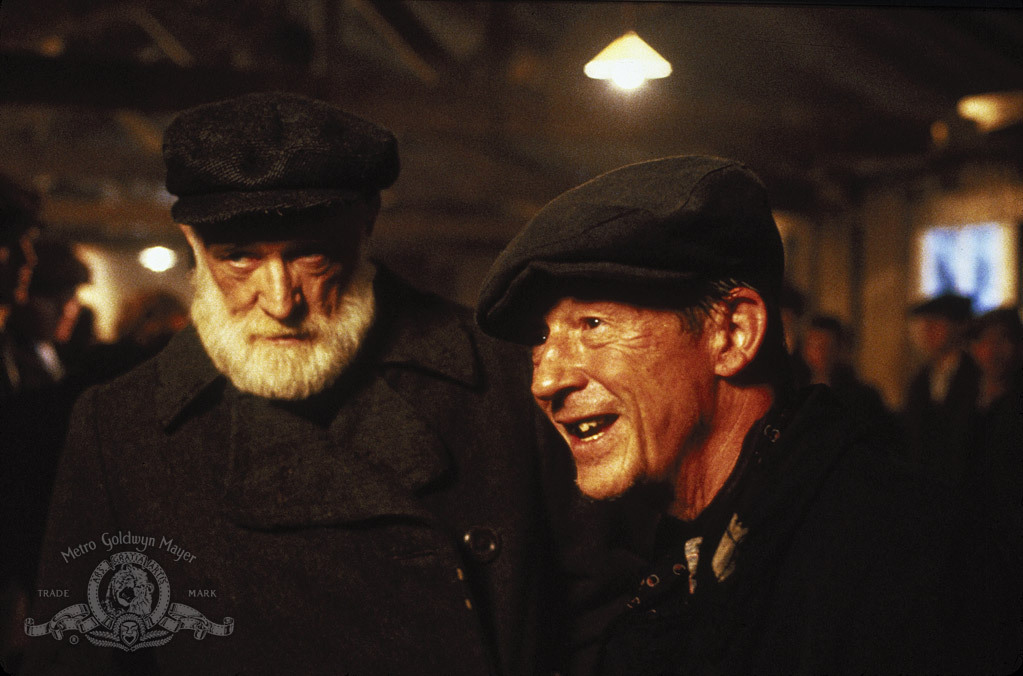
    Featuring: Richard Harris, John Hurt, Sean Bean, Brenda Fricker, Frances Tomelty and Tom Berenger

    “Bull” McCabe: “There’s another law stronger than the common law.”

    Father Doran: “What’s that?”

    “Bull” McCabe: “The law of the land.”

    Critical Commentary

    “The Field” is a 1990 drama film directed by Jim Sheridan. Set in rural Ireland, the movie stars Richard Harris, John Hurt, Sean Bean, and Brenda Fricker. It is based on John B. Keane’s play of the same name.

    The story revolves around “Bull” McCabe (Richard Harris), an aging farmer who has worked and cultivated a piece of land for years. When the landowner decides to sell the field through public auction, McCabe becomes determined to own it at any cost, believing it is rightfully his. His obsession with the land escalates into a tense and dramatic conflict with an American developer (Tom Berenger) and his wife (Frances Tomelty).

    “The Field” delves into themes of identity, tradition, and the lengths people are willing to go to protect what they consider their own. Richard Harris delivers a powerful performance as the stubborn and complex Bull McCabe, portraying his character’s intense attachment to the land with great conviction.

    The film successfully captures the harsh and rugged beauty of the Irish countryside, providing a rich backdrop to the story. The cinematography, combined with the atmospheric soundtrack, contributes to the film’s immersive experience.

    One of the strengths of “The Field” lies in its exploration of human nature, showcasing the destructive power of obsession and the tragic consequences it can bring. The clash between tradition and progress, represented by Bull McCabe and the American developer, adds depth to the narrative and raises thought-provoking questions.

    “The Field” is a well-crafted drama with strong performances, particularly from Richard Harris. It offers a compelling portrayal of a man’s unwavering determination to hold onto his land and the high price he pays for it. If you appreciate character-driven films and stories set in rural landscapes, “The Field” is worth a watch.

    “The Field” also explores themes of community, loyalty, and the impact of socio-economic changes on rural areas. It delves into the interconnectedness of the villagers and the dynamics of power and authority within their small community. The film highlights the contrasting attitudes towards progress and modernization, as some characters embrace change while others fiercely hold onto tradition.

    The performances in “The Field” are exceptional, with Richard Harris delivering a commanding portrayal of Bull McCabe. He captures the complex layers of his character, from his unwavering determination and pride to moments of vulnerability and regret. John Hurt shines in his role as Bird O’Donnell, a sympathetic character who serves as a voice of reason and conscience amidst the escalating tensions.

    The screenplay, adapted by Jim Sheridan from John B. Keane’s play, effectively conveys the claustrophobic atmosphere and the mounting pressure within the story. It skilfully explores the psychological motivations and conflicts driving the characters, allowing the audience to understand their choices, even if they are morally ambiguous.

    Jim Sheridan’s direction in “The Field” showcases his ability to create an immersive and authentic setting. The film captures the harsh realities of rural life, with its vast landscapes and isolated communities, while also delving into the intimate relationships and intricate social dynamics at play.

    Furthermore, the film’s exploration of Irish identity and the connection between the land and its people adds a layer of cultural depth. It touches upon the historical context of Ireland’s struggle for independence and the profound impact it had on the mindset and values of its people.

    “The Field” is a thought-provoking and emotionally charged drama that explores themes of ownership, pride, and the sacrifices people make for their beliefs. It offers a compelling character study set against the backdrop of a changing rural Ireland. If you appreciate intense performances and engaging storytelling, “The Field” is a film that deserves recognition and is worth watching.

    The film effectively captures the atmosphere of the play it is based on, with its stage-like quality and intense dialogue-driven scenes. The tension builds steadily throughout the narrative, creating a palpable sense of unease and anticipation.

    The cinematography in “The Field” deserves commendation for its evocative portrayal of the Irish landscape. The sweeping shots of the fields, the rugged beauty of the countryside, and the changing seasons serve as visual metaphors for the emotional turmoil and struggles faced by the characters.

    The supporting cast in “The Field” delivers strong performances, with Sean Bean as Tadgh McCabe, Bull’s son, providing a poignant portrayal of a conflicted and torn individual caught between loyalty to his father and his own desires. Brenda Fricker, as the long-suffering widow Maggie McCabe, brings depth and vulnerability to her role, portraying a woman torn between her love for her husband and the consequences of his actions.

    The film’s exploration of the clash between traditional values and modernity is particularly relevant and resonant. It raises questions about the cost of progress and the impact it has on rural communities, as well as the importance of preserving cultural heritage and traditions.

    One of the film’s standout aspects is its powerful ending, which leaves a lasting impact. Without giving away spoilers, it offers a thought-provoking resolution that forces the audience to confront the consequences of the characters’ actions and the complexities of their motivations.

    Overall, “The Field” is a compelling drama that delves into themes of identity, loyalty, and the struggle for control. It boasts strong performances, a captivating story, and a beautifully realized setting. It remains a noteworthy film that explores the human condition and raises pertinent questions about the values we hold dear.

    Special Features

    • 1080p High-definition presentation on Blu-ray
    • Audio commentary by film historian Scott Harrison
    • In The Shadow of the Bull: The Making of The Field – documentary
    • Director Jim Sheridan on The Field – interview featurette
    • Theatrical Trailer
  • Blu-ray review: “My Left Foot” (1989)

    “My Left Foot” (1989)

    Running Time: 103 minutes

    Drama

    Written by: Shane Connaughton and Jim Sheridan

    Directed by: Jim Sheridan

    Featuring: Daniel Day-Lewis, Ray McAnally, Brenda Fricker, Fiona Shaw, Adrian Dunbar and Ruth McCabe

    Christy Brown: “What’ll we drink to?”

    Mary: “Let’s drink to Dublin.”

    Christy Brown: “To Dublin? Why?”

    Mary: “Because Christy Brown was born there.”

    Critical Commentary

    “My Left Foot” is a captivating and emotionally charged film that tells the remarkable true story of Christy Brown, an Irishman born with severe cerebral palsy. Directed by Jim Sheridan, the movie offers a poignant portrayal of Brown’s life, struggles, and triumphs, showcasing his indomitable spirit and artistic talent.

    Daniel Day-Lewis delivers an exceptional performance in the lead role, embodying Brown’s physical limitations with astonishing dedication and authenticity. Day-Lewis’s portrayal is nothing short of extraordinary, as he convincingly transforms himself into a character confined to a wheelchair, only able to control movement in his left foot. His commitment to capturing Brown’s challenges and emotions is truly remarkable, earning him a well-deserved Academy Award for Best Actor.

    The film beautifully captures the theme of resilience and the power of the human spirit. It explores Brown’s journey from a marginalized and underestimated individual to a celebrated writer and artist. The relationship between Brown and his mother, played by Brenda Fricker in an equally impressive performance, forms the emotional core of the story. Their unyielding bond and unwavering support for each other is deeply moving, and the film portrays it with sensitivity and authenticity.

    The cinematography and production design effectively transport the audience to 20th-century Ireland, adding depth and atmosphere to the storytelling. The narrative unfolds through a series of flashbacks and present-day moments, allowing the audience to witness Brown’s upbringing, his struggles with societal prejudices, and his triumphs as an accomplished author and painter. The pacing is well-balanced, and the film successfully navigates the delicate balance between the difficult aspects of Brown’s life and his remarkable achievements.

    While “My Left Foot” is undoubtedly an inspiring and powerful film, it does not shy away from depicting the harsh realities of living with a severe disability. Some scenes may be difficult to watch due to their raw and unflinching portrayal of Brown’s physical limitations and the challenges he faced. However, it is precisely this unvarnished honesty that makes the movie so impactful and memorable.

    “My Left Foot” is a masterfully crafted film that tells an inspiring true story with grace and authenticity. Daniel Day-Lewis’s exceptional performance, coupled with a compelling narrative and strong supporting cast, elevates this movie to a must-see status. It serves as a reminder of the resilience of the human spirit and the power of art to transcend adversity.

    Additionally, the film’s exploration of Brown’s artistic talent adds another layer of depth to the story. Despite his physical limitations, Brown discovers that he can express himself through painting and writing. These creative outlets become a means of communication and self-expression, providing him with a sense of purpose and fulfillment. The film beautifully captures the joy and liberation Brown experiences when he engages in his art, highlighting the transformative power of creativity.

    The screenplay, adapted by Jim Sheridan and Shane Connaughton from Christy Brown’s autobiography, is skillfully written. It effectively balances moments of humor, heartbreak, and inspiration, capturing the nuances of Brown’s life and the complex relationships he forms along the way. The dialogue is poignant and thought-provoking, offering profound insights into the human condition and the resilience of the human spirit.

    One notable aspect of “My Left Foot” is its sensitive portrayal of disability. It portrays Brown not as a mere object of pity or inspiration but as a multifaceted individual with hopes, dreams, and a rich inner life. By humanizing Brown and showing his agency, the film challenges societal perceptions of disability and prompts viewers to reevaluate their own attitudes and prejudices.

    The direction by Jim Sheridan is masterful, as he skillfully navigates the delicate balance between showcasing the hardships Brown faces and celebrating his remarkable achievements. Sheridan’s attention to detail and his ability to create a rich and immersive world draw the audience into Brown’s life, allowing them to empathize with his struggles and triumphs. ”My Left Foot” is a moving and unforgettable film that sheds light on the power of determination, love, and the human spirit. It is a testament to the resilience of the human condition and a celebration of the indomitable nature of the human spirit. With its exceptional performances, compelling storytelling, and emotional depth, this film stands as a timeless classic that continues to inspire and resonate with audiences.

    “My Left Foot” explores broader themes such as societal prejudice and the importance of inclusivity. Brown faces numerous obstacles and discrimination throughout his life due to his physical condition. The film poignantly depicts the ignorance and dismissive attitudes of some individuals towards people with disabilities. Through Brown’s journey, the movie raises awareness about the need for empathy, understanding, and equal opportunities for individuals with disabilities, challenging viewers to reconsider their own biases and perceptions.

    The film’s soundtrack, composed by Elmer Bernstein, complements the narrative beautifully. The music adds depth and emotion to the scenes, enhancing the overall viewing experience. It seamlessly blends with the visuals, further immersing the audience in Brown’s world and eliciting a range of emotions. “My Left Foot” also succeeds in its portrayal of Brown’s resilience and determination. Despite the immense challenges he faces, he refuses to let his disability define him or limit his aspirations. His unwavering spirit and unwavering pursuit of his dreams serve as an inspiration to viewers, encouraging them to overcome their own obstacles and pursue their passions wholeheartedly.

    It’s worth mentioning that “My Left Foot” is a powerful testament to the importance of representation in film. By casting Daniel Day-Lewis, an able-bodied actor, in the role of Christy Brown, the film ignited discussions about the inclusion of actors with disabilities in the industry. While Day-Lewis’s performance is undeniably exceptional, the film’s release sparked conversations about the need for authentic representation and opportunities for actors with disabilities.

    In conclusion, “My Left Foot” is a remarkable film that masterfully tells the inspiring true story of Christy Brown. With its outstanding performances, poignant storytelling, and exploration of themes such as resilience, artistic expression, and societal prejudices, the movie leaves a lasting impact on its viewers. It serves as a testament to the power of the human spirit, the importance of empathy, and the triumph of the individual over adversity. “My Left Foot” is a cinematic gem that continues to captivate audiences and remind us of the boundless potential of the human heart and mind.

    Technical Commentary

    Video

    The award-winning film arrives on Blu-ray with a mostly satisfying if only slightly troubled1080p/AVC MPEG-4 encode. Comparatively speaking, the high-def transfer seems to have been made from the same master used for the 2011 special edition DVD, which is actually in pretty great condition. The overall palette is somewhat wanting and lacklustre, making flesh tones appear flushed and drained, but primaries surprisingly remain accurate. Blacks are, for the most part, true and consistent, but there are several spots where they come off too strong and ruing the finer details. 

    Audio

    Complementing the video is the slightly more satisfying DTS-HD Master Audio soundtrack. Despite being in surround sound, however, the design is more of a front-heavy presentation and focused on the intimate conversations between characters.

    Special Features

    • 1080p High-definition presentation on Blu-ray
    • Audio commentary by film historian/critic Bryan Reesman
    • Director Jim Sheridan on My Left Foot – interview featurette
    • An Inspirational Story: The Making of My Left Foot – featurette
    • The Real Christy Brown – featurette
    • Theatrical Trailer
    • Original Aspect Ratio 1.78:1
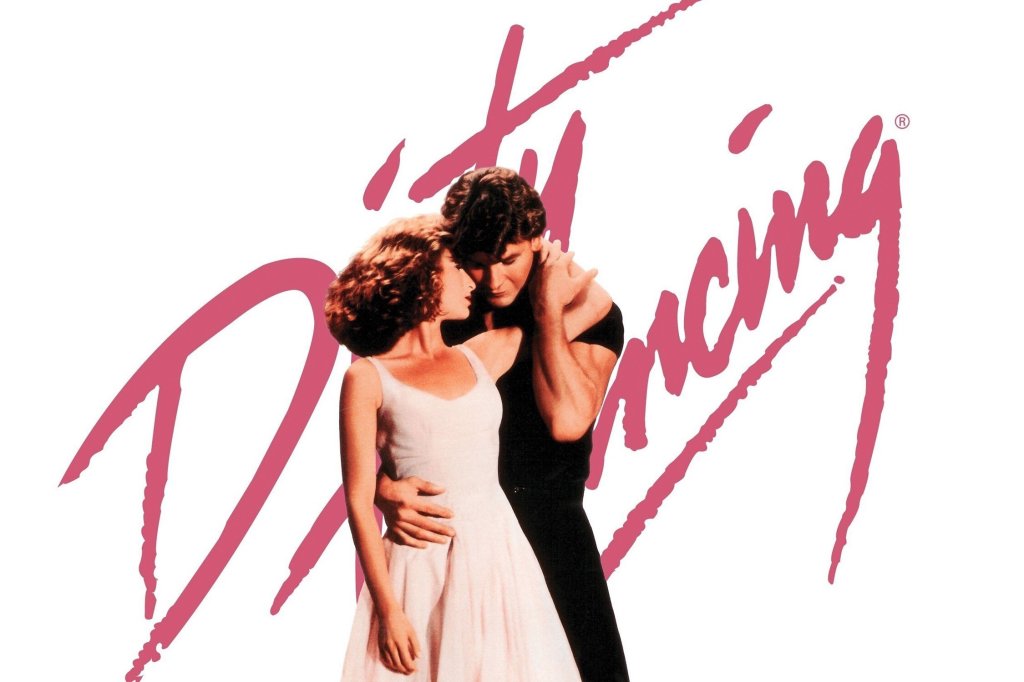
  • DVD review: “Dirty Dancing: The Keepsake Limited Edition” (1987)

    “Dirty Dancing: The Keepsake Limited Edition”

    Drama

    Running Time: 96 minutes

    Written by: Eleanor Bergstein

    Directed by: Emile Ardolino

    Featuring: Patrick Swayze, Jennifer Grey, Jerry Orbach and Cynthia Rhodes

    Baby: “Me? I’m scared of everything. I’m scared of what I saw, I’m scared of what I did, of who I am, and most of all I’m scared of walking out of this room and never feeling the rest of my whole life the way I feel when I’m with you.”

    Critical Commentary

    “Dirty Dancing” is a 1987 romantic drama film directed by Emile Ardolino and starring Patrick Swayze and Jennifer Grey. Set in the summer of 1963, the movie tells the story of Frances “Baby” Houseman, a young woman on vacation with her family at a resort in the Catskill Mountains. She becomes infatuated with Johnny Castle, a charismatic dance instructor, and the two form a forbidden relationship as they rehearse for a dance competition.

    Overall, Dirty Dancing is a beloved classic that has stood the test of time. Here’s a breakdown of its key elements:

    1. Story and Characters: The film’s storyline explores themes of romance, self-discovery, and social class divisions. Baby’s transformation from an innocent, sheltered teenager to a confident young woman is central to the narrative. The chemistry between Baby and Johnny is palpable, and their relationship is both passionate and tender.
    2. Performances: Patrick Swayze’s portrayal of Johnny Castle is iconic, showcasing his talent as a dancer and actor. Jennifer Grey delivers a convincing performance as Baby, effectively capturing her character’s growth and determination. The supporting cast, including Jerry Orbach and Cynthia Rhodes, adds depth to the story with their performances.
    3. Music and Dancing: One of the highlights of Dirty Dancing is its memorable soundtrack, featuring songs like “(I’ve Had) The Time of My Life” and “Hungry Eyes.” The dance sequences are energetic and visually appealing, capturing the spirit of the 1960s era. The blend of different dance styles, from ballroom to dirty dancing, adds excitement and entertainment value.
    4. Themes and Social Commentary: Dirty Dancing subtly addresses issues of class, gender roles, and sexual liberation. It touches on the societal expectations placed on women during that time period and challenges them through Baby’s rebellion against her family’s traditional values.
    5. Nostalgic Atmosphere: The film effectively transports viewers to the early 1960s, creating a nostalgic atmosphere with its authentic costumes, set designs, and music choices. This attention to detail adds to the overall charm and appeal of the movie.
    6. Choreography: The dance sequences in Dirty Dancing are a standout element of the film. The choreography, overseen by Kenny Ortega, is dynamic and showcases the talent of the actors, particularly Patrick Swayze and Jennifer Grey. The training montage scenes add depth and believability to the characters’ progression as dancers, enhancing the overall authenticity of the film.
    7. Memorable Moments: Dirty Dancing is filled with iconic scenes that have become embedded in popular culture. From the lift during the final dance routine to the intimate moments between Baby and Johnny, these memorable moments have contributed to the film’s lasting impact and ability to resonate with audiences even years after its release.
    8. Emotional Impact: The film successfully evokes a range of emotions throughout its runtime. It explores themes of love, self-discovery, family dynamics, and societal expectations. The climactic dance performance and the final scene are particularly powerful, leaving viewers with a sense of triumph and fulfillment.
    9. Cultural Significance: Dirty Dancing broke barriers with its depiction of a strong, independent female lead and a multiracial romance, which was relatively rare in mainstream cinema at the time. The film’s themes of rebellion and breaking societal norms struck a chord with audiences and continue to be celebrated for their progressive approach.
    10. Enduring Popularity: Dirty Dancing’s popularity has endured through the years, spawning a dedicated fan base and leading to adaptations, a prequel, and a stage musical. Its influence on popular culture is evident, with references and homages appearing in various films, television shows, and music videos.
    11. Criticisms: While Dirty Dancing is widely loved, some critics have raised concerns about certain plot elements and character development. The pacing of the film has been criticized by some, suggesting that certain scenes could have been better developed to enhance the overall narrative flow.
    12. Direction and Cinematography: Emile Ardolino’s direction brings a sense of authenticity and intimacy to the film. The camera work effectively captures the energy and passion of the dance sequences, creating a visually engaging experience. The use of close-ups and wide shots enhances the emotional impact of the performances, allowing viewers to feel connected to the characters and their journey.
    13. Themes of Empowerment: Dirty Dancing can be seen as a coming-of-age story that explores themes of empowerment and personal growth. Baby’s journey from a sheltered young woman to an individual who learns to stand up for herself and fight for what she believes in resonates with audiences. This empowerment is not limited to Baby alone but extends to other characters who challenge societal norms and expectations.
    14. Timeless Soundtrack: The film’s soundtrack is a significant aspect of its appeal. The songs, ranging from nostalgic classics to catchy pop tunes, enhance the storytelling and evoke a sense of nostalgia. The music plays a vital role in setting the mood and capturing the essence of the 1960s era, making it an integral part of the film’s charm.
    15. Cultural Impact: Dirty Dancing’s impact extends beyond the film itself. It has influenced dance culture, popularized the term “dirty dancing,” and inspired people to take up dance lessons. The film’s messages of self-expression, following one’s passions, and breaking free from societal constraints continue to resonate with individuals of all ages, making it a timeless and culturally significant work.
    16. Lasting Legacy: Dirty Dancing’s enduring popularity can be attributed to its ability to resonate with multiple generations. It remains a beloved film that continues to be celebrated and referenced in popular media. Its themes, characters, and iconic moments have stood the test of time, solidifying its place as a classic in the romantic drama genre.
    17. Social Commentary: Dirty Dancing subtly tackles social issues prevalent during the 1960s, such as class divisions and the changing dynamics of gender roles. The film portrays the disparities between the privileged guests and the resort staff, shedding light on the power dynamics and societal expectations. Baby’s decision to defy her family’s expectations and pursue her own desires reflects the changing attitudes of the time.
    18. Authenticity: Dirty Dancing effectively captures the ambiance and spirit of the 1960s. The attention to detail in the set design, costumes, and dialogue creates an immersive experience that transports viewers back to that era. The film successfully recreates the atmosphere of a summer resort, complete with its vibrant energy and the social interactions of the guests.
    19. Timeless Romance: The central romance between Baby and Johnny remains one of the film’s strongest aspects. Their connection transcends societal barriers and demonstrates the power of love and acceptance. Their evolving relationship is portrayed with sincerity and tenderness, making it a compelling and enduring love story.
    20. Emotional Resonance: Dirty Dancing is a film that elicits a range of emotions from its viewers. From the moments of joy and exhilaration during the dance sequences to the poignant scenes of heartbreak and self-discovery, the film takes audiences on an emotional journey. The relatability of the characters and their struggles adds depth to the overall narrative and allows viewers to form a strong emotional connection with the story.
    21. Longevity: Despite being released over three decades ago, Dirty Dancing has retained its popularity and continues to attract new audiences. Its timeless themes, memorable characters, and universal messages of love, freedom, and self-expression make it a film that transcends generations and appeals to a wide range of viewers.

    In summary, Dirty Dancing is a film that skilfully combines romance, music, dance, and social commentary to create a captivating and emotionally resonant experience. Its enduring popularity, cultural impact, and ability to evoke nostalgia are a testament to its enduring appeal. While not without its flaws, Dirty Dancing remains a cherished classic that continues to be celebrated and enjoyed by audiences around the world.

    Technical Commentary

    Video

    ‘Dirty Dancing’ may not have been afflicted with a dirty transfer, but the effort left a lot to be desired and disappointed the film’s legion of fans. So when Lionsgate announced the Limited Keepsake Edition would feature a newly remastered print, expectations ran high that previous errors would be corrected and this would be the definitive version of a beloved movie. And to my eyes, it is. But before anyone gets too excited, I must emphasize that ‘Dirty Dancing’ was never the belle of the ball visually.

    Audio

    The sound is still clean and well-modulated, with no distortion creeping into the high end and not much subwoofer activity rounding out the low, but there’s not a huge bump up in quality, and that’s largely due to the film itself. ‘Dirty Dancing’ has never been a powerhouse in the audio department, with limited surround presence and so-so fidelity, and the DTS upgrade can’t disguise those inherent deficiencies. Still, dialogue is well prioritized and always easy to understand, and there’s some decent stereo separation across the front channels that helps widen the sound field somewhat.

    Special Features

    DISC ONE: Dirty Dancing – The Film (1987)

    • Audio commentary with writer/co-producer Eleanor Bergstein
    • Audio commentary with Kenny Ortega, Miranda Garrison, Jeff Jur, Hilary Rosenfeld and David Chapman

    DISC TWO: Dirty Dancing – Special Features

    • Establishing Shot with cinematographer Jeff Jur – featurette
    • Happy Birthday, Dirty Dancing – featurette
    • Patrick Swayze: In His Own Words – featurette
    • Eleanor Bergstein: Thoughts On A Lifetime Of Dirty Dancing – featurette
    • Patrick Swayze Uncut – featurette
    • Dirty Dancing: The Phenomenon – featurette
    • The Rhythm of Dancing – featurette
    • Kellerman’s: Reliving the Locations of the Film – featurette
    • Dancing to the Music – featurette
    • Dirty Dancing with Patrick Swayze – featurette
    • Vintage Featurette
    • Deleted Scenes
    • Extended Scenes
    • Alternate Scenes
    • Music Videos – Hungry Eyes, She’s Like The Wind & (I’ve Had) The Time Of My Life
    • Outtakes
    • Theatrical Trailer

    DISC THREE: Dirty Dancing – Special Features

    • Dirty Dancing: The Concert Tour (1988)
    • Cast & Crew Interviews – Jennifer Grey, Eleanor Bergstein, Miranda Garrison & Kenny Ortega
    • Screen Test Comparisons and Montage
    • Tributes In Memoriam, Patrick Swayze, Emile Ardolino & Jerry Orbach
    • Multi-angle Dance Sequences – The Lift & Everybody Dance

    DISC FOUR: Dirty Dancing – The Mini-Series (2017)

    DISCS FIVE & SIX: Dirty Dancing – Living the Dream (2006)

    DISC SEVEN: Bonus Material

    BONUS KEEPSAKE LIMITED EDITION GIFTS:

    • 48-page book
    • Hotel Room Key
    • Playing Cards
    • Postcards
    • Dance Cards

  • Trailer: “Killers of the Flower Moon” (2023)

    Trailer: “Killers of the Flower Moon” (2023)

    The first official trailer has finally been released for Martin Scorsese’s upcoming period drama “Killers of the Flower Moon” which has its world premiere at the Cannes Film Festival this week.

    The story unfolds in 1920s Oklahoma and depicts the serial murder of members of the oil-wealthy Osage Nation – a string of brutal crimes that came to be known as the ‘Reign of Terror’.

    The $200 million-budgeted film stars the likes of Leonardo DiCaprio, Robert De Niro, Lily Gladstone, Jesse Plemons, John Lithgow, Brendan Fraser, Cara Jade Myers, JaNae Collins, Jillian Dion, Tatanka Means, William Belleau, Scott Shepherd and Tantoo Cardinal.

    Boasting a massive 206 minute runtime, the movie is based on David Grann’s best-selling book and written for the screen by Eric Roth and Scorsese. Scorsese, DiCaprio, Dan Friedkin, Bradley Thomas and Daniel Lupi produce.

    “Killers of the Flower Moon” will get a limited theatrical release through Paramount Pictures on October 6th before opening wide on October 20th ahead of streaming later on Apple TV+.

  • Blu-ray review: “World Without End” (2012)

    “World Without End” (2012)

    Drama

    Eight Episodes

    Written by: John Pielmeier based on the book by Ken Follett

    Directed by: Michael Caton-Jones

    Featuring: Cynthia Nixon,Miranda Richardson, Ben Chaplin, Peter Firth, Charlotte Riley and Tom Weston-Jones

    “We’re all good when it suits us, he used to say: that doesn’t count. It’s when you want so badly to do something wrong—when you’re about to make a fortune from a dishonest deal, or kiss the lovely lips of your neighbor’s wife, or tell a lie to get yourself out of terrible trouble—that’s when you need the rules. Your integrity is like a sword, he would say: you shouldn’t wave it until you’re about to put it to the test.” 

    Critical Commentary

    “World Without End” is a historical miniseries based on the novel of the same name by Ken Follett, which serves as a sequel to his renowned book “The Pillars of the Earth.” Set in the 14th century, the series follows the lives of various characters in the fictional town of Kingsbridge as they navigate the tumultuous events of the time, including the Black Death, political intrigue, and religious conflicts.

    Please note that as of my knowledge cutoff in September 2021, I don’t have access to specific reviews for the TV adaptation of “World Without End.” However, I can provide you with a general perspective on what to expect based on Ken Follett’s popularity as a writer and the reception of “The Pillars of the Earth” adaptation.

    Ken Follett’s novels are known for their sweeping historical narratives, intricate plots, and rich character development. “The Pillars of the Earth,” which was adapted into a successful TV miniseries, received positive reviews for its faithful adaptation and engaging storytelling. It garnered praise for its strong performances, production design, and the way it captured the essence of the medieval setting.

    Given the similar source material and the continuation of the story in “World Without End,” it is reasonable to expect a similar level of quality and attention to detail in the TV adaptation. If you enjoyed the book series or have an interest in historical dramas, “World Without End” may be worth watching. However, I would recommend checking for more recent reviews or audience feedback to get a better understanding of the specific strengths and weaknesses of the TV adaptation.

    Technical Commentary

    Video

    “World Without End” debuts on Blu-ray with a striking high definition transfer that’s virtually flawless from beginning to end. Viewers will enjoy the image’s exceptional detail and vibrant colour from the outset; striking natural greens, brilliant red and blue clothes, breathtakingly realistic chain mail, and the finest clothing nuances define the series’ opening transfer-of-power scene on the battlefield. Similar elements remain throughout. Tattered clothes and regal garb alike are displayed with the sort of pinpoint precision seen only in the absolute finest Blu-ray titles. 

    Audio

    “World Without End” features a very convincing and accurate DTS-HD Master Audio 5.1 lossless soundtrack. Listeners are treated to an immersive and sonically rich presentation from the outset. 

    Special Features

    • The Making of ‘Ken Follett’s World Without End’
  • Trailer: “Mission: Impossible Dead Reckoning – Part One” (2023)

    Trailer: “Mission: Impossible Dead Reckoning – Part One” (2023)

    Paramount Pictures has finally released the full-length trailer for Christopher McQuarrie’s highly anticipated “Mission: Impossible – Dead Reckoning Part One” (2023).

    The seventh overall film in the “Mission: Impossible” franchise, regulars Tom Cruise, Rebecca Ferguson, Simon Pegg and Ving Rhames return in the new adventure which saw the production filming in Rome, Venice, Norway and the United Kingdom.

    Joining them are first ‘Mission’ returnee Henry Czerny as Eugene Kittridge, Vanessa Kirby back as the White Widow from the sixth film. Even with what we’ve seen in the two trailers, plot specifics remain decidedly vague along with the nature of the threat.

    Hayley Atwell leads the new faces which also includes Esai Morales as the villain, Pom Klementieff as his aide, and the likes of Cary Elwes, Shea Whigham, Indira Varma, Mark Gatiss, Rob Delaney, Greg Tarzan Davis and Charles Parnell in supporting roles.

    “Mission: Impossible – Dead Reckoning Part One” opens in cinemas on July 12th and will be followed by “Mission: Impossible – Dead Reckoning Part Two” opening in June 2024.

  • Blu-ray review: “The Pillars of the Earth” (2010)

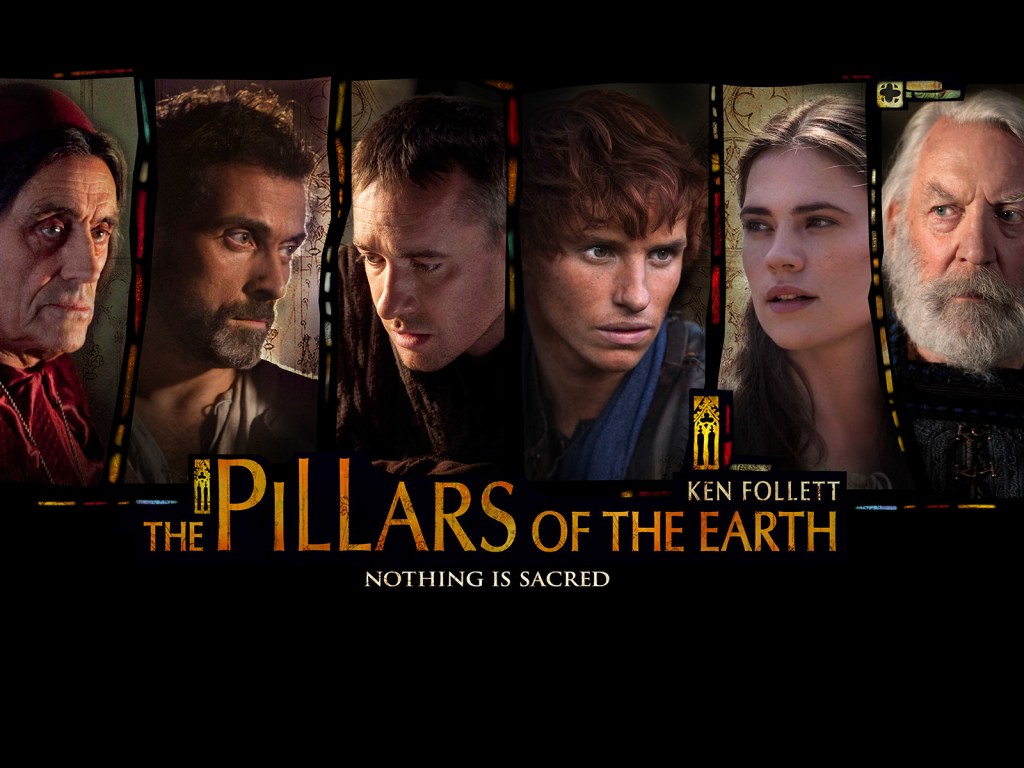
    “The Pillars of the Earth” (2010)

    Drama

    Eight Episodes

    Written by: John Pielmeier based on the book by Ken Follett

    Directed by: Sergio Mimica-Gezzan

    Featuring: Ian McShane, Rufus Sewell, Matthew Macfayden, Eddie Redmayne, Hayley Atwell and Sarah Parish

    Lord Stephen: “There’s Gloucester.”

    Archbishop: “The king’s bastard? He will never inherit.”

    Lord Stephen: “There’s the king’s legitimate daughter, Maud.”

    Archbishop: “A child. And female.”

    Lord Stephen: “Then, I suppose, there’s me. But I’m only the king’s nephew.”

    Critical Commentary

    “The Pillars of the Earth” is a historical drama television series based on Ken Follett’s novel of the same name. The TV adaptation, which aired in 2010, consists of eight episodes and is set in 12th-century England during a tumultuous period known as The Anarchy. As an AI language model, I don’t have personal opinions, but I can provide you with an overview of the show’s reception and general consensus.

    The TV series received a generally positive response from viewers and critics alike. It managed to capture the epic scope and intricate storytelling of the novel, although some deviations from the source material were noted. Here are some key aspects of the show:

    • Acting: The cast features notable actors like Ian McShane, Rufus Sewell, Eddie Redmayne, and Hayley Atwell, who deliver strong performances. Their portrayals bring depth and authenticity to the characters, making them compelling and engaging.
    • Production Design: “The Pillars of the Earth” boasts impressive production values, with lavish sets and detailed costumes that transport viewers back to medieval England. The show effectively recreates the period’s atmosphere, enhancing the immersion and authenticity of the narrative.
    • Storytelling: The series weaves a complex web of political intrigue, religious conflict, and personal drama. It explores themes of power, ambition, love, and betrayal against the backdrop of the construction of a cathedral. The plot is filled with twists and turns, keeping viewers engaged and invested in the characters’ fates.
    • Faithfulness to the Novel: While some changes were made to the storyline and certain characters, overall, the adaptation stays true to the spirit of Ken Follett’s novel. It captures the grandeur and epic nature of the source material, even though some plot elements were necessarily condensed or simplified for the TV format.
    • Pacing: Some viewers felt that the show’s pacing was occasionally uneven. Given the vast scope of the novel, some plotlines may feel rushed or underdeveloped, while others receive more attention. However, the engaging story and strong performances generally outweighed any pacing concerns.
    • Cinematography and Direction: The series features beautiful cinematography that captures the grandeur of the medieval landscape. The direction effectively conveys the scale and magnitude of the events, highlighting both the intimate moments and the larger historical context.
    • Character Development: One of the strengths of the series is its focus on character development. The main characters are given depth and complexity, allowing viewers to become emotionally invested in their journeys. Their personal struggles, relationships, and growth throughout the series add depth and nuance to the narrative.
    • Historical Context: The show successfully immerses viewers in the historical context of 12th-century England, exploring the religious, political, and social dynamics of the time. It touches upon real-life historical events and societal issues, giving the narrative a sense of authenticity and depth.
    • Themes and Messages: “The Pillars of the Earth” delves into various themes, including the clash between church and state, the pursuit of power, the consequences of personal ambition, and the enduring human spirit. It raises questions about faith, morality, and the cost of progress, making it not only an engaging drama but also a thought-provoking series.
    • Length and Adaptation Challenges: Some viewers felt that the series could have benefited from a longer runtime or additional episodes to fully explore the intricacies of the novel. Adapting such a sprawling story with numerous characters and plotlines is undoubtedly challenging, and while the TV series does an admirable job, certain elements may feel rushed or condensed.
    • Soundtrack: The series features a well-composed and atmospheric soundtrack that enhances the viewing experience. The music effectively sets the tone for different scenes, whether it’s a moment of tension, romance, or triumph. It adds another layer of emotional depth to the storytelling.
    • Political Intrigue: The series skilfully portrays the political machinations and power struggles of the time. It explores the complex relationships between nobles, clergy, and common people, highlighting the intricate web of alliances and betrayals. The political elements provide a compelling backdrop for the characters’ personal journeys.
    • Strong Female Characters: “The Pillars of the Earth” showcases a range of strong and multidimensional female characters who defy the societal constraints of their time. They are portrayed as resilient, intelligent, and capable of challenging the status quo. Their stories add an empowering and feminist dimension to the series.
    • Visual Effects: The show incorporates impressive visual effects, particularly in its depiction of the construction of the cathedral. The attention to detail and the seamless integration of CGI elements create a visually stunning representation of the architectural endeavour, emphasizing its significance in the story.
    • Emotional Impact: The series effectively evokes a range of emotions, from joy and hope to despair and heartbreak. The struggles and triumphs of the characters resonate with viewers, creating an emotional connection that keeps them engaged throughout the series. It explores the human condition and the resilience of the human spirit.
    • Accessibility to Non-readers: For those who haven’t read the novel, the TV series offers an accessible way to experience the story. It condenses the narrative and streamlines the plotlines, making it easier for viewers to follow the story and engage with the characters.
    • Legacy and Popularity: “The Pillars of the Earth” has garnered a dedicated fan base over the years. Its popularity has led to a sequel miniseries called “World Without End” and has contributed to the enduring success of Ken Follett’s novels.
    • Ensemble Cast: The series benefits from a talented ensemble cast, with actors who bring their characters to life with depth and authenticity. The chemistry between the actors adds to the believability of the relationships portrayed on screen.
    • Epic Scope: “The Pillars of the Earth” encompasses a wide range of storylines and perspectives, providing a panoramic view of the era. It interweaves the lives of characters from different social classes, showcasing the impact of their actions on the larger historical tapestry.
    • Production Values: The attention to detail in the production design extends beyond sets and costumes. The show effectively captures the grittiness and brutality of the time period, portraying the harsh realities of life in medieval England.
    • Timely Themes: Despite being set in the past, “The Pillars of the Earth” touches upon themes that remain relevant today. It explores issues of corruption, the abuse of power, and the struggle for justice, offering insights that resonate with contemporary audiences.
    • Balance of Genres: The series successfully blends elements of historical fiction, political drama, romance, and even some thrilling moments. This multi-genre approach adds variety and keeps viewers engaged, as different aspects of the story are explored.
    • Engaging Villains: “The Pillars of the Earth” introduces compelling antagonists who add tension and conflict to the narrative. These complex villains are not simply one-dimensional evildoers but have their own motivations and backstories, making them intriguing characters in their own right.
    • Timeless Storytelling: While the series is set in the 12th century, its core themes and character-driven storytelling have a timeless quality. It explores universal aspects of the human experience, such as love, sacrifice, and the pursuit of dreams, making it relatable to audiences across different eras.
    • Historical Education: The series offers a glimpse into the historical events and societal dynamics of 12th-century England. It can serve as an educational tool, sparking curiosity and inspiring viewers to delve further into the history of the period.

    “The Pillars of the Earth” is widely regarded as a solid historical drama series that successfully brings Ken Follett’s beloved novel to life. If you enjoy medieval settings, intricate storytelling, and political dramas, it is likely to be an enjoyable watch.

    Technical Commentary

    Video

    “The Pillars of the Earth” arrives on Blu-ray with a 1080i, 1.78:1 high definition transfer; please note that the information on the back of the box incorrectly lists 1080p. Though it occasionally appears slightly glossy, “Pillars” delivers a nearly faultless high definition image that’s overflowing with exquisite detailing that’s evident in nearly every single frame. Sony’s transfer captures the subtlest of nuances on the sometimes frayed or muddied period garments, faces, chain mail armor, muddy dirt, gravely roads, stone façades, straw roofs, wooden accents, or any other number of objects seen throughout the series.

    Audio

    “The Pillars of the Earth” builds its story through a wonderful DTS-HD MA 5.1 lossless soundtrack. This is a superb presentation from beginning to end that passes every technical test. Though a made-for-television miniseries, “The Pillars of the Earth” features a grand score that’s epic in both feel and presentation and is expertly handled by Sony’s DTS track. It delivers a rich cinematic texture in every episode, remaining clean and accurate while playing with a grandiose and elegantly sweeping sensation that adds quite a bit to the overall “Pillars” experience.

    Special Features

    • The Making of ‘The Pillars of the Earth’
    • Visual Effects Progression
    • Main Titles Progression 
  • Blu-ray review: “The Brotherhood” (1968)

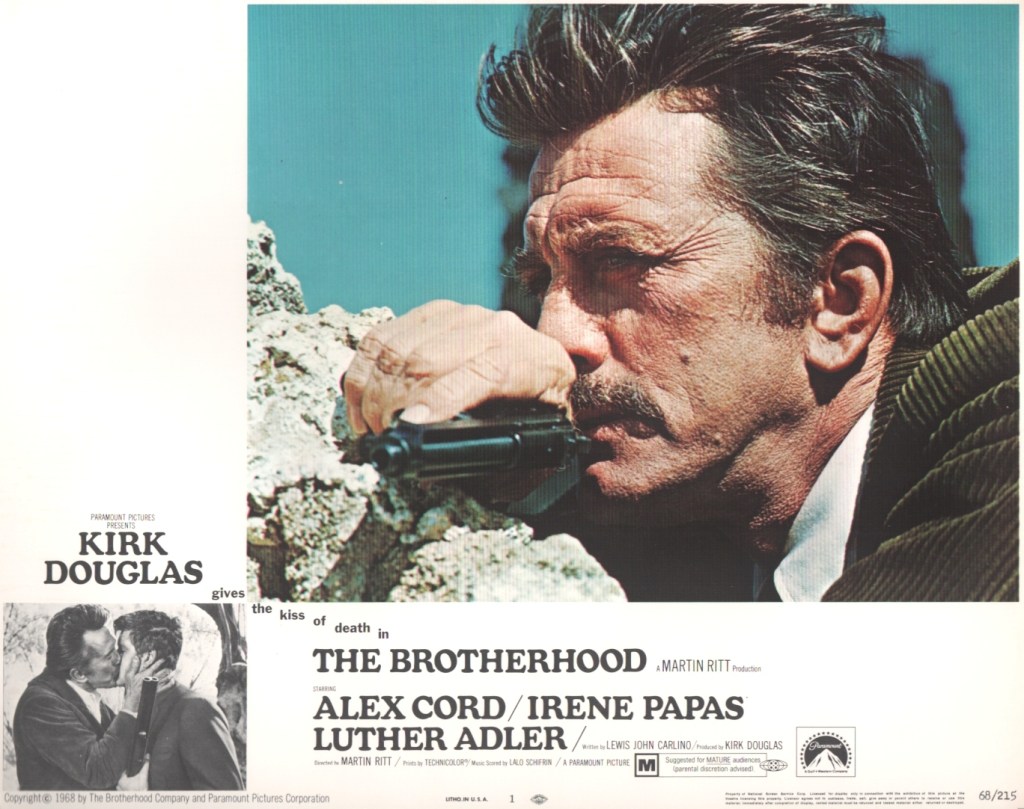
    “The Brotherhood” (1968)

    Drama

    Running Time: 96 minutes

    Written by: Lewis John Carlino

    Directed by: Martin Ritt

    Featuring: Kirk Douglas, Alex Cord, Irene Papas and Luther Adler

    Critical Commentary

    “The Brotherhood” is a crime drama film directed by Martin Ritt and starring Kirk Douglas, Alex Cord, and Irene Papas. The story revolves around a young man named Frank Ginetta (Alex Cord) who wants to join the Italian-American Mafia in New York City. He is initially rejected by the Mafia bosses, but eventually becomes a member after proving his loyalty and bravery. The movie explores themes such as loyalty, betrayal, and the cost of power. It received mixed reviews upon its release, with some critics praising the performances of the actors and the film’s portrayal of the Mafia, while others criticized it for glorifying organized crime. “The Brotherhood” is a notable film from the late 1960s that provides a glimpse into the world of the Mafia and the complexities of their relationships and power struggles.

    The movie also touches upon the themes of family, tradition, and the pressure to conform to societal expectations. The central character, Frank Ginetta, is torn between his desire for power and acceptance within the Mafia, and his love for his family and the values they hold dear. Kirk Douglas delivers a strong performance as the aging Mafia boss, and Alex Cord is convincing as the young upstart trying to make a name for himself in the organization. The film also features a standout performance by Irene Papas as the wife of a murdered Mafia member who seeks revenge against the organization.

    One of the criticisms of the film is that it portrays the Mafia in a somewhat sympathetic light, which has been a recurring issue in many movies and TV shows about organized crime. However, the movie does not shy away from the violent and ruthless nature of the Mafia and its members. “The Brotherhood” is an engaging and well-crafted crime drama that offers insight into the world of the Mafia and the individuals who inhabit it. While it may not be as well-known as some other movies in the genre, it is certainly worth watching for fans of crime dramas and classic cinema.

    In addition to the performances and the portrayal of the Mafia, “The Brotherhood” is also notable for its visual style. The film features gritty, realistic cinematography that captures the atmosphere of the urban landscape and the world of the Mafia. The score, composed by Lalo Schifrin, is also noteworthy and adds to the tension and drama of the story. One aspect of the film that some viewers may find dated or problematic is its treatment of women. The female characters in the movie are often relegated to the background or portrayed as helpless victims, with little agency or power of their own. This is a common issue in many movies from the era, and it is worth noting as a potential drawback for modern viewers.

    Despite its flaws, “The Brotherhood” remains a compelling and well-made crime drama that offers a glimpse into a fascinating and dangerous world. The film is worth watching for its performances, cinematography, and exploration of themes such as loyalty, power, and family. If you are a fan of classic crime dramas or interested in the history and culture of the Mafia, this movie is definitely worth checking out.

    It’s also worth noting that “The Brotherhood” was released during a time when organized crime was a major concern in the United States. The movie was one of many films and TV shows from the era that explored the Mafia and its impact on society. It offers a glimpse into the cultural fascination with organized crime that has persisted in popular culture to this day.

    Overall, “The Brotherhood” is a well-crafted and engaging crime drama that offers a window into the world of the Mafia and its members. While it may not be as well-known as some other movies in the genre, it is certainly worth watching for its performances, cinematography, and exploration of complex themes. However, viewers should be aware of its dated treatment of women and potential glorification of organized crime.

    In terms of its legacy, “The Brotherhood” may not be as well-known or revered as some other crime dramas from the era, such as “The Godfather” or “Goodfellas,” but it remains an interesting and worthwhile film for fans of the genre. It has been praised for its realism and gritty portrayal of the Mafia, as well as its exploration of themes such as tradition, loyalty, and power.

    The film has also been criticized for its portrayal of Italian-American culture and its potentially harmful stereotypes. Some Italian-American groups protested the movie’s release, arguing that it perpetuated negative stereotypes of their community. While the film is certainly not without its flaws in this regard, it is worth noting that it was made during a time when such stereotypes were more prevalent in popular culture.

    “The Brotherhood” is a notable crime drama from the late 1960s that offers a fascinating glimpse into the world of the Mafia. While it may not be as well-known or acclaimed as some other films in the genre, it remains an interesting and worthwhile watch for fans of classic cinema and crime dramas.

    Technical Commentary

    Video

    Presented in an aspect ratio of 1.78:1, encoded with MPEG-4 AVC and granted a 1080p transfer, “The Brotherhood” arrives on Blu-ray courtesy of Via Vision Entertainment. The master that was used to source this release is old and comes from Paramount’s vaults. The most notable fluctuations are in terms of depth, so on a large screen some panoramic shots definitely reveal weaknesses, but they are not disappointing either. As mentioned above, the master is simply old and there are inconsistencies in grain exposure that are responsible for the fluctuations. What is important to underscore is that they are not introduced by compromising digital work, so even with the weaknesses the visuals still have some decent organic qualities. 

    Audio

    There is only one standard audio track on this Blu-ray release: English LPCM 2.0. Optional English SDH subtitles are provided for the main feature. The composer Lalo Schifrin created a very unique and very effective soundtrack for “The Brotherhood”. Clarity, sharpness, and stability remain very solid. 

    Special Features

    • The Kiss of Death: Paramount and The Brotherhood – in this exclusive new program, Bernard F. Dick, historian and author of “Engulfed: The Death of Paramount Pictures and the Birth of Corporate Hollywood”, discusses the exact period in which The Brotherhood was funded and produced, its promotional campaign and critical reception, as well as some of the film’s key strengths and weaknesses. Also, there are some quite good comparisons with The Godfather films. In English, not subtitled. (13 min).
    • Commentary – this exclusive new audio commentary was recorded by Cinema Retro publisher Lee Pfeiffer and film historian Tony Latino. It is very good commentary with plenty of information about the conception and style of The Brotherhood, its critical reception, Kirk Douglas and Martin Ritt’s careers, the evolution of the American gangster film, etc.
  • Final Trailer: “Fast X”

    Trailer: “Fast X”

    Universal Pictures has unveiled their final trailer for “Fast X,” the tenth entry in the “Fast and Furious” franchise. Whilst the last one was oddly solemn and reflective, this is much more like the films with bombast, family talk, and ridiculous physics.

    Over many missions and against impossible odds, Dominic Toretto (Vin Diesel) and his family have outsmarted, out-nerved and outdriven every foe in their path.

    Now, they confront the most lethal opponent they’ve ever faced: A terrifying threat emerging from the shadows of the past who’s fueled by blood revenge, and who is determined to shatter this family and destroy everything – and everyone – that Dom loves, forever.

    In 2011’s “Fast Five”, Dom and his crew took out nefarious Brazilian drug kingpin Hernan Reyes and decapitated his empire on a bridge in Rio De Janeiro. What they didn’t know was that Reyes’ son, Dante (Jason Momoa), witnessed it all and has spent the last twelve years masterminding a plan to make Dom pay the ultimate price.

    Dante’s plot will scatter Dom’s family from Los Angeles to the catacombs of Rome, from Brazil to London and from Portugal to Antarctica.

    New allies will be forged, and old enemies will resurface. But everything changes when Dom discovers that his own 8-year-old son (Leo Abelo Perry) is the ultimate target of Dante’s vengeance.

    Returnees also include Jordana Brewster, Tyrese Gibson, Ludacris, Nathalie Emmanuel, Sung Kang, John Cena, Charlize Theron, Cardi B, Helen Mirren, Michael Rooker and Scott Eastwood.

    Joining the series for the first time are Daniela Melchior, Rita Moreno and Alan Ritchson. “Fast X” will hit cinemas this Friday.

  • Blu-ray review: “Last Train from Gun Hill” (1959)

    “Last Train from Gun Hill” (1959)

    Western

    Running Time: 90 minutes

    Written by: James Poe

    Directed by: John Sturges

    Featuring: Kirk Douglas, Anthony Quinn and Earl Holliman

    Gun Hill Sheriff Bartlett: “Far as I’m concerned, you can go out on the street and get yourself killed anytime you want to, but, you know something, 40 years from now the weeds’ll grow just as pretty on my grave as they will on yours. Nobody’ll even remember that I was yellow and you died like a fool. That’s your long view, son. Always take the long view.”

    Marshal Matt Morgan: “I’ve got two warrants, and I’m gonna serve them. I’m leavin’ town with two men, and the long view is this: don’t try to stop me!”

    Critical Commentary

    “Last Train from Gun Hill” is a classic western movie released in 1959 and directed by John Sturges. The film stars Kirk Douglas as Marshal Matt Morgan, who is seeking justice for his murdered wife. The story takes place in the small town of Gun Hill, where Morgan’s wife is raped and killed by two cowboys. Morgan discovers that one of the cowboys is the son of an old friend, Craig Beldon (played by Anthony Quinn), who is now a wealthy and powerful rancher. Beldon refuses to turn over his son to the law, and Morgan must take matters into his own hands. The film is a tense and dramatic exploration of themes such as revenge, justice, and loyalty. Kirk Douglas delivers a powerful performance as the determined and morally upright Marshal Matt Morgan. Anthony Quinn also gives a great performance as the conflicted and grief-stricken rancher, torn between his loyalty to his son and his sense of right and wrong. The film’s direction is solid, and the pacing is excellent, with the tension building steadily throughout the movie. The action scenes are well-executed, and the cinematography is impressive, capturing the rugged beauty of the western landscape. Overall, “Last Train from Gun Hill” is a must-see for fans of classic westerns. It’s a gripping and emotionally charged film that explores complex themes while delivering plenty of action and suspense.

    One of the standout aspects of the film is the exploration of the idea of justice, particularly the tension between personal vengeance and the rule of law. Morgan’s determination to bring his wife’s killers to justice is admirable, but his pursuit of revenge puts him at odds with his duties as a law enforcement officer. Similarly, Beldon’s desire to protect his son clashes with his sense of right and wrong. The film also touches on themes of loyalty and friendship, as Morgan and Beldon are old friends who find themselves on opposite sides of a moral dilemma. The conflict between them is complex and nuanced, and the audience is left to question where their loyalties truly lie.

    In addition to Douglas and Quinn’s performances, the supporting cast is strong as well. Carolyn Jones plays Linda, a saloon girl who helps Morgan in his quest for justice, and Earl Holliman delivers a memorable performance as Beldon’s hot-headed son. “Last Train from Gun Hill” is a well-crafted and emotionally charged western that explores complex themes while delivering thrilling action and memorable performances. It’s a must-see for fans of the genre and a testament to the talents of its director and cast.

    Another aspect of the film worth noting is the attention to detail in the production design. The sets and costumes are meticulously crafted, transporting the audience back to the Old West. The town of Gun Hill feels like a real place with its dusty streets and dilapidated buildings, and the costumes reflect the rugged and practical clothing of the era. The film’s score, composed by Dimitri Tiomkin, also adds to the tension and drama of the story. The music is both haunting and powerful, elevating the emotions of the scenes.

    One of the film’s strengths is the way it balances action and suspense with character development and thematic exploration. The audience is given time to get to know the characters and their motivations before the story ramps up into its thrilling climax. “Last Train from Gun Hill” is a well-crafted and emotionally resonant western that still holds up today. The performances, direction, and production design all work together to create a compelling and engaging story that explores complex themes. Whether you’re a fan of westerns or just a lover of great cinema, “Last Train from Gun Hill” is a film worth watching.

    “Last Train from Gun Hill” is a film that is not afraid to challenge the norms of the genre. The film does not shy away from difficult subject matter, such as rape and murder, and explores the morality of revenge and justice. The characters are not one-dimensional heroes or villains, but complex individuals with their own motivations and struggles. In addition to its thematic depth, the film features some impressive action scenes that are both well-choreographed and realistic. The final showdown on the train is particularly memorable, with Morgan and Beldon facing off in a tense and thrilling confrontation.

    Finally, it’s worth mentioning that “Last Train from Gun Hill” is a film that has stood the test of time. Despite being over 60 years old, the themes and messages of the film still resonate today, and the performances and direction are just as compelling as they were back in 1959.

    “Last Train from Gun Hill” is a classic western that is not only entertaining but also thought-provoking and emotionally resonant. It’s a film that explores complex themes and challenges the norms of the genre, while still delivering thrilling action and memorable performances. Whether you’re a fan of westerns or just a lover of great cinema, this film is definitely worth your time.

    Technical Commentary

    Video

    Presented in an aspect ratio of 1.78:1, encoded with MPEG-4 AVC and granted a 1080p transfer, “Last Train from Gun Hill” arrives on Blu-ray courtesy of Via Vision Entertainment.  The release introduces Paramount’s recent 6K restoration of Last Train From Gun Hill, which was initially made available in North America. Even though the visuals can be quite striking, it is pretty easy to tell that Blu-ray struggles to accurately reproduce the amount of native information that was captured by the VistaVision camera.  

    Audio

    There is only one standard audio track on this Blu-ray release: English LPCM 2.0. Optional English SDH subtitles are provided for the main feature. Dynamic strength and balance are excellent. Clarity and sharpness are really good as well.

    Special Features

    • 1080p high-definition presentation from a 6K film transfer of the original VistaVision negative
    • Audio commentary by film historian Stephen Prince (2020)
    • Filmmaker Focus – Leonard Maltin on “Last Train from Gun Hill”
    • Theatrical Trailer
  • Blu-ray review: “Man on a Swing” (1974)

    “Man on a Swing” (1974)

    Drama

    Running Time: 110 minutes

    Written by: David Zelag Goodman

    Directed by: Frank Perry

    Featuring: Cliff Robertson, Joel Grey, Dorothy Tristan, Elizabeth Wilson and George Voskovec

    Critical Commentary

    “Man on a Swing” is a 1974 mystery-thriller film directed by Frank Perry, starring Cliff Robertson, Joel Grey, and Dorothy Tristan. The movie is based on the true story of a murder case that occurred in a small town in Arkansas. The story follows a small-town police chief named Lee Tucker (Cliff Robertson) who is investigating the murder of a wealthy businessman. As he delves deeper into the case, he becomes convinced that the killer is a man named Franklin Wills (Joel Grey), who claims to have psychic abilities that help him solve crimes. Despite the scepticism of his colleagues and the townspeople, Tucker becomes increasingly obsessed with Wills and his unusual abilities.

    The movie is well-crafted, with a strong sense of suspense and an intriguing premise. Robertson delivers a solid performance as the driven and obsessive police chief, while Grey is chilling as the enigmatic Franklin Wills. The supporting cast is also excellent, particularly Dorothy Tristan as Tucker’s wife, who provides a much-needed grounding influence.

    One of the movie’s strengths is its evocative portrayal of small-town life in the American South. The film captures the rhythms and attitudes of this insular community, and the sense of claustrophobia that can come with living in such a place. “Man on a Swing” is an engaging and well-made thriller that will keep you guessing until the very end. If you enjoy suspenseful mysteries with a touch of the supernatural, then this is definitely a movie worth checking out.

    Additionally, “Man on a Swing” explores interesting themes of belief and skepticism, as well as the power dynamics at play in small communities. The movie raises thought-provoking questions about the nature of truth, justice, and the reliability of eyewitness testimony.

    The film’s direction by Frank Perry is competent, with a clear and consistent visual style that enhances the mood and atmosphere of the story. The pacing is deliberate, allowing the tension to build steadily throughout the movie. One of the movie’s few weaknesses is its portrayal of mental illness, with Wills’ character being depicted as a potentially dangerous, mentally unstable individual. While the movie does not necessarily condone this stereotype, it does reinforce it to some extent, which could be problematic for some viewers.

    “Man on a Swing” is a well-crafted and engaging thriller that explores interesting themes and features strong performances from its cast. While it may not be perfect, it is certainly worth watching for fans of the genre or anyone interested in thought-provoking stories about justice, belief, and the human psyche.

    Another strength of “Man on a Swing” is its use of music to build tension and create atmosphere. The score, composed by Lalo Schifrin, is haunting and memorable, adding to the sense of unease and mystery that pervades the movie. The film also benefits from its realistic portrayal of police work, with Tucker and his team using traditional investigative methods to solve the crime. This approach lends the story a sense of authenticity and grounds it in reality, which makes the supernatural elements all the more intriguing.

    “Man on a Swing” is a well-made thriller with a compelling storyline and strong performances. While it may not be a widely known or widely praised movie, it is certainly a hidden gem worth discovering for fans of the genre or anyone interested in thought-provoking stories about justice, belief, and the human psyche.

    The movie’s climax is particularly well-executed, with several twists and turns that keep the audience guessing until the very end. The resolution of the murder case is both satisfying and surprising, tying up loose ends while still leaving some questions unanswered. Another notable aspect of “Man on a Swing” is its exploration of the relationship between Tucker and Wills. The two characters are both complex and flawed, and their interactions are filled with tension and ambiguity. As the story unfolds, the audience is left wondering whether Wills is a genuine psychic or a master manipulator, and whether Tucker’s obsession with him is justified or misguided.

    In terms of its flaws, some viewers may find the pacing slow or the plot predictable. The movie also features some outdated stereotypes and problematic elements related to mental illness and gender roles. However, these issues do not detract significantly from the overall quality of the film. “Man on a Swing” is a well-crafted thriller with strong performances, a compelling storyline, and thought-provoking themes. While it may not be a perfect movie, it is certainly a hidden gem worth discovering for fans of the genre or anyone interested in exploring the mysteries of human psychology and belief.

    Technical Commentary

    Video

    Imprint have transferred Frank Perry’s “Man on a Swing” to Blu-ray. It is an upgrade from the 2012 bare-bones Olive Films Blu-ray. While also in the 1.78:1 aspect ratio the new 1080P rendering has superior contrast with deeper black levels and warmer skin tones. It far more robust with a 50% bump in bitrate – housed on a dual-layered disc. 

    Audio

    Imprint use a linear PCM dual-mono track (24-bit) in the original English language. “Man on a Swing” has very few aggressive moments with the murders post-facto and only referenced through flash-back witnesses of discovery. Notable though is the occasionally creepy score by Argentinean Lalo Schifrin.

    Special Features

    • 1080p high-definition presentation by Paramount Pictures
    • Audio commentary by film historian/filmmaker Daniel Kremer (2022)
    • Audio commentary by film historian/filmmaker Howard S. Berger and Frank Perry archivist Justin Bozung (2022)
    • Other Worlds – Joel Grey on acting and Man on a Swing (2022)
    • Schifrin On A Swing – featurette with film music historian Daniel Schweiger discussing Lalo Schifrin’s music score
    • The Show Must Go On: Frank Perry & The Framing of the American Dreamland – a video essay by Howard S. Berger and Kevin Marr (2022)
  • Blu-ray review: “China Gate” (1957)

    “China Gate” (1957)

    Drama

    Running Time: 111 minutes

    Written and Directed by: Samuel Fuller

    Featuring: Gene Barry, Angie Dickinson, Nat King Cole and Lee Van Cleef

    Critical Commentary

    “China Gate” is a 1957 war film directed by Samuel Fuller. The movie is set in French Indochina during the First Indochina War, where a group of soldiers led by Captain Caumont (Gene Barry) is tasked with destroying a fortified enemy stronghold at a strategic location known as “China Gate.” The group is joined by a band of local mercenaries, including the half-French, half-Vietnamese Lucky Legs (Angie Dickinson).

    Overall, “China Gate” is a gritty and intense war film that depicts the horrors of battle and the complexities of colonialism. The film’s cinematography is notable, with some striking shots of the Vietnamese landscape and the brutal fighting that takes place. The performances of the cast are also strong, particularly Dickinson as the tough and alluring Lucky Legs.

    However, the film has been criticized for its depiction of Vietnamese characters, who are largely portrayed as one-dimensional and exoticized. Additionally, the film’s colonialist themes and portrayal of the French military as heroic have also been called into question.

    In summary, “China Gate” is a well-crafted and intense war film that offers a glimpse into the complexities of the First Indochina War. However, its portrayal of Vietnamese characters and colonialist themes may be problematic for some viewers.

    It’s worth noting that “China Gate” was made during a time when Hollywood was churning out many films that portrayed colonialism and imperialism in a positive light. As a result, the film’s portrayal of the French military may not be surprising given the historical context in which it was made.

    Despite its problematic elements, “China Gate” has also been praised for its depiction of the horrors of war and the toll it takes on soldiers and civilians alike. The film’s final act, in particular, is a brutal and harrowing depiction of the destruction that war can cause.

    In terms of its technical aspects, the film’s score, composed by Victor Young, is also noteworthy. It effectively enhances the tension and drama of the film’s most intense scenes, adding to the film’s overall impact.

    Overall, “China Gate” is a mixed bag. While it offers a gritty and intense portrayal of war, it also perpetuates colonialist and Orientalist tropes that may be off-putting to some viewers. However, for those interested in exploring the complexities of the First Indochina War, the film is still worth a watch.

    In addition to its historical context, “China Gate” also has some relevance to contemporary issues. The film touches on themes such as cultural imperialism, the exploitation of resources and labor, and the human cost of war. These are issues that continue to be relevant today, particularly in the context of ongoing conflicts and geopolitical tensions.

    The film’s ending is also notable, as it subverts the typical Hollywood narrative of the hero riding off into the sunset. Instead, the film ends on a somber note, with the surviving characters contemplating the toll that war has taken on them and their country. This ending is a reminder that war is not a simple, heroic endeavor, but rather a complex and often tragic one.

    Overall, “China Gate” is a film that is worth watching for those interested in the history of war movies and the depiction of colonialism in Hollywood. While its portrayal of Vietnamese characters and themes may be problematic for some viewers, the film’s technical aspects, performances, and subversion of Hollywood conventions make it a significant and thought-provoking entry in the war movie genre.

    It is also worth noting that “China Gate” has influenced other films and filmmakers in the decades since its release. For example, the film’s gritty, documentary-style cinematography has been cited as an influence on the work of filmmakers like Quentin Tarantino and Martin Scorsese. The film’s portrayal of the complexity of war and its human toll has also been cited as an influence on contemporary war movies like “The Hurt Locker” and “Zero Dark Thirty”.

    In terms of its legacy, “China Gate” remains a film that is both praised and criticized for its depiction of war and colonialism. While it has not achieved the same level of popularity or critical acclaim as other war movies of its era, it remains a film that is studied and discussed by film scholars and historians. Its depiction of the human cost of war and the complexities of colonialism continue to resonate with audiences today, making it a film that is still relevant and thought-provoking.

    Finally, it’s worth mentioning that “China Gate” was not the only film of its era to depict the First Indochina War. Other notable films from this time include “The Quiet American” (1958) and “Apocalypse Now” (1979). However, “China Gate” stands out for its depiction of the French military’s involvement in the conflict, which is a perspective that is often overlooked in other films.

    In conclusion, “China Gate” is a film that is both praised and criticized for its depiction of war and colonialism. While its portrayal of Vietnamese characters and themes may be problematic for some viewers, the film’s technical aspects, performances, and subversion of Hollywood conventions make it a significant and thought-provoking entry in the war movie genre. Its legacy and influence on subsequent filmmakers and films continue to be felt today, making it a film that is worth watching for those interested in the history of war movies and the depiction of colonialism in Hollywood.

    Special Features

    • 1080P High definition presentation
    • Audio commentary by film historian Samm Deighan
    • “Peace of Mind: A Personal Look at “China Gate” by Samantha Fuller and Christa Lang Fuller
    • Video Essay on the career of Angie Dickinson by film Historian Kat Ellinger
    • Theatrical Trailer

    <!– /* Style Definitions */ p.MsoNormal, li.MsoNormal, div.MsoNormal {mso-style-unhide:no; mso-style-qformat:yes; mso-style-parent:””; margin:0cm; margin-bottom:.0001pt; mso-pagination:widow-orphan; font-size:12.0pt; font-family:”Times New Roman”,serif; mso-fareast-font-family:”Times New Roman”;} p.MsoListParagraph, li.MsoListParagraph, div.MsoListParagraph {mso-style-priority:34; mso-style-unhide:no; mso-style-qformat:yes; margin-top:0cm; margin-right:0cm; margin-bottom:0cm; margin-left:36.0pt; margin-bottom:.0001pt; mso-add-space:auto; mso-pagination:widow-orphan; font-size:12.0pt; font-family:”Times New Roman”,serif; mso-fareast-font-family:”Times New Roman”;} p.MsoListParagraphCxSpFirst, li.MsoListParagraphCxSpFirst, div.MsoListParagraphCxSpFirst {mso-style-priority:34; mso-style-unhide:no; mso-style-qformat:yes; mso-style-type:export-only; margin-top:0cm; margin-right:0cm; margin-bottom:0cm; margin-left:36.0pt; margin-bottom:.0001pt; mso-add-space:auto; mso-pagination:widow-orphan; font-size:12.0pt; font-family:”Times New Roman”,serif; mso-fareast-font-family:”Times New Roman”;} p.MsoListParagraphCxSpMiddle, li.MsoListParagraphCxSpMiddle, div.MsoListParagraphCxSpMiddle {mso-style-priority:34; mso-style-unhide:no; mso-style-qformat:yes; mso-style-type:export-only; margin-top:0cm; margin-right:0cm; margin-bottom:0cm; margin-left:36.0pt; margin-bottom:.0001pt; mso-add-space:auto; mso-pagination:widow-orphan; font-size:12.0pt; font-family:”Times New Roman”,serif; mso-fareast-font-family:”Times New Roman”;} p.MsoListParagraphCxSpLast, li.MsoListParagraphCxSpLast, div.MsoListParagraphCxSpLast {mso-style-priority:34; mso-style-unhide:no; mso-style-qformat:yes; mso-style-type:export-only; margin-top:0cm; margin-right:0cm; margin-bottom:0cm; margin-left:36.0pt; margin-bottom:.0001pt; mso-add-space:auto; mso-pagination:widow-orphan; font-size:12.0pt; font-family:”Times New Roman”,serif; mso-fareast-font-family:”Times New Roman”;} .MsoChpDefault {mso-style-type:export-only; mso-default-props:yes; font-family:”Cambria”,serif; mso-ascii-font-family:Cambria; mso-ascii-theme-font:minor-latin; mso-fareast-font-family:”MS Mincho”; mso-fareast-theme-font:minor-fareast; mso-hansi-font-family:Cambria; mso-hansi-theme-font:minor-latin; mso-bidi-font-family:”Times New Roman”; mso-bidi-theme-font:minor-bidi; mso-ansi-language:EN-US;} @page WordSection1 {size:595.0pt 842.0pt; margin:72.0pt 72.0pt 72.0pt 72.0pt; mso-header-margin:35.4pt; mso-footer-margin:35.4pt; mso-paper-source:0;} div.WordSection1 {page:WordSection1;} /* List Definitions */ @list l0 {mso-list-id:1753115309; mso-list-type:hybrid; mso-list-template-ids:1609704012 -53151600 67698691 67698693 67698689 67698691 67698693 67698689 67698691 67698693;} @list l0:level1 {mso-level-start-at:0; mso-level-number-format:bullet; mso-level-text:-; mso-level-tab-stop:none; mso-level-number-position:left; margin-left:21.0pt; text-indent:-18.0pt; font-family:”Times New Roman”,serif; mso-fareast-font-family:”Times New Roman”;} @list l0:level2 {mso-level-number-format:bullet; mso-level-text:o; mso-level-tab-stop:none; mso-level-number-position:left; margin-left:57.0pt; text-indent:-18.0pt; font-family:”Courier New”;} @list l0:level3 {mso-level-number-format:bullet; mso-level-text:; mso-level-tab-stop:none; mso-level-number-position:left; margin-left:93.0pt; text-indent:-18.0pt; font-family:Wingdings;} @list l0:level4 {mso-level-number-format:bullet; mso-level-text:; mso-level-tab-stop:none; mso-level-number-position:left; margin-left:129.0pt; text-indent:-18.0pt; font-family:Symbol;} @list l0:level5 {mso-level-number-format:bullet; mso-level-text:o; mso-level-tab-stop:none; mso-level-number-position:left; margin-left:165.0pt; text-indent:-18.0pt; font-family:”Courier New”;} @list l0:level6 {mso-level-number-format:bullet; mso-level-text:; mso-level-tab-stop:none; mso-level-number-position:left; margin-left:201.0pt; text-indent:-18.0pt; font-family:Wingdings;} @list l0:level7 {mso-level-number-format:bullet; mso-level-text:; mso-level-tab-stop:none; mso-level-number-position:left; margin-left:237.0pt; text-indent:-18.0pt; font-family:Symbol;} @list l0:level8 {mso-level-number-format:bullet; mso-level-text:o; mso-level-tab-stop:none; mso-level-number-position:left; margin-left:273.0pt; text-indent:-18.0pt; font-family:”Courier New”;} @list l0:level9 {mso-level-number-format:bullet; mso-level-text:; mso-level-tab-stop:none; mso-level-number-position:left; margin-left:309.0pt; text-indent:-18.0pt; font-family:Wingdings;} –>

  • Blu-ray review: “Johnny Got His Gun” (1971)

    “Johnny Got His Gun” (1971)

    Drama

    Running Time: 111 minutes

    Written and Directed by: Dalton Trumbo

    Featuring: Timothy Bottoms, Jason Robards, Donald Sutherland, Diane Varsi and Kathy Fields

    Joe: “Inside me, I’m screaming and yelling and howling like a trapped animal… and nobody pays any attention. If I had arms, I could kill myself. If I had legs, I could run away. If I had a voice, I could talk and be some kind of company for myself. I could yell for help, but nobody would help me.”

    Critical Commentary

    The movie adaptation of “Johnny Got His Gun” was directed by Dalton Trumbo himself and was released in 1971. The film closely follows the novel’s storyline and themes, but with a few differences. The movie’s portrayal of Joe’s physical condition and his struggle to communicate with the outside world is visually stunning and emotionally intense. The use of flashbacks and dream sequences effectively adds depth to the character and his story.

    The film’s anti-war message is powerful and poignant, and it raises important questions about the human cost of war and the responsibility of those in power. The performances by the actors, especially Timothy Bottoms as Joe Bonham, are excellent, and the cinematography and music complement the story well. “Johnny Got His Gun” is a thought-provoking and emotionally impactful movie that effectively captures the essence of Dalton Trumbo’s novel. It’s a must-watch for those interested in anti-war films and stories that challenge our perspectives on war and its consequences.

    The movie is a harrowing and disturbing portrayal of the physical and emotional devastation wrought by war. It depicts the cruel and inhumane treatment of soldiers and the callous disregard for human life that characterizes warfare. One of the most striking elements of the film is its portrayal of Joe’s inner thoughts and feelings. By using voiceovers and surreal imagery, the movie effectively conveys the horror of Joe’s situation and the desperation he feels.

    The movie also raises important questions about the nature of patriotism and the responsibilities of citizens in times of war. It challenges viewers to consider the ethical implications of military actions and the human toll that war exacts on soldiers and civilians alike. “Johnny Got His Gun” is a powerful and thought-provoking movie that remains relevant today. Its anti-war message is as urgent and necessary as ever, and it serves as a reminder of the high cost of conflict and the need for peace.

    Additionally, the film’s themes of isolation and communication are expertly conveyed through the use of flashbacks and dream sequences. We see Joe’s memories of his life before the war and his struggle to connect with the world outside of his hospital room. The film portrays the importance of human connection and communication, emphasizing the need for empathy and understanding.

    The performances in “Johnny Got His Gun” are also noteworthy. Timothy Bottoms delivers a remarkable portrayal of Joe Bonham, capturing the character’s emotions and struggles with incredible nuance. The supporting cast is also strong, with Jason Robards giving a memorable performance as Joe’s father.

    The film’s visual style is also impressive, with stunning cinematography that captures the bleakness of Joe’s surroundings and the surreal nature of his dreams and memories. The film’s score is also haunting and effective, perfectly capturing the mood of the story. “Johnny Got His Gun” is a powerful and emotionally gripping movie that raises important questions about war, patriotism, and the human cost of conflict. The film is expertly crafted and features outstanding performances, making it a must-see for fans of anti-war films and powerful storytelling.

    It is worth noting that “Johnny Got His Gun” is not an easy film to watch. The subject matter is intense and the depictions of war and its aftermath are graphic and disturbing. However, this is precisely what makes the movie so powerful and effective in conveying its message.

    The film is also notable for its historical context. Dalton Trumbo, the film’s director and screenwriter, was blacklisted during the McCarthy era and was unable to work in Hollywood for several years. “Johnny Got His Gun” was his comeback project, and it is a testament to his talent and perseverance.

    “Johnny Got His Gun” is a remarkable and important film that explores themes that are still relevant today. It is a powerful anti-war statement that challenges viewers to consider the human cost of conflict and the importance of empathy and communication. If you are a fan of thought-provoking and emotionally impactful movies, “Johnny Got His Gun” is definitely worth watching.

    Technical Commentary

    Video

    “Johnny Got His Gun” was shot by director of photography Jules Brenner with Panavision cameras and lenses on 35 mm film, finished photochemically, and presented in the aspect ratio of 1.66:1. The Imprint Films Blu-ray release features picture quality that’s sharp and well detailed. Hospital scenes were shot on color film but desaturated to black-and-white, while flashbacks and Joe’s fantasies remain in color. The flashbacks have a yellowish tint, with pasty flesh tones. The hospital scenes are somber, with dim light and pronounced shadows. Blacks are deep and velvety. The cinematography is fairly straightforward with only a single use each of a zoom, split screen, and a dreamlike image created by smearing Vaseline on the lens. In a few instances, characters completely disappear into blackness, a common stage lighting device.

    Audio

    The soundtrack is English 2.0 Dual Mono LPCM with optional subtitles in English SDH. Dialogue is clear, with doctors and military men discussing Joe’s injuries with detachment and a lack of empathy. Bottoms’ monologues communicate Joe’s thoughts when he no longer can.

    Special Features

    • Audio Commentary with Matthew Asprey Gear
    • Dalton Trumbo: Rebel in Hollywood (59:11)
    • Interview with Timothy Bottoms (10:29)
    • Behind-the-Scenes Footage with Commentary by Timothy Bottoms and Jules Brenner(8:10)
  • Blu-ray review: “Cutter’s Way” (1981)

    “Cutter’s Way” (1981)

    Drama

    Running Time: 109 minutes

    Written by: Jeffrey Alan Fiskin based on Cutter and Bone by Newton Thornburg

    Directed by: Ivan Passer

    Featuring: Jeff Bridges, John Heard, Lisa Eichhorn and Ann Dusenberry

    Alex Cutter: “I watched the war on TV like everybody else. Thought the same damn things. You know what you thought when you saw a picture of a young woman with a baby lying face down in a dictch, two gooks. You had three reactions, Rich, same as everybody else. The first one was real easy: ‘I hate the United States of America’. Yeah. You see the same damn thing the next day and you move up a notch. ‘There is no God’. But you know what you finally say, what everybody finally says, no matter what? ‘I’m hungry.’”

    Critical Commentary

    “Cutter’s Way” is a 1981 drama film directed by Ivan Passer, starring Jeff Bridges, John Heard, and Lisa Eichhorn. The movie follows the story of two friends, Cutter and Bone, who become involved in a murder investigation. The film is a slow-burn character study that explores themes of trauma, class struggle, and political corruption. Jeff Bridges gives an outstanding performance as Richard Bone, a man trying to make sense of the world around him while dealing with his own inner demons. John Heard also shines as Alex Cutter, a disabled Vietnam veteran who is bitter and cynical about the state of the world.

    The cinematography is excellent, with the film’s bleak and moody atmosphere capturing the mood of the characters and the setting perfectly. The score, composed by Jack Nitzsche, is haunting and melancholic, adding to the film’s overall sense of foreboding.

    The film’s pacing can be slow at times, but it ultimately pays off in the film’s final act, which is both tense and emotionally impactful. “Cutter’s Way” is a powerful and thought-provoking film that has become a cult classic over the years. It is definitely worth watching for anyone interested in character-driven dramas and socially relevant themes.

    One of the standout aspects of “Cutter’s Way” is its exploration of the aftermath of the Vietnam War on its characters. Alex Cutter, played by John Heard, is a disabled veteran who is disillusioned with the government and the state of society. He is bitter, angry, and alcoholic, which makes him difficult to deal with, but his pain is palpable, and Heard’s performance is captivating.

    The film also explores the themes of class struggle and political corruption. The murder investigation that Cutter and Bone become involved in leads them to confront the wealthy elite of Santa Barbara, California. The film shows how the rich and powerful can manipulate the justice system and get away with murder while the working class and the poor suffer the consequences. The film’s ending is particularly powerful and emotionally impactful. Without giving away any spoilers, it delivers a gut-punch that leaves the viewer with a lot to think about. It is a fitting conclusion to a film that tackles weighty themes and complex characters.

    “Cutter’s Way” is a well-crafted, thought-provoking film that is still relevant today. It is a slow-burn drama that rewards patient viewers with a tense and emotionally impactful finale. The performances, cinematography, and score all contribute to the film’s overall mood and atmosphere, making it a must-see for fans of character-driven dramas and socially relevant themes.

    Another strength of “Cutter’s Way” is the complex relationship between the two main characters, Alex Cutter and Richard Bone. Cutter, a bitter Vietnam veteran, is suspicious of everyone, including Bone, who he sees as a privileged member of society. Bone, on the other hand, is struggling with his own demons and is trying to find his place in the world. The tension between the two characters is palpable and provides a great deal of the film’s dramatic tension.

    The film’s themes of trauma and redemption are also well-handled. Both Cutter and Bone are dealing with trauma from their past, and the murder investigation they become involved in forces them to confront their demons. Their journey towards redemption is a difficult one, and the film does not offer any easy answers. It is a testament to the film’s power that it leaves the viewer with a lot to think about after the credits have rolled.

    “Cutter’s Way” is also notable for its excellent supporting cast. Lisa Eichhorn delivers a strong performance as Mo, a woman caught between the two main characters. Stephen Elliott is also memorable as J.J. Cord, a wealthy businessman who may be involved in the murder investigation.

    “Cutter’s Way” is a well-crafted film that deserves to be better known. Its themes of trauma, redemption, class struggle, and political corruption are still relevant today, and the film’s excellent performances, cinematography, and score all contribute to its overall power. It is a slow-burn drama that rewards patient viewers with a tense and emotionally impactful finale, making it a must-see for fans of character-driven dramas and socially relevant themes.

    Another strength of “Cutter’s Way” is the complex relationship between the two main characters, Alex Cutter and Richard Bone. Cutter, a bitter Vietnam veteran, is suspicious of everyone, including Bone, who he sees as a privileged member of society. Bone, on the other hand, is struggling with his own demons and is trying to find his place in the world. The tension between the two characters is palpable and provides a great deal of the film’s dramatic tension.

    The film’s themes of trauma and redemption are also well-handled. Both Cutter and Bone are dealing with trauma from their past, and the murder investigation they become involved in forces them to confront their demons. Their journey towards redemption is a difficult one, and the film does not offer any easy answers. It is a testament to the film’s power that it leaves the viewer with a lot to think about after the credits have rolled.

    “Cutter’s Way” is also notable for its excellent supporting cast. Lisa Eichhorn delivers a strong performance as Mo, a woman caught between the two main characters. Stephen Elliott is also memorable as J.J. Cord, a wealthy businessman who may be involved in the murder investigation. “Cutter’s Way” is a well-crafted film that deserves to be better known. Its themes of trauma, redemption, class struggle, and political corruption are still relevant today, and the film’s excellent performances, cinematography, and score all contribute to its overall power. It is a slow-burn drama that rewards patient viewers with a tense and emotionally impactful finale, making it a must-see for fans of character-driven dramas and socially relevant themes.

    Technical Commentary

    Video

    The AVC encoded image (1.85:1 aspect ratio) presentation is sourced from a 35mm interpositive. The viewing experience is softer, but detail remains appreciable, exploring creased facial particulars and hair. 

    Audio

    The 2.0 DTS-HD MA mix delivers clear dialogue exchanges, balancing hushed encounters and argumentative moments. Scoring supports with a gentle sound at times, preserving delicate instrumentation and more aggressive acts of suspense. Sound effects are appreciable, along with crowd atmospherics. 

    Special Features

    • Audio commentary by film historians Julie Kirgo and Nick Redman
    • Audio commentary by assistant director Larry Franco and unit production manager Barrie Osborne (2022)
    • Introduction video by Jeff Bridges (2022)
    • Two Plus One – screenwriter Jeffrey Alan Fiskin on Cutter’s Way (2022)
    • Gurian’s Way: The Road to Cutter and Bone – featurette (2022)
    • Cut to the Bone: Inside the Score – featurette (2022)
    • Isolated Score Audio track
    • Theatrical Trailer
  • Blu-ray review: “Conquest of Space” (1955)

    “Conquest of Space” (1955)

    Science Fiction

    Running Time: 93 minutes

    Written by: James O’Hanlon

    Directed by: Byron Haskin

    Featuring: Walter Brooke, Eric Fleming and Mickey Shaughnessy

    Sergeant Imoto: “Some years ago, my country chose to fight a terrible war. It was bad, I do not defend it, but there were reasons. Somehow those reasons are never spoken of. To the Western world at that time, Japan was a fairybook nation: little people living in a strange land of rice-paper houses… people who had almost no furniture, who sat on the floor and ate with chopsticks. The quaint houses of rice paper, sir: they were made of paper because there was no other material available. And the winters in Japan are as cold as they are in Boston. And the chopsticks: there was no metal for forks and knives and spoons, but slivers of wood could suffice. So it was with the little people of Japan, little as I am now, because for countless generations we have not been able to produce the food to make us bigger. Japan’s yesterday will be the world’s tomorrow: too many people and too little land. That is why I say, sir, there is urgent reason for us to reach Mars: to provide the resources the human race will need if they are to survive. That is also why I am most grateful to be found acceptable, sir. I volunteer.”

    Critical Commentary

    “Conquest of Space” is a 1955 science fiction film directed by Byron Haskin and produced by George Pal. The film tells the story of a group of astronauts on a mission to Mars who must overcome various obstacles in order to complete their mission. The film is notable for its impressive special effects, which were ground-breaking for the time, and its use of a realistic portrayal of space travel. The film also features an interesting premise, exploring the concept of space travel as a means of furthering mankind’s exploration and expansion into the universe.

    However, the film’s plot and character development are somewhat lacking, and the dialogue can be a bit stilted and melodramatic at times. Additionally, some of the scientific inaccuracies and outdated ideas presented in the film may be off-putting to modern audiences. “Conquest of Space” is a notable example of science fiction cinema from the 1950s, and is worth watching for its impressive special effects and exploration of space travel as a concept. However, it may not be as enjoyable for those looking for a more nuanced and character-driven story.

    One of the key strengths of “Conquest of Space” is its portrayal of space travel as a realistic and achievable goal. The film presents the idea of manned missions to Mars as a logical extension of humanity’s desire to explore and conquer new frontiers. This is evident in the attention to detail given to the spacecraft and equipment used in the mission, as well as the challenges faced by the astronauts during their journey.

    At the same time, however, the film’s portrayal of space travel is limited by the scientific knowledge of the time. For example, the film depicts the astronauts walking on the surface of Mars without space suits, which is now known to be impossible due to the planet’s thin atmosphere and lack of oxygen. Similarly, the film’s depiction of a manned mission to Mars as a military operation reflects the Cold War-era context in which it was made, and may seem somewhat outdated to modern viewers.

    Another weakness of the film is its characterization. The astronauts are portrayed as somewhat two-dimensional, with little depth or nuance beyond their roles as soldiers and explorers. The film’s focus on spectacle and action over character development can make it difficult for viewers to become emotionally invested in the story.

    Despite its flaws, “Conquest of Space” remains an interesting and entertaining example of classic science fiction cinema. Its impressive special effects and realistic portrayal of space travel make it a worthwhile watch for fans of the genre, while its exploration of humanity’s drive to explore and conquer new frontiers remains relevant to this day.

    Another notable aspect of “Conquest of Space” is its religious themes, particularly its exploration of the tension between science and faith. The film depicts a conflict between the chief astronaut, who believes that space travel is a natural extension of humanity’s evolution, and the chaplain on the mission, who is concerned about the spiritual implications of such a journey. This conflict leads to a dramatic climax in which the chaplain attempts to sabotage the mission.

    The film’s portrayal of religion can be seen as both progressive and problematic. On the one hand, it presents a nuanced and respectful portrayal of religious belief, and acknowledges the importance of spirituality in human experience. On the other hand, it reinforces certain religious stereotypes, particularly the idea that science and faith are inherently incompatible. Despite its flaws, “Conquest of Space” remains an important film in the history of science fiction cinema. Its exploration of space travel as a concept, as well as its impressive special effects and religious themes, have influenced numerous works of science fiction in the decades since its release. While it may not be as nuanced or character-driven as some modern science fiction films, it remains an entertaining and thought-provoking work that is well worth watching for fans of the genre.

    “Conquest of Space” can be seen as a product of its time and cultural context. The film was made during the height of the Cold War, when the United States and the Soviet Union were engaged in a race to explore and conquer space. As such, the film can be seen as a reflection of the cultural and political values of the era.

    In many ways, “Conquest of Space” represents a celebration of American exceptionalism and technological progress. The film presents the idea of space travel as a means of extending American influence and power into the cosmos, and emphasizes the bravery and heroism of the astronauts who undertake the mission. At the same time, the film’s portrayal of space as a vast, mysterious and dangerous realm reflects the fears and anxieties of the Cold War era. 

    Despite its ideological and cultural biases, however, “Conquest of Space” remains a compelling and entertaining work of science fiction cinema. Its combination of impressive special effects, religious themes, and exploration of space travel as a concept have helped to make it a lasting and influential work in the genre. Whether viewed as a product of its time or as a timeless work of science fiction, “Conquest of Space” is a film that continues to capture the imagination and inspire audiences today.

    Technical Commentary

    Video

    Presented in an aspect ratio of 1.78:1, encoded with MPEG-4 AVC and granted a 1080p transfer, “Conquest of Space” arrives on Blu-ray courtesy of Via Vision Entertainment. The release is sourced from an older master that was supplied by Paramount Pictures and it isn’t difficult to tell that if it is fully restored in 4K Conquest of Space would look fresher and healthier. However, despite some minor inconsistencies, this master offers a really good presentation of the film. Indeed, delineation, clarity, and depth range from good to very good, and sharpness is very solid. Also, and this is very important to underscore, while in some areas color saturation can be improved, color registration is surprisingly solid.

    Audio

    There is only one standard audio track on this Blu-ray release: English LPCM 2.0. Optional English SDH subtitles are provided for the main feature. The dialog and Van Cleave’s dramatic score sounded very good on my system. Is there room for improvements? If there is, I have to speculate that these improvements will not affect clarity and dynamic balance because they are already very solid.

    Special Features

    • Audio Commentary by Justin Humphreys
    • Audio Commentary by Barry Forshaw and Kim Newman
    • A Fellow Journeyman: Byron Haskin at Paramount (HD – 37:08)
    • The Conquest of Space: From Book to Screen (HD – 13:55)
  • Trailer: “Meg 2: The Trench” (2024)

    Trailer: “Meg 2: The Trench” (2024)

    Warner Bros. Pictures has released the official trailer for “Meg 2: The Trench,” the sequel to the 2018 blockbuster starring Jason Statham taking on a giant prehistoric shark.

    Boasting multiple massive Megs, the new film sees Statham and action star Wu Jing lead a daring research team on an exploratory dive into the deepest depths of the ocean.

    Their voyage spirals into chaos when a malevolent mining operation threatens their mission and forces them into a high-stakes battle for survival.

    Pitted against colossal Megs and relentless environmental plunderers, our heroes must outrun, outsmart, and outswim their merciless predators in a pulse-pounding race against time.

    The ensemble cast includes first-film returnees Sophia Cai, Page Kennedy and Cliff Curtis along with Sergio Peris-Mencheta and Skyler Samuels.

    Ben Wheatley (“High Rise,” “Free Fire”) directs from a screenplay by returning writers Dean Georgaris, Jon Hoeber & Erich Hoeber.

    “Meg 2: The Trench” will be distributed worldwide by Warner Bros. Pictures and is set to open in theaters in North America on August 4th with the international rollout beginning August 2nd.

  • Trailer: “Dune: Part Two” (2023)

    Trailer: “Dune: Part Two” (2023)

    Warner Bros. Pictures has premiered the first official trailer for Denis Villeneuve’s sci-fi epic “Dune: Part Two” – the release coming exactly six months out from the film’s release on November 3rd and follows in the wake of the first poster reveal yesterday.

    The sprawling tale adapts the back half of Frank Herbert’s classic 1965 novel and wrapped filming in mid-December. The story sees Paul Atreides (Timothee Chalamet) and Lady Jessica (Rebecca Ferguson) teaming with the desert-dwelling Fremen to liberate the planet of Arrakis from the vicious House Harkonnen.

    Zendaya, Dave Bautista, Charlotte Rampling, Stellan Skarsgard, Stephen McKinley Henderson, Josh Brolin and Javier Bardem all reprise their roles from the first film.

    They are joined by Austin Butler as the lethal Feyd-Rautha, Florence Pugh as Princess Irulan, Lea Seydoux as Lady Margot, and Christopher Walken as Emperor Shaddam IV. Tim Blake Nelson also has a role.

    Villeneuve is directing from a script he co-wrote with Jon Spaihts. Mary Parent, Villeneuve, Cale Boyter, Tanya Lapointe and Patrick McCormick are producing.

  • Trailer: Chris Nolan’s “Oppenheimer” (2023)

    Trailer: “Oppenheimer” (2023)

    Universal Pictures has premiered the official trailer for Christopher Nolan’s big-budget biopic “Oppenheimer”.

    Nolan’s story is based on Kai Bird and Martin Sherwin’s Pulitzer Prize-winning biography “American Prometheus” with both authors credited as writers along with Nolan himself.

    Cillian Murphy plays J. Robert Oppenheimer, the American physicist who was dubbed the ‘father of the atomic bomb’ – an enigmatic man who must risk destroying the world in order to save it.

    “Oppenheimer” boasts a stacked cast including Emily Blunt as his wife, biologist and botanist Katherine ‘Kitty’; Matt Damon as Manhattan Project director General Leslie Groves Jr.; Robert Downey, Jr as U.S. Atomic Energy Commission founder Lewis Strauss; Florence Pugh plays psychiatrist Jean Tatlock; Benny Safdie as theoretical physicist Edward Teller; and Josh Hartnett as pioneering nuclear scientist Ernest Lawrence.

    Kenneth Branagh, Rami Malek, Michael Angarano, Dane DeHaan, Dylan Arnold, David Krumholtz, Jason Clarke, Jack Quaid, Josh Peck, Alex Wolff, Alden Ehrenreich, Matthew Modine and Gary Oldman co-star.

    The film will be released exclusively in cinemas on July 21st with 70mm, 35mm and IMAX print engagements.

  • Blu-ray review: “Supernova” (2020)

    “Supernova” (2020)

    Drama

    Running Time: 93 minutes

    Written and directed by: Harry Macqueen

    Featuring: Colin Firth and Stanley Tucci

    Lilly: “You’re still you Tusker. You’re still the guy he fell in love with.”

    Tusker: “No. I’m not. I just look like him.”

    “Supernova” is a 2020 drama film directed by Harry Macqueen and starring Colin Firth and Stanley Tucci. The film follows the story of a couple, Sam and Tusker, who embark on a road trip across England as they come to terms with Tusker’s early-onset dementia diagnosis.

    The film has been praised for its sensitive portrayal of a couple facing a difficult diagnosis and the challenges that come with it. The performances of Firth and Tucci have also been praised for their authenticity and emotional depth.

    Critics have noted that while the film’s pacing may be slow for some viewers, it is an intimate and moving portrait of a relationship tested by illness. “Supernova” has received positive reviews for its powerful performances and its honest portrayal of love and loss in the face of a devastating diagnosis.

    The film has also been noted for its beautiful cinematography, capturing the stunning landscapes of England’s Lake District. The music, composed by Keaton Henson, is also praised for its emotional resonance and ability to complement the film’s poignant moments.

    Some viewers have criticized the film for its lack of diversity and representation, particularly in its portrayal of same-sex relationships. Additionally, the film’s focus on the experiences of a privileged, white, male couple may not resonate with all viewers.

    “Supernova” is a thought-provoking and moving film that offers a sensitive and intimate portrayal of a couple navigating the challenges of dementia. It is a must-watch for fans of Colin Firth and Stanley Tucci, as well as anyone interested in exploring the complexities of love, loss, and illness.

    In terms of awards and nominations, “Supernova” received positive recognition at various film festivals. It was nominated for the Grand Jury Prize at the Sundance Film Festival and also received nominations for the Best Actor Award at the BFI London Film Festival for both Colin Firth and Stanley Tucci.

    Many critics and viewers alike have applauded the film for its raw and honest portrayal of a subject that is often misunderstood and underrepresented in mainstream media. The film explores themes of love, sacrifice, and acceptance in a way that is both tender and heart-wrenching. “Supernova” is a poignant and heartfelt film that sheds light on an important issue while also offering a powerful and moving exploration of the human experience.

    The film’s portrayal of dementia has been particularly lauded for its accuracy and sensitivity, as it captures the challenges faced by both the person living with the condition and their loved ones. “Supernova”  also delves into the complexities of end-of-life decision-making and the importance of communication in relationships. It highlights the emotional toll of caring for a loved one with a terminal illness and the difficult choices that must be made when faced with limited time.

    One of the film’s strengths is the chemistry between the two lead actors, Colin Firth and Stanley Tucci, whose performances are praised for their nuanced and emotionally resonant portrayals of Sam and Tusker. The film offers a rare and insightful look into a same-sex couple’s relationship and the challenges they face as they navigate the journey of illness and mortality. “Supernova” is a beautiful and thought-provoking film that offers a poignant and intimate look at love, loss, and the human experience. It is a must-watch for anyone looking for a powerful and moving exploration of what it means to face life’s most difficult challenges with dignity, grace, and love.

    In addition, the film is also praised for its direction by Harry Macqueen, who uses the natural beauty of the English countryside to enhance the emotional depth of the story. The cinematography, sound design, and musical score all work together seamlessly to create a powerful and immersive experience for the viewer. “Supernova”  exploration of dementia and its impact on relationships is a timely and important contribution to the conversation around aging and end-of-life care. The film encourages viewers to have honest conversations about their own wishes for their final days and to consider the impact of illness on those around them.

    While some may find the film’s slow pace and minimal plot development challenging, its beauty and emotional resonance make it a deeply rewarding experience for those willing to invest in its themes and characters. “Supernova” is a moving and intimate portrait of love and loss that explores the complexities of life and death with sensitivity and grace. It offers a poignant and insightful look at the impact of dementia on relationships and the importance of communication, compassion, and acceptance in the face of life’s greatest challenges.

    It’s worth noting that Supernova is not just a film about dementia or same-sex relationships, but it’s also a universal story about the importance of human connections and the emotional complexities of dealing with loss and grief. The film’s focus on the love and bond between Sam and Tusker creates a deeply emotional experience that stays with the viewers long after the credits roll. The realistic portrayal of the impact of dementia on a relationship makes the film relatable and poignant for anyone who has experienced the disease firsthand.

    Supernova is a film that will make you laugh, cry, and ultimately leave you with a sense of hope and understanding. It’s a reminder of the power of love and the importance of cherishing the present moment, even in the face of life’s greatest challenges.

    “Supernova” is a must-watch film that offers a sensitive and honest portrayal of dementia and same-sex relationships, while also exploring universal themes of love, loss, and the human experience. It’s a moving and powerful film that will leave a lasting impact on anyone who watches it.

    The film’s ultimate message is one of love and acceptance, urging viewers to embrace the present moment and cherish the time they have with loved ones. It also highlights the importance of empathy and understanding towards those living with dementia, who may struggle to express themselves or navigate the world around them. “Supernova” is a powerful and deeply moving film that offers a poignant and timely exploration of the human experience. Its themes of love, loss, and mortality are universal and relatable, making it a must-watch for anyone looking for a thought-provoking and emotionally resonant cinematic experience.

    Finally, the film’s exploration of the complex dynamics of a same-sex couple adds an important layer to the story, as it highlights the unique challenges faced by LGBTQ+ individuals when it comes to aging, healthcare, and end-of-life care.

    “Supernova” is a beautiful and thought-provoking film that offers a powerful and moving exploration of what it means to face mortality with dignity, grace, and love. Its nuanced performances, stunning cinematography, and poignant message make it a must-watch for anyone looking for an intimate and heartfelt cinematic experience.