“Doctor Who – Season Two” (2025)
Television Series Sci-Fi

Eight Episodes
Written by: Russell T Davies
Featuring: Ncuti Gatwa
Belinda Chandra: [to the Doctor] “Are you some sort of Time Detective?”
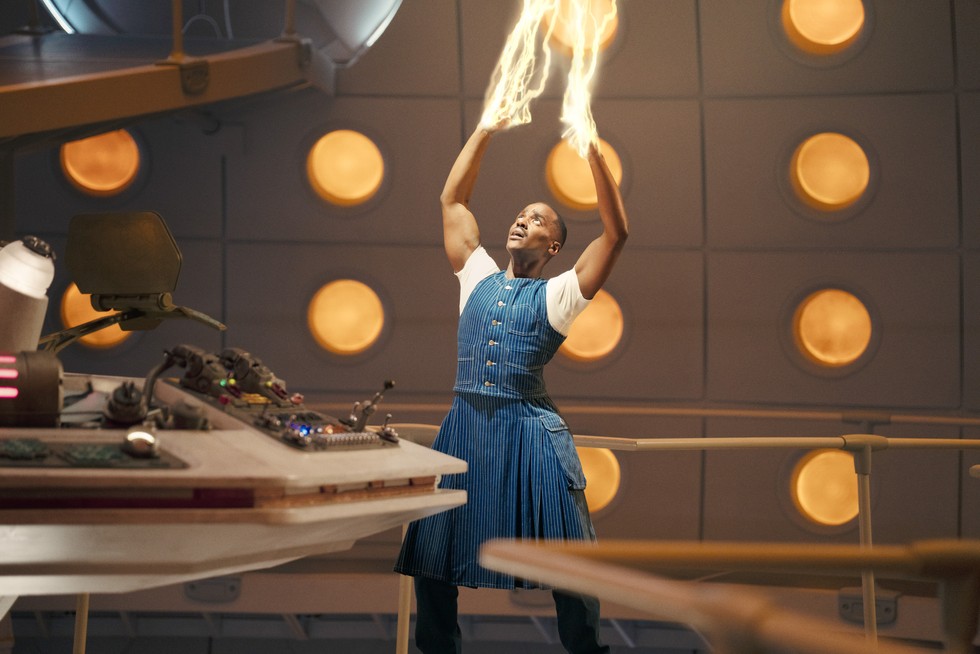
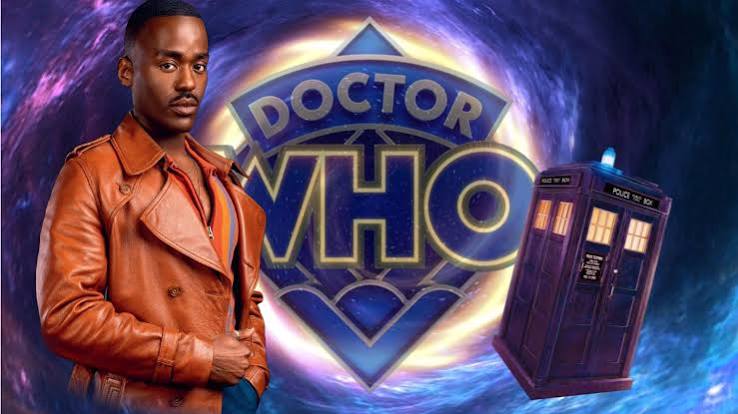
Doctor Who has always been a series that thrives on reinvention. Across its long history, the programme has moved between comedy, horror, science fiction, historical drama, and character-driven adventure, sometimes within the same episode. That willingness to experiment is one of the reasons the Doctor’s adventures have endured for generations. The second season starring Ncuti Gatwa as the Fifteenth Doctor continues that tradition with a mixture of spectacular science-fiction concepts, emotional character moments, eccentric humour, and stories that attempt to say something meaningful about the world beyond the TARDIS.
As a Blu-ray release, the season also presents an opportunity to appreciate the craftsmanship behind the programme. Doctor Who is a particularly interesting series to revisit in a physical format because its visual identity is so varied. One episode might feature an elaborate alien environment, another might depend on atmospheric lighting and practical-looking production design, while a third could be built around intimate conversations between characters. The success of the season depends not only on the scripts and performances but also on how convincingly these very different worlds come together.
Gatwa remains one of the most distinctive modern Doctors. His interpretation is energetic without being simply frantic, compassionate without becoming sentimental, and playful without losing sight of the character’s enormous age and accumulated sorrow. His performance gives this era a recognisable personality, even when the stories around him take wildly different directions.
The second season is therefore an intriguing instalment in the modern Doctor Who revival: a continuation of an established creative vision, but also a test of how effectively Gatwa’s Doctor can develop beyond the initial excitement of his arrival.
The Fifteenth Doctor and Belinda Chandra: a compelling new partnership
The biggest strength of this season is the relationship between the Doctor and his new companion, Belinda Chandra, played by Varada Sethu. Following the first season’s adventures with Ruby Sunday, the series introduces a different dynamic that gives Gatwa’s Doctor fresh opportunities to demonstrate his personality.
Belinda is not simply there to admire the wonders of the universe. She has her own perspective, her own priorities, and a clear determination to return home. The central premise of the season revolves around the Doctor trying to get her back to Earth while a mysterious force repeatedly prevents them from completing their journey. This gives the eight-episode run a continuing narrative thread without removing the possibility of individual adventures.
Sethu makes Belinda an appealing addition to the TARDIS crew. She brings a grounded quality to the character, providing a useful counterbalance to the Doctor’s enthusiasm, eccentricity, and tendency to become completely absorbed in a crisis. Their contrasting personalities create some enjoyable exchanges, and the partnership works particularly well when Belinda challenges the Doctor rather than simply following his instructions.
Gatwa, meanwhile, continues to make the role unmistakably his own. His Doctor is expressive, physically animated, emotionally open, and frequently mischievous. There is a natural theatricality to his performance, but he also conveys vulnerability beneath the flamboyance. He can move from a playful remark to genuine concern with impressive speed, reminding the audience that the Doctor’s apparent lightness is accompanied by centuries of experience and loss.
One of the most interesting aspects of Gatwa’s interpretation is the way he presents kindness as a form of strength. His Doctor is often motivated by a sincere desire to protect people, but compassion does not make him invulnerable. The season allows glimpses of a more troubled, darker side of the character, giving Gatwa opportunities to move beyond the exuberance that initially defined his incarnation.
The difficulty is that the writing does not always give this partnership sufficient time to develop. The early promise of a companion who approaches the Doctor with a more challenging attitude is not explored as consistently as it could have been. At times, the episodes seem more interested in rushing towards their next major revelation than allowing the characters to sit with the consequences of what has happened.
Nevertheless, the chemistry between Gatwa and Sethu is one of the season’s most reliable assets. Even when a story becomes overly complicated, their performances provide a human centre to the adventure.
Episode-by-episode review
The following section discusses individual episodes and includes some plot details.
1. Joy to the World
2024 Christmas special
Steven Moffat’s Christmas adventure serves as the season’s festive prologue, combining time-travel complications with a more intimate story about loneliness, connection, and the passage of time. Nicola Coughlan brings warmth to the proceedings, while Gatwa carries the story’s emotional weight with characteristic enthusiasm.
The episode’s elaborate temporal mechanics are entertaining, although its sentimentality occasionally threatens to overwhelm the more intriguing ideas. It is an enjoyable seasonal adventure that works best when it slows down and concentrates on the people caught up in the Doctor’s extraordinary circumstances.
2. The Robot Revolution
Season premiere
The main season begins with a conventional science-fiction adventure that introduces Belinda and establishes the challenge facing the new TARDIS team. Robots, alien technology, and a potentially dangerous situation provide familiar ingredients, while the Doctor’s efforts to understand what is happening keep the story moving.
The episode’s greatest achievement is establishing the central partnership. Its weakness is a feeling of haste: some of the plot developments and character decisions could have benefited from additional breathing room. As an introduction, it does the necessary work, but it is not the strongest indication of what the season will eventually achieve.
3. Lux
Animated nightmares and metafiction
Lux is one of the season’s most distinctive instalments. Its use of a cartoon character as a source of genuine menace creates a striking contrast between cheerful animation and disturbing science fiction. Alan Cumming’s voice performance as Mr Ring-a-Ding gives the antagonist an immediately memorable personality.
The episode demonstrates the imaginative possibilities that make Doctor Who special. It can take something familiar and apparently harmless, then transform it into something unsettling. Its visual playfulness, meta-humour, and unusual villain help it stand out from the season’s more conventional adventures, even if the narrative could have used a little more room to breathe.
4. The Well
Atmospheric science-fiction horror
The Well is another highlight, shifting the season towards a darker and more suspenseful style. Rather than relying exclusively on spectacle, the episode builds tension through uncertainty, atmosphere, and the fear of encountering something that cannot easily be understood.
Gatwa’s performance is particularly effective in this setting. The Doctor’s curiosity remains essential to his character, but the danger demands caution, and the episode benefits from the tension between his determination to help and the possibility that he is facing something beyond his control.
The story invites comparison with the celebrated 2008 episode Midnight, although it has its own identity and ambitions. Its strongest moments demonstrate how effective Doctor Who can be when it trusts suspense and unsettling ideas instead of constantly explaining everything.
5. Lucky Day
Consequences closer to home
Lucky Day brings a different energy to the season by exploring the consequences of the Doctor’s adventures beyond the immediate alien threat. Millie Gibson’s Ruby Sunday returns, helping connect the current story to the preceding season and reminding viewers that the Doctor’s influence does not end when the TARDIS disappears.
The episode has an appealingly grounded premise, particularly when it considers the relationship between extraordinary experiences and ordinary life. It also provides an opportunity to explore how the Doctor’s actions can be interpreted by people who do not necessarily share his understanding of the universe.
There are compelling ideas here, although the execution occasionally feels more hurried than the material deserves.
6. The Story & the Engine
Stories, memory, and identity
This episode draws on the importance of storytelling itself, weaving its science-fiction elements around themes of memory, culture, and the way people use stories to make sense of their lives.
It is one of the more thematically ambitious entries in the season. The setting and supporting characters provide a welcome change of pace, and the episode attempts to make its central ideas integral to the adventure rather than simply adding a message at the end.
Its ambition is admirable, and its willingness to explore ideas beyond the usual alien invasion makes it a rewarding part of the collection. As with several episodes in this run, however, the narrative sometimes moves too quickly for every emotional beat to land as forcefully as it might.
7. The Interstellar Song Contest
Glitter, spectacle, and danger
The season embraces flamboyance with a science-fiction competition that uses the familiar conventions of televised entertainment as the basis for a larger adventure. It is a natural fit for Gatwa’s expressive Doctor, whose enthusiasm and theatrical instincts suit a setting built around performance.
Beneath the colourful surface, the episode attempts to explore the relationship between spectacle and danger. The combination is quintessentially Doctor Who: something that initially appears entertaining becomes much more sinister as the underlying situation is revealed.
Its exuberance is enjoyable, although the shift between comedy and serious drama is not always perfectly balanced.
8. Wish World
The beginning of the two-part finale
Wish World starts bringing together the season’s continuing mysteries and longer-running character threads. The shift towards a more interconnected story gives the episode a sense of scale, but it also places considerable pressure on the narrative to explain its many moving parts.
There are intriguing concepts and potentially powerful character developments, yet the accumulation of revelations can make the episode feel crowded. The story wants to operate simultaneously as a standalone adventure, a culmination of earlier mysteries, and the setup for a major conclusion.
The result is ambitious but uneven, with the promise of its ideas sometimes outpacing the clarity of their presentation.
9. The Reality War
A consequential and controversial conclusion
The finale attempts to deliver a dramatic payoff to the season’s mysteries while dealing with the larger mythology of the programme. Its scale is unmistakable, and there are moments designed to provoke a strong emotional response from long-time viewers.
Unfortunately, the conclusion struggles to give all its ideas sufficient development. Some character arcs and returning elements feel as though they have been brought together before they have been fully prepared, leaving important developments less satisfying than they might have been.
Gatwa’s performance remains committed throughout, lending emotional force to material that does not always hold together. The finale is consequential for the era, but its willingness to reach for the biggest possible moment does not consistently translate into a coherent or entirely convincing ending.
Taken together, the episodes reveal a season with a recognisable creative identity but an inconsistent level of execution. The imaginative highs are genuinely exciting, and the horror, comedy, and character drama demonstrate the flexibility of the format. The frustration is that several stories feel as though they need just a little more time to develop their strongest ideas.
Picture quality: a strong showcase for modern Doctor Who
One of the main reasons to consider the Blu-ray is the opportunity to experience the season in a dedicated home-entertainment format. The series makes extensive use of colourful production design, elaborate sets, visual effects, and varied lighting, all of which contribute to its distinctive appearance.
The visual presentation is especially important for a programme that can move from the bright, familiar surroundings of the TARDIS to an alien landscape or a deliberately artificial-looking environment within minutes. The contrast between those settings is part of the fun, and the physical release gives fans an opportunity to revisit the episodes without depending on a streaming subscription.
The season’s varied visual styles also make it an interesting test of a home cinema setup. The vivid colours and animated imagery in Lux provide a very different viewing experience from the subdued, tension-filled environments of The Well. Meanwhile, the larger-scale adventures and finale offer opportunities to appreciate the detail of the sets, costumes, and visual effects.
The Blu-ray release is presented in 1080p high definition, with a reported original aspect ratio of 2.00:1. It is a conventional HD Blu-ray rather than a 4K Ultra HD edition.
That distinction is worth keeping in mind. A standard Blu-ray can still deliver a very pleasing picture, particularly on a properly calibrated television, but buyers looking specifically for a 4K HDR presentation should not assume that this set offers one.
I would also avoid promising a dramatic improvement over streaming in every scene without a direct, controlled comparison. The actual difference depends on the streaming service, bitrate, display, and playback equipment. Nevertheless, the physical release has an obvious appeal for viewers who value a permanent copy of the series and want to watch it on their own terms.
Picture verdict: the season’s colourful and varied cinematography makes it well suited to high-definition home viewing. The principal attraction is the combination of the show’s visual imagination and the convenience of owning the complete season.
Sound quality: bringing the TARDIS into the living room
Sound is an important part of the Doctor Who experience. The TARDIS has one of the most recognisable sound identities in British television, while the music, sound effects, and alien environments help establish the atmosphere of each adventure.
The Blu-ray listings specify English DTS-HD Master Audio 5.1 for the North American edition.
A multichannel presentation is a good match for a series that moves between dialogue-heavy scenes, dramatic musical cues, and effects-driven action. A surround-sound system can make the experience more involving, although the quality of the result will naturally depend on the equipment being used.
The quieter scenes deserve particular attention. Doctor Who works best when the soundtrack supports the story rather than constantly drawing attention to itself. In a suspenseful episode, an unusual sound or a sudden absence of music can be as effective as a large explosion. In a more emotional scene, the clarity of the dialogue and the restraint of the score can make the difference between a moment that feels earned and one that feels overemphasised.
The season’s tonal variety gives the soundtrack plenty of opportunities to demonstrate its range, from the playful qualities of its more eccentric adventures to the darker atmosphere of its horror-inspired material.
I cannot independently verify every aspect of the disc’s audio mix, so I would not claim that it definitively outperforms the streaming version. The listed format is nevertheless appropriate for a modern science-fiction series and should be attractive to viewers with a compatible surround setup.
Sound verdict: a promising home-cinema presentation, with the listed 5.1 soundtrack providing a useful advantage for viewers who enjoy watching with a surround-sound system.
The Blu-ray extras: a substantial collection for fans
For many fans, the bonus material is just as important as the episodes themselves. Doctor Who has a long tradition of behind-the-scenes documentaries, cast interviews, production features, and other material that helps viewers appreciate how the programme is made.
The Season Two Blu-ray is particularly appealing in this respect because the seven-disc set includes the 2024 Christmas special, all eight episodes of the season, and a substantial selection of supplementary content. The official release listing confirms that the collection includes episodes of Doctor Who: Unleashed, making-of features, and additional bonus material.
Here are some of the most notable inclusions.
Doctor Who: Unleashed
The accompanying behind-the-scenes programme is one of the most valuable parts of the package. It offers additional context for the episodes and allows viewers to spend more time with the cast, production team, and creative process. For fans who enjoy learning how a story comes together, these features are a welcome complement to the main episodes.
Episode making-of features
These features offer a closer look at the ideas and practical work behind individual stories. They are particularly useful for understanding the different approaches required by the season’s contrasting episodes, from cartoon-inspired fantasy to science-fiction horror and large-scale adventure.
Cast interviews and supplementary clips
Interviews and shorter behind-the-scenes pieces provide additional opportunities to hear from the people who brought the stories to life. These are welcome additions for viewers who want to spend more time with Gatwa and Sethu and learn about the wider ensemble.
Audio commentaries
The release includes audio commentaries for Joy to the World and The Robot Revolution. These offer an alternative way to revisit the opening adventures, with discussion that can help fans notice production decisions and storytelling details they might otherwise overlook. It is a shame that the commentaries do not extend across more of the season.
Ncuti Gatwa says goodbye to Doctor Who
Among the most significant additions for fans of this particular era is material acknowledging Gatwa’s departure. Given the emotional importance of his time as the Fifteenth Doctor, this is a particularly relevant inclusion for collectors documenting the different actors and creative eras of the programme.
The extras make the set more than a simple collection of episodes. There is real value in having the season and its accompanying material gathered together in one place, particularly for fans who enjoy revisiting a story after watching the behind-the-scenes discussion.
However, the supplementary content is not quite the definitive archival package that the most dedicated collectors might hope for. One contemporary review notes the relatively small number of audio commentaries and the absence of certain broader retrospective features.
That is a disappointment, especially for a series with such a long and fascinating production history. A more extensive collection of commentaries, longer interviews with the principal cast, and detailed discussions of the writing and visual effects would have made the set even more valuable.
Even so, the combination of Unleashed, episode-specific features, interviews, and the farewell material provides a worthwhile amount of additional viewing.
The Steelbook is the more visually distinctive option. Its artwork features the Doctor and Belinda on the front, with additional characters on the reverse, while the interior artwork provides another visual element once the case is opened. The result is a more character-focused presentation than a plain disc case.
For fans who particularly enjoy Gatwa’s era, the packaging also serves as a physical memento of his second full season. That has added significance now that the episodes can be viewed as a complete chapter in his time as the Doctor rather than simply the latest instalment in an ongoing run.
The standard Blu-ray is the more straightforward choice for anyone who prioritises the episodes and extras over premium packaging. The Steelbook is better suited to collectors who enjoy attractive cases, matching editions, and displaying their favourite series.
There is a practical consideration, however: packaging varies between territories and editions. Anyone importing the set should check the exact edition, disc-region compatibility, and included features before purchasing.
How does Season Two compare with the first season?
The first season of Gatwa’s Doctor established an energetic, colourful interpretation of the character, with an emphasis on emotional openness, unusual premises, and a willingness to move between comedy and darker material.
Season Two builds on those qualities but shifts the focus towards Belinda and the problem of getting her home. The continuing journey provides a more obvious narrative thread, while the individual episodes still have room to explore different genres.
The strongest episodes suggest that this version of Doctor Who can be inventive and atmospheric without abandoning the warmth that makes the programme accessible. Lux and The Well are especially effective demonstrations of how different the show can feel from one week to the next.
The principal weakness is consistency. The season can be imaginative in one episode and frustratingly rushed in the next. Its continuing mysteries create anticipation, but the eventual payoff does not satisfy every expectation established along the way.
The finale is the clearest example of this problem. Rather than allowing every major development the time it needs, the conclusion tries to accomplish too much at once. For some viewers, that ambition will make it memorable; for others, it will leave the season feeling less cohesive than it should.
This unevenness does not erase the achievements of Gatwa and Sethu. Their performances remain a major reason to revisit the episodes, and the best stories demonstrate the enduring appeal of the series’ combination of emotional storytelling and imaginative science fiction.
Is the Doctor Who Season Two Blu-ray worth buying?
For viewers who enjoyed Gatwa’s Doctor, the Blu-ray is an appealing way to own the complete season and its accompanying Christmas special. It is also a useful option for anyone who prefers physical media, wants access to supplementary features, or enjoys revisiting episodes without relying on streaming availability.
The strongest reasons to buy it are:
- All eight episodes of Season Two, plus Joy to the World.
- A seven-disc collection with a substantial selection of supplementary material.
- Doctor Who: Unleashed and episode making-of features.
- Audio commentaries for two episodes.
- A standard Blu-ray option and a more collectible Steelbook edition.
- A permanent physical copy of Gatwa’s second season as the Fifteenth Doctor.
The reservations are equally straightforward. The storytelling is inconsistent, the finale is divisive, and the bonus features could have offered more in-depth material for collectors. It is also a standard HD Blu-ray rather than a 4K Ultra HD release.
My recommendation is to buy the set if you are a fan of Gatwa, enjoy the season’s more inventive episodes, or want to keep the modern series together in a physical collection. If you are primarily interested in the overall quality of the storytelling, it is worth knowing that this is a season of considerable highs and some frustrating lows rather than a uniformly successful run.