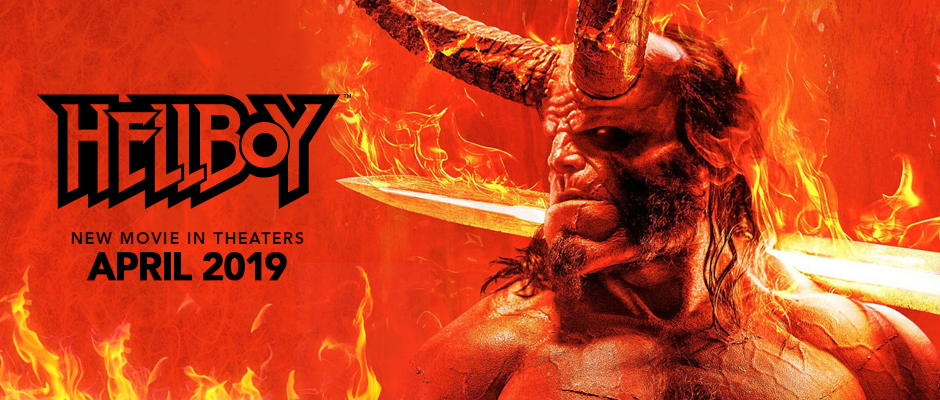
Neil Marshall directs from a script by Andrew Cosby and the story centers around Hellboy (Harbour), who is caught between the worlds of the supernatural and human and battles an ancient sorceress bent on revenge.
The film also stars Ian McShane as Hellboy’s adoptive father, Professor Trevor Bruttenholm, Milla Jovovich as villain Nimue, Sasha Lane as Alice Monaghan, Penelope Mitchell as elder witch Ganeida, and Daniel Dae Kim as Major Ben Daimio. The movie opens April 12th.
Set in a world wracked by terror and suspicion, Copenhagen police officer Christian (Coster-Waldau), seeks justice for his partner’s murder by an ISIS member named Imran. On the hunt, Christian and a fellow cop are unwittingly caught in a cat and mouse chase with a duplicitous CIA agent (Guy Pearce) who is using Imran as a pawn to trap other ISIS members.
“Cobra Kai – Season Two” takes place over three decades after the original film and follows a down-and-out Johnny Lawrence, who seeks redemption by reopening the infamous Cobra Kai karate dojo, reigniting his rivalry with a now successful Daniel LaRusso, who has been struggling to maintain balance in his life without the guidance of his mentor Mr. Miyagi.
Cast members Ralph Macchio, William Zabka, Courtney Henggeler, Xolo Mariduena and Mary Mouser return while Peyton List, Paul Walter Hauser and Martin Kove join this season. The new season arrives on the service on April 24th.
“The Joker” is an original, standalone story that follows Arthur Fleck (Joaquin Phoenix), a man disregarded by society in a gritty character study and broader cautionary tale.
Zazie Beetz, Bill Camp, Frances Conroy, Brett Cullen, Glenn Fleshler, Douglas Hodge, Marc Maron and Shea Wingham co-star in the Todd Phillips-directed film which opens October 4th.
Directed by: Elizabeth Chai Vasarhelyi and Jimmy Chin
Featuring: Alex Honnold, Sanni McCandless, Jimmy Chin and Tommy Caldwell
Alex Honnold:“My friends are like, Oh, that’d be terrible, but if I kill myself in an accident, they’ll be like, Oh, that was too bad, but like life goes on, you know, like they’ll be fine. I mean, and I’ve had this problem with girls a lot, you know. They’re like, Oh, I really care about you, I’m like, No you don’t. Like if I perish, like, it doesn’t matter, like you’ll find somebody else, like, that’s not, that’s not that big a deal.”
Released this month on DVD is this years Oscar winning documentary feature “Free Solo” (2018) which is based around rope and harness free mountain climbing, that is climbing mountains and cliff faces with no safety net, one slip or mistake and the climber plunges to their death. This is a documentary that has been produced by National Geographic and if there was every a movie that fitted with them it is this one, it contains authentic, visceral and real footage of mountain climbing captured up close and personal on many famous mountains and cliff faces in the US which makes this movie all the more impressive. “Free Solo” has one aim which is made clear pretty much from the outset, that is to follow Alex Honnold as he attempts to become the first person to ever free solo climb El Capitan, a treacherous cliff face even when using ropes which we witness throughout this film.
As far as documentaries go this is a very good example of a subject based one in that it not only explores what solo climbing is, how dangerous it can be as well as the existential nature of what it means to climbers and those around them but it also offers an insight into one of its stars, that being the seemingly spartan Alex Honnold. While the actual act of free climbing is captivating and dangerous it is the man who is explored onscreen that really makes this documentary and captures the imagination as he is not only a unique looking man but he offers real insight into the act as well as himself, so much so that it is easy to see why people are drawn to him, assist him and ultimately care for him in an act that is extremely precarious and obviously life threatening.
The past two years or so has been an excellent year for documentaries not only on streaming or DVD but also in cinemas, which is a trend that goes against what many people may have expected. However I find this to be exactly what should be expected especially with the concentration of so-called ‘fake news’ that now exists on the internet, coupled with what has been coming from the White House under the Trump Presidency. In fact there was a thought that cinematic documentaries might be a thing of the past especially with the success as well as saturation of Disney-fied blockbusters invading multiplexes, in fact audiences have been flocking to cinemas to seek out stories about real people making real differences in times and places where many others have been marginalised and made powerless by the people in charge in their respective times. Some of the great, as well as critically received, not forgetting making money documentaires at the box office are: “Wont you be my neighbour?” (2018), “Three Identical Strangers” (2018), “Jane” (2018), “RBG” (2018), and my personal favourite “Bombshell: The Hedy Lamarr Story” (2017) with so many more. What this says about audiences is that they will seek out true stories told in the relative first person that are not only inspiring but are direct counter programming to the politics of the day as well as the lies that are being produced by a President who is not only artificial but hate fuelled. My belief as a fan of documentaries is that this genre will only gain in popularity, with the coming years being a boon as well as revealing the importance of truth in the media as well as the importance of researching decisions made by the electorate. It is no surprise that the rise in fake news, Donald Trump, racism and may other hate fuelled elements has been answered by artists creating documentaries that prove there can be positive outcomes when people choose to buck the system as well as believing in others, differences, freedom and most of all, discussion.
The strength to this documentary is that it is not only a true story but it follow a very traditional narrative arc that is also present in narrative film in that we are introduced to the hero/protagonist of the story, we explore his back story and then we are shown both visually as well as inferred two antagonists, firstly the seemingly unconquerable rock face, El Capitan and then the hero’s own psyche and personality which seems on the surface every bit as impenetrable as the rocky giant. What is wonderful about this documentary, which it has in common with other documentaries, is the access to the not only the Alex, but also the way the camera crew works to film him climbing from as many different angles as possible. In fact this access to Alex climbing El Capitan is what makes the entire final act as gripping as it is, at times as an audience member you almost feel, viscerally, what it is like to attempt what we are witnessing as well as the extreme danger involved. This entire final act is juxtaposed with most of the first two thirds of the film as we listen to not only Alex, but his friends and family about what they think makes him tick as well as why he does what he does, normally filmed in closed quarters or in mid shot so that when we see Alex climbing in the open it is like a revelation.
The other aspect “Free Solo” handles well is the background to the free climbing that we see throughout, what it is, where it is carried out and why climbers attempt it at all. The directors also go to painful, sometimes shocking lengths to point out the dangers involved as well as some of the high profile deaths that have occurred in attempting this dangerous activity. In fact like the process of climbing this entire documentary is a balancing act, knowing when to show climbing against when to have the ‘talking heads’ explaining what is going on and not to make it too maudlin, especially with the air of doom that at times hangs over Alex in a way that makes an audience feel the Grim Reaper may be sitting on his shoulder. Importantly we are also invited into Alex’s head as he openly discusses with confidantes why he is doing what he is doing, which at times becomes an existential crisis for him, why climb El Capitan, should it even be filmed and what happens afterwards? This is expertly conveyed and it is only because of the omnipresent camera that we are able to witness this, Alex at one point attempts to have what seems like a private conversation with a fellow climber but we see him catch himself as he realises that is not possible, which is telling in and of itself.
This is a very personal story and while at times it could be considered to be gloomy and self-centred we also witness the human side of Alex (as well as his girlfriend) and what makes him driven like so many elite sportspeople who are focused on one goal or element of their life, in Alex’s case this is climbing. We witness conversations with him and his girlfriend about how important climbing is to him as well as what he would sacrifice to be able to do it, the answer is not what she wants to hear. Alex takes what he does very seriously and it has given him a living, however the people around him take it just as seriously, you can hear in their voices that they would not only be heartbroken if he did die but that they may shoulder some of the blame themselves.
This is a must see and a valued addition to any collection.
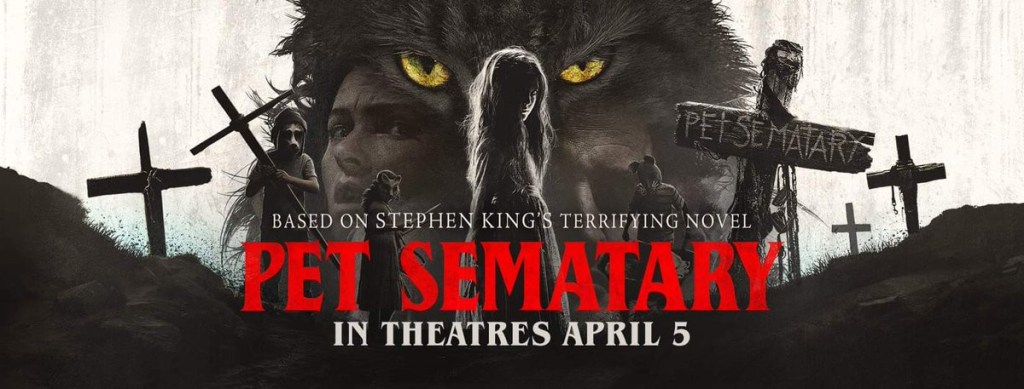
“Pet Sematary” is a 2019 American supernatural horror film directed by Kevin Kölsch and Dennis Widmyer and written by Jeff Buhler, from a screen story by Matt Greenberg. It is the second adaptation of the novel of the same name by Stephen King, after the 1989 film. The film stars Jason Clarke, Amy Seimetz, and John Lithgow.
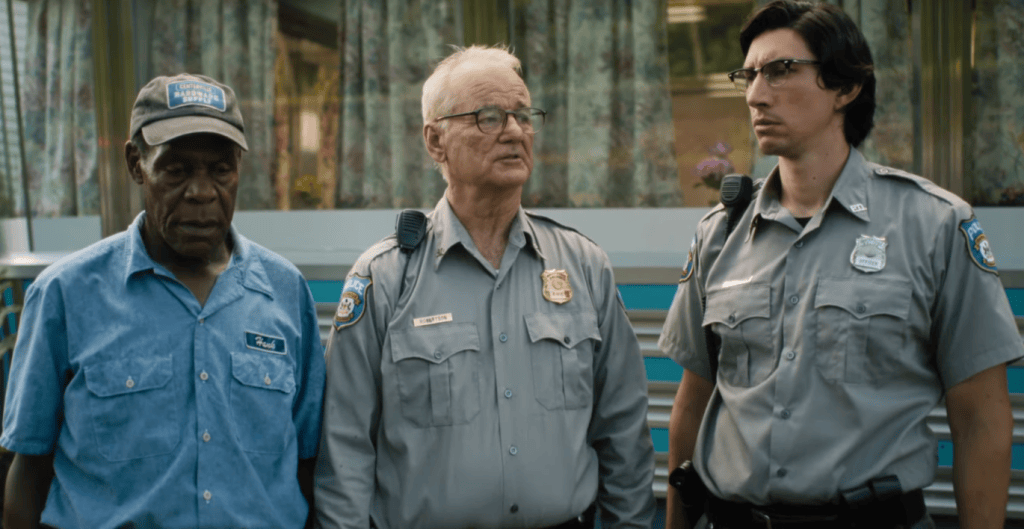
Bill Murray, Adam Driver, Tilda Swinton, Steve Buscemi, Danny Glover, Selena Gomez, Caleb Landry Jones, Tom Waits, Chloe Sevigny, Carol Kane, Iggy Pop and RZA among many more star in the project which has so far kept its plot specifics under wraps.
“NOS4A2” is based on Joe Hill’s 2013 novel, “NOS4A2” sees Charlie Manx, a seductive immortal who feeds off the souls of children he traps in a dark Xmas-themed world of his imagining.
The new series used its WonderCon presence to launch a new trailer which shows off some of the premiere episode which nabbed good notices out of SXSW earlier this month. If you have AMC Premiere, you’ll be able to binge the entire ten-episode first season starting on June 2nd.
Featuring: Jovan Adepo, Wyatt Russell, Mathilde Ollivier, John Magaro, Gianny Taufer, Pilou Asbæk, and Bokeem Woodbine
Chase:[as his veins and arteries begin mutating] “Oh my god! What did you do to me? OH MY GOD!”
Critical Commentary
Released this month on 4K Blu-ray is the latest J.J. Abrams produced, Bad Robot production in the form of the World War II horror/action movie “Overlord” (2018) which while in early trailers hinted at being a part of their ‘Cloverfield’ franchise of movies is definitely something different as it has nothing to do with those movies that have been a mixed bag at best. In particular it was the dumped onto Netflix “The Cloverfield Paradox” (2018) that, has for now anyway, sealed the fate of that particular quasi-franchise. So it was with baited breath that genre fans were hoping that “Overlord” would offer some kind of original horror movie that could perhaps improve on those past Bad Robot genre movies. Alas while trailers offered audiences some hope what actually was produced was a very mixed bag indeed with major issues in terms of tone as well as what the movie was actually about in that it was a period piece that attempted to mix some real events with genre tropes. These felt extremely out-dated as well as redundant which is a shame as some of the talent assembled now seems to have been wasted completely.
Make no mistake the aim of this movie was to create something that crossed genres in a natural way, it seems to have been the idea of the filmmakers to do this almost narratively similar to the Quentin Tarantino written and Robert Rodriguez directed (now classic) “From Dusk till Dawn” (1996) which mixed a thriller/heist movie with a vampire movie that really has dominated this kind of movie even though it has been attempted many times. What “From Dusk till Dawn” did and why it was so successful was that the final act is a complete U turn and never lets up, while many others attempt to merge the genres and in so doing they dilute the narrative so that they end up becoming bland. One of the more recent as well as more successful cross genre movies is the excellent “Colossal” (2017) that merged the narratives of horror and comedy but ended up being about something real and had payoffs that seemed realistic, in respect to the fact that it is a movie. In terms of “Overlord” the decision is made to more less split the narrative down the middle with the war movie taking place within the first half then introducing a horror element after that halfway mark, unfortunately what makes this movie struggle is that the characters are not interesting at all, as well as the fact that they are as trope laden as a genre movie could get which spells doom for audience interest. Not only that but the actual horror element does nothing to flesh out the plot at all, it actually is not thought out or given any real weight so I was left not only waiting for this movie to end but the supernatural elements were too familiar yet all surface. The idea of having Nazi zombie like creatures might sound like agood idea on paper but the execution here is way off the mark.
“Overlord” is based on the eve of D-Day, a paratrooper squad is sent to destroy a German radio tower in an old church. Their plane is shot down and crashes, with most of the squad killed either in the crash, or, by German soldiers. Five survivors remained: Corporal Ford and soldiers Boyce, Tibbet, Chase, and Dawson, who is killed by a landmine shortly after regrouping. From here the plot moves along as one might expect with the added complication that they eventually learn there is darkness in a local village that they all must contend with in order to complete their mission.
This movie has been co-written by experienced as well as Oscar nominee Billy Ray who while is no stranger to genre movies; he has mostly been responsible for adapting real events into excellent dramatic films. Here Ray along with co-writer Mark L. Smith is not able to create a backstory or anything realistic for the horror parts of the movie, which do not work at all on a genre level. The World War II aspect works fine in the nuts and bolts of the war movie genre but again the actual characters are not drawn well at all, the only hint of any characterisation is given in clumsy dialogue and interactions with the villagers, which seem to added on in a very orchestrated way. Directed by Julius Avery who has only directed one other full-length feature seems a little lost with this genre piece which to be fair is not his fault. When directing a genre movie a director has to not only be aware of the script that is his source material but has to also be able to being a spark so that the material is elevated into something that not only feels original (even if it is not) but also feel relevant, some of the greatest genre directors do this, think about one of the greatest John Carpenter whose movies could be considered pulpy but are mostly all great movies.
The movie is cast very well with some talented character actors that have appeared in genre movies previously however where they are all let down in “Overlord” is with the material which means they have very little to work with in presenting characters that are not only believable but also in keeping an audiences interest which they do not. “Overlord” is a missed opportunity for all of these actors as it may have been a positive for them to appear in a genre movie where over the top performances as well as interaction with very different actors and a storyline would have opened doors for them.
To be honest “Overlord” is not a movie I would add to any collection it would only be worth viewing on a streaming service or as a rental, it is unoriginal, botches a narrative that could have been interesting wasting all its actors completely, especially actors that all normally have so much personality.
Technical Commentary
Paramount Home Entertainment brings Overlord to 4K Ultra HD Blu-ray as a two-disc combo pack. The dual-layered UHD66 and Region-Free BD50 discs sit on opposing panels of a black, eco-vortex case with glossy slipcover. At startup, viewers are taken directly to a static screen with the usual selection along the bottom and music playing in the background.
Video Review
“Overlord” arrives on Ultra HD with a very good, occasionally stunning HEVC H.265 encode, outfitting the movie with an excellent upgrade over the Blu-ray. The movie was shot entirely on HD cameras capable of up to 3.4K resolution, but that data was later mastered to a 2K digital intermediate. Still, the upscaled 2160p transfer lands with a notable uptick in overall definition.
The 4K video also boasts considerably brighter contrast, which may not be immediately apparent when almost the entire movie takes place at night. Nevertheless, the pitch-perfect whites are crisper and a bit more brilliant without the slightest hint of blooming. Specular highlights offer the more noteworthy improvement, giving the edge of metallic surfaces a more realistic polish. Brightness levels have also been given a generous boost, bathing the war against the dead in inkier, obsidian blacks while most of the picture seems darker than its HD peer.
Audio Review
“Overlord” has a reference-quality Dolby Atmos soundtrack that immediately erupts into action as a swarm of planes fills the room on the eve of D-Day. Each plane can be distinctly heard flawlessly panning between the surrounds, the three front channels and across the overheads, instantly throwing viewers into the thick of war. When shifting inside with our heroic squad of paratroopers, the loud rattling of the plane’s metallic interior clinks, clanks and jingles everywhere, establishing a fantastic hemispheric soundfield as aerial explosions and eventual skirmishes on land add to the immersion. In the small French village, heights and surrounds continue to be employed by subtle atmospherics in the distance, voices and screams echoing in the Nazi lab, and gunfire reverberating all around.
Special Features
Death No More (HD, 12 min): A closer look at the makeup and practical special effects, along with some discussion on the weapons.
Creation (HD, 11 min): Typical EPK-like piece with cast & interviews extensively talking about the overall production, the plot, characters and the various themes.
Death on the Ground (HD, 9 min): More interviews focused on historical accuracies, believable characters, the movie’s central antagonist and Mathilde Ollivier’s performance.
Death Above (HD, 7 min): A detailed discussion on the opening battle sequence.
Death Below (HD, 6 min): Similar to the above, only on the story’s switch from war to horror.
Brothers in Arms (HD, 5 min): Cast & crew praise Julius Avery and J.J. Abrams.S
Featuring: Natalie Portman, Jennifer Jason Leigh, Gina Rodriguez, Tessa Thompson, Tuva Novotny, and Oscar Isaac
The Psychologist: “It’s destroying everything.”
The Biologist: “It’s not destroying… It’s making something new.”
Critical Commentary:
When it comes to genre television and films Netflix really runs the gamut from incredibly complex high quality projects like last years “Stranger Things” (2017- present) and the release this month of the Alex Garland written and directed “Annihilation” (2018), to a high amount of unwatchable dreck that fills out their catalog, which changes from month to month. In terms of quality “Annihilation” has it all, absolutely great actors, an adaption from a series of popular highly regarded novels, one of the better novelists of the past twenty years who is now a well regarded screenwriter turned director and a film that operates on a number of levels, that pulls no punches for the audience. Garland challenges you to get on board, keep up or be left behind – which is a theme in the film.
The film itself is one of the best if not the best film this year, and if you live outside the US you can view it as part of your Netflix subscription, which is a blessing as well as a curse. On one hand we get to see a film that is excellent on all levels as well as being directed by a true visionary with a very distinct point of view, not only that but the film looks incredible with a vivid landscape. On the other hand we do not get to see it how the director intended, on the big screen which is a crime as the palette used begs for a big screen experience. This is actually a conundrum that faces Netflix on all its big ambitious movies, one need only look at the Oscar nominated “Mudbound” (2017) from last year that deserved a wide big screen release as well. Netflix is still a disrupter in the film space, but it is also not recognized as much as it should be as a creator/distributor of high quality films. That be changing with the Oscar winning documentary“Icarus” (2017).
“Annihilation” based on the novel of the same name by Jeff Van der Meer, spearheaded by Alex Garland who burst on the literary scene with his own novel ‘The Beach’, famously turned into a movie featuring then superstar Leonardo DiCaprio. Garland then burst onto the filmmaking scene with his Danny Boyle directed script “28 Days Later” (2003), which redefined the Zombie genre. Garland has since once again made a splash as director with his Oscar winning film “Ex-Machina” (2015) that featured stars on the rise Oscar Isaac, Alicia Vikander and Domhnall Gleeson. With this sophomore effort it appears that Garland knows his way not only around a story but many of the other elements that make great films.
“Annihilation” begins at the U.S. government’s Area X facility on a Southern coast, cellular biology professor and former U.S. Army soldier Lena undergoes quarantined debriefing about an expedition into an anomaly called “the shimmer”, from which she is the only survivor.
In a flashback, Lena’s husband, an Army Special Forces soldier named Kane, returns without warning to their home after having gone missing on a mission. He remembers nothing of that time and suddenly becomes very ill. A government security force intercepts Lena and Kane on the way to a hospital and brings them to Area X, near where a shimmering electromagnetic field began to spread three years earlier. Psychologist Dr. Ventress recruits Lena into the project, explaining that military teams, including one with Kane, ventured into the shimmer. No one except Kane, now in a coma, ever returned. Lena joins Ventress on a research expedition consisting of them, physicist Josie Radeck, geomorphologist Cass Sheppard, and paramedic Anya Thorensen.
In terms of an adaption Garland has executed this very well, taking the ideas as well as some of the themes of the original novel, and creating something new that flows better in its new form than it would have if he had been dogmatic with the adaptation. Some of these choices I assume were for the actors, as the scope of their parts has increased and become more formal with flashbacks as well as motivations for choices being made clear from the outset, in particular with Natalie Portman’s character. The very fact that this film has attracted not only Portman, but Oscar Issac as well as rising stars Tessa Thompson, Gina Rodriguez, Tessa Thompson and recent Oscar nominee Jennifer Jason Leigh speaks highly of this genre movie, that not only exceeds expectations but breaks out of genre conventions. All of these actors excel in their parts, you can tell from the off that they are not only aware of their characters but understand how they fit into the overall narrative.
Not that I am going to spoil this film as the least said the better as it contains some incredible surprises as well as some very beautiful moments, some are majestic, some poetic and some incredibly shocking. The word that comes to my mind when describing as well as thinking about this film is inevitable. The inevitability of death, of constant change, of life to not only survive but persist, as well as the nature of human beings to not only want to explore but to destroy at the same time. This film as well as the novel also postulates that human beings are not the center of the universe and life as well as nature does not revolve around us, we are servants to it – events that happen in nature are not motivated, they just happen, we need to roll with it or as a species we will not survive. Without giving to much away it becomes pretty clear early on that entering the shimmer does not necessarily mean death, it means change, that change however is on a cellular level, so that what makes us conscious entities may not mean what we think it means – we see this through not only the change the characters go through, but also some of the evidence left behind by others as well as the changing animal and plant life that is reflected in some of the trailers. Like life this film does end on a conclusion but on something ethereal that permeates the entire narrative as well as some of the left turns that “Annihilation” takes, in fact the name of the film is not a pejorative, it is a complimentary way of looking at the conclusions of the film. What we see as the film moves forward is that there might be a new way of looking at life, human life in particular – the inevitable change that nature has brought to us that we must embrace or face the consequences.
While “Ex-Machina” Garland’s previous effort is a very nice, layered looking film that on first watch is impressive for its subtly as well as subject matter, it is for all intents and purposes a film set in one place. With “Annihilation” Garland has taken a huge step forward not only in the themes involved but the scope and look of the film as well as the character interactions and what effect these have on the story. I find it difficult to remember a more narratively complex as well as assured second film ever, in fact after his debut it may have been tempting to direct something simpler, but the decision not to speaks volumes of the writer/director’s talent as well as assuredness. Garland has used a cinematographer, Rob Hardy who not only has an impressive list of credits but works a lot in film which means he is adept at making quick good decisions. This has paid off as “Annihilation” not only looks incredible but it also looks original which in 2018 is a very tall order.
Finally there are multiple homages to other Sci-Fi films as well as a few other genres, the most blatant is inherent in the novel, that is John Carpenters remake “The Thing” (1982) which tackled some of the same things that are present here. In fact the film opens similarly to that film as well as a myriad of other Sci-Fi films, a streaking meteor (or something) crashing into the planet. One of the major differences is that we see where the meteor lands, into a lighthouse, which is loaded, like the rest of the film, with meaning both overtly as well as hidden. The use of a lighthouse is important as it symbolizes the best of man, his most lofty of ideals, proximity ever closer to the heavens and God, and a towering signpost to guide the way and warn of danger. The beacon, shining out over the roughest and stormiest of seas, symbols of salvation and direction, leading those in danger to safety and security whether it be a danger of physical manifestations or of spiritual and moral trials and tribulation. This can be no more true than this film and as you watch you will see the importance of its use as well as the centre it takes in this movie.
If you live in the US then you need to head to your nearest cinema and see this film, if you live outside the US you need to subscribe to Netflix as soon as possible, with the added benefit of being able to watch “Annihilation” multiple times – you will not be disappointed.
Technical Commentary:
Paramount Home Entertainment brings “Annihilation” to 4K Ultra HD Blu-ray as a two-disc combo pack. Inside the black, eco-vortex case with glossy slipcover, the dual-layered UHD66 disc sits comfortably opposite a Region Free, BD50 copy. At startup, viewers are taken directly to a static screen with the usual selection along the bottom and music playing in the background.
Video Review
“Annihilation” arrives on Ultra HD landscape with a sumptuous HEVC H.265 encode in Dolby Vision HDR struck from a 4K digital intermediate, which was sourced from a combination of digital cameras capable of 6K and 4K resolutions. Remaining faithful to the stylized cinematography of Rob Hardy, the freshly-minted transfer displays a slightly restrained contrast for much of the runtime. This gives the picture a somewhat overcast and dour appeal, which seems to be in line with the plot’s theme. Inside the shimmer, however, things brighten considerably, showering the exotic, flourishing habitat with intensely brilliant whites in the flowers, the strange lifeforms and the fluffy clouds in the sky.
Given the stylized digital photography, brightness levels don’t appear impaired or comprised. In fact, the 2.39:1 image is noticeably darker overall than its Blu-ray counterpart, layered with lots of inky, stygian blacks throughout. However, this also creates a small issue since many scenes take place at night and during poorly-lit environments, and the pitch-black shadows tend to engulf the finer details and objects in the background, often making it very difficult to properly make out facial expressions or movement in the darker moments. Daylight sequences, on the other hand, are significantly better, displaying excellent gradational differences between the clothing, military equipment and within the shadows. The rest of the 2160p video displays razor-sharp definition in nearly every frame, including the many CG sequences, exposing far more details than the BD.
Audio Review
Similar to the video, the audio design feels a bit restrained during the film’s first quarter, placing more attention on the dialogue and the intimate conversations, displaying exceptional clarity and tonality in the vocals. When the characters approach the shimmer, the alien aura comes with a strangely haunting hum that not only fills the entire soundstage but also spreads into the top heights, creating an overwhelming half-dome wall of sound. The mid-range during those same moments exhibits fantastic detailing and definition in the higher frequencies, maintaining superb precision and fidelity across the entire front soundscape. At the same time, the hum produces a ground-shaking, couch-trembling rumble that energizes the whole room, providing the shimmer with an eerie, foreboding presence. For the rest of the movie, the low-end is robust and hearty, giving gunshots and the few action sequences an appreciable impactful punch, occasionally hitting as low as 18Hz in a few places, especially towards the end.
Special Features
Part 1 – Southern Research (HD): A pair of short pieces exploring the adaptation process, the plot’s themes, the visual design and the characters, made largely from interviews and BTS footage.
Refractions (11 min)
For Those that Follow (15 min)
Part 2 – Area X (HD): Two more featurettes now focused on the technical aspects of the production, stage design, the practical effects and finishing on the importance of the digital work for completing the visuals.
Shimmer (12 min)
Vanished into Havoc (15 min)
Part 3 – To the Lighthouse (HD): Once again, two fairly informative pieces featuring cast & crew interviews sharing ideas surrounding The Shimmer, thoughts on director Alex Garland and the plot’s poignant themes.
Featuring: Lupita Nyong’o, Winston Duke, Shahadi Wright Joseph, Evan Alex, Elisabeth Moss, and Tim Heidecker
Adelaide Wilson:“They look exactly like us. They think like us. They know where we are. We need to move and keep moving. They won’t stop until they kill us… or we kill them.”
Talk about a great follow up to an amazing debut, Jordan Peele has written, produced and directed one of the great films of 2019 (so far), although I do expect “Us” (2019) to be eclipsed this year as this is going to be a good time for genre movies. What, for me, is fantastic is that this is a good old fashioned genre film that exudes many of the specific tropes that make this genre, horror, one of the best ways to not only view society but to physically see the choices people make in their lives to ether help or hinder others. Peele was half of the great US sketch comedy duo “Key & Peele” (2012 – 2015) along with Keegan Michael-Key who after their big screen movie, the excellent comedy “Keanu” (2016) (which Peele co-wrote) have gone their own way, each doing very different things. Keegan Michael-Key seems to have decided to appear in a variety of films in some roles that are a departure from what we are used to. On the other hand Jordan Peele basically seems to have poured himself into making genre projects that began with the Oscar winning “Get Out” which means he has been onscreen infrequently – but this has paid huge dividends as he has created some truly riveting movies, possibly extending back into the television world with his reboot of the classic anthology show “Twilight Zone” (2019), which we can only hope will be as special. While “Get Out” wore its political and social commentary out in the open, this new movie does something a little different by having not only layers onscreen but within the plot and narrative as well. This is indeed a look at society as a whole as well as race in the post-Obama America, which is still needed now that there has been an open racist in the White House for the past few years.
I have made the point before but the past ten years has been a bonanza for genre movies, especially horror, not only does there seem to be more being produced than ever before, especially with the advent of cheap film making equipment, more quality filmmakers entering the genre as well as more production companies realising there is money to be made, especially with the increase in online streaming services. This is where Jason Blum and his Blumhouse production company has entered the market finding a cost/revenue model that works for them, partnering with a major distribution partner in Universal and not limiting itself to theatrical projects, but also partnering with Netflix. In fact this year alone Blumhouse will be releasing eight movies as well as other projects over other mediums.
“Us” begins in 1986, young Adelaide Thomas vacations with her parents in Santa Cruz. At the beach, Adelaide wanders off and enters a funhouse, where she encounters a doppelgänger of herself in the funhouse’s hall of mirrors. In the present day, a now adult Adelaide heads to her family’s beach house in Santa Cruz with her husband Gabe Wilson and their children, Zora and Jason. On their first evening, a strange family of four appears in the driveway of the beach house. Gabe attempts to intimidate them, but they attack him and break into the home. The Wilsons realize that the four intruders are doppelgängers of themselves, led by Adelaide’s double, Red. Red, the only doppelgänger capable of speech, tells the Wilsons the story of a girl who lives a happy life while her shadow suffers.
With this new film “Us” Peele has constructed something that needs to be deconstructed in order to really appreciate the work he has done on this genre movie, as this is no slap dash follow up. I could not help but feel that Peele is indeed the ‘real deal’ when it comes to becoming a true auteur of the highest calibre, we have seen his like in decades. Even in the opening few minutes of the film, Peele is making statements about the media, the recent past, our recent news as well as how different society was thirty years ago, in the United States especially, but also in the Western World. The first section of the film is set in 1986 at the holiday location of Santa Cruz, where we open on a television advertising the ‘hands across America’ which was set up as a fundraising initiative to raise money for hunger and homelessness. On either side of the TV set are videos from movies of the day such as “The Goonies”(1985), “The Right Stuff” (1983), “A Nightmare on Elm Street” (1984) and possibly the most important reference for the plot of this new film, “C.H.U.D.” (1984) as well as a host of others that offer some insight into this movie as well as some of Peele’s obvious favourites. There is so much more that could be analysed that it would spoil the film itself but I will mention a few highlights below which are, for me, key to understanding how this film operates as well as how Peele has invested it with meaning from the opening statement to the closing credits.
Firstly the framework which Jordan Peele is operating under is interesting as it is obvious that he has either researched or is himself interested in the sub-culture of the paranormal, as well as abstract theories in the realm of conspiracy theories. “Us” has a statement at the outset that refers to the hollow earth theory, which basically states that there is some sort of world beneath our world where a variety of beings inhabit. Adelaide in the movie talks about coincidences that occur throughout the movie, this is something paranormal people talk about as ‘synchronicity’, which is a Jungian term that holds that events are “meaningful coincidences” if they occur with no causal relationship yet seem to be meaningfully related – Jung used the concept in arguing for the existence of the paranormal. It is no coincidence that Jung is mentioned, as his psychological theories inhabit this movie from top to bottom as they do for almost any genre film or television series. Secondly the cinematic influences are abundant in this film from “The Goonies” to “The Matrix” (1999) to any of the ‘Body Snatcher’ movies to the entire ‘doppelgänger’ sub-genre to a variety of horror as well as comedy movies, but the key is that this has been influenced by them to create something that is wholly original as well as reflective of the times we live in now, both good and bad. An example of this is Adelaide at the beginning of the film wins a t-shirt that has Michael Jackson from his ‘Thriller’ video on it which could not be more relevant than it is today with the controversy surrounding it. This proves that humanity is not an easy thing to talk about at any time, with many people having opinions on Jackson especially after the recent HBO documentary that legitimised the fact that Jackson was a paedophile of one sort or other. I do not think Peele is taking a side, he is simply offering another point of view as well as surmising that we are all complicated people with many faces that we mostly hide, until one or more is revealed to the masses. This is where the duality comes into effect which this film deals with on multiple levels, including but not limited to the idea of tethering which almost everyone is to not only their doppelgängers but also to each other, relationships play an important part in “Us” which is proven throughout. Look at how the two families on vacation are, not only with each other but between their respective tribes, one is black, the Wilsons, one is white, the Tyler’s. They have known each other for some years, they are linked through familiarity and know each other well, but they are not really suited to each other, in fact like the doppelgängers of the story they are tethered with on obviously being better off than the other. In this case just look at the Tyler’s situation they have an expensive modern house, car, boat, clothes, technology and much more. Now look at the Wilson’s they have the same belongings but it is either broken, out of date or not on brand, we see the stark differences when the Wilsons attempt to get assistance from the Tyler’s halfway through the film with some humorous use of voice activated assistance technology. I was curious as to each families politics which is not stated but iu have the feeling that the Tyler’s were Trump supporters and like his Presidency that no matter what they did, everything turned out well for them no matter the mistakes they make, except of the course until they meet their own opposites.
The other element that links into the duality of the film are the rabbits which permeate the narrative, especially towards the end when Adelaide must descend to the underworld where there are innumerable rabbits lurking escaped from their cages. There is a ‘Alice in Wonderland’ where Adelaide is led by a rabbit to a sort of ‘looking glass’ world except this is a warped world that for our main character is not all it seems to her. The rabbits for me are a link to the slavery that African Americans have endured, as the rabbits begin they are caged but when the revelations are made about the doppelgängers we see that they as well as the rabbits are free, or are they as social as well as economic realties’ still keep them controlled, which is not far from where they are in todays modern realities. If there is any proof required of that one need only look at incarceration statistics to see the reality of that. As with the rabbits there is the reoccurrence of a referenced to a Bible verse, Jeremiah 11:11, throughout which like the rabbits hints at something bigger which I will not go into here as there needs to be some surprises for viewers.
From these brief examinations audiences can see there is a lot going on with “Us”, there even more which I will not cover here as it is a treat to view this film to find hanging strings to pull on for yourself, this is obviously a film to go and see as soon as possible.
Of course as much as there is going on within the film there needs to be actors that understand the film they are appearing in as well as their roles and how they fit into the overall narrative, especially one this deep. All of the performances are excellent from the children right up to the adults. Interestingly the actor with the most experience is Elisabeth Moss who appears in a supporting role and who as usual is revelatory in the dual part she plays. However it is Lupita Nyong’o who appearing in her first lead role ever (remember Nyong’o has an Oscar already) as Adelaide in a dual role that is the star as well as the most amazing person in this film, she has been in many supporting parts but talk about a coming out party. Nyong’o plays Adelaide with all the duality that is required as well as playing Red with subtly and scariness that makes me think of some of the best performances in the horror genre ever. The performance at times made me think of Sigourney Weaver in “Aliens” (1986) as well as Sissy Spacek in “Carrie” (1976) and Mia Farrow in “Rosemary’s Baby” (1968). If ever a performance was worthy of an Oscar nomination it is Lupita Nyong’o as Adelaide/Red.
“Us” for me is easily the film of the year so far; it is extremely well put together from Jordan Peele who has brought together great filmmakers who should all be proud of the film they have produced. The acting talent should all be proud as well as they have constructed characters that are all individualistic and three-dimensional and have the added complexity in that they have to also portray their own doppelgängers. To be honest I could write and write about this film but it should be seen as soon as possible on the big screen, and when it is released on Blu-ray it should be added to any library.
“Annabelle Comes Home” will once again center around the titular demon doll at a time when she is already in the possession of paranormal investigators Ed and Lorraine Warren.
Mckenna Grace will play the role of Judy Warren, daughter of the couple who is targeted alongside her two teen babysitters (Madison Iseman and Katie Sarife) by the demonic doll after they bring it home into their artifact room.
“The Nun” scribe Gary Dauberman will make his directorial debut on “Annabelle Comes Home” which opens in cinemas on June 28th.
Actors slated to appear in the various episodes of the first season of the new series include John Cho, Sanaa Lathan, Kumail Nanjiani, Adam Scott, Allison Tolman, Greg Kinnear, DeWanda Wise, Tracy Jordan, Jessica Williams, Taissa Farmiga, Rhea Seehorn, Luke Kirby, Ike Barinholtz, Steven Yeun, and Jacob Tremblay.
“Brightburn” works on being a twisted version of the Superman origin story – what if a child from another world crash-landed on Earth, but instead of becoming a hero to mankind, he proved to be something far more sinister?
Written by: David Leslie Johnson-McGoldrick and Will Beall
Directed by: James Wan
Featuring: Jason Momoa, Amber Heard, Willem Dafoe, Patrick Wilson, Dolph Lundgren, Yahya Abdul-Mateen II, and Nicole Kidman
Arthur Curry:“My father was a lighthouse keeper. My mother was a queen. But life has a way of bringing people together. They made me what I am.”
Critical Commentary:
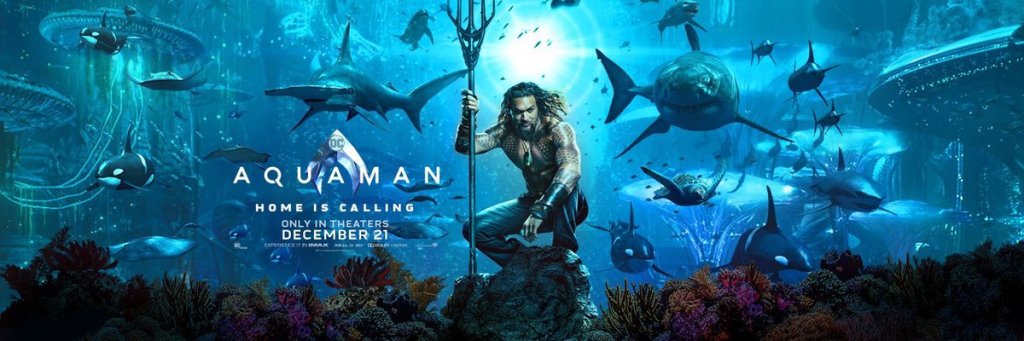
After the complete failure of the “Justice League” (2017), the last entry in the DCEU franchise, in almost every conceivable way it may have appeared that any goodwill built up by the success that was “Wonder Woman” (2017) may have been burnt off, much like many other franchises that have started strong but ended up little more than a wet blanket. So it was with curiosity, as well as a little trepidation that I dipped my toe back into the DCEU with the release of a movie that promised so much in “Aquaman” (2018) with a massive budget, a huge cast, a known as well as successful director as well as a leading man in Jason Momoa who genuinely embraced the role, but who did not shine as a guest player in the two previous DCEU movies he appeared in. What may have been expected with this relatively unknown character would be to lower the budget as well as create a more modest origin story to try and broaden the audience base to attempt to relaunch the DCEU especially as that is what “Wonder Woman” seemed to do. This is almost the exact opposite of what Warner Brothers have done, seemingly doubling down on the budget, increasing the use of CGI, embracing the idea that a coherent story seems to be out of question to be replaced by action set piece after action set piece with little need to bring some kind of logic into the fray, instead like many of the previous DCEU movies to market the movie at the lowest common denominator. However the difference between “Aquaman” and “Justice League” (2017), not forgetting “Batman v Superman: Dawn of Justice” (2016) is that despite the weight of all these issues it does succeed at being an all around audience pleaser if you leave your brain at the door, treating it like a ride rather than an actual movie. As an audience you should know the level of a movie when the opening scene has a man explaining to a woman how to drink a cup of tea, oh dear.
What the filmmakers have decided to do is take elements from ‘Aquaman’s’ comic book origins, splicing them together with some of the DCEU movies that have come before, then adding storylines as well as maguffins from a variety of other successful non-related fantasy as well as generic action movies to produce a bloated two and a half hour reimaging of a comic book movie, that audiences will forget as soon as they exit the cinema. Throughout the running time there is a deep thread of “The Lord of the Rings” (2001-2003), “Jurassic Park” (1993), “The Lost World” (1925), “TRON” (1982), “Blade Runner” (1982), “Warlords of the Deep” (1978) not forgetting a huge H.P. Lovecraft aspect that literally rears its head and so many more that in my mind the writers and director just threw anything they could think of into the movie and did not have a strong commitment to leave anything out. Make no mistake these are not knowing nods or homages to other greats of the past but just ripoffs as well as made bland.
What is surprising is that a director like James Wan, who has had huge success in horror as well as action movies, such as “The Conjuring 1 & 2” (2013-2016), “Furious 7” (2015) and a lot more, could deliver something so big as well so unoriginal which is a missed opportunity to make something that is truly memorable. Not only has Wan changed what the horror movie is with both “Conjuring” movies, but also with “Saw” (2004) a decade earlier. As I said this is not inherently a bad movie, but it lacks any real depth (no pun intended), there are inconsistences throughout, very little is explained and when it is what we see onscreen is generic and nonsensical, like Arthur’s actual origins, what undersea dwellers can breathe on land seems random at best, the third act is such a mess, where are the other heroes in the world, there is little said about the immense loss of life on land as well as under the ocean, do Atlanteans have powers different to each other, there is a hidden ocean in the middle of the planet, please and so much more. Wan’s actual direction is good, although the action is messy especially in the final battle, as is the first fight between Ocean Master and Aquaman, it lacked any real jeopardy as well as there being far too much CGI and master shots, it was just like watching two Mexican jumping beans fighting each other. The storytelling was another aspect that made the narrative feel like we were stuck in molasses, for a movie that is so big and visual there seems to be many characters whose only job was to stand around and explain elements of the story to the audience so we knew what was going on at every step, it seems like that was the only reason for the existence of Mera and Vulko, such a waste of the talents of Willem Dafoe, especially just coming off an Oscar nomination. It seems that if there any problems with the movie the answer to fix it was to throw money at it, which explains why the budget sits at US$200 million as well as not being the way to actually solve real problems.
“Aquaman” begins in 1985 Maine, lighthouse keeper Thomas Curry rescues Atlanna, the princess of the underwater nation of Atlantis, during a storm. They eventually fall in love and have a son named Arthur, who is born with the power to communicate with marine lifeforms. Atlanna is forced to abandon her family and return to Atlantis, entrusting to her loyal advisor Nuidis Vulko the mission of training Arthur. Under Vulko’s guidance, Arthur becomes a skilled warrior but is rejected by the Atlanteans for being a half-breed and ultimately leaves Atlantis behind. From here the story really gets bonkers introducing too many villains as well as subplots involving becoming a King getting an all powerful trident as well as balancing wars between brothers, the surface world and the underwater world not forgetting wars between underwater kingdoms and a giant crab, you have to see it to believe it.
The movie is led by Jason Momoa who does his job well in a part you know he enjoys playing, it’s a role he has been playing for most of his career (not Aquaman, but the archetype) so you would expect him to be good at it by now. Of course he is the party man-child you have come to expect, someone who knows about ancient civilisations while at the same time being a careless thoughtless lout, something that was not present in the comics but has been introduced to show he is really just a ‘bro’ at heart. With big budget movies there is always a deep supporting cast that are all mostly too good for their two dimensional roles, however with the casting of Amber Heard and Patrick Wilson it seems like they have found actors suited to their roles. Willem Dafoe shows up slumming it, with little to do but act as a Gandalf/Obi-Wan character who knows all but seems happy to keep his knowledge mostly to himself. Then there is Nicole Kidman as Atlanna who looks genuinely lost but is a pro and knows how to play up to the camera although really has little to do but show up and spout just enough storyline so we know where Aquaman has to go next. I don’t believe the weakness of the characters is down to the actors but to the script, which is as routine as they get.
“Aquaman” shares its overuse of CGI with all the other DCEU movies in that almost every environment is a construction, most look fine but at times the technology is obviously stretched to breaking, in particular in the third act where things do start to look a little ropey, not only is speed used to disguise this breakdown but it starts to replicate the issues that were faced in “Man of Steel” (2013) with a huge body count and destruction on such a scale that it has a numbing effect, I lost interest for this entire section, not a good thing in a super hero movie. There are few scenes filmed on location and when they do appear they look so out of place especially with the undersea characters that are so much larger than life that I was taken straight out of the movie, again not a good thing. This is also one of the first DCEU movies where the age reversing special effects have been used for a long period of the movie, in Aquaman’s father played by Temuera Morrison, this effect sometimes looks good but for a long period look extremely false with little expression, plastic looking especially when compared to his appearance later in the movie.
I have no doubt that there will be people who will love this movie, it is full of special effects, humour, action and it is after all a super hero movie, so it does tick a lot of boxes for movie goers, especially those that want to feel like they received value for money. The unusual thing is that this is not an inherently bad movie, there are so many more that are worse, some of those exist in the DCEU franchise. On the surface of it “Aquaman” could be considered a good movie, but dig into it and it becomes apparent that it really is a case of the Emperors new clothes, there are inconsistencies throughout as well as tropes that this should be beyond, it is a routine story that offers no real surprises with needless death and violence that is never really commented on. If you want to see how a movie that is part of a franchise, uses a lot of CGI and does have violence but is original, is actually funny, has some heart and looks and sounds great then go and see “Bumblebee” (2018) a far better proposition for all.
Technical Commentar
Warner Home Video brings “Aquaman” to Ultra HD Blu-ray as a two-disc combo pack. The triple-layered UHD100 disc sits comfortably opposite a Region Free, BD50 disc, and both are housed inside a black, eco-cutout case with a glossy slipcover. At startup, viewers are taken to a generic static screen with usual options along the bottom and music playing in the background.
Video Review
“Aquaman” arrives on Ultra HD with a spectacular HEVC H.265 encode that surpasses its Blu-ray counterpart in every way.
“Aquaman” was shot on the Arri Alexa camera system capable of to 3.4K resolution but later mastered to a 2K digital intermediate, overall definition and clarity doesn’t quite make a massive jump over the HD version, largely looking about the same. The upscaled picture enjoys a welcomed uptick throughout, revealing every pore, wrinkle and blemish in the face of the cast, especially during close-ups, and we can still make out the smallest detail in the remarkable production design.
The 4K transfer is however of reference-quality. With enhanced contrast, the video looks significantly brighter and immensely more vivid. On top of the amazing contrast and brightness balance, the 2160p video also arrives with a diverse assortment of colors, affording owners one demo-worthy moment after another. With Dolby Vision HDR, Don Burgess’s cinematography benefits, displaying a better, more improved palette all around. Overall, this an incredibly resplendant 4K presentation sure to impress all viewers.
Audio Review
“Aquaman” has a spectacular Dolby Atmos soundtrack, sure to give the audio system a healthy and exhaustive workout.
Special Features
Supplements are the same as the accompanying Blu-ray and can be enjoyed on both discs.
Going Deep into the World of Aquaman (HD, 20 min): An EPK-like piece with cast & crew interviews on various aspects of the entire production with lots of BTS footage.
Becoming Aquaman (HD, 13 min): Jason Momoa is given a few minutes to talk about the character, his performance, and training for the role, letting fans know more about the actor.
James Wan: World Builder (HD, 8 min): Featurette on the director working with others to build this universe from scratch, the performances and accomplishing the visual effects.
The Dark Depths of Black Manta (HD, 7 min): As the title implies, an interview with Yahya Abdul-Mateen II is on the character, his performance and the technology used.
Aqua Tech (HD, 6 min): Closer look at the innovative CG special effects and the production design work that went into bringing this fantasy world to reality.
Heroines of Atlantis (HD, 6 min): Interviews with stars Amber Heard and Nicole Kidman discussing their respective characters and roles in the plot.
Villainous Training (HD, 6 min): Focus on Patrick Wilson and Abdul-Mateen talking about the extensive physical training they went through in an effort to keep up with Momoa.
Kingdoms of the Seven Seas (HD, 7 min): Dolph Lundgren takes viewers on a tour of the seven distinct undersea territories with special attention given to the future spin-off sequel.
Creating Undersea Creatures (HD, 7 min): As expected by the title, this featurette explores the fantastical underwater creatures, from concept art to CG realization.
Atlantis Warfare (HD, 5 min): More on the VFX and CGI work mixed with the practical choreography and discussion on the Atlantean weapons.
A Match Made in Atlantis (HD, 3 min): Momoa and Heard chat briefly about their friendly chemistry both on screen and off, interspersed with lots of BTS footage.
Scene Study Breakdowns (HD, 11 min): Detailing three key action sequences.
Submarine Attack
Showdown in Sicily
The Trench
Sneak Peek (HD, 3 min): A sneak preview of the upcoming Shazam! film.
Featuring: Hailee Steinfeld, John Cena, Jorge Lendeborg Jr., John Ortiz, Jason Drucker, Pamela Adlon, Dylan O’Brien, Peter Cullen, Angela Bassett and Justin Theroux
Optimus Prime: “Bumblebee, our war rages on. You must protect Earth, and its people.”
Critical Commentary:
This week sees the release of the latest entry into the “Transformers” (2007-present) franchise which has seen some dizzying heights as well as some very real lows, the last installment springs to mind, “Transformers: The Last Knight” (2017), which was the worst performer in terms of box office, the critical reception as well as a personal level for Michael Bay. It may have seemed that Paramount had put a full stop on the franchise with that last entry, for the time being anyway, but now less than two years later we have the first spinoff as well as a mini reboot with one of the more popular and fun characters, “Bumblebee” (2018). Not only that, this is the first time Michael Bay has not been at the helm, it has the smallest budget almost two thirds less than the last outing and it is set in the 1980s which makes this very much a period movie with a female as the lead and the centre of the story that is built around real emotion instead of a war or the possibility of a relationship – my early reaction is that this is not only the second best ‘Transformers’ movie but one of the best studio movies released this year, especially with a running time less than two hours. Not only that but the lead character is written as not some love sick adolescent but a young woman who has more on her mind than finding a boy, but becoming someone who is lost because of a family situation as well as the loss of her father.
I do not think it is any coincidence that “Bumblebee” set in the 1980s has at its heart a homage to one of the biggest movies of all time, definitely the biggest movie of that decade in Steven Spielberg’s “E.T. the Extra-Terrestrial” (1982), not only that it also borrows from another giant robot movie in the form of “The Iron Giant” (1999), making this movie a spiritual sequel of sorts to both which could have been a disaster, but actually makes “Bumblebee” something very special. Not only that but because it also has a woman in the lead who is definite about her aims in life as well as not bowing down to a mans whim or objectivity this signals it being made in a post #meetoo world, she has agency which stays true throughout the movie right to its fantastic conclusion which closes the door on this particular story.
That brings us to the writer and director of this new movie, in Travis Knight and Christina Hodson respectively who are both newish to full length features but at least one has already directed a movie that has become an instant classic and favorite in “Kubo and the Two Strings” (2016) which was nominated for two Academy Awards. There are many elements of Knight’s direction that are to be admired, first and foremost are the CGI effects as well as the design and physics of the transformers themselves, they have never looked so good or easy to follow, which was always a bugbear with the first five movies. The other element is the narrative, which is simple but contains some very serious issues that are all too human as well as revolving around a woman who is dealing with her life even while encountering giant transforming robots. Nothing about Charley is short-changed, her entire arc is dealt with even with her Mother, brother and possible stepfather, and this really is a role that shines right to the end. As I have already mentioned the actual story is very similar to other movies, both classics, what is fantastic is to lay them over the top here to prove that they are timeless stories that are complicated in theme, but still work so well, and here in this new movie they are used expertly with some twists that make “Bumblebee” a very good movie. Finally the last element which is apparent from the opening scenes on Cybertron is the move to a more classic transformer look which is so welcome, the robots all look like they did not only in toy form but also in the animated “Transformers” (1986) movie – a welcome move indeed. This is also gives an extra layer as it feels new, not just some retread from something audiences have seen before, because they haven’t.
The story itself revolves around the Autobots led by Optimus Prime who are preparing to leave their homeworld Cybertron as they are vastly outnumbered by their enemies, the Decepticons, and on the verge of losing the war. The Decepticons ambush them during the evacuation, and Optimus sends young scout B-127 to Earth to set up a base of operations where the Autobots can regroup. B-127 reaches Earth alone in 1987, crash-landing in California during a military training exercise led by Lieutenant Jack Burns, who mistakes him for a hostile invader. Burns and his men chase B-127 into the forest, where he is then ambushed by a Decepticon, who tears out his vocal processors and damages his memory core when B-127 refuses to give up Optimus. B-127 manages to destroy Blitzwing before collapsing of his wounds. Before entering stasis, B-127 scans and transforms into a nearby 1967 VW.
“Bumblebee” is led by the expert performance of Hailee Steinfeld who over the years has proven how good an actor she is in a variety of roles and this performance is no different. With what could have been a trope-laden character in a trope laden movie the performance is spot on, with a challenging performance set in a decade before her time, with co-stars both real and unreal who all have varying degrees of expertise, there is no doubt that Steinfeld is the leader of this movie, the proof is onscreen, it is one of the best knowing performances in a blockbuster this year. Filled out with some excellent performances the two that stand out are Pamela Adlon as Charley’s Mother who is consistent throughout as well as a presence onscreen that matches her co-stars which is something as Adlon is more know on the stand up scene and on television in comedies. Then there is John Cena who is always a physical presence and has over the past few years proven he can be funny alongside proven comedians, here he proves that he can pick projects that others might overlook as well as present a nuanced performance without winking to the audience in a character that viewers might think they know but there is originality there definitely. It is also a treat to see Len Cariou as a key player in that he helps Charley get to her new old car, he plays the curmudgeon expertly but of course has a heart where she requires one to be shown, the right character actor for the right part.
This was not a movie I was excited about or looking forward to, but I was surprised by how much I enjoyed it, the story was great as was the narrative, it was all recognisable from previous installments, in particular the first movie, “Transformers” (2007) with the aspect of someone young looking for their identity as well as a new car that gets more than they bargained for – this felt new with twists that have been introduced to keep the ideas fresh, which they are. Of course there are elements of other movies that have been incorporated but I cannot be upset by that as their inclusion makes this movie all the better as well as proving that there is life in this franchise yet.
As this is a period movie the music plays a massive part in scene setting with some great period pop as well as alternative music especially with the English band ‘The Smiths’ playing a huge part not only as background music but also as a part of the narrative, which is something few non-musicals do. We also hear Duran Duran, Howard Jones, Rick Astley and many more although sometimes they can be a bit on the nose it is all welcome that it is not music we have heard before. There is also a nod to the John Hughes classic, “The Breakfast Club” (1985) which was nice to see as it has aged very well and fits nicely within this movie, although I wonder how a girl who is unable to afford parts for a car would be able to pay for a VHS in 1987.
I cannot recommend this movie more, it is the very definition of a drama based sci-fi film that is well cast with some excellent special effects that sets itself apart from the previous instalments by being about something that is human, not hard to follow goal oriented movies that are boring which is the net result of many of the Transformers movies. If you are unsure about seeing this family movie don’t be it is one of the better studio films released this year.
Technical Commentary:
Paramount Home Entertainment brings Bumblebee to 4K Ultra HD Blu-ray as a two-disc combo pack. The dual-layered UHD66 and Region-Free BD50 discs sit on opposing panels of a black, eco-vortex case with a sleek, lightly-embossed slipcover. At startup, viewers are taken directly to a static screen with the usual selection along the bottom and music playing in the background.
Video Review
“Bumblebee” arrives on Ultra HD in a great HEVC H.265 encode, boasting several welcomed, stylish enhancements over the Blu-ray, making it the better way for enjoying this high-octane ride.
Shot on the Arri Alexa camera system capable of up to 3.4K resolution but later mastered to a 2K digital intermediate, the end result isn’t all that much sharper than the HD version. However, the upscaled transfer arrives with cleaner and better-defined details.
The 4K version has boosted contrast, granted, the UHD video is not significantly brighter, but it’s a tad more vibrant and generally feels more alive. At the same time, black levels are noticeably richer with a velvety luster in the cars and shadows. Delineation is also nicely improved within the deepest, darkest corners of poorly-lit interiors, providing the 1.85:1 image with dimensionality and a beautiful cinematic quality. Enrique Chediak’s stylized cinematography benefits most from the upgrade, offering several demo-worthy moments due to the overall improvement in color. Overall, it’s an impressive, mesmerizing display, making this the preferred way to enjoy the movie.
Audio Review
“Bumblebee” arrives into home theaters with an outstanding Dolby Atmos soundtrack that falls in line with other Transformers titles.
Much of the attention is spread across the on-screen action with various effects heavily employing the surrounds creating an awesome enveloping environment. The greatest impression is the use of the 1980s soundtrack as well as Dario Marianelli’s score, taking full advantage of the extra breathing room and filling the entire soundstage with exceptional clarity and fidelity. Imaging regularly feels broad and spacious with lots of background activity traveling into the top heights, across the front channels and convincingly into the off-screen space while the mid-range exhibits superb distinction and room-penetrating warmth.
Special Features
All of the special features are contained in the accompanying Blu-ray disc.
Bringing Bumblebee to the Big Screen (HD): Featuring cast & crew interviews and lots of BTS footage, the five-part short doc covers various aspects of the production, from story genesis, casting, characters and themes to stage design and a return to Transformers G1.
The Story of Bumblebee (4 min)
The Stars Align (7 min)
Bumblebee Goes Back to G1 (10 min)
Back to the Beetle (6 min)
California Cruisin’ Down Memory Lane (20 min)
Sector 7 Archive (HD): Another featurette broken into two parts focused on the mysterious government agency. The first is a brief intro by John Cena, and the other a motion comic.
Agent Burns: Welcome to Sector 7 (1 min)
Sector 7 Adventures: The Battle at Half Dome (9 min)
Bee Vision: The Transformers Robots of Cybertron (HD, 4 min): A fun, closer examination of the individual robots seen in the opening battle sequence.
Deleted Scenes (HD, 19 min): Nine excised and extended sequences.
Trailer: “Scary Stories to Tell in the Dark” (2019)
“Scary Stories to Tell in the Dark” follows a group of young teens who must solve the mystery surrounding the sudden and macabre deaths in their small town. Zoe Colletti, Austin Abrams, Gabriel Rush, Michael Garza, Dean Norris, Gil Bellows and Lorraine Toussaint co-star.
Scary Stories to Tell in the Dark Teaser Trailer 1 (2019) Movieclips Trailers
“Scary Stories to Tell in the Dark” is directed by Andre Ovredal (“The Autopsy of Jane Doe,” “Trollhunter”) helms the film which is co-written by Daniel and Kevin Hageman along with Guillermo del Toro who provided the screen story.
Written by: Rich Wilkes based on the book “The Dirt: Confessions of the World’s Most Notorious Rock Band”by Neil Strauss, Tommy Lee, Mick Mars, Vince Neil and Nikki Sixx
Directed by: Jeff Tremaine
Featuring: Douglas Booth, Colson Baker, Daniel Webber and Iwan Rheon
Doc McGhee:“I have managed the Scorpions, Bon Jovi, Skid Row, KISS. I had been dragged through the deepest shit with all kinds of mentally ill people. But I have never been through what Mötley Crüe put me through.”
Released this month on the streaming service Netflix is a somewhat fictional movie based around some of the exploits of the hair/metal band Mötley Crüe, based on a book the band wrote that fits the legend they want people to believe, especially their fans. The movie of course features many of their most well known songs from the albums that are featured in “The Dirt” (2019). As far as rock biopics go it follows the kind of story one might expect, although with a four-piece band there is only so much time to go around for each of them so the majority of time is spent with Vince Neil and Nikki Sixx and to a lessor extent Tommy Lee. Even though this is movie contains a fair amount of nudity and coarse language it is surprising how sanitised it is, in fact it is more akin to a certain mockmentary (I will let you guess which one) than anything else which feels like a missed opportunity in terms of examining why the band were so successful especially following the Punk movement and preceding grunge, which is alluded to by a giant Pearl Jam poster briefly glimpsed in one scene. Musical genres can be fairly simple but how these develop, are sustained and ultimately how they fall out of favor is a fascinating one which would have been good to explore, instead we are left with a fairly juvenile narrative.
There can be no surprise that the best films about rock bands or music are either documentaries or are based around fictional subjects (although they are based on real people), there is a tendency when making movies about real people in the music business to either sanitise their past, create false narratives or to ignore peers as either influences or influenced on. There are exceptions of course such as the excellent “Sid and Nancy” (1986), “La Bamba” (1987), “24 Hour Party People” (2002) and “Control” (2007), all of these have at least one element in common, either something or someone special in front of or behind the camera, in some cases both. Unfortunately “The Dirt” ticks all of those negative boxes and more; it lacks any real bite instead opting to act on a thesis that just surviving the years of mental, substance and familial abuse is somehow a badge to be worn proudly, which to a certain extent is true, but not the extent here. Mötley Crüe were a band that got lucky with their main driver Nikki Sixx who was their centre and was responsible for their success through his song writing as well as Mick Mars who was a gifted guitarist and a drummer who had an eye for musical magic and a stage prescence in Tommy Lee. Why they were so successful is more complicated, this is glossed over here.
“The Dirt” (the movie) is one story of how the band Mötley Crüe rose from the streets of Hollywood to the heights of international fame in the 1980s.
“The Dirt” has been directed by Jeff Tremaine who is best known for co-creating and directing the entire “Jackass” oeuvre, he has also directed a forgettable comedy, so here he is attempting to stretch himself as well as create something that he will be able to launch a narrative directing career, unfortunately he has probably picked the wrong production even though I can see it may have been attractive on paper. It must be difficult to produce a movie like “The Dirt” where there have been multiple rock biopics before, especially in a year when something like “Bohemian Rhapsody” (2018) has been released. The challenge is to make yours look, feel and sound original and to his credit Tremaine does what he can first and foremost with the soundtrack, which permeates the narrative, as it should. However whereas “Bohemian Rhapsody” had a very good cast (now an Oscar winner), a relatively large budget and some very good talent behind the camera (I am counting Bryan Singer), “The Dirt” pretty much lacks all of that, which again feels like a missed opportunity. Sure the direvtor attempts to spice things up with scenes of debauchery but it all seems like ‘been there, done that’ before, a little worn out at this stage. In fact there is nothing new in this movie at all, considering what it is trying to reveal, that is a heavy metal band that made some good music as well as were legendary hellions, if anything the movie feels like a narrative version of Tremains own “Jackass”.
In terms of the cast which is made up of a number of young actors who all have very limited onscreen experience and it shows as they all seem a little vapid to be playing men who not only lived hard but were unique among their own peers, one need only look at their real life counterparts that we see in the closing credits, the credibility gap is only increased. In fact the most experienced and possibly best member of the cast is Iwan Rheon who has made a career of playing either closed off charctares or ones with major personality flaws, here in portyaing Mick Mars he does both, in limited onscreen time but stands out even more for it.
“The Dirt” also, of course, uses a number of songs from Mötley Crüe as one would expect which are either heard over the top of scenes or we see them lip synced in recreations of concerts mainly through the 1980s. What I found jarring was the use of the music over scenes before the actual songs were written which was either an error or was intentional, either way it confuses the timelines for fans of the band. Linked to this is the way the movie almost ignores the importance of Mötley Crüe as a band that made albums that were all mostly good and how they changed the sound of the band right up to their biggest success ‘Dr. Feelgood’ (1989) which became difficult for them to not only follow up critically but also was the groups commercial nadir.
The one aspect that is glossed over but is in fact one of the more unique as well as important aspects of the movie is how Nikki Sixx was able to leverage the record company into handing over the publishing rights (i.e. ownership of the Mötley Crüe music) so that he was the one that would benefit from the work carried out to that time, something many artists would kill for. Some explanation as well as pointing out to audiences how unusual this was would have been a benefit to the movie.
I understand why the more colourful stories are relied on to carry this movie, at times they are fun as well as shocking but it comes at the expense of what could have been a decidedly interesting story. I would have loved something a little deeper but if this is how the band wants to see itself and they have the power to do it then that is up to them. However if you want to enjoy and explore a document of the time then I suggest the excellent documentary The Decline of Western Civilization Part II: The Metal Years (1988), that has everything missing from “The Dirt” and more.
‘The Dirt’ Soundtrack:
01. “The Dirt (Est. 1981)” (feat. Machine Gun Kelly) 02. “Red Hot” 03. “On With The Show” 04. “Live Wire” 05. “Merry-Go-Round” 06. “Take Me To The Top” 07. “Piece Of Your Action” 08. “Shout At The Devil” 09. “Looks That Kill” 10. “Too Young To Fall In Love” 11. “Home Sweet Home” 12. “Girls, Girls, Girls” 13. “Same Ol’ Situation (S.O.S.)” 14. “Kickstart My Heart” 15. “Dr. Feelgood” 16. “Ride With The Devil” 17. “Crash And Burn” 18. “Like A Virgin” (Madonna cover)
When Bonnie’s beloved new craft-project-turned-toy, Forky declares himself as ‘trash’ and not a toy, Woody takes it upon himself to show Forky why he should embrace being a toy.
But when Bonnie takes the whole gang on her family’s road trip excursion, Woody ends up on an unexpected detour that includes a reunion with his long-lost friend Bo Peep. After years of being on her own, Bo’s adventurous spirit and life on the road belie her delicate porcelain exterior.
Keanu Reeves, Keegan-Michael Key, Jordan Peele, Christina Hendricks, Ally Maki, and Tony Hale join returning cast members Tim Allen, Tom Hanks, Annie Potts, Patricia Arquette and Joan Cusack in the new film.
The birds embark on a new adventure while King Mudbeard, ruler of the Bad Piggies, plots revenge against them after they devastated his homeland in a battle to reclaim their eggs.
THE ANGRY BIRDS MOVIE 2 Trailer 2 Official (NEW 2019) Animated Movie HD
Jason Sudeikis, Josh Gad, Bill Hader, Danny McBride, and Peter Dinklage will all reprise their roles from the first film and are joined by Leslie Jones, Rachel Bloom, Awkwafina, Sterling K. Brown, Eugenio Derbez, Lil Rel Howery, Dove Cameron, Back Bennett, Zach Woods and Nicki Minaj this time.