• Streaming review: “Cobra Kai Season One” (2018)

    “Cobra Kai Season One” (2018)

    Television

    3-stars

    10 Episodes

    Produced by: Jon Hurwitz, Hayden Schlossberg, and Josh Heald

    Featuring: Ralph Macchio and William Zabka

    Amanda: “What is going on?”

    Anthony: “Dad is about to fight this guy.”

    Daniel: “Amanda, just please go inside. This is between me and Sensei Lawrence.”

    Amanda: “Yeah, you two seem to have this pretty well in hand. Just a normal Saturday afternoon, a couple of grown men about to kick each other into a pool? You know, as much as I would love to watch you and your childhood karate rival duke it out, I kind of don’t want to get any blood on the patio. So what do you say we try to resolve this over some breakfast instead?”

    Daniel: “You want to go inside?”

    Johnny: “I could eat.”

    There is no way that this spiritual sequel to the ‘Karate Kid’ franchise, “Cobra Kai” (2018) should have worked, it was a new entry into a dead. ultimately futile series (especially after the last two entries) being streamed on YouTubeRed (a new service) with original as well as nearing sixty-year-old leads that have both been defined by their roles in the original “Karate Kid” (1984). But what the creators, producers and writers have done, wisely, is to create a story that seems as natural as the original, taking what was so great about the first one, transplanting it to a new time but in the same location with updated references as well as the use of some cunning flashbacks to the original movie, not hiding the ages of the players as well as being able to see the supporting characters of that original, including Noriyuki “Pat” Morita, Elisabeth Shueand Martin Kove. There definitely is a reliance on the original movie, the creators have taken for granted that the audience viewing this will have at least a passing familiarity with the movie, in particular the relationship between Danny and Johnny as well the pivotal role that the now deceased Mr. Miyagi played in both of their lives. In many other cases this sort of storytelling may have been a weakness but this is such a beloved movie that it does not hinder the narrative one iota, or the way in which the audience is informed in regard to characters motivations throughout the ten episodes.

    “Cobra Kai” takes place 34 years after the original film and follows a “down-and-out Johnny Lawrence, who seeks redemption by reopening the infamous Cobra Kai karate dojo, reigniting his rivalry with a now successful Daniel LaRusso, who has been struggling to maintain balance in his life without the guidance of his mentor, Mr. Miyagi. The show is about two men addressing past demons and present frustrations the only way they know how: through karate.”

    Running parallel to the conflict are the story arcs of Lawrence and LaRusso’s students. For instance, there are the students of Cobra Kai: a group of picked-on underdog teenagers who find a camaraderie and self-confidence under Johnny’s tutelage, only to take their mentor’s aggressive philosophy too far as they begin to degenerate into the notorious thuggery of former Sensei Kreese’s era. In contrast, Johnny’s estranged son, Robby Keene, comes under the wing of Daniel, who proves a positive influence to the boy as he begins to seek redemption while learning the philosophies of Mr. Miyagi. Meanwhile, Daniel’s daughter, Samantha, is caught in the middle of these conflicts as she learns who her true friends are and a better path to follow.

    Of course when dealing with a reimagining or a sequel of something that was created over thirty years ago the one word that screams louder than any other is nostalgia. In many cases the word nostalgia can mean to evoke feelings from the past, while in and of itself nostalgia is not negative it can be when linking it to movies and television shows. This is because many reboots and sequels are unimaginative, looking for a quick easy way to make audiences happy, taking shortcuts as well as relying on goodwill from the past. However, in the case of “Cobra Kai” what the creators have done is keep the story and action rooted in the present but with a clear foot in the past. This works extremely well as it reminds us what we loved about “The Karate Kid” but takes the characters moving them forward into the modern day, not relying per se on actions in the past as well see new rivalries from as well as some kind of understanding of past actions.

    It is vital for this show to exude nostalgia, something I am not a fan of as life by its very nature is all about change, everything and everyone changes so as a society we should always be looking to the next hill, embracing newness as well as embracing the change that will be inevitable for us all. One of the key reasons that nostalgia works in “Cobra Kai” is while we are re-introduced to the characters as well as being forced to confront their old age as well as their new situations the flashbacks are reassuring in that we know these people, as well as their motivations, with their new lives in the present we accept them more readily than meeting them cold. The other reason that this new show works is that it reminds us of a time where life was a little slower as well as more recognisable, as opposed to the world we find ourselves in now with upheaval in almost every walk of life – particularly politically, can it be a coincidence that the original was made under a Reagan Republican government?. It is no surprise that the flashbacks are juxtaposed with scenes from the present, as well as diminishing as the new story takes hold, we start to enjoy not only the older characters new journey but also the new characters that in turn have their own arcs – linked to the previous narrative.

    Unlike the original that revolved around the character of Danny this new show mainly takes the point of view of Johnny, his issues, his past and where he is trying to be with the life that he desperately wants, as well as the correcting of the mistakes of his life since the conclusion of “The Karate Kid”. This is one of the strengths of the new show as we see where he came from as a child as well as his non-apologetic character that seems to steam through life despite his attitude or his disdain for so much that would normally be the opposite to the perceived norm. What is interesting is the way in which Johnny’s attitude changes in small ways but enough to make him a sympathetic character, sometimes more so than Danny, which is saying something, especially after the way the original movie ended. As with Johnny we see Danny as a more complicated person than anyone could have imagined, he makes many mistakes with his relationships, more so than he would like but like Johnny he keeps moving ahead no matter what. What is interesting as well is something Johnny does not have, the way in which Danny’s wife makes comments about decisions or situations that he finds himself in, she is an anchor who actually keeps Danny’s worlds stable. Sure Johnny has his star pupil but both of them lack perspective or experience so they seem to continually move through life without any idea of consequences.

    Returning to their iconic 1980s characters are stars Ralph Macchio and William Zabka as Danny and Johnny respectively who both bring very different traits to their characters. Zabka is the one that is the revelation as a multi leveled character who shines in this second go at Johnny, as the lead he knows when to play the comedy as well as the drama, he also has chemistry with everyone he shares a scene with. What is great is to see him playing comedy to the extent he does, he has some of the best lines in the show as well as all the great scenes. Macchio was of course one of the great young actors of the 1980s but in the 1990s and 2000s became more known for playing himself particularly on television. What is great is to see him not in an ironic way as Danny, not only that but as an adult with issues of his own away from Karate – he really has to make some decisions that impact not only himself but his family – Macchio knows this character so well that it is easy to forget that he is a talented actor.

    I loved this show it had everything going for it in terms of drama as well as comedy. It also is not afraid to comment on the current political climate as well as improving on stereotypes that existed in the 1980s when the source material was produced. It also is not afraid to look back while maintaining its narrative firmly in the present, as well as being as original as anything else on television at the moment.

    Episodes:

    1. Ace Degenerate– Thirty four years after losing to Daniel LaRusso in the 1984 All Valley Under-18 Karate Championship, Johnny Lawrence struggles to make a living as a handyman while Daniel runs a successful car dealership chain in the San Fernando Valley.
    2. Strike First– Miguel begins his karate training with Johnny bullying him for his asthma and low self-esteem. Johnny is informed by the health department that the dojo needs a lot of work before he can officially teach students. Meanwhile, Daniel and his wife get into an argument after discovering that Samantha has invited her friends over to their home for a pool party in their absence. While reconciling with his daughter, Daniel finds out that Samantha is romantically interested in a boy called Kyler and offers to invite him to a family dinner.
    3. Esqueleto– Johnny tries to recruit more students to the dojo and Daniel decides to chaperone the school Halloween dance. Miguel’s karate training is stepped up as Johnny urges him to use the Cobra Kai creed of “Strike hard. Strike first. No mercy” in his everyday life and urges him to attend the Halloween dance.
    4. Cobra Kai Never Dies– Robby learns of the new dojo and is embarrassed by his father’s recruitment methods. Meanwhile, a LaRusso Auto billboard is vandalized and evidence leads Daniel to suspect Johnny as the culprit.
    5. Counterbalance– Miguel shows improvement in both his karate skills and his general health. Daniel tries to make a shady deal that could shut down Cobra Kai, but hurts innocent business owners in the process. Samantha’s heavy-set classmate Aisha Robinson joins Cobra Kai despite Johnny’s initial misgivings about training girls.
    6. Quiver– Daniel tries unsuccessfully to persuade Samantha to go back to karate. The footage of Miguel’s fight at school goes viral and brings many new students to the Cobra Kai dojo but Johnny cannot suppress his old ways and bullies them, embarrassing Eli in front of the entire class
    7. All Valley– Johnny uses painful methods to train his new students. Miguel asks Johnny for advice on girls and Johnny manages to give him a boost of confidence which leads to Miguel asking Samantha out on a successful date.
    8. Molting– Despite Daniel’s strong objections, the All Valley Sports Karate Board decides that Cobra Kai is allowed to compete in the All Valley Karate Tournament, so Johnny ups his game with additional training and unconventional methods steals one of the motorcycles, and rides off to confront Daniel.
    9. Different but Same– After Johnny’s car is burned by Daniel’s cousin and his thugs, Johnny confronts Daniel at his home. However, before they come to blows, Amanda quickly defuses the looming fight with an invitation to peacefully discuss the matter over breakfast and they reach an agreement: in addition to Louie being fired, Johnny would receive a trade-in car from their business in compensation.
    10. Mercy– Cobra Kai returns to the annual All Valley Under-18 Karate tournament with a full team led by Miguel. Robby too participates as a fighter unaffiliated with any dojo.
  • Film review: “Bombshell: The Hedy Lamarr Story” (2017)

    “Bombshell: The Hedy Lamarr Story” (2017)

    Documentary

    3-stars

    Running Time: 88 minutes

    Directed by: Alexandra Dean

    Featuring: Hedy Lamarr, Mel Brooks, Diane Kruger and many others

    Hedy Lamarr:

    “People are illogical, unreasonable, and self-centered.
    Love them anyway.

    If you do good, people will accuse you of selfish ulterior motives.
    Do good anyway.

    If you are successful, you will win false friends and true enemies.
    Succeed anyway.

    The good you do today will be forgotten tomorrow.
    Do good anyway.

    Honesty and frankness make you vulnerable.
    Be honest and frank anyway.”

    By Kent M. Keith


    If there is one aspect of Hollywood that stands out above almost anything else it is the talent that comes to work there, as well as the many lives that are forever lost or damaged under the pressures that are faced when success comes too young or even at all. It is a place like nowhere else in the world, dreams are dangled in front of people with little support for those that require it, or for those that are left on the wayside as life passes them by with little thought for the chaos this might bring.  This new documentary “Bombshell: The Hedy Lamarr Story” (2017) is just one of those stories, on the surface not too unique among the many people it could have been based on. There is of course a difference in that the actress it revolves around, Hedy Lamarr, had a side many were not aware of, not a dark side but one that should have been celebrated almost a hundred years ago. As far as biographical documentaries go “Bombshell: The Hedy Lamarr Story” is almost run of the mill, not too spectacular about a woman from pre-World World II Vienna, moving to and making it big in the US, then running afoul off very personal demons as well as drugs and all that entails. However, it is her imagination as well as genius that drives this story of someone that should have been known for far more than a pretty face and talent in front of the camera. Unlike most stories this one has serious repercussions for not only those in power now, but reflects a staggering point of view of not only women, their opportunities, but what they were allowed to accomplish then and of course now.
    The person behind this documentary, as well as the driving force that has designed the narrative is Alexandra Dean, an Emmy Award-winning journalist and producer. Dean has amongst other things has  produced news-magazine documentaries for PBS before becoming a series and documentary producer at Bloomberg television, creating the series “Innovators, Adventures and Pursuits.”

    What writer/director Alexandra Dean has managed to do is paint a portrait of a woman who was boxed in by her times as well as her looks, although she was canny enough to know how to use her beaty for her own benefit, especially in the precarious times she was living in, as well as the future that was to face the Continent where she came from. Dean had the challenge of bringing to the screen a story that would mostly consist of others remembrances of the subject that would all ultimately be here as second-hand witnesses, which would have been a weakness in the story as well as the narrative. Of course that was not to be as the director would be given a treasure trove of audio recordings that the narrative could be built around, as well as background to the entire story. To her credit Dean has managed to bring to life a story that may have been forgotten but now has formed part of the post ‘Me To’ movement and age we occupy at the moment, in this current climate of revelations as well as truth.
    “Bombshell: The Hedy Lamarr Story” follows the life story of Lamarr from her youth as the daughter of assimilated Austrian Jews through her rise to fame, the Nazi onslaught, her departure for the United States, six marriages, her acting career, her landmark invention, decline, and finally her death at the age of 85 in 2000. The focus of the film is on her co-creation with George Antheil of the technology of frequency hopping.

    The film delves into Lamarr’s different, seemingly unhealthy relationships with Louis B. Mayer (the head of Metro-Goldwyn-Mayer Studios), Max Jacobson (Dr. Feelgood), and director Cecil B. DeMille. The film also shows how Hedy Lamarr became so reclusive at the end of her life.

    There is no doubt that the backbone to this documentary are the interviews that were recorded with a reporter over twenty five years ago for an article in a major publication. If these had not existed or been discovered this documentary may not have existed or been very different to what has ended up onscreen. However, what has been produced is something very special as almost every question that is asked is able to be answered by Hedy herself in the archival interviews, at least in some form. The wise decision that has been made in terms of the narrative is to not reveal these interviews too early in the documentary thereby allowing the director to build to them in a more organic way. This means that we can see Hedy in her onscreen persona, as well as through her children, then we get to hear her talk candidly on a wide range of issues which inevitably lead to the revelation of her inventions as well as her enquiring mind – that coupled with the interviews form the basis of this story as well as the relevance that can be drawn to the present day as well the themes of woman in society, their treatment as well the place in which society is governed particularly in the US, but also in other parts of the world.

    Of course if this documentary had been able to include filmed interviews of Hedy it would have been perfect but she died in 2000 so that was never going to be an option for the director. Luckily there are many people to interview who either knew her, knew of her, admired her or can relate to her. So we have Hedy’s son and daughter as well as their children being interviewed about a woman that they knew from a certain perspective letting us in on the life of this misunderstood woman, but of course they like other relatives do not know the full story. The other interviewees spend less time talking about Hedy directly, but the choice to have German actress, Diane Kruger, talk about Hedy in terms of a similar background as well as reading letters Hedy wrote to her mother are excellent choices as she is not only a respected actress but there is some authenticity to her reading as well as giving her own perspective on the actress arriving in Hollywood, and for want of a better term, making it.

    As Hedy was a major star in Hollywood there are literally hundreds of hours of not only movie footage but news footage as well, with some obvious home movie footage. When creating a documentary about a person that lived over a hundred years ago there has to be footage of them to give the audience something to hang their own ideas of who that person was in the time they lived, the only real issue is to decide is what footage to include, as well as what to omit. With someone like Hedy who was extremely beautiful, as well as someone who for a portion of her life relied on her looks there may be a  tendency to use as much of that footage as possible, here the director does that as well. However, what the director does is to slowly move the narrative away from her heyday to the more realistic and unglamorous parts of Hedy’s life exposing her growing older as well as the failed plastic surgeries she endured so that we see the damage done to her face, which is a harsh reality as well as a lesson to be learned by both men and women of all ages and time periods.

    There are some pretty serious realities that are revealed in the documentary, such as Hedy being used by older men because of her looks as well as how she struggled with this, the psychological impacts on her life as a result were not obvious but horrific. We also see that she was never taken seriously as a person, this is directly reflected in variety television shows that interviewed her, talking down to her even though she was an elderly women with experience to offer others. Finally we see her penniless even though others were making huge amounts of money off an invention that she at least had a part in creating. We witness a marginalisation that many women can identify with to this day, something that has been reiterated and talked about in a post-Weinstein world where there have been individuals telling similar stories to Hedy’s that are variations on some very dark themes.

    There are many other aspects to this documentary that I will not spoil as they really are a revelation to be enjoyed, even if they are not all happy, in fact many parts of Hedy’s story are deeply disturbing as well as raising questions about what goes on in male dominated industries, in fact to this very day, one can only imagine.

    “Bombshell: The Hedy Lamarr Story” is an excellent documentary that sheds light on not only a misunderstood woman but also gives insight into how little progress has been made in our modern age. If there is a lesson to be learned it is not to judge people on surface looks or values but to go deeper into what people can offer to a society not matter their background, gender, culture or age. Not only that but it is very entertaining as well, offering glimpses into lives one can only imagine how complicated they were when the World was on a knifes edge.

    “Bombshell: The Hedy Lamarr Story” will screen this year as part of the New Zealand International Film Festival 2018.

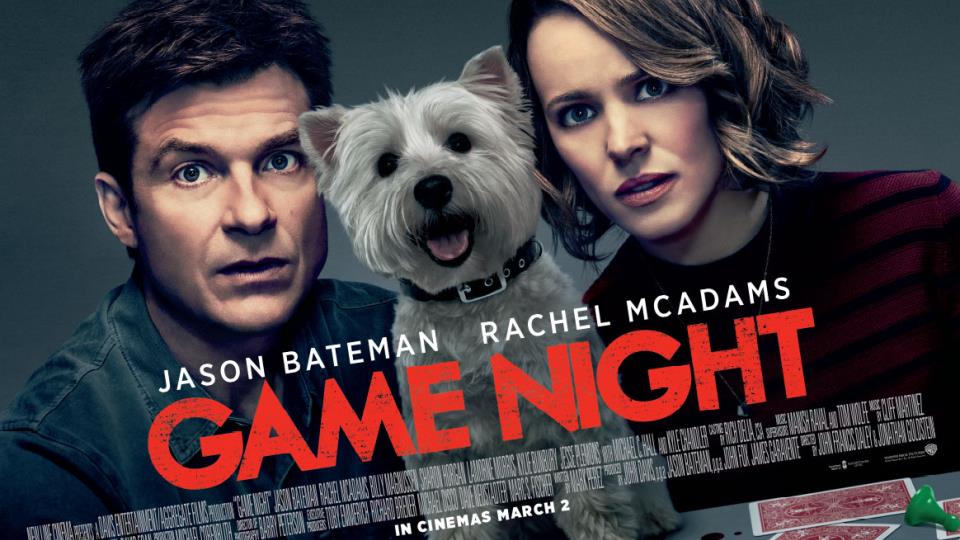
  • Film review: “Game Night” (2018)

    “Game Night” (2018)

    Comedy

    3-stars

    Running Time: 110  minutes

    Written by: Mark Perez

    Directed by: John Francis Daley & Jonathan Goldstein

    Featuring:   Jason Bateman, Rachel McAdams, Billy Magnussen, Sharon Horgan, Lamorne Morris, Kylie Bunbury, Jesse Plemons, Michael C. Hall and Kyle Chandler

    Annie: [as Annie is playing with a fake gun, she quotes Pulp Fiction] “Any of you fucking pricks move, I’m gonna execute every motherfucking last one of you!”

    There is no doubt that last year was a terrible time for the comedy genre, while many of the best laughs in movies came from action and comic book movies, the best example being  the MCU movie “Thor: Ragnarok” (2017) with actors more synonymous with drama than comedy, giving some of the lighter moments of 2017. Now comes the release of one of the better comedies from the past 12 months, a road movie, come caper narrative with a range of well known actors from varying backgrounds, led strongly by both Jason Bateman and surprising to some Oscar nominee Rachel McAdams. “Game Night” (2018) is not only a refreshingly funny movie, but McAdams shines in what must be her first straight comedy role in a long time. McAdams shows some exquisite timing as well as understanding of the material, sharing some natural chemistry with Bateman, they both shine together onscreen. While the narrative as well as some of the plot borrows thematically from many previous movies, such as “The Wizard of Oz” (1939), “After Hours” (1985) or really any other road movie you can think of, it is the separate situations that all the characters find themselves in that sets this apart from many other recent comedies.

    Movies that at their heart are mistaken identity movies are either exceptionally flawed, or are so complex as to be lost in their own contrivance, the classic, possibly greatest is the Hitchcock thriller “North by Northwest” (1959), almost all others are pale imitations. Where “Game Night” (2018) shines is in its embrace of humor as well as the theater of the absurd, which is what makes this movie the comedy of the past twelve months. It believes in its own story which is a real strength that it follows through on for its running time.

    “Game Night” directed by John Francis Daley & Jonathan Goldstein are the pair who are possibly best known for writing the MCU/Sony movie “Spider-Man: Homecoming” (2017) which not only launched that franchise but also gave the duo another shot after the epic misfire that was the reboot, “Vacation” (2016), a bust with critics as well as at the box office. There is no doubt that the two are able screenwriters but their directing credentials were definitely questionable. Directing is all about decision making, the buck stops with that person or persons in charge, with their previous movie it was all bad, but with their new movie they have embraced what makes them unique, run with it and have created what must be an unmitigated success. Believing in their actors as well as the characters they portray is possibly their biggest strength with this movie.

    “Game Night” revolves around competitive gamers Max and Annie who are trying to have a child, but their attempts are unsuccessful due to Max’s stress surrounding his feelings of inadequacy when compared to his vastly more successful, attractive brother Brooks. During Max and Annie’s routine weekend game night with their friends Ryan, and married couple Kevin and Michelle, Brooks shows up and immediately shows Max up by arriving in a Corvette Stingray and sharing an embarrassing childhood story during charades. Annie decides to work together with Max to defeat Brooks at the upcoming game night, which Brooks offers to host at his house.

    When the guests arrive, including Ryan’s new date, Sarah, Brooks says he’s initiated an interactive role-playing mystery game, promising the winner his Stingray. After a while, an actor playing an FBI agent informs them of the narrative of the mystery, only for two masked men to break in and assault him and Brooks. The guests, believing it to be part of the game, idly watch. After Brooks is dragged out of the house, the couples begin to solve the mystery using the clues left behind by the actor.

    On the surface it could be easily overlooked how the casting of this movie adds to the general conceit as well as the story, but to cast some very well known people primarily accepted for their comedy acumen opposite actors who are very well know for their dramatic skills is a very canny decision indeed. So we have Jason Bateman who is close to being a truly great comic actor playing against not only Rachel McAdams, but, Jesse Plemons, Michael C. Hall and Kyle Chandler, who are all gifted film as well as television actors more noted for drama than comedy. What this means for the movie as well as the performances is that all of these characters are imbued with believability not only in their portrayal but the treatment they receive from the rest of the stellar cast. The extreme characters that each of them play are so outlandish, McAdams as a wife wanting a baby, Chandler as the giver the top older brother, Hall as a cruel hit man and Plemons as a weird divorced cop that it is a requirement the cast are not only able to play them straight but the rest of the cast are funny enough to be able to run with their own characters which then paper over any believability issues that may exist within the narrative – of course these are all highly over the top as we as styled characters that are not only tropes but definite comedic archetypes.

    One of the may strengths of “Game Night” like many similar road movies or mistaken identity movies is the short amount of time that it takes place over, which also means that it is self contained to the point that all plot points are explained as well as being tidily wrapped up. The narrative is fairly simple, we are introduced to all the main as well as supporting characters early on, all of their flaws as well as any plot points are all laid out within moments of meeting them, so of course any issues are dealt with so that at the conclusion of the movie we have changed as well as essentially happy characters getting on with their lives. In terms of the actual running time this movie really races along so that there is little time wasted on anything but the essentials within the movie. Something that became commonplace since the early 2000s was the extremely long running time of comedies thanks to producers and directors like Judd Apatow who took it on themselves to over engineer plots as well as narratives, which is acceptable in small doses. However what it led to was an overstuffing that meant that the editing process was ham-fisted leading to unfunny long movies with very little direction. It is pleasing after a number of years to view a movie like “Game Night” that as I have mentioned cracks along at a great pace.

    Another aspect of the movie that is undeniably great is the humor, now I know that this should be a given, a comedy should be funny, but the one thing that 2017 proved was that even though a movie may call itself a comedy, actually being funny is something else entirely. Each of the many comedic moments stem naturally from the honesty of the characters so that they all feel as real as they could in a movie like “Game Night”, which is something many comedies miss, in that they initially go for laughs instead of real moments which this movie is actually full of. There are many examples of the humor, which is not only verbal but very physical as well without having to resort to mindless scenes of action. One early example is Jason Bateman being accidentally shot, then being stitched up by McAdams in one crazy but excellent scene – if you look closely I am almost positive both are laughing, but trying to hide it unsuccessfully to be sure. The movie is full of moments like this, which is refreshing especially in a movie that has such a large cast, everyone at one time or another has their own moment to shine, sometimes more than one – which again in a movie that runs mush less than two hours should be something the directors should be commended for.

    If you want to watch a very funny movie, with some great story beats, a cast full of great dramatic as well as comedic actors, coupled with the fact that most of the family can watch it then “Game Night” is the movie for you. It has genuine laughs, not only that but also offer some lessons without preaching which is something many Hollywood comedies could learn a lot from. Finally it also offers some hint, I hope, as to what John Francis Daley& Jonathan Goldstein could be capable of.

    “Game Night” is out now in cinemas.


  • New Trailer: “A Simple Favour” (2018)

    “A Simple Favour” (2018)

    Error
    This video doesn’t exist

    A SIMPLE FAVOUR, directed by Paul Feig, centres around Stephanie, a mummy vlogger who seeks to uncover the truth behind her best friend Emily’s sudden disappearance from their small town. Stephanie is joined by Emily’s husband Sean in this stylish thriller filled with twists and betrayals, secrets and revelations, love and loyalty, murder and revenge.

    A SIMPLE FAVOUR is directed by Paul Feig and stars Anna Kendrick, Blake Lively, Henry Golding, Andrew Rannells, Linda Cardellini, Jean Smart, and Rupert Friend.

    A SIMPLE FAVOUR releases in New Zealand cinemas on September 20, 2018.

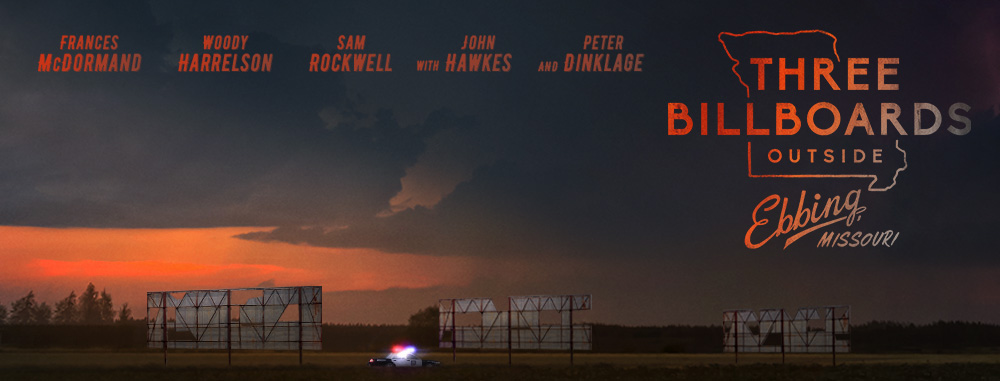
  • DVD/Blu-ray review: “Three Billboards Outside Ebbing, Missouri” (2017)

    “Three Billboards Outside Ebbing, Missouri” (2017)

    Drama

    3-stars

    Written & Directed by: Martin McDonagh

    Featuring: Frances McDormand, Woody Harrelson, Sam Rockwell, John Hawkes and Peter Dinklage

    Willoughby: “I’d do anything to catch the guy who did it, Mrs. Hayes, but when the DNA don’t match no one who’s ever been arrested, and when the DNA don’t match any other crime nationwide, and there wasn’t a single eyewitness from the time she left your house to the time we found her, well… right now there ain’t too much more we could do.” 

    Mildred Hayes: “You could pull blood from every man and boy in this town over the age of 8.” 

    Willoughby: “There’s civil rights laws prevents that, Mrs. Hayes, and what if he was just passing through town?” 

    Mildred Hayes: “Pull blood from every man in the country.” 

    Willoughby: “And what if he was just passing through the country?” 

    Mildred Hayes: “If it was me, I’d start up a database, every male baby was born, stick ’em on it, and as soon as he done something wrong, cross reference it, make 100% certain it was a correct match, then kill him.” 

    Willoughby: “Yeah well, there’s definitely civil rights laws that prevents that.”

    If you do not know who Martin McDonagh is then you are missing out on a rare talent, he made his name as an Irish playwright, then pivoted to become a film writer/director that concentrated his work on unique as well as individual characters that follow their own arcs, not necessarily following the classic Hollywood plots or emotional beats audiences may be used to. With his first feature, the multi Oscar nominated “In Bruges” (2012) McDonagh gave a glimpse into what kind of film he wants to make, to be fair he has stuck to this through to this new film “Three Billboards Outside Ebbing, Missouri” (2017). This is an original story that has deep emotions running through it as well as its characters, they are real and many of these people have to face demons, they either beat them or succumb to them. The relative merits of each decision is left up to the audience which may or may not satisfy them.

    There is no doubt that talented (and well known) actors grab the chance to work with McDonagh as well as espousing his dialogue. In this new film alone there are huge names such as Frances McDormand, Woody Harrelson, Sam Rockwell, John Hawkes and Peter Dinklage who could all be leads in their own projects, but come here to play very different characters than what they have been used to, except maybe Rockwell. As opposed to his other two efforts this new film deals with some weighty issues, as well as having a genuinely unlikeable protagonist at its heart in the character played by lead Frances McDormand.

    The film is built around Mildred Hayes (Frances McDormand) who is a divorced mother still grieving the violent rape and murder of her teenaged daughter Angela, seven months prior. Angry over the lack of progress in the investigation, she rents three abandoned billboards near her home, which in sequence read: “Raped while dying”, “And still no arrests?”, and “How come, Chief Willoughby?”

    The townspeople are upset over the billboards’ content, including Sheriff Bill Willoughby (Woody Harrelson) and officer Jason Dixon (Sam Rockwell). The open secret that Willoughby suffers from terminal pancreatic cancer adds to their disapproval. Mildred and her depressed son Robbie (Lucas Hedges) are harassed and threatened, but she stays firm, to Robbie’s chagrin.

    There are some very real and definite highlights in this film that almost transcend its possible shortcomings. The first factor are the performances by Sam Rockwell, Frances McDormand and Woody Harrelson who all are incredible, as you would expect. The only character that really has any kind of arc that is recognizable is Dixon played by Rockwell who once again proves that he is one of the great character actors of his generation, at times he reminds me of Walter Houston in this mannerisms as well as the ability to fit within almost any film he is cast, as well as his innate ability to steal every scene he appears in. Rockwell gets to play drama, comedy, as well as action and of course show off his singing and dance moves, which now seems like a prerequisite once you cast him. It is a shame that he will not receive awards recognition as there are two other people that will overshadow his own efforts.

    The two from this movie that will be in the awards hunt are lead actress Frances McDormand as well as writer/director Martin McDonagh who both are on top form in what they wanted to accomplish, but therein lies the problems with this film, as well as its subject matter which does not feel new or ground breaking – which is unlike what either of them probable wanted. The film revolves around the rape and murder of a girl as well as the repercussions that occur, in particular to her mother and brother. The issues I had with this movie was that there was just one way for her to deal with this devastation, that was to be a horrible person to everyone, even her own surviving child – she blames everyone else but takes no responsibility for her part, even at the end she transfers blame to a third party. The story is never resolved, in fact nothing is resolved, which means all the characters are stuck, while this is a reflection of real life it is not a completely accurate one, as in real life some people will have a resolution of sorts – the closest thing to resolution is the Woody Harrelson character, but that resolution is definitely not a happy one, just a deeply depressing one.

    The central premise of the film I did enjoy, that is the attempted shaming of a Sheriff into a perceived action that will bring closure to Mildred, thereby pushing her life forward – she figures if she can have someone tangible to blame she will be alright – of course she is wrong as she was a broken person before the incident, she just did not know it, unlike the rest of her family who gave up on her years ago. The same can be said for other characters within the film with the exception of Dixon who finds some sort of recovery at the hands of someone who actually enjoyed his warped perspective but offers advice on how he can be a better person. In her selfish way though Mildred will ruin that for Dixon as she has an effect on him that will push him away from any salvation.

    This is a very good film, made all the better by the dialogue as well as the actors delivering those lines, the threads that run through the plot are interesting but it never really rises above a diversion, that although on the surface seems to be heading somewhere just runs out of story with little regard for the ultimate fate of the family involved, which seems to be a shame as they all deserved much better from McDonagh. I have seen enough films with resolutions that are left up to the audience or are present to make a point, but here my feeling was that it was a little lazy on McDonagh’s part, something that may have worked in an editing suite for me does not work on the big screen. With all that said it is definitely worth seeing, and has to be one of the films of the year.

    “Three Billboards Outside Ebbing, Missouri” is available on DVD & Blu-ray.

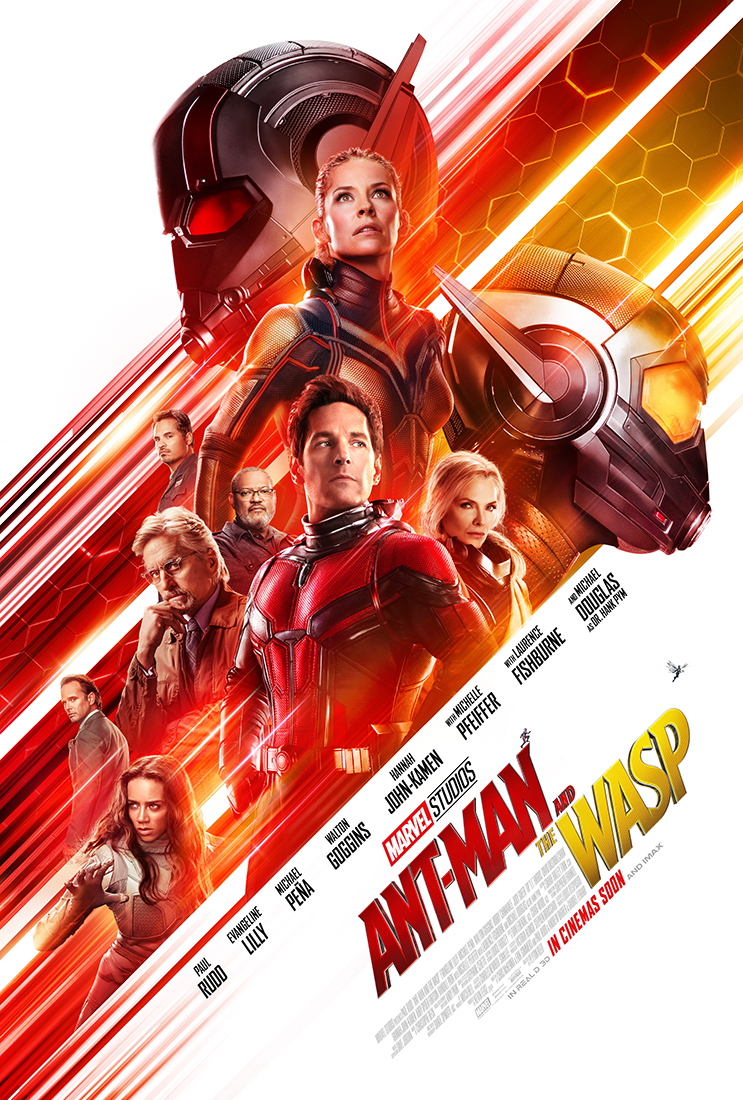
  • New Trailer: “Ant-Man and The Wasp” (2018)

    “Ant-Man and The Wasp” (2018)

    Error
    This video doesn’t exist

    From the Marvel Cinematic Universe comes “Ant-Man and The Wasp,” a new chapter featuring heroes with the astonishing ability to shrink. In the aftermath of “Captain America: Civil War,” Scott Lang grapples with the consequences of his choices as both a Super Hero and a father. As he struggles to rebalance his home life with his responsibilities as Ant-Man, he’s confronted by Hope van Dyne and Dr. Hank Pym with an urgent new mission. Scott must once again put on the suit and learn to fight alongside The Wasp as the team works together to uncover secrets from the past.

    “Ant-Man and The Wasp” is directed by Peyton Reed and stars Paul Rudd, Evangeline Lilly, Michael Pena, Walton Goggins, Bobby Cannavale, Judy Greer, Tip “T.I.” Harris, David Dastmalchian, Hannah John-Kamen, Abby Ryder-Fortson, Randall Park, with Michelle Pfeiffer, with Laurence Fishburne, and Michael Douglas.

    Kevin Feige is producing with Louis D’Esposito, Victoria Alonso, Stephen Broussard, Charles Newirth, and Stan Lee serving as executive producers. Chris McKenna & Erik Sommers, Paul Rudd & Andrew Barrer & Gabriel Ferrari wrote the screenplay. “Ant-Man and The Wasp” hits NZ cinemas on July 5, 2018.

    AMATW_DomPayoff_1Sheet

  • DVD/Blu-ray review: “Coco” (2017)

    “Coco” (2017)

    Animated/Pixar

    5stars_small

    Running Time: 109 minutes

    Written by: Adrian Molina & Matthew Aldrich

    Directed by: Lee Unkrich & Adrian Molina

    Featuring:   Anthony Gonzalez, Gael García Bernal, Benjamin Bratt, Alanna Ubach, Renée Victor, Ana Ofelia Murguía, and Edward James Olmos

    Abuelita: “No music!”

    It may be difficult to believe but it has been over twenty years since the first Pixar full-length film was released, the always great and timeless “Toy Story” (1995). That movie ushered in not only the cutting edge computer animation but also featuring of A-list celebrity voice talent that Pixar would become famous for. “Toy Story” was also a new breed of film that would not talk down to children, taking for granted that the themes, that were sometime adult, or at least relatable to adults, would be understood by the young as well as the old. There have been some ups and downs over the years with the quality and success of Pixar’s output, but their foray into mining material outside of the US has been very successful with “Moana”(2016) set in the Pacific Islands, and now with their Mexican based “Coco”(2017) – which highlights some truly unique and wonderful aspects of Mexican culture.

    In breaking new ground in terms of not only introducing many to the Mexican culture, Pixar has to be seen not to be exploiting another culture for pure profits, so bringing in veteran director Lee Unkrich seems like a no-brainer. Unkrich who shepherded Pixar’s first sequel, “Toy Story 2” (1999), as well as the sequel that made it their only true franchise “Toy Story 3” (2010) is someone who is skilled enough to not only break a story, but to deal with a narrative that is layered, as well as morally complex at the same time making a film fun enough to be enjoyed by children. What is great is that Unkrich has been wise enough to being in an assistant in the form of writer Adrian Molina who lends not only credibility but the skill in advising on the Mexican culture – something Pixar should be applauded for which worked so well in “Moana” – which this film is easily as good as.

    “Coco” is set in Mexico where her musician husband left Imelda Rivera and her daughter, Coco. She banned music in the family and opened a shoemaking family business. In the present, her great-great-grandson, Miguel, now lives with the elderly Coco and their family. He secretly dreams of becoming a musician like Ernesto de la Cruz, a popular actor and singer of Imelda’s generation. One day, Miguel inadvertently damages the photo of Imelda at the center of the family ofrenda and removes it, discovering that her husband (whose face is torn out) was holding Ernesto’s famous guitar.

    Concluding that he is Ernesto’s descendant, Miguel leaves to enter a talent show for the Day of the Dead. He enters Ernesto’s mausoleum and steals his guitar to use in the show, but becomes invisible to everyone in the village plaza. However, he can see and be seen by his skeletal dead relatives who are visiting from the Land of the Dead for the holiday. Taking him there, they realize that Imelda cannot visit as Miguel removed her photo from the ofrenda. Discovering that he is cursed for stealing from the dead, Miguel must return to the Land of the Living before sunrise or he will become one of the dead.

    There are so many places to look at when talking about “Coco”, the first being that this  film looks and sounds incredible – that’s saying something considering other Pixar output. Not only does it pop in terms of the ‘living’ side in Mexico with its brightness as well as the look of the people and their homes, it looks just fantastic especially for a brand new undiscovered new environment. However it is in the ‘death’ side of the film where the look not only becomes unique but is possibly the most colorful and fantastic elements ever witnessed in any animated film ever made. The way in which the afterlife is depicted with its nod to border controls, its bureaucracy with many rules that act against families, incongruous official loopholes that benefit nobody and many more elements that make fun of, as well as comment on border issues, it was only missing some bizarre wall that the hero could have found his way over (or under). There is also the familial element that shines through from the very beginning to the conclusion, that is the treatment of not only the elderly but of those people that have died, who should never be forgotten.

    “Coco” is definitely about family as well as what it means to have family and what it also means to understand where family has come from, the idea of knowing who has come before you, how that shapes a person consciously or not. Miguel goes on a heroes journey becoming aware of where he has come from as well as why his own direct family behaves in certain dogmatic ways that make no sense to him – all he wants to do is  make his own choices not being trapped by others – his journey of discovery not only opens his mind but blasts open preconceptions about his way of like that have knock on effects for his entire community, as well as the country at large. What I found refreshing about this was that through respect of others Miguel is able to ask some basic questions that members of his family have never asked before – if they had have or even followed Miguel’s train of thought then maybe their lives would have been made better. These are basic tools that people could learn not only when they are young but when they get older as well, it might make for better communities if others were honest when asked questions by their relatives as well as others.

    As with many works of art this film speaks on a variety of levels as well as numerous themes. The keeping of secrets that bind people to not only live their lives in shadows but to ask others to not live their lives is a major part of this. The other element is the harm that people do to others to keep their secrets or those that victimize others much like one character does in “Coco”. There is a definite correlation through to the scandal that is raging in the entertainment world now that started with Miramax and Harvey Weinstein where he victimized people through corruption and power relations. As you would expect the corrupter in Coco like Weinstein receives his comeuppance.

    Like “Moana”, “Coco” makes use of voice talent from the region, so we have the excellent Benjamin Bratt and Gael García Bernal in the two adult lead roles not only playing memorable people but in the leads of a global reaching film highlighting their talents as actors as well as creating roles that are as original as anything going. They get to play characters that are multi faceted with motivations that feel real as well as behaving how real people behave given the earthly situations that they face in this film. One thing that recent Pixar films have been doing is breaking new talent in high profile movies, which is no more truer than here, where the main part of Miguel is played by newcomer Anthony Gonzalez who gives the character authentic agency in his search for the truth.

    This is one of Pixar’s best films yet with a great cast as well as some themes revolving around family, friends, life, death and answering a call you may feel at a young age. It also asks us to question what is happening in our lives, the motivations of people as well as our own motivations. This is a lesson that could be learned from people in all walks of life especially those in power. “Coco” also not only asks us to look at a culture we may not know or understand, viewing it from the people of that culture’s perspective. It also does not make judgments about those people as well as not exploiting it or reducing it to stereotypes something others may not have been successful at. I recommend this highly to all especially those with families it might make you ask some questions of your own.

    “Coco” is available on DVD and Blu-ray.

  • DVD/Blu-ray review: “I, Tonya” (2017)

    “I, Tonya” (2017)

    Drama/Comedy

    3-stars

    Written by: Steven Rogers

    Directed by: Craig Gillespie

    Featuring:  Margot Robbie, Sebastian Stan, Julianne Nicholson, Bobby Cannavale, Allison Janney

    Tonya Harding: “I mean, come on! What kind of friggin’ person bashes in their friend’s knee? Who would do that to a friend?”

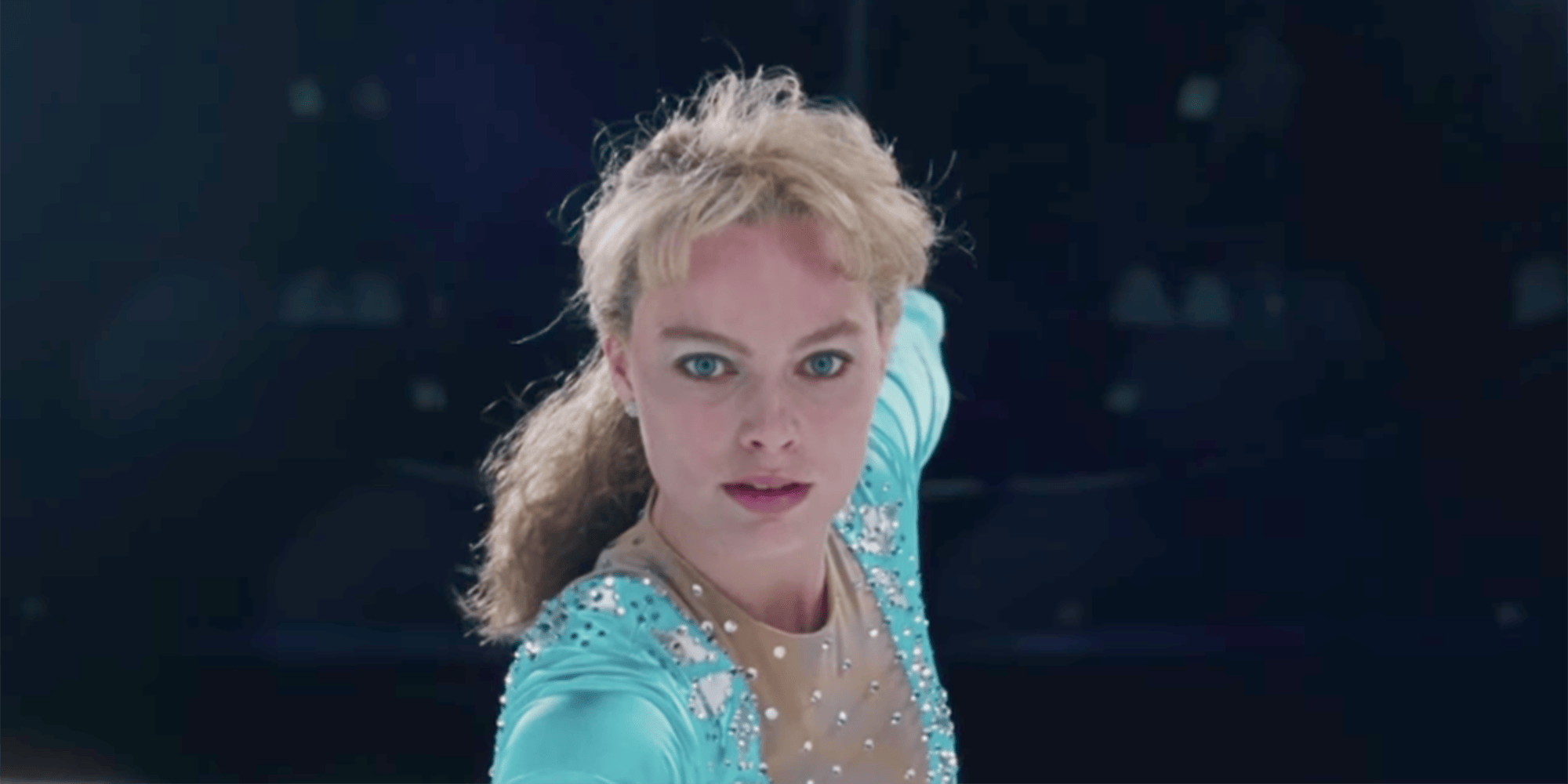
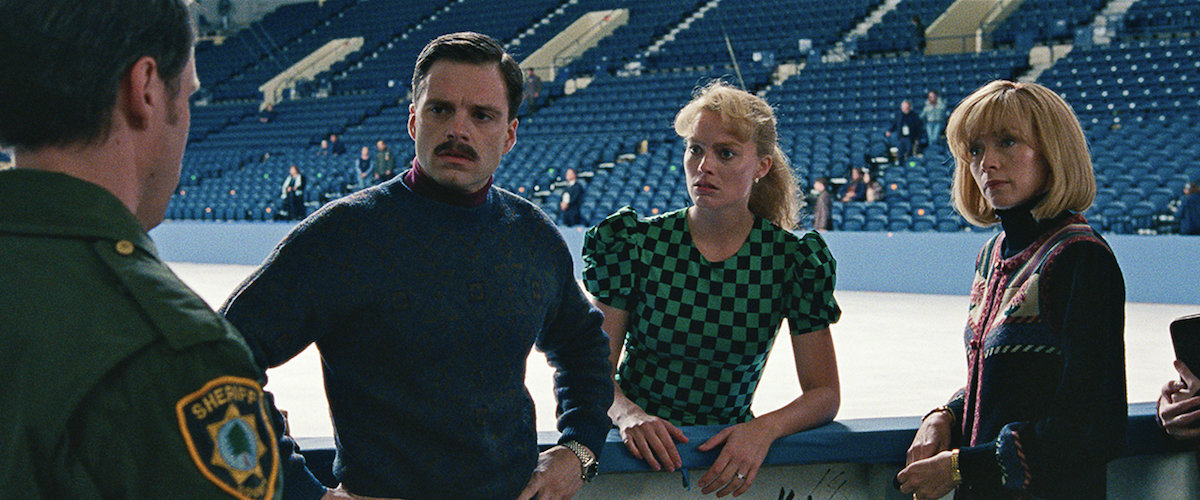
    Towards the end of every year there are multiple films released that are aimed at garnering some awards success as well as, of course, making some impact at the box office, thereby becoming ‘must see’ films. Many of these films are based on real events or use real people as subjects, thereby having something to hook people in with. So we have the new Margot Robbie film “I, Tonya” (2017), that is not only about a real person but is framed by a real event – although as you watch the movie the motivations for that event as well as who was actually involved is called into question. That event was the assault on rival ice skater Nancy Kerrigan. “I, Tonya” might call into question what you know about the subject, Tonya Harding, as well as that incident. Or, it might not, which in the end is the inherent strength and weakness of this film, which leads directly into its motivation as well as actual quality.

    Directed by Australian Craig Gillespie probably best known for the Ryan Gosling starring quirky independent “Lars and the Real Girl” (2007) this new film sees him moving into more serious territory along with star Margot Robbie, who you can see wants to be taken more seriously. This is done by taking a well-known tabloid star (in this case Tonya Harding and her brood), the story she is known for, then giving the narrative a twist and throwing in some other camera tricks, such as the famous ice-skating moves the subject is known for. Gillespie has made a technically good film with a narrative that matches the story, however where it gets lost is that it is knowingly does not take itself seriously while it deals with some pretty real as well as serious issues.

    The film starts in the mid 1970s with a four year-old Tonya whose mother forces her into figure skating by aggressively pursuing a local trainer and using cruelty and negligence to make her daughter skate. As Tonya grows up, she rapidly becomes one of the best figure skaters in the United States after her mother takes her out of school to focus exclusively on her athletic career. I will not go any further into the plot as much of the enjoyment of the film is not knowing portions of what occurs, particularly in the last half of I, Tonya.

    The narrative (as well as the performances) are the unique parts of this film which can be seen in the trailers, so there are no surprises going into it, although it can be quite jarring. “I, Tonya” plays almost everything for laughs which in my mind is a huge error. The narrative plays out with faux interviews featuring all of the principal characters talking directly to the camera as they explain portions of the story, then we see that portion acted out. All of the characters tell their own versions of what is occurring, which means there might be confusion as well as conflicting views of the same events. This is a device used to ratchet up the importance of what is happening as well as reducing the negative elements much like Scorsese did in his often-lambasted movie “The Wolf of Wall Street” (2013). That particular device was a mistake then, and it is a mistake here. It literally lets all of the characters off the hook; this is egregious as they are all not the most positive or honest people around. When elements that are being dealt with are parental physical abuse, partner physical abuse, possible rape as well as physical harm to a third person, this is not something that should be made light of. In saying that, I do believe that there is room for humor in all films, but when you treat some crimes like they are treated here it is not fair to let audiences decide what is played for humor and what is played in reality.

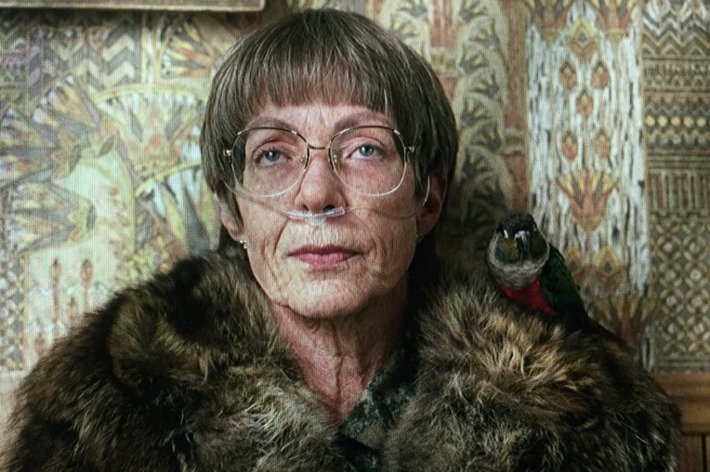
    There is no doubt that there is a real buzz about seeing some of these actors playing outsized roles, led by Margot Robbie as the titular character Tonya, here she goes from adolescence through to her adult life, all the while being interviewed as the character. Robbie is very good; you can see she has done her homework, but to be honest this does not seem a million miles from her characterization of Harley Quinn from the recent “Suicide Squad” (2016). The revelation (although not if you have followed her career) is Allison Janney as Harding’s mother, who for most of the film is in a breathing apparatus as she dishes on the kind of mother she was (horrible), as well as seeing her in re-enacted scenes being nothing short a ‘Mommy Dearest’. There has been early talk of awards consideration but I think that the performance is possibly too good for this film. The rest of the cast is formidable led by Sebastian Stan as Harding’s husband who here really gets to shine in ways not seen in his stint in the Marvel Cinematic Universe. Then there is, Julianne Nicholson as Harding’s long suffering coach, in an understated role, she is just as excellent as Janney but not as flashy. Overall all the actors’ carry out their jobs very well, it is just a shame about that the creative choices made by the director, for me these are insurmountable.

    One of the highlights of the movie is the way in which the difference in the economic situation of Harding and her family are in direct opposition to how the skating world wanted their skaters to appear. This is not only a tragedy for Harding, but speaks to something more in the psyche of sports not only in the US but throughout the world. There are many signs as to why the skating establishment did not only shun Harding but plainly thwarted her efforts to be a star. Harding wore low-rent costumes, did not have a hair and make-up person, skated to popular music as well as heavy metal and her routines were highly charged. In many ways she was a rule breaker in that she could see that appealing to a wider audience meant she would be more successful than other established skaters. If there had have been more of a concentration on that portion of the story then this might have been a better film and explained her actions in the last third of the movie more clearly.

    There are times when a film should be great, it has so much going for it that it should not only live up to expectations but also surpass them. In this case it unfortunately does not, there are very definite bright spots in the film, the performances are all very good as well as the skating work being outstanding which is a main part of the film. In fact the CGI work is not bad considering what is being asked of the special effects team. I do wish the film had moved away from the sensationalist aspect of the narrative so that it did treat all the physical violence a bit more seriously, but regardless of that this is still an entertaining movie on its surface but it will not stay with you much longer after the credits role. This is such a missed opportunity as it could have been an interesting analysis of the media as well as sports and the Olympics. If you want to have some fun with laughs and little depth then this will be for you.

    “I, Tonya” is available now on DVD & Blu-ray.i tonya spry film review 2i tonya spry film review 3i tonya spry film review 4i tonya spry film review 5i tonya spry film review 6

    Error
    This video doesn’t exist
  • DVD/Blu-ray review: “The Shape of Water” (2017)

    “The Shape of Water” (2017)

    Drama/Horror

    images

    Written by: Guillermo del Toro & Vanessa Taylor

    Directed by: Guillermo del Toro

    Featuring: Sally Hawkins, Michael Shannon, Richard Jenkins, Doug Jones, Michael Stuhlbarg, Octavia Spencer

    Giles: [interpreting Elisa] “When he looks at me, he does not know – how – I am incomplete. He sees me… as I am.”

    I am under no illusions as to the talent of Guillermo del Toro, that it is very real, I also know that he loves film, its history, and all that entails. If you have been lucky to hear any of his interviews or commentaries it is obvious when he speaks it is from not only a place of knowledge but of love as well. That love is not limited to his own creations or even his finished films but to all the actors and technicians he works with. It is well known how close he is to Ron Perlman as well as Doug Jones, but also to cinematographer Guillermo Navarro, he is also a lover of the horror and fantasy genre, as well as a fan of the great H.P. Lovecraft, it is no coincidence then that his latest film “The Shape of Water” (2017) is a mix of all these elements, as well as having a specific point of view, that is del Toro’s own, and maybe his most personal.

    Its no secret that de Toro’s nadir was his 2006 foreign language film “Pan’s Labyrinth” (2006), nominated for six Oscars, winning three – pretty good for a foreign language fantasy film set during the war. It also appeared on many top ten lists for the year, as well as being a modest worldwide box office success. Since then though it has been a mixed bag, he has written/directed three more films that have disappointed at the box office as well as not being reviewed overly well. The problem is that everyone wants to like his movies, but he has been the victim of some bad luck with projects disappearing on him, the two biggest and most well known being his version of The Hobbit, and his dream project, an adaption of Lovecraft’s ‘At the Mountains of Madness’. Now I think he has directed his best film since “Pan’s Labyrinth”, in fact it might be his most accomplished project of his career, it couldn’t have come at a better time for him, the genre or the world.

    The film is based around Elisa Esposito who was rendered mute by a neck injury she had sustained as an infant, and communicates using sign language. Living alone in an apartment above a movie theater, she works as a janitor at a secret government laboratory in Baltimore during the Cold War in the early 1960s. Her two closest friends are her next-door neighbor Giles, who is an artist and closeted gay man, and Zelda, an African-American co-worker who also serves as her interpreter at work.

    The facility receives a creature in a tank, which has been captured from a South American river by Colonel Richard Strickland. Curious, Elisa discovers that the creature is a humanoid amphibian. She begins visiting the creature in secret and the two form a close bond.

    One of the strengths of genre movies in general is that they can serve as metaphors for just about anything a writer or director wants to say, not only that, but it can act as a metaphor for whatever the audience wants to take from a genre movie as well. In that this new film from del Toro is a complete success, it not only tackles a variety of subjects and themes but there is enough ambiguity that it can mean a lot to a great many, as well as acting as a very good monster movie.

    Of course one of the central elements of this film (that is a physical element) can be found in its title, that of water, which features heavily within the movie, as well as referring to many themes of the plot, it is a place of freedom as well as a prison for the two main characters. There are also allusions to the barriers that exist with water, that being land, which are always in opposition, something that we find as the movie moves forward, it is even referred to when we see a spy eating a meal, ‘Surf and Turf’. We also see many water receptacles within the movie from pots boiling water to a pool within a metal construction, both at points transparent so you can see what is contained within – not only that the eggs end up in the larger ‘pot’ with the creature – maybe we all end up in the same place whether an egg or a creature from a lagoon. Water acts as a medium for not only joy but sexual gratification, on the earliest scenes which is repeated is Elisa masturbating in her bath, later we see her make love to the creature in water, in fact in the very same tub.

    There is also a theme of living a life of quiet desperation, which many of the characters within this movie are actively doing, living routine lives with little deviation as well as denying who they truly are. The main character of Elisa is stuck in a dead end job cleaning, looking after her gay neighbor Giles as well as listening to her friend at work Zelda – it is not until the monster enters her life that she not only sees a new way to live but to be free with something that sees her for what she is and not what she lacks. The same thing can be said of Giles who actually lives closeted from himself (and others) as well as the world until he realizes that he has someone who sees him for who he really is. The entire film is filled with these people who are being told to act one way but in fact their own true selves are in opposition to that very fact.

    The fact that “The Shape of Water” (2017) takes place in the late early 1960s is of most importance as well as all the production design that is inherent in that time period. There are so many political as well as social aspects of the time that resonate within this film that are echoed in the lives we live today. This was a cold war period that imbued society with extreme paranoia as well as hatred and callousness for anyone that was different to dominant hegemonic forces that still exists for the most part today. The best example that takes place outside of the fantasy environment is when Giles is in his pie shop and is shunned because of his sexuality, at the same time an African American couple are told to leave – really is there any more blatant example of the behavior of a white man in the US in this time period (some would argue any time period). The entire movie is part homage to the Sci-Fi and Horror genres that permeated US movies in the 1950s and 1960s to the extent that del Toro really is standing on the shoulders of giants with this film, I am sure he would agree. One need not look to far past “The Creature from the Black Lagoon” (1954) to see just superficial similarities. We also see some technological affectations such as mass consumption, television as well with the kind of content that is being broadcast, the idea of media as well as the nascent mix of government and the military, the new science that would permeate our culture now, the power of film as well its firm place in US society, religion and so much more that as audiences we will unpack long after we leave the cinemas. This is a movie that demands to be seen more than once, there is so much going on that it is almost too much, but the ending pulls us through.

    How great this film is, as well as how successful it is comes down to Del Toro as well as the cast he has assembled. This cast is led by the magical Sally Hawkins who as Elisa doesn’t utter a word but has so much to say to all those in her life, as well as finding a scene partner in Doug Jones’ creature who also offers no dialogue. One of the great things del Toro has done is to make Elisa mute and not deaf, which he may have been tempting, but it works so much better as it to is a metaphor for almost everyone in the film. Everyone in this movie is powerless to some extent so are as mute as the two main characters, the difference being that in the end they put their lack of voice into action that frees not only them but their friends as well – once you witness this it is a sight to see. The supporting cast is full of previous Oscar nominees Michael Shannon, Richard Jenkins as well as Oscar winner Octavia Spencer who all are so original in their parts nothing seems derivative even if you have seen similar charters previously, they are worth watching just for their own moments no matter how brief.

    This is Guillermo del Toro’s most accomplished film yet, it is masterfully directed with a killer script as well as this he deploys all other aspects of his arsenal expertly, that is the art direction, costuming and most impressively the score by Alexandre Desplat that is sublime in its simplicity but lends to the narrative in ways that are not manipulative as well as almost being so light you may have been forgiven for not noticing it. One of the aspects of del Toro’s direction was the way he movies the camera, lots of fluid (that is not a pun) movements with low panning shots as well as push ins that feel like you are moving in a liquid, much like our prisoner – there is of course a lot of shots involving water which are persistent and in line with many of the themes and meanings of the film.

    There is so much more to say about this film, it is the gift that keeps on giving, if you love genre films as well as love stories or just think del Toro is one of the best film makers around then this is for you. It says so much about us as human beings, how we treat each other as well as this planet the in short you should see this as soon as possible. There is another nice homage in the two movies playing in the cinemas below the apartments in which our heroes live – it is worth checking out.

    “The Shape of Water” is out now on DVD & Blu-ray

  • DVD review: “The Florida Project” (2017)

    “The Florida Project” (2017)

    Drama

    images

    Written by: Sean Baker and Chris Bergoch

    Directed by:  Sean Baker

    Featuring: Willem Dafoe, Brooklynn Prince, Bria Vinaite, Valeria Cotto, Christopher Rivera, and Caleb Landry Jones

    Moonee: [to tourist at ice-cream stand] Excuse me. Could you give us some change, please? The doctor said we have asthma and we have to eat ice-cream right away.

    A few times a year there are low budget films that break through becoming must see events normally through their exposure on the festival circuits, then becoming award favorites through critics groups as well as industry organizations. This new film from Sean Baker, “The Florida Project” (2017), is one of those. Whilst this movie is not as adlibbed or fly on the wall as it may come across, it follows in a long tradition of such films a Larry Clarks “Kids” (1995), although nowhere near as hard hitting or eye opening, mainly due to its subject matter as well as its point of view, that being very young  children that drive the narrative.

    Writer/director Sean Baker follows up his award winning shot on an iPhone “Tangerine” (2015) with this movie that follows young children who are living in a motel, their adventures are documented here, much like an updated film version of Twain’s ‘Tom Sawyer’, mixed with a new generation that the author could not have imagined. This tale illustrates that no matter the age we live in, ‘kids will kids’ is an adage without a time period. The other timeless conceit is that mothers always can see through their children no matter what they have done, that is truth will out. Baker has created a real plot with twists that might shock some, showing how families are living in a post crisis, ante Trump world where survival of the fittest is not restricted to the wild.

    “The Florida Project” is set during the summer, six-year-old Moonee lives with her young mother Halley in the Magic Castle, a motel in Kissimmee, Florida. She spends most of her day unsupervised with her motel-resident friends Scooty and Dicky, engaging in mischief at other motels, mooching from tourists at nearby businesses, and other misbehavior. They invite Jancey, a new child living at the Futureland motel next-door, to hang out with them. Following an incident, Dicky’s father restricts him from hanging out with them, and the family eventually relocates to New Orleans, which upsets the group.

    Halley is unemployable and engages in various petty schemes to make ends meet, such as hawking perfume to tourists in the parking lots of hotels, and asking Scooty’s mother Ashley to steal food for them from the diner where she works; a local church also brings foodstuffs for the many impoverished motel residents. Motel manager Bobby reluctantly but chronically plays the role of parent to both Halley and Moonee, and other residents, as part of his responsibility to manage the facility.

    Apart from the characters and their own struggles that are portrayed in the film, the location of the movie is of utmost importance, as it directly shows the massive gap between the haves and the have not’s. It also illustrates the dichotomy between a place that is so full of wealth as well as joy that the difference in the location of this movie could not be further apart. The fact the location of the Magic Castle is so close to Disneyworld is no mistake or accident as it underlines the difficulty that Halley has as a young single mother attempting to just survive with her daughter, paying for the basics such as shelter and food. One has to wonder what the point of living in the self-proclaimed greatest democracy on Earth, or the best country in the world is if you have people living like they are in this movie. The mere fact that some government agencies get involved with fat cops that are clueless to what is actually going on just underlines the importance of a movie like this in this decade.

    Baker has seemingly effortlessly (which of course is not true) created one of the best social commentaries of recent times along with Andrea Arnold’s “American Honey” (2016), which had similar themes as well as using very similar aspects of film-making. They are both using either non-professional main actors as well as a cinéma vérité approach to their method of filmmaking and real locations making use of external locales which only add to the authenticity of what both movies are trying to get across to their audiences. This is a snapshot of life in parts of the US that are devoid of a social safety net that actually look after children as well as parents when their lives are genuinely off the rails – even if they do not realize it, which is what we are witnessing with Halley and Moonee who do not have a realization as to what kind of trouble they are in. No matter how bad it looks for them they do not have a concept that they have not yet hit bottom, they are not even close.

    This film would not have even been possible without the performances of newcomers (and one has to say discoveries) Brooklynn Prince as Moonee and Bria Vinaite as her mother, Halley. Both share the screen together and apart for a majority of the movie with nary a false note onscreen which considering their experience is incredible. They both inhabit their roles like any other experienced actor might, again what is amazing about his is their inexperience in this situation. They are ably supported by a variety of performers, none more so than the beacon that is the great Willem Dafoe who here shows why he is not only a great character actor but someone who can create a subtle performance that in no way steals from the story or from his leading ladies. Dafoe though acts as a sort of father as well as grandfather figure in the girls life, he is of course inhabiting traits we recognize as fatherly such as being strong, protective, being a disciplinarian as well as offering advice that is good as well as ignored by his wayward ‘daughters’. Through all of this as well as right to the end Dafoe paints a picture of caring but of also knowing he has no actual responsibility to the girls and true to his character he does not rescue them as much as we might want him to.

    Films like “The Florida Project” are a rare thing indeed and should be cherished by all, it is immediately entertaining which is something that should not be underestimated as to how important this is in the kind of themes that are involved in terms of what the writer and director are illustrating to an audience. Not only that but the performances are all excellent with praise for the two leads undeniable. The direction is excellent, there are structured as well as adlibbed scenes that fit in perfectly, my favorite is an obvious on the spot creation where the camera is in font of Moonee’s face where she is eating breakfast, giving a running commentary where she slips in and out of focus, a long segment where she has to be on for the entire scene, showing what kind of actress we are seeing – possibly for the first time in the entire run time of the movie.

    This is definitely one of the films of 2017, we are lucky it is in cinemas now as it is made for the big screen with some of the shots too beautiful to miss in juxtaposition to the personal story it is telling in this modern age of the rich and the poor.

    “The Florida Project” is available now on DVD.

  • DVD/Blu-ray review: “Downsizing” (2017)

    “Downsizing” (2017)

    Sci-Fi/Drama

    3-stars

    Written by: Alexander Payne & Jim Taylor

    Directed by: Alexander Payne

    Featuring: Matt Damon, Christoph Waltz, Hong Chau, Kristen Wiig

    Paul Safranek: “I’ll see you on the other side.”

    High concept movies either work, become talking points which can reflect societal, political or economic norms either challenging them or reinforcing ideas or concepts that may exist now, or in times to come. One of the more successful in recent times was the excellent Spike Jonze “Her” (2013) featuring Joachim Phoenix falling in love with the voice on his smartphone – it even garnered an Oscar for its screenplay. Now we have the release of “Downsizing” (2017) which is a quasi sci-fi mixed with drama as well as some black comedy thrown in which all work to greater and lesser extents throughout its two hour plus running time. To be fair I think it was supposed to be a satire but that element has been squeezed out as other genre elements have taken over. There is no doubt that some of the ideas, as well as the central premise of the film seem interesting, but it becomes bland as well as dull quite quickly. Also a note to the director if you have to advertise that your movie is a satire then that element has not worked.

    The film is co-written and directed by Alexander Payne who has been seen at points in his career as a smart, quirky and in touch director with his first few films like “Election” (1999), “About Schmidt” (2002) and “Sideways” (2004), but lost his way with the underwhelming “The Descendants” (2011), then got back on track with the excellent Bruce Dern starring “Nebraska” (2013). To say that he has a type of movie is an understatement, so it was with delight that he seemed to be entering the aforementioned Spike Jonze territory of “Downsizing”, unfortunately he does not have the inventiveness as well as general strangeness of that director to pull this off effectively.

    “Downsizing” is set in a possible near future, Paul and Audrey Safranek are a married couple in Omaha with financial issues. At a high-school reunion, they encounter Dave and Carol Johnson who have “downsized,” an irreversible process invented 15 years earlier that involves shrinking humans to a height of five inches. While the inventors advocate that downsizing is environmentally friendly through the reduction of waste, Dave argues its benefits extend far beyond that, and improve one’s life through the increase in value of their money.

    Exploring the possibilities of downsizing, Paul and Audrey agree to undergo the process and move to Leisureland, one of the most popular communities for small individuals. After undergoing downsizing, Paul receives a call from Audrey, saying that she was unable to go through the procedure and opting out at the last minute, and will be leaving him.

    The film moves on from here much like Payne’s previous film “About Schmidt” where it becomes a kind of road movie where characters are introduced then dispensed with which means that there is an excuse to cast cameos such as Christoph Waltz, Laura Dern, Jason Sudekis, Neil Patrick Harris, Niecy Nash, Udo Kier, Margo Martindale, Joaquim de Almeida and James Van Der Beek, just to name the obvious ones. Cameos in movies can be great, but when it is on overload like it is here it removes you from a narrative that is tenuous in the first place, which is a shame because it subtracts from the enjoyment of a film like this. There is precedent though for a movie where the main character starts in a place where he seems to be hard done by, then meanders through a plot that sees him continually being stripped of who he thought he was to become someone he can actually stand. Again that is something that happens to the Jack Nicholson character in “About Schmidt”. The problem is that I get the feeling that Payne wanted to remake that film, but this film lacks a real spark like Nicholson to keep an audience involved for long.

    That brings me to the main character of Paul played by Matt Damon who takes his role seriously, looking like he might be playing his age, not glamming it up for the cameras at all. I never doubt the sincerity of any of Damon’s performances, he has worked with some of the best modern directors of our time, yet I somehow feel something lacking in his performances which is a shame, as I have grown up with him as a constant in my movie watching life. Damon appears in almost every scene so this is his movie, he has two main co-stars in his wife Audrey played by Kristen Wiig and later Ngoc Lan Tran played by Hong Chau.

    In terms of both female characters to say they lend anything to the film would be a compliment. Both of these paper thin characters are shrill harpies, or actively depressing, as well as acting as either a way to hurt Paul or to nag him to get him motivated to move to his next scene. I am not really sure what Payne was thinking when he wrote these two, but I wouldn’t be happy owning up to writing them, or frankly playing them. To say that either of them have any agency at all would be giving them too much credit, his wife tags along with him until she doesn’t, as does Ngoc from the time she meets him and he (spoiler) breaks her leg. What is worse for me is the way the Chinese character of Ngoc is portrayed as an almost caricature of a real person, her accent is something you would expect to hear from a movie made in the 1980s, all racial stereotyping as well a mystery as to her actual motivation. In saying that I did not really understand Ngoc’s purpose within the narrative as well as her contribution to the plot, Paul could have arrived at all the same points without her character existing, so there is that.

    There is little to say about Payne’s style, as it seems to be swallowed up in this film, with a budget above US$60 million it is his largest to date. It would be nice to have seen it on the screen but the miniaturization aspect of the movie, while it plays a large part, goes mostly unnoticed which is a shame as the movie is long on process but short on spectacle.

    As for the themes of the film, they are a little lost, with mixed messages throughout the plot. I get that the idea was to save the planet through shrinking people so that they needed less as well as wasted less (in actual size that is) but as smaller people their appetite for consumption gets even larger with the increase in wealth as well as the decrease in costs for all goods and services. Not only that but the idea of getting smaller is not the magic bullet it seems, as there is a massive lower class of people who for one reason or another live in slums which is in stark contrast to the advertising that normal people are given to entice them into downsizing. All these points are not made with any real subtly, we are told everything, not shown, which again makes for a rather staid film, I really expect more from Payne.

    Ultimately once you get past the special effects as well as the gimmick that is the heart of this movie it really does drag, as it meanders from one scene to another without any real passion behind it. I was expecting so much more than what was here; it really is a case that this is less than the sum of its many small parts. If you enjoy the actors you might get a thrill out of them combined with the high concept but you may feel drained at the end of it.

    “Downsizing” is out now on DVD & Blu-ray.

  • DVD/Blu-ray review: “The Post” (2017)

    “The Post” (2017)

    Drama

    images

    Written by: Liz Hannah & Josh Singer

    Directed by: Steven Spielberg

    Featuring:  Meryl Streep, Tom Hanks, Sarah Paulson, Bob Odenkirk, Tracy Letts, Bradley Whitford, Bruce Greenwood, Carrie Coon, and Matthew Rhys

    Ben Bradlee: The way they lied, those days have to be over.

    This should have been a year of protest, where Hollywood made comments on the past two years of US politics as well as the social injustice that has taken on new meaning, not only in America, but on the global stage. All I can say is that I am happy Steven Spielberg decided not only to say something, but to make one of the best movies of 2017, with only a few days to spare. After a lackluster 2016 with the poorly received as well as poorly adapted “The BFG” (2016) it was inevitable that Spielberg would bounce back, he has with this period piece, featuring a stunning story set over a short amount of time to remind us that we have been here before, not only that but we will probably be here again. The US is not the only country divided in the world, there seems to be many movements worldwide where people are split down the middle, one need only look at recent election results. This film reminds us of a time in US history where the divide was the norm, not the exception – in these Trumpian times “The Post” (2017) tells us the fifth estate was a beacon to be listened to, trusted as well as truly ground breaking – not the hollow institution that is touted from the White House with their own version of the ‘truth’.

    There is no doubt that Steven Spielberg is not only the most successful producer/director of all time, with numerous box office hits dating back to the 1970s, but he is also one of the few people who is able to choose his projects as well as get any movie green lit on a whim. He has nothing left to prove to anyone which gives him the freedom to make movies like the completely underrated and prescient “Bridge of Spies” (2015) and now “The Post”. Of course because Spielberg seems to have alwas been at the top of his game he is able to work with longtime collaborators Tom Hanks, Janusz Kaminski, John Williams, Michael Kahn and so many more, all legendary figures in their own right. He is also able to corral new co-workers, Meryl Streep stands out here in her first Spielberg film.

    “The Post” tells the story of a cover-up that spanned four U.S. Presidents pushed the country’s first female newspaper publisher, Kay Graham (Streep) of The Washington Post, and its hard-driving editor, Ben Bradlee (Hanks), to join an unprecedented battle between journalist and government in publishing the Pentagon Papers.

    In terms of the world in which we live right now “The Post” may be producer/director Steven Spielberg’s most important film to date, which is saying something, not only about his own oeuvre but also the very real themes and subjects this film deals with. Not only does the film address one of the central tenants of US life, that is the freedom of the press, it also attempts to show how one of the branches of government can and does try to suppress it, to protect itself from truths that could tear the country apart. Of course this has repercussions right through to the present where we have a President who is potentially infringing on the rights of the media as well as calling out legitimate organization as fake news, something his supporters are behind and of course his many detractors against. All these years on from the period of the film, the two newspapers, ‘The Washington Post’ as well as ‘The New York Times’ are two of the largest papers Trump has an issue with as they go after him in a huge ways, not seen since those years of the Nixon White House. The unfortunate aspect of todays media world is that with the rise of Social Media newspapers have been depowered as well as devalued to a point where many people view feeds rather than purchase and read actual newspapers. We are witnessing a slow erosion of what it is to be in the media as well as how these outlets operate in a society where officials can make up facts and lie to their constituents without any repercussions or harm to their standing in society – something that Nixon attempted to do but failed as there were a few reporters asking some basic questions, not receiving answers that added up.

    There is of course a flipside to this pro-media film, which is not pretty, and exists because of a shift towards news organizations serving a profit motive in the pursuit of ratings as well as clicks, likes and shares. The larger question is where was this fourth estate in 2015 and 2016 when Trump was making his move to the Presidency as well as showing exactly what kind of person he is, and has lived up to be – a clueless sexist racist slob who has no real right to run a country or even be listened to. The answer of course is that the media not only pandered to him but gave him time to make a case for the Presidency while not warning the public to the real threat to the people (and the world) that would eventually vote him to the highest seat of power in the US. This is something that this film does not address even though it could through the lens of history by juxtaposing the power of the media as well as its possible blindness to issues that were not treated with any real seriousness.

    “The Post” also is quick to point out through its highlighting of how huge the ‘Pentagon Papers’ were, that in fact it was the Wiki-leaks of its day, not only that but the resources that the newspapers had was limited, there were no computers to crunch data or sort through thousands of pages to bring information to the front – this was an analogue time when digital technology would have been a price above rubies. There is also a strong thread of public responsibility versus government secrets that is talked about as well as illustrated through the use of lawyers. It also follows the common sense that leads to the release of the papers, knowing the impact this will have on the public at large as well as what it will mean for the government – this to is something that news organizations had to deal with when Assange leaked information to the world – these are somber thoughts knowing how close information is guarded by those in power.

    Of course apart from the meanings behind the film there are some great performances, as you would expect from Meryl Streep and Tom Hanks, the leads, marking the first time they have appeared onscreen together. At this stage of both actors careers there is no real need to say how great or talented they are, both inhabit their roles interpreting these real life characters who were both much larger than life, as well as having more to them than what is seen onscreen. What is needed to be said however is that as an audience we have seen these two so much that there is the possibility that we take their skill as two of the greatest film actors as granted – we expect the excellence we see so it is diminished somewhat which is a fault of the audience and not the performers. Whilst Streep has attracted yet another Oscar nomination this year, it is Hanks who has not received a nomination since “Cast Away” (2000) which is a crime, one that needs to be rectified in the coming years. As you would expect the film is rounded out with multiple character actors who give voice to the secondary players in this tumultuous story, in particular it is Bob Odenkirk, Tracy Letts, Bradley Whitford and Bruce Greenwood who stand out with roles that seem to have been made for them, they are all fantastic.

    Spielberg as director, with cinematographer Janusz Kaminski and John Williams utilizing score keep this film as low key as possible, there are no tricks to move attention from actors or the story which are the real stars of this film. All three have worked together for so long that they know what is required in a true story, they have made multiple films based on real events or people, they know that anything that is done is carried out in the name of their subjects. The strength that they have is that the motivation to forgo plot for something that might be more palatable is not needed as the champion this film has in Spielberg means profit is not the only motive unlike other true stories – something I think news organizations could take a cue from.

    The past few months has seen the release of many excellent films, all tackling very real as well as very different subjects, some have been contemporary, whilst others have been period pieces, there have been many different themes explored, maybe more so than any other time in the history of Hollywood which speaks to the creative as well as producers who help fund these movies. What is most interesting is that “The Post” is a film that is about white men within the corridors of power with one exception that is the character of Kay Graham who as the lone woman in this story is operating in and around men who are not used to deferring to powerful women – in this the film really enters its stride in particular with the scenes between Graham and Robert McNamara who spar about the truth rarely seen on film.

    If you have not yet seen “The Post” you are missing out on a great film with equally great performances, it is not too be missed and in any other year would be odds on favorite for a clutch if awards, but sadly I think these will mostly go elsewhere – it best hope it Streep, but that could be said in any year. This is a must see and may make you look at the media in a different light.

    “The Post” is out now on DVD & Blu-ray.

  • DVD/Blu-ray review: “Darkest Hour” (2017)

    “Darkest Hour”(2017)

    Drama

    images

    Written by: Anthony McCarten

    Directed by: Joe Wright

    Featuring: Gary Oldman, Ben Mendelsohn, Kristin Scott Thomas, Lily James, Stephen Dillane, and Ronald Pickup

    Winston Churchill: “You can not reason with a Tiger when your head is in its mouth.”

    There should be no mistake made, this film is dominated by two elements, they are, Gary Oldmans career defining performance as well as the character he plays, that of Winston Churchill. Sure there are other actors involved and a writer and a director as well as a myriad amount of other people who you can tell all have done great work, but it is all, and I mean all behind Oldman’s interpretation of a true life one of kind man who has to be the person of the twentieth century. I am not reducing this film to just one performance although it does sound like I am, but this film exists in two shadows, one the aforementioned performance and two (which is bad timing) the Christopher Nolan directed “Dunkirk” (2017) which covers similar ground that here takes up about a third of the “Darkest Hour” (2017).

    “Darkest Hour” is directed by Joe Wright who is no stranger to Dunkirk, he had a major section of his Oscar nominated “Atonement” (2007) devoted to the event, so it takes some bravery to return to it. Wright who has made some very good movies is coming off a major disappointment with the big budget bomb that was “Pan” (2015), so it is good to see him directing this film that is about a specific time in recent English history, that is so good, with many great performances as well as some excellent flourishes in his directing style. Wright has made all the right moves here, he has made a personal story about a major event in history, as well as giving Churchill the center stage and getting out of Oldman’s way who gives a master class in movie acting.

    “Darkest Hour” begins in May 1940 Britain and France are allies against Nazi Germany. Before the German invasions of Belgium and the Netherlands, the Opposition Labour Party in Parliament demands the resignation of British Prime Minister Neville Chamberlain for being too weak to protect national security. Chamberlain tells Conservative Party advisors that he wants Edward Wood, 1st Earl of Halifax, as his successor, but Halifax does not yet want to become prime minister. Chamberlain must choose the only other man whom other parties will support: Winston Churchill.

    Although he was right about the danger from Adolf Hitler, Churchill has a poor reputation from the Gallipoli Campaign and supporting Edward VIII during the Abdication Crisis. Parliament dislikes the new prime minister’s first speech promising “Blood, toil, tears, and sweat”, and Churchill refuses to negotiate for peace. He believes that the Germans are untrustworthy, but the French call him delusional for not admitting that the Allies are losing the Battle of France. Halifax and Chamberlain agree, and want to use Italian Ambassador Giuseppe Bastianini as intermediary to negotiate with Germany. The British Expeditionary Force is trapped at Dunkirk and Calais.

    The construction of this film is competent and professional; Wright has constructed a narrative that boldly moves forward through not only some very real drama but historic events that if the audience is not aware of what happened they will have an idea once the film is finished. Coming to make this film there must have been questions about how long the period that is covered should be, how to tell what has happened before we are seeing Churchill as well as how much information should be supplied once the film has actually ended. The reasons for these questions is that there is no need to bombard the audience with too much information otherwise they will not only get lost, lose interest but will feel they are being lectured to – this movie has enough dialogue already. Instead we are explained certain plot points as they happen, so when the decision to make Churchill Prime Minister occurs we are being told not only the ramifications but also the ramifications behind the decision and all that happens after – it is a wise move to keep us informed and entertained. This is a tool used through the film, as well as moving the camera as much as possible to give the feeling of action and not just showing many old men sitting around talking.

    The other device that is used is that of the audience substitute, the typist played by Lily James, it is no coincidence for example the she starts her first day with Winston as the film starts, as she is introduced to Churchill so are we. From there we see the story from two levels one from a micro level with the typist and then from a macro level with Winston himself, it is a useful tool to show two sides to a story as well as again making it easy for an audience to gain access to a story that may be foreign to them.

    As I have said this film is built around the central performance of Gary Oldman who has been a presence in film both in the US as well as Europe and of course the UK. Oldman has been delivering great performance on television, the stage and in film, he is one of the greatest living actors, he has nothing to prove to anyone, he is one of the ultimate acting professionals working today – yet he has only ever been nominated for one Oscar, that was in 2011 for the great remake of “Tinker, Tailor, Soldier, Spy” (2011) – he lost then, should have won but now it looks that will be corrected with this defining performance. Of course Oldman looks the part because of some excellent make-up and wardrobe which goes along way to the feel of the character, but it is Oldman who inhabits the spirit of Churchill like few before him, he captures a spirit as well as an interpretation that feels like you are viewing a real period. Other greats that have portayed Churchill like Brian Cox, Michael Gambon, Timothy Spall and Brendan Gleeson have the look and size correct but they always feel like they are attempting to mimic the great man but here Oldman seems to differ with a naturalness not seen to date, by me anyway.

    Something director Joe Wright has done to complement Oldman’s lead performance is to drop in talented character actors, that once Oldman enters a scene know this is his film and drop back, none of them steal scenes, wisely, as who could steal the floor from Churchill in full flight. So we have the marvelously underrated, back in the UK finally, Kristin Scott Thomas as Clementine his wife, Ben Mendelsohn as King George VI, Stephen Dillane as Halifax and Lily James as his typist all fitting in very well, knowing their roles, taking them seriously but all in service to Oldman.

    In terms of style this feels like a claustrophobic film with many scenes in the war rooms that Churchill and his cohorts inhabited, there is the sense that the world is closing in on him, as he has to fight a war on multiple fronts with many enemies at home and abroad. In fact the most closed in scene is one of fiction where Winston travels on the tube to talk to his public, the brightest scene is towards the end of the film where he makes the decision to fight the Germans and gets the support of his wider cabinet – it is a scene that refreshes him and us to the point that we recognize some of the dialogue that follows in Parliament later on.

    What I really enjoyed about this film was that it was unashamedly built around one character and one performance that works so well. It is also about a real Nationalism that works, it is about defending a country and countries against a real threat, and a person that could bring others together to work towards a common real goal where the outcome was the fate of millions of real people. I wonder how many leaders today would destroy others to defeat a perceived threat, without a real analysis of what would be a real outcome of twenty first century total war.

    I can wholeheartedly recommend this film as a mostly accurate account of the first month of Churchill’s rise to power, as well the obstacles he had to face to start the turn the would eventually lead to World War II as well as the victory that would take place because of his leadership. If you enjoy dramas where the central performance will I have no doubt be Oscar winning then this is for you.

    “Darkest Hour” (2017) is out now on DVD and Blu-ray.

  • Film review: “Hostiles” (2017)

    “Hostiles” (2017)

    Western/Drama

    5stars_small

    Running Time: 133 minutes

    Written & Directed by: Scott Cooper

    Featuring:  Christian Bale, Rosamund Pike, Wes Studi, Ben Foster, Stephen Lang, Jesse Plemons, Rory Cochrane, Adam Beach, Q’orianka Kilcher, and Timothée Chalamet

    Rosalie Quaid: “Sometimes I envy the finality of death. The certainty. And I have to drive those thoughts away when I wake.”

    I absolutely love Westerns; the genre keeps giving audiences some incredible films with a massive amount of sub genres that always produce some real classics every few years. Writer/Director Scott Cooper has made his, I eagerly hope his first, Western, “Hostiles” (2017) with a few of his recent collaborators, producing a work of pure cinema that all great Westerns can do which is to transcend its own genre to make comments on modern life. This film also  clearly illustrates what it means to be a man as well as how people treat each other in extreme situations; most of all it is about doing what is right even when this is against your own best interests. What is interesting is that Coopers previous films, the Oscar winning “Crazy Heart” (2011), the underrated “Out of the Furnace” (2013) and what should have been an Oscar contender the mixed “Black Mass” (2015) all have aspects that clearly feature in the Western genre. My feeling after viewing “Hostiles” was that this is the film that Cooper has been warming up to, based on a book that he has adapted, he is in total control of his environs, with a hand picked cast that help lend some authenticity to the film. Over the past ten to fifteen years “Hostiles” stands out as a very special film indeed.

    Like all great films “Hostiles” invites not only a deeper reading of its story as well as its narrative but calls for more than one viewing, as just on the surface it has some fantastic actors giving great performances. Part of the narrative that was refreshing was not to have flashbacks or explanations about characters pasts but to just experience their turmoil or damage as in real life there are very little backstories given by people. Cooper has managed to, like many Westerns before, create a simple story that is loaded with meaning about very different people thrown together to become allies if not more. The director has shown in previous films that he is not afraid to create real pauses and space to give environments and characters time to make impacts on the plot as well their compatriots. What this means is that at times while it may seem slow, it is reflecting what life could possibly have been like, it brings to my mind a film much like “Unforgiven” (1992) in particular with its central protagonist as a three dimensional character.

    “Hostiles” is set in 1892, where Captain Joseph Blocker is called to the office of Colonel Abraham Biggs, who informs him of his final orders before retirement, direct from the President: escort dying Cheyenne war chief Yellow Hawk, along with his family, back to their tribal lands in Montana. Under threat of a court-martial if he refused to follow the orders, he reluctantly accepts, despite his history with the chief, who was responsible for the death of several of his friends and comrades.

    “Hostiles” would not work without the actors Cooper has cast as they all, top to bottom one hundred percent believably authentic, with an Oscar winner as well as Oscar nominees and some of the best character actors working in film today. The other aspect is that all of these actors are great film actors, they are all acutely aware of the placement of the camera as well as how to play to that camera, so that they recognize when subtlety is required which is definitely something needed in a film like this one. At the top of the call sheet is an actor who is as adept at playing leads as he his playing real characters, Christian Bale, an Oscar winner who here has to play a man full of hatred, loathing but loyal to his men, also as someone who with his arc has to recognize that hatred is a self consuming emotion that takes effort and strength but festers effecting not only oneself but all those around you. While not the most well-known or flashiest actor in this film, Rory Cochrane is almost the result of Bale’s character. Cochrane plays Master Sgt. Thomas Metz a self confessed murderer of men, woman and children all Indians, a fact that has taken its toll on the soldier who attempts to, throughout his journey convince Bale’s Blocker of this, but seemingly fails – he does have the final say though.

    Through their journey the group encounter Rosamund Pike’s Rosalie Quaid who has had her own horrendous encounter with a war party as we as eventually some white fur traders, she comes to know her ‘enemy’ as well as someone who is one of the bravest people in this film, Pike plays her to perfection, reminding me of similarities to her character in the Oscar nominated “Gone Girl” (2014). There are multiple other actors featured such as Ben Foster, Stephen Lang, Jesse Plemons, Timothée Chalamet and Peter Mullan who all know their jobs which they all perform well in support of the main characters, all give believable performances of soldiers at very different stages and levels of their respective careers, each also have their own opinions of their mission as well their commanding officer which offers an element of realism to the film.

    One of the highlights of the film is the casting as well as the treatment of the Native Americans with the standouts being Wes Studi, Adam Beach and Q’orianka Kilcher who all speak in their native tongue as well as being the beating heart of “Hostiles”.  As the real co-lead of the film, Studi who has been acting for decades maintains his stoicism despite his sickness as well as the fact he is a prisoner who is the face of the hate that all the soldiers feel. He also acts as a victim of the encroaching push into the frontier as well as cost that has been paid by all of his people when the white men arrived to take their natural resources. In fact the encroachment that his people face as well as the cancer he is dying of could be considered to be a metaphor for the issues that are facing the environment we now find ourselves in. The fact that the Earth is facing serious environmental issues after the mass consumerism as well as rampant industrialism that has occurred ever since the Western expansionism is seen in Chief Yellow Hawk’s sickness. It is always a treat to see Adam Beach onscreen especially playing his ethnicity which is not something seen all the time, not that this is a negative but Beach is such a gifted gentle actor it is great to see him in a film that is special. Finally there is Q’orianka Kilcher who famously appeared in “The New World” (2005) as Pocahontas here is has grown into an expressive actress that adds to the heft of Studi’s character, we feel his pain as she feels hers as a daughter who is trapped metaphorically as well as literally.

    “Hostiles” looks as you would expect lush with a variety of locations, weather and time, shot by Masanobu Takayanagi who has worked on almost all of Coopers films as well as a few that have specialized in the outdoors, “The Grey” (2012) comes to mind here has to be proud of his efforts. There is the feeling of both grand scale as well as intimacy, the world in which this film is set is a varied one and so we have night vistas of camps against fires as well as rain, shifting to wide open plains in Montana that reflect the open road Chief Yellow Hawk is ultimately going to take, even in the closing moments with the choices that Blocker has to make all in clear slow motion with the oncoming technological revolution that will soon overcome all of society.

    “Hostiles” is at once a grand looking and feeling film but with many intimate moments that illustrate how lives can be reduced to singular events or emotions but it is ultimately up to individuals to decide whether they will be shaped by events or they will make something of their lot, through very simple emotional decisions. It seems clear that this film is saying that moving forward not getting caught in a game of blame is the healthy way to go.

  • New trailer: “Smallfoot” (2018)

    “Smallfoot” (2018)

    Error
    This video doesn’t exist

    An animated adventure for all ages, with original music and an all-star cast, “Smallfoot” turns the Bigfoot legend upside down when a bright young Yeti finds something he thought didn’t exist—a human. News of this “smallfoot” throws the simple Yeti community into an uproar over what else might be out there in the big world beyond their snowy village, in an all new story about friendship, courage and the joy of discovery.

    SMALLFOOT is directed by Karey Kirkpatrick and stars Channing Tatum as the Yeti, Migo, and James Corden as the Smallfoot, Percy. Also starring are Zendaya, Common, LeBron James, Gina Rodriguez, Danny DeVito, Yara Shahidi, Ely Henry, and Jimmy Tatro.

    SMALLFOOT releases in New Zealand cinemas on September 27, 2018.

    smallfoot spry film review 2

  • Streaming review: “The Alienist” (2018)

    “The Alienist” (2018)

    Drama/Mystery/Television

    images

    10 Episodes

    Produced by: E. Max Frye, Steve Golin, Rosalie Swedlin, Chris Symes, Jakob Verbruggen, Cary Joji Fukunaga, Eric Roth

    Featuring: Daniel Brühl, Luke Evans, Brian Geraghty, Robert Ray Wisdom, Douglas Smith, Matthew Shear, Q’orianka Kilcher, Matt Lintz, Dakota Fanning

    Kreizler[to Sara]: I’ve made my life’s work the study of the human mind. And now my own mind deceives me. I have cause to hate God for what he did to her, and yet I find myself believing in him, humbled by his awful mystery.

    The psychological thriller drama, “The Alienist”, set in 1896, where a series of gruesome murders of boy prostitutes has gripped New York City, frightening many of the populace in this burgeoning city. Newly appointed police commissioner Teddy Roosevelt calls upon Dr. Laszlo Kreizler, a criminal psychologist and newspaper illustrator John Moore to conduct the investigation in secret. Joining them in the probe is Sara Howard, the headstrong secretary to the police commissioner, as well as the Jewish twin brothers Marcus and Lucius Isaacson, both detective sergeants in the NYPD.


    This is the first adaption of a Caleb Carr novel, probably his most well-known as well as a book that predates the way in which narratives are structured within the confines of the television crime genre that has become not only commonplace but immensely popular among the masses. The novel was unique as is the adaption of confining it’s time to 1896 New York featuring some of the real people that helped usher in what is now known as the modern New York. We have as central figures Theodore Roosevelt and J. P. Morgan whose names are still talked about to this day. Of course, we all know Roosevelt who became the 26thPresident of the US, what many may not know was that he served in the office of what would become known as then Police Commissioner of New York. This central conceit of real events and people taking place in a real city that are narratively held together by a serial killer is one of the shows greatest strengths, but at times can actually become a flaw, if you know some of the history it will become clear that some characters while being placed in jeopardy are quite safe, historically speaking. For me as a fan of the novel this did not affect by enjoyment at all, this is a television show I have been looking forward to for years, it did not disappoint, in fact it was a refreshing look back in time not only in its location but its meaning that joins psychoanalysis, film, woman’s rights, politics, the coalescence of the public works as well as the evolution of the police force.

    As with most good adaptations this television series has the very feel of New York and the Five Points that exist today – the five points was famously the setting for Martin Scorsese’s “Gangs of New York” (2002). There is no doubt that this looks like an authentic piece of history and maintains some of the ideas that Carr had in his mind when writing the book, that is that the people of 1896 are not so different to the people of 2018. The population are making their own very unique ways through life, there is crime as well as extreme gaps in wealth, the burgeoning class system is on parade as is the extreme social differences between men and woman, whites and all other cultures and many more issues that are alive today in one form or another. Of course, these issues are not new, having been covered in all forms of media since time immemorial, which may seem to make “The Alienist” a little behind the times, which it is. However, what is unique about it is the fact that these issues segue in and out of the main narrative, which is primarliy the hunt for a gruesome killer, by a team of seemingly disparate individuals who through different means and methods strive to save not only lives but their beloved city as well. They are under pressure from all quarters of the city, of course those same quarters seem intent on covering up very dirty laundry.

    This is a big budgeted adaptation, it would have to be to have the correct set decorators, locations, costuming and of course the right actors to play period roles believably as well as the chemistry to believe that some have known each other for years. The cast is led by three main characters, that of Daniel Brühl as Alienist Dr. Laszlo Kreizler, Luke Evans as John Moore an artist and Dakota Fanning as Sara Howard a woman of modernity if ever there was one. All three of these accomplished actors have led major motion pictures on their own so it is a coup to have them in what is a transplanted gothic horror. They share the screen together and apart, if this show is based around any one person it is Brühl’s Doctor who is not only a practitioner of a new science, psychanalysis, but also like his patients hides much beneath the surface. These secrets are slowly revealed, or at least brought to the surface as each new episode not only reveals something about him, but the killer as well as New York itself. In somewhat subordinate roles Luke Evans is drawn into a cat and mouse game not only with the killer but his costars as well, he pursues both Kreizler and Sara in different ways for very different reasons, like his co-stars he is stuck in a kind of limbo that he is able to break out of because of the killer they are all in pursuit of. However, the character that breaks against the grain of the age is most definitely Sara who is a kind of woman out of time, not only is she forward thinking, she also takes control at every moment she is able to in a competent way, Sara is possibly the most honestly assured character in the show, besides the killer of course. In fact, Sara teaches the men in her life lessons about not only being men, but also how she should be treated as well as listened to, Sara is a catalyst within the narrative of the show at points driving it forward, not being dissuaded by failure or setbacks like the men are at almost every turn – she is possibly the bravest individual within the show as well Kreizler and John Moore are battling their own demons both physical and mental.

    On the production side of things “The Alienist” has some exciting producers, writers and directors that really lend the show some impressive credentials indeed. Initially brought on as the main director, the creator of the first season of the excellent HBO “True Detective” (2016 – present) Cary Fukunaga is aboard as producer and writer, his stamp is all over the series, it really is a loss not to have him at the helm of all the episodes. Master filmmaker and storyteller John Sayles is also present as writer, once again Sayles is an experienced writer/director who not only understands character but in harnessing those characters into the narrative of the show feeding back into the plot. There are of course other writers, directors and producers involved, they are all listed above and below, doing sterling work. The main reason that this show holds together in look, feel, thematic explorations and a myriad of other accomplishments is because from one episode to another all of the parts come together not straying or deviating from an obvious plan, so that these ten episodes play very well together, which means it is eminently bingeable, so be warned, once you begin this journey it will be very hard to pause it even for a short time.

    What is interesting is that in the viewing of this taught adaptation the viewer will easily recognize aspects of “The Alienist” that are at once familiar, in that there are tropes associated with the genre that fit into a modern narrative vernacular. There are many examples of this throughout the plot, one of the biggest involves the real character of Teddy Roosevelt who is attempting to bring the police department into some sort of regimented force that will serve the public good, he is unable to investigate directly so has two outsiders, the aforementioned Kreizler, John Moore and to a lesser extent Sara. Roosevelt is also fighting against the upper class that exists and is protected by politicians and others which he too is trying to break free of. In fact, Roosevelt is a maverick of sorts who is incorruptible much like the men and women who are investigating the killings, he actually recognizes what they are doing and so lets them have their way with their investigation. One of the great aspects of the show is Roosevelt who at the outset may seem like a shill for the powerful, but quickly you understand that he may be the purest person in the entire story, what you see with his character is what you get – it is no wonder he was able to become the US President. There are many other examples of tropes, one of the more obvious and fun is a section where Kreizler and Moore pay a visit to a prison where a child rapist is being held, this is straight from Thomas Harris’ novel (later to be filmed) ‘The Silence of the Lambs’ where Clarice Starling visits Hannibal for some possible lead in her own serial killer case – coincidentally it was filmed as a gothic prison eerily similar to the one in “The Alienist”.

    This is not to say that the recognition of tropes is a negative aspect of this production, it is true that normally if a story is filled with recognizable tropes it has a knock-on effect to the production, it can mean for example that the series lacks originality or there are short cuts being taken for a variety of reasons – sometimes budgetary or sometimes to create narrative links. However, in the case of “The Alienist” these tropes, in my mind, are presented so blatantly for very different narrative reasons. What we are witnessing is a proposed first time for these tropes, in a setting over a hundred years ago with the possibility of the first serial killer, as well as the littering of mentally ill individuals scattered throughout New York high as well as low society. The types of people that litter these tropes are truly original as we see how easy it was to get away with crimes for long periods of times. We also see something that I always enjoy the ‘murder board’ that is common place in nearly all crime shows, here though we are seeing the map of madness through the eyes of a psychiatrist – it is excellent storytelling.

    One of the more interesting aspects of this show as well as the novel upon which it is based is the incorporation of psychology and the new technology of cinema, something that has been replicated in other stories. It is no coincidence that psychoanalysis was born around the same time as moving pictures, specifically the mass audience experience that we witness early in the series. There is no doubt a link between psychoanalysis, dreams and the way in which Freud worked, asking his patients to describe scenes of their past or what was occurring in their dreams. In fact, in “The Alienist” we see Moore at the movies then later have a particularly personal dream – a coincidence? There is no such thing.

    On the surface “The Alienist” may seem like a run of the mill period piece about a serial killer but it is so much more than that, I would go so far as to say it is one of the best new television series this year. It has many themes that are not only as relevant today as they were a hundred years ago but it combines it without preaching or sermonizing in ways some current television could learn from. The expert way in which narrative devices are balanced with tension as well as the incorporation of new and interesting characters is so well done it will remind you of a series like “True Detective”, the first series that is. In my opinion this is a must watch, seek it out immediately.

    Episode One: “The Boy on the Bridge”

    Written by: Hossein Amini/Directed by: Jakob Verbruggen

    The discovery of the mutilated corpse of a boy prostitute leads a psychologist to link the crime to the earlier murder of a child patient. He enlists the help of his college friend, a newspaper illustrator, to gather evidence in the case.

    Episode Two: “A Fruitful Partnership”

    Written by: Hossein Amini and E. Max Frye/Directed by: Jakob Verbruggen

    Kreizler looks for other victims of the serial killer. Sara brings in a vital clue. Kreizler treats Sara, Moore, Marcus and Lucius to Delmonico’s and informs them they will be teaming up to catch the killer.

    Episode Three: “Silver Smile”

    Written by: Gina Gionfriddo/Directed by: Jakob Verbruggen

    Use of the innovative new procedure of fingerprinting leads the team to discover crucial evidence is missing. Kreizler and Moore interview a witness to find out what happened to Moore at the brothel.

    Episode Four: “These Bloody Thoughts”

    Written by: Gina Gionfriddo and Cary Joji Fukunaga/Directed by: James Hawes

    Sara and Kreizler posit on the ability to kill. Moore goes on a date. Byrnes and Connor eye potential suspects. Roosevelt is under scrutiny from the public.

    Episode Five: “Hildebrandt’s Starling”

    Written by: E. Max Frye/Directed by: James Hawes

    The team build a profile for the killer. Moore and Sara share an intimate moment. Kreizler gets advice from an old mentor. Roosevelt finally takes action.

    Episode Six: “Ascension”

    Written by: E. Max Frye/Directed by: Paco Cabezas

    The team set a trap to catch the killer. Moore visits a friend. Kreizler is filled with self-doubt over the investigation. Roosevelt is part of an event with the city elite. Sara looks into Kreizler’s past.

    Episode Seven: ” “Many Sainted Men”

    Written by: John Sayles/Directed by: Paco Cabezas

    Kreizler and Moore follow a new lead. Sara visits a hospital which forces her to confront her past. Cyrus recovers from his injuries. Byrnes and Conner are plotting against the team. Marcus and Lucius follow a clue.

    Episode Eight: “Psychopathia Sexualis”

    Written by: John Sayles/Directed by: David Petrarca

    Kreizler and Moore travel to DC. Sara goes rogue in her pursuit of the truth. Lucius confides a secret to Marcus. Byrnes and Connor tighten their stranglehold on the investigation

    Episode Nine: “Requiem”

    Written by: Hossein Amini/Directed by: Jamie Payne

    Kreizler mourns Mary’s death while Sara pushes the team to forge ahead. Moore believes the killer is poised to strike again. Cyrus seeks revenge.

    Episode Ten: “Castle in the Sky”

    Written by: Cary Joji Fukunaga & John Sayles & Chase Palmer/Directed by: Jamie Payne

    Kreizler confronts the demons of his past. Moore tell Sarah the truth. Conner takes matters into his own hands. The team closes in on the killer as time is running out.

    “The Alienist” is streaming on Netflix.

  • Film review: “Last Flag Flying” (2017)

    “Last Flag Flying” (2017)

    Drama

    images

    Written by: Richard Linklater & Darryl Ponicsan

    Directed by: Richard Linklater

    Featuring: Steve Carell, Bryan Cranston, and Laurence Fishburne

    Larry ‘Doc’ Shepherd: “I’m not going to bury a marine. I’m just going to bury my son.”

    This new movie co-written and directed by the great Richard Linklater is not something that you might immediately expect from him after his last two films, the Oscar nominated “Boyhood” (2014) and the absolutely under rated Everybody wants some!!” (2016) – which were deeply personal as well as unique, with their take on very different parts as well as times of America. That is not to say that this new movie, “Last Flag Flying” (2017) is not, but it does touch on elements that Linklater has never addressed, the US military, getting old in America, death as well as Americas obsession with war – fighting enemies that the US has no reason trying to dominate. It is always fascinating viewing Linklater’s movies in terms of his craft, as well as what he is saying about life in both general as well as specific terms.

    Linklater has crafted a movie that acts as a time capsule, for a period in the US when the shadow of the terror attack on 9/11 is still fresh, as well as all the mistakes made then by the Bush administration, the price being paid by people who are innocent, trying to contribute to efforts that end up being false. Linklater looks back at events over fifteen years ago through the eyes of Vietnam veterans who are living in a time that echoes their own pasts, with one of them paying a price that should never have been paid. This movie attempts to ask more questions than it answers by posing them through the plot as well as character traits of the three main protagonists, using a road movie narrative to keep the pace moving along – a wise decision made as this could have been mired in nostalgia over two troubled time periods.

    Set in December 2003, Larry “Doc” Shepherd (Steve Carell) visits the bar of Sal Nealon (Bryan Cranston), a former Marine that he served with in Vietnam. After a wild night Sal and Doc drive to the church of another friend from Vietnam, Richard Mueller (Laurence Fishburne), where he is the pastor. At Mueller’s house that evening, Doc reveals that his wife had recently passed away, and the purpose of his trip was to ask his friend to accompany him to retrieve and bury his son, Larry, who had recently been killed in Iraq. Sal agrees, while Mueller is initially reluctant to leave; at the insistence of his wife he eventually agrees and they begin the trip to Washington DC.

    This is a very special film with memorable actors that are all performing at the top of their games. This is enhanced by the fact that they are being directed by someone who is, surely, one of the greatest (possibly underrated) as well as prolific American directors working today. This director has proven time and again that he has a rare insight into not only people but also the American landscape through very different time periods. This is something rarely seen with writer/directors but with a career spanning over four decades Linklater is always searching for the next story.

    Over the last decade as some prominaent male actors reach their sixties, seventies and eighties there have been a number of ‘old men’ movies that started with “Wild Hogs” (2007), which was a huge hit, and is directly traceable to “Last Flag Flying”. In saying that none of those movies have dealt with the themes that Flags has, which adds another level to this new genre, in my mind a welcome one.

    The central casting of the three main characters is actually quite inspired as well as being obvious once you view the film. These actors are all multi talented having anchored almost every genre going, as well as being in touch with the politics of this piece. The central character of ‘Doc’ played by Steve Carell is the emotional heart of the film as well as the central aspect driving the plot, as well as the narrative, he is the one that has to make many decisions as well as corral the other two players, Richard (Laurence Fishburne) and Sal (Bryan Cranston). These are three quality actors in roles that while spelt out on the page bring to life real three-dimensional characters that are affected by not only their own distant pasts but also the recent one that is having terrible repercussions not only on their present but ours as well. The last third of the movie does take some turns, one thing it does show is the ability of the main character to actually change his thinking in a way that not only does justice to himself as well we his son, but also the Marines in which both of them served to varying degrees of success. There is a definite dogmatic approach by many people in this movie, but ‘Doc’ is the one that makes compromises as well as facing up to truths that for a lessor man may have been too much to deal with especially in relation to the death of his only son.

    As I have already said this film is a departure of sorts for Richard Linklater, not only is it a Studio picture (Lionsgate) but it is also a co-production with Amazon Studios. Having been scarred by working on other projects with major studios it seems Linklater has made it an aim to work independently without studio interference, but he has made an exception here with “Last Flag Flying”. Linklater has created a movie that works on many levels, not only is it a comment on the Vietnam War which these characters are veterans of, it is also addressing very realistic post-9/11 concerns that are inherent in the time we live in now. The one thing I did take note of was the way in which the director treated not only the story but all of the people, this was a relaxed film that took its time finding its feet as well as what kind of movie it wanted to be. It could be that Linklater is becoming more reserved as he ages which would not be unheard of, in fact Last Flag Standing echoed Clint Eastwood’s oeuvre in a way I found quite heartening.

    With many of Linklater’s films (and like many filmmakers of his generation) music especially non diegetic music plays an important part in narrative, here the director uses the songs of Levon Helm, Bob Dylan, Neil Young and Albert King to illustrate some of the salient points behind the film. In fact there is a section of the movie that uses Eminem to highlight attitudes of race, culture and age between Richard and Sal.

    I recommend this film to all who enjoy the movies of Richard Linklater as well as those who also enjoy a healthy dose of politics in their entertainment. There is no doubt in my mind that this marks a different direction for the writer/director that will be interesting to see if he stays the course or this was a deviation into new territory.

    “Last Flag Flying” is out now in cinemas.

  • Film review: “Avengers: Infinity War”(2018)

    “Avengers: Infinity War” (2018)

    Action

    images

    Running Time: 149 minutes

    Written by: Christopher Markus & Stephen McFeely

    Directed by: Anthony Russo & Joe Russo

    Featuring:  Robert Downey Jr., Chris Hemsworth, Mark Ruffalo, Chris Evans, Scarlett Johansson, Benedict Cumberbatch, Don Cheadle, Tom Holland, Chadwick Boseman, Paul Bettany, Elizabeth Olsen, Anthony Mackie, Sebastian Stan, Danai Gurira, Letitia Wright, Dave Bautista, Zoe Saldana, Josh Brolin, and Chris Pratt

    Nick Fury: “There was an idea…

    Tony Stark: “To bring together, a group of remarkable people…”

    Vision: “To see if we could become something more…”

    Thor: “So when they needed us, we could fight the battles…”

    Natasha Romanoff: “That they never could.”


    Well the wait is over, so after eighteen previous MCU movies we can now see where the entire franchise has been heading to, this movie, “Avengers: Infinity War” (2018) where the villain Thanos as well as his minions take center stage to assemble the often-mentioned infinity stones so that he can have total power over the Universe. What is puzzling has been what will the mad Titan (he is a Titan as that is the world he comes from) do once he actually gets the stones in his vaunted Infinity Gauntlet. The good news is that we find out, not only that we also get a primer on what those stones are, where they come from and why use a glove to assemble them anyway?

    This movie deserves accolades for just getting to the screen as it is an exercise in not only logistics but in getting the right tone for a movie with this huge scope as well as so many characters from the previous movies over the past ten years. It is the second MCU movie this year, it should have been the crowning achievement of ten years, as well as possibly the biggest event movie of the current blockbuster climate, or at least this year, but some of its thunder has been stolen, one could say even cannibalized by the release this year of “Black Panther” (2018), which has generated over US$1.3 billion globally becoming the biggest grossing MCU in the US alone. It now appears that this new movie is set to possibly be anti-climactic, in fact if it turns out not to be great or could affect “Black Panther’s” chances come awards time it may be seen as a disappointment. I can say that is not the case it actually reminds us how great Wakanda as well as that entire movie was, so great to see it again in all its glory.

    Fresh of the double success that was “Captain America: Winter Soldier” (2014) and “Captain America: Civil War” (2016) directors Anthony Russo & Joe Russo, not forgetting  screenwriters Christopher Markus & Stephen McFeely had the task of corralling over thirty main characters as well as bringing to a kind of conclusion the past ten years. However, with two of the best MCU films under their belts all four seem to be the obvious choices to bring “Avengers: Infinity War” (as well as its sequel next year) to the screen with its disparate locations, very different characters, high drama and of course comedy that has become the staple of not only their other work but the MCU in general. Of course, there is one other player, the constant force behind every single MCU movie from the first “Iron Man” (2008) through to this one, that is producer Kevin Feige. Feige is the real mastermind behind all the ups, downs, accidents, mistakes as well as the successes of all the MCU movies, the question is will this new Avengers movie be a “Black Panther” or an “Avengers: Age of Ultron” (2015)? The good news is that as far as I am concerned this is an unmitigated success on most fronts, it brings together a promise of what was started all those years ago while if not actually delivering makes a promise of more epic stories to come as well as leaving the entire MCU on a razor’s edge.

    Two years after the Avengers were torn apart during the events of “Captain America: Civil War”, Thanos arrives on Earth to collect the Infinity Stones for a gauntlet that will allow him to bend reality to his will. The Avengers must join forces with the Guardians of the Galaxy to stop him before his onslaught of destruction puts an end to half the universe

    Much has been made of the amount of characters within this movie, there are plenty, so much of the actual story as well as the character beats are presented with looks or shorthanded dialogue, this is a movie that expects viewers to know the histories as well as previous plot points before going in, it is one of the ways the movie has been streamlined – if you could say a running time over two and half hours is streamlined. That and the fact that the majority of this movie is spent on the run, literally, from the opening to the very end (when yes there is a cliffhanger of sorts), this is most definitely the first part of a six hour epic. Unlike previous MCU movies this is not a comic book movie presented within the framewprk of other genres, like a heist movie, a spy movie or even a comedy – “Avengers: Infinity War” is exactly what it is presented as, a 100% comic book movie, with a villain trying to get something, with hench men and heroes attempting to stop him in a variety of ways, at various locations and of course the ultimate comic maguffin, the Infinity Gauntlet, more precisely the power behind said gauntlet. It is goal focused, one of the easiest stories to tell as well as plot so that audiences can keep up, staying focused until the very ending which for some will most definitely be a shock.

    There is so much to unpack with this movie, but the central character who has been threatening to arrive since the first Avengers movie is finally here, all CGI but voiced by the malevolent Josh Brolin, who plays him as well as you would expect. In fact Thanos is really the only new main character to appear (in full that is) so it is up to the movie to convince the audience of not only his power and credentials but his purpose as well. What I found refreshing was that this is partly accomplished by concentrating on the relationships between Gamora, Nebula and to a lessor extent Peter Quill. Some of the best scenes are in the middle of the movie with the search for the Soul stone, as well as the exploration as well as origins of Gamora and Thanos, these were carried out extremely well, giving new depths to the characters of Gamora, Nebula as well as Thanos. Similarly this was something that was explored in last years “Thor: Ragnarok” (2017) with the short scenes between Odin, Thor and Loki which were far too brief – this relationship to is again briefly explored at the beginning of the movie. In saying that they are the only real personal moments in a movie packed with action, spectacle and awe.

    The use of CGI is stretched to its limits here with the (over?) use of artificial sets, artificial people as well as artificial lifeforms, the good news is that they are juxtaposed by the real sets of New York and Wakanda which at times were welcome relief after so many digital backgrounds and extensive makeup, as well as of course the completely CGI characters of Rocket, Groot and Thanos himself – not counting multiple CGI iron people, spider-man, henchmen and various others. In saying that I loved returning to Wakanda, surely one of the location highlights especially after the success that was “Black Panther”, not only that but the various cast member of that movie are all still excellent as well as impactful, my personal favorite M’buku was a treat, he did not disappoint, in fact the last third of the movie is set there, and I am sure it will play an important part in the next installment.

    “Avengers: Infinity War” is such an assuredly as well as competently directed movie by the Russo’s that it is easy to forget the challenge that was placed before them, they have made all the right moves, covering each location with just enough to give the audiences a taste of what is to come in the final shocking act, we are given enough to foresee the conclusion if you know your lore. This is based on a comic book storyline, one of the best ever constructed, so fans of that will know what is to come as well as the power behind the character of Thanos as well as his madness. This is an alien that asks for no quarter, none is given; he dispatches characters with ease as well as no remorse as we see in the opening of the movie. What is shocking is that Thanos knows all of the people he is going to face, which is proven by interactions with Loki and Tony Start, something that covers a few bases in case you think there is room for trickery – there is not. Of course the writers Markus & Stephen McFeely have alerted many of the aspects of the original story to fit within previous movies, some may complain but I find the possibility of surprise refreshing – even though I would love to see Starlin’s story played out as on the page. It is not enough to just transfer the story, any good adaptation has to retain the feeling of the original but make it something more than a copy, it has to be original which I am happy to say this is.

    The MCU is still dominated by Robert Downey Jnr as Iron Man, more so with his new armor as well as his ability to stand up to anyone, but it was with glee that I thought Chris Hemsworth as Thor take his well earned success from last years movie, running with it and proving that like Downey he now owns his character, I hope to see more of him in the future. However, it is Chris Evans as Steve Rogers who is the real heart of these movies, he was born to play Captain America, someone who is the least powerful among his peers, but time and again proves that the bigger they are the harder they fall. As he moves away from the role tough I can easily see Chadwick Boseman taking his place as the born leader who will make decisions many are unable to, as will Sebastian Stan as Bucky who more and more proves he too owns his character. The surprise other than Brolin for me was the skill and ownership Zoe Saldana had as Gamora, that and the fact that in many ways this movie is all about her character, the growth she has as well as the influence she has over the people who are and have been in her life. To be fair the rest of the cast add their own skill to the screen but it for others to do the real heavy lifting which may change when next years sequel arrives.

    This is by no means a perfect movie, the fact that all the character development is given to Thanos means that his top tier villains are no more than carborard cut outs with no real explanation of their powers or weaponry, they come and go at whim with little rhyme or reason. I would have liked to know the limits of their powers or at least some kind of back story, I completely understand why we didn’t but it does not help when you want to know more, especially when the MCU has always given backstories to most of their characters. Also there is an overreliance on knowing these people through different stories, mostly their own movies, so there seemed a clumsiness to prove that while they are appearing in a different movie they are still the same people – Drax for me became a little annoying and one dimensional which I thought was a bit of a disservice to him and the rest of the Guardians, Quill was the same – this may be an example of what happens when Downey dominates your section of the movie. Of course after a while there also seemed like a vacuum of ideas of how Thanos and his cronies could interact without violence especially since in most cases there was no or not much of a resolution until the last part of the movie, in fact there felt like an overreliance on the last scenes to make the previous two hours worthwhile. I will say that as character creations go as well as how they interact within crowded fight choreography the MCU are the best without doubt which shows in all of the action scenes in “Avengers: Infinity War”.

    In saying that I still loved this movie, has there ever been a bigger event movie in terms of not only anticipation but also a possible payoff after ten years as well as the weight of eighteen movies? The answer is no, this has been the most successful franchise globally ever, it has had ups and downs, but it has persisted with more good parts than bad, which is proven by the fact that next year we will be seeing the conclusion to this movie as well as some of the characters that this franchise has been built on. In terms of comic book films as spectacle and jeopardy this has to be one the best of all time, it has such an emotional ending that I was surprised by how I felt in thinking about what the ramifications were going to be as well as how some of the characters will not only move forward but how this story will resove – my only problem is I have to wait a entire year. Oh well Ant-Man and the Wasp is out in a few months.

    “Avengers: Infinity War” is out now, only in cinemas and is in both 3D & 2D.


  • New trailer: “Crazy Rich Asians” (2018)

    New trailer: “Crazy Rich Asians” (2018)

    Error
    This video doesn’t exist

    The story follows native New Yorker Rachel Chu as she accompanies her long-time boyfriend, Nick Young, to his best friend’s wedding in Singapore. Excited about visiting Asia for the first time but nervous about meeting Nick’s family, Rachel is unprepared to learn that Nick has neglected to mention a few key details about his life. It turns out that he is not only the scion of one of the country’s wealthiest families but also one of its most sought-after bachelors. Being on Nick’s arm puts a target on Rachel’s back, with jealous socialites and, worse, Nick’s own disapproving mother taking aim. And it soon becomes clear that while money can’t buy love, it can definitely complicate things.

    Jon M. Chu directed the contemporary romantic comedy CRAZY RICH ASIANS, based on the acclaimed worldwide bestseller by Kevin Kwan.

    CRAZY RICH ASIANS features an international cast of stars, led by Constance Wu, Gemma Chan, Lisa Lu, and Awkwafina with Ken Jeong and Michelle Yeoh. The large starring ensemble also includes Henry Golding, Sonoya Mizuno, Chris Pang, Jimmy O. Yang, comedian Ronny Chieng, Remi Hii and Nico Santos.

    CRAZY RICH ASIANS releases in New Zealand cinemas on August 30, 2018.

    image007

  • Streaming review: “Lost in Space” (2018 – )

    “Lost in Space” (2018)

    Science Fiction

    stars-2-5

    10 Episodes

    Based on an original idea by: Irwin Allen

    Developed by: Matt Sazama & Burk Sharpless

    Featuring: Toby Stephens, Molly Parker, Ignacio Serricchio, Taylor Russell, Maxwell Jenkins, Parker Posey, Mina Sundwall, Cary-Hiroyuki Tagawa

    Robot:“Will Robinson… Danger.”

    “Lost in Space” revolves around an extinction level event caused by a celestial object crashing into Earth, threatening humanity’s survival. By 2046, mankind has launched a number of Jupiter Colony ships, taking selected families to colonize other worlds. The Robinson family is selected for the 24th such mission, but before they can launch from the mother space station as scheduled, an alien robot breeches the station’s hull which forces all the families to evacuate early in their Jupiter crafts. However, due to the mayhem and chaos, the Robinsons’ Jupiter 2 and other craft fall through a rip in spacetime and crash land on an unknown but habitable planet. The Robinsons and other colonists battle the strange new environment and their own personal demons as they attempt to escape the planet.

    So another week goes by it this must be the time for a new Netflix television show, this time a kind of reboot or reimagining of the classic show “Lost in Space” (1966 -1968), this is the third time at relaunching (a movie, a previous TV effort) what was a very successful property for its time. Now however there have been some added twists, mostly as you would expect, an expanded cast, aliens and the entire first season acting as a kind of warm up to the originals general conceit – a family (as well as to hanger ons) lost in space. In much of the execution this is an almost perfect Netflix show which tends to mitigate all of the negative aspects – actually of almost any Netflix television show unless it is out and out bad, I am looking at you “Iron Fist” (2017 – present). This is a show that Netflix has thrown a huge amount of money at, it shows, although I suspect this was an easy way to attempt to cover plot holes as well as hammering over any perceived taking from other similar genre properties. This is a show with not only huge amounts of CGI, but vistas that look like they come from some big budget films, with sets and costumes to match.

    Set in the almost near future, with technology that makes little sense as does the design of almost everything we see, this new “Lost in Space” eschews any kind of man-made disaster for something more other worldly, so already there is no real parallel to our present with global warming or any other man-made disaster which for me is a missed opportunity, something the movie from the turn of the century did not miss. Other alterations are the empowering of the rest of the cast away from the core of Will Robinson, Dr. Smith and the Robot which if a new show is to survive it cannot revolve around those characters – the inward looking plots of the past will not wash with new millennial audiences.. On the surface most of this new show works fine, sure it could have been more compact, there really is not enough story for ten episodes at an hour each, also it is not really bingeable as if too many episodes are watched in a row, the cracks will definitely show. If you dig beyond the surface there is not much there, especially when the creators have not only co-opted the original show, but many many other genre properties as well, I will not say ripped off, but it is definitely more than homage. These influences are everywhere, “T2” (1992), “Battlestar Galactica” (2004-2009), “Westworld” (2017-present), almost any ‘Star Trek’ franchise and a lot more besides.

    I am not going to endlessly compare and contrast the differences in this new version of “Lost in Space” to the previous ones but will highlight some of the better as well as some of the not so good aspects of this new show.

    One of the biggest revelations which actually ends up driving the show for almost all of its ten episodes is making the classic robot an alien invention that causes the stranding of the Robinsons and friends on anunnamed planet. This robot has unclear motives as well as equally unclear abilities which come and go as the season progresses. It has self-repair functions that come and go as needed as well as shifting loyalties that occur seemingly at random, which as a viewer frustrates me immensely. Not only do arbitrary rules smack of lazy storytelling they also mean that nothing that happens really matters as some magical aspect of the environment could end up saving everyone from disaster or punishing people that need it. Indeed, this happens multiple times throughout the season when the group of stranded humans seemingly come across solutions as quickly as problems occur – witness the never-ending search for fuel, the kind of obstacles are video game like, but then maybe that is the point for some inevitable tie-in down the road, maybe? The other aspect of the show besides the bulging cast, is I guess, the casting of indie star (and I suppose now veteran) Parker Posey as the nefarious Dr. Smith who for at least the beginning of the show is akin to Heath Ledger’s portrayal of the Joker from “The Dark Knight” (2008), which I was loving and thought was a true villain to fall in love with. Smith was changing her back story to fit circumstance, I thought she was going to be like the Joker an unknowable character, one we would be kept in the dark about, guessing her true motivations, but of course as is the case with television we get a thorough back story which was about the time I lost interest in the character, judging by Posey’s performance so did she.

    This actually leads me nicely to the directors of this show, the first two episodes are the best, unsurprisingly these are directed by the great Neil Marshall who has been around film and television for some time, I don’t think it is any coincidence that Smith’s character devolves into caricature after he leaves, without a steady hand to control the scripts or Posey’s performance. The very different directors that are involved I believe are the reason the show is uneven and becomes trope laden from episode three until the experienced David Nutter takes control to right the ship and leave us on a cliffhanger that might actually move this story forward in episode ten.

    My biggest issue with the “Lost in Space” is the treatment of Will and the robot, not only as characters but from where their arc’s end up going, as well as many of the plot points of the show that are derived from them. It is obvious from the jump that the robot is just a terminator, while Will is a poor excuse for John Connor or even Sarah Connor from “T2” (1991), which in my mind is not only theft of a central part of that movie, but is not done here with any finesse or attempt to homage that great movie. Will not only turns the killer of humanity into a kind of pet by pulling a thorn from his paw but starts to teach him how not to kill people, then the robot turns on him but at the last moment finds redemption and death in not only saving Will but his Mother – stop me if any of this starts to sound familiar. Now I would not have a huge issue with this if it was within a different story but it is the central focus of the entire first season, this is something new that was not present in the three previous versions of the “Lost in Space” property. When I watch a television series or for that matter movie I ask for one thing, originality, something that is sorely missing in “Lost in Space” – which is a shame for two reasons, it potentially spoils the first season and could be off-putting for viewers who want to return – it also dissuades a second watching.

    The news is not all bad though, on the acting front there is much to like with the casting of some new blood as well as experienced actors, who have been around genre properties previously. There is no doubt that the stars of this new show are Parker Posey as Dr. Smith and what could have been a disaster the casting of Will Robinson, who is played by the surprisingly great Maxwell Jenkins. Jenkins is absolutely perfectly cast, he seems to know how to portray this character from the start , with three main costars, a CGI robot, Parker Posey and the rest of his family, he holds his own easily with all three threatening to steal almost every scene he appears in, I am looking forward to his return in the next season, if it happens. The series is undeniably anchored by two veterans in Molly Parker and Toby Stephens as Maureen and John Robinson respectively, who both get to shine in their own stories as well as together, they have great chemistry, it is not difficult to imagine them married which is what is required. The rest of the family is rounded out with Taylor Russell as Judy and Mina Sundwell as Penny Robinson two sisters who are as different as could be but are also capable young women with minds of their owns and are unafraid to make decisions – something that is a requirement for female characters in a post-Harvey world, they are their own three dimensional people that lack nothing, proving it in every episode.

    What I see as the greatest weaknesses of this show which is not only the general story but the narrative as well smacks of concentrating too closely on the development of the characters, leaving the story to take care of itself fitting into previously seen genre tropes and norms. This is not the kiss of death for this show as heading into a second season the heavy lifting has now been done, as has the monetary investment, so now the writers/producers/directors can hopefully turn to creating some original storylines that will leave the rest of the first season in the rear vision mirror. This first season is not without problems; however I do recommend watching it but I would also say let each episode breathe and maybe watch each episode separately and do not binge it, I think there will be not only more enjoyment but the holes will not be as obvious.

    Episode One: “Impact”

    Directed by: Neil Marshall

    On the way to a space colony, a crisis sends the Robinsons hurtling towards an unfamiliar planet, where they struggle to survive a harrowing night.

    Episode Two: “Diamonds In The Sky”

    Directed by: Neil Marshall

    Another crash brings more travelers to the planet, as the Robinsons work to salvage their ship with help from their mysterious new companion.

    Episode Three: “Infestation”

    Directed by: Tim Southam

    Flashbacks reveal clues to Dr. Smith’s past; The Robinsons contend with a new threat as the ship’s fuel supply starts dropping – fast.

    Episode Four: “The Robinsons Were Here”

    Directed by: Alice Troughton

    The Robinson’s make contact with another family of survivors; Will races to protect his friend after Judy learns what happened aboard the Resolute.

    Episode Five: “Transmission“

    Directed by: Deborah Chow

    As the team builds a tower to signal the Resolute, Maureen investigates a planetary anomaly, and Will braces for a tough conversation with his dad.

    Episode Six: “Eulogy”

    Directed by: Vincenzo Natali

    Maureen debates whether to share what she saw in the sky, Don leads a mission to find fuel, and the robot’s presence stokes tensions within the group.

    Episode Seven: “Pressurized”

    Directed by: Tim Southam

    Judy and Don race home across the desert with their precious cargo. John and Maureen are dealt a heavy blow. Penny does her best to comfort Will.

    Episode Eight: “Pressurized”

    Directed by: Stephen Surjik

    Maureen find a solution to the fuel issue , but putting her plan into action proves trickier than expected. Dr. Smith realizes her cover his blown.

    Episode Nine: “Pressurized”

    Directed by: Tim Southam

    Judy sets out to find Maureen, while Will and Penny lead an expedition to the caves. Dr. Smith pursues a new escape plan.

    Episode Ten: ” Danger, Will Robinson”

    Directed by: David Nutter

    The Robinson family scrambles to launch from the Lost Planet, stage an impossible rescue, and reach the Resolute before it leaves orbit for good. Unfortunately, some have other plans.