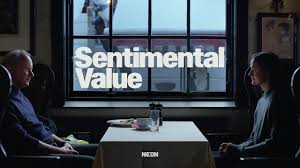
• DVD review: “Sentimental Value” (2025)

    “Sentimental Value” (2025)

    Drama

    Running Time: 133 minutes

    Written by: Eskil Vogt & Joachim Trier

    Directed by: Joachim Trier

    Starring: Renate Reinsve, Stellan Skarsgård, Inga Ibsdotter Lilleaas and Elle Fanning

    Press: “Your movie is a Netflix production. Will it be released in theatres?”

    Gustav Borg: “Well… how else would you watch it?”

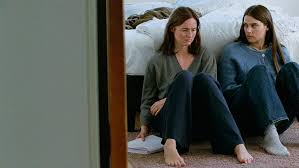
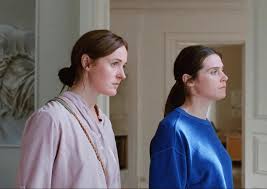
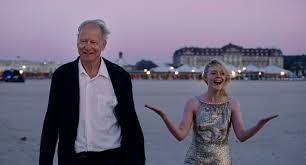
    The DVD release of Sentimental Value arrives with the weight of expectation already attached to it. Directed by Joachim Trier and co-written with longtime collaborator Eskil Vogt, the film follows in the remarkable artistic lineage established by Reprise, Oslo, August 31st and especially The Worst Person in the World. Yet Sentimental Value feels less like a continuation of those works and more like a deepening of Trier’s central obsessions: memory, regret, performance, family inheritance, and the strange emotional architecture that binds people together long after affection has curdled into disappointment.

    Watching the film on DVD gives it an unexpectedly intimate quality. This is not a gigantic spectacle demanding the overwhelming force of a cinema screen. Instead, it is a chamber piece built around faces, pauses, uncomfortable silences, and the emotional debris that accumulates inside families over decades. Seen at home, the film almost feels invasive, as though the viewer has stumbled into a private argument and stayed long enough to understand the history underneath every cutting remark.

    At the centre of the story is a father-daughter relationship that refuses easy reconciliation. Trier avoids melodramatic confrontations in favour of something far more recognisable and painful: conversations that circle old wounds without ever fully addressing them. The film’s title proves perfect because every object, every room, every remembered slight carries emotional residue. A house is never just a house in this film; it is an archive of unresolved feelings. A piece of furniture becomes an accusation. A photograph becomes evidence. Even absence acquires texture.

    The performances are extraordinary across the board. Trier has always been gifted at directing actors toward emotional naturalism, but here he reaches another level entirely. The cast never appears to be “performing” in the conventional awards-season sense. Instead, they inhabit emotional rhythms so authentic that scenes often feel discovered rather than scripted. Small hesitations become devastating. A glance across a dinner table conveys years of resentment more effectively than pages of exposition ever could.

    The lead performance in particular is astonishing because of its restraint. Modern cinema often mistakes emotional intensity for loudness, but Sentimental Value understands that the most painful emotions are frequently suppressed rather than expressed. The protagonist moves through scenes carrying emotional exhaustion like physical weight. Trier’s camera lingers just long enough for viewers to register the thoughts that never become dialogue.

    Visually, the film continues Trier’s movement toward elegant simplicity. There are none of the hyperactive stylistic flourishes common to prestige dramas attempting to appear “important.” Instead, the cinematography quietly observes spaces and faces with extraordinary patience. Interiors are especially memorable. Apartments, hallways, kitchens, and living rooms are framed not merely as environments but as emotional battlegrounds. The muted colour palette reinforces the sense of lives suspended between nostalgia and stagnation.

    The DVD presentation handles this subtle visual style surprisingly well. While the format obviously cannot compete with 4K for sheer sharpness or HDR depth, the transfer retains strong detail and stable contrast throughout. Grain appears natural rather than over-processed, and darker scenes avoid the compression problems that often plague dialogue-heavy dramas on DVD. The film’s muted Scandinavian palette remains intact, preserving the melancholic atmosphere that defines so much of Trier’s work.

    Sound design is equally impressive, even within the limitations of standard DVD audio formats. Trier has always understood the dramatic power of silence, and Sentimental Value uses ambient sound beautifully. Rooms hum with distant traffic, floorboards creak under emotional tension, and ordinary domestic noises become psychologically charged. The score is used sparingly but effectively, drifting into scenes almost imperceptibly before disappearing again. Nothing feels manipulative. The music never instructs the audience how to feel; it merely deepens emotional undercurrents already present in the performances.

    One of the film’s greatest strengths is its refusal to divide characters neatly into heroes and villains. Parents wound children while believing they acted lovingly. Children weaponise old pain while insisting they merely seek honesty. Everyone carries legitimate grievances, yet everyone also contributes to the cycle of emotional damage. Trier and Vogt write with remarkable compassion toward human frailty. Even the most selfish behaviour emerges from loneliness, insecurity, or fear.

    This complexity elevates the film beyond conventional family drama. Lesser films simplify emotional conflict into solvable misunderstandings. Sentimental Value recognises that some wounds never entirely heal because they become part of personal identity. People grow attached to their grievances because those grievances help define who they are. That insight gives the film extraordinary emotional maturity.

    There is also a fascinating undercurrent concerning art itself. Trier repeatedly explores how artists transform lived experience into narrative, often at the expense of those around them. Characters struggle with the ethics of memory: who owns family history, and who has the right to reinterpret it? The film quietly interrogates whether artistic honesty can itself become a form of emotional exploitation. These ideas never overwhelm the drama, but they add substantial thematic richness.

    What makes Sentimental Value especially powerful is how recognisable its emotional terrain feels. Even viewers without similarly fractured family histories will recognise the awkward negotiations, defensive humour, strategic silences, and tiny acts of reconciliation that define intimate relationships. Trier captures the exhausting familiarity of family dynamics with almost documentary precision.

    The pacing may frustrate viewers expecting dramatic revelations or major plot twists. This is a deliberately patient film that accumulates emotional force gradually. Scenes breathe. Conversations drift sideways. Meaning emerges through repetition and behavioural detail rather than narrative shocks. Yet for viewers willing to engage with its rhythm, the payoff is immense. By the final act, the film achieves a devastating emotional clarity without ever resorting to sentimentality.

    As a DVD package, the release is solid if not extravagant. The menus are clean and unobtrusive, and the transfer respects the film’s subdued aesthetic. Depending on the edition, supplementary materials may include interviews or behind-the-scenes features that illuminate Trier’s collaborative process, which has become one of contemporary cinema’s most fruitful creative partnerships. Even without extensive extras, however, the film itself more than justifies the purchase.

    What ultimately distinguishes Sentimental Value is its emotional intelligence. Contemporary prestige cinema often confuses misery with depth, but Trier understands that genuine emotional complexity includes humour, absurdity, tenderness, and contradiction. The film contains moments of uncomfortable comedy that feel painfully true to life. Family interactions frequently oscillate between affection and cruelty within seconds. People attempt sincerity, fail, retreat into irony, and try again. That emotional instability feels profoundly human.

    In many ways, the film resembles the work of great literary realists more than traditional modern cinema. Like a finely observed novel, it accumulates psychological detail until characters feel less like fictional constructs and more like people the viewer has genuinely known. Long after the credits finish, scenes continue echoing in the mind because Trier understands the small humiliations and fragile hopes that shape ordinary emotional life.

    The DVD release of Sentimental Value therefore becomes more than a convenient home-video edition. It is an opportunity to revisit a film that rewards close attention and repeated viewing. Trier has crafted a work of remarkable sensitivity and precision, one that trusts audiences to recognise emotional truth without excessive explanation. Few contemporary filmmakers capture the texture of memory and regret with such grace.

    This is a quietly devastating film — restrained, humane, intelligent, and deeply affecting. On DVD, viewed in the intimacy of one’s own living room, its emotional power becomes even more immediate. For admirers of thoughtful character-driven cinema, Sentimental Value stands as one of the finest and most emotionally perceptive dramas of recent years.
  • Blu-ray review: “Priest” (2007)

    “Priest” (2007)

    Drama

    Running Time: 108 minutes

    Written by: Jimmy McGovern

    Directed by: Antonia Bird

    Starring: Linus Roache, Tom Wilkinson, Robert Carlyle and Cathy Tyson

    Father Greg Pilkington: “When we were in seminary, it was a sort of standard question: a man tells you in confession that he’s poisoned the altar wine. Do you still go out and say Mass? Now, I had no problem with that: I’d go out and say Mass, drink the wine. There’s a bit of the martyr in all of us.”

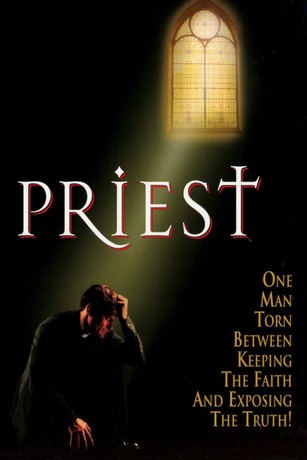
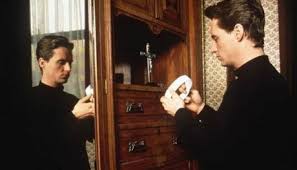
    Released in 1994, Priest remains one of the most confrontational and emotionally devastating British films of the 1990s. Directed by Antonia Bird and written by Jimmy McGovern, the film arrived in cinemas surrounded by controversy, protests, and furious debate from religious groups, yet more than three decades later it feels less like a provocation and more like a painfully human tragedy. What once scandalised audiences now plays as a fearless examination of repression, hypocrisy, institutional silence, and the desperate need for compassion within rigid systems.

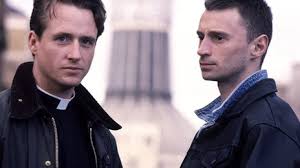
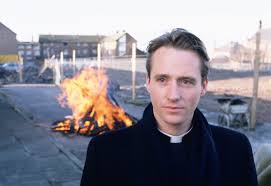
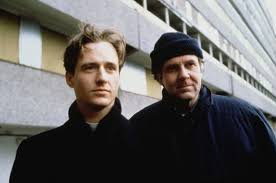
    Set in Liverpool, the film follows Father Greg Pilkington, played with remarkable vulnerability by Linus Roache, a young Catholic priest transferred to a rough inner-city parish. Greg arrives carrying a secret: he is gay, celibate in theory but emotionally and sexually conflicted in practice. The parish is overseen by Father Matthew Thomas, portrayed by Tom Wilkinson in one of the finest performances of his career. Matthew is older, cynical, practical, and deeply compromised, a priest who understands the machinery of the Church well enough to know where morality ends and institutional survival begins.

    What makes Priest so powerful is that it refuses to settle for easy outrage. Lesser films would simply portray the Catholic Church as monstrous and hypocritical while positioning Greg as a straightforward martyr. Instead, the screenplay constantly complicates its characters. Greg is compassionate but immature. Matthew is compromised but not evil. The parishioners themselves are often cruel, frightened, lonely, or trapped within cycles of shame and silence. The film’s emotional force comes from watching decent people fail one another because they have inherited structures built on fear.

    Roache’s performance anchors the entire film. His Father Greg is not a rebel in the traditional sense. He does not arrive wanting to overthrow the Church or expose corruption. He genuinely believes in his vocation. He wants to help people. That sincerity matters enormously because it prevents the film from becoming a simplistic attack on faith itself. Greg’s struggle is not with God but with an institution that demands impossible emotional mutilation from him. Roache conveys this conflict physically: the nervous posture, the hesitant smiles, the exhausted eyes after encounters that leave him spiritually hollowed out. Even in moments of desire or anger, he appears burdened by guilt so deeply ingrained that it has become part of his nervous system.

    The film’s central moral crisis emerges when a young girl confesses to Greg that she is being sexually abused by her father. Bound by the sanctity of confession, Greg cannot reveal what he has heard. This creates one of the most agonising ethical dilemmas ever explored in a mainstream British drama. The screenplay does not offer comforting solutions. Greg is trapped between institutional law and moral responsibility, and the audience is forced to confront the horrifying inadequacy of systems that prioritise doctrine over protection.

    This storyline alone would make Priest an unsettling film, but McGovern layers it with another form of repression: Greg’s sexuality. The film’s most controversial scenes, particularly Greg’s sexual encounters with a young man he meets through chance attraction, are handled with startling directness for a mid-1990s British film. Yet they are not exploitative. Bird films these moments with sadness rather than titillation. Sex in Priest is never liberating in the conventional cinematic sense. It is tangled with shame, longing, secrecy, and emotional confusion. Greg is not simply discovering himself; he is tearing himself apart.

    Tom Wilkinson’s Father Matthew provides the film’s most fascinating counterpoint. Matthew initially appears worldly and pragmatic compared to Greg’s idealism, but Wilkinson gradually reveals the exhaustion beneath the cynicism. Matthew has spent years surviving within the Church by compartmentalising morality. He drinks heavily, maintains a private arrangement with his housekeeper, and avoids challenging the institution directly because he knows resistance is futile. Wilkinson gives the character immense emotional depth. Matthew is not proud of his compromises, but he sees them as necessary accommodations within a flawed world. In some ways he represents Greg’s possible future: a man who once believed passionately and eventually settled for endurance.

    The relationship between Greg and Matthew is the heart of the film. Their arguments about faith, sexuality, confession, and responsibility are written with extraordinary intelligence. Neither man fully defeats the other in debate because both possess uncomfortable truths. Greg’s idealism exposes Matthew’s cowardice, while Matthew’s realism exposes Greg’s naivety. Their conversations feel alive because they are rooted in genuine theological and emotional conflict rather than simplistic ideological point-scoring.

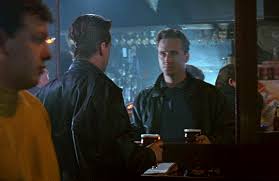
    Antonia Bird’s direction is exceptional throughout. She approaches Liverpool not as picturesque social realism but as an environment saturated with pressure and emotional confinement. Streets, pubs, cramped houses, and church interiors all feel heavy with unspoken tensions. The film’s visual palette is muted and cold, full of greys and browns that reflect the emotional suffocation of the characters. Bird also understands silence. Many of the film’s strongest scenes rely on pauses, glances, and restrained body language rather than dramatic speeches.

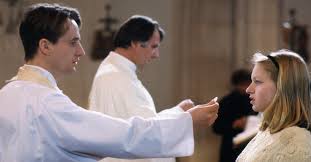
    The religious imagery is used brilliantly. Crucifixes, confessionals, candles, and ritual garments appear constantly, but the film refuses to mock them. Instead, these symbols become reminders of the impossible standards imposed on flawed human beings. The Church is presented not merely as an institution but as a total environment shaping identity, morality, sexuality, and self-worth. Greg cannot simply walk away emotionally, because Catholicism has formed the architecture of his entire inner life.

    One of the most impressive aspects of Priest is its refusal to dismiss faith itself. Many anti-clerical films attack religion by portraying believers as foolish or deluded. Priest does something far more sophisticated. It acknowledges the comfort, structure, and spiritual meaning religion can provide while simultaneously condemning the cruelty and repression institutional power can create. This balance gives the film unusual emotional credibility. Even viewers with strong religious convictions can recognise the humanity in its struggles.

    The controversy surrounding the film upon release now seems revealing in itself. Religious protests attempted to frame the movie as blasphemous or anti-Catholic, but revisiting it today makes clear how deeply moral the film actually is. Its outrage is directed not at belief but at silence, hypocrisy, and institutional protectionism. In hindsight, the film appears almost prophetic given the abuse scandals and systemic cover-ups that would later devastate the Catholic Church’s public reputation worldwide.

    There is also something deeply sad about the film’s vision of masculinity. Nearly every male character is emotionally trapped. Greg suppresses desire. Matthew suppresses idealism. The abusive father suppresses his violence until it erupts in horrific ways. Even ordinary parishioners struggle to articulate tenderness or vulnerability. The film suggests that repression itself can become poisonous, mutating natural human feeling into secrecy, shame, or brutality.

    The supporting cast is superb across the board. Robert Carlyle appears briefly but memorably, while the ensemble of parishioners and working-class families creates a believable social environment rather than a theatrical backdrop. The dialogue feels authentically lived-in, full of humour, bitterness, and awkward intimacy.

    What ultimately makes Priest endure is its compassion. Despite its anger toward institutional failures, the film never loses sight of the suffering individuals caught within those systems. Greg is not presented as a symbol or political argument; he is a lonely, frightened human being trying to reconcile faith with identity. That emotional honesty gives the film lasting power.

    The ending is especially remarkable because it refuses triumphant resolution. There is no grand rebellion, no sweeping victory over hypocrisy. Instead, the conclusion offers something quieter and more ambiguous: an act of honesty and vulnerability that may or may not change anything. The film recognises that institutions rarely transform overnight, but individual moments of courage still matter.

    Today, Priest stands as one of the defining British dramas of its era, alongside the socially conscious work of filmmakers like Ken Loach and writers such as Alan Bleasdale. Yet it also occupies its own distinctive territory, blending social realism with spiritual anguish in a way few films have attempted.

    It is a difficult film, emotionally draining and often deeply uncomfortable, but it is also humane, intelligent, and courageous. Few movies about religion have explored the collision between doctrine and humanity with such honesty. Even fewer have done so while maintaining empathy for nearly everyone involved.

    More than thirty years later, Priest remains shocking not because of its sexuality or controversy, but because of how truthfully it depicts the cost of silence.

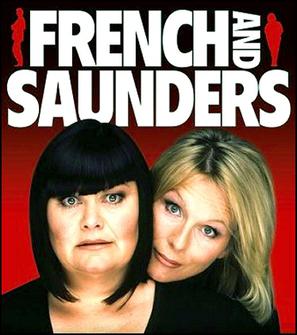
  • DVD review: “French and Saunders Series 1 – 6” (1994 – 2005)

    French and Saunders Series 1 – 6 (1994 – 2005)

    TV Series/Comedy

    3-stars

    Episodes: Forty Eight

    Created and Featuring : Dawn French and Jennifer Saunders

    Jennifer: “A lot of our viewers seem to be having a lot of trouble discerning the difference between a pension scheme and a unit trust.”

    Dawn: “Oh yes, I get that one a lot. Now listen, people, I don’t know how many times I can explain this to you. The first one is a PENSION SCHEME, and the second is a UNIT TRUST.”

    Jennifer: “Well, that clears that up, then.”

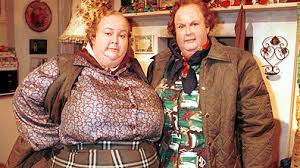
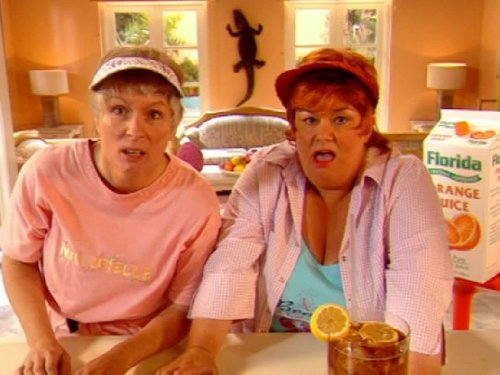
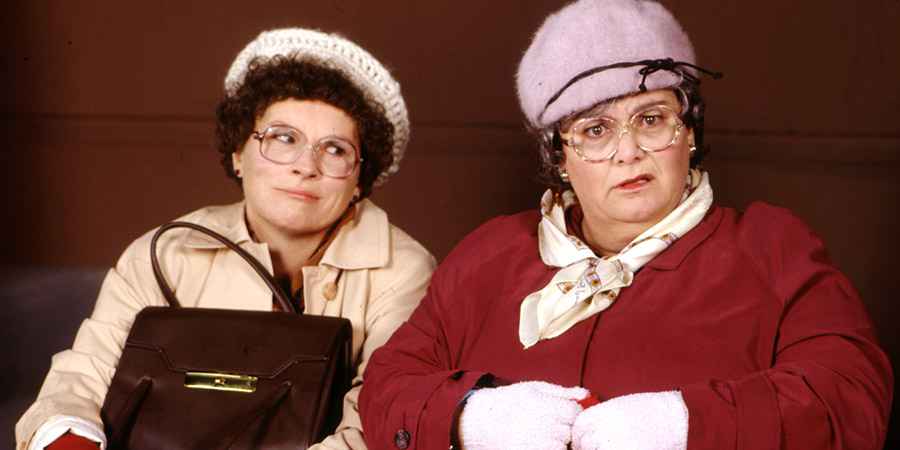
    Among the great British comedy double acts, few were as gloriously anarchic, inventive, and influential as French and Saunders. Across multiple decades, countless specials, and an enormous range of parody targets, the partnership between Dawn French and Jennifer Saunders created a body of work that remains one of the defining achievements of British television comedy. Their show was not simply a collection of sketches; it became a constantly evolving showcase for absurdism, satire, character comedy, and affectionate cultural mockery. Even now, years after its original peak, the series still feels remarkably fresh because its humour emerged less from fashionable cynicism and more from fearless comic performance.

    What immediately separated French and Saunders from many sketch shows of the 1980s and 1990s was their chemistry. There are comedy partnerships that feel carefully engineered, and there are those rare pairings where the performers seem to share a single comic brain. French and Saunders belonged firmly in the second category. Their timing was instinctive. One could derail a sketch with a single facial expression while the other instantly adapted, turning apparent chaos into something even funnier. That looseness became part of the show’s identity. Unlike tightly polished American sketch productions that aimed for perfection, French and Saunders often felt thrillingly unpredictable. You sensed that the performers themselves were having enormous fun, and that energy became infectious.

    The origins of the duo are inseparable from the alternative comedy movement that transformed British humour in the 1980s. Alongside figures such as Rik Mayall, Adrian Edmondson, Ben Elton, and Alexei Sayle, French and Saunders helped push British comedy away from tired club-comic traditions. Yet while many of their contemporaries leaned heavily into aggression or political rage, French and Saunders developed something stranger and more playful. Their comedy could be surreal and savage, but it rarely felt cruel. Even their sharpest celebrity parodies usually carried a sense of admiration underneath the mockery.

    The structure of the show evolved significantly over the years. Early episodes had a rough-edged, experimental quality. Some sketches were intentionally awkward, almost anti-comedy in their pacing. There was a willingness to let a joke collapse into absurdity or continue long beyond conventional logic. This unpredictability became one of the series’ strengths. Not every sketch worked perfectly, but the failures were often as interesting as the successes because the duo constantly experimented with form.

    As the series matured, the production values improved and the scope became far more ambitious. By the 1990s, French and Saunders had become masters of the elaborate television parody. Their send-ups of Hollywood films, prestige dramas, and pop culture phenomena became legendary. Their parody of Titanic is still a comic masterpiece, simultaneously ridiculing the melodrama of James Cameron’s blockbuster while capturing its visual style with uncanny precision. The brilliance of these sketches was that they were never lazy spoofs. They understood exactly what made the original material culturally dominant, then exaggerated those qualities into glorious absurdity.

    Their parody of The Lord of the Rings demonstrated the same intelligence. Rather than merely mocking fantasy clichés, they homed in on the emotional intensity and self-seriousness that defined epic cinema at the time. French and Saunders recognised that the funniest way to puncture cultural phenomena was not through contempt, but through overcommitment. They performed ridiculous material with complete sincerity, and that sincerity made the comedy land harder.

    One of the series’ greatest achievements was its approach to celebrity culture. Long before social media transformed fame into an endless performance, French and Saunders understood the absurd artificiality of stardom. Their sketches frequently exposed the vanity, self-importance, and theatricality surrounding celebrities, but without becoming mean-spirited. Their recurring impersonations of figures such as Madonna, Cher, and Catherine Zeta-Jones were exaggerated caricatures, yet they retained a kind of gleeful affection.

    The Madonna parodies in particular became iconic because Jennifer Saunders captured not merely Madonna’s image, but the exhausting seriousness with which pop reinvention was often presented. Saunders played her as absurdly intense and self-mythologising, while Dawn French often acted as the bewildered observer struggling to keep pace with the chaos. The dynamic perfectly reflected how celebrity culture increasingly demanded audiences treat entertainment as profound revelation.

    Dawn French herself was one of the great comic performers of British television. Her willingness to embrace physical comedy was extraordinary. She could weaponise a glance, a stumble, or a sudden scream in ways few comedians could match. French possessed immense warmth as a performer, which made even her most grotesque characters oddly lovable. There was always humanity beneath the silliness. Whether portraying deranged suburban women, incompetent television hosts, or exaggerated versions of herself, she committed completely to every joke.

    Jennifer Saunders, meanwhile, brought a sharper, more satirical edge. Her writing instincts were razor-sharp, and she excelled at portraying monstrous egotists convinced of their own brilliance. You can clearly see the seeds of Absolutely Fabulous within many French and Saunders sketches. Saunders understood vanity as performance art. Her characters often behaved as though permanently auditioning for admiration, and the desperation beneath their confidence created some of the series’ funniest moments.

    The contrast between the two comedians became the engine driving the show. French projected warmth and emotional openness; Saunders specialised in brittle narcissism and controlled hysteria. Together they created comic friction that could sustain even the flimsiest premise. Some sketches barely had a plot at all. Watching the pair bounce off each other was enough.

    Another remarkable aspect of the series was its visual ambition. Many British sketch shows of the era relied heavily on minimal sets and theatrical staging, but French and Saunders increasingly embraced cinematic parody. Costumes, makeup, editing, and production design became central to the comedy. Their recreations of famous films and television series were often astonishingly accurate despite obvious budget limitations. In fact, the visible cheapness frequently enhanced the humour. There was something deeply funny about seeing epic Hollywood spectacle recreated with determined enthusiasm and obvious corner-cutting.

    Their musical parodies deserve particular praise. French and Saunders had a sophisticated understanding of pop-video aesthetics and the strange visual language of MTV-era music culture. Their recreations of music videos captured not just costumes and choreography but the underlying ridiculousness of the medium itself. Yet again, the humour worked because they fully committed to the performances rather than standing outside them with detached irony.

    The supporting performers also contributed enormously to the show’s success. Figures such as Kathy Burke, Helen Lederer, and Ruby Wax regularly appeared, helping create a broader comic universe linked to Britain’s alternative comedy explosion. The show felt collaborative and communal rather than dominated purely by star ego.

    What makes French and Saunders particularly impressive in retrospect is how well much of the comedy has aged. Sketch comedy often becomes trapped within the references and attitudes of its era, but French and Saunders avoided many of the pitfalls that date older British comedy. Partly this is because their humour depended more on character and performance than shock value. More importantly, the duo possessed an unusual generosity. Even when mocking people or trends, they rarely seemed motivated by bitterness.

    Their influence on later generations of British comedy is enormous. Modern female-led comedy partnerships and sketch shows owe a tremendous debt to French and Saunders, not merely because they succeeded commercially, but because they demonstrated that women could dominate sketch comedy without conforming to restrictive industry expectations. They were silly, vulgar, surreal, intellectual, glamorous, ridiculous, and unapologetically broad all at once.

    The show also occupies an important place in television history because it challenged assumptions about who could be central to comedy. At a time when women in British television comedy were often relegated to supporting roles, French and Saunders became the main attraction. They controlled the material, shaped the tone, and proved that female comic performers could command massive mainstream audiences without softening their humour.

    Of course, not every sketch was brilliant. Like all long-running sketch series, French and Saunders produced occasional misfires. Some jokes stretched too long. Some topical references now feel obscure. Certain experimental pieces collapse under their own weirdness. But even the failures usually contain moments of comic inspiration because the duo’s performances remain so engaging.

    The Christmas specials became especially beloved because they turned television parody into a national event. Audiences tuned in not just for jokes but to see what major cultural phenomenon would be gleefully dismantled next. These specials often felt surprisingly lavish for comedy television, and the scale of the productions reflected how central French and Saunders had become to British entertainment.

    Beyond the sketches themselves, the partnership represented something increasingly rare in television comedy: genuine companionship. French and Saunders never seemed like competitors trapped together for commercial reasons. Their friendship radiated through the screen. Even when performing cruel or absurd material, there was a sense of trust and delight underpinning everything. That emotional authenticity gave the series tremendous charm.

    Watching the show now also reveals how expertly it balanced sophistication and accessibility. There were clever media jokes and subtle performance details for attentive viewers, but there were also huge visual gags, slapstick chaos, and wonderfully stupid punchlines. The comedy never became smug. French and Saunders understood that intelligence and silliness are not opposites but perfect partners.

    In many ways, the series captured the joy of performance itself. You can see two immensely talented comedians constantly trying to make each other laugh, pushing sketches further into absurdity simply because they can. That spirit of comic playfulness remains the show’s greatest strength. French and Saunders was never about delivering tidy satirical messages or proving intellectual superiority. It was about the exhilarating possibilities of comedy when performers are fearless, inventive, and completely in sync.

    Today, French and Saunders stands as one of the defining British sketch shows of its era — not merely because it was funny, but because it continually reinvented what television comedy could look like. Its best moments remain timeless: gloriously ridiculous, sharply observed, endlessly quotable, and powered by one of the greatest comedy partnerships television has ever produced.

  • Blu-ray review: “Stingray” (1964-1965) 

    “Stingray” (1964-1965) 

    Television

    Thirty nine Episodes

    Created by: Gerry and Sylvia Anderson

    Featuring: Ray Barrett, Robert Easton, David Graham, Don Mason and Lois Maxwell

    Opening Theme:

    “Stand by for action, we’re about to launch Stingray

    Stingray Stingray
    Stingray Stingray

    Marineville i am calling all battle stations, Anything can happen in the next half hour

    Stingray Stingray”

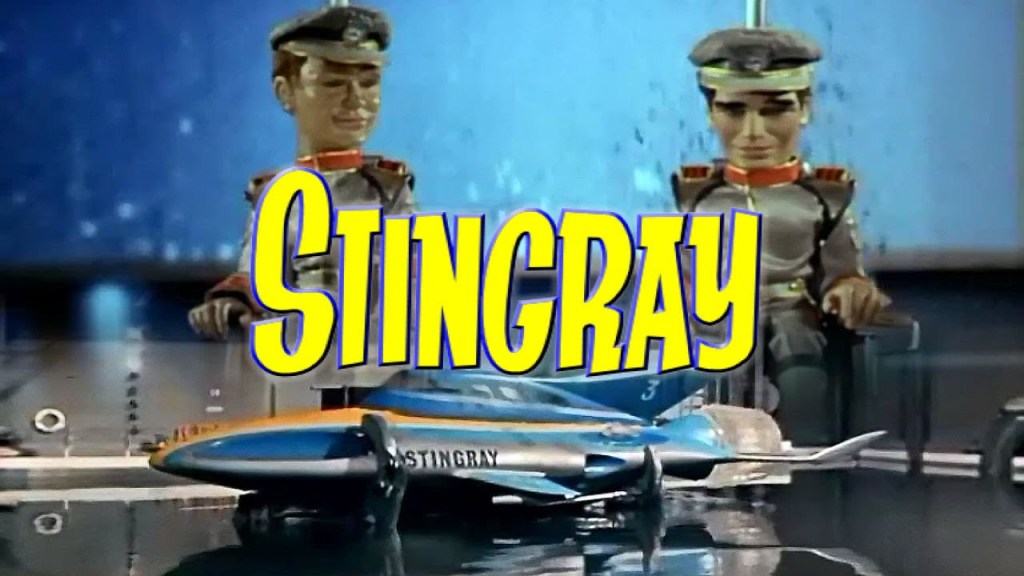
    Released recently on Blu-ray is the 1960s English television series “Stingray” (1964-1965) created by Gerry and Sylvia Anderson whose biggest hit among their creations was “Thunderbirds” (1965-1966) using their own technique known as supermarionation (a portmanteau of the words “super”, “marionette” and “animation”). The characters were played by electronic marionettes with a moveable lower lip, which opened and closed in time with pre-recorded dialogue by means of a solenoid in the puppet’s head or chest. The productions were mostly science fiction and they also made extensive use of scale model special effects.

    Stingray, a nuclear-powered combat submarine, is the flagship of the World Aquanaut Security Patrol (WASP), a branch of the World Security Patrol (WSP) responsible for policing the Earth’s oceans in the mid-2060s. The WASP is based in the self-contained city of Marineville, located several miles inland somewhere on the West Coast of North America. It is connected to the Pacific Ocean via a tunnel leading to an “ocean door”, through which Stingray is launched. General quarters alerts are sounded by rapid drumbeats played over the base’s public address system. In emergency situations, the entire base can be lowered into underground bunkers via giant hydraulic jacks while fighter aircraft and interceptor missiles are launched to counter threats. Stingray is piloted by the square-jawed Captain Troy Tempest. He is paired with Southern navigator Lieutenant George Lee Sheridan, nicknamed “Phones” for his secondary role as Stingray’s hydrophone operator. Troy and Phones board Stingray from the Marineville stand-by lounge by sitting on twin seats that are then lowered into the submarine via injector tubes. They answer to the “hoverchair”-bound Commander Sam Shore, whose daughter, Lieutenant Atlanta Shore, works in the Marineville control tower and is enamoured of Troy.

    Overall, fans of Gerry Anderson’s work will not be disappointed, the Blu-ray is well presented with good video, sound and extras, wrapped up with good menus. As far as the content goes, it’s typical Gerry Anderson material with a crazy sci-fi plot, plenty of action and technology being used to save the world. Each show runs for 30 minutes, and being designed to hold children’s interest, crams plenty into the short running time. Given the continued success of Stingray and Thunderbirds, it seems the Gerry Anderson got the balance about right, I certainly enjoyed watching Stingray again, although because of the similarity of the episodes, it’s not something to watch in one sitting. Thunderbirds is better, but Stingray still has plenty to offer.

    Episodes

    Stingray: Investigating the loss of a submarine, the crew of Stingray are captured by their new enemy, King Titan of the Aquaphibians.

    Emergency Marineville: Marineville goes to battle stations as a missile is launched. Counter measures are launched and the missile is destroyed before it hits. Troy and the Stingray are ordered to investigate with air squadrons in support. The search centers on an abandoned island when another missile launches also successfully destroyed before impact. Troy and Phones discover the mouth of a cave, following it they discover a secret base but are captured. Marina is then tortured till Troy gives up secret information about Marineville defenses. The occupants of the base use the information …

    The Ghost Ship: The sunken wreck of an old sailing ship suddenly rises to the surface and begins sailing. WASP are contacted and told the ocean liner Atlantis has gone missing after reporting the sighting of an ancient sea galleon. The Stingray is sent to investigate. In an unusual move Commander Shore accompanies them on the mission. Stingray arrives at the location to find it shrouded in fog. From nowhere they see the galleon reported by Atlantis. The Commander and Phones decide to board the galleon. Initially they find no one till they encounter a trap set by an unknown creature … 

    Subterranean Sea: Scientists drill through the ocean floor to find another sea underneath. WASP sends Stingray to investigate, after Commander Shore orders Troy and Phones to cancel a scheduled vacation. The Stingray crew discovers a weird place where water rapidly disappears then reappears.

    Loch Ness Monster: Admiral Denver fishing on Loch Ness is attacked by the monster. Back at WASP debate rages if the creature exists or if the admiral imagined it. To win the argument Shore orders the Stingray to investigate. Marina refuses to go and Atlanta steps in. They stay overnight at a castle overlooking the loch and during the evening they are woken by strange noises, a search reveals nothing of consequence. Next day they take Stingray out onto the Loch and encounter the monster. Taking evasive action they fire a missile. Rather than kill the creature, the missile exposes it as a…

    Set Sail for Adventure: Admiral Denver finishes showing the team at Marineville his favorite naval movie. This sparks a debate if modern sailors were as tough as the sailors from the age of sail. To win the argument Admiral Denver arranges a galleon to be borrowed from the museum with plans to sail it across the Pacific. Troy and the Stingray are assigned escort duty, despite Denver’s emphatic desire to have no outside help. The ship runs into a very bad storm, and the admiral is injured by falling rigging. The Stingray loses contact with the ship sparking a major air search which turns up …

    The Man from the Navy: During a training exercise Stingray is fired on by a submarine from the World Navy controlled by Captain Jordon. Despite Stingrays best efforts Tempest fails to shake the artificial missile and it thuds harmlessly into Stingray. On a nearby island an agent for the Aquaphibians makes a report back to King Titan about the successful test. Titan discovers another test is to be conducted and takes the opportunity to set a trap to destroy the Stingray and Tempest. The agents capture the World Navy sub and Jordon, then arms the dummy torpedo. The Stingray manages to avoid …

    An Echo of Danger: Titan, leader of the amphibians decides that destroying Stingray is taking too much effort. He thinks that getting the crew replaced on Stingray could be just as effective. He instructs surface agent X20 to take charge of the operation. Stingray while on escort duty is drawn into a trap set by X20 that sees a vessel destroyed and Phones’ judgment called into question. At the enquiry the blame for the loss is placed squarely with Phones. Troy begins a desperate search for answers before his best friends career is washed up.

    Raptures of the Deep: Although told otherwise, two men take an unsafe submarine to the ocean floor searching for a rumored forest of gems. As expected they quickly get into trouble and need rescue. As Stingray maneuver to help the trapped men, Troy himself gets into trouble. On the verge of death Troy has a strange encounter that sees him assume command of an undersea empire including the fabled gem forest. As his capital comes under attack things begin to crumble leading Troy realize all may not be as they seem.

    Titan Goes Pop: Duke Dexter the world’s most famous singer will be visiting Marineville for a benefit concert. Titan, although unsure who Dexter is, decides he could be valuable to Titanica’s plans and arranges for him to be kidnapped. Surface agent X20 gets the opportunity to execute the plan by using the confusion created in Marineville by the waves of Dexter fans arriving for the concert. Dexter is interviewed by Titan leading to some unusual conclusions both for Titan and the Stingray team

    In Search of the Tajmanon: Stingray is deployed to Africa to investigate a series of flooded underwater ruins that appear to have disappeared. Arriving at the site the crew discovers evidence of human intervention and narrowly avoid fatal trap when a bomb explodes under Stingray. Commander Shore believes the same people set the bomb and stole the temple complex and Troy and the team are ordered to solve the twin mysteries.

    A Christmas to Remember: Troy visits Barry, an orphan of a former commander of Marineville. After telling Barry stories of his adventures on Stingray, Troy invites the boy to spend Christmas at Marineville, and the holiday progresses Troy talks Commander Shore into allowing Barry to go on patrol with the Stingray crew. During the patrol a series of strange events occur that catapult Barry to the status of hero just like his father before him.

    Tune of Danger: Learning that a jazz group is to give a concert in the undersea city of Aphony, where Marina’s father lives, Surface Agent X20 plants a bomb in the group’s bass.

    The Ghost of the Sea: Commander Shore keeps having nightmares about the time when he was crippled in a sea battle with an underwater craft five years ago and rescued by a mysterious stranger.

    Rescue from the Skies: As part of his training to become an aquanaut, Lieutenant Fisher is given temporary command of Stingray and assigned target practice.

    The Lighthouse Dwellers: Just as an aircraft begins its approach towards a new airfield, the light from a disused lighthouse comes on, confusing the pilot and causing him to crash.

    The Big Gun: An underwater race that lives beneath the floor of the Pacific Ocean, has developed a large “missile ejector” and is test firing it on small islands. Stingray is sent to investigate and manages to prevent an attack on the West Coast of the United States. The underwater race devises a trap designed to lure the crew of Stingray to its doom and to launch an attack on Marineville.

    The Cool Cave Man: Troy Tempest is on standby duty while a ship carrying a radioactive isotope nears its port destination. He is supposed to rest. While he does so, he ponders how he should dress to a costume party hosted by Atlanta Shore. Suddenly, he gets a summons to help the stricken ship. Or does he?

    Deep Heat: After a robot probe inexplicably disappears, the Stingray crew is ordered to investigate.

    Star of the East: An Eastern dictator named El Hudat arrives in Marineville, wishing to become a member of the World Aquanaut Security Patrol.

    Invisible Enemy: Troy and Phones rescue a comatose man and take him back to Marineville for treatment.

    Tom Thumb Tempest: While waiting for the call to action in the Stand-By Lounge, Troy falls asleep.

    Eastern Eclipse: Having been dethroned by the people of his Eastern nation, El Hudat’s twin brother, Ali Khali, arrives in Marineville.

    Treasure Down Below: A ship with a load of gold disappears after hitting an iceberg. Meanwhile, the Stingray crew is enjoying a shore leave in Casablanca. While there, Troy Tempest is on a date with Marina while “Phones” is offered the chance to buy a purported treasure map for $500. “Phones” only has $200 but blackmails Troy by reminding him he has a date the next night with Atlanta Shore and gets the remaining money to buy the map. However, the map indicates the treasure is out of the way for Stringray’s return course to Marineville.

    Stand by for Action: A film crew arrives at Marineville to make a movie on Stingray. Everyone will play themselves except Troy, who is to be replaced by an actor.

    Pink Ice: Reports come in from all over the world about pink ice.

    The Disappearing Ships: When three disused freighters that are to be blown up by remote control mysteriously vanish, Troy and Phones set off in Stingray to find them.

    Secret of the Giant Oyster: After recovering a giant oyster, two explorers are captured by Troy in restricted waters.

    The Invaders: The Stingray crew fall into a trap set by aliens at a weather station.

    A Nut for Marineville: When a seemingly indestructible craft is sighted heading towards Marineville on a collision course, the eccentric Professor Burgoyne is called in to help develop a new super missile with which to destroy it.

    Trapped in the Depths: When the insane Professor Cordo kidnaps Atlanta and takes her back to his undersea farm, Troy and Phones give chase in Stingray.

    Count Down: As part of his plan to destroy Marineville, Surface Agent X20 infiltrates the base by posing as a professor who can teach mute people to speak.

    Sea of Oil: The Stingray crew are sent to investigate the mysterious destruction of oilrigs.

    Plant of Doom: Following the escape of his slave Marina, Titan plots revenge by planning to kill the Stingray crew with a deadly plant that gives off toxic fumes.

    The Master Plan: During a Terror Fish attack, Stingray is damaged. When Troy goes to make repairs, an Aquaphibian poisons him with some purple liquid.

    The Golden Sea: The Stingray crew is assigned to make monthly visits to Professor Darren and his team, who have developed a method for making gold from minerals taken from the sea bed.

    Hostages of the Deep: When an undersea alien named Gadus kidnaps World Navy Admiral Carson and his wife from their remote island home, Troy, Phones and Marina head off on a rescue mission in Stingray.

    Marineville Traitor: Commander Shore appears to be a traitor after Marineville’s security has been breached. This forces Troy Tempest to arrest his commanding officer and causes heartbreak for Atlanta Shore. However, just when the situation seems to be resolved, a complication occurs.

    Aquanaut of the Year: After receiving the ‘Aquanaut of the Year’ award, Troy finds himself part of a ‘This is Your Life’ programme where he reminisces some of his greatest adventures.

    The Reunion Party: While waiting for Atlanta and Marina, Commander Sam Shore shows to Admiral Denver films showing the previous missions that Troy Tempest and Phones had with the submarine Stingray

  • Blu-ray review: “Night Gallery” (1969 – 1973)

    “Night Gallery” (1969 – 1973)

    Anthology/Horror

    5stars_small

    43 Episodes

    Created by: Rod Serling

    Produced by: Jack Laird & William Sackheim

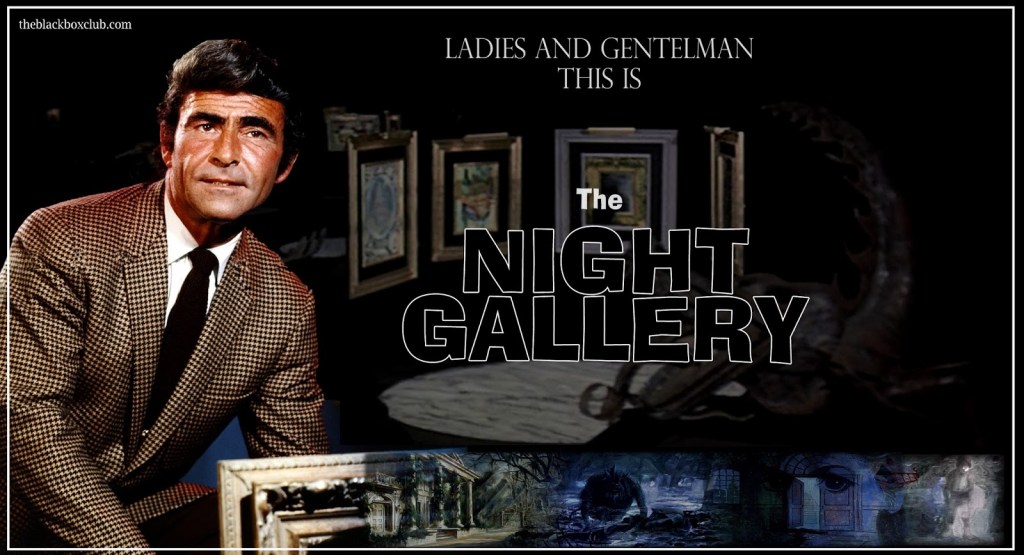
    Rod Serling: “Good evening, and welcome to a private showing of three paintings, displayed here for the first time. Each is a collectors’ item in its own way – not because of any special artistic quality, but because each captures on a canvas, and suspends in time and space, a frozen moment of a nightmare.”

    This month sees the release of the anthology television show “Night Gallery” (1969 – 1973) in a three series ten-disc box set, that incorporates every episode produced – just great entertainment with some good special features at a modest price.

    Night Gallery was an American anthology series that aired on NBC from 1969 to 1973, featuring stories of horror, science fiction as well some humorous episodes as well. Rod Serling, who had gained fame from an earlier series, “The Twilight Zone”(1959 – 1964), served both as the on-air host of ‘Night Gallery’ as well as a major contributor of scripts, although he did not have the same control of content and tone as he had on ‘The Twilight Zone’. Serling viewed ‘Night Gallery’ as a logical extension of ‘The Twilight Zone’, but while both series shared an interest in thought-provoking dark fantasy, more of Zone’s offerings were science fiction while Night Gallery focused on horrors of the supernatural.

    Serling appeared in an art gallery setting and introduced the stories that made up each episode by unveiling paintings (by artists Thomas J. Wright and Jaroslav “Jerry” Gebr) that depicted the stories. ‘Night Gallery’ regularly presented adaptations of classic fantasy tales by authors such as H. P. Lovecraft, as well as original works, many of which were by Serling himself.

    Looking back at a television series from almost fifty years ago may seem a difficult prospect but Serling was such a good writer as well as arbiter of taste that the vast majority of this stories are so unique that they seem to have not aged a day.

    Highlighted episodes not to be missed:

    Silent Snow, Secret Snow (Seas. 2, Ep. 5)

    Based on a short story by Conrad Aiken, this psychological tale is the story of a young boy’s fascination with the snow outside his home; a fascination that turns him inside himself and towards insanity. This one is incredibly creepy and atmospheric, one to watch with the lights on, as well as having company with you.

    The Diary (Seas. 2, Ep. 8)

    This masterpiece, penned by Serling himself, stars Patty Duke as an aging movie star with a grudge, she enacts madness-inducing revenge on the scathing gossip columnist who shreds her acting credibility. Truly one of the more chilling and well-written episodes of the entire series, but you would not expect anything less from Rod Serling.

    The Boy Who Predicted Earthquakes (Seas. 2, Ep. 1)

    In this chilling tale, a boy is given a very special gift – to see the future. As a commentary on the media’s fascination with the strange and our unearned trust in the media, this story has a very poignant message.

    You Can’t Get Help Like That Anymore (Seas. 2, Ep. 20)

    It is the near future, and people are still mean as well as bullies. At least, that’s the concept at the core of this tale. When a rich couple purchase the best robot maid available and then attempt to beat the crap out of her (like all the other robot maids before her), they get a nasty surprise.

    Sins of the Fathers (Seas. 2, Ep. 20)

    The very next episode although being painfully grotesque (hunchback dwarves, guttural screaming, turkey legs) is actually really creepy Dark Ages.

    Midnight Never Ends (Seas. 2, Ep. 7)

    Another Season 2 gem by Serling, this story is like a cross between “Groundhog Day” (1993) and “The Shining” (1980). A young woman picks up a hitchhiker on the road and the two immediately feel as though they are caught in a super-strong bout of mutual deja vous. What they find out is a truth that is more chilling than you could possibly imagine.

    Whisper (Seas. 3, Ep. 13)

    As one of the final episodes, Serling managed to saved the best for last. With a skeleton cast of amazingly talented actors, this story is a truly haunting tale that answers the question: What is the worst thing that can happen when you believe you can speak to the dead?

    The Ring With the Red Velvet Ropes (Seas. 3, Ep. 10)

    A heavyweight-boxing champion that has just won the world title finds himself on an unknown island, surrounded by sexy ladies and good food. Everything is great until he finds out that he’s not the REAL world champion until he beats an otherworldly fighter with a very long winning streak.

    The Different Ones (Seas. 2, Ep. 14)

    Once you’ve seen this one, you’ll see almost a direct connection with some of Serlong’s more notable work on Twilight Zone. In this futuristic episode, a hideously mangled teenager is shipped off to a governmental-alien leper colony. In his desire to be a “normal person,” the hero is willing to do almost anything to avoid literal alienation.

    The Caterpillar (Seas. 2, Ep. 21)

    A colonial tale of unrequited love turned sour, this is about a British military leader in the jungles of Borneo. When he can’t have the girl of his dreams, he decides to take care of her husband by using the deadly flora and fauna of the inhospitable land. One small mistake in the plan is all it takes for him to get an earful.

    A Question of Fear (Seas. 2, Ep. 6)

    A rich man makes a revenge bet with an old buddy that he can’t stay locked up overnight in a reportedly haunted house. When he starts seeing strange things (beds with knives in them, for example), he decides that the $10,000 is not worth his life. Unfortunately, the house doesn’t let him call backsies without a fight.

    The Big Surprise (Seas. 2, Ep. 8)

    There’s nothing scarier to a 12-year-old than a creepy old guy who tells you to dig a big hole. In this very short story (on the same powerhouse episode as The Diary), a young boy gets a tip from an old neighbor that something buried under a nearby tree. Thinking he has heard some kind of verbal treasure map, the boy acquiesces. His surprise is not at all what he expects.

    The House (Seas. 1, Ep. 3)

    In my favorite episode by far, a woman continually has a dream that she is driving towards an unknown house, but that she knows inside and out. After graduating from dream therapy with a “cured” badge, she actually finds the house from her dreams. Not surprising, there is a ghost haunting it, but what it’s trying to do only becomes clear in the last few moments of the story.

    The Housekeeper (Seas. 1, Ep. 1)

    As the first episode of Night Gallery, this little story comes out of nowhere and mentally screws everyone. An aging housekeeper with low self-esteem is requested for a dream job. This story is all about the consequences of being young and beautiful forever. I choose this tale for those who like their Halloween ironic.

    Tell David (Seas. 2, Ep. 14)

    I personally believe that this is the most horrifying of them all, in the traditional sense. A woman with some marital problems and a small son gets lost in a freak storm. When she finds a local house for shelter, all the strange objects that she finds inside surprise her.

    Special Features:

    This 10 DVD collection brings you every episode from this spine-tingling 1970s series.

    Penned by legendary twilight zone writer – rod serling

    Includes the original pilot episode from 1969

    “Night Gallery” is out now on Blu-ray


  • Blu-ray review: “Cinema of Powell & Pressburger – Collection One (Imprint Collection Limited Edition)”

    Cinema of Powell & Pressburger – Collection One

    Drama

    Directed by: Michael Powell and Emeric Pressburger

    Sister Clodagh: [to Mr. Dean] “You are objectionable when sober, and abominable when drunk!”

    The Powell & Pressburger Collection One Blu-ray boxset (Imprint Collection #456–#461) gathers six seminal films from the first phase of the legendary British filmmaking partnership of Michael Powell and Emeric Pressburger, known collectively as The Archers. This limited edition 7-disc hardbox set (region-free) includes: 

    1. The Spy in Black (1939)
    2. 49th Parallel (1941)
    3. The Life and Death of Colonel Blimp (1943)
    4. A Canterbury Tale (1944) — first time on Blu-ray
    5. A Matter of Life and Death (1946)
    6. Black Narcissus (1947) 

    This isn’t a cheap boxset — it’s a collector’s edition (often commanding premium pricing) with a presentation and contents worthy of that positioning. 

    This collection plays like a mini-retrospective of formative Archers work, charting their evolution from innovative wartime cinema to psychological drama and lyrical storytelling.

    1. The Spy in Black (1939)

    A taut wartime thriller and the pair’s first joint feature, it combines atmospheric tension with clever narrative propulsion. The Blu-ray transfer showcases the film’s crisp black-and-white visuals and frames its ingenuity beautifully. 

    2. 49th Parallel (1941)

    A compelling piece of wartime propaganda cinema with real narrative flair, 49th Parallel is more than its mission — it’s an engaging race-across-Canada drama that’s both suspenseful and surprisingly rich in character. 

    3. The Life and Death of Colonel Blimp (1943)

    Often cited as one of their greatest achievements, Colonel Blimp is a sweeping, deeply human epic about military tradition, friendship, and the passage of time. The set’s new restorations and extras (including its alternate American cut) make this edition especially valuable. 

    4. A Canterbury Tale (1944)

    A more modest but deeply affecting work, A Canterbury Tale blends mystery, pastoral beauty, and introspection. It’s the Blu-ray debut for this title, making the boxset a huge draw for completists and longtime fans alike. 

    5. A Matter of Life and Death (1946)

    This imaginative romance/fantasy drama — sometimes called Stairway to Heaven — is among Powell & Pressburger’s most lyrical and philosophically nimble films. Although there are excellent standalone Blu-ray versions (e.g., the Criterion release), this edition still offers a solid transfer and worthwhile extras. 

    6. Black Narcissus (1947)

    A psychological classic bathed in striking Technicolor, Black Narcissus blends exoticism with inner conflict. Many critics hail it as one of the duo’s most potent works, and this restored presentation brings out the sumptuous cinematography and haunting performances. 

    Transfers & Picture Quality
    All films are presented in 1080p high-definition from newly restored transfers. While this isn’t true 4K resolution, the quality is substantially superior to prior releases, especially for titles that have languished on DVD or haven’t been previously available on Blu-ray (notably A Canterbury Tale). 

    Audio
    English LPCM mono tracks are clean and clear — faithful to the original soundscapes without modern remixing that could dilute period authenticity. 

    Subtitles
    Optional English subtitles for the deaf and hard of hearing are included, making these classic films more accessible to a broader audience. 

    Extras
    One of the boxset’s strongest selling points is its new supplemental content: interviews with film scholars like Ian Christie, audio commentaries from experts, featurettes (including a Scorsese restoration piece for Colonel Blimp), and photo galleries — all of which offer deep context and enrich appreciation of each film. 

    The Powell & Pressburger Collection One Blu-ray boxset is a rich, rewarding, and meticulously curated tribute to some of the most imaginative filmmakers of the 20th century. It’s packed with cultural significance and historical context, and the care taken with restorations and supplemental material will satisfy even the most discerning collectors — even if it stops short of 4K resolution. For fans of classic cinema and pivotal British filmmaking, this is a genuinely essential set. 

  • Blu-ray review: “Kolchak: The Night Stalker” (1974 – 1975)

    “Kolchak: The Night Stalker” (1974 – 1975)

    Television / Sci-Fi

    Twenty Episodes

    Created by: Jeff Rice

    Featuring: Darren McGavin, Simon Oakland, Jack Grinnage and Ruth McDevitt

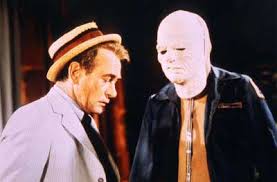
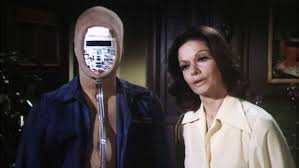
    Carl Kolchak: [voiceover] “Buck Finemann, seventy two years old. Cantankerous old geezer. No-one liked him much, but they allowed him to play poker with them once a week because he was a terrible card player and had been known to lose as much as seventy five cents in a single evening.”

    Few television series have cast a shadow as long and as influential as Kolchak: The Night Stalker. Although it ran for just one season in 1974–75 (preceded by two hugely successful TV movies), its DNA can be found in everything from The X-Files to Supernatural, Fringe, and beyond. Seeing the series finally presented properly on Blu-ray feels less like a routine catalogue upgrade and more like a long-overdue act of preservation for one of TV’s great cult cornerstones.

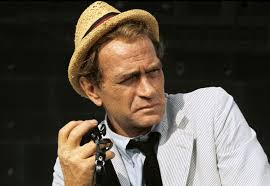
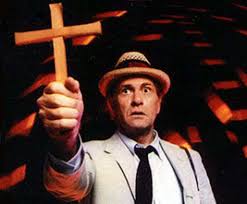
    At its core, Kolchak is a deceptively simple premise: Carl Kolchak, a rumpled, obstinate newspaper reporter, investigates murders that the police insist are mundane but which always seem to involve vampires, werewolves, witches, demons, or some other creature lurking just outside rational explanation. What elevates the show is the friction between the banal and the bizarre. Kolchak isn’t a detective or a paranormal expert—he’s a journalist with a tape recorder, a notebook, and a stubborn refusal to stop asking questions, even when doing so puts him in very real danger.

    Darren McGavin’s performance remains the show’s greatest asset, and the Blu-ray presentation only reinforces how central he is to its enduring appeal. McGavin plays Kolchak as abrasive, sarcastic, perpetually underpaid, and morally driven in spite of himself. He’s not cool or glamorous; he’s frequently wrong, often scared, and almost always frustrated. In high definition, the performance gains nuance—small facial expressions, tired eyes, and quick flashes of fear or irritation read more clearly than ever before. Kolchak feels more human, more fallible, and more alive.

    The supporting cast also benefits from the upgrade. Simon Oakland’s Tony Vincenzo, Kolchak’s long-suffering editor, is an essential counterweight: blustery, cynical, and secretly fond of his most troublesome reporter. Their bickering remains one of the great double acts in genre television, and the improved clarity gives their scenes a warmth and texture that standard-definition broadcasts often flattened.

    From a visual standpoint, the Blu-ray presentation is a revelation—within reason. This is still a mid-1970s television series shot on film with tight schedules and modest budgets, and the Blu-ray wisely doesn’t attempt to “modernize” the image. Instead, it presents the material with a natural, filmic look that respects the original production. Grain is present and intact, giving the series a pleasing cinematic texture rather than a scrubbed, artificial smoothness. Black levels are markedly improved, which is crucial for a show so dependent on shadow, darkness, and nocturnal atmospheres.

    Night scenes, in particular, benefit enormously. Alleyways, abandoned buildings, graveyards, and city streets now have depth and dimensionality that simply wasn’t visible on DVD. Highlights are stable, contrast is strong without being crushed, and details in clothing, signage, and set dressing emerge clearly. The show’s Los Angeles locations—standing in for everything from Chicago to Seattle—gain a tangible sense of place that reinforces the procedural realism grounding all the supernatural elements.

    That said, the Blu-ray also reveals the limits of the production. Optical effects, creature makeup, and occasional stock footage look exactly as they should: sometimes effective, sometimes a little ropey. Rather than undermining the experience, this honesty actually enhances the show’s charm. Kolchak has always been about suggestion, tension, and atmosphere more than spectacle, and the high-definition presentation underscores how well the series uses restraint to compensate for budgetary constraints.

    Audio is clean and faithful to the original mono mix. Dialogue is clear and well-balanced, with Gil Mellé’s distinctive, slightly unsettling score coming through with surprising presence. The music—often overlooked—plays a vital role in establishing the show’s uneasy tone, blending procedural rhythms with eerie electronic flourishes. On Blu-ray, it sounds fuller and more dynamic without ever feeling artificially boosted.

    Beyond the technical presentation, revisiting Kolchak in this format highlights just how sharp the writing often was. While not every episode is a classic, the best installments—featuring vampires, rakshasas, and other folkloric horrors—blend mystery, satire, and social commentary in a way that still feels fresh. The show frequently pits ancient evils against modern bureaucracy, skepticism, and institutional denial, with Kolchak trapped in the middle, shouting the truth into a void that refuses to listen. That theme arguably resonates even more strongly today.

    The episodic structure, which once seemed like a limitation, now feels like a strength. Each story is self-contained, allowing for bold tonal shifts—from near-comedy to genuine horror—while McGavin’s performance provides continuity. The Blu-ray’s consistent quality across episodes makes it easier to appreciate the series as a whole rather than as a handful of remembered highlights.

    As a piece of television history, this Blu-ray release is invaluable. It preserves Kolchak: The Night Stalker in a form that feels definitive, giving the series the visual respect it has long deserved. For longtime fans, it’s the best the show has ever looked or sounded. For newcomers, it’s an ideal entry point into a series whose influence far outweighs its brief original run.

    In the end, Kolchak on Blu-ray isn’t about perfection—it’s about character, atmosphere, and legacy. This release captures all three beautifully. It reminds us why Carl Kolchak remains one of television’s great outsiders and why, half a century later, his stubborn refusal to stop digging still feels strangely heroic.

  • Blu-ray review: “Captain Scarlet and the Mysterons” (1967 – 1968)

    “Captain Scarlet and the Mysterons” (1967 – 1968)

    Television / Sci-Fi

    Thirty Two Episodes

    Created by: Gerry and Sylvia Anderson

    Featuring: Sylvia Anderson, Ed Bishop, Gary Files, Cy Grant, Donald Gray, David Healy, Janna Hill, Martin King, Francis Matthews, Paul Maxwell, Liz Morgan, Lian-Shin, Charles Tingwell, Jeremy Wilkin, Neil McCallum and Shane Rimmer

    The Mysterons: [Their last line, from series finale] “This is the voice of the Mysterons. We know you can hear us, Earthmen. The powers of the Mysterons are infinite. We can distort space and time. We have shown you the consequences of your primitive and aggressive behavior. It has been decided by our Imperial Council that a peaceful settlement with the planet Earth might someday be possible. So we will spare you. Be warned, Earthmen: Your warlike behavior can only result in disaster for your planet. One day, the Mysterons will return. We hope you will be ready. Someday…”

    Released recently on DVD is the 1960s science fiction series “Captain Scarlet and the Mysterons” (1967 – 1968), one of the many series created by Gerry and Sylvia Anderson using their self-named and patented ‘Supermarionation’ that has become a signature of most of their endeavours. It is very true that “Captain Scarlet and the Mysterons” was an in demand series which is proven by the fact that, in New Zealand at least, it was in heavy rotation on repeats for a number of decades. That is why it seems to get releases on DVD every so often. In fact all of the Anderson’s shows get releases on DVD to satiate their demand especially now that pop culture is such a huge demographic. 

    Unlike many of the other Anderson and Supermarionation created television series “Captain Scarlet and the Mysterons” was the most serious and adult this is because it focused intently on the war between the faceless alien would-be conquerors the Mysterons, and the entire planet, in the first episode they announce themselves as the sworn enemies of all Earthmen and women of course. It revelled not only in the explosive mayhem and carnage of which there was much, but also death, with the invulnerable Scarlet being put in all manner of inventive scrapes, only to return to life if his luck happened to run out.

    “Captain Scarlet and the Mysterons” begins in 2068, in the first episode, the crew of the Zero-X spacecraft are investigating the surface of Mars after mysterious radio signals are found to be coming from the planet. The source is discovered to be an alien city, which the astronauts destroy in a missile attack after mistaking a harmless surveillance device for a weapon. The city’s inhabitants, the Mysterons, are a collective of sentient computers that possess partial control over matter and communicate in a deep, echoing voice. After using their power of “reversing matter” to rebuild their city, they swear revenge for humanity’s unwarranted aggression and declare war on Earth. Each episode is based around both titular figures, with the stakes increasing all the time. 

    One of the key aspects of “Captain Scarlet and the Mysterons” was the music by veteran Barry Gray which saw him going back to his roots in electronic music, in order to capture that eerie, otherworldly nature of the alien aggressors. Gray seems to almost effortlessly combine electronica with electric guitars, and then – just for good measure – mixes in strings for a richer orchestral depth to the track. The mixture of styles might sound jarring in the wrong hands, but Gray fuses them together with ease.

    Any fantasy drama as can be seen in any television show or movie within the genre rests and falls on its villains, and while the baddies have who linger in dark places with hidden motives had been done to death at this point, we’d never seen anything like the lethal and for all we knew hideous Mysterons. The alien rings were great they hid identities and made you feel like there was something else to be revealed. 

    Of course “Captain Scarlet and the Mysterons” is not just a boys own show, the Anderson’s also included an elite fighter jet squad led by five women called The Angels. They get to fight the aliens in the sky and are as good as the guys in defending Earth. The show might have been made in miniature, but the action is huge. The puppets look more realistic than previous efforts since the heads are proportional to their bodies. There’s moments where you think this is being done with humans or at least actors with very little emoting skills.

    The video is 1.33:1 full frame. The transfers bring out the colourful nature of the show. Remember that what looks like scratches are the strings on the actors. The audio is Dolby Digital mono. The levels are bring out the sound effects for the action scenes.

    Extras

    • Audio Commentaries on “Mysteron” and “Attack on Cloudbase” have Gerry Anderson recount the episodes. He really gets into how the modelmakers controlled the scenes. 
    • Gerry Anderson Interview (10:22) recounts his early years. He started as a sound editor, but his name would be made in visual effects. He recounts how his failing production company was saved by a woman who arrived with scripts for a children’s series that needed puppets.
    • Spotlight on Captain Scarlet: The Directing (13:29) explains how to call the shots when your actors are strung out. Perry talks about working on the show. He enjoyed the experience.
    • The Writing (11:36) explores what went into the scripts. Shane Rimmer explains how he became a part of the show. He liked the work. 
    • The Puppets (7:34) shows off what made the puppets tick. They redid the ratios from the puppet heads they used in Thunderbirds. The mystery of who Captain Scarlet looks like is exposed.

    Episodes

    The Mysterons: After a misunderstanding on the planet Mars, a war is started between humans and an alien race called The Mysterons. Thier first act of revenge is to try and assassinate The World President.

    Winged Assassin: The Mysterons second target is the Director General of the United Asian Republic. The Director is on a visit to London and is scheduled to fly back to Asia via London airport but the Mysterons have other plans.

    Big Ben Strikes Again: The Mysterons threaten to blow up London with a bomb they have stolen. Spectrum race against time to stop this latest and greatest threat to mankind.

    Manhunt: A manhunt begins for former spectrum officer Captain Black after a failed break in at a nuclear power plant, when he is accidentally exposed to radiation.

    Avalanche: When the Mysterons threaten to destroy key links in the Frost Line Outer Space Defence System, Scarlet and Green investigate the mysterious deaths of the personnel at Red Deer Base.

    White as Snow: The Mysterons threaten to kill Colonel White and after their initial attempt fails, White elects to leave Cloudbase so as not to place the other Spectrum agents in jeopardy.

    The Trap: Following the latest Mysteron threat, Scarlet is dispatched to supervise security at the International Air Conference at Glen Garry Castle.

    Operation Time: The Mysterons’ cryptic threat to “kill time” has the Spectrum personnel stumped until Captain Magenta realizes that their target is General Tiempo, the Commander of Western Region World Defence.

    Spectrum Strikes Back: Spectrum attends a secret conference to demonstrate two new anti Mysteron gadgets (A Mysteron detector and a Mysteron gun), but the Mysterons announce they intend to sabotage the demonstration of Spectrums new anti-Mysteron devices.

    Special Assignment: The Mysterons threaten to obliterate North America, but Spectrum is left without its number one agent when Scarlet is dismissed for gambling offences.

    The Heart of New York: As the Mysterons threaten to destroy the “Heart of New York”, Scarlet and Blue investigate the theft of Grade A Security documents from the Spectrum security vaults.

    Lunarville 7: When the Lunar Controller announces the Moon’s independence from Earth in the war of nerves with the Mysterons, Scarlet, Blue and Green journey to Lunarville 7 to investigate reports of an unauthorised complex under construction in the Humboldt Sea.

    Point 783: When the Mysterons threaten the life of the Supreme Commander of Earth Forces, Scarlet and Blue are assigned to escort him to SHEF HQ in New York.

    Model Spy: The Mysterons target fashion designer Andre Verdain, secret controller of the European Area Intelligence Service.

    Seek and Destroy: When the Mysterons threaten to kill one of the Angels, Scarlet and Blue are sent to Paris to escort Destiny back to Cloudbase.

    Renegade Rocket: The Mysterons engineer the launch of a Variable Geometry Rocket from Base Concord and their agent, Major Reeves, escapes with the destruct mechanism and target information.

    Crater 101: Scarlet, Blue and Green volunteer for a dangerous mission to remove the power source of the Mysteron complex in Crater 101 before it is destroyed by a low yield atomic device.

    Shadow of Fear: Astronomers at K14 Observatory are monitoring signals from a hidden satellite that has made a successful landing on the Martian moon Phobos.

    Dangerous Rendezvous: Using the Mysteron pulsator recovered from the complex in Crater 101, Dr Kurnitz has developed a transmission device with which Colonel White attempts to contact the Mysterons and sue for peace.

    Fire at Rig 15: When the Mysterons threaten to immobilise the whole of Spectrum, Scarlet and Blue are sent to the Spectrum oil refinery at Bensheba.

    Treble Cross: Captain Black engineers the death of chief test pilot Major Gravener, who is retrometabolised as a Mysteron agent as part of the Mysterons’ plan to destroy the World Capital, Futura City.

    Flight 104: When the Mysterons threaten to sabotage a vital conference at Lake Toma in Switzerland, Scarlet and Blue are assigned to escort the world’s leading astrophysicist, Dr. Conrad, to Geneva.

    Place of Angels: Mysteron agent Judith Chapman steals a phial of deadly K14 virus – enough to kill ten million people – from Biological Research Station D near Manchester.

    Noose of Ice: Tritonium alloy mining operations at Hotspot Tower in the North Pole are threatened when a Mysteron agent cuts the power to vital heating elements.

    Expo 2068: A lorry carrying an atomic core reactor to the new Manicougan power complex falls into the hands of the Mysterons who intend to strike the Atlantic Seaboard of North America.

    The Launching: When the Mysterons threaten to destroy President Roberts within twelve hours, Scarlet is assigned as bodyguard to the sceptical President.

    Codename Europa: The Mysterons threaten to destroy the Triumvirate of Europe, the three most powerful men on Earth after the World President.

    Inferno: Captain Scarlet and the rest of Spectrum are in a desperate race against time to defeat the Mysteron’s latest threat. The total destruction of the massive desalination plant at Najama, high in the Andes Mountains.

    Traitor: The ultimate mind game is unleashed, Spectrum, turned against itself. Captains Scarlet and Blue travel to outback Australia in a desperate attempt to unravel the Mysteron plans before it is too late.

    Flight to Atlantica: When the Mysterons threaten to destroy the World Navy Complex at Atlantica, Blue and Ochre fly a V17 Air Force bomber to destroy a wreck that has been sighted drifting towards the base.

    Attack on Cloudbase: After the Mysterons threaten Spectrum’s Cloudbase headquarters, a large fast-moving trace appears on the radar.

    The Inquisition: Captain Blue disappears from a restaurant. He awakes to find it is 3 months later and Spectrum Security want to know where he has been, and if he is even the real Captain Blue.

  • Blu-ray review: “Dogtooth” (2009)

    “3:10 to Yuma” (2007)

    Drama

    Running Time: 97 minutes

    Written by: Yorgos Lanthimos and Efthymis Filippou

    Directed by: Yorgos Lanthimos

    Starring: Christos Stergioglou, Michelle Valley, Angeliki Papoulia, Christos Passalis, Mary Tsoni and Anna Kalaitzidou

    Father: [subtitled version] “Soon your mother will give birth to two children and a dog.”

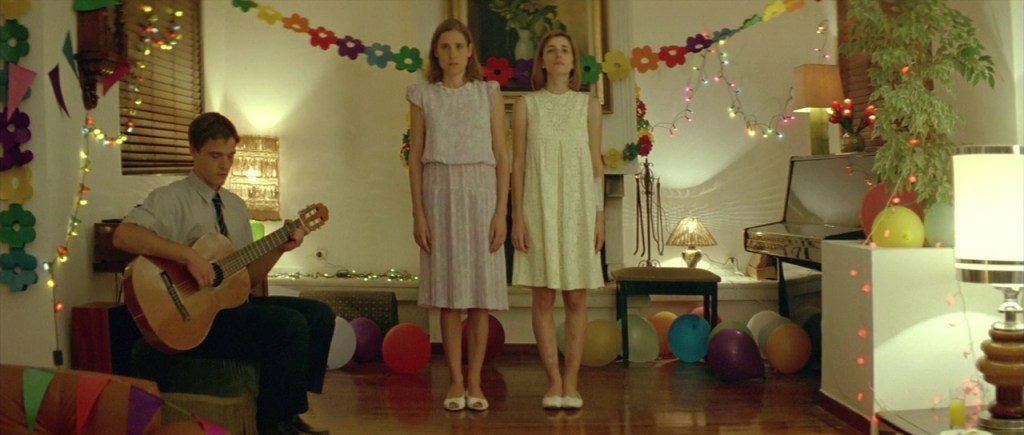
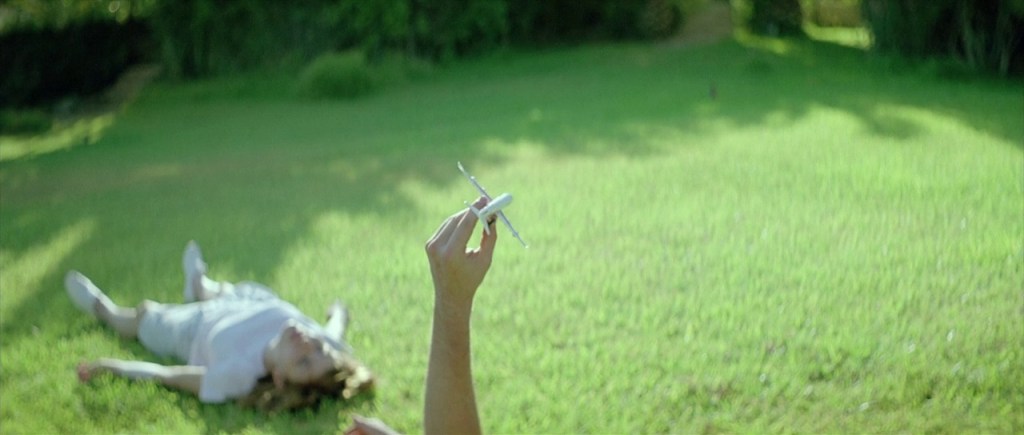
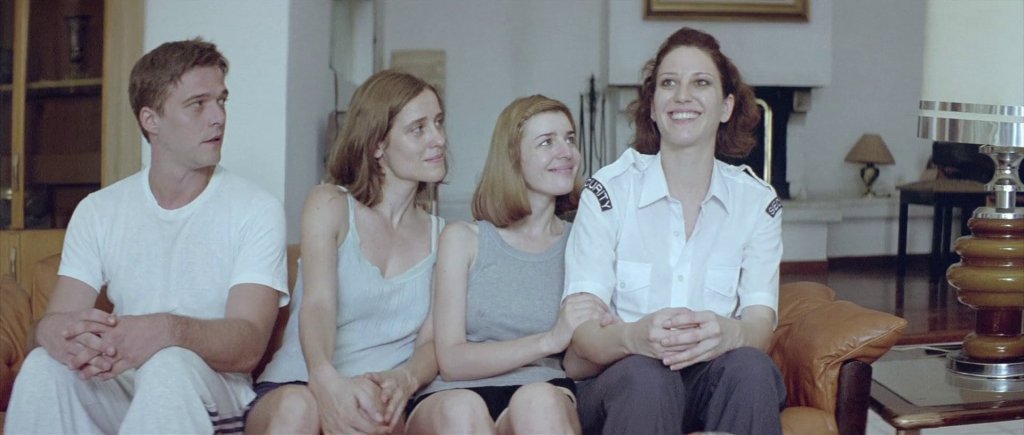
    Yorgos Lanthimos’s Dogtooth remains one of the most unsettling, darkly funny, and formally precise films of the 21st century, and its arrival on 4K UHD only reinforces just how rigorously constructed and emotionally corrosive the film truly is. More than a simple visual upgrade, this release offers a renewed confrontation with a work that feels as confrontational and disturbing now as it did upon its original release—perhaps even more so, given how Lanthimos’s later international success has reframed Dogtooth as the raw blueprint of his cinematic worldview.

    Dogtooth tells the story of a family living in near-total isolation, governed by a tyrannical father who controls every aspect of his children’s lives, from their vocabulary to their understanding of the outside world. The premise alone is chilling, but what makes the film extraordinary is Lanthimos’s refusal to sensationalize the material. Instead, the horror emerges from the banality of control, repetition, and ritual.

    Viewed again in high resolution, the film’s emotional violence feels even sharper. The children’s affectless line readings, stiff physicality, and ritualized games register with renewed intensity. The film’s infamous moments—castration anxiety, sexual bargaining, self-mutilation—remain shocking, but what lingers is the atmosphere of enforced normalcy. Everything is framed as routine. Everything is “correct.”

    This remains one of Lanthimos’s most punishing works, lacking the overt stylization or ironic cushioning of later films like The Favourite or Poor Things. Dogtooth is colder, harsher, and more clinical, and the 4K presentation highlights just how deliberate that aesthetic choice is.

    The 4K transfer is a revelation precisely because Dogtooth is not a traditionally “beautiful” film. Shot in flat, natural light with restrained color and minimal camera movement, the film relies on stark compositions and sterile environments. The UHD presentation sharpens these qualities without betraying the original intent.

    Detail is significantly improved, particularly in facial close-ups. Skin textures, sweat, and subtle muscle tension are now more visible, making the performances feel even more exposed and uncomfortable. The sterile white interiors of the family home reveal fine gradations in paint, fabric, and shadow that were previously flattened in lower-resolution presentations.

    The color grading remains muted and naturalistic. The greens of the garden, the pale blues of the swimming pool, and the washed-out interiors are rendered with remarkable stability and accuracy. HDR is used conservatively, but effectively: highlights are controlled, never flashy, allowing daylight scenes to feel oppressively bright rather than aesthetically pleasing. Shadows maintain depth without crushing, reinforcing the sense that nothing in this world offers refuge.

    Grain appears intact and organic, giving the image a tactile, filmic quality that suits the material. Importantly, there is no sense of over-processing or digital smoothing. The image feels honest, almost austere—perfectly aligned with Lanthimos’s vision.

    The audio track, while modest, is faithful and precise. Dogtooth is not a film driven by sound design or music, and the mix reflects that restraint. Dialogue is clean and centered, capturing the strange rhythms and deliberate pauses that define the film’s tone.

    Ambient sounds—footsteps on tile, splashing water, distant dogs barking—are crisp and quietly unsettling. These mundane noises take on heightened significance, especially in the absence of a traditional score. When music does intrude, it lands with greater impact precisely because of its rarity.

    The lossless presentation ensures clarity without embellishment. This is not a film that benefits from sonic grandeur, and the UHD release wisely resists any attempt to inflate the soundscape.

    While Dogtooth has been widely discussed over the years, its inclusion in a 4K format invites renewed critical engagement. Any accompanying extras—commentaries, interviews, or essays—are especially valuable here, given how often the film is misunderstood as merely provocative rather than structurally rigorous.

    Revisiting the film in this format underscores how carefully every element is controlled: framing, blocking, performance, and language itself. It becomes clearer than ever that Dogtooth is less about shock and more about systems—how power is taught, normalized, and internalized.

    The 4K UHD release of Dogtooth is not an easy watch, nor is it meant to be. What it offers is the most precise, unforgiving presentation yet of a film designed to disturb through clarity rather than excess. The improved image quality intensifies the discomfort, bringing the viewer closer to the performances and the oppressive environment than ever before.

    For fans of Yorgos Lanthimos—especially those familiar with his later, more accessible works—this release serves as a stark reminder of his origins: a filmmaker unafraid of emotional brutality, formal rigidity, and moral ambiguity. Dogtoothin 4K does not soften the experience; it sharpens it.

    This is an essential release for serious collectors, cinephiles, and admirers of Lanthimos’s work—but it is also a reminder that some films, no matter how beautifully presented, are meant to leave you shaken rather than satisfied.

  • Blu-ray review: “3:10 to Yuma” (2007)

    “3:10 to Yuma” (2007)

    Western

    Running Time: 122 minutes

    Written by: Halsted Welles, Michael Brandt and Derek Haas

    Directed by: James Mangold

    Starring: Russell Crowe, Christian Bale, Peter Fonda, Gretchen Mol, Ben Foster, Dallas Roberts, Alan Tudyk, Vinessa Shaw and Logan Lerman

    Dan Evans: [while being choked] “I ain’t never been no hero, Wade. The only battle I seen, we was in retreat. My foot got shot off by one of my own men. You try telling that story to your boy. See how he looks at you then.”

    James Mangold’s 3:10 to Yuma has long stood as one of the finest modern Westerns, a film that respects the moral framework of the genre while reshaping it with contemporary grit and psychological complexity. Nearly two decades on, the arrival of the film on 4K UHD feels not just welcome but overdue. This new presentation allows Mangold’s dusty, bruised vision of the Old West to breathe with a clarity and weight that earlier home-video editions only hinted at.

    At its core, 3:10 to Yuma is a Western built on character rather than spectacle. Christian Bale’s Dan Evans is not the typical stoic gunslinger or righteous lawman; he is a limping Civil War veteran, a struggling rancher, and a father drowning in quiet desperation. Bale plays him with remarkable restraint, allowing the character’s moral resolve to emerge gradually rather than in heroic bursts.

    Opposite him, Russell Crowe delivers one of the most fascinating outlaw performances of the 2000s. His Ben Wade is charming, intelligent, cruel, and oddly philosophical—a man who seems acutely aware of the myths surrounding him and enjoys manipulating those who still believe in them. Crowe’s performance walks a razor’s edge between menace and charisma, making Wade’s conversations with Evans feel like ideological duels rather than simple confrontations.

    Mangold smartly reframes Elmore Leonard’s short story as a study in masculinity, responsibility, and self-worth. The film’s violence is sharp and brutal but never gratuitous, reinforcing the sense that this is a West where moral choices carry real physical consequences. The supporting cast—Peter Fonda, Ben Foster (in a standout role as the feral Charlie Prince), Alan Tudyk, and Gretchen Mol—add texture without distracting from the central psychological battle.

    The 4K transfer is a significant upgrade over previous Blu-ray editions. Shot by cinematographer Phedon Papamichael, 3:10 to Yuma relies heavily on earth tones, natural light, and a deliberately gritty aesthetic. The UHD presentation respects this intent while revealing far more fine detail than before.

    Grain is present throughout, as it should be, and looks organic rather than processed. Close-ups reveal facial textures, sweat, and dust with striking clarity, particularly in daylight scenes where the harsh sun beats down on weathered faces and worn clothing. Leather, wood, and fabric textures benefit enormously from the increased resolution.

    HDR is used subtly but effectively. Highlights from sunlight, lanterns, and gunfire have added intensity without blowing out the image. Black levels are deeper and more stable, enhancing night sequences and interior scenes where shadow detail now feels more dimensional. The film’s desert landscapes gain a greater sense of depth, with skies showing more nuanced gradation and terrain appearing less flat than in earlier releases.

    Importantly, the color grading avoids the temptation to over-saturate. The dusty yellows, browns, and muted blues remain faithful to the film’s restrained palette, preserving its grounded, almost somber tone.

    The Dolby Atmos (or DTS-HD Master Audio, depending on region) track is robust and immersive without being showy. Dialogue remains clear and firmly anchored in the center channel—crucial for a film so dependent on verbal exchanges. Gunshots are sharp and impactful, with excellent dynamic range, while ricochets and echoes carry convincingly across the soundstage.

    Surround channels are used effectively to place the viewer within environments rather than overwhelm them. Wind, footsteps, and distant gunfire subtly enhance immersion. Marco Beltrami’s score, which blends traditional Western motifs with modern tension, sounds fuller and more textured here, benefiting from improved separation and bass response.

    Most releases carry over legacy bonus features from earlier editions, including behind-the-scenes featurettes and commentary tracks. While nothing new has been added, the existing extras remain worthwhile, offering insight into Mangold’s approach to the Western genre and the challenges of balancing fidelity to Leonard’s source material with a contemporary sensibility.

    The 4K UHD release of 3:10 to Yuma is a strong, respectful upgrade that enhances the film without altering its fundamental character. It preserves the grit, grain, and moral weight that define Mangold’s vision while offering noticeably improved detail, contrast, and audio depth.

    As a film, 3:10 to Yuma remains a modern Western classic—thoughtful, tense, and anchored by two exceptional lead performances. As a home-video presentation, this 4K edition finally does justice to its visual and sonic ambitions. For fans of the genre, collectors of modern classics, or anyone interested in character-driven filmmaking, this release is an easy recommendation and arguably the definitive way to experience the film at home.

  • Blu-ray review: “Afterglow” (2018)

    “Afterglow” (2018)

    Drama

    Running Time: 113 minutes

    Written & Directed by: Alan Rudolph

    Starring: Nick Nolte, Julie Christie, Lara Flynn Boyle and Jonny Lee Miller

    Lucky Mann: “I don’t know what I like, but I know what art is.”

    Afterglow is a quiet, bruised, deeply adult drama that arrived in the late 1990s almost unnoticed, yet has steadily grown in reputation as one of the most humane and perceptive films about long-term relationships, regret, and the possibility of grace. Written and directed by Alan Rudolph, the film sits firmly in the tradition of American independent cinema that privileges character over plot and emotional truth over narrative fireworks. What makes Afterglow linger is not what happens, but how it understands the damage people carry—and how gently it suggests that even late in life, something like renewal might still be possible.

    At its core, Afterglow is about two marriages in crisis, though it refuses the easy symmetry of melodrama. The film opens on the deteriorating relationship between Marianne and Lucky Mann, played by Julie Christie and Albert Finney. They are wealthy Texans living in a large, beautiful house that has become emotionally airless. Lucky is a once-promising novelist who now writes ad copy, drowning his disappointment in alcohol and sarcasm. Marianne, cultured and intelligent, has grown weary of Lucky’s bitterness and inertia. Their marriage is not defined by explosive fights, but by the slow suffocation of two people who no longer know how to reach one another.

    Rudolph’s script is acutely observant about this kind of marital decay. There are no villains here, only people who have failed to grow together. Finney gives one of his finest late-career performances as Lucky: abrasive, funny, and deeply sad. His anger often masks a profound sense of self-loathing, and Finney allows us to see the intelligence and sensitivity Lucky once possessed, now corroded by disappointment. Christie, meanwhile, is quietly devastating. Her Marianne is not a cliché of the neglected wife; she is strong, articulate, and painfully honest about what she needs and what she can no longer tolerate. Their scenes together are uncomfortable in the best way—conversations filled with half-finished thoughts, sharp deflections, and long silences that say more than dialogue ever could.

    The film’s emotional axis shifts when Marianne begins an affair with Ben Turner, a gentle, good-hearted contractor played by Nick Nolte. Ben is married to Phyllis, portrayed by Lara Flynn Boyle, a woman suffering from deep emotional fragility and trauma. Where Lucky is caustic and verbally agile, Ben is quiet, physically imposing, and emotionally tentative. Nolte brings an extraordinary tenderness to the role, allowing Ben’s decency to feel earned rather than sentimental. He is a man worn down by years of caretaking, someone whose kindness has slowly become a form of self-erasure.

    What Afterglow does particularly well is resist easy moral judgments. The affair is neither glamorized nor condemned. Instead, it is treated as a symptom—an imperfect, human response to loneliness and emotional starvation. Rudolph understands that desire often arises not from passion alone, but from the simple need to be seen and heard. The relationship between Marianne and Ben unfolds with an awkward sweetness that feels truthful, especially given the characters’ age and emotional histories. There is no illusion that this romance will magically solve their problems, only the fragile hope that it might open a door they thought was permanently closed.

    Alan Rudolph’s direction is unshowy but precise. He allows scenes to breathe, often holding on actors’ faces just long enough for discomfort or realization to surface. The film’s pacing is deliberately unhurried, mirroring the emotional rhythms of middle-aged lives where change comes slowly, if at all. Cinematographer Toyomichi Kurita bathes the Texas settings in warm, muted light, reinforcing the film’s central metaphor: the “afterglow” as that soft illumination that comes not at the beginning of love, but after everything else has burned away.

    The supporting performances are also key to the film’s emotional texture. Boyle’s Phyllis is a particularly risky role, as her instability could easily have tipped into caricature. Instead, she is portrayed with empathy and restraint, a woman whose pain is real and whose dependence on Ben is both understandable and destructive. Her presence complicates any simple notion of escape or happiness, reminding us that every choice carries consequences that ripple outward.

    Thematically, Afterglow is preoccupied with aging—not just physically, but emotionally. It asks what happens when the dreams that sustained you in youth have either failed or been fulfilled in ways that feel hollow. Lucky’s bitterness about his stalled literary career, Ben’s quiet exhaustion, Marianne’s hunger for emotional authenticity—all speak to the terror of realizing that time is finite, and that the life you are living may be the only one you get. Yet the film is not nihilistic. Its compassion lies in acknowledging that even flawed, late-stage attempts at change still matter.

    The ending of Afterglow is especially resonant because it refuses closure in the conventional sense. There are no grand reconciliations or definitive breakaways. Instead, the film offers something subtler and braver: the possibility of honesty. It suggests that facing the truth—about oneself, about one’s marriage, about one’s limitations—is both painful and necessary. The “afterglow” becomes not a promise of happiness, but a moment of clarity, a softer light in which people might finally see each other as they are.

    In retrospect, Afterglow feels like a film ahead of its time. Its focus on older protagonists, its emotional maturity, and its refusal to traffic in easy sentimentality set it apart from much of the romantic drama of the era. It trusts its audience to sit with discomfort, to recognize themselves in imperfect characters, and to find meaning not in resolution but in understanding.

    Ultimately, Afterglow is a film about compassion—for partners, for strangers, and perhaps most importantly, for oneself. It is a reminder that love does not always arrive with fireworks; sometimes it comes quietly, in the dim light after disappointment, offering not salvation, but the chance to go on with a little more honesty than before.re more casual, want immediate narrative gratification, or lots of bonus content, you might explore your options. poignant love stories. Brief Encounter on Blu-ray is not just a preservation of a classic, but a rediscovery of emotional cinema at its purest.

  • DVD Review: “The Rockford Files: Series 1 – 6” (1974-1980)

    “The Rockford Files: Series 1 – 6” (1974-1980)

    TV Drama

    One Hundred and Twenty Three Episodes

    Created by: Roy Huggins and Stephen J. Cannell

    Featuring: James Garner, Noah Beery Jr., Joe Santos, Gretchen Corbett and Stuart Margolin

    Jim Rockford: [to the hood who has just kidnapped him] “Does your mother know what you do for a living?”

    Few television series manage to feel both effortlessly entertaining and quietly revolutionary, but The Rockford Files is one of those rare shows that rewrote the rules of a genre while making it look easy. First broadcast in the mid-1970s, the series took the well-worn private detective format and sanded off its hard-boiled macho edges, replacing them with wit, warmth, and a deep understanding of human frailty. Decades later, it remains not only watchable but strikingly modern in tone, characterisation, and storytelling.

    At the centre of the show is Jim Rockford, played with immense charm and understatement by James Garner. Rockford is not your traditional TV gumshoe. He doesn’t swagger through cases with supreme confidence, nor does he relish violence. Instead, he’s a former convict turned private investigator who’d rather avoid trouble altogether. He dislikes guns, complains constantly, and would much prefer to be paid on time than prove his moral superiority.

    This inversion of the genre’s usual tropes is the show’s greatest strength. Rockford isn’t cynical in the classic noir sense; he’s tired, pragmatic, and acutely aware that the world is stacked against people like him. Garner’s performance is crucial here. His relaxed, conversational acting style gives Rockford a humanity that makes him instantly relatable. You believe this man lives in his trailer, struggles to pay his bills, and takes cases not because he’s heroic, but because he has few better options.

    One of the most impressive aspects of The Rockford Files is its writing. The series balances mystery plotting with character-driven humour in a way that feels effortless but is actually finely calibrated. Many episodes unfold less like traditional whodunits and more like small, morally ambiguous dramas. The solutions to cases are often messy, compromised, and incomplete—just like real life.

    The dialogue crackles with dry humour and intelligence. Rockford’s phone answering machine messages alone are miniature works of comic timing, often establishing tone, character, and plot in under a minute. The show assumes its audience is paying attention, trusting viewers to follow complex motivations and layered storytelling without excessive exposition.

    Rockford’s world feels richly populated thanks to a superb supporting cast. His relationship with his father, Rocky Rockford, is one of the most quietly touching elements of the series. Rocky is gruff, meddlesome, and perpetually convinced he knows better than his son, but beneath the bickering lies genuine affection and loyalty. Their dynamic adds emotional texture and grounding to what could otherwise be a purely episodic crime show.

    Equally important is Rockford’s ongoing antagonistic friendship with police lieutenant Dennis Becker. Becker represents institutional authority—something Rockford both needs and resents. Their interactions are often hilarious, but they also underline one of the show’s core themes: the tension between individual morality and bureaucratic justice.

    Recurring guest characters, from eccentric criminals to vulnerable clients, are sketched with care rather than caricature. Even antagonists are rarely purely evil; instead, they’re driven by greed, fear, or desperation, reinforcing the show’s humanistic worldview.

    While The Rockford Files is dialogue-driven, it’s far from static. The series features some of the best car chases ever staged for television, many of them performed by Garner himself. These sequences feel thrilling not because they’re flashy, but because they’re grounded and dangerous. You sense that Rockford is improvising, barely staying one step ahead of disaster.

    The Southern California setting is another unsung asset. The beaches, freeways, industrial backlots, and sun-bleached suburbs give the show a distinct visual identity. Unlike the glossy fantasy versions of California seen in later television, this is a working, imperfect landscape that mirrors Rockford’s own precarious existence.

    What truly elevates The Rockford Files is its thematic depth. Beneath the humour and mystery plots lies a consistent critique of power, wealth, and authority. Corporations, wealthy families, and institutions often emerge as the real villains, while Rockford is left navigating the fallout suffered by ordinary people.

    The show also explores masculinity in a refreshingly honest way. Rockford is capable, intelligent, and brave, but he’s also vulnerable, self-doubting, and emotionally open—qualities rarely celebrated in male TV heroes of the era. This makes the series feel surprisingly progressive, even by today’s standards.

    It’s difficult to overstate the influence of The Rockford Files. Its DNA can be found in countless later detective and dramedy series, from character-driven procedurals to modern antihero narratives. The idea that a lead character could be fallible, funny, and fundamentally decent without being sanctimonious owes a great deal to Jim Rockford.

    James Garner’s performance, in particular, set a new benchmark for television acting. His naturalism paved the way for a more relaxed, character-first style that many later actors would emulate.

    The Rockford Files endures because it understands people. It recognises that life is complicated, justice is imperfect, and survival often requires compromise. Wrapped in sharp writing, memorable characters, and one of television’s great lead performances, the series transcends its genre to become something richer and more humane.

    Whether you’re revisiting it or discovering it for the first time, The Rockford Files remains a masterclass in intelligent, character-driven television—proof that you don’t need invincible heroes or grandiose plots to create something truly timeless.

  • DVD Review: “Workaholics: Series 1 – 7” (2011-2017)

    “Workaholics: Series 1 – 7” (2011-2017)

    TV Comedy

    Eighty Six Episodes

    Created by: Blake Anderson, Adam DeVine, Anders Holm, Kyle Newacheck, Connor Pritchard and Dominic Russo

    Featuring: Blake Anderson, Adam DeVine, Anders Holm, Jillian Bell, Maribeth Monroe and Erik Griffin

    Adam Demamp: “I’m like one of those dragons from Avatar!”

    When Workaholics premiered, it arrived disguised as a workplace sitcom but quickly revealed itself as something far stranger, louder, and more aggressively stupid—in the most deliberate way possible. Over the course of seven seasons, the series carved out a singular niche in modern television comedy: a show that glorifies laziness while requiring immense comic discipline, that celebrates immaturity while showing a surprisingly sharp understanding of adulthood’s quiet despair. At its best, Workaholics is not just a parade of outrageous jokes, but a sustained character study of three men utterly committed to never growing up—and the consequences of that commitment.

    Set largely within the bland purgatory of a telemarketing office, Workaholics follows Adam DeMamp, Blake Henderson, and Anders Holmvik—roommates, coworkers, and self-appointed philosophers of slacker culture. Their jobs are nominal; work is something to be avoided, gamed, or subverted. The office exists less as a setting for professional ambition than as a playground for chaos, a backdrop against which the trio’s warped priorities are continually exposed.

    What immediately distinguishes Workaholics from other workplace comedies is its utter lack of aspiration. These characters do not secretly dream of promotions or respect. They dream of getting high before noon, winning petty victories over authority figures, and maintaining their codependent friendship indefinitely. In a genre often built around upward mobility or emotional growth, Workaholics stands proudly still, planting its flag in arrested development.

    The show’s success rests almost entirely on the chemistry and sharply defined personalities of its three leads.

    Adam DeMamp is the engine of chaos. Loud, impulsive, and deeply insecure, Adam is the embodiment of unfiltered id—he wants what he wants immediately and loudly announces it. His behavior is often repellent, yet the show commits so fully to his lack of self-awareness that he becomes perversely endearing. Adam is the purest expression of the show’s ethos: consequences are annoying interruptions to fun.

    Blake Henderson is the faux-smooth talker, a man who believes himself far cooler, sexier, and more competent than he actually is. Blake’s humor comes from delusion—his confidence is entirely unearned, but he wields it with absolute certainty. He is the most likely to posture, to exaggerate, and to construct elaborate lies, only for reality to puncture them instantly.

    Anders Holmvik is the self-styled intellectual and “responsible” one, though this distinction is relative at best. Anders believes he is destined for something greater, which makes his stagnation all the more painful—and funny. He is the character most aware of the passage of time, and that awareness curdles into bitterness, entitlement, and occasional cruelty. Anders is where Workaholics flirts with genuine pathos, using comedy to mask anxiety about wasted potential.

    Together, the trio functions like a dysfunctional id-ego-superego system, each amplifying the others’ worst instincts. Their friendship is genuine but toxic, loving but suffocating—a portrait of male bonding that is both affectionate and deeply unhealthy.

    Surrounding the trio is a gallery of memorable supporting characters who serve primarily as obstacles, foils, or cautionary tales.

    The office managers—especially the gloriously unhinged supervisors—are caricatures of corporate authority, stripped of competence and dignity. Rather than representing adulthood or responsibility, they are simply older versions of the same failures, suggesting that growing up does not guarantee wisdom.

    The roommates, love interests, and recurring weirdos who drift through the series often feel like exaggerated reflections of the main characters’ possible futures. Each interaction reinforces the show’s central fear: that time will pass, opportunities will vanish, and nothing meaningful will change.

    Workaholics is frequently described as crude, and that description is accurate—but incomplete. Yes, the show revels in bodily humor, drug jokes, and shocking language. It pushes boundaries with gleeful recklessness. However, what elevates it above mere gross-out comedy is its structure and timing. The jokes land because they are meticulously set up, often escalating to absurd extremes before collapsing in on themselves.

    Episodes tend to follow a pattern of overconfidence leading to disaster. The trio’s schemes—whether designed to avoid work, impress someone, or exploit a loophole—are always flawed from inception. The comedy lies not in whether things will go wrong, but in how spectacularly and humiliatingly they will fail.

    Importantly, the show rarely lets its characters “win” in any meaningful sense. Even when they achieve their immediate goal, it is hollow, fleeting, or actively damaging. This refusal to reward bad behavior gives the series a moral backbone, even as it wallows in immorality.

    For all its outrageousness, Workaholics taps into genuine generational anxieties. It is, at heart, a show about young adults trapped between adolescence and responsibility, paralyzed by too many choices and too few consequences. The telemarketing job symbolizes a broader fear of meaningless labor, of selling one’s time without receiving purpose in return.

    The series also interrogates masculinity, albeit indirectly. Adam, Blake, and Anders perform exaggerated versions of male bravado, constantly competing, posturing, and seeking validation. Yet they are deeply dependent on one another, emotionally fragile, and terrified of rejection. The show exposes the hollowness of macho posturing by pushing it to absurd extremes.

    Friendship, too, is both celebrated and critiqued. The trio’s bond is unbreakable, but it is also the very thing preventing growth. They enable one another’s worst habits, creating a closed system where self-improvement is impossible. It’s a brutally honest depiction of how comfort can become a trap.

    Across seven seasons, Workaholics largely resists evolution, which is both its strength and its limitation. The refusal to let characters grow is thematically consistent, reinforcing the show’s worldview. However, it also leads to repetition. Later seasons sometimes feel like remixes of earlier, sharper episodes, with chaos dialed up but insight dialed down.

    That said, even at its weakest, the show retains a manic energy and commitment to its characters that keeps it watchable. The creators clearly understand their comedic voice and rarely betray it for sentimentality or false maturity.

    Workaholics occupies a specific cultural moment, reflecting the frustrations of a generation navigating economic precarity, extended adolescence, and the erosion of traditional career paths. Its humor speaks to viewers who recognize themselves—uncomfortably—in the trio’s refusal to engage with adulthood.

    The series also helped pave the way for other comedies centered on deeply flawed, unapologetically immature protagonists. Its influence can be felt in later shows that embrace chaos, moral ambiguity, and abrasive humor without apology.

    Workaholics is not for everyone. Its humor is confrontational, its characters intentionally aggravating, and its worldview nihilistic in bursts. But for those attuned to its frequency, it is a bracingly honest, consistently hilarious portrait of stagnation disguised as freedom.

    It is a show that understands that comedy often comes from failure, that friendship can be both salvation and prison, and that sometimes the funniest response to a broken system is to laugh, smoke, and absolutely refuse to take it seriously. In embracing its own stupidity with intelligence and craft, Workaholics earns its place as one of the most distinctive and enduring comedies of its era.

  • “The Brokenwood Mysteries Series 1 – 11” (2014-present)

    TV Drama

    Forty Three Episodes

    Featuring: Neill Rea, Fern Sutherland, Nic Sampson, Jarod Rawiri, Cristina Serban Ionda, Pana Hema Taylor and Rawiri Jobe

    Kristin Sims: “Jacinta O’Connor, I’m arresting you for the murders of Nate Dunn and Evelyn Dunn. You have the right to remain silent.”

    Jacinta O’Connor: “It’s a little late for that.”

    “The Brokenwood Mysteries” is a riveting New Zealand television series that seamlessly blends the charm of small-town life with the intrigue of murder mysteries. With its picturesque setting, engaging characters, and clever plots, this show has captured the hearts of audiences around the globe.

    Set in the fictional town of Brokenwood, the series follows the adventures of Detective Senior Sergeant Mike Shepherd (played by Neill Rea), a rugged and enigmatic detective with a knack for solving crimes. Alongside him is his trusty sidekick, Detective Kristin Sims (played by Fern Sutherland), whose sharp wit and tenacity complement Shepherd’s unorthodox methods perfectly.

    What sets “The Brokenwood Mysteries” apart from other crime dramas is its unique setting. The quaint town of Brokenwood serves as the backdrop for a wide range of murder cases, each with its own set of suspects, motives, and twists. From the local vineyards to the rugged countryside, every episode offers a glimpse into the beauty and complexity of rural New Zealand.

    One of the show’s greatest strengths lies in its characters. Shepherd is a complex and enigmatic figure, whose unassuming demeanor belies a sharp intellect and keen intuition. His interactions with Sims, as well as other members of the Brokenwood Police Force, are filled with humor, warmth, and genuine camaraderie. The supporting cast, including Constable Jones (played by Nic Sampson) and pathologist Gina Kadinsky (played by Cristina Serban Ionda), add depth and nuance to the series, each bringing their own unique perspective to the investigations.
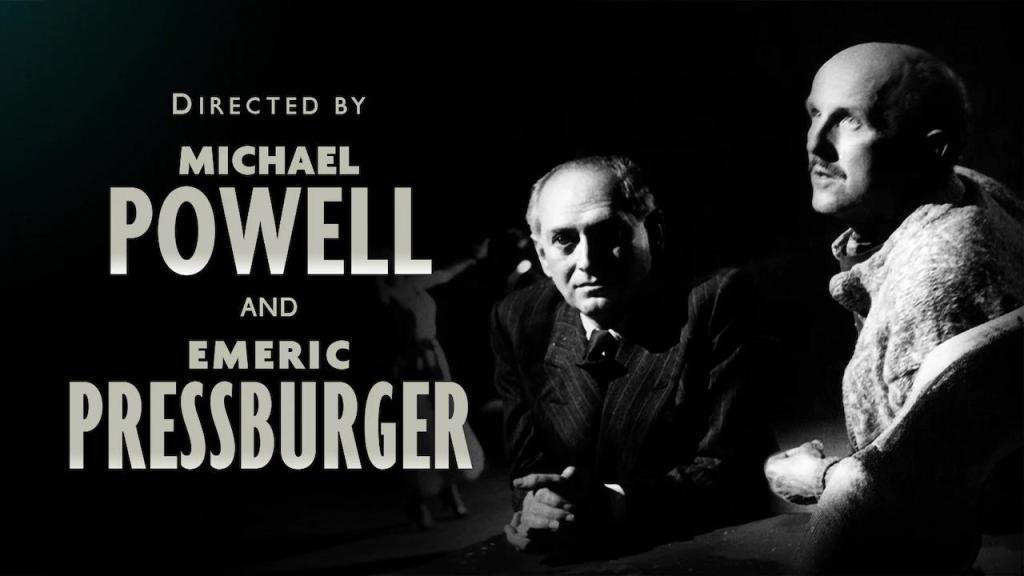
    But perhaps the most compelling aspect of “The Brokenwood Mysteries” is its clever and intricate plots. Each episode presents a new mystery for Shepherd and his team to unravel, with no shortage of twists, turns, and red herrings along the way. From seemingly straightforward cases to complex whodunits, the show keeps viewers guessing until the very end, with each reveal more satisfying than the last.

    Another notable aspect of the series is its attention to detail. From the stunning cinematography to the authentic New Zealand accents, every aspect of “The Brokenwood Mysteries” feels meticulously crafted and true to life. The show’s creators have clearly put a great deal of effort into capturing the essence of small-town New Zealand, and it pays off in spades.

    In addition to its captivating storytelling and compelling characters, “The Brokenwood Mysteries” also offers plenty of humor and heart. Despite the often grim subject matter, the series never takes itself too seriously, with plenty of lighthearted moments sprinkled throughout. Whether it’s Shepherd’s love of country music or Sims’ sarcastic one-liners, there’s always a sense of warmth and humanity at the heart of the show.

    As the series progresses, it continually evolves and deepens, offering viewers not only intriguing mysteries but also rich character development and exploration of social themes. While each episode stands alone as a compelling mystery, there is also a larger narrative arc that unfolds across the seasons, delving into the personal lives and pasts of the main characters.

    One of the most appealing aspects of “The Brokenwood Mysteries” is its ability to balance light-hearted moments with more serious themes. While the show certainly doesn’t shy away from the darker aspects of crime and human nature, it also finds humor and humanity in the midst of tragedy. This balance adds depth and complexity to the storytelling, making for a viewing experience that is both entertaining and thought-provoking.

    Another strength of the series is its commitment to diversity and representation. “The Brokenwood Mysteries” features a diverse cast of characters, including people of various ethnicities, ages, and backgrounds. This inclusivity not only reflects the reality of modern New Zealand but also allows the show to explore a wide range of perspectives and experiences.

    In addition to its diverse cast, “The Brokenwood Mysteries” also tackles a variety of social issues, from immigration and cultural identity to environmental conservation and economic inequality. While these themes are woven subtly into the fabric of the show, they add depth and relevance to the storylines, elevating the series beyond mere entertainment.

    Of course, none of this would be possible without the stellar performances of the cast. Neill Rea brings a quiet intensity to the role of Mike Shepherd, perfectly capturing the character’s mix of stoicism and vulnerability. Fern Sutherland shines as Kristin Sims, infusing her character with wit, intelligence, and a healthy dose of skepticism. And the supporting cast, including Nic Sampson, Cristina Serban Ionda, and others, bring their own unique talents and personalities to the mix, rounding out the ensemble beautifully.

    “The Brokenwood Mysteries” continues to captivate audiences with its ability to weave intricate plots, engaging characters, and stunning scenery into each episode. As the series progresses, it consistently delivers fresh and compelling mysteries that keep viewers on the edge of their seats.

    One of the show’s standout qualities is its dedication to authenticity. From the meticulously researched police procedures to the accurate portrayal of rural New Zealand life, every detail feels true to life. This commitment to realism not only adds depth and richness to the storytelling but also allows viewers to fully immerse themselves in the world of Brokenwood.

    In addition to its authenticity, “The Brokenwood Mysteries” also excels in its use of setting as a character unto itself. The lush landscapes, quaint townships, and idyllic vineyards of New Zealand provide the perfect backdrop for the series’ myriad mysteries. Whether it’s a murder in a vineyard or a suspicious death at a local festival, each case is intricately tied to the unique geography and culture of the region.

    Furthermore, the show’s writers have a knack for crafting multi-layered mysteries that keep viewers guessing until the very end. With each new case, Shepherd and his team are faced with a seemingly endless array of suspects, motives, and twists, forcing them to dig deeper and think outside the box to uncover the truth. This element of suspense and intrigue is what keeps viewers coming back for more, eagerly awaiting the next thrilling installment.

    But perhaps the greatest strength of “The Brokenwood Mysteries” lies in its ability to balance 

    the darkness of crime with moments of levity and humanity. Despite the often grim subject matter, the series never loses its sense of humor or its compassion for its characters. Whether it’s a quirky suspect, a humorous misunderstanding, or a heartfelt moment between colleagues, there’s always a sense of warmth and humanity at the heart of the show.

    “The Brokenwood Mysteries” is a must-watch for fans of crime dramas and mystery novels alike. With its stunning setting, memorable characters, and clever plots, it’s a show that will keep you coming back for more. So grab a glass of wine, settle in, and prepare to be captivated by the mysteries of Brokenwood. You won’t be disappointed.

  • 4K Blu-ray review: “Together” (2025)

    “Together” (2025)

    Horror

    Running Time: 102 minutes

    Written & directed by: Michael Shanks

    Featuring: Dave Franco and Alison Brie

    Tim: “It’s called diazepam now! It works quicker if you snort it!”

    Together is a 2025 body-horror film directed by Michael Shanks, starring real-life couple Alison Brie and Dave Francoas Millie and Tim — a long-term couple whose relationship is already strained when they move to a remote countryside home. What begins as an intimate drama about emotional distance quickly morphs into a grotesque, metaphor-laden horror spectacle when they encounter a mysterious force that intertwines their bodies in nightmarish ways.

    What sets Together apart from your average horror flick is its central metaphor — the idea of emotional codependency turned into literal physical fusion. The film uses the horror genre not just to scare, but to comment on the psychological dynamics of modern relationships: fear of separation, loss of identity, and the dread of being trapped with someone you can’t escape. It’s this conceptual backbone that gives the movie weight beyond its grotesque visuals.

    Critically, many viewers and reviewers have described the film as body horror with heart — or heart-shaped scars — where emotional unease and physical distortion merge seamlessly. Some critics even call it a “grotesque love story” and a romantic body horror hybrid.

    A selling point for the film — and a frequent talking point among audiences — is the real-life chemistry between Alison Brie and Dave Franco. Many argue that their genuine connection adds emotional verisimilitude to the horror, making the metaphorical terror feel literally intimate and personal.

    That said, not every viewer was sold on the leads. Some critics and fans felt that, despite the actors’ efforts, the script didn’t always serve them well and their performances occasionally fell flat compared to the film’s ambitions.

    In the 4K Ultra HD presentation, Together truly shines. The clarity of the Ultra HD format enhances both the lush countryside visuals and the nauseating body-horror sequences. Skin textures, contorted limbs, subtle makeup effects, and digital blends benefit from the high resolution, making shock moments — both grotesque and unsettling — far more impactful.

    The sound design deserves special mention: every squelch, squirm, and bodily shift is rendered with discomforting realism — an auditory texture that climbs under your skin as effectively as the visuals do. 

    Practical effects — especially in the major transformation scenes — stand out as memorable and often icky in the best way, giving the film that visceral, tactile feel that fans of the genre crave.

    One of the most common criticisms revolves around pacing. Together spends a significant amount of time establishing relationship drama before the horror kicks in, leading some viewers to feel like the first act is slow or uneventful. Later in the film, the introduction of a vague cult subplot and an over-explained backstory has been described as diluting the tension rather than enhancing it.

    This uneven pacing contributes to a tonal inconsistency that may frustrate genre purists who want non-stop scares, and narrative purists who want cohesive storytelling.

    What makes Together linger long after the credits roll is its emotional metaphor. Underneath the physical horror is a commentary on how people can cling too tightly to others, losing themselves in the process. This theme gives the film more to ponder than most horror movies ever attempt. This allegorical strength is why many viewers recommend the film not just as a fright-fest, but as a psychological conversation starter — especially among couples or those interested in relationship dynamics.

    Critically, Together holds strong ratings on review aggregators, with many critics praising its originality and visceral energy. The film’s unconventional blend of romance, horror, and body grotesquery ensures it’s one of the most talked-about horror offerings of 2025 — for better and worse.

    It’s not a perfect film, but it is ambitious, memorable, and unlike most horror films released in recent years — and in 4K, it’s a sensory experience that’s hard to forget.

    Together is:

    • 🎥 A visually striking and conceptually daring body horror film.
    • ❤️ A metaphor-rich exploration of codependency and identity within relationships.
    • 😱 A divisive but unforgettable horror experience — at its best when viewed as metaphor and mood, less so when judged solely on plot mechanics.

    If you want horror that makes you think, cringe, and squirm all at once, Together is well worth your time — especially in its 4K edition, which elevates every grotesque detail.out two very human, flawed people finding each other — that kind of subtle restoration is exactly the right call.

  • DVD Review: “Hacks Series 1 – 3” (2021 – 2024) 

    “Hacks Series 1 – 3” (2021 – 2024)

    Television Series / Comedy

    Twenty Seven Episodes

    Created by: Lucia Aniello, Paul W. Downs and Jen Statsky

    Featuring: Jean Smart, Hannah Einbinder, Carl Clemons-Hopkins, Megan Stalter, Paul W. Downs, Rose Abdoo and Mark Indelicato

    Ava: [during the heated exchange that takes place the first time Ava and Deborah meet] “I mean, the last thing on Earth I want to do is move to the desert to write some lame jokes for an old hack.”

    The three-series DVD release of Hacks arrives as a satisfying, well-curated package for a show that has swiftly become one of the most acclaimed comedies of the decade. Bringing together all episodes from its run, the set serves both as a binge-worthy immersion for newcomers and a collectible archive for established fans. More importantly, it captures a series that masterfully balances acerbic wit with genuine emotional intelligence, anchored by a career-best performance from Jean Smart.

    At its core, Hacks is about two women in comedy—one a veteran, one an upstart—whose creative collision sparks both conflict and growth. Jean Smart’s Deborah Vance is a seasoned Las Vegas comedian whose act and career are trending stale. Hannah Einbinder’s Ava Daniels is a cancelled millennial writer whose brilliance is overshadowed by her self-sabotaging impulsiveness.

    Across three seasons, the series charts their evolving professional partnership and reluctant emotional investment in one another. What starts as a transactional arrangement evolves into one of the richest and most layered character relationships in modern television.

    • Series 1 hits the ground running with dark humour and biting cynicism. Deborah and Ava are mutually hostile, and the comedy revels in their caustic exchanges. But its genius lies in how it gradually exposes vulnerability beneath the snark.
    • Series 2 deepens the dynamic by taking Deborah on tour. The road-movie structure injects freshness, and the writing expands beyond the Vegas bubble. The journey forces both women into situations that reshape their power dynamic, with the writers exploring the fragile tension between ambition, loyalty, and artistic integrity.
    • Series 3, arguably the most reflective season, tackles the cost of success after Deborah achieves a major career resurgence. Themes of legacy, control, and adaptation are played with wry melancholy rather than melodrama. It’s a more mature season, less reliant on punchlines and more invested in the emotional toll of creative reinvention.

    Throughout its run, Hacks excels at avoiding didactic takes on generational conflict. Ava and Deborah aren’t archetypes; they’re flawed, often unlikeable people, and the show treats their complexity as both comedic fuel and dramatic substance. The result is a series that is funny, unsentimental, occasionally cruel, and consistently truthful.

    Jean Smart is electric. Her portrayal of Deborah Vance balances old-school showbiz bravado with the quiet desperation of someone who has fought her entire life to remain visible. Smart commands the screen with impeccable timing, cutting delivery, and delicate emotional restraint.

    Hannah Einbinder meets her head-on with a performance that’s less flashy but equally compelling. Ava is insecure, arrogant, talented, and frequently insufferable, and Einbinder embraces every contradiction with authenticity rather than caricature.

    The supporting cast—Megan Stalter, Carl Clemons-Hopkins, Kaitlin Olson, Christopher McDonald—adds colour without dominating. They provide comedic punctuation while deepening the sense of a lived-in world.

    What distinguishes Hacks from other contemporary comedies is its tonal control. The show is rarely laugh-out-loud funny in a conventional sitcom way; instead, its humour emerges from character friction and situational discomfort.

    Dialogue is sharp without being overwritten. The writers know when to let moments breathe and when to devastate with a single line. Most impressively, the show avoids easy catharsis—its emotional payoffs feel earned.

    Thematically, Hacks is about:

    • The limits of reinvention
    • The fragility of ego
    • The economics of fame
    • And the universal fear of irrelevance

    But it treats those ideas with a light touch, never drowning us in message-driven drama.

    Visually, the transfers are pleasing but understandably limited by the standard definition format. Colours are warm, detail is adequate, and compression is minimal. For a dialogue-driven series without stylistic visual excess, DVD does the job well.

    Audio is clear, prioritising dialogue. Surround activity is subtle, mostly environmental ambience from performance venues and cityscapes. No distortion, no imbalance—just clean presentation.

    Where the disc set really earns its value is in its extras (depending on the edition):

    • Creator and cast interviews
    • Behind-the-scenes featurettes
    • Deleted scenes
    • Episode commentary tracks

    These materials deepen appreciation of the show’s creative process, particularly the collaborative writing ethos and Smart’s approach to character psychology.

    Menus are simple but elegant. Navigation is straightforward, offering quick access to episodes and extras.

    The true strength of Hacks on DVD is its rewatchability. Like the best character comedies—Veep, Louie, Barry—it rewards attention to nuance. Jokes land harder on repeat viewing because they’re embedded in personality, not pop culture reference.

    More than anything, Hacks stands as a poignant cultural document about women in entertainment, ageing, and the pressure to stay current in a disposable marketplace. It’s funny because it’s viciously honest; moving because it refuses sentimentality.

    The Hacks: Series 1–3 DVD set offers a comprehensive, thoughtfully curated presentation of one of television’s sharpest modern comedies. While Blu-ray or streaming may offer higher fidelity, this set’s value lies in ownership, permanence, and the extras that contextualise its creative brilliance.

    A smart, sophisticated release of a smart, sophisticated show.If you grew up with Grace Brothers, or simply love classic UK comedy, this DVD set is a must-own—charming, silly, and endlessly comforting.

  • Blu-ray review: “Sinbad and the Eye of the Tiger ” (1977)

    “Sinbad and the Eye of the Tiger ” (1977)

    Fantasy

    Running Time: 113 minutes

    Written by: Beverley Cross

    Directed by: Sam Wanamaker

    Starring: Patrick Wayne, Taryn Power, Margaret Whiting, Jane Seymour and Patrick Troughton

    Melanthius: “Extraordinary, a normal babboon wouldn’t have reconised its reflection and attacked it thinking it was another babboon.”

    Ray Harryhausen’s final Sinbad adventure, Sinbad and the Eye of the Tiger (1977), arrives on Blu-ray with the usual mixture of wonder, nostalgia, and a touch of disappointment that has accompanied the film since its theatrical release. Often regarded as the weakest of Harryhausen’s Sinbad trilogy, it nonetheless remains a vivid showcase of his visual imagination, full of animated creatures, mythic adventure, and a tone that bridges the Saturday-matinee sensibility of the 1950s with the post-Star Wars blockbuster era it arrived on the cusp of.

    What makes this Blu-ray noteworthy is not only the film’s technical presentation but the contextual framing it provides—an opportunity to reassess what has long been considered an underachieving entry in a legendary visual-effects career.

    Narratively, Eye of the Tiger follows Sinbad (Patrick Wayne), joined by the usual assortment of loyal crew and generated love interests, as he attempts to break a magical curse placed on Prince Kassim, who has been transformed into a baboon by an evil sorceress (Margaret Whiting, in one of the film’s few spirited performances). The journey takes the crew across fantastical landscapes populated by sabre-toothed tigers, troglodytes, towering insects, and undead skeletons—classic Harryhausen beasts rendered with his trademark stop-motion animation.

    Critically, the film suffers from a lack of charisma in its leads. Patrick Wayne is handsome but wooden, and Jane Seymour, radiant though she is, is given little to do beyond gazing admiringly and feigning distress. The script is simplistic even by late-’70s adventure standards, and the direction by Sam Wanamaker occasionally feels rushed—an odd mismatch with the laborious, handcrafted animation that defines the movie’s appeal.

    Yet it’s precisely that handcrafted quality that keeps the film alive. The baboon—one of Harryhausen’s most expressive creations—is arguably the emotional core of the story, and the stop-motion set pieces are still charming and distinct, especially when viewed in high-definition. Where the film falters in pacing and performance, it succeeds almost entirely on the basis of visual imagination.

    Visually, the Blu-ray reveals an unexpectedly strong transfer from often inconsistent original elements. Grain is present and mostly natural, befitting the film stock of the period. The colour palette is surprisingly rich, with vivid blues, golden sands, and deep reds that have often looked washed-out in television and VHS broadcasts restored to something like their intended vibrancy.

    Detail is improved considerably, particularly in close-ups and in Harryhausen’s models, where you can now fully appreciate the texture of fur, scales, and costumes. Matte shots and optical effects inevitably show their seams under HD scrutiny, but that is part of the charm rather than a flaw—these films are made of visible artistry, not digital perfection.

    The biggest technical issue is occasional softness and inconsistency from scene to scene, a by-product of the film’s extensive photographic compositing. While the transfer doesn’t attempt to over-correct or scrub these characteristics away, viewers accustomed to modern 4K restorations may find it less striking overall.

    The lossless audio track is clean, nicely balanced, and gives a welcome showcase to Roy Budd’s enthusiastic, muscular score. Dialogue is generally clear, though occasionally thin in the original recording, and the mix does its best to balance lively sound effects with orchestration.

    There are no aggressive surround tricks here, but the track preserves the spirit of the original mix without distortion or hiss.

    Sinbad and the Eye of the Tiger is flawed, fun, old-fashioned fantasy. The Blu-ray does not disguise its shortcomings—awkward acting, sluggish pacing, and dated narrative—but it amplifies its strengths: Harryhausen’s extraordinary technique, the sense of mythic wonder, and the tangible magic that only physical effects can conjure.

    The high-definition transfer honours the film’s textures without over-polishing, the audio does justice to the heroic score, and the supplements provide a rich layer of context that makes revisiting this “lesser” Sinbad much more rewarding.

    Not essential for casual viewers, but a surprisingly handsome Blu-ray that enhances appreciation of a film whose creative ambition exceeded its resources—yet still produced moments of genuine cinematic charm.a restoration of memory—the humble, resilient spirit of the “happy breed” it celebrates.estoration triumph but as a rediscovery of a film that glimmers with wit, irony, and supernatural elegance.

  • 4K Blu-ray review: “Rain Man” (1988)

    “Rain Man” (1988)

    Drama

    Running Time: 135 minutes

    Written by: Barry Morrow and Ronald Bass

    Directed by: Barry Levinson

    Featuring: Dustin Hoffman, Tom Cruise and Valeria Golino

    Charlie: “What you have to understand is, four days ago he was only my brother in name. And this morning we had pancakes.”

    At its heart, Rain Man remains a deeply affecting character piece: a story about two estranged brothers — brash, self-centered Charlie Babbitt and his autistic, savant brother Raymond — forced into a cross-country journey that gradually forces Charlie to confront his own selfishness and reevaluate what family means.

    When it was first released in 1988, the film had a big impact: it brought the representation of autism into mainstream awareness (for better or worse), wrapped inside a story of redemption, discovery, and emotional transformation. 

    Its strengths: strong performances, especially from the leads; a sensitive — if occasionally simplified — portrayal of Raymond; a script that balances drama, humor, and emotional weight; and character growth that feels earned rather than contrived.

    Of course, from a modern vantage there are more critical lenses through which the film can be viewed (some aspects of representation now feel dated or deserving of more nuance). But even leaving social commentary aside, as a road-movie / character-drama about sibling connection and personal change, Rain Man remains effective.

    The new 4K release of Rain Man (on UHD + Blu-ray) is based on a 16-bit scan of the original 35 mm camera negative, with the restoration approved by director Barry Levinson. The film is presented in its original aspect ratio (1.85:1), with Dolby Vision / HDR10 support.

    • Increased sharpness & detail — The 4K transfer brings out fine-object detail and facial texture in close-ups that simply weren’t as crisp on previous Blu-ray or DVD versions. Criterion Forum+2AVForums+2
    • Improved colours and contrast (thanks to HDR) — HDR grading brings more richness to skin tones, better balance between highlights and shadows, and especially makes bright sequences — like the neon-lit evening in Las Vegas — really “pop.” High-Def Watch+2The Film Junkies+2
    • Film-grain preserved (and better managed) — The restoration doesn’t attempt to smooth out the natural grain; in many scenes (especially daylight, wide shots) the grain remains film-like and consistent, giving a purely analog cinematic feel while still benefiting from 4K resolution. Criterion Forum+2Blu-ray Rezensionen+2
    • Robust audio and extras — The UHD disc includes DTS-HD Master Audio 5.1, and the package contains the standard Blu-ray edition (1080p) as well, plus multiple audio commentaries (director, writers), original trailer, and featurettes. Criterion Forum+2The Film Junkies+2

    Reviewers generally call this 4K edition “the best the film has ever looked,” and for many fans it now stands as the definitive home-video version of Rain Man. Criterion Forum+2TheaterByte+2

    Even with a high-quality restoration, Rain Man’s 4K edition shows some limitations — some inherent to the original film, some related to medium or expectations:

    If you:

    • love Rain Man and have fond memories of it,
    • appreciate classic films as film, not just as content,
    • own (or plan to own) a 4K TV / HDR-capable setup, and
    • care about picture quality, preservation, and film grain authenticity —

    then the 4K UHD edition is absolutely worth owning. It doesn’t reinvent Rain Man, but it honours the film’s cinematic legacy, restoring the 35 mm original in a way that respects its grain, sharpness, and atmosphere.

    If, instead, you’re looking for a “visually stunning,” “modern-movie” kind of upgrade — big contrast swings, stylised cinematography, ultra-crisp modern digital look — you might find the upgrade modest. The 4K often enhances what’s already there, rather than drastically redefining it.

    But that’s part of what makes the 4K worthwhile: it doesn’t betray the original film, it refines it. For a film that’s so much about emotional texture and character — about two very human, flawed people finding each other — that kind of subtle restoration is exactly the right call.

  • DVD Review: “Are You Being Served? Series 1 – 10” (1972 – 1985) 

    “Are You Being Served? Series 1 – 10” (1972 – 1985) 

    Television Series / Comedy

    Seventy Episodes

    Created by: Jeremy Lloyd and David Croft

    Featuring: Mollie Sugden, Trevor Bannister, Frank Thornton, John Inman, Wendy Richard, Arthur Brough, Nicholas Smith, Larry Martyn, Harold Bennett, Arthur English and James Hayter

    Mrs. Slocombe: [removes her gas mask] “What about this fog! My pussy’s been gasping all night.”

    The DVD release of Are You Being Served? affords one of British television’s most enduringly popular sitcoms the kind of archival consolidation it deserves: a full, chronological journey through the madcap world of Grace Brothers, spread across a neatly housed collection that emphasises completeness, nostalgia, and sheer rewatchable comfort. While the presentation is inevitably constrained by the low-budget, analogue origins of the original broadcast, the package nonetheless offers a reliably satisfying home-video experience, enhanced by a wealth of episodes, excellent compression, and a chance to admire the show’s oddball, often ingenious comedic rhythms in proper sequence.

    Airing from 1972 to 1985, Are You Being Served? occupies a unique middle ground in the history of British sitcom: both enormously broad and remarkably formal. It mines its laughs from double entendres, innuendo, archetypal personalities, and the rigid absurdities of British class hierarchy. In its world, the tired floors of Grace Brothers are a microcosm of post-war Britain: aspirational, petty, horny, and deeply repressed.

    The chief pleasure of rewatching via DVD is seeing how consistently the ensemble cast hit their marks. The show is a true ensemble comedy, but it undeniably centres on John Inman’s brilliant, high-camp performance as Mr. Humphries—one of the most iconic queer-coded characters on British television. His fluttering, sly, relentlessly comic energy gives the series a buoyancy that sets it apart from other workplace sitcoms of the era.

    Mollie Sugden’s Mrs. Slocombe—endlessly preoccupied with her “pussy”—remains a high-water mark of character comedy, and the continued repetition of the gag only enhances its ridiculousness. The rest of the cast—Trevor Bannister, Frank Thornton, Nicholas Smith, Wendy Richard—slot into extremely defined roles that the scripts cleverly exploit without ever significantly altering.

    This static quality, often criticised in modern sitcom terms, is actually part of the show’s charm: it doesn’t evolve so much as escalate, a chamber piece in which small variations provoke large reactions.

    The DVDs present the episodes in their original full-frame format, with no attempt made to upscale, restore, or reformat the image beyond basic cleanup and compression. The result is television that looks exactly like television—shot on videotape, with occasional shifts in lighting, colour balance, and softness.

    Don’t expect pristine clarity. The show exhibits grain, fuzz, occasional tracking-like artefacts, and a distinct softness during studio wide shots. Close-ups fare better, with decent definition and natural skin tones.

    More importantly, the compression is handled well across the discs. Episodes are stable, with no visible macroblocking, digital noise, or motion trails. The DVDs retain the warmth of analogue image without attempting to “modernise” it, and that is likely to please purists.

    Audio is clean, flat, mono—functional without being impressive. Dialogue is crisp, laugh track unmuddied, and music cues suitably bright. The show was always sonically unremarkable; the disc preserves that faithfully.

    One of the biggest strengths of owning Are You Being Served? on DVD is being able to watch the run in sequence. The show’s comedy doesn’t drastically shift, but the characters settle, deepen, and refine into something approaching sitcom ritual.

    The bonus features vary depending on the edition—some releases include interviews, outtakes, or short retrospective pieces, while others are bare-bones.

    In most cases, expect at least:

    • Cast biographies
    • Text-based production notes
    • Possibly vintage promotional materials

    These are not deep archival extras—nothing like the detailed retrospectives on modern BBC releases. But the supplements provide context, and fans may find small but meaningful historical nuggets.

    For many viewers, Are You Being Served? sits squarely in the “comfort-food television” category—warm, predictable, and resolutely unpretentious. But its comedic craftsmanship shouldn’t be overlooked.

    It’s bawdy, yes—packed with innuendo and stereotypes that, if produced today, would provoke debate—but also rooted in a very specific British theatrical tradition: pantomime + farce + class satire.

    Viewed now, that mix feels antiquated, anarchic, and oddly charming. The DVD allows modern audiences to experience this with authenticity, rather than through intrusive edits, reformatting, or algorithmic streaming compression.

    This DVD release of Are You Being Served? is a dependable, satisfying way to revisit a classic of British comedy. It does not attempt to reinvent or modernise the show; instead, it preserves its qualities—good and bad—with fidelity.

    Pros

    • Complete run of episodes in correct order
    • Solid compression and playback stability
    • Faithful video/audio presentation
    • High rewatch value
    • Extremely cost-effective

    Cons

    • Soft, dated image quality
    • Minimal extras
    • No restoration work
    • Humour may feel repetitive or archaic

    A delightful, if unpretentious, archival release that honours the legacy of one of British television’s most beloved sitcoms.

    If you grew up with Grace Brothers, or simply love classic UK comedy, this DVD set is a must-own—charming, silly, and endlessly comforting.

  • Blu-ray Review: “Bewitched: Seasons 3 & 4” (1966 – 1968)

    “Bewitched: Seasons 3 & 4” (1966 – 1968)

    Comedy / Television

    Sixty Episodes

    Created by: Sol Saks

    Featuring: Elizabeth Montgomery, Dick York, Agnes Moorehead, Dick Sargent and David White

    Uncle Arthur: [to Endora] “When I think of you as a blood relative, I long for a transfusion.”

    The gradual high-definition restoration of Bewitched has been one of the most rewarding catalogue-TV upgrades of the past decade. Seasons 3 and 4 mark the series’ creative peak, sitting at the perfect intersection of warm domestic comedy, whimsical fantasy, and that unmistakable Screen Gems gloss. These Blu-ray releases continue Sony’s surprisingly excellent work on the show—faithful, film-like presentations that maintain the charm of 1960s network television while revealing just how artfully Bewitched was produced.

    Both seasons also represent pivotal shifts for the series: Season 3 is the final year of black-and-white production (albeit shot on color stock later presented monochromatically), and Season 4 brings the much-heralded switch to full color. The Blu-rays treat each era with appropriate respect, giving longtime fans the best home-video representation these iconic episodes have ever had.

    Season 3 has always been the most visually misrepresented in syndication, often appearing soft, contrast-heavy, or riddled with print damage. The Blu-ray upgrade is close to revelatory. Each episode—scanned from Sony’s 4K archival restorations—offers crisp detail, rich blacks, and stable whites without harsh digital tinkering.

    Film grain is intact, natural, and pleasingly fine. Close-ups of Elizabeth Montgomery reveal nuances that were simply invisible in the DVD era: eye texture, hair highlights, and the subtle makeup techniques of classic television cinematography. Background details—kitchen counters, living-room props, costume fabrics—finally read as objects with real dimension.

    Special effects, always charmingly handmade, benefit from the sharp transfer. Jump cuts, optical composites, and wire removals are clearer than ever, but not in a way that breaks the spell—rather, they serve as a time capsule of clever mid-century television craft.

    Season 3 in HD feels like watching the show as it would have appeared at its 1966–67 network broadcasts.

    The transition to color brings a new visual character, and the Blu-rays preserve this era with exceptional fidelity. Colors are warm, bold, and very much of the 1960s: pastel kitchens, vivid costumes, bright florals, and the familiar Bewitchedturquoise-and-lavender shimmer.

    The restoration is remarkably consistent. There’s no evidence of color bleeding, over-saturation, or heavy-handed noise reduction. Grain is slightly more pronounced than in the black-and-white episodes—typical of 35mm Eastmancolor stock—but remains organic.

    Perhaps the biggest revelation is how beautifully lit Bewitched truly was. Dora’s dramatic entrances, Maurice’s magical theatrics, and the more elaborate in-house set-ups all shine under the crisp, color-rich HD presentation.

    A few episodes show minor source limitations—slightly softer shots or occasional flicker—but nothing that distracts or feels neglected.

    Both seasons feature a lossless mono track, and while the audio is inherently limited by 1960s production, it is surprisingly vibrant. Dialogue is clear and well-balanced, music cues retain their jaunty orchestral shimmer, and magical sound effects have greater presence than ever before.

    Season 4’s audio occasionally sounds a touch brighter due to the period’s production shift, but both seasons avoid distortion or harshness. Sony has not attempted any inappropriate faux-stereo processes, and the result is a faithful sonic presentation of the series.

    Unfortunately, like the previous season sets, Seasons 3 and 4 are light on new supplemental material. There are no new commentaries, featurettes, or archival interviews that might have enriched the release. Most viewers will regret the absence of behind-the-scenes context, especially given the show’s historical significance.

    However, the episodes themselves are uncut, beautifully restored, and remain the primary attraction. Menu design is clean and functional.

    Season 3 (1966–67)

    Here the show fully embraces its rhythm. Standouts include:

    • “Twitch or Treat” – A classic Halloween romp.

    • “I Remember You…Sometimes” – Endora’s pranks escalate hilariously.

    • “Sam’s Spooky Chair” – A perfect blend of suburban chaos and magical mishap.

    • “Super Car” – A wonderfully absurd outing that typifies the show’s charm.

    Season 3 balances smart domestic comedy with clever fantasy storytelling. Montgomery’s dual-performance finesse, Dick York’s impeccable timing, and Agnes Moorehead’s commanding presence all shine.

    Season 4 (1967–68)

    The color era introduces a slightly bolder comic tone. Highlights include:

    • “Long Live the Queen” – Samantha is crowned Queen of the Witches.

    • “Hippie, Hippie, Hooray” – Montgomery brilliantly plays a free-spirited lookalike.

    • “The Horn of Plenty” – A sweet, inventive magical mishap.

    • “The Safe and Sane Halloween” – A fan-favorite, enhanced beautifully by color.

    The color brings renewed energy, and the show feels at times even more modern in its comedic pacing.

    Seasons 3 and 4 of Bewitched on Blu-ray are essential upgrades, offering the finest presentations these episodes have ever received. Season 3’s black-and-white elegance shines with newfound clarity, while Season 4’s color episodes sparkle with nostalgic richness. The lack of bonus features is the only substantive drawback, but the core restorations are exceptional.

    If you’ve been collecting the Blu-ray sets, these entries maintain—and sometimes surpass—the quality of the earlier releases. If you’re discovering Bewitched anew, these two seasons sit at the heart of the series’ identity and are presented here with affection and technical polish.

    A must-own for classic TV fans, restoration enthusiasts, and anyone who appreciates the magic of Samantha Stephens’ twitch.