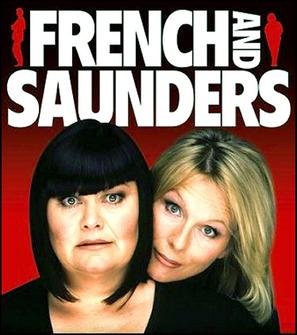
French and Saunders Series 1 – 6 (1994 – 2005)
TV Series/Comedy

Episodes: Forty Eight
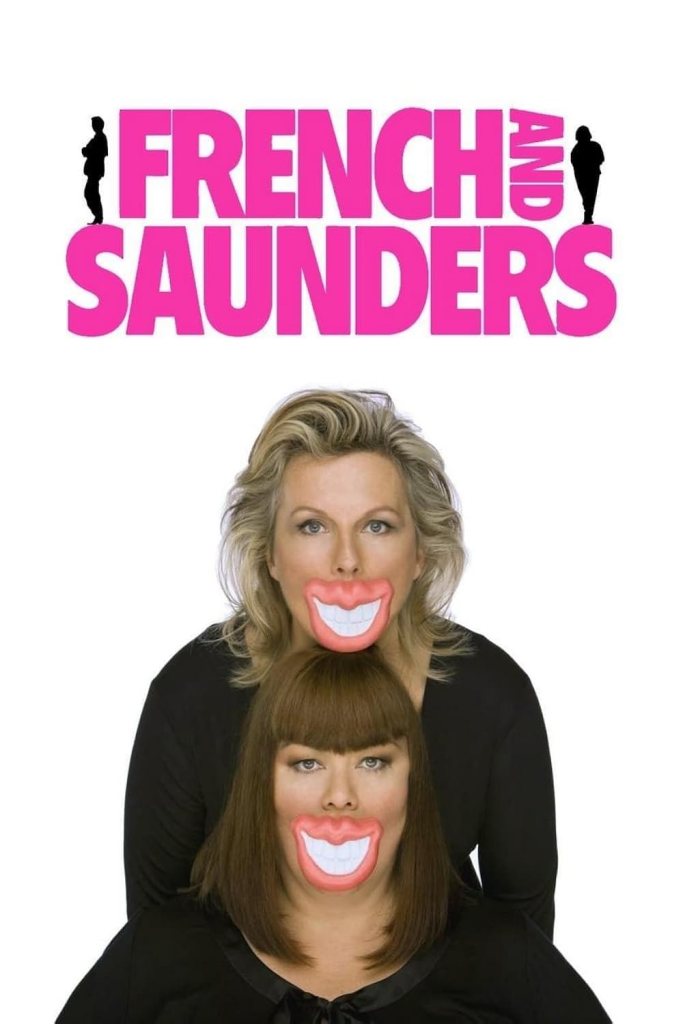
Created and Featuring : Dawn French and Jennifer Saunders
Jennifer: “A lot of our viewers seem to be having a lot of trouble discerning the difference between a pension scheme and a unit trust.”
Dawn: “Oh yes, I get that one a lot. Now listen, people, I don’t know how many times I can explain this to you. The first one is a PENSION SCHEME, and the second is a UNIT TRUST.”
Jennifer: “Well, that clears that up, then.”
Among the great British comedy double acts, few were as gloriously anarchic, inventive, and influential as French and Saunders. Across multiple decades, countless specials, and an enormous range of parody targets, the partnership between Dawn French and Jennifer Saunders created a body of work that remains one of the defining achievements of British television comedy. Their show was not simply a collection of sketches; it became a constantly evolving showcase for absurdism, satire, character comedy, and affectionate cultural mockery. Even now, years after its original peak, the series still feels remarkably fresh because its humour emerged less from fashionable cynicism and more from fearless comic performance.
What immediately separated French and Saunders from many sketch shows of the 1980s and 1990s was their chemistry. There are comedy partnerships that feel carefully engineered, and there are those rare pairings where the performers seem to share a single comic brain. French and Saunders belonged firmly in the second category. Their timing was instinctive. One could derail a sketch with a single facial expression while the other instantly adapted, turning apparent chaos into something even funnier. That looseness became part of the show’s identity. Unlike tightly polished American sketch productions that aimed for perfection, French and Saunders often felt thrillingly unpredictable. You sensed that the performers themselves were having enormous fun, and that energy became infectious.
The origins of the duo are inseparable from the alternative comedy movement that transformed British humour in the 1980s. Alongside figures such as Rik Mayall, Adrian Edmondson, Ben Elton, and Alexei Sayle, French and Saunders helped push British comedy away from tired club-comic traditions. Yet while many of their contemporaries leaned heavily into aggression or political rage, French and Saunders developed something stranger and more playful. Their comedy could be surreal and savage, but it rarely felt cruel. Even their sharpest celebrity parodies usually carried a sense of admiration underneath the mockery.
The structure of the show evolved significantly over the years. Early episodes had a rough-edged, experimental quality. Some sketches were intentionally awkward, almost anti-comedy in their pacing. There was a willingness to let a joke collapse into absurdity or continue long beyond conventional logic. This unpredictability became one of the series’ strengths. Not every sketch worked perfectly, but the failures were often as interesting as the successes because the duo constantly experimented with form.
As the series matured, the production values improved and the scope became far more ambitious. By the 1990s, French and Saunders had become masters of the elaborate television parody. Their send-ups of Hollywood films, prestige dramas, and pop culture phenomena became legendary. Their parody of Titanic is still a comic masterpiece, simultaneously ridiculing the melodrama of James Cameron’s blockbuster while capturing its visual style with uncanny precision. The brilliance of these sketches was that they were never lazy spoofs. They understood exactly what made the original material culturally dominant, then exaggerated those qualities into glorious absurdity.
Their parody of The Lord of the Rings demonstrated the same intelligence. Rather than merely mocking fantasy clichés, they homed in on the emotional intensity and self-seriousness that defined epic cinema at the time. French and Saunders recognised that the funniest way to puncture cultural phenomena was not through contempt, but through overcommitment. They performed ridiculous material with complete sincerity, and that sincerity made the comedy land harder.
One of the series’ greatest achievements was its approach to celebrity culture. Long before social media transformed fame into an endless performance, French and Saunders understood the absurd artificiality of stardom. Their sketches frequently exposed the vanity, self-importance, and theatricality surrounding celebrities, but without becoming mean-spirited. Their recurring impersonations of figures such as Madonna, Cher, and Catherine Zeta-Jones were exaggerated caricatures, yet they retained a kind of gleeful affection.
The Madonna parodies in particular became iconic because Jennifer Saunders captured not merely Madonna’s image, but the exhausting seriousness with which pop reinvention was often presented. Saunders played her as absurdly intense and self-mythologising, while Dawn French often acted as the bewildered observer struggling to keep pace with the chaos. The dynamic perfectly reflected how celebrity culture increasingly demanded audiences treat entertainment as profound revelation.
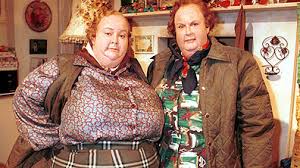
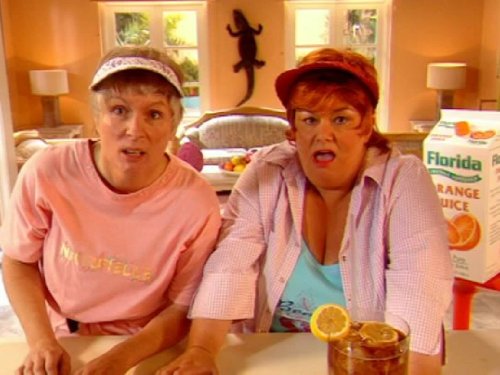
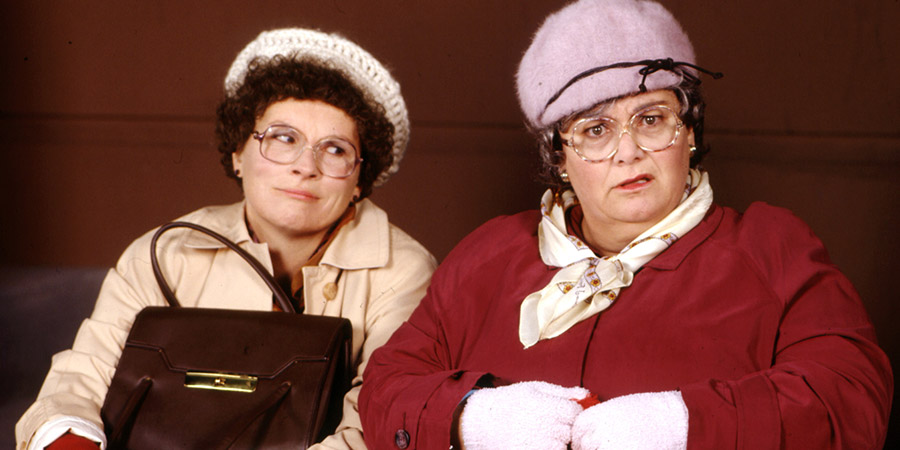
Dawn French herself was one of the great comic performers of British television. Her willingness to embrace physical comedy was extraordinary. She could weaponise a glance, a stumble, or a sudden scream in ways few comedians could match. French possessed immense warmth as a performer, which made even her most grotesque characters oddly lovable. There was always humanity beneath the silliness. Whether portraying deranged suburban women, incompetent television hosts, or exaggerated versions of herself, she committed completely to every joke.
Jennifer Saunders, meanwhile, brought a sharper, more satirical edge. Her writing instincts were razor-sharp, and she excelled at portraying monstrous egotists convinced of their own brilliance. You can clearly see the seeds of Absolutely Fabulous within many French and Saunders sketches. Saunders understood vanity as performance art. Her characters often behaved as though permanently auditioning for admiration, and the desperation beneath their confidence created some of the series’ funniest moments.
The contrast between the two comedians became the engine driving the show. French projected warmth and emotional openness; Saunders specialised in brittle narcissism and controlled hysteria. Together they created comic friction that could sustain even the flimsiest premise. Some sketches barely had a plot at all. Watching the pair bounce off each other was enough.
Another remarkable aspect of the series was its visual ambition. Many British sketch shows of the era relied heavily on minimal sets and theatrical staging, but French and Saunders increasingly embraced cinematic parody. Costumes, makeup, editing, and production design became central to the comedy. Their recreations of famous films and television series were often astonishingly accurate despite obvious budget limitations. In fact, the visible cheapness frequently enhanced the humour. There was something deeply funny about seeing epic Hollywood spectacle recreated with determined enthusiasm and obvious corner-cutting.
Their musical parodies deserve particular praise. French and Saunders had a sophisticated understanding of pop-video aesthetics and the strange visual language of MTV-era music culture. Their recreations of music videos captured not just costumes and choreography but the underlying ridiculousness of the medium itself. Yet again, the humour worked because they fully committed to the performances rather than standing outside them with detached irony.
The supporting performers also contributed enormously to the show’s success. Figures such as Kathy Burke, Helen Lederer, and Ruby Wax regularly appeared, helping create a broader comic universe linked to Britain’s alternative comedy explosion. The show felt collaborative and communal rather than dominated purely by star ego.
What makes French and Saunders particularly impressive in retrospect is how well much of the comedy has aged. Sketch comedy often becomes trapped within the references and attitudes of its era, but French and Saunders avoided many of the pitfalls that date older British comedy. Partly this is because their humour depended more on character and performance than shock value. More importantly, the duo possessed an unusual generosity. Even when mocking people or trends, they rarely seemed motivated by bitterness.
Their influence on later generations of British comedy is enormous. Modern female-led comedy partnerships and sketch shows owe a tremendous debt to French and Saunders, not merely because they succeeded commercially, but because they demonstrated that women could dominate sketch comedy without conforming to restrictive industry expectations. They were silly, vulgar, surreal, intellectual, glamorous, ridiculous, and unapologetically broad all at once.
The show also occupies an important place in television history because it challenged assumptions about who could be central to comedy. At a time when women in British television comedy were often relegated to supporting roles, French and Saunders became the main attraction. They controlled the material, shaped the tone, and proved that female comic performers could command massive mainstream audiences without softening their humour.
Of course, not every sketch was brilliant. Like all long-running sketch series, French and Saunders produced occasional misfires. Some jokes stretched too long. Some topical references now feel obscure. Certain experimental pieces collapse under their own weirdness. But even the failures usually contain moments of comic inspiration because the duo’s performances remain so engaging.
The Christmas specials became especially beloved because they turned television parody into a national event. Audiences tuned in not just for jokes but to see what major cultural phenomenon would be gleefully dismantled next. These specials often felt surprisingly lavish for comedy television, and the scale of the productions reflected how central French and Saunders had become to British entertainment.
Beyond the sketches themselves, the partnership represented something increasingly rare in television comedy: genuine companionship. French and Saunders never seemed like competitors trapped together for commercial reasons. Their friendship radiated through the screen. Even when performing cruel or absurd material, there was a sense of trust and delight underpinning everything. That emotional authenticity gave the series tremendous charm.
Watching the show now also reveals how expertly it balanced sophistication and accessibility. There were clever media jokes and subtle performance details for attentive viewers, but there were also huge visual gags, slapstick chaos, and wonderfully stupid punchlines. The comedy never became smug. French and Saunders understood that intelligence and silliness are not opposites but perfect partners.
In many ways, the series captured the joy of performance itself. You can see two immensely talented comedians constantly trying to make each other laugh, pushing sketches further into absurdity simply because they can. That spirit of comic playfulness remains the show’s greatest strength. French and Saunders was never about delivering tidy satirical messages or proving intellectual superiority. It was about the exhilarating possibilities of comedy when performers are fearless, inventive, and completely in sync.
Today, French and Saunders stands as one of the defining British sketch shows of its era — not merely because it was funny, but because it continually reinvented what television comedy could look like. Its best moments remain timeless: gloriously ridiculous, sharply observed, endlessly quotable, and powered by one of the greatest comedy partnerships television has ever produced.