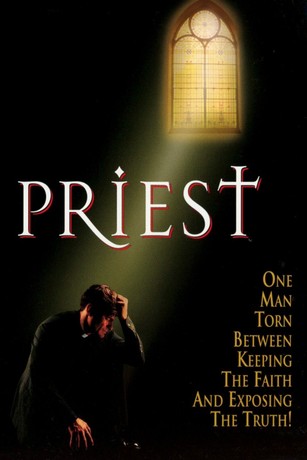
“Priest” (2007)
Drama

Running Time: 108 minutes
Written by: Jimmy McGovern
Directed by: Antonia Bird
Starring: Linus Roache, Tom Wilkinson, Robert Carlyle and Cathy Tyson
Father Greg Pilkington: “When we were in seminary, it was a sort of standard question: a man tells you in confession that he’s poisoned the altar wine. Do you still go out and say Mass? Now, I had no problem with that: I’d go out and say Mass, drink the wine. There’s a bit of the martyr in all of us.”
Released in 1994, Priest remains one of the most confrontational and emotionally devastating British films of the 1990s. Directed by Antonia Bird and written by Jimmy McGovern, the film arrived in cinemas surrounded by controversy, protests, and furious debate from religious groups, yet more than three decades later it feels less like a provocation and more like a painfully human tragedy. What once scandalised audiences now plays as a fearless examination of repression, hypocrisy, institutional silence, and the desperate need for compassion within rigid systems.
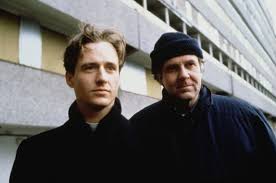
Set in Liverpool, the film follows Father Greg Pilkington, played with remarkable vulnerability by Linus Roache, a young Catholic priest transferred to a rough inner-city parish. Greg arrives carrying a secret: he is gay, celibate in theory but emotionally and sexually conflicted in practice. The parish is overseen by Father Matthew Thomas, portrayed by Tom Wilkinson in one of the finest performances of his career. Matthew is older, cynical, practical, and deeply compromised, a priest who understands the machinery of the Church well enough to know where morality ends and institutional survival begins.
What makes Priest so powerful is that it refuses to settle for easy outrage. Lesser films would simply portray the Catholic Church as monstrous and hypocritical while positioning Greg as a straightforward martyr. Instead, the screenplay constantly complicates its characters. Greg is compassionate but immature. Matthew is compromised but not evil. The parishioners themselves are often cruel, frightened, lonely, or trapped within cycles of shame and silence. The film’s emotional force comes from watching decent people fail one another because they have inherited structures built on fear.
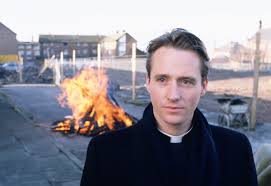
Roache’s performance anchors the entire film. His Father Greg is not a rebel in the traditional sense. He does not arrive wanting to overthrow the Church or expose corruption. He genuinely believes in his vocation. He wants to help people. That sincerity matters enormously because it prevents the film from becoming a simplistic attack on faith itself. Greg’s struggle is not with God but with an institution that demands impossible emotional mutilation from him. Roache conveys this conflict physically: the nervous posture, the hesitant smiles, the exhausted eyes after encounters that leave him spiritually hollowed out. Even in moments of desire or anger, he appears burdened by guilt so deeply ingrained that it has become part of his nervous system.
The film’s central moral crisis emerges when a young girl confesses to Greg that she is being sexually abused by her father. Bound by the sanctity of confession, Greg cannot reveal what he has heard. This creates one of the most agonising ethical dilemmas ever explored in a mainstream British drama. The screenplay does not offer comforting solutions. Greg is trapped between institutional law and moral responsibility, and the audience is forced to confront the horrifying inadequacy of systems that prioritise doctrine over protection.
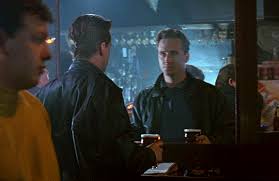
This storyline alone would make Priest an unsettling film, but McGovern layers it with another form of repression: Greg’s sexuality. The film’s most controversial scenes, particularly Greg’s sexual encounters with a young man he meets through chance attraction, are handled with startling directness for a mid-1990s British film. Yet they are not exploitative. Bird films these moments with sadness rather than titillation. Sex in Priest is never liberating in the conventional cinematic sense. It is tangled with shame, longing, secrecy, and emotional confusion. Greg is not simply discovering himself; he is tearing himself apart.
Tom Wilkinson’s Father Matthew provides the film’s most fascinating counterpoint. Matthew initially appears worldly and pragmatic compared to Greg’s idealism, but Wilkinson gradually reveals the exhaustion beneath the cynicism. Matthew has spent years surviving within the Church by compartmentalising morality. He drinks heavily, maintains a private arrangement with his housekeeper, and avoids challenging the institution directly because he knows resistance is futile. Wilkinson gives the character immense emotional depth. Matthew is not proud of his compromises, but he sees them as necessary accommodations within a flawed world. In some ways he represents Greg’s possible future: a man who once believed passionately and eventually settled for endurance.
The relationship between Greg and Matthew is the heart of the film. Their arguments about faith, sexuality, confession, and responsibility are written with extraordinary intelligence. Neither man fully defeats the other in debate because both possess uncomfortable truths. Greg’s idealism exposes Matthew’s cowardice, while Matthew’s realism exposes Greg’s naivety. Their conversations feel alive because they are rooted in genuine theological and emotional conflict rather than simplistic ideological point-scoring.
Antonia Bird’s direction is exceptional throughout. She approaches Liverpool not as picturesque social realism but as an environment saturated with pressure and emotional confinement. Streets, pubs, cramped houses, and church interiors all feel heavy with unspoken tensions. The film’s visual palette is muted and cold, full of greys and browns that reflect the emotional suffocation of the characters. Bird also understands silence. Many of the film’s strongest scenes rely on pauses, glances, and restrained body language rather than dramatic speeches.
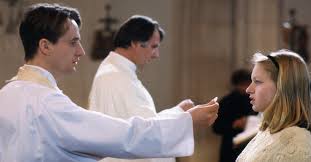
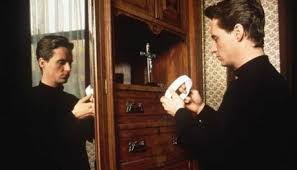
The religious imagery is used brilliantly. Crucifixes, confessionals, candles, and ritual garments appear constantly, but the film refuses to mock them. Instead, these symbols become reminders of the impossible standards imposed on flawed human beings. The Church is presented not merely as an institution but as a total environment shaping identity, morality, sexuality, and self-worth. Greg cannot simply walk away emotionally, because Catholicism has formed the architecture of his entire inner life.
One of the most impressive aspects of Priest is its refusal to dismiss faith itself. Many anti-clerical films attack religion by portraying believers as foolish or deluded. Priest does something far more sophisticated. It acknowledges the comfort, structure, and spiritual meaning religion can provide while simultaneously condemning the cruelty and repression institutional power can create. This balance gives the film unusual emotional credibility. Even viewers with strong religious convictions can recognise the humanity in its struggles.
The controversy surrounding the film upon release now seems revealing in itself. Religious protests attempted to frame the movie as blasphemous or anti-Catholic, but revisiting it today makes clear how deeply moral the film actually is. Its outrage is directed not at belief but at silence, hypocrisy, and institutional protectionism. In hindsight, the film appears almost prophetic given the abuse scandals and systemic cover-ups that would later devastate the Catholic Church’s public reputation worldwide.
There is also something deeply sad about the film’s vision of masculinity. Nearly every male character is emotionally trapped. Greg suppresses desire. Matthew suppresses idealism. The abusive father suppresses his violence until it erupts in horrific ways. Even ordinary parishioners struggle to articulate tenderness or vulnerability. The film suggests that repression itself can become poisonous, mutating natural human feeling into secrecy, shame, or brutality.
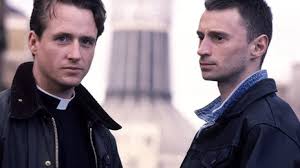
The supporting cast is superb across the board. Robert Carlyle appears briefly but memorably, while the ensemble of parishioners and working-class families creates a believable social environment rather than a theatrical backdrop. The dialogue feels authentically lived-in, full of humour, bitterness, and awkward intimacy.
What ultimately makes Priest endure is its compassion. Despite its anger toward institutional failures, the film never loses sight of the suffering individuals caught within those systems. Greg is not presented as a symbol or political argument; he is a lonely, frightened human being trying to reconcile faith with identity. That emotional honesty gives the film lasting power.
The ending is especially remarkable because it refuses triumphant resolution. There is no grand rebellion, no sweeping victory over hypocrisy. Instead, the conclusion offers something quieter and more ambiguous: an act of honesty and vulnerability that may or may not change anything. The film recognises that institutions rarely transform overnight, but individual moments of courage still matter.
Today, Priest stands as one of the defining British dramas of its era, alongside the socially conscious work of filmmakers like Ken Loach and writers such as Alan Bleasdale. Yet it also occupies its own distinctive territory, blending social realism with spiritual anguish in a way few films have attempted.
It is a difficult film, emotionally draining and often deeply uncomfortable, but it is also humane, intelligent, and courageous. Few movies about religion have explored the collision between doctrine and humanity with such honesty. Even fewer have done so while maintaining empathy for nearly everyone involved.
More than thirty years later, Priest remains shocking not because of its sexuality or controversy, but because of how truthfully it depicts the cost of silence.