• Blu-ray Review: “Bewitched: Seasons 5 & 6” (1968 – 1970)

    “Bewitched: Seasons 5 & 6” (1968 – 1970)

    Comedy / Television

    Sixty Episodes

    Created by: Sol Saks

    Featuring: Elizabeth Montgomery, Dick York, Agnes Moorehead, Dick Sargent and David White

    Uncle Arthur: [to Endora] “When I think of you as a blood relative, I long for a transfusion.”

    With the high-definition restoration of Bewitched continuing across its later seasons, the Blu-ray releases of Seasons 5 and 6 showcase both the creative evolution and the shifting tonal dynamics of one of television’s most enduring sitcoms. These sets also mark two distinct eras: Season 5, the final full year with the original Darren, Dick York, and Season 6, the beginning of Dick Sargent’s tenure. Together, they present an illuminating look at how the series both changed and persevered across its mid-run turbulence.

    Season 5

    Season 5 benefits enormously from Sony’s ongoing HD remastering project. The clarity, color vibrancy, and cleanup match the high bar set by previous seasons, but with a noticeable uptick in polish. The fifth season’s palette—heavy with late-60s pastels, bright suburban exteriors, and increasingly elaborate magical effects—looks surprisingly fresh.

    • Color reproduction is a highlight: Endora’s signature purples and greens have real pop, and Elizabeth Montgomery’s wardrobe, now fully embracing late-60s fashion, looks crisp and richly textured.

    • Grain structure remains filmic but fine, consistent with a proper scan of well-preserved 35mm elements.

    • Special effects, especially optical composites, inevitably show their seams more clearly in HD, but fans will appreciate the authenticity and lack of digital tampering.

    Season 5 also seems slightly sharper than Season 4, suggesting improved elements or more refined scanning.

    Season 6

    Season 6 marks a modest dip in visual consistency, though not in overall quality. Still beautifully restored, the season occasionally exhibits:

    • Minor fluctuations in sharpness, possibly due to varying condition of source elements.

    • A handful of softer shots, likely inherent to original production and not the remaster.

    That said, colors remain bold, grain is intact, and Montgomery’s performance shines with newfound immediacy thanks to the clarity of the transfer. Dick Sargent’s first appearance is also surprisingly vivid—his lighter hair, different facial features, and newer wardrobe give the season a slightly different visual tone, and the HD transfer captures the shift perfectly.

    Overall, both seasons represent faithful, high-quality restorations, with Season 5 the stronger of the pair.

    Both seasons present the expected DTS-HD MA 2.0 mono tracks. The remasters deliver clean, hiss-free dialogue with stable levels and no distortion. Music cues—particularly the iconic peppy opening theme—sound brighter than one might expect for their age.

    There is no attempt to expand the soundstage or artificially widen effects, but the natural clarity suits the material. Occasional tape wow or minor age-related imperfections persist, but nothing that distracts significantly.

    Season 5 Highlights

    Season 5 is a transitional but still magical year, anchored by Dick York’s warm, rubbery comic presence even as his screen time begins to fluctuate due to health issues. Elizabeth Montgomery is at her most confident here, seamlessly blending Samantha’s elegance with the series’ playful humor.

    Key episodes include:

    • “Samantha’s Wedding Present” – A classic Endora mischief episode with strong physical comedy.

    • “A Bunny for Tabitha” – A charming, kid-focused story that shows how the writers remained inventive five years in.

    • “I Don’t Want to Be a Toad, I Want to Be a Butterfly” – A fan favorite with a whimsical transformation plot.

    Recurring characters like Uncle Arthur, Serena, and Dr. Bombay appear frequently, and the show’s comedic rhythm remains strong.

    Season 6 Highlights

    Season 6 inevitably draws attention for the Darren recasting. Dick Sargent gives a gentler, more subdued performance than York, and the show adjusts accordingly. The comedy becomes slightly more domestic and less farcical, but Samantha’s wit and Endora’s ongoing Darren-vs.-witchcraft conflict remain central.

    Strong episodes include:

    • “Samantha and the Beanstalk” – A delightful fantasy outing that makes great use of practical effects.

    • “Naming Samantha’s New Baby” – A standout family episode that embraces the show’s core themes of identity and acceptance.

    • “Samantha’s Tarot Reader” – A fun Endora-driven plot with lively guest performances.

    Season 6 isn’t as consistently sharp as the series’ earlier peak, but the charm endures and the episodes look and sound better than they ever have.

    The Bewitched Seasons 5 and 6 Blu-ray releases continue the series’ excellent transition into high definition. Season 5 shines with some of the best image quality in the line so far, while Season 6—though a bit more uneven—remains an essential upgrade for fans. The lack of extras is disappointing, but the remastered episodes look and sound better than at any time since their original broadcasts.

    For admirers of Elizabeth Montgomery’s iconic performance or collectors committed to classic television in its best possible form, these Blu-rays are highly recommended.

  • Blu-ray Review: “The Alfred Hitchcock Hour: Series One” (1962)

    “The Alfred Hitchcock Hour: Series One” (1962)

    Mystery / Television

    Running Time: 3000 minutes

    Created by: Alfred Hitchcock

    Featuring: James Mason, Robert Redford, Vera Miles, Peter Falk, Jayne Mansfield, Angie Dickinson, Tony Randall, John Forsythe, Peter Graves, Gene Barry, William Conrad, Bob Crane, Dean Stockwell, Diana Dors, Dabney Coleman, Gig Young, Christopher Lee, Martin Landau, Ray Milland, Bob Newhart, Leslie Nielsen, Anne Baxter, Robert Culp, Gloria Swanson, Darren McGavin, Roddy McDowall, George Segal, Bruce Dern, John Cassavetes, Dick York, Lillian Gish, Robert Loggia, Peter Fonda, David Carradine, Efrem Zimbalist, Jr, Vera Miles, Angie Dickinson, Anne Francis, Roddy McDowall, George Kennedy, Peter Lawford, Lola Albright, Lee Majors, June Lockhart, Ann Sothern, Bruce Dern, John Cassavetes, James Cann, Sally Kellerman, Jack Cassidy, Walter Koenig

    Alfred Hitchcock: “Fear isn’t so difficult to understand. After all, weren’t we all frightened as children? Nothing has changed since Little Red Riding Hood faced the big bad wolf. What frightens us today is exactly the same sort of thing that frightened us yesterday. It’s just a different wolf. This fright complex is rooted in every individual.”

    Alfred Hitchcock is one of the greatest directors to ever create films, his legacy is complete and his films are timeless. His masterpiece is arguably “Vertigo” (1958), although of course he made many other amazing films – check them out!

    While his films had made Hitchcock’s name strongly associated with suspense, the TV series made Hitchcock a celebrity himself. His irony-tinged voice and signature droll delivery, gallows humor, iconic image and mannerisms became instantly recognizable and were often the subject of parody.

    The Alfred Hitchcock Hour, which was a continuation of the program “Alfred Hitchcock Presents” (1955–60). The Alfred Hitchcock Hour, like its predecessor, is an anthology series in the thriller genre. NBC renamed the program when they extended its running time from about 25 minutes to about 50 minutes and Hitchcock hosted both shows.

    The Alfred Hitchcock Hour premiered on 20 September 1962, three months after the conclusion of the seventh and final season of Alfred Hitchcock Presents. In its new incarnation with a 50-minute running time, the show lasted for three seasons. All three of these seasons are included in the DVD Box set.

    The three seasons still look very good in terms of today’s standards and the stories are still excellent even if a little dated in terms of content – but the overall themes remain relevant.

    Naturally, the language and violence are nothing that audiences are used to today, but they are sophisticated enough to want sharp and compelling storytelling, great acting and something that could look perfectly at home on the big screen. That’s what you get with The Alfred Hitchcock Hour. The picture is razor sharp and of outstanding visual quality, whilst the mono audio soundtrack is as clear as a bell. The episodes range from being deadly dark to humorously macabre, and just watching Hitchcock slyly put down the shows sponsors, as well as his opening and closing skits, is worth the price of admission.

  • DVD Review: “The League of Gentlemen” (1999 – 2017) 

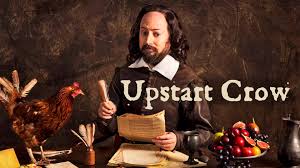
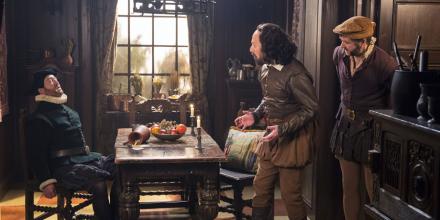
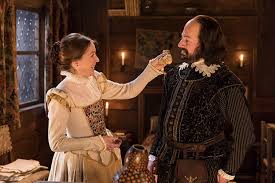
    “Upstart Crow Series 1 – 3” (2016 – 2020) 

    Television Series / Comedy

    Twenty Two Episodes

    Created by: Jeremy Dyson, Mark Gatiss, Steve Pemberton and Reece Shearsmith

    Featuring: Mark Gatiss, Steve Pemberton and Reece Shearsmith

    Edward: “Hello, hello. What’s going on? What’s all this shouting? We’ll have no trouble here.”

    When The League of Gentlemen first aired on the BBC in 1999, it felt like something that had crept out of the cellar of British comedy — unsettling, grotesque, and defiantly original. Set in the fictional town of Royston Vasey (“You’ll never leave!”), the show combined sketch comedy, sitcom structure, and horror-inflected storytelling into something uniquely twisted and very funny. Over twenty years later, this Blu-ray release from the BBC (and previously by Network in the UK) offers the definitive way to revisit — or discover — one of British television’s most audacious comedies.

    Created and performed by Mark Gatiss, Steve Pemberton, Reece Shearsmith, and writer Jeremy Dyson, The League of Gentlemen pushes the boundaries of small-town eccentricity into full-blown grotesquery. Each of the first three series and the 2002 Christmas special paints a portrait of Royston Vasey as a place where social decay, perversion, and provincial madness thrive — but always with heart, and often with surprising poignancy.

    The first series remains the purest and most iconic, introducing a cavalcade of unforgettable characters: the proprietors of a deadly local shop, Tubbs and Edward; Pauline, the monstrous restart officer; Hilary Briss, the sinister butcher; and Barbara, the philosophically inclined taxi driver. The second series deepens the mythology and darkens the humour, while the third season shifts toward a more serialized narrative, showing the interconnectedness of Royston Vasey’s inhabitants in a daring narrative experiment.

    The Christmas Special is a highlight — a mini-masterpiece of horror pastiche and melancholy, riffing on M.R. James and Hammer films while offering closure (of sorts) to several characters.

    What stands out watching the show again in high definition is how cinematic it always was: the bleak landscapes of Hadfield, Derbyshire are shot like a horror film, and the makeup and production design still impress. There’s a richness to the world-building that rewards multiple viewings — every frame brims with detail, every line layered with irony and menace.

    The Blu-ray presents The League of Gentlemen in its original 1.33:1 aspect ratio, sourced from the best available materials. While the early episodes were shot on standard-definition video, this restoration brings a noticeable improvement in clarity and colour depth compared to the original DVD editions. The image remains soft by modern standards — no remaster can fully disguise the limitations of late-’90s digital video — but the transfer is clean, stable, and free from the compression artifacts that plagued earlier releases.

    The audio, presented in a clear LPCM 2.0 stereo mix, does justice to Joby Talbot’s eerie score and the intricate sound design that helps sell the series’ horror undertones. Dialogue is crisp throughout, and there’s a pleasing warmth to the mix that underscores the series’ filmic ambitions.

    The Blu-ray set is packed with extras that will delight fans and students of British comedy alike. Carried over from the DVDs and supplemented with some newer materials, highlights include:

    • Commentaries on selected episodes by Gatiss, Pemberton, Shearsmith, and Dyson, full of insight, nostalgia, and self-deprecating humour.
    • Behind-the-Scenes Documentaries that trace the journey from the group’s Edinburgh Fringe origins through the BBC series.
    • Deleted Scenes, outtakes, and sketches that shed light on the creative process.
    • Photo galleries, trailers, and assorted curios from the show’s heyday.
    • The Christmas Special and the “Anniversary Specials” from 2017 are included in some editions, providing a satisfying sense of closure and continuity.

    The packaging is also thoughtfully presented — the cover art captures the series’ balance of macabre and absurd, and the menus are easy to navigate.

    Two decades on, The League of Gentlemen remains both a landmark and an outlier in British comedy. Its mix of horror and humour directly influenced later series such as Psychoville, Inside No. 9, and Little Britain, but few have matched its precision or emotional depth. Some of the material, viewed through a modern lens, can feel uncomfortable — particularly in its handling of gender and disability — but even these moments are part of a larger, satirical project aimed at the hypocrisies and cruelties of small-minded Britain.

    Revisiting Royston Vasey today, one sees not just grotesques but tragic figures — ordinary people warped by isolation, desperation, and petty cruelty. It’s a dark mirror held up to a certain version of English life, and it remains disturbingly relevant.

    This Blu-ray set is the definitive way to experience The League of Gentlemen. The transfer honours the source material, the supplements are comprehensive, and the show itself remains one of the most daring and original pieces of television ever produced by the BBC.

  • Blu-ray Review: “Doctor Who – Season One” (2024) 

    “Doctor Who – Season One” (2024) 

    Television Series Sci-Fi

    Eight Episodes

    Written by: Russell T Davies

    Featuring: Ncuti Gatwa 

    Ruby Sunday: “Who are you?”

    The Doctor: “I’m the Doctor!”

    The arrival of Doctor Who: Season 1 (2024) on Blu-ray marks a pivotal moment in the show’s long and often tumultuous history. After the 60th anniversary specials successfully reignited global interest in the franchise—with David Tennant briefly returning as the Fourteenth Doctor—this new season introduced audiences to Ncuti Gatwa’s Fifteenth Doctor and Millie Gibson’s Ruby Sunday. Under the stewardship of returning showrunner Russell T Davies, Doctor Who once again reinvented itself, balancing the show’s rich legacy with a vibrant, modern sensibility that feels tailor-made for a new generation.

    Now, the entire first Gatwa season arrives on Blu-ray in a lavish, beautifully produced release that gives fans the best possible way to experience this reinvigorated era of the TARDIS.

    From its dazzling debut episode, “Space Babies,” to its haunting, emotional finale “Empire of Death,” this season proves that Doctor Who in 2024 is as bold, weird, and heartfelt as it has ever been. Ncuti Gatwa instantly commands attention as the Fifteenth Doctor—radiant, energetic, deeply empathetic, and capable of sudden emotional shifts that make his performance both unpredictable and deeply human. He radiates joy and sadness in equal measure, giving the Doctor a kinetic warmth that sets him apart from his predecessors.

    Millie Gibson’s Ruby Sunday complements him perfectly. Their chemistry is immediate and sincere, and Davies’ writing invests in their bond from the very beginning. Ruby is curious, compassionate, and brave, with just enough mystery about her origins to fuel the season’s overarching story arc. The Doctor-companion dynamic here is among the most compelling since the Tennant–Piper era, blending wit, playfulness, and genuine emotional depth.

    The season’s structure is a deft mix of standalone adventures and serialized intrigue. Highlights include:

    • “The Devil’s Chord”, a wildly inventive Beatles-era romp with Jinkx Monsoon’s scene-stealing villainy and a delightfully self-aware sense of camp.
    • “Boom”, written by Steven Moffat, a taut bottle episode that showcases Gatwa’s intensity and moral gravitas in one of the season’s most gripping hours.
    • “73 Yards”, an eerie, near-silent masterpiece centered on Ruby, blending folk horror and emotional allegory in a way Doctor Who rarely dares.
    • “The Legend of Ruby Sunday / Empire of Death”, a finale that balances cosmic stakes with heartfelt revelations, bringing the season’s mysteries to an emotionally satisfying close while leaving plenty of room for the future.

    Thematically, Davies uses this season to reassert Doctor Who’s identity as both family entertainment and allegorical storytelling. It’s about found family, the importance of kindness, and the beauty of difference—wrapped in a kaleidoscope of color, music, and emotion.

    Shot in high dynamic range and finished in native 4K for Disney+ streaming, this Blu-ray (presented in 1080p HD) benefits from an exceptionally strong downscale. Visuals are rich, sharp, and cinematic—far beyond the BBC’s earlier HD efforts. Colors burst from the frame: the candy-colored interiors of the new TARDIS shimmer with detail, alien worlds glisten with texture, and skin tones remain natural and well-balanced.

    The cinematography by Catherine Goldschmidt and company shines here—every planet, space station, and London street pops with tactile clarity. The Blu-ray’s transfer is crisp and free from compression artifacts, easily outclassing broadcast or streaming versions in stability and depth. While some fans may wish for a native 4K UHD release, this 1080p presentation is reference-quality for the format.

    Dark scenes, such as those in “Boom” or “73 Yards,” display excellent shadow detail and contrast, maintaining clarity without crushing blacks. The effects work—much of it enhanced through modern CGI pipelines—looks seamless, particularly when paired with the lavish production design.

    The DTS-HD Master Audio 5.1 track is spectacular. Doctor Who has never sounded more expansive or immersive on disc. The mix takes full advantage of surround space: the hum of the TARDIS envelops the listener, alien environments crackle with detail, and Murray Gold’s triumphant score roars with orchestral depth.

    Dialogue is perfectly balanced—clear and centered even during explosive set-pieces. Bass response is powerful without overpowering the midrange, lending sonic weight to battle sequences and emotional crescendos alike. In “The Devil’s Chord,” the music-driven chaos and vocal layering are a showcase for how dynamic and precise this mix truly is.

    Simply put, this is one of the best-sounding Doctor Who releases ever produced.

    BBC Studios and Bad Wolf have gone all out with bonus material, offering a robust and affectionate package that celebrates the show’s creative rebirth.

    Included extras:

    • Behind-the-Scenes Featurettes: Newly produced documentaries explore each episode’s production, with interviews from Gatwa, Gibson, Russell T Davies, and the crew.
    • Unleashed Episodes: The complete Doctor Who: Unleashed companion series, offering candid on-set insights and charming cast banter.
    • Commentaries: Select episodes feature audio commentary tracks with Gatwa, Gibson, and guest stars offering a delightful mix of humor and reflection.
    • Costume & Set Design Galleries: High-definition stills and design breakdowns showcasing the breathtaking detail of the new TARDIS and alien worlds.
    • Music Featurette: A short documentary on Murray Gold’s return and his reinvention of the Doctor Who theme.
    • Deleted & Extended Scenes and a Gag Reel, rounding out a fan-pleasing set.

    Menus are sleek, animated with the shimmering TARDIS interior, and navigation is intuitive—BBC Studios has clearly taken a cue from high-end collector releases.

    The Blu-ray’s physical presentation is elegant and colorful. The slipcase art features Gatwa’s Doctor and Gibson’s Ruby in full adventure mode against the swirling vortex of the new title sequence. Inside, the discs are housed in a sturdy multi-disc case with a glossy insert booklet offering episode synopses, cast credits, and behind-the-scenes trivia. The design feels premium and celebratory, clearly aimed at collectors.

    Doctor Who: The Complete Season 1 (2024) is a triumph—both as a television achievement and as a home media release. The season itself stands tall among the show’s very best: bold, inclusive, imaginative, and emotionally resonant. Ncuti Gatwa’s Doctor is a revelation—charismatic, joyous, and deeply layered—and Millie Gibson’s Ruby Sunday ensures the heart of the show beats as strongly as ever.

    From a technical perspective, the Blu-ray delivers stunning picture quality, reference-level audio, and a generous suite of extras that respect the show’s artistry and global fanbase. While a 4K UHD edition would be the dream, this Blu-ray is the next best thing—a definitive, collectible presentation of one of the most vibrant and hopeful eras of Doctor Who.

    A dazzling release for a dazzling new Doctor. Ncuti Gatwa’s debut season is pure magic—brilliantly restored, beautifully packaged, and bursting with the energy that has defined Doctor Who for over sixty years. Essential.

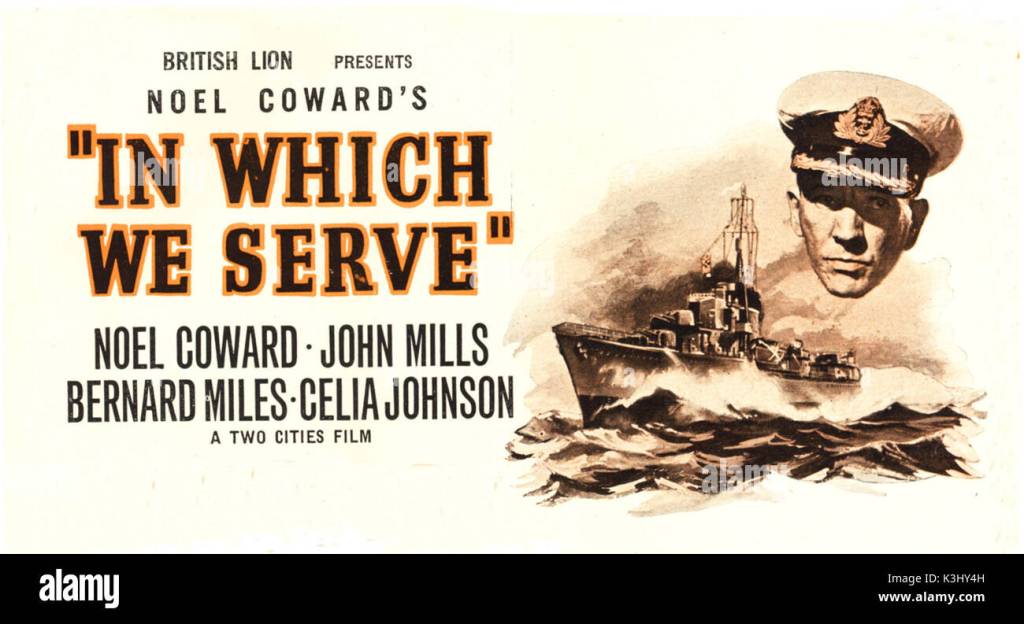
  • Blu-ray review: “In Which We Serve” (1942)

    “In Which We Serve” (1942)

    Drama

    Running Time: 115 minutes

    Written by: Noël Coward

    Directed by: David Lean

    Starring: Noël Coward, John Mills, Bernard Miles and Celia Johnson

    Mrs. Alix Kinross: [Christmas dinner toast] “Ladies and gentlemen. I’ll begin by taking my husband’s advice and wishing you all a very happy Christmas. I’m sure Elizabeth and June will back me up when I say I’d like to deliver, on behalf of all wretched naval wives, a word of warning to Maureen who’s been unwise enough to decide to join our ranks. Dear Maureen: we all wish you every possible happiness, but I think it only fair to tell you in advance exactly what you are in for. Speaking from bitter experience I can only say that the wife of a sailor is most profoundly to be pitied. To begin with, her home life, what there is of it, hath no stability whatever. She can never really settle down. She moves through a succession of other people’s houses, flats, and furnished rooms. She finds herself having to grapple with domestic problems in Bermuda, Malta, or Weymouth. We will not deal with the question of pay as that is altogether too painful. But we will deal with is the most important disillusionment of all, and that is that wherever she goes there is always in her life a permanently undefeated rival: her husband’s ship. Whether it be a battleship or a sloop, a submarine or a destroyer, it holds first place in his heart. It comes before wife, home, children, everything. Some of us try to fight this and get badly mauled in the process. Others, like myself, resolve themselves to the inevitable. That is what you will have to do, my poor Maureen. That is what we all have to do if we want any peace of mind at all. Ladies and gentlemen I give you my rival. It is extraordinary that anyone could be so fond and so proud of their most implacable enemy – this ship. God bless this ship and all who sail in her.”

    David Lean’s directorial debut, In Which We Serve (1942), remains one of the most resonant British films of the Second World War — a patriotic yet profoundly humane portrait of courage, duty, and endurance under fire. Co-written, co-directed, and starring Noël Coward, the film was conceived as a morale-boosting tribute to the Royal Navy and to the British spirit during the darkest days of the conflict. This new Blu-ray edition (typically sourced from the BFI or StudioCanal restoration, depending on region) offers a thoughtful presentation of a wartime classic that holds both historical and cinematic value, balancing emotional storytelling with a documentarian’s sense of duty.

    In Which We Serve opens amid chaos: the British destroyer HMS Torrin is struck and sunk by German bombers during the Battle of Crete. As the survivors cling to a raft in the churning sea, flashbacks chart the ship’s life and the intertwined stories of its crew — from construction to commissioning, from camaraderie to catastrophe. At the film’s emotional core is Captain Kinross (Coward), whose stoic leadership and moral fortitude embody the film’s message of sacrifice and unity. Yet Lean and Coward expand the narrative beyond the captain’s experience, weaving in the lives of ordinary sailors and their families on the home front, creating a mosaic of wartime Britain.

    While Coward’s influence is evident in the film’s dialogue and patriotic tenor, Lean’s cinematic instincts give the film its lasting vitality. His visual precision — the careful framing of confined spaces aboard ship, the documentary-like montage of naval operations, and the striking use of smoke, water, and debris — gives the film an immediacy uncommon in British cinema of the period. There’s a remarkable fluidity to the editing and structure, alternating between the present-tense survival drama and memory sequences that emphasize community and endurance. The film’s emotional power rests not in sentimentality but in its quiet, unwavering respect for ordinary lives lived with dignity amid crisis.

    Coward, an actor often associated with urbane wit and theatricality, delivers one of his most restrained and heartfelt performances. As Captain Kinross, he embodies duty without arrogance, authority without bluster. His clipped delivery, so often used for comedy, here becomes a voice of steady resolve. Opposite him are John Mills, Bernard Miles, Celia Johnson, and Kay Walsh, each lending warmth and authenticity to their portrayals. Johnson, as Kinross’s wife, gives one of her most moving early performances, prefiguring her later work with Lean in Brief Encounter.

    The film’s tone is unmistakably propagandistic — a wartime necessity — but it achieves a rare emotional honesty. Where other British wartime films leaned on stiff-upper-lip rhetoric, In Which We Serve humanizes its patriotism through domestic scenes of longing, humor, and loss. The recurring image of ordinary people working together — in dockyards, kitchens, or lifeboats — encapsulates the collective ethos of wartime Britain.

    The Blu-ray presentation benefits enormously from a meticulous restoration of the original 35mm elements. Shot by Ronald Neame in black and white, the film is characterized by a rich chiaroscuro aesthetic that the Blu-ray captures in impressive detail. Grain is well-managed, preserving the texture of the period cinematography without artificial smoothing. The contrast levels are deep and stable, and the sea battle sequences, with their smoke and explosions, exhibit a newfound clarity.

    Some of the wartime stock footage remains slightly softer, as expected, but transitions between staged and archival material are seamless. Damage, scratches, and flicker that plagued earlier DVD editions have been almost entirely removed. The overall result is a presentation that feels faithful to Lean and Neame’s original visual design — crisp but not clinical, atmospheric but not overly processed.

    The LPCM mono track is a solid representation of the original sound design. Dialogue remains clear and well-balanced, even during the most chaotic action scenes. Coward’s own score — understated but stirring — sounds fuller than in previous releases, with the orchestral highs given some welcome depth. There’s still an inherent thinness to some of the wartime recordings, but any remaining hiss or distortion is minimal and authentic to the film’s period origins. English subtitles are included and helpful given the occasional overlap of dialogue and ambient noise.

    The supplements, though modest in number, are thoughtfully curated. Most editions include:

    • Audio commentary featuring film historians or Coward scholars discussing the collaboration between Lean and Coward, the film’s production during the Blitz, and its importance in shaping Lean’s later career.
    • Documentary featurette on the making of the film, tracing its dual function as art and propaganda.
    • Interview segments with surviving crew members or family descendants, discussing Coward’s meticulous working methods.
    • Archival newsreels or wartime publicity materials, offering fascinating context for how the film was received in 1942.

    The absence of a full-length Coward retrospective might disappoint completists, but the included material complements the film well, especially in illustrating Lean’s apprenticeship under Coward and Ronald Neame — a collaboration that would later blossom into some of British cinema’s greatest works.

    Viewed today, In Which We Serve stands as more than a relic of wartime propaganda. It is an essential bridge between the classical theatricality of prewar British film and the more fluid, psychologically rich cinema Lean would later perfect in Brief Encounter and Great Expectations. Coward’s prose and Lean’s cinematic intelligence make for an ideal pairing: one grounding the film in national identity, the other elevating it to visual poetry.

    This Blu-ray release does the film proud. The restoration honors its historical significance without stripping away its texture or intimacy. For fans of Lean, Coward, or British wartime cinema, this is not just a technical upgrade but a rediscovery of a landmark work that shaped the postwar narrative of endurance and moral strength.


    A beautifully restored presentation of a cornerstone of British cinema — stirring, intimate, and impeccably crafted. In Which We Serve has never looked or sounded better on home video.ving artistry, or of mid-century Technicolor domestic drama, this disc is essential. It’s not only a restoration of a film but a restoration of memory—the humble, resilient spirit of the “happy breed” it celebrates.estoration triumph but as a rediscovery of a film that glimmers with wit, irony, and supernatural elegance.

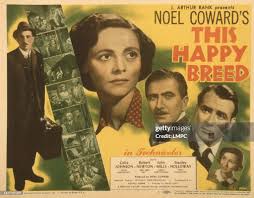
  • Blu-ray review: “This Happy Breed” (1944)

    “This Happy Breed” (1944)

    Drama

    Running Time: 115 minutes

    Written by: David Lean, Ronald Neame and Anthony Havelock-Allan

    Directed by: David Lean

    Starring: Robert Newton, Celia Johnson, Stanley Holloway and John Mills

    Frank Gibbons: “She didn’t pass on, pass over, or pass out! She died!”

    David Lean’s This Happy Breed may not have the sweeping romantic grandeur of Brief Encounter or the mythic ambition of Lawrence of Arabia, but it remains one of the most deeply humane and quietly affecting films in his canon. Adapted from Noël Coward’s play, this 1944 feature—Lean’s second collaboration with Coward following In Which We Serve—presents an intimate portrait of a lower-middle-class London family navigating two decades of social upheaval. This new Blu-ray release gives the film its most respectful home-video presentation yet, offering both technical restoration and a deeper appreciation for Lean’s early mastery of cinematic storytelling.

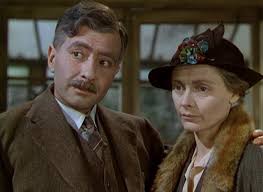
    Set between the end of the First World War and the dawn of the Second, This Happy Breed traces the lives of the Gibbons family, who move into a modest Clapham house in 1919. Frank (Robert Newton), his wife Ethel (Celia Johnson), and their three children—Reg (John Blythe), Queenie (Kay Walsh), and Vi (Eileen Erskine)—experience the highs and lows of two turbulent decades: economic depression, political change, personal loss, and ultimately the ominous approach of another war.

    Lean and Coward use the domestic canvas to reflect the resilience and endurance of the British people. While the story is filled with small triumphs and tragedies—weddings, deaths, quarrels, reconciliations—the cumulative effect is quietly epic. Through the Gibbons family, we see the shifting tides of British life, from class attitudes and generational divides to the evolution of technology and leisure.

    Robert Newton gives one of his finest, most restrained performances as Frank, portraying a working man whose stoic demeanor conceals emotional depth and moral steadfastness. Celia Johnson, as ever, is luminous; her Ethel is both pragmatic and tender, the emotional core of the family. Kay Walsh (Lean’s wife at the time) brings volatility and yearning to Queenie, whose romantic choices mark some of the film’s most poignant turns.

    While Lean’s later films are often defined by their visual grandeur, This Happy Breed demonstrates his command of space, rhythm, and domestic intimacy. The camera frequently moves through the family home in long, graceful takes, creating a sense of continuity and lived-in warmth. Ronald Neame’s Technicolor cinematography—rare for a British drama of this era—is both rich and restrained, lending the film an almost painterly quality. The muted palette of brick reds and warm browns evokes a nostalgia that never feels artificial.

    For decades, This Happy Breed suffered from faded prints and soft, muddy transfers that obscured its delicate Technicolor work. The new Blu-ray, sourced from a meticulous restoration (using the original three-strip negatives where possible), represents a dramatic improvement.

    Colors are now vibrant but natural, retaining the subtle warmth Lean and Neame intended. Flesh tones are lifelike, fabrics and furnishings reveal their texture, and the film’s play of light—particularly in the domestic interiors—is beautifully rendered. Black levels are strong, and the image retains a fine, cinematic grain that reminds viewers of the film’s photochemical origins.
    Some minor color fringing and faint reel change marks remain in isolated shots, but these are rare and never distracting. The restoration team has wisely avoided over-processing the image; detail is crisp without any signs of digital noise reduction. The result is a faithful and organic presentation that finally allows the film’s craftsmanship to shine.

    The LPCM mono track is clean and full-bodied, preserving the natural ambience of dialogue and the orchestral score by Noël Coward and Clifton Parker. There’s little distortion, and the mix captures the intimacy of domestic scenes while giving full presence to the larger moments—particularly the crowd scenes and musical interludes

    Subtitles are clear and well-timed, and while a stereo remix might have been tempting, the decision to retain the original mono preserves the film’s period authenticity.

    The Blu-ray’s supplements do justice to both the film and its legacy. Depending on the edition (notably the UK release from the BFI and some international editions), extras include:

    • Audio Commentary by film historians, exploring Lean’s early direction, Coward’s collaboration, and the film’s wartime context. The discussion highlights Lean’s transition from editor to director and his emerging visual sensibility.
    • Interview with Ronald Neame (archival): The cinematographer and later director offers invaluable insight into the Technicolor process and Lean’s meticulous approach to composition.
    • Documentary Featurette – “This Happy Breed: Britain at Home”: A thoughtful look at how the film reflected postwar national identity, examining its reception among 1940s audiences.
    • Restoration Comparison: Demonstrates the remarkable color and detail recovery achieved through the restoration process.
    • Trailer and Image Gallery, rounding out a solid package.

    While not as feature-heavy as Criterion-style releases, the supplements provide meaningful context and are assembled with care.

    This Happy Breed is often overshadowed by Lean’s grander later works, yet it remains one of his most emotionally direct and politically resonant films. Released in wartime Britain, it offered reassurance and recognition to audiences who had endured hardship. Its patriotism is gentle rather than triumphalist, rooted in the strength of ordinary people.

    Seen today, it also reveals the seeds of Lean’s later obsessions: the passage of time, the tension between duty and desire, and the cinematic translation of theatrical material into visual experience. The domestic drama, the subtle rhythms of editing, and the recurring motif of trains and departures all anticipate Brief Encounter.

    The Blu-ray allows modern audiences to rediscover the film as both a vital piece of British social history and an early masterwork of cinematic craftsmanship.

    This new Blu-ray of This Happy Breed is a quiet triumph. The restoration honors the film’s historical importance and emotional subtlety, presenting Lean’s and Coward’s collaboration in its best-ever form.

    For admirers of British cinema, of Lean’s evolving artistry, or of mid-century Technicolor domestic drama, this disc is essential. It’s not only a restoration of a film but a restoration of memory—the humble, resilient spirit of the “happy breed” it celebrates.estoration triumph but as a rediscovery of a film that glimmers with wit, irony, and supernatural elegance.

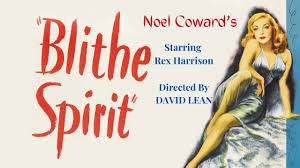
  • Blu-ray review: “Blithe Spirit” (1945)

    “Blithe Spirit” (1945)

    Drama

    Running Time: 96 minutes

    Written by: David Lean and Ronald Neame

    Directed by: David Lean

    Starring: Rex Harrison, Constance Cummings, Kay Hammond and Margaret Rutherford

    Charles Condomine: “It’s discouraging to think how many people are shocked by honesty and how few by deceit.”

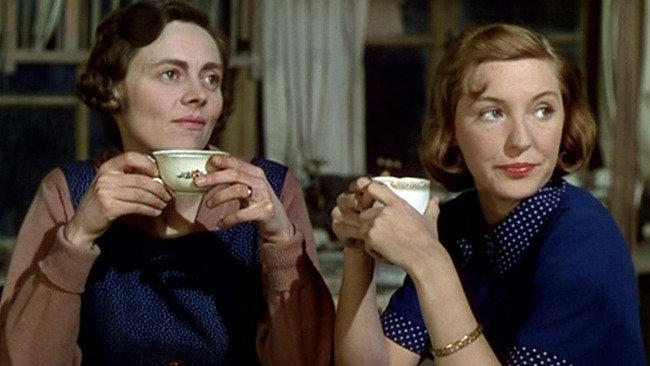
    David Lean’s Blithe Spirit remains one of the most curious entries in the director’s early career — a supernatural farce filmed with sumptuous Technicolor style and a distinctly English mix of sophistication and silliness. Adapted from Noël Coward’s celebrated stage play, the film occupies a unique place in Lean’s evolution from editor to master filmmaker: poised between the domestic comedies he made with Coward (In Which We Serve, This Happy Breed) and the grand, emotionally charged epics that would define his later career. Now restored and released on Blu-ray, Blithe Spirit receives the kind of visual and archival treatment that allows modern audiences to appreciate its wit, craftsmanship, and eccentric charm anew.

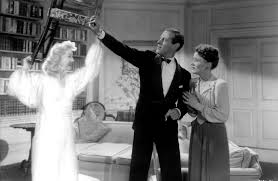
    The premise — a mild-mannered novelist, Charles Condomine (Rex Harrison), invites a medium to conduct a séance, only to accidentally summon the mischievous ghost of his late wife Elvira (Kay Hammond) — remains a deliciously dry exploration of marital discord and the supernatural. Charles’ new wife, Ruth (Constance Cummings), is less amused by the spectral intrusions, and what follows is a battle of wits and wills that veers between the comic and the macabre.

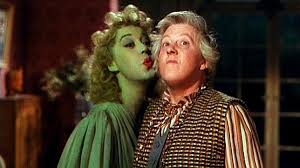
    What makes Lean’s interpretation so striking is its visual imagination. Though the original play thrived on Coward’s brittle dialogue and stage-bound repartee, Lean opens the material up cinematically. He fills the screen with the lush glow of Technicolor, using the supernatural premise to experiment with visual textures and lighting. Elvira’s ghostly presence, filmed in shimmering pastel greens and blues, contrasts vividly with the warm, earthbound tones of the living. The effect is both eerie and elegant — a ghost story rendered with the same painterly precision Lean would later bring to the deserts of Lawrence of Arabia or the icy platforms of Brief Encounter.

    The performances strike a balance between Coward’s verbal wit and Lean’s cinematic sensibility. Harrison’s dry, clipped delivery perfectly suits the exasperated Charles, while Hammond, reprising her stage role as Elvira, exudes a feline playfulness that makes her haunting both delightful and disruptive. Margaret Rutherford steals every scene as the eccentric medium Madame Arcati — a whirlwind of unselfconscious energy, she’s the antithesis of the film’s drawing-room restraint and gives Blithe Spirit much of its comic vitality.

    While critics of the time found the film’s tone uneven and too subdued compared to Coward’s stage production, modern viewers can appreciate the tension between irony and melancholy that Lean introduces. Beneath the polished banter lies a streak of darkness — a recognition of love’s transience and the absurd persistence of jealousy beyond the grave.

    The new Blu-ray presentation — derived from a meticulous 4K restoration — is a revelation. The Technicolor photography, originally captured by Ronald Neame, has never looked better on home video. The rich palette of emeralds, creams, and soft reds gleams with renewed vibrancy, while skin tones and fabric textures show an impressive naturalism for a 1940s production. The film’s spectral effects, achieved through layered exposures and optical work, benefit enormously from the crisp detail and stable contrast of the transfer.

    The restoration also eliminates many of the scratches, flickers, and fading that plagued earlier home video editions. Grain is finely preserved, maintaining a filmic quality without succumbing to overzealous digital cleaning. This is especially important for a Technicolor film of the period, where too much smoothing can erase the subtleties of the dye-transfer process.

    The monaural soundtrack, presented in LPCM or DTS-HD Master Audio (depending on the edition), offers a clear and balanced rendering of Coward’s dialogue-heavy script. Dialogue sits comfortably in the mix, and the score — by Richard Addinsell — retains its period charm without distortion. Some minor hiss remains in a few quieter scenes, but it’s never intrusive. For a film nearly 80 years old, the audio fidelity is remarkably strong.

    The Blu-ray release comes well stocked with extras that contextualize both the film and Lean’s broader career. Highlights include:

    • Audio Commentary by film historians who delve into the Coward-Lean collaboration, offering insight into how Lean’s visual approach complemented (and sometimes contradicted) Coward’s theatrical sensibilities.
    • Featurette: David Lean and Noël Coward: A Creative Partnership – an illuminating retrospective on how their four films together shaped British postwar cinema.
    • Interview with Ronald Neame (archival) – the cinematographer discusses the technical challenges of capturing the ghost effects in Technicolor.
    • Restoration comparison – a short but fascinating look at the before-and-after states of the film.
    • Trailer and stills gallery, rounding out the package.

    Some editions (notably the Criterion or StudioCanal releases) also include a printed essay exploring Blithe Spirit as a bridge between Lean’s “small” films and his later epics.

    As a film, Blithe Spirit may not possess the emotional depth of Brief Encounter or the visual grandeur of Great Expectations, but its sophisticated craftsmanship, sparkling dialogue, and vivid color photography make it one of Lean’s most distinctive early works. The Blu-ray presentation restores its visual splendor and offers valuable supplements that situate it within the context of both Coward’s stage legacy and British cinema’s postwar transformation.

    For fans of Lean, Coward, or classic British comedy, this Blu-ray is essential — not only as a restoration triumph but as a rediscovery of a film that glimmers with wit, irony, and supernatural elegance.

  • Blu-ray review: “Oh, Canada” (2024)

    “Oh, Canada” (2024)

    Drama

    Running Time: 95 minutes

    Written & Directed by: Paul Schrader

    Starring: Richard Gere, Jacob Elordi, Uma Thurman, Victoria Hill, Michael Imperioli, Penelope Mitchell and Kristine Froseth

    Cornel: “All creation starts with a single cell of energy that explodes with a bang and becomes the universe. Cancer starts the same way. A single rogue cell breeds a tumor that metastasizes and sets to eating the body… and eventually devours it.”

    The film follows Leonard Fife (Richard Gere), a celebrated documentary filmmaker living in Montreal who is dying of cancer and agrees to a filmed interview by his former students. As the interview proceeds, Leonard reveals that much of the heroic public narrative about his life (including fleeing to Canada to avoid the Vietnam-era draft) is built on lies, half-truths, abandoned relationships and moral failures.

    The film moves between multiple timelines: present-day Leonard (Gere), his younger self (Jacob Elordi) in flashbacks, and other moments of memory and myth.

    Thematically, it’s about myth‐making, regret, mortality, self-examination and the uncomfortable contrast between public persona and private failure. Schrader apparently drew on his own feelings of illness and legacy in making this film.

    • The cast is solid: Gere delivers a quietly powerful performance, Elordi handles the younger self with credible intensity.
    • The concept of a filmmaker reckoning with his life and story is rich and has emotional potential.
    • Cinematography and visual style get attention: critics mention the film looks good, with interesting use of ratio/aspect, colour/black-&-white. Blu-ray Authority+1
    • The narrative structure is fuzzy and non-linear, which may frustrate viewers seeking a clear arc. One reviewer called it “introspective but completely disjointed” and “a frustrating viewing experience… for those trying to follow the story”. joshatthemovies.com
    • Some of the emotional pay-offs feel muted: the mythology deconstruction is interesting, but the film seems reluctant to deliver a strong catharsis or message beyond “things were messy”.
    • The tone is quite heavy and reflective; this isn’t a light or straightforward entertainment piece.

    My verdict on the film: If you appreciate deeply reflective, character-driven cinema, especially from older filmmakers looking at legacy and regret, then this will speak to you. If you prefer tighter narrative, more obvious resolution or more accessible structure, you may find it taxing.

    Here we refer to the physical Blu-ray release specs and extras.

    Video / Image Quality

    According to Blu-ray reviewers:

    • The film uses multiple aspect ratios: some scenes in 1.37:1 (present day), some in 2.39:1 (flashbacks) and even 1.78:1 segments. 
    • Image clarity and detail are good. One note: in a scene you can “see the rubber mask that Gere’s character is wearing,” suggesting high detail (and perhaps a side effect of too much exposure of detail). 
    • Contrast is strong, colours somewhat muted (consistent with Schrader’s style) but visually satisfying. The mix of black & white, the overlay of different styles help the film’s tone.

    In short: the Blu-ray delivers a strong video presentation that supports the film’s artistic ambitions.

    Audio / Sound Quality

    • The track is a DTS-HD Master Audio mix. 
    • Given the film is dialogue-driven, the audio focuses on clarity and presence of vocals (Gere’s voice anchors much of it). Surrounds are present but not heavily used. One reviewer: “The DTS HD Master Audio mix doesn’t have a lot of opportunities to flex its muscle, but it’s of little consequence. You don’t need the walls shaking to produce a nice, well-rounded track.”
    • So if you have a good sound system, you’ll get excellent dialogue clarity and immersive enough sound for the film’s purpose.

    Extras / Supplementary Material

    The disc includes:

    • Audio commentary by Paul Schrader. Reviewers note this is “full of insights on the film, its cast and overall production.” Blu-ray Authority+1
    • A Behind-the-Scene featurette (about 3½ minutes). Blu-ray Authority
    • A Deleted Scene (about 90 seconds) – minimal, and described as “doesn’t really add anything to the film”. Blu-ray Authority
    • Theatrical trailer.

    While the extras are serviceable, they are modest. If you’re a completist who likes lots of bonus content (making-of, extended interviews, art galleries) then this may feel light.

    • For fans of Paul Schrader, Richard Gere, or introspective cinema about legacy and myth, this Blu-ray is a solid pick.
    • The image and audio quality are strong.
    • The extras are decent albeit modest: the commentary is the strongest bonus.
    • If you prefer more conventional narrative films or want something more dynamic, you might want to wait and stream rather than buy physical.

    The Blu-ray of Oh, Canada offers a high-quality presentation of a film that is artistically ambitious but somewhat uneven. On the plus side: strong visual style, excellent reference presentation, a worthwhile commentary from Schrader, and the cast gives their all. On the minus side: story structure may feel disjointed, emotional impact is subtle rather than sweeping, and for the Blu-ray itself extras are modest.

    If I were to give a rough rating for the Blu-ray package (in terms of disc release quality): ~ 7.5/10. For the film itself: perhaps ~ 6/10, depending on your taste.

    If you are into Schrader, Gere, or the notion of a filmmaker reckoning with his myth, this is a worthwhile Blu-ray purchase. If you’re more casual, want immediate narrative gratification, or lots of bonus content, you might explore your options. poignant love stories. Brief Encounter on Blu-ray is not just a preservation of a classic, but a rediscovery of emotional cinema at its purest.

  • 4K Blu-ray review: “Malcolm X” (1992)

    “Malcolm X” (1992)

    Drama

    Running Time: 202 minutes

    Written by: Arnold Perl and Spike Lee

    Directed by: Spike Lee

    Featuring: Denzel Washington, Angela Bassett, Albert Hall, Al Freeman Jr., Delroy Lindo and Spike Lee

    Malcolm X: “You may be shocked by these words, but I have eaten from the same plate, drunk from the same glass and prayed to the same God with fellow Muslims whose eyes were blue, whose hair was blond and whose skin was the whitest of whites. And we are brothers, truly; people of all colors and races believing in One God and one humanity. Once before, in prison, the truth came and blinded me. It has happened again… In the past, I have permitted myself to be used to make sweeping indictments of all white people, and these generalizations have caused injuries to some white folks who did not deserve them. Because of the spiritual rebirth which I was blessed to undergo as a result of my pilgrimage to the Holy City of Mecca, I no longer subscribe to sweeping indictments of one race. I intend to be careful not to sentence anyone who has not been proven guilty. I’m not a racist and do not subscribe to any of the tenets of racism. In all honesty and sincerity it can be stated that I wish nothing but freedom, justice and equality: life, liberty, and the pursuit of happiness for all people. My first concern, of course, is with the group to which I belong, the Afro-Americans, for we, more than any other, are deprived of these inalienable rights. I believe the true practice of Islam can remove the cancer of racism from the hearts and souls of white Americans.”

    Spike Lee’s Malcolm X has always been a monumental film — an ambitious, fiercely intelligent, and deeply human chronicle of one of the most complex and transformative figures in 20th-century American history. Over three decades after its 1992 release, it remains not just one of Lee’s finest achievements but also one of the greatest biographical epics in modern cinema. With Warner Bros.’s new 4K Ultra HD release, Malcolm X finally receives the presentation it has long deserved — one that fully honors its visual grandeur, its spiritual depth, and its cultural power.

    Malcolm X charts the evolution of Malcolm Little (Denzel Washington, in one of the most commanding performances ever captured on film) from his early days as a hustler in 1940s Boston and Harlem, through his imprisonment and conversion to Islam, to his emergence as a national leader and, ultimately, his assassination in 1965.

    Spike Lee’s direction balances scope and intimacy with astonishing precision. Few biopics manage to cover such vast historical ground without losing emotional focus, but Lee keeps the story rooted in Malcolm’s humanity. We see him as a man of contradictions and growth — proud, angry, brilliant, fallible — and it’s this emotional honesty that makes the film so powerful.

    The film’s opening — the American flag burning as Rodney King’s beating plays out on TV — situates the story within the long continuum of racial struggle in America. From there, Lee constructs a film that is both historical document and urgent political statement. His control of tone and rhythm is masterful, aided by Ernest Dickerson’s luminous cinematography and Terence Blanchard’s stirring score. The sequence of Malcolm’s pilgrimage to Mecca remains one of the most breathtaking in Lee’s career — transcendent, intimate, and visually resplendent.

    And then there’s Denzel Washington. His portrayal of Malcolm X transcends mimicry or biopic convention. Washington captures every stage of Malcolm’s evolution — the slick con man, the fiery orator, the reflective seeker — with complete emotional and physical authenticity. His energy, cadence, and gaze convey both intellect and vulnerability. It’s a performance of Shakespearean range and moral authority.

    The 4K UHD release of Malcolm X represents a significant upgrade over previous Blu-ray editions. Warner Bros. sourced the transfer from the original 35mm camera negative, scanned in 4K, and presented with Dolby Vision HDR. The results are stunning.

    The cinematography by Ernest Dickerson, long one of Spike Lee’s closest collaborators, truly shines here. The film’s early sections — all rich reds, deep shadows, and saturated jazz-era color — have newfound vibrancy and texture. The nightclub scenes practically glow with period authenticity. Skin tones, often an issue on older transfers, are now natural and nuanced.

    As the film progresses into Malcolm’s prison years and then his rise as a public figure, the color palette cools and the lighting grows more austere. The HDR grading captures this evolution beautifully, enhancing contrast and depth without crushing blacks or exaggerating highlights. Fine details in clothing, sets, and archival footage are far more visible, adding a layer of historical realism that strengthens the film’s immersive quality.

    Film grain is intact and finely resolved, maintaining the organic texture of celluloid without digital smoothing. The transfer preserves the cinematic integrity of the original photography while revealing more visual information than ever before.

    The 4K disc carries a DTS-HD Master Audio 5.1 track, which has also been cleaned and balanced for this release. It’s not an aggressive mix, but it’s deeply atmospheric and emotionally effective. Dialogue is clear and rich, and the dynamic range of Terence Blanchard’s music is beautifully handled. The jazz numbers, gospel interludes, and period soundscapes are enveloping without overpowering the film’s quieter moments.

    Speeches and crowd scenes, particularly Malcolm’s addresses at the Nation of Islam rallies, have impressive presence — the echo of auditoriums and the fervor of the crowd are rendered with remarkable fidelity.

    The extras largely carry over from the previous Blu-ray, though that’s not necessarily a disappointment given the quality of the archival material. The standout feature remains the making-of documentary By Any Means Necessary: The Making of Malcolm X, which offers an in-depth look at Lee’s creative process and the immense logistical challenges of bringing the film to life. Interviews with Lee, Washington, and producer Marvin Worth provide illuminating context.

    Also included are deleted scenes, a featurette on Malcolm X’s legacy, and vintage footage of Spike Lee discussing the film’s production and controversies. While it would have been nice to have new commentary or retrospective interviews, the included content still offers substantial value for those exploring the film’s history.

    The packaging itself is elegant and respectful — featuring a striking image of Denzel Washington as Malcolm in his iconic glasses, with reversible artwork and liner notes summarizing the film’s impact.

    Malcolm X in 4K is a revelation. It’s not just that the film looks and sounds better — it’s that this restoration restores the weight of its imagery and the dignity of its subject. For a film that’s both a chronicle of injustice and a testament to self-determination, this enhanced presentation carries symbolic power.

    Spike Lee’s vision was always epic, and this 4K release finally does justice to that scale — from the shimmering jazz clubs of the 1940s to the blinding light of Mecca. Denzel Washington’s towering performance feels even more immediate, and the film’s emotional crescendos land with renewed intensity.

    In short: this is not only one of the essential films of the 1990s but also one of the most significant catalog 4K restorations of recent years. For fans of Spike Lee, Denzel Washington, or American cinema in general, the Malcolm X 4K is a must-own — a landmark work restored to its full, revolutionary glory.

  • 4K Blu-ray review: “In the Heat of the Night” (1967)

    “In the Heat of the Night” (1967)

    Drama

    Running Time: 110 minutes

    Written by: Stirling Silliphant

    Directed by: Norman Jewison

    Featuring: Sidney Poitier, Rod Steiger, Warren Oates and Lee Grant

    Chief Gillespie: “Just once in my life, I’m gonna own my temper. I’m telling you that you’re gonna stay here. You’re gonna stay here if I have to go inside and call your chief of police and have him remind you of what he told you to do. But I don’t think I have to do that, you see? No, because you’re so damn smart. You’re smarter than any white man. You’re just gonna stay here and show us all. You’ve got such a big head that you could never live with yourself unless you could put us all to shame. You wanna know something, Virgil? I don’t think that you could let an opportunity like that pass by.”

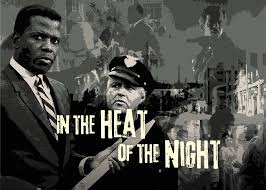
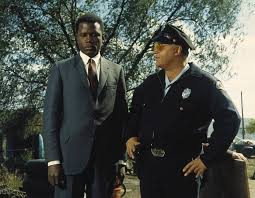
    Norman Jewison’s In the Heat of the Night has long stood as one of the most defining American films of the late 1960s—a tense, socially charged mystery that captures the racial divides of its era with both urgency and nuance. Over half a century later, the film has lost none of its power, and the new 4K Ultra HD release does it proud, offering a stunning restoration that breathes new life into Haskell Wexler’s evocative cinematography while preserving the film’s raw, Southern atmosphere.

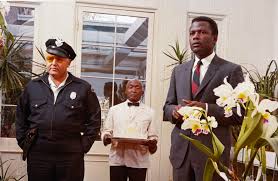
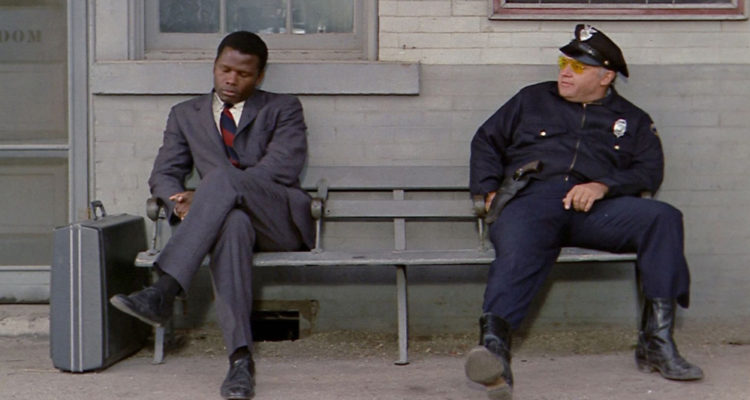
    Released in 1967, In the Heat of the Night tells the story of Virgil Tibbs (Sidney Poitier), a Black Philadelphia detective who becomes entangled in a murder investigation while passing through a small Mississippi town. Arrested on suspicion simply for being Black, Tibbs soon finds himself reluctantly assisting the town’s police chief, Bill Gillespie (Rod Steiger), in solving the case. What follows is both a gripping procedural and a deeply human story about prejudice, professionalism, and mutual respect.

    Poitier’s performance remains one of the most dignified and quietly forceful in cinema history. His delivery of the now-iconic line—“They call me Mister Tibbs!”—still lands with the full weight of moral outrage and self-assertion. Rod Steiger, meanwhile, gives what might be his finest performance as the blustery, weary, and conflicted Gillespie, a man struggling to reconcile his small-town biases with the reality of Tibbs’ competence and decency.

    Norman Jewison directs with sharp attention to atmosphere, alternating between the oppressive heat of the Deep South and the claustrophobic interiors of police stations and small-town homes. Quincy Jones’ score, driven by Ray Charles’ unforgettable title song, adds a sultry, soulful edge that perfectly matches the tone of simmering tension. The film went on to win five Academy Awards, including Best Picture, and its impact on American cinema—particularly in representing Black characters as intelligent, commanding professionals—cannot be overstated.

    The 4K UHD release, sourced from a new 4K scan of the original camera negative, represents a remarkable upgrade over all previous home video editions. Criterion and MGM have both handled In the Heat of the Night in the past, but this latest restoration is easily the definitive presentation.

    The transfer retains the film’s natural grain structure, giving it a pleasingly organic texture. Wexler’s use of color—muted but rich, emphasizing the sticky warmth of the South—is rendered with impressive accuracy. Flesh tones, always tricky in older transfers, now look lifelike and consistent. Shadows are deeper and more stable, yet the increased dynamic range means that nighttime scenes are no longer crushed into murk; we can finally appreciate the subtleties of Wexler’s lighting, particularly in the tense nighttime sequences between Tibbs and Gillespie.

    The HDR10 (and Dolby Vision, depending on the edition) grading brings a newfound depth to the image. The dusty streets, sweat-streaked faces, and hazy small-town neon lights feel tangible in a way they never have before. Grain lovers will be relieved to find that the transfer hasn’t been scrubbed clean with digital noise reduction—this is a filmic presentation through and through, with fine detail that respects the texture of 35mm film.

    The audio comes in a DTS-HD Master Audio 2.0 track that faithfully recreates the film’s original monaural sound. Dialogue is crisp and well-balanced, while Jones’ score sounds warmer and more resonant than ever. The mix doesn’t attempt to artificially expand into surround sound—which would have been inappropriate—but instead focuses on clarity and fidelity. There’s no distortion or hiss to distract from the film’s moments of silence and confrontation, which are just as powerful as its music cues.

    Revisiting In the Heat of the Night today, it’s remarkable how well it holds up—not only as a mystery but as a film of ideas. Its social commentary remains potent, especially in its refusal to provide easy catharsis. The uneasy alliance between Tibbs and Gillespie feels as authentic as ever, their mutual respect forged through exhaustion and necessity rather than sentimentality.

    Jewison’s restraint keeps the film grounded; every shot and exchange feels lived-in. The 4K restoration enhances that sense of realism by making the environments—sweaty, humid, and tense—almost tactile. Watching it in this format feels like seeing it anew, a rediscovery of a masterpiece that was always about the power of seeing clearly.

    In the Heat of the Night in 4K is a must-own for serious film collectors and cinephiles. The restoration honors the film’s artistry while revealing textures and details that earlier home releases could only hint at. It’s not just a better way to watchthe film—it’s a way to feel it, to experience the physical and emotional heat that pulses through every frame.

    A stunning 4K release of one of America’s essential films. Norman Jewison’s classic has never looked or sounded better—an indispensable upgrade that cements In the Heat of the Night’s place as both a cinematic triumph and a vital historical document.

  • 4K Blu-ray review: “The Hurt Locker” (2008)

    “The Hurt Locker” (2008)

    Drama

    Running Time: 131 minutes

    Written by: Mark Boal

    Directed by: Kathryn Bigelow

    Featuring: Jeremy Renner, Anthony Mackie, Brian Geraghty, Evangeline Lilly, Ralph Fiennes, David Morse and Guy Pearce

    Opening Quote by Chris Hedges: “The rush of battle is often a potent and lethal addiction, for war is a drug.”

    Kathryn Bigelow’s The Hurt Locker (2008) remains one of the defining films of the 21st century—a tense, nerve-shredding exploration of modern warfare that eschews politics and grand statements for something far more visceral: the psychological addiction to danger. Fifteen years after its release, Lionsgate’s new 4K Ultra HD Blu-ray offers the definitive way to experience Bigelow’s Oscar-winning masterpiece, both visually and sonically. This is more than a simple format upgrade—it’s a rediscovery of a film whose textures, rhythms, and precision are more striking now than ever.

    At its heart, The Hurt Locker is a study in obsession. Staff Sergeant William James (Jeremy Renner, in a career-defining role) leads a U.S. Army Explosive Ordnance Disposal (EOD) unit in Iraq, where each day brings a new life-or-death encounter with improvised explosive devices. Alongside his teammates—Sanborn (Anthony Mackie) and Eldridge (Brian Geraghty)—James operates in an atmosphere of relentless uncertainty. Every mission is a potential death sentence, yet James approaches his work with a reckless intensity that borders on compulsion.

    Bigelow’s direction is taut and immersive, capturing the heat, noise, and sensory overload of Baghdad street patrols with documentary-like realism. Shot by Barry Ackroyd (United 93, Captain Phillips) using handheld Super 16mm cameras, the film achieves a raw, kinetic energy that feels authentic and immediate. The sand-choked air, the blinding sunlight, the subtle movements of civilians that may—or may not—signal an impending explosion: all are woven into a tapestry of sustained tension.

    Mark Boal’s screenplay (based on his own journalistic experiences embedded with EOD teams) avoids easy moralizing. It’s not a film about whether the war is just, but about the cost of living on a perpetual adrenaline high. When James returns home to domestic safety, he finds the cereal aisle more terrifying than any war zone. The film’s closing moments—quiet, ambiguous, and devastating—cement its status as one of modern cinema’s great character studies.

    Lionsgate’s 4K transfer, sourced from the original Super 16mm elements and scanned at 4K resolution, is a revelation. This film has always had a gritty, textured look by design, and the Ultra HD presentation fully honors that aesthetic. The grain structure is intact and beautifully resolved—never smeared or noisy—and it gives the image an almost tactile authenticity.

    The upgrade to HDR10 (and Dolby Vision on some displays) subtly enhances contrast and brightness without compromising the film’s documentary feel. Highlights—particularly the sun glaring off desert vehicles or the blinding flash of a detonation—are more intense, while shadow detail gains depth and clarity. The dusty yellows and washed-out browns of the Iraqi landscape look more natural, and skin tones are more lifelike than ever before.

    This isn’t a glossy blockbuster transfer—it’s faithful, nuanced, and filmic. Every bead of sweat, every puff of dust kicked up in a tense street standoff feels real. In motion, the 4K presentation has a fluidity and sharpness that surpasses the 1080p Blu-ray by a wide margin.

    The Dolby Atmos (and backward-compatible TrueHD 7.1) soundtrack is equally impressive. The Hurt Locker has always been a film about the sound of silence punctuated by chaos, and this mix captures that contrast beautifully. The Atmos track opens up the soundstage, with discrete effects placed throughout the overhead and surround channels—explosions ripple outward with thunderous power, debris rains down realistically, and even the faint hum of Baghdad’s streets carries spatial dimension.

    Dialogue remains crisp and centered even in the most chaotic moments. Marco Beltrami and Buck Sanders’ minimalist score gains subtle weight in Atmos, but the real star is the environmental sound design: the distant crack of gunfire, the crunch of boots on gravel, the faint rustle of wind through desolate streets. The result is total immersion, creating a battlefield experience that is as intimate as it is overwhelming.

  • Blu-ray review: “Brief Encounter” (1945)

    “Brief Encounter” (1945)

    Drama

    Running Time: 87 minutes

    Written by: Noël Coward, Anthony Havelock-Allan, David Lean and Ronald Neame

    Directed by: David Lean

    Starring: Celia Johnson, Trevor Howard, Stanley Holloway, Joyce Carey and Cyril Raymond

    Laura Jesson: “It’s awfully easy to lie when you know that you’re trusted implicitly. So very easy, and so very degrading.”

    Few films have captured the ache of unfulfilled love with the quiet intensity of David Lean’s Brief Encounter (1945). Long revered as one of the crown jewels of British cinema, Lean’s adaptation of Noël Coward’s short play Still Life has lost none of its emotional potency or stylistic elegance over the decades. The recent Blu-ray release offers both a technically impressive restoration and a welcome opportunity to rediscover a film that remains as heartbreakingly intimate as it is cinematically sophisticated.

    At its core, Brief Encounter is a story of two ordinary people — Laura Jesson (Celia Johnson) and Dr. Alec Harvey (Trevor Howard) — whose lives intersect by chance in a railway station café. Their relationship begins innocently, yet over the course of several weekly meetings, blossoms into a love that neither can morally pursue. Bound by marriage, children, and social expectation, Laura and Alec’s affair is never consummated in a physical sense, yet its emotional depth is overwhelming.

    Lean, still early in his directing career, crafts a restrained yet devastating portrait of repressed longing and moral turmoil. Working from Coward’s screenplay, he expands the one-act play into a cinematic experience that uses visual space, sound, and silence with remarkable precision. The film’s depiction of middle-class British respectability — polished manners concealing turbulent emotions — is one of the most enduring studies of postwar emotional austerity in cinema.

    Celia Johnson gives a performance of astonishing nuance. Her delicate gestures, slight pauses, and voiceover narration convey an interior life bursting with conflict and shame. Trevor Howard, in his breakout role, provides a warm and dignified counterbalance — sincere, decent, and tragically aware of the limits imposed upon them. Together, they make the audience feel every hesitation, every glance, every moment of stolen affection.

    Lean’s direction is deceptively simple. The railway station, with its steam, echoes, and intersecting tracks, becomes a visual metaphor for emotional crosscurrents and fleeting connection. The cinematography by Robert Krasker uses deep focus, shadows, and reflective surfaces to transform the mundane into the poetic. The recurring use of Rachmaninoff’s Piano Concerto No. 2, meanwhile, elevates the film’s restrained narrative into something almost symphonic in its emotional sweep.

    This Blu-ray restoration — sourced from a 4K scan of the original nitrate negative — is an exceptional presentation. Brief Encounter has never looked more vivid or texturally rich. The contrast is deep and well-balanced, preserving the inky blacks and luminous whites that define Krasker’s photography. Fine detail, from the texture of Laura’s coat to the billowing steam in the station, is rendered beautifully.

    Film grain is pleasingly intact, giving the image a natural, filmic quality without appearing overly processed. The print damage that marred older DVD versions — scratches, dirt, and flicker — has been almost entirely removed, allowing the viewer to appreciate Lean’s immaculate compositions as intended. The restoration team has wisely resisted the temptation to over-sharpen or over-brighten, maintaining the soft diffusion that contributes to the film’s nostalgic, dreamlike mood.
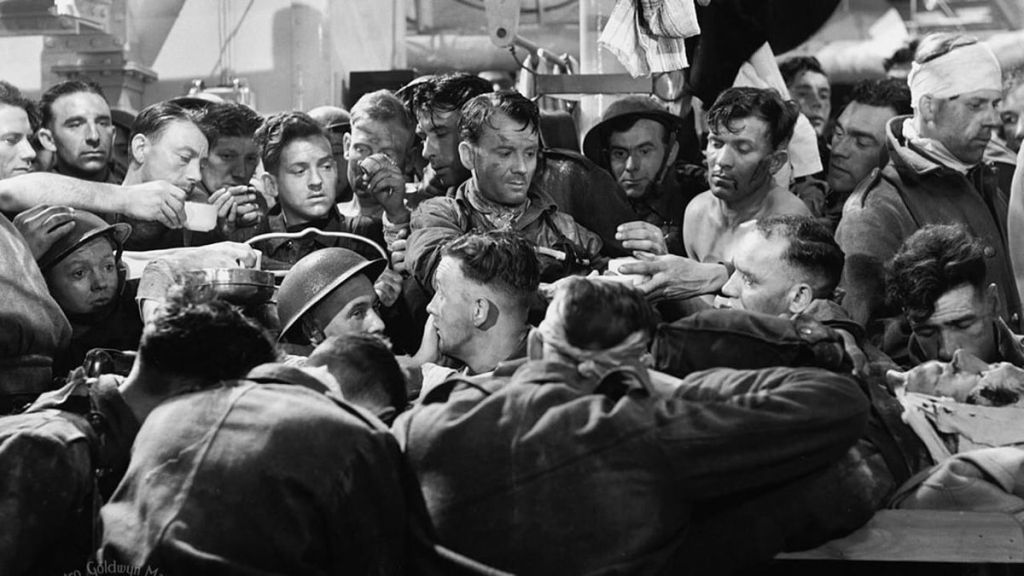
    The LPCM mono track faithfully reproduces the original sound design with impressive clarity. Dialogue, particularly Celia Johnson’s narration, is crisp and well-balanced against the orchestral score. The subtle ambient sounds — the hiss of steam, the rumble of trains, the murmurs of the station café — are clean and immersive.

    The Rachmaninoff concerto sounds full-bodied and resonant, with none of the distortion that plagued earlier editions. While mono limitations remain, the overall sound mix is remarkably dynamic for a film of this age, preserving both the intimacy of the domestic scenes and the grandeur of the emotional crescendos.

    Special Features

    The Blu-ray comes with a thoughtful selection of supplements that deepen appreciation for both Lean’s artistry and Coward’s influence:

    • Audio Commentary: A newly recorded track by film historian Kevin Brownlow provides fascinating context on the production, Lean’s relationship with Coward, and the film’s enduring legacy. Brownlow’s insights into Lean’s editing and camera choices are particularly rewarding.
    • Documentary: A Profile of Brief Encounter — A retrospective featurette that combines interviews with surviving crew members, film scholars, and critics to trace the film’s cultural impact and critical reevaluation over the decades.
    • Celia Johnson and Trevor Howard Retrospective: A short piece celebrating the careers of the two leads, including archival footage and rare radio interviews.
    • Noël Coward and the Cinema: A segment exploring Coward’s transition from playwright to filmmaker, highlighting how his sensibility shaped the emotional tenor of British postwar cinema.
    • Original Theatrical Trailer and Photo Gallery — A welcome inclusion for completists.

    For those purchasing Criterion’s edition (if applicable), there’s also a beautifully illustrated booklet featuring essays by historian Farran Smith Nehme and extracts from Coward’s own writings on love, propriety, and restraint.

    Eighty years on, Brief Encounter still feels astonishingly modern in its emotional honesty. Beneath its period setting and moral decorum lies a universal story of yearning and the cruel geometry of human desire — where timing, duty, and convention conspire against the heart’s deepest impulses.

    The Blu-ray does justice to every facet of this masterpiece. The image restoration captures the tactile beauty of Lean’s cinematography, while the supplements provide essential historical and critical perspective. For cinephiles, romantics, and students of British film alike, this edition is definitive — both as a technical restoration and as a testament to the enduring power of restrained passion.

    A flawless restoration of one of cinema’s most poignant love stories. Brief Encounter on Blu-ray is not just a preservation of a classic, but a rediscovery of emotional cinema at its purest.

  • Blu-ray review: “Great Expectations” (1946)

    “Great Expectations” (1946)

    Drama

    Running Time: 118 minutes

    Written by: David Lean, Anthony Havelock-Allan and Ronald Neame

    Directed by: David Lean

    Starring: John Mills, Valerie Hobson, Bernard Miles, Francis L. Sullivan, Anthony Wager and Jean Simmons

    Mr. Jaggers: “Now, Pip: put the case that this legal advisor has often seen children tried at the criminal bar. Put the case that he has known them to be habitually imprisoned, whipped, neglected, cast out, neglected, cast out, qualified in all ways for the hangman, and growing up to be hanged. Put the case that here was one pretty little child out of the heap that could be saved. Put that last case to yourself very carefully, Pip.”

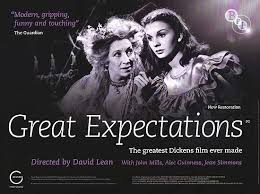
    David Lean’s Great Expectations is one of the most distinguished literary adaptations in British cinema history — a film that not only captures the spirit of Charles Dickens’ 1861 novel but refines it into something visually poetic, emotionally potent, and cinematically timeless. Released in 1946, this was Lean’s second adaptation of Dickens (following Oliver Twist two years later) and remains one of the greatest translations of 19th-century literature to the screen.

    Dickens’ sprawling narratives have often proved difficult to adapt, filled as they are with digressions, large casts, and social commentary. Lean’s genius lay in his ability to condense the material without losing its heart. Working with co-writers Ronald Neame, Anthony Havelock-Allan, and Kay Walsh, Lean distilled the 600-page novel into a tightly paced two-hour film that retains the novel’s essence: a story of moral awakening, disillusionment, and redemption.

    What makes Lean’s Great Expectations so remarkable is its cinematic economy. From the first moments — a young boy in a windswept graveyard, accosted by an escaped convict — the story grips the viewer. There’s no wasted motion, no indulgence. Every image, every edit advances the story or deepens its atmosphere.

    The opening graveyard scene remains one of the most iconic in British film. Shot by cinematographer Guy Green, the sequence feels almost gothic in its bleak beauty. The camera glides through the fog-drenched marshes, the gravestones silhouetted against the grey sky, and young Pip (Anthony Wager) trembling as Magwitch (Finlay Currie) bursts out of the mist. The use of shadows and perspective evokes German Expressionism — particularly Murnau’s Nosferatu and Lang’s M — but Lean grounds the stylization in raw emotion. It’s a moment of fear and pity, setting the moral tone for Pip’s lifelong struggle between compassion and ambition.

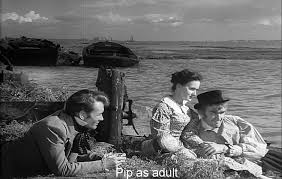
    The casting throughout is nearly flawless. John Mills, though arguably too old to play the young adult Pip, brings quiet sensitivity and decency to the role. His performance anchors the film’s emotional development — Pip’s shame, confusion, and eventual humility are all finely rendered.

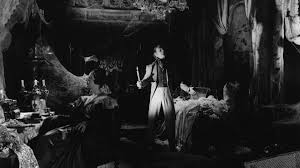
    Valerie Hobson, as the adult Estella, captures the character’s cold beauty and tragic conditioning, while Jean Simmons (as the young Estella) steals the early scenes with her composed cruelty and flickering vulnerability. Martita Hunt’s Miss Havisham is one of the film’s triumphs — a living ghost surrounded by cobwebs, dust, and the decaying remnants of her wedding feast. Hunt’s portrayal is equal parts pitiful and terrifying, her bitterness transformed into ritualized madness.

    Finlay Currie’s Magwitch, too, deserves special praise. His performance transcends caricature, showing the convict as both frightening and deeply human. When he reenters Pip’s life years later, the tenderness in Currie’s eyes gives the revelation of his identity an almost biblical force.

    The visual world of Great Expectations is unforgettable. Lean and his production team — including art director John Bryan — constructed environments that look lived-in yet dreamlike. Miss Havisham’s mansion, Satis House, is a masterpiece of design: cobwebbed draperies, rotting cake, and frozen clocks all illuminated by ghostly shafts of light. The film’s black-and-white photography transforms the setting into a metaphor for emotional decay and moral paralysis.

    Every shot in the film feels meticulously composed. Guy Green’s cinematography (which won an Academy Award) makes brilliant use of light and shadow to convey mood and meaning. The candlelit interiors glow with a Rembrandt-like richness, while the foggy exteriors evoke a sense of entrapment and destiny. Lean’s direction here prefigures his later mastery in epics like The Bridge on the River Kwai and Lawrence of Arabia: even in intimate moments, his visual storytelling feels grand, operatic.

    Lean began his career as an editor, and his command of pacing is one of the film’s great strengths. The transitions between Pip’s childhood and adulthood are seamless, enhanced by Lean’s ability to suggest the passage of time through imagery rather than dialogue. The editing of the climactic river chase — as Magwitch faces capture — demonstrates Lean’s growing skill in building tension, something that would become a hallmark of his later work.

    At its heart, Great Expectations is about the corruption of innocence and the painful education of the soul. Lean handles these themes with restraint and empathy. Pip’s yearning to become a “gentleman” and his subsequent disillusionment feel universal. The film avoids heavy-handed moralizing; instead, it shows the quiet consequences of pride and ingratitude.

    The ending — altered slightly from Dickens’ original — offers redemption and reconciliation, fitting Lean’s more romantic sensibility. Where Dickens left some ambiguity, Lean allows a glimmer of hope: Pip and Estella reunited, the windows of Satis House opened to the light. It’s sentimental, yes, but deeply earned.

    David Lean’s Great Expectations remains one of the crown jewels of postwar British cinema. It won two Academy Awards (for cinematography and art direction) and was nominated for three others, including Best Picture and Best Director. Critics and audiences alike recognized its achievement — not merely as a faithful adaptation, but as a standalone work of art.

    More than seventy years later, it still feels modern in its storytelling precision and visual power. Its influence can be traced through countless later Dickens adaptations, from Lean’s own Oliver Twist to the BBC’s many versions. But none have matched its balance of poetry and realism, darkness and grace.

    Lean’s Great Expectations is a triumph of craft and emotion — a film that bridges literature and cinema with rare intelligence and beauty. It captures the soul of Dickens while speaking the language of film fluently, elegantly, and indelibly.

    Whether one approaches it as a Dickens enthusiast, a cinephile, or simply a lover of great storytelling, this version remains definitive. The marshes, the mists, the tattered wedding dress — they linger in the mind long after the final frame fades, a testament to Lean’s genius for turning literary imagination into cinematic legend.

  • Blu-ray review: “Oliver Twist” (1948)

    “Oliver Twist” (1948)

    Drama

    Running Time: 116 minutes

    Written by: David Lean and Stanley Haynes

    Directed by: Stanley Haynes

    Starring: Alec Guinness, Robert Newton, Kay Walsh, John Howard Davies, Anthony Newley and Diana Dors

    Mr. Bumble: “Cry your hardest now, it opens the lungs, washes the countenance, exercises the eyes and softens down the temper. So cry away.”

    David Lean’s 1948 adaptation of Oliver Twist is widely regarded as one of the most visually striking and dramatically powerful renderings of Charles Dickens’ classic novel. Following the triumph of Lean’s Great Expectations (1946), he returned once again to Dickens with a greater confidence in how to translate the author’s richly atmospheric prose into visual storytelling. The result is a dark, compelling, and at times unsettling film that remains one of the finest Dickens adaptations ever put to screen.

    The film follows the familiar arc of Dickens’ novel: Oliver, an orphan born in a workhouse, dares to ask for more food, is punished, and eventually ends up on the streets of London, where he falls in with Fagin and his band of young pickpockets. Through twists of fate, Oliver is taken in by kind benefactors but is continually pursued by the criminal world that seeks to drag him back into the shadows.

    Lean’s adaptation is fairly faithful to the novel, though, as with Great Expectations, he condenses subplots and characters for narrative flow. Some storylines are trimmed to keep the film within just under two hours, but the essence of Oliver’s innocence clashing with a corrupt and cruel world is preserved. The film’s darker tone matches Dickens’ own anger at social injustice and the plight of the poor, making it a more serious, adult interpretation compared to later, more sentimental versions.

    At the heart of the film is John Howard Davies as Oliver. Only eight years old at the time, Davies brings a fragile, almost ethereal quality to the role. His performance is understated, leaning on his natural innocence rather than theatrical delivery, which makes Oliver’s suffering all the more poignant.

    But it is the supporting cast that truly dominates the screen. Alec Guinness delivers a notorious and unforgettable performance as Fagin. Lean and Guinness lean heavily into grotesquerie, with Guinness buried under heavy makeup that exaggerated Dickens’ controversial descriptions. His Fagin is sly, sinister, and almost rodent-like, a figure who embodies both menace and theatricality. While brilliantly performed, the depiction has been the subject of much criticism for perpetuating antisemitic stereotypes—so much so that the film was initially banned in the United States and in several European countries. This controversy continues to shape discussions of the film today.

    Robert Newton gives a brutal turn as Bill Sikes, one of the most terrifying presences in any Dickens adaptation. His violent outbursts and simmering rage culminate in moments of shocking intensity, particularly in the scenes involving Nancy. Kay Walsh, as Nancy, provides the film’s most human and tragic performance. She captures the warmth, desperation, and doomed loyalty of Dickens’ heroine, ensuring that her death resonates as the emotional core of the story.

    What sets Lean’s Oliver Twist apart is its style. Shot in black and white by cinematographer Guy Green, the film uses harsh lighting, deep shadows, and striking compositions to create a near-expressionistic atmosphere. London becomes a place of looming buildings, fog-shrouded alleys, and oppressive interiors, all reflecting the crushing social realities Oliver faces. The sequences in Fagin’s den are particularly memorable, dripping with menace and claustrophobia.

    Lean, who had already demonstrated his gift for blending literary adaptation with cinematic flair, constructs set pieces with remarkable precision. The robbery attempts, the chase scenes, and the climactic pursuit of Sikes across the rooftops are thrilling and technically superb, combining spectacle with raw emotional weight.

    Unlike some adaptations that soften Dickens’ story for family audiences, Lean emphasizes its brutality. The workhouse scenes are grim, the violence of Sikes is horrifying, and the overall tone is bleak. This was both a strength and a liability: critics praised the film’s artistry and power but questioned its suitability for younger audiences. In Britain, it was lauded for its faithfulness to Dickens’ anger at social injustice, but in America it faced cuts and censorship due to its disturbing imagery and the depiction of Fagin.

    Despite the controversy, the film has endured as one of the greatest Dickens adaptations. Its combination of stylized visual design, powerful performances, and unflinching tone captures something essential about the darker undercurrents of Oliver Twist.

    Today, Lean’s Oliver Twist is remembered both for its cinematic brilliance and the debate around its handling of Fagin. It set a high bar for literary adaptations, showing that Dickens could be translated into a medium that preserved both his social criticism and his sense of gothic grandeur. While some later versions opted for a more sanitized or musical approach, Lean’s remains uncompromising—a stark reminder of the cruelty at the heart of the story.

    The 1948 Oliver Twist is not an easy watch, nor was it ever meant to be. It is a visually stunning, emotionally intense, and morally troubling work of cinema that dares to present Dickens without gloss. John Howard Davies’ innocent Oliver, Alec Guinness’ sinister Fagin, Robert Newton’s terrifying Bill Sikes, and Kay Walsh’s heartbreaking Nancy all contribute to a film that lingers long after viewing.

    It is both a masterpiece of British cinema and a product of its time—brilliant, haunting, but also controversial. For those interested in Dickens, Lean, or the evolution of postwar British film, it remains essential viewing.

  • Blu-ray Review: “Doctor Who: The War Games” (1969)

    “Doctor Who: The War Games” (1969)

    Television

    Ten Episodes

    Directed by: David Maloney

    Written by: Terrance Dicks and Malcolm Hulke

    Featuring: Patrick Troughton, Frazer Hines and Wendy Padbury

    The Doctor: “All these evils I have fought, while you have done nothing but observe! True, I am guilty of interference. Just as you are guilty of failing to use your great powers to help those in need!’”

    Few Doctor Who stories carry the same weight in the history of the series as The War Games (1969). Originally broadcast in ten weekly installments at the end of Season 6, it marked not only the final regular appearance of Patrick Troughton as the Doctor but also the departure of companions Jamie (Frazer Hines) and Zoe (Wendy Padbury). More significantly, it was the story that pulled back the curtain on the Doctor’s origins, introducing the Time Lords for the very first time. Now presented as part of the Doctor Who: The Collection – Season 6 Blu-ray box set, The War Games finally receives the sort of definitive release that such a monumental story deserves.

    The War Games is one of the most ambitious undertakings of the black-and-white era. Set against the backdrop of a mysterious conflict where soldiers from across different time periods are forced to fight one another, it begins like a relatively straightforward historical drama before gradually widening into something far grander. The Doctor, Jamie, and Zoe land in what appears to be the trenches of World War I but soon discover that different eras—from Roman legions to American Civil War units—have been pulled together into one colossal war zone.

    The masterminds behind this scheme are the War Lords, who, with the aid of their henchman the War Chief (himself a renegade Time Lord), are attempting to create a vast army of brainwashed soldiers to conquer the galaxy. The Doctor’s hand is finally forced: he must call upon the Time Lords for help, thereby revealing his true origins. The story closes with a seismic change: the Doctor is put on trial, exiled to Earth, and forced into regeneration.

    As a piece of television drama, The War Games is both sprawling and experimental. It’s slow by modern standards, but the cumulative effect is immense. The gradual expansion from battlefield mystery to galactic trial gives it an epic scope unmatched in the black-and-white era.

    One of the greatest challenges with The War Games has always been its length—ten episodes make it one of the longest Doctor Who stories ever made. The Blu-ray release handles it superbly. The remastered picture is sharper and more stable than any previous DVD edition, with improved contrast that enhances the detail in sets, costumes, and especially the trench sequences, which now feel moodier and more atmospheric. The occasional softness of the source material remains (inevitable for 1960s studio video), but the restoration team has clearly done everything possible to maximize clarity.

    Sound has also been cleaned up, offering more balanced audio. Dudley Simpson’s incidental music, often understated and eerie, comes through with far greater crispness than before, and dialogue is clearer without the muffling present in older versions.

    Special Features

    As with all releases in The Collection Blu-ray range, the extras elevate the set far beyond just a remastered presentation. The War Games benefits from a rich array of supplementary material:

    • Documentaries & Retrospectives – The set includes in-depth looks at the making of the story, interviews with surviving cast and crew, and reflections on its place in Doctor Who history. Frazer Hines and Wendy Padbury provide warm, candid memories, and production staff speak to the immense challenge of sustaining a ten-part serial.
    • Behind-the-Scenes Footage – Surviving production materials, rehearsal footage, and rare outtakes give a fascinating glimpse into the BBC’s production process in the 1960s.
    • Commentaries – Multiple commentary tracks allow fans to experience the story alongside insights from actors, directors, and historians. Patrick Troughton’s colleagues are effusive in their praise of his mercurial, often mischievous performance.
    • Archival Features – The Blu-ray preserves all the DVD extras, including documentaries produced in the 2000s, ensuring nothing is lost for long-time collectors.
    • Restoration Comparisons – For those interested in the technical side, the set shows the painstaking work that went into restoring aging video and film elements.

    The packaging is also up to the high standard of The Collection range, with Lee Binding’s striking artwork and a collector’s booklet offering essays and production notes.

    Patrick Troughton’s performance is nothing short of extraordinary. Across ten episodes, he shifts seamlessly between clownish charm, fierce moral authority, and deep vulnerability. His Doctor is revealed in all his shades here—brilliant, fallible, compassionate, and at times desperate.

    Frazer Hines as Jamie again proves why he was one of the longest-serving companions, bringing loyalty and earthy humor to counterbalance the high-concept narrative. Wendy Padbury’s Zoe gets several shining moments of intelligence and bravery. The War Chief, played with sinister gravitas by Edward Brayshaw, stands out as a chilling figure whose Time Lord connection foreshadows later villains like the Master.

    The Time Lords’ first appearance, played with an austere detachment, has lost none of its power. Their calm, almost bureaucratic judgment of the Doctor feels alien and unsettling, laying groundwork for decades of mythology.

    The War Games is not just another classic serial; it is one of the foundation stones of Doctor Who. Without it, the mythology of the Time Lords and the Doctor’s exile might never have crystallized in the form we know today. It was both an ending and a new beginning—closing the Troughton era while paving the way for Jon Pertwee and the UNIT years.

    On Blu-ray, the story gains a presentation worthy of its legacy. The improved restoration allows modern audiences to experience the serial with unprecedented clarity, while the extras provide vital historical and contextual depth.

    The Blu-ray release of Doctor Who: The War Games is a triumph. While the story’s length may test the patience of casual viewers, it rewards persistence with a rich, layered, and epic tale that forever changed the series. Patrick Troughton’s farewell is as poignant as ever, and the presentation on this set ensures it can be appreciated in the best possible quality.

    For long-time fans, this Blu-ray is essential; for newer viewers, it offers a chance to witness the birth of modern Doctor Who mythology.ted the innocent wonder of childhood, then Aaahh!!! Real Monsters was its darkly comic shadow—a reminder that growing up also means confronting anxieties, insecurities, and the strange, slimy unknown.

  • 4K Blu-ray review: “Crocodile Dundee” (1986)

    “Crocodile Dundee” (1986)

    Comedy

    Running Time: 141 minutes

    Written by: Paul Hogan, Ken Shadie and John Cornell

    Directed by: Peter Faiman

    Featuring: Paul Hogan, Linda Kozlowski, Mark Blum, David Gulpilil, Michael Lombard and John Meillon

    Michael J. “Crocodile” Dundee: “Well, you see, Aborigines don’t own the land.They belong to it. It’s like their mother. See those rocks? Been standing there for 600 million years. Still be there when you and I are gone. So arguing over who owns them is like two fleas arguing over who owns the dog they live on.”

    When Crocodile Dundee first hit cinemas in 1986, it was something of a cultural phenomenon. A film that blended fish-out-of-water comedy, light romance, and a celebration of rugged Australian outback life, it went on to become a global smash and introduced the world to Paul Hogan’s laconic charm. Now, decades later, Paramount’s 4K UHD release gives the film a new lease of life for collectors and newcomers alike. The result is an upgrade that is both satisfying and occasionally surprising, though not without limitations that reflect the film’s modest origins.


    Video Quality – Native 4K Transfer

    The most obvious selling point of this release is the new 4K transfer, sourced from the original camera negative. Shot on 35mm, Crocodile Dundee benefits from the format’s natural grain and earthy palette, and the UHD disc finally allows those details to breathe in a way earlier DVDs and Blu-rays never did.

    • Sharpness & Detail:
      Close-ups of Mick Dundee’s weathered face show far more nuance than ever before, with every crease and sunburnt line visible. Textures in his leather vest, crocodile-tooth hat, and the lush detail of the outback brush are all noticeably improved. The New York sequences also pop with architectural clarity, from neon-lit streets to the brickwork of downtown buildings.
    • Color Grading & HDR:
      HDR10 has been applied carefully, avoiding the over-saturation that plagues some catalog titles. The warm ochres of the Northern Territory landscapes come alive with greater depth, while the greens of the foliage feel richer and more natural. Night scenes in Manhattan benefit from deeper blacks and a more controlled contrast, though some shots remain a little flat, likely due to the limitations of the original photography.
    • Grain & Restoration:
      Grain is intact and organic, which will please purists. There are occasional moments where the image softens—especially in wide shots or during optical transitions—but these appear to be faithful to the original print rather than signs of digital tampering. Importantly, there’s no heavy-handed DNR, so the film retains its filmic identity.

    Overall, the presentation feels authentic, natural, and a substantial improvement over previous Blu-rays.


    Audio Quality – DTS-HD Master Audio 5.1

    The audio track is presented in lossless DTS-HD Master Audio 5.1, carried over from the earlier Blu-ray. While it doesn’t reinvent the wheel, it does justice to the film.

    • Dialogue is consistently clear, which matters in a movie where Paul Hogan’s dry one-liners carry much of the humor.
    • The surrounds are modestly active, with environmental ambience in both the outback and New York sequences spreading across the channels for a mild sense of immersion.
    • The soundtrack—particularly Peter Best’s score—comes through with more warmth than older DVD mixes, though don’t expect thunderous bass or modern demo-disc standards.

    It’s a respectful track that preserves the original intent without unnecessary tinkering.


    Special Features

    Here lies the weak spot of the release. Fans hoping for a wealth of new extras may be disappointed. The 4K disc itself is barebones, with the supplemental material relegated to the included Blu-ray (essentially the old HD release).

    Typical extras include:

    • Theatrical Trailer
    • Featurettes and interviews (carried over from earlier editions, but none in-depth by today’s standards)
    • Promotional material

    It’s a shame that Paramount didn’t commission a new retrospective documentary, commentary, or interviews with Paul Hogan and Linda Kozlowski. Given the film’s cultural impact, a contextual look back would have been a real draw.


    Packaging & Presentation

    The packaging depends on the region, but most editions include standard black UHD cases with the original poster artwork. Collectors may be disappointed at the lack of steelbook or premium collector’s editions—particularly for a title with such global popularity in the 1980s. Subtitles and language tracks vary, but English SDH is included.
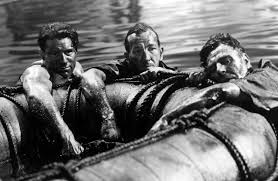

    The Film Itself – Enduring Charm

    Watching Crocodile Dundee in 4K is a reminder of why the film captured audiences in the first place. It’s a light, breezy story that hinges almost entirely on Paul Hogan’s charisma. His performance balances rugged masculinity with affable humor, making Dundee feel both iconic and approachable. Linda Kozlowski’s Sue plays a vital counterpoint, and their chemistry remains believable.

    Yes, some cultural humor feels dated, and the gender politics reflect the 1980s more than today’s sensibilities. But there’s an undeniable innocence to the film’s tone—an optimistic belief that good-natured charm can cut through cynicism—that helps it hold up better than many of its contemporaries.


    Final Verdict

    The 4K UHD release of Crocodile Dundee is the best the film has ever looked at home, delivering a faithful and filmic presentation that respects its origins. While the video transfer shines with detail, texture, and natural color balance, the audio is competent but unremarkable, and the extras are disappointingly slim.

    • Video: ★★★★☆ (strong transfer, authentic presentation)
    • Audio: ★★★☆☆ (serviceable, faithful to source)
    • Extras: ★★☆☆☆ (barebones, little effort put in)
    • Film: ★★★★☆ (light, charming, still enjoyable)

    For fans of the film or collectors of ’80s classics, this 4K upgrade is worth owning despite the lack of supplemental material. It’s not a reference disc, but it’s a respectful and worthwhile way to revisit one of the most unlikely global blockbusters of its era.

  • Film review: “F1” (2025)

    “F1” (2025)

    Drama

    Running Time: 155 minutes

    Written by: Ehren Kruger

    Directed by: Joseph Kosinski

    Featuring: Brad Pitt, Damson Idris, Kerry Condon, Javier Bardem and Tobias Menzies

    Sonny Hayes: “We do what everybody does, we lose.”

    Joseph Kosinski’s highly anticipated film, F1, delivers on the promise of a visceral, immersive, and truly cinematic racing experience. Fresh off the runaway success of Top Gun: Maverick, Kosinski once again proves his mastery of practical filmmaking and heart-pounding action, making F1 a must-see on the biggest screen possible. While the narrative may lean heavily on familiar sports movie tropes, the sheer spectacle and authenticity of the racing sequences elevate the film far beyond a simple underdog story.

    The film follows the journey of Sonny Hayes (Brad Pitt), a washed-up former Formula One prodigy whose career was cut short by a brutal crash thirty years prior. After a nomadic life as a hired-gun racer, he’s given an unexpected second chance by his former teammate, Ruben Cervantes (Javier Bardem), now the owner of the struggling APXGP racing team. Sonny is tasked with a dual mission: to help save the team from financial ruin and to mentor its arrogant, hotshot rookie driver, Joshua Pearce (Damson Idris).

    The dynamic between Pitt and Idris is the heart of the movie. Pitt, with his effortless, laid-back charisma, embodies the role of the seasoned veteran who races for the love of the sport, not for fame or fortune. He’s a stark contrast to Idris’s Joshua, a young driver obsessed with his public image and social media presence. Their clash of personalities, and their eventual understanding and cooperation, is the central narrative arc, and both actors deliver compelling performances that sell the emotional journey. Javier Bardem is a delight as the passionate and desperate team owner, and Kerry Condon is a standout as the no-nonsense technical director trying to prove herself in a male-dominated field.
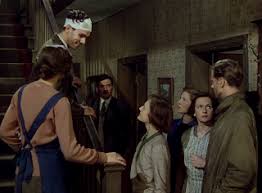
    However, the real star of the show is the racing itself. Kosinski and his crew, with the unprecedented cooperation of Formula 1, have created a new benchmark for racing films. Shot on location during real Grand Prix weekends in both the 2023 and 2024 seasons, the film’s on-board shots and action sequences are breathtakingly real. You are placed directly in the cockpit, feeling every turn, every jolt, and every near miss. The sounds of the engines, the screaming tires, and the roar of the crowd are a symphony of speed, masterfully orchestrated by Hans Zimmer’s dynamic score. The film successfully captures the intense speed, danger, and precision of F1, making it a truly immersive experience for both die-hard fans and newcomers to the sport.

    For F1 enthusiasts, the film is a treasure trove of authentic details and cameos. Real F1 drivers like Lewis Hamilton (who also served as a producer), Max Verstappen, and Charles Leclerc, among many others, appear in the film, adding to its documentary-like feel. Sky Sports commentators David Croft and Martin Brundle lend their voices to the in-race commentary, grounding the fictional racing in the real world of the sport.

    The film’s commitment to realism is both a strength and, for some, a weakness. While the racing sequences are top-tier, the plot can feel constrained by the realities of the sport. The idea of a back-of-the-grid team securing a win in a single season is a long shot, and some of the narrative choices, particularly concerning the fictional team’s car and on-track strategies, may stretch the credulity of dedicated F1 fans. There are moments where the film’s reliance on certain dramatic cliches and a predictable storyline may leave viewers wanting a more profound or original tale, a criticism that has been leveled at other acclaimed sports films.

    Despite these minor narrative shortcomings, F1 is a powerful, entertaining, and visually spectacular movie. It’s a testament to the power of practical effects and a clear demonstration of what a skilled director can achieve with the right access and technology. The film flies by despite its two-and-a-half-hour runtime, leaving you exhilarated and perhaps even inspired to delve into the world of Formula 1. It may not be a cinematic masterpiece on the level of something like Ford v Ferrari or Rush, but as a pure, adrenaline-fueled summer blockbuster, F1 takes the checkered flag.

  • DVD Review: “Aaahh!!! Real Monsters” (1994-1997)

    “Aaahh!!! Real Monsters” (1994-1997)

    Animated / Television

    Fifty-two Episodes

    Created by: Gábor Csupó, Peter Gaffney and Igor Kovalyov

    Featuring: Charlie Adler, Christine Cavanaugh, David Eccles, Gregg Berger, Jim Belushi and Tim Curry

    Ickis: “Hey, Krumm, I think you’re having a bad hair day.”

    When Nickelodeon’s Aaahh!!! Real Monsters first premiered in 1994, it felt like nothing else on children’s television. At a time when cartoons often leaned into slapstick comedy or sunny, family-friendly wholesomeness, this series was dark, gross, and gleefully weird. Created by Gábor Csupó and Peter Gaffney, the show was produced by Klasky Csupo—the same studio behind Rugrats and later The Wild Thornberrys—and it carried that unmistakable visual style: angular designs, surreal colors, and characters who often looked more monstrous than cute. Over its four-season run (1994–1997), Aaahh!!! Real Monsters carved out a unique niche as both a comedy about monsters-in-training and a sly satire of childhood fears.

    The show is set in a monster world that exists beneath the human city, specifically in a sewer-based academy where young monsters are taught how to scare humans properly. The premise cleverly flips the dynamic of horror: humans, rather than monsters, are the targets of fright, and the creatures we normally think of as terrifying are themselves students with homework, insecurities, and authority figures.

    The three main characters—Ickis, Oblina, and Krumm—form the core trio. Each one is visually bizarre in their own way. Ickis resembles a red rabbit-like creature with oversized ears and a nervous disposition, always worried about proving himself as a “real” monster. Oblina, perhaps the most iconic of the three, looks like a black-and-white striped candy cane with big red lips, a design both grotesque and elegant, befitting her role as the brainy, perfectionist overachiever. Krumm, in contrast, is squat, lumpy, and famously carries his eyeballs in his hands—an unsettling but memorable design that embodies the show’s offbeat sense of humor.

    Overseeing them is The Gromble, the monster school’s stern, eccentric teacher. With his high-heeled boots and booming voice, The Gromble is both a parody of the tyrannical schoolmaster and a genuine figure of intimidation. He represents the pressure to live up to monstrous expectations while also being a source of comic exaggeration.

    What set Aaahh!!! Real Monsters apart was its willingness to embrace the grotesque. The humor was often based on bodily functions—Krumm’s stench, Ickis’s failed scares, slimy settings—but it wasn’t just crass; it was inventive. The monster designs were deliberately strange, combining elements of surrealism, Expressionism, and children’s doodles. Many backgrounds used tilted angles, dripping textures, and muted, grimy colors, making the sewer world feel both alive and claustrophobic.

    The show balanced this grim aesthetic with witty writing. Episodes often mirrored real-world childhood anxieties—fitting in at school, handling authority figures, confronting fears of failure—but reframed through the lens of monsters. An episode about stage fright or cheating in class became stranger and funnier when the punishment involved monster humiliation rituals. It was, in many ways, a satire of the pressures children feel, but hidden under layers of slime and shadows

    The trio dynamic worked because of their contrasts. Ickis’s constant self-doubt and impulsive nature often got them into trouble. Oblina, with her British accent and uptight demeanor, tried to keep them in line while occasionally revealing her own vulnerabilities. Krumm, though often played for laughs as the “gross one,” was surprisingly good-natured and pragmatic, serving as the glue between the other two.

    Their friendship felt authentic because they often bickered, doubted each other, or made mistakes, but ultimately stuck together. Unlike many cartoons where characters stay one-dimensional, the Aaahh!!! Real Monsters trio had evolving dynamics. Some episodes spotlighted Ickis’s ambition to be seen as a great scarer, others explored Oblina’s desire for recognition, while Krumm occasionally had moments of surprising wisdom.

    The supporting cast was also colorful: The Gromble as the authoritarian mentor; the Snorch and Zimbo as the comedic disciplinarians; and various strange monsters populating the academy. The human world was usually seen only briefly, but when it was, it highlighted the absurd contrast between normal society and the bizarre monster underworld lurking just out of sight.

    Beneath the gross-out humor, Aaahh!!! Real Monsters carried strong themes of identity and belonging. Ickis’s constant worry about not measuring up mirrored many children’s anxieties about school, friends, and expectations. Oblina’s perfectionism reflected the pressures of being the “model student.” Krumm, mocked for his odor, embodied self-acceptance of physical differences.

    The series also commented on society’s fear of the unknown. Humans in the show were rarely individualized; they existed mainly as targets of scares, but the metaphor was clear: what we fear is often misunderstood. Conversely, the monsters’ world, though ugly and disgusting, had its own rules, culture, and sense of normalcy. It was a clever inversion of perspective, teaching kids empathy through grotesque humor.


    Reception and Legacy

    While it was never as popular as Rugrats or Doug, Aaahh!!! Real Monsters developed a cult following. Its merchandise—video games, toys, even a crossover appearance in a Rugrats episode—cemented its place in Nickelodeon’s 1990s identity. Critics often praised its creativity and visual daring, though some parents found it too grotesque or unsettling for children.

    In retrospect, the series feels ahead of its time. Modern children’s animation has embraced weirdness (Adventure Time, The Grim Adventures of Billy & Mandy), but Aaahh!!! Real Monsters laid early groundwork by proving that kids could handle darker, stranger humor if presented with wit. Its blend of gross-out comedy, surreal visuals, and relatable themes gave it a distinctive voice in Nickelodeon’s “golden age.”

    Aaahh!!! Real Monsters remains a fascinating relic of 1990s animation. Its sewer-dwelling heroes may not have reached the fame of Tommy Pickles or SpongeBob SquarePants, but they embodied a unique artistic vision. Equal parts funny, disgusting, and oddly heartfelt, the show turned monstrosity into metaphor, helping kids laugh at their fears while celebrating the weird and unusual.

    If Rugrats represented the innocent wonder of childhood, then Aaahh!!! Real Monsters was its darkly comic shadow—a reminder that growing up also means confronting anxieties, insecurities, and the strange, slimy unknown.

  • DVD Review: “Upstart Crow Series 1 – 3” (2016 – 2020) 

    “Upstart Crow Series 1 – 3” (2016 – 2020) 

    Television Series / Comedy

    Twenty One Episodes

    Created by: Ben Elton

    Featuring: David Mitchell, Liza Tarbuck, Rob Rouse, Gemma Whelan and Mark Heap

    Will: [Repeated line on having a good idea] “Hang on. Hang the futtock on!”

    Upstart Crow (2016–2020), written by Ben Elton, is a clever, affectionate, and consistently witty sitcom that reimagines the life of William Shakespeare with equal measures of reverence and ridicule. Starring David Mitchell as the Bard, the series blends historical detail with modern satire, managing to both parody the Elizabethan world and skewer contemporary social issues. Across its three seasons (and special episodes), the show has carved out a distinctive place in the canon of British television comedy.

    The premise is deceptively simple: Shakespeare, still establishing himself as a playwright, struggles with the daily realities of Elizabethan England while juggling the demands of his family, his acting troupe, and the cultural climate of the time. What elevates the series beyond a mere historical parody is Ben Elton’s sharp writing. Elton uses Shakespeare’s world as a mirror for modern-day debates: class prejudice, gender inequality, xenophobia, celebrity culture, and even the futility of commuting.

    The dialogue is a highlight. Elton peppers the scripts with wordplay and faux-Elizabethan flourishes, but always with a wink to the audience. Shakespeare’s lines are frequently juxtaposed with blunt, modern phrasing, creating a comic friction that becomes the show’s signature style. For example, an Elizabethan character might solemnly discuss the plague, only for another to dismiss it as “just another London transport issue.” These anachronisms are deliberate, not sloppy, and they give the show its satirical edge.

    Mitchell’s casting is perfect. He embodies Shakespeare as a pompous, self-important, yet oddly sympathetic figure. His Will is forever convinced of his genius but constantly undermined by others—actors, family, even his rivals—who see him as pretentious or absurd. Mitchell’s deadpan delivery enhances the humor, and he plays the Bard less as a mythic literary figure and more as a beleaguered, middle-class professional trying to “make it” in a cutthroat industry.

    The ensemble is rich with comic talent. Paula Wilcox and Liza Tarbuck shine as Shakespeare’s mother and wife, respectively, both offering no-nonsense counterpoints to Will’s lofty self-regard. Gemma Whelan is delightful as Kate, the aspiring actress whose intelligence and ambition constantly highlight the absurd gender restrictions of the era. Rob Rouse, as Shakespeare’s servant Bottom, provides a reliable stream of earthy humor. Spencer Jones as Kempe, the clownish actor, and Mark Heap as the brooding Robert Greene (forever sneering “Upstart Crow!”) bring additional layers of absurdity.

    The chemistry among the cast is one of the show’s strongest assets. Each character plays off Shakespeare’s vanity in different ways, ensuring that he is always being punctured by reality, whether it comes from a servant’s blunt honesty, a rival’s cruelty, or his wife’s dry pragmatism.

    The comedy operates on multiple levels. On the surface, it’s a traditional sitcom, complete with running gags (such as Shakespeare’s disastrous attempts at travel, or his family’s indifference to his “genius”). But beneath that, it is a witty commentary on Shakespearean scholarship, a parody of the challenges artists face, and even a meta-commentary on sitcom structures themselves.

    Elton, who previously co-wrote Blackadder II (another historical comedy with an Elizabethan setting), often draws comparisons between the two shows. While Blackadder was sharper in its cynicism, Upstart Crow leans more toward affectionate satire. It is gentler, less biting, but it compensates with clever anachronisms and topical parallels.

    The show frequently uses Shakespeare’s works-in-progress as fodder for comedy. Episodes will often end with Will inadvertently stumbling upon the idea for a famous line or plot twist, only to have it dismissed by others as ridiculous. This running gag both celebrates and undercuts the myth of Shakespeare’s genius, reminding viewers that even the greatest writers had to wrestle with doubt, criticism, and failure.

    If the show has a flaw, it is that its rhythms can sometimes feel predictable. Many episodes follow a familiar formula: Shakespeare struggles with a problem, his peers mock him, he lectures pompously, and then he accidentally discovers a great literary idea. For some, this repetitiveness can lessen the impact of the humor. Additionally, the heavy reliance on modern parallels (Brexit references, celebrity culture jokes, etc.) may date the show more quickly than Elton’s earlier work.

    However, these are minor quibbles when weighed against the sheer charm and intelligence of the series.

    Upstart Crow stands out as one of the most successful attempts to blend historical comedy with contemporary satire. It manages to poke fun at Shakespeare without belittling his importance, instead humanizing him as a flawed but determined artist. The show works both for casual viewers, who can enjoy the slapstick and anachronisms, and for Shakespeare enthusiasts, who will delight in spotting references and allusions.

    The final Christmas special, Lockdown Christmas 1603, and the subsequent stage play adaptation show the durability of the concept and characters. While it may not reach the legendary status of Blackadder, Upstart Crow is a warm, clever, and consistently funny sitcom that demonstrates Ben Elton’s enduring talent for mixing wit with cultural critique.

  • Blu-ray review: “The Darling Buds of May” (1991-1993)

    “The Darling Buds of May” (1991-1993)

    Drama

    Twenty Episodes

    Created by: H.E. Bates

    Featuring: David Jason, Pam Ferris, Philip Franks and Catherine Zeta-Jones

    Sidney Charles ‘Pop’ Larkin: “This calls for a cocktail!”

    Once again recently released on DVD is the now constant favorite David Jason starring “The Darling Buds of May” (1991-1993), a relatively short lived television show that is now quite famous for being the first major mainstream series or movie featuring Catherine Zeta-Jones who is a standout and would of course go on to Oscar winning success as well as a high international profile. One of the main element sof the show that I believe still makes it a success as well as it being re-released on DVD every few years is not only its timely setting, that is, it is a period piece that is of extremely high quality but also the stories themselves which are never dark, but enjoyable and full of hope, no matter what happens, it is difficult not to smile when reaching the end of each installment.

    “The Darling Buds of May” concerns the Larkin family who live on a farm in rural England. Sidney (“Pop”) and his common law wife Florence (“Ma”) have six children, eldest daughter Mariette, followed by their only son Montgomery, and other daughters Primrose, twins Zinnia and Petunia, and Victoria. Ma is a housewife while Pop supplements his farm income with various other not entirely legitimate enterprises. Tax collector Cedric (“Charley”) visits to audit Pop, but falls in love with Mariette and quits his job to live the rural life. Pop and Ma’s relationship is depicted as loving and affectionate throughout, although Pop is flirtatious and subject to numerous advances, most of which Ma is aware of and evidently unconcerned by. Proud of all his children, Pop’s schemes evidently provide well for the family, although he is just as motivated by doing good and helping others as making a profit. From here the adventures of the entire family come into play with no real tension but that is made up by alot of good natured storytelling which has never really gone out of date. This makes sense as it was produced possibly as an antidote or reaction to not only the UK politics of the time but also to the International feeling at the the time.

    To say the series was a success is an understatement, it was and remains a fan favorite which is down to quite a few factors that coalesced around the show. Of course the star of the show was David Jason who was becoming the television legend he is today, this would mark his first real starring role in what was a drama with humor something he would follow up with in the years to come. However there were the actors Pam Ferris and Catherine Zeta Jones who would also come to the fore playing women who whilst they were secondary characters has some very real agency, they were knowing of the men and made sure they always came out on top.

    This was a series where the natural environs played a part, they were a character as well in that the locales served a purpose, the land was something that all the characters not only inhabited but relied on as well for their lives and their livelhood. “The Darling Buds of May” was filmed on location with many interiors of course on soundstage, but the look of the series was as authentic as could be, something seen mostly seen in movies, but when one thinks of modern dramas the locations pay huge parts, they offer an individuality that sets them apart much like this show did when it was screened and something it was ahead of.

    “The Darling Buds of May” remains very much one of the English television series that many not only remember but are able to re-watch which explains why it is always available on DVD or in the UK on streaming services. It is a credit to the taste and power of David Jason that ever since he first appeared on television screens he has been a constant presence in great high quality viewing and this is no different. It does mean that he can taken for granted and that he is one sort of genre but in fact he spans genre easily and this show proves it. This is also a show that while Jason is the lead he is at ease sharing the screen with others, even those actors who are untested, something he would have learned from one of the greats in Ronnie Barker. I highly recommend this series, for like all those years ago this is a time when we all need a laugh and some reminder that there was a time when people just got along.

    Episodes

    Series One

    The Darling Buds of May: Cedric Charlton, the tax inspector, arrives on Home Farm to help the Larkins fill in their tax form. He is distracted by their beautiful daughter, Mariette. The Larkins distract him further by attempting to teach him crib and getting him drunk. He wakes with a hangover, and is unfit to return home. Eventually, he forgets life in the office.

    When the Green Woods Laugh: The day of Charley and Mariette’s wedding is looming. Pop sells a country mansion to an aristocratic couple. When Pop rejects the advances of Corrine Perrigo (Celia Imrie), she gets her revenge by persuading the woman to charge him with assault, when all he attempted was stop her from falling. The Brigadier is best man for the wedding. Eventually, Pop is found innocent and the wedding goes ahead.

    A Breath of French Air: The Larkins go on holiday to Brittany. The weather is appalling, the food revolting, the receptionist unfriendly. The weather improves, and a mechanic sees the crest on the doors of Mr Larkin’s car and thinks him a lord. As a result, he is treated better, even by the receptionist, Molet. The hotel patronne, Mademoiselle Dupont, gives Pop and Ma her room. Primrose falls in love with a local boy named Marc – Antoine Gammelin and wants to stay in France.

    Christmas is Coming!: As Christmas approaches, Charley and Mariette go to view a house to rent, unaware that Tommy Mason, an escaped convict is hiding there. Pop later discovers him in the Larkins’ hen-house where Victoria is taking food to him. He explains that, since his imprisonment, his wife has severed all ties with him but he is anxious to see his children.

    Series Two

    Oh! To Be in England!: Mam’selle Dupont comes to stay with the Larkins, and discovers the truth – Mr. Larkin is not a lord. She is disappointed but comes to terms with it, and enjoys her stay. Pop saves an old woman from being cheated, and buys a fair from his friend, Fruity Pears, who is unable to run it after being attacked by thugs. Primrose’s relationship with the French boy has fizzled out; back in the UK she falls for Mr Candy, the young vicar in charge of christening the young Larkins … and a newly arrived Charlton.

    Stranger at the Gates: A young man named Pieter who says he is Danish arrives on the farm, and starts doing odd jobs for the people in the village. Everyone, including Mariette, thinks he’s the bee’s knees, much to the resentment of Charley. Meanwhile, Montgomery is being bullied by local boys, and Primrose is attempting to win Mr. Candy’s heart. She mistakes his sister for a girlfriend, and angrily leaves him. Charley discovers that Pieter is German and has been hiding his identity because of the anti-German sentiment in post-World War II Britain.

    A Season of Heavenly Gifts: Pop Larkin unwittingly becomes involved in smuggling when he receives gifts from a grateful pilot he helped after a crash-landing. Meanwhile, an evil Polish man named Mr. Cope attempts to prevent Charley and Mariette from buying Mrs Kinthley’s hopgarden. The pilot invites the family to a party at his club, which they greatly enjoy. Montgomery Larkin is unhappy at Naval College, where he is training to be a sailor in the merchant navy.

    Le Grand Weekend: Pop and Ma’s proposed weekend in Paris is disrupted by a storm, and they spend the time in a country house.

    Series Three

    The Happiest Days of Your Life: The twins go to boarding school, while Charley starts doing the books as a part-time job for the brewery to which he wishes to sell his hops. Charley and Mariette decide to buy the brewery. The whole family repairs the twins’ boarding school, which was otherwise going to be forced to close by the bank for not keeping up with the repairs.

    Cast Not Your Pearls Before Swine: Pop builds a swimming-pool, and buys two hundred pigs from George Harran, a confidence trickster who is also cheating Edith, who has fallen in love with him. Meanwhile, Primrose has a new love interest—a member of the swimming pool building crew, from Liverpool. Pop prepares a trick against George to put all to rights without hurting Edith.

    Climb the Greasy Pole: Pop runs for rural councillor while Charley and Mariette struggle at the brewery and have problems in their relationship. Gypsies get involved in Pop’s campaign for rural councillor. Charley and Mariette have to work on their marriage as Mariette is attracted to Tom Sargent, after which they at last finalise the deal to buy Bristow’s brewery.