• DVD review: “Ghosts: Season One” (2022)

    “Ghosts: Season One” (2022)

    Comedy

    Eighteen episodes

    Developed by: Joe Port and Joe Wiseman

    Featuring: Rose McIver, Utkarsh Ambudkar, Brandon Scott Jones, Danielle Pinnock, Richie Moriarty, Asher Grodman,Sheila Carrasco, Devan Chandler Long, Rebecca Wisocky and Román Zaragoza

    Isaac: “Nigel…”

    Nigel: “Yes, Isaac?”

    Isaac: “Will you make me the happiest ghost on the entire property?”

    Nigel: “No, I will make you the second happiest. Get up, so I can look my fiancée in the eye.”

    “Ghosts” is an American television sitcom adapted from the British series of the same name. It follows Sam and Jay, a young couple who inherit a rundown country house from Sam’s distant relative. They soon discover that the house is haunted by the ghosts of its former residents, who are all stuck in the afterlife until they can find a way to move on.

    The ‘Ghosts’ in this version are:

    Sam Arondekar (Rose McIver): A cheerful freelance journalist who is able to see and hear the ghosts.

    Jay Arondekar (Utkarsh Ambudkar): An up-and-coming chef who is initially skeptical of the ghosts, but eventually comes to accept them.

    Trevor Bingley (Levi Miller): A 1700s British militiaman who is still hung up on his old life.

    Hetty Woodstone (Rebecca Wisocky): The former owner of Woodstone Mansion who died in a mysterious accident.

    Isaac Woodstone (Danielle Pinnock): A 1920s jazz singer who is still trying to find her place in the world.

    Alberta the Ghost (Sheila Carrasco): A 1960s hippie who is always looking for a good time.

    Flower the Ghost (Román Zaragoza): A Native American who died 500 years ago but still talks like he’s from the 21st century.

    Sasappis the Ghost (Brandon Scott Jones): A 17th century Wampanoag man who is trying to find his way back to his tribe.

    Pete the Ghost (Richie Moriarty): A 1950s scout troop leader who is always looking for a new adventure.

    Thorfinn the Ghost (Asher Grodman): A 10th century Viking who is still trying to adjust to life in the modern world.

    Sasappis’s Grandmother (Jill Marie Jones): A 17th century Wampanoag woman who is trying to help her grandson find his way back to his tribe.

    “Ghosts” is set in Woodstone Mansion, a sprawling country house that is located in upstate New York. The house is in a state of disrepair, and the ghosts who inhabit it are all very different from each other. However, they all have one thing in common: they are all trying to find their way to the afterlife.

    The plot of “Ghosts” is simple but effective. Sam and Jay are two young people who are trying to make a new life for themselves. They inherit Woodstone Mansion, and they soon discover that it is haunted by the ghosts of its former residents. The ghosts are all friendly and helpful, and they eventually become friends with Sam and Jay.

    The ghosts in Ghosts are a diverse group of characters, and they each have their own unique personality. Trevor is a stuffy British aristocrat who is still hung up on his old life. Hetty is the former owner of Woodstone Mansion who died in a mysterious accident. Isaac is a talented jazz singer who is still trying to find his place in the world. Alberta is a free-spirited hippie who is always looking for a good time. Flower is a Native American who died 500 years ago but still talks like he’s from the 21st century. Sasappis is a 17th century Wampanoag man who is trying to find his way back to his tribe. Pete is a 1950s scout troop leader who is always looking for a new adventure. Thorfinn is a 10th century Viking who is still trying to adjust to life in the modern world.

    The ghosts in “Ghosts” are all very different from each other, but they all have one thing in common: they are all trying to find their way to the afterlife. Sam and Jay help the ghosts on their journey, and they all learn a lot from each other in the process.

    “Ghosts” is a comedy, and it does a great job of mixing humour with heart. The jokes are funny, but they never come at the expense of the characters. The ghosts are all likable and relatable, and the audience will root for them to find their way to the afterlife.

    “Ghosts” is also a show about relationships. Sam and Jay’s relationship is the heart of the show, but the relationships between the ghosts are also important. The ghosts learn to rely on each other and support each other, and they all grow as individuals as a result.

    “Ghosts” is a charming and heart-warming show that is sure to leave you laughing and feeling good. The characters are lovable, the humour is on point, and the relationships are heart-warming. Ghosts is a show that everyone can enjoy, and it is a must-watch for fans of comedy and heart-warming stories.

    “Ghosts” is an adaptation of the British comedy series of the same name. The American version has been praised for its faithfulness to the original, while also adding its own unique spin on the story. The characters in the American version are all very similar to their British counterparts, but they have been given some new quirks and personality traits that make them even more lovable. The humor in the American version is also very similar to the British version, but it has been updated to appeal to a modern audience. Overall, the American version of Ghosts is a faithful adaptation of the British original, but it also has its own unique charm that makes it a must-watch for fans of both shows.

    Episodes

    Pilot: A young couple inherit a country mansion. They move in and plan to turn it into a bed and breakfast. However, the house is also occupied by ghosts, who are dead set against the idea.

    Hello!: After falling down the stairs and suffering a concussion, Sam now sees the ghosts but believes she is seeing things. The ghosts try to think of ways to convince her they really are there.

    Viking Funeral: When Thorfinn’s bones are discovered on the property, he asks Sam to conduct the traditional Viking funeral he’s always wanted; Sam and Jay are torn when they learn that the bones could be sold to a museum for a lot of much-needed cash.

    Dinner Party: Sam and Jay invite Henry and Margaret to a dinner party to woo them into allowing the bed and breakfast; the ghosts are desperately eager to be included on the guest list.

    Halloween: The ghosts try to help Sam and Jay protect their home from the neighborhood kids who annually vandalize the house on Halloween.

    Pete’s Wife: Pete gets a visit from his living wife only to discover she’s hiding a secret from him; Sasappis gets angry when Thorfinn binge-watches their favorite show without him; Trevor learns he may have a daughter.

    Flower’s Article: When Sam is commissioned to write an article about Flower and her friends holding up a bank during their commune days, Flower begs Sam not to accept the job because she’s embarrassed about a part of the story she’s never revealed.

    D&D: After Jay is kicked out of a Dungeons and Dragons game with his city friends, Sam agrees to facilitate a new one between him and the ghosts; Isaac confronts his feelings for Nigel, a ghost from whom he’s been keeping a gigantic secret.

    Alberta’s Fan: Alberta is thrilled when a super-fan visits the mansion; Thorfinn convinces Hetty to go on a walk that would hopefully spark a special memory.

    Possession: Hetty accidentally possesses Jay’s body just as he and Sam are about to show Woodstone Mansion to a renowned wedding planner.

    Sam’s Mom: Sam and Jay travel to where Sam’s mother, Sheryl (Rachael Harris), died to see if she’s now a ghost. Also, Sasappis divulges a secret to his fellow ghosts that he overheard Sam and Jay discussing.

    Jay’s Sister: When Jay’s sister, Bela (Punam Patel), comes to visit Sam and Jay after being dumped by her boyfriend, they’re shocked to discover that she’s communicating with someone they know on a dating app.

    The Vault: Just as Sam and Jay are set to host a friend’s wedding that could get their bed-and-breakfast business off the ground, the ghost of Hetty’s husband tries to ruin it.

    Ghostwriter: Sasappis offers to help Sam complete the bed and breakfast website so they can start taking reservations; Pete bonds with Jay over basketball, until Jay makes a new living friend; Flower attempts to be Pete’s new basketball buddy.

    Thorapy: The ghosts must bunk together while some rooms are renovated. Thor’s night terrors get worse, and they try to get him professional help. Meanwhile, Isaac tries to prove that he’s not attracted to men.

    Trevor’s Pants: The secret about Trevor’s missing pants is revealed when his wealthy former friend comes to Woodstone Mansion to buy the timepiece Sam and Jay found on Elias Woodstone’s corpse; Thor decides to tell Flower how he feels about her.

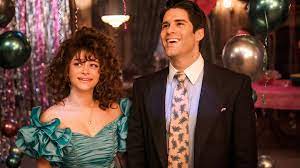
    Attic Girl: An ’80s “mean girl” ghost named Stephanie, who died on her prom night, is awakened in the attic, triggering Sam to confront what happened on her own prom night.

    Farnsby & B: Jay and Sam are ready to open their bed-and-breakfast, unleashing a horde of bored ghosts on unsuspecting guests. But Thor’s pettiness comes back to bite them when a competing B&B reveals itself as the byproduct of a nasty Norse curse.

  • Trailer: “The Exorcist: Believer” (2023)

    Trailer: “The Exorcist: Believer” (2023)

    The official first trailer has been released for “Halloween” (2018) director David Gordon Green’s “The Exorcist” revival.

    Titled “The Exorcist: Believer,” the project is produced by Blumhouse, Morgan Creek, Universal Pictures and Peacock who aims to turn this into a new trilogy of movies.

    The project serves as a direct sequel to the original. In the film, two girls go missing and come back possessed. Leslie Odom Jr. stars as one of the parents who has never seen anything like this.

    So he sets out to find someone who has – none other than Chris MacNeil (Ellen Burstyn) many years after the events involving her daughter Regan. Ann Dowd, Lidya Jewett, and Jennifer Nettles also star.

    Green co-writes with Scott Teems, Danny McBride, and Petter Sattler. Universal acquired the rights for this trilogy in a massive deal with the second film to be titled “The Exorcist: Deceiver” which will hit cinemas on April 18th 2025.

    “The Exorcist: Believer” remains on track for release on October 13th.

  • Trailer: “The Witcher” Season 3, Part 2″ (2023)

    Trailer: “The Witcher” Season 3, Part 2″ (2023)

    Netflix has premiered a final trailer for the back half of the third season of its big-budget fantasy drama “The Witcher” based on the books by Andrzej Sapkowski.

    The new season has been split into two, with the first five episodes premiering back on June 29th. The remaining three episodes will appear this Thursday July 27th and will mark Henry Cavill’s final outing in the role of Geralt of Rivia.

    While Geralt still plays a crucial part in the series, the current season has been setting up Ciri as the show’s main character with the fate of the Continent depending on her. That direction is expected to continue next season.

  • Blu-ray review: “My Summer of Love” (2023)

    “My Summer of Love” (2023)

    Drama

    Running Time: 87 minutes

    Written by: Paweł Pawlikowski and Michael Wynne

    Directed by: Paweł Pawlikowski

    Featuring: Natalie Press , Emily Blunt and Paddy Considine

    Tamsin: “If you leave me, I’ll kill you.”

    Mona: “If you leave me, I’ll kill you… and then I’ll kill myself.”

    Critical Commentary

    “My Summer of Love”, a British drama film released in 2004, directed by Paweł Pawlikowski and based on the novel of the same name by Helen Cross, takes audiences on a captivating and evocative journey through the complexities of love. Set in the picturesque English countryside, the film revolves around the lives of two young women, Mona and Tamsin, whose paths intertwine during a transformative summer. With a focus on themes of love, identity, and social class, “My Summer of Love” explores the intricacies of human relationships, challenging societal norms, and the discovery of oneself. In this essay, we will delve into the narrative, character development, cinematography, and the profound impact the film has had on audiences.

    “My Summer of Love” centres on the lives of Mona (played by Nathalie Press) and Tamsin (played by Emily Blunt), two young women from contrasting social backgrounds. Mona, a working-class girl, spends her summer attempting to establish herself as an independent individual after being released from the reformatory. Tamsin, on the other hand, hails from an affluent family with a private education. Their initial encounter might seem serendipitous, but as the story unfolds, it becomes evident that their meeting is destined to be transformative.

    Mona’s character is that of a girl grappling with her identity and desires, wanting to break free from the shackles of her past. Her struggle to find a purpose and sense of belonging in a world that seems unwelcoming forms the emotional core of the movie. Tamsin, an intelligent and manipulative young woman, embodies the allure of a forbidden love. As Mona’s self-proclaimed savior, Tamsin introduces her to a world of luxury and sophistication, creating an intense emotional bond between the two.

    Love, in all its forms, serves as the driving force of the film. The romantic connection between Mona and Tamsin defies societal norms and transcends the boundaries of their different upbringings. Their relationship thrives on escapism, with the summer becoming a temporal bubble where their love can flourish without judgment. However, as the story unfolds, the complexities of love and identity come to the forefront, presenting a darker reality.

    Mona’s love for Tamsin is not solely romantic but also driven by a desire for self-discovery and validation. Tamsin, while seemingly caring, manipulates Mona for her own amusement, creating a power dynamic that challenges the authenticity of their connection. As the summer progresses, the truth about Tamsin’s deceptive nature and Mona’s vulnerability emerges, leading to a profound revelation that changes the course of their relationship.

    The film also provides a poignant commentary on the divide between social classes in British society. Mona’s working-class background is evident in the modest pub her family owns, which stands in stark contrast to the opulent mansion where Tamsin lives. Through their interactions, the film highlights the stark inequalities that exist in society, often influencing relationships and shaping individual perspectives.

    Despite the apparent differences in their social backgrounds, the film demonstrates that love can transcend class barriers, uniting individuals who might otherwise never have crossed paths. Still, it also shows the potential pitfalls and struggles of such relationships in a world that tends to reinforce class boundaries.

    “My Summer of Love” captivates audiences not only through its compelling narrative but also through its visually stunning cinematography. Paweł Pawlikowski’s masterful direction, complemented by Ryszard Lenczewski’s cinematography, captures the essence of the English countryside, creating an immersive experience for the viewers.

    The film’s picturesque landscapes, lush green fields, and tranquil lakes serve as a backdrop for the intense emotions unfolding between Mona and Tamsin. The breathtaking visuals enhance the film’s dreamlike quality, making the summer love affair all the more enchanting.

    Impact and Critical Reception

    Upon its release, “My Summer of Love” received critical acclaim and garnered several awards, including the BAFTA Award for Best British Film. Audiences were captivated by the film’s evocative storytelling and the remarkable performances of Nathalie Press and Emily Blunt, both of whom received praise for their portrayal of complex and multi-dimensional characters.

    The film’s success can be attributed to its ability to resonate with audiences on multiple levels. Its exploration of forbidden love, self-discovery, and societal boundaries struck a chord with viewers, leaving a lasting impact on their hearts and minds. Furthermore, “My Summer of Love” added to the growing representation of LGBTQ+ narratives in mainstream cinema, contributing to a more inclusive cinematic landscape.

    “My Summer of Love” is a timeless masterpiece that transcends the boundaries of a conventional love story. Through its beautifully crafted narrative, character development, and breathtaking cinematography, the film captures the essence of love’s complexities, the struggle for self-identity, and the societal pressures that often shape our lives.

    As Mona and Tamsin’s entangled lives mirror the intricacies of human relationships, “My Summer of Love” teaches us that love, while enchanting, can also be deceptive. It urges us to question the societal norms and boundaries that govern our lives and encourages us to explore our own identities freely.

    With its lasting impact on audiences and the film industry alike, “My Summer of Love” remains a surreal journey through love—a journey that continues to inspire and captivate viewers, long after the summer has faded into memory.

    “My Summer of Love” has left an indelible mark on the world of cinema, not just for its compelling storytelling but also for its contributions to LGBTQ+ representation and exploration of complex human emotions. As time has passed since its initial release, the film’s legacy has only grown stronger, inspiring discussions and analysis that have enriched the understanding of its themes and artistic brilliance.

    At the heart of “My Summer of Love” lies a same-sex love story that defies societal norms and expectations. The film presents Mona and Tamsin’s relationship with sensitivity and authenticity, portraying their emotions and desires without sensationalism or stereotypes. In doing so, it contributes to the ongoing efforts for LGBTQ+ representation in film, showcasing that love can transcend gender and social boundaries.

    The movie provides a nuanced portrayal of the characters’ sexual orientations without reducing them to mere labels. Mona’s journey of self-discovery and her feelings for Tamsin are relatable to anyone who has experienced the complexities of love. By presenting a lesbian relationship with depth and sincerity, “My Summer of Love” breaks away from the tokenism that has characterized LGBTQ+ representation in some films, paving the way for more inclusive storytelling in cinema.

    The film’s exploration of love goes beyond the romantic, delving into the complexities of human emotions and desires. Mona’s yearning for a sense of belonging and Tamsin’s need for adventure and excitement reflect universal human experiences. As viewers, we are reminded of the universality of emotions, regardless of one’s background or orientation.

    Moreover, “My Summer of Love” challenges conventional notions of identity. It portrays characters who are not confined by societal expectations and who grapple with their authentic selves. Mona’s desire to escape her working-class life and Tamsin’s disillusionment with her privileged upbringing mirror the struggles many individuals face when reconciling their true selves with the external pressures they encounter.

    Paweł Pawlikowski’s direction and Ryszard Lenczewski’s cinematography in “My Summer of Love” have been celebrated as a masterclass in visual storytelling. The film’s dreamlike and poetic quality, highlighted by the picturesque landscapes and evocative imagery, has influenced many filmmakers and cinematographers.

    Beyond the visual aspect, the film’s narrative structure and character development have also been admired. Pawlikowski’s ability to blend elements of coming-of-age, drama, and romance while maintaining an undercurrent of tension and uncertainty is a testament to his storytelling prowess. Many filmmakers have drawn inspiration from the film’s unique approach to storytelling, seeking to emulate its emotional depth and authenticity in their own work.

    “My Summer of Love” is more than just a movie; it is a profound exploration of love, identity, and societal barriers. Through its captivating narrative and rich character development, the film continues to touch the hearts of audiences worldwide. Its legacy extends beyond the realm of entertainment, shaping the conversations around LGBTQ+ representation and challenging conventional perceptions of love and relationships.

    As we celebrate the legacy of “My Summer of Love,” it serves as a reminder of the power of cinema to provoke introspection, challenge norms, and foster understanding and empathy. It stands as a beacon for filmmakers to create authentic and diverse narratives that resonate with a wide range of audiences.

    Ultimately, “My Summer of Love” reminds us that the pursuit of love and self-discovery is a journey filled with complexities and uncertainties. It encourages us to embrace our true selves, challenge societal expectations, and forge meaningful connections with others, regardless of their background or orientation. In a world constantly seeking connection and understanding, this timeless film remains a cherished guide through the enigmatic labyrinth of love.

    Technical Commentary

    Video

    Contrary to the 1080p presentation being sourced from a 4K scan, the 1.85:1 image appears very soft, although that may have been intentional on the filmmaker’s part. Nevertheless, colours are warm and vibrant throughout.

    Audio

    “My Summer of Love” features DTS HD 5.1 Surround track envelopes viewers with the gentle sounds of the quiet English countryside. Optional LPCM 2.0 Stereo is available along with English language and HOH subtitles.

    Special Features

    • Audio Commentary by director Pawel Pawlikowski
    • Deleted Scenes
    • B-roll footage
    • Interviews with actors Paddy Considine, Natalie Press, Emily Blunt and director Pawel Pawlikowski
    • Theatrical Trailer
  • Blu-ray review: “The Handmaiden” (2016)

    “The Handmaiden” (2016)

    Drama

    Running Time: 144 minutes

    Written by: Park Chan-wook and Chung Seo-kyung

    Directed by: Park Chan-wook

    Featuring: Kim Min-hee, Kim Tae-ri, Ha Jung-woo and Cho Jin-woong

    Lady Hideko: “The daughter of a legendary thief, who sewed winter coats out of stolen purses. Herself a thief, pickpocket, swindler. The saviour who came to tear my life apart. My Tamako. My Sookee.”

    Critical Commentary

    “The Handmaiden,” directed by Park Chan-wook, is an enthralling masterpiece that captivates its audience from the very beginning and keeps them on the edge of their seats until the credits roll. This visually stunning and emotionally charged film weaves a complex narrative of love, betrayal, and empowerment, set against a backdrop of cultural and historical intrigue.

    The film’s exquisite cinematography immediately transports viewers to 1930s Korea, with each scene carefully crafted to evoke the elegance and opulence of the time. The director’s keen eye for detail makes every frame feel like a work of art, enhancing the overall cinematic experience. The lush settings, luxurious costumes, and meticulously designed interiors add a layer of richness to the story, drawing the audience further into the characters’ world.

    At its core, “The Handmaiden” is a tale of manipulation and deceit. The plot revolves around a young pickpocket named Sook-hee (Kim Tae-ri), who is hired as a handmaiden to Lady Hideko (Kim Min-hee), a wealthy Japanese heiress living in a secluded mansion. However, all is not what it seems, as Sook-hee is secretly collaborating with a con man posing as a nobleman (Ha Jung-woo) to swindle Lady Hideko out of her inheritance.

    As the story unfolds, the audience is taken on a rollercoaster ride of twists and turns, as layers of deception are peeled back one by one. The intricate plot is brilliantly structured, with each revelation hitting like a punch to the gut. Just when you think you have it all figured out, the film surprises you yet again. Park Chan-wook’s masterful storytelling ensures that you remain fully invested in the characters and their fates throughout the entirety of the movie.

    The performances in “The Handmaiden” are nothing short of exceptional. Kim Tae-ri shines as Sook-hee, displaying both vulnerability and determination in her role as the cunning handmaiden. Kim Min-hee delivers a stunning portrayal of Lady Hideko, capturing the complexities of her character’s emotional journey flawlessly. Their on-screen chemistry is palpable, further heightening the emotional impact of the film.

    Beyond its suspenseful plot and outstanding performances, “The Handmaiden” explores themes of power dynamics, sexuality, and female agency. The film’s exploration of the female characters’ struggles against societal constraints and male oppression adds depth and relevance to the narrative. As the story unfolds, it becomes a celebration of female strength and resilience, empowering the characters to take control of their destinies.

    One aspect that deserves special mention is the film’s ability to balance eroticism and storytelling. The intimate scenes are tastefully executed, never veering into gratuitous territory, and always serving a narrative purpose. “The Handmaiden” deftly handles its exploration of sexuality as a natural part of the characters’ experiences, rather than reducing it to mere sensationalism.

    “The Handmaiden” is an unforgettable cinematic journey that lingers in the mind long after the credits roll. With its impeccable direction, compelling performances, and thought-provoking themes, it stands as a testament to the power of storytelling in film. While the movie is not for the faint of heart due to its intense themes, it rewards the viewer with an unforgettable and satisfying experience. Whether you’re a fan of mystery, romance, or drama, “The Handmaiden” is a must-watch film that showcases the very best of modern cinema.

    As “The Handmaiden” progresses, the intricate web of deception tightens around the characters, leading to unexpected alliances and shifting loyalties. The film delves deeper into the past of Lady Hideko, revealing haunting secrets that shape her present reality. The connection between Sook-hee and Lady Hideko deepens, blurring the lines between their roles of handmaiden and mistress.

    As the narrative unfolds, the film transcends its genre and becomes a meditation on love, trust, and the complexities of human relationships. The genuine emotional connection that develops between Sook-hee and Lady Hideko challenges the notion of truth and deceit in the pursuit of one’s desires. The audience becomes entangled in the characters’ emotions, empathizing with their struggles, and ultimately yearning for their happiness.

    The film’s pacing is masterfully executed, with slow-building tension that keeps the audience engaged throughout its nearly two-and-a-half-hour runtime. Every scene feels essential, contributing to the overarching narrative and emotional development of the characters. Park Chan-wook’s direction keeps viewers guessing, skilfully toying with their expectations and subverting traditional storytelling conventions.

    “The Handmaiden” is not just a film that entertains; it’s a film that makes the audience think. It challenges societal norms and explores themes of class, gender, and cultural identity. The juxtaposition of Korean and Japanese cultures in the film offers a unique perspective on historical tensions and allows for a deeper examination of colonialism’s impact.

    Throughout the film, the lush visuals continue to mesmerize, enhancing the emotional impact of every scene. The attention to detail in the set design and costuming serves as a metaphor for the layers of deception and masks that the characters wear. This attention to visual storytelling complements the intricate plot, making “The Handmaiden” a true cinematic masterpiece.

    As the climax approaches, the film reveals its final twists and turns, leaving the audience in awe of the intricate narrative puzzle they’ve just experienced. The resolution is both satisfying and bittersweet, encapsulating the emotional journey of the characters and their growth throughout the film.

    In addition to its artistic merits, “The Handmaiden” is a triumph of representation for women in cinema. The film portrays complex, multidimensional female characters who drive the story forward, defying stereotypes and societal expectations. It celebrates their strength, intelligence, and agency, providing a refreshing perspective in a male-dominated industry.

    “The Handmaiden” is a cinematic gem that weaves a spellbinding tale of intrigue, love, and empowerment. Park Chan-wook’s masterful direction, combined with exceptional performances and stunning visuals, results in a film that pushes boundaries and leaves a lasting impression. It is a testament to the power of storytelling to captivate, challenge, and ultimately transform the audience. “The Handmaiden” stands as one of the most remarkable and unforgettable films of its time, and a true triumph in the world of cinema.

    Technical Commentary

    Video

    Presented in an aspect ratio of 2.39:1, encoded with MPEG-4 AVC and granted a 1080p transfer, Park Chan-wook’s “The Handmaiden” arrives on Blu-ray courtesy of Curzon Artificial Eye. There are a few very small fluctuations that occur during indoor footage, but I am convinced that they are a byproduct of the manner in which light is captured by the Arri Alexa XT Plus camera.

    Audio

    There are two standard audio tracks on this Blu-ray release: Korean DTS-HD Master Audio 5.1 and Korean LPCM 2.0. Optional white and yellow English subtitles are provided for the main feature. It is the type of lossless track that I would use to test new audio equipment. 

  • Trailer: Marvel Studios’ “The Marvels” (2023)

    Trailer: “The Marvels” (2023)

    Marvel Studios has now debuted the official second trailer and official poster for “The Marvels” movie.

    Though a direct sequel to “Captain Marvel,” the film also serves as something of a sequel to events seen in “Ms. Marvel,” “WandaVision” and “Secret Invasion” with key characters from each (Iman Vellani, Brie Larson, Teyonah Parris and Samuel L. Jackson) coming into play.

    In the new film Carol Danvers, aka Captain Marvel, has reclaimed her identity from the tyrannical Kree and taken revenge on the Supreme Intelligence.

    ut unintended consequences see Carol shouldering the burden of a destabilized universe. When her duties send her to an anomalous wormhole linked to a Kree revolutionary, her powers become entangled with that of Jersey City super-fan, Kamala Khan aka Ms. Marvel, and Carol’s estranged niece, now S.A.B.E.R. astronaut Captain Monica Rambeau.

    This causes them to physically swap places every time they use their powers. Together, however, this unlikely trio must team up and learn to work in concert to save the universe.

    Director Nia DaCosta (“Candyman,” “Little Woods”) helms the film, which also stars Zawe Ashton, Gary Lewis, Park Seo-joon, Zenobia Shroff, Mohan Kapur, Saagar Shaikh, and Jackson.

    “The Marvels” arrives in cinemas on November 10th.

  • Film review: “Oppenheimer” (2023)

    “Oppenheimer” (2023)

    Drama

    Running Time: 180 minutes

    Written and directed by: Christopher Nolan

    Featuring: Cillian Murphy, Emily Blunt, Matt Damon, Robert Downey Jr., Florence Pugh, Josh Hartnett, Casey Affleck, Rami Malek and Kenneth Branagh

    J. Robert Oppenheimer: “They won’t fear it until they understand it. And they won’t understand it until they’ve used it. Theory will take you only so far.”

    The movie “Oppenheimer”, directed by Christopher Nolan, is a historical drama about the life of J. Robert Oppenheimer, the theoretical physicist who was pivotal in developing the first nuclear weapons as part of the Manhattan Project. The film follows Oppenheimer from his early days as a brilliant student at Harvard University to his leadership of the Manhattan Project at Los Alamos, New Mexico. It also explores the moral and ethical dilemmas that Oppenheimer faced as he helped to create the most destructive weapon in human history.

    The film begins with Oppenheimer as a young man at Harvard, where he is drawn to the study of physics. He is particularly interested in the work of Albert Einstein, who is developing a new theory of relativity. Oppenheimer is convinced that Einstein’s work has the potential to revolutionize our understanding of the universe, and he sets out to become a physicist himself.

    Oppenheimer’s brilliance quickly earns him a place at the top of his field. He is invited to work at the California Institute of Technology, where he becomes a leading expert on nuclear physics. In 1942, he is recruited by the U.S. government to lead the Manhattan Project, a top-secret program to develop the atomic bomb.

    Oppenheimer assembles a team of the world’s leading scientists and engineers at Los Alamos, New Mexico. They work tirelessly to develop the bomb, and in 1945, they are successful. The first atomic bombs are tested at the Trinity Site in New Mexico, and they are then dropped on the Japanese cities of Hiroshima and Nagasaki.

    The use of the atomic bomb is a turning point in Oppenheimer’s life. He is horrified by the destruction that the bomb has caused, and he begins to question the morality of his work. He becomes a vocal critic of the nuclear arms race, and he spends the rest of his life trying to prevent the use of nuclear weapons.

    Oppenheimer is a complex and fascinating figure. He was a brilliant scientist who helped to create the most destructive weapon in human history. He was also a deeply moral man who was troubled by the consequences of his work. The movie Oppenheimer does an excellent job of portraying the many facets of Oppenheimer’s character.

    The film is also visually stunning. Nolan uses his signature use of slow motion and intricate cinematography to create a visceral and immersive experience. The film’s depiction of the Trinity Site test and the bombing of Hiroshima and Nagasaki is particularly harrowing.

    Oppenheimer is a thought-provoking and important film. It is a reminder of the dangers of nuclear weapons and the importance of finding peaceful solutions to conflict. The film is also a tribute to the life and work of J. Robert Oppenheimer, a brilliant scientist who was also a deeply moral man.

    The movie “Oppenheimer” is set against the backdrop of World War II. The war was a time of great technological innovation, as the Allies and Axis powers raced to develop new weapons and technologies. The Manhattan Project was one of the most important technological developments of the war, and it had a profound impact on the course of the conflict.

    The Manhattan Project was a top-secret program to develop the atomic bomb. It was led by J. Robert Oppenheimer, a brilliant theoretical physicist. The project involved thousands of scientists and engineers from all over the world, and it was funded by the U.S. government.

    The Manhattan Project was a massive undertaking, and it faced many challenges. The scientists had to overcome a number of technical obstacles, and they had to do so in a hurry. The project was also shrouded in secrecy, which made it difficult to coordinate the work of the different teams.

    Despite the challenges, the Manhattan Project was a success. The first atomic bombs were tested at the Trinity Site in New Mexico in 1945, and they were then dropped on the Japanese cities of Hiroshima and Nagasaki. The use of the atomic bomb brought the war to an end, but it also had a devastating impact on the Japanese people.

    The movie Oppenheimer does a good job of capturing the historical context of the Manhattan Project. The film shows the challenges that the scientists faced and the difficult decisions that they had to make. It also shows the devastating impact of the atomic bomb on the Japanese people.

    The movie “Oppenheimer” is not just a historical drama. It is also a film about the moral dilemmas of the atomic age. Oppenheimer is a brilliant scientist who is torn between his love of science and his concern for the destructive potential of the atomic bomb. He is also a moral man who is haunted by the deaths of the Japanese people who were killed by the atomic bombs.

    The movie Oppenheimer explores the moral questions that Oppenheimer faced as he helped to develop the atomic bomb. These questions include:

    Was it right for Oppenheimer to help develop the atomic bomb, even though he knew it could be used to kill millions of people?

    Was it right for the United States to use the atomic bomb against Japan, even though it would cause immense suffering?

    What is the responsibility of scientists for the consequences of their work?

    How can we prevent the use of nuclear weapons in the future?

    Oppenheimer never found easy answers to these questions. He was a complex and conflicted man who struggled with the moral dilemmas of his work. The movie Oppenheimer does an excellent job of portraying Oppenheimer’s moral struggle.

    Oppenheimer’s legacy is complex and controversial. He is remembered as the father of the atomic bomb, but he is also remembered as a man who was troubled by the consequences of his work. He was a brilliant scientist who helped to create the most destructive weapon in human history, but he was also a deeply moral man who was haunted by the deaths of the Japanese people who were killed by the atomic bombs.

    Oppenheimer’s legacy is a reminder of the dangers of nuclear weapons and the importance of finding peaceful solutions to conflict. It is also a reminder of the importance of ethical considerations in the development and use of scientific knowledge. Oppenheimer’s story is a cautionary tale about the power of science and the importance of moral responsibility. It is a story that we should never forget.

    The movie Oppenheimer has been met with critical acclaim. The film has been praised for its historical accuracy, its visual stunningness, and its complex portrayal of Oppenheimer’s character. The film has also been praised for its timely message. The movie comes at a time when the world is facing a renewed nuclear threat. The film is a reminder of the dangers of nuclear weapons and the importance of finding peaceful solutions to conflict.

    Oppenheimer is a thought-provoking and important film. It is a film that will stay with you long after you have seen it. If you are interested in learning more about the history of the atomic bomb, the moral dilemmas of the atomic age, or the legacy of J. Robert Oppenheimer, then you should see this movie.

    The movie “Oppenheimer” is a powerful and important film. It is a film that tells the story of a complex and conflicted man who helped to create the most destructive weapon in human history. It is also a film that explores the moral dilemmas of the atomic age and the importance of finding peaceful solutions to conflict.

    The movie Oppenheimer is a must-see for anyone who is interested in history, science, or the moral implications of scientific progress. It is a film that will stay with you long after you have seen it.

    The development of the atomic bomb was a complex and morally ambiguous process.

    The use of the atomic bomb against Japan was a tragedy that should never be repeated.

    Scientists have a moral responsibility to consider the consequences of their work. We must strive to find peaceful solutions to conflict and prevent the use of nuclear weapons in the future.

  • Blu-ray review: “Malèna” (2000)

    “Malèna” (2000)

    Drama

    Running Time: 108 minutes

    Written and directed by: Giuseppe Tornatore

    Featuring: Monica Bellucci and Giuseppe Sulfaro

    Renato Amoroso: “I pedalled as fast as I could… as if I were escaping from longing, from innocence, from her. Time has passed, and I have loved many women. And as they’ve held me close… and asked if I will remember them I’ve said, “Yes, I will remember you.” But the only one I’ve never forgotten is the one who never asked… Malena.”

    Critical Commentary

    “Malèna” is a captivating Italian film directed by Giuseppe Tornatore and released in the year 2000. Set in a small Sicilian town during World War II, the movie delves into the life of the beautiful and enigmatic character named “Malèna” Scordia, played by Monica Bellucci. With its evocative storytelling, stunning cinematography, and powerful performances, “Malèna” explores themes of love, desire, jealousy, and the impact of war on individuals and communities. In this essay, I will delve into the various aspects that make “Malèna” such a compelling and thought-provoking film.

    One of the first aspects that captures the attention of the viewers is the mesmerizing performance by Monica Bellucci as “Malèna”. Bellucci’s stunning beauty and magnetic presence bring the character to life, making “Malèna” an object of desire and fascination for the entire town. Through her expressive eyes and subtle gestures, Bellucci portrays the vulnerability and strength of “Malèna”, who becomes the subject of intense gossip and scandal in the community. Despite the limited dialogue, Bellucci’s performance conveys a range of emotions, allowing the audience to empathize with “Malèna” and experience her journey.

    The film’s setting, a picturesque Sicilian town, serves as a metaphorical backdrop for the narrative. Tornatore masterfully captures the beauty of the town, its cobblestone streets, vibrant colors, and charming architecture, which contrasts with the darker aspects of the story. The town itself becomes a character, reflecting the collective mentality and moral judgments of its inhabitants. The juxtaposition of the idyllic setting with the harsh realities of war adds depth and complexity to the narrative, highlighting the impact of external circumstances on individual lives.

    A significant theme explored in “Malèna” is the objectification of women and the destructive power of desire. As “Malèna” becomes the subject of fascination for the men in the town, their obsession and lust fuel rumors and speculation, ultimately leading to her isolation and mistreatment. Through “Malèna”’s character, the film critiques the toxic nature of objectification and the ways in which it can dehumanize individuals, causing emotional and psychological harm. Tornatore highlights the damaging effects of societal expectations and the consequences of judging others based solely on appearances.

    Furthermore, “Malèna”’s portrayal also sheds light on the resilience and strength of women in the face of adversity. Despite the trials and tribulations she endures, “Malèna” maintains her dignity and inner grace, refusing to let the judgments and mistreatment define her. Her character serves as a symbol of resilience and survival, highlighting the importance of inner strength in navigating challenging circumstances.

    The film’s narrative is also intricately woven with the political and social backdrop of World War II. Tornatore presents the impact of war on a small community, highlighting the disintegration of societal norms and the erosion of empathy and compassion. As the men of the town are away at war, “Malèna” becomes a symbol of desire, representing the dreams and fantasies of those left behind. The film portrays the consequences of war on the collective psyche, revealing the ways in which it can distort morality and lead to the mistreatment of individuals.

    The cinematography in “Malèna” is breathtaking, with each frame meticulously composed to create a visually stunning experience. The use of vibrant colors, evocative lighting, and sweeping camera movements enhance the emotional impact of the story. Tornatore skillfully captures both the beauty and brutality of the world he presents, creating a visually immersive experience for the audience.

    Furthermore, one of the notable strengths of “Malèna” is its ability to evoke a range of emotions in the audience. The film takes the viewers on an emotional rollercoaster, shifting between moments of joy, sadness, anger, and compassion. It skillfully navigates the fine line between beauty and tragedy, highlighting the fragile nature of human existence. Through its nuanced storytelling and character development, the film invites us to reflect on our own perceptions and biases, urging us to examine the consequences of our actions and judgments.

    Another noteworthy aspect of “Malèna” is its exploration of the power dynamics within a community. As the town’s men fixate on “Malèna”’s beauty, she becomes both an object of desire and a target for jealousy. The film portrays how envy and resentment can breed cruelty and ostracization, leading to the isolation and mistreatment of an individual. Tornatore depicts the ways in which a community can turn against one of its own, succumbing to mob mentality and disregarding the consequences of their actions. This examination of social dynamics serves as a cautionary tale, reminding us of the importance of empathy, understanding, and the acceptance of diversity.

    Moreover, the film addresses the theme of innocence lost in the face of war. As “Malèna”’s story unfolds, we witness her transformation from a young, carefree woman to a hardened survivor. The war disrupts the lives of the townspeople, and their actions reflect the chaos and desperation that arise during times of conflict. Tornatore portrays the loss of innocence not only through “Malèna”’s experiences but also through the children in the town who witness and participate in the mistreatment of others. This exploration of the corrupting influence of war on the human spirit serves as a poignant reminder of the devastating effects of violence and the importance of preserving our humanity in the darkest of times.

    The film’s soundtrack, composed by Ennio Morricone, is another noteworthy aspect of “Malèna”. Morricone’s haunting and melodic score enhances the emotional depth of the film, complementing the visuals and performances. The music captures the essence of each scene, conveying the longing, passion, and melancholy present throughout the narrative. Morricone’s contribution to the film elevates the storytelling, evoking a visceral response from the audience and immersing them further into the world of “Malèna”.

    Furthermore, “Malèna”’s exploration of gender roles and societal expectations is worth mentioning. The film challenges traditional notions of femininity and explores the constraints placed upon women in a patriarchal society. “Malèna”’s journey is a reflection of the struggles faced by many women who find themselves objectified, judged, and shamed for their perceived transgressions. Through her character, the film sheds light on the importance of individual agency and the need to defy societal expectations in order to reclaim one’s identity and freedom.

    “Malèna” is a cinematic masterpiece that transcends boundaries and touches the depths of the human experience. Through its compelling narrative, exceptional performances, breathtaking cinematography, and emotional resonance, the film invites us to reflect on timeless themes such as desire, jealousy, resilience, and the impact of war. Giuseppe Tornatore’s direction, coupled with Monica Bellucci’s magnetic portrayal of “Malèna”, creates a lasting impact that resonates with viewers long after the film ends. “Malèna” serves as a testament to the power of cinema to challenge, inspire, and provoke introspection, making it an enduring and significant work of art.

    “Malèna” is a remarkable film that explores a multitude of themes and emotions. Through its compelling narrative, powerful performances, and exquisite cinematography, the film delves into the complexities of desire, the impact of war on communities, and the resilience of the human spirit. Giuseppe Tornatore’s masterful direction, coupled with Monica Bellucci’s mesmerizing portrayal of “Malèna”, creates a cinematic experience that lingers long after the credits roll. “Malèna” stands as a testament to the power of storytelling and its ability to touch our hearts, challenge our perspectives, and remind us of the complexities of the human experience.

    Technical Commentary

    Video

    Presented in an aspect ratio of 2.35:1, encoded with MPEG-4 AVC and granted a 1080p transfer, Malena arrives on Blu-ray courtesy of Imprint Films. This release is sourced from the same master that Korean label GreenNarae Media used to produce this release in 2013. The encode is different, but the main characteristics of the presentation are practically identical. 

    Audio

    There is only one standard audio track on this Blu-ray release: Italian DTS-HD Master Audio 5.1. Optional English SDH subtitles are provided for the main feature.  Clarity, depth, and stability are very good. The dialog is very easy to follow, too. The English translation is very good and superior to the one that is present on the Korean release. 

    Extras

    • The Life and Dream of Giuseppe Tornatore – this wonderful documentary was included on the Korean release of Malena but lacked English subtitles. In it, Giuseppe Tornatore recalls how he fell in love with cinema and acquired his first camera to begin making films. The director also explains how Sicily inspired him over the years and shaped the identity of his work and why water is always an important character in it. A portion of the documentary is dedicated on the making of Malena as well. In Italian, with English subtitles. (53 min). 
    • The Making of Malena – this archival program focuses on the production of Malena. Included in it are clips from interviews with Giuseppe Tornatore and Monica Bellucci. In English, not subtitled. (12 min). 
    • On Location – an archival program with plenty of raw footage from the shooting of Malena in Sicily. In Italian, with English subtitles. (36 min). 
    • Interview with Giuseppe Tornatore – in this archival program, Guiseppe Tornatore discusses his decision to shoot a portion of Malena in Morocco, the casting of Monica Bellucci and Giuseppe Sulfaro, and the period appearance of Malena. In Italian, with English subtitles. (10 min). 
    • Interview with Giuseppe Tornatore and Ennio Morricone – in this archival program, Guiseppe Tornatore and the great maestro Ennio Morricone discuss their professional relationship, which began with Cinema Paradiso, and what it was like to work together on Malena. Also, there are some particularly interesting comments about The Legend of 1900 and its complex narrative structure. In Italian, with English subtitles. (23 min). 
    • In Studio – Recording the Score – an archival program with plenty of footage from the recording sessions that were held after Ennio Morricone began working on the soundtrack for Malena. In Italian, with English subtitles. (22 min). 
    • Trailer – an original trailer for the cut version of Malena that Miramax distributed in the U.S. In English, not subtitled. (2 min). 
    • TV Spots – several TV spots for the cut version of Malena that Miramax distributed in the U.S. In English, not subtitled. (2 min).
  • Trailer: “A Haunting In Venice” (2023)

    Trailer: “A Haunting In Venice” (2023)

    20th Century Studios has premiered the second trailer for Kenneth Branagh’s third Hercule Poirot film, “A Haunting in Venice”.

    The newest Agatha Christie adaptation is based on one of her later novels, “Hallowe’en Party,” and sees Branagh returning to the role of the Belgian sleuth and is joined by Tina Fey as the recurring Christie character Ariadne Oliver.

    The cast includes the likes of Michelle Yeoh, Jamie Dornan, Jude Hill, Kelly Reilly, Emma Laird, Kyle Allen, Camille Cottin, Ali Khan and Riccardo Scamarico.


    The story unfolds in an eerie, post-World War II Venice on All Hallows’ Eve when a thirteen-year-old girl, who claimed she witnessed a murder when she was younger, is killed. Hercule Poirot is now retired and living in self-imposed exile in the glamorous city. He reluctantly attends a seance at a decaying, haunted palazzo and soon is thrust into a sinister world of shadows and secrets.

    Michael Green adapted the script for the film, which boasts a more ‘unsettling supernatural’ tone than the previous films.

    “A Haunting in Venice” will open in cinemas nationwide on September 15th.

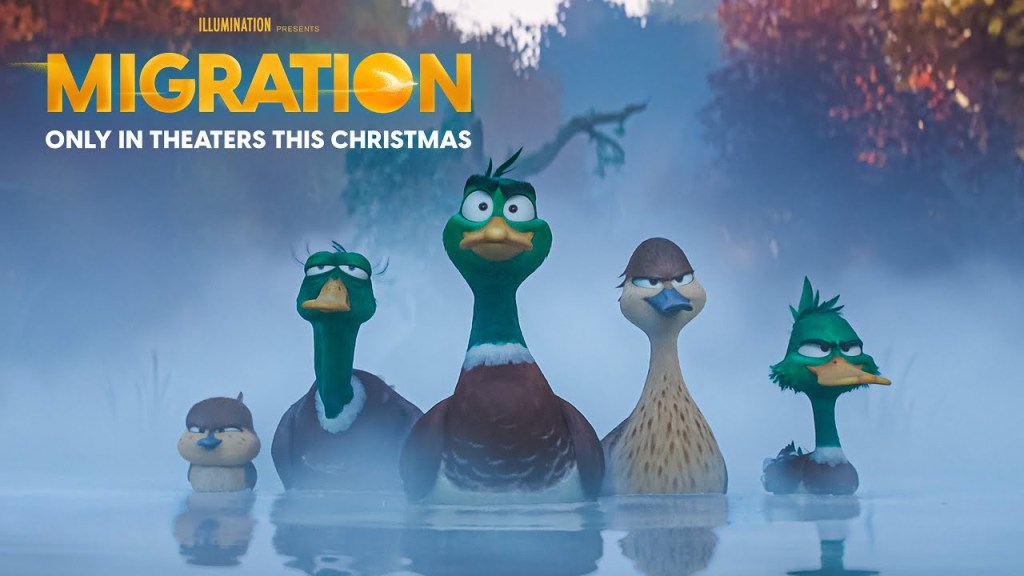
  • Trailer: Illumination’s “Migration” (2023)

    Trailer: Illumination’s “Migration” (2023)

    Universal Pictures have premiered the second trailer for their next animated feature “Migration”.

    Benjamin Renner (“Ernest and Celestine”) directs what is Illumination’s sixteenth animated feature which is a comedy about a family of ducks.

    The Mallard family is in a bit of rut. While dad Mack is content to keep his family safe paddling around their New England pond forever, mom Pam is eager to shake things up and show their kids – including teen son Dax and duckling daughter Gwen – the whole wide world.


    After a migrating duck family alights on their pond with thrilling tales of far-flung places, Pam persuades Mack to embark on a family trip, via New York City, to tropical Jamaica.

    Along the way the family will get into a variety of adventures. Benjamin Renner directs the project from a screenplay by celebrated “The White Lotus” creator Mike White.

    A packed cast includes Kumail Nanjiani, Elizabeth Banks, Caspar Jennings, Tresi Gazal, Awkwafina, Carol Kane, Keegan-Michael Key, David Mitchell and Danny DeVito. “Migration” arrives in cinemas on December 22nd.
  • Blu-ray review: “Damage” (1992)

    “Damage” (1992)

    Drama

    Running Time: 111 minutes

    Written by: David Hare

    Directed by: Louis Malle

    Featuring: Jeremy Irons, Juliette Binoche, Miranda Richardson, Rupert Graves, Ian Bannen and Leslie Caron

    Anna Barton: “What would you win by leaving Ingrid?”

    Dr. Stephen Fleming: “You. I’d win you.”

    Anna Barton: “Then you’d win something you already have.”

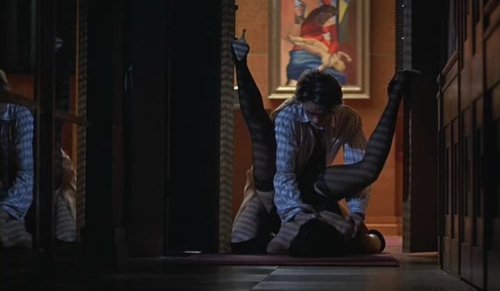
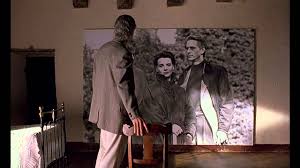
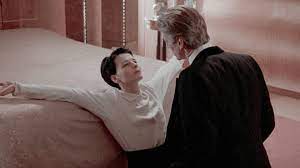
    “Damage” is a 1992 erotic drama film directed by Louis Malle and based on the novel of the same name by Josephine Hart. The movie explores themes of obsession, desire, and destructive relationships, delving into the dark side of human emotions.

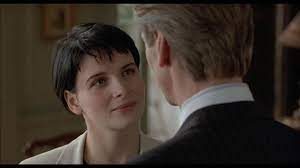
    The film follows the story of Stephen Fleming (Jeremy Irons), a British politician who becomes infatuated with his son’s girlfriend, Anna Barton (Juliette Binoche). As their affair unfolds, the characters are consumed by their forbidden passion, leading to a series of consequences and emotional turmoil.

    One of the film’s strengths lies in the powerful performances delivered by its lead actors. Jeremy Irons delivers a nuanced portrayal of a man torn between his duties as a politician and his uncontrollable desires. His portrayal captures the internal conflict and emotional struggle of his character with remarkable intensity. Juliette Binoche also delivers a compelling performance as Anna, exuding both vulnerability and sensuality, effectively conveying the complexity of her character.

    The cinematography in “Damage” is visually striking, with dark and moody tones that mirror the characters’ emotional state. The film effectively creates an atmosphere of tension and unease, enhancing the overall sense of tragedy that unfolds.

    While the movie explores intriguing themes and features strong performances, it may not be for everyone. “Damage” is an intense and provocative film, exploring taboo subjects and delving into the darker aspects of human nature. Some viewers may find the explicit sexual content and morally ambiguous characters uncomfortable or off-putting.

    Furthermore, the pacing of the film may feel slow for some viewers, as it focuses heavily on the characters’ internal struggles rather than relying on a fast-paced plot. This deliberate approach allows for a deeper exploration of the characters’ motivations and emotional states but may not be to everyone’s taste.

    “Damage” is known for its exploration of the psychological and emotional consequences that arise from the characters’ actions. The film raises questions about the nature of desire, the destructive power of obsession, and the ethical dilemmas faced by its characters. It delves into the depths of human nature, examining the choices individuals make when confronted with their innermost desires and the devastating effects that can follow.

    The screenplay of “Damage” provides a compelling narrative structure that gradually unfolds the layers of the characters’ motivations and inner conflicts. It skillfully builds tension and suspense, keeping the audience engaged and invested in the unfolding drama. The dialogue is introspective and thought-provoking, delving into the characters’ emotional states and their struggle to reconcile their actions with their sense of morality.

    Louis Malle’s direction adds a layer of sophistication to the film. He creates an atmosphere of intimacy and secrecy, emphasizing the hidden nature of the characters’ illicit affair. Malle’s visual storytelling and attention to detail add depth to the film, allowing the audience to immerse themselves in the characters’ world and experience their emotional journey.

    The themes explored in “Damage” resonate beyond the boundaries of the film, touching on universal aspects of human relationships and the complexities of desire. It serves as a cautionary tale, reminding us of the destructive power of indulging in forbidden passions and the consequences that can arise from compromising our moral compass.

    Furthermore, “Damage” stands out for its exploration of the psychological dynamics between the characters and the intricate web of relationships that unfolds throughout the film. It delves into the consequences not only for Stephen and Anna but also for Stephen’s wife, Ingrid (Miranda Richardson), and their family as a whole. The film examines the ripple effect caused by infidelity and the betrayal of trust, showcasing the collateral damage inflicted upon loved ones.

    The performances of the supporting cast also contribute to the film’s impact. Miranda Richardson delivers a compelling portrayal of a wife grappling with the betrayal of her husband, conveying a range of emotions from vulnerability to anger with authenticity. Additionally, Rupert Graves as Stephen’s son, Martyn, portrays the anguish and confusion of a young man caught in the midst of his father’s affair, adding another layer of complexity to the narrative.

    Thematically, “Damage” delves into the nature of self-destruction and the limits individuals are willing to push in the pursuit of their desires. It explores the dark side of human nature, where passion can override reason and lead to tragic outcomes. The film prompts introspection and raises questions about the choices we make, the consequences they bear, and the fragility of personal and familial bonds.

    It is worth noting that “Damage” received mixed reviews upon its release, with some praising its bold exploration of taboo subjects and others criticizing its explicit content and moral ambiguity. As with any film that delves into controversial themes, individual interpretations may vary, and viewers should approach it with an open mind and a willingness to engage with its complex narrative and characters.

    In conclusion, “Damage” is a compelling and introspective film that delves into the destructive power of desire and the complex web of emotions that arise from forbidden relationships. With its strong performances, thematic depth, and exploration of psychological dynamics, it leaves a lasting impression on viewers. However, it remains a polarizing film that may not resonate with everyone due to its explicit content and morally ambiguous characters.

    “Damage” is a thought-provoking and emotionally charged film that delves into the darker corners of human desire and the complexities of relationships. With its strong performances, atmospheric cinematography, and compelling narrative, it remains a notable entry in the genre of erotic dramas. However, due to its explicit content and morally ambiguous characters, it may not be suitable for all viewers and requires a certain level of maturity to fully appreciate its themes and artistic merits.

    In summary, “Damage” is a well-crafted and thought-provoking film that delves into themes of desire, obsession, and the destructive nature of forbidden relationships. With powerful performances and atmospheric cinematography, it captures the emotional turmoil of its characters effectively. However, due to its explicit content and slower pacing, it may not appeal to all audiences.

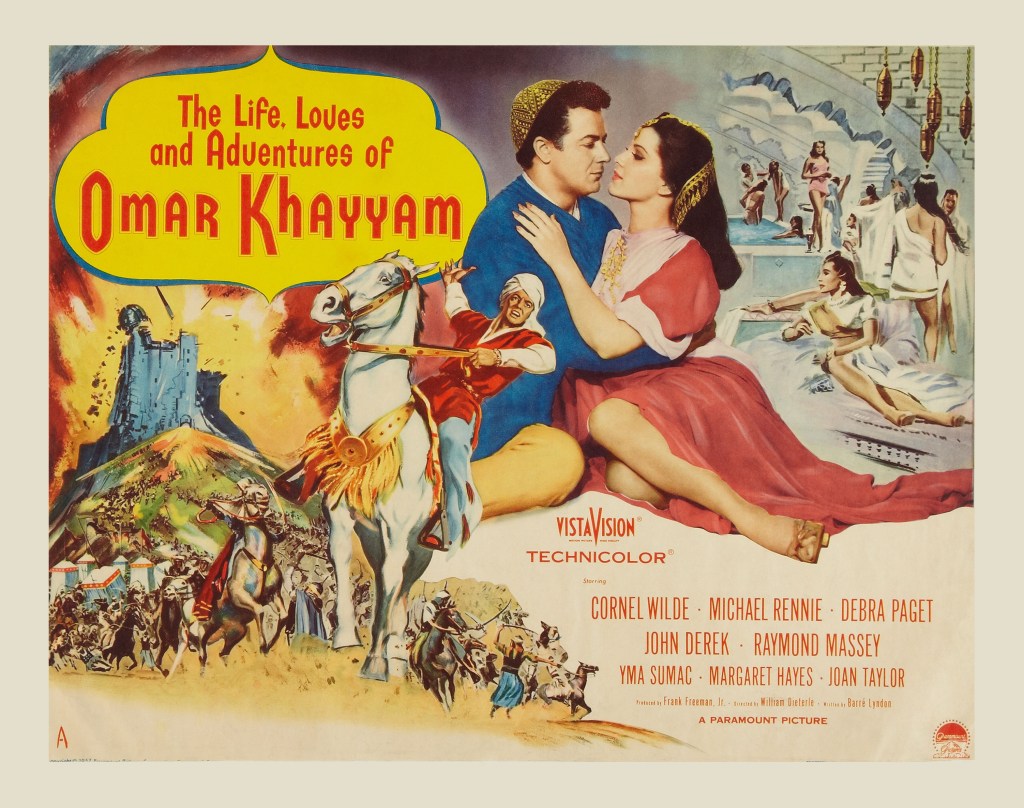
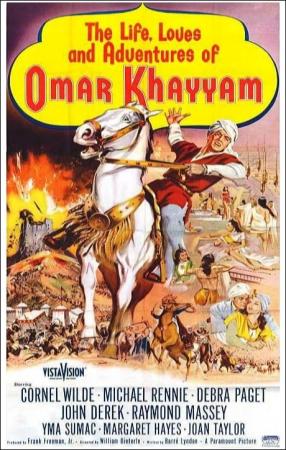
  • Blu-ray review: “Omar Khayyam” (1957)

    “Omar Khayyam” (1957)

    Adventure 

    Running Time: 101 minutes

    Written by: Barré Lyndon

    Directed by: William Dieterle

    Featuring: Cornel Wilde, Michael Rennie, Debra Paget, John Derek and Edward Platt

    Omar Khayyam: “They call you Chosen One… the Seventh Excellent Creature.Are you also to be appointed Caliph, interpreting the Will of God, Supreme Ruler above all earthly kings?“

    Hasani Sabah: If it were not so, I could not wear these robes nor hold this office.”

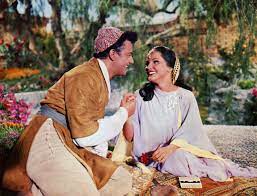
    The “Omar Khayyam”, released in 1957, stands as a timeless classic that delves into the life and work of the renowned Persian polymath, Omar Khayyam. Directed by William Dieterle, this film takes viewers on a captivating journey through the pages of history, exploring the multifaceted character of Khayyam, his poetic genius, and the rich cultural backdrop of medieval Persia. In this essay, we will examine the significance of the “Omar Khayyam” and its portrayal of the life and philosophy of one of the greatest figures of Persian literature.

    To fully appreciate the impact of the “Omar Khayyam”, it is crucial to understand the historical and cultural context in which it was produced. The 1950s marked a period of fascination with exotic settings and tales of distant lands. Against this backdrop, the film offers a glimpse into the rich cultural tapestry of Persia, highlighting the intellectual and artistic contributions of Khayyam during the medieval Islamic Golden Age.

    The movie portrays Omar Khayyam, played by Cornel Wilde, as a brilliant mathematician, astronomer, and poet who challenges societal norms and confronts religious dogma with his unconventional thoughts. It captures the essence of Khayyam’s spirit as a free thinker and his pursuit of knowledge and truth, even in the face of adversity. Through his poetic verses, Khayyam’s philosophy of embracing the present moment and questioning the boundaries of faith and reason is beautifully portrayed.

    One of the standout features of the “Omar Khayyam” is its exploration of Khayyam’s poetry. The film weaves together a tapestry of lyrical verses, showcasing the depth and beauty of Khayyam’s quatrains, or rubaiyat. The poetic interludes serve as a testament to Khayyam’s timeless wisdom and his contemplation of life’s ephemeral nature. These verses resonate with audiences, inviting them to ponder existential questions and the transience of human existence.

    The “Omar Khayyam” is not only a tribute to the poet but also a visually stunning cinematic experience. The film captures the enchanting landscapes of Persia, offering viewers a feast for the eyes. The lavish sets, intricate costumes, and meticulous attention to detail transport audiences to the medieval world, immersing them in the grandeur of the era. The cinematography, coupled with a captivating musical score, further enhances the emotional impact of the film.

    Beyond its portrayal of Khayyam’s life, the “Omar Khayyam” explores timeless themes of love, freedom, and intellectualism. The film delves into Khayyam’s forbidden love affair with the princess Sharain, portrayed by Debra Paget, and the struggles they face due to societal constraints. It also emphasizes Khayyam’s unwavering dedication to intellectual pursuits, symbolizing the triumph of the human spirit in the face of adversity.

    The “Omar Khayyam” of 1957 has left an indelible mark on cinematic history. It not only introduced a wider audience to the life and poetry of Omar Khayyam but also sparked interest in Persian culture and its rich literary traditions. The film’s success prompted a resurgence of interest in Khayyam’s works, inspiring subsequent adaptations and interpretations of his poetry in various art forms.

    Upon its release, the “Omar Khayyam” received mixed reviews from critics. While some praised its visual grandeur, powerful performances, and poetic narrative, others criticized the film for taking artistic liberties with historical facts and simplifying Khayyam’s complex personality. Nevertheless, the movie garnered significant attention and sparked discussions about the representation of historical figures on the silver screen.

    Controversies surrounding the film arose due to its portrayal of Khayyam’s religious beliefs and the tensions between faith and reason. Khayyam’s scepticism and questioning of religious doctrines, as depicted in the film, caused some controversy among religious groups. However, this controversy also brought attention to the movie, stimulating debates about the role of religion and intellectualism in society.

    The “Omar Khayyam” had a profound impact on popular culture, influencing subsequent films, literature, and artistic interpretations. It contributed to the Western fascination with Eastern mysticism and philosophy, inspiring a renewed interest in Persian literature and poetry. The film introduced audiences to Khayyam’s rubaiyat, with his quatrains being widely quoted and celebrated for their philosophical depth and poetic beauty.

    Furthermore, the “Omar Khayyam” acted as a catalyst for exploring the intersections of art, science, and spirituality. It shed light on the intellectual pursuits of Khayyam and the wider cultural climate of the Islamic Golden Age, fostering a greater understanding of the contributions made by Persian scholars during that era.

    Beyond the movie itself, the legacy of Omar Khayyam endures through his writings and their continued influence on literature and thought. Khayyam’s rubaiyat, which had already gained prominence in the Western world prior to the movie, reached even wider audiences as a result of its portrayal on the silver screen. His philosophical reflections on the transient nature of life, the pursuit of knowledge, and the quest for meaning continue to resonate with readers across generations.

    Moreover, the “Omar Khayyam” contributed to a greater appreciation of Persian culture and its historical achievements. It served as a bridge between cultures, fostering cross-cultural dialogue and highlighting the rich heritage of the Middle East. Khayyam’s multidimensional persona, as depicted in the film, presented him not only as a poet and mathematician but also as a symbol of intellectual freedom and the pursuit of truth.

    The “Omar Khayyam” of 1957 remains an important cinematic portrayal of the life and philosophy of Omar Khayyam. Despite its historical and artistic liberties, the film played a pivotal role in introducing a wider audience to the brilliance of Khayyam’s poetry and the cultural context in which he thrived. Its visual splendor, compelling storytelling, and exploration of timeless themes have secured its place as a classic film that continues to captivate and inspire viewers. By bringing Omar Khayyam’s legacy to the forefront, the movie has contributed significantly to the preservation and celebration of Persian literature and the enduring relevance of Khayyam’s thoughts on the human condition.

    The “Omar Khayyam” of 1957 remains a remarkable cinematic achievement that showcases the life, poetry, and philosophy of one of the greatest minds in Persian literature. Through its captivating storytelling, stunning visuals, and exploration of timeless themes, the film has left an enduring impact on audiences around the world. As we reflect upon the “Omar Khayyam”, we recognize its contribution to preserving and celebrating the intellectual legacy of Omar Khayyam and his invaluable contributions to the world of literature and thought.

  • Blu-ray review: “A Thousand and One Nights” (1945)

    “A Thousand and One Nights” (1945)

    Adventure 

    Running Time: 94 minutes

    Written by: Richard English and Jack Henley

    Directed by: Alfred E. Green

    Featuring: Evelyn Keyes, Phil Silvers, Adele Jergens and Cornel Wilde

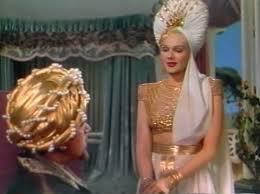
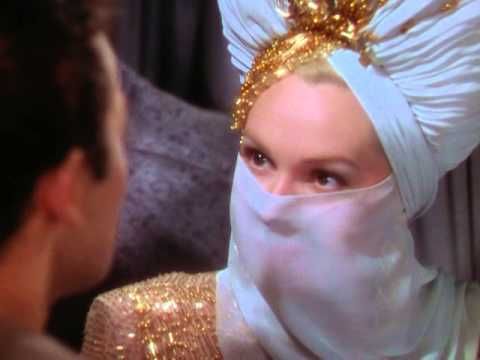
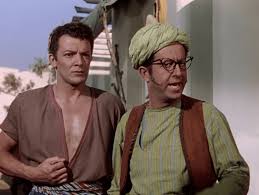
    “A Thousand and One Nights” (1945) is a captivating film that takes viewers on a mesmerizing journey into the enchanting world of Arabian Nights. Directed by Alfred E. Green and produced by Walter Wanger, this cinematic masterpiece offers a unique interpretation of the classic tales, encapsulating the essence of the Arabian folklore. Through its stunning visuals, compelling narrative, and remarkable performances, the film has become a timeless treasure of the golden age of Hollywood. This essay explores the historical significance, artistic merits, and enduring legacy of “A Thousand and One Nights,” delving into its impact on the film industry and its enduring influence on subsequent adaptations of the Arabian Nights tales.

    “A Thousand and One Nights” was released in 1945, during a period of heightened interest in exoticism and adventure in Hollywood cinema. The film capitalizes on the fascination with the Arabian Nights tales, which had long captivated audiences around the world. Produced at a time when the world was recovering from the turmoil of World War II, the movie offered audiences an escape into a realm of magic and wonder.

    Walter Wanger, a seasoned producer, was inspired to adapt the Arabian Nights tales for the silver screen. He assembled a talented team, including director Alfred E. Green and a cast of renowned actors, to bring this rich tapestry of stories to life. The film starred Evelyn Keyes as Scheherazade, the legendary storyteller, and Cornel Wilde as Aladdin, one of the iconic characters from the tales.

    “A Thousand and One Nights” weaves together a series of stories that unfold against the backdrop of a grand palace. The narrative revolves around the young ruler, Caliph Harun al-Rashid, played by Dennis Morgan, who disguises himself as a commoner to explore the world outside his palace walls. During his journey, he encounters Aladdin, Sinbad, and other legendary figures, immersing the audience in a tapestry of magical adventures.

    The film successfully captures the essence of the Arabian Nights tales, blending romance, fantasy, and adventure. The storytelling is masterful, as the tales are intricately woven together, reflecting the cyclical nature of the original narratives. The character of Scheherazade serves as the central thread, as she captivates the Caliph and viewers alike with her captivating stories, ingeniously prolonging her life.

    The visual aspects of “A Thousand and One Nights” are a feast for the eyes. The film features opulent sets, lavish costumes, and breathtaking cinematography that transport the audience to the mystical world of ancient Arabia. The use of Technicolor further enhances the visual splendour, vividly capturing the vibrant hues and intricate details of the costumes and settings.

    The movie’s technical achievements are also noteworthy. The special effects of the film, considering the era in which it was made, are remarkable. The flying carpet sequence, in particular, showcases the innovative use of matte paintings and miniatures to create a sense of awe and wonder. The film’s score, composed by Frank Skinner, enhances the magic and mystique of the tales, further immersing viewers into the enchanting world of “A Thousand and One Nights.”

    “A Thousand and One Nights” left an indelible mark on both audiences and the film industry. It solidified the popularity of Arabian Nights tales in Western cinema and set a high standard for future adaptations. The film’s success paved the way for subsequent movies inspired by the Arabian Nights, such as Disney’s “Aladdin” (1992), showcasing the enduring appeal of these timeless tales.

    The movie also launched Evelyn Keyes and Cornel Wilde into stardom, solidifying their places in Hollywood. It further reinforced the reputation of Walter Wanger as a visionary producer, skilled at bringing grandiose spectacles to the silver screen.

    “A Thousand and One Nights” (1945) is a remarkable cinematic journey that captures the essence of the Arabian Nights tales. Through its enchanting narrative, visual splendor, and technical achievements, the film transports viewers into a world of fantasy, adventure, and romance. It holds a significant place in the history of Hollywood, showcasing the creative talents of the cast and crew involved. The enduring legacy of “A Thousand and One Nights” is evident in its influence on subsequent adaptations of the Arabian Nights tales, as well as its timeless appeal to audiences of all generations. As the story of Scheherazade continues to captivate us, the 1945 film remains a cherished gem that showcases the power of storytelling and the magic of the silver screen.

    Upon its release, “A Thousand and One Nights” received mixed reviews from critics. While some praised its visual spectacle and engaging storytelling, others criticized its departure from the original tales and the Westernized interpretation of Arabian culture. Nevertheless, the film garnered significant attention from audiences, who were captivated by its exotic allure and escapist entertainment.

    The cultural impact of “A Thousand and One Nights” extended beyond the realm of cinema. It played a significant role in popularizing the Arabian Nights tales in Western culture. The film introduced these stories to a wider audience, sparking a renewed interest in the source material and leading to a surge in book sales. Furthermore, it inspired a wave of Arabian-themed fashion, music, and art, as people sought to emulate the enchanting world depicted on screen.

    It is essential to acknowledge the cultural context and potential issues of cultural appropriation within “A Thousand and One Nights.” The film was produced during a time when Hollywood often portrayed non-Western cultures through a lens of exoticism and Orientalism. The depictions of Arabian culture in the film may be seen as romanticized and simplified, catering to Western sensibilities and perpetuating stereotypes.

    While the film undoubtedly contributes to the popular imagination of Arabian Nights tales, it is important to approach it critically and engage in discussions about representation. As viewers, we must recognize the cultural complexities and ensure that diverse voices and perspectives are given the opportunity to tell their own stories authentically.

     “A Thousand and One Nights” remains an influential film, and its impact can still be felt today. Its success paved the way for subsequent adaptations and retellings of Arabian Nights tales in various forms of media, including literature, theater, and animated films.

    The enduring popularity of the film led to a renewed interest in the Arabian Nights tales, making it a staple in libraries and schools worldwide. Its legacy is evident in the 1992 Disney animated film “Aladdin,” which drew inspiration from the Arabian Nights and became a beloved classic in its own right.

    In recent years, there has been a resurgence of interest in diverse storytelling and representation, prompting filmmakers to re-examine and reinterpret the Arabian Nights tales from a more culturally sensitive perspective. These newer adaptations strive to provide a more nuanced and authentic portrayal of Arabian culture, addressing the criticisms of past interpretations.

    “A Thousand and One Nights” (1945) continues to captivate audiences with its magical storytelling, visual splendour, and timeless appeal. While it is important to acknowledge its potential cultural shortcomings, the film’s impact on popularizing Arabian Nights tales and shaping the imagination of generations cannot be denied. It remains a significant cinematic achievement and a testament to the enduring power of storytelling. As we continue to explore the tales of Scheherazade, it is essential to approach adaptations with a critical lens and a commitment to representing diverse cultures authentically.

  • Movie review: “Mission: Impossible – Dead Reckoning Part One” (2023)

    “Mission: Impossible – Dead Reckoning Part One” (2023)

    Action

    Running Time: 163 minutes

    Written by: Christopher McQuarrie and Erik Jendresen

    Directed by: Christopher McQuarrie

    Featuring: Tom Cruise, Hayley Atwell, Ving Rhames, Simon Pegg, Rebecca Ferguson, Vanessa Kirby, Esai Morales, Pom Klementieff, Mariela Garriga and Henry Czerny

    Eugene Kittridge: “Your days of fighting for the so-called greater good are over. This is our chance to control the truth. The concepts of right and wrong for everyone for centuries to come. You’re fighting to save an ideal that doesn’t exist. Never did. You need to pick a side.”

    “Mission: Impossible – Dead Reckoning Part One” (2023) is the seventh installment in the Mission: Impossible film series, and the first in a two-part story arc. The film was directed by Christopher McQuarrie, who also wrote the screenplay with Erik Jendresen. It stars Tom Cruise as Ethan Hunt, alongside Hayley Atwell, Ving Rhames, Simon Pegg, Rebecca Ferguson, Esai Morales, Vanessa Kirby, Pom Klementieff, and Henry Czerny.

    The film follows Ethan Hunt and his IMF team as they race to stop a mysterious, all-powerful foe known as “The Entity”. The Entity is a global organization that is bent on controlling the future, and they have a powerful weapon that could bring about the end of the world. Ethan and his team must use all of their skills and resources to stop The Entity before it’s too late.

    The film opens with Ethan Hunt and his team on a mission to retrieve a dangerous weapon from a black market dealer. However, the mission goes awry, and the weapon is stolen by The Entity. The Entity is a mysterious organization that is led by a man named Solomon Lane (Henry Czerny). Lane is a former CIA agent who was presumed dead, but he has resurfaced and is now determined to control the future.

    Ethan and his team are tasked with tracking down Lane and stopping him before he can use the weapon. However, The Entity is a powerful adversary, and they have a vast network of resources at their disposal. Ethan and his team will need to use all of their skills and resources to stop Lane before it’s too late.

    The film takes Ethan and his team all over the world, from London to Norway to the Caribbean. They encounter a variety of challenges along the way, including high-speed car chases, intense gunfights, and even a sword fight. However, Ethan and his team are always one step ahead of The Entity, and they eventually manage to stop Lane and prevent him from using the weapon.

    The film features a large ensemble cast, with Tom Cruise leading the way as Ethan Hunt. Cruise is one of the most popular actors in the world, and he brings his usual charisma and intensity to the role of Ethan Hunt. He is joined by a talented supporting cast, including Hayley Atwell, Ving Rhames, Simon Pegg, Rebecca Ferguson, Esai Morales, Vanessa Kirby, Pom Klementieff, and Henry Czerny.

    Hayley Atwell plays Grace, a new member of the IMF team. Grace is a skilled thief, and she is a valuable asset to the team. Ving Rhames reprises his role as Luther Stickell, Ethan’s trusted friend and ally. Simon Pegg returns as Benji Dunn, the IMF’s resident hacker. Rebecca Ferguson returns as Ilsa Faust, a former MI6 agent who is now working with the IMF. Esai Morales plays Solomon Lane, the leader of The Entity. Vanessa Kirby plays Alanna Mitsopolis, a scientist who is working on a project that could be used by The Entity. Pom Klementieff plays Erika Sloane, a CIA agent who is working with the IMF. Henry Czerny reprises his role as Eugene Kittridge, the director of the CIA.

     “Mission: Impossible – Dead Reckoning Part One”  explores a number of themes, including the nature of good and evil, the importance of teamwork, and the power of faith. The film also explores the idea of destiny, and whether or not people are truly in control of their own lives.

    The film’s central theme is the battle between good and evil. Ethan Hunt and his team represent the forces of good, while The Entity represents the forces of evil. The film explores the idea of what it means to be a good person, and how far people are willing to go to protect what they believe in.

    The film also explores the importance of teamwork. Ethan Hunt and his team are a close-knit group of individuals who are willing to put their lives on the line for each other. The film shows how teamwork can be used to overcome even the most daunting challenges.

    Finally, the film explores the power of faith. Ethan Hunt is a man of faith, and he believes that God is guiding him on his mission. The film shows how faith can give people strength and hope in the face of adversity.

     “Mission: Impossible – Dead Reckoning Part One”  is a thrilling and suspenseful action film that is sure to please fans of the franchise. The film features a great cast, exciting action sequences, and thought-provoking themes. If you’re a fan of action movies, then you should definitely check out “Mission: Impossible – Dead Reckoning Part One” .

    “Mission: Impossible – Dead Reckoning Part One”  was released in theaters on July 14, 2023. The film received positive reviews from critics, with praise for Cruise’s performance, the action sequences, and the film’s scope. The film has a 98% approval rating on Rotten Tomatoes, based on 185 reviews, with an average rating of 8.1/10. The website’s critical consensus reads, “With world-threatening stakes and epic set pieces to match that massive title, Mission: Impossible – Dead Reckoning Part One proves this is still a franchise you should choose to accept.” Metacritic, which uses a weighted average, assigned the film a score of 82 out of 100, based on 53 critics, indicating “universal acclaim”.

    The film was also a commercial success, grossing over $800 million worldwide. It is the highest-grossing film of 2023, and the third-highest-grossing film in the Mission: Impossible franchise.

     “Mission: Impossible – Dead Reckoning Part One”  is a significant film in the Mission: Impossible franchise. It is the first film in the franchise to be released in IMAX, and it features some of the most ambitious and visually stunning action sequences in the franchise’s history. The film also introduces a number of new characters, including Hayley Atwell’s Grace, who are sure to be major players in the franchise’s future.

    “Mission: Impossible – Dead Reckoning Part One”  is a thrilling and suspenseful action film that is sure to please fans of the franchise. The film features a great cast, exciting action sequences, and thought-provoking themes. If you’re a fan of action movies, then you should definitely check out “Mission: Impossible – Dead Reckoning Part One” .

     “Mission: Impossible – Dead Reckoning Part One”  is the first in a two-part story arc. The second part, titled Mission: Impossible – Dead Reckoning Part Two, is scheduled to be released in 2024. The film will continue the story of Ethan Hunt and his team as they face off against The Entity. It is sure to be another thrilling and suspenseful action film that will please fans of the franchise.

  • First Trailer: “Wonka” (2023)

    Warner Bros. Pictures has released the first trailer for “Wonka,” the upcoming musical feature that serves as a prequel to the classic Roald Dahl story and, more specifically, the 1971 Gene Wilder-led film adaptation of it.

    Timothee Chalamet stars as a young Willy Wonka around 25 years before the events of the “Charlie and the Chocolate Factory” novel and well before he became the famed chocolate factory owner. 

    Calah Lane, Olivia Colman, Rowan Atkinson, Keegan-Michael Key, Paterson Joseph, Matt Lucas, Mathew Baynton, Paterson Joseph, Natasha Rothwell, Jim Carter and Sally Hawkins also star, whilst Hugh Grant will play an Oompa Loompa.

    “Paddington” director Paul King directed the project and co-wrote the script with Simon Farnaby.

    In the film, Willy opens a chocolate shop using the knowledge of sweets he has amassed from his travels. He soon finds himself facing the dangerous Chocolate Cartel – Mr. Prodnose, Mr. Fickelgruber, and Mr. Slugworth.

    “Wonka” is set to open in cinemas everywhere on December 15th.

  • Movie review: “Transformers: Rise of the Beasts” ” (2023)

    “Transformers: Rise of the Beasts” ” (2023)

    Action

    Running Time: 127 minutes

    Written by: Joby Harold, Darnell Metayer, Josh Peters, Erich Hoeber and Jon Hoeber

    Directed by: Steven Caple Jr.

    Featuring: Anthony Ramos, Dominique Fishback,  Ron Perlman, Peter Dinklage, Pete Davidson, Michelle Yeoh, Liza Koshy, Michaela Jaé Rodriguez, Cristo Fernández, Tongayi Chirisa, Colman Domingo, Peter Cullen, John DiMaggio and David Sobolov

    Bumblebee: [radio] “You can’t handle the truth!”

    Optimus Prime: “I do not want you going to that drive-in theatre anymore.”

    “Transformers: Rise of the Beasts” ” is a 2023 American science fiction action film based on Hasbro’s Transformers toy line, and primarily influenced by the Beast Wars storyline. It is the seventh instalment in the ‘Transformers’ live-action film series and serves as both a standalone sequel to Bumblebee (2018) and prequel to Transformers (2007), the film was directed by Steven Caple Jr. from a screenplay by Joby Harold, Darnell Metayer, Josh Peters, Erich Hoeber, and Jon Hoeber.

    The film is set in 1994 and follows the Autobots as they team up with the Maximals to battle the Predacons and a new threat, the Terrorcons, for control of a powerful artifact. The film stars Anthony Ramos as Noah, a young man who befriends Optimus Prime and becomes a key player in the battle. Other cast members include Dominique Fishback, Luna Lauren Velez, Peter Cullen, Ron Perlman, and Mark Ryan.

    “Transformers: Rise of the Beasts”  received mixed reviews from critics, with some praising the film’s action sequences and visual effects, while others criticized its long runtime and convoluted plot. The film was also a box office success, grossing over $400 million worldwide.

    One of the things that makes “Transformers: Rise of the Beasts”  stand out from previous instalments in the franchise is its focus on the Beast Wars storyline. The Beast Wars were a popular animated series that ran from 1996 to 1999, and they featured Transformers who could transform into animals. This gave the film a unique visual aesthetic, and it also allowed for some interesting character dynamics. For example, the Maximals are a faction of Transformers who are dedicated to protecting the planet, while the Predacons are a faction of Transformers who are driven by greed and ambition. This conflict between good and evil is one of the driving forces of the film.

    Another thing that makes “Transformers: Rise of the Beasts”  interesting is its setting. The film is set in 1994, which is a time period that is not often explored in the Transformers franchise. This allows the film to capture the nostalgia of the early 1990s, and it also gives the filmmakers an opportunity to explore the cultural and technological changes that were taking place during that time.

    Overall, “Transformers: Rise of the Beasts”  is a solid entry in the Transformers franchise. It has some flaws, but it also has a lot to offer fans of the series. The film’s action sequences are exciting, the visual effects are impressive, and the Beast Wars storyline is a welcome addition. If you’re a fan of Transformers, then you’ll definitely want to check out “Transformers: Rise of the Beasts” .

    “Transformers: Rise of the Beasts”  is a fun and entertaining film that is sure to please fans of the franchise. It has some flaws, but it also has a lot to offer. If you’re looking for a big-budget action film with robots, explosions, and plenty of nostalgia, then you’ll definitely want to check it out.

    Here are some additional thoughts on Transformers: Rise of the Beasts:

    The film’s action sequences are some of the best in the franchise. The filmmakers do a great job of choreographing the fights, and the visual effects are top-notch. The film’s climax is a particularly impressive set piece, with Optimus Prime and the Autobots facing off against Megatron and the Predacons in a battle for the ages.

    The film’s visual effects are also impressive. The Transformers look realistic and lifelike, and the environments they inhabit are beautifully rendered. The film’s use of CGI is seamless, and it never takes away from the action or the story.

    The film’s Beast Wars storyline is a welcome addition to the franchise. The Beast Wars were a popular animated series, and they featured Transformers who could transform into animals. This gives the film a unique visual aesthetic, and it also allows for some interesting character dynamics. The Maximals are a faction of Transformers who are dedicated to protecting the planet, while the Predacons are a faction of Transformers who are driven by greed and ambition. This conflict between good and evil is one of the driving forces of the film.

    The film’s setting is also interesting. The film is set in 1994, which is a time period that is not often explored in the Transformers franchise. This allows the film to capture the nostalgia of the early 1990s, and it also gives the filmmakers an opportunity to explore the cultural and technological changes that were taking place during that time.

    Overall, Transformers: Rise of the Beasts is a solid entry in the Transformers franchise. It has some flaws, but it also has a lot to offer fans of the series. The film’s action sequences are exciting, the visual effects are impressive, and the Beast Wars storyline is a welcome addition. If you’re a fan of Transformers, then you’ll definitely want to check out Transformers: Rise of the Beasts.

    Here are some of the things that I would have liked to see in the film:

    I would have liked to see more character development for the human characters. Noah, Izzy, and Carlos are all likable characters, but they feel a bit underdeveloped. I would have liked to see more of their backstory and their motivations.

    I would have also liked to see more of the Beast Wars characters. The Maximals and Predacons are all interesting characters, but they don’t get as much screen time as I would have liked. I would have liked to see more of their interactions with each other and with the human characters.

    Overall, I enjoyed Transformers: Rise of the Beasts. It’s a fun and exciting film with some great action sequences and visual effects. The Beast Wars storyline is a welcome addition, and it gives the film a unique visual aesthetic. However, the film could have benefited from more character development for the human characters and more screen time for the Beast Wars characters.

  • Film review: “Asteroid City” (2023)

    “Asteroid City” (2023)

    Drama

    Running Time: 105 minutes

    Written and directed by: Wes Anderson

    Featuring: Jason Schwartzman, Scarlett Johansson, Tom Hanks, Jeffrey Wright, Tilda Swinton, Bryan Cranston, Edward Norton, Adrien Brody, Liev Schreiber, Hope Davis, Stephen Park, Rupert Friend, Maya Hawke, Steve Carell, Matt Dillon, Hong Chau, Willem Dafoe, Margot Robbie, Tony Revolori, Jake Ryan and Jeff Goldblum

    Montana: “I reckon that alien didn’t mean no harm. No, he ain’t American. No, he ain’t a creature of God’s Earth, but he’s a creature of somewhere.”

    Wes Anderson’s latest film, “Asteroid City”, is a dazzling and beguiling work of art. It is a film that is both visually stunning and emotionally resonant, and it is sure to be a classic of Anderson’s canon.

    The film tells the story of a group of people who come together in a small town in the American Southwest to attend a junior stargazing event. However, their plans are disrupted by the arrival of a mysterious alien spacecraft. The film explores themes of grief, loss, and the meaning of life, and it does so in a way that is both humorous and heartbreaking.

    One of the things that makes Asteroid City so special is its visual style. Anderson’s films are always visually striking, but Asteroid City is on another level. The film is set in the 1950s, and Anderson has recreated the look and feel of that era with meticulous detail. The film’s use of colour is particularly striking, and the cinematography is simply stunning.

    But Asteroid City is more than just a beautiful film. It is also a film with a lot of heart. The film’s characters are all deeply flawed, but they are also deeply human. We see them at their best and their worst, and we come to care about them deeply.

    The film’s themes are also complex and thought-provoking. “Asteroid City” is a film about grief, loss, and the meaning of life. It is a film that asks big questions, and it does not always provide easy answers. But that is part of what makes the film so powerful.

    Asteroid City is a film that will stay with you long after you have seen it. It is a film that is both beautiful and heartbreaking, and it is a film that will make you think. If you are a fan of Wes Anderson’s films, then you will definitely want to see Asteroid City. And if you are not a fan of Anderson’s films, then Asteroid City is the perfect film to change your mind.

    In-depth analysis of the film’s themes

    Asteroid City is a film that is full of complex and thought-provoking themes. Some of the most important themes in the film include:

    Grief and loss: The film’s central character, Augie (Bill Murray), is grieving the death of his wife. This grief is a major driving force in the film, and it affects Augie’s relationships with his family and friends.

    The meaning of life: The film also explores the question of the meaning of life. This is a question that has been asked by philosophers and theologians for centuries, and it is a question that the film does not provide a simple answer to. However, the film does offer some insights into the meaning of life, and it does so in a way that is both thought-provoking and moving.

    The nature of art: Asteroid City is also a film about the nature of art. The film explores the question of what it means to create art, and it also explores the relationship between art and life. The film suggests that art can be a way of coping with grief and loss, and it can also be a way of finding meaning in life.

    The importance of family and friendship: Asteroid City is a film that celebrates the importance of family and friendship. The film shows how these relationships can help us to cope with grief and loss, and it also shows how they can help us to find meaning in life.

    The film’s visual style

    As mentioned earlier, Asteroid City is a visually stunning film. The film’s use of color is particularly striking, and the cinematography is simply stunning. The film’s color palette is dominated by warm, earthy tones, which create a sense of nostalgia and longing. The cinematography is also very stylized, and the film often uses symmetrical compositions and long takes. This gives the film a very dreamlike quality, and it helps to create a sense of otherworldliness.

    Asteroid City features an all-star cast, including Bill Murray, Tilda Swinton, Bryan Cranston, Adrien Brody, Scarlett Johansson, Jeff Goldblum, and many more. The cast is all excellent, and they bring their characters to life with wit, charm, and depth.

    Conclusion

    Asteroid City is a Wes Anderson masterpiece. It is a film that is both visually stunning and emotionally resonant, and it is sure to be a classic of Anderson’s canon. The film’s themes are complex and thought-provoking, and its cast is all excellent. Asteroid City is a film that will stay with you long after you have seen it.

    Asteroid City is a film that is sure to be remembered for years to come. It is a film that is both visually stunning and emotionally resonant, and it is a film that asks big questions about the meaning of life. The film’s cast is all excellent, and they bring their characters to life with wit, charm, and depth.

    Asteroid City is a film that will stay with you long after you have seen it. It is a film that will make you think, and it is a film that will make you feel. If you are a fan of Wes Anderson’s films, then you will definitely want to see Asteroid City. And if you are not a fan of Anderson’s films, then Asteroid City is the perfect film to change your mind.

    Here are some of the reasons why Asteroid City is likely to have a lasting legacy:

    The film’s themes are timeless. The themes of grief, loss, and the meaning of life are all themes that have been explored in great works of art throughout history. Asteroid City is a film that will continue to be relevant for years to come because it deals with these universal themes.

    The film’s cast is all-star. The cast of Asteroid City is one of the most star-studded in recent memory. With actors like Bill Murray, Tilda Swinton, Bryan Cranston, Adrien Brody, Scarlett Johansson, Jeff Goldblum, and many more, Asteroid City is a film that will be talked about for years to come.

    The film’s visual style is iconic. Wes Anderson is known for his distinctive visual style, and Asteroid City is no exception. The film’s use of color, composition, and cinematography is simply stunning. Asteroid City is a film that will be remembered for its visual beauty for years to come.

    Asteroid City is a film that is sure to have a lasting legacy. It is a film that is both visually stunning and emotionally resonant, and it is a film that asks big questions about the meaning of life. The film’s cast is all excellent, and they bring their characters to life with wit, charm, and depth. Asteroid City is a film that will stay with you long after you have seen it.

    Additional thoughts

    In addition to the themes mentioned above, Asteroid City also explores other themes, such as the nature of reality, the importance of imagination, and the power of love. The film is also a celebration of the human spirit, and it shows how even in the face of grief and loss, we can find hope and meaning.

    Asteroid City is a film that is sure to be divisive. Some people will love it, while others will hate it. But there is no doubt that it is a film that will be talked about for years to come. It is a film that is both challenging and rewarding, and it is a film that will stay with you long after you have seen it.

    I highly recommend Asteroid City to anyone who is a fan of Wes Anderson’s films, or to anyone who is looking for a thought-provoking and visually stunning film.

  • Trailer: “Special Ops: Lioness” (2023)

    “Special Ops: Lioness” (2023)

    Paramount+ has now premiered the full-length trailer for Taylor Sheridan’s latest original series “Special Ops: Lioness” for the service.

    It joins Sheridan’s expanding slate at Paramount which includes “Yellowstone,” “1883,” “1923,” “Tulsa King” and “Mayor of Kingstown” along with the “Lawmen: Bass Reeves” and an upcoming “Yellowstone” spin-off with Matthew McConaughey.

    The story is based on a real-life CIA program and follows Cruz Manuelos (Laysla De Oliveira), a rough-around-the-edges but passionate young Marine recruited to join the CIA’s Lioness Engagement Team to help bring down a terrorist organization from within.

    Zoe Saldana stars as Joe, the station chief of the Lioness program tasked with training, managing and leading her female undercover operatives to ready them for dangerous assignments in the field.

    Nicole Kidman will play Kaitlyn Meade, the CIA’s senior supervisor who has had a long career playing the politics game. Morgan Freeman will play Edwin Mullins, the United States Secretary of State.

    Dave Annable, Jill Wagner, LaMonica Garrett, James Jordan, Austin Hébert, Jonah Wharton, Stephanie Nur and Hannah Love Lanier also star.

    Kidman will executive produces alongside Sheridan, David C. Glasser, Saldana, Ron Burkle, Bob Yari, David Hutkin, Jill Wagner, Geyer Kosinski, Michael Malone and John Hillcoat for MTV Entertainment Studios and 101 Studios.

  • Trailer: “Star Wars: Ahsoka” (2023)

    Trailer: “Star Wars: Ahsoka” (2023)

    The full trailer has arrived for the “Star Wars: Ahsoka” series launching next month on the Disney+ service and with it a first look at Lars Mikkelsen in full costume as Grand Master Thrawn.

    Set after her appearances in “The Mandalorian” and “The Book of Boba Fett,” the series follows Ahsoka Tano (Rosario Dawson) as she investigates an emerging threat to the galaxy following the fall of the Empire.

    The cast includes Natasha Liu Bordizzo as Sabine Wren, Eman Esfandi as Ezra Bridger, Ivanna Sakhno as Shin Hati, Mary Elizabeth Winstead as Hera Syndulla, Ray Stevenson as Baylan Skoll, Genevieve O’Reilly as Mon Mothma, Diana Lee Inosanto as Morgan Elsbeth and Hayden Christensen as Anakin Skywalker.

    Also onboard are David Tennant as lightsaber-crafting droid Huyang and Wes Chatham as Thrawn’s “right-hand man”. Dave Filoni wrote all the episodes while also directing further episodes with Peter Ramsey, Steph Green, Jennifer Getzinger, Geeta Patel, and Rick Famuyiwa also directing.

    The eight-episode series is set to launch on the Disney+ service on August 23rd.

  • Trailer: Ridley Scott’s “Napoleon” (2023)

    Trailer: Ridley Scott’s “Napoleon” (2023)

    Sony Pictures and Apple Original Films have premiered the first trailer for Ridley Scott’s sweeping historical epic “Napoleon” which was shot across a large swath of last year in the United Kingdom.

    The project is dubbed a spectacle-filled action epic that details the checkered rise and fall of the iconic French Emperor Napoleon Bonaparte (Oscar winner Joaquin Phoenix).

    Large-scale filmmaking captures Bonaparte’s relentless journey to power through the prism of his addictive, volatile relationship with his one true love, Josephine (Vanessa Kirby).


    Tahar Rahim, Ben Miles, Ludivine Sagnier, Matthew Needham, Youssef Kerkour, Youssef Kerkour and Ian McNeice co-star.

    Sony will handle the film’s exclusive theatrical run starting November 22nd, with the movie to then premiere at a later date on the Apple TV+ service.