Toho has now officially released the first full trailer for “Godzilla Minus One”. The project marks the newest period live-action “Godzilla” movie.
The story unfolds in an already devastated post-war Japan where the kaiju goes on a rampage, but further plot specifics are under wraps.
Takashi Yamazaki, who handled the visual effects on 2016’s “Shin Godzilla,” returns to write and direct this outing which marks the second of the live-action Reiwa era “Godzilla” films following that 2016 entry.
Featuring: Denzel Washington, Dakota Fanning, David Denman, Sonia Ammar and Remo Girone
Robert McCall: “Nine seconds. That’s what I’ll give you to decide your fate.”
“The Equalizer 3″ is a 2023 American action thriller film directed by Antoine Fuqua and written by Richard Wenk. It is the third instalment in the “The Equalizer” film series, and stars Denzel Washington as Robert McCall, a former government agent who becomes a vigilante. The film also stars Dakota Fanning, Melissa Leo, Orson Bean, and Bill Pullman.
The film opens with McCall living a quiet life in Southern Italy. However, his peace is shattered when he learns that his friends are being targeted by the mafia. McCall decides to take matters into his own hands and protect his friends, even if it means putting himself in danger.
“The Equalizer” 3 is a solid action thriller that delivers on the expectations of the series. Washington is once again excellent as McCall, and he brings a quiet intensity to the role. The film is also well-directed by Fuqua, who creates some stylish and suspenseful action sequences.
However, the film is not without its flaws. The plot is somewhat predictable, and the film’s violence can be gratuitous at times. Additionally, Fanning’s performance as McCall’s young protege is somewhat wooden.
“The Equalizer” 3 is a satisfying entry in the series. It’s not the best action film of the year, but it’s a solid and entertaining way to spend a couple of hours.
Denzel Washington is once again excellent as Robert McCall. He brings a quiet intensity to the role that is both believable and captivating. Washington’s performance is the main reason to see the film.
The action sequences are stylish and suspenseful. Fuqua does a great job of staging the action, and the film is never boring.
The film is well-directed by Antoine Fuqua. Fuqua has a good eye for action, and he knows how to create suspense. He also does a good job of balancing the action with the quieter moments in the film.
The plot is somewhat predictable. The film follows a familiar formula, and there are few surprises. The film’s violence can be gratuitous at times. There are some scenes of violence that are unnecessarily graphic. Dakota Fanning’s performance is somewhat wooden. Fanning is a talented actress, but she doesn’t have much to do in this film. Her character is underdeveloped, and she doesn’t have much chemistry with Washington.
As I mentioned earlier, the film’s violence can be gratuitous at times. There are some scenes of violence that are unnecessarily graphic. If you’re sensitive to violence, then you may want to avoid this film. The film’s message is somewhat ambiguous. On the one hand, the film seems to be promoting the idea of vigilantism. On the other hand, the film also shows the dark side of vigilantism. Ultimately, the film leaves it up to the viewer to decide what they think about the message. “The Equalizer” 3 is the third and final film in the series. It’s unclear if there will be any more films in the series. However, “The Equalizer” films have been successful, and they have helped to solidify Denzel Washington’s status as one of the greatest action stars of all time.
“The Equalizer” 3 is a violent film. It is rated R for strong bloody violence and some language. There are many scenes of people being shot, stabbed, and beaten. Some of the violence is quite graphic. If you are sensitive to violence, then you may want to avoid this film.
The film’s message is also somewhat ambiguous. On the one hand, the film seems to be promoting the idea of vigilantism. Robert McCall is a former government agent who takes the law into his own hands to protect the innocent. He is a skilled fighter and a master of disguise. He is also very good at killing people.
On the other hand, the film also shows the dark side of vigilantism. McCall is willing to do whatever it takes to protect the innocent, even if it means breaking the law. He is also willing to kill people, even if they are not a threat to him or anyone else.
Ultimately, whether or not you enjoy “The Equalizer” 3 will come down to your own personal preferences. If you’re a fan of the series or action thrillers in general, then you’re likely to enjoy the film. However, if you’re sensitive to violence or if you’re looking for a film with a clear message, then you may want to avoid it.
Overall, I would recommend “The Equalizer” 3 to fans of the series or action thrillers in general. It’s not the best film ever made, but it’s a solid and entertaining way to spend a couple of hours.
The first trailer has been released for “Promising Young Woman” director Emerald Fennell’s hotly anticipated second feature “Saltburn” has been announced as the opening film of the 67th BFI London Film Festival on October 4th.
Set in the mid-2000s, Barry Keoghan stars as student Oliver Quick who is struggling to find his place at Oxford University. He finds himself drawn into the world of the charming and aristocratic Felix Catton (Jacob Elordi), who invites him for a summer at Saltburn – his eccentric family’s sprawling estate. As Oliver gets to know them more, however, things begin to unravel quickly.
Carey Mulligan, Rosamund Pike, Richard E. Grant, Alison Oliver and Archie Madekwe co-star in the project.
Fennell, Josey McNamara and Margot Robbie produce the film. which MRC and LuckyChap Entertainment will release in cinemas on November 24th.
Neon has premiered the teaser trailer for Michael Mann’s “Ferrari” biopic, marking the celebrated “Heat” and “The Insider” auteur’s first film since “Blackhat” eight years ago.
Adam Driver stars as Enzo Ferrari alongside Penelope Cruz as his wife Laura Ferrari. Shailene Woodley, Jack O’Connell, Sarah Gadon, Patrick Dempsey and Gabriel Leone co-star.
It is the summer of 1957. Behind the spectacle of Formula 1, ex-racer Enzo Ferrari is in crisis. Bankruptcy threatens the factory he and his wife, Laura built from nothing ten years earlier.
“Ferrari” is being lined up as a major potential Oscar contender for the year and is about to hit the Fall film festival circuit in the next few weeks. Troy Kennedy Martin penned the film, which will open in cinemas on Christmas Day.
Netflix has premiered the teaser trailer for “Se7en,” “The Game,” “The Social Network” and “Gone Girl” director David Fincher’s newest film “The Killer”.
“The Killer” is based on a graphic novel by Alexis Nolent and Luc Jacamon and follows a professional assassin (Michael Fassbender) lost in a world without a moral compass. He’s alone, armed to the teeth, and slowly losing his mind as he awaits his next target. After a fateful near-miss, he soon battles his employers and finds himself on an international manhunt he insists isn’t personal.
“The Killer” features Michael Fassbender, Tilda Swinton, Arliss Howard, Charles Parnell, and Sophie Charlotte.
Andrew Kevin Walker, who previously worked with Fincher, penned the script. Trent Reznor and Atticus Ross will handle the score.
“The Killer” is set to world premiere at the Venice Film Festival this week and then will release in select theaters in October ahead of its Netflix streaming premiere on November 10th.
Written by: Ken Friedman based on The Three Worlds of Johnny Handsome by John Godey
Directed by: Walter Hill
Featuring: Mickey Rourke, Ellen Barkin, Elizabeth McGovern, Forest Whitaker, Scott Wilson, Lance Henriksen and Morgan Freeman
Rafe Garrett:“You got a real nice face now don’t you, Johnny? But I think I liked it better the old way. Yeah, and I think I can help you get it back.”
Critical Commentary
Released in 1989, “Johnny Handsome” is a neo-noir crime drama directed by Walter Hill. The film offers a gripping narrative that delves into themes of identity, transformation, and redemption. Starring an impressive ensemble cast including Mickey Rourke, Ellen Barkin, Morgan Freeman, and Forest Whitaker, the movie takes audiences on a journey through the life of Johnny “Johnny Handsome” Mitchell, a disfigured career criminal who seeks a chance at a new life.
Set in the gritty underbelly of New Orleans, “Johnny Handsome” tells the story of Johnny Mitchell (Mickey Rourke), a small-time criminal with a misshapen face, a result of a childhood accident. His appearance has always garnered him unwanted attention, leading him to a life of crime. However, his fate takes a turn when he is betrayed by his partners in a heist and sent to prison. In prison, Johnny meets a sympathetic surgeon, Dr. Steven Fisher (Forest Whitaker), who offers him a chance at a new face and, consequently, a new life. After undergoing extensive plastic surgery, Johnny emerges with a new face and a newfound hope for a better future. But the question remains: Has his physical transformation truly changed him? Can he escape his criminal past and start anew?
As Johnny is released from prison, he attempts to live a straight and narrow life, finding work and reconnecting with his childhood friend Donna McCarty (Ellen Barkin). However, the past catches up with him as his former criminal associates, led by Rafe Garrett (Lance Henriksen), discover his whereabouts and coerce him into participating in another heist. As Johnny becomes entangled in a web of deception and danger, he must navigate a treacherous path to ensure his survival and protect those he cares about.
At its core, the film examines the concept of identity and how it can be altered or transformed. Johnny’s physical transformation prompts him to confront questions about his true self. He grapples with the idea that changing his appearance might not be enough to escape his criminal past and redefine his identity. This theme challenges audiences to consider whether genuine change is simply a matter of external transformation or if it necessitates a deeper internal shift.
Johnny’s desire for redemption serves as a driving force throughout the film. Despite his criminal history, he yearns for a chance to start anew and leave his past behind. The film suggests that everyone deserves a second chance, raising questions about society’s willingness to forgive and offer opportunities for rehabilitation.
As Johnny becomes embroiled in another heist, the film explores ethical dilemmas and the shades of grey that define morality. Johnny is forced to make difficult choices to protect himself and his loved ones, blurring the lines between right and wrong. This theme underscores the complexity of human nature and the decisions individuals make when faced with adversity.
The relationship between Johnny and Donna reflects the enduring power of friendship and loyalty. Donna stands by Johnny’s side despite his criminal past and disfigurement, embodying unconditional support. Their connection adds a layer of emotional depth to the narrative and highlights the significance of genuine connections in a world fraught with deceit.
“Johnny Handsome” embraces the conventions of the neo-noir genre, characterized by its moody lighting, dark themes, and morally complex characters. The film’s visual style, characterized by shadowy scenes and evocative cinematography, enhances the sense of intrigue and suspense.
The film places a strong emphasis on character development, allowing the audience to connect with Johnny and the other characters on a deeper level. Mickey Rourke’s performance as Johnny is particularly noteworthy, as he effectively conveys the character’s internal struggles and transformation.
The film’s setting in the grimy underbelly of New Orleans adds to its gritty realism. The city’s distinct architecture, along with its mix of poverty and opulence, serves as a backdrop that reflects the characters’ motivations and the challenges they face.
Hill’s skilful direction maintains a taut sense of tension throughout the film, heightening the stakes as Johnny becomes entangled in a dangerous game. The well-paced narrative keeps audiences engaged, as twists and turns unfold, revealing the complexities of Johnny’s predicament.
“Johnny Handsome” received mixed reviews upon its release, with praise directed toward the performances and the film’s exploration of themes. Mickey Rourke’s portrayal of Johnny was particularly acclaimed for its depth and vulnerability. While the film didn’t achieve widespread commercial success, it garnered a cult following and continued to be appreciated for its unique blend of neo-noir aesthetics and character-driven storytelling.
Beyond its initial reception, “Johnny Handsome” remains relevant due to its exploration of timeless themes. The idea of transformation, both physical and psychological, continues to captivate audiences. The film’s examination of the potential for redemption and the complexities of morality resonates with viewers who appreciate narratives that challenge conventional notions of good and evil.
“Johnny Handsome” holds a unique place within the crime drama genre, largely due to its focus on character-driven storytelling and its willingness to explore complex themes. One of the film’s strengths lies in its ability to balance gritty crime elements with introspective character development. Mickey Rourke’s portrayal of Johnny Mitchell is a central element that contributes to the film’s impact. Rourke’s performance captures Johnny’s internal struggle as he grapples with his identity, past mistakes, and newfound opportunities.
The film’s exploration of physical transformation as a catalyst for internal change is a theme that remains relevant in various forms of media. In “Johnny Handsome,” the physical alteration of Johnny’s appearance prompts audiences to question the relationship between external appearances and internal transformation. This theme resonates with the broader human experience of striving to overcome personal limitations and embrace change, both physically and emotionally.
The moral ambiguity present in the film challenges conventional notions of right and wrong. By placing Johnny in morally compromising situations, the film highlights the complexity of human decisions, especially when individuals are pushed to their limits. The choices Johnny makes are not always straightforward, showcasing the nuanced decisions that shape his path. This portrayal of moral dilemmas adds depth to the narrative and encourages viewers to reflect on their own beliefs about ethics and justice.
Walter Hill’s direction contributes significantly to the film’s atmosphere and narrative impact. His use of neo-noir aesthetics, such as low-key lighting and atmospheric visuals, creates a moody and evocative backdrop that enhances the film’s themes. Hill’s emphasis on character development allows the audience to empathize with Johnny’s struggles and triumphs, fostering a deeper emotional connection to the story.
The film’s supporting cast also plays a vital role in its success. Ellen Barkin’s portrayal of Donna McCarty adds emotional resonance to the narrative. Her unwavering support for Johnny, despite his criminal past and physical appearance, underscores the film’s themes of friendship and loyalty. Morgan Freeman’s performance as Lt. A.Z. Drones, a detective investigating Johnny’s criminal activities, provides a counterpoint to Johnny’s character. Freeman’s portrayal brings a level of gravitas to the film, adding complexity to the dynamics between law enforcement and criminals.
Despite its initial mixed reception, “Johnny Handsome” has endured over the years as a cult classic. Its themes of identity, transformation, and redemption continue to captivate audiences and prompt discussions about the nature of change and the power of second chances. The film’s exploration of the gray areas of morality and the challenges of making difficult choices remains relevant in a society that often grapples with complex ethical dilemmas.
“Johnny Handsome” may have been released in 1989, but its themes and messages continue to resonate in today’s society. The film’s exploration of identity, transformation, redemption, and morality remains highly relevant, reflecting the ongoing complexities of the human experience.
In the digital age, questions of identity have taken on new dimensions. Social media platforms allow individuals to curate their online personas, often presenting an idealized version of themselves. The concept of transformation—both physical and emotional—has expanded to encompass the digital realm, where the boundaries between real and constructed identities blur. “Johnny Handsome’s” exploration of how identity can be both fluid and constrained by external factors resonates with the contemporary discourse surrounding online identities.
Second Chances and Rehabilitation: The idea of second chances and rehabilitation remains a significant societal concern. The criminal justice system continues to grapple with issues of recidivism, reintegration, and the potential for personal transformation. “Johnny Handsome’s” depiction of Johnny’s desire for redemption prompts discussions about the capacity for change and society’s role in supporting individuals seeking to rebuild their lives after making mistakes.
In an increasingly interconnected and globalized world, ethical dilemmas have become more complex. The film’s portrayal of moral ambiguity reflects the nuanced decisions individuals face when confronted with difficult choices. Contemporary society often grapples with ethical questions related to technology, politics, and social issues. “Johnny Handsome” encourages viewers to consider the motivations behind people’s actions and to empathize with their struggles to navigate grey areas.
Society’s obsession with appearance and beauty standards persists, with media and advertising often promoting unrealistic ideals. The film’s central focus on Johnny’s disfigurement and subsequent transformation invites viewers to reflect on how appearance influences perceptions of self-worth and interactions with others. This theme remains pertinent in conversations about body positivity and the societal pressures to conform to narrowly defined beauty norms.
The pursuit of redemption remains a universal aspiration. In a world marked by personal and collective struggles, stories of personal growth and transformation offer hope and inspiration. “Johnny Handsome’s” exploration of Johnny’s journey to overcome his past resonates with narratives of resilience and the human capacity to overcome adversity, making it a narrative that continues to captivate audiences seeking stories of redemption.
The film’s portrayal of the friendship between Johnny and Donna underscores the importance of genuine connections in a world that can often feel isolating. In an era dominated by technology and virtual interactions, the film’s emphasis on authentic relationships is a reminder of the value of human connection and the support we can offer to one another.
“Johnny Handsome” transcends its release year and continues to hold cultural and thematic significance in the present day. Its exploration of identity, transformation, redemption, and morality resonates with contemporary discussions about technology, ethics, personal growth, and the human experience. The film’s enduring relevance is a testament to its thoughtful storytelling, complex characters, and willingness to engage with profound themes that transcend time and societal changes. As long as audiences continue to engage with and reflect upon these universal themes, “Johnny Handsome” will remain a cinematic work that offers insight, introspection, and a powerful narrative that stands the test of time.
“Johnny Handsome” stands as a testament to the enduring power of storytelling in film. Through its exploration of identity, transformation, redemption, and morality, the movie transcends its neo-noir roots to offer a thought-provoking and emotionally resonant experience. Walter Hill’s direction, coupled with a strong cast led by Mickey Rourke, creates a cinematic journey that remains relevant and impactful, inviting audiences to contemplate the nature of change, the pursuit of redemption, and the intricacies of the human experience.
Technical Commentary
Video
“Johnny Handsome” which like the previous two discs says is sourced from a new 4K master. This may be the case but it’s not a crystal clear winner. To be fair, this movie has never looked great on disc and has generally been rather rough to ugly to watch. Details are much better than I’ve seen before allowing you to appreciate Rourke’s work under all that makeup but those fine details don’t quite pop either. Fine lines can have a bit of a crunchy quality to them.
Audio
“Johnny Handsome” has a very good LPCM 2.0 track. Much like “Extreme Prejudice”, the film has long stretches of simple conversations so there’s not a lot of call for a full-bore multi-channel surround track.
Special Features
Audio Commentary featuring Walter Chaw
Audio Commentary featuring Daniel Kremer and Scout Tafoya
Codes To Live By – Walter Hill on Johnny Handsome (HD 43:44)
Wordsmith – Interview with Ken Friedman (HD 12:39)
Eye of the Beholder – Interview with Makeup Artist Michael Westmore (HD 10:15)
Action Man – 2010 Interview with Allan Graf (HD 11:12)
Featuring: Harvey Keitel, Tim Roth, Chris Penn, Steve Buscemi, Lawrence Tierney and Michael Madsen
Mr. Blonde:“Hey Joe, you want me to shoot this guy?”
Mr. White: [laughs] “Shit… You shoot me in a dream, you better wake up and apologize.”
Critical Commentary
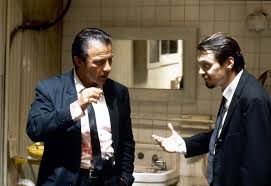
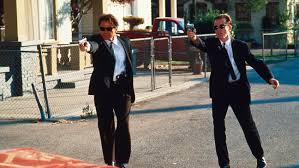
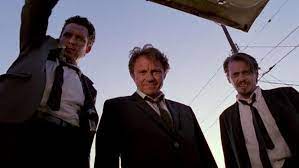
In 1992, a then-unknown filmmaker named Quentin Tarantino burst onto the scene with his directorial debut, “Reservoir Dogs.” With its non-linear storytelling, distinctive dialogue, and intense violence, the film quickly became a cult classic and established Tarantino as a force to be reckoned with in the world of cinema. “Reservoir Dogs” not only showcased Tarantino’s unique style but also set the stage for a new era of independent filmmaking.
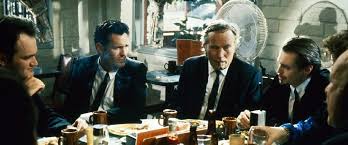
“Reservoir Dogs” centers around a botched diamond heist orchestrated by a group of criminals who don’t know each other’s real names, only their assigned color-coded aliases. The film opens with a diner scene in which the characters banter about pop culture, setting the tone for the snappy and distinctive dialogue that would become a trademark of Tarantino’s work.
The film’s non-linear narrative structure, a technique for which Tarantino would become renowned, is immediately apparent as the story unfolds through a series of interconnected flashbacks and present-day scenes. This structure adds a layer of complexity to the storytelling, forcing the audience to piece together the events and motivations that led to the disastrous heist. This narrative approach also serves to intensify suspense and tension, creating a sense of uncertainty and unease.
Each character’s backstory is revealed through these nonlinear sequences, shedding light on their motivations and personalities. Mr. White (Harvey Keitel), Mr. Blonde (Michael Madsen), Mr. Pink (Steve Buscemi), and the rest of the color-coded criminals come to life through their interactions and monologues, showcasing Tarantino’s knack for creating memorable and multi-dimensional characters.
One of the most distinctive aspects of “Reservoir Dogs” is its dialogue. Tarantino’s script is peppered with profanity, pop culture references, and sharp wit, creating a unique rhythm that is as entertaining as it is unforgettable. The infamous “ear scene,” in which Mr. Blonde tortures a captured police officer while dancing to “Stuck in the Middle with You” by Stealers Wheel, juxtaposes extreme violence with casual conversation, exemplifying Tarantino’s ability to blend the mundane with the macabre.
The characters’ banter ranges from discussions about Madonna’s “Like a Virgin” to debates about tipping in restaurants. These seemingly inconsequential conversations serve to humanize the criminals, making them relatable and oddly sympathetic despite their heinous actions. The film’s dialogue-driven moments are not just filler; they provide insight into the characters’ psyches and motivations.
“Reservoir Dogs” is notorious for its graphic violence, a hallmark of Tarantino’s filmmaking style. However, the violence in the film serves a purpose beyond shock value. It underscores the brutality of the criminal world and tests the characters’ loyalty and morality. The juxtaposition of extreme violence with mundane settings and conversations creates a sense of dissonance that lingers in the minds of the audience.
The film’s cinematography and visual aesthetics are equally impactful. The choice to depict the heist itself off-screen allows the audience to focus on the aftermath and the characters’ reactions. The use of slow-motion during pivotal moments, such as the Mexican standoff near the film’s climax, heightens tension and draws attention to the significance of these moments.
“Reservoir Dogs” had a profound impact on the landscape of independent cinema. With its limited budget, Tarantino demonstrated that a compelling story, strong characters, and innovative filmmaking techniques could captivate audiences without the need for massive Hollywood resources. The film’s success paved the way for other independent filmmakers to experiment with unconventional storytelling and to prioritize character development over spectacle.
Tarantino’s use of an eclectic soundtrack, incorporating songs from various genres and eras, also became a hallmark of his work. The soundtrack of “Reservoir Dogs” not only enhances the film’s atmosphere but also demonstrates Tarantino’s deep appreciation for music as a storytelling tool.
The film’s critical acclaim and cult following propelled Tarantino into the spotlight, setting the stage for his subsequent successes, including “Pulp Fiction,” “Kill Bill,” and “Django Unchained.” Tarantino’s signature style, characterized by its blend of violence, pop culture references, nonlinear narratives, and unforgettable dialogue, can be traced back to the foundations established in “Reservoir Dogs.”
“Reservoir Dogs” marked a turning point in how audiences perceived crime films. Before its release, crime films often followed a formulaic structure with clear-cut heroes and villains. However, Tarantino’s approach blurred these lines, making it difficult to categorize characters as simply good or bad. This moral ambiguity added depth to the story and challenged viewers to engage with complex characters who grappled with their own choices and motivations.
The film’s impact on popular culture is evident in the countless references and homages it has inspired in subsequent films, television shows, and even other forms of media. The concept of color-coded aliases for criminals, as seen in “Reservoir Dogs,” has become a recognizable trope in various genres. Moreover, the use of nonlinear storytelling has been adopted by many filmmakers seeking to add depth and intrigue to their narratives.
“Reservoir Dogs” is a showcase of stellar performances from its ensemble cast. Harvey Keitel’s portrayal of Mr. White is a standout, capturing the character’s complex mix of loyalty, compassion, and ruthlessness. Michael Madsen’s Mr. Blonde exudes a chilling charisma that makes his violent outbursts all the more unsettling. Steve Buscemi’s fast-talking Mr. Pink brings a touch of dark comedy to the film, and Tim Roth’s Mr. Orange expertly navigates the character’s internal struggle as an undercover cop.
The interactions between these characters reveal their vulnerabilities and insecurities, making them feel like real individuals rather than mere caricatures. Tarantino’s script and the actors’ performances work in harmony to create a sense of camaraderie and tension among the criminals, all while exploring their diverse personalities.
At its core, “Reservoir Dogs” delves into themes of betrayal and trust. The plot revolves around a mole within the group, which ultimately leads to the disastrous outcome of the heist. The film explores how loyalty can be tested and manipulated under pressure, and how trust can be a fragile commodity in a criminal underworld where self-preservation often takes precedence.
This exploration of human nature in extreme circumstances resonates with audiences on a deeper level. The characters’ struggles with trust and betrayal mirror universal human experiences, allowing viewers to connect with the story and its themes on a personal level.
Over the years, “Reservoir Dogs” has continued to gain new generations of fans who appreciate its unconventional storytelling, unique characters, and bold visual style. It remains a film that sparks discussions and debates about its meaning, symbolism, and underlying messages. The film’s enduring popularity has solidified its place in cinema history, making it a staple in discussions about influential and ground-breaking movies.
As Tarantino’s directorial debut, “Reservoir Dogs” set the stage for his subsequent films, each of which would carry his distinctive style and narrative techniques. The film’s success not only launched Tarantino’s career but also had a broader impact on the filmmaking industry. It highlighted the potential of independent cinema to challenge conventions and captivate audiences, inspiring filmmakers to experiment with storytelling, characterization, and visual aesthetics.
“Reservoir Dogs” is a film rich in thematic depth and symbolism, offering viewers an opportunity to delve deeper into its narrative and characters. One prominent theme explored in the movie is the concept of identity and how it can be concealed or manipulated. The characters in the film go by color-coded aliases, highlighting the idea that in the criminal world, one’s true identity is often obscured. This theme of identity ties into the characters’ struggles with trust and betrayal, as they must navigate a world where everyone wears a mask.
Another theme that resonates throughout the film is the notion of morality in a morally ambiguous world. The characters are criminals, engaging in violent and illegal activities, yet they exhibit moments of empathy, loyalty, and even remorse. The audience is forced to confront their own moral judgments and question whether these characters are entirely devoid of humanity or simply products of their circumstances.
The film’s setting, primarily taking place in a warehouse, serves as a microcosm for the larger criminal underworld. The sterile, nondescript environment is a reflection of the cold and impersonal nature of the criminal operations. The warehouse becomes a pressure cooker, intensifying the characters’ interactions and amplifying the tension as the true identity of the traitor remains a mystery.
“Reservoir Dogs” was met with a mixture of acclaim and controversy upon its release. Critics praised Tarantino’s fresh and audacious approach to filmmaking, acknowledging the film’s impact on the crime genre and its contribution to independent cinema. However, the film’s graphic violence and language sparked debates about its appropriateness and the potential influence on real-world behaviour.
From an academic perspective, “Reservoir Dogs” has been widely studied and analyzed in film schools and scholarly circles. Its narrative structure, dialogue, and use of violence have been dissected as examples of Tarantino’s unique cinematic style. The film’s exploration of themes such as trust, loyalty, and identity has prompted discussions on how these concepts are presented and challenged within the context of the crime genre.
The impact of “Reservoir Dogs” extends beyond its initial release, as it continues to shape filmmaking and pop culture. Quentin Tarantino’s distinct directorial style, which includes nonlinear storytelling, dialogue-driven scenes, and eclectic soundtracks, has become a hallmark of his work and an inspiration for many filmmakers who aim to create original and engaging narratives.
The film’s cultural impact is evident in the numerous references and homages found in subsequent movies, television shows, and even music videos. Elements like the use of aliases, memorable quotes, and the integration of music have become recognizable trademarks that pay tribute to “Reservoir Dogs.”
As the years have passed, “Reservoir Dogs” remains an enduring cinematic work that continues to captivate and engage audiences. Its exploration of complex characters, themes, and storytelling techniques has solidified its status as a classic that transcends time and genre. Quentin Tarantino’s debut film has left an indelible mark on the world of cinema, inspiring filmmakers to push creative boundaries and challenge established norms.
In the grand tapestry of cinema history, “Reservoir Dogs” holds a special place as the catalyst for a new era of filmmaking. Its influence can be seen not only in the subsequent works of Quentin Tarantino but also in the broader landscape of independent cinema. With its unforgettable characters, innovative narrative structure, and thought-provoking themes, “Reservoir Dogs” will undoubtedly continue to be studied, celebrated, and cherished for generations to come.
Technical Commentary
Video
“Reservoir Dogs” comes with a brand new 2160p UHD 4K transfer with Dolby Vision. This is the first time this timeless film has been released in the 4K format. This new UHD image looks fantastic while keeping its very filmic roots. There is no way this film has the digital car-washed-out look, which would make Tarantino lose his mind. The film grain is very much intact and heavy at times, which was the intended purpose and even the early source of this 1992 film. The colour palette is warm, just like Tarantino intended. The browns, oranges, yellows, ambers, and somewhat warmer beige and grey walls look fantastic. The Dolby Vision enhancement makes those gushes of red blood really pop when they pour from orifices and stain the white button-down shirts.
Audio
This release comes with a very good Dolby TrueHD 5.1 audio mix that gets the job done. There’s never a big amount of power behind it, but when it moves, it packs a punch. The sound effects of tires screeching, engine revving, and gunshots going off all sound amazing. The surround speakers offer up some ambient noises of people talking and music playing.
Even glasses and plates clanking at the diner can be heard nicely through those speakers as well. But for the most part, this is a front-heavy track with some excellent dialogue that is always clear, clean, and easy to follow. The music and song selection brings the low end of bass that is dynamic with a nice rumble. There are no issues with any audio elements here, although it would have been nice to have a Dolby Atmos option.
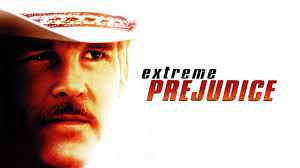
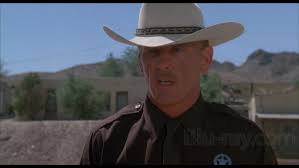
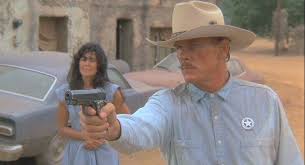
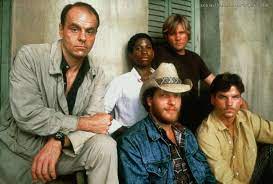
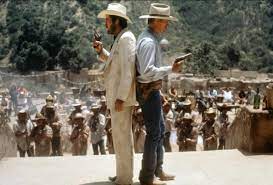
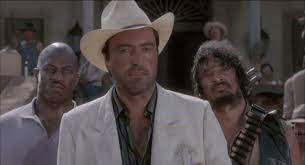
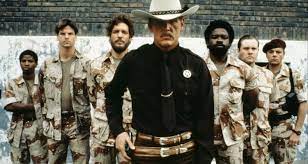
Featuring: Nick Nolte, Powers Boothe, Rip Torn, Michael Ironside and María Conchita Alonso
Sheriff Hank Pearson:“Hell, Jack… the only thing worse than a politician is a child molester.”
Critical Commentary
In the realm of cinematic storytelling, certain films manage to transcend their genre boundaries and delve into the complexities of human nature. “Extreme Prejudice,” directed by Walter Hill and released in 1987, is one such film that not only falls into the action-thriller category but also offers a thought-provoking exploration of morality, friendship, and the fine line between justice and revenge. Set against the backdrop of the Texas-Mexico border, the film weaves together elements of Westerns, crime dramas, and character-driven narratives to create a tense and gripping experience that lingers in the minds of viewers long after the credits roll.
At its core, “Extreme Prejudice” follows Jack Benteen (played by Nick Nolte), a Texas Ranger with a strong sense of duty and an unbreakable friendship with Cash Bailey (played by Powers Boothe). Their friendship, however, is put to the test when Cash becomes a drug lord operating on the Mexican side of the border. As Cash’s criminal empire grows, Benteen finds himself in a precarious position: torn between his loyalty to his friend and his commitment to upholding the law.
The plot thickens with the introduction of Sheriff Hank Pearson (played by Rip Torn), a character whose motivations and allegiances remain shrouded in mystery. As the film progresses, the audience is drawn into a web of intrigue, shifting alliances, and morally ambiguous decisions. The narrative’s tension is further heightened when a black-ops unit led by Major Paul Hackett (played by Michael Ironside) is sent to eliminate Cash’s operation. This sets the stage for a thrilling clash between law enforcement, the military, and criminal enterprises, all against the backdrop of a harsh and unforgiving landscape.
“Extreme Prejudice” explores a range of themes that transcend its action-driven façade. One of the central themes is the complex nature of friendship. Benteen and Cash’s relationship is depicted as one built on trust, shared experiences, and an unspoken understanding of each other’s moral compass. Yet, the film forces the characters, and by extension the audience, to grapple with the limits of loyalty. What happens when friendship clashes with the pursuit of justice? Can one reconcile the bonds of brotherhood with the responsibilities of duty?
Another prominent theme is the question of morality in the face of extreme circumstances. The film’s title itself speaks to the dangerous territory where preconceived notions and biases can lead. As the characters navigate a world where right and wrong are not as clear-cut as they seem, the audience is prompted to question the decisions they would make when faced with similarly harrowing choices. “Extreme Prejudice” offers no easy answers, leaving viewers to ponder the blurred lines between heroism and villainy.
The film also delves into the concept of identity, particularly in the context of a shifting landscape. The border setting serves as a powerful metaphor for the liminal space between law and lawlessness, order and chaos, and even the individual and society. Benteen’s struggle to maintain his sense of self while navigating these shifting dynamics mirrors the broader exploration of identity’s fluid nature.
Visually, “Extreme Prejudice” employs a gritty and atmospheric style that complements its thematic exploration. The vast, unforgiving landscapes of Texas and Mexico mirror the moral grey areas the characters inhabit. The use of shadows, stark lighting, and intense close-ups accentuate the emotional turmoil experienced by the characters. Additionally, the film’s action sequences are choreographed with a realism that grounds the story, making it more relatable despite its heightened circumstances.
Walter Hill’s direction also shines in his ability to create tension through pacing. The slow build-up of suspense culminates in explosive moments that resonate on both an emotional and visceral level. The film’s sound design and score enhance these moments, heightening the impact of crucial scenes.
“Extreme Prejudice” might not have achieved the same level of mainstream recognition as some of its contemporaries, but its influence on the action-thriller genre is undeniable. Its exploration of complex characters, morally ambiguous situations, and the fine line between good and evil has left a lasting mark on subsequent films and filmmakers.
Moreover, the film’s resonance can be seen in the way it remains relevant in today’s cinematic landscape. As discussions around justice, morality, and the consequences of choices continue to evolve, “Extreme Prejudice” serves as a reminder that these themes are timeless and capable of sparking introspection and dialogue.
Upon its release, “Extreme Prejudice” received mixed reviews from critics, who were divided on its blend of action, drama, and moral ambiguity. Some praised the film’s gritty atmosphere, well-executed action sequences, and the chemistry between the lead actors, while others found fault with the film’s convoluted plot and occasional lapses in pacing. However, as time has passed, the film has garnered a dedicated cult following that appreciates its thematic depth and unique approach to the action genre.
In a contemporary analysis, “Extreme Prejudice” can be seen as a precursor to the modern trend of exploring complex characters and morally gray narratives in action films. The film’s portrayal of friendship tested by conflicting loyalties echoes in many later works that delve into similar themes. Furthermore, the Texas-Mexico border setting can be viewed as a commentary on the socio-political tensions between the United States and its neighboring countries, adding a layer of relevance to the film’s exploration of identity and belonging.
While “Extreme Prejudice” was released over three decades ago, its themes continue to resonate in today’s world. The exploration of loyalty and morality in the face of challenging circumstances remains as pertinent as ever, especially in a global landscape where ethical dilemmas are often magnified by technology and the interconnectedness of societies. The film’s examination of identity also speaks to the ongoing conversations surrounding individuality, cultural diversity, and societal expectations.
In an era when discussions on justice, revenge, and the consequences of one’s actions dominate both real-world conversations and media narratives, “Extreme Prejudice” serves as a reminder that such themes are not confined to the realms of fiction. The film prompts audiences to contemplate the decisions they might make when faced with extreme situations and the implications of those choices on their own sense of self and the world around them.
One of the film’s notable strengths lies in its craftsmanship, particularly in how it balances action with character development. Walter Hill’s directorial vision is evident in the way he uses visual storytelling to convey emotions and relationships. The dynamic between Jack Benteen and Cash Bailey is expertly portrayed, with Nick Nolte and Powers Boothe delivering performances that capture the nuances of their characters’ bond. The tension between duty and friendship is palpable in their interactions, adding depth to the film’s thematic exploration.
Hill’s decision to blend Western and crime elements contributes to the film’s unique atmosphere. The border landscape becomes more than just a backdrop; it becomes a character in itself, reflecting the harsh realities faced by the characters. This blending of genres not only pays homage to cinematic traditions but also adds layers of meaning to the story.
At the heart of “Extreme Prejudice” is its ability to present ethical dilemmas without offering easy answers. The film invites viewers to confront the uncomfortable truth that circumstances can force individuals to make choices that defy conventional notions of right and wrong. Benteen’s internal struggle, torn between his sense of duty as a lawman and his loyalty to Cash, serves as a powerful illustration of the gray areas that often define morality.
The exploration of justice versus revenge is equally thought-provoking. The line between seeking justice and indulging in vengeful acts becomes blurred as characters are driven by personal vendettas and past grievances. The film does not shy away from depicting the consequences of these actions, highlighting the ripple effects they have on individuals and the world around them.
“Extreme Prejudice” also offers a lens through which to view broader societal and political dynamics. The film’s portrayal of the Texas-Mexico border zone as a lawless frontier speaks to issues of jurisdiction, sovereignty, and the challenges of maintaining order in areas where legal boundaries are ambiguous. The conflict between law enforcement and Cash Bailey’s operation can be seen as a microcosm of the larger struggles governments face in combating organized crime and maintaining security.
Furthermore, the film touches on the complexities of identity within a multicultural context. The characters’ interactions and alliances reflect the diverse influences at play in border regions, shedding light on the cultural intersections and clashes that define such areas. This theme of identity resonates even more strongly today as societies grapple with issues of immigration, cultural assimilation, and national identity.
“Extreme Prejudice” remains relevant in discussions surrounding film and society not only due to its thematic depth but also its role in shaping subsequent works. The film’s influence can be seen in the evolution of action cinema, inspiring filmmakers to craft narratives that challenge audiences intellectually while delivering pulse-pounding excitement. Its legacy also extends to television and other forms of media that explore similar moral dilemmas and character dynamics.
In a cinematic landscape that often prioritizes spectacle over substance, “Extreme Prejudice” stands as a testament to the potential of genre films to provoke thought and engage audiences on multiple levels. Its enduring appeal lies in its ability to resonate with viewers regardless of the era, inviting them to question their own beliefs and confront the complexities of the human experience.
“Extreme Prejudice” remains a captivating and thought-provoking film that defies easy classification. Its blend of action, drama, and moral ambiguity elevates it beyond the confines of traditional genre boundaries. Walter Hill’s skillful direction, coupled with strong performances and a richly layered narrative, creates a lasting cinematic experience that continues to be relevant in contemporary conversations. As audiences continue to grapple with questions of justice, morality, and identity, “Extreme Prejudice” serves as a reminder that the exploration of extreme circumstances can illuminate the depths of human nature in ways that resonate far beyond the screen.
“Extreme Prejudice,” directed by Walter Hill, stands as a testament to the power of genre films to explore complex and profound themes. Beyond its surface as an action-thriller, the film delves into the depths of human nature, forcing its characters and viewers to confront moral ambiguity, loyalty, and identity in the face of extreme circumstances. Through a combination of striking visuals, masterful direction, and powerful performances, the film creates an experience that lingers in the minds of its audience, challenging them to reflect on their own beliefs and values.
While the film’s initial critical reception may have been mixed, its legacy has grown over time, influencing subsequent films and filmmakers who seek to merge action-packed narratives with thought-provoking explorations of humanity. As societal discussions on justice, morality, and identity continue to evolve, “Extreme Prejudice” remains a relevant and resonant piece of cinema that encourages viewers to grapple with the complexities of the human experience. In a world where the boundaries between right and wrong are often blurred, the film’s exploration of extreme circumstances serves as a reminder that the true test of character lies in how one navigates these murky waters.
Technical Commentary
Video
“Extreme Prejudice” is presented on Blu-ray courtesy of Lionsgate Film’s Vestron Video Collector’s Series imprint with an AVC encoded 1080p transfer in 1.85:1. As usual with these Vestron Video releases, there’s unfortunately no real technical information given about the transfer, though if you search our news articles (see the tab above), you’ll notice we posted that StudioCanal was working on this film along with a couple of others, and this does have the StudioCanal logo up front. The result is often quite striking, with a nicely suffused palette and generally very commendable detail levels. Fine detail is supported immeasurably by some extremely brightly lit outdoor moments, where things like the stubble on Boothe’s face or even some of the tiny hairs in his nostrils can be easily spotted. There are some kind of curious variances along the way. The last third or so of the film looks a bit dowdy and brown, and not just because of the shooting locations. There are also some dark moments where the grain field is noticeably coarser in appearance, but I noticed no real compression issues of any kind. Clarity can also experience brief moments of ebbing and flowing, not necessarily tied to any lighting conditions.
Audio
“Extreme Prejudice” has a well-wrought DTS-HD Master Audio 2.0 track that capably supports some of the film’s more gonzo elements, like an explosion that just erupts out of nowhere early in the film (Joyner and Parke postulate that it may have been the result of some footage left on the cutting room floor that might have better contextualized what’s going on). Jerry Goldsmith’s typically excellent score also sounds full bodied and propulsive. Dialogue is rendered cleanly and clearly throughout. Optional English, English SDH and Spanish subtitles are available.
Special Features
Audio Commentary by film critic / author Walter Chaw
Audio Commentary by film historians Daniel Kremer and Nat Segaloff
Audio Commentary by film historians C. Courtney Joyner and Henry Parke
Isolated Score Selections and audio interview with music historian John Takis
Two interviews with director Walter Hill (2010 and 2019)
The Major’s Agenda – interview with actor Michael Ironside
The War Within – interview with actor Clancy Brown
Capturing The Chaos – interview with director of photography Matthew F. Leonetti
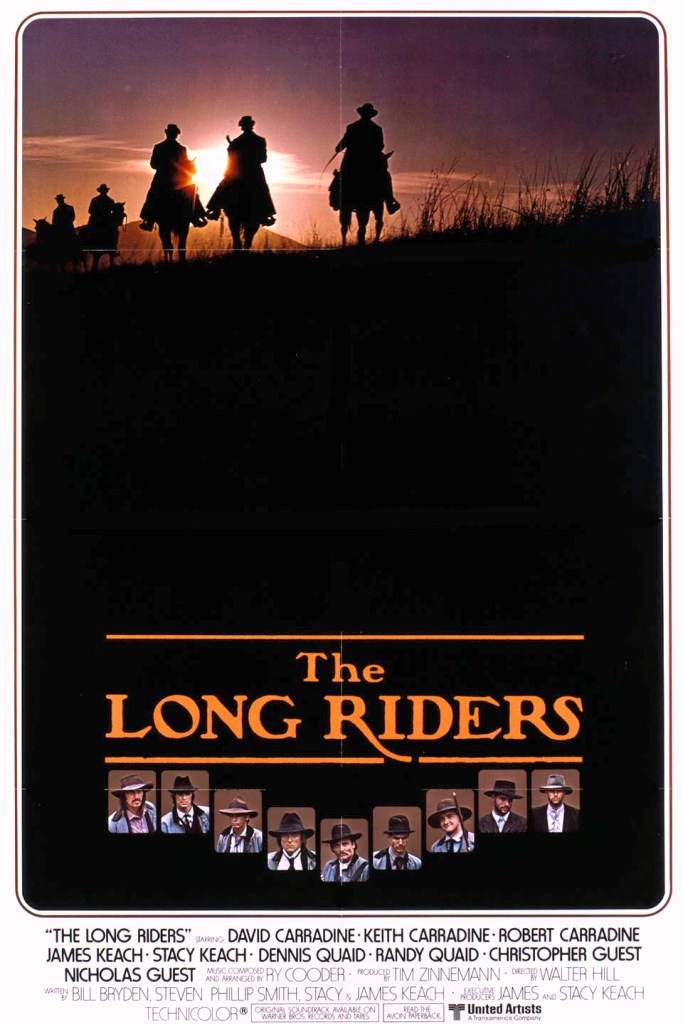
Written by: Bill Bryden, Steven Phillip Smith, Stacy Keach and James Keach
Directed by: Walter Hill
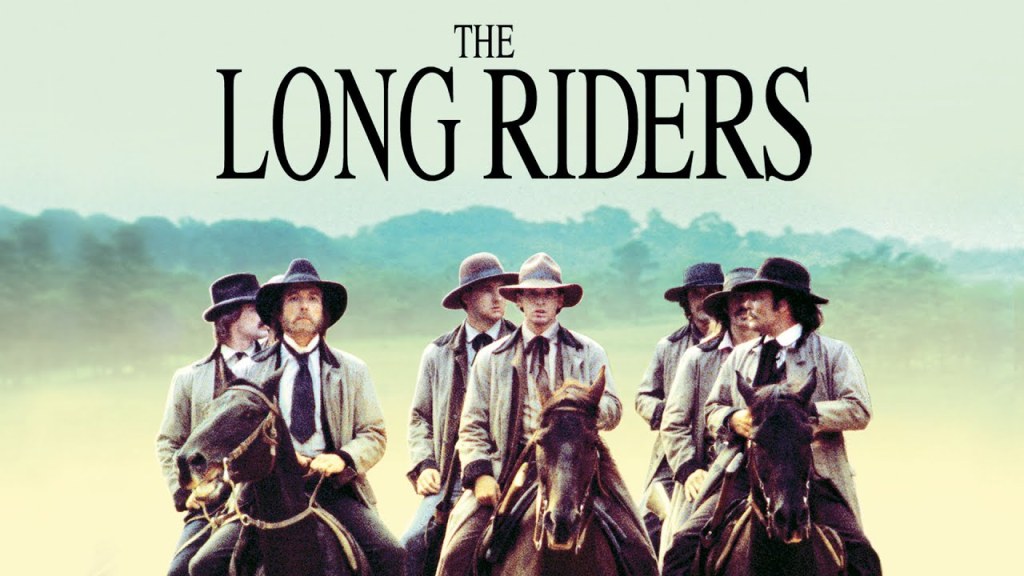
Featuring: David Carradine, Keith Carradine, Robert Carradine, James Remar, James Keach, Stacy Keach, Dennis Quaid, Randy Quaid, Christopher Guest and Nicholas Guest
Cole Younger:“When this is all over, I’m goin’ to write a book; make myself more famous than I already am.”
Frank James:“I trust you’ll give me a copy.”
Cole Younger:“Nope. You gotta pay, Frank; you gotta pay.”
Critical Commentary
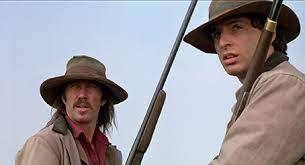
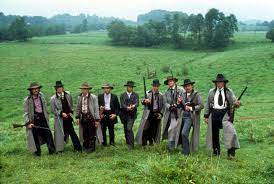
“The Long Riders,” a 1980 Western film directed by Walter Hill, stands as a remarkable entry in the genre’s history. Set in post-Civil War America, the film tells the gripping tale of the infamous James-Younger Gang, a group of bank and train robbers whose exploits earned them both notoriety and a place in American folklore. With its unique casting choices, attention to historical detail, and masterful storytelling, “The Long Riders” has cemented itself as a classic that continues to captivate audiences decades after its release.
“The Long Riders” immerses viewers in the aftermath of the Civil War, a time of tumultuous change and shifting allegiances. The film provides an authentic portrayal of the era’s socio-political climate, emphasizing the impact of the war on individuals and communities alike. From the first frame, viewers are transported to a world where the boundaries between good and bad are blurred, forcing them to confront the complexity of the characters’ motivations.
One of the film’s most intriguing aspects is its casting choices. Rather than opt for traditional Hollywood decisions, director Walter Hill made an audacious move by casting real-life siblings in the roles of the outlaw brothers. This decision lent an unprecedented authenticity to the film. The Keach brothers (James and Stacy) portray Frank and Jesse James, the leaders of the gang. David, Keith, and Robert Carradine embody the Younger brothers (Cole, Jim, and Bob), while Dennis and Randy Quaid portray Ed and Clell Miller.
This unconventional casting decision paid off handsomely. The chemistry among the actors is palpable, undoubtedly fueled by their real-life relationships. Their interactions on screen reflect a deep understanding of familial dynamics, making the characters’ camaraderie and conflicts all the more believable. This casting technique remains a standout element of “The Long Riders,” adding a layer of authenticity rarely seen in other films.
From costuming to set design, “The Long Riders” meticulously recreates the late 19th-century setting. The attention to detail extends to the weaponry, horses, and even the outlaw gang’s hideouts. Every aspect of the film’s visual composition serves to immerse the audience in the time period, allowing them to witness history unfold.
The dedication to historical accuracy is evident in the climactic Northfield Raid sequence. This meticulously crafted scene captures the chaos and intensity of the actual event, effectively translating the daring heist onto the screen. The skillful combination of cinematography, choreography, and sound design creates a riveting and harrowing experience for the audience.
Walter Hill’s direction shines through in the film’s narrative structure. The story unfolds through a series of interconnected vignettes, each focusing on a specific event or character. This technique enables the film to explore various perspectives while maintaining a cohesive narrative thread. The non-linear storytelling enhances the sense of unpredictability, mirroring the uncertain lives of the outlaws.
Moreover, the film takes time to delve into the inner conflicts and motivations of the characters. The depiction of the gang members as more than just ruthless criminals adds depth to their personas. Audiences are offered a glimpse into their aspirations, loyalties, and vulnerabilities, making it challenging to categorize them as simple villains.
The film’s musical score, composed by Ry Cooder, complements the on-screen action superbly. Cooder’s distinctive blend of blues and folk music enhances the atmosphere of the film, evoking a sense of time and place. The soundtrack serves as a sonic bridge between the historical setting and the modern audience, underscoring the universal themes of loyalty, family, and honor.
“The Long Riders” occupies a special place in the Western genre’s pantheon. Its innovative casting choices, commitment to historical accuracy, and compelling storytelling have inspired subsequent filmmakers to explore unconventional approaches to familiar narratives. The film’s exploration of the gray areas in morality paved the way for more nuanced character studies in the genre, influencing future classics like “Unforgiven.”
“The Long Riders” had a significant impact not only on the Western genre but also on filmmaking as a whole. Its unconventional casting approach, where real-life siblings portrayed the central characters, sparked discussions about the potential benefits of using actors with existing relationships to enhance on-screen chemistry. This approach was later explored in other films, demonstrating the film’s pioneering influence on casting decisions.
Furthermore, the film’s dedication to historical accuracy set a standard for period piece filmmaking. The meticulous attention to detail in costumes, props, and sets became a benchmark for authenticity, encouraging filmmakers to invest more in accurate recreations of historical periods. This commitment to realism has inspired subsequent productions to strive for a higher level of fidelity to the past.
“The Long Riders” also contributed to the evolution of the Western genre. By delving into the psychological complexities of the characters and challenging traditional notions of heroism and villainy, the film helped pave the way for more nuanced and morally ambiguous Western narratives. This shift is evident in later works like Clint Eastwood’s “Unforgiven” and Quentin Tarantino’s “Django Unchained,” which owe a debt to the groundwork laid by “The Long Riders.”
The technical aspects of “The Long Riders” are worth acknowledging as well. Walter Hill’s direction is both confident and restrained, allowing the characters and the story to take center stage. The editing, particularly the use of cross-cutting between different storylines, enhances the tension and excitement, making the film a dynamic and engaging experience. The cinematography, captured by Ric Waite, showcases the grandeur of the American landscape while also capturing the intimate moments shared by the characters.
Ry Cooder’s musical score remains a standout feature of the film. His fusion of various musical styles effectively mirrors the eclectic nature of the characters and their journey. The score doesn’t just complement the visuals; it becomes an integral part of the storytelling, amplifying emotions and adding depth to the narrative.
“The Long Riders” shines in its portrayal of complex characters. By delving into the motivations and personal struggles of the gang members, the film humanizes them beyond their criminal activities. The James-Younger Gang isn’t portrayed as one-dimensional villains but rather as individuals with their own desires and vulnerabilities. This nuanced approach challenges viewers to consider the factors that drive people to crime and to contemplate the blurred lines between right and wrong.
The exploration of brotherhood and loyalty is another theme that resonates strongly throughout the film. The relationships among the gang members are tested by external pressures and internal conflicts, leading to moments of intense emotional resonance. These portrayals of camaraderie and strife contribute to the film’s emotional depth and impact.
“The Long Riders” has also left its mark on popular culture beyond the realm of cinema. The film’s interpretation of the James-Younger Gang’s exploits has contributed to the shaping of the American outlaw mythos. These historical figures, who were once seen as notorious criminals, have been transformed into larger-than-life characters through the film’s storytelling. This reinterpretation has influenced subsequent media depictions of outlaws and antiheroes.
Moreover, “The Long Riders” has ignited discussions about the power of storytelling and its ability to shape public perception of historical events. The film invites audiences to question the narratives presented by history books and popular culture, urging them to consider multiple perspectives and to recognize the human complexities behind the legends.
As time passes, “The Long Riders” remains a film that resonates with contemporary audiences due to its exploration of themes that transcend time and place. The examination of the morality of criminality, the bonds of brotherhood, and the impact of societal upheaval continue to hold relevance in a world grappling with its own set of challenges. The characters’ struggles for identity, survival, and a sense of belonging resonate with audiences who are navigating their own complexities in an ever-changing landscape.
In an era where the lines between heroes and villains are increasingly blurred, the film’s depiction of nuanced characters serves as a reminder that human motivations are rarely black and white. Just as the James-Younger Gang’s actions were influenced by a combination of circumstance, personal history, and societal pressures, so too are the actions of individuals in the modern world shaped by a multitude of factors.
“The Long Riders” left an indelible mark on the way filmmakers approach storytelling. Its willingness to challenge conventional casting norms demonstrated the potential benefits of selecting actors with pre-existing relationships, leading to a more authentic portrayal of on-screen dynamics. This practice has since been explored in films and television series, showcasing the lasting impact of the film’s casting choices.
Furthermore, the film’s meticulous attention to historical accuracy has set a precedent for period piece filmmaking. Subsequent filmmakers have drawn inspiration from “The Long Riders,” recognizing the importance of creating an immersive experience for audiences by recreating historical settings with fidelity.
The legacy of “The Long Riders” lives on in contemporary works that have been influenced by its storytelling techniques and thematic exploration. The Western genre continues to evolve, with filmmakers embracing the nuanced character studies that were popularized by the film. The embrace of morally complex protagonists and the blurring of traditional lines between good and evil have become hallmarks of modern Western narratives.
Furthermore, the film’s exploration of the enduring mythos of the American outlaw finds resonance in the current fascination with antiheroes and the examination of society’s fascination with criminal figures. From television series like “Breaking Bad” to films like “Public Enemies,” the themes that “The Long Riders” touched upon have become integral to modern storytelling.
In a genre often defined by its tropes and conventions, “The Long Riders” stands out as a trailblazer that challenged norms and elevated the Western film to new heights. Its fusion of historical accuracy, unconventional casting, and compelling storytelling has ensured its enduring relevance and impact. As the years go by, “The Long Riders” continues to inspire filmmakers to reimagine traditional narratives, delve deeper into character motivations, and strive for authenticity in their storytelling. Walter Hill’s cinematic masterpiece has etched its name in the annals of film history, where it will undoubtedly ride on as a testament to the art of storytelling and its enduring
Technical Commentary
Video
With a 1080p/AVC-encoded transfer framed in the film’s original 1.85:1 aspect ratio, “The Long Riders” makes for a pleasing viewing experience on Blu-ray, providing you don’t expect the film to look pristine. While MGM usually takes the time to clean up the bigger, tent-pole films in their back catalogue, releases of “smaller” films like this often get the no-frills transfer treatment. In a perfect world, every movie from the past would get a loving frame-by-frame restoration, but let’s be realistic. Besides, this hands-off approach does have its benefits.
Audio
Those expecting beefed-up 5.1 surround sound may be disappointed by the film’s DTS-HD Master Audio 2.0 mono mix, but there’s really nothing wrong with this track. Although real speaker involvement could’ve bolstered the shoot-out sequences, making them even more brutal, the front-and-centre sound design works fine. The disc also includes a number mono foreign-language dubs in Dolby Digital, plus several subtitle options.
Special Features
Disc One
1080p high-definition presentation from a restored 4K master
Audio Commentary by film historians Howard S. Berger, Steve Mitchell and Nathaniel Thompson
Audio Commentary by film historian Toby Roan
Theatrical Trailer
Disc Two
Interview with actors Keith Carradine and Robert Carradine
Interview with actors Stacy Keach and James Keach
Interview with actor Randy Quaid
Interview with actor Nicholas Guest
Interview with director Walter Hill
Interview with composer Ry Cooder
Interview with producer Tim Zinnemann
Outlaw Brothers: The Making of The Long Riders – documentary
The Northfield Minnesota Raid: Anatomy of a Scene – featurette
Slow Motion: Walter Hill on Sam Peckinpah – featurette
Amazon Freevee has released the teaser trailer for the second season of their popular spin-off drama series “Bosch: Legacy” with Titus Welliver returning to the role of retired homicide detective turned private investigator Harry Bosch.
In the new run, Bosch and Honey Chandler (Mimi Rogers) work together to seek out a killer who just might find them first. The FBI is also scrutinising Carl Rogers’ murder and places Bosch and Chandler under suspicion.
Meanwhile as a result of being kidnapped by a masked assailant, Maddie Bosch (Madison Lintz) finds her law enforcement career hangs in the balance.
Like previous seasons, this is once again based on the bestselling crime novels by author Michael Connelly. Following a highly successful inaugural run, the series has already been renewed for a third season so this certainly won’t be the end.
The second season of “Bosch: Legacy” will premiere on Freevee from October 20th.
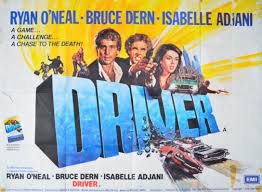
Featuring: Ryan O’Neal, Bruce Dern, Isabelle Adjani and Ronee Blakley
The Detective:“I respect a man that’s good at what he does. I’ll tell you something, I’m very good at what I do.”
Critical Commentary
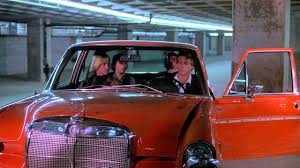
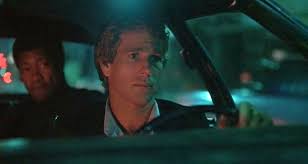
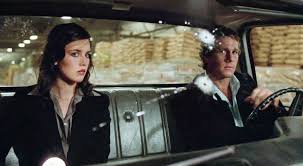
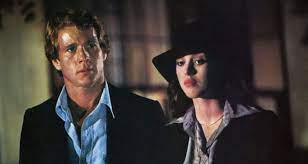
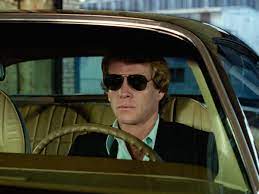
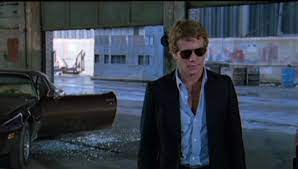
In the vast landscape of cinematic history, certain films leave an indelible mark by blending intense storytelling, masterful direction, and captivating performances. Walter Hill’s “The Driver,” released in 1978, is undoubtedly one such gem. This neo-noir action thriller takes viewers on an adrenaline-fueled journey through the gritty streets of 1970s Los Angeles, and its impact still reverberates through modern cinema.
A Dark Symphony of Minimalism: From the very first frame, “The Driver” establishes its unique identity through minimalistic storytelling. The film opens with a mesmerizing 9-minute sequence devoid of dialogue, during which the titular character (played by Ryan O’Neal) orchestrates a daring heist, demonstrating his unparalleled skills behind the wheel. This absence of conventional exposition sets the tone for the entire film, immersing the audience in an environment where actions speak louder than words.
The Enigmatic Characters: Central to the film’s allure are the enigmatic characters, each with their own hidden agendas and motivations. Ryan O’Neal’s portrayal of the Driver is a marvel of restrained emotion, his stoic demeanour concealing a complex character driven by an unquenchable thirst for thrill. The Driver’s nemesis, the Detective (played by Bruce Dern), is equally captivating. Dern brings a relentless intensity to his role, embodying a law enforcement officer who becomes consumed by his obsession with catching the elusive Driver.
Isabelle Adjani’s character, simply known as “The Player,” introduces an intriguing dynamic to the narrative. Her enigmatic allure and ambiguous intentions keep both the audience and the characters guessing. Adjani’s performance is a testament to her ability to convey depth and complexity through subtlety, adding layers to a character that could have easily been relegated to a one-dimensional archetype.
Walter Hill’s direction shines most brightly in the action sequences. The film’s car chases are a symphony of screeching tires and adrenaline-pumping maneuvers. Hill’s decision to eschew CGI and rely on practical stunts and real driving creates an unparalleled sense of authenticity. The viewer can practically smell the burning rubber and feel the wind rush by as the vehicles navigate hairpin turns and narrow alleyways.
“The Driver” pays homage to the classic film noir genre through its visual style. Cinematographer Philip H. Lathrop’s use of shadows, neon lights, and rainy nights creates an atmosphere that is both stylish and evocative. The film’s Los Angeles is a bleak and desolate landscape, reflecting the moral ambiguity of its characters and the dangerous world they inhabit.
Beneath the surface of high-speed chases and tense standoffs lies a rich tapestry of subtext and themes. “The Driver” explores concepts of identity, obsession, and the blurred line between law and lawlessness. The characters’ interactions are often laced with an underlying tension, as they navigate a world where trust is a luxury and betrayal is the norm. The film’s climax is a masterstroke that brings these themes to a head in a showdown that is as much a battle of wits as it is a physical confrontation.
“The Driver” has left an indelible mark on the cinematic landscape. Its influence can be seen in subsequent films that prioritize visceral action and character-driven narratives over excessive dialogue. Directors like Nicolas Winding Refn, who helmed “Drive” (2011), have openly cited “The Driver” as a source of inspiration. The legacy of Hill’s film can also be observed in the resurgence of neo-noir aesthetics and themes in contemporary cinema.
One cannot discuss “The Driver” without acknowledging its exceptional ability to capture the essence of the 1970s urban landscape. The film’s portrayal of Los Angeles provides a window into a bygone era, where the city’s neon-lit streets were juxtaposed with the shadows of corruption and crime. The gritty realism of the locations and the cars of that era serves as a time capsule, transporting viewers back to a time before the digital age, where the tactile sensation of a manual transmission and the sound of a revving engine were integral to the cinematic experience.
One of the most distinctive aspects of “The Driver” is its utilization of silence to convey emotion, tension, and character development. The minimalist approach to dialogue allows the actors’ facial expressions, body language, and actions to communicate volumes. This emphasis on non-verbal communication invites the audience to actively engage with the narrative, piecing together the characters’ motivations and relationships through subtle cues. It’s a testament to the power of visual storytelling when executed with precision.
At the heart of “The Driver” lies a web of intricate relationships that are both fascinating and puzzling. The tension between the Driver and the Detective serves as the film’s core conflict, an electrifying battle of wits that transcends the traditional cat-and-mouse trope. Their interactions are marked by a mix of respect, frustration, and obsession, blurring the lines between antagonist and antihero. This complexity elevates “The Driver” beyond a straightforward action film, delving into the psychological realm of character dynamics.
Michael Small’s haunting musical score adds another layer of depth to the film. The somber and almost hypnotic score enhances the mood, creating an atmospheric backdrop that encapsulates the emotional turmoil of the characters. The music’s minimalistic approach mirrors the film’s visual style, allowing moments of tension and reflection to breathe, unfettered by bombastic orchestrations. The score lingers in the mind, becoming a character in its own right.
Walter Hill’s approach to storytelling is characterized by its economy. Each scene, every line of dialogue, and every shot serves a purpose in propelling the narrative forward. There’s an almost surgical precision to the pacing, as the film avoids unnecessary detours and distractions. This discipline not only respects the audience’s intelligence but also maintains a sense of urgency that mirrors the breakneck speed of the car chases.
“The Driver” defies easy categorization, seamlessly blending elements of film noir, action, and character-driven drama. This genre hybridity adds depth and richness to the viewing experience, appealing to a wide range of tastes. The film’s ability to transcend genre conventions is a testament to its timeless appeal, making it as relevant to cinephiles today as it was to audiences in the late 1970s.
While “The Driver” is undoubtedly a product of its time, its thematic exploration and storytelling transcend eras. The film’s homage to classic cinema, particularly film noir, pays tribute to the works that have shaped the cinematic landscape. By marrying classic aesthetics with a contemporary sensibility, “The Driver” bridges the gap between past and present, making it a work that speaks to cineastes across generations.
“The Driver” garnered both critical acclaim and controversies upon its release. While many critics lauded its visual style, character-driven narrative, and action sequences, some took issue with its perceived lack of depth in dialogue and character development. However, it’s precisely this departure from traditional storytelling that has contributed to the film’s enduring legacy. “The Driver” stands as a daring experiment in cinematic minimalism that continues to inspire filmmakers to challenge conventions and push the boundaries of visual storytelling.
The influence of “The Driver” can be seen in a lineage of films that have drawn inspiration from its themes, style, and character dynamics. Nicolas Winding Refn’s “Drive” (2011), often hailed as a spiritual successor to “The Driver,” pays homage to the original while injecting its own modern sensibilities. Both films explore similar themes of loner antiheroes navigating treacherous underworlds, and they both share a penchant for using silence as a powerful storytelling tool.
Decades after its release, the themes explored in “The Driver” remain as relevant as ever. The film’s exploration of identity and the struggle between law and chaos continues to resonate in a world where moral ambiguity and shades of gray are increasingly prevalent. The blurred lines between protagonist and antagonist are emblematic of the complexities of the human experience, where motivations are rarely black and white.
In recent years, a renewed interest in classic cinema has led to the restoration and revaluation of many films from the past. “The Driver” has benefited from this trend, with restored versions allowing modern audiences to experience the film in all its visual glory. This resurgence has sparked conversations about the film’s place in cinematic history and its impact on subsequent generations of filmmakers.
What makes “The Driver” truly timeless is its ability to resonate across generations. While the setting and aesthetics might be rooted in the 1970s, the core themes of identity, obsession, and the struggle for control are universal. As long as audiences are drawn to characters grappling with their inner demons, as long as the allure of high-stakes chases and tense confrontations endures, “The Driver” will continue to find its place in the hearts of cinephiles old and new.
“The Driver” (1978) is not just a film; it’s a testament to the power of cinematic storytelling to transcend time and genre. Walter Hill’s audacious experiment in minimalism, combined with the brilliant performances of its cast and the visceral excitement of its action sequences, has left an indelible mark on the cinematic landscape. It’s a film that challenges conventions, invites interpretation, and invites viewers to immerse themselves in a world where actions speak louder than words.
In an era dominated by CGI extravaganzas and dialogue-heavy narratives, “The Driver” serves as a reminder of the artistry that can be achieved through restraint. It’s a film that demands active engagement, where every glance, every gesture, and every rev of an engine carries weight and meaning. As the years roll on, “The Driver” continues to occupy a special place in the annals of cinematic history, a testament to the enduring power of storytelling that refuses to be confined by the passage of time.
A Timeless Classic: In conclusion, “The Driver” (1978) stands as a timeless classic that defies the boundaries of its genre. Walter Hill’s masterful direction, the impeccable performances of the cast, and the sleek action sequences coalesce to create a film that is as thrilling today as it was upon its release. Its minimalistic storytelling, enigmatic characters, and exploration of timeless themes ensure its enduring relevance in the ever-evolving world of cinema. “The Driver” is not merely a movie; it’s an exhilarating journey that lingers in the mind long after the credits roll.
Technical Commentary
Video
In native 4K with HDR, the film looks exceptionally vibrant and simply immaculate. The fluidity of the visuals is incredible and the few bumps that are present on the previous 1080p presentations are virtually impossible to detect, so if you have a very large screen, I have to assume that this type of quality will make you very, very happy. Grain appears better exposed in 1080p and native 4K, but in native 4K, the visuals resemble those of the previous 1080p presentation. Why? Because in native 4K the visuals tighten up quite a bit and on the previous 1080p presentation the grain isn’t as nicely exposed. This is one of the main benefits of the new 4K makeover.
Audio
There are three standard audio tracks on this release: English LPCM 2.0., French LPCM 2.0, and German LPCM. Optional English SDH, French, and German subtitles are provided for the main feature.
Special Features
4K BLU-RAY DISC
Masterclass with Walter Hill – in this exclusive new program, Walter Hill discusses the early stages of his career and specifically his work as a screenwriter as well as the craft of filmmaking. Mr. Hill also has some very interesting observations about the type of music he favors in his films and its significance in shaping their mood, tone, and drama, as well as the tremendous impact Seven Samurai had on him and his love for westerns. In English, not subtitled. (15 min).
Interview with Walter Hill – in this exclusive new program, Walter Hill explains how the original idea for The Driver materialized and what it was like to work on the screenplay for it and its eventual production. There are some particularly interesting comments about the generic names the main characters received and how they were used by the critics to declare that The Driver was a deeply flawed film, as well as the casting of Isabelle Adjani. (Tuesday Weld was initially considered for the same part). Mr. Hill even shares a good story about his ‘difficult’ relationship with Charles Bronson after the completion of Hard Times. In English, not subtitled. (31 min).
Alternate Opening – in English, not subtitled. (4 min).
Trailer – original trailer for The Driver. In English, not subtitled. (3 min).
Teasers – thirteen original teasers for The Driver. In English, not subtitled. (7 min).
BLU-RAY DISC
Masterclass with Walter Hill – in this new exclusive program, Walter Hill discusses the early stages of his career and specifically his work as a screenwriter as well as the craft of filmmaking. Mr. Hill also has some very interesting observations about the type of music he favors in his films and its significance in shaping their mood, tone, and drama, as well as the tremendous impact Seven Samurai had on him and his love for westerns. In English, not subtitled. (15 min).
Interview with Walter Hill – in this exclusive new program, Walter Hill explains how the original idea for The Driver materialized and what it was like to work on the screenplay for it and its eventual production. There are some particularly interesting comments about the generic names the main characters received and how they were used by the critics to declare that The Driver was a deeply flawed film, as well as the casting of Isabelle Adjani. (Tuesday Weld was initially considered for the same part). Mr. Hill even shares a good story about his ‘difficult’ relationship with Charles Bronson after the completion of Hard Times. In English, not subtitled. (31 min).
Alternate Opening – in English, not subtitled. (4 min).
Lionsgate has released a new red-band trailer for the fourth “The Expendables” movie, the next chapter in the long-running action franchise.
50 Cent, Megan Fox, Tony Jaa, Iko Uwais, Jacob Scipio, Levy Tran, and Andy Garcia join this entry of the franchise alongside returnees Sylvester Stallone, Jason Statham, Dolph Lundgren and Randy Couture.
Armed with every weapon they can get their hands on and the skills to use them, The Expendables are the world’s last line of defense. But new team members with new styles and tactics are going to give the term ‘new blood’ a whole new meaning.
As previously reported, Arnold Schwarzenegger won’t be returning for this entry whilst Stallone’s role is significantly less than in past entries with Statham essentially the new leader.
Scott Waugh directs from a script by Spenser Cohen and Max Adams. Kevin King-Templeton, Les Weldon, and Yariv Lerner produce. “Expend4bles” is slated to open in cinemas everywhere on September 22nd.
Written by: Walter Hill, Bryan Gindoff and Bruce Henstell
Directed by: Walter Hill
Featuring: Charles Bronson, James Coburn Jill Ireland and Strother Martin
Speed:“Every town had somebody who thinks he’s tough as a nickel steak; but, they all come to old Speed for the do-re-mi.”
Critical Commentary
In the annals of cinematic history, certain films stand as testament to the power of storytelling, character development, and raw authenticity. Walter Hill’s “Hard Times,” released in 1975, is an enduring exemplar of this very essence. As we step back into the mid-20th century, it becomes evident that this film is a timeless portrayal of resilience, honor, and the intricate dance between human vulnerability and strength.
Plot and Characterization: “Hard Times” is an unvarnished narrative that revolves around the enigmatic loner Chaney, played flawlessly by Charles Bronson. Set against the backdrop of Depression-era New Orleans, Chaney finds himself drawn into the underground world of bare-knuckle street fighting, a world where courage, skill, and sheer determination collide. As he navigates this brutal milieu, he forms an unlikely partnership with the shrewd and charismatic Speed, portrayed by James Coburn.
Bronson’s portrayal of Chaney is nothing short of mesmerizing. His minimalistic yet expressive performance speaks volumes about the character’s stoicism and internal struggle. Coburn, in turn, injects a palpable charisma into Speed, offering a captivating counterbalance to Chaney’s silent intensity. Together, they create a dynamic that embodies the film’s themes of camaraderie and the indomitable spirit of the working class.
Walter Hill’s direction is a masterclass in restraint and nuance. The film’s deliberate pacing allows for the exploration of characters and their motivations, while the scenes in the smoky, dimly lit fighting arenas showcase Hill’s adeptness at capturing visceral moments with a stark and unapologetic visual style. The film’s setting, evocatively realized by cinematographer Philip H. Lathrop, becomes an integral character itself, echoing the struggles and hardships of the era.
“Hard Times” excels in its exploration of themes that resonate across time and generations. The film delves into the paradox of vulnerability within strength, offering a contemplative look at men who defy societal norms to prove their worth. It is a window into the lives of those who battle economic hardship with tenacity, transforming their pain into determination.
Hill’s storytelling is anchored in a sense of realism that underlines the characters’ journey. The film doesn’t shy away from depicting the gritty nature of bare-knuckle fighting, allowing the audience to experience the brutal physicality and emotional toll it exacts on those involved.
Barry De Vorzon’s musical score is a melodic accompaniment that underscores the emotional depth of the film. The score tastefully complements the scenes without overpowering them, enhancing the film’s authenticity by offering a subdued yet impactful auditory experience.
In the decades since its original release, “Hard Times” has not faded into obscurity; rather, it has solidified its place as a cinematic cornerstone. Its resonance remains undiminished, its themes ever-pertinent.
The impact of “Hard Times” is visible in subsequent films that draw inspiration from its blueprint. Its portrayal of complex masculinity, the struggle for dignity, and the cost of resilience echoes in narratives across genres. Filmmakers and storytellers have continued to explore the human condition with a similar degree of depth and authenticity.
Charles Bronson’s portrayal of Chaney is a pivotal component of the film’s enduring appeal. His quiet intensity, magnetic screen presence, and ability to convey volumes with a mere expression have etched his character into the cinematic canon. Bronson’s dedication to his craft shines through, creating a portrayal that lingers in the minds of audiences, making Chaney a symbol of quiet strength.
Walter Hill’s directorial prowess is exemplified by “Hard Times.” His knack for delving into the human psyche, combined with his deft touch in orchestrating raw, unfiltered moments, has earned him a place among the great directors of his time. Hill’s ability to craft narratives that resonate emotionally while remaining grounded in reality continues to inspire filmmakers.
The themes explored in “Hard Times” remain timeless—economic struggle, the desire for self-worth, and the quest for belonging are facets of the human experience that transcend generations. As society evolves, the film’s resonance evolves with it, inviting fresh interpretations and introspection.
What sets “Hard Times” apart is its unwavering commitment to authenticity. In an era dominated by larger-than-life spectacle, the film stands as a testament to the power of simplicity and genuine storytelling. Its impact lies in its ability to connect on a human level, reminding us that amidst the cacophony of life, the quiet moments often hold the most profound truths.
As we delve deeper into the impact of “Hard Times,” it becomes apparent that its legacy extends far beyond the boundaries of the silver screen. The film’s ability to resonate with audiences and provoke contemplation on the human condition has left an indelible mark on cinema and storytelling as a whole.
In an age increasingly defined by high-octane visuals and CGI extravaganzas, “Hard Times” remains a beacon of the power of subtlety. The film’s reliance on nuanced performances, evocative cinematography, and a compelling narrative underscores the fact that sometimes, less is more. This principle has reverberated through subsequent generations of filmmakers, encouraging them to prioritize storytelling over spectacle.
“Hard Times” not only captures a bygone era with meticulous attention to detail but also encapsulates the timeless aspects of the human experience. The struggles faced by its characters are as relevant today as they were during the Great Depression. This authenticity allows the film to act as a bridge between different generations, fostering empathy and understanding.
The film’s technical achievements, from the gritty cinematography that mirrors the setting’s rough-edged atmosphere to the carefully curated soundtrack that heightens emotional resonance, showcase the dedication of the filmmakers to their craft. “Hard Times” reminds us that every element of a film can contribute to its overall impact and storytelling efficacy.
Revisiting Themes with Fresh Eyes: In the year 2000, the themes of “Hard Times” find new resonance amidst the complexities of the modern world. Economic challenges, the quest for identity, and the struggle to find purpose are themes that continue to echo across generations. The film serves as a mirror reflecting society’s evolution while reminding us of our shared humanity.
“Hard Times” is more than just a film; it’s a cultural touchstone. Its influence can be seen in literature, music, and subsequent cinematic works. It has inspired artists to delve into the depths of human emotion and to explore characters who defy convention in their pursuit of dignity and self-discovery.
As we celebrate “Hard Times” in 2000, we must recognize that its impact has only grown over the years. Its themes, performances, and craftsmanship continue to inspire filmmakers and captivate audiences. This celebration is a testament to the enduring power of cinema to touch hearts, challenge perspectives, and foster connections that transcend time.
“Hard Times,” released in 1975, remains an ageless testament to the art of storytelling and the potency of human emotion. As we revisit its narrative in the year 2000, the film’s legacy shines brighter than ever. Its ability to bridge the gap between generations, evoke empathy, and explore the intricacies of the human spirit cements its status as a masterpiece. Walter Hill’s directorial vision, Charles Bronson’s iconic performance, and the film’s commitment to authenticity continue to resonate, reminding us that even amidst the passage of time, the impact of genuine storytelling remains unwavering.
Technical Commentary
Video
“Hard Times” is presented on Blu-ray with an AVC encoded 1080p transfer in 2.35:1. The care that this studio regularly lavishes on films that few remember is truly astounding, and it’s once again completely in evidence in this beautiful high definition presentation of “Hard Times”. This is a naturally filmic presentation, but the clarity and precision of the image here are really outstanding. Though the film tends to traffic almost exclusively in a pretty dour colour scheme that highlights browns and greys, the palette here is surprisingly warm and inviting and always very accurate looking. Best of all, fine detail is exceptional throughout this presentation.
Audio
Perhaps surprisingly “Hard Times” has been granted a repurposed surround mix which is delivered via DTS-HD Master Audio 5.1. The bulk of the surround activity is limited to some of the crowd noises during the fight sequences as well as Barry De Vorzon’s nice, rootsy score. Dialogue is very cleanly presented. the fight scenes.
Filmmaker Zack Snyder has premiered the first trailer for his two-part Netflix epic space opera “Rebel Moon” following the clip making its global debut live on Gamescom.
The story begins around a colony on the agricultural moon of Veldt on the galaxy’s edge. The peaceful is threatened by the armies of the tyrannical regent Belisarius (Ed Skrein) and the ferocious and all-powerful Imperium, which oversees the other planets from its home base of Mother World.
When Imperium forces expand out to encompass Veldt’s system, they target the moon as a potentially rich source of food and army recruits. But the natives, unhappy their existence is being threatened, turn to a newcomer named Kora (Sofia Boutella) for help.
The cast includes Charlie Hunnam, Djimon Hounsou, Stz Nair, Bae Doona, Michiel Huisman, Jena Malone, Cary Elwes, Ray Fisher, Corey Stoll, Alfonso Herrera, Cleopatra Coleman, Stuart Martin, Kingston Foster, Ingvar Sigurdsson, Fra Fee and the voice of Anthony Hopkins.
Snyder co-wrote the film with “300” co-writer Kurt Johnstad, and “Army of the Dead” co-writer Shay Hatten. “Rebel Moon Part 1: A Child of Fire” is expected to have a limited theatrical run ahead of its streaming debut on December 22nd. “Rebel Moon Part 2: The Scargiver” will release April 19th 2024.
Featuring: Nathan Phillips, Cassandra Magrath, Kestie Morassi and John Jarratt
Mick Taylor:“I’m going to do something now they used to do in Vietnam. It’s called making a head on a stick.”
Critical Commentary
“Wolf Creek”, directed by Greg McLean and released in 2005, is a renowned Australian horror film that has left an indelible mark on the genre. The movie’s intense portrayal of survival horror, inspired by actual events, explores the darkest corners of the human psyche. With its unique blend of horror and psychological tension, “Wolf Creek” has not only established itself as a seminal work in the genre but has also raised discussions about cultural representation, the ethics of depicting real-life tragedies, and the impact of true-crime narratives in cinema.
“Wolf Creek” is set in the remote Australian Outback and follows the harrowing journey of three young backpackers – Liz, Kristy, and Ben – who find themselves stranded after their car breaks down. They are soon picked up by a seemingly helpful local named Mick Taylor, who offers to tow their car to his camp. However, their situation takes a sinister turn as they realize Mick is not the saviour he appears to be, but rather a sadistic psychopath who revels in torturing and killing his victims.
The film draws inspiration from the infamous “Backpacker Murders” case that occurred in Australia in the 1990s. This real-life series of murders involved the abduction, assault, and murder of several young backpackers. The case was widely covered by the media, creating a lasting impact on Australian society. “Wolf Creek” plays on the fears and unease generated by these events, offering a fictionalized exploration of the unknown dangers lurking in isolated landscapes.
One of the most striking elements of “Wolf Creek” is its ability to create a palpable sense of dread and fear. The desolate Outback setting becomes a character in itself, serving as a relentless and unforgiving backdrop against which the characters’ struggles unfold. The characters’ isolation, vulnerability, and helplessness evoke a primal fear that resonates deeply with audiences. The film masterfully builds tension, making the viewer feel as trapped and powerless as the protagonists.
Survival is a central theme in the movie. The characters’ fight for survival pushes them to their limits and exposes their inner strengths and weaknesses. Liz, Kristy, and Ben’s attempts to outsmart Mick Taylor highlight the lengths to which humans will go to preserve their lives. This exploration of survival instinct offers a glimpse into the complexities of human behavior under extreme duress.
Mick Taylor, portrayed with chilling charisma by John Jarratt, is one of the most memorable horror antagonists of the 21st century. His seemingly friendly demeanor and exaggerated Aussie charm create an unsettling contrast with his sadistic acts. Mick’s penchant for torture, his nonchalant attitude towards murder, and his disturbing monologues create an atmosphere of horror that lingers long after the film ends. The character taps into the fear of encountering evil hidden beneath an unassuming façade.
While “Wolf Creek” is a work of fiction, its connection to real-life events raises important ethical questions. Depicting actual tragedies for entertainment purposes can be seen as insensitive and exploitative. Some critics argue that the film sensationalizes real suffering and might perpetuate stereotypes about rural areas or perpetrate fear among potential tourists. On the other hand, supporters argue that the film serves as a cathartic outlet for societal fears and functions as a cautionary tale about the dangers of traveling alone.
The film also brings up questions about cultural representation. The portrayal of a malevolent Australian figure in a vast, unforgiving landscape raises discussions about the depiction of Australia and its people in global cinema. The Outback, while visually stunning, is presented as a hostile and dangerous place, potentially perpetuating negative stereotypes about the continent.
“Wolf Creek”’s impact on the horror genre is undeniable. It revitalized the survival horror subgenre, inspiring numerous films that explore the theme of being hunted by a sadistic killer. The film’s success led to a sequel, ““Wolf Creek” 2,” and a television series adaptation. Additionally, the character of Mick Taylor became an iconic figure in horror folklore, demonstrating the enduring power of well-crafted villains.
The film’s popularity also spurred discussions about the intersections of true crime, horror, and entertainment. True crime narratives have gained immense popularity in various media, including podcasts, documentaries, and films. The success of “Wolf Creek” underscores society’s fascination with the darker aspects of human nature and the blurred lines between reality and fiction.
“Wolf Creek”’s legacy extends beyond its impact on the horror genre. The film’s ability to tap into deep-seated fears and anxieties resonates with audiences on a psychological level. It leverages the fear of the unknown, the fear of isolation, and the fear of encountering malevolence in unexpected places. These primal fears transcend cultural boundaries and contribute to the film’s international appeal.
The film’s legacy has also been instrumental in the resurgence of Australian horror cinema. Prior to “Wolf Creek”, Australian horror had experienced a lull, with few notable entries in the genre. However, the film’s success prompted a renewed interest in horror filmmaking within the country. This shift catalysed a wave of Australian horror films that continue to explore various themes, styles, and approaches to horror storytelling.
Cinematic Techniques and Aesthetics:
“Wolf Creek”’s success can be attributed to its effective use of cinematic techniques and aesthetics. Director Greg McLean employs a slow-burning narrative structure, gradually building tension and suspense. The film’s cinematography captures the vast, harsh landscapes of the Australian Outback, enhancing the feelings of isolation and vulnerability. Wide shots of the characters juxtaposed against the vastness of the terrain emphasize their insignificance in the face of nature’s forces.
The use of practical effects and visceral violence adds to the film’s intensity. The scenes of torture and violence are depicted in a raw, unfiltered manner, contributing to the film’s gritty realism. These scenes are not merely gratuitous but serve to enhance the horror and dread by making the viewer deeply uncomfortable. The visceral nature of the violence blurs the line between the fictional and the real, amplifying the film’s impact.
“Wolf Creek”’s release sparked discussions not only about the ethics of exploiting real tragedies for entertainment but also about Australia’s representation in global media. The film garnered attention from both Australian and international audiences, leading to conversations about how Australian culture, landscapes, and stereotypes were portrayed on the big screen. The portrayal of Mick Taylor as a quintessential Australian figure, juxtaposed with his sinister nature, created a complex character that challenged established perceptions.
The success of “Wolf Creek” also highlighted the marketability of horror in the Australian film industry. The film’s box office success domestically and internationally paved the way for increased investment in horror projects within the country. This success demonstrated that Australian stories, even within the horror genre, could resonate with global audiences, providing a fresh avenue for filmmakers to explore.
“Wolf Creek” emerged during a time when true-crime narratives were becoming increasingly popular. The film’s connections to real events tapped into the growing fascination with crime stories rooted in reality. This true-crime phenomenon has since expanded across various media platforms, including podcasts, documentaries, and docudramas. “Wolf Creek”’s blend of true-crime inspiration and horror storytelling foreshadowed the cultural shift toward exploring the darker aspects of human nature and society’s obsession with the macabre.
The impact of “Wolf Creek” isn’t limited to the confines of the movie theatre. The film’s success prompted an engaged fan base that extended its influence into various forms of media. Discussions about the film, its characters, and its themes proliferated in online forums, fan sites, and social media platforms. This level of fan engagement contributed to the film’s cultural significance, as it demonstrated the lasting resonance the movie had on viewers’ minds.
The success of the original film also paved the way for additional entries in the franchise. ““Wolf Creek” 2,” released in 2013, continued the tale of Mick Taylor’s reign of terror, further expanding the character’s mythology. While it faced challenges of living up to the impact of the first film, it reinforced the character’s legacy and showcased his menacing charisma.
“Wolf Creek”’s release marked a turning point for the horror genre. It was part of a broader wave of horror films that emerged in the early 2000s, including “Saw,” “Hostel,” and “The Texas Chainsaw Massacre” remake, all of which adopted a more visceral and intense approach to horror. These films collectively helped reshape horror cinema, ushering in an era of what some critics termed “torture porn.” While the term carries pejorative connotations, it indicates a shift towards more graphic and extreme depictions of violence and terror.
The impact of “Wolf Creek”, however, wasn’t solely defined by its association with this trend. Instead, the film succeeded in blending this intense style with a strong focus on characters and their psychological struggles. This balanced approach set it apart from its contemporaries and contributed to its lasting appeal.
“Wolf Creek” also highlights the potential for horror films to reflect and comment on cultural identity. Australian cinema has often explored the country’s unique landscapes and cultural heritage, and “Wolf Creek” is no exception. The stark contrast between the vastness of the Outback and the terror inflicted by a fellow Australian serves as a metaphor for the unknown dangers that can lurk beneath the surface of familiarity. In this sense, the film taps into broader anxieties about the “known” turning into the “unknown,” a theme that resonates globally.
In conclusion, “Wolf Creek” stands as a significant contribution to the horror genre, offering a terrifying exploration of survival and the darkest corners of human cruelty. The film’s unique blend of horror, suspense, and psychological tension continues to captivate audiences, while also sparking important conversations about ethics, cultural representation, and the impact of true-crime narratives in cinema. Whether one views it as a cautionary tale, an examination of human survival instincts, or a chilling example of horror storytelling, “Wolf Creek” has solidified its place as a compelling and thought-provoking cinematic experience.
Technical Commentary
Video
Shot using the Sony HDW-F900 camera system, “Wolf Creek” scores an often impressive 1080p transfer. Between both cuts, there are some hallmarks of early digital cinematography that can hold the show back, but most of the time the image can be quite stunning. Details are usually very sharp and clear with clean lines and facial features – especially if the camera isn’t moving too much. There are a few sequences that felt notably softer than others and looked much more “Digital Video” than film where fine details don’t quite emerge, but that’s also to be expected somewhat with that generation of camera.
Audio
The Theatrical Cut of “Wolf Creek” rocks a solid DTS-HD MA 5.1 mix while the Unrated Cut sports an effective LPCM Stereo track. I’m not sure why the difference there, but I like both auditory experiences for what they accomplish. The 5.1 on the theatrical can feel open and wide and more desolate letting you really feel like this movie takes place in the middle of nowhere. Dialog is clean and clear without issue and the film’s minimal use of music cues isn’t at odds with the other elements. Maybe not the most robust surround track, much of the action is kept to the front/center channels with surrounds used for spacing and atmospherics most of the time but it’s a moody and effective mix all the same.
Special Features
Theatrical Cut Disc
Audio Commentary featuring Greg McLean, Matt Hern, Cassandra Magrath and Kestie Morassi
The Making of “Wolf Creek” (SD 51:51)
Deleted Scenes (HD 6:13 Total)
Unrated Cut Disc
Meet Mick Taylor – Interview with John Jarratt (SD 21:49)
Broken and Twisted – Music Clip bt Auxiliary One (SD 5:00)
Storyboard and Production Sketch Montage (SD 3:09)
Featuring: Xolo Maridueña, Adriana Barraza, Damián Alcázar, Elpidia Carrillo, Bruna Marquezine, Raoul Max Trujillo, Susan Sarandon and George Lopez
Uncle Rudy Reyes:“You are the Blue Beetle. You are a superhero, cabron!”
“Blue Beetle” is a 2023 American superhero film based on the DC Comics character of the same name. The film is directed by Ángel Manuel Soto and written by Gareth Dunnet-Alcocer, and stars Xolo Maridueña as Jaime Reyes / Blue Beetle, alongside Bruna Marquezine, Belissa Escobedo, George Lopez, Adriana Barraza, Elpidia Carrillo, and Susan Sarandon. In the film, Reyes, a teenage robotics enthusiast, discovers an alien scarab that grants him superpowers. He must use his newfound abilities to stop a criminal gang from stealing the scarab.
The film was released in theaters on August 18, 2023. It received positive reviews from critics, who praised the film’s humor, action, and performances. The film was also a commercial success, grossing over $100 million worldwide.
The film is a refreshing change of pace for the DC Extended Universe (DCEU). It is a more lighthearted and humorous film than many of the other DCEU films, and it does not take itself too seriously. The film’s cast is excellent. Xolo Maridueña is perfectly cast as Jaime Reyes, and he brings a lot of charm and charisma to the role. Bruna Marquezine is also great as Jaime’s love interest, Penny. The film’s action sequences are well-choreographed and exciting. The film also features some impressive special effects. The film does a good job of balancing Jaime’s personal life with his superheroics. We get to see him struggle with the responsibility of being Blue Beetle, and we also get to see him interact with his family and friends.
The film’s villain, El Muerto, is not very well-developed. He is mostly just a generic bad guy who wants to steal the scarab. The film’s ending is a bit anticlimactic. The film builds up to a big battle between Jaime and El Muerto, but the battle is over pretty quickly.
“Blue Beetle” is a fun and entertaining superhero film. It is a great choice for fans of the character, and it is also a good introduction to the DCEU for newcomers. The film is not without its flaws, but its strengths outweigh its weaknesses. I would definitely recommend checking it out.
I liked how the film explored Jaime’s cultural identity as a Mexican-American teenager. It was refreshing to see a Latino superhero in a mainstream film, and I thought the film did a good job of representing the Latino community. I also liked how the film dealt with the themes of family and friendship. Jaime’s relationship with his family and friends is one of the strongest aspects of the film, and it helps to ground the film and make it relatable.
The film’s humour is one of its strongest points. The film has a lot of funny moments, and the jokes land most of the time. The film’s humor is also a good way to balance the film’s more serious moments.
The film’s action sequences are also well-done. The film has a few big action set pieces, and they are all exciting and well-choreographed. The film also features some impressive special effects, which help to make the action sequences even more visually stunning.
The film does a good job of balancing Jaime’s personal life with his superheroics. We get to see him struggle with the responsibility of being Blue Beetle, and we also get to see him interact with his family and friends. This helps to make Jaime a more relatable character, and it also makes the film more emotionally engaging.
The film’s villain, El Muerto, is not very well-developed. He is mostly just a generic bad guy who wants to steal the scarab. However, the film does not spend too much time on El Muerto, so his lack of development is not a major problem.
The film’s ending is a bit anticlimactic. The film builds up to a big battle between Jaime and El Muerto, but the battle is over pretty quickly. However, the film does end on a satisfying note, so the anticlimactic ending is not a major issue.
Overall, I thought Blue Beetle was a great film. It was a fun, exciting, and entertaining superhero movie that did a lot of things right. I would definitely recommend checking it out.
I thought the film did a good job of balancing the character’s comic book origins with its own unique take on the character. The film stayed true to the character’s core elements, but it also introduced some new elements that made the character feel fresh and exciting.
I also thought the film did a good job of representing the Latino community. The film featured a mostly Latino cast, and it dealt with some important issues facing the Latino community. The film was a positive representation of the Latino community, and it was a great step forward for diversity in Hollywood.
here are some more thoughts on the film:
I thought the film’s portrayal of Jaime’s family was very realistic and heart-warming. His parents are loving and supportive, and his siblings are funny and supportive as well. It was great to see a superhero film that put so much emphasis on family. I also liked how the film dealt with the themes of identity and belonging. Jaime is a Mexican-American teenager who is trying to figure out who he is and where he belongs. The film explores these themes in a thoughtful and nuanced way, and it helps to make Jaime a more relatable character.
I thought Blue Beetle was a great film. It was a fun, exciting, and entertaining superhero movie that also had something to say about important issues. I would definitely recommend checking it out.
The film could have spent more time developing El Muerto as a villain. He is a very interesting character with a rich backstory, but the film does not do enough to explore his motivations or his goals.
The film could have had a more satisfying ending. The final battle between Jaime and El Muerto is over too quickly, and it does not feel like a true culmination of the film’s story.
Despite these flaws, I still think Blue Beetle is a great film. It is a fun, exciting, and entertaining superhero movie that does a lot of things right. I would definitely recommend checking it out.
I am excited to see what the future holds for Blue Beetle. I hope that the film will be a success and that it will lead to more films and TV shows featuring Latino superheroes. I think there is a lot of potential for great stories to be told about Latino superheroes, and I am glad that Blue Beetle is taking a step in that direction.
I thought Blue Beetle was a great film. It was a fun, exciting, and entertaining superhero movie that did a lot of things right. I would definitely recommend checking it out.
Featuring: Liam Neeson, Diane Kruger, Jessica Lange, Adewale Akinnuoye-Agbaje, Ian Hart, Colm Meaney, Daniela Melchior, François Arnaud, Seána Kerslake, Danny Huston and Alan Cumming
Philip Marlowe: [after beating up two thugs] “Fuck it!”
[grabs a chair and hits one of them in the head]
Philip Marlowe:“I’m too old for this shit!”
Critical Commentary
“Marlowe” is a 2023 neo-noir crime thriller film directed by Neil Jordan and starring Liam Neeson, Diane Kruger, and Jessica Lange. The film is based on the novel The Black-Eyed Blonde by Benjamin Black, a pen name of Irish novelist John Banville. The story follows Philip Marlowe, a private detective who is hired by a wealthy heiress to find her missing ex-lover. The investigation leads Marlowe into a dark and dangerous world of corruption and violence.
The film was released in theatres on March 11, 2023. It received mixed reviews from critics, with some praising Neeson’s performance and the film’s atmosphere, while others criticized the slow pace and lack of originality.
The film is set in 1939 Los Angeles. Philip Marlowe (Liam Neeson) is a private detective who is hired by Clare Cavendish (Diane Kruger), a wealthy heiress, to find her missing ex-lover, Nico. Nico was last seen driving his car off a cliff, but Clare believes that he faked his death.
Marlowe’s investigation leads him to a number of shady characters, including Clare’s mother, Dorothy Quincannon (Jessica Lange), a former movie star whose new husband, Patrick Muldoon (Mitchell Mullen), is a powerful businessman with a criminal past. Marlowe also encounters a mysterious woman named Vivian (Sofia Boutella), who may be involved in Nico’s disappearance. As Marlowe gets closer to the truth, he finds himself in danger. He is attacked by thugs, and his life is threatened. But he refuses to give up, determined to find out what happened to Nico.
Marlowe is a complex and fascinating character. He is a hard-boiled detective who is cynical and world-weary. But he is also a man of integrity and compassion. He is willing to help those who are in need, even if it means putting himself in danger. Clare is a strong and independent woman who is determined to find her missing lover. She is not afraid to stand up for herself, even against powerful men.
Dorothy is a former movie star who is now married to a wealthy businessman. She is a glamorous and sophisticated woman, but she is also manipulative and ruthless. Patrick is a powerful businessman with a criminal past. He is a dangerous man who will stop at nothing to protect his secrets. Vivian is a mysterious woman who may be involved in Nico’s disappearance. She is beautiful and alluring, but she is also dangerous.
The film is set in 1939 Los Angeles. The city is awash in corruption and violence. The rich and powerful rule the city, and the police are often corrupt and ineffective. Marlowe is a fish out of water in this world, but he is determined to find justice.
The film has a dark and noir atmosphere. The city is depicted as a place of shadows and secrets. The characters are all flawed and complex, and the plot is full of twists and turns.
The film explores a number of themes, including corruption, violence, and the nature of justice. It also examines the relationship between men and women, and the role of women in a patriarchal society.
The film’s strengths include Neeson’s performance, the film’s atmosphere, and the supporting cast. Neeson is perfectly cast as Marlowe, and he brings a sense of depth and complexity to the role. The film’s atmosphere is dark and noir, and it perfectly captures the seedy underbelly of 1939 Los Angeles. The supporting cast is also strong, with Kruger, Lange, and Boutella all giving memorable performances.
The film’s weaknesses include the slow pace and lack of originality. The plot is somewhat predictable, and the film takes its time getting to the point. The film also suffers from some pacing issues, and it can be slow at times.
Philip Marlowe is one of the most iconic characters in crime fiction. He has been portrayed by many actors over the years, including Humphrey Bogart, Robert Mitchum, and Pierce Brosnan. Each actor has brought their own interpretation to the role, but Neeson’s performance is one of the most memorable.
Neeson brings a sense of depth and complexity to the role of Marlowe. He is not simply a hard-boiled detective. He is also a man of integrity and compassion. He is willing to help those who are in need, even if it means putting himself in danger.
Neeson’s performance is also helped by the film’s atmosphere. The film is dark and noir, and it perfectly captures the seedy underbelly of 1939 Los Angeles. The supporting cast is also strong, with Kruger, Lange, and Boutella all giving memorable performances.
It is unclear what the future holds for Philip Marlowe. The film Marlowe was not a commercial success, and it is unlikely that there will be any sequels. However, the character is still popular, and there is always the possibility that he will be portrayed in another film or television series.
Marlowe is a complex and fascinating character who has captured the imagination of readers and viewers for generations. He is a reminder that even in the darkest of times, there are still people who are willing to fight for justice.
Marlowe is a well-made film that is worth watching for Neeson’s performance and the film’s atmosphere. However, the film’s slow pace and lack of originality may disappoint some viewers. Ultimately, whether or not you enjoy the film will depend on your personal preferences.
If you are a fan of neo-noir crime thrillers, then you will likely appreciate Marlowe. The film has a dark and atmospheric tone, and it features some memorable performances from Neeson, Kruger, and Lange. However, if you are looking for a fast-paced thriller with a lot of action, then you may be disappointed.
Overall, Marlowe is a well-made film that is worth watching for fans of the genre. However, it is not a film that will appeal to everyone.
Technical Commentary
Video
“Marlowe” appears in its original theatrical exhibition ratio of about 2.40:1 on this MPEG-4 AVC-encoded BD-50. I saw Marlowe in the theater with 4K projection. Universal’s 2K transfer largely replicates my original experience. Cinematographer Xavi Giménez shot the movie with an Arri Alexa Mini LF camera with Signature Prime Lenses. It seems that the final DI was finished at 4K. The downsampling doesn’t really hinder detail and sharpness. Universal has done a stellar job of transferring it to Blu-ray.
Audio
Universal has supplied a DTS-HD Master Audio 5.1 Surround mix (3502 kbps, 24-bit). Delivery of dialogue is fine.
Written and directed by: Allison Anders, Alexandre Rockwell, Robert Rodriguez and Quentin Tarantino
Featuring: Tim Roth, Antonio Banderas, Jennifer Beals, Paul Calderon, Sammi Davis, Valeria Golino, Madonna, David Proval, Ione Skye, Lili Taylor, Marisa Tomei and Tamlyn Tomita
Angela:“It’s hard to stop talking about something that’s so *huge*. I mean, I could go on and on about his cock, his bone, his knob, his bishop, wang, thang, rod, hot rod, hump mobile, oscar, dong, dagger, banana, cucumber, salami, sausage, kielbassa, schlong, dink, tool, Big Ben, Mr. Happy, Peter Pecker, pee-pee, wee-wee, wiener, pisser, pistol, piston joint, hose, horn, middle leg, third leg, meat, stick, joystick, dipstick, one-eyed wonder, junior, little head, little guy, Rumpleforeskin, Tootsie Roll, love muscle, skin flute, Roto-Rooter, snake, hammer, rammer, spammer, bazooka, rubber, chubby, sticky, stubby… schmeck, schmuck, schvantze, ying-yang, yang…”
Critical Commentary
Cinema is a medium that consistently pushes boundaries, transcending traditional narratives and formats. One film that embodies this audacious spirit is “Four Rooms,” a 1995 anthology film directed by Quentin Tarantino, Robert Rodriguez, Allison Anders, and Alexandre Rockwell. This essay aims to delve into the distinctiveness of “Four Rooms,” exploring its structure, themes, directorial collaborations, and impact on cinematic storytelling.
“Four Rooms” presents a unique narrative structure, comprising four interconnected vignettes set in a hotel on New Year’s Eve. Each segment is directed by a different filmmaker, showcasing their distinctive styles while contributing to the overarching storyline. This narrative framework encourages audience engagement as they navigate the shifting tones and visual aesthetics from room to room.
The anthology format of “Four Rooms” allows for the exploration of a variety of themes and tones within a single film. From dark humor to absurdity, from eroticism to mystery, each segment introduces different facets of storytelling. The four rooms become microcosms of human experiences, reflecting the diverse range of emotions that people encounter in their lives.
“Four Rooms” is a remarkable example of directorial collaboration, with four acclaimed filmmakers lending their distinct voices to the project. Quentin Tarantino’s segment showcases his signature dialogue-driven style, Robert Rodriguez’s segment brings in his flair for dynamic action, Allison Anders’ segment delves into character-driven drama, and Alexandre Rockwell’s segment offers a whimsical, almost surreal touch. These diverse styles contribute to the richness and unpredictability of the film.
“Four Rooms” challenges traditional notions of linear storytelling, pushing the boundaries of narrative experimentation. This anthology format has influenced subsequent filmmakers to explore alternative ways of presenting multiple stories within a single film. The success of “Four Rooms” demonstrates that audiences are receptive to non-conventional narratives and are willing to engage with complex storytelling structures.
Upon its release, “Four Rooms” received mixed reviews from critics and audiences. Some praised its audacity and innovation, while others found its fragmented structure disjointed. Despite the initial reception, the film has gained a cult following over the years, with viewers appreciating its uniqueness and willingness to take risks. “Four Rooms” stands as a testament to the power of artistic experimentation in cinema.
In this section, we will delve into each of the four segments individually, discussing their themes, visual styles, character dynamics, and how they contribute to the overall narrative.
The Missing Ingredient (directed by Allison Anders): A character-driven exploration of desperation and sexuality, this segment introduces us to the eccentric guests of the hotel and sets the tone for the ensuing chaos.
The Wrong Man (directed by Alexandre Rockwell): Infused with absurdity and dark humor, this segment presents a bizarre situation that spirals out of control, showcasing the unpredictability of life’s events.
The Misbehavers (directed by Robert Rodriguez): This action-packed segment adds a dynamic shift to the film’s narrative, combining humor, tension, and absurdity as a group of mischievous children wreak havoc.
The Man from Hollywood (directed by Quentin Tarantino): Closing the film, this segment offers a tense and suspenseful climax, centered around a dangerous bet involving a finger and a lighter.
“Four Rooms” is a film that pays homage to various cinematic influences and references, showcasing the filmmakers’ deep understanding of film history. Throughout the segments, keen-eyed viewers can spot nods to classic movies, genres, and directors. This intertextual layer adds an extra dimension to the viewing experience, rewarding cinephiles with a treasure trove of Easter eggs and connections to the broader cinematic landscape.
One of the intriguing aspects of “Four Rooms” is its approach to character development. Despite the limited time allotted to each segment, the filmmakers manage to create characters who undergo transformation, often in unexpected ways. This rapid character evolution speaks to the skill of the directors in conveying complex emotions and arcs within tight time constraints.
The anthology format of “Four Rooms” also enables the exploration of gender and identity dynamics. Each segment introduces characters with diverse backgrounds, experiences, and challenges. These characters navigate issues related to gender roles, power dynamics, and personal identity, adding a layer of social commentary to the film’s narrative.
Revisiting the critical reception of “Four Rooms,” it is interesting to note how opinions about the film have evolved over time. While some critics initially dismissed the film for its unconventional structure, it has garnered attention and praise for its daring experimentation and willingness to challenge cinematic norms. Its legacy has continued to grow as audiences become more open to non-traditional storytelling methods.
In today’s cinematic landscape, where audiences are increasingly seeking fresh and innovative narratives, “Four Rooms” remains relevant. The film’s anthology format and directorial collaborations serve as a blueprint for filmmakers aiming to break away from formulaic storytelling. As streaming platforms offer opportunities for unconventional narratives, “Four Rooms” serves as a source of inspiration for filmmakers looking to experiment with storytelling techniques.
“Four Rooms” offers valuable lessons for aspiring filmmakers. The film showcases the importance of collaboration, highlighting how distinct directorial voices can harmoniously contribute to a cohesive whole. It also underscores the significance of taking risks and challenging conventional norms. Aspiring filmmakers can draw inspiration from “Four Rooms” to experiment with narrative structures, themes, and styles, recognizing that innovation often stems from stepping outside of comfort zones.
The success of “Four Rooms” has contributed to the resurgence of interest in anthology films within the cinematic landscape. Anthology films, which present multiple stories within a single framework, have gained popularity in recent years, with filmmakers exploring diverse genres, themes, and tones within a single cinematic experience. “Four Rooms” serves as an early example of the potential of anthology films to captivate audiences and offer a multifaceted storytelling approach.
From an academic standpoint, “Four Rooms” offers rich material for analysis and discussion. Scholars and film theorists can delve into the film’s structure, themes, directorial collaborations, and impact on cinematic storytelling. Additionally, the film can be explored through lenses of genre theory, narrative analysis, and gender studies, among others. Its non-conventional narrative approach and collaborative nature provide ample opportunities for scholarly exploration.
“Four Rooms” has extended its impact beyond the confines of the screen. Cult followings, fan theories, and artistic interpretations have emerged, contributing to a vibrant fan culture around the film. Cosplay, fan art, and discussions in online forums demonstrate the enduring appeal of “Four Rooms” and its ability to inspire creative engagement among its viewers.
Section 16: Diversity in Storytelling: The anthology format of “Four Rooms” contributes to the celebration of storytelling diversity. By allowing multiple directors to present their unique visions within a single film, the movie exemplifies how diverse voices can coexist and enrich a narrative. In a cinematic landscape that continues to grapple with issues of representation and inclusivity, “Four Rooms” serves as a reminder of the power of embracing varied perspectives.
As time marches forward, the legacy of “Four Rooms” persists, leaving an indelible mark on the world of cinema. Filmmakers continue to draw inspiration from its narrative experimentation and audacious storytelling. The film’s influence can be seen in subsequent anthology films, as well as in the broader trend of embracing unconventional narrative structures in both independent and mainstream cinema.
Looking ahead, the legacy of “Four Rooms” opens doors to further possibilities. Filmmakers can take cues from its approach to collaboration, exploring ways to bring together multiple creative voices to craft cohesive and engaging narratives. As technology advances and storytelling platforms diversify, there are opportunities to revisit the anthology format in innovative ways, such as interactive storytelling experiences or immersive virtual reality narratives.
The cyclical nature of cultural appreciation often leads to works being rediscovered and re-evaluated over time. “Four Rooms” is no exception. Just as the film gained a cult following in the years following its release, it’s possible that future audiences will engage with it in new and unexpected ways. Changes in societal perspectives, technological advancements, and shifts in cinematic tastes can all contribute to the re-evaluation of a film’s significance.
“Four Rooms,” while a work of artistic expression, also serves as a mirror to society. Through its vignettes, it captures the complexity of human emotions, desires, and interactions. Its themes of power, desire, identity, and absurdity reflect broader societal concerns and dynamics. As society continues to evolve, films like “Four Rooms” remind us of the importance of storytelling as a means of understanding ourselves and the world around us.
“Four Rooms” is a cinematic experiment that defies conventional storytelling norms, inviting viewers into an unpredictable and visually diverse world. Through its anthology format, unique narrative structure, and directorial collaborations, the film highlights the boundless possibilities of cinema. While its initial reception was mixed, “Four Rooms” has secured its place in film history as a testament to artistic boldness and a catalyst for pushing the boundaries of cinematic storytelling.
Technical Commentary
Video
Presented in its original aspect ratio of 1.85:1, encoded with MPEG-4 AVC and granted a 1080p transfer, “Four Rooms” arrives on Blu-ray courtesy of Via Vision Entertainment. Even though in a few areas the master that was used to produce this release reveals fluctuating softness, I like it quite a lot. Colour balance is very convincing. However, there is room for minor improvements, though I think that a native 4K presentation with an expanded colour gamut will automatically strengthen the primaries and supporting nuances. On my system, some darker nuances were less than convincing, which is not surprising given that the overall dynamic range of the visuals is not optimal in 1080p.
Audio
There are two standard audio tracks on this Blu-ray release: English DTS-HD Master Audio 5.1 and English LPCM 2.0. Optional English SDH subtitles are provided for the main feature. Dynamic intensity is very good, in some areas even surprisingly good because the film does not have an elaborate soundtrack with a wide range of dynamic contrasts. I did not encounter any encoding issues to report in our review.
Special Features
Trailer – presented here is a vintage U.S. trailer from Miramax for Four Rooms. In English, not subtitled. (3 min).
Four Directors, Four Friends, Four Rooms – in this archival program, Allison Anders, Alexandre Rockwell, Robert Rodriguez, and Quentin Tarantino discuss the conception of Four Rooms. Also included is raw footage from the shooting of the film. In English, not subtitled. (22 min).
Making of Featurette – presented here is an archival EPK with clips from interviews and raw footage from the production process. In English, not subtitled. (7 min).
Arsenev:“Dersu, maybe we should wait till the rain stops?”
Dersu Uzala:“Time to get ready. Birds begin singing, you hear? Rain soon finish now. Sun shine soon.”
Critical Commentary
Cinema has often served as a medium through which filmmakers delve into the intricacies of human nature, cultural differences, and the profound connection between individuals and their natural surroundings. Akira Kurosawa’s masterpiece, “Dersu Uzala,” released in 1975, exemplifies the power of storytelling in conveying these themes. Based on the memoir of Russian explorer Vladimir Arsenyev, the film captures the captivating journey of two distinct characters, Dersu Uzala and Arsenyev, as they traverse the Siberian wilderness, forming an unbreakable bond that transcends language, culture, and time.
“Dersu Uzala” is set in the early 20th century, depicting the Russian expedition led by Captain Vladimir Arsenyev (played by Yuri Solomin) into the untamed Siberian wilderness. Alongside his team, Arsenyev encounters Dersu Uzala (played by Maxim Munzuk), an indigenous Nanai hunter with an unparalleled understanding of the land and its rhythms. As the expedition progresses, Dersu’s wisdom and survival skills prove invaluable to the group, leading to a deep friendship between him and Arsenyev.
One of the central themes of “Dersu Uzala” is the intricate relationship between humanity and nature. Dersu’s affinity for the environment is palpable – he navigates the wilderness with unparalleled expertise, reading the signs of the land and weather to ensure the group’s safety. His character embodies the profound connection humans once had with nature, a connection that modern society has often lost.
Through Dersu, Kurosawa highlights the importance of respecting and understanding nature’s rhythms. This theme becomes even more relevant today as humanity faces environmental challenges. Dersu’s way of life becomes a metaphor for living in harmony with the environment, a lesson that Arsenyev and his team come to appreciate and learn from.
Cultural Encounters
The film provides a rich exploration of cultural encounters, emphasizing the meeting of two vastly different worlds. Arsenyev and Dersu hail from starkly contrasting backgrounds: Arsenyev from urban Russia and Dersu from the native Nanai community. The language barrier initially presents a challenge, but the duo’s non-verbal communication, shaped by gestures and expressions, transcends words. This showcases the universal nature of human emotions and the potential for connection beyond linguistic boundaries.
Furthermore, “Dersu Uzala” delves into the impact of cultural imperialism as the Russian team’s presence affects Dersu’s way of life. The film prompts viewers to reflect on the impact of dominant cultures on indigenous communities and the loss of traditional knowledge and practices.
At its core, “Dersu Uzala” is a story of friendship and compassion. Arsenyev and Dersu forge an unbreakable bond that surpasses societal norms and cultural differences. Their friendship is built on mutual respect, admiration, and a shared love for the natural world. The film underscores the profound impact that genuine human connections can have on one’s life, enriching it with meaning and purpose.
In an era of technological advancement and increasing virtual interactions, the film’s exploration of deep, meaningful relationships resonates even more strongly. The relationship between Arsenyev and Dersu serves as a reminder of the importance of empathy, understanding, and valuing the unique qualities of each individual.
Kurosawa’s directorial prowess shines through in “Dersu Uzala,” with stunning visuals that capture the Siberian landscape’s majestic beauty. The director’s masterful use of wide shots and the incorporation of the environment as a character in itself immerse viewers in the wilderness. The stark contrast between the sprawling, untouched landscapes and the human presence highlights the fragility of nature and the need for responsible stewardship.
The film’s pacing, coupled with its evocative soundtrack, contributes to its emotional resonance. The music complements the visuals, enhancing the storytelling experience and evoking a range of emotions, from wonder to contemplation.
“Dersu Uzala” remains a timeless film due to its exploration of universal themes. Its messages about humanity’s connection to nature, the impact of cultural encounters, the value of friendship, and the need for compassion continue to hold relevance in contemporary society. As conversations about environmental conservation, cultural understanding, and human relationships persist, the film’s insights serve as a source of inspiration and contemplation.
“Dersu Uzala” is more than just a film; it is a cinematic meditation on the intricate interplay between humanity, nature, and culture. Akira Kurosawa’s directorial brilliance, combined with the heartfelt performances of the cast, elevates this movie to a work of art that transcends cultural boundaries and time periods. As we continue to navigate a world grappling with environmental challenges, cultural diversity, and the complexities of human relationships, the themes explored in “Dersu Uzala” serve as a beacon of wisdom and reflection.
The film prompts us to reconsider our relationship with the natural world, encouraging us to reconnect with the rhythms and wonders of the environment. Dersu Uzala’s way of life, deeply rooted in respect for nature, invites us to pause and reflect on our role as stewards of the Earth. In an era marked by ecological crises and climate change, the film’s portrayal of a harmonious coexistence between humans and nature offers valuable lessons on sustainable living and responsible conservation.
Cultural encounters and the dissolution of language barriers are also pertinent topics in today’s globalized world. The film’s depiction of the profound bond between Arsenyev and Dersu showcases the potential for understanding and connection even in the absence of a shared language. In a time when cultural diversity is both celebrated and sometimes threatened, the film’s emphasis on empathy and genuine human connections transcending linguistic and cultural divides is a poignant reminder of our shared humanity.
Furthermore, the theme of friendship and compassion remains a universal and timeless concept. As social dynamics shift in response to technological advancements, the film’s exploration of authentic relationships serves as a reminder of the depth and importance of human connections. Dersu and Arsenyev’s friendship demonstrates that true companionship is not bound by societal norms, but rather flourishes through shared experiences, mutual respect, and an appreciation for each other’s uniqueness.
In the realm of cinema, “Dersu Uzala” holds a significant place as a testament to the power of storytelling and visual storytelling. Kurosawa’s mastery of cinematic techniques, such as capturing the grandeur of the Siberian landscape, effectively conveys the vastness and majesty of nature. The film’s visual language communicates emotions and themes that words alone cannot express. This legacy continues to inspire filmmakers and audiences alike to harness the medium’s potential for evoking powerful emotions and fostering meaningful contemplation.
As we reflect on “Dersu Uzala,” it becomes evident that the film’s enduring relevance lies in its ability to spark conversations and introspection across generations. Whether it’s a call to reevaluate our relationship with the environment, a reminder of the importance of cross-cultural understanding, or an invitation to nurture genuine friendships, the film’s messages are a guiding light in an ever-changing world.
In conclusion, “Dersu Uzala” remains a masterpiece that invites us to explore the depths of our humanity, our connection to nature, and our capacity for empathy and understanding. Through its timeless themes and evocative storytelling, the film encourages us to embark on our own journeys of self-discovery, cultural exploration, and harmonious coexistence with the world around us. As we engage with the film’s characters and their experiences, we are reminded that in the vast tapestry of existence, it is our shared experiences and connections that truly define us.
“Dersu Uzala” not only invites us to reflect on the themes it presents but also encourages us to take action in our own lives. The film’s messages are not meant to remain confined within the realm of cinema; they are meant to resonate in our thoughts, actions, and decisions.
In our modern world, where urbanization and technology often distance us from the natural world, the film’s portrayal of Dersu’s intimate connection with nature serves as a reminder of the beauty and wisdom that can be gained from a harmonious relationship with the environment. We are reminded to step outside our comfort zones, immerse ourselves in nature, and rediscover the wonder that comes with exploring the wilderness. Whether it’s a walk in a nearby park or a journey to a remote corner of the world, the film encourages us to reconnect with nature and foster a sense of responsibility for its preservation.
Furthermore, “Dersu Uzala” highlights the need for cross-cultural understanding and empathy in our increasingly diverse and interconnected world. As globalization continues to bring people from different backgrounds together, the film’s lessons about the value of genuine communication and respect for cultural differences become all the more significant. By embracing the perspectives of others and seeking common ground, we can bridge gaps and build connections that transcend superficial divisions.
The film’s portrayal of friendship and compassion also serves as a blueprint for nurturing meaningful relationships in our lives. As we navigate the complexities of modern relationships, we can draw inspiration from the unconditional bond between Dersu and Arsenyev. The film prompts us to cultivate friendships based on authenticity, mutual respect, and shared experiences rather than on external factors or social expectations. By doing so, we create a network of support and understanding that enriches our lives and contributes to our personal growth.
“Dersu Uzala” has left an indelible mark on cinema history, but its legacy extends beyond the realm of film. It serves as a guide for living more purposefully, connecting more deeply, and appreciating the world around us in all its complexity and beauty. The film encourages us to be conscious of our impact on the environment, to be open to learning from cultures different from our own, and to cultivate relationships that are based on empathy and authenticity.
In the grand tapestry of human experience, “Dersu Uzala” is a thread that weaves together the themes of nature, humanity, culture, and friendship. It invites us to step into the shoes of its characters, see the world through their eyes, and emerge with a renewed sense of wonder and understanding. As we continue our own journeys through life, let us carry the lessons of “Dersu Uzala” with us, letting them shape our actions, inform our decisions, and guide us toward a more harmonious and meaningful existence.
In conclusion, “Dersu Uzala” stands as a cinematic masterpiece that transcends time and culture. Kurosawa’s storytelling prowess, coupled with the powerful performances of the cast, brings to life a poignant narrative that explores the complexities of human nature, cultural encounters, and the profound bond between individuals and their natural surroundings. Through Dersu and Arsenyev’s journey, viewers are invited to reflect on their own connection to the environment, the significance of empathy, and the transformative power of genuine human connections. As the world continues to grapple with questions of identity, harmony, and stewardship, the lessons imparted by “Dersu Uzala” remain as relevant and necessary as ever.
Technical Commentary
Video
As explained above, “Dersu Uzula” was captured on the “house brand” 70mm film stock of Russian studio Mosfilm, a cost-cutting measure that prevented Kurosawa from the using the higher-quality stock of a company like Kodak. It’s also worth noting that some of the more obvious deficiencies present in Imprint’s 1080p transfer are a result of age-related damage, as the boutique label does not perform any in-house clean-up or other restoration.
Audio
Originally recorded in six-track surround, “Dersu Uzula’s” environmentally-driven soundstage makes exceptional use of organic sounds from nature: birds, weather, rustling leaves, and of course human activity to actively fill out the rear channels. It’s almost disarming in its opening moments, with a robust sonic presence that often fully envelops the viewer in a convincing way. Music plays its own part with a reasonably strong dynamic range, and the film’s front-forward effects are likewise cleanly recorded and easy to distinguish. Optional English subtitles are included during the film, which seem to align with that of a literal Russian translation. Obviously I’d have preferred to have “dubtitles” as well, but this is better than the alternative.
Special Features
Audio Commentary – This fantastic full-length track features Japanese film expert Stuart Galbraith IV, whom die-hard Kurosawa fans might remember as author of The Emperor and the Wolf.
Mapping Kurosawa: A History of “Dersu Uzala” (23:16) – Created exclusively for Imprint in 2022, this new interview with film writer and historian Michael Brooke covers a wide variety of topics including Dersu’s Academy Award win.
Sound of the Taiga (17:59) – Another new piece produced by Imprint, this video essay by music historian David Schecter focuses on the film’s score by Isaac Schwarts. In addition to a short biography of the composer, this essay also speaks about the creative processes of both Kurosawa and Schwarts as well as its unique blend of traditional symphonic music and a rugged, nature-driven “sonic background”.
Actor Yur Solomin – Three short, undated video interviews with “Arsenev” about different film-related topics, all obviously taken from an older DVD-era source, presented in Russian with forced English subtitles.
On Writer Vladimir Arseniev (3:54)
On Director Akira Kurosawa (9:04)
On the Film (6:56)
Making the Film (5:02) – This short behind-the-scenes documentary, presumably made to promote Dersu Uzala around the time of its theatrical release, includes black-and-white footage from the set. Much like the previous three interviews, it’s presented in Russian with forced English subtitles.
Featuring: Patrick Swayze, Jennifer Grey, Jerry Orbach and Cynthia Rhodes
Baby:“Me? I’m scared of everything. I’m scared of what I saw, I’m scared of what I did, of who I am, and most of all I’m scared of walking out of this room and never feeling the rest of my whole life the way I feel when I’m with you.”
Critical Commentary
“Dirty Dancing” is a 1987 romantic drama film directed by Emile Ardolino and starring Patrick Swayze and Jennifer Grey. Set in the summer of 1963, the movie tells the story of Frances “Baby” Houseman, a young woman on vacation with her family at a resort in the Catskill Mountains. She becomes infatuated with Johnny Castle, a charismatic dance instructor, and the two form a forbidden relationship as they rehearse for a dance competition.
Overall, Dirty Dancing is a beloved classic that has stood the test of time. Here’s a breakdown of its key elements:
Story and Characters: The film’s storyline explores themes of romance, self-discovery, and social class divisions. Baby’s transformation from an innocent, sheltered teenager to a confident young woman is central to the narrative. The chemistry between Baby and Johnny is palpable, and their relationship is both passionate and tender.
Performances: Patrick Swayze’s portrayal of Johnny Castle is iconic, showcasing his talent as a dancer and actor. Jennifer Grey delivers a convincing performance as Baby, effectively capturing her character’s growth and determination. The supporting cast, including Jerry Orbach and Cynthia Rhodes, adds depth to the story with their performances.
Music and Dancing: One of the highlights of Dirty Dancing is its memorable soundtrack, featuring songs like “(I’ve Had) The Time of My Life” and “Hungry Eyes.” The dance sequences are energetic and visually appealing, capturing the spirit of the 1960s era. The blend of different dance styles, from ballroom to dirty dancing, adds excitement and entertainment value.
Themes and Social Commentary: Dirty Dancing subtly addresses issues of class, gender roles, and sexual liberation. It touches on the societal expectations placed on women during that time period and challenges them through Baby’s rebellion against her family’s traditional values.
Nostalgic Atmosphere: The film effectively transports viewers to the early 1960s, creating a nostalgic atmosphere with its authentic costumes, set designs, and music choices. This attention to detail adds to the overall charm and appeal of the movie.
Choreography: The dance sequences in Dirty Dancing are a standout element of the film. The choreography, overseen by Kenny Ortega, is dynamic and showcases the talent of the actors, particularly Patrick Swayze and Jennifer Grey. The training montage scenes add depth and believability to the characters’ progression as dancers, enhancing the overall authenticity of the film.
Memorable Moments: Dirty Dancing is filled with iconic scenes that have become embedded in popular culture. From the lift during the final dance routine to the intimate moments between Baby and Johnny, these memorable moments have contributed to the film’s lasting impact and ability to resonate with audiences even years after its release.
Emotional Impact: The film successfully evokes a range of emotions throughout its runtime. It explores themes of love, self-discovery, family dynamics, and societal expectations. The climactic dance performance and the final scene are particularly powerful, leaving viewers with a sense of triumph and fulfillment.
Cultural Significance: Dirty Dancing broke barriers with its depiction of a strong, independent female lead and a multiracial romance, which was relatively rare in mainstream cinema at the time. The film’s themes of rebellion and breaking societal norms struck a chord with audiences and continue to be celebrated for their progressive approach.
Enduring Popularity: Dirty Dancing’s popularity has endured through the years, spawning a dedicated fan base and leading to adaptations, a prequel, and a stage musical. Its influence on popular culture is evident, with references and homages appearing in various films, television shows, and music videos.
Criticisms: While Dirty Dancing is widely loved, some critics have raised concerns about certain plot elements and character development. The pacing of the film has been criticized by some, suggesting that certain scenes could have been better developed to enhance the overall narrative flow.
Direction and Cinematography: Emile Ardolino’s direction brings a sense of authenticity and intimacy to the film. The camera work effectively captures the energy and passion of the dance sequences, creating a visually engaging experience. The use of close-ups and wide shots enhances the emotional impact of the performances, allowing viewers to feel connected to the characters and their journey.
Themes of Empowerment: Dirty Dancing can be seen as a coming-of-age story that explores themes of empowerment and personal growth. Baby’s journey from a sheltered young woman to an individual who learns to stand up for herself and fight for what she believes in resonates with audiences. This empowerment is not limited to Baby alone but extends to other characters who challenge societal norms and expectations.
Timeless Soundtrack: The film’s soundtrack is a significant aspect of its appeal. The songs, ranging from nostalgic classics to catchy pop tunes, enhance the storytelling and evoke a sense of nostalgia. The music plays a vital role in setting the mood and capturing the essence of the 1960s era, making it an integral part of the film’s charm.
Cultural Impact: Dirty Dancing’s impact extends beyond the film itself. It has influenced dance culture, popularized the term “dirty dancing,” and inspired people to take up dance lessons. The film’s messages of self-expression, following one’s passions, and breaking free from societal constraints continue to resonate with individuals of all ages, making it a timeless and culturally significant work.
Lasting Legacy: Dirty Dancing’s enduring popularity can be attributed to its ability to resonate with multiple generations. It remains a beloved film that continues to be celebrated and referenced in popular media. Its themes, characters, and iconic moments have stood the test of time, solidifying its place as a classic in the romantic drama genre.
Social Commentary: Dirty Dancing subtly tackles social issues prevalent during the 1960s, such as class divisions and the changing dynamics of gender roles. The film portrays the disparities between the privileged guests and the resort staff, shedding light on the power dynamics and societal expectations. Baby’s decision to defy her family’s expectations and pursue her own desires reflects the changing attitudes of the time.
Authenticity: Dirty Dancing effectively captures the ambiance and spirit of the 1960s. The attention to detail in the set design, costumes, and dialogue creates an immersive experience that transports viewers back to that era. The film successfully recreates the atmosphere of a summer resort, complete with its vibrant energy and the social interactions of the guests.
Timeless Romance: The central romance between Baby and Johnny remains one of the film’s strongest aspects. Their connection transcends societal barriers and demonstrates the power of love and acceptance. Their evolving relationship is portrayed with sincerity and tenderness, making it a compelling and enduring love story.
Emotional Resonance: Dirty Dancing is a film that elicits a range of emotions from its viewers. From the moments of joy and exhilaration during the dance sequences to the poignant scenes of heartbreak and self-discovery, the film takes audiences on an emotional journey. The relatability of the characters and their struggles adds depth to the overall narrative and allows viewers to form a strong emotional connection with the story.
Longevity: Despite being released over three decades ago, Dirty Dancing has retained its popularity and continues to attract new audiences. Its timeless themes, memorable characters, and universal messages of love, freedom, and self-expression make it a film that transcends generations and appeals to a wide range of viewers.
In summary, Dirty Dancing is a film that skilfully combines romance, music, dance, and social commentary to create a captivating and emotionally resonant experience. Its enduring popularity, cultural impact, and ability to evoke nostalgia are a testament to its enduring appeal. While not without its flaws, Dirty Dancing remains a cherished classic that continues to be celebrated and enjoyed by audiences around the world.
Technical Commentary
Video
‘Dirty Dancing’ was shot on 35 mm photochemical film using Panavision Panaflex cameras and spherical lenses. It was finished on film at the 1.85:1 aspect ratio for its original theatrical release. For Ultra HD, Lionsgate has scanned the original camera negative in native 4K to create a new 4K Digital Intermediate, complete with high dynamic range color grading approved by cinematographer Jeff Jur (both HDR10 and Dolby Vision options are included on the disc). This is the source Via Vision has used for their own 4K release. The resulting image represents a dramatic improvement upon previous home releases, with a significant increase in detail. It should be noted, however, that you’re also going to see a lot of film grain.
Audio
As good as the image is, however, the new English Dolby Atmos mix is even better. “Dirty Dancing” is obviously not an action film, but for a musical this mix is as good as it gets—straight-up reference quality. The soundstage is big, wide, and immersive, with clear and full-sounding dialogue, pleasing and natural movement, and lovely dynamics.
Special Features
DISC ONE: 4K
Audio commentary with writer/co-producer Eleanor Bergstein
Audio commentary with Kenny Ortega, Miranda Garrison, Jeff Jur, Hilary Rosenfeld and David Chapman
Establishing Shot with cinematographer Jeff Jur
Theatrical Trailer
Dolby Vision & Dolby Atmos
DISC TWO: THE FILM (1987) & SPECIAL FEATURES – BLU-RAY
Audio commentary with writer/co-producer Eleanor Bergstein
Audio commentary with Kenny Ortega, Miranda Garrison, Jeff Jur, Hilary Rosenfeld and David Chapman
Happy Birthday, Dirty Dancing – featurette
Patrick Swayze: In His Own Words – featurette
Eleanor Bergstein – Thoughts On A Lifetime Of Dirty Dancing – featurette
Patrick Swayze Uncut – featurette
Dirty Dancing: The Phenomenon – featurette
The Rhythm of Dancing – featurette
Music Videos – Hungry Eyes, She’s Like The Wind & (I’ve Had) The Time Of My Life
Cast & Crew Interviews – Jennifer Grey, Eleanor Bergstein, Miranda Garrison & Kenny Ortega
Deleted Scenes
Extended Scenes
Alternate Scenes
Screen Test Comparisons and Montage
Outtakes
DISC THREE: BONUS SPECIAL FEATURES – BLU-RAY
Dirty Dancing: The Concert Tour (1988)
Kellerman’s: Reliving the Locations of the Film – featurette