Second Trailer: “The Ballad of Songbirds and Snakes” (2023)
Lionsgate has premiered the second trailer for its “The Hunger Games” prequel feature “The Ballad of Songbirds and Snakes”.
Michael Arndt and Michael Lesslie penned the script based on the Suzanne Collins book series. Francis Lawrence, who directed all three of the original film’s sequels, is returning to direct.
The story is set decades earlier than the prior films. Long before he became the tyrannical President of Panem, eighteen-year-old Coriolanus Snow (Tom Blyth) is the last hope for his fading lineage – a once-proud family that has fallen from grace in a post-war Capitol.
With the tenth annual Hunger Games fast approaching, the young Snow is alarmed when he is assigned to mentor Lucy Gray Baird (Rachel Zegler), the girl tribute from impoverished District 12.
But, after Lucy Gray commands all of Panem’s attention by defiantly singing during the reaping ceremony, Snow thinks he might be able to turn the odds in their favour.
Uniting their instincts for showmanship and newfound political savvy, Snow and Lucy’s race against time to survive will ultimately reveal who is a songbird and who is a snake.
Peter Dinklage, Hunter Schafer, Josh Andres Rivera, Jason Schwartzman and Viola Davis co-star in the film which debuts in cinemas worldwide on November 17th.
First Trailer: Nicolas Cage “Dream Scenario” (2023)
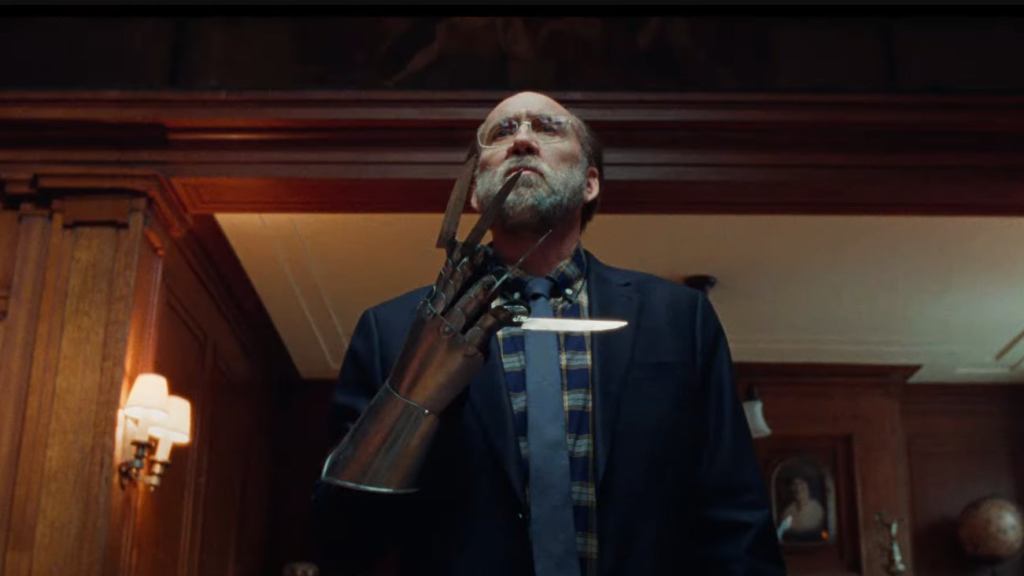
A24 has premiered the first trailer for “Dream Scenario,” the new surreal R-rated comedy starring Nicolas Cage which recently launched at the Toronto International Film Festival.
Writer/director Kristoffer Borgli (“Sick Of Myself”) is behind the film which follows a hapless family man and inconspicuous academic named Paul Matthews (Nicolas Cage). Paul finds his life turned upside down when millions of strangers suddenly start seeing him in their dreams and he is thrust into the spotlight.
But when his nighttime appearances take a nightmarish turn, Paul is forced to navigate his newfound stardom. The film co-stars Julianne Nicholson, Michael Cera, Tim Meadows, Dylan Gelula, and Dylan Baker.
“Beau Is Afraid” filmmaker Ari Aster produces the film alongside Lars Knudsen, Tyler Campellone and Jacob Jaffke. Benjamin Loeb (“Mandy,” “After Yang”) is doing the cinematography and Arcade Fire musician Owen Pallett (aka Final Fantasy) is handling the music.
“Dream Scenario” is slated to be released in cinemas on November 10th.
Sony Pictures has premiered the official trailer for Gabe Polsky’s gritty western “Butcher’s Crossing” based on John Williams’ 1960 novel and starring Oscar winner Nicolas Cage.
The story is a tale of buffalo hunters in the Old West. Will Andrews (Fred Hechinger) is a naive Harvard student who heads west in 1874 to fulfil his dream of seeing the country and living off the land.
He agrees to fund a dangerous but potentially lucrative expedition to Colorado led by Miller (Cage), a mysterious but experienced frontiersman obsessed with a near-mythological buffalo herd he once glimpsed in a secluded valley in the Rockies.
Their crew must survive an arduous journey where the harsh elements and Miller’s single-minded resolve to slaughter every buffalo in the enormous herd will test everyone’s resolve, leaving their sanity on a knife’s edge.
Xander Berkeley, Rachel Keller, with Jeremy Bobb and Paul Raci co-star in the film which boasts a screenplay by Gabe Polsky & Liam Satre Meloy. Polsky, Will Clarke, Andy Mayson, Molly Conners are producing.
The film will be released in select movie theaters on October 20th.
Featuring: Jennifer Jason Leigh, Campbell Scott, Matthew Broderick, Peter Gallagher, Jennifer Beals, Andrew McCarthy and Wallace Shawn
Dorothy Parker:“Razors pain you, rivers are damp, acids stain you, drugs cause cramp. Guns aren’t lawful, nooses give, gas smells awful; you might as well live.”
Critical Commentary
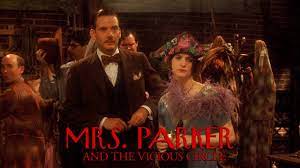
In the realm of cinematic storytelling, there exist films that transcend the boundaries of mere entertainment to become profound works of art, leaving an indelible mark on the viewer’s mind. One such cinematic gem is “Mrs. Parker and the Vicious Circle,” a 1994 biographical drama directed by Alan Rudolph. This film delves into the life and times of Dorothy Parker, a prolific American writer, and her involvement with the literary and social elite of the early 20th century. Through masterful storytelling, captivating performances, and stunning visuals, “Mrs. Parker and the Vicious Circle” manages to encapsulate the essence of an era marked by wit, cynicism, and creative brilliance. In this essay, we will explore the film’s narrative, its portrayal of characters, its historical accuracy, and its significance in the broader context of cinema.
At its core, “Mrs. Parker and the Vicious Circle” is a biographical drama that chronicles the life of Dorothy Parker, played brilliantly by Jennifer Jason Leigh. The film primarily focuses on Parker’s involvement with the celebrated Algonquin Round Table, a group of writers, critics, and intellectuals who gathered at the Algonquin Hotel in New York City during the 1920s. The film also explores Parker’s personal life, her tumultuous relationships, and her struggles with alcoholism.
The narrative is framed around Parker’s interview with a journalist named Joe Mitchell (played by Matthew Broderick), which takes place in 1958. As Parker reminisces about her past, the film unfolds in a non-linear fashion, seamlessly weaving between different time periods. This narrative structure allows the audience to delve into Parker’s memories, experiences, and relationships, providing a rich and multifaceted portrait of the character.
One of the film’s strengths lies in its ability to capture the essence of the Jazz Age and the Roaring Twenties. The dialogue is sharp, witty, and acerbic, mirroring the intellectual banter and repartee that characterized the Algonquin Round Table gatherings. The film’s narrative tone perfectly reflects the cynicism and disillusionment that pervaded the era, making it a poignant commentary on the cultural and social climate of the time.
The success of “Mrs. Parker and the Vicious Circle” is largely attributed to its outstanding cast, with Jennifer Jason Leigh delivering a career-defining performance as Dorothy Parker. Leigh’s portrayal is a tour de force, capturing Parker’s sharp wit, vulnerability, and complexity with remarkable nuance. She not only physically resembles Parker but also embodies her spirit, making the character relatable and engaging for the audience.
The supporting cast also shines, with actors like Campbell Scott, Peter Gallagher, and Matthew Broderick delivering strong performances as notable figures from Parker’s life, including Robert Benchley, George S. Kaufman, and Joe Mitchell, respectively. These portrayals contribute to the authenticity and depth of the film’s characters, creating a captivating ensemble that brings the historical figures to life.
The chemistry and camaraderie among the characters are palpable, particularly during the scenes set at the Algonquin Hotel. These interactions showcase the intellectual sparring, camaraderie, and occasional conflicts that characterized the relationships within the Algonquin Round Table, providing insight into the dynamics of this renowned literary circle.
A critical aspect of any biographical film is its adherence to historical accuracy, and “Mrs. Parker and the Vicious Circle” excels in this regard. The film meticulously recreates the period’s atmosphere, fashion, and societal norms, immersing the audience in the world of the Roaring Twenties. The set design, costumes, and cinematography transport viewers to the Algonquin Hotel and other iconic locations of the era.
Furthermore, the film accurately portrays the personalities and idiosyncrasies of the real-life individuals it depicts. Dorothy Parker’s biting wit and her struggles with alcoholism are portrayed with sensitivity and realism. The film also explores the complex relationships between Parker and her contemporaries, providing a nuanced portrayal of the emotional and intellectual connections that bound them together.
In addition to the character portrayals, the film delves into the social and political issues of the time, including the Prohibition era and the effects of the Great Depression. It does not shy away from depicting the personal and professional challenges faced by writers and artists during this tumultuous period in American history.
“Mrs. Parker and the Vicious Circle” holds a special place in the cinematic landscape due to its unique approach to storytelling and its exploration of intellectualism and creativity. The film defies conventional biographical narratives by using a non-linear structure and weaving together moments from different phases of Parker’s life. This approach allows the audience to gain a deeper understanding of the character’s complexities and the enduring impact of her work.
Moreover, the film is a testament to the power of words and wit. It celebrates the art of conversation and the written word as essential forms of human expression. The sharp, intelligent dialogue serves as a reminder of the enduring relevance of Parker’s work and the literary contributions of her contemporaries.
“Mrs. Parker and the Vicious Circle” also offers a thought-provoking exploration of the relationship between art and personal sacrifice. It raises questions about the toll that creativity and intellectual pursuits can take on an individual’s personal life and mental well-being. This theme resonates with artists and writers across generations, making the film’s message timeless and universal.
In conclusion, “Mrs. Parker and the Vicious Circle” is a cinematic masterpiece that transcends the boundaries of biographical drama. Its compelling narrative, exceptional character portrayals, historical accuracy, and cinematic significance make it a must-watch for cinephiles, history enthusiasts, and anyone with an appreciation for the written word.
Through its meticulous attention to detail and its ability to capture the spirit of an era, the film not only pays homage to the literary giants of the past but also invites viewers to reflect on the enduring themes of creativity, intellectualism, and the human condition. Jennifer Jason Leigh’s captivating performance as Dorothy Parker remains a highlight of her career and a testament to the power of great acting.
“Mrs. Parker and the Vicious Circle” is a cinematic gem that continues to resonate with audiences, reminding us of the indomitable spirit of writers and intellectuals who shaped the course of American literature and culture. It stands as a fitting tribute to the enduring legacy of Dorothy Parker and the literary luminaries of the Jazz Age, leaving an indelible mark on the world of cinema.
Special Features
1080P High-definition presentation on Blu-ray from a 2K scan
Audio Commentary with director/co-writer Alan Rudolph
Playing Real People – Interview with actor Campbell Scott (2023)
A Reflection of a Reflection – Interview with director/co-writer Alan Rudolph (2023)
Casting Human Complexities – Interview with casting director Pam Dixon (2023)
Would You Kindly Direct Me To Hell? The Infamous Dorothy Parker– documentary
Interview with composer Mark Isham (2006)
Archival interview with director Alan Rudolph (1994)
Theatrical Trailer
TV Spot
Aspect Ratio 2.35:1
Audio English LPCM 2.0 Stereo
Optional English HOH Subtitles
Limited Edition slipcase on the first 1500 copies with unique artwork
A final trailer has now been released for “Godzilla” (2014) and “Rogue One: A Star Wars Story” director Gareth Edwards’ new high-concept sci-fi feature “The Creator”.
Set amidst a future war between the human race and the forces of artificial intelligence, Joshua (John David Washington) is a hardened ex-special forces agent grieving the disappearance of his wife (Gemma Chan).
He is soon recruited to hunt down and kill the Creator, the elusive architect of advanced AI who has developed a mysterious weapon with the power to end the war – and mankind itself.
Joshua and his team of elite operatives journey across enemy lines, into the dark heart of AI-occupied territory… only to discover the world-ending weapon he has been instructed to destroy is an AI in the form of a young child.
Ken Watanabe, Sturgill Simpson, Allison Janney and newcomer Madeleine Yuna Voyles also star in the film which debuts in cinemas on September 29th.
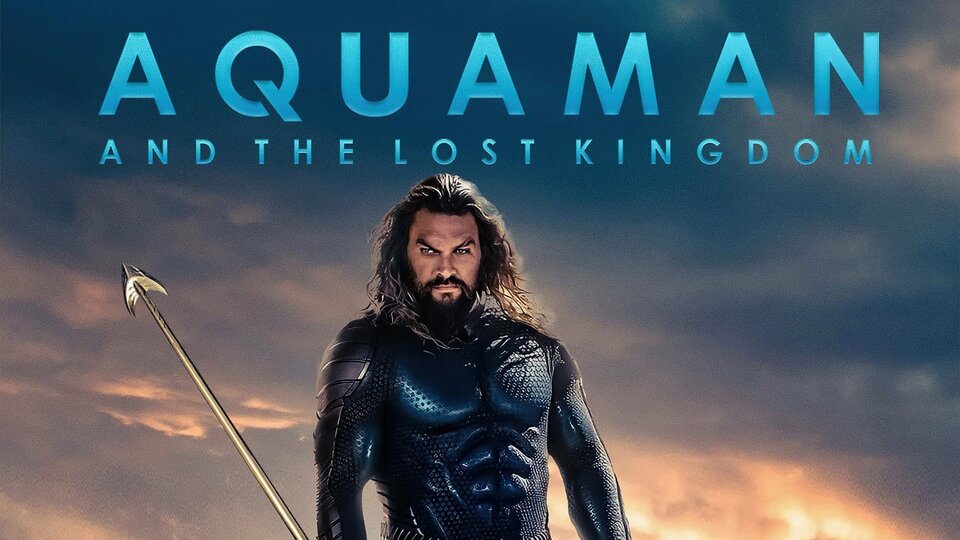
Warner Bros. Pictures has now released the first trailer for James Wan’s big-budget fantasy epic “Aquaman and the Lost Kingdom”.
Returning to the roles they originated are Jason Momoa as Arthur Curry/Aquaman, Patrick Wilson as his half-brother Orm, Amber Heard as Mera, Yahya Abdul-Mateen II as Black Manta, Nicole Kidman as Atlanna, Dolph Lundgren as King Nereus and Randall Park as Dr. Stephen Shin.
Having failed to defeat Aquaman the first time, Black Manta, still driven by the need to avenge his father’s death, will stop at nothing to take Aquaman down once and for all.
This time Black Manta is more formidable than ever before, wielding the power of the mythic Black Trident, which unleashes an ancient and malevolent force.
To defeat him, Aquaman will turn to his imprisoned brother Orm, the former King of Atlantis, to forge an unlikely alliance. Together, they must set aside their differences in order to protect their kingdom and save Aquaman’s family, and the world, from irreversible destruction.
Wan directs the film produced by Peter Safran, Wan and Rob Cowan. The screenplay is by David Leslie Johnson-McGoldrick fom a story by the writer along with Wan, Momoa & Thomas Pa’a Sibbett.
“Aquaman and the Lost Kingdom” is set to open in theaters worldwide beginning December 20th.
Featuring: Nick Nolte, Mary McDonnell, Ed O’Neill, J. T. Walsh, Alfre Woodard and Shaquille O’Neal
Pete Bell:“Dwayne, you can get through college half-assed. Richard, you can get through LIFE half-assed. But I’ll guarantee you boys one thing: sure as hell, I’ll guarantee you this: you cannot win half-assed!”
Critical Commentary
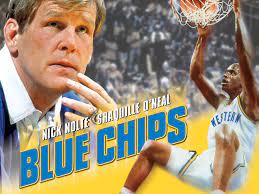
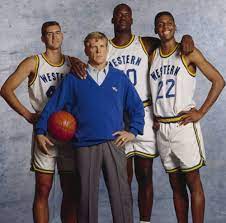
“Blue Chips” is a 1994 sports drama film directed by William Friedkin and written by Ron Shelton. The movie is a gripping exploration of the world of college basketball, shedding light on the ethical dilemmas and intense pressures faced by athletes, coaches, and institutions involved in the game. Starring Nick Nolte, Shaquille O’Neal, and Anfernee “Penny” Hardaway, “Blue Chips” delves into issues such as recruiting violations, the corrupting influence of money in college sports, and the sacrifices made in the relentless pursuit of excellence.
In this analysis, we will dissect the film “Blue Chips,” examining its portrayal of the world of college basketball, the moral dilemmas faced by its characters, and the broader implications of the issues it raises.
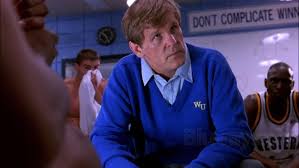
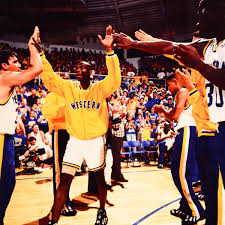
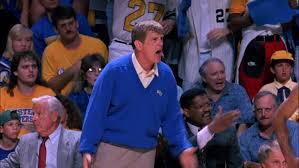
“Blue Chips” revolves around the life of Pete Bell (played by Nick Nolte), a renowned college basketball coach facing tremendous pressure to maintain his team’s success. His team, the Western University Dolphins, has been a perennial contender for the NCAA championship, but Pete is feeling the heat to keep winning, which leads him down a morally ambiguous path. Pete’s world collides with the harsh realities of college basketball recruiting, where under-the-table payments, promises of luxury cars, and other enticements are used to lure top high school players. He is introduced to boosters like Happy (played by J.T. Walsh), who represent the dark underbelly of college sports, using their wealth to secure recruits for their alma mater. As Pete grapples with his own ethical principles, he faces immense temptation as he tries to secure the talents of a blue-chip recruit, Neon Boudeaux (played by Shaquille O’Neal), who is an incredibly talented but academically challenged athlete. In the midst of this ethical turmoil, Pete also recruits Ricky Roe (played by Matt Nover), who is persuaded with a new car, despite his own initial reluctance. Pete’s struggle comes to a head when he contemplates paying the talented high school player Butch McRae’s father to ensure his commitment to Western University. However, McRae’s father declines the offer, emphasizing the importance of his son’s education over material wealth.
The film also introduces us to another high school basketball star, Penny Hardaway (played by Anfernee “Penny” Hardaway), who initially refuses Pete’s offers due to the corrupt system but ultimately chooses to play for Western University, putting his family’s financial needs above ethical concerns.
“Blue Chips” unearths the murky world of college basketball recruiting, where talented young athletes are often lured with promises of riches, cars, and other incentives. The film highlights the ethical quandaries faced by coaches like Pete Bell, who must navigate this treacherous terrain to stay competitive. This theme reflects real-life scandals that have plagued college sports for decades, exposing the conflicts between athletic success and ethical conduct.
Pete Bell serves as the moral compass of the film. His internal struggle is emblematic of the moral dilemmas faced by coaches and institutions in the pursuit of athletic glory. The film questions whether success can ever justify compromising one’s principles. Pete grapples with these questions as he is tempted to make illegal payments to secure top recruits, mirroring the ethical challenges many in the industry face.
“Blue Chips” explores the immense pressures placed on coaches and players in college sports. The sacrifices made by athletes, their families, and coaches are depicted vividly. For players like Neon Boudeaux and Ricky Roe, the promise of financial rewards can outweigh ethical concerns, highlighting the vulnerability of young athletes in the system.
The film underscores the tension between education and athletic talent. McRae’s father’s refusal to accept payment for his son’s commitment to a university emphasizes the importance of academics. In contrast, Penny Hardaway’s decision to join Western University due to his family’s financial needs raises questions about the exploitation of student-athletes and their families.
“Blue Chips” sheds light on the role of boosters, wealthy alumni who often exert undue influence on college athletic programs. Happy, the booster character in the film, represents the corrupting influence of money in college sports, where the pursuit of success can lead to morally compromising situations.
The film portrays coaches not as infallible heroes but as individuals grappling with their own flaws and vulnerabilities. Pete Bell’s character, in particular, is multifaceted, highlighting the complexity of his decisions and the toll that the high-stakes world of college basketball takes on him.
“Blue Chips” remains relevant today as it continues to be cited in discussions about the ethics of college sports. It serves as a cautionary tale, reminding us of the ethical pitfalls that coaches, players, and institutions can face when the pursuit of athletic excellence overshadows principles.
In the years following the film’s release, the NCAA implemented various reforms aimed at addressing recruiting violations, including stricter rules on financial incentives and benefits for student-athletes. While these reforms have made strides in cleaning up college sports, the fundamental challenges and ethical dilemmas explored in “Blue Chips” persist.
The film also contributed to the conversation around the exploitation of student-athletes. The ongoing debate over whether college athletes should be compensated for their talents, as well as recent legislative changes allowing student-athletes to profit from their likeness, highlights the enduring relevance of the issues raised in “Blue Chips.”
Over the years, “Blue Chips” has achieved cult status in the realm of sports films. It’s often referenced and quoted by sports enthusiasts, particularly in discussions about the moral complexities of college athletics. The film’s portrayal of the dark side of recruiting and the pressures faced by coaches and players has left a lasting impression on audiences. It’s not uncommon to hear phrases like “I got a couple of tractor-trailers full of cash!” or “My ass is on the line!” in the context of college basketball discussions, highlighting the film’s memorable lines and characters.
Furthermore, the casting of real-life basketball stars, including Shaquille O’Neal and Anfernee “Penny” Hardaway, added authenticity to the film. Their presence served to underscore the blurred lines between fiction and reality in the world of college basketball recruiting.
While “Blue Chips” was released in 1994, its themes and ethical dilemmas remain highly relevant in today’s sports landscape. The controversies surrounding college sports have not disappeared; if anything, they have become more pronounced. Issues such as the “pay-for-play” debate, the exploitation of student-athletes, and recruiting scandals continue to make headlines.
One notable development since the film’s release is the introduction of the NCAA’s Name, Image, and Likeness (NIL) rules, which allow student-athletes to profit from their personal brands. This represents a significant shift in the college sports landscape and addresses some of the inequities and ethical concerns raised in “Blue Chips.”
However, the film’s fundamental questions about the role of money, ethics, and education in college sports remain largely unresolved. The allure of financial incentives, the pressure to win at all costs, and the challenges faced by young athletes and their families persist.
“Blue Chips” is more than just a sports movie; it is a thought-provoking exploration of the ethical dilemmas and pressures faced by those involved in college basketball. Through its compelling characters and gripping storyline, the film forces viewers to confront the moral complexities of the world of college athletics.
As we reflect on “Blue Chips” nearly three decades after its release, we are reminded of the enduring issues it raises in the world of college sports. The film continues to be a touchstone in discussions about the corrupting influence of money, the sacrifices made in the pursuit of athletic excellence, and the ethical choices faced by coaches, players, and institutions. Ultimately, “Blue Chips” challenges us to consider where we draw the line between competition and integrity in the world of college sports, a question that remains as relevant today as it was when the film first hit the screens in 1994.
Technical Commentary
Video
Presented in an aspect ratio of 1.78:1, encoded with MPEG-4 AVC and granted a 1080p transfer, Blue Chips arrives on Blu-ray courtesy of Via Vision Entertainment. The release is sourced from an older but very solid master that was supplied by Paramount Pictures. In case you are wondering whether it is the same master that was used for the U.S. release of Blue Chips, the answer is yes, it is. Delineation, clarity, and depth are very pleasing throughout the entire film. There are only a few spots where slightly bigger than usual fluctuations reveal flatness that is usually associated with weaker older masters.
Audio
There are two standard audio tracks on this Blu-ray release: English LPCM 2.0 and English DTS-HD Master Audio 5.1. Optional English SDH subtitles are provided for the main feature.
Special Features
“Finding Your Way” – in this exclusive new program, editor Robert K. Lambert discusses the early stages of his career, his approach to editing and composition, relationship with William Friedkin and work on Blue Chips. There are some particularly interesting observations about the editing of Sorcerer as well. In English, not subtitled. (14 min).
“Painting Blue” – in this exclusive new program, director of photography Tom Priestly Jr. explains how he fell in love with filmmaking and how his career evolved over the years, and discusses his work with William Friedkin on Blue Chips. Also, there are plenty of interesting observations about the making of The Exorcist and The French Connection and the importance of proper lighting. In English, not subtitled. (16 min).
“We Don’t Buy Athletes: Illegal Recruiting and the NCAA” – in this exclusive new program, sports journalist Ben Strauss discusses the politics and business interests that have infiltrated college basketball in America. In English, not subtitled. (9 min).
Commentary – in this exclusive new audio commentary, critic Bilge Ebiri discusses the production of Blue Chipsand the many ways in which the film recreates real personalities, practices, and even business interests that define college basketball in America.
Trailer – a vintage trailer for Blue Chips. In English, not subtitled. (3 min).
The one-minute social media video parodies the famed ad, which has been playing ahead of movies at AMC locations for two years.
In the spot, the infamous Jigsaw puppet known as ‘Billy’ makes its way into a cinema and sits down, whilst a Jigsaw-esque voice makes fun of lines from the original commercial.
This includes lines like: “We come to this place for a reawakening. We come to the theaters to scream”. At the same time, the puppet is watching scenes from the franchise and filmed in a way akin to the commercial.
The viral spot was originally posted on the film’s official Twitter account but has since been pulled, the reasons for its removal unknown. The clip is still in circulation both on social media and YouTube.
The new film is set between the events of Saw I and II, a sick and desperate John Kramer (Tobin Bell) travels to Mexico for a risky and experimental medical procedure in hopes of a miracle cure for his cancer – only to discover the entire operation is a scam to defraud the most vulnerable.
He returns to his work, turning the tables on the con artists in his signature visceral way through devious and ingenious traps. Shawnee Smith is also back as Amanda Young.
The long-in-the-works horror film “Dark Harvest” is finally set to arrive with the trailer launching today.
The story unfolds in a cursed town where the annual harvest becomes a brutal battle for survival. On Halloween 1963, Sawtooth Jack, a terrifying legend, rises from the cornfields, threatening the town’s children.
Groups of boys unite to defeat the murderous scarecrow before midnight. Richie, a rebellious outcast, joins the run, motivated by his brother’s previous victory.
As the hunt progresses, Richie makes a shocking discovery and faces a pivotal choice to break the relentless cycle.
Casey Likes, Emyri Crutchfield, Dustin Ceithamer, Elizabeth Reaser, Jeremy Davies and Luke Kirby co-star. “Dark Harvest” premieres on VOD on October 13th.
Netflix has released the official first trailer for Mike Flanagan’s fifth and final series for the streamer – “The Fall of the House of Usher”.
Much like his “The Haunting of Hill House” and “The Haunting of Bly Manor” series, which take elements from multiple works of authors Shirley Jackson and Henry James respectively, ‘Usher’ will utilise elements from various stories by Edgar Allan Poe.
The eight-episode horror drama will follow the reclusive Roderick (Bruce Greenwood) and his twin Madeline (Mary McDonnell) as they do anything to help their family business, Fortunato Pharmaceuticals, become the pinnacle of the industry.
The Usher family’s dark secrets start to come to the surface when a mysterious woman begins to haunt them. The series also stars Mark Hamill, Carla Gugino, Rahul Kohli, Willa Fitzgerald, Henry Thomas, Zach Gilford, and Kate Siegel, among others.
“The Fall of the House of Usher” will premiere in full on Netflix on October 12th.
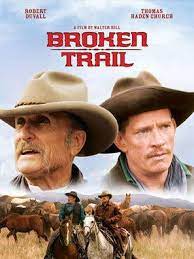
Featuring: Robert Duvall, Thomas Haden Church, Greta Scacchi, Gwendoline Yeo, Chris Mulkey, Rusty Schwimmer, Scott Cooper, Donald Fong and James Russo
Prentice Ritter:“Without marriage and women we’d all have been drunk, shot ourselves to death, or died of the clap.”
Critical Commentary
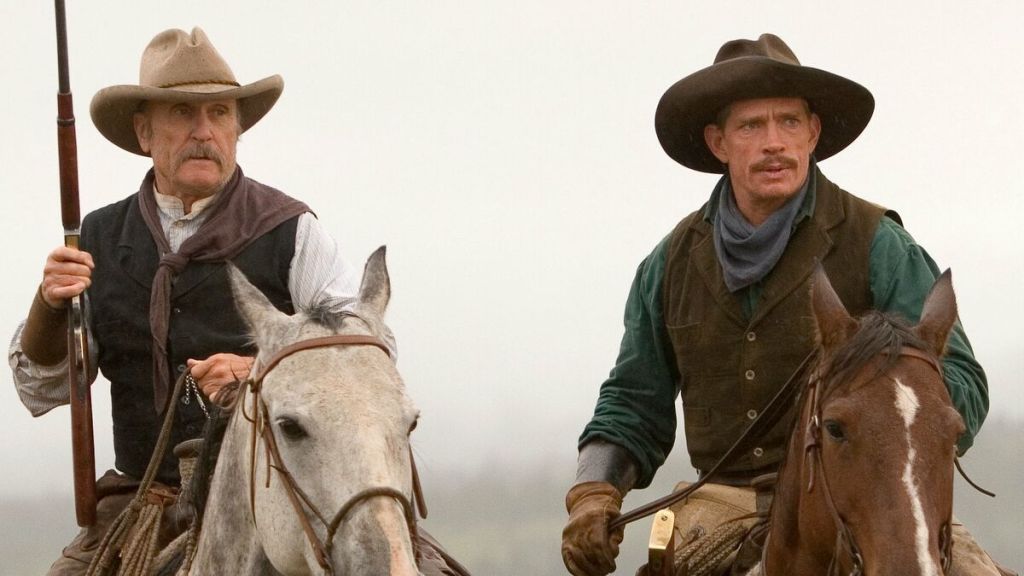
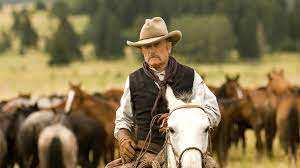
In the vast landscape of television, there are some shows that transcend mere entertainment to become unforgettable experiences. “Broken Trail,” a limited television series that aired in 2006, is undoubtedly one of those gems. This western drama, directed by Walter Hill and starring Robert Duvall and Thomas Haden Church, takes viewers on a captivating journey through the American frontier, exploring themes of redemption, resilience, and human connection. With its stunning cinematography, exceptional performances, and thought-provoking narrative, “Broken Trail” has left an indelible mark on the world of television.
Set against the backdrop of the late 19th century, “Broken Trail” transports viewers to the sprawling landscapes of the American West. The series follows the story of Print Ritter (Robert Duvall), a grizzled cowboy, and his nephew Tom Harte (Thomas Haden Church), as they embark on a journey to drive a herd of horses from Oregon to Wyoming. However, their journey takes an unexpected turn when they rescue five Chinese girls from the clutches of human traffickers. As Ritter and Harte take on the responsibility of protecting and guiding these girls to safety, they find themselves on a path of redemption and self-discovery.
At the heart of “Broken Trail” are the dynamic performances of Robert Duvall and Thomas Haden Church. Duvall’s portrayal of Print Ritter is a masterclass in subtlety and depth. With weathered eyes and a soulful demeanour, Duvall captures the essence of a man burdened by his past, seeking to find purpose in a world that has often been unforgiving. Thomas Haden Church’s depiction of Tom Harte is equally praiseworthy. His character’s transformation from a somewhat reckless and carefree individual to a compassionate protector is depicted with a nuanced approach that adds layers to the narrative.
The supporting cast, including the five Chinese girls, further enriches the series with their individual stories and struggles. Their presence underscores the diversity of experiences during that era and sheds light on the discrimination and hardship faced by immigrants in the American West. Gwei Lun-Mei, who portrays Sun Foy, particularly stands out with her poignant portrayal of a young woman determined to escape the shackles of her past.
Cinematic Excellence
The visual aspects of “Broken Trail” are nothing short of breathtaking. The cinematography by Lloyd Ahern II captures the vastness of the landscape and the rugged beauty of the West. From the sweeping shots of desolate deserts to the tranquil moments by the campfire, each frame is meticulously composed to evoke a sense of both grandeur and intimacy. The attention to detail in recreating the historical setting adds authenticity to the experience, transporting viewers back in time.
At its core, “Broken Trail” is a story about redemption and the power of human connection. The journey of Print Ritter and Tom Harte isn’t just about herding horses; it’s a journey of self-discovery and healing. Through their interactions with the rescued Chinese girls, they find a renewed sense of purpose. As the unlikely group faces numerous challenges, including external threats and internal conflicts, their bond deepens, highlighting the resilience of the human spirit.
The series also delves into the themes of justice, morality, and cultural understanding. The portrayal of the Chinese characters and their struggle for survival in a hostile environment sheds light on the racial tensions of the time. The characters’ actions are driven by a desire for justice and a refusal to succumb to prejudice, which resonates with contemporary discussions about equality and social justice.
“Broken Trail” unfolds at a deliberate pace, allowing the characters’ development and relationships to take center stage. The episodic structure allows for a more nuanced exploration of each character’s backstory and motivations, creating a richer viewing experience. While some might find the pacing slow, it serves a purpose in building tension and emotional resonance. The deliberate pacing enhances the impact of the climactic moments and reinforces the thematic elements of redemption and connection.
Despite airing over a decade ago, “Broken Trail” continues to have a lasting impact on audiences. Its portrayal of complex characters, rich storytelling, and exploration of historical and social themes make it a series that remains relevant and thought-provoking. The performances of Duvall and Church, combined with the captivating visuals, contribute to its status as a timeless piece of television.
Despite its historical setting, “Broken Trail” remains relevant in today’s world due to its exploration of themes that transcend time. The issues of discrimination, human trafficking, and the struggle for justice are sadly still present in modern society. The series encourages viewers to reflect on the progress that has been made and the work that remains to be done in order to create a more equitable and compassionate world. By shedding light on the past, “Broken Trail” serves as a reminder of the importance of acknowledging history and its impact on the present.
One of the standout aspects of “Broken Trail” is its embrace of diversity within its characters. The series provides a window into the experiences of individuals from different cultural backgrounds and highlights their shared humanity. The relationship between the cowboys and the Chinese girls serves as a bridge between cultures, emphasizing the potential for understanding and unity in the face of adversity. This portrayal is a powerful reminder of the strength that comes from embracing diversity and breaking down the barriers that divide us.
While the majority of the main characters are male, “Broken Trail” also challenges traditional gender roles and expectations. The five Chinese girls, despite being victims of human trafficking, are not portrayed as mere damsels in distress. Instead, they demonstrate resilience, agency, and the ability to contribute meaningfully to the group’s survival. This subversion of gender stereotypes adds depth to the narrative and underscores the series’ commitment to portraying multifaceted characters.
In a refreshing departure from many other television dramas, “Broken Trail” consciously avoids incorporating a romantic subplot. This choice allows the series to focus on the bonds of friendship, family, and shared experiences without resorting to predictable romantic clichés. By doing so, “Broken Trail” highlights the complexity of human relationships beyond romantic entanglements, providing a more authentic representation of the characters’ journeys.
The technical aspects of “Broken Trail” contribute significantly to its immersive quality. The costume design, set decoration, and attention to historical accuracy create a vivid and authentic depiction of the late 19th century. Every detail, from the worn leather of the cowboys’ attire to the bustling streets of a Chinese settlement, adds to the series’ visual richness.
In addition, the musical score by David Mansfield complements the on-screen narrative by capturing the emotional nuances of each scene. The evocative melodies enhance the drama’s impact and further draw viewers into the characters’ experiences. The synergy between the visual and auditory elements results in a cohesive and immersive storytelling experience.
“Broken Trail” stands as a testament to the power of television to tell compelling stories that resonate deeply with audiences. Its exploration of themes such as redemption, human connection, justice, and diversity elevates it beyond the boundaries of the western genre. The exceptional performances, breathtaking cinematography, and thoughtful character development make it a series that continues to leave a lasting impression on viewers.
As television continues to evolve, “Broken Trail” remains a reminder of the enduring importance of well-crafted narratives that explore the complexities of the human experience. Through its portrayal of characters who confront their pasts, forge meaningful relationships, and challenge societal norms, the series encourages viewers to reflect on their own lives and the world around them. “Broken Trail” is more than just a television show; it is a work of art that enriches the medium and the lives of those who have the privilege to watch it.
In a world where entertainment often competes for attention, “Broken Trail” serves as a poignant reminder that some stories are timeless, and their impact only deepens with the passage of time. As the series continues to be discovered by new audiences, its legacy is sure to endure, inspiring conversations about history, humanity, and the enduring quest for redemption and connection.
The legacy of “Broken Trail” extends beyond its initial airing, leaving an indelible mark on both television history and the hearts of its viewers. Its influence can be seen in subsequent works that strive for the same level of depth and authenticity. The series serves as an inspiration for storytellers to explore complex characters, tackle relevant themes, and create narratives that resonate on a profound level.
Furthermore, “Broken Trail” has the power to spark conversations and discussions about historical accuracy, cultural representation, and the ongoing relevance of the issues it addresses. As society grapples with questions of identity, justice, and equality, the series provides a historical lens through which to examine these topics, fostering dialogue and understanding.
The enduring appeal of “Broken Trail” lies in its ability to tap into universal aspects of the human experience. The struggles faced by the characters—seeking redemption, forming connections, and confronting prejudice—are timeless themes that resonate across generations. By portraying these struggles in the context of the late 19th century American West, the series invites viewers to reflect on the parallels to their own lives and the ways in which society has evolved.
“Broken Trail” exemplifies the potential of the limited series format to tell a complete and impactful story within a concise timeframe. Unlike long-running shows that might lose focus over multiple seasons, the limited series format allows for a tightly woven narrative that maintains its intensity from start to finish. This approach lends itself to a more deliberate and intentional exploration of characters and themes, resulting in a more satisfying viewing experience.
As the television landscape continues to expand and diversify, the success of “Broken Trail” serves as a reminder that quality storytelling can be found in various formats and genres. It encourages creators to consider the merits of crafting stories that are tailored to the specific needs of the narrative, rather than conforming to predetermined structures.
Television has the unique ability to bridge gaps of time, culture, and experience. “Broken Trail” serves as a prime example of how the medium can shed light on lesser-known aspects of history and diverse perspectives. By immersing viewers in the lives of characters from different backgrounds, the series fosters empathy and a deeper understanding of the challenges and triumphs faced by individuals who existed outside of mainstream narratives.
In a globalized world where connectivity is increasingly emphasized, “Broken Trail” demonstrates the potential of television to contribute to cross-cultural understanding and dialogue. By presenting stories that transcend borders and resonate with audiences across the globe, television has the power to foster connections and promote empathy on a global scale.
Conclusion: A Lasting Legacy
“Broken Trail” is a testament to the enduring impact of television as a medium for storytelling and cultural exploration. Its masterful portrayal of characters, themes, and historical settings has solidified its place as a timeless piece of art that continues to resonate with audiences. The series challenges viewers to reflect on their own lives, the world around them, and the ways in which the past informs the present.
As the years go by, “Broken Trail” remains a beacon of storytelling excellence, inviting new generations to experience its beauty, depth, and emotional resonance. The series’ legacy is a reminder that television has the power to not only entertain but also inspire, educate, and provoke meaningful discussions about the human condition. Through its poignant portrayal of redemption, connection, and the transformative journey of its characters, “Broken Trail” secures its place as a true gem in the tapestry of television history.
In the ever-evolving landscape of television, “Broken Trail” stands as a testament to the enduring power of storytelling. Its masterful portrayal of characters grappling with their pasts, its exploration of themes such as redemption and human connection, and its captivating cinematography all contribute to its status as a remarkable television series. As viewers embark on the emotional journey alongside Print Ritter, Tom Harte, and the five Chinese girls, they are reminded of the resilience of the human spirit and the transformative power of compassion. “Broken Trail” is not merely a television show; it is an immersive experience that leaves an indelible mark on the heart and mind.
Technical Commentary
Video
“Broken Trail” arrives on Blu-ray with a very good 1080p, 1.78:1 framed high definition transfer. This is a most impressive image. Some grain is present over the movie, and the print exhibits some very minor blemishes, notably black and white speckles, but these are only visible on rare occasions. The picture reveals excellent detail: the worn leather of saddles and holsters; frayed rope; trail-depleted clothing; lines and finer nuances seen in human faces; and even the horse’s manes all look authentic. This transfer exhibits wonderful and remarkably clear imagery from its first frame to its last. Black levels are nearly impeccable, as are flesh tones.
Audio
Presented in a lossless Dolby TrueHD 5.1 soundtrack, Broken Trail is almost as good a listen as it is a watch. The film’s score permeates the front of the soundstage but doesn’t blend into the rears with authority, although on occasion it rings true from the back. It’s decidedly front-heavy, but it sounds great. The stampeding of horses, combined with the old west themed music makes for a pleasant, “authentic” Western soundtrack.
Special Features
Broken Trail – The Making of a Legendary Western (HD 23:12)
Tristar Pictures and Spyglass Media has premiered the first trailer for the Eli Roth-directed horror slasher feature “Thanksgiving” which opens in cinemas in November.
The project is based on the faux trailer that Roth made sixteen years ago for “Grindhouse” which follows a killer in a pilgrim costume.
Said killer visits a small town in Massachusetts with the hopes of creating a carving board out of the town’s Turkey-loving inhabitants.
Patrick Dempsey, Nell Verlaque, Addison Rae, Jalen Thomas Brooks and Milo Manheim co-star. Roth is directing and producing the project, while Jeff Rendel is writing the screenplay. Roger Birnbaum also produces.
AMC+ has premiered the teaser trailer for “Monsieur Spade,” a new Clive Owen-led neo-noir crime drama that hails from multiple creative legends and co-creators Scott Frank and Tom Fontana.
The six-episode series serves as something of a decades-later follow-up to Dashiell Hammett’s iconic novel “The Maltese Falcon” with Owen taking on the role of hard-boiled private detective Sam Spade previously played on screen by Humphrey Bogart.
In the series, Spade is now 60 and living as an expat in the south of France in 1963. His attempts at a quiet retirement are interrupted by the murder of six nuns at a local convent.
The investigator is out of his element and, when rumors implicate a young child with purported supernatural abilities, Spade is forced to reconsider everything that he thinks he knows.
The cast includes Cara Bossom, Louise Bourgoin, Denis Ménochet, Stanley Weber, Chiara Mastroianni, Jonathan Zaccaï, Rebecca Root and Matthew Beard. It’s expected the series will air in early 2024.
Paramount+ has now unveiled the full teaser trailer for its high-profile western series “Lawmen: Bass Reeves”, the latest series from “Yellowstone,” “1923,” “Tulsa King” and “Special Ops: Lioness” producer Taylor Sheridan.
David Oyelowo stars in the eight-episode series based on the life of Bass Reeves, the legendary African-American lawman of the wild west who worked in the post-Reconstruction era as a federal peace officer in the Indian Territory.
Policing the entire Oklahoma territories, he captured over 3,000 of the most dangerous criminals without ever being wounded. In a job with a high mortality rate, Reeves survived into old age – dying of natural causes as one of the greatest frontier heroes in American history.
Created by showrunner Chad Feehan, the series will premiere on the Paramount+ streaming service later this year. Dennis Quaid, Donald Sutherland, Garrett Hedlund, Shea Whigham, Barry Pepper, Dale Dickey, Lauren E. Banks, Forrest Goodluck, Grantham Coleman and Demi Singleton co-star.
Feehan, Oyelowo, Sheridan, David C. Glasser, Jessica Oyelowo, David Permut, Ron Burkle, Bob Yari and David Hutkin all executive produce.
The project marks a rare project focused on Reeves who, on screen, has mostly been limited to supporting or guest star appearances. Delroy Lindo, Colman Domingo, Jamal Akakpo and Jaleel White have all previously played him.
“Lawmen: Bass Reeves” premieres on Paramount+ on November 5th.
The trailer has now arrived for Jeff Nichols’ bikie drama “The Bikeriders” starring Tom Hardy, Austin Butler, Jodie Comer and Michael Shannon.
Inspired by Danny Lyon’s book of photography, the story unfolds in the 1960s. Kathy, a strong-willed member of the Vandals who is married to a wild, reckless bike rider named Benny.
She recounts the club’s evolution over the course of a decade from a group of local outsiders led by the strong Johnny to something more dangerous and sinister.
At the same time, she feels she must compete with Johnny for Benny’s attention. Soon, all three are forced to make choices about their loyalty to the club and to each other.
The project marks “Take Shelter” and “Midnight Special” director Nichols’ long-awaited return to filmmaking a full seven years since his last effort with 2016’s “Loving”.
Mike Faist, Boyd Holbrook, Damon Herriman, Beau Knapp, Emory Cohen, Karl Glusman, Toby Wallace, Norman Reedus, and Happy Anderson co-star.
Nichols writes and directs “The Bikeriders” which will hit cinemas on December 1st.
Featuring: Zoe Saldaña, Laysla De Oliveira, Dave Annable, Jill Wagner, LaMonica Garrett, James Jordan, Austin Hébert, Jonah Wharton, Stephanie Nur, Hannah Love Lanier, Nicole Kidman and Morgan Freeman
Kaitlyn:“You’ll never get back to them if you keep thinking about them. You know better than that.”
“Special Ops: Lioness” is a 2023 American action thriller television series created by Taylor Sheridan and starring Nicole de Oliveira, Erin Doherty, and Tawney Newsome. The series follows Cruz Manuelos (de Oliveira), a rough-around-the-edges but passionate young Marine recruited to join the Lioness Engagement Team, a CIA program that trains female operatives to go undercover to infiltrate terrorist organizations.
The series premiered on Paramount+ on July 22, 2023. It received mixed reviews from critics, with praise for de Oliveira’s performance and the action sequences, but criticism for the plot and dialogue.
Laysla De Oliveira is great as Cruz Manuelos. She is strong, determined, and vulnerable all at the same time. The action sequences are well-choreographed and exciting. The show does a good job of portraying the challenges of being a female operative in a male-dominated field.
The plot is somewhat predictable and the dialogue can be cheesy at times. The show’s focus on female empowerment can sometimes feel forced. The show’s depiction of the Middle East is somewhat simplistic.
Overall, “Special Ops: Lioness” is a serviceable action thriller that is worth watching for de Oliveira’s performance and the action sequences. However, it is not without its flaws. If you are looking for a more nuanced and complex exploration of the war on terror, you may be disappointed.
I think the show does a good job of balancing the action and the character development. The action sequences are exciting and suspenseful, but they also serve to develop the characters and their relationships.
I also appreciate the show’s focus on female empowerment. It is refreshing to see a show that features strong, capable female characters who are not afraid to take charge.
One of the things I liked about the show is the way it portrays the challenges of being a female operative in a male-dominated field. Cruz is often underestimated by her male colleagues, and she has to work twice as hard to prove herself. However, she is never afraid to stand up for herself, and she is always willing to put her life on the line for her country.
I also appreciated the show’s focus on female empowerment. It is refreshing to see a show that features strong, capable female characters who are not afraid to take charge. Cruz is a role model for young women everywhere, and she shows that anything is possible if you set your mind to it.
However, I do think the show’s depiction of the Middle East is somewhat simplistic. The show often portrays the Middle East as a chaotic and dangerous place, and the characters are often quick to judge and stereotype the people they meet. This is a missed opportunity, as the show could have used this opportunity to explore the complex political and social issues of the region.
I think “Special Ops: Lioness” is a decent show that is worth watching for its action sequences and strong female characters. However, it is not without its flaws, and viewers should be aware of the show’s simplistic depiction of the Middle East.
I think the show could have done a better job of developing the supporting characters. Some of them, like Joe and Eshan, felt underdeveloped and one-dimensional.
I also think the show could have been more suspenseful. The action sequences were exciting, but the overall plot was somewhat predictable.
Overall, I think “Special Ops: Lioness” is a decent show that is worth watching for its action sequences and strong female characters. However, it is not without its flaws, and viewers should be aware of the show’s simplistic depiction of the Middle East.
Episodes
Sacrificial Soldiers: Things go awry for Joe and her team during a mission out in the field; Joe is left devastated. Upon her return home, Joe’s family life presents it’s own challenges. Cruz tries to escape a dangerous situation. Joe must choose a new recruit.
The Beating: Joe continues her training with Cruz; her methods are questionable. Cruz starts to build a relationship with Aaliyah. Kate gets into a fight during her soccer game. Neal has to deliver difficult news to a patient.
Bruise Like a Fist: Cruz is invited to spend the weekend with Aaliyah and her inner-circle. Joe keeps Kaitlyn informed of Cruz’s progress. Kyle comes to Joe desperate for help with an asset.
The Choice of Failure: Cruz is put in a compromising position in the Hamptons; causing Joe and Kaitlyn to doubt her. Kaitlyn and Westfield confront Kyle over what happened at the border, complicating things further for Joe and her team.
Truth Is the Shrewdest Lie: Joe and Neal deal with the aftermath of Kate’s accident. Westfield and Kaitlyn deploy Joe’s team to subdue a terrorist threat. Cruz’s cover may be in jeopardy.
The Lie Is the Truth: Aaliyah bonds with Cruz over a spa day. Bobby, Tex, Two Cups, Randy and Tucker confront a threat at the Safe House. Kaitlyn and Joe are scolded for the San Antonio mission in a debrief.
Wish the Fight Away: While shopping in Manhattan for the wedding, Aaliyah and Cruz get closer. Kate returns home only to say goodbye to her mom once again. Joe guides Cruz through internal struggle and doubt in completing the mission.
Gone Is the Illusion of Order: Unforeseen circumstances leaves the mission in jeopardy. A suspicious Eshan confronts Cruz before his wedding day. Joe and the team prepare for the worst.
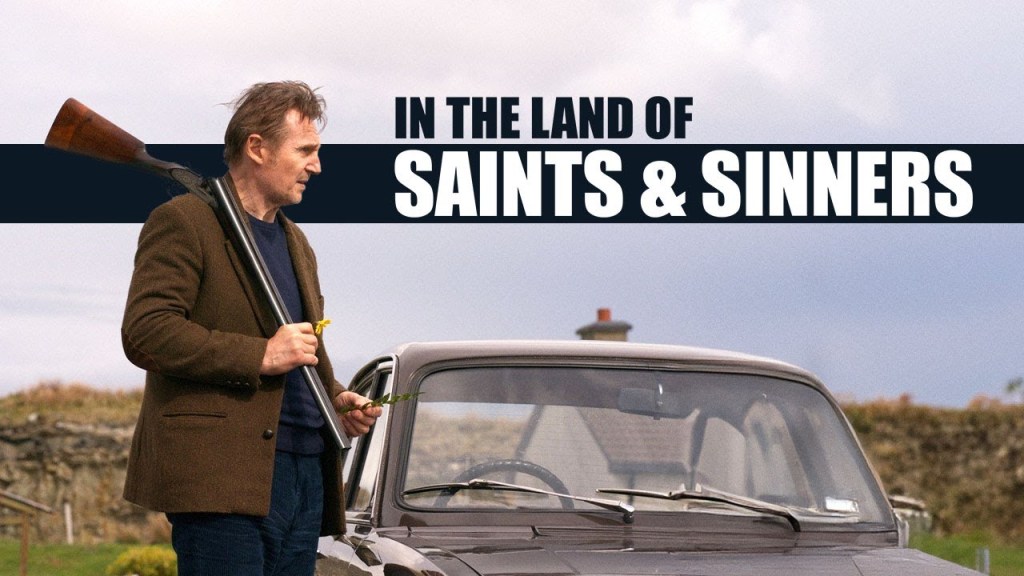
Trailer: “In The Land Of Saints And Sinners” (2023)
The first trailer has been released for the Liam Neeson-led Irish crime-thriller “In The Land Of Saints And Sinners” which premieres today at the Venice Film Festival.
Shot in County Donegal, Ireland, the film also stars Oscar nominees Ciaran Hinds and Kerry Condon, along with acting veteran Colm Meaney and former “Game of Thrones” alum Jack Gleeson.
The story unfolds in a remote Irish village where a newly retired assassin finds himself drawn into a lethal game of cat and mouse with a trio of vengeful terrorists.
The trailer paints a serious, more political and more wistful tone than your usual Neeson action film as it explores the obvious consequences of his character’s past actions.
Mark Michael McNally and Terry Loane penned the script whilst “The Marksman” director Robert Lorenz helms. Samuel Goldwyn will open the film theatrically in the Fall.
20th Century Studios has released a dialogue-free and suspenseful trailer for the alien invasion meets home invasion period thriller “No One Will Save You”.
The story follows a creative and talented young woman named Brynn (Kaitlyn Dever) who’s been alienated from her community.
Lonely but ever hopeful, Brynn finds solace within the walls of the home where she grew up – until she’s awakened one night by strange noises from decidedly unearthly intruders.
“No One Will Save You” is set to be released in the United States by Hulu on September 22nd and will air on Star+ in Latin America and Disney+ in other territories the same day.
“The Exorcist: Believer” is produced by Blumhouse, Morgan Creek, Universal Pictures and Peacock who aims to turn this into a new trilogy of movies.
The project serves as a direct sequel to the original. In the film, two girls go missing and come back possessed. Leslie Odom Jr. stars as one of the parents who has never seen anything like this.
So he sets out to find someone who has – none other than Chris MacNeil (Ellen Burstyn) many years after the events involving her daughter Regan. Ann Dowd, Lidya Jewett, and Jennifer Nettles also star.
Green co-writes with Scott Teems, Danny McBride, and Petter Sattler. Universal acquired the rights for this trilogy in a massive deal with the second film to be titled “The Exorcist: Deceiver” which will hit cinemas on April 18th 2025.
Jason Blum, David Robinson, and James Robinson produce, whilst Green, McBride, Couper Samuelson, and Stephanie Allain executive produce.
“The Exorcist: Believer” will release on October 6th.
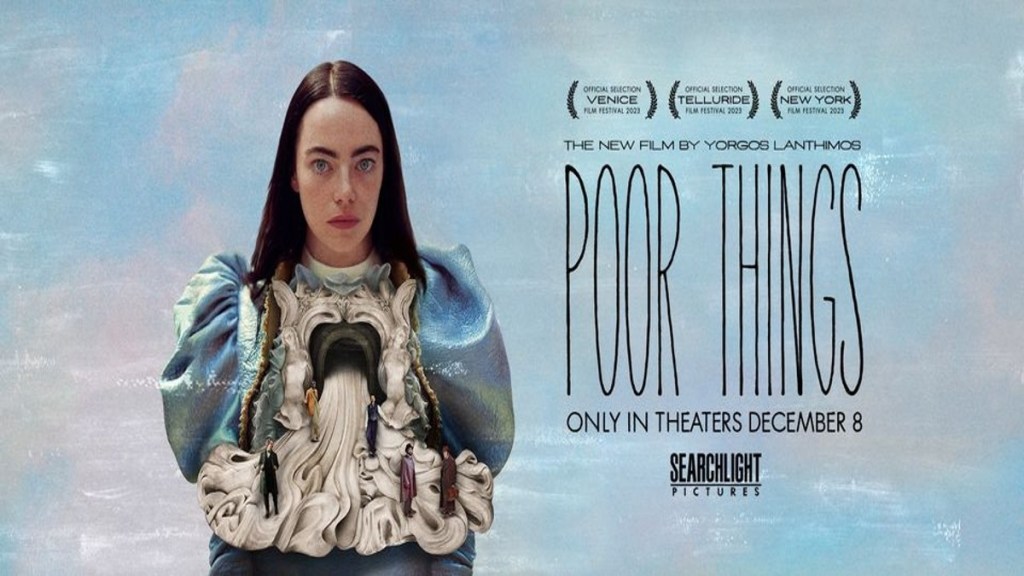
Searchlight Pictures has premiered a second trailer for “Poor Things,” the latest feature from “The Favorite,” “The Lobster” and “The Killing of a Sacred Deer” director Yorgos Lanthimos.
The fantastical and “Frankenstein”-esque tale follows the evolution of Bella Baxter (Stone), a young woman brought back to life by the brilliant and unorthodox scientist Dr. Godwin Baxter (Willem Dafoe).
Under Baxter’s protection, Bella is eager to learn. Hungry for the worldliness she is lacking, she runs off with Duncan Wedderburn (Mark Ruffalo), a slick and debauched lawyer, on a whirlwind adventure across the continents.
Free from the prejudices of her times, Bella grows steadfast in her purpose to stand for equality and liberation. Margaret Qualley, Ramy Youssef, Jerrod Carmichael, Kathryn Hunter and Christopher Abbott co-star.
The story is based on Scottish author Alasdair Gray’s 1992 novel about a woman who drowns herself to escape an abusive husband and is resurrected with the brain of her unborn child.
Stone also produces the film alongside Ali Herting, Dave McCary, Ed Guiney and Andrew Lowe. Lanthimos re-teams with his “The Favorite” scribe Tony McNamara to pen the script.
Searchlight will release “Poor Things” exclusively in cinemas on September 8th.