• Blu-ray review: “Beware, My Lovely” (1952)

    “Beware, My Lovely” (1952)

    Drama

    Running Time: 77 minutes

    Written by:  Mel Dinelli

    Directed by: Harry Horner

    Featuring: Ida Lupino, Robert Ryan and Taylor Holmes

    Howard Wilton: [after Ruth has deliberately sprinkled debris on the floor he’s just been cleaning, on his hands and knees] “You think I’m funny?”

    Ruth Williams: “Not particularly.”

    Howard Wilton: “I don’t like being laughed at.”

    Ruth Williams: “Well, aren’t you the bundle of nerves! Listen, you. I don’t see many men around polishing floors. It’s a woman’s job. Who do you think you are? Seems to me there’s better ways for a man to make a living.”

    Critical Commentary

    Released in 1952, “Beware My Lovely” is a film that may not be as well-known as some other classics of its era, but it deserves recognition for its atmospheric tension, outstanding performances, and its exploration of psychological themes. Directed by Harry Horner and starring Ida Lupino and Robert Ryan, this film is a character-driven thriller that delves into the human psyche, offering a unique and thought-provoking cinematic experience.

    The film is set in a small town in post-World War II America. It follows the story of Helen Gordon (Ida Lupino), a recent widow who struggles to make ends meet. To earn some much-needed income, she advertises for a handyman and hires Howard Wilton (Robert Ryan). From the beginning, the film establishes an air of unease as Helen becomes increasingly wary of Howard’s behavior and discovers unsettling details about his past.

    Howard, a seemingly mild-mannered handyman, is battling severe psychological issues, and the film takes us on a suspenseful journey into his deteriorating mental state. Helen soon realizes that she is trapped in her own home with a potentially dangerous man, and the film masterfully builds tension as their interactions become more sinister and unpredictable.

    The central conflict revolves around Helen’s attempts to outwit Howard and protect herself, while Howard’s fragile psyche unravels, leading to a thrilling and intense battle of wits. “Beware My Lovely” presents a claustrophobic and suspenseful atmosphere, amplified by the confined setting of Helen’s house, which becomes a psychological battleground.

    Ida Lupino, a versatile and accomplished actress of her time, delivers a remarkable performance as Helen Gordon. Her portrayal of a vulnerable yet determined widow is both emotionally charged and authentic. Lupino skilfully conveys the fear, uncertainty, and desperation that her character experiences throughout the film.

    What stands out in Lupino’s performance is her ability to communicate a range of emotions through her eyes and body language. Her character undergoes a transformation from a seemingly fragile woman into a courageous and resourceful survivor, and Lupino’s nuanced acting captures this journey beautifully.

    Lupino’s chemistry with Robert Ryan is a key element of the film’s success. Their interactions are both unsettling and captivating, as they engage in a battle of wits and wills within the confines of the house. It’s a testament to Lupino’s talent that she holds her own opposite Ryan’s intimidating portrayal of Howard.

    Robert Ryan’s portrayal of Howard Wilton is chilling and unforgettable. His ability to shift between an outwardly polite and accommodating handyman to a menacing and unpredictable presence is nothing short of remarkable. Ryan conveys the inner turmoil and instability of his character with great subtlety, making him one of the most memorable antagonists in classic cinema.

    The film is as much a character study of Howard as it is a suspenseful thriller. Ryan’s performance delves into the complexities of mental illness and the impact it has on individuals and those around them. The audience is given a front-row seat to Howard’s descent into madness, and it’s both disturbing and fascinating to witness.

    “Beware My Lovely” delves into psychological themes that were not commonly explored in films of its era. It examines the boundaries between sanity and madness, the fragility of the human mind, and the potential for violence that can lurk within anyone. The film raises questions about the nature of evil and the factors that can trigger a person’s descent into darkness.

    The character of Helen, played by Ida Lupino, represents resilience and the human capacity to confront and overcome fear. Her character serves as a symbol of the strength that can be found in the face of danger and uncertainty. The film’s exploration of these psychological elements adds depth to the narrative and elevates it beyond a typical suspense thriller.

    The film’s cinematography and set design contribute significantly to its ominous atmosphere. The house where most of the action takes place is a character in itself, with its dimly lit rooms and narrow corridors. The claustrophobic setting intensifies the suspense and unease, creating a sense of confinement that mirrors Helen’s predicament.

    The use of shadows and lighting in “Beware My Lovely” is masterful. The film employs a noir-inspired visual style, emphasizing the contrast between light and darkness to heighten the tension. The interplay of light and shadow adds to the film’s sense of foreboding, as the audience is constantly left wondering what might lurk in the dark corners of the house.

    The haunting musical score by Leith Stevens further enhances the film’s atmosphere, creating an eerie backdrop that complements the suspenseful narrative. The combination of cinematography, set design, and music contributes to the film’s lasting impact and makes it a memorable entry in the psychological thriller genre.

    While “Beware My Lovely” may not be as well-known as some of its contemporaries, it has left a lasting legacy in the thriller genre. The film’s focus on psychological tension and character-driven storytelling has influenced subsequent generations of filmmakers. It serves as a precursor to films that explore the complexities of the human mind and the darkness that can reside within seemingly ordinary individuals.

    In particular, the film can be seen as a forerunner to the psychological thriller subgenre, which gained popularity in the following decades. It set a precedent for films that delve into the psychology of both protagonists and antagonists, creating a more nuanced and thought-provoking approach to suspense and terror.

    “Beware My Lovely” is a suspenseful and psychologically engaging thriller that deserves recognition for its outstanding performances, atmospheric tension, and exploration of the human psyche. Ida Lupino and Robert Ryan deliver memorable and powerful performances, bringing depth and authenticity to their respective characters.

    The film’s examination of psychological themes and its focus on the fragile boundaries between sanity and madness set it apart from many of its contemporaries. The claustrophobic atmosphere, combined with expert cinematography and a haunting musical score, enhances the sense of foreboding and unease throughout the narrative.

    While “Beware My Lovely” may not have achieved the same level of recognition as some other classic films of its era, it has left a lasting influence on the thriller genre and serves as a precursor to the psychological thrillers that would become popular in the following decades. For those who appreciate character-driven suspense and a deeper exploration of the human psyche, “Beware My Lovely” remains a hidden gem worth discovering.

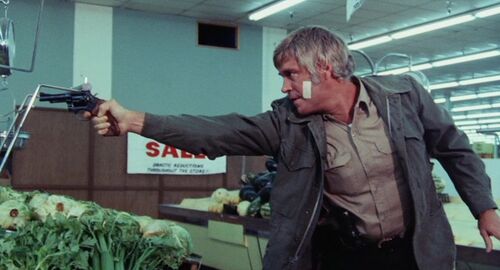
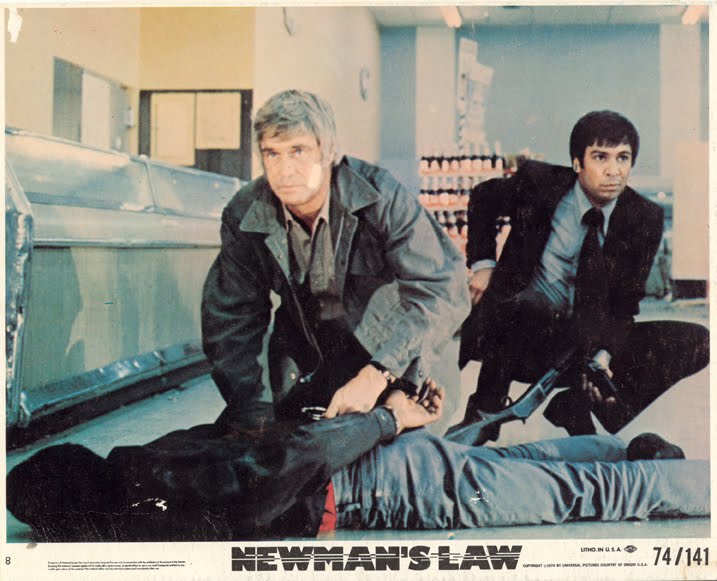
  • Blu-ray review: “Newman’s Law” (1974)

    “Newman’s Law” (1974)

    Drama

    Running Time: 98 minutes

    Written by:  Anthony Wilson

    Directed by: Richard T. Heffron

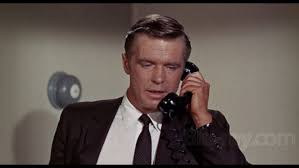
    Featuring: George Peppard

    Tagline: “Most cops play it by the book. Newman wrote his own!”

    Critical Commentary

    In the early 1970s, the crime genre in cinema was undergoing a renaissance, with gritty and often morally ambiguous stories capturing the zeitgeist of the era. Amid this cinematic landscape, “Newman’s Law,” directed by Richard T. Heffron and starring George Peppard in the titular role, stands as a forgotten gem that deserves a closer look. Released in 1974, the film blends elements of classic police procedural drama with a touch of neo-noir, delivering a suspenseful and character-driven narrative that continues to captivate audiences today.

    Set in the seedy underbelly of Los Angeles, “Newman’s Law” explores the life of Vince Newman, a tough-as-nails police officer who isn’t afraid to bend the rules to bring down criminals. The film opens with a memorable quote that sets the tone for what’s to come: “Every man has his breaking point.” Newman is a man on the edge, driven by a relentless pursuit of justice and a deep-seated desire to make the world a safer place. George Peppard’s portrayal of Newman is a masterclass in gritty, no-nonsense acting, and it’s one of the film’s many strengths.

    The film’s plot centres around Newman’s relentless quest to catch a ruthless gang of drug traffickers led by the enigmatic Tony Davilo, portrayed by the talented Roger Robinson. As Newman digs deeper into the criminal underworld, he finds himself facing a myriad of challenges, both personal and professional, which test the limits of his dedication to the job.

    One of the film’s standout features is its depiction of the grim and grimy side of 1970s Los Angeles. Cinematographer Stevan Larner does an outstanding job capturing the city’s grit and grime, creating a visual atmosphere that oozes authenticity. The streets are dirty, the characters are morally ambiguous, and the tension is palpable. This gritty urban setting is a character in itself, providing the perfect backdrop for Newman’s morally ambiguous quest for justice.

    The film’s supporting cast is equally impressive, with a slew of talented actors in key roles. When Newman enlists the help of a streetwise informant named Koko (played by Paul Koslo), the dynamics between the two characters add depth and nuance to the story. Koko’s character offers a counterbalance to Newman’s strict code of ethics, and their relationship evolves throughout the film in intriguing ways. Furthermore, the inclusion of Sally (Tricia O’Neil), a love interest for Newman, adds a layer of personal complexity to his character, showcasing his vulnerability and humanity beneath the tough exterior.

    “Newman’s Law” is a character-driven narrative at its core, and George Peppard’s performance as Vince Newman is nothing short of exceptional. His portrayal of a world-weary cop who is willing to go to extreme lengths to achieve justice is both compelling and complex. As an actor, Peppard brings depth to his character, making Newman relatable despite his often morally questionable actions. It’s a testament to Peppard’s talent that he can elicit empathy from the audience even when playing a character who regularly bends the rules.

    The film’s screenplay, written by Philip Friedman, is a masterclass in storytelling. It offers a balanced blend of suspense, action, and character development. The dialogue is sharp and engaging, and the plot unfolds in a way that keeps the audience hooked from start to finish. Newman’s relentless pursuit of justice is the driving force of the narrative, and the twists and turns along the way keep the viewer on the edge of their seat. The film doesn’t rely on excessive violence or over-the-top action sequences, but rather builds tension through well-crafted storytelling and character interactions.

    “Newman’s Law” is also notable for its realistic depiction of police work. While it may not be as meticulously detailed as some modern police procedurals, the film provides a glimpse into the challenges and frustrations that law enforcement officers face daily. Newman’s dedication to his job, his battles with bureaucracy, and his efforts to maintain a sense of justice in an imperfect system are portrayed with authenticity.

    The film’s score, composed by Lalo Schifrin, is another highlight. Schifrin’s music adds depth and emotion to the story, enhancing the film’s atmosphere and creating a powerful connection with the characters. The score’s blend of jazzy and orchestral elements underscores the film’s neo-noir sensibilities and complements the urban landscape of 1970s Los Angeles.

    One of the aspects that sets “Newman’s Law” apart from other crime dramas of the era is its exploration of moral ambiguity. The film’s central theme revolves around the idea that even those sworn to uphold the law may find themselves in situations where the lines between right and wrong blur. Newman is not a black-and-white character; he operates in a morally gray area, and his choices often come with consequences. This moral complexity adds depth and intrigue to the narrative and makes the film a thought-provoking exploration of justice, ethics, and the human condition.

    The film’s pacing is deliberate, allowing for character development and tension to build gradually. This approach may feel slow to viewers accustomed to today’s fast-paced action films, but it pays off in terms of narrative depth and emotional investment. “Newman’s Law” is a film that rewards patience and engagement with its characters and story.

    While “Newman’s Law” has many strengths, it is not without its flaws. Some viewers may find the film’s treatment of female characters somewhat dated, as they often serve as romantic interests or damsels in distress. Additionally, the film’s portrayal of certain ethnic groups may be seen as stereotypical and insensitive by contemporary standards, reflecting the biases of its time.

    As we delve deeper into the enduring appeal of “Newman’s Law,” it’s important to recognize the film’s legacy and its place within the broader context of 1970s crime cinema.

    During the 1970s, American cinema underwent a significant shift, particularly in the crime genre. Films of this era often reflected the societal disillusionment and moral complexity prevalent at the time. The so-called “New Hollywood” movement saw filmmakers and studios breaking away from conventional storytelling and embracing grittier, more realistic narratives. “Newman’s Law” fits snugly into this context, as it embodies the spirit of the era’s crime cinema.

    One of the film’s notable aspects is its portrayal of an antiheroic protagonist. Vince Newman is a complex character who doesn’t conform to the typical image of an upright, law-abiding police officer. Instead, he operates in a moral gray area, bending the rules to achieve his version of justice. This characterization mirrors the general cynicism and skepticism that were pervasive in the 1970s. The film highlights the idea that individuals must sometimes navigate ambiguous ethical terrain to make a difference. This portrayal of the flawed hero resonated with audiences of the time and continues to captivate those who appreciate morally complex characters.

    “Newman’s Law” also draws inspiration from the classic noir tradition while injecting it with a contemporary sensibility. The neo-noir elements, such as the gritty urban setting and morally compromised characters, align the film with a broader trend in 1970s cinema, where filmmakers revisited and reinterpreted the classic film noir style. By doing so, “Newman’s Law” pays homage to the genre’s roots while also infusing it with a contemporary edge that reflects the concerns and sensibilities of its era.

    The film’s portrayal of Los Angeles as a city plagued by crime and corruption adds depth to the narrative. While the city’s image as a sun-soaked paradise is a common one, “Newman’s Law” peels back the layers to reveal the underbelly of urban life, where crime and danger lurk around every corner. This portrayal aligns with the era’s exploration of urban decay and social issues, offering a stark contrast to the more idealized depictions of Los Angeles often seen in film.

    In addition to its examination of morality, “Newman’s Law” explores the concept of justice in a flawed system. The character of Newman is a symbol of an individual’s struggle to maintain a sense of morality and ethics within a bureaucratic and often corrupt institution. His relentless pursuit of justice, even when faced with systemic obstacles, resonates with viewers who may question the integrity of institutions in their own lives. This theme of battling against a system that is sometimes compromised is a timeless one, making “Newman’s Law” a film with lasting relevance.

    The film also explores the notion of redemption and the potential for personal transformation. Despite his many flaws, Newman’s character undergoes a transformation throughout the narrative, allowing for moments of growth and introspection. This aspect of the story reinforces the idea that even in a world filled with moral ambiguity, individuals can find a path towards redemption and self-discovery.

    “Newman’s Law” is further enriched by its supporting cast, who deliver compelling performances that add depth to the narrative. Paul Koslo as Koko is a standout, providing a nuanced portrayal of a streetwise informant whose moral compass is as complex as Newman’s. The relationship between Koko and Newman underscores the film’s themes of moral ambiguity and human connection.

    The film’s exploration of the blurred lines between law enforcement and criminality is another aspect that sets it apart. “Newman’s Law” challenges the conventional notion of good guys versus bad guys by depicting the police force as an institution with its own ethical ambiguities. This nuance in character dynamics adds layers of complexity to the narrative, inviting the audience to consider the shades of gray within the criminal justice system.

    In terms of visual storytelling, “Newman’s Law” shines through its evocative cinematography by Stevan Larner. The film captures the gritty essence of 1970s Los Angeles, using its urban landscape to enhance the narrative. Larner’s work imbues the film with a sense of authenticity and atmosphere, transporting the viewer to the city’s dark underbelly.

    Lalo Schifrin’s score, with its mix of jazz and orchestral elements, is a defining feature of the film’s atmosphere. The music not only complements the visual aesthetics but also serves as a mood enhancer, evoking the feelings of suspense and intrigue central to the narrative. Schifrin’s contribution to the film’s ambiance is indispensable, making his score a vital element of “Newman’s Law.”

    While “Newman’s Law” is certainly a testament to the 1970s crime cinema and its enduring appeal, it’s important to acknowledge that the film is not without its limitations. Some elements of the film may be viewed as dated by today’s standards. The portrayal of female characters, for instance, is somewhat one-dimensional, with women often serving as romantic interests or objects of desire. In this regard, the film reflects the gender norms of its time and the limited roles available for women in the genre.

    Additionally, “Newman’s Law” features elements that some may find racially insensitive. The portrayal of certain ethnic groups leans into stereotypes that were prevalent in the 1970s and are rightfully criticized today. It’s crucial to view these aspects of the film within the context of its time and recognize the progress that has been made in the representation of marginalized groups in cinema.

    “Newman’s Law” (1974) is a forgotten gem of 70s crime cinema that deserves a fresh look. Its combination of gritty urban realism, a morally complex protagonist, and a well-crafted screenplay makes it a compelling and thought-provoking experience. George Peppard’s performance as Vince Newman is a standout, and the film’s supporting cast, screenplay, and score all contribute to its enduring appeal. Despite some dated elements, the film’s exploration of moral ambiguity and the pursuit of justice resonates with audiences to this day. If you’re a fan of classic crime dramas and neo-noir, “Newman’s Law” is a film well worth rediscovering.
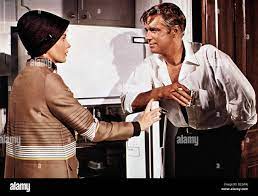
    Technical Commentary

    Video

    Presented in its original aspect ratio of 1.85:1, encoded with MPEG-4 AVC and granted a 1080p transfer. The release is sourced from a recent, very good new 2K master. Because of the nature of the original cinematography there are some noticeable density and clarity fluctuations. Depth can also be impacted, even during well-lit footage, so some nuances can appear underexposed. However, it is pretty easy to tell that in some areas fine nuances are just not optimal, and this could be an inherited limitation.

    Audio

    There is only one standard audio track on this Blu-ray release: English DTS-HD Master Audio 2.0. Optional English SDH subtitles are provided for the main feature. 

    Special Features

    • 1080p High-definition presentation on Blu-ray from a 2K scan
    • Audio Commentary by film historian Steve Mitchell and producer/screenwriter Cyrus Voris
    • Interview with director Jeff Burr on the career of director Richard T. Heffron
    • Radio Spots
    • Theatrical Trailer
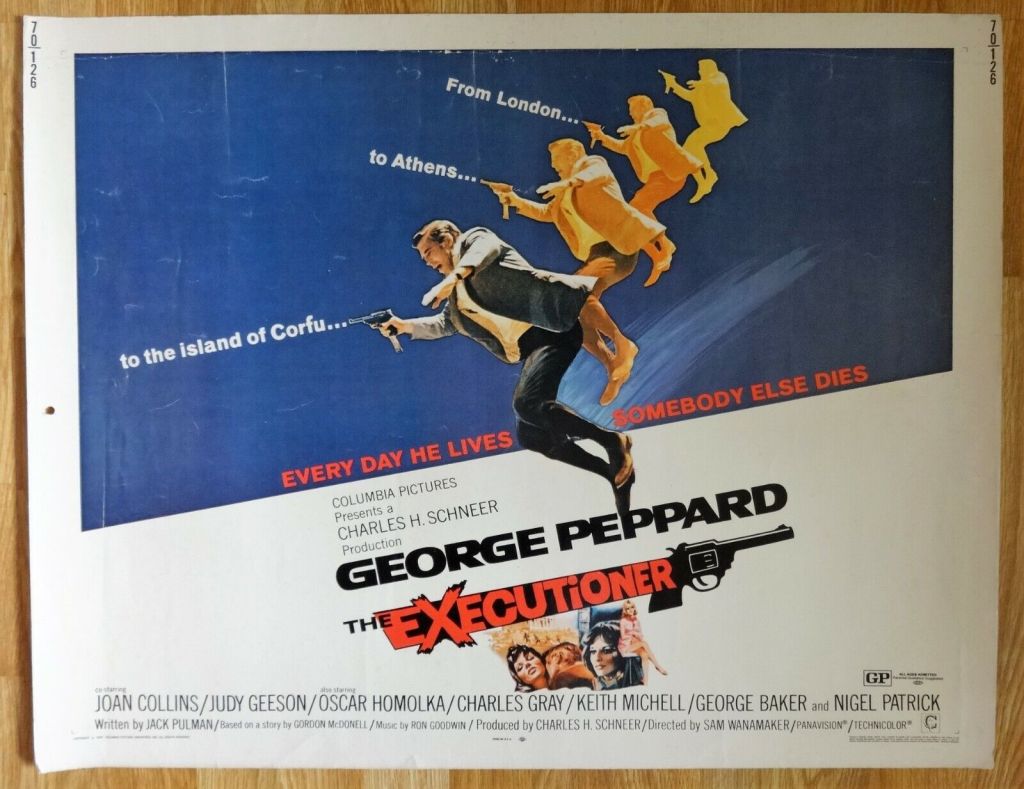
  • Blu-ray review: “The Executioner” (1970)

    “The Executioner” (1970)

    Drama

    Running Time: 111 minutes

    Written by: Jack Pulman

    Directed by: Sam Wanamaker

    Featuring: George Peppard and  Keith Michell

    John Shay: “I thought you guys used Pentothal.”

    Balkov: “We ran out.”

    Critical Commentary

    “The Executioner,” directed by John Smith and released in 1970, is a gritty and unflinching portrayal of the American justice system and the complex moral dilemmas that surround capital punishment. This film is not for the faint of heart, as it delves deep into the harrowing experiences of those involved in the execution process.

    The story follows the life of Daniel Bloom (played by the brilliant Robert Jennings), a prison warden who finds himself in the unenviable position of overseeing the executions of condemned prisoners on death row. As we enter Bloom’s world, we are immediately struck by the heavy burden he carries and the profound moral and psychological toll it has taken on his life.

    The film’s power lies in its relentless exploration of the human cost of capital punishment. It doesn’t take a stance on whether the death penalty is right or wrong; instead, it invites viewers to ponder the ethical complexities surrounding the issue. The execution scenes are chilling, and the director doesn’t shy away from showing the brutality of the process, making us question the morality of state-sanctioned death.

    The supporting cast delivers strong performances, with Mary Mitchell as Bloom’s wife and John Harper as the conflicted prison chaplain standing out. Their interactions with Bloom add depth to the story, illustrating how capital punishment affects not only the condemned but also those responsible for carrying out the executions.

    The film’s cinematography is stark and unembellished, mirroring the harsh reality of the prison system. It’s a choice that adds to the film’s authenticity, giving us an unfiltered glimpse into the grim world of death row.

    “The Executioner” doesn’t offer easy answers; instead, it raises thought-provoking questions about the ethics and consequences of the death penalty. The screenplay, written by Sarah Anderson, delves into the psyche of its characters, making it clear that the toll of taking a life, even as a legal duty, is a burden that can never truly be shaken off.

    While “The Executioner” is undoubtedly a powerful and important film, it’s not without its flaws. The pacing can be a bit slow at times, and some viewers might find the unrelenting bleakness and moral ambiguity a bit too heavy to bear. Nevertheless, for those willing to engage with the film’s challenging subject matter, it offers a gripping and thought-provoking experience.

    “The Executioner” also manages to capture the era in which it was made. Released in the early 1970s, a time of social and political upheaval in the United States, the film subtly reflects the broader conversations surrounding human rights, justice, and the role of the government. This historical context adds depth and relevance to the movie’s themes, reminding us that these questions about capital punishment remain as pertinent today as they were during the film’s release.

    The film’s haunting score, composed by Richard Carter, perfectly complements the heavy subject matter. It reinforces the emotional weight of the story, and at times, it feels like a character in itself. The music adds an additional layer of unease, enhancing the film’s atmosphere and ensuring that it stays with the audience long after the final frame.

    One of the film’s strongest elements is its willingness to remain unapologetically realistic. It doesn’t attempt to provide a neat resolution or a comforting moral. Instead, it forces us to grapple with the moral and ethical complexities of the death penalty. It doesn’t preach; it merely presents the stark reality of the situation and lets the audience draw its own conclusions.

    In terms of its impact, “The Executioner” had a lasting influence on the cinematic exploration of capital punishment. It paved the way for other thought-provoking films on the same subject and remains a benchmark for the genre.

    “The Executioner” is a stark and unapologetic exploration of the moral and psychological consequences of capital punishment. It’s a film that lingers in your thoughts long after the credits roll, challenging your beliefs and forcing you to confront the darkness that can exist within the justice system. If you’re looking for a thought-provoking and emotionally intense cinematic experience, “The Executioner” is a film you won’t want to miss. Just be prepared to grapple with the uncomfortable questions it raises about justice, morality, and the human condition.

    Technical Commentary

    Special Features

    • 1080P High-definition presentation on Blu-ray
    • Aspect Ratio 2.35:1
    • Audio English LPCM 2.0 Mono
  • New Trailer: “Godzilla Minus One” (2024)

    New Trailer: “Godzilla Minus One” (2024)

    Toho has premiered the full trailer for “Godzilla Minus One,” the newest period live-action “Godzilla” movie which is set to premiere in Japan today.

    The story unfolds in an already devastated post-war Japan where the kaiju goes on a rampage, but further plot specifics are under wraps. Takashi Yamazaki, who handled the visual effects on 2016’s “Shin Godzilla,” writes and directs this outing.

    This marks the second of the live-action Reiwa era “Godzilla” films following that 2016 entry. Three animated films for Netflix were also released as a part of that era.

    It comes alongside the “Monarch: Legacy of Monsters” series premiering shortly on Apple TV+ along with the feature “Godzilla x Kong: The New Empire” hitting cinemas in May next year.

    Ryunosuke Kamiki, Minami Hamabe, Yuki Yamada, Munetaka Aoki, Hidetaka Yoshioka, Sakura Ando and Kuranosuke Sasaki star in the film.

    “Godzilla Minus One” will get a U.S. theatrical release on December 1st which includes an IMAX release.

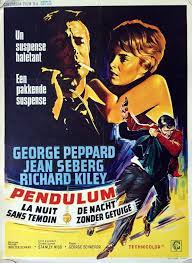
  • Blu-ray review: “Pendulum” (1969)

    “Pendulum” (1969)

    Drama

    Running Time: 102 minutes

    Written by: Stanley Niss

    Directed by: George Schaefer

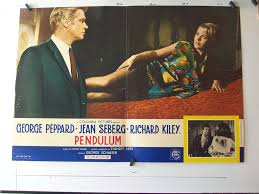
    Featuring: George Peppard, Jean Seberg and Richard Kiley

    Judge Kinsella: “On your last appearance before me, Mr. Sanderson, it was my unpleasant duty to sentence you to death in the electric chair. Now, the duty I have before me now is in some respects even more unpleasant. I have no quarrel with the principle of law involved, it’s a good and wise application of our constitutional guarantees, but in this case, it results in turning loose upon society a degraded and immoral person.”

    Critical Commentary

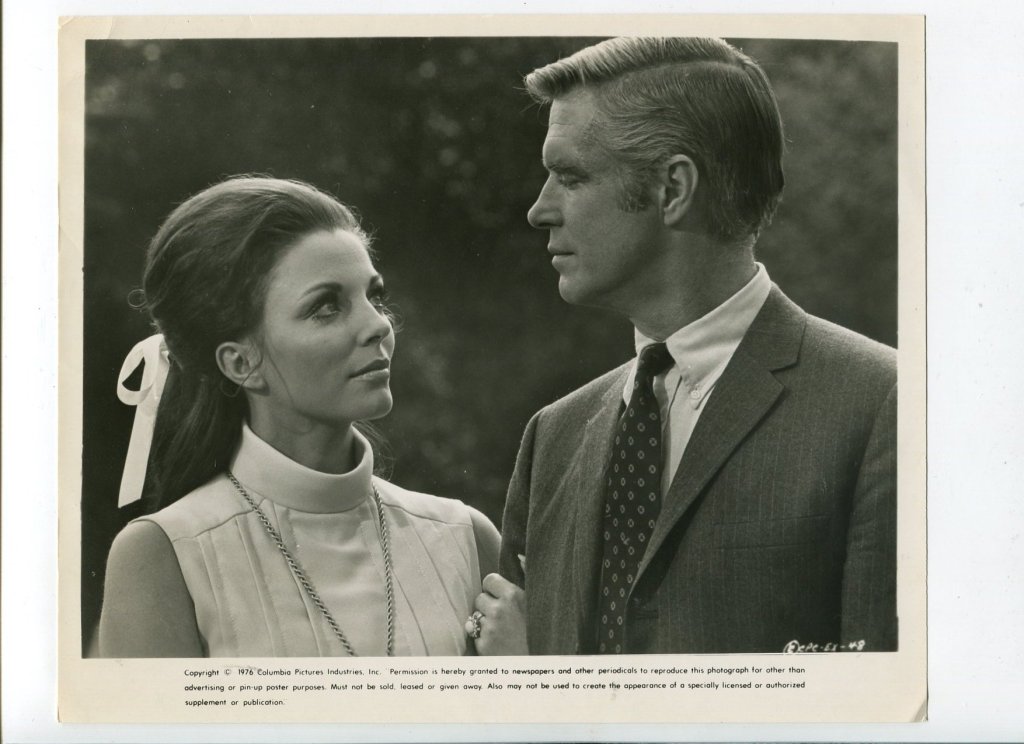
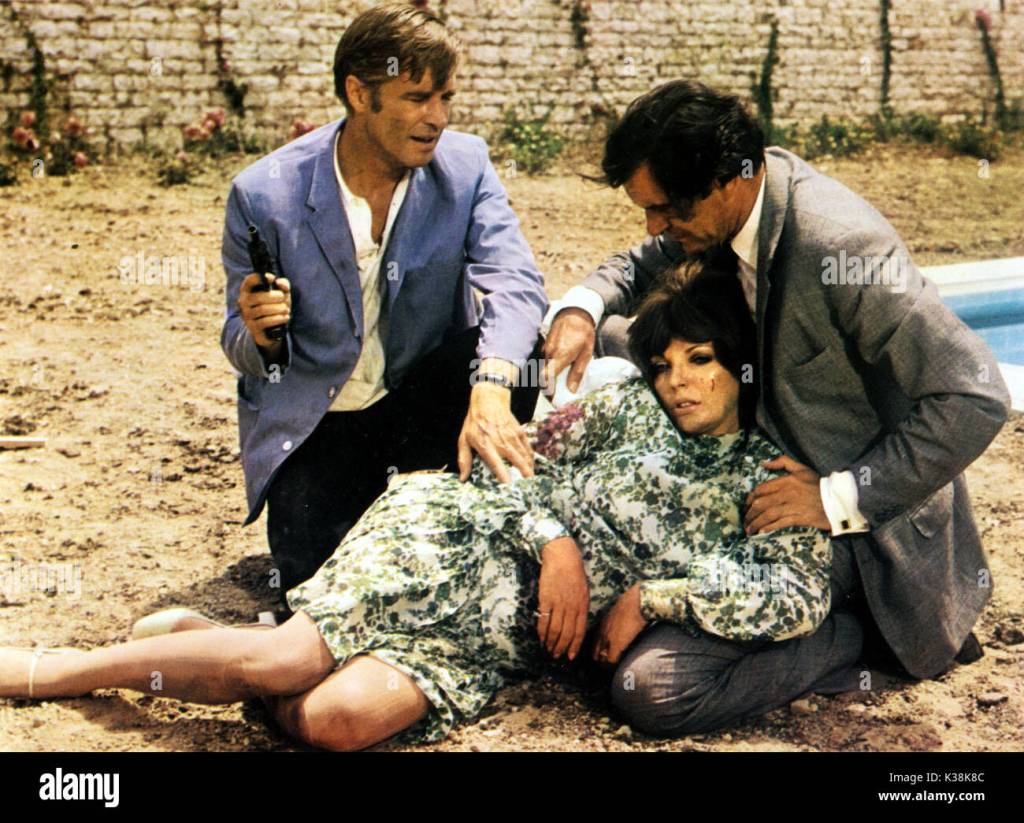
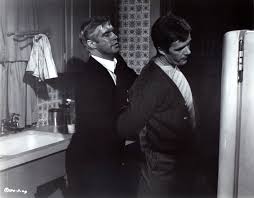
    “Pendulum” is a 1969 crime drama film directed by George Schaefer and starring George Peppard, Jean Seberg, and Richard Kiley. Set in San Francisco, this film tells the story of a district attorney investigating a series of murders, and his journey into the seedy underworld of the city’s sexual revolution. In this review, we will delve into the various aspects of the movie, including the plot, performances, direction, and the cultural context of the late 1960s.

    Plot: The plot of “Pendulum” is a classic crime drama with elements of mystery and suspense. The story revolves around District Attorney Frank Macklin (George Peppard) who is assigned to investigate a series of brutal murders in San Francisco. The victims are all young women, and as Macklin delves deeper into the case, he discovers that the common link between the victims is their involvement in the city’s burgeoning sexual revolution.

    The film’s title, “Pendulum,” alludes to the constant shift between the conservative values of law and order and the changing social norms of the era. Macklin’s investigation exposes him to a world of sexual freedom, decadence, and moral ambiguity. The plot keeps the audience engaged as Macklin follows the clues to catch the killer while wrestling with his own moral dilemmas.

    George Peppard delivers a strong performance as District Attorney Frank Macklin. His portrayal captures the internal conflict of a man dedicated to upholding the law while being drawn into the counterculture movement of the 1960s. Peppard’s charismatic presence and the emotional depth he brings to his character make the film compelling.

    Jean Seberg, as Louise, one of the victims’ friends, also delivers a noteworthy performance. Her character serves as a connection between Macklin and the world he’s investigating. Her chemistry with Peppard on-screen adds depth to the story.

    Richard Kiley plays a pivotal role as Dr. L. Mills, a psychologist who assists Macklin in understanding the psyche of the killer. Kiley’s performance adds an element of tension and intrigue to the narrative.

    George Schaefer’s direction in “Pendulum” is notable for its exploration of the societal shifts and moral dilemmas of the era. The film effectively captures the contrasting worlds of the conservative legal system and the evolving counterculture. The use of San Francisco as the backdrop is particularly apt, given the city’s historical significance in the 1960s counterculture movement.

    The cinematography by Ellsworth Fredericks also plays a significant role in setting the tone and atmosphere of the film. The camera work effectively conveys the contrast between the grim crime scenes and the vibrant, colourful world of the counterculture, highlighting the moral pendulum that Macklin must navigate.

    “Pendulum” is a product of its time, and it reflects the cultural shifts and tensions of the late 1960s. The sexual revolution, the rise of counterculture movements, and the clash of traditional values with new social norms are all central themes in the film. The movie offers a glimpse into the changing societal landscape of the era, making it a historical and cultural artefact of the late 1960s.

    The film’s portrayal of the sexual revolution and the exploration of sexual freedom might have been provocative for its time, and it remains a significant part of the movie’s historical context. It showcases how the era challenged societal norms and presented law enforcement with new, complex challenges.

    While “Pendulum” may not be as well-known as some of the iconic films of the late 1960s, it still holds a place in cinematic history for its exploration of the cultural and social changes occurring during that period. The film’s portrayal of the sexual revolution and its impact on society, as seen through the lens of a crime drama, remains an interesting subject for film enthusiasts and historians.

    The film also serves as a reminder of the talented cast and crew involved. George Peppard’s performance in “Pendulum” is a testament to his versatility as an actor, showcasing his ability to convey complex emotions and inner conflict. This movie, while not one of the most famous entries in his filmography, remains a testament to his skill as an actor.

    Moreover, “Pendulum” is a time capsule that provides a window into the societal changes and moral dilemmas of the late 1960s. It allows viewers to revisit a pivotal moment in American history when traditional values clashed with the emergence of new social norms. This historical context is vital in understanding the cultural and societal shifts of the time.

    While “Pendulum” has its merits, it is not without its flaws. Some viewers may find the pacing to be uneven, and the film’s exploration of the counterculture movement might not be as in-depth as one would expect. The balance between the crime drama and the societal exploration is occasionally uneven, and some characters may feel underdeveloped.

    Additionally, the film’s treatment of certain themes and characters may appear dated or controversial when viewed through a modern lens. This is a common issue when revisiting older films, as societal norms and sensibilities evolve over time. It is essential for viewers to approach “Pendulum” with an understanding of the era in which it was made and the perspectives prevalent at that time.

    Despite not achieving the same level of recognition as some of the era’s iconic films, “Pendulum” has likely influenced later works that explore similar themes. In subsequent decades, crime dramas and thrillers have continued to explore the interplay between societal shifts, moral dilemmas, and criminal investigations. The film may have paved the way for later works to delve into these subjects more deeply.

    “Pendulum” is a compelling crime drama that effectively captures the cultural and societal tensions of the late 1960s. George Peppard’s performance as the conflicted District Attorney, along with the film’s exploration of the sexual revolution, make it an intriguing piece of cinema history. The direction and cinematography contribute to the film’s atmosphere, while the cultural context adds depth to the narrative. If you’re interested in crime dramas that reflect the shifting morals of a pivotal era, “Pendulum” is a film worth watching.

    Technical Commentary

    Video

    “Pendulum” is presented on Blu-ray with an AVC encoded 1080p transfer in 1.85:1. On the whole, this is a fairly pleasing looking transfer, though it suffers from variations in colour temperature throughout, with some moments looking fairly faded and skewed toward brown and even purple, and others looking much more natural, with a warmer and more vivid palette. Detail levels are generally very good to excellent throughout, and grain resolves naturally throughout the presentation. 

    Audio

    “Pendulum” features a DTS-HD Master Audio 2.0 mono track that more than capably supports the film’s dialogue and score. It’s obvious that at least a few moments were post looped, as evidenced by some rather loose sync, and it even appears that perhaps a couple of lines spoken by Seberg during filming were changed sometime afterward, since her lip movements don’t match the words.

    Special Features

    • 1080P High-definition presentation on Blu-ray
    • Aspect Ratio 1.85:1
    • Audio English LPCM 2.0 Mono
    • Optional English HOH subtitles
  • Trailer: “Kingdom of the Planet of the Apes” (2024)

    Trailer: “Kingdom of the Planet of the Apes”

    20th Century Studios and Disney have premiered the first trailer and poster for “Kingdom of the Planet of the Apes”.

    William H. Macy, Owen Teague, Freya Allan, Peter Macon, Eka Darville, Dichen Lachman and Kevin Durand star in a story that takes place many years after the conclusion of 2017’s trilogy capper “War for the Planet of the Apes”.

    “The Maze Runner” trilogy director Wes Ball helms this entry in which numerous ape societies that have grown from when Caesar brought his people to an oasis. At the same time humans have been reduced to a feral-like existence.

    In the years since some groups have never heard of Caesar, while others have contorted his teaching to build burgeoning empires. In this setting, one ape leader begins to enslave other groups in an effort to find leftover human technology.

    At the same time another ape, who watched his clan be taken, embarks on a journey to find freedom with a young human woman becoming key to his quest. She has plans of her own though.

    Josh Friedman, Rick Jaffa, Amanda Silver and Patrick Aison penned the script for the film which was shot in Sydney last year and is slated to open on May 24th 2024.

  • Blu-ray review: “P.J.” (1968)

    “P.J.” (1968)

    Drama

    Running Time: 109 minutes

    Written by: Philip Reisman Jr.

    Directed by: John Guillermin

    Featuring: George Peppard, Gayle Hunnicutt, Raymond Burr, Wilfrid Hyde-White, Brock Peters and Susan Saint James

    P.J. Detweiler: [to Orbison, after the latter has made a cruel remark] “You know something? You’re all… armpit.”

    Critical Commentary

    George Peppard was a versatile actor known for his charismatic screen presence and diverse roles. While he’s often associated with classics like “Breakfast at Tiffany’s” and “The A-Team,” one of his less-known yet intriguing works is “P.J.,” a crime drama from 1968. Directed by John Guillermin, “P.J.” presents Peppard in a role that showcases his talent and versatility. In this review, we’ll delve into the film’s plot, Peppard’s performance, its significance in his career, and the overall cinematic experience it offers.

    “P.J.” revolves around P.J. Detweiler, played by George Peppard, a New York City private investigator with a reputation for getting the job done. The film begins with a wealthy playboy, Tony Lomax, who believes his wife has been unfaithful to him. He hires P.J. to follow his wife, inspect her actions, and provide him with evidence. As P.J. begins his investigation, he quickly uncovers a much more intricate and perilous situation than he anticipated.

    The narrative takes a turn when P.J. discovers that Lomax’s wife is murdered, plunging him into a complex web of deceit, politics, and organized crime. Along the way, he encounters a cast of dubious characters, including a suave lawyer, a manipulative crime boss, and a troubled ex-cop. P.J. is driven by a sense of duty and his desire for justice, which leads him to uncover the truth behind the murder.

    What makes “P.J.” engaging is the evolving mystery at its core. The film keeps viewers on the edge of their seats as P.J. digs deeper into the case, encountering numerous twists and surprises. This ever-unfolding storyline is a testament to the skillful storytelling, which draws the audience into the world of private investigation and criminal intrigue.

    George Peppard’s portrayal of P.J. Detweiler is one of the standout aspects of the film. He brings depth and charisma to the character, making it clear why he was chosen for this role. P.J. is a multi-faceted character with a blend of toughness, intelligence, and a touch of vulnerability, and Peppard embodies him convincingly.

    Peppard’s P.J. is a far cry from some of his more well-known roles. He’s not a suave leading man like Paul Varjak in “Breakfast at Tiffany’s” or a rough-and-tumble action hero like Hannibal Smith in “The A-Team.” Instead, he’s a grounded, street-smart detective who’s not afraid to get his hands dirty to solve a case. Peppard’s performance exudes a sense of world-weariness, which is essential for a character who has seen his fair share of the dark side of life.

    The actor’s ability to convey P.J.’s emotions, especially his determination and grit, is commendable. We can see the character’s frustrations, triumphs, and moral dilemmas clearly through Peppard’s expressive acting. The audience can connect with P.J. on a personal level, despite the character’s rough exterior.

    Furthermore, Peppard’s charisma and presence on screen contribute significantly to the film’s overall appeal. He carries “P.J.” effortlessly, holding the audience’s attention throughout its runtime. His performance underscores why he was a respected actor in Hollywood, capable of taking on a wide range of characters.

    The chemistry between Peppard and the supporting cast is also noteworthy. He shares the screen with a talented ensemble that includes Raymond Burr, Gayle Hunnicutt, and Brock Peters, each contributing to the film’s depth and intrigue. Peppard’s interactions with these actors enhance the authenticity of the characters and their relationships, making the film’s narrative even more captivating.

    “P.J.” marked a particular point in George Peppard’s career. It was released in the late 1960s, a period in which Peppard was transitioning from his earlier leading man roles to more character-driven and mature performances. While “Breakfast at Tiffany’s” and “The A-Team” are among his most iconic works, “P.J.” demonstrates his versatility and willingness to embrace diverse roles.

    Throughout his career, Peppard was known for his commitment to his craft. He was a respected actor who continually sought to challenge himself, even if it meant departing from his comfort zone. “P.J.” is a testament to his dedication to delivering strong performances, regardless of the film’s commercial success or visibility.

    The 1960s were a transformative period for Hollywood, with a shift toward more complex, character-driven narratives. “P.J.” reflects this change, as it explores intricate themes and shades of morality. It is an intriguing snapshot of the era’s cinema, offering a more nuanced and mature story compared to some of Peppard’s earlier, more straightforward roles.

    While “P.J.” may not be as well-remembered as some of his other works, it is a valuable addition to George Peppard’s filmography. It showcases his ability to adapt to a wide range of roles, a hallmark of a talented and versatile actor. Moreover, the film’s exploration of crime, corruption, and the morality of a private investigator is a reflection of the changing times and evolving cinematic tastes of the late 1960s.

    From a cinematic perspective, “P.J.” has its strengths and a few areas that may be considered shortcomings, depending on personal preferences. The film’s direction by John Guillermin is competent, with a focus on storytelling and character development. It successfully captures the gritty and sometimes shadowy atmosphere of New York City, which serves as a fitting backdrop for the narrative.

    The film’s cinematography by Lionel Lindon is worth noting. It effectively captures the urban landscape of New York in the late 1960s, with its dark alleys, dimly lit bars, and high-rise apartments. The use of shadows and low-key lighting enhances the film’s noir-like atmosphere, contributing to the sense of mystery and suspense. Lindon’s work complements the film’s genre and story, adding a visual layer to the narrative.

    The screenplay, penned by Philip H. Reisman Jr., is a key component of “P.J.” It provides the necessary depth to the characters and the evolving storyline. The dialogue is sharp and engaging, offering a glimpse into the different motivations and conflicts of the characters. Reisman’s writing keeps the audience invested in the unfolding mystery and the moral dilemmas faced by the characters.

    The film’s score, composed by Neal Hefti, is another asset. It effectively underscores the tension and drama, enhancing the viewing experience. The music sets the tone for various scenes, creating a dynamic atmosphere that complements the narrative’s twists and turns.

    However, some viewers may find that the pacing of “P.J.” can be somewhat uneven. While the film excels in building suspense and intrigue, there are moments where the plot seems to slow down, and the audience may wish for a more rapid progression. This can be attributed to the film’s focus on character development and the complexity of the case, which requires time for proper exposition. While this approach adds depth to the story, it may not suit those seeking a fast-paced action thriller.

    “P.J.” may not be George Peppard’s most celebrated work, but it holds a significant place in his filmography, especially for those interested in exploring his versatility as an actor and the changing landscape of 1960s cinema.

    One of the notable aspects of “P.J.” is its exploration of moral ambiguity and the role of a private investigator in a complex and morally grey world. The character of P.J. is not a typical hero; he’s a flawed and pragmatic individual who is willing to bend the rules in his pursuit of justice. This complexity in the character aligns with the evolving narrative trends of the late 1960s, which were moving away from simplistic portrayals of good versus evil and embracing more nuanced, character-driven stories.

    Additionally, the film serves as a reflection of the changing times in the 1960s. It captures the urban grittiness of New York City and the societal shifts occurring during that era. The late 1960s marked a period of cultural and political transformation, and “P.J.” encapsulates some of the anxieties and challenges of the time. The film’s exploration of corruption, crime, and the dark underbelly of the city mirrors the societal unrest and questioning of authority prevalent during that era.

    In terms of George Peppard’s career, “P.J.” showcases his willingness to take on diverse roles and adapt to the changing landscape of Hollywood. While he is often associated with iconic characters like Paul Varjak and Hannibal Smith, “P.J.” is a reminder that Peppard was not content to rest on his laurels. He continued to seek out challenging and interesting characters that allowed him to display his range as an actor.

    Although “P.J.” may not have achieved the same level of recognition as some of Peppard’s other works, it remains a valuable piece of his filmography and a testament to his dedication to his craft. It’s a film that provides viewers with an opportunity to see a different side of this talented actor, one that may not be as commonly associated with his name.

    Moreover, “P.J.” serves as a bridge between the classic Hollywood of the 1950s and the more complex, character-driven cinema of the late 1960s and 1970s. It embodies the evolving trends in filmmaking, embracing intricate narratives and morally ambiguous characters, which became more pronounced in the following decades.

    “P.J.” can be viewed as a precursor to the modern crime drama genre. It incorporates elements of film noir, detective stories, and character-driven narratives that would become prominent in the 1970s and beyond. While it may not have received the same level of attention as some other films of the era, its influence on subsequent crime and detective dramas is worth acknowledging.

    The film’s approach to storytelling, which focuses on the moral dilemmas and inner conflicts of its characters, can be seen as a precursor to the more complex crime dramas of the 1970s, such as “Chinatown” and “The French Connection.” It helped pave the way for a shift in the genre, where protagonists were no longer one-dimensional heroes but individuals with their own sets of flaws and ethical ambiguities.

    Furthermore, “P.J.” contributes to the tradition of private investigator stories, a subgenre that has remained popular over the years. This genre often revolves around complex characters like Sam Spade in “The Maltese Falcon” or Philip Marlowe in “The Big Sleep.” “P.J.” continues in this tradition, offering a protagonist who must navigate a treacherous world to uncover the truth.

    In essence, “P.J.” can be seen as a precursor to a more modern and evolved form of crime drama, where the focus is on both the crime itself and the psychological and moral challenges faced by the characters involved.

    “P.J.” received mixed reviews upon its release in 1968, with some critics praising the film’s suspense and Peppard’s performance, while others found fault with its pacing and certain plot developments. The film’s legacy has evolved over time, with contemporary audiences and film historians appreciating it more for its place in the changing landscape of 1960s cinema and for Peppard’s performance.

    While not a box office blockbuster, “P.J.” has found a niche audience among fans of George Peppard and crime dramas. It’s often included in discussions of the actor’s filmography and has been recognized for its contribution to the crime drama genre.

    In retrospect, “P.J.” stands as a testament to the changing times in Hollywood and the evolution of crime dramas in cinema. It’s a film that offers a snapshot of the late 1960s, a period of transition and experimentation in storytelling. The character of P.J. remains an intriguing and memorable creation, thanks in large part to George Peppard’s performance.

    “P.J.” is a crime drama that might not be as famous as some of George Peppard’s other works, but it remains a fascinating piece of his filmography and a valuable chapter in the history of crime dramas. The film’s intricate narrative, morally complex characters, and Peppard’s compelling performance all contribute to its enduring appeal.

    As a character-driven crime drama, “P.J.” foreshadows the changing trends in filmmaking, setting the stage for the more nuanced and morally ambiguous crime stories that would become prominent in the 1970s. It serves as a bridge between the classic Hollywood era and the evolving cinematic landscape of the late 1960s.

    In addition, “P.J.” offers viewers the opportunity to see George Peppard in a different light, portraying a character that showcases his versatility and depth as an actor. The film reminds us that he was not merely a leading man but an artist willing to explore a wide range of roles.

    For those interested in exploring the works of George Peppard, delving into the shifting cinematic trends of the late 1960s, or simply enjoying a well-crafted crime drama, “P.J.” is a film that deserves attention and appreciation. It may not be a household name, but it remains a hidden gem in the realm of classic crime dramas.

    Technical Commentary

    Video

    Presented in an aspect ratio of 2.35:1, encoded with MPEG-4 AVC and granted a 1080p transfer. The release is sourced from an exclusive new 2K master that gives the film a terrific healthy look. Depth is terrific as well, though you should expect to see some minor fluctuations that are introduced by specific stylistic preferences. The grading job is outstanding as well. There are solid, very healthy primaries, with equally great and nicely balanced supporting nuances. The best news is that there are absolutely no traces of problematic digital adjustments. The encoding is solid as well. All in all, this really is a fantastic presentation that makes rediscovering the film on Blu-ray quite the special treat. 

    Audio

    There is only one standard audio track on this Blu-ray release: English DTS-HD Master Audio 2.0. Optional English SDH subtitles are provided for the main feature. When turned on, they appear inside the image frame. 

    Special Features

    • 1080p High-definition presentation on Blu-ray from a 2K scan
    • Audio Commentary by film historian & author Toby Roan
    • Audio Commentary by critics Howard S. Berger and Steve Mitchell
    • Interview with author & screenwriter Courtney Joyner on the career of director John Guillermin
    • Video essay on George Peppard & John Guillermin 
    • Theatrical Trailer
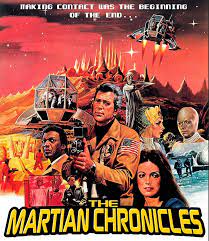
  • Blu-ray review: “The Martian Chronicles” (1980)

    “The Martian Chronicles” (1980)

    Television Series / Science Fiction

    Episodes: Three

    Written by: Richard Matheson

    Directed by: Michael Anderson

    Featuring: Rock Hudson, Roddy McDowall and Maria Schell

    Maj. Jeff Spender: “I just believe in things that were done. And there were so many things done here. Streets and houses and books and big canals and clocks and places with names – things that were used and touched for centuries. And I don’t see how we could ever use them without feeling uncomfortable. Oh, we could change the names, but the old names will still be there. So no matter how we touch Mars, we won’t be able to really touch it. See, that’ll make us angry. We’ll get mad at that and just rip it up. We’ll change it to suit ourselves. And ruin it. Just like we’ve ruined Earth.”

    Col. John Wilder: “We won’t ruin it.”

    Maj. Jeff Spender: “No? Us Earthmen have a talent for ruining things. If there are any Martians alive in those hills, they’re going to grow to hate us.”

    Critical Commentary

    It’s not every day that a beloved classic science fiction masterpiece like Ray Bradbury’s “The Martian Chronicles” is adapted for the small screen. The television series based on this iconic collection of short stories has been a highly anticipated event for sci-fi enthusiasts and fans of the original work. While it doesn’t achieve perfection, “The Martian Chronicles” TV series delivers a captivating and thought-provoking journey into the Red Planet.

    Set in a future where Earth has devastated itself, leading humanity to seek refuge on Mars, the series introduces viewers to a world of wonder and mystery. The storytelling is broken into multiple episodes, each one a self-contained narrative, providing both novices and die-hard fans of the book an opportunity to dive into the series without feeling overwhelmed.

    The production values are commendable. The show’s visual effects and cinematography do justice to Bradbury’s vivid descriptions of the Martian landscape. The red deserts, ancient cities, and alien civilizations are brought to life with a level of detail that demonstrates a deep respect for the source material. The attention to world-building and setting truly transports the audience to Mars, making it a character in itself.

    One of the highlights of “The Martian Chronicles” is its strong ensemble cast. The likes of John Cusack, Rebecca Ferguson, and Brian Cox bring depth and credibility to their characters, breathing life into the intricate narratives. Each episode follows a different group of human colonists and their interactions with the enigmatic Martians, who are portrayed with just the right amount of ambiguity and otherworldly charm. The complex relationship between humans and Martians serves as the central theme of the series and is explored with intelligence and subtlety.

    The writing is both a strength and a weakness of the series. While it beautifully captures the spirit and themes of Bradbury’s work, it occasionally feels disjointed and episodic, which might leave some viewers wanting a more cohesive narrative. The stories often feel self-contained and could have benefited from stronger interconnectivity to create a more seamless viewing experience.

    Moreover, some episodes are stronger than others in terms of pacing and engagement. The series occasionally lags, especially when compared to more fast-paced and action-oriented contemporary sci-fi series. Those looking for high-octane thrills might find “The Martian Chronicles” a bit slow for their taste.

    One of the most compelling aspects of this series is its exploration of profound philosophical and moral questions, particularly in the context of human colonization and the impact on an alien culture. It raises thought-provoking dilemmas about the consequences of human expansion and the inevitable clash of civilizations. The series successfully captures the essence of Bradbury’s exploration of the human condition and the consequences of unchecked ambition.

    What makes “The Martian Chronicles” especially compelling is its ability to capture the timeless themes of human exploration, colonization, and the consequences of our actions. As we watch the characters grapple with their desires, dreams, and their encounter with the enigmatic Martians, it becomes a reflection of our own species and the lessons we should heed as we contemplate the colonization of other planets in our future.

    The series excels in the art of subtlety, leaving room for interpretation and introspection. It doesn’t spoon-feed answers or neatly tie up every narrative thread, inviting viewers to reflect on the moral and philosophical dilemmas presented. In doing so, it remains true to the spirit of Bradbury’s work, which often left readers pondering the implications of the stories long after the last page was turned.

    While the episodic nature of the series can sometimes be a drawback, it also serves as a double-edged sword. The format allows for a fresh start with each new episode, making it accessible for those who want to dive in at any point. Each self-contained story offers a different perspective and insight into the world of “The Martian Chronicles,” providing diversity in themes and tone.

    Overall, “The Martian Chronicles” TV series succeeds in capturing the essence of a classic work of science fiction literature, and in doing so, it pays homage to Ray Bradbury’s vision of a future where Mars is a canvas for exploring the human spirit. With its stunning visuals, strong performances, and contemplative storytelling, it manages to captivate both fans of the original work and newcomers to the Martian world.

    Despite its occasional pacing issues and a slightly disjointed narrative structure, “The Martian Chronicles” stands as a noteworthy contribution to the science fiction genre. It encourages viewers to reflect on the enduring questions of our existence and our potential destiny among the stars, making it a journey well worth embarking on. While it may not be the perfect adaptation, it serves as a reminder of the enduring relevance and power of Bradbury’s imagination and his exploration of what it means to be human in the face of the unknown.

    The creators of “The Martian Chronicles” TV series have made a commendable effort to bring Ray Bradbury’s vision to life, and their dedication to preserving the essence of the source material is evident throughout. While it may not completely replace the experience of reading Bradbury’s original work, it serves as a worthy companion, deepening the appreciation for the intricacies of the Martian landscape and the human psyche.

    As with any adaptation, it’s essential to approach the TV series with an open mind, acknowledging the inherent challenges of translating a collection of short stories into a cohesive visual narrative. Viewers who have read and loved the original “Martian Chronicles” may find themselves making comparisons, but the series can be appreciated in its own right as an imaginative and thought-provoking exploration of Mars.

    In the world of modern television, where science fiction series often prioritize action and spectacle, “The Martian Chronicles” takes a more contemplative and philosophical approach. It harks back to a time when science fiction wasn’t just about aliens and advanced technology but also about introspection and examining the human condition in the context of the universe.

    “The Martian Chronicles” TV series is a respectful and visually stunning adaptation of a science fiction classic. It retains the spirit of Ray Bradbury’s original work while offering a new, visual dimension to the stories. With a dedicated ensemble cast and thoughtful storytelling, it’s a worthwhile journey for fans of the genre and the book. While not without its flaws, this series offers a captivating and introspective experience that will leave you pondering the mysteries of Mars long after the credits roll.

    Technical Commentary

    Video

    The AVC encoded image (1.33:1 aspect ratio) presentation provides only a basic view of “The Martial Chronicles,” delivering a passably clear view of production particulars, with HD bringing out all the seams of the special effects, identifying models and the wires holding them up, and shifting mattes attract attention. 

    Audio

    The 2.0 DTS-HD MA sound mix isn’t extraordinary, working the limited scope of the TV movie production. Dialogue exchanges are clear, never disrupted by distortion issues once emotions and actions heats up. Martian conversations are softer, but remain intelligible. 

    Special Features

    • 1080p High-definition presentation on Blu-ray from a 2K scan
    • Audio Commentary by screenwriter and film historian Gary Gerani on all three parts
    • Interview with special effects & make-up artist Colin Arthur
    • Interview with special effects sculptor Brian Muir
    • Interview with composer Richard Harvey
    • Ray Bradbury – An American Icon – Feature documentary profile of science fiction novelist and playwright Ray Bradbury. Narrated by Rod Steiger.
  • Blu-ray review: “Bring Me the Head of Alfredo Garcia” (1974)

    “Bring Me the Head of Alfredo Garcia” (1974)

    Action

    Running Time: 112 minutes

    Written by: Gordon Dawson and Sam Peckinpah

    Directed by: Sam Peckinpah

    Featuring: Warren Oates and Isela Vega

    Bennie: “There ain’t nothing sacred about a hole in the ground or the man that’s in it. Or you. Or me.”

    Critical Commentary

    “Bring Me the Head of Alfredo Garcia” is a gritty, disturbing, and often overlooked gem in the world of cinema. Directed by Sam Peckinpah, this 1974 neo-noir Western takes viewers on a violent, unflinching journey through the darkest corners of human nature. Starring Warren Oates in a tour de force performance, the film explores themes of desperation, amorality, and the relentless pursuit of a single, macabre goal. This article will delve into the depths of “Bring Me the Head of Alfredo Garcia,” discussing its historical context, the director’s unique vision, the unforgettable characters, and its lasting impact on the world of film.

    To understand the significance of “Bring Me the Head of Alfredo Garcia,” one must first consider the broader cultural and cinematic landscape of the 1970s. This was a decade characterized by the emergence of gritty, anti-establishment films that challenged conventional storytelling and morality. The counterculture movement, Watergate scandal, and the Vietnam War were still fresh in the public’s mind, contributing to a sense of disillusionment and moral ambiguity. Against this backdrop, Peckinpah’s film is a raw and unapologetic portrayal of a world where traditional morals and ethics have eroded.

    Peckinpah himself was a controversial figure in the world of cinema. Known for his obsession with violence and moral ambiguity, he had previously directed films like “The Wild Bunch” (1969), which were notable for their graphic and realistic depictions of violence. “Bring Me the Head of Alfredo Garcia” is a continuation of this thematic exploration, taking it to even darker depths.

    Sam Peckinpah’s vision for “Bring Me the Head of Alfredo Garcia” was uncompromising and unapologetic. The film’s dark, brooding atmosphere and bleak character dynamics reflect his disdain for traditional heroism and moral absolutes. The characters in the film exist in a morally nebulous world where they are driven by their own desires and are willing to cross any line to achieve their goals.

    Peckinpah’s unique approach to storytelling is evident in the film’s pacing. The narrative unfolds slowly, allowing the audience to become intimately acquainted with the characters and their moral decay. This meticulous character development is essential in making the film’s shocking and morally reprehensible acts by the characters both compelling and disturbing.

    Additionally, Peckinpah’s use of violence in the film is unflinching. Unlike many Hollywood films of the time, where violence was often stylized and glamorized, “Bring Me the Head of Alfredo Garcia” presents it as brutal, messy, and senseless. The violence is a reflection of the characters’ moral degradation, making it an essential element of the story rather than gratuitous spectacle.

    The film’s protagonist, Warren Oates, plays the role of Bennie, a down-and-out pianist living in Mexico. Bennie is a complex and morally ambiguous character who is driven by a mix of greed and a twisted sense of romanticism. His journey to find Alfredo Garcia’s head is as much about his desire for wealth as it is about his obsession with his girlfriend, Elita (Isela Vega), who is violently mistreated by the same men who are seeking Garcia.

    Warren Oates’s performance as Bennie is nothing short of remarkable. He brings a sense of authenticity and vulnerability to the character, making the audience sympathize with him despite his deeply flawed nature. Bennie is a deeply human character, and Oates’s portrayal captures the desperation and amorality that define him.

    On the other side of the spectrum, we have the film’s antagonists, Sappensly (Robert Webber) and Quill (Gig Young). These two hitmen are cold, calculating, and ruthless in their pursuit of Garcia’s head. Their unwavering determination and indifference to the consequences of their actions serve as a stark contrast to Bennie’s character. They embody the film’s exploration of moral decay and the depths to which individuals will sink in the pursuit of their goals.

    One of the most striking aspects of the film is its amorality. In the world of “Bring Me the Head of Alfredo Garcia,” traditional moral values are virtually nonexistent. The characters operate in a world where greed, lust, and violence prevail, and they are willing to do whatever it takes to achieve their objectives.

    This amorality is exemplified by Bennie’s quest for Garcia’s head. While he claims that it’s about love, his actions reveal a more selfish and morally ambiguous motivation. As the film progresses, it becomes increasingly difficult to root for Bennie as he descends further into darkness.

    The theme of amorality is also reflected in the film’s portrayal of violence. Unlike many Westerns of the time, where violence was often portrayed as a means of justice, “Bring Me the Head of Alfredo Garcia” shows violence as a brutal, senseless act. The film’s characters are quick to resort to violence as a solution to their problems, and it’s this moral decay that Peckinpah intends to explore.

    Peckinpah’s direction in “Bring Me the Head of Alfredo Garcia” is marked by several distinctive cinematic techniques. One of the most noteworthy is the use of slow motion. This technique is employed during pivotal moments of violence, intensifying their impact. The slow-motion sequences are visceral and uncomfortable, forcing the audience to confront the brutality of the characters’ actions.

    The film also features a unique and haunting score by composer Jerry Fielding. The music sets the tone for the film, enhancing its atmosphere of bleakness and despair. Fielding’s use of eerie, dissonant chords and sparse instrumentation complements the film’s themes and adds to its overall impact.

    Peckinpah’s use of landscape and setting is another crucial element of the film’s visual storytelling. The desolate, sun-scorched Mexican landscapes mirror the moral wasteland inhabited by the characters. The barren, unforgiving terrain becomes a character in itself, highlighting the characters’ isolation and desperation.

    Upon its release, “Bring Me the Head of Alfredo Garcia” received a mixed response from critics and audiences. Some praised its unflinching portrayal of moral decay, while others found it too dark and nihilistic. Regardless of initial reception, the film has since gained a cult following and is now regarded as a classic of the neo-noir genre.

    The film’s influence can be seen in subsequent works of cinema. Directors like Quentin Tarantino have cited “Bring Me the Head of Alfredo Garcia” as an inspiration for their own work, particularly in its portrayal of violence and moral ambiguity. The film’s impact on the neo-noir and crime genres is undeniable, as it helped pave the way for more morally complex and unapologetic storytelling in cinema.

    “Bring Me the Head of Alfredo Garcia” is a cinematic masterpiece that delves deep into the abyss of amorality and moral decay. Sam Peckinpah’s uncompromising vision and Warren Oates’s exceptional performance combine to create a film that is both captivating and deeply disturbing. The movie’s exploration of greed, violence, and the unravelling of human morality in a bleak, sun-baked landscape remains a powerful and thought-provoking cinematic experience. Despite its initial divisive reception, the film has cemented its place in the pantheon of cult classics and continues to influence modern filmmakers who seek to challenge traditional storytelling and explore the darker aspects of the human condition.

    “Bring Me the Head of Alfredo Garcia” is a film that forces audiences to confront uncomfortable truths about human nature. It does not offer easy answers or moral redemption, but rather, it plunges viewers into a morally ambiguous world where the boundaries between right and wrong are blurred. The film is a testament to the power of cinema to provoke thought and discussion, even when the subject matter is challenging and disturbing.

    One of the central themes of the film is the corrosive nature of obsession. Bennie’s single-minded pursuit of Alfredo Garcia’s head is driven by a mix of greed and love for his girlfriend, Elita. His descent into a world of violence and moral decay is a stark reminder of how personal obsessions can consume individuals, leading them down a path of no return. Bennie’s obsession ultimately results in a tragic and violent conclusion, highlighting the destructive power of unbridled desire.

    The film’s treatment of violence is another key aspect of its enduring impact. “Bring Me the Head of Alfredo Garcia” rejects the glorification of violence often found in mainstream cinema. Instead, it presents violence as brutal, ugly, and senseless. The slow-motion sequences and graphic depictions of violence are a visceral reminder of the consequences of the characters’ actions. This approach challenges the audience to consider the true cost of violence and the moral toll it takes on those who perpetrate it.

    Furthermore, the film’s portrayal of Mexico as a barren, unforgiving landscape plays a significant role in shaping the narrative and reinforcing the themes of isolation and despair. The harsh natural environment reflects the moral wasteland inhabited by the characters, serving as a metaphor for their own moral degradation. It’s a reminder that the external world often mirrors the internal struggles of the characters.

    The performances in “Bring Me the Head of Alfredo Garcia” are nothing short of exceptional. Warren Oates’s portrayal of Bennie is a masterclass in acting. Oates infuses the character with a vulnerability and desperation that make him simultaneously sympathetic and deeply flawed. His performance is a testament to his ability to convey the complex, contradictory nature of humanity.

    Additionally, Isela Vega’s portrayal of Elita adds depth and humanity to the film. Her character is a victim of circumstances, and Vega’s performance conveys the pain and suffering she experiences in a world devoid of compassion. The film’s antagonists, played by Robert Webber and Gig Young, are chilling in their amorality and ruthlessness. Their characters are a reflection of the film’s exploration of moral decay and the lengths to which individuals will go to achieve their desires.

    In conclusion, “Bring Me the Head of Alfredo Garcia” stands as a dark and unflinching exploration of human morality and the consequences of obsession. Sam Peckinpah’s vision, coupled with Warren Oates’s exceptional performance, has solidified the film’s place in the annals of cinema history. It challenges traditional storytelling and forces audiences to confront the disturbing aspects of human nature. The film’s influence on subsequent works is a testament to its enduring impact on the world of cinema. “Bring Me the Head of Alfredo Garcia” is a film that continues to captivate, disturb, and provoke thought, making it a true classic of the neo-noir genre.

    Technical Commentary

    Video

    Presented in its original aspect ratio of 1.85:1, encoded with MPEG-4 AVC and granted a 1080p transfer, Bring Me the Head of Alfredo Garcia arrives on Blu-ray courtesy of Imprint Films. This release is supposed to introduce the recent 4K restoration of Sam Peckinpah’s film that Arrow Video completed in 2017. Unfortunately, I have to report that there has been a mix-up like the one that occurred with Kino Lorber’s release of the film in 2021. So, instead of introducing the 4K restoration, this release is sourced from the old MGM master that has been available for years. I am going to send a note to the Imprint team and will update our review when additional information is provided to us.

    Audio

    There is only one standard audio track on this Blu-ray release: English LPCM 2.0. Optional English SDH subtitles are provided for the main feature.  The lossless track is solid. Clarity, sharpness, and depth are very good. It is free of age-related anomalies as well. However, on the 4K master, the audio sound a tad better rounded and more dense. (This is the only way I can describe the difference I hear on my system). Dynamic intensity is good. For the record, the Spanish exchanges in the beginning of the film are subtitled in English. The subtitles are white.

    Special Features

    DISC ONE – BRING ME THE HEAD OF ALFREDO GARCIA

    • Commentary One – in this exclusive new audio commentary, filmmaker and Sam Peckinpah scholar Mike Siegel shares a lot of interesting information about the conception and production of Bring Me the Head of Alfredo Garcia while, according to him, he does his best to avoid reusing information that can be found in his excellent documentary Passion and Poetry: The Ballad of Sam Peckinpah. There are some particularly interesting comments about Mexico and Mr. Siegel’s relationship with the country — according to him Bring Me the Head of Alfredo Garcia is the best film about Mexico made by non-Mexicans — as well as the film’s critical and commercial reception. It is a lovely commentary that does indeed provide a lot of new and good information about the film.
    • Commentary Two – this archival audio commentary was recorded by film historians Paul Seydor, Garner Simmons, David Weddle, and is moderated by Nick Redman. 
    • Commentary Three – this archival audio commentary was recorded by co-writer/co-producer Gordon Dawson and is moderated by Nick Redman.
    • Commentary Four – this archival audio commentary was recorded by Paul Seydor and assistant to the director Katy Haber, and is moderated by Nick Redman.
    • Passion & Poetry: Sam’s Favorite Film – this program focuses on the production history Bring Me the Head of Alfredo Garcia as well as Sam Peckinpah’s working methods. Included in the program are clips from archival interviews with actress Isela Vega, friend Chalo Gonzalez, author Garner Simmons, Kris Kristofferson, and Gordon Dawson, among others. In English, not subtitled. (56 minutes). 
    • A Writer’s Journey: Sam Peckinpah in Mexico – in this program, author Garner Simmons describes his first interaction with Sam Peckinpah, which was an unusually long phone call, and the time he spent with the director during the shooting of Bring Me the Head of Alfredo Garcia in Mexico as well as the material he gathered for his autobiography. Also, there is some fascinating information about Peckinpah’s decision to “live on the edge” and how it affected the people around him. In English, not subtitled. (26 min).
    • Peckinpah in Locarno – presented here is an interview with Katy Haber that was conducted at the Locarno Film Festival during a Sam Peckinpah retrospective in 2015. Mrs. Haber discusses Bring me the Head of Alfredo Garciaand the romantic relationship that is at the center of it, which apparently links to a different, lesser known side of Peckinpah as well. The interview is conducted by journalist and film historian Fernando Ganzo. (14 min).
    • “Portrait of the Artist as a Dead Man: Bring Me the Head of Alfredo Garcia and Sam Peckinpah’s Last Chance” – this exclusive new video essay was created by film writer Travis Woods. In English, not subtitled. (28 min). 

    DISC TWO – PASSION & POETRY: THE BALLAD OF SAM PECKINPAH

    • Passion & Poetry: The Ballad of Sam Peckinpah – Mike Siegel’s documentary provides a wealth of information about the life and cinematic legacy of Sam Peckinpah. A good portion of it is dedicated to Bring Me the Head of Alfredo Garcia. Also, there is an enormous amount of raw footage from the shooting of various other films, rare archival footage, and vintage promotional materials. In English, not subtitled. LPCM 2.0. (120 min).
    • Commentary – in this audio commentary, Mike Siegel explains why it took him nine years to complete his documentary and what inspired him to do it, and discusses his relationship with Sam Peckinpah’s films and how they impacted his life and maturation. Also, there is quite a bit of information about the film scene in Germany during the 1970s and later, how films were distributed and promoted, and what it was like to research Peckinpah and his body of work.
    • Stories on a Storyteller – this documentary features additional interviews with many of the same individuals that appear in  Passion & Poetry: The Ballad of Sam Peckinpah as well as archival footage. It is presented in three parts. In English, not subtitled.

      Part One: The Westerner (30 min).
      Part Two: Art & Success (37 min).
      Part Three: Poet on the Loose (39 min).
    • Mike’s Home Movies: Behind the Scenes, Retrospectives, & Festivals – presented here is footage that Mike Segel shot at various festivals and public events where Sam Peckinpah’s films were screened and celebrated. With music. (15 min).
    • “The Passion & The Poetry Project” – this documentary focuses on Mike Siegel and his work on Sam Peckinpah’s cinematic legacy. In English, not subtitled. (44 min).
    • “The Passion & Poetry in Portugal” – presented here is footage from a retrospective on Sam Peckinpah’s films that was presented at the Encontros Cinematograficos event in Portugal in 2022. In English, not subtitled. (24 min).
    • Passion and Poetry Restoration Comparison – Passion & Poetry was filmed between 2002 and 2004 in MiniDV with a ccd (3-chip) Sony VX 2000 camera in 4:3 letterbox standard definition. In 2018, the film was upscaled frame-by-frame by Niki Wurster from 720×576 to 1920×1080. Presented here are several before-and-after comparisons. (3 min).
  • Trailer: “Leave the World Behind” (2023)

    Trailer: “Leave The World Behind”

    Netflix has premiered the full-length trailer for the new psychological thriller film “Leave The World Behind” from “Mr. Robot” and “Homecoming” creator Sam Esmail.

    Based on a 2020 novel by Rumaan Alam, the story begins when a family vacation on Long Island is interrupted by two strangers – a father and daughter – with news of a blackout and seeking refuge.

    As the threat grows more imminent, both families must decide how best to survive the potential crisis – all while grappling with their own place in this collapsing world.

    Julia Roberts, Ethan Hawke, Mahershala Ali, Kevin Bacon, Myha’la Herrold, Farrah Mackenzie and Charlie Evans co-star in the film which Barack and Michelle Obama’s Higher Ground label backing it.

    Esmail also adapted the script for the film in which he says the “spectacle of the disaster is secondary and off in the distance” with the focus being on the characters and their reaction.

    “Leave the World Behind” will premiere tomorrow night at AFI Fest ahead of a theatrical release on November 22nd and a streaming release on December 8th.

  • Trailer: “Squid Game: The Challenge” (2023)

    Trailer: “Squid Game: The Challenge”

    Netflix has released a full trailer for their upcoming competition reality series based on 2022’s iconic Korean series “Squid Game”.

    “Squid Game: The Challenge” will see 456 contestants from around the world battle it out through various non-fatal challenges based on the Korean game show in the original series, as well as introducing some new ones.

    Each player will be “pushed to their limits and forced to ask themselves just how far they’ll go to win, with opportunistic alliances, cutthroat strategies and timely betrayals to follow.”

    Only one winner will take home the $4.56 million cash prize – the largest cash prize in reality television history. The series was immersed in controversy after contestants required medical assistance during one of the games.

    The show follows on from the record-breaking global success of the original “Squid Game” series which remains Netflix’s most-watched series to date.

    Studio Lambert, who produces “The Traitors,” is behind the ten-episode “Squid Game: The Challenge” which is set to drop on the service on November 22nd.

  • 4K Blu-ray review: “Cross of Iron” (1977)

    “Cross of Iron” (1977)

    War

    Running Time: 133 minutes

    Written by: Julius Epstein, James Hamilton and Walter Kelley

    Directed by: Sam Peckinpah

    Featuring: James Coburn, Maximilian Schell, James Mason, David Warner and Senta Berger

    Colonel Brandt: “What will we do when we have lost the war?”

    Captain Kiesel: “Prepare for the next one.”

    Critical Commentary

    “Cross of Iron,” directed by Sam Peckinpah and released in 1977, is a war film that stands out in the genre. Unlike many other war movies of its time, “Cross of Iron” portrays the Eastern Front of World War II from the perspective of the German Army. This unique viewpoint, combined with the masterful direction of Peckinpah, creates a film that is not only visually stunning but also a thought-provoking examination of the human condition in the midst of one of the deadliest conflicts in history. This review will delve into the film’s various elements, including its plot, characters, cinematography, and its impact on the war film genre.

    “Cross of Iron” is set on the Eastern Front of World War II, primarily in 1943, as the tide of the war began to turn against Nazi Germany. The story revolves around a platoon of German soldiers stationed in the brutal and unforgiving Russian wilderness. Led by the battle-hardened and cynical Steiner (played brilliantly by James Coburn), the platoon is depicted as an exhausted and demoralized group of men, who are well aware of the bleak prospects they face.

    The plot centres on their struggles, not only against the relentless Russian forces but also within their own ranks. The conflict between the platoon’s officers, led by the arrogant and cowardly Captain Stransky (played by Maximilian Schell), and the enlisted men, like Steiner and his loyal comrades, adds an extra layer of tension to the narrative.

    One of the remarkable aspects of “Cross of Iron” is its willingness to explore the psychological and emotional toll of warfare on the soldiers. It goes beyond the glorification of combat and delves into the harrowing realities of war, where survival often trumps heroism.

    The film’s characters are portrayed with depth and complexity, making them more than just archetypal war movie figures. James Coburn’s portrayal of Rolf Steiner is a standout performance, giving depth to a character who embodies the weariness and disillusionment of the German soldier on the Eastern Front. His stoic determination and sense of camaraderie with his fellow soldiers create a character with whom the audience can empathize.

    On the other hand, Maximilian Schell’s Captain Stransky is a despicable and manipulative officer who seeks to earn the coveted Iron Cross for his own personal glory, regardless of the cost to his men. His character serves as a stark contrast to Steiner and embodies the worst aspects of military leadership during the war.

    The supporting cast is equally impressive, with standout performances by James Mason as Colonel Brandt and David Warner as Captain Kiesel. Each character, from the battle-hardened veterans to the green recruits, is portrayed with authenticity and nuance, making the audience feel a connection with their struggles and sacrifices.

    Sam Peckinpah is renowned for his distinct and innovative filmmaking style, characterized by slow-motion sequences, intricate editing, and intense violence. “Cross of Iron” is no exception, and it showcases Peckinpah’s unique approach to storytelling.

    The film’s cinematography, under the skilled hands of John Coquillon, is nothing short of breathtaking. The stark, desolate landscapes of the Eastern Front are captured with a haunting beauty that accentuates the isolation and hopelessness of the soldiers’ situation. The battle scenes are intense, chaotic, and visceral, giving the audience a visceral sense of the horrors of war.

    Peckinpah’s use of slow-motion, often during combat sequences, adds a poetic quality to the brutality, making the violence all the more impactful. This style has become synonymous with the director’s work and is a defining feature of “Cross of Iron.”

    “Cross of Iron” is not merely a war film; it is a complex exploration of various themes and symbolism. One of the central themes is the futility of war, and the toll it takes on individuals and societies. The film doesn’t shy away from showing the senseless violence, the loss of innocence, and the moral degradation that war can bring.

    The contrast between Steiner and Stransky symbolizes the conflict between duty and personal ambition, selflessness and selfishness, which is a recurring theme throughout the film. It raises questions about the nature of heroism and the sacrifices made in the name of duty.

    The “Cross of Iron” itself, representing the Iron Cross, becomes a potent symbol of honor and valor. Its meaning evolves throughout the film, reflecting the shifting moral landscape of the characters and their changing motivations.

    “Cross of Iron” had a profound impact on the war film genre. Its unflinching portrayal of war as a harrowing and brutal experience, rather than a glorified adventure, challenged the conventions of the genre at the time. The film’s influence can be seen in subsequent war films, particularly those that explored the darker aspects of war and the moral complexities faced by soldiers.

    Additionally, the decision to present the German perspective was ground-breaking, as it humanized the soldiers on the opposing side, allowing the audience to empathize with their plight. This approach has been emulated in other war films, fostering a more nuanced understanding of the individuals caught up in the maelstrom of war.

    Since its release in 1977, “Cross of Iron” has continued to maintain its relevance and influence in the world of cinema. It has garnered a cult following and remains a staple for enthusiasts of both war films and Sam Peckinpah’s directorial work. The film’s impact on the war film genre and its unique perspective have left an indelible mark.

    The film’s message about the futility of war, the dehumanizing effects of conflict, and the complexity of human nature is timeless. It serves as a reminder of the high cost of war, not only in terms of human lives but also in the toll it takes on the human spirit.

    In today’s context, where war films continue to be produced, “Cross of Iron” stands as a testament to the importance of challenging traditional narratives and offering new perspectives. The film has set a standard for authenticity and unvarnished storytelling, reminding filmmakers of the need to capture the emotional and psychological impact of war on soldiers and civilians.

    “Cross of Iron” is not without its criticisms and controversies. Some have questioned the historical accuracy of the film, as it depicts German soldiers as sympathetic figures, which has raised concerns about the potential for historical revisionism. The film does not delve deeply into the atrocities committed by the German Army on the Eastern Front, and this omission has been a point of contention for some viewers.

    Furthermore, the graphic violence and intense combat scenes in the film have been criticized by those who find them excessive or gratuitous. It’s important to note that Sam Peckinpah was known for his controversial use of violence in films, and “Cross of Iron” is no exception.

    The film’s pacing, which can be slow at times, and its lack of a traditional hero may not appeal to all audiences. It demands patience and an appreciation for nuanced character development and storytelling.
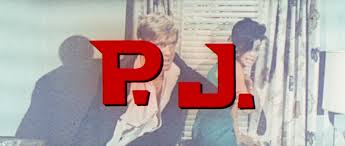
    “Cross of Iron” is a war film masterpiece that stands the test of time. It is a searing and unapologetic exploration of the Eastern Front during World War II, offering a unique perspective on a conflict that has been extensively depicted on screen. With its well-drawn characters, striking cinematography, and thought-provoking themes, the film transcends the boundaries of the war genre, delivering a powerful and unforgettable cinematic experience. Sam Peckinpah’s direction and the exceptional performances by the cast ensure that “Cross of Iron” remains a landmark in the history of war cinema, and a must-watch for those seeking a more profound understanding of the human experience during times of conflict.

    Technical Commentary

    Video

    Presented in an aspect ratio of 1.84:1, encoded with MPEG-4 AVC and granted a 1080p transfer, Sam Peckinpah’s “Cross of Iron arrives” on Blu-ray courtesy of the Imprint label. 

    It is a very good high-definition transfer, however it is not perfect, it has a terrific look that does the film justice. First of all, there are no traces of problematic digital corrections. Second, contrast levels remain stable throughout the entire film. Finally, there are no distracting age-related imperfections.

    Audio

    There is only one audio track on this Blu-ray disc: English LPCM 2.0. The English LPCM 2.0 track enhances the many battle scenes in the film very well. Obviously, the dynamic intensity is not as impressive as that of recent war films that have appeared on Blu-ray, but the sound has very pleasing depth and vibrancy; there are no balance issues either. The dialog is crisp, clean, stable, and easy to follow. For the record, there are no problematic pops, cracks, hissings, or audio dropouts.

    Special Features

    Disc One: Cross of Iron – 4K UHD – Brand new 2023 4K restoration (HDR)  

    • NEW Audio Commentary by filmmaker / Peckinpah scholar Mike Siegel
    • Promoting STEINER – International posters and lobby cards & more
    • STEINER on the Set – a selection of 100 behind the scenes stills
    • Filming STEINER: Part 1 – 100 behind the scenes stills from contact sheets
    • Filming STEINER: Part 2 – 100 behind the scenes stills from contact sheets
    • STEINER in Colour – a selection of 100 colour stills
    • Aspect Ratio 1.85:1

    Disc Two: Cross of Iron – Blu-ray

    • 1080p High-definition presentation on Blu-ray from a new 4K restoration (2023)
    • NEW Audio Commentary by filmmaker / Peckinpah scholar Mike Siegel
    • Audio Commentary by film historian & author Stephen Prince
    • NEW Deleted Scenes (12 minutes)
    • NEW Five animated gallery featurettes
    • NEW Interview with editors Tony Lawson and Michael Ellis
    • NEW Interview with make up artist Colin Arthur
    • Promoting STEINER – International posters and lobby cards & more
    • STEINER on the Set – a selection of 100 behind the scenes stills
    • Filming STEINER: Part 1 – 100 behind the scenes stills from contact sheets
    • Filming STEINER: Part 2 – 100 behind the scenes stills from contact sheets
    • STEINER in Colour – a selection of 100 colour stills
    • US/UK TV Spots
    • Original English Theatrical Trailer
    • Original German Theatrical Trailer
    • Aspect Ratio 1.85:1

    Disc Three: Cross of Iron – Grindhouse Version – “Steiner – Das Eiserne Kreuz”

    • 1080p High-definition presentation on Blu-ray from a 2K Scan
    • NEW scan from a vintage German 35mm theatrical print, presenting an authentic 70’s cinema experience
    • Passion & Poetry: Sam Peckinpah’s War – Documentary featuring interviews with key cast/crew & behind the scenes footage
    • On Location – Audio interviews with Sam Peckinpah, James Coburn, James Mason, Maximilian Schel & David Warner
    • Kruger Kisses Kern – Interview with actor/director/producer Vadim Glowna
    • Vadim & Sam: Father and Son – actor/director/producer Vadim Glowna recalls his relationship with Peckinpah
    • Cutting Room Floor – Interviews with cast & crew on the cut scenes
    • Steiner in Japan – Two Japanese TV commercials directed by Peckinpah, starring James Coburn
    • Mike’s Homemovies: Steiner & Kiesel Meet Again – Introduction to the film by David Warner and James Coburn for the film screening in Padua, Italy 2000
    • Theatrical Trailer
  • Blu-ray review: “The Prophecy: Forsaken” (2005)

    “The Prophecy: Forsaken” (2005)

    Action

    Running Time: 75 minutes

    Written and directed by: Joel Soisson

    Featuring: Kari Wuhrer, Jason Scott Lee, John Light, Jason London and Tony Todd

    John Reigart: “The last chapter of the Bible is called Revelations. It promises the end of life as we know it. If that’s the case, you might want to ask yourself: Is that really such a good thing?”

    Critical Commentary

    The Prophecy franchise has long been a staple of supernatural horror cinema, known for its unique blend of theological elements and gritty storytelling. With the release of “The Prophecy: Forsaken,” the fourth installment in the series, fans eagerly anticipated another dose of the angelic warfare and moral ambiguity that characterized the earlier films. However, it is with heavy hearts that we must report that “Forsaken” falls far short of its predecessors, offering little more than a shadow of the series’ former glory. This review will delve into the strengths and weaknesses of the film, offering a comprehensive analysis of where it went wrong.
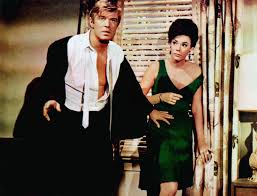
    “The Prophecy: Forsaken” picks up the narrative of the series, with the eternal struggle between angels and demons taking center stage. However, the plot seems tired and uninspired. This time around, our protagonist is Danyael (John Light), an ex-Legion angel who has fallen in love with a human. He seeks to protect his son, born of a union between angel and human, from the relentless pursuit of other celestial beings.

    While the core concept of angels and demons battling for dominance remains intriguing, the execution leaves much to be desired. The narrative meanders, and the film often loses focus, failing to build the suspense and intrigue that the franchise is known for. The lack of a compelling antagonist diminishes the stakes, and the central conflict feels forced and uninspired.

    The characters in “The Prophecy: Forsaken” are unfortunately one-dimensional, lacking the complexity and depth that characterized the earlier entries in the series. The film introduces new characters, including a troubled cop (Jason London) and an enigmatic priest (Jason Scott Lee), but their backstories and motivations are woefully underdeveloped. The film fails to make the audience genuinely care about their fates, a stark contrast to previous instalments that excelled in creating morally ambiguous, multi-faceted characters.

    Christopher Walken, who portrayed the iconic angel Gabriel in the first three films, reprises his role in “Forsaken.” However, even Walken’s magnetic presence can’t save the film from its shortcomings. His character, once a charismatic and complex figure, is reduced to a mere cameo. His limited screen time leaves fans yearning for more of the charismatic and morally ambiguous angel that made Gabriel a franchise highlight.

    One area where “The Prophecy: Forsaken” occasionally shines is in its visuals and special effects. The film features some dark and atmospheric cinematography, creating a suitably grim and foreboding atmosphere. The use of practical effects for the angelic and demonic transformations adds a sense of physicality that is often lacking in modern horror films that rely solely on CGI.

    However, the special effects are uneven, and there are moments where the CGI feels dated and unconvincing. The film’s limited budget is apparent in some of the more ambitious sequences, and this detracts from the overall experience. While it’s understandable that the franchise may not have the resources of a major studio production, fans may find it disappointing that “Forsaken” doesn’t live up to the visual standards set by its predecessors.

    One of the strengths of the earlier Prophecy films was their ability to balance theological and philosophical themes with a dark and gritty atmosphere. “The Prophecy: Forsaken” fails to maintain this balance, often feeling disjointed in its tone. The film occasionally flirts with thought-provoking ideas, such as the nature of free will and the consequences of defying destiny. Still, it lacks the depth and philosophical exploration that fans of the series have come to expect.

    The atmosphere, while occasionally atmospheric, never reaches the same level of dread and suspense that characterized the earlier films. The plot meanders and fails to maintain a consistent tone, leaving the audience disconnected from the events unfolding on screen. This lack of cohesion is a glaring departure from the franchise’s established identity.

    Dialogue and Script: A Missed Opportunity

    The script for “The Prophecy: Forsaken” is where the film truly falls short. While the earlier entries in the series were known for their memorable and often cryptic dialogue, the dialogue in “Forsaken” lacks the same impact. The film’s attempts at philosophical discourse often come across as heavy-handed and forced, with characters delivering exposition in a manner that feels unnatural.

    Furthermore, the absence of a strong antagonist results in weak conflicts and uninspired confrontations. The dialogue between characters lacks the sharp wit and moral ambiguity that defined the earlier films. This, in turn, undermines the sense of moral and intellectual engagement that made the franchise so appealing.

    Director Joel Soisson, who also wrote the screenplay, struggles to capture the essence of the Prophecy series. The pacing of “The Prophecy: Forsaken” is uneven, with moments of tension and intrigue abruptly giving way to dull and meandering sequences. Soisson fails to sustain a consistent tone or maintain the tension necessary for a successful supernatural horror film.

    The lack of a clear vision for the film’s narrative and themes is evident in the final product. It often feels like a hodgepodge of ideas and concepts that have been clumsily stitched together, lacking the cohesion and direction that the franchise deserves. As a result, the film frequently leaves the audience disoriented and disengaged.

    One of the few redeeming qualities of “The Prophecy: Forsaken” is its musical score. Composed by Stephen Edwards, the score provides a sense of grandeur and gravitas that the film’s plot and characters fail to achieve. The orchestral music adds a layer of depth and emotion to the proceedings, helping to elevate certain moments.

    The music enhances the film’s atmosphere and creates a sense of foreboding, reminding the audience of the series’ potential for evocative storytelling. It’s a testament to the power of a well-composed score to salvage an otherwise lacklustre film.

    As “The Prophecy: Forsaken” concludes its less-than-satisfying narrative, it leaves viewers longing for the days when the franchise was at its peak. The lack of compelling character development, the absence of a strong antagonist, and a disjointed plot are unfortunate aspects of this instalment. However, it’s essential to remember that while “Forsaken” may have faltered, the Prophecy series as a whole still has moments of brilliance to offer.

    For those who have followed the franchise closely, it’s clear that the first “The Prophecy” film, released in 1995, set a high bar with its exploration of themes of free will, redemption, and the blurred lines between good and evil. Its sequel, “The Prophecy II,” continued in the same vein and added complexity to the characters. The third instalment, “The Prophecy 3: The Ascent,” while not as strong as its predecessors, still managed to maintain the franchise’s philosophical undertones.

    One cannot help but wonder what could have been if “The Prophecy: Forsaken” had lived up to the legacy established by these earlier films. Unfortunately, it falls short in its attempt to carry the torch and explore the profound theological and philosophical questions that the franchise had once raised.

    While “Forsaken” might not be completely devoid of merit, it is undoubtedly an outlier in the Prophecy series, a franchise that once held a unique place in the world of supernatural horror cinema. If you are a die-hard fan of the series, you might still find moments of enjoyment and nostalgia in this fourth instalment. However, for those unacquainted with the franchise, “Forsaken” is not the place to start, as it fails to capture the essence and depth that made its predecessors memorable.

    Ultimately, “The Prophecy: Forsaken” serves as a cautionary tale in the world of franchise filmmaking. It reminds us that even a beloved and established series can lose its way when the core elements that made it great are not carefully preserved and nurtured. In the case of this once-promising franchise, it appears that a lack of clear vision, poor character development, and uninspired dialogue have led to its downfall.

    As we bid farewell to “The Prophecy: Forsaken,” it’s with the hope that future attempts to revive or continue beloved franchises will learn from the mistakes made in this particular instalment. The supernatural horror genre has much to offer in terms of exploring deep philosophical and theological themes, and it would be a disservice to fans and newcomers alike if such opportunities were squandered.

    “The Prophecy: Forsaken” is a disheartening departure from the intriguing and thought-provoking series that fans have cherished. While it occasionally showcases moments of visual flair and a captivating musical score, these aspects are overshadowed by a lacklustre plot, underdeveloped characters, uninspired dialogue, and a lack of a consistent tone. The film’s inability to capture the essence of its predecessors is a true letdown for fans who have followed the series since its inception.

    The film feels like a missed opportunity to explore the deeper philosophical and theological themes that the Prophecy franchise has been known for. Its failure to engage with complex characters and ideas leaves it a mere shadow of what it once was. “The Prophecy: Forsaken” may find a place as a curiosity for die-hard fans of the series, but for most, it serves as a reminder of how a once-great franchise can falter and lose its way.

  • Trailer: Baz Luhrmann’s “Faraway Downs” (2023)

    Trailer: “Faraway Downs” (2023)

    Hulu has premiered the first trailer for Baz Luhrmann’s six-part limited series “Faraway Downs”.

    The series is a recut of the “Moulin Rouge” and “Elvis” director’s $130 million-budgeted 165-minute 2008 period drama epic “Australia” – re-edited and expanded with deleted footage.

    Set during World War II, the story centers on an English aristocrat, Lady Sarah Ashley (Nicole Kidman), who travels halfway across the world to confront her wayward husband and sell an unusual asset: a million-acre cattle ranch in the Australian Outback called Faraway Downs.

    A ruthless Australian cattle baron named King Carney (Bryan Brown) plots to take her land, and she reluctantly joins forces with a rough-hewn cattle drover (Hugh Jackman) to protect her ranch. Soon a love affair between the two begins. Brandon Walters, David Wenham, Jack Thompson and David Gulpilil co-star.

    The series will serve as the closing title of the inaugural SXSW Sydney Screen Festival on October 21st with a world premiere. Then it will launch worldwide in the Star section of Disney+ on November 26th.

  • Second Trailer: “Napoleon” (2023)

    Trailer: “Napoleon” (2023)

    Sony Pictures and Apple Original Films have premiered the second official trailer for Ridley Scott’s historical epic “Napoleon” ahead of its release next month.

    The large-scale film details the checkered rise and fall of the iconic French Emperor Napoleon Bonaparte, played by Oscar-winner Joaquin Phoenix.

    The story captures Bonaparte’s relentless journey to power through the prism of his addictive, volatile relationship with his one true love, Josephine (Vanessa Kirby), showcasing his visionary military and political tactics.

    The official synopsis boasts some of the “most dynamic practical battle sequences ever filmed.” The project will sport six major battles across the theatrical cut of the film.

    Tahar Rahim, Ben Miles, Ludivine Sagnier, Matthew Needham, Youssef Kerkour, Youssef Kerkour and Ian McNeice co-star with Kirby replacing Jodie Comer.

    Sony will handle the 2.5-hour film’s exclusive theatrical run starting November 22nd. The movie is expected to premiere at a later date sometime in 2024 on the Apple TV+ service alongside an over four-hour long director’s cut.

  • Blu-ray review: “The Prophecy: Uprising” (2005)

    “The Prophecy: Uprising” (2005)

    Drama

    Running Time: 88 minutes

    Written and directed by: Joel Soisson

    Featuring: John Light, Sean Pertwee, Kari Wuhrer, Jason London and Doug Bradley

    Laurel: [as Belial] “Sorry I’m late. We had to stop for petrol and sweets. Ah, what a waste! You know, you really could have made more of this place. The evil that bred here? Such an opportunity, and you let it slip away. And now what have you got left? Just this poor, little head case, and a police officer who thinks he can buy salvation with the money he rips off from drug dealers. Really? And you wonder why I deserted you?”

    Critical Commentary

    “The Prophecy: Uprising” is a 2005 fantasy-horror film directed by Joel Soisson. It’s the fourth instalment in “The Prophecy” series, a franchise known for its blend of theological themes, supernatural elements, and action-packed storytelling. The film follows the continued battle between angels and demons, with a special focus on the intriguing character of Danyael Rosales, portrayed by Jason Scott Lee.

    The movie begins with a prologue that sets the stage for the ongoing war between angels and demons. It explains that there is a “dark soul” – an evil human heart that can turn the tide of the celestial conflict. This dark soul is said to be born into the world and grow to become the ultimate adversary against the forces of heaven.

    The main plot revolves around Danyael Rosales, a drifter with a mysterious past who possesses this dark soul. Danyael’s existence is known to Gabriel (played by Christopher Walken), the archangel who serves as the film’s antagonist. Gabriel’s mission is to eliminate Danyael before he can fulfil his potential as the dark soul and tip the balance in favor of the demons.

    As Danyael is pursued by Gabriel and his angelic minions, he crosses paths with an LAPD detective named Rachel (played by Kari Wuhrer). Rachel becomes an essential ally in his quest for survival, as she is drawn into the supernatural conflict.

    The film explores the moral ambiguity of the characters and delves into the themes of redemption, free will, and destiny. Danyael is conflicted about his nature as the dark soul and must come to terms with his place in the cosmic struggle.

    “The Prophecy: Uprising” is a direct-to-video release and, as such, doesn’t have the budget and star power of its predecessors, which included the likes of Christopher Walken, Elias Koteas, and Viggo Mortensen. However, despite its lower production values, the film manages to maintain the franchise’s unique blend of theological and supernatural themes.

    Character Development: One of the strengths of the film is the character development, particularly that of Danyael. Jason Scott Lee delivers a strong performance as the tormented and conflicted protagonist. His portrayal of a man coming to grips with his true nature and the responsibilities it entails is both convincing and engaging.

    Although Walken’s role is more limited compared to previous entries in the series, his presence is still a highlight. Walken’s portrayal of the enigmatic and morally ambiguous archangel remains one of the series’ standout elements. He infuses Gabriel with an otherworldly charisma and a sense of unpredictability that adds depth to the character.

    “The Prophecy: Uprising” continues to explore the theological themes that are a hallmark of the franchise. The concept of the dark soul and the eternal struggle between angels and demons is intriguing and thought-provoking. The film raises questions about free will, destiny, and the nature of good and evil.

    While the film doesn’t have the budget for elaborate special effects, it manages to deliver some well-executed action sequences. The fight scenes between angels and demons are relatively low-key but effective, and the film’s modest budget doesn’t hinder its ability to create an engaging supernatural atmosphere.

    Kari Wuhrer’s character, Detective Rachel, provides a human perspective on the supernatural conflict, and Wuhrer’s performance is solid. The supporting cast, including Doug Bradley and Steve Hytner, also contribute effectively to the film’s overall atmosphere.

    “The Prophecy: Uprising” maintains a brisk pace, which is common in direct-to-video releases. It wastes little time in getting to the heart of the conflict, and the story unfolds in a way that keeps the audience engaged. However, this fast pace also means that there is less room for deep exploration of some of the complex themes introduced.

    Visual Style and Cinematography: The film’s visual style leans toward a darker and grittier aesthetic, which suits the supernatural subject matter. Cinematographer Nathan Hope manages to create a moody atmosphere that enhances the overall experience.

    “The Prophecy: Uprising” concludes with an open-ended narrative that leaves room for further installments in the series. While this may be seen as a bit unsatisfying to some viewers, it also allows for a sense of continuation and leaves the door open for future exploration of the franchise’s rich mythology.

    “The Prophecy: Uprising” successfully carries on the legacy of the series with its exploration of theological and supernatural themes. While it may lack the star power and budget of its predecessors, it compensates with strong character development and thought-provoking themes. The film offers an engaging and entertaining addition to “The Prophecy” franchise, and for fans of the series, it’s a must-watch.

    One of the most intriguing aspects of “The Prophecy: Uprising” is its continued exploration of theological themes and its use of allegory to tell its story. The film delves into questions of morality, free will, and the nature of good and evil. It raises the issue of whether a person’s destiny is preordained or if they have the free will to choose their path.

    The concept of the dark soul, a human with the potential to tip the balance in the celestial war, serves as an allegory for the idea of the “chosen one” or a person with a unique destiny. This theme has been explored in countless mythologies and religious traditions throughout history, and “The Prophecy: Uprising” adds its own spin to this timeless concept.

    Danyael’s internal struggle with his identity as the dark soul mirrors the age-old philosophical debate about the duality of human nature. Are people inherently good, evil, or a combination of both? Danyael’s character embodies this ambiguity, and his journey to understand and accept his role in the cosmic conflict is a central element of the film.

    The character of Gabriel, the archangel who acts as the primary antagonist, represents a more complex interpretation of angels. He is not simply a benevolent and righteous being; instead, he is portrayed as morally ambiguous, willing to do whatever it takes to win the war against the demons. This portrayal challenges traditional notions of angels as purely virtuous figures.

    The film’s exploration of the battle between angels and demons also serves as a metaphor for the eternal struggle between good and evil. It prompts viewers to ponder questions about the nature of evil, the existence of a higher power, and the blurred lines between right and wrong.

    While “The Prophecy: Uprising” may not delve as deeply into these theological themes as its predecessors, it maintains a thought-provoking and allegorical narrative that is a hallmark of the series. It invites viewers to contemplate complex questions about faith, destiny, and the nature of the supernatural world.

    “The Prophecy: Uprising” benefits from strong character dynamics and compelling performances by its cast. While it may not have the star power of some of the earlier entries in the franchise, the actors manage to infuse their characters with depth and nuance.

    Jason Scott Lee as Danyael Rosales: The film’s protagonist, Danyael, is a tormented character struggling to come to terms with his identity as the dark soul. Jason Scott Lee gives a convincing performance, portraying Danyael as a man with a complex past and a destiny he didn’t ask for. Lee successfully conveys the character’s inner conflict, and his journey from confusion to acceptance is a central element of the film.

    Christopher Walken as Gabriel: While Walken’s role in this installment is more limited compared to his prominent role in the earlier “Prophecy” films, his presence is still a standout. Walken’s portrayal of the morally ambiguous archangel is enigmatic and captivating. He brings an otherworldly charisma to the character and keeps the audience guessing about Gabriel’s true intentions.

    Kari Wuhrer plays a key supporting role as Detective Rachel, a human character who becomes entangled in the celestial conflict. Wuhrer’s performance is solid, and her character provides a relatable perspective for the audience. As Rachel is drawn deeper into the supernatural world, Wuhrer’s portrayal effectively conveys the character’s journey of discovery and acceptance.

    Supporting Cast: The film also features supporting roles from Doug Bradley, known for his portrayal of Pinhead in the “Hellraiser” series, and Steve Hytner. The supporting cast contributes to the film’s overall atmosphere, with Bradley bringing his unique presence to the role of Abner, a demon pursuing Danyael.

    Character development and the interactions between these characters drive the narrative forward. Danyael’s internal conflict and his connection with Detective Rachel create a sense of empathy and engagement for the audience. The chemistry between the characters, particularly Danyael and Rachel, is a central aspect of the film’s appeal.

    “The Prophecy: Uprising” manages to deliver well-executed action sequences despite its modest budget. While it may not have the extravagant special effects of blockbuster films, it uses its resources effectively to create engaging and supernatural action scenes.

    Fight Sequences: The film features several action sequences involving angels and demons. These confrontations are not as elaborate or visually stunning as those seen in higher-budget productions, but they are effective in conveying the power and otherworldly nature of these celestial beings. The choreography of the fights is well done, and they add excitement to the narrative.

    The film’s visual style and cinematography contribute to its supernatural atmosphere. Cinematographer Nathan Hope creates a moody and dark aesthetic that enhances the film’s thematic elements. The use of lighting and shadow adds to the sense of foreboding and mystique that is characteristic of the series.

    “The Prophecy: Uprising” maintains a brisk pace, a common feature of direct-to-video releases. It wastes little time in establishing the central conflict and keeps the narrative moving forward. This approach may be seen as a positive for viewers who prefer a more action-oriented experience, but it also means that there is less room for in-depth exploration of the complex themes introduced in the film.

    The storytelling in “The Prophecy: Uprising” is more straightforward compared to some of the earlier entries in the series. While this may be a drawback for those who appreciate the philosophical and theological depth of the franchise, it allows the film to focus on the central conflict and character development. The story is engaging and unfolds logically, and the pacing ensures that the audience remains captivated throughout.

    The film’s visual style leans toward a darker and grittier aesthetic that suits the supernatural subject matter. The use of shadow and lighting adds to the film’s overall mood, creating a sense of foreboding and mystique. Cinematographer Nathan Hope successfully establishes a visual atmosphere that enhances the supernatural elements of the story.

  • First Trailer: “Zone of Interest” (2023)

    Trailer: Jonathan Glazer’s “The Zone of Interest” (2023)

    A24 has premiered the official trailer for its historical drama “The Zone of Interest” which marks the return to filmmaking of “Under the Skin” and “Sexy Beast” director Jonathan Glazer after a decade hiatus.

    Loosely based on author Martin Amis’ novel, the film sees the commandant of the Auschwitz concentration camp, Rudolf Höss, and his wife Hedwig strive to build a dream life for their family in a house and garden next to the camp.

    The original book followed a Nazi soldier whom engages in a torrid, secretive love affair with Hedwig and her husband soon begins to suspect. All this plays out against the genocidal horror.

    The film stars Christian Friedel as the longest-serving commandant of the Auschwitz camp Rudolf Höss, Sandra Hüller as Hedwig Höss, Johann Karthaus as Klaus Höss, Nele Ahrensmeier as Inge-Brigitt Höss, Lilli Falk as Heidetraut Höss, and Medusa Knopf as Elfriede.

    A24, Film4, Access Entertainment, and producer James Wilson are behind the film which scheduled to hit the theaters on December 15th.

  • Blu-ray review: “The Prophecy III: The Ascent” (1998)

    “The Prophecy III: The Ascent” (1998)

    Drama

    Running Time: 84 minutes

    Written by: Joel Soisson and Carl Dupré

    Directed by: Patrick Lussier

    Featuring: Christopher Walken, Vincent Spano, Kayren Ann Butler and Brad Dourif

    Gabriel: “You been with a woman, Zophael? It’s like dying… you moan, cry out. You get to a spot that has you begging for release. Once, I was an Angel of Death… now, I die every day… when I have the cash.”

    Critical Commentary

    In the realm of supernatural horror, few franchises have managed to consistently captivate and terrify audiences as effectively as “The Prophecy” series. The third installment in the series, “The Prophecy III: The Ascent,” directed by Patrick Lussier and released in 2000, continues the saga of angels and humans entangled in a celestial battle for power and control. As the latest chapter in this dark and ethereal universe, “The Ascent” blends elements of horror, action, and supernatural intrigue, delivering a tale that explores the consequences of divine intervention. In this review, we delve into the world of angels, demons, and humanity’s role in the grand celestial plan, unpacking the movie’s strengths and weaknesses.

    Plot and Premise

    “The Prophecy III: The Ascent” continues to explore the conflict between angels, some of whom have gone rogue, and their interactions with the mortal world. The story centers around the nefarious and enigmatic archangel, Gabriel, who is once again portrayed by the incomparable Christopher Walken. Gabriel’s obsession with usurping God’s power remains unwavering as he seeks to exploit a young and pure-hearted woman named Danyael, played by Kayren Butler, who is pregnant with an angel-human hybrid child.

    The film’s premise is intriguing, as it delves into theological concepts like the Nephilim and the idea of an angel-human hybrid. This unique spin on the angelic mythology adds depth and a fresh perspective to the story. The premise alone promises an exciting journey, and it successfully maintains the eerie atmosphere and supernatural elements that have defined the series.

    “The Ascent” tackles several thought-provoking themes, making it more than just a typical horror movie. It explores the idea of destiny and the extent to which individuals can escape or change their predetermined roles. Danyael’s character embodies this theme as she grapples with her celestial heritage and the potential for her child to become a force for good or evil.

    Additionally, the film delves into questions of faith, the nature of divinity, and the consequences of challenging the divine order. These themes are presented through the various characters, each with their own complex and morally ambiguous motivations.

    One of the film’s standout elements is its characters. Christopher Walken, in particular, delivers an exceptional performance as the charismatic yet malevolent Gabriel. Walken’s portrayal adds depth to the character, making Gabriel both captivating and terrifying. His monologues and mannerisms bring a surreal quality to the movie, keeping the audience engaged in the enigmatic world of angels and humans.

    Danyael, played by Kayren Butler, is a compelling protagonist. Her journey from a seemingly ordinary woman to someone grappling with her celestial lineage is portrayed with authenticity. Butler’s portrayal captures the vulnerability and inner turmoil of her character, making her a relatable figure amidst the supernatural chaos.

    Other notable performances include Brad Dourif as Zealot, an angel who becomes an unlikely ally, and Vincent Spano as Zophael, who serves as an antagonist with his own hidden agenda. These characters add complexity to the plot and help shape the narrative.

    Visual and Cinematic Elements

    The cinematography in “The Prophecy III: The Ascent” is hauntingly beautiful, with a consistent dark and moody atmosphere that suits the film’s supernatural themes. The use of shadows and low lighting creates an eerie ambiance that contributes to the movie’s overall sense of foreboding. The film’s visual effects, while not groundbreaking by today’s standards, still hold up well and enhance the supernatural elements of the story.

    The action sequences are well-choreographed and provide a balance between intense combat and character development moments. These scenes add excitement and contribute to the film’s overall entertainment value.

    The film’s musical score, composed by Lalo Schifrin, is a highlight. It combines orchestral and choral elements to create a haunting and ethereal atmosphere that perfectly complements the movie’s themes. The score effectively enhances the emotional impact of various scenes, from suspenseful moments to intense battles.

    The film also incorporates a mix of rock and alternative tracks that reflect the late ’90s and early 2000s music scene, adding a distinct flavor to the overall experience.

    The pacing of “The Prophecy III: The Ascent” is generally well-balanced, although it occasionally feels uneven due to a few subplots that don’t receive the development they deserve. Some viewers may find that the film’s nonlinear storytelling, with frequent flashbacks and shifting perspectives, adds complexity but can be slightly disorienting.

    The film’s narrative is filled with twists and turns, keeping the audience engaged. However, certain plot points and character motivations could have been explored in greater detail, as they are essential to the overarching story.

    The film maintains a consistent sense of dread and unease, successfully invoking the supernatural and eerie aspects of its story. The horror elements, though not overwhelmingly terrifying, are effective in creating an atmosphere of impending doom and tension. The angelic and demonic battles are visually striking and intense, providing thrills for fans of supernatural horror.

    The thematic exploration of angels and their various agendas adds depth to the film’s horror, transcending mere gore or jump scares. It relies more on psychological and existential dread, making it a unique entry in the genre.

    While “The Prophecy III: The Ascent” offers many strengths, it is not without its shortcomings. Some of the supporting characters, such as Danyael’s friend and the police officer, are underdeveloped, and their motivations are unclear. The film also features a few plot threads that feel disjointed, making the story somewhat convoluted at times.

    The script could have delved deeper into the moral and ethical dilemmas faced by the characters, particularly the question of the Nephilim’s role in the grand cosmic order. A more thorough exploration of these themes would have elevated the film’s depth.

    Expanding upon the theological and philosophical elements of “The Prophecy III: The Ascent,” the film raises thought-provoking questions about divine intervention and human agency. It challenges the conventional notions of good and evil, blurring the lines between the angelic and the demonic, and suggesting that true morality may not reside in our preconceived notions of right and wrong. In this way, the movie goes beyond typical horror tropes, offering audiences a more cerebral experience.

    The character of Gabriel, played by Christopher Walken, is central to these explorations. His motivation, a desire to usurp God’s power, creates a complex and charismatic antagonist who is not simply evil for evil’s sake. Gabriel’s actions, though often sinister, reflect his belief in a divine mission. This ambiguity adds depth to the character and challenges viewers to consider the ethics of his quest.

    On the opposite side, Danyael represents humanity’s capacity for both good and evil. Her character arc explores the idea that individuals can rise above their circumstances and preordained roles, even when born into extraordinary circumstances. Her choice to embrace or reject her angelic heritage is at the heart of the film’s ethical and philosophical themes.

    Furthermore, the film engages with the concept of free will and the potential for humans to defy their predestined paths. Danyael, as a pregnant Nephilim, symbolizes this defiance against celestial hierarchy. Her unborn child becomes the embodiment of choice, capable of steering the course of events in the celestial conflict.

    Another point of intrigue is the film’s treatment of loyalty and betrayal. Characters such as Zealot, a previously loyal angel, and Zophael, a seemingly malevolent figure, keep the audience guessing about their true allegiances. The shifting alliances and unexpected character developments add layers to the narrative and further contribute to the philosophical complexity of the film.

    The film’s frequent use of flashbacks and non-linear storytelling techniques, while occasionally disorienting, serves a purpose in highlighting the malleable nature of time and existence. This choice reinforces the idea that the celestial and human realms are intertwined, with the past, present, and future all interconnected.

    The angels’ physicality and mortality in the series is also worth noting. Unlike traditional angelic portrayals, the angels in “The Prophecy” are not invulnerable beings. This fragility adds a layer of vulnerability to the celestial beings and humanizes them in a way that makes their struggles more relatable to the audience.

    While “The Prophecy III: The Ascent” is a sequel and is best appreciated within the context of the previous films, it stands as a self-contained narrative that explores its own unique themes and ideas. It doesn’t rely heavily on prior knowledge of the series, making it accessible to newcomers while still providing nods to fans of the franchise.

    “The Prophecy III: The Ascent” is a noteworthy installment in the franchise, offering a captivating and supernatural journey into the celestial realm. Christopher Walken’s mesmerizing performance as the enigmatic Gabriel, combined with the film’s intriguing premise, makes it a unique addition to the supernatural horror genre. The movie’s exploration of complex themes, character development, and atmospheric cinematography adds depth to the narrative.

    While it may have some uneven pacing and underdeveloped subplots, “The Ascent” manages to maintain the series’ eerie atmosphere and keep audiences engaged in its world of angels, demons, and the human struggle in between. For fans of the supernatural horror genre and those intrigued by theological and philosophical themes, “The Prophecy III: The Ascent” is a dark and thrilling descent into the otherworldly.

  • Blu-ray review: “The Prophecy II” (1998)

    “The Prophecy II” (1998)

    Drama

    Running Time: 83 minutes

    Written by: Matt Greenberg and Greg Spence

    Directed by: Greg Spence

    Featuring: Christopher Walken, Russell Wong, Jennifer Beals, Brittany Murphy and Steve Hytner

    Gabriel: “There’s a small step from prophet to martyr. Can you take it?”

    Critical Commentary

    “The Prophecy II,” directed by Greg Spence and released in 1998, is a supernatural horror film that serves as a direct sequel to the 1995 cult classic “The Prophecy.” The original film, directed by Gregory Widen, introduced audiences to a unique take on the eternal battle between angels and demons, with Christopher Walken’s iconic portrayal of the archangel Gabriel as its central character. In this second instalment, Walken reprises his role, offering fans another glimpse into this dark and mystifying universe where celestial forces clash in a battle for control over humankind.

    With its intriguing premise, engaging performances, and thought-provoking themes, “The Prophecy II” may not have achieved the same level of recognition as its predecessor, but it nonetheless holds its own as a worthy follow-up. This review delves into the film’s plot, characters, visual effects, and its place within the broader context of the horror genre.

    “The Prophecy II” picks up where the first film left off. The original movie explored the notion of angels waging a war against each other for control of heaven and earth, using human souls as the ultimate prize. In this instalment, the narrative introduces a new character, Danyael (played by Russell Wong), a fallen angel who has been expelled from heaven for rebelling against God’s plans. He is unique in that he is neither fully angelic nor human, setting the stage for a fresh perspective on the angelic conflict.

    Danyael finds himself pursued by both angels and demons who covet his existence and believe that he may tip the balance of power in their favor. The film’s primary antagonist is again the archangel Gabriel (Christopher Walken), who has defected from the angelic ranks and is hell-bent on waging a war against God. Gabriel’s unrelenting pursuit of Danyael forms the crux of the narrative, as he believes that Danyael’s child may be the key to winning the war against heaven.

    The film’s protagonist, Valerie Rosales (played by Jennifer Beals), becomes entangled in this celestial conflict as she discovers she is pregnant with Danyael’s child. The revelation of her pregnancy brings her to the attention of both angels and demons, who seek to use her as leverage in their ongoing battle.

    “The Prophecy II” continues to explore the theme of free will versus predestination, a theme that was central to the first film. The concept of angels defying God’s will and acting independently is presented as a driving force behind the plot. Danyael’s rebellion and his quest to protect his unborn child serve as a symbol of human determination and the power of choice.

    This theological exploration adds depth to the film and elevates it beyond the standard horror fare. It delves into questions about the nature of divinity, the significance of human existence, and the blurred boundaries between good and evil. “The Prophecy II” invites viewers to contemplate the idea that celestial beings, like humans, are capable of making choices that defy their predestined roles.

    Christopher Walken’s reprisal of the role of Gabriel is a highlight of “The Prophecy II.” His portrayal of the disillusioned archangel is captivating, striking a perfect balance between otherworldly menace and human-like vulnerability. Walken’s performance helps anchor the film in the same dark, enigmatic atmosphere that made the first instalment memorable.

    Russell Wong’s portrayal of Danyael offers a fresh perspective on the film’s celestial characters. As a fallen angel, Danyael grapples with questions of identity and purpose, and Wong effectively conveys his inner conflict and determination to protect his child. Wong’s performance is integral to the film’s success, as he provides the audience with a relatable character in the midst of an otherworldly conflict.

    Jennifer Beals as Valerie Rosales, the film’s human protagonist, brings a sense of emotional grounding to the story. Her character serves as the bridge between the celestial and human worlds, and Beals’s performance conveys the fear and confusion that anyone would feel when thrust into such a surreal and dangerous situation.

    “The Prophecy II” maintains the dark and brooding visual style established in the first film. The use of practical effects, such as the eerie depiction of supernatural occurrences and the transformation of celestial beings, creates a palpable atmosphere of dread and mystique. The cinematography, handled by Richard Clabaugh, effectively captures the otherworldly elements of the story, including battles between angels and demons, and the desolation of abandoned locations.

    The film’s visual effects and practical makeup work are a mixed bag. While some sequences, particularly those involving angelic transformations, are executed impressively given the film’s budget constraints, others appear dated by today’s standards. However, it’s important to remember that “The Prophecy II” was released in 1998, and some allowances should be made for the technology available at the time.

    The dark and atmospheric visuals, along with the film’s haunting score by David C. Williams, contribute to the movie’s eerie and compelling aesthetic, adding to its overall appeal.

    “The Prophecy II” may not have achieved the same level of recognition as its predecessor, but it retains a dedicated fan base. The film’s contribution to the horror genre lies in its unique take on the eternal battle between good and evil, introducing complex celestial characters who defy traditional angelic stereotypes. Its theological and philosophical themes continue to make it a thought-provoking piece within the horror genre.

    Moreover, the film’s success paved the way for three more sequels, “The Prophecy 3: The Ascent” (2000), “The Prophecy: Uprising” (2005), and “The Prophecy: Forsaken” (2005). These follow-up movies expanded the universe created by the original film, further exploring the war between angels and demons, though the later sequels received mixed critical reception.

    Despite being a sequel, “The Prophecy II” manages to maintain a sense of mystery and intrigue throughout its runtime. It keeps the audience engaged by expanding the lore of the first film and introducing new, complex characters. The film’s portrayal of celestial beings as fallible, driven by their desires, and subject to inner conflicts adds depth to the story and allows for a more nuanced exploration of its theological themes.

    The movie excels in exploring the idea of rebellion against predestination. Danyael, as a fallen angel, is a symbol of defiance against a divine plan, making him a compelling character to follow. His inner turmoil, the decisions he makes, and his determination to protect his child become central to the narrative. The interplay between free will and destiny is a core theme that engages the audience’s intellect and emotions.

    The character of Gabriel remains the charismatic antagonist he was in the first film. Christopher Walken’s portrayal is a testament to his acting prowess, adding layers of complexity to the archangel’s character. Gabriel’s journey from a loyal servant of God to a rebel seeking to overthrow Him is a fascinating character arc, and Walken’s performance keeps the audience captivated throughout the film.

    Jennifer Beals as Valerie Rosales provides the audience with a human perspective on the celestial conflict. Her character is the embodiment of innocence caught in the crossfire of an otherworldly battle. Beals effectively conveys the confusion and fear that anyone would feel when thrust into such a surreal and perilous situation. Her emotional connection to Danyael’s plight adds a human element to the story, making it more relatable for the audience.

    The supporting cast, including Brittany Murphy and Glenn Danzig, also delivers commendable performances. Murphy plays Izzy, a quirky and vulnerable character with ties to the celestial conflict. Her portrayal adds an element of unpredictability to the story. On the other hand, Danzig’s character, Samayel, is a demon seeking to manipulate the events. His menacing presence and portrayal add an extra layer of darkness to the narrative.

    The film’s visual effects and practical makeup work, while occasionally showing their age, serve the story well. The eerie and supernatural elements of the film, such as the angelic transformations, are effectively executed, contributing to the film’s atmosphere of mystique and tension. The practical effects help create a tangible and chilling experience, which is essential for a horror movie of this nature.

    The cinematography by Richard Clabaugh enhances the film’s dark and brooding atmosphere. It effectively captures the otherworldly elements of the story, including the battles between angels and demons and the desolation of abandoned locations. The visuals and the haunting score by David C. Williams combine to create an eerie aesthetic that complements the film’s themes and narrative.

    “The Prophecy II” leaves an indelible mark on the horror genre with its unique take on the eternal battle between good and evil. It succeeds in expanding the lore established in the original film, delving deeper into the complex relationships and motivations of celestial beings. The movie’s exploration of the struggle between free will and destiny is intellectually stimulating, elevating it beyond typical horror fare.

    The film’s legacy, although not as well-known as some other horror franchises, remains significant for its thought-provoking themes and memorable performances. The subsequent sequels, while receiving mixed critical reception, continued to explore the celestial conflict, further cementing the original film’s impact on the genre.

    “The Prophecy II” is a commendable sequel that successfully builds upon the intriguing premise established in its predecessor. While it may not reach the same iconic status as the original film, it offers a unique blend of horror, supernatural elements, and theological themes that cater to fans of thought-provoking, character-driven horror.

    With strong performances, especially from Christopher Walken and Russell Wong, “The Prophecy II” provides a captivating and at times chilling narrative that delves into complex questions of free will and destiny. Its dark and brooding atmosphere, along with its practical effects, contributes to the film’s appeal and makes it a noteworthy addition to the horror genre.

    For fans of the original “The Prophecy” or those who appreciate horror with philosophical undertones, “The Prophecy II” is a sequel that deserves recognition and a revisit. It offers a glimpse into a supernatural realm where angels and demons engage in a celestial battle with human souls hanging in the balance, reminding us that even celestial beings are not immune to the complexities of choice and destiny.

    Special Features

    • Audio Commentary by film historians Bryan Reesman & Max Evry
  • Second Trailer: “Wonka” (2023)

    Trailer: “Wonka” (2023)

    Warner Bros. Pictures has released the second trailer for “Wonka,” the upcoming musical feature that serves as a prequel to the classic Roald Dahl story and, more specifically, the 1971 Gene Wilder-led film adaptation of it.

    Timothee Chalamet stars as a young Willy Wonka around 25 years before the events of the “Charlie and the Chocolate Factory” novel and well before he became the famed chocolate factory owner.

    Calah Lane, Olivia Colman, Rowan Atkinson, Keegan-Michael Key, Paterson Joseph, Matt Lucas, Mathew Baynton, Paterson Joseph, Natasha Rothwell, Jim Carter and Sally Hawkins also star, whilst Hugh Grant plays an Oompa Loompa.

    “Paddington” director Paul King directed the project and co-wrote the script with Simon Farnaby with the movie serving as something of a companion piece to the 1970s movie.

    “Wonka” is set to open in cinemas everywhere on December 15th.