• Blu-ray review: “Secret Window” (2004)

    “Secret Window” (2004)

    Horror/Drama

    Running Time: 96 minutes

    Written and directed by: David Koepp

    Featuring: Johnny Depp, John Turturro, Maria Bello, Timothy Hutton and Charles S. Dutton

    Mort: “You know, the only thing that matters is the ending. It’s the most important part of the story, the ending. And this one… is very good. This one’s perfect.”

    Critical Commentary

    “Secret Window,” directed by David Koepp and based on Stephen King’s novella “Secret Window, Secret Garden,” is a psychological thriller that delves into the complexities of identity, creativity, and madness. Released in 2004, the film follows the life of Mort Rainey, a successful but troubled writer portrayed by Johnny Depp. As Rainey confronts the collapse of his marriage and a looming plagiarism accusation, the film explores the thin line between reality and fiction, sanity and madness. This essay aims to dissect the thematic elements of “Secret Window,” focusing on the protagonist’s internal struggles, the blurred boundaries of creativity, and the psychological unravelling that shapes the narrative.

    At the heart of “Secret Window” lies Mort Rainey’s profound identity crisis. Mort, grappling with the fallout of his failed marriage, retreats to a secluded cabin in upstate New York to find solace and work on his writing. However, his isolation becomes a breeding ground for inner demons. The film masterfully portrays Mort’s deteriorating mental state through Depp’s nuanced performance, capturing the essence of a man on the brink of self-destruction.

    Mort’s sense of self is further challenged when a mysterious stranger named John Shooter, played by John Turturro, accuses him of plagiarism. Shooter claims that Mort stole his story, setting off a chain of events that blurs the lines between reality and delusion. The film skillfully navigates Mort’s internal conflict, leaving the audience questioning whether Shooter is a real person or a figment of Mort’s imagination. This ambiguity contributes to the suspense and psychological tension that defines “Secret Window.”

    Isolation is a recurring motif in the film, symbolizing both a retreat from the outside world and a descent into the depths of Mort’s troubled psyche. The cabin, surrounded by dense woods and devoid of neighbours, serves as a physical manifestation of Mort’s emotional isolation. The paradox lies in the fact that while seeking solitude to heal and rediscover his identity, Mort unwittingly intensifies his internal struggles.

    The isolation paradox is not just a backdrop but a catalyst for the unfolding events. It magnifies Mort’s vulnerability, making him susceptible to the manipulation of external forces, whether real or imagined. As Mort becomes increasingly entangled in the web of his own mind, the boundaries between the external world and his internal reality blur, amplifying the film’s psychological tension.

    “Secret Window” explores the relationship between creativity and madness, highlighting the thin line that separates artistic brilliance from mental instability. Mort Rainey, a successful author, finds himself at the crossroads of these two realms. His ability to create compelling stories becomes a double-edged sword as he grapples with the darker corners of his imagination.

    The film raises questions about the nature of inspiration and the toll it takes on the creative mind. Mort’s struggle to produce new work mirrors his internal turmoil, with the creative process serving as both a refuge and a battleground. As Mort becomes consumed by his writing, the boundaries between fiction and reality blur, reflecting the film’s overarching theme of the fragility of identity.

    “Secret Window” skilfully employs narrative ambiguity to keep the audience on the edge of their seats. The question of Shooter’s existence becomes a central enigma, and the film leaves ample room for interpretation. Is Shooter a real person seeking justice, or is he a manifestation of Mort’s guilt and unravelling sanity?

    The unravelling of reality is not just confined to Mort’s perception but extends to the audience’s understanding of the events. As the film progresses, viewers are left to decipher the true nature of Mort’s predicament. This narrative technique adds layers of complexity, forcing the audience to engage actively with the storyline and draw their conclusions.

    “Secret Window” employs symbolism and visual imagery to deepen its psychological impact. The recurring motif of the cornfield, for example, represents the labyrinth of Mort’s mind, with tall stalks obscuring visibility and creating an eerie atmosphere. The film’s setting, particularly the isolated cabin and its surroundings, serves as a visual metaphor for Mort’s internal landscape.

    The constant presence of rain throughout the film contributes to the somber mood and mirrors Mort’s emotional state. Rain becomes a symbolic element, reflecting the turbulence within the protagonist’s mind. The film’s visual elements work in tandem with its thematic exploration, creating a rich tapestry of meaning that resonates beyond the surface narrative.

    Guilt and paranoia are central themes in “Secret Window,” driving the narrative forward and shaping Mort’s descent into madness. The plagiarism accusation becomes a catalyst for Mort’s internal conflict, triggering a cascade of guilt and self-doubt. The film explores the psychological toll of guilt, depicting Mort’s increasing inability to distinguish between right and wrong.

    Paranoia, another psychological thread woven into the narrative, amplifies Mort’s internal struggles. As the line between reality and delusion blurs, Mort becomes increasingly paranoid, suspecting everyone around him of conspiring against him. This psychological tension adds layers of complexity to the film, keeping the audience guessing about the true nature of Mort’s predicament.

    One of the striking aspects of “Secret Window” is its skilful manipulation of dual narratives. The film presents the possibility of two distinct realities: one where Shooter is a real person seeking justice, and the other where Shooter is a manifestation of Mort’s fractured psyche. This duality keeps the audience engaged, encouraging them to scrutinize each scene for clues that may lean the narrative in one direction or the other.

    As the story unfolds, the dual narratives weave together seamlessly, blurring the boundaries between Mort’s fiction and the supposed reality. The tension created by this ambiguity serves not only as a plot device but as a mirror reflecting the complexities of Mort’s own mental landscape. The audience, much like Mort, is forced to grapple with uncertainty and question the authenticity of the events transpiring on screen.

    At the heart of Mort’s internal turmoil is the betrayal he feels, both in his failed marriage and the accusation of plagiarism. These betrayals become driving forces behind Mort’s unraveling sanity. The film paints a vivid portrait of the psychological toll of betrayal, portraying Mort as a man haunted by his past actions and unable to escape the consequences.

    The thematic exploration of betrayal adds emotional depth to Mort’s character, transforming him from a simple protagonist into a complex and flawed individual. This emotional weight is palpable in Depp’s performance, as he navigates Mort’s journey with a subtlety that captures the nuances of the character’s pain, guilt, and desperation.

    “Secret Window” invites viewers to consider the power of perspective in shaping one’s reality. The film suggests that reality is not an absolute truth but a subjective experience, moulded by individual perceptions and interpretations. Mort’s perspective, tainted by guilt and paranoia, becomes the lens through which the audience witnesses the events of the film.

    This thematic emphasis on perspective challenges the viewer to question the reliability of Mort’s narration. Can we trust Mort’s version of events, or is it distorted by his fragile mental state? The film encourages a critical examination of the protagonist’s perspective, prompting the audience to become active participants in deciphering the truth behind the unfolding mystery.

    David Koepp’s directorial choices play a pivotal role in crafting the mood and atmosphere of “Secret Window.” The use of subdued lighting, coupled with a muted colour palette, contributes to the film’s brooding and suspenseful ambiance. The camera work, characterized by subtle and disorienting angles, mirrors Mort’s internal disarray, creating an immersive experience that draws the audience into the character’s psychological labyrinth.

    The film’s musical score, composed by Philip Glass, further heightens the tension and adds a layer of unease to the narrative. The haunting melodies and dissonant tones underscore Mort’s mental unravelling, enhancing the overall psychological impact of the film.

    “Secret Window” has endured as a compelling entry in the psychological thriller genre, leaving an indelible mark on audiences and sparking discussions about its enigmatic conclusion. The film’s legacy lies not only in its narrative intricacies but in its ability to provoke thought on themes that transcend the confines of the screen.

    The enduring appeal of “Secret Window” can be attributed to its willingness to subvert genre expectations and challenge conventional storytelling norms. By delving into the complexities of identity, creativity, and madness, the film offers a narrative that lingers in the minds of viewers long after the credits roll.

    “Secret Window” stands as a psychological thriller that goes beyond the conventions of the genre. Through its exploration of identity, creativity, and madness, the film invites viewers to embark on a journey into the recesses of the human mind. Mort Rainey’s internal struggles, the blurred boundaries of reality, and the psychological unraveling that defines the narrative contribute to the film’s lasting impact.

    By masterfully combining narrative ambiguity, visual symbolism, and compelling performances, “Secret Window” invites audiences to confront their own perceptions of reality. The film’s exploration of the thin line between creativity and madness serves as a poignant reminder of the fragility of the human psyche. As Mort Rainey grapples with his demons in the isolated confines of the cabin, “Secret Window” challenges viewers to question their understanding of the mind and the intricate dance between sanity and madness.

    Technical Commentary

    Video

    “Secret Window” comes to Blu-ray with an MPEG-2 encoded 1080p transfer presented in a 2.35:1 aspect ratio. This is a slightly above-average high definition transfer, with a decent level of clarity and fine detail in most every scene. There is a slight bit of grain over the image, and some noise to be seen in one or two of the brighter backdrops seen in the movie. 

    Audio

    Sony opens “Secret Window” on Blu-ray with a quality PCM 5.1 uncompressed soundtrack.  Secret Window offers a fine lossless soundtrack that is one of the more subtly effective ones to date.

  • Trailer: “Society of the Snow” (2023)

    Trailer: “Society of the Snow” (2023)

    Netflix has premiered a full-length trailer for “Jurassic World: Fallen Kingdom,” “The Impossible” and “The Orphanage” director J. A. Bayona’s new Netflix true story disaster feature “Society of the Snow”.

    The Spanish-language film deals with Uruguayan Air Force Flight 571 which was chartered to fly a rugby team to Chile in 1972 and catastrophically crashed on a glacier in the heart of the Andes.

    Only 29 of the 45 passengers survived the crash and were forced to resort to extreme measures – including cannibalism – to stay alive. The story was previously adapted to the big screen back in Frank Marshall’s 1993 film “Alive”.

    The ensemble cast includes Uruguayan and Argentine actors with Enzo Vogrincic Roldan, Matias Recalt, Agustin Pardella, Tomas Wolf, Diego Ariel Vegezzi, Esteban Kukuriczka, Francisco Romero, Rafael Federman, Felipe González Otaño, Agustin Della Corte, Valentino Alonso, Simón Hempe, Fernando Contigiani Garcia, Benjamin Segura and Jeronimo Bosia.

    Bayona, Bernat Vilaplana, Jaime Marques and Nicolas Casariego have written the film based on the novel by Pablo Vierci. It was shot in the Sierra Nevada (Andalucia, Spain), in Montevideo (Uruguay) and in various locations in the Andes (Chile, Argentina), including where the actual events took place in El Valle de las Lagrimas.

    The film launched at this year’s Venice Film Festival to rave reviews and will launch in select theaters this December followed by a streaming release on Netflix on January 4th.

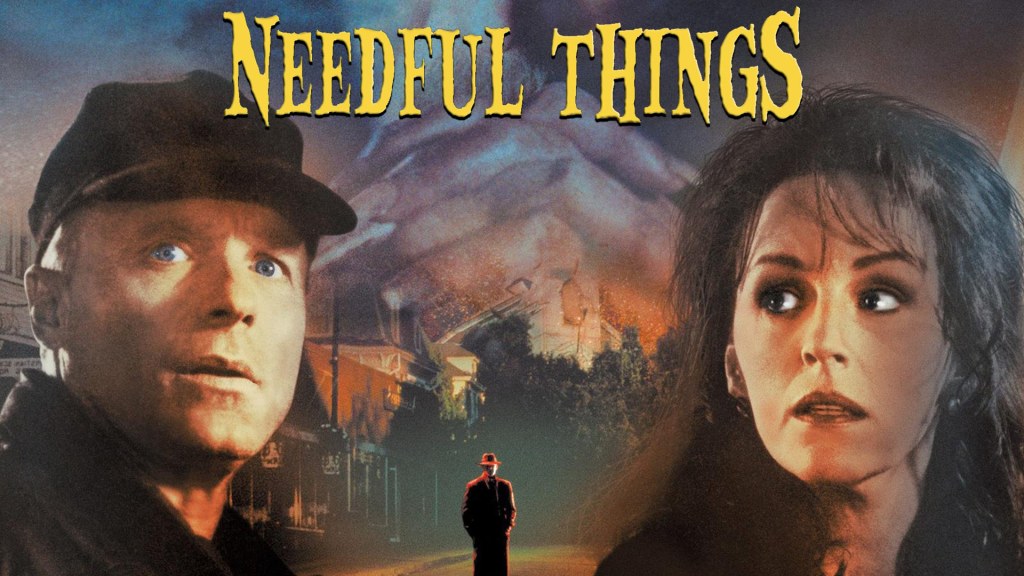
  • Blu-ray review: “Needful Things” (1993)

    “Needful Things” (1993)

    Horror/Drama

    Running Time: 102 minutes

    Written by: W. D. Richter

    Directed by: Fraser C. Heston

    Featuring: Ed Harris, Max von Sydow, Bonnie Bedelia, J. T. Walsh and Amanda Plummer

    Leland Gaunt: “The young carpenter from Nazareth? I know him well. Promising young man. He died badly.”

    Critical Commentary

    “Needful Things,” a film adaptation of Stephen King’s novel of the same name, directed by Fraser C. Heston, is a gripping exploration of human nature and the consequences of unchecked desires. Released in 1993, this horror-drama takes audiences on a dark and twisted journey into the seemingly quaint town of Castle Rock. With an ensemble cast led by Max von Sydow and Ed Harris, the movie weaves a complex narrative that delves into the sinister machinations of a mysterious shop owner and the havoc he wreaks on the lives of the townsfolk.

    The story unfolds in Castle Rock, a picturesque town that becomes the epicenter of a malevolent force when a peculiar shop named “Needful Things” opens its doors. Leland Gaunt, played masterfully by Max von Sydow, sets up this curio shop, offering a variety of items that fulfill the deepest desires of the residents. However, these seemingly harmless transactions come at a tremendous cost, as the residents unknowingly become pawns in a diabolical game of manipulation and chaos.

    The strength of “Needful Things” lies in its character development, with each resident of Castle Rock representing a facet of human desire and vulnerability. Ed Harris, portraying Sheriff Alan Pangborn, delivers a nuanced performance as the moral compass of the town. Pangborn becomes the central figure trying to unravel the mysteries behind the chaos that ensues after the shop’s opening.

    On the other hand, Max von Sydow’s portrayal of Leland Gaunt is nothing short of mesmerizing. His charismatic and enigmatic presence dominates every scene, infusing the character with a chilling charm that makes him both repulsive and magnetic. Gaunt manipulates the townsfolk by tapping into their deepest desires and exploiting their weaknesses, turning the idyllic town into a hotbed of resentment and violence.

    At its core, “Needful Things” explores the destructive power of unchecked greed and the corrupting influence of desire. The film serves as a cautionary tale, illustrating how the pursuit of personal satisfaction can lead individuals down a path of moral decay and societal collapse. The residents of Castle Rock, once a tight-knit community, succumb to their basest instincts as they vie for the tantalizing offerings of Gaunt’s shop.

    The narrative skillfully unfolds the consequences of the characters’ choices, highlighting the ripple effect of their actions on the community. It becomes evident that what initially appears as a series of isolated incidents is, in fact, a carefully orchestrated web of manipulation designed to exploit the inherent flaws of human nature.

    Fraser C. Heston’s direction and Tony Westman’s cinematography contribute significantly to the film’s overall atmosphere. The use of dark, muted tones enhances the foreboding sense that something sinister lurks beneath the surface of this seemingly serene town. The juxtaposition of quaint, small-town imagery with the increasingly disturbing events creates a palpable tension that keeps viewers on the edge of their seats.

    The setting, a meticulously crafted Castle Rock, becomes a character in itself. The town transforms from an idyllic backdrop to a nightmarish landscape, mirroring the internal turmoil of its inhabitants. The careful attention to detail in the production design underscores the descent of the community into chaos, with Gaunt’s shop at the epicentre of the town’s unravelling.

    Patrick Doyle’s haunting musical score complements the film’s eerie atmosphere, enhancing the emotional impact of pivotal scenes. The use of subtle melodies and dissonant tones underscores the psychological horror unfolding onscreen. Doyle’s score becomes an integral part of the storytelling, heightening the suspense and unease that permeate the narrative.

    “Needful Things” transcends the horror genre by delving into complex moral themes. As the town succumbs to Gaunt’s manipulations, characters are forced to confront their darkest impulses and grapple with the consequences of their actions. The film raises thought-provoking questions about the nature of good and evil, exploring whether redemption is possible for those who have strayed down a morally dubious path.

    Ed Harris’s portrayal of Sheriff Pangborn becomes a focal point for this exploration of morality. Pangborn’s unwavering commitment to justice and morality in the face of overwhelming chaos serves as a beacon of hope in an otherwise bleak narrative. His internal struggle and determination to restore order add depth to the film, elevating it beyond a mere horror flick to a philosophical examination of the human condition.

    “Needful Things” benefits from its source material, Stephen King’s novel, which provides a rich and layered narrative for adaptation. The film captures the essence of King’s exploration of small-town dynamics and the fragility of societal norms. While some adaptations struggle to translate the depth of King’s novels to the screen, “Needful Things” succeeds in maintaining the thematic complexity that is a hallmark of the author’s work.

    While “Needful Things” is a compelling and atmospheric film, it is not without its flaws. Some critics argue that the intricate web of characters and subplots can be overwhelming, making it challenging for viewers to fully invest in each individual’s story. Additionally, the film’s pacing may be perceived as slow for those expecting a more traditional horror experience. However, the deliberate pacing serves to build suspense and tension, allowing the audience to immerse themselves in the unravelling events.

    Beneath the surface-level horror and supernatural elements, “Needful Things” subtly incorporates social commentary and allegory. The town of Castle Rock becomes a microcosm reflecting the societal struggles and conflicts prevalent in the real world. Gaunt’s manipulative tactics symbolize the external forces that exploit people’s vulnerabilities, whether through political, economic, or social means.

    The diverse range of characters, each representing different aspects of the human condition, allows the film to explore various societal issues. From the corrosive effects of unchecked capitalism to the destructive power of prejudice and resentment, “Needful Things” serves as a mirror reflecting the darker aspects of human behavior. The narrative invites viewers to reflect on the consequences of their own desires and the potential impact on the communities they inhabit.

    Leland Gaunt’s shop, “Needful Things,” is a symbol of temptation and the allure of immediate gratification. The items within the shop act as metaphors for the characters’ deepest desires and insecurities. This symbolism extends beyond the individual level to represent the broader societal pitfalls of succumbing to instant gratification and the pursuit of personal gain at the expense of communal well-being.

    The escalating chaos in Castle Rock can be seen as an allegory for the fragility of societal structures when faced with internal strife. As the town tears itself apart, “Needful Things” serves as a cautionary tale about the dangers of prioritizing personal desires over the collective good. The film’s climax, where characters confront the consequences of their actions, reinforces the idea that redemption is possible, but only through acknowledging and rectifying one’s mistakes.

    While “Needful Things” may not have achieved the same level of recognition as some other Stephen King adaptations, its impact on the horror genre and cinematic storytelling cannot be overlooked. The film’s exploration of psychological horror and its focus on character-driven narratives have influenced subsequent horror films. The nuanced approach to portraying the supernatural as an external manifestation of internal conflicts sets “Needful Things” apart in the realm of horror cinema.

    The film’s legacy also extends to its thematic exploration of morality, echoing the timeless themes found in much of Stephen King’s work. The enduring popularity of King’s novels and their adaptations speaks to the universal appeal of stories that delve into the complexities of human nature, morality, and the thin veneer separating order from chaos.

    “Needful Things” remains a cinematic gem that transcends its horror genre roots. Fraser C. Heston’s direction, coupled with the stellar performances of the cast, elevates the film into a thoughtful exploration of the human condition. The narrative complexity, rich character development, and the film’s ability to seamlessly blend horror with social commentary contribute to its enduring appeal.

    As a Stephen King adaptation, “Needful Things” successfully captures the essence of the author’s storytelling prowess. It taps into the collective fears and desires that define the human experience, offering more than just jump scares and supernatural thrills. The film challenges viewers to reflect on their own moral compass, the consequences of their actions, and the delicate balance between individual desires and societal well-being.

    “Needful Things” stands as a testament to the enduring power of horror as a genre capable of not only inducing fear but also provoking introspection. Its exploration of the sinister allure of unchecked desires continues to resonate with audiences, making it a noteworthy entry in the extensive catalogue of Stephen King adaptations and a film that merits revisiting for both horror enthusiasts and those seeking a thought-provoking cinematic experience.

    “Needful Things” stands as a captivating exploration of the human psyche, wrapped in the trappings of a supernatural horror tale. The film’s success lies in its ability to balance the macabre with a thought-provoking exploration of morality, desire, and the consequences of unchecked ambition. The stellar performances, atmospheric cinematography, and evocative musical score contribute to the film’s enduring appeal.

    As a cinematic adaptation of Stephen King’s novel, “Needful Things” holds its own, capturing the essence of the author’s intricate storytelling and thematic depth. It remains a testament to the enduring power of King’s work and a chilling reminder of the dangers that lurk when humanity succumbs to its darkest desires. In the pantheon of Stephen King adaptations, “Needful Things” stands as a dark and compelling gem that continues to haunt the collective imagination of horror enthusiasts.

    Technical Commentary

    Video

    “Needful Things” was shot by Tony Westman, who would team again with director Fraser on the feature film “Alaska”, but whose principal work has been in television (he shot most of the Showtime series “Dead Like Me”). Perhaps because director Heston knew in advance that the editing would involve a complex interweaving of multiple threads, he and Westman seem to have opted for a visual style that is relatively low-key, with the exception of the “visions” that Gaunt’s customers experience when each one first encounters his or her “needful thing”. 

    Audio

    The film’s original Dolby Stereo track has been encoded in lossless DTS-HD MA 2.0, and it is very effective when played back through a good surround decoder. Especially notable are the moments when each of Gaunt’s victims comes in contact with his or her “needful thing” and experiences a powerful vision, usually of something deeply fulfilling that renders the victim powerless to resist the object’s allure. 

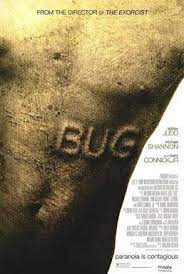
  • Blu-ray review: “Bug” (2006)

    <!– /* Style Definitions */ p.MsoNormal, li.MsoNormal, div.MsoNormal {mso-style-unhide:no; mso-style-qformat:yes; mso-style-parent:””; margin:0cm; margin-bottom:.0001pt; mso-pagination:widow-orphan; font-size:12.0pt; font-family:”Times New Roman”,serif; mso-fareast-font-family:”Times New Roman”;} p.MsoListParagraph, li.MsoListParagraph, div.MsoListParagraph {mso-style-priority:34; mso-style-unhide:no; mso-style-qformat:yes; margin-top:0cm; margin-right:0cm; margin-bottom:0cm; margin-left:36.0pt; margin-bottom:.0001pt; mso-add-space:auto; mso-pagination:widow-orphan; font-size:12.0pt; font-family:”Times New Roman”,serif; mso-fareast-font-family:”Times New Roman”;} p.MsoListParagraphCxSpFirst, li.MsoListParagraphCxSpFirst, div.MsoListParagraphCxSpFirst {mso-style-priority:34; mso-style-unhide:no; mso-style-qformat:yes; mso-style-type:export-only; margin-top:0cm; margin-right:0cm; margin-bottom:0cm; margin-left:36.0pt; margin-bottom:.0001pt; mso-add-space:auto; mso-pagination:widow-orphan; font-size:12.0pt; font-family:”Times New Roman”,serif; mso-fareast-font-family:”Times New Roman”;} p.MsoListParagraphCxSpMiddle, li.MsoListParagraphCxSpMiddle, div.MsoListParagraphCxSpMiddle {mso-style-priority:34; mso-style-unhide:no; mso-style-qformat:yes; mso-style-type:export-only; margin-top:0cm; margin-right:0cm; margin-bottom:0cm; margin-left:36.0pt; margin-bottom:.0001pt; mso-add-space:auto; mso-pagination:widow-orphan; font-size:12.0pt; font-family:”Times New Roman”,serif; mso-fareast-font-family:”Times New Roman”;} p.MsoListParagraphCxSpLast, li.MsoListParagraphCxSpLast, div.MsoListParagraphCxSpLast {mso-style-priority:34; mso-style-unhide:no; mso-style-qformat:yes; mso-style-type:export-only; margin-top:0cm; margin-right:0cm; margin-bottom:0cm; margin-left:36.0pt; margin-bottom:.0001pt; mso-add-space:auto; mso-pagination:widow-orphan; font-size:12.0pt; font-family:”Times New Roman”,serif; mso-fareast-font-family:”Times New Roman”;} .MsoChpDefault {mso-style-type:export-only; mso-default-props:yes; font-family:”Cambria”,serif; mso-ascii-font-family:Cambria; mso-ascii-theme-font:minor-latin; mso-fareast-font-family:”MS Mincho”; mso-fareast-theme-font:minor-fareast; mso-hansi-font-family:Cambria; mso-hansi-theme-font:minor-latin; mso-bidi-font-family:”Times New Roman”; mso-bidi-theme-font:minor-bidi; mso-ansi-language:EN-US;} @page WordSection1 {size:612.0pt 792.0pt; margin:72.0pt 72.0pt 72.0pt 72.0pt; mso-header-margin:36.0pt; mso-footer-margin:36.0pt; mso-paper-source:0;} div.WordSection1 {page:WordSection1;} /* List Definitions */ @list l0 {mso-list-id:1617560813; mso-list-type:hybrid; mso-list-template-ids:1026691260 1065923338 67698691 67698693 67698689 67698691 67698693 67698689 67698691 67698693;} @list l0:level1 {mso-level-start-at:0; mso-level-number-format:bullet; mso-level-text:-; mso-level-tab-stop:none; mso-level-number-position:left; margin-left:21.0pt; text-indent:-18.0pt; font-family:”Times New Roman”,serif; mso-fareast-font-family:”Times New Roman”;} @list l0:level2 {mso-level-number-format:bullet; mso-level-text:o; mso-level-tab-stop:none; mso-level-number-position:left; margin-left:57.0pt; text-indent:-18.0pt; font-family:”Courier New”;} @list l0:level3 {mso-level-number-format:bullet; mso-level-text:; mso-level-tab-stop:none; mso-level-number-position:left; margin-left:93.0pt; text-indent:-18.0pt; font-family:Wingdings;} @list l0:level4 {mso-level-number-format:bullet; mso-level-text:; mso-level-tab-stop:none; mso-level-number-position:left; margin-left:129.0pt; text-indent:-18.0pt; font-family:Symbol;} @list l0:level5 {mso-level-number-format:bullet; mso-level-text:o; mso-level-tab-stop:none; mso-level-number-position:left; margin-left:165.0pt; text-indent:-18.0pt; font-family:”Courier New”;} @list l0:level6 {mso-level-number-format:bullet; mso-level-text:; mso-level-tab-stop:none; mso-level-number-position:left; margin-left:201.0pt; text-indent:-18.0pt; font-family:Wingdings;} @list l0:level7 {mso-level-number-format:bullet; mso-level-text:; mso-level-tab-stop:none; mso-level-number-position:left; margin-left:237.0pt; text-indent:-18.0pt; font-family:Symbol;} @list l0:level8 {mso-level-number-format:bullet; mso-level-text:o; mso-level-tab-stop:none; mso-level-number-position:left; margin-left:273.0pt; text-indent:-18.0pt; font-family:”Courier New”;} @list l0:level9 {mso-level-number-format:bullet; mso-level-text:; mso-level-tab-stop:none; mso-level-number-position:left; margin-left:309.0pt; text-indent:-18.0pt; font-family:Wingdings;} –>

    “Bug” (2006)

    Horror/Drama

    Running Time: 102 minutes 

    Written by: Tracy Letts 

    Directed by: William Friedkin

    Featuring: Ashley Judd, Michael Shannon and Harry Connick Jr. 

    Agnes White: “I guess I’d rather talk with you about bugs than nothing with nobody.” Critical Commentary

    Released in 2006 and directed by William Friedkin, “Bug” is a psychological horror film that dives into the depths of paranoia, isolation, and the fragile nature of the human mind. Adapted from Tracy Letts’ play of the same name, the movie offers a gripping narrative and intense performances that explore the thin line between reality and delusion. In this 2000-word review, we’ll delve into the various elements that make “Bug” a unique and unsettling cinematic experience. 

    The story revolves around Agnes White (Ashley Judd), a lonely and emotionally scarred woman living in a run-down motel. Her life takes an unexpected turn when she meets Peter Evans (Michael Shannon), a mysterious drifter with a troubled past. As their relationship intensifies, so does the paranoia that engulfs them. Convinced that they are being watched by government conspirators and infested by bugs, the two descend into a shared delusion that blurs the lines between reality and madness. Friedkin’s directorial choices play a crucial role in creating an atmosphere of claustrophobia and unease. The majority of the film unfolds within the confines of Agnes’s motel room, amplifying the sense of isolation and intensifying the psychological pressure on the characters. The use of tight shots and dim lighting adds to the overall sense of discomfort, making the audience feel like they too are trapped in the confined space with Agnes and Peter. 

    The film’s score, composed by Brian Tyler, complements the escalating tension on screen. The eerie and unsettling music heightens the sense of paranoia, effectively becoming a character in its own right. The subtle, pulsating tones create a sense of foreboding, keeping the audience on edge throughout the film. The soundtrack serves as a sonic manifestation of the characters’ unraveling mental states, enhancing the overall viewing experience. The strength of “Bug” lies in its characters, brought to life by the exceptional performances of Ashley Judd and Michael Shannon. Ashley Judd delivers a haunting portrayal of Agnes, a woman haunted by her past and seeking solace in a relationship that ultimately accelerates her descent into madness. Michael Shannon, reprising his role from the original stage production, is a revelation as Peter. His intensity and conviction make Peter simultaneously sympathetic and terrifying, leaving the audience unsure of his true intentions until the very end.

    The success of “Bug” heavily relies on the chemistry between the two leads. Judd and Shannon’s performances are not only convincing but also deeply unsettling. The gradual transformation of their characters from vulnerable individuals seeking companionship to paranoid co-conspirators is a testament to their acting prowess. The palpable tension between them keeps the audience hooked, as they question the authenticity of their connection and the reality of the threats they perceive. 

    “Bug” explores the theme of paranoia with unflinching intensity. The film masterfully captures the psychological unraveling of its characters, depicting how isolation and emotional vulnerability can pave the way for delusions to take root. As Agnes and Peter become increasingly convinced of the government’s surveillance and the presence of microscopic bugs, the audience is taken on a disorienting journey into the darkest corners of the human psyche. While “Bug” is undeniably a psychological thriller, it also carries subtle social commentary. The characters’ fear of government surveillance taps into contemporary anxieties about privacy and the erosion of personal freedoms. The film raises questions about the fine line between legitimate concerns and irrational paranoia, offering a reflection of the societal fears prevalent during the early 2000s.

    Friedkin employs visual symbolism to enhance the film’s thematic depth. The use of red lighting, particularly during moments of heightened tension, creates a surreal and nightmarish atmosphere. The symbolism of bugs, initially a metaphor for emotional scars, evolves into a literal manifestation of the characters’ psychosis. The film’s visuals add layers of meaning, inviting viewers to interpret the narrative beyond its surface level. “Bug” is a slow burn that gradually builds tension, allowing the audience to become immersed in the characters’ deteriorating mental states.

    The deliberate pacing may challenge those seeking a conventional horror experience, but it serves a purpose in cultivating a sense of unease that lingers long after the credits roll. The film’s commitment to psychological horror over jump scares sets it apart in a genre often reliant on more immediate thrills. One of the most discussed aspects of “Bug” is its ambiguous ending. Without giving away spoilers, the film concludes in a way that leaves interpretation open to the audience. Some may find the lack of a definitive resolution frustrating, while others appreciate the room for individual interpretation. Friedkin’s decision to keep certain elements open-ended adds to the film’s mystique, encouraging viewers to reflect on the events and draw their own conclusions. 

    “Bug” received a mixed response from critics upon its release. Some praised its psychological depth, performances, and unnerving atmosphere, while others found fault in its unconventional narrative and the discomfort it provoked. The film’s divisive nature has since contributed to its cult status, with a dedicated fan base appreciating its unconventional approach to horror and psychological drama. While not a commercial blockbuster, “Bug” has left a lasting impact on the horror genre. Its willingness to explore the psychological aspects of fear rather than relying on traditional horror tropes sets it apart. The film’s emphasis on atmosphere, character development, and the power of suggestion has influenced subsequent psychological horror films that aim to engage audiences on a deeper, more cerebral level.  

    Over the years, “Bug” has gained a cult following, with its reputation growing as a unique and daring exploration of psychological horror. The film’s unconventional narrative, combined with its ambiguous ending, has sparked ongoing discussions and interpretations among cinephiles. It has become the kind of movie that invites repeated viewings, each time offering new nuances and insights into the characters’ deteriorating mental states. Ashley Judd’s performance in “Bug” is a standout in her career, showcasing her versatility as an actress. While she had previously been known for her roles in more mainstream films, “Bug” allowed Judd to delve into darker and more challenging territory. Her portrayal of Agnes is raw and emotionally charged, capturing the character’s vulnerability and descent into madness with a haunting authenticity. It’s a performance that deserves recognition for its depth and complexity. 

    “Bug” marked a turning point in Michael Shannon’s career. His portrayal of Peter Evans is a tour de force, cementing his status as a formidable actor. Shannon’s intensity and commitment to the role make Peter a simultaneously sympathetic and terrifying figure. The actor’s ability to convey the character’s internal struggles and moments of apparent clarity adds layers to the film’s narrative, keeping audiences on edge and questioning the true nature of Peter’s reality. Tracy Letts, who adapted his own play for the screen, deserves credit for crafting a screenplay that captures the claustrophobic intensity of the original stage production. The dialogue is sharp, and the gradual unfolding of the characters’ paranoia is executed with precision. Letts’ script lays the foundation for the film’s psychological depth, creating an atmosphere where the audience is as uncertain about reality as the characters themselves. 

    “Bug” transcends the typical boundaries of horror by delving into the realm of mental health. The film raises important questions about the nature of reality and the subjective experience of paranoia. As Agnes and Peter succumb to their shared delusions, “Bug” becomes a harrowing exploration of the fragility of the human mind. In this way, the film contributes to a broader conversation about mental health in the context of horror cinema. The influence of “Bug” on subsequent psychological horror films is evident in its emphasis on psychological tension over explicit scares. Filmmakers seeking to engage audiences on a deeper, more intellectual level have looked to “Bug” as a reference point. The film’s impact is felt in works that prioritize atmosphere, character development, and the psychological aspects of fear, paving the way for a subgenre of horror that challenges and unsettles its audience in unconventional ways. 

    While “Bug” has found acclaim among a certain demographic of film enthusiasts, it is not without its challenges and controversies. The film’s slow pace and deliberate unfolding of the narrative may alienate viewers accustomed to more conventional horror storytelling. Additionally, the intense and uncomfortable subject matter, including themes of isolation and mental breakdown, can be a divisive factor, with some finding it too unsettling for their tastes. The film’s portrayal of mental illness has also been a point of contention. While “Bug” does not explicitly diagnose its characters, the intersection of paranoia and mental health raises ethical questions about how mental illness is depicted in cinema. Some critics argue that the film perpetuates stigmas and misunderstandings surrounding mental health, while others assert that it serves as a metaphorical exploration rather than a clinical examination. 

    “Bug” remains a fascinating and polarizing entry in the realm of psychological horror. Its enduring legacy lies not only in its ability to unnerve and challenge audiences but also in its influence on subsequent films within the genre. The powerhouse performances of Ashley Judd and Michael Shannon, combined with William Friedkin’s masterful direction, create a cinematic experience that is as uncomfortable as it is unforgettable. “Bug” invites viewers to confront the darker recesses of the human psyche, where reality and delusion blur, and the line between sanity and madness becomes perilously thin. As the film continues to be dissected and discussed, its status as a cult classic is solidified, offering a lasting testament to the potency of psychological horror that transcends the boundaries of traditional genre conventions. Whether embraced for its daring approach or debated for its discomforting themes, “Bug” stands as a bold and unapologetic exploration of the psychological horrors that reside within us all. 

    Technical Commentary 

    Video

    Presented in an aspect ratio of 1.78:1, encoded with MPEG-4 AVC and granted a 1080p transfer, “Bug” arrives on Blu-ray courtesy of Imprint Films. The release is sourced from an older master that was supplied by Lionsgate Films. This master has some noticeable limitations, on a larger screen, some darker background nuances are not as good as they can be. Delineation, clarity, and depth are good, but some small fluctuations can be observed. Colour balance is very, very good. In fact, the blue footage looks great. A few primaries can be fresher, and some nuances can be expanded, but color temperature and balance are convincing. There are no traces of problematic digital corrections. Image stability is very good. Finally, I noticed a few nicks, but I did not see any annoying large blemishes, cuts, stains, or other similar imperfections. 

    Audio 

    There are two standard audio tracks on this Blu-ray release: English DTS-HD Master Audio 5.1 and English LPCM 2.0. Optional English SDH subtitles are provided for the main feature.  

    Special Features

    –       Commentary One – in this archival audio commentary, William Friedkin discusses in great detail what inspired him to do Bug, the visual style of the film (and specifically the symbolism of various objects and close-ups), the awkward evolution of the relationship between Agnes and Peter, the psychological element in the horror that defines the film, etc. –       Commentary Two – this new audio commentary was recorded by author/critic Troy Howarth and Tony Strauss, of WK Books and editor of Wengs Chop Magazine. The two gentlemen discuss the difficult production and marketing history of Bug, The casting choices (with some very interesting comments about Michael Shannon’s take on his part), William Friedkin’s direction and various preferences he had, the tone and atmosphere of the film, etc. –       Discussion with William Friedkin – in this archival program, William Friedkin discusses a wide range of topics, from the production of Bug to the evolution of cinema and directing techniques to his love for unique characters and the best moments of his career. A fantastic program. In English, not subtitled. (29 min).-       Bug: An Introduction – in this archival program, William Friedkin explains what attracted him to Tracy Letts’ play and how his film offers a different interpretation of it. Also included are clips from interviews with Ashley Judd, Michael Shannon, Harry Connick, Jr., Lynn Collins, and producer Gary Huckabay, as well as raw footage from the shooting process. In English, not subtitled. (12 min).

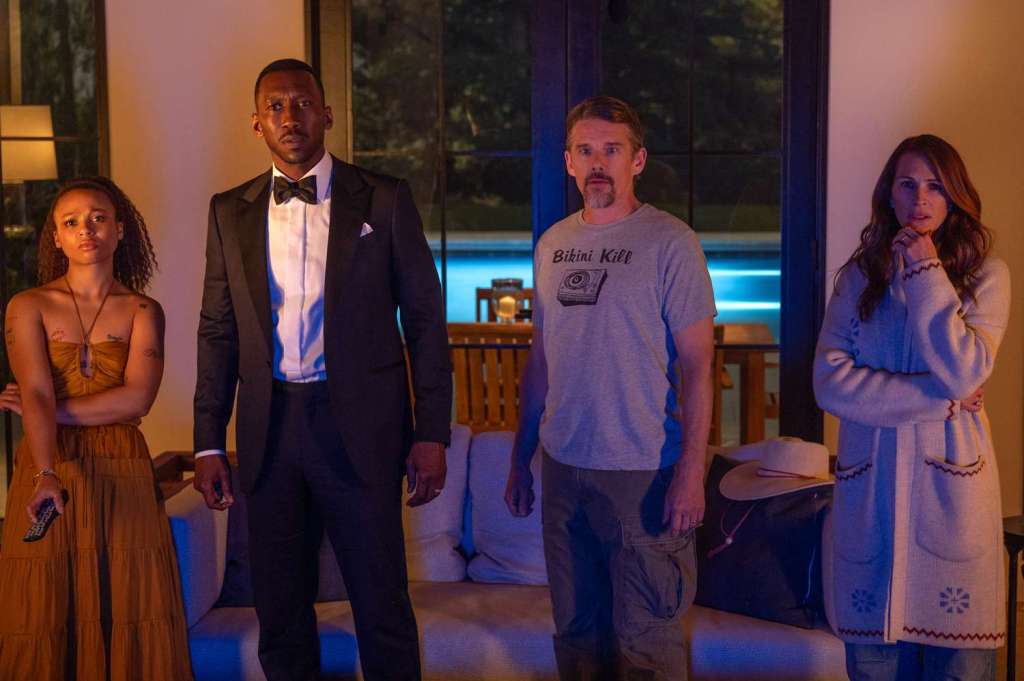
  • Movie review: “Leave the world behind” (2023)

    “Leave the world behind” (2023)

    Thriller

    Running Time: 141 minutes

    Written and directed by: Sam Esmail

    Featuring: Julia Roberts, Mahershala Ali, Ethan Hawke, Myha’la and Kevin Bacon

    Tagline: “There’s No Going Back to Normal”

    In the realm of cinematic thrillers, Sam Esmail’s “Leave the World Behind” emerges as a thought-provoking masterpiece, weaving a suspenseful narrative that delves into the depths of human nature and the complexities of social class. Adapted from Rumaan Alam’s acclaimed novel, the film masterfully captures the essence of the source material, translating its themes and characters onto the screen with remarkable precision and nuance. 

    Set against the backdrop of a seemingly idyllic vacation getaway, the film follows the lives of two families, the Whites and the Reeds, whose paths intertwine under increasingly ominous circumstances. The Whites, affluent and privileged, seek respite from the city’s hustle and bustle at their secluded Long Island home, while the Reeds, their Black tenants, arrive unexpectedly seeking refuge from an unknown threat.

    As a sense of unease pervades the atmosphere, the film masterfully builds tension, gradually revealing the extent of the impending crisis. The world outside descends into chaos, with communication cut off and ominous reports of widespread disruptions. Against this backdrop, the two families must confront their own fears and prejudices, their interactions fraught with unspoken tensions and simmering resentment.

    Julia Roberts and Ethan Hawke deliver exceptional performances as Amanda and Clay Whites, capturing the essence of a couple whose privileged existence is challenged by the rapidly unfolding events. They portray the Whites’ struggles to maintain composure and navigate the unfamiliar territory of uncertainty with remarkable authenticity.

    Mahershala Ali shines as George Reed, a man of quiet strength and resilience, whose calm demeanor serves as a counterpoint to the growing chaos. He exudes a quiet wisdom, a sense of having experienced life’s hardships yet maintaining his dignity and composure. His performance is a testament to his versatility as an actor, showcasing his ability to convey complex emotions with subtlety and depth.

    The film’s exploration of social class adds a layer of complexity to the narrative. The juxtaposition of the Whites’ affluence and the Reeds’ working-class background highlights the deep-seated inequalities that pervade society. As the crisis intensifies, these underlying tensions come to the surface, challenging the Whites’ assumptions of superiority and forcing them to confront their own biases.

    “Leave the World Behind” is not merely a suspenseful thriller; it is a profound exploration of human nature, delving into themes of fear, paranoia, and the fragility of human connection. The film’s ambiguity, its refusal to provide definitive answers, leaves the audience with lingering questions about the nature of the crisis and the future of humanity.

    Director Sam Esmail masterfully employs a variety of cinematic techniques to enhance the film’s suspenseful atmosphere. The use of slow-motion sequences, coupled with an eerie soundscape, creates a sense of impending dread, while the claustrophobic camerawork mirrors the characters’ growing entrapment. The film’s visual style is both understated and evocative, effectively conveying the film’s themes of isolation and vulnerability.

    Beyond its captivating narrative and suspenseful atmosphere, “Leave the World Behind” offers a profound exploration of various themes that resonate deeply with the human experience.

    Amidst the chaos and uncertainty that engulf the characters, the film poignantly highlights the fragility of human connection. As the world outside crumbles, the two families find themselves forced into an unfamiliar and uneasy alliance, their interactions marked by suspicion, mistrust, and unspoken resentments. The film challenges the notion of inherent human connection, suggesting that in times of crisis, our individual instincts for survival can supersede our capacity for empathy and understanding.

    The film powerfully demonstrates the illusion of control we often cling to in our lives. The Whites, accustomed to their privileged existence, are suddenly confronted with their own vulnerability, their sense of security shattered by the unfolding events. The film underscores the unpredictable nature of life and the futility of trying to control every aspect of our existence.

    Fear plays a central role in the narrative, driving the characters’ actions and shaping their interactions. The unknown threat that looms over them fuels their paranoia and mistrust, leading to moments of conflict and misunderstanding. The film explores the various manifestations of fear, from the primal instinct for survival to the more subtle forms of anxiety and apprehension.

    The film’s exploration of social class challenges the notion of inherent superiority. The Whites, initially dismissive of the Reeds, are forced to confront their own prejudices and biases as they rely on George’s knowledge and expertise for survival. The film suggests that preconceived notions and assumptions can hinder our ability to connect with others and appreciate their unique perspectives.

    Despite the darkness and uncertainty that pervade the film, there are moments of genuine human connection and resilience. The characters, despite their flaws and prejudices, find ways to support and care for one another, demonstrating the indomitable spirit of humanity.

    The film’s conclusion leaves the audience with a sense of lingering ambiguity, refusing to provide definitive answers about the nature of the crisis or the fate of the characters. This ambiguity, rather than being frustrating, invites contemplation and reflection, encouraging the audience to consider the broader implications of the film’s themes.

    The film’s setting, the secluded Long Island home, serves as a microcosm of society, reflecting the broader social, economic, and political divisions that exist in the world. The Whites’ affluence and the Reeds’ working-class background represent the stark disparities in wealth and opportunity that plague modern society. The film uses this setting to explore the impact of these disparities on human interactions and the challenges of bridging the gap between different social classes.

    The blackout that plunges the world into darkness serves as a powerful metaphor for societal collapse. The sudden loss of communication, electricity, and access to information mirrors the disintegration of social order and the fear of the unknown. The film suggests that our reliance on technology and interconnectedness makes us particularly vulnerable to such disruptions, highlighting the fragility of our modern world.

    The film’s eerie soundscape, characterized by unsettling noises and a sense of impending dread, creates a palpable atmosphere of suspense and unease. The use of non-diegetic sounds, such as the ominous drone and the unsettling crackling of the radio, heightens the tension and reinforces the sense of impending danger. The soundscape serves as a constant reminder of the unknown threat that looms over the characters, amplifying their fear and paranoia.

    The recurring motif of deer throughout the film serves as a symbol of wildness and unpredictability. The deer’s presence, often unexpected and unsettling, mirrors the characters’ own sense of being out of control and unable to predict the future. The deer’s erratic behavior and sudden appearances suggest an underlying chaos that lies beyond human control, adding to the film’s overall sense of unease and uncertainty.

    The shed, located on the edge of the property, serves as a symbol of hidden truths and secrets. The discovery of a mysterious object within the shed suggests that there is more to the crisis than meets the eye, hinting at a deeper conspiracy or unexplained phenomenon. The shed’s presence also represents the unknown, the lurking mysteries that lie just beyond our perception, adding to the film’s overall sense of suspense and intrigue.

    The film’s final scene, with its abrupt ending and ambiguous nature, invites multiple interpretations, leaving the audience to ponder the meaning of the events that have unfolded. The characters’ uncertain fate and the unanswered questions about the nature of the crisis create a lingering enigma, forcing the audience to confront their own fears and assumptions about the world around them.

    “Leave the World Behind” is a cinematic triumph that lingers long after the credits roll. Its exploration of human nature, social class, and the complexities of human relationships is both thought-provoking and emotionally resonant. The film’s suspenseful narrative, coupled with exceptional performances from its cast, makes it a must-see for fans of psychological thrillers and socially conscious cinema alike.

  • Movie review: “Napoleon” (2023)

    “Napoleon” (2023)

    Drama

    Running Time: 157 minutes

    Written by: David Scarpa

    Directed by: Ridley Scott

    Featuring: Joaquin Phoenix and Vanessa Kirby

    Napoleon Bonaparte: “I am the first to admit when I make a mistake. I simply never do.”

    In the realm of historical epics, few directors have achieved the level of mastery and acclaim as Ridley Scott. From the captivating grandeur of “Gladiator” to the harrowing realism of “Kingdom of Heaven,” Scott has consistently demonstrated an unparalleled ability to transport audiences to different eras and immerse them in the lives of larger-than-life figures. With his latest cinematic endeavor, “Napoleon,” Scott tackles the formidable task of capturing the essence of one of history’s most enigmatic and consequential figures: Napoleon Bonaparte.

    Joaquin Phoenix delivers a tour-de-force performance as Napoleon, embodying the complexities and contradictions of this iconic military leader and statesman. From the charismatic young general to the power-hungry emperor, Phoenix seamlessly navigates the various facets of Napoleon’s personality, revealing his brilliance, ruthlessness, and insatiable ambition. Vanessa Kirby, as Josephine de Beauharnais, Napoleon’s love interest and eventual empress, brings a captivating grace and strength to the role, showcasing the depth of their relationship and the impact of personal sacrifices amidst the tumultuous political landscape.

    Scott’s masterful direction is evident in every frame of “Napoleon,” from the sweeping battle scenes to the intimate personal moments. The film’s cinematography, capturing the grandeur of the Napoleonic era, is both visually stunning and historically accurate, transporting viewers to the heart of the French Revolution and the Napoleonic Wars. The film’s score, composed by Marco Beltrami, perfectly complements the visuals, adding layers of emotion and intensity to the narrative.

    “Napoleon” is not merely a biographical account of a historical figure; it is a profound exploration of ambition, power, and the consequences of unchecked desire. Scott delves into the inner turmoil of Napoleon, revealing the man behind the myth, grappling with his own mortality and the weight of his actions. The film challenges audiences to consider the complexities of leadership, the sacrifices demanded by war, and the enduring legacy of one man’s impact on history.

    At its core, “Napoleon” is a captivating human drama, exploring the complexities of love, loss, and the pursuit of greatness. The film delves into the tumultuous relationship between Napoleon and Josephine, a bond fraught with passion, betrayal, and the inescapable demands of imperial power. Through their interactions, the film highlights the sacrifices made in the name of ambition and the enduring impact of love’s triumphs and tragedies.

    Joaquin Phoenix’s portrayal of Napoleon is a masterclass in capturing the essence of a complex and multifaceted historical figure. He masterfully conveys the general’s charisma, intelligence, and ruthless ambition, while also hinting at the insecurities and vulnerabilities that lay beneath his commanding exterior. Phoenix’s performance is both captivating and thought-provoking, forcing audiences to confront the contradictions inherent in such a powerful and enigmatic leader.

    Scott’s direction further enhances the depth and complexity of Napoleon’s character. He carefully avoids presenting a simplistic or one-dimensional portrayal, instead opting for a nuanced exploration of the man behind the myth. Through subtle cues and carefully crafted scenes, Scott reveals Napoleon’s motivations, his strengths and weaknesses, and the internal struggles that shaped his actions.

    “Napoleon” is not merely a character study; it is also an examination of the impact of leadership on individuals and nations. Scott delves into the complexities of military leadership, showcasing the challenges of commanding vast armies, making strategic decisions under immense pressure, and facing the inevitable human cost of war. The film does not shy away from portraying the darker aspects of Napoleon’s leadership, including his ruthlessness in achieving his goals and the devastating consequences of his military campaigns.

    Beyond the battlefield, “Napoleon” explores the broader impact of leadership on society. The film depicts the political turmoil of the French Revolution, the rise and fall of empires, and the struggles of ordinary people caught in the crossfire of power struggles. Through these portrayals, Scott raises critical questions about the nature of leadership, its impact on individuals and societies, and the enduring legacy of those who wield power.

    “Napoleon” is a visual feast, capturing the grandeur and spectacle of the Napoleonic era with breathtaking cinematography and meticulous attention to historical detail. From the sweeping landscapes of battlefields to the opulent interiors of imperial palaces, the film immerses audiences in a world of opulence, power, and conflict. The film’s costume design, set design, and prop work are all meticulously crafted, reflecting the historical accuracy and aesthetic sensibilities of the era.

    “Napoleon” stands as a testament to Ridley Scott’s enduring mastery of historical epics. His ability to transport audiences to different eras, capture the essence of iconic figures, and explore the complexities of human nature has once again been realized in this remarkable film. With its captivating performances, stunning visuals, and thought-provoking exploration of historical themes, “Napoleon” is a cinematic triumph that will undoubtedly solidify its place among Scott’s most celebrated works.

    “Napoleon” is more than just a historical biopic; it is a profound exploration of human ambition, the consequences of power, and the enduring impact of love and loss. Scott’s masterful direction and Phoenix’s transformative performance bring Napoleon to life, revealing the man behind the myth, his triumphs and failures, his ambitions and vulnerabilities. “Napoleon” is a film that lingers long after the credits roll, inviting audiences to contemplate the enduring impact of history’s most iconic figures and the profound influence of love and ambition on the human experience.

    While “Napoleon” is a visually stunning and historically captivating epic, it is the film’s exploration of human emotion and the complexities of leadership that elevates it to a masterpiece of cinema. Scott’s masterful direction and Phoenix’s transformative performance bring Napoleon to life, revealing the man behind the legend, his triumphs and failures, his ambitions and vulnerabilities. “Napoleon” is a film that lingers long after the credits roll, inviting audiences to contemplate the enduring impact of history’s most iconic figures and the profound influence of love and ambition on the human experience.

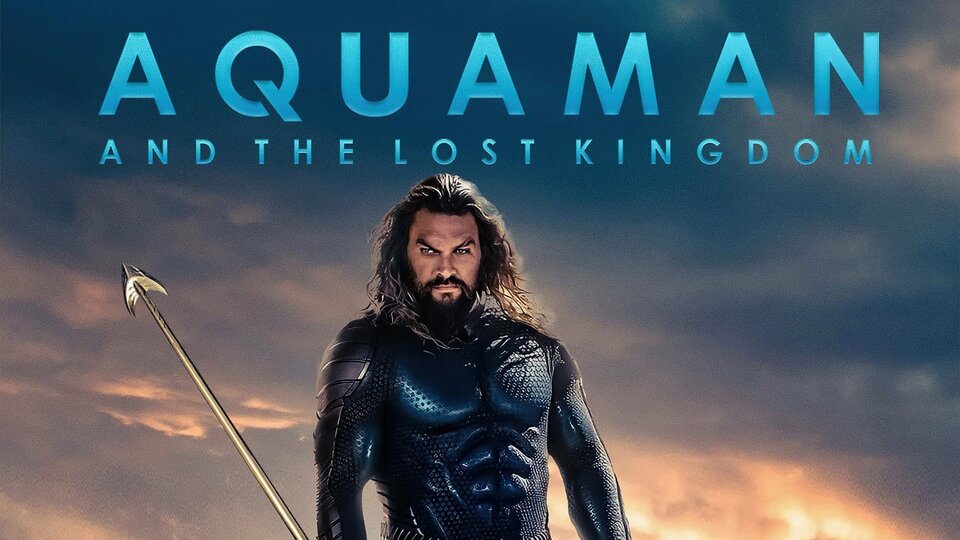
  • Trailer: “Aquaman and the Lost Kingdom”

    Trailer: “Aquaman and the Lost Kingdom”

    Warner Bros. Pictures has now released the second trailer for James Wan’s big-budget fantasy epic “Aquaman and the Lost Kingdom”.

    Returning to the roles they originated are Jason Momoa as Arthur Curry/Aquaman, Patrick Wilson as his half-brother Orm, Amber Heard as Mera, Yahya Abdul-Mateen II as Black Manta, Nicole Kidman as Atlanna, Dolph Lundgren as King Nereus and Randall Park as Dr. Stephen Shin.

    Having failed to defeat Aquaman the first time, Black Manta, still driven by the need to avenge his father’s death, will stop at nothing to take Aquaman down once and for all.

    This time Black Manta is more formidable than ever before, wielding the power of the mythic Black Trident, which unleashes an ancient and malevolent force.

    To defeat him, Aquaman will turn to his imprisoned brother Orm, the former King of Atlantis, to forge an unlikely alliance. Together, they must set aside their differences in order to protect their kingdom and save Aquaman’s family, and the world, from irreversible destruction.

    Wan directs the film produced by Peter Safran, Wan and Rob Cowan. The screenplay is by David Leslie Johnson-McGoldrick fom a story by the writer along with Wan, Momoa & Thomas Pa’a Sibbett.

    “Aquaman and the Lost Kingdom” is set to open in theaters worldwide beginning December 22nd.

  • Movie review: “Thanksgiving” (2023)

    “Thanksgiving” (2023)

    Horror

    Running Time: 106 minutes

    Written by: Jeff Rendell

    Directed by: Eli Roth

    Featuring: Patrick Dempsey, Addison Rae, Milo Manheim, Jalen Thomas Brooks, Nell Verlaque, Rick Hoffman and Gina Gershon

    Thomas Wright: “Thanksgiving is a time for appreciation. To celebrate with the ones that we love the most. And a time for all families to be together. Let’s eat.”

    Eli Roth, the director known for his over-the-top horror films, has finally turned his attention to Thanksgiving, the holiday of gratitude and family togetherness. But in Roth’s hands, Thanksgiving is anything but traditional. His 2023 film is a gory and satirical slasher that takes aim at the hypocrisy of the holiday and the dark side of American consumerism.

    scene from the movie Thanksgiving where a group of people are trapped in a department store during a Black Friday riot.

    The film opens on a chaotic Black Friday, where a group of frenzied shoppers stampede through a department store in a desperate rush for discounted goods. The scene is a chaotic and violent spectacle, setting the stage for the bloodshed to come.

    A year later, on the eve of Thanksgiving, a masked killer dressed as a pilgrim begins terrorizing the town of Plymouth, Massachusetts. The killer, known as the Pilgrim Ripper, targets young college students, picking them off one by one in gruesome and inventive ways.

    The film features a cast of familiar faces, including Addison Rae, Patrick Dempsey, and Gina Gershon. Rae stars as Carly, a college student who is struggling to cope with the aftermath of the Black Friday tragedy. Dempsey plays her father, a police officer who is determined to bring the Pilgrim Ripper to justice. Gershon plays the town’s eccentric mayor, who is more concerned with keeping the town’s secrets than protecting its citizens.

    In addition to its gory thrills, Thanksgiving is also a satirical take on American culture. The film takes aim at the consumerism and materialism that have come to define the holiday. It also explores the dark side of American history, particularly the violence and bloodshed that took place during the colonization of the Americas.

    Thanksgiving is a return to form for Roth, who has been criticized in recent years for making films that are more style than substance. This film is a reminder of his ability to craft a genuinely scary and suspenseful horror film.

    Beneath its layers of gore and satire, Thanksgiving explores several thought-provoking themes that resonate with contemporary society. Let’s delve into some of these key aspects:

    Eli Roth masterfully portrays the frenzy and violence that can emerge from the rampant consumerism associated with Black Friday sales. The film’s opening scenes vividly depict the chaos and destruction that ensue as shoppers trample over each other in a desperate pursuit of discounted goods. This exaggerated portrayal serves as a stark reminder of the dark side of consumerism and its potential to turn people into mindless, aggressive creatures.

    Thanksgiving is often celebrated as a time for family, gratitude, and reflection. However, Roth challenges this idealized notion by exposing the hypocrisy that often underlies the holiday. The film’s setting in Plymouth, Massachusetts, the birthplace of Thanksgiving, adds a layer of irony as the town’s inhabitants grapple with the violent actions of the Pilgrim Ripper. The film suggests that the true spirit of Thanksgiving is often overshadowed by materialism, selfishness, and a disregard for the less fortunate.

    The choice of a pilgrim-masked killer as the antagonist is not merely a random slasher trope; it serves as a symbolic reminder of the dark side of American history. The film alludes to the violent conquest of Native American lands and the atrocities committed by the early settlers. The Pilgrim Ripper’s murderous rampage can be seen as a manifestation of this dark legacy, a haunting reminder of the sins of the past.

    Despite the gruesome violence and the bleak outlook on society, Thanksgiving also offers moments of hope and resilience. The film’s characters, particularly Carly, face their fears and fight back against the evil that surrounds them. Their determination to survive and their acts of kindness serve as a beacon of hope amidst the darkness.

    Eli Roth’s Thanksgiving has left a lasting mark on the horror genre, not only for its visceral thrills and satirical elements but also for its innovative approach to storytelling and its exploration of social themes. The film has inspired a new wave of horror filmmakers who are unafraid to push boundaries and challenge the conventions of the genre.

    Thanksgiving harkens back to the era of grindhouse cinema, a style of filmmaking characterized by its exploitation of graphic violence, sex, and social commentary. Roth’s use of grainy film stock, over-the-top gore effects, and a gritty, grimy atmosphere pays homage to the grindhouse classics of the 1970s. This stylistic choice lends the film a sense of authenticity and adds to its overall impact.

    Thanksgiving cleverly subverts the traditional horror tropes, injecting a layer of humor and social commentary into the familiar slasher narrative. The film’s exaggerated depiction of Black Friday frenzy, the inclusion of an eccentric mayor more concerned with public perception than public safety, and the exploration of the dark side of American history all contribute to the film’s satirical edge.

    Thanksgiving strikes a delicate balance between horror and social commentary. While the film delivers plenty of gore and scares to satisfy horror fans, it also takes aim at consumerism, materialism, and the hypocrisy of American culture. This blend of entertainment and social consciousness is what makes Thanksgiving a unique and memorable horror experience.

    Thanksgiving has inspired a new generation of horror filmmakers who are not afraid to experiment with genre conventions and explore social themes in their work. The film’s success has demonstrated that there is a demand for horror films that are both entertaining and thought-provoking.

    Since its release in 2023, Eli Roth’s Thanksgiving has captivated audiences with its blend of gory thrills and insightful social commentary. The film’s enduring appeal lies in its ability to tap into our deepest fears and anxieties while simultaneously offering a scathing critique of contemporary society.

    Thanksgiving masterfully exploits our primal fears of death, violence, and the unknown. The film’s relentless pursuit of graphic violence and its relentless pursuit of gruesome imagery leave a lasting impression on viewers. The Pilgrim Ripper’s relentless pursuit of victims and his imaginative methods of torture heighten our sense of dread and keep us on the edge of our seats.

    Beyond its visceral thrills, Thanksgiving serves as a scathing commentary on the darker aspects of American society. The film’s portrayal of Black Friday frenzy exposes the destructive nature of rampant consumerism and materialism. The Pilgrim Ripper’s actions can be seen as a manifestation of the country’s violent colonial past and the lingering injustices that continue to plague society.

    The combination of horror and social commentary is what makes Thanksgiving a timeless tale. The film’s ability to both terrify and provoke thought ensures that it will continue to resonate with audiences for generations to come. Roth’s willingness to delve into the darkest corners of human nature and society while still delivering a thrilling horror experience sets Thanksgiving apart from many of its contemporaries.

    Thanksgiving has left a lasting mark on the horror genre, inspiring a new wave of filmmakers who are unafraid to challenge conventions and explore social themes. The film’s success has demonstrated that there is a strong demand for horror films that are both entertaining and intellectually stimulating.

    Thanksgiving is more than just a gory slasher film; it is a social commentary that challenges our perceptions of a beloved holiday and forces us to confront the darker aspects of American culture. Roth’s willingness to delve into these uncomfortable themes while still delivering a thrilling and entertaining horror experience makes Thanksgiving a unique and thought-provoking cinematic experience.

  • Trailer: Sony & Marvel’s “Madame Web” (2024)

    Trailer: “Madame Web” (2024)

    Sony Pictures has released the first trailer for their Marvel Comics film adaptation and “Spider-Man” spin-off “Madame Web” ahead of the film’s launch in February next year.

    Dakota Johnson stars in the lead role in the film which marks a part of Sony Pictures’ Marvel Universe of Characters (SPUMC) alongside “Venom” and “Mobius”.

    The project is subbed a “standalone origin story of one of Marvel publishing’s most enigmatic heroines”.

    The suspense-driven thriller stars Dakota Johnson as Cassandra Webb, a paramedic in Manhattan who may have clairvoyant abilities. Forced to confront revelations about her past, she forges a relationship with three young women destined for powerful futures…if they can all survive a deadly present. 

    Sydney Sweeney, Celeste O’Connor, Isabela Merced, Tahar Rahim, Emma Roberts, Mike Epps, Adam Scott, and Zosia Mamet also star in the S. J. Clarkson-directed feature.

    Matt Sazama and Burk Sharpless penned the screenplay for the film which is getting a theatrical release on February 16th 2024.

  • Movie review: “The Hunger Games: The Ballad of Songbirds & Snakes” (2023)Movie review:

    “The Hunger Games: The Ballad of Songbirds & Snakes” (2023)

    Action

    Running Time: 157 minutes

    Written by: Michael Lesslie and Michael Arndt

    Directed by: Francis Lawrence

    Featuring: Tom Blyth, Rachel Zegler, Peter Dinklage, Jason Schwartzman, Hunter Schafer, Josh Andrés Rivera and Viola Davis

    Lucy Gray Baird: “Nothing you can take from me was ever worth keeping.”

    The Hunger Games, Suzanne Collins’ dystopian young adult trilogy, captivated audiences worldwide with its thrilling narrative of survival and rebellion against an oppressive regime. Over a decade after the conclusion of the original saga, the franchise returns with a highly anticipated prequel, The Hunger Games: The Ballad of Songbirds & Snakes, directed by Francis Lawrence. Set 64 years before the events of the original trilogy, the film delves into the formative years of Coriolanus Snow, the ruthless president of Panem, as he navigates the treacherous political landscape of the Capitol and the brutal world of the Hunger Games.

    In The Ballad of Songbirds & Snakes, we meet Coriolanus Snow as an ambitious 18-year-old, desperate to restore the prestige of his once-glorious family. As part of his mentor training for the 10th annual Hunger Games, he is assigned to guide Lucy Gray Baird, a charismatic tribute from District 12, the poorest and most oppressed district. Their unlikely pairing sparks a complex and unexpected bond, challenging Coriolanus’ preconceived notions of class and humanity.

    Tom Blyth delivers a compelling portrayal of Coriolanus Snow, capturing both the character’s youthful idealism and the seeds of his future ruthlessness. Rachel Zegler shines as Lucy Gray Baird, infusing the role with a captivating blend of resilience, defiance, and vulnerability. Their on-screen chemistry is undeniable, adding a layer of emotional depth to the narrative.

    The film’s visual spectacle is equally impressive, immersing viewers in the opulent decadence of the Capitol and the stark brutality of the Hunger Games arena. The costumes, set design, and special effects are meticulously crafted, transporting audiences to a world both familiar and unsettling.

    The Hunger Games: The Ballad of Songbirds & Snakes is not merely a retelling of the original story; it’s a thoughtful exploration of the origins of a dictator and the complex forces that shape an individual’s destiny. The film delves into themes of power, ambition, and the corruption of absolute authority. It challenges viewers to question the nature of justice and the consequences of unchecked power.

    While the film takes liberties with certain aspects of Suzanne Collins’ prequel novel, it remains true to the essence of the Hunger Games universe, capturing its blend of suspense, action, and social commentary. The film’s exploration of Coriolanus Snow’s transformation from an ambitious youth to a ruthless dictator is both fascinating and disturbing, providing a deeper understanding of the character we encountered in the original trilogy.

    The Ballad of Songbirds & Snakes may not offer the same level of novelty and surprise as the original Hunger Games films, but it stands as a captivating prequel that expands the franchise’s narrative and offers a fresh perspective on its central themes. The film’s strengths lie in its compelling characters, thought-provoking themes, and visually stunning production design. It’s a worthy addition to the Hunger Games saga, providing fans with a deeper understanding of the world they know and love.

    The Hunger Games: The Ballad of Songbirds & Snakes presents a captivating character study of Coriolanus Snow, exploring the factors that shape his transformation from an ambitious youth to a ruthless dictator. The film grapples with questions of morality, questioning the boundaries between compassion and ruthlessness, and the influence of societal norms and personal ambition.

    Coriolanus’ initial motivations are rooted in ambition and a desire to restore his family’s fallen status. He views the Hunger Games as a platform for advancement, a chance to prove his worth and regain the prestige his family once held. This ambition drives him to mentor Lucy Gray Baird, seeing her as a pawn in his game of social climbing.

    However, as Coriolanus witnesses Lucy Gray’s defiance and resilience, he begins to question his own moral compass. He is drawn to her authenticity and her ability to maintain her spirit despite the brutality of the Hunger Games. This newfound connection challenges Coriolanus’ preconceived notions about the tributes, forcing him to confront the harsh realities of the Capitol’s oppressive regime.

    The film masterfully portrays the internal conflict within Coriolanus as he navigates the treacherous political landscape of the Capitol. He is torn between his desire for power and his growing empathy for Lucy Gray. This struggle is further complicated by the influence of his mentor, Dr. Volumnia Gaul, who embodies the ruthlessness and disregard for human life that Coriolanus is expected to embrace.

    The Hunger Games: The Ballad of Songbirds & Snakes doesn’t shy away from exploring the darker aspects of Coriolanus’ character. It acknowledges his flaws, his moments of cruelty and manipulation. However, it also allows him moments of vulnerability and compassion, hinting at the potential for redemption that lies beneath the surface of his hardened exterior.

    The film’s exploration of Coriolanus Snow’s moral compass is particularly captivating. It presents a complex and nuanced portrayal of a character who is both ambitious and compassionate, capable of both cruelty and kindness. This internal conflict is played out beautifully by Tom Blyth, who delivers a compelling performance as the young Coriolanus Snow. 

    The film also benefits from Rachel Zegler’s charismatic performance as Lucy Gray Baird, the tribute from District 12 who becomes Coriolanus’ mentor. Zegler captures Lucy Gray’s spirit and resilience, making her a character who is both inspiring and heartbreaking. 

    The supporting cast is also strong, with Viola Davis and Jason Schwartzman delivering particularly memorable performances. Davis is both terrifying and captivating as Dr. Volumnia Gaul, while Schwartzman is delightfully over-the-top as Lucky Flickerman, the host of the Hunger Games. 

    The film’s visuals are also impressive, with the opulent decadence of the Capitol contrasting sharply with the stark brutality of the Hunger Games arena. The costumes, set design, and special effects are all top-notch, bringing the world of Panem to life in vivid detail. 

    Hunger Games arena from The Hunger Games: The Ballad of Songbirds & Snakes 

    The Hunger Games: The Ballad of Songbirds & Snakes is a worthy addition to the Hunger Games franchise. It expands the narrative of the original trilogy, providing fans with a deeper understanding of the world they know and love. The film is also a thought-provoking exploration of power, ambition, and the corruption of absolute authority. It’s a film that will stay with you long after the credits roll.

    Ultimately, the film leaves the question of Coriolanus’ moral trajectory open-ended. It suggests that his transformation into the ruthless dictator we know from the original Hunger Games trilogy is not inevitable, but a product of the choices he makes and the influences he encounters. It is a reminder that even in the face of overwhelming societal pressures, individuals have the capacity for both compassion and cruelty, and the choices they make shape their destiny.

  • Movie review: “The Marvels” (2023)

    “The Marvels” (2023)

    Action

    Running Time: 179 minutes

    Written by: Nia DaCosta, Megan McDonnell and Elissa Karasik

    Directed by: Nia DaCosta

    Featuring: Brie Larson, Teyonah Parris, Iman Vellani, Zawe Ashton, Gary Lewis, Park Seo-joon, Zenobia Shroff, Mohan Kapur, Saagar Shaikh and Samuel L. Jackson

    Dr. Henry ‘Hank’ McCoy: “Confusion is the first step to knowledge.”

    The Marvels, released in November 2023, is the latest installment in the Marvel Cinematic Universe (MCU), bringing together three generations of iconic female superheroes: Captain Marvel, Monica Rambeau, and Kamala Khan. Directed by Nia DaCosta, the film takes viewers on a cosmic adventure filled with action, humor, and heart.

    Captain Marvel, still reeling from the events of her previous solo film, finds herself entangled in a mysterious phenomenon that connects her powers with those of Monica Rambeau and Kamala Khan. Together, the trio must navigate the complexities of their newfound abilities while facing off against a powerful Kree threat that threatens the stability of the universe.

    The Marvels is a thrilling and entertaining superhero film that delivers on all fronts. The film’s action sequences are visually stunning and expertly choreographed, showcasing the full range of powers and abilities possessed by its three protagonists. From Captain Marvel’s cosmic blasts to Monica Rambeau’s energy manipulation to Kamala Khan’s shape-shifting, the film never fails to impress with its visual spectacle.

    Captain Marvel, Monica Rambeau, and Kamala Khan in action in The Marvels 

    Beyond its action, The Marvels also excels in its character development. The film takes the time to explore the personal journeys of each of its three leads, delving into their motivations, fears, and aspirations. Captain Marvel struggles with the weight of her immense power and the responsibility that comes with it, while Monica Rambeau grapples with her own identity and place in the world. Kamala Khan, the idealistic and relatable young heroine, continues to grow and mature as she navigates the challenges of being a superhero.

    The chemistry between the three leads is undeniable, and their interactions are a joy to watch. Brie Larson brings her signature charm and strength to the role of Captain Marvel, while Teyonah Parris delivers a powerful performance as the conflicted and determined Monica Rambeau. Iman Vellani continues to shine as the infectious and lovable Kamala Khan, imbuing the character with a sense of authenticity and relatability.

    The film’s supporting cast is equally impressive, with standout performances from Zawe Ashton as the villainous Kree leader and Samuel L. Jackson as the ever-present Nick Fury.

    The Marvels explores a range of themes that resonate with audiences of all ages. The film highlights the importance of teamwork, friendship, and mentorship, demonstrating how individuals can achieve great things when they come together. It also emphasizes the power of believing in oneself and never giving up on one’s dreams.

    The visual effects in The Marvels are nothing short of spectacular. The film’s cosmic landscapes and otherworldly environments are rendered with stunning detail, and the action sequences are visually breathtaking. The use of CGI is seamless, integrating seamlessly with the practical effects to create a truly immersive cinematic experience.

    The Marvels has received positive reviews from critics, who have praised its action sequences, humour, and character development. The film currently holds an 87% approval rating on Rotten Tomatoes.

    The Marvels has already made a significant impact on the MCU, expanding the universe in new and exciting ways. The film’s introduction of Kamala Khan as a major player in the franchise has opened up a new chapter in the MCU’s exploration of diversity and representation. Additionally, the film’s exploration of cosmic themes has raised the stakes for future MCU films, suggesting that the universe is about to get even bigger and more complex.

    The Marvels is more than just a superhero film; it is a cultural phenomenon. The film has been praised for its positive portrayal of female superheroes, and it is sure to inspire a new generation of girls to dream big and believe in their own potential. The film’s diverse cast and inclusive storytelling have also been praised, and it is sure to resonate with audiences from all walks of life.

    The Marvels has set the stage for a number of exciting developments in the MCU. The film’s introduction of the Kree as a major threat suggests that the cosmic side of the MCU will play a more prominent role in future films. Additionally, the film’s ending leaves the door open for a number of potential sequels, including a solo film for Monica Rambeau and a team-up film with the younger generation of MCU heroes.

    The Marvels has not only established itself as a captivating superhero film but also cemented its place in the broader Marvel Cinematic Universe (MCU) narrative. The film’s impact extends beyond its immediate entertainment value, leaving an indelible mark on the franchise’s trajectory and cultural significance.

    The Marvels boldly ventured into the vast expanse of the cosmos, introducing audiences to new corners of the MCU and expanding the franchise’s scope. The film’s exploration of cosmic themes and intergalactic threats has opened up a plethora of possibilities for future MCU storylines, hinting at a universe teeming with unexplored adventures and formidable adversaries.

    The Marvels stands as a testament to the MCU’s commitment to diversity and representation. The film’s central trio comprises three generations of powerful female superheroes, each with distinct backgrounds and perspectives. This representation not only empowers young girls to see themselves reflected in the heroic realm but also enriches the storytelling by incorporating a wider range of experiences and viewpoints.

    The Marvels has undoubtedly ignited the imaginations of countless young viewers, inspiring them to embrace their own potential and aspire to greatness. Kamala Khan, the relatable and enthusiastic teenage superhero, serves as a beacon of hope for aspiring heroes, demonstrating that anyone can make a difference. The film’s message of empowerment and self-belief has resonated with audiences worldwide, fostering a sense of possibility and encouraging individuals to pursue their dreams.

    The Marvels has undoubtedly left an indelible mark on the MCU, not only through its thrilling narrative and captivating characters but also through its broader cultural impact. The film’s celebration of diversity, its exploration of cosmic themes, and its empowering messages have resonated with audiences worldwide, solidifying its place as a significant milestone in the franchise’s evolution. As the MCU continues to unfold, the legacy of The Marvels will undoubtedly inspire future storylines, character arcs, and themes, ensuring its enduring impact on the ever-expanding superhero realm.

    The Marvels is a must-see for fans of the MCU and superhero films in general. It is a thrilling, action-packed adventure that delivers on all fronts, with memorable characters, a compelling story, and stunning visual effects. The film is sure to leave audiences entertained and inspired.

  • Movie review: “Equalizer 3” (2023)

    “Equalizer 3” (2023)

    Action

    Running Time: 179 minutes

    Written by: Richard Wenk

    Directed by: Antoine Fuqua

    Featuring: Denzel Washington, Dakota Fanning, Eugenio Mastrandrea and David Denman

    Robert McCall: “Nine seconds. That’s what I’ll give you to decide your fate. Nine seconds.”

    In the realm of action thrillers, few names evoke the same level of intensity and grit as Denzel Washington. Over the years, he has captivated audiences with his portrayal of complex and formidable characters, from the iconic John Q. Public to the unstoppable Robert McCall in the Equalizer franchise. Now, with The Equalizer 3, Washington returns to his role as McCall, delivering a performance that is both captivating and deeply satisfying, bringing a fitting end to this thrilling trilogy.

    Robert McCall in The EqualizThe Equalizer series follows the story of Robert McCall, a former CIA operative who has retired from his violent past and now seeks a life of peace. However, his sense of justice and his unwavering belief in protecting the innocent draw him back into the world of violence and retribution. In the first two films, McCall confronts and disrupts criminal organizations, always working in the shadows and leaving no trace behiA 

    The Equalizer 3 takes McCall to the picturesque coast of Southern Italy, where he has settled into a quiet life. However, his sanctuary is shattered when he discovers that the local community is under the control of a ruthless Russian mobster. McCall’s past comes back to haunt him as he is forced to confront the demons of his past while protecting the innocent people he has come to care for.

    Denzel Washington’s portrayal of Robert McCall is the heart and soul of the Equalizer franchise. He brings a quiet intensity and a sense of unwavering morality to the character, making him both a formidable force and a relatable hero. In The Equalizer 3, Washington elevates McCall’s character to new heights, showcasing his emotional depth and his unwavering commitment to justice.

    The Equalizer 3 is not just a mindless action flick; it is a story about the power of one individual to make a difference. McCall’s actions are not motivated by personal gain or vengeance; they are driven by a deep-seated sense of justice and a desire to protect the vulnerable. This moral compass is what sets McCall apart from other action heroes and makes him a character we can root for.

    The Equalizer 3 is a fitting conclusion to a thrilling trilogy. It delivers the action and intensity that fans of the franchise have come to expect, but it also delves deeper into McCall’s character and his personal struggles. Washington’s performance is nothing short of mesmerizing, and the supporting cast, including Dakota Fanning as McCall’s trusted ally, deliver strong performances.

    The Equalizer 3 is a testament to the power of storytelling. It is a film that can be enjoyed on multiple levels, from the adrenaline-fueled action sequences to the deeper exploration of morality and justice. It is a film that will stay with you long after the credits roll, leaving you pondering the impact of one individual’s actions and the power to make a difference in the world.

    The Equalizer 3 was directed by Antoine Fuqua, who helmed the first two films in the franchise. Fuqua’s signature style, characterized by its gritty realism and intense action sequences, is evident throughout the film. He masterfully captures the beauty of the Italian countryside while juxtaposing it with the harsh realities of organized crime. 

    The film’s cinematography, by Robert Richardson, is simply stunning. Richardson’s use of light and shadow creates a sense of atmosphere and adds depth to the film’s visual storytelling. The action sequences are particularly well-shot, with Richardson capturing the raw intensity and brutality of McCall’s fighting style.

    A Soundtrack that Amplifies the Tension

    The Equalizer 3’s soundtrack is a masterclass in tension-building. The score, composed by Harry Gregson-Williams, is a blend of haunting melodies and pulsating rhythms that perfectly complement the film’s action sequences. The score adds an extra layer of intensity to the film, keeping the audience on the edge of their seats throughout. A Franchise That Delivers

    The Equalizer 3 is a fitting end to a trilogy that has consistently delivered high-quality action thrillers. Denzel Washington’s performance as Robert McCall is the heart and soul of the franchise, and he continues to impress in this latest installment. The film is packed with action, suspense, and a strong moral compass, making it a must-see for fans of the franchise and action enthusiasts alike.

    The Equalizer 3 cements the franchise’s place in the realm of action thrillers. It is a film that will be remembered for its intense action sequences, its complex characters, and its exploration of themes of justice and morality. Denzel Washington’s performance as Robert McCall is a masterclass in acting, and he has undoubtedly left an indelible mark on the genre. The Equalizer 3 is a film that will stay with you long after the credits roll, leaving you contemplating the power of one individual to make a difference in the world.

    In addition to its captivating storyline and stellar performances, The Equalizer 3 also boasts some impressive technical achievements. The film’s cinematography, by Robert Richardson, is nothing short of masterful. Richardson’s use of light and shadow creates a stunning visual tapestry, beautifully capturing the beauty of the Italian countryside while also conveying the underlying tension and danger that permeates the film. 

    The action sequences are equally impressive, choreographed with precision and executed with intensity. McCall’s fighting style is raw and brutal, a reflection of his past as a CIA operative and his unwavering commitment to protecting the innocent. The action sequences are not just visually stunning; they also serve to advance the plot and further develop McCall’s character.

    The film’s score, composed by Harry Gregson-Williams, is a perfect complement to the visuals. Gregson-Williams’ haunting melodies and pulsating rhythms create an atmosphere of suspense and tension, perfectly capturing the emotional intensity of the film. The score is not just background noise; it is an integral part of the storytelling, enhancing the emotional impact of each scene.

    The Equalizer 3 is a testament to the power of filmmaking. It is a film that combines action, suspense, and a strong moral compass, making it a must-see for fans of the franchise and action enthusiasts alike. It is a film that will stay with you long after the credits roll, leaving you contemplating the power of one individual to make a difference in the world.

    The Equalizer 3 has resonated with audiences worldwide, earning praise for its intense action sequences, captivating storyline, and Denzel Washington’s masterful performance as Robert McCall. But what is it about this film that has struck such a chord with viewers?

    One of the key factors in The Equalizer 3’s success is its ability to deliver on the action-packed thrills that fans of the franchise have come to expect. McCall’s fighting style is brutal and efficient, a reflection of his past as a CIA operative and his unwavering commitment to justice. The action sequences are not just visually stunning; they are also suspenseful and well-choreographed, keeping the audience on the edge of their seats throughout.

    Beyond its action-packed exterior, The Equalizer 3 also delves into deeper themes of justice, morality, and the power of one individual to make a difference. McCall’s actions are not motivated by personal gain or vengeance; they are driven by a deep-seated belief in protecting the innocent and upholding justice. This moral compass is what sets McCall apart from other action heroes and makes him a character we can root for.

    Denzel Washington’s portrayal of Robert McCall is the heart and soul of The Equalizer 3. Washington brings a quiet intensity and a sense of unwavering morality to the character, making him both a formidable force and a relatable hero. In this latest installment, Washington elevates McCall’s character to new heights, showcasing his emotional depth, his personal struggles, and his unwavering commitment to making a difference in the world. 

    McCall is not just an action hero; he is a complex and well-developed character with a rich backstory and a compelling moral code. He is haunted by the ghosts of his past, but he finds solace in protecting the innocent and upholding justice. McCall is a character who embodies the best of humanity, and his actions serve as an inspiration to us all.

    The Equalizer 3 is a fitting conclusion to a trilogy that has consistently delivered high-quality action thrillers. It is a film that will be remembered for its intense action sequences, its complex characters, and its exploration of themes of justice and morality. Denzel Washington’s performance as Robert McCall is a masterclass in acting, and he has undoubtedly left an indelible mark on the genre. The Equalizer 3 is a film that will stay with you long after the credits roll, leaving you contemplating the power of one individual to make a difference in the world.

  • Teaser Trailer: “Terrifier 3” (2024)

    Teaser Trailer: “Terrifier 3” (2024)

    Cineverse has premiered the teaser trailer for “Terrifier 3” which is set to release next Halloween.

    The project marks the third installment of Damien Leone’s breakout horror film series with Art the Clown returning to unleash chaos on the unsuspecting residents of Miles County as they peacefully drift off to sleep on Christmas Eve. 

    The previous film’s heroine Sienna (Lauren LaVera) returns to battle the evil Art the Clown (David Howard Thornton) as the film shifts from Halloween horror to Christmas carnage.

    The trailer premiered during the re-release of “Terrifier 2” in theaters on November 1st and seems to be a sort of standalone piece. “Terrifier 3” is set to open in cinemas on October 25th 2024.

  • Trailer: Zack Snyder’s “Rebel Moon: Part One” (2023)

    Trailer: “Rebel Moon: Part One” (2023)

    Back in August, filmmaker Zack Snyder has premiered the first trailer for his two-part Netflix epic space opera film “Rebel Moon” with a lengthy clip teasing the whole saga.

    Now, Netflix has released the official full trailer for the first of the films – “Rebel Moon – Part One: A Child of Fire”.

    The story begins around a colony on the agricultural moon of Veldt on the galaxy’s edge. The peaceful is threatened by the armies of the tyrannical regent Belisarius (Ed Skrein) and the ferocious and all-powerful Imperium, which oversees the other planets from its home base of Mother World.

    When Imperium forces expand out to encompass Veldt’s system, they target the moon as a potentially rich source of food and army recruits. But the natives, unhappy their existence is being threatened, turn to a newcomer named Kora (Sofia Boutella) for help.

    The isolated young woman, who has her own history with the Imperium, sets out in search of warriors from other planets to fight the tyrannical armies. But keeping her band of rebels together may be harder than she expected.

    The cast includes Charlie Hunnam, Djimon Hounsou, Stz Nair, Bae Doona, Michiel Huisman, Jena Malone, Cary Elwes, Ray Fisher, Corey Stoll, Alfonso Herrera, Cleopatra Coleman, Stuart Martin, Kingston Foster, Ingvar Sigurdsson, Fra Fee and the voice of Anthony Hopkins. Snyder co-wrote the film with Kurt Johnstad (“300”) and Shay Hatten (“Army of the Dead”).

    “Rebel Moon Part 1: A Child of Fire” gets a limited theatrical run on December 15th ahead of its streaming debut on December 22nd. “Rebel Moon Part 2: The Scargiver” will release on the service on April 19th 2024.

  • Blu-ray review: “Fire Force Season One” (2023)

    “Fire Force Season One” (2023)

    Television Anime

    Twenty four Episodes

    Created by: Yamato Haijima

    Featurng: Derick Snow, Alexis Tipton, Eric Vale, Jeremy Inman and Christopher Wehkamp

    Maki: “As a sister, and our lovable Iris, violence does not become you.”

    Fire Force, also known as En’en no Shouboutai, has set the anime world ablaze with its unique blend of supernatural action, intriguing world-building, and memorable characters. Adapted from Atsushi Ōkubo’s manga of the same name, this anime offers a thrilling experience that keeps viewers hooked from start to finish.

    The story of Fire Force is set in a world where spontaneous human combustion turns individuals into Infernals—malevolent, fire-wielding entities. Enter Special Fire Force Company 8, a group of pyrokinetic individuals dedicated to putting Infernals to rest and uncovering the mystery behind these fiery phenomena. Led by the quirky but determined Shinra Kusakabe, who aims to become a “Hero” by saving people from Infernals, the series follows Company 8 as they tackle dangerous missions and delve deeper into the secrets of Infernals.

    The anime starts strong, introducing the world and its supernatural elements effectively. However, the story occasionally meanders and struggles to maintain its pacing. Some viewers may find the plot twists predictable, but the series more than makes up for it with its engaging character dynamics.

    Fire Force boasts a diverse cast of characters, each with their unique abilities and quirks. Shinra Kusakabe, with his devilish grin and “Fire Soldier” powers, is a standout protagonist. His determination and sense of justice make him endearing to viewers, while the supporting cast members add depth and charm to the story.

    Maki Oze, the strong-willed firefighter with an affinity for martial arts, and Arthur Boyle, the overconfident knight with a penchant for absurdity, provide comic relief and memorable moments. The series also excels in fleshing out its antagonists, giving them understandable motives and complex backgrounds.

    One of Fire Force’s strongest attributes is its stunning animation and art. David Production brings Ōkubo’s unique character designs and fire-infused battles to life with vibrant colors and fluid movements. The pyrotechnic battles are breathtaking, and the character designs are both memorable and distinctive.

    The world-building is visually impressive, with detailed depictions of Tokyo and its supernatural elements. The Infernals’ grotesque designs are a testament to the series’ visual creativity. The animation quality remains consistently high throughout the series, with epic battles that will leave you in awe.

    The soundtrack of Fire Force complements the action and atmosphere of the series. The opening and ending themes, such as “Inferno” by Mrs. GREEN APPLE and “Natsu no Hi” by Lenny code fiction, set the tone for each episode. The background music, composed by Kenichiro Suehiro, enhances the emotional depth of scenes and heightens the tension during battles.

    Fire Force explores themes of heroism, sacrifice, and the consequences of unchecked power. It also delves into the corrupting influence of fear and ignorance in society. While the anime touches on these themes, it could have gone deeper in its exploration, leaving room for more profound storytelling.

    As of my last knowledge update in September 2021, Fire Force had released multiple seasons. The first season introduced viewers to the world and characters while laying the groundwork for the overarching plot. It was followed by a second season, “Fire Force Season 2: Fire Force (En’en no Shouboutai) – 2nd Season,” which continued to explore the mysteries surrounding Infernals, the Adolla Burst, and the Evangelist. This season built upon the characters’ development and relationships and added depth to the story.

    The progression of the plot and character arcs is generally satisfying, with some surprising revelations and character growth moments. However, as with many long-running anime series, there may be moments of filler content or slower pacing in some episodes, which can be a downside for viewers seeking a tightly woven narrative.

    Fire Force has garnered a dedicated fanbase and received positive reviews from both anime enthusiasts and critics alike. Fans have embraced its action-packed sequences, unique premise, and memorable characters. The series’ strong visual appeal and emotional depth have contributed to its popularity.

    While not as culturally impactful as some other shonen anime series like “My Hero Academia” or “Attack on Titan,” Fire Force has made a mark in the anime community. Its characters, particularly Shinra and Maki, have become cosplay favorites, and the series has inspired fan art, merchandise, and discussions among anime fans.

    As of my last update in September 2021, Fire Force had the potential for continued growth and development. With a dedicated fanbase and source material from the manga, there was room for more seasons and further exploration of the story’s mysteries. The world of Fire Force is rich and complex, leaving ample opportunities to delve deeper into its lore and characters.

    The success of Fire Force also hinted at the possibility of more adaptations, spin-offs, or even a continuation of the main story. Fans could look forward to more exciting battles, character development, and uncovering the truth behind the Adolla Burst and the Evangelist.

    If you enjoy anime with supernatural elements, intense action sequences, and a diverse cast of characters, Fire Force is a must-watch. Its combination of stunning animation and intriguing world-building offers an engaging and visually appealing experience. Whether you’re a seasoned anime enthusiast or new to the genre, Fire Force has something to offer, making it a solid addition to your watchlist.

    As of 2023, Fire Force may have seen further developments in its storyline and additional seasons. The anime world is dynamic, and popular series like Fire Force often continue to evolve, expand, and surprise fans with new twists and revelations. If you’re a fan of the series, it’s highly recommended to check for any new episodes or seasons that may have been released since my last knowledge update in September 2021. The story of Shinra, Company 8, and the mysteries of the Adolla Burst may have taken unexpected turns, offering even more reasons to stay engaged with the series.

    Additionally, the manga source material, created by Atsushi Ōkubo, may have progressed further, potentially providing insight into the story’s ultimate conclusion. Manga readers often have the advantage of experiencing the story ahead of the anime adaptation, and if you’re particularly invested in the world of Fire Force, exploring the manga could be a rewarding experience.

    The Fire Force fan community likely remains active and vibrant. Social media, forums, and fan conventions would continue to provide platforms for fans to discuss their favorite characters, moments, and theories related to the series. Fan engagement with cosplay, fan art, and fan fiction would also be ongoing, further enriching the Fire Force experience for enthusiasts.

    Fire Force is a visually stunning and action-packed anime that is sure to captivate fans of supernatural action and intriguing world-building. Despite some pacing issues and occasional predictability in the plot, the series excels in character development and animation quality. It’s a fiery tale of heroism that leaves a lasting impression, making it a must-watch for anime enthusiasts. Whether you’re drawn in by the pyrotechnic battles, the quirky characters, or the mysteries of Infernals, Fire Force is an anime that will leave you eagerly awaiting its next instalment.

    Episodes

    Shinra Kusakabe Enlists: On his first day with Special Fire Force Company 8, Shinra Kusakabe, a third-generation pyrokinetic who is able to produces flames from his feet, meets his fellow company members and begins to fulfil his wish of becoming a hero.

    The Heart of a Fire Soldier: A new fire force recruit joins Station 8. This new recruit is Arthur Boyle and claims to be the Knight King. The relationship between Shinra and Arthur may cause some problems within Station 8.

    The Rookie Fire Soldier Games: Shinra and Arthur compete in the Rookie Fire Soldier Games, a contest to test the abilities of each year’s newest recruits. However, they are interrupted at the goal by the mysterious man who created explosions at their last fire scene.

    The Hero and the Princess: A call mistakenly comes in to Company 8 to rescue a dog out of a tree, to which Shinra and Arthur respond. However, when an Infernal suddenly appears at the district courthouse, the two must play catch-up to join the rest of the company.

    The Battle Begins: While jogging, Shinra inadvertently disturbs Iris’s purification rite, and sees that she is troubled. When Iris later turns up missing, the other members of Company 8 rally to Company 5’s compound, to which Iris had secretly slipped away.

    The Spark of Promise: Shinra confronts Hibana in an attempt to rescue Iris, and must once again deal with her ability to make his body shut down. The story of Hibana and Iris’s youth as orphans, as well as Hibana’s rise to prominence, is revealed.

    The Investigation of the 1st Commences: The members of Company 5 and 8 get together for a cookout, ostensibly to celebrate a successful nighttime training exercise. Using the bylaws of the Special Fire Force, Obi gets Shinra and Arthur temporarily assigned to the 1st to investigate it.

    Infernal Insects: Obi goes over Hibana’s research, and learns that the artificially-created Infernals she dissected all had traces of insect DNA in them. Shinra and Arthur’s investigation at the 1st continues, and they finally get their first lead on a culprit.

    The Spreading Malice: Tamaki watches on as Shinra confronts Rekka over his actions, and reminisces about how she once looked up to the lieutenant. Rekka reveals his objective in seeking out compatible children, one which could spell disaster for the entire world.

    The Promise: A captains’ conference is convened to allow the Special Fire Force to discuss the situation with the Evangelist and the White-Clad.

    Formation of Special Fire Force Company 8/The Mightiest Hikeshi: While Company 8 searches for clues about the Evangelist, Hinawa recounts the tale of how the company originally came into existence. A lead prompts the crew to pay a visit to Company 7’s jurisdiction in Asakusa, and its captain, Benimaru.

    Eve of Hostilities in Asakusa: Company 8 pitches in to help rebuild Asakusa after the latest Infernal incident, helping to gain the trust of its people. However, a White-Clad plot threatens to undo all of their goodwill, prompting Obi to take matters into his own hands.

    The Trap is Set: With Konro’s help, the members of the 8th begin investigating events in the 7th’s jurisdiction. Chaos breaks out one dozens of cases of mistaken identity crop up, and the town’s people turn on each other. The 8th comes under White-Clad attack.

    For Whom the Flames Burn: As Asakusa burns around them, Konro encourages Benimaru to step into his role as a community leader. Benimaru devises a way for the townspeople to foil the designs of the impostors among the crowd. Konro reaches out to Shinra for help.

    The Blacksmith’s Dream: Viktor Licht is assigned to Company 8 as its forensic scientist, but he is viewed with suspicion, since the assignment came from Haijima. Obi sends Shinra, Arthur and Iris to speak to a man named Vulcan about joining the 8th as its engineer.

    We Are Family: Vulcan teaches Yu a lesson in the importance of forging things that cannot be broken, and his hope to create similarly unbreakable family ties. Sensing a threat to Vulcan, the members of Company 8 take up positions to keep him safe.

    Black and White and Gray: While Dr. Giovanni continues to search Vulcan’s workshop, Hibana comes to Shinra’s aid, allowing him to rush back to help Vulcan. Meanwhile, Arthur has his hands full trying to deal with Mirage’s illusions, and Iris resists in her own way.

    The Secrets of Pyrokinesis: Vulcan gets settled in at the 8th, while Captain Obi meets with Hibana, Konro, and Karim to exchange data on the White-Clad matter. Konro proposes that Shinra and Arthur be given combat training in Asakusa to improve their fighting skills.

    Into the Nether: Licht’s analysis of the attack on Vulcan’s workshop reveals that the Evangelist’s men have been in the “Nether,” the area beneath Tokyo. Company 8 proceeds underground in search of the White-Clad and the secrets behind human combustion.

    Wearing His Pride: Hinawa comes upon an abandoned subway station, where he gets into a shootout with Arrow. Arthur and Mirage find themselves in a rematch, as Arthur gets the chance to put the training he received from Benimaru and Konro to the test.

    Those Connected: Obi and Vulcan face off against Dr. Giovanni and Lisa, during which Giovanni tells Obi more about the nature of Adolla Bursts. Shinra has an unusual experience that leads him to find Sho

    A Brother’s Determination: As Shinra and Sho continue to share their Adolla Link, Shinra learns a startling truth about the origin of his Adolla Burst flame.

    Smile: Shinra shares his past with Sho as their bond deepens; the 8th seeks Capt. Huang’s help when one of their members is injured.

    The Burning Past: Before being discharged from the hospital, Shinra is visited by Captain Burns, who offers to tell him all about the fire that happened 12 years ago, but only if Shinra can demonstrate that he is strong enough to hear the whole truth. 

  • DVD Review: “Ironsides” (1967 – 1975)

    “Ironsides” (1967 – 1975)

    Television Series Drama

    199 Episodes

    Created by: Collier Young

    Featuring: Raymond Burr, Don Galloway, Barbara Anderson, Don Mitchell and Elizabeth Baur

    Robert T. Ironside: “I… LIKE… burned toast.”

    “Ironsides” is a classic television series that first graced our screens in the late 1960s and continued to captivate audiences for eight seasons until the mid-1970s. Created by Collier Young and starring the incomparable Raymond Burr in the titular role, “Ironsides” is a remarkable show that seamlessly blends elements of crime drama, character development, and social commentary. Even after decades since its original airing, “Ironsides” remains a timeless classic that still manages to impress viewers.

    The show centers around Robert T. Ironside (Raymond Burr), a brilliant San Francisco police chief who, after an assassination attempt that leaves him paralyzed from the waist down, is confined to a wheelchair. Determined not to let his disability define him, Ironside continues to lead a special police unit dedicated to solving complex cases. He’s joined by a talented and diverse team that includes Detective Sergeant Ed Brown (Don Galloway), Officer Eve Whitfield (Barbara Anderson), and a special consultant Mark Sanger (Don Mitchell).

    One of the most compelling aspects of “Ironsides” is the character of Robert Ironside himself. Raymond Burr’s portrayal of a disabled but determined police chief was groundbreaking for its time and remains a remarkable example of inclusivity and representation. The show doesn’t shy away from addressing the challenges and prejudice Ironside faces as a person with a disability. His resilience, intelligence, and strong sense of justice are qualities that inspire viewers even today.

    The chemistry between the main cast members is a highlight of the series. Each character is distinct and fully realized, and their interactions, both personal and professional, are a pleasure to watch. Don Galloway’s Ed Brown is the loyal, tough-as-nails detective who always has Ironside’s back. Barbara Anderson’s Eve Whitfield brings a refreshing female perspective to the team, breaking stereotypes of women’s roles in law enforcement. Don Mitchell’s Mark Sanger, a reformed delinquent, adds depth to the group with his street-smart expertise.

    “Ironsides” also excels in its storytelling. Each episode is a well-crafted, standalone mystery, with Ironside and his team piecing together clues and solving crimes that range from murder to kidnapping to espionage. The show’s mysteries are not just whodunits but also explore relevant social issues of the era, such as civil rights, drugs, and social justice. This added layer of social commentary makes “Ironsides” more than just a procedural crime drama; it’s a reflection of the times it was created in.

    Furthermore, the show’s production values are impressive, considering the technological limitations of the 1960s and 1970s. The way it portrays Ironside’s daily struggles and triumphs in a wheelchair is both respectful and ahead of its time. The iconic police van specially designed for Ironside’s needs is a symbol of his independence and adaptability.

    While “Ironsides” is undoubtedly a classic, it’s important to acknowledge that the show has its roots in a different era of television. The pacing and tone may feel slower and more methodical to modern viewers who are accustomed to fast-paced, action-packed shows. However, for those who appreciate character-driven storytelling and clever mysteries, “Ironsides” remains a hidden gem.

    Furthermore, “Ironsides” was not just a standalone television series but also a precursor to more inclusive and diverse representation in the entertainment industry. Raymond Burr’s portrayal of a disabled character paved the way for greater awareness and sensitivity regarding disabilities in both television and society. It was a bold move at the time, challenging stereotypes and demonstrating that people with disabilities could be strong, capable, and, most importantly, relatable figures.

    The show’s enduring relevance is also evident in its exploration of social issues. “Ironsides” delved into complex topics that were pertinent during its original airing and remain relevant today. The episodes often touched on civil rights, racial tensions, drug addiction, and other social challenges. By incorporating these issues into its narratives, “Ironsides” encouraged its viewers to think critically about the world around them and sparked important discussions.

    The iconic police van, specially designed for Ironside’s needs, is not only a clever plot device but also a symbol of adaptability and innovation. It showcased the idea that with the right support and resources, individuals with disabilities could continue to lead productive lives. This representation was ground-breaking in its time and helped change perceptions about disability.

    The legacy of “Ironsides” also extends to its influence on subsequent television series. The show’s formula of a brilliant detective and a dedicated team solving crimes while exploring broader societal issues has been a template for many successful crime dramas that followed. Series like “Law & Order,” “Criminal Minds,” and “NCIS” have built on the foundations laid by “Ironsides.”

    While the pacing and tone of “Ironsides” may differ from contemporary television, its timeless messages of resilience, justice, and inclusivity continue to resonate with audiences. Its ability to address societal challenges, pioneer disability representation, and tell engaging stories sets it apart as a classic worth celebrating.

    “Ironsides” is a television series that holds a special place in the hearts of those who watched it during its original run and those who have discovered it in later years. Its enduring appeal is a testament to the power of well-crafted characters and storytelling.

    What’s particularly remarkable about “Ironsides” is that, in an era when television shows often pandered to the lowest common denominator, it dared to tackle serious issues and promote positive social change. The show’s commitment to addressing topics like civil rights, drug addiction, and discrimination demonstrates its willingness to engage with real-world problems. “Ironsides” was more than just entertainment; it was a platform for thoughtful commentary and an inspiration for viewers to think critically about the world around them.

    Raymond Burr’s portrayal of Chief Ironside was not just a performance; it was a transformative representation that challenged societal norms and stereotypes. The character’s resilience, intelligence, and unwavering dedication to justice provided a positive role model for many, regardless of their physical abilities. In doing so, “Ironsides” contributed to a cultural shift towards greater inclusivity and recognition of the potential within people with disabilities.

    The camaraderie among the characters, led by Ironside, was a major source of the show’s charm. Their interactions were rich with wit, camaraderie, and a palpable sense of family. This dynamic made viewers not only care about the cases they were solving but also invested in the personal journeys of the characters.

    While the show’s format may feel somewhat dated by modern standards, with its episodic structure and slower pacing, it still serves as a testament to the art of storytelling. Each episode was a well-crafted mystery that engaged the audience with clever plot twists, intriguing whodunits, and a sense of justice prevailing. “Ironsides” offered a rare blend of intellectual stimulation and emotional depth, and its enduring popularity suggests that these qualities continue to be appreciated.

    “Ironsides” is a timeless TV series that deserves recognition for its pioneering portrayal of a disabled protagonist, its engaging characters, and its thought-provoking storytelling. The show’s commitment to addressing societal issues within a crime drama framework and its enduring themes of perseverance and justice make it a classic worth revisiting or discovering for the first time. Despite the passage of time, the legacy of “Ironsides” as a symbol of resilience and social change remains evergreen.

  • Blu-ray review: “Beau is Afraid” (2023)

    “Beau is Afraid” (2023)

    Drama

    Running Time: 179 minutes

    Written and directed by: Ari Aster

    Featuring: Joaquin Phoenix, Nathan Lane, Amy Ryan, Stephen McKinley Henderson, Hayley Squires, Denis Ménochet, Kylie Rogers, Parker Posey and Patti LuPone

    Toni: “I’m not asking you to leave, I’m asking you to fucking drink this fucking paint with me!”

    “Beau is Afraid” is an emotionally gripping and thought-provoking film that explores the complexities of fear, courage, and personal growth. Directed by an acclaimed filmmaker, it offers a unique and captivating experience that will leave audiences deeply introspective.

    The movie follows the journey of its titular character, Beau, a young man plagued by debilitating fear. Beau’s fear is presented as a metaphorical entity that haunts him, preventing him from fully embracing life’s opportunities. As the story progresses, Beau embarks on a transformative quest to confront his fears and find the courage to overcome them.

    One of the film’s greatest strengths lies in its exceptional performances. The lead actor sensitively portrays Beau, effectively capturing the character’s vulnerability and inner turmoil. The supporting cast brings depth and authenticity to their roles, enhancing the overall emotional impact of the story. Their performances contribute to the profound exploration of human emotions and the universal struggle with fear.

    The movie’s cinematography adds to its atmospheric intensity. The use of dark and moody lighting creates a sense of foreboding and unease, reflecting Beau’s internal state. The visuals expertly convey the internal battle between light and dark, symbolizing the entrapment and potential liberation from fear.

    Furthermore, the film’s art direction and set design deserve commendation. The locations, with their stark contrast between safe havens and menacing environments, effectively mirror Beau’s emotional journey. Each setting is carefully crafted to elicit specific emotional responses, intensifying the impact of key moments.

    Another noteworthy aspect of “Beau is Afraid” is its compelling screenplay. The story unfolds gradually, keeping viewers engaged as they piece together the various elements that contribute to Beau’s fears. The narrative is layered with symbolism, inviting deeper contemplation about the nature of fear and its impact on personal growth. The dialogue is well-written, striking a delicate balance between emotional resonance and intellectual engagement.

    The film’s score complements the narrative beautifully, accentuating the emotions and tension in each scene. The music sways between haunting melodies and soaring crescendos, heightening the audience’s emotional connection to Beau’s journey. The sound design integrates seamlessly with the visual and auditory elements, creating an immersive and engrossing viewing experience.

    While “Beau is Afraid” excels in many aspects, it may not appeal to everyone. Its introspective nature and deliberate pace may require patience and a willingness to engage with the underlying themes. Some viewers seeking more action-oriented or light-hearted entertainment may find the film’s slow-burn approach less appealing.

    It’s important to mention the exceptional direction in “Beau is Afraid”. The director masterfully guides the audience through Beau’s journey, skillfully balancing the narrative’s emotional weight with visual storytelling. The director’s attention to detail and ability to capture raw emotions on screen adds a layer of authenticity to the film.

    What sets “Beau is Afraid” apart is its exploration of fear not just as an obstacle, but also as a catalyst for personal growth. The film poignantly depicts the internal struggle Beau faces, highlighting the ways in which fear can hold someone back from fully embracing life. It prompts viewers to reflect upon their own fears and consider the potential for transformation and empowerment.

    The character development in “Beau is Afraid” is exceptional. As Beau confronts and battles his fears, we witness his growth and evolution as a person. The film portrays the complexity of fear, emphasizing that it is not a simple binary of being either courageous or afraid. Beau’s journey highlights the nuanced nature of fear, showing how it can coexist with bravery and ultimately lead to personal breakthroughs.

    In addition to its exploration of fear, the film touches on universal themes of self-discovery, resilience, and the power of human connection. Through his interactions with other characters, Beau learns important life lessons and discovers the strength he possesses within. These meaningful relationships add depth to the narrative and ultimately contribute to Beau’s personal transformation.

    “Beau is Afraid” also benefits from its thought-provoking and relatable themes. Fear is a deeply ingrained part of the human experience, and the film invites viewers to reflect on their own fears and consider how they might be holding them back. It encourages a greater sense of self-awareness and inspires viewers to confront their fears head-on, embracing the potential for growth and personal fulfillment.

    It is worth noting that the film does not offer easy answers or quick fixes. Rather, it presents fear as a lifelong journey, acknowledging that it may never fully disappear but can be managed and overcome with self-awareness and courage. This realistic portrayal adds depth and authenticity to the story, resonating with viewers on a deeper level.

    In conclusion, “Beau is Afraid” is an artistically crafted film that delves deep into the human psyche, fear, and personal growth. With its outstanding performances, atmospheric cinematography, and evocative score, it offers a compelling exploration of the complexities of fear and the courage required to overcome it. Although its introspective nature may not appeal to all audiences, those who appreciate thought-provoking and emotionally resonant cinema will appreciate this captivating journey.

  • Blu-ray review: “Jennifer” (1953)

    “Jennifer” (1953)

    Drama

    Running Time: 73 minutes

    Written by:  Bernard Girard and Richard Dorso

    Directed by: Joel Newton

    Featuring: Ida Lupino, Howard Duff, Robert Nichols and Mary Shipp

    Tagline: “Did Jennifer fear his fingers at her throat… or the burning caress of his lips?”

    Critical Commentary

    The 1953 film “Jennifer” stands as a significant work in the realm of classic cinema, showcasing the exceptional talents of Ida Lupino and Howard Duff. Directed by Joel Newton and produced by Ms. Lupino herself, the film serves as an intriguing exploration of complex human emotions and relationships. Set against the backdrop of post-war America, “Jennifer” delves deep into the lives of its characters and offers a heartfelt examination of love, ambition, and the struggles one faces in their pursuit of happiness. In this 2000-word review, we will analyse the film’s plot, performances, and its enduring impact on cinema.

    Plot Synopsis

    “Jennifer” opens with Jennifer Smith (Ida Lupino) working as a switchboard operator in a small, tight-knit community. She’s an independent and strong-willed woman who is content with her life, but she yearns for more. When the charming pilot Matt (Howard Duff) arrives in town, her world begins to change. Their whirlwind romance and eventual marriage mark the beginning of Jennifer’s journey from an independent working woman to a wife and mother.

    As the film progresses, Jennifer’s life takes a turn as she becomes a devoted wife and mother, and her world revolves around her family. Her husband Matt is a loving and supportive partner, and their life seems idyllic. However, Jennifer’s ambition and desire for more remain, leading her to convince Matt to take a risk and move to New York City in pursuit of a better life. Matt obliges, and the couple leaves their small-town life behind.

    In New York, they face the challenges of urban living and the harsh realities of economic struggles. Matt becomes increasingly despondent as he struggles to provide for his family. Jennifer, on the other hand, manages to secure a job at a high-end department store, becoming the breadwinner of the family. Her success and newfound independence create tension in their marriage.

    The film explores the shifting dynamics within the family and the strain on Jennifer and Matt’s relationship. Jennifer’s success, coupled with her growing ambition, leads to her becoming the primary provider and the one in control. This role reversal causes conflict between the couple, as Matt grapples with feelings of inadequacy and emasculation. His self-esteem is further damaged when Jennifer’s success and assertiveness are noticed by a charming and wealthy man, Emery (Jerry Paris).

    The film culminates in a heartbreaking and emotional climax as Jennifer must make a difficult choice between her family and her own aspirations. Her decision and its consequences are the emotional core of the film, highlighting the complex interplay of love, ambition, and personal sacrifice.

    “Jennifer” features exceptional performances from its two leads, Ida Lupino and Howard Duff. Lupino, who also produced the film, is mesmerizing as Jennifer. She portrays the character’s transformation from a content small-town woman to an ambitious career woman with nuance and depth. Her ability to convey the complexity of Jennifer’s emotions is a testament to her acting prowess. Whether it’s the joy of newfound success or the agony of difficult choices, Lupino delivers a standout performance that anchors the film.

    Howard Duff, as Matt, provides a poignant and emotionally charged portrayal. His character’s journey from a confident pilot to a struggling husband is portrayed with authenticity. Duff’s performance highlights the vulnerability and insecurity that can result from a role reversal in a marriage, making the audience sympathize with his character’s plight.

    The chemistry between Lupino and Duff is palpable on screen, which makes the viewer deeply invested in the success and struggles of their relationship. Their performances make the emotional arc of the film genuinely moving and relatable.

    Jerry Paris as Emery, the wealthy and charming man who takes an interest in Jennifer, also delivers a noteworthy performance. His character serves as a catalyst for the conflict in the film, and Paris portrays him with charisma and charm.

    The supporting cast, including characters from the small-town community and the urban landscape of New York, adds depth to the narrative. They provide a rich backdrop against which Jennifer and Matt’s story unfolds, emphasizing the contrast between their rural roots and their new life in the city.

    “Jennifer” addresses several themes and societal issues that were relevant in the early 1950s. It delves into the evolving roles of women in society and the changing dynamics of marriage and family life. The film portrays a woman who desires more than traditional domesticity, breaking free from the confines of her small-town life.

    Jennifer’s pursuit of a career and her success as a working woman resonate with the post-war era when women were stepping into the workforce in increasing numbers. The film explores the tension between traditional gender roles and a woman’s desire for personal fulfillment and independence. This aspect of the film is a reflection of the changing societal norms of the time and serves as a commentary on women’s aspirations.

    The film also examines the pressures of economic survival, showcasing the challenges faced by the working-class in post-war America. Jennifer and Matt’s move to New York City, seeking better opportunities, reflects the dreams of countless families who were striving for a better life. The economic struggles they face, despite their best efforts, underscore the harsh realities of the era.

    The theme of ambition and the sacrifices one makes to achieve it is central to the film. Jennifer’s pursuit of success and financial security comes at a cost, testing the bonds of her marriage. The film raises questions about the trade-offs individuals are willing to make in their quest for personal fulfillment and whether these decisions come at the expense of their relationships and family life.

    Joel Newton’s direction in “Jennifer” is both empathetic and sensitive. He captures the emotional nuances of the characters, especially Jennifer and Matt, in a way that allows the audience to connect with their experiences. The pacing of the film is deliberate, allowing the characters’ development and the evolving dynamics of their relationship to take center stage. Newton’s direction doesn’t rush the story, giving the viewer time to absorb the emotional weight of the narrative.

    Cinematographer Arthur E. Arling’s work is noteworthy, particularly in his portrayal of New York City. He contrasts the small-town simplicity of Jennifer and Matt’s origins with the bustling, visually striking cityscape of New York. The urban scenes are rich in detail and provide a vivid depiction of the city’s diversity and vibrancy.

    The film’s visual style is characterized by its careful use of lighting and framing to emphasize the characters’ emotions. The lighting in scenes of tension and conflict effectively conveys the emotional turmoil that the characters are experiencing. The composition of shots, especially close-ups of Ida Lupino’s and Howard Duff’s faces, allows the audience to connect deeply with their characters and their internal struggles.

    “Jennifer” may not be as widely remembered as some of the other classic films of the 1950s, but it remains a significant work in the context of its time. The film’s exploration of gender roles, ambition, and the dynamics of marriage was ahead of its time, offering a nuanced perspective on the challenges faced by women in the post-war era. Ida Lupino’s involvement as both the producer and lead actress also makes it a notable milestone in her career.

    The film’s themes and narrative have enduring relevance and can be appreciated by contemporary audiences. It continues to serve as a reminder of the timeless struggles faced by individuals as they navigate the complexities of their personal and professional lives. The tensions between personal ambition and familial responsibilities are themes that resonate with a broad spectrum of viewers, making “Jennifer” a timeless cinematic experience.

    Ida Lupino’s role as both the lead actress and the producer of the film was a ground-breaking accomplishment in the 1950s. At a time when women’s roles in the film industry were often limited to acting, Lupino’s dual roles in “Jennifer” showcased her multifaceted talent and determination to push boundaries. Her involvement in this project was a precursor to her pioneering work as a director and producer in the years to come.

    In fact, Ida Lupino is often celebrated as a trailblazer for women in Hollywood. She went on to become one of the first prominent female directors in the industry, directing and producing a series of socially relevant and impactful films. Her influence paved the way for future generations of female filmmakers and actors, and “Jennifer” played a significant role in establishing her legacy as a powerful and versatile talent in the world of cinema.

    The film’s nuanced exploration of gender roles and marital dynamics was ahead of its time and remains relevant in today’s society. While progress has been made in gender equality, the issues raised in “Jennifer” still resonate with modern audiences. Many individuals, regardless of gender, continue to grapple with the challenges of balancing their personal ambitions with their familial commitments. The film’s portrayal of these struggles offers a valuable perspective for contemporary viewers.

    Furthermore, “Jennifer” provides a snapshot of post-war America, depicting the dreams and aspirations of families seeking better lives in urban centers. The economic pressures faced by Jennifer and Matt mirror the concerns of many working-class families striving to achieve the American Dream. In this sense, the film serves as a historical document, offering insight into the aspirations and challenges of the era.

    The performances of Ida Lupino and Howard Duff in “Jennifer” remain standout achievements in their careers. Ida Lupino’s portrayal of Jennifer showcases her ability to convey the complexity of her character’s emotional journey, from a small-town switchboard operator to a successful career woman. Her performance is a testament to her acting skills and emotional range, and it ranks among her most memorable roles.

    Howard Duff’s portrayal of Matt is equally compelling. He captures the vulnerability and insecurities of a man whose traditional role as the breadwinner is challenged by his wife’s newfound success. Duff’s performance is emotionally resonant, making Matt a character with whom the audience can empathize and sympathize.

    The chemistry between Lupino and Duff is a key element that elevates the film. Their on-screen connection is palpable, drawing the audience into the emotional journey of their characters. The authenticity of their performances is a significant factor in the film’s enduring impact and continues to be appreciated by viewers today.

    The supporting cast, including Jerry Paris as Emery, contributes to the film’s depth and richness. Each character serves a specific role in the narrative, highlighting the various social and emotional pressures that Jennifer and Matt face. The ensemble cast effectively brings the world of the film to life, whether in the small-town community or the bustling streets of New York City.

    “Jennifer” also benefits from the direction of Joel Newton and the cinematography of Arthur E. Arling. Newton’s sensitive and deliberate direction allows the emotional complexity of the characters to shine through. He gives the audience time to connect with the characters and their evolving relationships, making the film’s emotional impact all the more potent. Arling’s cinematography captures the visual contrast between the small-town simplicity of Jennifer and Matt’s origins and the vibrant urban landscape of New York City. His use of lighting and framing enhances the emotional depth of the story, drawing the audience into the characters’ experiences.

    “Jennifer” (1953) is a classic film that remains relevant and impactful to this day. The film’s exploration of gender roles, ambition, and the dynamics of marriage was ahead of its time and continues to resonate with modern audiences. Ida Lupino’s dual role as the lead actress and producer marked a significant milestone in her career and paved the way for her future achievements in the film industry.

    The performances of Ida Lupino and Howard Duff are exceptional, and their on-screen chemistry is a defining feature of the film. The supporting cast, direction, and cinematography all contribute to the film’s emotional depth and richness. “Jennifer” serves as both a historical document, offering insight into post-war America, and a timeless exploration of the enduring struggles faced by individuals as they seek to balance their personal ambitions with their familial responsibilities.

    Despite not being as widely recognized as some of its contemporaries, “Jennifer” remains a gem of classic cinema and a testament to the enduring power of storytelling in film. It is a film that invites reflection on the complexities of life, love, and the pursuit of happiness, making it a worthwhile watch for cinephiles and anyone interested in the human condition.

  • Trailer: “Reacher”Season Two” (2023)

    Trailer: “Reacher”Season Two” (2023)

    Amazon’s Prime Video has released the official trailer for the second season of “Reacher,” its acclaimed and popular TV series adaptation of Lee Child’s Jack Reacher novels.

    The new season is based on the eleventh book in the series “Bad Luck and Trouble” and sees Reacher setting out to find answers when members of his old military unit turn up dead.

    Twenty-seven Reacher novels in total have been published with three adapted so far – the first novel “The Killing Floor” served as the basis for the first season of this series, whilst the ninth novel “One Shot” and the eighteenth novel “Never Go Back” were used for the two Tom Cruise-led films.

    Alan Ritchson and Maria Sten return from the first season in their respective Jack Reacher and Frances Neagley roles. Robert Patrick, Shaun Sipos, Serinda Swan, Ferdinand Kingsley and Domenick Lombardozzi co-star in the new season.

    The first season ranked among Prime Video’s top five most-watched series ever in the U.S. and globally and was one of the most-binged original series ever on Prime Video.

    The new run of “Reacher” will premiere on the service on December 15th.

  • Final Trailer: “The Marvels” (2023)

    Trailer: “The Marvels”

    Marvel Studios has premiered a ‘final trailer for “The Marvels” ahead of its release on Friday.

    Here the tone is much more in line with a Marvel Avengers-style feature – serious, focused on large scale and story, teasing a “moment that changes everything,” some sort of end of the line moment for one character, and dropping some shots and dialogue that hints at cameos.

    In the new film Carol Danvers, aka Captain Marvel, has reclaimed her identity from the tyrannical Kree and taken revenge on the Supreme Intelligence. But unintended consequences see Carol shouldering the burden of a destabilized universe.

    When her duties send her to an anomalous wormhole linked to a Kree revolutionary, her powers become entangled with that of Jersey City super-fan, Kamala Khan aka Ms. Marvel, and Carol’s estranged niece, now S.A.B.E.R. astronaut Captain Monica Rambeau.

    This causes them to physically swap places every time they use their powers. Together, however, this unlikely trio must team up and learn to work in concert to save the universe. Nia DaCosta helms the film which opens in cinemas Friday.