Warner Bros. Pictures has premiered the second trailer for George Miller’s “Furiosa: A Mad Max Saga,” the upcoming prequel to 2015’s “Mad Max: Fury Road”.
The new take sees Anya Taylor-Joy playing a younger version of Charlize Theron’s Furiosa character who was snatched from the Green Place of Many Mothers and falls into the hands of a great Biker Horde led by the Warlord Dementus. Sweeping through the Wasteland, they come across the Citadel presided over by Immortan Joe. While the two Tyrants war for dominance, Furiosa must survive many trials as she puts together the means to find her way home.
Chris Hemsworth and Tom Burke co-star in the film, whilst ‘Fury Road’ actors Nathan Jones and Angus Sampson will reprise their roles of Rictus Erectus and The Organic Mechanic respectively. Quaden Bayles, Daniel Webber and Lachy Hulme also star.
Frank Serpico:“The reality is that we do not wash our own laundry–it just gets dirtier.”
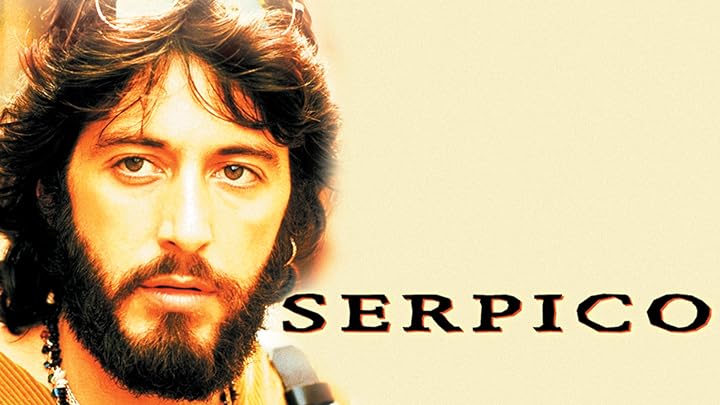
“Serpico,” directed by Sidney Lumet and released in 1973, remains a quintessential cinematic masterpiece that not only entertains but also leaves an indelible mark on its viewers with its powerful storytelling and compelling performances.
At its core, “Serpico” is a gripping biographical drama based on the life of Frank Serpico, a real-life NYPD officer who blew the whistle on widespread corruption within the department during the 1960s and early 1970s. Al Pacino delivers a tour de force performance in the titular role, capturing the essence of Serpico’s courage, integrity, and unwavering commitment to justice. Pacino’s portrayal is nothing short of mesmerizing, as he seamlessly embodies the complexities of a man torn between his duty as a police officer and his moral conscience.
Lumet’s direction is masterful, immersing the audience in the gritty and tumultuous world of New York City during a time of social upheaval. Through his deft use of camera work and pacing, Lumet creates a palpable sense of tension and suspense that keeps viewers on the edge of their seats from start to finish. The film’s gritty realism is further enhanced by its authentic locations and meticulous attention to detail, which effectively transport audiences to the mean streets of 1970s New York.
One of the film’s greatest strengths lies in its exploration of themes such as corruption, morality, and the struggle for integrity in the face of overwhelming adversity. As Serpico battles against a system rife with corruption and betrayal, the film forces viewers to confront uncomfortable truths about power, accountability, and the thin line between right and wrong. Serpico’s journey is not just a personal one but a universal one, resonating with anyone who has ever dared to stand up against injustice, even at great personal cost.
In addition to Pacino’s powerhouse performance, the film boasts a stellar supporting cast, including John Randolph, Tony Roberts, and Jack Kehoe, who deliver memorable performances that add depth and nuance to the narrative. Each character is fully realized, with their own motivations and flaws, serving to enrich the story and provide insight into the larger societal forces at play.
The film’s cinematography, courtesy of Arthur J. Ornitz, is striking and evocative, capturing the gritty urban landscape of New York City with an almost documentary-like realism. Ornitz’s use of light and shadow effectively underscores the film’s themes of moral ambiguity and moral decay, lending the visuals an air of ominousness and foreboding.
The film’s narrative structure is expertly crafted, seamlessly weaving together Serpico’s personal journey with the larger social and political context of the time. From his early days as an idealistic rookie to his gradual disillusionment with the rampant corruption within the NYPD, the audience is taken on a gripping rollercoaster ride of emotions. We witness Serpico’s transformation from a naive young officer eager to make a difference to a hardened whistleblower determined to expose the truth at any cost.
One of the film’s most poignant moments comes when Serpico realizes the extent of the corruption within his own department and decides to take a stand. His decision to speak out against his fellow officers, despite facing ostracism and retaliation, is a testament to his unwavering commitment to justice. It is a moment of profound moral clarity that resonates long after the credits have rolled, leaving viewers grappling with their own notions of right and wrong.
In portraying Serpico’s uphill battle against a system hell-bent on silencing dissent, the film shines a harsh spotlight on the dark underbelly of law enforcement and the pervasiveness of corruption within institutions of power. It forces us to confront uncomfortable truths about the abuse of authority and the consequences of turning a blind eye to injustice. Serpico’s story serves as a stark reminder that the fight for justice is never easy, but it is always worth fighting for.
Beyond its powerful social commentary, “Serpico” is also a visually stunning film, with its gritty cinematography and atmospheric soundtrack helping to immerse viewers in the seedy underbelly of 1970s New York City. From the dimly lit alleyways to the bustling streets teeming with life, every frame feels alive with energy and authenticity.
At its heart, “Serpico” is a character study of a man who refused to compromise his principles in the face of overwhelming pressure. Al Pacino’s portrayal of Frank Serpico is nothing short of extraordinary, capturing the character’s inner turmoil and moral fortitude with raw intensity. Pacino’s performance is a masterclass in acting, showcasing his range and versatility as one of cinema’s greatest talents.
Since its release, “Serpico” has left an indelible mark on popular culture, inspiring countless films, television shows, and works of literature that explore similar themes of police corruption and moral ambiguity. Its influence can be felt across a wide spectrum of media, from gritty crime dramas to thought-provoking documentaries, each drawing inspiration from Serpico’s courageous stand against corruption.
The film’s enduring relevance is a testament to its universal themes and timeless message. In an era marked by heightened scrutiny of law enforcement practices and calls for accountability, “Serpico” continues to resonate with audiences around the world who are grappling with questions of ethics, integrity, and the abuse of power.
Beyond its thematic depth, “Serpico” also serves as a showcase for the talents of its cast and crew. Al Pacino’s performance as Frank Serpico is widely regarded as one of the finest of his career, earning him critical acclaim and cementing his status as one of the greatest actors of his generation. His portrayal of Serpico’s internal struggle and unwavering commitment to his principles is nothing short of mesmerizing, drawing viewers into the heart of the character’s moral dilemma.
Director Sidney Lumet’s meticulous attention to detail and masterful storytelling elevate “Serpico” to the realm of cinematic greatness. His ability to capture the gritty realism of 1970s New York City while exploring complex moral themes with nuance and depth is a testament to his skill as a filmmaker. Lumet’s direction imbues the film with a sense of urgency and authenticity that keeps viewers engaged from start to finish.
“Serpico” also serves as a powerful reminder of the importance of whistleblowers in holding institutions accountable and exposing wrongdoing. Frank Serpico’s courageous decision to speak out against corruption, despite facing ostracism and betrayal from his colleagues, serves as a beacon of hope for those who refuse to remain silent in the face of injustice.
“Serpico” is more than just a gripping crime drama; it is a timeless meditation on the nature of morality and the human spirit. It reminds us that true courage is not the absence of fear but the willingness to confront it head-on, even in the face of overwhelming odds. As relevant today as it was upon its release, “Serpico” stands as a powerful testament to the enduring power of integrity and the importance of speaking truth to power.
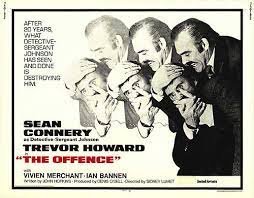
Featuring: Sean Connery, Trevor Howard, Vivien Merchant and Ian Bannen
Kenneth Baxter:“Nothing I have done can be one half as bad as the thoughts in your head.”
“The Offence,” a 1973 film directed by Sidney Lumet and starring Sean Connery, is a harrowing exploration of the human psyche, morality, and the complexities of law enforcement. Set in a gritty British town, the film delves deep into the mind of Detective Sergeant Johnson (Connery), a seasoned but troubled police officer who becomes consumed by his pursuit of a suspected child molester.
Lumet, known for his skilful direction in films like “12 Angry Men” and “Dog Day Afternoon,” brings his trademark intensity to “The Offence.” From the opening scenes, the audience is thrust into a world of tension and unease as Johnson interrogates a suspect in a brutal and relentless manner. Connery delivers a powerhouse performance, shedding his suave James Bond persona to portray a deeply flawed and tormented character. His portrayal of Johnson’s inner turmoil and descent into darkness is nothing short of mesmerizing.
The film’s narrative unfolds primarily through a series of intense interrogations between Johnson and the suspect, Kenneth Baxter (played with eerie restraint by Ian Bannen). As the two men engage in a psychological battle, the lines between right and wrong blur, and the audience is forced to confront uncomfortable truths about justice, guilt, and the nature of evil.
One of the film’s most striking elements is its refusal to offer easy answers or tidy resolutions. Instead, it delves into the murky depths of the human psyche, challenging viewers to grapple with the complexities of morality and the consequences of violence.
Lumet’s direction is masterful, creating a sense of claustrophobia and escalating tension that keeps audiences on the edge of their seats.
The film’s supporting cast also delivers standout performances, particularly Trevor Howard as Johnson’s weary and world-weary superior officer, and Vivien Merchant as Johnson’s long-suffering wife, who bears the brunt of his inner demons.
Thematically, “The Offence” explores the cyclical nature of violence and the toll it takes on those who perpetrate it. Johnson’s relentless pursuit of justice ultimately leads him down a dark and destructive path, leaving him shattered and disillusioned. The film’s bleak and uncompromising tone serves as a stark reminder of the human cost of violence and the futility of seeking redemption in a world tainted by cruelty and injustice.
In addition to its powerful performances and thought-provoking themes, “The Offence” is also a visually stunning film. Cinematographer Gerry Fisher captures the bleakness of the film’s urban landscape with a stark and unflinching eye, while composer Harrison Birtwistle’s haunting score adds to the film’s sense of foreboding.
The brilliance of “The Offence” lies not only in its exploration of individual psychology but also in its commentary on broader societal issues. Set against the backdrop of early 1970s Britain, a time of social upheaval and discontent, the film reflects the anxieties and tensions of its era. The bleak urban landscape serves as a metaphor for the moral decay and disillusionment that pervade society, mirroring Johnson’s internal struggles with his own morality and sense of justice.
Furthermore, “The Offence” offers a searing critique of the failings of the criminal justice system. Johnson, a dedicated and experienced detective, is driven to the brink of madness by the inadequacies of a system that often seems powerless in the face of heinous crimes. His frustration and disillusionment with the limitations of the law mirror the broader societal disillusionment with authority and institutions during the time in which the film is set.
The film also raises important questions about the nature of violence and its impact on both perpetrators and victims. Through Johnson’s interactions with Baxter, the audience is forced to confront uncomfortable truths about the human capacity for cruelty and the ways in which trauma can shape and distort one’s perceptions of reality. In doing so, “The Offence” challenges viewers to consider the complexities of empathy and forgiveness in the face of unspeakable acts.
Despite being released nearly five decades ago, “The Offence” remains as relevant and thought-provoking as ever. Its exploration of themes such as justice, morality, and the human psyche transcends its historical context, speaking to universal truths about the human condition. In an age marked by ongoing debates about crime, punishment, and the nature of evil, “The Offence” continues to resonate with audiences, serving as a powerful reminder of the enduring power of cinema to provoke introspection and inspire empathy.
“The Offence” also merits appreciation for its willingness to delve into the complexities of its characters without offering easy answers or moral judgments. Each character, from Johnson to Baxter to the supporting cast, is portrayed with depth and nuance, allowing audiences to empathize with their struggles and flaws. This refusal to paint characters in black-and-white terms adds layers of richness to the narrative, inviting viewers to grapple with the ambiguity of human behavior and the moral gray areas that exist in society.
Furthermore, the film’s exploration of trauma and its long-lasting effects on individuals is particularly poignant. Johnson’s unraveling throughout the course of the film can be seen as a manifestation of the psychological scars he carries from his years on the force. His relentless pursuit of Baxter is not only driven by a desire for justice but also by a need to confront his own inner demons and find some semblance of closure.
In addition to its thematic depth, “The Offence” is a technical achievement in filmmaking. The claustrophobic atmosphere created by Lumet’s direction, combined with the stark and gritty cinematography, immerses viewers in the bleak world of the film. The use of tight close-ups and intimate framing during the interrogation scenes intensifies the psychological drama, heightening the tension and amplifying the emotional impact of the performances.
The film’s sparse but powerful score further enhances the mood, with composer Harrison Birtwistle’s haunting melodies adding to the sense of foreboding and unease. The sound design, too, plays a crucial role in immersing viewers in the world of the film, from the cacophony of the urban environment to the eerie silence of Johnson’s tortured mind.
“The Offence” is a gripping and provocative film that lingers in the mind long after the credits roll. It’s a testament to Lumet’s skill as a director and Connery’s versatility as an actor, and it remains a powerful exploration of the darkest corners of the human soul.
Amazon’s Prime Video has released the second official trailer from its live-action TV series adaptation of the famed “Fallout” video game franchise.
Two hundred years after an apocalypse that took place in the 1950s, the gentle denizens of luxury fallout shelters are forced to return to the irradiated hellscape their ancestors left behind. They are shocked to discover an incredibly complex, gleefully weird and highly violent universe waiting for them. “Fallout” is the story of haves and have-nots in a world in which there’s almost nothing left to have.
The project hails from “Westworld” creators Jonathan Nolan and Lisa Joy and is based on the games that began in 1997 and spawned multiple sequels. Geneva Robertson-Dworet and Graham Wagner are the showrunners.
The cast is led by Ella Purnell as vault-dweller Lucy, Aaron Moten in the role of Maximus, Walton Goggins plays The Ghoul; and Kyle MacLachlan as Overseer Hank.
Additional cast includes Moises Arias, Sarita Choudhury, Michael Emerson, Leslie Uggams, Frances Turner, Dave Register, Zach Cherry, Johnny Pemberton, Rodrigo Luzzi, Annabel O’Hagan and Xelia Mendes-Jones.
“Fallout” will premiere on Prime Video on April 11th.
Featuring: James Mason, Robert Preston, Beau Bridges and Kate Harrington
Joseph Dobbs: [to his juniors] “If you don’t trust kids, don’t become teachers. If you’re afraid of kids, get out of the business of running schools!”
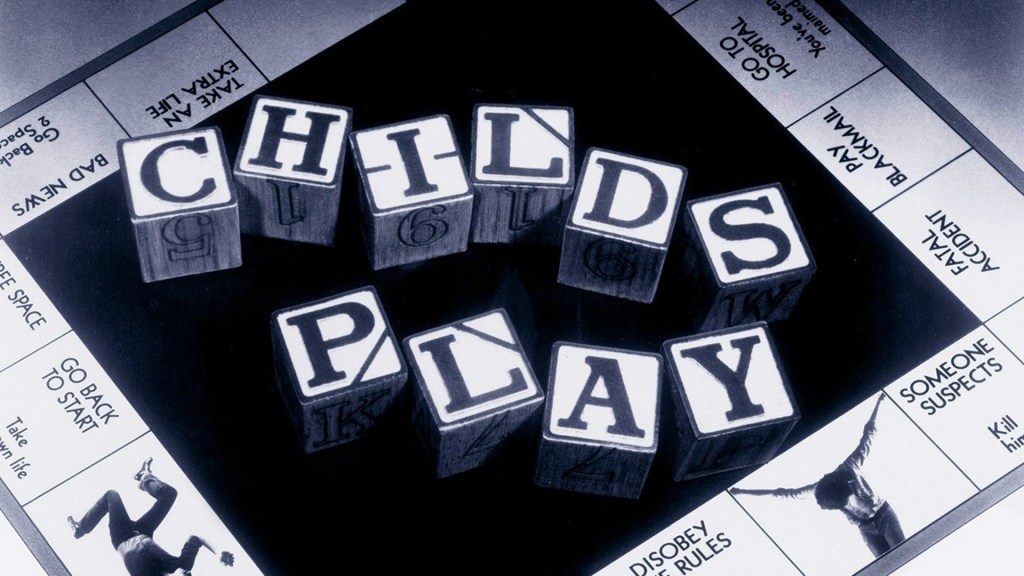
“Child’s Play,” directed by Sidney Lumet, is a gripping psychological thriller that delves deep into the complexities of human nature, exploring the darkest recesses of the mind with skill and precision. Lumet, known for his ability to craft intense and thought-provoking narratives, brings his signature style to this chilling tale of paranoia and obsession.
The film follows the story of a young boy named Andy Barclay, portrayed with remarkable depth by newcomer Jacob Tremblay, who receives a seemingly innocent doll named Chucky as a birthday gift. However, what begins as an ordinary toy soon takes on a sinister life of its own, as Chucky becomes possessed by the vengeful spirit of a serial killer. As Andy’s world is turned upside down by the malevolent doll’s reign of terror, he must race against time to uncover the truth behind Chucky’s origins and put an end to the bloodshed before it’s too late.
One of the most striking aspects of “Child’s Play” is Lumet’s masterful direction, which infuses every frame with a palpable sense of tension and dread. From the eerie opening sequence to the heart-pounding climax, Lumet maintains a tight grip on the audience’s nerves, keeping them on the edge of their seats throughout the film’s runtime. His use of shadow and light creates a haunting atmosphere that lingers long after the credits roll, while his expert pacing ensures that the suspense never wanes.
The performances in “Child’s Play” are equally impressive, with Tremblay delivering a standout turn as the beleaguered Andy. Despite his young age, Tremblay brings a maturity and vulnerability to the role that anchors the film emotionally, making Andy a sympathetic and relatable protagonist. Opposite Tremblay, veteran actress Vera Farmiga shines as Karen Barclay, Andy’s devoted mother who will stop at nothing to protect her son from harm. Farmiga imbues Karen with a steely determination and resilience, elevating her character beyond the typical horror movie trope of the helpless victim.
Of course, no discussion of “Child’s Play” would be complete without mentioning the chilling performance of Mark Hamill as the voice of Chucky. Hamill brings a sinister charm to the role, infusing the doll with a twisted sense of humor and a malevolent gleam in his eye. His vocal performance is pitch-perfect, capturing the essence of Chucky’s psychopathic nature while adding layers of complexity to the character.
In addition to its stellar direction and performances, “Child’s Play” also boasts impressive production values, including stunning cinematography and a haunting musical score by the legendary composer, Hans Zimmer. The film’s visual effects are seamlessly integrated, enhancing the sense of unease and terror at every turn.
However, “Child’s Play” is more than just a standard horror movie; it’s a thought-provoking exploration of themes such as trauma, identity, and the nature of evil. Through the character of Chucky, Lumet raises questions about the existence of true evil and the ways in which it can manifest in unexpected forms. The film’s psychological depth adds an extra layer of intrigue to the narrative, inviting viewers to ponder the nature of fear and the human capacity for both good and evil.
Beyond its surface scares, “Child’s Play” cleverly explores the psychological ramifications of trauma and the ways in which it can shape and distort reality. Andy’s journey mirrors that of many individuals who grapple with the aftermath of traumatic experiences, as he navigates the complexities of fear, trust, and self-discovery in the face of unimaginable horrors.
Furthermore, the film offers a compelling commentary on the dangers of unchecked consumerism and the ways in which material possessions can exert a sinister influence over our lives. Chucky’s transformation from an innocuous toy into a harbinger of death serves as a cautionary tale about the perils of placing too much value on material wealth and external validation.
Lumet’s deft handling of these thematic elements elevates “Child’s Play” above typical genre fare, transforming it into a thought-provoking meditation on the human condition. By blending visceral scares with intellectual depth, he crafts a cinematic experience that resonates on multiple levels, inviting viewers to engage with the film on both an emotional and intellectual level.
Moreover, “Child’s Play” is a testament to the enduring power of storytelling as a means of confronting our deepest fears and anxieties. Through the medium of film, Lumet challenges audiences to confront the darkness within themselves and explore the boundaries of morality and sanity. In doing so, he creates an immersive narrative that lingers in the mind long after the credits have rolled, sparking conversations and debates about its deeper themes and implications.
As the narrative unfolds, Lumet expertly maintains a sense of ambiguity surrounding the true nature of Chucky’s malevolence. Is the doll truly possessed by the spirit of a deranged killer, or is it merely a figment of Andy’s traumatized imagination? This uncertainty adds a layer of psychological complexity to the story, forcing viewers to grapple with their own perceptions of reality and the supernatural.
Furthermore, “Child’s Play” delves into the theme of parental responsibility and the lengths to which a parent will go to protect their child. Karen Barclay’s unwavering devotion to Andy serves as a driving force throughout the film, as she battles against both external threats and her own inner demons in order to safeguard her son. This maternal instinct is portrayed with nuance and depth, highlighting the sacrifices that parents are willing to make in order to ensure the safety and well-being of their children.
In addition to its thematic richness, “Child’s Play” also excels in its technical aspects, with impeccable production design, atmospheric cinematography, and spine-tingling sound design. Each element of the film is carefully crafted to maximize its impact on the audience, drawing them deeper into the nightmarish world of Andy and Chucky.
The film’s climax is a tour de force of suspense and terror, as Andy confronts Chucky in a heart-stopping showdown that will leave viewers on the edge of their seats. Lumet expertly ratchets up the tension, building to a crescendo of horror that is both cathartic and unforgettable.
“Child’s Play” is a triumph of psychological horror that will leave audiences spellbound from start to finish. Lumet’s masterful direction, coupled with standout performances and a thought-provoking script, make it a must-see for fans of the genre. With its blend of suspense, terror, and emotional depth, “Child’s Play” solidifies Lumet’s status as one of the most visionary filmmakers of his generation.
Lionsgate has premiered the first official trailer for “The Crow,” its modern reimagining of the original graphic novel by James O’Barr.
Soulmates Eric Draven (Bill Skarsgård) and Shelly Webster (FKA twigs) are brutally murdered when the demons of her dark past catch up with them. Given the chance to save his true love by sacrificing himself, Eric sets out to seek merciless revenge on their killers, traversing the worlds of the living and the dead to put the wrong things right.
Laura Birn, Sami Bouajila and Jordan Bolger co-star whilst Zach Baylin and Will Schneider penned the script with Rupert Sanders set to direct.
Victor Hadida, Molly Hassell, John Jencks, Samuel Hadida and Edward R. Pressman produce. The $50 million-budgeted film arrives in cinemas on June 7th.
Charles Dobbs: [to Ann about her nymphomania] “I’ve never held your appetites against you. The unaddicted shouldn’t blame the addicted.”
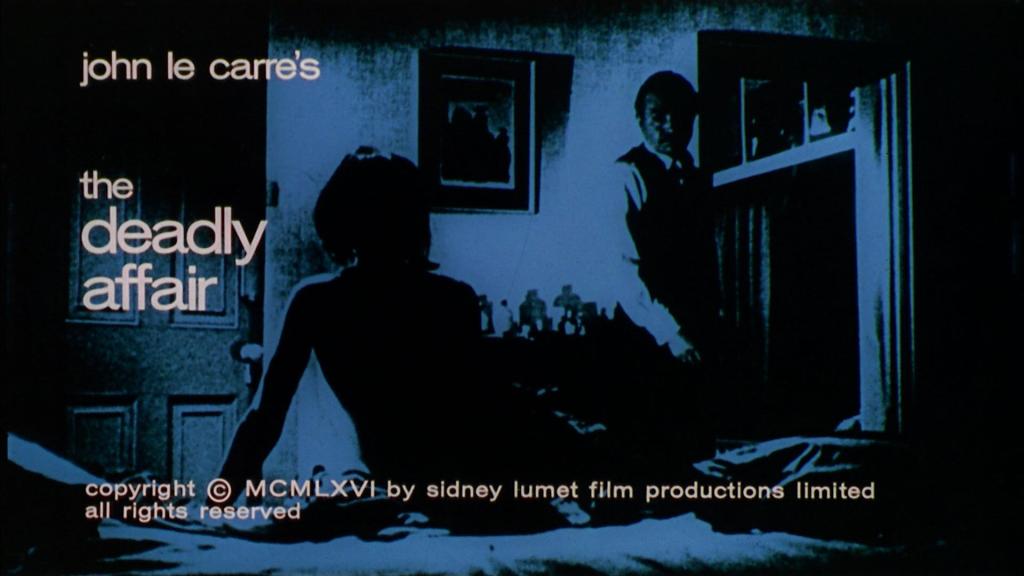
“The Deadly Affair” is a gripping espionage thriller that keeps viewers on the edge of their seats from start to finish. Directed by Sidney Lumet and released in 1966, this film is a masterclass in tension and intrigue.
At its core, “The Deadly Affair” is a story of betrayal, deceit, and the murky world of espionage. Adapted from John le Carré’s novel “Call for the Dead,” the film follows British intelligence agent Charles Dobbs (played brilliantly by James Mason) as he investigates the apparent suicide of Samuel Fennan, a Foreign Office official with whom he had a professional relationship.
As Dobbs delves deeper into Fennan’s death, he uncovers a web of lies and deception that leads him to question everything he thought he knew. Along the way, he encounters a diverse cast of characters, including Fennan’s widow Elsa (Simone Signoret), who becomes embroiled in the mystery, and his own superiors, whose motives are shrouded in secrecy.
What sets “The Deadly Affair” apart is its emphasis on character development and psychological tension. James Mason delivers a nuanced performance as Dobbs, portraying him as a flawed but determined investigator haunted by his past. Simone Signoret is equally captivating as Elsa, whose motives remain ambiguous until the film’s thrilling climax.
Sidney Lumet’s direction is masterful, creating a palpable sense of paranoia and suspicion that permeates every scene. From the shadowy alleys of London to the corridors of power, the film’s moody atmosphere adds to its sense of foreboding, keeping viewers guessing until the very end.
In addition to its riveting plot and stellar performances, “The Deadly Affair” is also notable for its exploration of moral ambiguity and political intrigue. As Dobbs navigates the treacherous world of espionage, he is forced to confront his own ethics and allegiances, leading to a climax that is as thought-provoking as it is thrilling.
The film’s narrative unfolds with a deliberate pace, allowing viewers to immerse themselves fully in the intricate plot. Every twist and turn is meticulously crafted, keeping audiences engaged and invested in Dobbs’ investigation. As he peels back the layers of deception, the stakes only grow higher, leading to a thrilling climax that delivers both suspense and emotional resonance.
One of the film’s strengths lies in its exploration of the human cost of espionage. Dobbs’ quest for the truth forces him to confront not only external threats but also his own inner demons. His relationships with Elsa and other characters are fraught with tension and ambiguity, reflecting the moral complexities of his profession.
Simone Signoret’s portrayal of Elsa is particularly compelling, as she navigates the murky waters of loyalty and betrayal with a steely resolve. Her interactions with Dobbs are charged with a palpable sense of chemistry and mistrust, adding another layer of depth to the film’s narrative.
Beyond its riveting plot and well-drawn characters, “The Deadly Affair” also boasts impressive technical elements. The film’s cinematography, with its moody lighting and atmospheric compositions, enhances the sense of unease and tension that permeates every scene. Additionally, the score by Quincy Jones perfectly complements the film’s tone, heightening the suspense and drama.
“The Deadly Affair” also merits praise for its portrayal of the political landscape of the time. Set against the backdrop of the Cold War, the film offers a glimpse into the shadowy world of espionage and the ethical dilemmas faced by those caught in its web. The tension between East and West permeates the narrative, adding an extra layer of intrigue to Dobbs’ investigation.
Furthermore, the film’s exploration of power dynamics within the intelligence community is as relevant today as it was when it was first released. As Dobbs navigates the labyrinthine bureaucracy of British intelligence, he must contend with rivalries, betrayals, and shifting alliances, highlighting the precarious nature of his profession.
Moreover, “The Deadly Affair” doesn’t rely solely on action-packed sequences to captivate its audience. Instead, it relies on subtlety and nuance to create a sense of unease and suspense. The film’s dialogue is sharp and incisive, conveying more through what is left unsaid than what is spoken aloud. Every exchange crackles with tension, keeping viewers on the edge of their seats until the very end.
“The Deadly Affair” is a must-watch for fans of espionage thrillers and psychological dramas alike. With its compelling storyline, complex characters, and atmospheric direction, it stands as a timeless classic in the genre.
Featuring: Candice Bergen, Joan Hackett, Elizabeth Hartman, Shirley Knight, Joanna Pettet, Mary-Robin Redd, Jessica Walter, Kathleen Widdoes, James Broderick, James Congdon, Larry Hagman, Hal Holbrook, Richard Mulligan, Robert Emhardt and Carrie Nye
Dottie:“Sacrifice is dated, Mother. You don’t reform a man. He just drags you down.”
“The Offer,” a 1966 film directed by Ismail Merchant, is a mesmerizing journey into the depths of human emotions, set against the backdrop of a rapidly changing society. This cinematic masterpiece, often overshadowed by other films of its time, deserves recognition for its poignant storytelling, stellar performances, and profound exploration of complex themes.
Set in post-war Italy, “The Offer” follows the life of Giovanni, a struggling artist who finds himself torn between his passion for painting and the harsh realities of survival. As Giovanni grapples with poverty and despair, he is offered a once-in-a-lifetime opportunity to showcase his work at a prestigious art exhibition. However, this offer comes with a price – Giovanni must compromise his artistic integrity and create paintings that cater to the tastes of wealthy patrons.
At its core, “The Offer” is a meditation on the timeless struggle between art and commerce, integrity and compromise. Through Giovanni’s journey, the film delves deep into the moral dilemmas faced by artists who must navigate the treacherous waters of the art world while staying true to their creative vision. Is it worth sacrificing one’s principles for fame and fortune? This question lies at the heart of the film, haunting Giovanni every step of the way.
The brilliance of “The Offer” lies in its ability to capture the essence of the human experience with breathtaking clarity. Ismail Merchant’s direction is masterful, weaving together intricate plot threads with skillful precision. Each scene is meticulously crafted, every frame a work of art in its own right. The cinematography, bathed in the golden hues of the Italian countryside, adds an ethereal quality to the film, transporting viewers to a bygone era of beauty and decadence.
Central to the film’s success are the stellar performances of its cast. As Giovanni, the tortured artist at the center of the story, Marcello Mastroianni delivers a tour-de-force performance, imbuing his character with a raw intensity that is both captivating and heartbreaking to watch. His portrayal of Giovanni’s inner turmoil is nothing short of mesmerizing, drawing viewers into the tumultuous world of a man torn between his dreams and his demons.
Supporting Mastroianni is an ensemble cast of equally talented actors, each bringing depth and nuance to their respective roles. Claudia Cardinale shines as Lucia, Giovanni’s muse and love interest, her luminous presence lighting up the screen with every appearance. Meanwhile, Jeanne Moreau delivers a scene-stealing performance as Signora Bianchi, the enigmatic art patron whose influence looms large over Giovanni’s fate.
What sets “The Offer” apart from other films of its time is its willingness to tackle complex themes with unflinching honesty. Rather than offering easy answers, the film invites viewers to grapple with difficult questions about the nature of art, fame, and the price of success. In doing so, it transcends the constraints of its era, speaking to audiences across generations with its timeless message.
“The Offer” not only serves as a captivating narrative but also serves as a poignant reflection of the societal and cultural landscape of post-war Italy. Through its richly detailed depiction of the Italian art scene, the film offers a window into a world in flux, where traditional values clash with the emerging forces of modernity and capitalism. Against this backdrop, Giovanni’s struggle takes on added significance, symbolizing the broader tensions between tradition and innovation, authenticity and commercialism.
One of the film’s most compelling aspects is its exploration of the role of the artist in society. Giovanni’s journey serves as a microcosm of the broader challenges faced by creative individuals in navigating the often murky waters of the art world. As he grapples with the temptation to compromise his principles for the sake of success, Giovanni embodies the age-old dilemma of balancing artistic integrity with the demands of the market. In doing so, he becomes a symbol of the artist as both visionary and pragmatist, torn between the pursuit of his artistic ideals and the need to survive in a harsh and unforgiving world.
At its core, “The Offer” is a deeply human story, exploring universal themes of love, loss, ambition, and redemption. Through Giovanni’s relationships with Lucia, Signora Bianchi, and the other characters who populate his world, the film delves into the complexities of human emotion with sensitivity and nuance. Each character is rendered with depth and authenticity, their struggles and desires laid bare for the audience to witness. In the end, it is their humanity that resonates most deeply, reminding us of our own capacity for both greatness and folly.
In addition to its thematic depth, “The Offer” is also a visual feast for the senses. From the sun-drenched landscapes of rural Italy to the opulent interiors of the art galleries and salons, every frame of the film is a work of art in its own right. Ismail Merchant’s keen eye for detail and his mastery of light and shadow imbue each scene with a sense of timelessness and beauty. The result is a film that is as much a feast for the eyes as it is for the soul, inviting viewers to lose themselves in its sumptuous imagery and richly evocative atmosphere.
Let’s delve deeper into some specific aspects of “The Offer”:
Historical Context: Set in post-war Italy, the film captures a pivotal moment in Italian history, where the country was undergoing significant social, economic, and cultural transformations. The aftermath of World War II had left Italy grappling with the scars of war, economic instability, and a rapidly changing social landscape. Against this backdrop, “The Offer” offers a nuanced exploration of the tensions and contradictions of post-war Italian society, from the lingering effects of fascism to the rise of consumer culture.
Artistic Expression: Central to the film’s narrative is the exploration of artistic expression and the creative process. Through Giovanni’s struggles as an artist, the film examines the challenges of maintaining artistic integrity in a world driven by commercial interests. Giovanni’s internal conflict between staying true to his artistic vision and succumbing to the pressures of the art market reflects broader debates about the commodification of art and the role of the artist in society.
Gender Dynamics: “The Offer” also offers insights into gender dynamics and power relations, particularly through Giovanni’s relationships with women. Lucia and Signora Bianchi represent contrasting visions of femininity – Lucia as the muse and romantic ideal, and Signora Bianchi as the powerful patron and gatekeeper of the art world. Through these characters, the film explores themes of desire, manipulation, and agency, shedding light on the complexities of gender roles and expectations in post-war Italy.
Symbolism and Allegory: Like many great works of cinema, “The Offer” is rich in symbolism and allegory, inviting viewers to interpret its deeper meanings and themes. The recurring motif of art as both a source of liberation and a prison reflects broader existential questions about the nature of creativity and the human condition. Similarly, the character of Giovanni can be seen as a metaphor for the artist as a tortured soul, wrestling with the demons of self-doubt and existential angst.
Soundtrack and Atmosphere: Complementing the film’s visual beauty is its evocative soundtrack, which transports viewers to the enchanting world of post-war Italy. From the haunting melodies of Italian folk songs to the stirring orchestral compositions, the music of “The Offer” enhances the film’s emotional resonance and adds depth to its atmospheric world.
“The Offer” is a film of remarkable depth and complexity, offering a compelling exploration of art, identity, and human nature. Through its richly drawn characters, stunning visuals, and thought-provoking themes, the film continues to captivate audiences with its timeless relevance and enduring power.
“The Offer” is a cinematic triumph that deserves to be celebrated for its artistry, depth, and emotional resonance. Ismail Merchant’s masterpiece continues to captivate audiences with its spellbinding storytelling and unforgettable performances, reminding us of the enduring power of cinema to illuminate the human condition.
Written by: Terence Winter, Frank E. Flowers, Zach Baylin and Reinaldo Marcus Green
Directed by: Reinaldo Marcus Green
Featuring: Kingsley Ben-Adir, Lashana Lynch and James Norton
Rita Marley:“Sometimes the messenger has to become the message.”
“Bob Marley: One Love” is a captivating cinematic journey that delves into the life, music, and enduring legacy of one of the most influential figures in music history. Directed with finesse and respect by Reinaldo Marcus Green, this film paints a vivid portrait of Bob Marley, capturing not only his revolutionary music but also his profound impact on global culture.
The film expertly weaves together archival footage, intimate interviews, and stunning visuals to chronicle Marley’s life from his humble beginnings in Jamaica to his rise as an international icon. From his early struggles in Trenchtown to his meteoric ascent to stardom, every aspect of Marley’s life is explored with depth and authenticity.
What sets “Bob Marley: One Love” apart is its focus on Marley’s message of love, unity, and social justice. Through interviews with family members, friends, and collaborators, the film highlights Marley’s unwavering commitment to using his music as a force for positive change. From his anthems of protest to his timeless odes to love and spirituality, Marley’s music continues to resonate with audiences around the world, inspiring generations to stand up for what they believe in.
The film also sheds light on Marley’s personal struggles, including his battle with cancer and his complex relationships, adding layers of depth to his larger-than-life persona. Through it all, Marley emerges as a symbol of resilience, hope, and the power of music to transcend boundaries.
“Bob Marley: One Love” skillfully captures the essence of Jamaican culture, immersing viewers in the vibrant rhythms and rich traditions that shaped Marley’s sound. From the pulsating beats of reggae to the colorful streets of Kingston, the film beautifully evokes the spirit of Marley’s homeland, providing a rich backdrop for his remarkable story.
The film also pays homage to Marley’s lasting influence on contemporary music and pop culture. Through interviews with artists he inspired and footage of his electrifying performances, the film demonstrates how Marley’s music continues to resonate across genres and generations, cementing his status as a global icon.
Moreover, “Bob Marley: One Love” succeeds in captureng the essence of Marley’s enigmatic personality, portraying him not just as a musician, but as a complex and multifaceted individual. From his infectious charisma to his deep spirituality, the film offers a nuanced portrayal of Marley, revealing the man behind the music.
“Bob Marley: One Love” effectively captures the socio-political context in which Marley’s music flourished. It explores the turbulent times of Jamaica in the 1960s and 1970s, delving into issues of poverty, oppression, and cultural identity that fueled Marley’s music. By contextualizing his songs within the larger struggles for social justice, the film offers valuable insights into the significance of Marley’s message and its resonance with audiences worldwide.
The film also celebrates Marley’s enduring legacy beyond his music, highlighting his role as a global ambassador for peace and unity. Through his iconic songs like “One Love” and “Get Up, Stand Up,” Marley advocated for equality, tolerance, and the power of collective action. His message of unity in the face of division remains as relevant today as it was during his lifetime, making “Bob Marley: One Love” not just a tribute to a musical legend, but a call to action for a better world.
“Bob Marley: One Love” delves into the personal struggles and triumphs of Marley’s life, presenting a balanced portrayal of the man behind the music. It doesn’t shy away from exploring the complexities of Marley’s relationships, including his marriages and fatherhood, adding depth to his character and showing him as a flawed yet deeply human individual.
Furthermore, “Bob Marley: One Love” expertly contextualizes Marley’s music within the larger landscape of global activism and cultural movements. The film highlights how Marley’s songs became anthems for social change, resonating with audiences far beyond Jamaica’s shores. Through his music, Marley not only addressed issues of poverty, inequality, and political oppression but also celebrated the resilience and spirit of marginalized communities worldwide.
The film also examines Marley’s impact on popular culture, from his influence on fashion and art to his role in shaping the global perception of Jamaica. Through archival footage and interviews with cultural critics and historians, “Bob Marley: One Love” illuminates how Marley’s music transcended genre boundaries and became a symbol of rebellion, freedom, and hope for millions of people around the world.
Moreover, the film provides valuable insights into Marley’s spiritual journey and its profound influence on his music and worldview. From his adherence to Rastafarianism to his quest for spiritual enlightenment, the film explores how Marley’s beliefs shaped his music and his commitment to social justice.
“Bob Marley: One Love” is not just a film about a music legend; it’s a celebration of the human spirit and the enduring power of art to change the world. Whether you’re a die-hard fan or new to Marley’s music, this film is a must-see for anyone who believes in the transformative power of love and music.
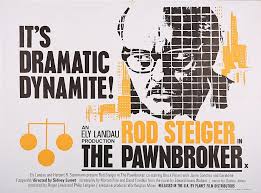
Written by: Morton S. Fine and David Friedkin based on the book by Edward Lewis Wallant
Directed by: Sidney Lumet
Featuring: Rod Steiger, Geraldine Fitzgerald, Brock Peters, Jaime Sánchez and Thelma Oliver
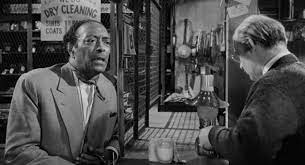
Jesus Ortiz:“Say, how come you people come to business so naturally?”
Sol Nazerman:“You people? Oh, let’s see. Yeah. I see. I see, you… you want to learn the secret of our success, is that right? Alright I’ll teach you. First of all you start off with a period of several thousand years, during which you have nothing to sustain you but a great bearded legend. Oh my friend you have no land to call your own, to grow food on or to hunt. You have nothing. You’re never in one place long enough to have a geography or an army or a land myth. All you have is a little brain. A little brain and a great bearded legend to sustain you and convince you that you are special, even in poverty. But this little brain, that’s the real key you see. With this little brain you go out and you buy a piece of cloth and you cut that cloth in two and you go and sell it for a penny more than you paid for it. Then you run right out and buy another piece of cloth, cut it into three pieces and sell it for three pennies profit. But, my friend, during that time you must never succumb to buying an extra piece of bread for the table or a toy for a child, no. You must immediately run out and get yourself a still larger piece cloth and so you repeat this process over and over and suddenly you discover something. You have no longer any desire, any temptation to dig into the Earth to grow food or to gaze at a limitless land and call it your own, no, no. You just go on and on and on repeating this process over the centuries over and over and suddenly you make a grand discovery. You have a mercantile heritage! You are a merchant. You are known as a usurer, a man with secret resources, a witch, a pawnbroker, a sheenie, a makie and a kike!”
Jesus Ortiz: [long pause] “You really some teacher, Mr. Nazerman. You really, really ‘s the greatest.”
“The Pawnbroker” is a poignant exploration of human suffering, trauma, and redemption, directed by Sidney Lumet and released in 1964. Set in Harlem, the film follows Sol Nazerman, played masterfully by Rod Steiger, a Holocaust survivor who operates a pawnshop. The narrative delves into Nazerman’s internal struggles as he grapples with his traumatic past while navigating the harsh realities of his present environment.
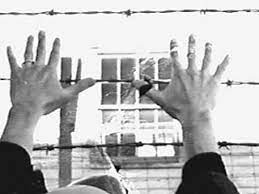
Lumet’s direction in “The Pawnbroker” is both sensitive and unflinching, capturing the raw emotions of its characters and the bleakness of their surroundings. The use of flashbacks to Nazerman’s experiences in the concentration camps is particularly effective, highlighting the enduring impact of trauma on his psyche. Through these flashbacks, the film confronts the horrors of the Holocaust head-on, refusing to shy away from its brutality.
Central to the film’s success is Rod Steiger’s powerhouse performance as Sol Nazerman. Steiger brings depth and complexity to the character, portraying Nazerman as a man haunted by his past yet emotionally detached from the world around him. His portrayal captures the character’s inner turmoil with nuance, making Nazerman a deeply compelling and sympathetic figure despite his flaws.
“The Pawnbroker” also deserves praise for its exploration of themes such as alienation, loss, and the search for meaning in the face of adversity. The supporting cast, including Geraldine Fitzgerald as Nazerman’s assistant and Jaime Sánchez as a troubled young man drawn to the pawnshop, deliver strong performances that enhance the film’s emotional resonance.
However, “The Pawnbroker” is not without its flaws. Some critics have pointed to its occasionally heavy-handed symbolism and melodramatic moments as detracting from its overall impact. Additionally, the film’s portrayal of race and poverty has been criticized for perpetuating stereotypes and lacking nuance.
One aspect that deserves further examination is the film’s depiction of urban decay and the socio-economic struggles of its characters. Set against the backdrop of 1960s Harlem, “The Pawnbroker” presents a bleak and desolate landscape marked by poverty, crime, and despair. Lumet’s cinematography effectively captures the grittiness of the neighborhood, immersing viewers in a world where hope seems in short supply.
Through Nazerman’s interactions with his customers and the community at large, the film sheds light on the systemic issues that perpetuate poverty and marginalization. From the desperate individuals pawning their belongings to survive to the young men drawn into lives of crime, “The Pawnbroker” portrays a society where opportunities for advancement are scarce and the cycle of poverty is difficult to escape.
Moreover, the film’s examination of identity and cultural assimilation adds another layer of complexity to its narrative. As a Jewish immigrant who survived the Holocaust, Nazerman grapples with feelings of displacement and disconnection from both his past and present. His refusal to confront his trauma and engage with the world around him reflects a broader theme of alienation and isolation prevalent among survivors of historical trauma.
At its core, “The Pawnbroker” is a deeply human story that transcends its specific time and place. It speaks to the universal experiences of suffering, resilience, and the search for meaning in a seemingly indifferent world. By confronting difficult subject matter with honesty and empathy, the film invites viewers to reflect on their own capacity for compassion and understanding.
Furthermore, one of the film’s most striking elements is its exploration of memory and the ways in which the past continues to exert its influence on the present. Through Nazerman’s fragmented recollections of his time in the concentration camps, the film highlights the enduring trauma of his experiences and the ways in which they shape his interactions with the world around him. These haunting flashbacks serve as a reminder of the indelible scars left by the Holocaust and the profound impact it had on the lives of survivors like Nazerman.
The juxtaposition of Nazerman’s memories with his daily life in Harlem underscores the interconnectedness of past and present, suggesting that the past is never truly buried but rather lurks beneath the surface, ready to resurface at any moment. This theme is further reinforced by the recurring motif of mirrors throughout the film, which symbolize both reflection and introspection. In one particularly poignant scene, Nazerman gazes into a mirror, confronting his own haunted reflection as he grapples with the weight of his memories.
Moreover, “The Pawnbroker” challenges viewers to confront uncomfortable truths about the human capacity for cruelty and suffering. Through Nazerman’s experiences in the concentration camps and the various forms of oppression and exploitation he witnesses in Harlem, the film forces audiences to reckon with the darker aspects of human nature. In doing so, it compels viewers to reflect on their own role in perpetuating or combatting injustice and oppression in the world.
Furthermore, the character of Sol Nazerman serves as a powerful symbol of resilience and redemption amidst unimaginable suffering. Despite his emotional detachment and apparent cynicism, Nazerman’s gradual awakening to the humanity around him offers a glimmer of hope in an otherwise bleak narrative. Through his interactions with individuals like Jesus Ortiz, a troubled young man seeking guidance, and Marilyn Birchfield, a compassionate social worker determined to help him confront his past, Nazerman begins to confront his own demons and find a measure of healing.
The film’s denouement, which sees Nazerman finally breaking down in tears as he confronts the full extent of his pain and loss, is a cathartic moment that encapsulates the film’s central themes of redemption and reconciliation. In this moment of vulnerability, Nazerman transcends his stoic façade and embraces his humanity, symbolizing the possibility of healing and renewal even in the face of unspeakable tragedy.
In addition to its thematic depth and emotional resonance, “The Pawnbroker” is also notable for its technical achievements, including Ernest Kinoy’s powerful screenplay and Quincy Jones’s evocative musical score. Kinoy’s script deftly navigates complex themes and character dynamics, while Jones’s haunting score enhances the film’s emotional impact, complementing Lumet’s masterful direction and Steiger’s unforgettable performance.
Despite these criticisms, “The Pawnbroker” remains a powerful and thought-provoking film that continues to resonate with audiences today. Its exploration of trauma and redemption, coupled with stellar performances and evocative direction, make it a timeless classic worthy of critical acclaim.
Netflix has revealed the final trailer for “Game of Thrones” writer-producers David Benioff and Dan Weiss’ new series – the sci-fi epic “3 Body Problem”.
The project is based on Chinese author Liu Cixin’s sci-fi trilogy which tells the story of what happens when humanity discovers that we are not alone in the universe and prepares for an alien force arriving from a distant and inhospitable world.
A young woman’s fateful decision in 1960s China reverberates across space and time into the present day. When the laws of nature inexplicably unravel before their eyes, a close-knit group of brilliant scientists join forces with an unorthodox detective to confront the greatest threat in humanity’s history.
The show’s expansive cast includes Jovan Adepo, John Bradley, Rosalind Chao, Liam Cunningham, Eiza González, Jess Hong, Marlo Kelly, Alex Sharp, Sea Shimooka, Zine Tseng, Saamer Usmani, Benedict Wong and Jonathan Pryce.
“3 Body Problem” will launch on Netflix on March 21st following a premiere tomorrow night at SXSW.
“The Professionals: The Complete Series” (1977-1983)
TV Series
Fifty Seven Episodes
Created by: Brian Clemens
Featuring: Gordon Jackson, Martin Shaw and Lewis Collins
George Cowley:“Anarchy, acts of terror, crimes against the public. To combat it I’ve got special men – experts from the army, the police, from every service – these are The Professionals.”
“The Professionals” is a classic British television series that originally aired from 1977 to 1983, capturing the essence of 70s action and intrigue. Created by Brian Clemens, the show follows the adventures of Bodie and Doyle, two tough and resourceful agents working for CI5 (Criminal Intelligence 5), a fictional government agency tasked with combating organized crime and terrorism.
Set against the backdrop of gritty urban landscapes and high-stakes espionage, “The Professionals” presents a thrilling blend of action, suspense, and character-driven drama. The dynamic duo of Bodie (played by Lewis Collins) and Doyle (played by Martin Shaw) epitomize the archetypal “good cop, bad cop” dynamic, with Bodie as the rugged, no-nonsense ex-mercenary and Doyle as the more cerebral and emotionally-driven counterpart.
What sets “The Professionals” apart is its relentless pace and commitment to adrenaline-pumping action sequences. From high-speed car chases to explosive shootouts, each episode delivers pulse-pounding excitement that keeps viewers on the edge of their seats. The show’s production values are impressive for its time, with well-choreographed stunts and practical effects that still hold up decades later.
However, beyond its action-packed exterior, “The Professionals” also explores complex themes and moral dilemmas. As agents of CI5, Bodie and Doyle often find themselves navigating the murky waters of morality and ethics in their pursuit of justice. They must grapple with difficult decisions and face the consequences of their actions, adding depth and nuance to their characters.
Moreover, the camaraderie between Bodie and Doyle is central to the show’s appeal. Despite their contrasting personalities, they share a deep bond forged through years of dangerous missions and life-threatening situations. Their banter is sharp and witty, providing moments of levity amidst the chaos and danger they face.
In addition to its compelling protagonists, “The Professionals” features a memorable supporting cast, including their no-nonsense boss, George Cowley (played by Gordon Jackson), whose steely resolve and unwavering commitment to duty command respect. The show also introduces a variety of villains and adversaries, ranging from ruthless crime lords to cunning terrorists, each posing a unique challenge for Bodie and Doyle to overcome.
While “The Professionals” undoubtedly reflects the sensibilities of its era, with its gritty realism and tough-guy ethos, it remains a timeless classic that continues to captivate audiences today. Its blend of action, drama, and intrigue, coupled with memorable characters and thrilling storytelling, ensures its enduring popularity among fans of crime dramas and action thrillers alike.
As “The Professionals” progresses through its six seasons, it maintains a consistent level of quality and entertainment, with each episode offering a new and exciting adventure for Bodie and Doyle. The show strikes a fine balance between standalone episodes and overarching storylines, allowing viewers to enjoy individual episodes while also developing the characters and world of CI5.
One of the strengths of the series lies in its ability to tackle relevant social and political issues of the time. While the show is primarily focused on action and suspense, it doesn’t shy away from addressing themes such as corruption, terrorism, and the moral complexities of espionage. This adds a layer of depth to the storytelling, elevating it beyond mere entertainment and giving viewers food for thought.
Another aspect of “The Professionals” that deserves praise is its attention to detail and authenticity. From the meticulously choreographed action sequences to the realistic portrayal of police procedures and counter-terrorism tactics, the show’s commitment to realism enhances its credibility and immerses viewers in its world. This level of authenticity is a testament to the dedication of the cast and crew, who spared no effort in bringing the world of CI5 to life.
Moreover, “The Professionals” benefits from strong writing that keeps the audience engaged and invested in the characters and their journeys. The dialogue is sharp and snappy, with plenty of memorable one-liners and exchanges that have become iconic among fans. The pacing is also commendable, with each episode moving at a brisk pace that never allows for a dull moment.
Of course, at the heart of “The Professionals” are its two leads, Lewis Collins and Martin Shaw, who bring Bodie and Doyle to life with charisma and charisma. Their chemistry is palpable, and their performances anchor the show, providing a solid foundation for the action and drama to unfold. Collins and Shaw imbue their characters with depth and complexity, allowing them to evolve over the course of the series while remaining true to their core identities.
As “The Professionals” progresses, it also delves deeper into the personal lives of Bodie and Doyle, offering glimpses into their backgrounds and motivations. While they are portrayed as tough and resilient agents on the surface, the show explores the emotional toll of their work and the sacrifices they make in service of their country. This humanizes the characters and adds layers of complexity to their personas, allowing viewers to connect with them on a deeper level.
Furthermore, “The Professionals” benefits from its strong supporting cast, including recurring characters such as CI5 agent Ray Doyle’s girlfriend, journalist Laura (played by Joanna Lumley), and various allies and adversaries encountered throughout the series. These characters add depth and dimension to the world of CI5, enriching the storytelling and providing opportunities for memorable guest appearances.
In addition to its compelling characters and storytelling, “The Professionals” also boasts impressive production values that contribute to its overall appeal. The show’s cinematography captures the gritty atmosphere of 1970s London, while its iconic theme music by Laurie Johnson sets the tone for each episode. The attention to detail in set design, costumes, and props further immerses viewers in the world of CI5, enhancing the overall viewing experience.
It’s worth noting that while “The Professionals” may show its age in terms of technology and social norms, its core themes and storytelling remain relevant and engaging to this day. The show’s exploration of issues such as loyalty, honor, and the blurred lines between right and wrong transcends its time period, resonating with audiences across generations.
As the series progresses, it also explores the dynamics within the CI5 organization itself, shedding light on the bureaucracy, politics, and internal conflicts that can arise within such a high-stakes environment. This adds an extra layer of tension and intrigue to the narrative, as Bodie and Doyle must navigate not only external threats but also the challenges posed by their own colleagues and superiors.
Moreover, “The Professionals” doesn’t shy away from depicting the consequences of violence and the toll it takes on its characters. Bodie and Doyle frequently find themselves in life-or-death situations, and the show doesn’t sugarcoat the physical and emotional trauma they endure as a result. This realism adds weight to the action and heightens the stakes, ensuring that the audience remains invested in the characters’ well-being.
Another aspect of the series that deserves praise is its willingness to tackle controversial and sensitive subjects. From terrorism and political corruption to racism and sexism, “The Professionals” isn’t afraid to confront difficult issues head-on, sparking important conversations and challenging viewers to think critically about the world around them. This willingness to engage with social and political themes sets the show apart from other action-oriented dramas of its time and gives it a timeless relevance that still resonates today.
In addition to its substantive content, “The Professionals” also benefits from strong direction and production values that elevate it above typical television fare. The show’s directors and cinematographers make creative use of camera angles, lighting, and editing techniques to enhance the drama and tension of each episode, while the production team’s attention to detail ensures that even the smallest elements contribute to the overall authenticity and immersion of the series.
“The Professionals” stands as a testament to the golden age of British television, showcasing the talents of its cast and crew while delivering gripping entertainment that leaves a lasting impression. Whether you’re a longtime fan or a newcomer to the series, “The Professionals” is a must-watch for anyone craving high-octane thrills and compelling storytelling.
Episodes
Series One
Private Madness, Public Danger: Charles Nesbitt, an expert on chemical warfare, has a plan to contaminate the water supply of London with lethal hallucinogenic drugs. In order to show what he has in mind he intends to have a dummy run outside of the capital, and the Professionals have to head him off.
The Female Factor: The Professionals get involved after Terkoff, a Russian K.G.B. agent, introduces young Sara Seaford “accidentally” to Sir Charles Milvain, a man tipped to be the next Prime Minister, with a view to gaining secret information from him and ultimately destroying him and his government.
Old Dog with New Tricks: Charley Turkel plans to spring his brother Henry from prison by holding the Home Secretary as a hostage – as CI5 discover when they arrest a small-time hood who has robbed Tutkel’s armoury. He is to be snatched by bogus officers when he visits a police station for an award ceremony but Cowley, despite having a bullet in his leg, takes the place of the intended victim with Bodie as his bodyguard and thwarts the plan.
Killer with a Long Arm: Hitman Georgi smuggles in a long-range gun from Athens and kills a traffic cop who stops him for speeding. Using a contact in the Greek community, Doyle and Bodie begin to track him down, along with the political group who have engaged him and have held a family hostage in a high-rise flat as they prepare to train the gun on a royal visitor at the Wimbledon tennis competition.
Heroes: American senator John Jerry Patterson is assassinated in daylight in bogus roadworks in full view of other motorists. To flush out the killers Cowley prepares a newspaper story claiming that their faces have been recognised but the witnesses’ identities are erroneously disclosed and two are murdered. Working with loose cannon operative Tommy, Bodie and Doyle must protect the others and identify the gang, in which they are helped by a witness who offers himself as bait.
Where the Jungle Ends: A group of mercenaries dressed as soldiers rob a bank, escaping by plane from which they parachute out. It is a demonstration to impress smooth villain Simon Sinclair whom they coerce into employing them on another job. For Bodie their capture is more than a job for he knows them from his own mercenary days and their leader, Krivas, killed his girlfriend. Acting on information from captured gang member Benny, Cowley ‘suspends’ Doyle and Bodie to thwart the raid and get Krivas in their own way.
Close Quarters: On leave with a hand injury, Bodie is in the country with his girlfriend Julia when they run across the Meyer-Helmut terrorist group. Bodie captures a gang member but he and Julia are chased by the gang and take refuge in a vicarage, where the gang kill the vicar. It is down to Cowley and Doyle, travelling blind, to locate their colleague before there are any more casualties.
Everest Was Also Conquered: The death bed confession of a former MI6 head reveals that Suzie Carter, key witness in a major corruption trial a couple of decades earlier, did not commit suicide by jumping out of a window as imagined but was pushed – by the police officers who were supposed to protect her. The case is re-opened but the officers themselves are now being targeted by an assassin. Bodie and Doyle, with new young colleague Tony, must find out who is ordering the hits and why.
When the Heat Cools Off: Six years previously Doyle was a policeman at London’s Docklands and he was involved in a shoot-out in which there were fatalities. Bill Haydon was arrested and charged and sent to prison. Now his daughter Jill has come to see Doyle, claiming that she has fresh evidence to exonerate her father and asks that the case be re-opened. Doyle gets close to her.
Stake Out: CI5 agent Fraser, shadowing a drugs gang based in a bowling alley, stumbles on ‘something bigger’ but is killed before he can explain to Cowley. Bodie and Doyle are sent to stake out the bowl, where they find a dying man whose last word is “Swallows”. He has been poisoned with plutonium by the Swallows Bowling Club, the cover for a disgruntled band of white supremacists who aim to blow London up with a bomb planted in the bowling alley. CI5 must locate it.
Long Shot: The CI5 team is charged with the protection of former American Secretary of state Dr. Harbinger at a peace conference and Cowley’s quick thinking saves him from being shot by Middle Eastern hit-man Ramos. However the real target is Cowley himself and Ramos kidnaps a millionaire’s daughter to force him to help him reach Cowley. Doyle and Bodie have to stop him.
Look After Annie: Annie Irvine, charismatic evangelist and founder of the left-wing Workers-Christian Alliance, arrives back in England having survived an assassination attempt in Chicago and Cowley, an old flame of hers, charges Doyle and Bodie to protect her. They are highly amused to think of their boss as having had a love life. They detain a right-wing opponent of the Alliance but the real danger comes from Annie’s managers, who seek to capitalize on her ‘martyrdom’. Annie is saved but things will never be the same between her and her ‘Georgie’.
Klansmen: The Empire Society, a white supremacist group run by a man called Hulton, is terrorising blacks and trying to forcibly evict them. Cowley and Doyle are shocked at Bodie’s apparent colour prejudice when he meets a mixed race married couple but after Bodie is hospitalised Doyle goes undercover and joins the Empire Society, learning that a property developer called Miller is using the group to evict black tenants. However, the biggest shock comes when Miller’s identity is revealed, though Bodie, grateful to black hospital staff for pulling him through, learns to overcome his prejudice.
Series Two
Hunter/Hunted: Whilst Doyle is on a date with Kathie Mason his flat is robbed and a powerful laser gun which he was given to test is stolen. After an attempt to kill him, he and Bodie make inquiries as to who would have stolen the gun and Maurice, one of their informants, is shot dead with it. Another colleague is taken prisoner as bait to flush Doyle out in the open by the thief, Preston, a disgraced ex-cop sent to prison on Doyle’s evidence and now after revenge. But who knew Doyle’s routine that well that he – or she – was able to tell Preston about the gun?
The Rack: After informant ‘Nosey’ Parker has tipped them off about the drug-dealing habits of boxer-turned-gangster John Coogan, CI5 interrogate Coogan’s younger brother, Paul,who dies, seemingly after Doyle has hit him. Coogan gets his powerful lawyer to instigate a committee to determine whether or not CI5 should be disbanded but Cowley’s own investigations throw light on the true cause of Paul’s death as well as exposing Coogan’s violent activities and confirming the need for the department’s continued existence.
First Night: Israeli minister Asher Biebermann is kidnapped from outside the Festival Hall by two men known as Frank and John, whilst under police protection. He is taken to a house in a residential area where he chained to the bed. Acting on a tip-off, CI5 discover a photograph and a cassette tape in a telephone box and, using such information as they offer, locate the house, planning to break in from next door and rescue Biebermann.
Man Without a Past: When a bomb goes off in a restaurant where he is eating, causing some fatalities, Bodie assumes that he was the intended victim. In fact the real target is a seemingly inoffensive accountant who actually has been given a new identity after giving evidence against a gang of American mobsters. The chase is on as to who will reach him first – the villains, the F.B.I or Bodie, with a puzzled Doyle in tow.
In the Public Interest: Chief Constable Green operates a zero tolerance policing system bordering on fascist dictatorship. When a gay youth counselling centre is attacked by masked men one of the staff suspects the police are behind it and goes to see Cowley. Bodie and Doyle themselves become victimized after being charged with a minor traffic offence. However Green and corrupt inspector Chives are about to find out that they have picked on the wrong people – especially as Doyle has photographic evidence of police corruption.
Rogue: Barry Martin was a founder-member of CI5 with Cowley and trains Bodie and Doyle in unarmed combat, but he has turned ‘rogue’ for money, delivering a witness who was to be kept under wraps for an upcoming drugs trial to his killers. He shoots another man dead and wounds Cowley, who ends up in hospital. Having tumbled to his plan, the lads pursue Martin to an underground car park where he eludes them, leading to a final shoot-out.
Not a Very Civil Civil Servant: The Temple-Blake building firm stands trial for corruption following dishonest awarding of contracts by local councillor Webb. Its nervous accountant is murdered to stop him confessing all, and jury members bullied into returning a not guilty verdict. Cowley is not happy, and when Bodie and Doyle meet an undercover fraud officer who posed as a workman to expose the company’s use of sub-standard materials and got beaten up, CI5 determines to bring down all concerned.
A Stirring of Dust: Years earlier spy Thomas Darby sold out and defected to the Russians. Now he has returned to England. Cowley is anxious to locate him and find out from him the names of other double agents. Men with guns are also after Darby – to silence him before he can pass on any information.
Blind Run: Bodie and Doyle are assigned a routine bodyguard operation for a ‘Mr. X’, Middle Eastern diplomat Hanish, but no sooner have they picked him up than they are pursued by gunmen who seem to know every move on his itinerary, rendering two safe houses anything but safe and forcing a final showdown on a houseboat.
Fall Girl: Bodie is delighted to re-encounter old flame Marikka Schuman, an East German film star, with whom he spends an idyllic time in his flat. However he is unaware that Marikka’s husband and henchman Willis have set him up to take the rap for an assassination, causing him to go on the run from his CI5 colleagues. Although he is eventually cleared there is no happy ending for him with Marikka.
Season Three
The Purging of CI5: After a bomb goes off in the CI5 building and an operative is killed, Cowley gets a sinister phone call to say there will be more deaths, which there are, including an attempt to murder Bodie. Through an informant a man named Wakeman is incriminated – but Cowley swears that he killed him years earlier. Clearly an old associate of Wakeman is out for revenge, leading Cowley and the boys to a caravan primed with explosives.
Backtrack: Cat burglar Sammy Layden gets in way out of his depth when he stumbles upon a smuggling ring connected to the Arab Embassy, for which he pays with his life. Bodie and Doyle become burglars, ‘backtracking’ on Sammy’s movements to discover exactly what he found that was so deadly, whilst Doyle has to cope with the attentions of Marge Harper.
Stopover: Former CI5 operative Meredith was presumed dead but re-surfaces, apparently working for the Russians. A proposed exchange leads Cowley to go alone to a deserted aerodrome to meet the Russian Kodai and furnish him with a British passport and money. However, it is a trap and Cowley is shot, seemingly fatally.
Dead Reckoning: Stefan Batak, a Bulgarian who has been spying for Britain, is released in an exchange of agents and C15 are charged with his safety as well as establishing whether his information is genuine. However, he is killed by a poison introduced into his blood stream and the Professionals must trace his killers as well as working out what part his daughter, concert pianist Anna, may have had in the death – if indeed she is his daughter.
The Madness of Mickey Hamilton: Ex-soldier Mickey Hamilton shoots and kills doctors in the local hospital, believing them to be responsible for the death of his wife and for the brain damage of his little girl, who is being cared for by nuns at a convent. The Professionals track him down by marrying up hospital and army records and then must race to prevent him from causing carnage at an international medical conference which is being held at Wembley.
A Hiding to Nothing: Palestinian leader Khadi is due in London for important and secret peace talks but his arrival has been leaked and a woman terrorist is shot whilst filming the talks’ rehearsal. CI5 link up with ministerial secretary Frances Cottingham, who innocently leaked news of Khadi’s visit to her boyfriend, who is not whom he says. Cowley gets her to give him false information but is he really the assassin?
Runner: A gun shop is raided but the guns are junked. It is part of a plot by a man named Duffy, a member of the political terrorist group the Organization to discredit the main body of the group, who have now formed a truce with CI5. He is also out for revenge on Doyle, who killed his brother, and lures him into a trap, as well as planting a bomb in a public car park.
Servant of Two Masters: Cowley appears to have stolen two canisters of a new nerve gas and is recorded trying to sell them to German Otto Hahn. Bodie and Doyle are asked to keep a surveillance on him though he asks them to shadow an Arab called Malik, which they suspect is purely to keep them off his trail. They trace him to a country mansion, where they are caught by Hahn’s men but Cowley claims not to know them. Is he really guilty of treason or has he devised a plan to catch the real traitor?
Season Four
The Acorn Syndrome: After two hired guns have been shot following a hostage situation CI5 discovers that they rang the Apex arms factory and that Apex employee John Copeland is being blackmailed into copying plans for a new tank and handing them over to a group of East German agents. The Professionals stalk the gang to a remote farmhouse where the girl is being held in readiness for a shoot-out.
Wild Justice: Cowley and Doyle become perturbed when Bodie is obsessed with a motor cycle gang led by King Billy to the extent that his training is starting to suffer and Cowley refers him to a lady psychiatrist. However, there is a method in his madness as the gang is responsible for the death of one of his friends and he is after revenge.
Fugitive: C15 are pursuing a German terrorist cell who, having thrown a CIA agent off a balcony, are planning a new operation. Doyle captures a female member but Bodie, posing as an arms merchant, has his cover blown and is taken hostage by the gang to exchange with her. As the two groups meet at the air-field for the trade-off, the gang tie fifteen pounds of explosives to him.
Involvement: With Bodie having shot a suspected drug smuggler outside the flat of witness Ann Holly to save Doyle, Ray consoles her, and they become lovers, intending to marry. An informer tells Doyle and Bodie that ‘the Christmas Man’ is flying in a consignment of illegal drugs and, unfortunately for Doyle, it seems likely the ‘Christmas Man’ is Ann’s father, who is put under surveillance. An enraged Doyle resigns. Will his indignant behaviour put the operation at risk and is Ann only an innocent bystander?
Need to Know: Andy Drake, a protege of Cowley, is arrested on suspicion of spying for the Chinese. Anxious to find out about Chinese security the K.G.B. plan to spring Drake whilst he is in transit from prison to court. Anticipating this, Cowley also intends to snatch him, but he has an ulterior motive – to catch the C15 mole who is passing on information to the Russians.
Take Away: Hampered by two cocky Drugs Squad officers, Doyle teams up with Hong Kong cop Esther, who is in London trailing a Triad gang supplying drugs to U.S. army personnel in Germany, a racket supported by certain East Germans who want to destroy Anglo-American relations. Esther gets a lead in a Chinese restaurant threatened by the Triad whilst Bodie goes undercover as a down-and-out in a squat where two young junkies have died. The two halves of the operation meet for a shoot-out in a motel, with a less than satisfactory result.
Black Out: Amnesiac Gerda collapses in a church before giving Cowley a garbled message about an attack on a diplomatic meeting the next day. After the ambulance taking her to hospital is attacked she leads Doyle and Bodie to a Kentish village where she regains her memory, telling them that she is a nanny and that her employers were abducted by gunmen who plan to hi-jack the meeting. CI5 have to locate the family and their captors before the latter disrupt the talks the following day.
Blood Sports: Francisco Cabreras, teenage son of the president of the South American country of San Ibrez, is shot dead by members of a terrorist group opposed to his father whilst he is playing polo. Whilst CI5 get on the killers’ trail after an eye-witness identifies their car, Doyle discovers that Anita, Francisco’s feisty step-sister, is unknowingly dating one of the terrorists. She agrees to help in his capture before his gang claim another victim on a golf course.
Slush Fund: The Fohn Fighter is a war-plane manufactured in Eastern Europe but it is a death trap and several pilots have been killed whilst flying it. A British reporter discovers this fact and aims to leak the story to the press but has a hitman, Van Neikerk, in pursuit. It is down to the Professionals to ensure that the killer does not get his prey and the story is published.
The Gun: Drug dealer Gary shoots an addict and discards his gun. Fourteen-year old schoolboy Tony picks it up and accidentally wounds a friend. Seeking to destroy the evidence Gary abducts Tony from the school where Bodie’s girlfriend Inger teaches and where Tony has hidden the gun in some stage props. Gary’s heavy associates capture both lads and CI5 give chase.
Hijack: Foreign diplomat Josef Merhart tips off villain Harry Walters that his embassy transports silver bullion to Tilbury docks and Walters arranges to have it hi-jacked. Mandy, the girl who introduced the two men, goes into hiding on Josef’s advice but, as her flatmate Debbie is Doyle’s girlfriend, CI5 are in a position to be suspicious and make the connection. Walters sends a gunman to kill Mandy so Doyle and Bodie must get to her first.
Mixed Doubles: International hitman Rio arrives in London to arrange the assassination of Middle Eastern president Parsali, due to sign a vital peace treaty. Bodie and Doyle are put through rigorous training to act as Parsali’s bodyguards, coincidentally crossing paths with the two English lads hired to do the killing and whose aspirations are seen to be similar to their own.
Weekend in the Country: Following a botched robbery, wounded gunman Albert Case and two of his gang take Doyle, Bodie and their girlfriends captive in an isolated farmhouse along with one of the girls’ family. Fortunately Cowley’s customary impatience with the pair and their elusiveness comes to the rescue.
Kickback: Working undercover as supposed hitmen out to fake the assassination of a government official, Bodie and Doyle’s new partner turns out to be Jimmy Keller, who once saved Bodie’s life when they were in the S.A.S. However, Bodie is concerned that Keller is in too deep with the gang of Italian terrorists whom they are shadowing. Is Keller just a maverick mercenary out to make money from both sides or a genuine danger to CI5?
It’s Only a Beautiful Picture…: Colonel Sangster and his gang are smuggling art treasures and industrial secrets out of the country and selling them on to foreign powers. Tibbs, Sangster’s pilot, uses a complicated method of getting the crates with the illegal cargo past customs by taking them out of the country having misdeclared them on paper-work and, having been recalled to rectify the mistake, substituting an innocent cargo which is passed by Customs. Doyle goes undercover to infiltrate the gang.
Season Five
Foxhole on the Roof: Barker, a deranged, embittered old lag and his young accomplice Stacey – whom he disguises as a female hostage – dig in on a warehouse roof, pointing their machine-gun at a hospital ward and threatening to kill the patients unless they are given a million pounds. Bodie and ace climber Murphy scale a factory chimney to get height on them but almost scupper the operation. Doyle, however, after a visit to Stacey’s girlfriend, has a better plan.
Operation Susie: When a South American student, an apparent cocaine trafficker, is shot dead, Cowley takes his sister, Diana, into protective custody to discover who is organizing the racket. It turns out that Diana is working to destroy the ring and has powerful enemies in her government back home and a corrupt civil servant working with her country’s ambassador. Bodie and Doyle must protect her in what is known as Operation Susie, a top secret operation.
You’ll Be All Right: Cowley is made an unusual proposition by Jack Stone, a notorious villain and hard man. Stone will cooperate with the law and give himself up in return for protection for his wife Chrissie and their children. His son Nick is the victim of a hit-and-run outside his school and it is apparent that Stone is the target of a vendetta. CI5’s job is to find out who is behind it and why.
Lawson’s Last Stand: Mentally unstable Lieutenant-Colonel Peter Lawson escapes from an army psychiatric hospital. He is in possession of vital NATO secrets regarding the world’s most toxic gas and it is vital he be located. Has he been abducted by Russian agents or is he merely on a deranged campaign of his own to restore ‘Britishness’ to his country? Bodie and Doyle are sent to find him – with explosive results.
Discovered in a Graveyard: Doyle is shot in his flat by an intruder and Cowley believes the connection lies with a terrorist group, two of whose members were blown up following a car chase by CI5. Whilst Doyle lies in a coma dreaming of surreal graveyard conversations with his boss, Cowley and Bodie piece together the events of the last few days to identify the person who pulled the trigger and prevent them from doing it again.
Spy Probe: Acting independently of each other Doyle and Bodie pose as hitmen to infiltrate a mysterious group of assassins whose targets are all retired government officials. Bodie’s hit, Liz Walsh, an old colleague of Cowley, colludes in her supposed death for the publicity and helps Cowley work out who could possibly want to get rid of a group of apparently insignificant people. MI6 interference also hampers the operation until Liz exposes a possible traitor.
Cry Wolf: Charity worker Susan Grant is being terrorized by a masked stalker and, whilst the police are skeptical of her story, Cowley, who knew her father, believes her. Bodie is assigned to protect her and kills an intruder who breaks into her flat. Suspicion falls on her elderly work colleague Henry, an inveterate human rights campaigner, who keeps pictures of Susan in his flat. But what are his motives and how is he connected to the sinister gang who clearly want to hurt Susan?
The Untouchables: Cowley forms a plan to reel in Rahad, an Arab diplomat and suspected assassin. Bodie joins a card school, losing heavily, and Rahad offers to pay his debts on the condition that Bodie gives him secret information about CI5. Doyle employs Anna, a sophisticated, intelligent escort, to spy on Rahad. When Rahad is led to believe that Anna is a danger to him and is photographed paying someone he erroneously believes to be a hit-man to kill her, the trap is sprung.
The Ojuka Situation: To Cowley’s annoyance, CI5 are to protect Colonel Ojuka, a former head of an African country who is to attend a conference with a view to regaining power. Bodie and Doyle foil two assassination attempts, but Ojuka honestly seems to have no idea who was behind them. Cowley suspects a government official with business interests in Africa, but someone closer to Ojuka also has a grievance.
A Man Called Quinn: Former agent Quinn escapes from Repton mental hospital and, after renting a room which he re-arranges to look like a cell, retrieves his gun from the woods. He has recalled the days when he was captured and brain-washed by the KGB into killing four of his colleagues. He shoots two of them, in one case fatally, before pursuing his next target – Cowley, who escapes protective custody to seek out Quinn and do a deal with him.
No Stone: A group of young middle-class drop-outs, led by the ferocious and P.L.O.-trained Ulrike Herzl, declares war on the legal system, murdering members of the judiciary. One of their number, Jimmy Kilpin, is caught, and when he offers to reveal their arms dump, the gang kills him and a CI5 operative. Bodie and Doyle capture Herzl and have to trick her into disclosing the whereabouts of a bomb designed to blow up a court-house.
Featuring: Douglas Henshall, Alison O’Donnell, Steven Robertson, Lewis Howden, Erin Armstrong, Mark Bonnar, Anne Kidd and Julie Graham
“Shetland” is a gripping crime drama that transports viewers to the ruggedly beautiful Shetland Islands, off the coast of Scotland. Adapted from Ann Cleeves’ bestselling novels, this television series offers a unique blend of stunning landscapes, complex characters, and intricately woven mysteries that keep audiences on the edge of their seats.
At the heart of “Shetland” is Detective Inspector Jimmy Perez, portrayed with depth and nuance by Douglas Henshall. Perez is a native of the islands, providing him with a deep connection to the community he serves and a keen understanding of its inhabitants. Henshall’s portrayal of Perez is masterful, capturing the character’s quiet strength, intelligence, and unwavering commitment to justice.
One of the series’ greatest strengths is its sense of place. The Shetland Islands are not just a backdrop for the action; they are a character in their own right. The stark beauty of the landscape, with its windswept cliffs, dramatic seascapes, and rolling hills, is captured in stunning detail, providing a rich and evocative setting for the unfolding drama.
But it’s not just the scenery that makes “Shetland” so compelling; it’s the sense of community that permeates every episode. The tight-knit nature of island life is expertly depicted, with each character playing a role in the fabric of the community, from the local fishermen to the wealthy landowners. This sense of interconnectedness adds depth and complexity to the storylines, as secrets are unearthed and allegiances tested.
The mysteries themselves are intricately plotted, with each episode presenting a new case for Perez and his team to solve. From murder and kidnapping to drug trafficking and political corruption, the crimes in “Shetland” are as diverse as they are compelling. What sets the series apart, however, is its refusal to rely on formulaic storytelling. Just when you think you have it all figured out, a twist is thrown in that keeps you guessing until the very end.
The supporting cast of “Shetland” is equally impressive, with standout performances from Alison O’Donnell as Detective Sergeant Alison McIntosh, Steven Robertson as forensic expert Sandy Wilson, and Mark Bonnar as Perez’s close friend and occasional adversary, Duncan Hunter. Each actor brings depth and authenticity to their roles, helping to bring the world of “Shetland” to life in vivid detail.
In addition to its compelling characters and gripping mysteries, “Shetland” also explores deeper themes of identity, belonging, and the legacy of the past. As Perez delves into the dark underbelly of island life, he is forced to confront his own demons and grapple with the complexities of his own heritage. These deeper layers of storytelling add depth and richness to the series, elevating it beyond the typical crime drama fare.
“Shetland” continues to impress as it evolves over its seasons, maintaining its high standard of storytelling while deepening the character development and exploring new avenues of intrigue. As the series progresses, viewers are treated to not only a showcase of the stunning Shetland landscape but also a deeper understanding of its people and their histories.
One of the remarkable aspects of “Shetland” is its ability to balance episodic mysteries with overarching narrative threads that span multiple seasons. While each episode presents a self-contained case for Perez and his team to solve, there are underlying storylines that develop over time, adding layers of complexity and intrigue to the series.
One such storyline is the personal journey of Detective Inspector Jimmy Perez himself. As a native of the islands, Perez is deeply connected to its history and its people, but he also carries his own emotional baggage and secrets. Throughout the series, we see Perez grapple with his past, confronting painful memories and long-held regrets. This adds a poignant depth to his character, as we witness his struggles and triumphs both professionally and personally.
The relationships between the characters are another highlight of the series. From Perez’s partnership with Detective Sergeant Alison McIntosh to his complex friendship with Duncan Hunter, each relationship is imbued with authenticity and nuance. The chemistry between the actors is palpable, making the interactions between the characters feel genuine and compelling.
In addition to its primary cast, “Shetland” also features a rotating roster of guest stars who deliver standout performances in each episode. From seasoned veterans to up-and-coming talent, the guest stars bring a fresh energy to the series, adding depth and dimension to the storylines.
As “Shetland” progresses, it continues to push the boundaries of the crime drama genre, exploring new themes and delving into darker, more complex territory. From the impact of globalization on the local economy to the lingering effects of historical injustices, the series fearlessly tackles difficult subject matter with intelligence and sensitivity.
As “Shetland” continues to unfold, it navigates the complexities of human nature and the intricacies of island life with deft storytelling and remarkable attention to detail. Each season brings new challenges for DI Jimmy Perez and his team, as they confront not only the crimes that threaten their community but also the personal demons that haunt them.
The series maintains its signature blend of suspense and character-driven drama, weaving together multiple storylines to create a rich tapestry of intrigue. From the secrets buried in the past to the betrayals and alliances of the present, “Shetland” keeps viewers guessing with its twists and turns, while never losing sight of the emotional core that drives the narrative forward.
One of the most compelling aspects of “Shetland” is its exploration of the impact of crime on both individuals and the community as a whole. As Perez and his team investigate each case, they uncover not only the perpetrators of violence but also the underlying social and economic factors that contribute to crime in the first place. This nuanced approach adds depth and realism to the series, grounding it in the harsh realities of life in a remote and often isolated environment.
The series also excels in its portrayal of the Shetland Islands themselves, capturing the rugged beauty of the landscape and the unique character of its inhabitants. From the windswept cliffs and crashing waves to the cozy pubs and bustling harbors, the setting of “Shetland” is as much a character as any of its human counterparts. The sense of place is palpable, drawing viewers into the world of the islands and immersing them in its rich history and culture.
At its heart, “Shetland” is a series about resilience and redemption, as Perez and his team strive to bring justice to those who have been wronged and find closure for those left behind. It’s a testament to the strength of the human spirit and the power of community, even in the face of the most daunting challenges.
“Shetland” is a must-watch television series for fans of crime dramas and mystery thrillers. With its stunning scenery, complex characters, and gripping storylines, it is a masterclass in storytelling that will keep you hooked from beginning to end. Whether you’re drawn in by the beauty of the Shetland Islands or the intrigue of its mysteries, “Shetland” is sure to leave a lasting impression.
Episodes
Series One
Red Bones: As DI Jimmy Perez investigates the murder of an elderly lady who is shot dead outside her croft, he finds evidence of a massive, bitter dispute between two families. With two murders and no strong leads, can Perez apprehend the suspect before crowds descend on the Shetland Islands for Up Helly Aa, the biggest fire festival in Europe?
Series Two
Raven Black: When the body of a teenage girl is found on a beach, DI Perez leads the investigation. It seems the case may be linked to the disappearance of a young girl 19 years earlier. DI Perez believes he and his team are finally closing in on the killer as they discover what 17-year-old Catherine Ross was hiding from everyone in the hours before her death.
Dead Water: A journalist is killed in a road accident and it emerges he was an old pal of Perez. As the investigation progresses it seems the victim’s return to Shetland was connected to plans for a controversial new gas pipeline. After a second body is found brutally murdered, DI Perez wonders if the two killings are connected to corporate greed and corruption on the island or to just one woman – Evie Watt.
Blue Lightning: When a scientist is murdered in a bird sanctuary on Fair Isle and Perez returns to his childhood home to investigate, a storm forces Perez and the suspects to remain enclosed under the same roof. Time is running out for Perez as prime suspect Peter Latimer lies critically ill in hospital. Was the fire a drunken accident, or was Latimer the second victim of a murderer still free on Fair Isle?
Series Three
Episode One: When a young man disappears on a ferry crossing and a small boy ends up in intensive care, DI Perez and his team become convinced the two events are connected.
Episode Two: DI Perez grows convinced that Maguire is implicated in the grisly death of a young man discovered in a shipping container.
Episode Three: Perez and Tosh’s investigation leads them to Glasgow, where they hope to uncover the truth behind Maguire’s death and his connection to Robbie Morton.
Episode Four: As the case gathers pace, Perez, Sandy and, most significantly, Tosh are all under threat.
Episode Five: Tosh’s reappearance takes the investigation into a new direction, raising more questions about events in Shetland and Glasgow.
Episode Six: Perez discovers that the person responsible for Robbie and Michael’s deaths is closer to home than he had thought.
DreamWorks Animation has premiered the first trailer for its upcoming adaptation of Peter Brown’s beloved and award-winning best seller “The Wild Robot” due out in cinemas September 20th.
The epic adventure follows the journey of a robot – ROZZUM unit 7134 or ‘Roz’ for short – that is shipwrecked on an uninhabited island. They must learn to adapt to the harsh surroundings, gradually building relationships with the animals on the island and becoming the adoptive parent of an orphaned gosling.
The voice cast incluces Oscar winner Lupita Nyong’o (“Us,” “Black Panther”) as the robot Roz, Emmy nominee Pedro Pascal (“The Last of Us”) as fox Fink, Emmy winner Catherine O’Hara (“Schitt’s Creek”) as opossum Pinktail, Oscar nominee Bill Nighy (“Living”) as goose Longneck, and Kit Connor (“Heartstopper”) as gosling Brightbill. There’s also Oscar nominee Stephanie Hsu (“Everything Everywhere All at Once”) as another robot named Vontra, along with unspecified roles for Mark Hamill, Matt Berry and Ving Rhames.
The film is written and directed by three-time Oscar nominee Chris Sanders (“How to Train Your Dragon,” “Lilo & Stitch”). “The Wild Robot” hits cinemas in September.
Created by: Eli Jorné based on The Walking Dead by Robert Kirkman, Tony Moore and Charlie Adlard
Featuring: Lauren Cohan, Jeffrey Dean Morgan, Gaius Charles, Željko Ivanek and Mahina Napoleon
Tagline:“Keep Your Enemies Close.”
“The Walking Dead: Dead City” is a captivating addition to the zombie apocalypse genre, offering a fresh take on survival amidst the undead hordes. Set against the backdrop of a desolate city overrun by zombies, this story delivers adrenaline-pumping action, heart-wrenching drama, and thought-provoking themes.
One of the standout aspects of “Dead City” is its character development. The protagonists are not just mere survivors; they are complex individuals with their own flaws, fears, and motivations. As they navigate the dangers of the post-apocalyptic landscape, they undergo profound transformations, grappling with morality, loyalty, and the limits of human resilience.
The writing is immersive and vivid, painting a vivid picture of the decaying cityscape and the horrors that lurk within. From tense encounters with the undead to heart-pounding escapes from desperate survivors, each scene is expertly crafted to keep readers on the edge of their seats.
Furthermore, “Dead City” explores deeper themes beyond mere survival. It delves into questions of identity, sacrifice, and the nature of humanity in the face of overwhelming adversity. Through its compelling narrative, the story prompts readers to reflect on their own values and beliefs, making it more than just a thrilling zombie tale.
While “The Walking Dead: Dead City” follows in the footsteps of other entries in the genre, it distinguishes itself with its richly drawn characters, gripping storyline, and thought-provoking themes. Whether you’re a fan of zombie fiction or simply enjoy a well-crafted post-apocalyptic tale, this book is sure to leave a lasting impression. Highly recommended for fans of the genre and newcomers alike.
“The Walking Dead: Dead City” doesn’t just rely on the shock value of the undead to drive its narrative forward; it’s a story that delves deep into the human psyche, exploring the moral and ethical dilemmas that arise in a world where survival is no longer guaranteed.
The dynamics between the characters are particularly compelling. From the hardened veteran who has seen too much to the reluctant survivor grappling with the loss of innocence, each character brings a unique perspective to the group dynamic. Their interactions are filled with tension, camaraderie, and moments of unexpected vulnerability, making them feel like real people facing impossible odds.
What sets “Dead City” apart from other entries in the genre is its unflinching portrayal of the human cost of survival. The characters are forced to confront their own mortality on a daily basis, grappling with the weight of their past actions and the uncertain future that lies ahead. In doing so, they are forced to confront uncomfortable truths about themselves and their fellow survivors, leading to moments of profound introspection and self-discovery.
The pacing of the story is relentless, with each chapter building upon the last as the stakes continue to escalate. From pulse-pounding action sequences to quiet moments of introspection, there’s never a dull moment in “Dead City.” Every twist and turn keeps readers guessing, ensuring that they’ll be on the edge of their seats until the very end.
Overall, “The Walking Dead: Dead City” is a masterful addition to the zombie apocalypse genre. With its richly drawn characters, gripping storyline, and thought-provoking themes, it’s a book that will linger in the minds of readers long after they’ve turned the final page. Whether you’re a die-hard fan of the genre or simply looking for a compelling read, this is one book that should not be missed.
Episodes:
Old Acquaintances: Maggie finds Negan and they travel to Manhattan, meeting a quiet young girl named Ginny. A marshal named Armstrong follows Negan.
Who’s There?: Maggie and Negan encounter native New Yorkers; Armstrong revisits a trauma; Ginny attempts to adapt to change.
People Are a Resource: Dark instincts reveal themselves as Maggie and Negan form a strategy; Armstrong is tested; Ginny embarks on a daring journey.
Everybody Wins a Prize: Maggie and Negan carry out an attack, but not everything unfolds according to plan; Ginny and Armstrong each make unexpected contact with others.
Stories We Tell Ourselves: Truths are unearthed and motives are revealed as Maggie, Negan and the others travel further into the city’s depths.
Doma Smo: Tensions between Maggie and Negan come to a head; Ginny’s search continues; questions arise around Armstrong’s path forward.
Lenny Bruce:“What’s the worst thing you can say to anybody? ”Fuck you, mister!” That’s really weird, because if l wanted to hurt you, l should say, ”Unfuck you, mister” Because ”fuck you” is really nice, man.”
“Lenny” is a biographical drama film directed by Bob Fosse, released in 1974. It chronicles the life of the controversial stand-up comedian Lenny Bruce, portrayed brilliantly by Dustin Hoffman. The film delves into Bruce’s rise to fame, his struggles with censorship, his legal battles, and his personal life, providing a raw and unflinching portrayal of a complex and troubled individual.
From the very beginning, “Lenny” immerses viewers in the world of 1950s and 1960s America, a time of great social change and upheaval. Fosse’s direction captures the gritty atmosphere of the era, from the smoky nightclubs of Greenwich Village to the courtrooms where Bruce fought for his right to free speech. The film’s visual style, characterized by its use of black-and-white cinematography and stark lighting, adds to its sense of authenticity and immediacy.
At the heart of “Lenny” is Dustin Hoffman’s mesmerizing performance as the titular character. Hoffman completely inhabits the role, capturing Bruce’s wit, intelligence, and vulnerability with remarkable nuance. He delivers Bruce’s incisive monologues with a razor-sharp precision, infusing them with both humor and pathos. Hoffman’s portrayal is nothing short of transformative, earning him critical acclaim and an Academy Award nomination for Best Actor.
Equally impressive is Valerie Perrine as Honey Bruce, Lenny’s wife. Perrine brings depth and humanity to her portrayal of a woman torn between her love for her husband and her frustration with his self-destructive behavior. The scenes between Hoffman and Perrine crackle with chemistry, portraying a complex and often tumultuous relationship with honesty and authenticity.
In addition to its outstanding performances, “Lenny” is also notable for its fearless exploration of controversial subject matter. The film pulls no punches in its depiction of Bruce’s confrontations with authority figures, including his infamous obscenity trials. Through Bruce’s legal battles, the film raises important questions about the limits of free speech and the power of censorship, issues that remain relevant to this day.
However, “Lenny” is not just a courtroom drama; it is also a deeply personal story about one man’s struggle to find his voice in a society that often seeks to silence him. Fosse’s screenplay, based on the book “Lenny” by Julian Barry, offers a nuanced and empathetic portrayal of Bruce, presenting him as a flawed but ultimately sympathetic figure. By exploring Bruce’s inner demons and insecurities, the film invites viewers to empathize with his struggles and understand the forces that drove him to push the boundaries of acceptable speech.
In terms of its technical aspects, “Lenny” is a masterclass in filmmaking. Fosse’s direction is confident and assured, making effective use of flashbacks and montages to weave together the various strands of Bruce’s life story. The film’s editing is crisp and dynamic, keeping the narrative moving at a brisk pace without sacrificing depth or complexity. And the haunting score by Ralph Burns adds an additional layer of emotional resonance to the proceedings, underscoring the film’s themes of alienation and longing.
Beyond its exploration of free speech and censorship, “Lenny” also delves into the darker aspects of fame and celebrity. Bruce’s relentless pursuit of truth and his refusal to compromise his principles ultimately take a toll on his mental and physical health. As he becomes increasingly isolated and ostracized by the mainstream entertainment industry, the film exposes the high cost of speaking truth to power.
Furthermore, “Lenny” offers a poignant commentary on the nature of comedy itself. Bruce’s brand of humor, characterized by its fearless social commentary and willingness to tackle taboo subjects, challenges conventional notions of what is considered acceptable or appropriate. In many ways, Bruce can be seen as a pioneer of modern comedy, paving the way for future generations of comedians to push the boundaries of satire and subversion.
In addition to its thematic richness, “Lenny” also stands out for its innovative storytelling techniques. Fosse employs a non-linear narrative structure, blending scenes from Bruce’s past and present to create a mosaic of memories and experiences. This approach allows the film to explore the complexities of Bruce’s character in depth, revealing the various influences and events that shaped his worldview.
Moreover, “Lenny” is anchored by a strong supporting cast, including performances by Jan Miner as Bruce’s formidable mother, and Stanley Beck as his loyal manager. Each actor brings depth and humanity to their respective roles, adding layers of complexity to the film’s ensemble cast.
One of the most striking aspects of “Lenny” is its refusal to sentimentalize its subject matter. Fosse presents Bruce as a deeply flawed individual, capable of both brilliance and self-destructive behavior. By resisting the temptation to romanticize or idolize Bruce, the film offers a more honest and nuanced portrayal of its protagonist, allowing viewers to engage with his story on a deeper level.
“Lenny” is a powerful and thought-provoking film that offers a compelling portrait of one of the most influential comedians of the 20th century. Anchored by Dustin Hoffman’s tour-de-force performance, the film explores complex themes of free speech, censorship, and personal expression with intelligence and sensitivity. Nearly fifty years after its release, “Lenny” remains a relevant and timely work of cinema that continues to provoke discussion and debate.
Special Features
1080p High-definition presentation on Blu-ray
Audio Commentary by film historian/filmmaker Daniel Kremer and filmmaker Henry Jaglom (2023)
Audio Commentary by film historians Nick Redman and Julie Kirgo
Dead Neon: The Many Faces of Lenny Bruce on Film – Video Essay
On Fosse Time: Editing Lenny – an interview with editor Alan Heim on his collaborations with director Bob Fosse
Featuring: Sandra Drzymalska, Lorenzo Zurzolo, Mateusz Kościukiewicz and Isabelle Huppert
“EO” is a film that transcends traditional boundaries of storytelling, inviting its audience into a mesmerizing journey through the realms of imagination and emotion. Directed by a visionary filmmaker, the movie unfolds with a blend of stunning visuals, captivating narrative, and a hauntingly beautiful score that lingers in the mind long after the credits roll.
At its core, “EO” is a story about the human spirit’s resilience and the enduring power of hope in the face of adversity. Set in a dystopian future where society is on the brink of collapse, the film follows the journey of its protagonist, a young woman named Eve, as she navigates a world plagued by darkness and despair. Yet, amidst the chaos and despair, Eve discovers a glimmer of hope—a mysterious beacon of light known as EO.
What sets “EO” apart from other dystopian films is its ability to seamlessly blend elements of science fiction, fantasy, and allegory into a cohesive and thought-provoking narrative. Through breathtaking visuals and masterful storytelling, the film explores themes of identity, self-discovery, and the inherent human desire for connection and belonging.
One of the film’s greatest strengths lies in its visual storytelling. From the sprawling metropolis of the future to the ethereal landscapes of the imagination, each frame is meticulously crafted to transport the audience into a world that is at once familiar and yet utterly alien. The use of light and shadow, color and composition, creates a sense of immersion that draws viewers deeper into the story with each passing moment.
But beyond its technical prowess, “EO” is ultimately a story about the human experience. Through Eve’s journey, we are reminded of the resilience of the human spirit and the capacity for love and compassion to triumph over even the darkest of times. It is a testament to the power of storytelling to inspire and uplift, even in the face of seemingly insurmountable odds.
The performances in “EO” are nothing short of extraordinary. The cast brings depth and nuance to their characters, breathing life into the story with their emotive performances. As Eve, the film’s protagonist, [insert actor/actress name] delivers a mesmerizing performance, capturing the complexity of her character’s journey with grace and sensitivity. The supporting cast, including [insert names of supporting actors/actresses], also deliver standout performances, each bringing their own unique energy and presence to the screen.
Of course, no discussion of “EO” would be complete without mentioning its hauntingly beautiful score. Composed by [insert composer name], the film’s soundtrack is a masterpiece in its own right, weaving together a tapestry of melodies and motifs that elevate the emotional resonance of the story. From the soaring orchestral themes to the hauntingly ethereal vocals, the music of “EO” is a vital component of its overall impact, drawing viewers deeper into the world of the film with its evocative beauty.
“EO” is a visual feast for the senses, immersing the audience in a world that is both futuristic and fantastical. The cinematography is nothing short of breathtaking, with sweeping shots of vast landscapes and intricate cityscapes that transport viewers to another realm. From the neon-lit streets of the dystopian city to the surreal landscapes of the imagination, each scene is a work of art in its own right, meticulously crafted to evoke a sense of wonder and awe.
The attention to detail in the production design is also commendable, with every set and prop contributing to the overall atmosphere of the film. Whether it’s the sleek, minimalist architecture of the future or the organic, otherworldly landscapes of the imagination, each element is designed to draw viewers deeper into the world of “EO” and enhance their emotional connection to the story.
Narrative Depth: At its heart, “EO” is a story about the power of hope and the resilience of the human spirit. Through the character of Eve and her journey of self-discovery, the film explores universal themes of identity, belonging, and the search for meaning in a world that often seems devoid of hope. It is a deeply emotional and thought-provoking narrative that resonates on a profound level, inviting viewers to reflect on their own lives and the choices that shape their destiny.
The film’s narrative is also enriched by its allegorical elements, which add layers of depth and complexity to the story. From the symbolism of light and darkness to the exploration of the nature of reality and perception, “EO” challenges viewers to question their assumptions and consider the deeper truths that lie beneath the surface of reality.
Emotional Resonance: What truly sets “EO” apart is its ability to evoke a wide range of emotions in its audience, from awe and wonder to sadness and hope. The character of Eve is a relatable and empathetic protagonist, whose journey of self-discovery mirrors our own struggles and triumphs in life. As she grapples with loss, loneliness, and despair, we are drawn into her world and become invested in her quest for meaning and purpose.
The relationships between the characters are also a source of emotional depth, particularly Eve’s bond with her companions and the mysterious beings she encounters along her journey. These connections serve to underscore the film’s central themes of love and connection, reminding us of the importance of human connection in a world that often feels disconnected and fragmented.
“EO” is a cinematic tour de force that combines stunning visuals, compelling storytelling, and emotional resonance to create an unforgettable viewing experience. It is a film that challenges our perceptions, stirs our emotions, and leaves a lasting impression long after the credits roll. Whether you’re a fan of science fiction, fantasy, or simply great storytelling, “EO” is a film that deserves to be celebrated and remembered for years to come.
“EO” is a cinematic masterpiece that defies categorization and invites viewers on a transcendent journey of the imagination. With its stunning visuals, captivating narrative, and hauntingly beautiful score, it is a film that lingers in the mind long after the final frame. Whether you’re a fan of science fiction, fantasy, or simply compelling storytelling, “EO” is a film that demands to be seen and experienced.
Featuring: Timothée Chalamet, Zendaya, Rebecca Ferguson, Josh Brolin, Austin Butler, Florence Pugh, Dave Bautista, Christopher Walken, Léa Seydoux, Stellan Skarsgård, Charlotte Rampling and Javier Bardem
Emperor Shaddam IV: [to Paul] “Your father was a weak man who’d lead to the rules of the heart. But the heart is not meant to rule.”
Denis Villeneuve’s “Dune: Part Two” arrives, fulfilling the promise set by its predecessor and soaring to even greater heights. While the first film meticulously built the world of Arrakis and introduced its complex characters, “Part Two” unleashes the full potential of Frank Herbert’s epic narrative, delivering a visually stunning, emotionally resonant, and thematically rich cinematic experience.
The film picks up immediately following the events of the first, thrusting Paul Atreides (Timothée Chalamet) and Chani (Zendaya) deeper into the heart of the Fremen culture. Paul, haunted by visions of a jihad in his name, grapples with the burden of his messianic destiny and the potential consequences of his actions. Chani, fiercely independent and deeply rooted in Fremen traditions, serves as a constant grounding force, questioning his path and reminding him of the human cost of his ambitions.
Villeneuve masterfully navigates the intricate political landscape of Arrakis, weaving together the agendas of the Fremen, the Harkonnens, and the Padishah Emperor. Stellan Skarsgård shines as a cunning and ruthless Vladimir Harkonnen, while Rebecca Ferguson delivers a powerful performance as Jessica, Paul’s mother, navigating the precarious position of a captured Bene Gesserit witch. New additions to the cast, including Florence Pugh as Princess Irulan and Austin Butler as Feyd-Rautha Harkonnen, further enrich the narrative tapestry, adding layers of intrigue and conflict.
The film’s greatest strength lies in its ability to seamlessly blend breathtaking visuals with profound themes. The vast deserts of Arrakis come alive with stunning cinematography, capturing the harsh beauty and unforgiving nature of the planet. The sandworms, a crucial element of the story, are rendered with awe-inspiring detail, their presence a constant reminder of the power and danger that lies beneath the surface.
Beyond the spectacle, “Dune: Part Two” delves into complex themes of leadership, responsibility, and the cyclical nature of violence. It explores the dangers of fanaticism and the manipulation of religion for political gain, prompting viewers to question the concept of a chosen one and the consequences of unchecked power.
However, the film is not without its shortcomings. The dense plot, while faithfully adapted from the source material, might prove challenging for viewers unfamiliar with the intricate world of “Dune.” The film’s runtime, clocking in at nearly three hours, might feel demanding for some, despite the consistently engaging narrative.
“Dune: Part Two” is a triumph of science fiction filmmaking. It delivers a visually stunning, emotionally charged, and thought-provoking cinematic experience. While not without its challenges, the film rewards viewers with a deeply satisfying continuation of the epic saga, leaving them eagerly awaiting the arrival of Part Three.
Some further comments on:
Character Development:
Paul Atreides: Chalamet portrays Paul’s internal struggle with increasing nuance. We witness him grapple with the burden of his visions, the weight of leadership, and the potential for manipulation instilled in him by his mother.
Chani: Zendaya elevates Chani’s role beyond the love interest, showcasing her strength, intelligence, and unwavering loyalty to her people. Her presence grounds Paul and serves as a crucial reminder of the human cost of his actions.
Fremen Culture: The film delves deeper into the Fremen way of life, showcasing their unique customs, traditions, and relationship with the desert. This enriches the world-building and allows for a deeper understanding of their motivations and Paul’s integration into their society.
Themes and Symbolism:
Messiah Complex: The film explores the dangers of hero worship and the manipulative aspects of prophecy. Paul’s journey raises questions about the responsibility that comes with power and the potential for charismatic individuals to be used for destructive purposes.
Ecology and Sustainability: The film subtly emphasizes the delicate balance of Arrakis’ ecosystem and the consequences of resource exploitation. The dependence on spice and the sandworms serves as a metaphor for our own reliance on finite resources and the need for responsible stewardship.
Sand as a Motif: Sand permeates the film, both literally and metaphorically. It represents the harshness of the environment, the flow of time, and the ever-shifting nature of power and destiny.
Cinematography and Score:
Directorial Vision: Villeneuve’s masterful use of wide shots and contrasting colours further emphasizes the vastness and harsh beauty of Arrakis. The film’s pacing, while deliberate, allows viewers to fully absorb the world and its complexities.
Hans Zimmer’s Score: The score continues to be a highlight, further immersing viewers in the film’s emotional core. The use of traditional Fremen instruments creates a unique soundscape that complements the film’s visual storytelling.
“Dune: Part Two” solidifies Denis Villeneuve’s vision for the “Dune” saga on the big screen. While its predecessor laid the groundwork, introducing the complex world and its inhabitants, “Part Two” takes centre stage, showcasing the full potential of Frank Herbert’s masterpiece.
The film’s success sets the stage for the highly anticipated final chapter, leaving audiences with several burning questions: Will Paul succumb to the dark side of his visions and embrace a violent path? How will Chani navigate the power dynamics and potential conflict between the Fremen and Paul’s destiny? What role will the other factions, like the Guild and the Bene Gesserit, play in the unfolding events?
While these questions remain unanswered for now, “Dune: Part Two” has cemented its place as a landmark achievement in science fiction filmmaking. It is a film that demands multiple viewings, sparking discussions about its themes, symbolism, and lasting impact on the genre. Whether you’re a long-time fan of “Dune” or a newcomer to its universe, “Part Two” is an experience not to be missed. It stands as a testament to the power of storytelling, leaving audiences spellbound by its epic scope, thought-provoking themes, and unforgettable characters.
Written by: Bernard C. Schoenfeld and Robert Presnell Jr.
Directed by: Philip Leacock
Featuring: Alan Ladd and Rod Steiger
Detective Sergeant Pete Koleski:“Look Sherill, a boy just killed himself in there, do you understand that? So, don’t push me and don’t get me sore. Just do yourself a favour and do me a favour: go home.”
“13 West Street” is a gritty and suspenseful crime drama that plunges viewers into the dark underbelly of urban life. Directed by Philip Leacock and released in 1962, this film stands out as a gripping exploration of revenge, justice, and the psychological toll of violence.
The story revolves around Walt Sherill, played by Alan Ladd, a mild-mannered engineer who becomes the victim of a brutal assault by a gang of delinquents led by the menacing Harold Baker, portrayed by Rod Steiger. Left for dead and with his world shattered, Sherill embarks on a relentless quest for vengeance, driven by a potent mix of rage, fear, and trauma.
What sets “13 West Street” apart is its unflinching portrayal of the aftermath of violence. Rather than glorifying revenge, the film delves into the psychological complexities of Sherill’s journey as he grapples with his own morality and the consequences of his actions. Alan Ladd delivers a compelling performance, capturing the internal turmoil of a man consumed by his desire for retribution.
Rod Steiger is equally captivating as the sadistic antagonist, infusing Baker with a chilling blend of charm and menace. Their cat-and-mouse game unfolds against the backdrop of a seedy urban landscape, expertly captured by Leacock’s evocative direction and moody cinematography.
The supporting cast, including Michael Callan as Sherill’s conflicted friend, and Dolores Dorn as a sympathetic neighbour, add depth to the narrative, each character grappling with their own moral compass in the face of escalating violence.
One of the film’s strengths lies in its refusal to offer easy answers. As Sherill’s quest for vengeance spirals out of control, the lines between right and wrong blur, forcing viewers to confront uncomfortable truths about justice, morality, and the nature of violence.
Thematically rich and impeccably crafted, “13 West Street” is more than a typical revenge thriller. It’s a haunting meditation on the corrosive effects of violence, both physical and psychological, and the fragile boundaries that separate civilization from chaos.
While the film may lack the glossy sheen of Hollywood blockbusters, its raw authenticity and emotional depth leave a lasting impact. “13 West Street” is a testament to the power of cinema to provoke thought, challenge conventions, and explore the darkest corners of the human psyche. It’s a must-see for fans of classic cinema and anyone who appreciates a gripping, thought-provoking tale of crime and punishment.
As the narrative unfolds, “13 West Street” becomes increasingly tense and unpredictable, keeping viewers on the edge of their seats as Sherill’s pursuit of justice escalates into a dangerous game of cat-and-mouse with Baker and his gang.
What makes the film particularly compelling is its exploration of the psychological toll of violence on both the victim and the perpetrator. Sherill’s transformation from a mild-mannered engineer to a vigilante driven by a thirst for revenge is depicted with nuance and depth, highlighting the profound impact of trauma on the human psyche.
At the same time, the character of Baker serves as a chilling reminder of the banality of evil. Rod Steiger’s performance is riveting, portraying Baker as a charismatic yet remorseless sociopath who takes pleasure in inflicting pain and suffering on others. His interactions with Sherill crackle with tension, as the two men engage in a deadly game of psychological warfare that pushes both of them to their limits.
The film’s setting also plays a crucial role in shaping its atmosphere and tone. The gritty urban landscape serves as a stark backdrop to the unfolding drama, its dark alleyways and dilapidated buildings mirroring the moral decay at the heart of the story. Through evocative cinematography and atmospheric sound design, director Philip Leacock creates a palpable sense of unease that permeates every frame, drawing viewers deeper into the characters’ world.
In addition to its exploration of violence and revenge, “13 West Street” also offers thought-provoking commentary on broader social issues, including the failings of the justice system and the cycle of poverty and despair that fuels crime and violence in urban communities. While the film is undeniably a product of its time, its themes remain relevant today, resonating with audiences grappling with similar issues in their own communities.
Furthermore, the film’s exploration of morality is a central theme that resonates throughout its narrative. As Walt Sherill’s quest for vengeance consumes him, the audience is forced to confront questions of right and wrong, justice and revenge. The ambiguity surrounding Sherill’s actions adds layers of complexity to his character, challenging viewers to consider the moral implications of his choices.
Moreover, “13 West Street” offers a stark portrayal of the consequences of violence, both physical and psychological. The aftermath of Sherill’s assault is depicted with unflinching realism, highlighting the profound trauma and devastation it inflicts not only on him but also on those around him. The film does not shy away from depicting the emotional scars that linger long after the physical wounds have healed, underscoring the lasting impact of violence on individuals and communities.
In addition to its thematic depth, “13 West Street” boasts strong performances from its cast, particularly Alan Ladd and Rod Steiger in the lead roles. Ladd brings a quiet intensity to the character of Walt Sherill, effectively conveying his inner turmoil and moral ambiguity. Steiger, on the other hand, imbues Harold Baker with a chilling charisma that makes him a truly formidable adversary.
The film’s direction by Philip Leacock is also worthy of praise, as he expertly builds tension and suspense throughout the narrative, keeping audiences on the edge of their seats until the final frame. Leacock’s use of cinematography and editing enhances the film’s atmosphere, creating a sense of unease and foreboding that lingers long after the credits roll.
“13 West Street” is a masterfully crafted thriller that transcends its genre trappings to offer a profound meditation on the nature of violence, justice, and the human condition. With its gripping story, complex characters, and evocative atmosphere, it stands as a timeless classic of cinema that continues to captivate and provoke audiences more than six decades after its release.
Featuring: Dan Duryea, Jayne Mansfield and Martha Vickers
Baylock:“There’s a 30 year rap staring me in the face. Can’t you see my only move? I gotta take a stroll, Nat. I gotta stroll and clear outta this country! And the quicker I get started, the better chance I’ll have. I’ve always wanted that chance. Hoped for it. Dreamed about it. The one juicy haul that puts the money in my pocket – the money that takes me on a long, long trip. Central America. I’ll stay there. I’ll have what it needs to stay there. 20,000 George Washingtons. 20,000. Enough to buy some ground. Grow something. Bananas. Anything.”
“The Burglar,” released in 1957, stands as a captivating and atmospheric film noir masterpiece that showcases the talents of both its director Paul Wendkos and its star Jayne Mansfield in her first major dramatic role. Adapted from the novel of the same name by David Goodis, this gripping tale takes viewers on a thrilling journey through the seedy underbelly of Philadelphia.
At its core, “The Burglar” is a classic heist film, following a group of skilled burglars led by the enigmatic and charismatic Nat Harbin, played with steely resolve by Dan Duryea. Harbin’s crew includes his right-hand man, the loyal Gladden (played by Mickey Shaughnessy), and the sultry, seductive Gladden’s girlfriend, played by the alluring Jayne Mansfield in a role that showcases her dramatic range beyond her well-known comedic talents.
The film opens with a meticulously planned jewelry heist at a luxurious mansion, setting the stage for the tense and suspenseful events that follow. However, their meticulously laid plans quickly unravel when they encounter unexpected obstacles, including a young woman named Della (played by Martha Vickers) who unwittingly becomes entangled in their criminal scheme.
Director Paul Wendkos masterfully creates a palpable sense of tension and unease throughout the film, using shadowy cinematography and moody lighting to evoke the dark and dangerous world inhabited by the characters. Wendkos’ deft direction, coupled with the evocative score by Sol Kaplan, heightens the film’s suspense and keeps viewers on the edge of their seats until the very end.
Central to the film’s success is Jayne Mansfield’s captivating performance as the complex and vulnerable Della. Mansfield brings depth and nuance to her character, portraying Della as more than just a damsel in distress but as a resilient and resourceful woman determined to break free from the constraints of her troubled past.
Dan Duryea delivers a standout performance as the cunning and charismatic Nat Harbin, capturing the character’s mix of charm and menace with aplomb. Mickey Shaughnessy provides solid support as Gladden, bringing a sense of loyalty and camaraderie to the group dynamic.
“The Burglar” is not just a thrilling crime caper but also a poignant exploration of themes such as redemption, betrayal, and the search for identity. As the film hurtles towards its gripping conclusion, it forces its characters—and viewers—to confront the consequences of their actions and the choices that define them.
Furthermore, what sets “The Burglar” apart from other films of its era is its exploration of the human psyche amidst the backdrop of crime. Each character is intricately woven into the fabric of the narrative, with their own motivations and desires driving the plot forward. Nat Harbin, for instance, embodies the archetype of the charming yet morally ambiguous anti-hero, whose criminal lifestyle masks a deeper sense of longing and dissatisfaction. His interactions with Della reveal a softer, more vulnerable side to his character, adding layers of complexity to his persona.
Similarly, Della’s character arc is one of self-discovery and redemption. Trapped in a life of crime and deception, she yearns for a chance at a better future, away from the shadows of her past. Mansfield’s portrayal imbues Della with a sense of resilience and determination, making her journey towards liberation all the more compelling to watch unfold.
The supporting characters, such as Gladden and his girlfriend, add depth and dimension to the film’s ensemble cast. Gladden’s unwavering loyalty to Nat, despite the increasingly perilous circumstances they find themselves in, speaks to the bonds forged by a life of crime. His relationship with his girlfriend, fraught with tension and jealousy, adds an additional layer of intrigue to the film’s intricate web of relationships.
Visually, “The Burglar” is a feast for the eyes, with its striking cinematography and meticulously crafted set pieces. From the dimly lit alleyways of Philadelphia to the opulent interiors of the mansions they target, every frame is imbued with a sense of noirish allure. The use of chiaroscuro lighting and shadowy compositions adds to the film’s atmospheric quality, drawing viewers deeper into its dark and dangerous world.
In terms of its impact on the genre, “The Burglar” remains a seminal work of film noir, influencing countless subsequent works in both film and television. Its blend of suspense, intrigue, and psychological depth set a high bar for crime thrillers to come, cementing its status as a timeless classic of cinema.
“The Burglar” stands as a testament to the enduring power of classic film noir, with its timeless themes and captivating storytelling. The film’s exploration of morality, identity, and the consequences of one’s actions transcends its era, offering audiences a thought-provoking meditation on the human condition.
One aspect worth highlighting is the film’s depiction of Philadelphia as a character in its own right. The city serves as a gritty and atmospheric backdrop to the unfolding drama, its labyrinthine streets and shadowy alleys mirroring the moral ambiguity of the film’s protagonists. Director Paul Wendkos skillfully captures the essence of urban decay, infusing the film with a sense of palpable tension and unease.
Equally impressive is the film’s attention to detail, from the intricately choreographed heist sequences to the nuanced character interactions. Every scene feels meticulously crafted, with each frame contributing to the overall mood and atmosphere of the film. This attention to detail extends to the performances as well, with each actor fully immersing themselves in their respective roles.
Of course, no discussion of “The Burglar” would be complete without mentioning Jayne Mansfield’s breakout performance. In her first major dramatic role, Mansfield proves herself to be a versatile and talented actress, seamlessly transitioning from moments of vulnerability to scenes of intense drama. Her chemistry with co-star Dan Duryea is electric, lending an extra layer of tension to their on-screen interactions.
In addition to its thematic depth and strong performances, “The Burglar” also boasts a stylish and evocative visual aesthetic. The film’s noir-inspired cinematography, with its striking use of light and shadow, helps to create a sense of heightened realism that draws viewers into its world. Likewise, Sol Kaplan’s haunting score adds an extra layer of atmosphere, underscoring the film’s emotional beats with a sense of brooding intensity.
Overall, “The Burglar” remains a standout example of classic film noir, with its compelling characters, taut plotting, and atmospheric direction. Its exploration of timeless themes and its enduring influence on the genre make it essential viewing for cinephiles and casual moviegoers alike. Whether you’re a fan of crime thrillers or simply appreciate a well-crafted story, “The Burglar” is sure to leave a lasting impression.
In conclusion, “The Burglar” is a timeless classic of the film noir genre, featuring stellar performances, taut direction, and a gripping narrative that continues to captivate audiences over six decades after its initial release. Whether you’re a fan of classic cinema or simply enjoy a good old-fashioned heist thriller, “The Burglar” is not to be missed.