• Television/Streaming review: “Project Blue Book – Episode Three – The Lubbock Lights” (2019)

    “Project Blue Book – Episode Three – The Lubbock Lights” (2019) 

    Sci-Fi

    Ten Episodes

    Created by: David O’Leary

    Featuring: Aidan Gillen, Laura Mennell, Michael Harney, Ksenia Solo, Michael Malarkey

    Close Encounter:“An event in which a person witnesses an unidentified flying object. This terminology and the system of classification behind it were first suggested in astronomer and UFO researcher J. Allen Hynek’s book ‘The UFO Experience: A Scientific Inquiry’ published in 1972.”

    This new series revolves around secret U.S. Air Force investigations into supposed UFO encounters and unexplained phenomenon, undertaken by astrophysicist, and eventual ufologist, Josef Allen Hynek in the 1950s and 1960s.

    This week’s episode follows the pattern of the previous two installments, which is rather enjoyable, it follows yet another true event but it does exaggerate even more than the others how the two investigators were treated as well as their own encounter with a possible UFO. The episode seems to be realistic however it takes a sharp turn when after what must be a fictional account of an interaction with a possible UFO our main characters are brought in to meet the Air Force Generals about what they should be reporting and the entire reason for Blue Books existence, that is to cover up the fact that there is some mystery to what people are experiencing especially with the Cold War in full effect. The Air Force are seen as some shadowy controlling organization that is intent on manipulating almost everyone in the story as well as the population of the US.

    It does seem that the show is pivoting heavily onto the home life of the Hyneks in terms of the Cold War with an especially excellent look at the paranoia surrounding the threat of Nuclear War with the abundance of advertising around fallout shelters. In fact Mimi’s neighbour has a brand new shelter which she shows off about which is hilarious as it is above ground, made of wood and possibly has lead paint all over it, undeterred Mimi purchases one and with the help of Susie builds it. Even though all this is occurring there is not one fact uttered about the real nature of these shelters, they were cash grabs by people who knew they offered no help at all except in the mind which is a metaphor for the Cold War which mainly took place in the mind of both the East and the West. In saying that there is a lovely scene at the end of the episode with the Hyneks inside their shelter as the perfect nuclear family, but with none of them making judgements about the other, it is exceptionally sweet.

    This week yet another character is introduced, that is the famed UFO writer Donald Kehoe who after some investigation became convinced that the flying saucers were real. As their forms, flight maneuvers, speeds and light technology was apparently far ahead of any nation’s developments, Keyhoe became convinced that they must be the products of unearthly intelligences, and that the U.S. government was trying to suppress the whole truth about the subject. This conclusion was based especially on the response Keyhoe found when he quizzed various officials about flying saucers. He was told there was nothing to the subject, yet was simultaneously denied access to saucer-related documents.Of course here in the world of fiction we are to believe that Kehoe was forced to run all his stories past the Air Force after being threatened at gunpoint which of course is fiction in terms of what anyone else is aware of.

    We are now seeing the show take a lot more license with these stories as well as blending non-fiction and fantasy into a seamless narrative that really does reflect what the “X-Files” started out as being. The show has the strength of taking real events as well as movements that were occurring in society both socially and politically bending them into a kind of truth that suits the show moving forward. The only element of this that I find a little misleading is the fact that people may still view this as a completely real story, which of course it is not. The element of either the Russian spies or men in black that are haunting both Hyneks seems to smell of planting some kind of antagonist that the writers have not fully realised and will wait until the possibility of a season two or alter to full explore or explain to the viewers which screams of not only laziness but not planning for the future, only seeming to do so. 

    Then there is the final element of this narrative which is getting a little repetitive as well as out of date especially since we saw these kinds of endings in the 1990s, that is the cryptic conversations within the ranks of the Air Force where no one seems to know how to treat the UFO phenomenon as well as how to message it correctly or for that matter who was the one that decided bringing a civilian in was the right thing to do. We are still seeing shots of UFO like aircraft in hanger with no explanation, which I find infuriating as it is pretty common knowledge that the Air Force was experimenting with the design of aircraft that ultimately led the US into the space race. In fact it looks like upcoming shows will be commenting on how the US decided to go into space as well as how the ex Nazi scientists played a part in this which will be fun but I still wonder how much fiction will be utilised to tell this story.

    I have to say I am enjoying seeing Aidan Gillen playing a good part as a man who has been thrust into the limelight of sorts having to explain to a variety of people very different ideas about who he is and what he is actually doing. It will be interesting to see how his character expands into something else as the series progresses.

    All in all “The Lubbock Lights ” is another very good episode that will keep even the casual viewer interested in the subject matter, this may not hook people immediately but it will entice an audience enough to tune in for the next episode which I will be checking out. I have some faith that this show is formulaic enough that it will be very enjoyable especially because it has a sci-fi bent and is a period piece so it is a nice view on life almost seventy years ago.

    Episode Three – The Lubbock Lights

    Directed by: Pete Travis

    Written by: Harley Peyton

    The latest episode of Project Blue Book centers around the mysterious case of the Lubbock Lights. Hundreds of local witnesses in Texas spotted strange lights in the sky, including scientists. The show preserves many of the salient aspects of this real-life UFO event. 


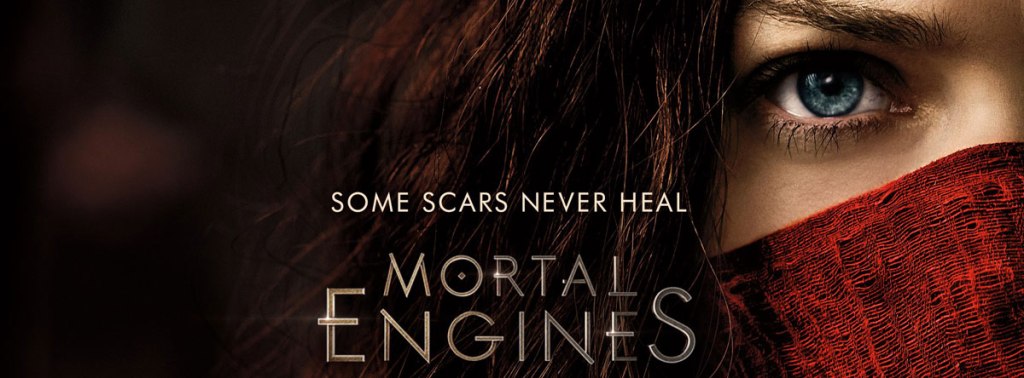
  • Film review: “Mortal Engines” (2018)

    “Mortal Engines” (2018) 

    Fantasy/Young Adult

    Running Time: 128 minutes

    Written by: Fran Walsh, Philippa Boyens and Peter Jackson

    Directed by: Christian Rivers

    Featuring: Hugo Weaving, Hera Hilmar, Robert Sheehan, Jihae, Ronan Raftery, Leila George, Patrick Malahide and Stephen Lang

    Chudleigh Pomeroy:“Sixty minutes is all it took to bring humanity to the very brink of extinction. Mankind mobilized, a new age arose. The Age of the Great Predator Cities. Survival of the Fastest.”

    This month heralded the release of the latest young adult (YA) adaptation into cinemas, that being the box offie bomb “Mortal Engines” (2018). Unfortunately this movie was not a critical success either it was about as routine as they get as far as plot and narrative go, however this movie also had the audacity to not only riff on just about every other YA adaptation that has ever existed, but to also take a big leaf out of so many other genre films as to be embarrassing for anyone involved in this misguided adventure. It has become apparent lately, with so many terrible YA adaptions how limiting many of these adaptions can be as well as how much audiences have had enough, staying away in droves. There is no doubt that the nadir of YA adaptations is “The Hunger Games” (2011-2014) which was not only a behemoth at the box office but was also embraced (mostly) by critics and helped launch the career of Jennifer Lawrence as well as cementing a career for director Francis Lawrence, the low point although not definitively was the cheap imitation, the “Divergent” (2014-present) which devolved so quickly over its instalments that the studio all but gave up on the final one, with audiences being apathetic about its fate, there is no outcry for the final instalment from anyone. Where “Mortal Engines” fits is questionable, but it was an abject misfire, so it fits somewhere near the bottom of the heap, which considering its pedigree is not surprising at all. Not only was it uninspired but its plot and narrative were paint by numbers to such an extent that any possible originality was sucked out by the poor acting, formulaic screenplay as well as directing that was more B level than something that begged to be seen on the big screen. In fact this may have been better as a television adaption except that even now there are far too many similar themed shows on a variety of platforms with more engaging characters, better special effects and a plot that makes sense with fewer red herrings than it should have to keep audiences interested. Its never easy being at the end of anything so this movie comes at the end of a long movement of YA movies that have for the most part been failures, I am not sure what the production company was thinking as to why this would be any different, it may have been the modest budget, but this movie will definitely not make its money back. 

    This is an adaption from a series of novels by Philip Reeve, the first having been published in 2001, to be honest if this movie had been released then it may have fared better, as it would, at least, seemed to be more original, it being at the beginning of a cycle and not the end. It has been adapted by Fran Walsh, Philippa Boyens and Peter Jackson of “The Lord of the Rings” and “Hobbit” (2001-2014) fame which looking back were overblown affairs themselves, but at least the source material was solid and once again when the first trilogy was released it seemed like something that was original and needed to be seen in cinemas, not on DVD. Unfortunately the three writers really only seem to be one trick ponies with everything else they have been involved in being mostly let downs, however with this new movie they have sunk to new lows. What is really surprising is that this movie is not directed by Peter Jackson, which looking back seems like a big mistake, but it is possible even he knew this was a reductive and unoriginal story so the reigns have been handed to first time director Christian Rivers, who has never been at the helm of anything like “Mortal Engines” before, judging from the results he will not be again. The direction is paint by numbers with little real originality making way for CGI spectacle instead of a real story with so many endless narrative coincidences as to be unbelievable and that’s in a fantasy genre, there are also so many characters that are not only formulaic tropes but are archetypes so familiar as to be ripped out of other stories wholesale. Basically if you have seen pretty much any “Star Wars” (1977-present) movie then you have seen this, except “Mortal Engines” has so much overblown game like CGI as to wonder what was the director thinking of when he made this? I am not a huge fan of giving an untested director hundreds of millions of dollars as the pressure rarely produces good results. If you look at a director like Christopher Nolan, not even he was put in charge of an equivalent movie until five movies into his career, it is hubris to think that Rivers is going to be better than Nolan.

    “Mortal Engines” follows a cataclysmic conflict known as the Sixty Minute War, the remnants of humanity regroup and form mobile “predator” cities. Under a philosophy known as “Municipal Darwinism”, larger cities hunt and absorb smaller settlements in the “Great Hunting Ground”, which includes Great Britain and Continental Europe. The city of London captures a small mining town called Salzhaken, absorbing its population and resources, under orders of Lord Mayor Magnus Crome. A masked woman among the Salzhakens is Hester Shaw, who seeks to assassinate Thaddeus Valentine, Head of the Guild of Historians. Tom Natsworthy, a teenage Apprentice Historian, is sent to London’s “Gut” to collect Old-Tech for London’s Museum, accompanied by Valentine’s good-natured daughter Katherine. Hester attempts to kill Valentine but Tom intervenes, pursuing Hester to a waste chute. Hester escapes, but not before telling him that Valentine murdered her mother and scarred her face. When Tom informs Valentine of this, he pushes Tom down the chute.

    Is it just me or whenever there is a post-apocalypse story especially a YA adaption almost all the good guys look not only perfect but seem to have a glow about them, so this cast is full of great looking people, dressing snappy and they all seem like they stepped out of a hair salon, maybe some of the writers and directors should watch a real post-apocalyptic movie like “Threads” (1984) to see how the world might really look. The movie has been cast with relative newcomer Hera Hilmar as the main character who does the job I assume she was told to do, so acquits herself in a truly broad role where she has all the answers, as well as the one who seems to be key to this plot, there is even an “Empire Strikes Back” (1980) moment involving her which seemed to be too funny to be true, but then this is that kind of movie. The rest of the movie is filled out with genre actors such as the lost looking and woefully miscast Robert Sheehan who still is unable to find a role that suits his talents, Hugo Weaving who cannot seem to break with Peter Jackson and Stephen Lang almost unrecognisable as a Terminator rip-off who only exists to pass a literal key to the hero to save the day. The rest of the cast are all cyphers and newcomers who will probably survive this as “Mortal Engines” has been such a dud that no one will remember they even appeared in this.

    “Mortal Engines” is such a reductive movie I wouldn’t even bother watching it on a streaming service, this is so unoriginal as well as an insult to not only its genre but to the people behind it that the writers and director really owe audiences who paid to see this an apology. It is the worst kind of movie that steals ideas, characters and themes from so many sources as to create a hodge podge of a movie that makes little sense. One of the bewildering parts of this and many other movies set in some fantasy laden post-apocalypse is that everything and everyone looks so good, with technology as well as living environments that look all sparkly, clean and completely disease free, there are no ugly people, no overweight people and no malnourished people either, in fact it looks more like an adventure park than anything else. Oh wait I get it this movie was a two-hour plus advert for a theme park, I get it now! The only saving grace is that nobodies Mothers name was Martha.

  • Television/Streaming review: “Project Blue Book – Episode Two – The Flatwoods Monster” (2019)

    Television/Streaming review: “Project Blue Book – Episode Two – The Flatwoods Monster” (2019)

    Sci-Fi

    Ten Episodes

    Created by: David O’Leary

    Featuring: Aidan Gillen, Laura Mennell, Michael Harney, Ksenia Solo, Michael Malarkey

    Sighting: “An instance of seeing or catching sight of something, typically something unusual or rare.”

    This new series revolves around secret U.S. Air Force investigations into supposed UFO encounters and unexplained phenomenon, undertaken by astrophysicist, and eventual ufologist, Josef Allen Hynek in the 1950s and 1960s.

    This weeks episode has two main strands, the actual investigation by Hynek and Captain Quinn who have to deal with small town paranoia as well as the possibility of a crashed UFO. Once again there is the conflicting aims of both parties as well as the “X-Files” like exploring of not only the mystery of what happened in the small town but the way in which both men interact with the townsfolk. Then there is the dawning realisation that Mimi Hynek is dealing with a Russian spy in her friendship with Susie, not only that but Susie takes Mimi to a club that hosts an alternate lifestyle to the one that the housewife is used to, which scares her immensely. We are seeing juxtapositions throughout the show as to the peoples existing expectations and what they are exposed to.

    Of course what is becoming apparent with the show and the characters is that they are all in some way dealing with post war paranoia as well as the reality that there is more going on in society than they could know through their own limited experiences. After the war there was a sense of prosperity as well as an influx of men looking for work who married, settled down and were told that life was good, they would prosper and that the ‘norm’ was to be married with children. Not all people felt that way; in fact what this expectation negated was the idea that there is no ‘normal’, that people are individuals with unique needs in terms of their tastes, sexual orientation and beliefs. This led to certain members of society having to live very public lives that were in contrast to how they actually felt, driving them underground to clubs that were like the club that Mimi and Susie end up going to. This is reflected in the art, media and changing values of the time period.

    This post war paranoia is exemplified in the way the townspeople end up treating the family who have a run in with what might be a UFO but ends up possibly being a meteor. There was at this time in the world fear as well as paranoia because of the Cold War that existed, which meant people were on the lookout for anything that was different. This was also a time of change with the Civil Rights movement that was getting started, as was the sexual revolution, which was not far away. It was also a time when the media was recognised as being a tool that could influence people on a large scale, not only on television but in movies as well which we can see at the beginning of episode one. There is even mention of Orson Welles broadcast of the H.G. Welles story ‘The War of the Worlds’ which had an impact in the US when it was seen by some as a possible invasion from Mars. It may seem ludicrous now but it was one of the first times when it as seen fiction could have a major effect on a   population through the media at the same time which is directly correlated to our lives today with social media, one need only see the power of a single tweet from POTUS, it is immediate and can rock society within seconds. In this episode it is a newspaper story that rocks a small town into immediate suspicion, paranoia and possible violence, which our investigators have to confront with little experience in how to diffuse the situation, but they do with the help of Hyneks logic and personal experience, although if he actually believes his own explanation is up in the air.

    One of the more cryptic and once again ‘X-Files’ like moments is the closed door meeting of the two Generals who are obviously up to something in terms of the investigations, the only unanswered question is do they want them to succeed or fail, we do not know their motivations so this is part of the mystery/conspiracy angle that has yet to be revealed. Although we do see them walking around an Air Force Base that seems to represent a possible Area 51 type place that is home to top secret projects that are going to link back to the Cold War era projects. Not only that but like many genre series we are given a glimpse behind the curtain for a brief moment which is a revelation of sorts but it is still a mystery as to what we are really seeing. Are we being let in on a conspiracy or are we just seeing some kind of experimental aircraft that the Air Force was known for during this period.

    There has been a better definition of all the characters within the story which is needed as we movie through this first season, it is possibly one of the weaker elements of the show at this point, there is little clear definition of who these people are, they are not yet three dimensional in look, feel or behaviours but this will happen I am sure. This was one of the issues another “X-Files” like show had, “Dark Skies” (1996) which was flashy but lacked depth in terms of character so it should be a lesson learned.

    All in all “The Flatwoods Monster” is another very good episode that will keep even the casual viewer interested in the subject matter, this may not hook people immediately but it will entice an audience enough to tune in for the next episode which I will be checking out. I have some faith that this show is formulaic enough that it will be very enjoyable especially because it has a sci-fi bent and is a period piece so it is a nice view on life almost seventy years ago.

    Episode Two – The Flatwoods Monster

    Directed by: Robert Stromberg

    Written by: Sean Jablonski

    On the night of September 12, 1952, something terrifying descended upon the small, West Virginian town of Flatwoods. Precisely what it was remains a mystery to this very day. All that can be said for sure is that it was hideous, fear inducing and downright monstrous. It has, appropriately, become known as the Flatwoods Monster.

  • DVD review: “Dark Crimes” (2018)

    “Dark Crimes” (2018)

    Thriller

    voting-concept-rating-two-golden-stars-d-render-illustration-white-background-60907242

    Running Time: 92 minutes

    Written by: Jeremy Brock

    Directed by: Alexandros Avranas

    Featuring: Jim Carrey, Agata Kulesza, Charlotte Gainsbourg, Kati Outinen, Zbigniew Zamachowski and Marton Csokas

    Kozlow: “The river has an end and a beginning.”

    There is undoubtedly a dark side to Jim Carrey’s professional and personal persona, which has never been fully explored on film, although he has dabbled in films that have very serious and definite dark corners. “Dark Crimes” (2017) is an attempt by the actor at something very dark, as well as a very original as well as exciting narrative. However this movie has been made with what is a novice writer as well as director so it never really amounts to much for anyone involved, which is a missed opportunity. In fact, this movie reminded me much of the Nicolas Cage starring, Joel Schumacher directed “8mm” (1999) which was made after Cages Oscar win and when Schumacher seemed lost as a director – both men have never really recovered career wise, which is a loss for audiences everywhere. Carrey who has been extremely quiet and absent from movies since the misjudged decision to rekindle earlier success with “Dumb and Dumber To” (2014) has made the decision to almost retire from acting and live a life in retreat so it was with some anticipation that I looked forward to watching this thriller, but it did end up being decidedly average which was a real shame for audiences.

    Early in his career Jim Carey was always unfairly judged on his early career comedy as well as the massive success he had with those movies, so much so that almost any attempt at something serious has always been looked down on by the critical elitists as well as those in Hollywood who thought they were too good for his style. There have been few actors that have reached the giddy heights that Carrey has in terms of a bonafide box office draw, he broke early comedy records before turning his hand to high concept dramas that still made people want to watch him. Even his critical failings such as the recent “Dumb and Dumber To” made a relatively large amount – people still like Jim Carrey and are willing to go to the theatres to see him. Something that can not be said for many of his peers who are nearing their sixties. If there is one thing that Carrey has earned is the right to spread his wings, trying different genres and fail if needs be. His perceived fear of failing could be said to have led to him taking small roles in small movies, just to see if he can operate within tightly resourced movies with inexperienced directors.

    “Dark Crimes” is directed by Alexandros Avranas, a relative filmmaking novice, but someone who has directed a couple of movies in his native homeland of Greece, here he gets to make his English language debut which may explain the lack of narrative coherence as well the difficult relationship the screenplay has to the finished movie. This is also the first time that Avranas has directed someone else’s screenplay, which has been written by Jeremy Brock who is as experienced a screenwriter as there has ever been. Brock has adapted this story from an article by New Yorker writer, David Grann who not only is experienced but other stories of his have been adapted into movies, such as the incredible “The Lost City of Z” (2016) that deserved far more attention than it received on its release. The issues with this film are all around the direction as well as the decisions that have been made in terms of tone as well as how the narrative plays out in relation to the fairly simple plot, which is a shame as the general idea that this movie is based around is actually very good.

    The film follows Tadek who is a detective who takes on a case involving the murder of a businessman. To his and everyone’s surprise the case is identical to a character’s murder in a recently published novel by a man named Kozlow. While the crime appears to be an open and shut case, Tadek discovers a darker secret. This is a secret that like many thrillers dresses itself up as a twist but falls short when the revelation counts.

    The star of this movie is of course Carrey complete with old man beard that he has been sporting for the past few years, it is obvious why he has it here, to disassociate viewers from his face so that there is a separation between comedian and dramatic actor – it does work to an extent, but at times I felt myself looking into the beard, so at times it did become a distraction. Now I have to say that I enjoy watching Carrey, he is a fine actor with an obvious understanding of how to act as well as inhabit a character, which he does here extremely well – as I have said I just thought that he was better than the material or this director. The main supporting actors are the protagonists Charlotte Gainsbourg and Marton Csokas who are both excellent, playing as direct opposites to Carrey. For me it is Csokas, who has been a mainstay of movie bad guys for over two decades, is not only a great character actor but a scene stealer as well, I always find myself transfixed by his performances as well as his endless supply of accents which he seems to have at his disposal. As well as Csokas there is Charlotte Gainsbourg who has proven herself a very capable actor particularly in movies where the narrative is not clear or traditional in the way some audiences might expect, she is also not afraid of any acting challenges, which in a movie like this is very important, as it means there is a tendency to side with her, which may or may not be a mistake.

    My feelings about this movie are mixed, the actual story is very good as well as original, it has a Kafkaesque feel as well as non traditional Hollywood methods to tell this story, that in the hands of a more experienced director might have worked in the narratives favour. However, while this film looks and feels like a dark thriller in the vein of “Seven” (1995), with some flourishes that fit in with the genre, it has a very uneven pace as well as some divergences that feel false as well as exceptionally hollow, not authentic at all. A more experienced director may have been able to take an objective view of the screenplay, challenging some of the basic parts as well as decisions to come up with something more original as well as gripping. It seems on the surface that the power within the production would have been with Jim Carrey and the screenwriter who are as about as experienced as you can get, not only that they are also A-list talent who are able to hold sway over the production, it may also explain why the director has returned to his homeland for his next film.

    That is not to say that this is a terrible movie or unwatchable, but for a movie with a running time of ninety minutes it will seem like a much longer experience which is definitely not something that should occur. The best movies are those that fly by, no matter the running time, the narrative should be original enough that an audience should be curious about not only what happens next but how threads relate to each other as well as coming together to form the plot. The reason that this is worth watching is that the pedigree behind this movie is just fantastic, it is based on a very good article as well as being written and adapted by two great writers, if you stick through the movie you will be surprised by the general story as well the confrontational ending that may even surprise you.

  • Film review: “How to Train Your Dragon: The Hidden World” (2019)

    “How to Train Your Dragon: The Hidden World” (2019) 

    Animated

    Running Time: 104 minutes

    Written & directed by: Dean DeBlois

    Featuring: Jay Baruchel, Cate Blanchett, Craig Ferguson, America Ferrera, Jonah Hill, Kit Harington, Christopher Mintz-Plasse, Justin Rupple, Kristen Wiig and F. Murray Abraham

    Astrid: “Another Nightfury.”

    Hiccup:“She’s more like a Bright…”

    Astrid:“A Lightfury.”

    With very little fanfare the final part of the “How to Train Your Dragon” trilogy has been released into theatres this month with “How to Train Your Dragon: The Hidden World” (2019), bringing to an end one of the more memorable as well as emotional animated series ever. When the first installment was released in 2010 it was a revelation as well as original, it did well at the box office as well as with critics, not only that it was a story that had universal appeal, based on real emotion as well as representing people with disabilities in ways that were positive and did not pander or ridicule. It also utilized existing tropes that play out almost all the time in animated films, that is a fish out a water narrative, which was reflected with both main characters, who are unique in their own worlds while at the same time co-existing in each others. The other important element in “How to Train Your Dragon” (2010) was that it linked both main characters explicitly as both were missing limbs, which also linked the two species in the movie, humans and dragons. While the first film was quite light hearted and fun, the follow up, when it arrived in 2014 was a serious upgrade in both animation as well as story, with some serious ramifications for Hiccup, the hero of the story. Hiccup and Toothless had to deal with dragon hunters, the reuniting of a parent long thought dead as well as loss on a very personal scale. These themes like the first movie reflected what it is like being a child, especially those that are dealing with adult issues, which can affect them from time to time in real ways. If anything both of these movies keep it real in terms of dealing with real emotion as well as how important it is to rely on friends, even if you do not realize you need them at the time. 

    One of the aspects that is present in all three movies that I love is that we are witnessing not only a true friendship being made, but we also see these people grow and change, it is a real achievement in not only animated movies but movies in general. There are narrative arcs within each film as well as over the trilogy, that have ramifications on almost every single character, which is great as well. Of course at its most basic level the movie is about two outcasts who have physical impairments that rely on each other for strength and support, they not only need each other but they are loyal as well as confidants who understand each other on an instinctual level, this has rarely been seen in cinema in such a pure thoughtful way. 

    “How to Train Your Dragon: The Hidden World” is the closing of the trilogy, how well it does this is debatable as this was always going to mean both Hiccup and Toothless were going to have to grow up, realise that they now needed different things in their life and that if they stayed together they were going to have to deny who they really were, as well as what they wanted. However because there was such a step up from the first to the second installment this third movie, no matter the actual storyline was possibly going to be a disappointment, which for me it was as it does not quite stick its landing. One of the beautiful things about these movies was the ‘realness’ that they had in the treatment of many elements of life, this one goes against the grain with a slightly manipulative and sentimental conclusion which I though it could have done without completely. 

    There has been a large number of constants running through all three movies such as the voice cast, the characters, the setting and the creative team led by writer/director Dean DeBlois who has done a wonderful job in adapting the series of novels by Cressida Cowell. In adapting the books into movies there have been many changes made, which for me is great writing, making it more character based with slight stories that are nothing new narratively. It is the relationships that are most important which is where DeBlois has written himself into a corner of sorts as he has to introduce too many characters to an already character heavy story. In fact DeBlois actually adds more new characters to this stuffed movie meaning that it feels a little contrived and the relationship we want most is almost sidelined which I found a little frustrating. I did however, enjoy the addition as well as the parallel narrative of both Hiccup and Toothless finding love as well as a kingdom of dragons, that is obviously where we will end up. The animation itself looks great, the dragons in all their myriad forms look amazing with a level of detail that supersedes the previous two chapters, which is a great uptick especially because of the protracted time between the previous instalment and this new one.

    “How to Train Your Dragon: The Hidden World” is set one year following Stoick’s death and Drago’s defeat. Hiccup, now the chief of Berk, has fulfilled his dream of creating a peaceful dragon utopia, where both humans and dragons live together. Though Hiccup is content with the current events, his constant missions in saving dragons from various dragon hunters has caused Berk to become overpopulated with dragons. On one particular mission to save dragons from a hunting ship, Hiccup and his crew miss one dragon, a white Night Fury who can turn invisible. Its captors deliver the dragon to an evil dragon hunter called Grimmel the Grisly, who promises to use it to hunt down Toothless and deliver him back to the hunters. 

    Along with the huge cast that are returning there has been the addition of Oscar winner F. Murray Abraham as Grimmel the villain of the piece who even as a voice actor has menace as well as a presence that seems to blow every one else off the screen, he is wonderful to have especially as a foil for the rest of the cast. All of the actors have their own time to shine in their respective roles which is fine for them, and I assume it was the reason to return but it hampers the plot as well as the narrative which is where I was a little let down overall. It would have been a braver and better decision to pare the cast back so that it was a fully realised story that was coherent, more fun and had a real emotional, impactful ending. 

    “How to Train Your Dragon: The Hidden World” is still a wonderful movie, it begins and ends for me with the relationship between Hiccup and Toothless that is still a wonder to watch. The real trick and gift was not to anthropomorphise Toothless as being a human, instead making him more cat-like, which was, and still remains the best decision made in this franchise. The only real issue I have is that it does not reach the high points of the second chapter with all the revelations and losses that the middle part had, like many trilogies it saves the best for the middle. It also has, for me, an unsatisfactory conclusion that should have had more emotional weight but seems to scared to leave it on what may have been a more sombre and memorable, as well as sticking with the previous two movies, a more realistic ending. Nevertheless I recommend this movie highly and should be seen on the big screen.

  • 4K Blu-ray Review: “First Man” (2018)

    “First Man” (2018) 

    Drama

    Running Time: 141 minutes

    Written by: Josh Singer

    Directed by: Damien Chazelle

    Featuring: Ryan Gosling,  Claire Foy, Jason Clarke, Kyle Chandler, Corey Stoll, Ciarán Hinds, Christopher Abbott, Patrick Fugit, and Lukas Haas

    Neil Armstrong: “I don’t know what space exploration will uncover, but I don’t think it’ll be exploration just for the sake of exploration. I think it’ll be more the fact that it allows us to see things. That maybe we should have seen a long time ago. But just haven’t been able to until now.”

    Critical Commentary:

    This week sees the release onto DVD/Blu-ray and 4K of what was considered to be one of the heavy hitters in this seasons award race especially considering the people that were involved both in from of, as well as behind the camera. Unfortunately because of poor box office as well as underwhelming reviews it has missed out on any major Oscar nominations. With the re-teaming of star, Ryan Gosling and director, Damien Chazelle from the six time Oscar winning triumph that was the box office and critical hit “La La Land” (2016), expectations were high that “First Man”, with more of a traditional movie from a major studio would have a bigger impact on all fronts than their previous effort. While this new movie is a huge technical achievement that uses a variety of techniques to achieve something special that rivals other true life films about the space race of the 1960s such as “The Right Stuff” (1983) and “Apollo 13” (1995) it seems to be a rather cold piece of film-making that has at its core a reluctant protagonist that never seems to set out to be a hero which means the heart of this film is not what would be considered sympathetic. However for those willing to go with this movie, and invest their time, it will not only be rewarding but also reveal events on a personal level that led to the first man walking on the moon. The movie covers a period of the life of astronaut Neil Armstrong as well as his family, leading up to the legendary space mission that led him to become the first man to walk on the Moon on July 20, 1969.

    “First Man” has been directed by Damien Chazelle who after wining the Oscar for best director, the youngest to do so, could have chosen anything as his next project, as it happens this film was already green lit before his historic win. As it happens this movie marks many firsts for the director, it is his first studio movie, it is the first movie he has not written and it is the first that does not use music as a major motif. To be fair Chazelle does an excellent job at balancing many elements especially the music as well as the CGI, which reach a crescendo when it comes to the Moon landing which is nothing less than spectacular. Where the film does encounter issues is where the human drama intersects all the other elements that audiences have come to expect in the training of the Astronauts and all that encompasses. It may have been better to either take more of Armstrong’s life before he became a test pilot as well as where his origins lay, as I found much of this story to be heavily reminiscent of “The Right Stuff” but less engaging as the juxtaposition that movie used as well as the practical effects to be unsurpassed. “First Man” is obviously a biographical drama, it has been adapted by Josh Singer, based heavily on the book ‘First Man: The Life of Neil A. Armstrong’ by James Hansen. Singer has over the past few years been involved as well as writing some very good true life stories made into excellent movies, such as “The Post” (2017), “Spotlight” (2015) and numerous episodes of “The West Wing” (1999-2006) here to writes a somewhat formulaic script that never reaches the heights of those other films, in fact when a story is so well known it can be a challenge to add anything new. However there is a part of the Armstrong’s life that had gone without any real public knowledge, that was the loss of their daughter to cancer, and their recovery, this plays a large part within this narrative and seeks to explain much of not only Neil Armstrong’s passion but his wife’s as well. These are the kind of story beats this movie needed more of, then it would have had a chance to stand apart from the crowd. 

    There is no doubt that the star of “First Man” is Ryan Gosling who really does treat the man he is playing with upmost respect as well as humility. That may be the exact problem with the performance in that there does not seem to be any depth presented onscreen, it is all business with little portrayed emotion, which I do not believe Armstrong would have been. It almost seems like Gosling is playing the man as a blank slate, so much so that he comes off as a void where the audience is supposed to do the work, deciding on what kind of man he was but there should have been more, especially as a man who was a representative of the entire human race. This element of the film should have been more tightly controlled by director, Damien Chazelle, who in the past has had some very good performances out of actors, two come to mind in the Oscar winning performances by J.K. Simmons and Emma Stone. Onto the good news in that the supporting role, played by Claire Foy is absolutely flawless as Janet Armstrong, Neil Armstrong’s first wife. Foy who is possibly more experienced than Gosling seizes this role with both hands and makes it her own, not just a ‘stay at home wife/mother’ she has an element of agency as well as input and understanding about how important the mission as well as her husbands work actually is not only to him but to the country as well as the world. As you would expect with this kind of movie as well as the pedigree of the people behind it the rest of the cast id filled out with some great modern character actors who lend authenticity to their roles as people who are burdened with life risking work as well as being competitive with each other, they all work wonderfully.

    The actual production values of “First Man” are extremely high which is impressive as it is made on a relatively modest budget of US$59 million considering it has a large cast, is a period film and required quite a lot of CGI and special effects. There is no doubt that the centrepiece of the movie is the Moon landing that is carried out as well as any sequence over the past year, it combines some amazing special effects as well as acting and the use of the score is so subtle but works extremely well. In fact in terms of the score by double Oscar winner and long time Chazelle collaborator Justin Hurwitz, it has been written so well, but used sparingly that it never manipulates the viewer into making them think a certain way, it is possibly the most under appreciated element of this film. 

    The unfortunate thing about this movie is that not enough people went to cinemas to see it, which means that studios will be shy about making these types of movies in the future, which is a loss for everyone. This is an adult movie about very real and personal issues that effect us all in one way or another, it is about loss, succeeding after failure, what family means and what do we leave behind once any given time of life is over. There are a few parts of “First Man” that should have been adjusted but even taking that into account I actually recommend this highly as one of the better films from last year and a welcome addition to any collection.

    Technical Commentary:

    Universal Studios Home Entertainment brings “First Man” to 4K Ultra HD Blu-ray as a two-disc combo pack. The triple-layered UHD100 disc sits comfortably opposite a Region Free, BD50 disc inside a black, eco-elite case with a lightly-embossed slipcover. At startup, the disc goes straight to a static screen with the usual options along the left side and music.

    Video

    “First Man” comes to Ultra HD with a highly satisfying HEVC H.265 encode that impressively and surprisingly offers a better viewing experience than the Blu-ray.

    The drama was shot on a combination of 16mm, 35mm and 65mm film, and those elements were later mastered to a 2K digital intermediate. The video continuously fluctuates from razor-sharp definition with a very fine layer of grain to glaringly soft awash in a prominent coating of grain. Nevertheless, the 2160p transfer enjoys a notable uptick overall, showing significantly better clarity of the background information. In the end, the picture delivers an appreciable, very film-like step-up over the Blu-ray.

    The 4K video also makes the historic voyage with dynamic contrast while remaining faithful to the creative intentions of the filmmakers. Although comparatively brighter overall, the more somber conversations still show some restraint, but the sequences with space travel receive a notable boost, displaying crisp, radiant whites in Earth’s skies, the sterilized spacesuits and the space capsules.

    The biggest and most significant improvement is undoubtedly the color palette. Whereas its HD SDR counterpart felt a bit more subdued and somewhat low-key.A

    Special Features

    • Audio Commentary: Director Damien Chazelle sits down with screenwriter Josh Singer and editor Tim Cross for an amusingly informative conversation on the technical details behind the production and the amount of work that went into a few key sequences.
    • Putting You in the Seat (HD, 7 min): A fascinating and enlightening look at the innovative technology used for the production’s creative visual style. 
    • Recreating the Moon Landing (HD, 6 min): Exactly as the title implies, the featurette is a behind-the-scenes look at recreating the historic moment and doing it justice. 
    • Giant Leap in one small Step (HD, 5 min): A much-too brief piece on Neil Armstrong and the production’s emphasis on his personal life. 
    • Shooting for the Moon (HD, 4 min): Chazelle talks about his involvement in the production, adapting the historic event for the silver screen and working with Ryan Gosling. 
    • Preparing to Launch (HD, 4 min): Cast & crew interviews discussing their part in bringing the little-known story about Armstrong and the Apollo 11 launch for mainstream audiences. 
    • Astronaut Training (HD, 4 min): Cast attends astronaut bootcamp prior to filming. 
    • Mission Gone Wrong (HD, 3 min): A quick look at some of the stunt work. 
    • Shooting at NASA (HD, 3 min): Interviews chatting about the joy of using real-life locations. 
    • Deleted Scenes (HD, 4 min)


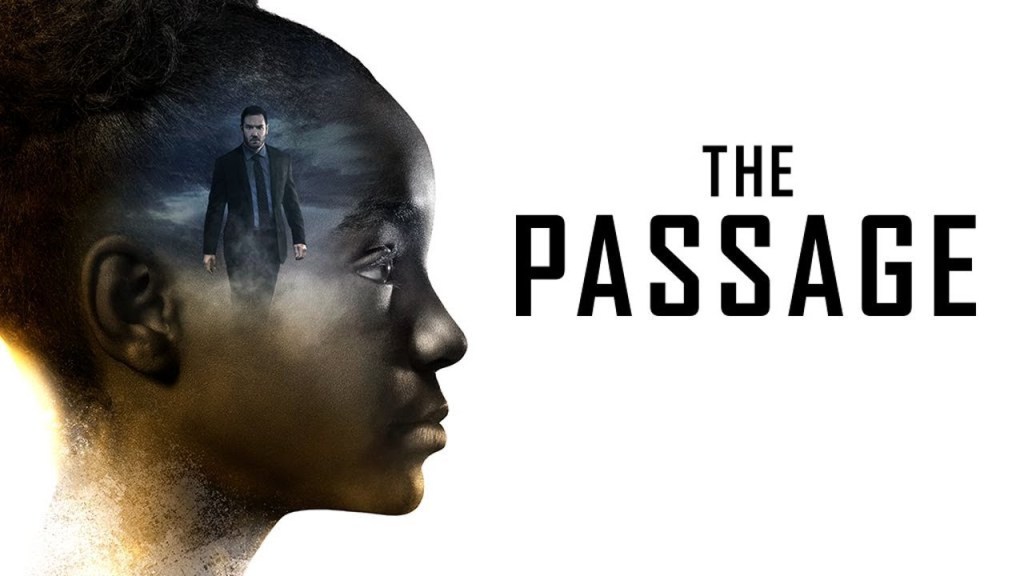
  • Television/Streaming review: “The Passage – Episode Two – You owe me a new Unicorn” (2019)

    “The Passage – Episode Two – You owe me a new Unicorn” (2019)

    Ten Episodes

    Created by: Liz Heldens based on the novels written by Justin Cronin

    Featuring: Mark-Paul Gosselaar, Saniyya Sidney, Vincent Piazza, Brianne Howey McKinley Belcher III, Jamie McShane, Caroline Chikezie, Emmanuelle Chriqui

    Doctor:“This could be the cure for… everything.”

    Well the second episode has arrived of the show based on the excellent adult trilogy ‘The Passage’ by Justin Cronin that charts the world as it passes from a pre apocalyptic period through to an ante period through to the post part which takes place over a one thousand year time period. This time there has been an immediate improvement possibly because there has only been one director credited, but the same writer,  Liz Heldens, is still the main force behind the show.

    The general plot of the “The Passage” (2019) focuses on Project Noah, a secret medical facility where scientists are experimenting with a dangerous virus that could lead to the cure for all disease, but also carries the potential to wipe out the human race. When a young girl, Amy Bellafonte, is chosen to be a test subject, Federal Agent Brad Wolgast is the man who is tasked with bringing her to Project Noah. Ultimately, however, Wolgast becomes her surrogate father, as he tries to protect her at any cost.

    There are still issues with the general look of the show, not only that but there are some very odd time as well as scene jumps which are so jarring as to take the viewer outside of the show. There is one problematic scene at the very start of the show where Wolgast and Amy make there way onto a school bus, which even on the surface makes no sense, in this day and age can even the most broad mind viewer believe that teachers would not check that the child and Father are legitimate, especially in the way they behave. Then Wolgast gets on the bus without anyone seeing, we then jump to both characters inside a car, it is a very odd section of the show, and this is only the start of the show.

    There are more flashbacks involving the scientists as well as exploring their motivations which jump along at a ludicrous pace as well as involving some very unsatisfactory coincidences which are unbelievable even for a fantasied show. We meet one scientist who wife has just been diagnosed with early onset Alzheimer’s, then gets a phone call about a possible wonder drug, within moments he not only has a partner but has unlimited funding to explore the origins of said drug.

    Finally the general introduction of Wolgast’s wife continues which is as clumsy as anything else in this episode. Apparently not only is she a surgeon, she also is an expert in geography as well as knowing instinctively when to show up just in time to remove a bullet from her ex husband. Not only that but Wolgast seeks shelter with someone who is set up as a survivalist, armed to the teeth yet is taken out of the picture in one of the worst shoot out scenes I have ever seen on television, even for broadcast television.

    The problems once again stem from the fact that that the people behind the series have ignored what was great about the initial novel, ‘The Passage’. That is the pacing as well as the offering back stories to only the really important characters, not only that there were revelations about the other subordinate characters made throughout the novels which built up tension. Here there are revelations made whenever new characters are introduced which dulls the impact of the action that is taking place.

    At this stage the brightest part of the series is still Saniyya Sidney, she shines above all others as Amy, the main character in both novels and series. At this early stage it does seem she might be better than the character that has been written for her, the reasons for her being, the relationship with her mother, the other worldliness of her actual being, the reason she is wanted, her actual attractiveness to Wolgast and finally why the story is centred around her. 

    The second episode is a minor improvement over the first one which was needed but this is still a disappointing series so far, unless there are some real improvements this will be an extreme chore to watch over the coming weeks.

    Episode One – You owe me a new Unicorn

    Directed by: Jason Ensler

    Written by: Liz Heldens

    Amy and a wounded Brad seek refuge with Brad’s ex-military instructor; Dr. Lear reflects on the decisions that led him to involve Fanning in his research; testing of the virus on Anthony Carter begins.

  • Television/Streaming review: “Project Blue Book – Episode One – The Fuller Dogfight” (2019)

    “Project Blue Book – Episode One – The Fuller Dogfight” (2019) 

    Sci-Fi

    Ten Episodes

    Created by: David O’Leary

    Featuring: Aidan Gillen, Laura Mennell, Michael Harney, Ksenia Solo, Michael Malarkey

    UFO: “An unidentified flying object (UFO) is an object observed in the sky that is not readily identified. Most UFOs are later identified as conventional objects or phenomena. The term is widely used for claimed observations of extra-terrestrial spacecraft.”

    One of the more interesting new television shows now airing on the History channel in the US is the ‘based on true events’ series “Project Blue Book” (2019) a period show set in the 1950s that follows a Professor as well as an Air Force Officer as they seemingly investigate reports of UFO sightings, either coming up with rational explanations or not being able to explain them at all. This all may sound a little familiar to some, yes it is reminiscent of another UFO hunting show in “The X-Files” (1993-present) but this shows remake origins go further back to another show, the aptly titled “Project U.F.O.” (1978-1979). The difference between this new show and that latter show was that the new series takes stories directly from the case files whereas the earlier one was very loosely based on actual case files from the US Air Force’s Project Blue Book. Extreme literary license was taken with the stories, leaving them barely recognizeable even to those very familiar with the actual case files. 

    This new series revolves around secret U.S. Air Force investigations into supposed UFO encounters and unexplained phenomenon, undertaken by astrophysicist, and eventual ufologist, Josef Allen Hynek in the 1950s and 1960s.

    So, where to start with “Project Blue Book” in terms of some kind of analysis, also is it worth the investment of time to watch? The best place to start is the structure of the show, which follows many other procedurals in a variety of genres, a case is found, our trusty duo head to the area of the case and investigate. Of course the tension and drama of the show comes from a variety of places, there is the odd couple nature of the two leads who are coming from different backgrounds as well as having their own goals, which this has in common with a large chunk of “The X-Files”, nothing new there. There is also an element of the Air Force (that is, the people in charge) hiding something from the our two heroes, which the audience is let in on, sometimes, although I suspect there will be elements that are only hinted at, which again is something in common with “The X-Files”, conspiracies abound. Something that is unique to this series is that it is a period piece, that is, it is set in the past, not only that it is set in the period of the first third of the Cold War which actually makes this a bit of a hybrid show, unlike either “The X-Files” or “Project U.F.O.”, which I really like. In other words it is part of the sci-fi genre and the spy genre, something that will be interesting to keep an eye on in the coming episodes.

    Another question to ask is, what was Project Blue Book, here are some of the background details: Project Blue Book was one of a series of systematic studies of unidentified flying objects (UFOs) conducted by the United States Air Force. It started in 1952, the third study of its kind (the first two were projects Sign (1947) and Grudge (1949)). A termination order was given for the study in December 1969, and all activity under its auspices ceased in January 1970. Project Blue Book had two goals:

    1. To determine if UFOs were a threat to national security, and
    2. To scientifically analyze UFO-related data.

    Thousands of UFO reports were collected, analyzed, and filed. As a result of the Condon Report (1968), which concluded there was nothing anomalous about UFOs, and a review of the report by the National Academy of Sciences, Project Blue Book was terminated in December 1969. The Air Force provides the following summary of its investigations:

    1. No UFO reported, investigated and evaluated by the Air Force was ever an indication of threat to our national security;
    2. There was no evidence submitted to or discovered by the Air Force that sightings categorized as “unidentified” represented technological developments or principles beyond the range of modern scientific knowledge; and
    3. There was no evidence indicating that sightings categorized as “unidentified” were extraterrestrial vehicles.

    By the time Project Blue Book ended, it had collected 12,618 UFO reports, and concluded that most of them were misidentifications of natural phenomena or conventional aircraft. A small percentage of UFO reports were classified as unexplained, even after stringent analysis. 

    This first episode has a lot of heavy lifting to do, it must set the show as being in the 1950s with all that entails, it has to introduce all of the key characters, of which there are quite a few, we need to see at least three points of view, one being the Air Force so we are introduced to a General who seems to know more than he is letting on, we meet Dr. Allen Hynek who is not really interested in UFOs and finally we meet Hynek’s prospective partner Captain Michael Quinn who has been forced into this project as a way to back into his superiors good books. The audience also needs to see a case through from beginning to end, so as to set up the first seasons structure, there also needs to be some kind of resolution as well as some linking introduced so as to make this show a little deeper so that we recognise that while there will be individual stories there is also some underlying plot that will be revealed as each new episode is released. In terms of the linking story it really from the first episode is divided into a conspiracy plot with Hynek on one side and the Air Force on the other. Then there is a subplot involving possible Russian spies attempting to contact Hynek’s wife, which seems like a stretch as well as possibly too much plot and an excuse to give Hynek’s wife a larger part, we will see how this plays out moving forward.

    The leads of “Project Blue Book” are Aidan Gillen as Hynek and Michael Malarkey as Captain Quinn who are both very good, who also seem to have some natural chemistry, which works very well. Gillen has been both supporting actor as well as lead in a number of television series and movies, here he needs to draw on his character actor skills to offer a broad performance as well as needing to modulate his performance on a variety of levels, much like David Duchovny had to do in “The X-Files”. On the other hand Malarkey has a slightly easier job in that for most of his performance he is playing the ‘straight’ man, he is an Air Force Officer following orders so he has a set agenda which he is following, so far we have not seen him have any kind of personal life, for now I doubt we will. The other supporting characters that currently have really only appeared in a few scenes are the genre veterans Robert John Burke and Neal McDonough who are so experienced they know exactly how to fir their performances not only to the genre but to the medium as well, they are always great fun to watch. Finally the role of Hynek’s wife is played by Laura Mennell who is another experienced actress who I feel is a little lost, not fault of her own but the character is not particularly well written.

    All in all “The Fuller Dogfight” is a very good introduction to the show for even a casual viewer interested in the subject matter, this may not hook people immediately but it will entice an audience enough to tune in for the next episode which I will be checking out. I have some faith that this show is formulaic enough that it will be very enjoyable especially because it has a sci-fi bent and is a period piece so it is a nice view on life almost seventy years ago.

    Episode One – The Fuller Dogfight

    Directed by: Robert Stromberg

    Written by: David O’Leary

    Dr. Allen Hynek is recruited by the Air Force into their top-secret UFO investigation program, starting with the case of a military pilot who survived a dogfight with an alien craft.

  • Blu-ray/DVD review: “The House with a Clock in Its Walls” (2018)

    “The House with a Clock in Its Walls” (2018) 

    Fantasy/Young Adult

    Running Time: 105 minutes

    Written by: Eric Kripke based on the book by John Bellairs

    Directed by: Eli Roth

    Featuring: Jack Black, Cate Blanchett and Owen Vaccaro

    Jonathan Barnavelt:“There’s a clock in the walls. We don’t know what it does, except… something horrible.”

    The new fantasy young adult movie is released on Blu-ray and DVD this moth in the rather long titled as well as plot spoiling “The House with a Clock in Its Walls” (2018) which is quite an unusual movie in that it features two A list stars in Cate Blanchett and Jack Black who are being directed by shock horror director Eli Roth, who has been given the reigns on a big budget fantasy tale by producer Steven Spielberg. As you would expect from the stars of the movie they deliver on their performance, they have both ‘been here and done that’ before in better and bigger movies that are not far in theme from this new feature. Where this movie seems to falter is in the tone, plot and narrative which is down to Eli Roth who has never really been at the helm of a drama, comedy or special effects movie before which is illustrated right from the opening credits, it is a shame as this could have been a movie that might have been really interesting in the right hands. In fact if this had been a more interesting story, it may have been imaginable a young Spielberg himself may have directed this. What is curious to me while watching “The House with a Clock in Its Walls” was that it is definitely not a bad movie at all, it just seems meandering as well as lacking some real spark, I had a real ‘been there’ experience as well, not only from the general plot, but also the trope laden narrative that is nothing new at all, especially when comparing to other genre pieces in the most obvious way with the “Harry Potter” (2001-2011) series and even Black’s own “Goosebumps” (2015), which I actually found to be superior as it was quite a bit of fun with Black himself playing a little against character, something I welcome very much. 

    “The House with a Clock in Its Walls” is based around ten-year-old Lewis Barnavelt who moves to live with his Uncle Jonathan. During his first night, Lewis is puzzled when he hears a ticking sound in the walls. Lewis begins exploring the house and stumbles upon Jonathan smashing a wall with an axe. Frightened, he runs away and stumbles upon multiple household objects coming to life. Jonathan confesses that he is a warlock and Florence, his neighbour, is a witch. The house’s previous owners were a sinister warlock named Isaac Izard and his equally wicked wife Selena, who had hidden a clock within the walls of the house before they died. Jonathan has been trying to find it and discover its purpose. Despite Jonathan’s discouragement, Lewis begins teaching himself magic.

    Much like many other fantasy movies or those involving magic this is an adaption, this time from a 1973 novel by John Bellairs who wrote many young adult novels as well as being very popular he also won many literary awards, so it is a wonder that other books he wrote have not made the transition to the big screen. This movie has been adapted by noted television writer and producer Eric Kripke who is most well known as the creator of the long running CW show “Supernatural” (2005-present), here he works from an existing property and for the most part seems to nail it, with all the elements you would expect from a movie within this genre, he knows the beats to hit so it is odd that it has pacing issues as well as logic ones as well, however I do not think this is down to his work. The weakest link in the movie is Eli Roth who here is working on his largest ever budget as well as a movie that is not R-rated, this is a PG movie which means the tone as well as fantasy and horror have to be pitched just right, not only that, when you are not relying on scares to produce emotion as well as push a story along then a different set of skills come into play, which at this stage Roth does not seem to possess. That is not to say that Eli Roth is a bad director, he has talent but so far has only really shown it in horror movies that have extreme violence, even his attempt at a thriller, the Keanu Reeves led “Knock Knock” (2015) should have been more low key than what it ended up being. In “The House with a Clock in Its Walls” Roth has opted to try and tell a story without much pace, especially for a story that contains so many recognisable tropes as this one does. If this movie had been the first young adult adaption with a magic element as well as wizards then the length it takes for anything to occur may have been acceptable, but this movie really is nothing new so the pace could have been picked up with more action to take up the slack. The movie has been shot by Rogier Stoffers who has quite a bit of experience but as can be seen in this movie does not really have a signature which means this looks lacklustre as well as a little dark on Blu-ray, in fact the CGI is a little off as well which in this genre is an unforgivable sin.

    As already mentioned the stars of the movie are Jack Black and Cate Blanchett who are both playing eccentric, magical as well as humorous characters which they both could do with their eyes closed. Both of these experienced actors carry this movie through the trope-laden script, the ropey CGI as well as attempting to make the young child actor Owen Vaccaro, shine as much as possible. Owen Vaccaro, who has appeared in a few other movies, is about average for a child star in the new millennium, which is not saying much. It is sometimes a revelation when young actors are good with limited experience; the actress that stands out for me over the past few years is Dafne Keen from “Logan” (2017) who has to juggle drama, action and a little bit of comedy all the while being successful in a very adult movie. Here in “The House with a Clock in Its Walls” Vaccaro plods through the movie not really playing anything in particular but just reciting lines which means his performance is a little exposed that hints at a director who has never directed a child before or is unable to adjust when things do not go to plan and adjustments need to be made.

    “The House with a Clock in Its Walls” is a passable young adult fantasy movie that does not live up to its promise especially with much of the impressive talent in front of as well as behind the scenes. Even though it is trope laden as well as having archetypical characters there should have been more to offer audiences who have been exposed to other movies like the “Harry Potter” franchise to name just one fantasy genre example. It has moments as well as elements of ideas in its story and narrative that could have added up to more than what we see onscreen which is a missed opportunity, as paying audiences we deserve better especially for the budget and again, talent. To be honest this does not need to be part of any collection but is worth a look if you catch on a streaming service. One of the more damning comments I can make is that I was so indifferent to this movie that I found it a little yawn inducing, there was little to stick around for so streaming is the answer to this one.

  • DVD review: “The Son – Season One” (2017-present)

    “The Son – Season One” (2017-present)

    Drama

    3-stars

    Episodes: 10 episodes

    Developed by: Philipp Meyer, Lee Shipman, Brian McGreevy based on the novel by Phillip Meyer

    Featuring: Pierce Brosnan, Henry Garrett, Zahn McClarnon, Jess Weixler, Paola Núñez, Elizabeth Frances, Sydney Lucas

    Phillip Meyer: “No land was ever acquired honestly in the history of the earth.”

    Released this month on DVD is a new Western of sorts in the form of a mini-series (although now getting a second season) in the form of “The Son” (2017-present), in a way a throwback to the giant miniseries of the 1980s but made on a micro level, as well as a limited budget that covers at least two time periods, both in the past which makes this a period piece, not only that but it covers ground familiar to many but also has resonance in todays world, politically, economically and socially. This is a world in Texas that is at once alien yet familiar to millions because of the many fictional and non-fictional stories set in that huge state.

    Originally written as a novel under the same name by Phillip Meyer “The Son” is a sweeping family saga that traces the story of Eli McCullough’s transformation from good-natured innocence to calculated violence, as he loses everything on the wild frontier, setting him on the path to building a ranching-and-oil dynasty of unsurpassed wealth and privilege.

    The series offers a look at the relatively recent history of Texas, the move away from cattle to the removal of oil from the land and the massive fortunes that were made after that was recognized as a viable way to turn the land for a profit. It also addresses the relationship as well as the genocide of the Native Americans, their replacement in the way in which the US treated their Southern neighbours, the Mexicans, and to a larger extent the entire South American population. It also addresses the border skirmishes that existed and how if you were not white then you were at the very least treated as second class citizens, at the worst treated as the enemy.

    “The Son” is led by the great Pierce Brosnan who is the matriarch of the McCullough’s and who plays the part with not only ease but a level of excitement to see an actor of such stature really breathe in a part that is not only three dimensional but all to realistic. The character Brosnan plays, Eli is possibly the most complicated person he has ever played with layers of emotion, rage, pity and so much more that it must have been a gift to get this role this far into a very long career. It is no understatement to make that without a believable actor to play Eli this show would not be anywhere the show it is, which is a reflection of US politics and social values over the past two hundred odd years. Brosnan plays the part as a man who embraces change but at the same time looks back on his complicated past knowing he can never change it, would he want to? Who knows, but his past has defined him, everyone around seems to pay the price for that past whether he knows this or not. Another aspect of Eli is his true love for his family, which is as sincere as anything else I have seen. There can be a temptation that a man like Eli who wants power or money will do anything to get it even at the expense of his own kin, but he will do anything to protect them and not only that he genuinely gets on with his family, you often see him laughing with them which is original for a family drama.

    This is a show with other great stand out performances running the ethnic gamut from white men to Native Americans to the Hispanic performers all are incredible which acknowledges the great work in the casting department, that is no joke, there is nary a false performance among this huge varied cast. My other favourite as well as extremely narratively important is that of Zahn McClarnon who plays the part of Toshaway a Native American in the early timeline who captured Eli then teaches him, appearing to him as a ghost in the future story, he is a great actor who knows how o vary his performance in every scene.

    “The Son” is an extremely dense story that has a complicated narrative especially when considering that most of the time these type of narratives can be of little consequence, but in this story they are both vital not limiting the actions of the characters in the past as it is so far in the past that at times it seems like a different world. When viewing the two time periods it is telling about the change in technology from 1850 to 1915 we see the advent of the motor vehicle, the telephone, irrigation and many other aspects of life that someone Eli’s age in the modern period world find alien in the earlier part. The change in technology over those sixty years was sudden, abrupt, life changing as well as altering the fabric of the Western World especially the US, which again is a direct reflection of our own times in the new millenium. Interestingly just when you think you know where the story is headed in any given tie period it will pull the rug out from under you which is a narrative trick that really works, once I started watching this show I had trouble turning it off, it was addictive and I look forward to the second season.

    Episodes:

    1. First Son of Texas: In 1849, young Eli McCullough and his brother, Martin, are taken captive by Comanches; the remaining family members are killed. Blaming Eli for his family’s deaths, Martin becomes defiant with his captors and is killed in front of Eli. In 1915, Eli and his son Pete prepare for Eli’s birthday party, while contending with cattle thieves and saboteurs of their burgeoning oil business.
    2. The Plum Tree: In 1849, Eli’s attempt to escape the Comanche camp is thwarted, and, after being punished, he becomes the Comanches’ slave. In 1915, Eli and Pete debate over their captive, Cesar, whom they caught fleeing a sabotaged oil rig. Eli tortures Cesar, believed to also be linked to the thefts. Pete later escorts Cesar to a river to release him into Mexico. However, Cesar attacks Pete, forcing him to kill Cesar and secretly bury him.
    3. Second Empire: In 1915, Eli and oldest son Phineas meet with potential investor William Philpott, who declines due to Eli’s shaky finances and the unlikelihood of finding oil in the Rio Grande Valley. Back home, Pete experiences guilt over Cesar’s death.
    4. Death Song: In 1849, young Eli must help a severely wounded Comanche back to camp, while evading Texas Rangers on patrol. In 1915, María García warns Pete that something bad is going to happen. He and Eli inform the Rangers of the Mexican rebels’ plan to derail a train. Eli is told to form a posse. They find tools to be used in the derailment and wait for the rebels to return.
    5. No Prisoners: In 1849, the Comanches sneak up on a Tonkawa camp only to find it deserted, ravaged by smallpox. Eli is ordered to gather their horses and what supplies that he can. While doing so, he finds a survivor who specifies items to take, so that the Comanche will also become diseased. Eli refuses. In 1915, the McCulloughs’ notoriety from the ambush has consequences, when their homestead is attacked. Both Marie and Jeannie seek help, and it arrives with Pedro’s men fending off the rebels. Eli sees oil on Jeannie’s horse and asks what route she traveled.
    6. The Buffalo Hunter: Young Eli finds a group of white hunters skinning some buffalo. He tells them that he recently escaped a Comanche camp, and the hunters vow to protect him, but Eli is merely a distraction for a Comanche raid. The lead hunter and a girl are taken captive. In 1915, Charles McCullough learns that Ramon, a farmhand, might have led the rebels there for the attack. Ramon is hanged in front of a remorseful Charles. Eli and Jeannie search for and find the oil seep, but it is in the Garcías’ territory.
    7. Marriage Bond: Upon learning of Ramon’s death, Eli suggests to Pete that Charles leave the ranch. Pete takes Charles and Jeannie to the McCullough home in Austin. Charles admits his complicity, but adds that he didn’t expect Ramon would be hanged. Pete tells Sally that he cannot rise above his family’s violent tendencies and suggests the children remain in Austin. A troubled María visits him, and they have sex. In 1850, Eli tries to help Ingrid, the captive girl, who wishes to die, but Prairie Flower warns him to stay away from her. While hunting, Eli is approached by Charges the Enemy, who is courting Flower.
    8. Honey Hunt: Charges returns to camp without Eli, stating that Eli escaped during the hunt. Flower wishes to search for Eli, but Toshaway informs her that her father accepted Charges’ dowry and the wedding will soon happen. She sneaks off to search for Eli, but Charges stops her by saying all supplies will be cut off from her family if she continues. She relents and they marry. In 1915, Pete and María plan for a future, once they are free from their respective spouses. Eli and Phineas attend a party for a judge, whom Phineas manages to bribe to help secure the oil seep on the García property.
    9. The Prophecy: Young Eli, with his injured leg, finds a settler named Maggie at her camp. She nurses him back to health, but her solitude all these years after leaving her group seems to have affected her mind. However, she tells his fortune, mentioning his long life and having three sons. In 1915, Eli tells Phineas that his injury was a sign and calls off the bribe and oil scheme, at the risk of losing the ranch. Eli later finds a saloon burning; Phineas admits to it, only because Eli secretly wanted to frame Pedro García.
    10. Scalps: With the rumor that Pedro García’s men were seen running from the saloon fire, Eli declares war and rallies an angry mob. Pete arrives at the García home to warn them. He suggests fleeing, but Pedro declines and prepares his men. Pete assists them and fires upon his father’s army. Many casualties occur on both sides; all of the Garcías are killed, except María who flees with Pete as seen by Phineas. When Eli relates the battle to his family, Sally asks about Pete. Alone, Phineas tells her the truth. The McCulloughs are later granted the García property. In 1850, Eli returns to the Comanche camp seeking revenge on Charges. Toshaway asks the elders for compensation, and they give him four horses; he also gives Eli a pistol of his own. Eli still pines for Flower. Later, on a hunt, the Comanches are attacked by Texas Rangers. Charges is shot, but Eli prevents a Ranger from scalping Charges who dies from his wounds. Eli then scalps the Ranger.

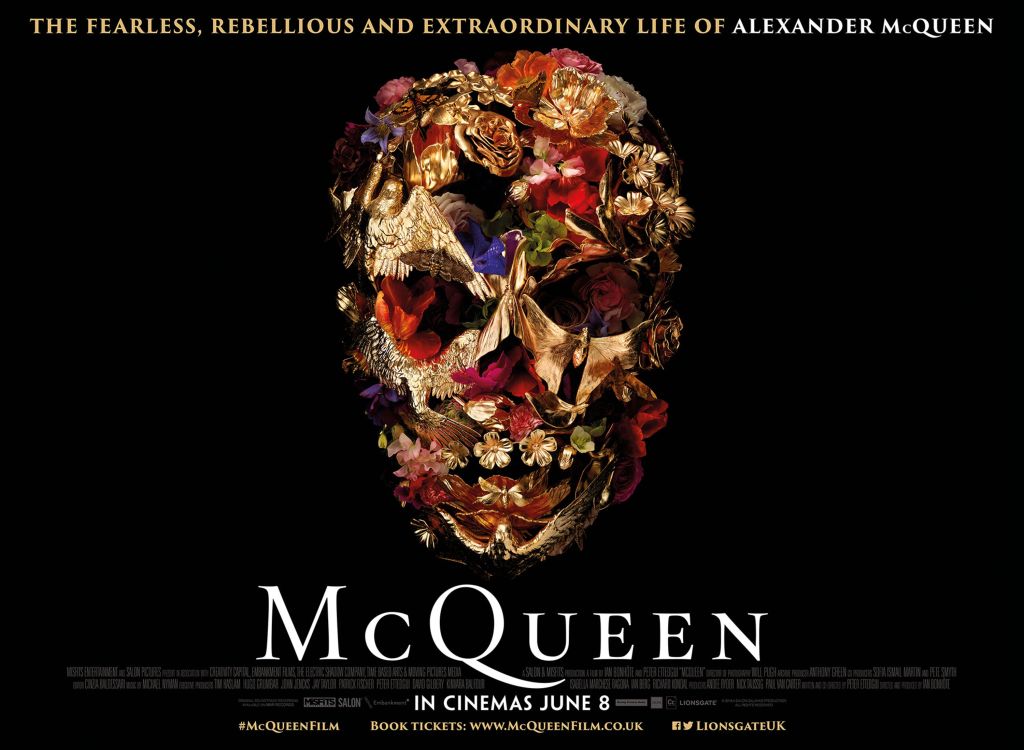
  • DVD review: “McQueen” (2018)

    “McQueen” (2018) 

    Documentary

    Directed by: Ian Bonhôte and Peter Ettedgui 

    Featuring: Alexander McQueen, Bernard Arnault, Joseph Bennett, Detmar Blow

    Alexander McQueen:“You can only go forward by making mistakes.”

    This week we see the release of yet another great documentary from last year on DVD, that is the excellent “McQueen” (2018). The past year has been an excellent year for documentaries not only on streaming or DVD but in cinemas which is a trend that goes against what many people may have expected. However I find this to be exactly what should be expected especially with the concentration of so-called ‘fake news’ that now exists on the internet, coupled with what has been coming from the White House under the Trump Presidency. In fact there was a thought that cinematic documentaries might be a thing of the past especially with the success as well as saturation of Disney-fied blockbusters invading multiplexes, in fact audiences have been flocking to cinemas to seek out stories about real people making real differences in times and places where many others have been marginalised and made powerless by the people in charge in their respective times. Some of the great, as well as critically received, not forgetting making money documentaires at the box office are: “Wont you be my neighbour?” (2018), “Three Identical Strangers” (2018), “Jane” (2018),  “RBG” (2018), and my personal favourite “Bombshell: The Hedy Lamarr Story” (2017) with so many more. What this says about audiences is that they will seek out true stories told in the relative first person that are not only inspiring but are direct counter programming to the politics of the day as well as the lies that are being produced by a President who is not only artificial but hate fuelled. My belief as a fan of documentaries is that this genre will only gain in popularity, with the coming years being a boon as well as revealing the importance of truth in the media as well as the importance of researching decisions made by the electorate. It is no surprise that the rise in fake news, Donald Trump, racism and may other hate fuelled elements has been answered by artists creating documentaries that prove there can be positive outcomes when people choose to buck the system as well as believing in others, differences, freedom and most of all, love.

    “McQueen” focuses on the life and career of fashion designer Lee Alexander McQueen, from his start as a tailor, to launching and overseeing his eponymous line, and his untimely death by suicide. 

    This movie is almost a perfect example of what a good documentary should accomplish when the subject is one person as well as being about a very public body of work. It educates an audience who may know very little about both the subject and the relevant field in which that person operates. I had little real knowledge of Alexander McQueen as well as his work, but after viewing this I not only was exposed to someone truly gifted but I also learned about the fashion industry as well as how it operates and the importance of him to not only fashionistas, but how his loss has robbed the world of someone truly great, and I have no doubt would have followed Tom Ford into the world of cinemas in one way or another. McQueen had a visual style as well as the ability to execute what he saw in his mind not only into the clothes he designed but also channelling that into the runway shows that were more like art installations than anything else, which may have been one of his issues, as at times he seemed like he was destined to be in the Tait Modern than on the runways in Europe. In saying that this new documentary paints him as a lost soul whose path was always going to be tragic as well as self inflicted, which is a tragedy we will feel for decades to come. I do believe however that he did have people around him that he could have reached out to, possibly did, but they were unaware of the serious condition he was in.

    Three are three main elements of this documentary which directly reflect why this is such a successful film, more so than many others released this year dedicated to one person. The most important element, firstly, is the existing video footage of McQueen himself talking to the camera from a very early age almost up to his death, about a variety of issues which really places the audience into his shoes, as well as not shying away from the person he is, or at least wanted people to see. This is the backbone of the film as far as I am concerned which reveals his character like little else, these parts of the narrative are revelatory. The next aspect is the fact that there are a great many people interviewed in structured environments just for this documentary as well as a multitude of interviews from other sources, which add to the overall narrative of the movie. These are as important as any interview with McQueen himself as they reinforce his own opinions of himself, making him a fascinating character indeed. Finally there are two other elements that are joined indelibly, they are the incredible footage of his runway projects that are all as different as each other which adds to the picture of McQueen as a man which is not shied away from in the slightest, these can be negative as well as poignant which again makes this such a fascinating documentary, as a viewer I felt I was being let in on a life that otherwise would have not only been unknown, but completely unknowable. 

    “McQueen” has been written and directed by Ian Bonhôte and Peter Ettedgui, who are quite new to directing, especially in the form of documentaries, which I have to admit I find difficult to believe. Both men have constructed a coherent narrative that really does follow the classic Hollywood narrative like many fictional stories do. Each part of the story is divided into chapters, which set out what is to follow, which is an easy way to break up each moment in McQueen’s life, always foreshadowing what is to come in terms of triumph as well as tragedy. The closest comparison in terms of how this documentary is put together, as well the way it is constructed, is the great film “Amy” (2015), a fantastic documentary about the tragic singer Amy Winehouse. There are many ways in which these two lives are similar, so we see some striking examples in both films that mirror each other, the kind of footage used, the people interviewed as well as the family involvement.

    There is no doubt that one of the highlights (as well as lowlights) of “McQueen” is the running plot of the friendship/mentorship between McQueen and his friend Isabella Blow, which is linked to his change from upstart designer to leader of an industry as well as a man who seemed to be struggling with the weight of all that he taken on. When McQueen was near the beginning of his career he was carefree, he enjoyed spending time with people and seemed to be closest to Blow. However as he enjoyed success, work piled up and he felt like he owed it to people to stay busy, remain in the spotlight, this then made him isolated – he also became estranged from Blow, his choice. So when Blow died of cancer it is no wonder that McQueen felt a part of him die as well, which came to a head as well as being compounded when his Mother died, which is the defining part of the documentary as it leads directly to the tragic events that would follow.

    It has been almost ten years since the death of Alexander McQueen which means there has been time for the remaining members of his family and friends to reflect on the time they had with him, they are almost all unanimous in that they loved the time they had with him. They definitely acknowledge that he was a unique soul who they all miss but in a way understand what he went through as a man who seemed to have everything but was for the most part a lonely figure who unjustly felt like he owed everyone something. 

    “McQueen” may seem like it is a depressing or sad documentary, but on the contrary it is reaffirming of what is possible in life, as well as a reminder that people are never alone if they choose not to be. Alexander McQueen left a body of work that is unique but ultimately unfinished, by choice, he had a loving family but was a tortured soul, his final end may seem like it was destined or preordained but it was not, he chose how he lived and ultimately died. I recommend this movie highly, in fact it is an easy film to watch again and again, it has some great flourishes visually and as it should be it is always concentrating on McQueen’s work which looks great on the screen, I only wonder what amazing work we missed out on as viewers because of the artists ultimate fate.


  • 4K Blu-ray review: “Venom” (2018)

    “Venom” (2018)

    Action

    stars-2-5

    Running Time: 112 minutes

    Written by: Scott Rosenberg, Jeff Pinkner, and Kelly Marcel

    Directed by: Ruben Fleischer

    Featuring: Tom Hardy, Michelle Williams, Riz Ahmed, Scott Haze, and Reid Scott

    Dr. Carlton Drake: “Look around at the world. What do you see? A planet on the brink of collapse. Human beings are disposable. But man and symbiote combined, this is a new race, a new species… a higher lifeform.”

    Critical Commentary:

    The new Marvel branded movie “Venom” (2018) opens this week in cinemas everywhere, it is a mix of horror, thriller, action and comic book movie that arrives after a slew of great examples of the genre in this year alone, such as “Avengers: Infinity War” (2018) and “Black Panther” (2018). To say that expectations have been set low for this movie is an understatement. As soon as the movie was announced by Sony there was confusion among fans about what this movie would be and what it would link to, as well as would it be a part of something greater, especially with all the success of the rebooted Spider-Man in “Spider-Man: Homecoming” (2017) that linked directly to the Disney branded MCU. It became obvious pretty quick that this new movie was going to be its own thing with Sony hoping to create their own 100% owned Marvel spinoff which initially was going to be started after the earlier Spider-Man movies, however they ended up failing commercially and being rejected by critics and fans alike. However, after early trailers for “Venom” failed to inspire anybody it became apparent that this was not going to be a great movie especially after the rumored R-rating was reduced to a PG-13 shaving any hard edges off, making the movie more suitable for children than adults. The questions is how has “Venom” landed, especially after realising this is a movie that has been made by committee, so much so that this more than other similar movies has visible cracks throughout it. The answer as is usual is more complicated than it might seem, it is actually not a bad movie in the strictest sense, in fact it is mostly enjoyable but the reasons for that enjoyment come down to a mixture of subject, actors, story and director, with nothing hitting 100% of the time.

    “Venom” is directed by Ruben Fleischer who made a name for himself when he emerged with the zombie comedy/horror hit “Zombieland” (2009) that proved the zombie genre was not dead, not only that but there was more than one way to approach a genre. Unfortunately from there Fleischer’s success as a director has been extremely limited so it was with some mixed feeling when he was announced as the director of “Venom”, but in the same breath it appeared that it was going to be R-rated which seemed to suit the director down to the ground. While I have no doubt that Fleischer is a director that can put a scene together his story telling as well as the ability to create a logical narrative are elements that I think he lacks which is evident in all his movies. This is something that is present in “Venom” whether or not audiences think this should have been a PG-13 or R-rated movie. One of the reasons that “Zombieland” was such a success is that there was little or no real plot, it was a road movie that linked nine or ten separate segments but had no arc and did not need one. My personal opinion is once Fleischer learns how to create a movie that has a beginning, middle and end with a coherent narrative he will be an excellent director of not only genre movies but all kinds.

    “Venom” is based around journalist Eddie Brock who following a scandal attempts to revive his career by investigating the Life Foundation, but comes into contact with an alien symbiote that bonds with Brock, giving him superpowers as long as they share the same body.

    “Venom” has been played before by Topher Grace who was a little closer to the comic book character, here Sony have recast the character with Tom Hardy who has proved himself an extremely capable character actor in many movies, with a fondness for Christopher Nolan films in particular where he has excelled, this is the first time he has carried a movie for the entire running time. What I enjoyed was that this Eddie Brock is almost a fully formed person that lives in a real world where there are consequences for his actions, even though he is portrayed as a martyr, almost as the symbiote calls him, a loser. Hardy does incredibly well to stay the course even while the movie itself threatens to run of the rails as well as performing around some uninspired special effects, its pretty easy to see that it is a stunt man in the bike chase featured in the trailers for example. There are also two supporting characters both doing different things as well as serving different purposes in Michelle Williams and Riz Ahmed who both do a great job as they have learnt the secret of being in a comic movie, they know they are in a comic movie, like Hardy, and so acquit themselves very well. It’s been said that actors who make these kind of movies are challenged by acting in front of nothing where CGI will be filled in later, but it is a disservice to good actors when their performances are met by, what is in this movie, some really subpar CGI that should have been better, if I were watching this later as an actor I would frankly be disappointed.

    “Venom” is a spinoff from the main ‘Spider-Man’ franchise although that character does not make an appearance here there is no doubt that the original DNA of Venom comes from him. This is supposed to be an origin story of Eddie Brock/Venom, for most of the run time this plays out like any other comic book origin story that audiences are by now familiar with but the issues in it lie in the obvious restructuring as well as narrative that jumps around for seemingly no reason at times leaving the audience a little bewildered. The issues really stem from two elements, that is that there were some behind the scenes meddling that meant some parts have been left out as well and reshot, the other is something that has a direct effect in the tone and what is seen onscreen. This is the fact that Venom in his comic book origin was a villain that was murderous as well as full of rage which has been watered down to make him not only more of a palatable hero but more appealing to young audiences with some of his original motivations left over, like his need for eating living beings head first for no real reason which is an abrupt tonal shift much like the mixed narrative. What is baffling is that this entire aspect of Venom could have been cut out completely without any consequence at all and made it immediately appealing for families. This leads to another aspect of the movie which is the violence without consequence which is something that exists in all comic book as well as action movies where people are thrown around like plastic toys but get up or survive without injury which has to be a negative for families especially if young people identify with these heroes and anti-heroes.

    In saying all of that “Venom” the movie is possibly receiving too much of a hard time from critics as its not an entirely bad movie, it is nowhere close to the best comic book movies but it does hold together for its running time which is more than can be said for many really bad adaptations. What works is the casting from Tom Hardy down as well as some of the humour which works as intended, the actual origin of the character of Venom is a little non-sensical, as is the narrative that attempts to hold the plot together which is a shame but to be expected. What will be interesting to see is if there is a sequel will it be better than this, I hope so. The first thing that needs to happen is to tighten up who Venom is going to be moving forward, how he will operate in this new world and if there will be a compelling story to get audiences interested. If you are looking for a fun, brainless night out then you could do far worse than this, it is an action movie that has a long lead in time to try and establish its humans before it turns to its genre roots which is a throwback to its early 2000s counterparts.

    Technical Commentary:

    Technical Commentary:

    Sony Pictures Home Entertainment brings “Venom” to Ultra HD Blu-ray as a two-disc combo pack. The dual-layered UHD66 disc sits comfortably opposite a Region Free, BD50 disc, and both are housed inside a black, eco-elite vortex case with a glossy slipcover. At startup, the disc goes straight to an interactive main menu that changes screens when switching between the usual options while music plays in the background.

    Video

    “Venom” arrives on Ultra HD with a horrifyingly excellent and occasionally spectacular HEVC H.265 encode, offering a few notable improvements over the Blu-ray.  

    The production was shot on a trio of digital cameras with resolution levels ranging between 3K and 8K, and since the CG effects were rendered in 2K, it’s more than likely the elements were later mastered to a 2K digital intermediate. Every so often, there is evidence of mild but unmistakable aliasing along the sharpest edges. The upscaled 2160p picture enjoys a nice uptick in overall definition, showing slightly sharper details in the clothes, buildings and the sterilized labs of the Life Foundation. Facial complexions are highly revealing, and viewers can plainly make out the individual veins and creases on Venom’s body. 

    The freshly-minted 4K transfer’s best qualities come by way of markedly improved brightness levels, which were a small point of concern on the Blu-ray, here however, blacks are more consistent and balanced. Although much of the movie takes place at night and tends to fall on the darker side of things, Matthew Libatique’s cinematography nonetheless comes with a healthy splattering of rich, vibrant primaries. The Dolby Vision HDR presentation displays sumptuous candy rose reds in the alarms and police sirens while blood is of a deeper crimson tint, and blues electrify the screen with animated cobalt shades and an exotic arctic cerulean during drone explosions. A

    Special Features

    A trivia track and sneak peek of the upcoming Spider-Man: Into the Spider-Verse are shared between the UHD and the BD.

    • Venom Mode: When selecting this mode, the film will engage informative pop-ups throughout the film to provide insight on the movie’s relationship to the comics, and to reveal hidden references that even a seasoned Venom-fan may have missed!
    • From Symbiote to Screen (HD, 20 min): As implied by the title, interviews with the cast, crew and filmmaker Kevin Smith discuss the character’s history and transition to film. 
    • The Anti-Hero (HD, 10 min): Essentially, an extension of the above with a focus on the fandom surrounding Venom and an effort to explore the complexity of Eddie Brock. 
    • The Lethal Protection in Action (HD, 9 min): An amusing piece on the stunt and action choreography with attention to Tom Hardy’s dedication and cool BTS footage.
    • Venom Vision (HD, 7 min): Similar to the above, but focused on director Ruben Fleischer.
    • Designing Venom (HD, 6 min): The CG work that went into bringing Venom to life.
    • Symbiote Secrets (HD, 3 min): Brief piece pointing out the various allusions in the film.
    • Select Scenes Pre-Vis (HD, 14 min): Collection of eight pre-visualization segments that seem function as storyboards.
    • Music Videos (HD): First up is Eminem performing “Venom.” It is followed by Post Malone and Swae Lee performing “Sunflower” from Spider-Man: Into the Spider-Verse.
    • Deleted Scenes (HD, 5 min):
      • Ride to Hospital
      • Car Alarm
      • San Quentin Extended

    Trailers (HD): A series of theatrical previews includes a four-minute sneak peek of Spider-Man: Into the Spider-Verse.

  • Blu-ray/DVD review: “Night School” (2018)

    “Night School” (2018) 

    Comedy

    Running Time: 111 minutes

    Written by: Kevin Hart, Harry Ratchford, Joey Wells, Matt Kellard, Nicholas Stoller and John Hamburg

    Directed by: Malcolm D. Lee

    Featuring:  Kevin Hart, Tiffany Haddish, Rob Riggle, Romany Malco, Taran Killam, Megalyn Echikunwoke, Al Madrigal, Mary Lynn Rajskub, Keith David, Anne Winters, Fat Joe, Ben Schwartz, Yvonne Orji and Bresha Webb

    Mila: “Aren’t you a little old to be a pop-star?”

    Luis:“Aren’t you a little young to die?”

    In 2001, high school student Teddy Walker drops out of school when he finds himself unable to concentrate during a crucial test.

    This week sees the release, on DVD and Blu-ray of the latest comedy vehicle for Kevin Hart as well as rising star Tiffany Haddish in the comedy “Night School” (2018), a movie that is as formulaic as a comedy could be. If there is one thing has been proven over the past few years it is that if you make a comedy then it had better have a strong original idea at its heart, an idea that permeates the narrative but also has something else as well, that is some kind of human drama or stakes to keep it honest. It has definitely been a very good year so far for comedies with “Blockers” (2018), “Book Club” (2018), “Game Night” (2018), “Life of the Party”(2018), along with many others, as well as the promise of more to come before the year is out. The question is: Where does “Night School” fall? Well, audiences are not really being asked to believe the plot, which is a mild rip off of a few other older better movies, rather they want to watch what should be two comedians strut their stuff in the way they proven before, however what they get is a PG movie where both look like deer stuck in headlights neither really being funny or showing much chemistry at all. 

    There are two obvious impediments to this movie, one is the director Malcolm D. Lee whose career has been hit and miss to say the least, however he has directed on bon a fide hit in “Girls Trip” (2017), which was also where Tiffany Haddish broke out, it seems like a big step down to this movie, also a little disappointing that this was the result of that hilarious project that was not only a massive hit at the box office, but was also a critical hit as well. Lee is not a gifted director of comedies, he seems to be at his best with dramas that have comedic aspects, which is proven with this lifeless movie, which needed far more originality to make it stick. The other more troubling of this movie is the sheer amount of credited writers, it has at least seven, which, for a movie like this is overkill, it appears to have had issues, then passed around to punch it up to make it better, it definitely has not. “Night School” is one of those movies that has become commonplace in Hollywood, a ‘frankenfilm, a movie made by committee, stitched together throughout production, trying to please everyone to maximise the amount of people who pay to see it in cinemas, which actually leads to a movie that no one want to see. While this movie did all right at the box office it would not have been the hit that was expected, in fact after marketing it may have made a loss, which is a shame for all involved with all aspects of production. 

    “Night School” begins in 2001, high school student Teddy Walker drops out of school when he finds himself unable to concentrate during a crucial test. Years later, in 2018, he works as a barbecue grill salesman while dating a wealthy woman named Lisa. As he proposes to Lisa in the shop, Teddy accidentally triggers an explosion when a champagne cork pops open a gas tank, with the manager taking the insurance from the explosion and running away. Jobless, Teddy learns he could get a job, but he needs a GED. Teddy goes to his old high school in the belief that he can just charm the new principal into giving him the relevant qualification, but this plan is ruined from the start with the discovery that the principal is Stewart, who Teddy bullied when he was at school. 

    This is first ad foremost a Kevin Hart movie, at this stage in his career he has become a brand much like many other celebrities who has had a lot of success, however at the movies his biggest triumphs have been in movies where he is either the second lead or part of a ensemble cast such as “Central Intelligence” (2016) and “Jumanji” (2017). However what this has done is to also expose Hart to an international audience, which increases awareness both positively as well as negatively. It is difficult to understand but Hart was riding high up to a month or two ago when he was announced as the host for this years Oscars, then was abruptly fired after some tweets cam to light which can drive people away, however with his latest movie being a hit “The Upside” (2019), it seems he has dodged a built in terms of his career and bankability. In this movie Hart is the star so he really should have had a say about the direction of this movie as well as his character, which are the key reasons this movie does not work. To be fair Haddish as a co-star and definite supporting player cannot be blamed she is not at the status where she is anything more than a gun for hire but here she is left hanging by a bad script. 

    What the movie is made up of are a sad variety of boiler plate series of loosely edited together scenes of Teddy, his drearily ‘wacky’ class mates, his sassy and hard-driving teacher and sundry other cliches of every high-school comedy ever made, filling out the running time until the inevitable triumphal graduation speech. But if you’ve seen the trailer, you have already heard the only funny lines in the entire film. If you want to pay money to watch the interminable minutes between them, then knock yourself out.

    If you enjoy Kevin Hart as well as a variety of other comedic character actors then this will be a harmless diversion for a few hours, it never reaches the heights of great comedy but sits somewhere between movies like “Tag” (2018) and “CHIPS”(2017) which is not a good thing. At best this is worth a watch on a streaming service and does not need to be added to any collection, it is barely worth one watch let alone revisiting. 

  • DVD Review: “RBG” (2018)

    “RBG” (2018)

    Documentary

    images

    Running Time: 97 minutes

    Directed by: Betsy West & Julie Cohen

    Featuring: Ruth Bader Ginsburg, Jane Ginsburg, James Steven Ginsburg, Nina Totenberg, Clara Spera, Gloria Steinem

    Sarah Grimké: “I ask no favor for my sex. All I ask of our brethren is that they take their feet off our necks.”

    This week we see the release of one of the better-received and successful documentaries from last year on DVD, that is the excellent “RBG” (2018). This last year has been a milestone for documentary films that not only been released into cinemas but have been attended in record numbers by audiences all over the world.

    This year has been an excellent year for documentaries not only on streaming or DVD but in cinemas which is a trend that goes against what many people may have expected. However I find this to be exactly what should be expected especially with the concentration of so-called ‘fake news’ that now exists on the internet, coupled with what has been coming from the White House under the Trump Presidency. In fact there was a thought that cinematic documentaries might be a thing of the past especially with the success as well as saturation of Disney-fied blockbusters invading multiplexes, in fact audiences have been flocking to cinemas to seek out stories about real people making real differences in times and places where many others have been marginalised and made powerless by the people in charge in their respective times. Some of the great, as well as critically received, not forgetting making money documentaires at the box office are: “Wont you be my neighbour?” (2018), “Three Identical Strangers” (2018), “Jane” (2018),  “McQueen” (2018), and my personal favourite “Bombshell: The Hedy Lamarr Story” (2017) with so many more. What this says about audiences is that they will seek out true stories told in the relative first person that are not only inspiring but are direct counter programming to the politics of the day as well as the lies that are being produced by a President who is not only artificial but hate fuelled. My belief as a fan of documentaries is that this genre will only gain in popularity, with the coming years being a boon as well as revealing the importance of truth in the media as well as the importance of researching decisions made by the electorate. It is no surprise that the rise in fake news, Donald Trump, racism and may other hate fuelled elements has been answered by artists creating documentaries that prove there can be positive outcomes when people choose to buck the system as well as believing in others, differences, freedom and most of all, love.

    There can be few more important women in the US right now than Ruth Bader Ginsburg, she is not only an icon for women everywhere, but as an Associate Justice of the Supreme Court of the United States which she has been since 1993 she is seen as a bastion of hope for liberals everywhere, someone who shares not only feminist ideals but has been a spokesperson for human rights in this post Trump world she finds herself in through no fault of her own. RBG as the titular hero of her own story in the film of the same name could not have been released at a better time in relation to a great many elements that exist not only in the US but the world at the moment.

    “RBG” A look at the career of U.S. Supreme Court Justice Ruth Bader Ginsburg, which has spanned many decades, and how she developed a legal legacy while becoming prominent within pop culture. The film is a biographical depiction of the Supreme Court Justice from her birth in Brooklyn, New York through her rise to the Supreme Court, up to the year of the film’s distribution in 2018.

    Filmmakers Julie Cohen and Betsy West have directed this new documentary; they approach Ginsberg with much respect, reverence and defer to her at almost every point. It has to be said that Ginsberg is exceptionally intelligent, in that she knows just how to frame a narrative, even her own, when being interviewed she is disarmingly open, frank, approachable and often very funny she is aware of her audience, playing up to them as a populist like few Supreme Court Judges before. Both directors come from different backgrounds, Cohen has more experience than West, this shows in the formulaic approach, this movie feels like a studied earnest approach but is a little by the numbers in terms of who they expected to actually view the movie, in other words they are doing something that is very familiar to people in the US, much like the President, playing to their base, no surprises or revelations. I know how important Ginsberg is at the moment, but there are some commentators that believe she should have left when President Obama could have replaced her with a liberal choice who would have served for some time, instead of all the Ginsberg watching that is being done at the moment.

    This is a movie that charts Ginsberg’s journey from Harvard – where she was one of nine women in an intake of over 500 – to the highest echelons of public service, it does make for an interesting narrative that at time is made out to be predestined. In current #meetoo era we see Ginsberg as exceptionally intelligent, with an unsurpassed work ethic which it had to be as it was this that pushed her past her peers, who lets face it were all male. While caring for a deathly ill husband and raising a young child, Ginsberg became the first woman to sit on the Harvard Law Review and then graduated first equal after transferring to Columbia Law School in New York city.

    It’s that work ethic that defines her today, as the now 85-year-old still regularly works 18-hour days, while maintaining a workout regime and finding time to appear on stage in operas. Ginsberg took six cases to the US Supreme Court and won five of them before President Clinton appointed her to that Court.

    There is no doubt at all that “RBG” is a very good documentary, it definitely deserved all the kudos as well as box office success that it has enjoyed and I have no doubt it will be nominated at this years Academy Awards in the Best Documentary category. The great thing about this documentary is that it does two things very well; it highlights the achievements of a woman who became great through hard work, determination and in spite of the dominant male hierarchy that existed as she was becoming who she is. It also acts in juxtaposition to the current political climate that we find ourselves in socially, morally as well as politically. “RBG” is a film that is useful for all to view as a reminder of how people can succeed in spite of disadvantages or set backs, it also reminds liberals that there is hope, that they are in the majority even though it seems they may not be, there are still leaders that we should inspire to be and not be embarrassed by.

  • 4K Blu-ray review: “Halloween” (2018)

    “Halloween” (2018)

    Horror

    images

    Running Time: 105 minutes

    Written by: David Gordon Green, Jeff Fradley and Danny McBride

    Directed by: David Gordon Green

    Featuring: Jamie Lee Curtis, Judy Greer, Andi Matichak,Will Patton,Virginia Gardner, Nick Castle

    Laurie Strode: “Do you know that I prayed every night that he would escape?”

    Hawkins: “What the hell did you do that for?”

    Laurie Strode: “So I can kill him.”

    Critical Commentary:

    This week saw the release of the latest Blumhouse horror movie “Halloween” (2018), which was yet another box office success for the producers costing a miserly US$10 million, but generating almost US$100 million at the global box office, on its opening weekend alone, making this yet another example of how Jason Blum is ruling the horror genre as well as utilizing talents such as David Gordon Green and Danny McBride who are not known for the horror genre but have created a sequel in a franchise that was going absolutely nowhere for decades, not only that but they did the impossible, getting original creator John Carpenter on-board before the cameras had even rolled so that it was legitimized in audiences eyes. The other major coup was being able to bring Jamie Lee Curtis back, playing her age as well as proving she has some unfinished work with the”Halloween” franchise.

    I have made the point before but the past ten years has been a bonanza for genre movies, especially horror, not only does there seem to be more being produced than ever before, especially with the advent of cheap film making equipment, more quality filmmakers entering the genre as well as more production companies realising there is money to be made, especially with the increase in online streaming services. This is where Jason Blum and his Blumhouse production company has entered the market finding a cost/revenue model that works for them, partnering with a major distribution partner in Universal and not limiting itself to theatrical projects, but also partnering with Netflix. In fact this year Blumhouse will have released eighteen movies over a variety of mediums their most ever, including their Oscar hopeful Spike Lee’s “BlacKkKlansman” (2018), a belter of a non genre film. What is even more impressive is that all the movies that they have released have made enough money to all be profitable which is something few other production companies is able to claim.

    The beauty of this new instalment in the franchise is that it more less follows on from the original “Halloween” (1979) but set forty years later all the while acknowledging that those years have passed by, it also vey quickly dispels the idea that Laurie (Jamie Lee Curtis) was related to the killer, Michael, which negates much of the stories told in the subsequent sequels. Interestingly it actually appears that this movie would not have been produced without the ability to bring back original star Jamie Lee Curtis or having the approval of John Carpenter who also supplies some original music along with his son. What is interesting is that Carpenter has become more reconcilable as a musician than a director which is a stunning turn of events. Not only that it has taken the combined talents of David Gordon Green and Danny McBride to initially set up a vision for a sequel then to bring it all together to create a truly exceptional horror movie.

    “Halloween” has been co-written by David Gordon Green and Danny McBride as well as directed by Green, it should come as no surprise then that they have made some drastic decisions in terms of the history of the “Halloween” franchise by publicly distancing themselves from all the movies that came after the original. Both of these filmmakers have a huge amount of experience in both micro budget as well as larger budget movies, they know how to work to not only a strict budget but a timetable as well – which is vital when working with Blumhouse. Both filmmakers have worked together for over two decades on a variety of projects so for them to team up on a horror movie seems obvious, but it is a testament to their skill that they had an idea to relaunch the franchise, bring in Blumhouse and create something very special that new fans will enjoy and old fans should be treated by, in fact they are taken back to a time when horror movies were not only original but surprising and enjoyable. Green as Director has kept with the style of Carpenters original even taking some key moments from that first movie, repeating them but with twists, this is the best example of a director not aping someone else’s work but paying homage to one of the greatest and most successful horror movies of all time, as well as a director who was more in the mould of a classic Hollywood director.

    “Halloween” begins with true-crime podcasters Aaron Korey and Dana Haines who travel to Smith’s Grove Sanitarium to interview Michael Myers. Dr. Ranbir Sartain, who has been treating Michael since Loomis’ death, informs them that Michael is able to speak but chooses not to. Aaron fails to get Michael to speak, even after brandishing his mask. They then head over to Laurie’s house to interview her. She has spent the last forty years dealing with post-traumatic stress and preparing for Michael’s inevitable return. Her trauma has resulted in two failed marriages and losing custody of her daughter Karen, who went on to have her own daughter, Allyson.

    Michael and other patients are loaded onto a bus transport, Dr. Sartain insists on accompanying Michael. Later, the bus crashes in a ditch, the security guards are killed, and the inmates scatter about the road, allowing Michael to escape. Laurie learns about the crash and breaks into Karen’s house to demonstrate her lack of security, causing an argument with Karen and her husband Ray. From here the movie becomes a cross between an intergenerational drama/horror that addresses many issues as well setting up a finale that pays off the promise of the first three quarters of the movie.

    There is no doubt that the central and most important performance is that of Jamie Lee Curtis, in fact this movie probably would not be the great movie it is without her, the same could be said of the original as well. The other factor is that Curtis is such an underrated actress in terms of all her work it can be easy to forget that she was so young when she made the original so the key for her was to play her part in a realistic way, which she does. Curtis  is vulnerable as well as fierce which is not an easy place to be in a horror movie. The rest of the cast is made up of veteran character actors as well as new faces but they are all secondary to the story of Michael and Laurie who are two such dominant characters that when they are both absent from the screen the movie does lose momentum but thankfully that does not occur very often.

    David Gordon Green has directed a very tight story wrapped up in a narrative that most will recognize, it follows a fairly simple hunter and hunted format that succeeds with some very practical kills that highlights how vulnerable people can be either in their homes, in public spaces as well as what should be private places, like the very visceral kills in a bathroom at a gas station. What cannot be underestimated is that much of this film takes place at night with lights off or the heavy use of shadows but as an audience it is always clear what is happening and specially where all characters are at all times.

    “Halloween” succeeds on every level, it is an excellent part reboot of a franchise, it is a scary horror movie that does not rest on jump scares but in fact introduces some new element’s to the legend of both Michael Myers and Laurie Strode while eliminating one that tied the franchise down for years, not only that it was eliminated in one sentence. The movie has been a runaway success even after its first weekend so I am assuming that there will be some plan for a sequel especially when the budgets are so low. In fact it has to be said that everyone involved in this movie is not only top notch but executes at the very highest level delivering what is simply one of the best horror movies of the year. On another note it is a treat to know that John Carpenter one of the greatest and under appreciated directors of the past fifty years was involved in this, we can only hope that this will bring him out to direct another movie.

    Technical Commentary:

    Universal Studios Home Entertainment brings Halloween to 4K Ultra HD Blu-ray as a two-disc combo pack . The dual-layered UHD66 disc sits comfortably opposite a Region Free, BD50 disc inside a black, eco-elite case with a lightly-embossed slipcover. At startup, the disc goes straight to a static screen with the usual options along the left side and music.

    Video

    “Halloween” arrives with an excellent HEVC H.265 encode, showing a few welcomed improvements but overall looking comparable to its Blu-ray counterpart. Shot entirely on the Arri Alexa camera system, capable of up to 3K resolutions, the up scaled transfer arrives with slightly sharper details. 

    There are improved brightness levels, showering the 2.39:1 image with inkier, obsidian blacks, providing distinct gradational differences in the various shades. Given most of the movie takes place at night and during poorly-lit interiors, the action comes with strong visibility within the darker, silkier shadows, which is greatly appreciated during the final climactic battle. The 4K video also displays slightly better and stronger contrast, giving Michael Simmonds’s photography an energetic pop with crisper whites, but the jump isn’t as terribly significant as some of the best recent releases or compared to the HD version. 

    Faithful to the filmmakers’ stylized cinematography, the color selection is somewhat limited and slightly restrained, placing more emphasis on yellow, earthy tones, which really come to life in the climactic clash at Laurie’s house. Browns are particularly diverse, ranging from tawny caramels and coffee mocha to sandy granola tans, and the yellow of various lamps bathe rooms with a warm dandelion glow. The orange and teal look is more apparent and dynamic in this HDR10 presentation versus its HD SDR counterpart.

    Audio

    “Halloween” comes with an excellent DTS:X soundtrack that brings the terror home, despite not comparing as strongly or aggressively as some of the best object-based options currently available. 

    Without a doubt, the design’s greatest and most thrilling aspect is the franchise’s memorable score, which lightly bleeds into the front heights for a wholly satisfying and highly-engaging half-dome wall of sound while exhibiting crisp, sharp dynamics and acoustics with superb precision in the instrumentation.

    Overall, the surrounds do most of the work, generating an amusingly enveloping soundfield that draws viewers into the terrifying rematch against The Shape. The low-end could perhaps be a bit more imposing, but it can be fairly commanding at times with a hearty, responsive oomph when action erupts on screen.

    Special Features

    The same set of supplements can be enjoyed on both the UHD and the accompanying BD.

    Back in Haddonfield (HD, 6 min): An EPK-like piece on the making of the production with cast & crew interviews on the characters, the action and various other aspects.

    The Legacy of Halloween (HD, 4 min): An amusing but all-too brief conversation between Jamie Lee Curtis, John Carpenter, David Gordon Green and Jason Blum on the original’s lasting impact and how this latest installment aspires to honor that.

    The Sound of Fear (HD, 3 min): As implied by the title, the discussion is on the musical score with Carpenter, his son Cody and composer Daniel Davies.

    The Original Scream Queen (HD, 3 min): With a few bits of praise from the cast & crew, the piece looks at Jamie Lee Curtis’s performance and her character’s evolution.

    Journey of the Mask (HD, 3 min): A closer look at updating the iconic mask for this movie.

    Deleted Scenes (HD, 13 min): Includes seven excised and extended sequences.

  • Television/Streaming review: “The Passage – Episode One – Pilot” (2019) 

    “The Passage – Episode One – Pilot” (2019) 

    Horror/Sci-Fi

    voting-concept-rating-two-golden-stars-d-render-illustration-white-background-60907242

    Ten Episodes

    Created by: Liz Heldens based on the novels written by Justin Cronin

    Featuring: Mark-Paul Gosselaar, Saniyya Sidney, Vincent Piazza, Brianne Howey McKinley Belcher III, Jamie McShane, Caroline Chikezie, Emmanuelle Chriqui

    Amy:“My name is Amy Bellafonte. I didn’t used to believe in monsters. I do now.”

    Another year goes by and yet another vampire based television show begins, this one based on the excellent adult trilogy ‘The Passage’ by Justin Cronin that charts the world as it passes from a pre apocalyptic period through to an ante period through to the post part which takes place over a one thousand year time period. There is no doubt that the first novel, ‘The Passage’, is the strongest of the three, it is the best written as well as narratively inventive bringing in a variety of characters continuously, not afraid to lose favorites in a variety of ways, always moving the plot forward in an as realistic way as possible, for fiction within the horror/fantasy genre. The question was always going to be, will this adaptation be something great, with a unique look, a production that stuck to the inventiveness as well as the originality of its source material, or would it end up being like another more pulpy adaptation that has already been and failed. I am of course referring to “The Strain” (2014-2017) which was an adaption of another vampire trilogy, albeit more pulpy, written by Guillermo del Toro and Chuck Hogan, which ended up straying so far from the novels original intention as to reduce it to its most basic premise which turned off not only the original readers, but made it a clone of almost every other pre/post apocalyptic story of which by now, are a dime a dozen, especially in television. 

    The answer is that the writing is on the wall from the very first episode, in fact the very opening of the series was full of warning signs about where this story was going to go, which was strip all the nuance as well as the original parts of the novel back to make this a dull looking short cut to the interesting parts of the story, jettisoning the smaller moments for unexplained sweeps in the narrative arc that really do not set it apart from any similarly themed stories before.

    The plot of the “The Passage” (2019) focuses on Project Noah, a secret medical facility where scientists are experimenting with a dangerous virus that could lead to the cure for all disease, but also carries the potential to wipe out the human race. When a young girl, Amy Bellafonte, is chosen to be a test subject, Federal Agent Brad Wolgast is the man who is tasked with bringing her to Project Noah. Ultimately, however, Wolgast becomes her surrogate father, as he tries to protect her at any cost. Brad and Amy’s journey will force them to confront Project Noah’s lead scientist, Major Nichole Skyes, and the hardened ex-CIA operative in charge of operations, Clark Richards, whom Brad trained. It likewise brings them face-to-face with a dangerous new race of beings confined within the walls of Project Noah, including former scientist Tim Fanning and death-row inmate Shauna Babcock. In seeking out any allies he can find, Brad also turns to his former wife, Dr. Lila Kyle, for help. But as Project Noah’s scientists home in on a cure that could save humanity, these new beings begin to test their own powers, inching one step closer to an escape that could lead to an unimaginable apocalypse.

    Normally I recommend substance over style but in the case of “The Passage” the first element that the producers should have set up was the look and feel of the series, building it from the ground up so that it looked like something unique, not something that had been seen before, especially on television, what this should have attempted to do was look at a successful fantasy, something akin to the best episodes of “Game of Thrones” (2011-present).

    The next element is the story which has been broadly ported over from the novels, although as I have said all originality has been left in that source material. I do not want to get into a pointless as well as endless comparison of the novels to the television series, in saying that I do not have a clue as to why anyone would purchase the rights to a novel then not use the best parts of the story (and narrative), instead homogenising it so that all the spark departs, leaving a bland mess. What is needed is the slow burn of the first novel, introducing characters maybe in a similar way in which they were in the novel, with little fanfare but deep background that highlights the importance of all the main stars that come to appear in the novel. It reminds me of the difference in the worst Stephen King based movies to the best ones, where character arcs are of the highest importance.

    At this stage the brightest part of the series is Saniyya Sidney who has already appeared in two excellent films, “Hidden Figures” (2016) and “Fences” (2016), here she shines above all others as Amy, the main character in both novels and series. At this early stage it does seem she might be better than the character that has been written for her, the reasons for her being, the relationship with her mother, the other worldliness of her actual being, the reason she is wanted, her actual attractiveness to Wolgast and finally why the story is centred around her. The rest of the cast are all good enough, mostly unknowns who serve what they have been given, but that is the central weakness of the entire series, which at this stage will not go beyond its initial run.

    It is possible that the series will improve but one wonders why the first episode that is just called ‘Pilot’ had to be directed by two directors in the form of Jason Ensler and Marcos Siega. In my mind these are both seasoned television directors that have had to come together to produce something to show an audience which for a forty odd minute episode screams of issues behind the scenes.  

    The question is on the basis of the first episode is this a series to start watching or to avoid, well if you are a fan of the novels I would avoid but if you have never heard of them then you may find this interesting, but with the first episode being so ordinary with signposts firmly in place it is obvious where this is going. Not only that but in this era of ‘peak TV’ there are far better ways to invest your time, even on network TV.

    Episode One – Pilot

    Directed by: Jason Ensler & Marcos Siega

    Written by: Liz Heldens

    Scientists at a clandestine government facility deemed Project Noah are working hard to figure out how to turn off the part of the virus’ nastier aspects; because no sane human being would volunteer to be a test subject, the docs work on Death Row inmates. 

  • DVD review: “Ghost Stories” (2017)

    “Ghost Stories” (2017) 

    Drama/Thriller/Horror

    Running Time: 98 minutes

    Written & directed by: Andy Nyman & Jeremy Dyson

    Featuring: Andy Nyman, Martin Freeman, Alex Lawther, Paul Whitehouse

    Mike Priddle:“It’s funny, isn’t it? How it’s always the last key that unlocks everything.”

    The new film “Ghost Stories” (2017) released on DVD this week in is the most unusual of genre movies, one that incorporates a variety of narrative tools to dislodge an audience from their own expectations as well as keeping them wrong-footed through a plot that is not only convoluted but draws the viewer in as a willing participant without them even realising it. This movie is based on a long running as well as well toured play written by Andy Nyman and Jeremy Dyson that itself has been staged in a most original way, that keeps its secrets as the actual plot is kept under wraps by audiences as well as critics that have seen the play – here the movie follows a similar course, although the narrative is broadened to take into account what is possible within the very nature of cinema. In my opinion the filmmakers have created a very good adaptation as well as a film that is enticing as well as a very good genre movie that should not only keep audiences guessing but at times possibly make viewers curious as to what they have let themselves in for. There is nothing better in this day and age than a movie not only retaining its secrets for unaware audiences but to actually offer some sort of surprise as everything seem to have been done before.

    The play itself is notable for running only 80 minutes (with no interval) and for its publicised warnings advising against anyone under the age of 15 attending. The marketing of the show outside the theatre is unusual in that there are no production photographs, just stills and video monitors showing the shocked reactions of audience members. An announcement at the end of the play asks the audience to “keep the secrets of Ghost Stories” so that new audiences do not have the experience spoiled with any prior information about the play. 

    “Ghost Stories” has been written as well as directed by the authors of the stage play, Andy Nyman and Jeremy Dyson who have a wealth of experience in writing for different mediums so their expert adaption is evident here as this is a tightly woven script that takes advantage of three different plot threads that are the backbone of the main narrative which, while not offering a completely satisfying conclusion it does fit within the pulp style and genre conventions at play that while this does not defy them it will definitely stick with an audience as well as make them think long and hard about what they have just been a part of. The script is top notch so I will concentrate on the direction of “Ghost Stories” as this is where it differs from the stage play as well as being where there are some definite flourishes which are welcome and surprising, considering this is the first film that Nyman and Dyson have directed. They have both done an outstanding job, although neither are strangers to the genre in other parts of their careers. What is great about this film is its dual position as both a narrative horror movie and an anthology movie that has a common thread throughout but has a conclusion that revolves round the main character to a point that explains the stories that have gone throughout. I love the use of addressing the audience directly while possibly having an unreliable narrator and then switching points of view sometimes within the same scene, which keeps the movie zipping along at a great pace, something others could learn from. 

    “Ghost Stories” revolves around Phillip Goodman who is a lonely and single man; he is also a well-known professor and television presenter whose show is devoted to debunking fraudulent psychics , which he regards as his life’s work in order to stop people’s lives being ruined by superstition. He receives an invitation to visit a famed 1970s paranormal investigstor, Charles Cameron, who inspired him as a boy, but who has been missing for decades and is now living in a caravan, sick and impoverished. The old man asks him to investigate three incidents of supposedly real supernatural ghost sightings. From here the plot thickens, it becomes a story that is complex, made so by the separate threads but ultimately does come together to form an entire story from which there is surprise but little recovery for the main character or the audience. 

    While the marketing as well as the trailers push Martin Freeman as the main star, which on fame and success, he is, the main actor is Andy Nyman as Phillip Goodman who is as fantastic as one would expect. Nyman who also co-wrote and directed “Ghost Stories” plays the part like he was born to it. Nyman plays the part as a man, who is living in the past unable to move forward with his life, he is equally obsessed, repressed, in denial and at a point where nothing has any real meaning in his life. What I enjoyed about Nyman’s performance was that it was realistic as well as bring three dimensional in a world that seems at times frankly, unreal to such a point that he at times must be curious as to what is happening to him, this was a real joy to view, a performance with edge, poignancy and pathos. The rest of the film is rounded out with some great comedic as well as dramatic actors, all really inhabiting their roles especially Paul Whitehouse and Martin Freeman who are excellent in their time onscreen. 

    The beauty of “Ghost Stories” is that it works on a number of levels, it is a genre movie, a family drama, a mystery and even a melodrama that plays out all the while sucking the audience into its own narrative, with a mystery at the centre that is more meta physical than anything else. There are many aspects to really enjoy with the film, the embracing of horror tropes, the old fashioned, at times directing style that offer real jump scares as well as more nuanced aspects that are extremely creepy at times as well as the thread of loss that runs along side all the genre aspects make this a movie very much worth seeking out and enjoying. 

    “Ghost Stories” while being original is still of the horror genre, there is no doubt that the past three to have five years has been a boon for lovers of the horror genre not only in the US, but all over the world, including the UK. In fact not only is this increase in great horror movies a worldwide movement there is also a variety of ways to enjoy them, at the cinemas, online on DVD and Blu-ray, so when does appear at the cinemas there is usually a reason and that is either down to being part of a franchise or of very high quality, in this case it’s the latter. There is nothing better than making the trip to a cinema, sitting down and watching a horror movie with people in the dark, and being taken on a ride, which is the case with “Ghost Stories”, go and see now, you will not be disappointed. 

  • DVD review: “McKellen: Playing the Part” (2017)

    “McKellen: Playing the Part” (2017) 

    Documentary

    Running Time: 92 minutes

    Directed by: Joe Stephenson

    Featuring: Ian McKellen

    Sir Ian McKellen: “What woke me up was AIDS.”

    This week sees the release of the documentary “McKellen: Playing the Part” (2017) on DVD, which is less a traditional example of the genre, instead opting for a subjective talk to the camera by the subject, offering insights into his life, acting as a profession, loves and his own mortality, and what death might mean. All of these subjects are interspersed with archival footage, re-enacted moments as well as clips from some of the actor’s stage productions and movies. McKellen who is almost eighty years old has felt the need to have an in depth discussion about his own life, his accomplishments as well as an explanation of what he does, an insight into his first love, that is acting on the stage, what that has meant to him over the decades, how it has effected him and how he hopes he has affected other people with his work. He also goes into great detail about his own third act in life, the role of a teacher and his own identity as a gay man who now sees himself as something more, which he has learnt from younger people he comes into contact with. 

    Make no mistake in watching this film, it is an orchestrated piece of non-fiction but with some very large gaps in the actors own narrative, it is carried out as well as performed professionally as well as what could be deemed as a cold manner. There is very little filmed for this outside of the interview setting, which takes place in a kind of library, in a high backed leather chair, which adds to the overall coldness. In fact McKellen even talks about being reserved and cagey in interviews, he is little here as well, with the only real emotional part coming in a section towards the end when he refers to aging and death, which are universalities that all people can share in, I found myself touched by this, which I assume was calculated. So this is all from McKellan’s point of view and even in his own voice, this is true even of several well-directed scenes of his youth that have been reconstructed in crisp, post-war black-and-white by cinematographer James Rhodes. The characters open their mouths and McKellen’s voice comes out. One of the highlights is the reconstruction of his childhood portrayed as a young boy by Milo Parker, his young sidekick in “Mr Holmes” (2015).

    The first time I really noticed Ian McKellen was first in the excellent “Richard III” (1995), a post modernist telling of the Shakespearean play that transferred the setting to a Nazi styled country, McKellan also produced and co-wrote the adaptation which is a high point for mixing Shakespeare and originality, something Baz Luhrmann did with his version of “Romeo + Juliet” (1996), there have been many others since with varying degrees of success since that 1995 version. The other film that really made me notice him was “Gods and Monsters” (1998) which was about the last days of director James Whales life, that had an impact on me, so much so that I still think of it often, it contained some brilliant performances that were all measured and executed expertly about elements of life that remain relevant today, it is a truly human story. Of course after those two breakthroughs came the double (or triple) of being in Hollywood franchises that were not only successful, but (mostly) critically loved as well, in “The Lord of the Rings” / “The Hobbit” (2001-2014) / “X-Men” (2000-2014) movies that exposed him to an entirely new audience which has kept his star glowing as well as making him relevant for an entirely new generation. 

    “McKellen: Playing the Part” has been directed by Joe Stephenson who has little experience in documentary directing but has directed a movie and television prior to this. What I found missing from his style was there seemed to be no push back or any kind of deep dive into McKellen as a person, which is a missed opportunity especially for someone that has lived in the public eye, as well as all the incredible people that he has worked with and become friends with. Instead Stephenson has opted to let McKellen lead the project which can be a mistake as a good documentary director should be challenging their subject as well as attempting to find some truth, which to be fair, McKellen does seem to offer some insight into this life but I found I wanted more. There is good use of archival footage from magazine style shows over the past few decades which highlight McKellen in his daily life, these are great, especially to give insight to a life lived, but again for me there needed to be more personality and personal insights which would have been greatly appreciated as an audience member.

    There is no doubt at all that Ian McKellen is a charming, charismatic man who knows how to not only tell a story but to weave a narrative, he has made a living from it for most of his life, here in this documentary he does that expertly. What this documentary does do is, in no uncertain terms, show us that McKellen has a love for the stage, that he hurts when a play is over and he fears never returning to it. He seems to enjoy acting onscreen now, but there have been times when he dreaded it to a high degree, not only that he does not appear to enjoy the CGI intensive movies that he has become a part of as they separate him from the act of acting which is what he enjoys. At eighty McKellen seems to be at another crossroads, it will be interesting to see how he copes and what decisions he makes in terms of his career which is definitely not over by a long shot.

    What I enjoyed most and I found positive was that there have been movie parts that have touched him deeply. Recalling his role as director James Whale in “Gods and Monsters” he notes that ‘its success has given me as much pleasure as anything else in my life’. He also comments on “Richard III”, how hard it was but that he loved working with many different people from a variety of backgrounds. There is something truly reassuring that when you enjoy an actors work that they too can look back, realising they were two very special elements if a long career.

    “McKellen: Playing the Part” is a very entertaining documentary that viewers should enjoy especially if they know little of the man or his stage work and movie roles outside of Gandalf and Magneto. Although the success of these roles is nothing to sneeze at, there are few actors who have been in so many successful movies, this is not what he would want to be remembered for. I enjoyed the moments that were not about show business, the pondering of his own mortality as well as the enjoyment he has talking to young people and illustrating to them what is possible, especially if you come from the poorer families which he has done becoming successful at his chosen profession. 

  • DVD review: “The Wife” (2017)

    “The Wife” (2017) 

    Drama

    Running Time: 100 minutes

    Written by: Jane Anderson

    Directed by: Björn Runge

    Featuring: Glenn Close, Jonathan Pryce and Christian Slater

    Joe Castleman: “So if I’m such a talentless piece of fucking shit, why the fuck did you marry me?”

    Joan Castleman: “I don’t know.”

    “The Wife” (2017), the latest film featuring the wonderful Glenn Close arrives on DVD this week, it features her Golden Globe winning performance as a woman who is seemingly in her Nobel Prize winning husbands shadow, but who has been the constant in his life, she is completely unnoticed in her life as her partner who is actually the weaker of the two, receives all the glory from his writing that has captured the imagination of millions for decades. Of course this film is an analysis of a life that reeks of desperation as Joan (Glenn Close) is the actual talent in the relationship and she pushes this out and through Joe (Jonathan Pryce) who as it happens does not have the actual talent to become a great writer. This is a film about lies, sexism, self-doubt and the power dynamics that exists in any long-term relationship, especially one that is at least partially based on one person being gifted and unable to own up to it, whereas the other is a pedestrian talent, but is able to cash in on societal norms that will not let the other be a truly whole person. Jonathan Pryce plays a man who is only able to get where he does because he is a white man that exploits those around him, seeing nothing wrong with that in the slightest, in fact he never admits he has actually done anything wrong or taken advantage of Joan.

    “The Wife” is not only a revelation of a film but is all about revelations, it has at its heart secrets that have been bubbling below the surface for decades that come to the surface at the Nobel Prize ceremony when even without an investigation it becomes apparent that Joe is a weak man who does not recognize his weakness, he never once recognizes his wife’s strengths which is the real sin of the movie, he also believes his own press while at the same time his wife is unduly hard on herself in terms of what a woman can achieve in the time period in which she came of age. The tragedy is that Joan is never recognised, as the genius, even when her husband receives the Nobel Prize in literature, which it turns out, is hers by right, talent and hard work. This is also a tragedy about a life misspent creating works of art that are seen as someone else’s representation of life, not only that it is about entrapment, guilt and control, the only way a husband can control a wife while he not only cheats on her but sucks all that is good about her, stealing it, passing it off as her own, where the lie becomes truth so much so that one of the people involved will not own up to their misdeeds. 

    “The Wife” revolves around Joan and Joe who remain complements after nearly 40 years of marriage. Where Joe is casual, Joan is elegant. Where Joe is vain, Joan is self-effacing. And where Joe enjoys his very public role as the great American novelist, Joan pours her considerable intellect, grace, charm and diplomacy into the private role of a great man’s wife. As Joe is about to be awarded the Nobel Prize for his acclaimed and prolific body of work, Joan starts to think about the shared compromises, secrets and betrayals.

    “The Wife”, is written as it should be, by a woman, Jane Anderson, who has written some other excellent television miniseries and movies in the form of “Olive Kitteridge” (2014) and “Normal” (2003), winning an Emmy for the first and nominated for the second. This is a movie that has insights, truths and revelations only a woman could know and experience. It could be about almost anything where power dynamics are in play, but in a post #metoo era it resonates even more so, with sparky dialogue and a story many will recognize as a truth that can only be understood if experienced. The only thing that lets the movie down is the direction by Swedish Björn Runge who it seems is a talented director, but does not have the skill or power to really deliver this movie, at times it is not personal enough while at others it seems to lack real punch.  In fact all the heavy lifting is done by the two great leads in Glenn Close and Jonathan Pryce who are here at their finest, as well as absolutely believable which is where this movie really succeeds in their ability to convince an audience that they have been married for decades while both harboring a devastating secret.

    There is absolutely no doubt that the strength of this movie is the central performance by Glenn Close who is ably supported by the wonderful Jonathan Pryce, both give their all to roles that represent a culmination of two distinguished careers both in film as well as on stage. However it is Close who steals the limelight as a woman who has to deal with her emotions, for the most part, internally. Right from the commencement of the movie there are complex power relations in play, which by the end of the movie have been revealed to be false, they come to light as well as reach a kind of final full circle, it is all reflected in her eyes, her mannerisms and finally her voice. The performance is one that is instantly recognisable as many woman have been playing parts for centuries, not allowed to be their own person, to be a three dimensional being with real choice for their lives, they play the mother, the wife, the cook and many other roles that men do not have to even think about, so this movie is part of the current zeitgeist of attempted equality that society, in the Western World, is starting to through, how successful it will be might be reflected in the closing moment of “The Wife”.

    Within the movie itself there is a parallel narrative that is set in the present of the couple in Sweden going through the process of receiving the Nobel Prize, intercut with the past lives of the couple as they meet and their relationship becomes cemented, especially with the writing of his novels, and the secret of the relationship is revealed. Of course as the plot unfolds then to does the importance of the narrative start to be revealed which is extremely important to this movie as it does impact how the audience reacts to the film itself, which is vital for its success. It is of course a way to make an impact past the performances of the leads, having to explain plot points, although that does occur which could be a result of the director not speaking English as his primary language.

    As I have stated this is a movie about performance, while the Academy Awards have not been announced yet, you can definitely bet that Glenn Close will be nominated for Best Actress, if there is any justice she should win as this is a performance for the ages, at once reserved but defiant right to the end of the movie, fatally so. If you want to watch a movie that is eminently re-watchable then this is for you, it is a move that has two pure performances that is rarely seen in today’s cinemas.

  • DVD Review: “Lonesome Dove – Four Mini-Series DVD Collection”

    “Lonesome Dove – Four Mini-Series DVD Collection”

    This month sees the release of the Lonesome Dove – Four Mini-Series DVD Collection on DVD a huge set that encompasses all that is best about this saga that tells the story of two Texas Rangers in the cauldron that was the 1800s wild west.

    This set is over 10 hours long and is made up of 8 DVDs that in the best decision ever is ordered in the chronology of all the series and not the year that they were made. The best thing about this is that you meet the characters when they are very young and go through to old age, which may seem obvious but given the level of performance I defy you not to get lost in the stories that unfold over peoples lives. You meet characters that live and many die as was the case in the west – it is an amazing achievement that author Larry McMurtry was able to weave the fiction and non-fictional events and characters into excellent a characters driven narrative.

    I have just finished watching the set and it was one of the easiest binge watching experiences I have had recently. Even though these have been produced over twenty years the production quality if not excellent in some is very good in others. There are high points in the series, that being the original “Lonesome Dove” (1989) where the talent is top notch and the behind the camera team are at the top pf their game. The low point is the direct follow up, “Return to Lonesome Dove” (1993) which is not good at all and the only one not based on a McMurtry novel.

    You are in for a treat.

    Below I will outline each series but will give no spoilers and this of course is the order in the set.

    Dead Man’s Walk (1996) – set in the early 1840s

    Directed: Yves Simoneau

    Featuring: David Arquette, Johnny Lee Miller, Brian Dennedy, F. Murray Abraham, Keith Carradine, Edward James Olmos, Eric Schweig, Harry Dean Stanton, Ray McKinnon, Tim Blake Nelson

    Running Time: 280 minutes

    Long Bill Coleman: “I wish I still had my harmonica. Its dreary out here without no tunes.”

    In this first chronological story we are introduced to Texas Rangers Woodrow F. Call and Augustus McCrae as well as a character that would become their nemesis, the Comanche war chief Buffalo Hump. Once they have had an initial conflict with him, they then proceed to Sante Fe to invade, which was inhabited by Mexicans. This is a failure and of the 200 that went only about 40 survive, falling to starvation, bears, and Indians only to be taken captive by the Mexican authorities. Those survivors are forced to march the Jornada del Muerto (“Dead Man’s Walk”) to El Paso.

    Lonesome Dove (1989) – set in mid-to-late 1870s

    Directed: Simon Wincer

    Featuring: Tommy Lee Jones, Robert Duvall, Danny Glover, Ricky Schroder, Diane Lane, Robert Urich, Frederic Forrest, D.B. Sweeney

    Running Time: 360 minutes

    Gus McCrae: “A man who wouldn’t cheat for a poke don’t want one bad enough.”

    “Gus” McCrae and Woodrow Call now run a livery in the small dusty Texas border town of Lonesome Dove. Gus loves women, but he’s twice a widower, and Call is somewhat of a workaholic. Working with them are Joshua Deets, a black tracker and scout from their Ranger days, Pea Eye Parker, another former Ranger who works hard but isn’t very bright, and Bolívar , a retired Mexican bandit who is their cook. Also living with them is Newt Dobbs, a 17-year-old whose mother was a prostitute named Maggie.

    From there they decide to run cattle even though they really know nothing about this.

    This is the great original production and is not equaled in the entire series. A must watch!

    Return to Lonesome Dove (1993) – set in mid-to-late 1880s

    Directed: Mike Robe

    Featuring: Jon Voight, Barbara Hershey, Ricky Shroder, William Petersen, Oliver Reed, Dennis Haysbert, Reese Witherspoon, Chris Cooper, CCH Pounder

    Running Time: 300 minutes

    Woodrow F. Call: “Leave it to Augustus… first man I know who could get himself into a shootin’ scrape after he was dead.”

    Woodrow F. Call, played by John Voight, is returning from his pilgrimage to bury McCrae and determines to take something back. He decides to drive a herd of Texas mustangs to Montana in order to continue his activities in the horse business.

    This is the weakest of the bunch and while it is the official follow up to the original, it is the next series that is the true follow up.

    Streets of Loredo (1995) – set in the early 1890s

    Directed: Mike Robe

    Featuring: James Garner, Sissy Spacek, Sam Shephard, Ned Beatty, Randy Quaid, Wes Studi, Charles Martin Smith, George Carlin, Kevin Conway, James Gammon

    Running Time: 300 minutes

    Woodrow F. Call: “I will not tolerate rude behavior.”

    In the new sequel, a couple of decades have passed since “Lonesome Dove.” Woodrow Call has retired from the Texas Rangers, and is not too happy about age setting in. He has a touch of arthritis, his eyesight is fading and it’s something of a chore just to get on a horse. But he keeps on working. As a freelance bounty hunter, he sets out after some vicious train robbers, the worst of them a 17-year-old blond, blue-eyed Mexican boy named Joey Garza . As someone says, Joey is less interested in the robbing than in the killing.