• 4K Blu-ray review: “Godzilla: King of the Monsters” (2019)

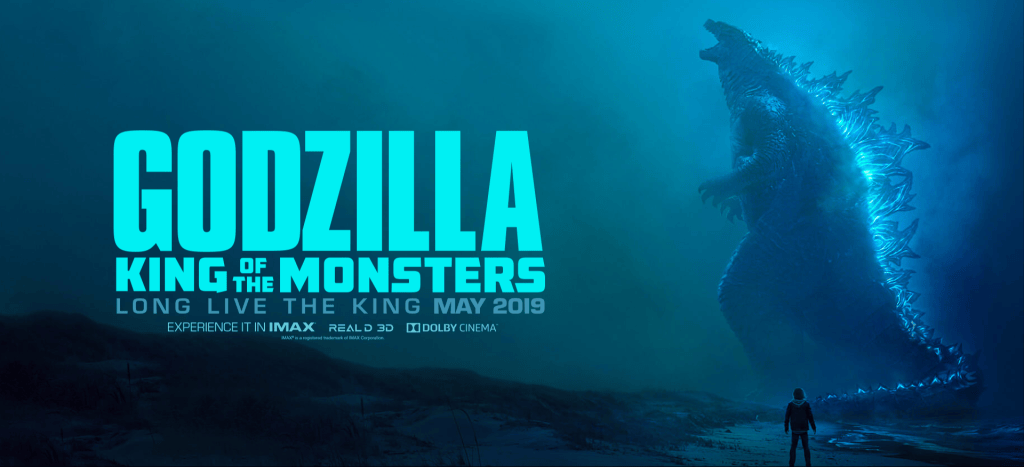
    “Godzilla: King of the Monsters” (2019)

    Action

    130 Minutes

    Written by: Michael Dougherty and Zach Shields

    Directed by: Michael Dougherty

    Featuring: Kyle Chandler, Vera Farmiga, Millie Bobby Brown, Bradley Whitford, Sally Hawkins, Charles Dance, Thomas Middleditch, Aisha Hinds, O’Shea Jackson Jr., David Strathairn, Ken Watanabe and Zhang Ziyi

    Senator Williams: “So you’d want to make Godzilla our pet.”

    [laughter]

    Dr. Ishiro Serizawa: “No. We would be his.”

    Critical review

    This week sees the release of one of the more anticipated blockbusters of the US Summer on 4K blu-ray in the sequel “Godzilla: King of the Monsters” (2019), which also is the third part of the Warner Brothers ‘monsterverse’ and is a taster for next years “Godzilla vs. Kong” (2020). Of course, one of the main differences in using Godzilla as either a protagonist or antagonist is that for any audience that is clued into this character realise he has been around for over fifty years appearing in a multitude of movies from Japan as well as remakes from the US which can be a positive as well as a negative. Of course being a sequel as well as being linked to “Kong: Skull Island” (2017) means that this new instalment needs to not only up the ante on expanding the world but it also has to attempt to correct some of the criticism of the previous movies, which to its credit is accomplished by creating more tension, introducing new characters as well as incorporating some more of the ‘Godzilla’ lore from its Japanese origins in embracing some of the more iconic monsters from Toho, the original production company that still retain the rights to their entire monster catalog. 

    “Godzilla: King of the Monsters” is a major step up from both previous movies, the lack of actual monster action that seemed to be part of “Godzilla” (2014), which was seen as a weakness has definitely been addressed here as the action sequences in this new movie are nothing short of breathtaking with not only monster on monster battles galore but human against monster as well which as you would expect  become futile as you begin to expect the main titular character will need to sort out his unruly brethren. The other aspect of that movie as well as the follow-up “Kong: Skull Island” was that the human characters were either dull, unlikeable or caricatures, here the writers and directors have attempted to right that ship as well with a more complex human story as well as much more humour and a narrative that at times feels like there are stakes involved as we do see some key people being killed. Unlike the previous two movies where most of the human cast that were killed were either pale imitations or over the top, the victims here have been built up so that we feel some real emotion when they meet their end. The actual narrative of the movie which is a little muddled is framed around overpopulation, global warming and the general nature of our planet with humans being at the centre of the problem and solution. On the smaller side it is about a family coning together after the loss of a child as well as a sibling which for the most part rings true, that is, in a fantasy action movie. 

    This new movie is based around the efforts of the crypto-zoological agency Monarch as its members face off against a battery of god-sized monsters, including the mighty Godzilla, who collides with Mothra, Rodan, and his ultimate nemesis, the three-headed King Ghidorah. When these ancient super-species—thought to be mere myths—rise again, they all vie for supremacy, leaving humanity’s very existence hanging in the balance.

    “Godzilla: King of the Monsters” has been co-written and directed by Michael Dougherty who has a background in horror, although both his previous efforts have been tinged with humour as well as based around two major US events, those being Halloween and Christmas in the excellent “Trick ‘r Treat” (2007) and the underrated “Krampus” (2015) respectively. Doherty while not the most obvious choice to direct a US$200 million movie but he does fit the mould of the other directors in this Universe with all of them originating from low budget genre movies in Jordan Vogt-Roberts, Gareth Edwards and Adam Wingard. What was extremely pleasing for me was the way Dougherty used his effects team to deliver on a promise of Earth-shaking action that involved one monster we had seen before (Godzilla) and a host of other monsters that had their own signatures and personalities which come to the fore almost immediately. As this is set up as a major tentpole movie there are certain aspects that are de rigueursuch as the involvement of children, a family dynamic, large special effects, a third act that is over the top and involves resolution. Now to the credit of Dougherty he has included all of these but has also included some other elements such as some truly city destroying effects that for me felt more real than the last movie, not only that but this movie actually sets up an alternate Earth where monsters are the new normal, there is no hiding from them or the consequences of their actions which set up the sequel that will arrive next year. 

    Like so many Hollywood Summer blockbusters there is a tendency to cast well-known actors to bring some cachet to a movie, however what “Godzilla: King of the Monsters” has opted to do is to cast Millie Bobby Brown the face of super hit series “Stranger Things” (2016-present) as the heart of this movie, luckily she has the talent to pull off the performance although I would have preferred less screaming as after a while this does become repetitive. In support we have some talent that plays second fiddle to the effects which is a shame as Kyle Chandler, Vera Farmiga, Bradley Whitford, Sally Hawkins, Charles Dance, Thomas Middleditch, Aisha Hinds, O’Shea Jackson Jr., David Strathairn, Ken Watanabe and Zhang Ziyi all deserve better than what they receive but they all do have their own moments one way or another. It is actually surprising there is enough time devoted to the actor with so many action set pieces going on at any one time something that again goes to the skill of the director.

    This movie goes a long way to not only tip its hat to “Kong: Skull Island” with its continual reference to many conspiracy theories such as the hollow Earth and crypto-zoology theories but it also warms the audience to the re-introduction of Kong net year which at times is heavy handed but the film-makers are at pains to point to the fact that these two monsters share the same world, even though it has obviously changed a lot. It is unfortunate then that “Godzilla: King of the Monsters” does have some major flaws which all mostly derive from the logic that the human characters go through to get from point A so that separate story elements are possible which is a shame as more thought and care could have gone into this aspect of the production, but it is by no means surprising. These logical gaps are not the sole domain of this movie, they exist in almost all modern blockbusters, it seems that in creating these behemoths that it is required that all human characters need to either be stupid or have never seen a movie before, those characteristics are present here which is a real shame as it means there is complexity to the people we are viewing onscreen. 

    All in all, though I had low expectations of this movie but I was wrong, this was a wild ride that I enjoyed immensely it was everything I hoped in terms of action which was spectacular, but it did have human elements that I thought were very good. There is no doubt that the strengths of this movie lie in the monster battles and special effects that have been utilised to hammer home the size and destructive force of the all the monsters which look amazing. It keeps the emotion dialled up and there are more narrative twists than one might be expecting which is welcome, some an audience may not see coming. I would say this is a movie that would be great to see on a Friday or Saturday night with a group of people who should love what they have been offered, it should not let anyone down, if it does then you have missed the point of the entire exercise.

    Technical review

    Warner Home Video brings “Godzilla: King of the Monsters” to Ultra HD Blu-ray as a two-disc combo pack. The triple-layered UHD100 disc sits comfortably opposite a Region Free, BD50 disc, and both are housed inside a black, eco-cutout case with a shiny slipcover. At startup, viewers are taken to a static screen with the usual options along the bottom and music playing in the background.

    Video

    “Godzilla: King of the Monsters” arrives on Ultra HD with an excellent HEVC H.265 encode, struck from a 2K digital intermediate, which was itself sourced from a combination of Arri Alexa cameras capable of 3.4K and 6.5K resolutions. 

    The 4K video has improved contrast and balance, brightening up the action somewhat but also looking noticeably darker overall than the Blu-ray. Although not immediately apparent given Sher’s creative photography, the boost in contrast delivers crisper, cleaner whites. At the same time, black levels are richer and inkier with incredible gradational differences between the various shades, allowing for excellent visibility within the darkest, velvety shadows.

    Audio

    “Godzilla: King of the Monsters” arrives with a reference-quality Dolby Atmos soundtrack. The object-based mix is front-heavy with effects littering the visuals and keeping things engaging. Lots of background activity fluidly moves between the three front channels and the top heights, generating a splendidly broad and spacious half-dome soundstage. Imaging exhibits distinct clarity and superb definition in the mid-range, even during the loudest, ear-deafening moments, making every screeching roar, every explosive fire blast and every tiny piece of rubble reverb through the room with extraordinary detail. For most of the runtime, the bass coasts in the mid-20Hz range at high decibels.

    Extras

    • Audio Commentary: Director and co-writer Michael Dougherty sits down with screenwriter Zach Shields and actor O’Shea Jackson Jr. to chat about various aspects of the production.
    • Monarch in Action (HD, 33 min): Featuring storyboards, pre-viz animation, concept art and BTS footage, the five-part doc focuses on the various locations seen in the movie.
    • Evolution of the Titans (HD, 27 min): Four-part doc detailing the film’s four central monsters.
    • Monsters Are Real (HD, 14 min): Experts discuss our fascination monsters and mythology.
    • Monster Tech: Monarch Joins the Fight (HD, 9 min): Closer look at the company’s tech.
    • Monsters 101 (HD, 6 min): Cast & crew share their thoughts on the four monsters.
    • Millie Bobby Brown: Force of Nature (HD, 4 min): The actor talks about her involvement.
    • Welcome to the Monsterverse (HD, 4 min): A piece connecting the movie to Skull Island.
    • Deleted Scenes (HD, 5 min).
    • Trailers (HD, 12 min).

  • Trailer: “The Lighthouse” (2019)

    Trailer: “The Lighthouse” (2019)

    The new trailer for the black-and-white hallucinatory horror film “The Lighthouse” has arrived.

    Hailing from celebrated “The Witch” director Robert Eggers and shot in a 1.19:1 aspect ratio on 35mm negative, Robert Pattinson and Willem Dafoe star as lighthouse keepers on a remote and mysterious New England island in the 1890s where things quickly take a turn for the creepy. 

    “The Lighthouse” opens in New York and Los Angeles on October 18th and will expand in the following weeks.

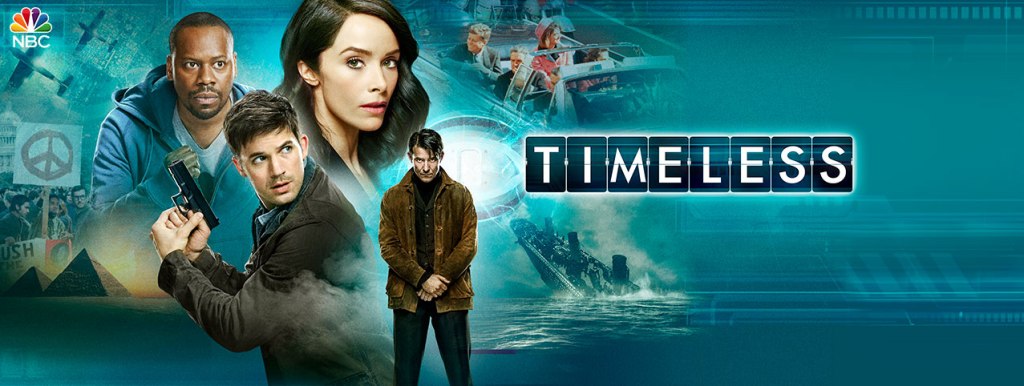
  • Blu-ray/DVD review: “Timeless – Season One” (2018)

    “Timeless – Season One” (2018)

    Television/Sci-Fi

    16 Episodes

    Created by: Shawn Ryan and Eric Kripke

    Featuring:  Abigail Spencer, Matt Lanter, Malcolm Barrett, Sakina Jaffrey, Paterson Joseph, Claudia Doumit and Goran Višnjić

    Connor Mason: “Our earliest prototype. She isn’t fancy, but she works, usually. Now, we kept her operational in case the crew of the mothership ever needed a rescue. We call this one the Lifeboat. Their CPUs are linked. But unfortunately, she can’t tell us exactly where the mothership has gone. But she can tell us when.”

    Wyatt Logan: [sarcastic] “Naturally. Only tells you when. Time machine problems.”

    Connor Mason: “Yes, we’re working on it, but for the moment, that’s the best we have.”

    Released this week on both blu-ray and DVD is the relatively short lived science fantasy show “Timeless” (2016-2018), at least the first season anyway. It is easy to see why this show was a little lost in terms of finding an audience, it was on a major network in NBC, on the surface it seemed like a throwback to series from the 1980s and 1990s and the sheer competition in terms of scripted shows is huge, the year this was released it was one of over four hundred and fifty scripted series. Of course the most obvious comparison is to the 1960s series “The Time Tunnel” (1966-1967) which operated in a similar way albeit without the underlying conspiracy story cribbed from “The X-Files” (1993-2018). None of these elements are negatives, in fact in another era “Timeless” may have broken through and lasted much longer than two seasons but it did not have enough to seperate it from other new or exiting shows. One aspect that I believed did hurt it was its tone was very middle of the road so that it did not have any kind of edge to it, so it had to rely on the actors to provide that which because of the nature of the show they were unable to, which again cost the series in ratings as well as reviews.

    The broad outline of the show is based around the idea of an experimental time machine which is stolen, a history professor, a soldier and an engineer are tasked with capturing the culprit. They soon learn, however, that the thief plans to rewrite American history, and that each of them has a connection to his plan, as well as the mysterious organization that funded the machine’s development.

    It is not difficult to see why this show came into existence with two creators who have both has immense success with their own projects, Eric Kripke with the long running “Supernatural” (2004-2019) and Shaun Ryan who broke through with his genre busting “The Shield” (2002-2008), it may have seemed like an odd marriage but both had their strengths. The automatic reaction would be that they would bring their strengths to bear creating something with an edge, that was had a narrative set up over each week and would be original as well as within the zeitgeist. However what has occurred is that both their sensibilities have been run through the corporate machine as well as network television to offer a show that is actually a little dull and hardly noticeable apart from all the other network shows on air.

    To combat this the producers have upped to elements within the show through casting as well as who directed the first two episodes. Firstly the show has cast up with new faces in lead roles as well as experienced character actors in support roles which assists giving the overall plot some kind of believability for the audience to hang onto in the more fantastic elements while exposing relatively new actors to events in the place of the audience. Secondly bringing in a director, Neil Marshall, who is a film director to set the show up with a look and feel that can be followed through on with other directors who have a blueprint. However, again where both of these elements have fallen down is that they have all been filtered through a network and in case you missed it the least relevant shows are on networks. Maybe this show should have gone to Netflix or another service, if only someone could go back in time and change that.

    Episodes:

    1. Pilot: The team pursues Flynn to 1937, where he prevents the Hindenburg disaster in order to bomb the dirigible on its return flight to Europe, when it is carrying important Americans to the Coronation of King George VI and Queen Elizabeth. Lucy theorizes that Flynn wants to destroy the United States of America “in the crib”. Lucy, Wyatt, and Rufus hijack the Hindenburg and force it to land; as a result, all of the passengers survive despite the airship being destroyed by a stray gunshot from one of Flynn’s henchmen. During a confrontation with Lucy and Wyatt, Flynn shoots and kills reporter Kate Drummond, whom Lucy and Wyatt had befriended and who was supposed to die in the original crash. Flynn reveals to Lucy that he possesses a journal written in her handwriting which she has yet to create; he urges her to ask Agent Christopher about “Rittenhouse”. In the present, Agent Christopher denies knowledge of Rittenhouse and Rufus reluctantly gives Connor an audio recording from the mission. Lucy discovers that her mother, who had been suffering from advanced cancer, is now healthy, but her younger sister Amy no longer exists and Lucy herself is engaged.
    2. The Assassination of Abraham Lincoln: Flynn travels to April 14, 1865, the date of the assassination of Abraham Lincoln. He works with John Wilkes Booth, intending to ensure the success of the planned assassinations of Vice President Andrew Johnson, Secretary of State William H. Seward, and General Ulysses S. Grant. Lucy meets Robert Todd Lincoln and attends the fateful performance at Ford’s Theatre as his guest; Flynn, frustrated with Booth’s refusal to use a modern firearm, takes his place and murders Lincoln himself, but Lucy saves Grant while Rufus and Wyatt save Johnson and Seward, respectively. In the present, Lucy learns that her parents never met because her father married the granddaughter of a Hindenburg passenger, which means the man who raised her was never really her biological father. Rufus refuses to make further recordings for Connor, but Connor forces him to continue on the basis of having financed his education; it is revealed that both are aware of “Rittenhouse”. Lucy arrives home, late for her own engagement party, where she confronts her mother over her father’s identity, but is interrupted by a greeting from her fiancé, whom she does not know.Pilot: The team pursues Flynn to 1937, where he prevents the Hindenburg disaster in order to bomb the dirigible on its return flight to Europe, when it is carrying important Americans to the Coronation of King George VI and Queen Elizabeth. Lucy theorizes that Flynn wants to destroy the United States of America “in the crib”. Lucy, Wyatt, and Rufus hijack the Hindenburg and force it to land; as a result, all of the passengers survive despite the airship being destroyed by a stray gunshot from one of Flynn’s henchmen. During a confrontation with Lucy and Wyatt, Flynn shoots and kills reporter Kate Drummond, whom Lucy and Wyatt had befriended and who was supposed to die in the original crash. Flynn reveals to Lucy that he possesses a journal written in her handwriting which she has yet to create; he urges her to ask Agent Christopher about “Rittenhouse”. In the present, Agent Christopher denies knowledge of Rittenhouse and Rufus reluctantly gives Connor an audio recording from the mission. Lucy discovers that her mother, who had been suffering from advanced cancer, is now healthy, but her younger sister Amy no longer exists and Lucy herself is engaged.
    3. Atomic City: Agent Christopher orders Wyatt to eliminate Rufus’s coworker Anthony, whom Flynn abducted when he stole the time machine. In 1962 Las Vegas, when atomic tests are common near the city, Flynn uses intimate photographs to blackmail John F. Kennedy’s mistress, Judith Campbell, into helping him steal a plutonium core, as her relationship with a general enables her to access a secure nuclear facility. Rufus discovers that Anthony is Flynn’s willing collaborator; they are working to destroy Rittenhouse. Anthony seemingly relinquishes the core to Rufus, and Rufus prevents Wyatt from killing his former colleague. The team discovers the core is a decoy while Flynn successfully escapes with the real device. Wyatt arranges for a telegram to be delivered to his wife in fifty years, attempting to save her life in 2012. Upon their return to the present, Wyatt learns that his wife is still dead and he covers up Rufus’ protection of Anthony; Lucy tells her fiancé, Noah, that she needs to move to her mother’s to clear her head. In the Nevada desert, Flynn and Anthony dig up the plutonium core, which they had buried rather than risk transporting it through time.
    4. Party at Castle Valar: Jiya locates Flynn by tracking his usage of the power grid to charge the Mothership, but Flynn’s group escapes. In (Germany) during 1944, the team believes Flynn intends to give his nuclear weapon to the Nazis, but he is actually planning to abduct Wernher von Braun and deliver him to the Soviet Union. With help from Ian Fleming, the team secures von Braun’s defection to the Allies. Wyatt helps Lucy find “something to fight for” to overcome her fears during field work, while Ian and Rufus discuss the matter of trust among spies. Rufus confronts von Braun, who claims that moral considerations impede innovation. In the present, the team discovers that their adventure inspired a James Bond film that is new to the timeline. Lucy demands that Agent Christopher and Connor help her recover Amy as a condition of her continued cooperation. Rufus correctly theorizes that Anthony has used the plutonium to create a permanent battery for the time machine rather than a weapon. Rufus refuses to continue spying on his teammates, but a man from Rittenhouse threatens Rufus’s family if he does not cooperate.
    5. The Alamo: Flynn travels to March 2, 1836, and convinces Mexican President General Antonio López de Santa Anna to attack the Alamo three days before the actual attack occurred. Lucy, Wyatt, and Rufus follow suit and enter the Alamo Mission, but Flynn kills William B. Travis, preventing him from finishing his “Victory or Death” letter. Making matters worse is the Mexican Army waving the red flag to take no prisoners in their siege. Flynn is upset that the timeline is changing; in the original timeline, Santa Anna allowed the women and children to leave the Alamo before the final assault. Wyatt and Rufus dig an underground passageway to the aqueduct, while Lucy finishes Travis’s letter and entrusts it to John William Smith, who escapes with the women and children while James Bowie and Davy Crockett fend off against the invading Mexicans. Wyatt is told he will be replaced, but Lucy and Rufus convince Christopher to keep him on. Lucy’s letter, although substantially different from Travis’s original, preserves the timeline by rallying support for the Texas Revolution. Lucy reconciles with her mother, who writes down the name of Lucy’s father and gives it to her.
    6. The Watergate Tape: The team follows Flynn to the start of the Watergate scandal in 1972 to prevent him from finding the missing gap in the Watergate tapes, but Flynn captures them and reveals he already has the tape. He plays a recording of Richard Nixon talking about Rittenhouse and blackmails Lucy and Rufus to find a missing “doc” Nixon mentioned to save Wyatt’s life. Rufus is threatened by a Rittenhouse agent in the present day to contact someone in 1972; his contact orders him to “destroy the doc”. Flynn reveals to Wyatt that he learned Rittenhouse was bankrolling Mason Industries but, when he reported this to his superiors in the NSA, Rittenhouse murdered his wife and daughter. Using intelligence obtained from “Deep Throat”, Lucy and Rufus are led to a Black Liberation Army safe house and discover that “Doc” is a former Rittenhouse member who knows the organization’s entire roster. Lucy and Rufus manage to rescue Wyatt and help Doc escape. Lucy intends to visit her biological father, Benjamin Cahill (who is revealed to be the Rittenhouse agent threatening Rufus), but leaves without introducing herself, unaware of who Cahill really is.
    7. Stranded: The team follows Flynn to 1754, the beginning of the French and Indian War. Flynn’s henchmen sabotage the Lifeboat, stranding the trio. With no technological means to repair their time machine, Rufus buries a message in a bottle for Mason to dig up. The trio are captured by the Shawnee tribe and they meet chieftain Nonhelema. Nonhelema orders Lucy and Wyatt be executed, but chooses to spare Rufus’s life. After Rufus convinces the chieftain to let his teammates go, the trio proceeds to Fort Duquesne, where Rufus collects items to repair the Lifeboat. Mason’s team recovers the bottle, but the message is almost completely faded. Jiya deduces the message from the sparse wording recovered, helping the Lifeboat navigate back to present day after the group repairs it. Jiya reveals her true feelings for Rufus, while Agent Christopher requests that Mason to be placed under surveillance. The trio repairs their strained relationship and Wyatt convinces Lucy to choose her own path, rather than letting it be determined by the journal Flynn possesses.
    8. Space Race: Flynn and his team travel to July 20, 1969, to infiltrate the Manned Spacecraft Center in Houston and disrupt the Apollo 11 mission. Shortly after entering the timeline, Rufus confronts Anthony over his involvement in the 1754 stranding, but Anthony escapes when Mission Control loses communication with Apollo 11. Rufus discovers through a local computer that Anthony has inserted a DoS attack into the center’s mainframe. As 1960s technology is unable to counter the virus, Rufus and Lucy get help from mathematician Katherine Johnson, who gets them into the mainframe. Just as they are deleting the virus, they are confronted by Anthony and one of Flynn’s henchmen. Rufus kills the henchman before Anthony escapes while communication with Apollo 11 is restored by Rufus and Katherine’s computer fix. Meanwhile, Flynn meets Lockman Aerospace secretary Maria Thompkins and her son Gabriel at a park before disappearing from Wyatt’s sight. Wyatt explains to Maria that Flynn is a Russian spy, but Flynn sneaks into her home and injects Gabriel with a shot of epinephrine to counter an anaphylactic reaction before getting away from Wyatt. Back in the present, the team discovers through a secret file that Maria was Flynn’s mother and Gabriel was his half-brother.
    9. Last ride of Bonnie & Clyde: The trio travels to 1934 in Arkansas as Flynn tries to find a necklace key related to Rittenhouse. Upon their arrival, they encounter Bonnie Parker and Clyde Barrow during a bank robbery and discover that Bonnie is wearing the key. Lucy and Wyatt help Bonnie and Clyde escape from a gunfight with the police and Flynn. Meanwhile, Rufus is arrested and interrogated by Texas Ranger Frank Hamer, but he is released. Hamer gets Barrow Gang member Henry Methvin to reveal Bonnie and Clyde’s location. At their hideout, Bonnie reveals that Clyde gave her the key as an engagement gift after stealing it from Henry Ford. Methvin shows up at the hideout, as well as Rufus, but Methvin is killed by Clyde after Rufus reveals his betrayal. Meanwhile, Hamer’s posse and Flynn close in and a shootout occurs. Flynn grabs the key and escapes before both Bonnie and Clyde are shot dead by Hamer. Back in the present day, Mason warns Cahill that Agent Christopher is coming close to discovering Rittenhouse, unaware that she has him on surveillance. Upon the trio’s return, Rufus agrees to ally with Agent Christopher. Elsewhere, Flynn uses the key to open a clock, revealing a secret letter.
    10. The capture of Benedict Arnold: Agent Christopher entrusts a thumb drive containing details of her family to Lucy to carry in the Lifeboat in case history changes again. The Lifeboat team pursues Flynn to New York on September 25, 1780, the day Benedict Arnold planned to surrender West Point to the British Army. The trio are captured by George Washington’s forces and confronted by Flynn, who reveals that the secret letter shows Arnold was a founding member of Rittenhouse. He offers them the Mothership and the identity of Wyatt’s wife’s killer in exchange for them helping Flynn capture Arnold. The trio and Flynn rush to the British border acting as defectors and capture Arnold, who reveals that Rittenhouse was founded by David Rittenhouse. The group gets Arnold to bring them to meet Rittenhouse, who quickly foils their plot to kill him. Rittenhouse murders Arnold, but Rufus saves Wyatt and Flynn from being executed as well. Flynn kills Rittenhouse, but Rittenhouse’s son, John, escapes from the scene. Flynn finds John and prepares to kill him, only to be interrupted by Lucy. When John disappears, Flynn takes Lucy with him aboard the Mothership and they disappear before Wyatt and Rufus can save her.
    11. The Worlds Columbian Exposition: Wyatt and Rufus are desperate to rescue Lucy, who has been kidnapped by Flynn. Flynn takes Lucy to 1893 during the Chicago World’s Fair with the intent to kill Thomas Edison, Henry Ford and J. P. Morgan. Wyatt and Rufus follow them, but get trapped with architect Sophia Hayden and a guest named George Henry in the World’s Fair Hotel, run by serial killer H. H. Holmes. At the fair, Lucy and Flynn apprehend Harry Houdini and have him break into Edison’s office to plant a bomb, but Houdini prevents Flynn from killing them. Houdini then helps Lucy save Wyatt and Rufus at the hotel. Lucy realizes that “George” is Holmes just as she is captured, but Wyatt saves her and kills Holmes. The trio bids farewell to Houdini and Sophia before returning to the present day. Rufus records a threat to Rittenhouse and hands it to Mason. Wyatt gets a phone call from Flynn, who reveals the identity of Jessica’s killer and suggests that Wyatt try and erase the killer’s existence.
    12. The Murder of Jesse James: Wyatt visits Wes Gilliam at San Quentin to know if he really is Jessica’s killer, while Lucy has a nightmare about Amy and Rufus finds out that Jiya will replace him as the Lifeboat’s pilot in six months. The team travels to April 3, 1882, where Flynn saves famous outlaw Jesse James from being murdered by Charley and Robert Ford in order to get his cooperation in finding a person deep within Indian territory. To track Flynn and James, the trio enlists the help of U.S. Marshals Bass Reeves and Grant Johnson, but Rufus discovers that Wyatt plans to kill James himself. Flynn and James arrive at the home of Emma Whitmore, a former time machine pilot who avoided Rittenhouse by stranding herself in the 19th century. After Flynn and Emma leave the premises, James uses Flynn’s assault rifle to ambush the Lifeboat team and Reeves, killing Johnson. Wyatt wounds James but, as Reeves tries to defuse the situation, Lucy kills James. Back in the present timeline, Rufus informs Mason and Agent Christopher that Emma is alive. Mason confronts Jiya over hacking secret video logs about Emma. At a bar, Wyatt asks Rufus to help him steal the Lifeboat to save Jessica.
    13. Karma Chameleon: Wyatt and Rufus steal the Lifeboat and travel to Toledo, Ohio, in 1983 to circumvent the one-night stand between the parents of Jessica’s killer, a bartender and a stewardess. After several unsuccessful attempts, Wyatt chases the bartender outside in the midst of a tornado. The bartender trips over debris, resulting in a fatal fall. Meanwhile, Emma tells Flynn and Anthony about Rittenhouse’s real intentions for the time machines. Flynn wants to continue eradicating Rittenhouse, but Anthony thinks they should destroy both machines. Anthony confides in Lucy about his plans for sabotage. Lucy tells this information to Agent Christopher and they agree to keep it to themselves just before Lucy learns of Mason’s dealings with her biological father, Benjamin Cahill. When Wyatt and Rufus return to the present, they discover Jessica was still killed but the other two women were saved, as Wyatt is taken into custody. There is an explosion at the Mothership’s location, but there is a lack of debris from the machine and Anthony’s body is discovered in the rubble with close-range gunshot wounds. Agent Christopher and Rufus realize that Flynn discovered Anthony’s betrayal and escaped in the Mothership. Lucy confronts Cahill about Rittenhouse.
    14. The Lost Generation: With Wyatt arrested for stealing the Lifeboat, Lucy and Rufus travel with Master Sergeant Dave Baumgardner to Paris on May 21, 1927, the day Charles Lindbergh made the first solo transatlantic flight. There, Flynn shoots down the Spirit of St. Louis and takes Lindbergh hostage. The Lifeboat team meets journalist Ernest Hemingway, who helps them search for Flynn and Lindbergh. The trio chase after Emma and Karl outside a night club headlined by Josephine Baker, but Dave is killed in the ensuing gunfight. With Dave gone, a drunk Hemingway offers to be the team’s muscle, much to Lucy’s chagrin. Lucy is captured by Flynn, who plans to kill Lindbergh unless she convinces him to leave Rittenhouse. Rufus and Hemingway enter the city’s catacombs and rescue Lucy and Lindbergh, who decides to go in hiding. Meanwhile, NSA Agent Jake Neville takes over the time machine project from Agent Christopher. Wyatt escapes after being secretly handed a paper clip by Agent Christopher. Lucy and Rufus are shocked to meet Neville upon their return. Lucy discovers in a history book that Lindbergh went underground for a few weeks before resuming his life of fame and fortune. At a warehouse in Oakland, Lucy, Wyatt, Rufus, and Agent Christopher meet to discuss their next plan of action.
    15. Public Enemy No.1: Agent Neville orders Rufus, Lucy, and a soldier to travel to 1962 Houston to erase Flynn from existence by killing his mother, but Rufus and Lucy steal the time machine and reunite with Wyatt. Although they had planned to save Lucy’s sister, they jump to 1931 Chicago to pursue Flynn. There, Flynn helps Al Capone avoid jail in exchange for a meeting with Chicago mayor and Rittenhouse member William Hale Thompson. The team joins forces with Eliot Ness to bring the mobster to justice, but Ness is gunned down by one of Capone’s hitmen. With Ness eliminated, the trio seeks help from Capone’s elder brother who is living as a Prohibition agent under the name of Richard Hart. They gain access to Capone and the mobster reveals that Flynn has learned about a Rittenhouse meeting in 1954 before Hart announces that he is bringing him in. Capone shoots Rufus as a favor to Flynn before he is killed by Hart. Jiya is questioned by Mason and Agent Neville as to the team’s whereabouts. Mason asks Cahill for access to NSA data to track not only the Lifeboat but virtually anyone globally. Just as the Lifeboat is about to jump, Rufus loses consciousness from his gunshot wound.
    16. The Red Square: The Lifeboat returns to the present, where Lucy has Noah treat Rufus before she breaks up with him. The team and Jiya jump to Washington, D.C., in 1954, where Flynn blackmails Joseph McCarthy into giving him the address of the Rittenhouse summit. After being arrested on suspicion of being Soviet spies, Lucy and Wyatt escape and coerce Ethan Cahill, Lucy’s grandfather, into taking them to the summit. Upon their arrival, Lucy convinces Flynn of another way to stop Rittenhouse. When Jiya suffers a seizure, Wyatt and Rufus accompany her back to the present while Lucy stays with Flynn and Ethan. Meanwhile, Mason reveals Cahill’s activities to Agent Christopher and expresses remorse for endangering Rufus. Back in the present, Lucy, accompanied by Wyatt, visits an elderly Ethan, who gives them decades’ worth of records on Rittenhouse activities. Mason and the team begin using the documents to systematically topple the organization. Lucy gives Flynn the name of the person who ordered the assassination of his family, but he is immediately arrested by Agent Christopher, who agrees to fulfill her promise to help Lucy restore her sister Amy to the timeline. Lucy tells her mother about time travel and Amy, but her mother then reveals, to Lucy’s horror, that she, too, is a Rittenhouse member. Meanwhile, Emma is seen stealing the Mothership.
  • DVD review: “The Hollow Crown – Ultimate Collection” (2019)

    “The Hollow Crown – Ultimate Collection” (2019)

    Historial Drama

    5stars_small

    Running Time: 528 minutes

    Directed by: Rupert Goold, Richard Eyre, Thea Sharrock and Dominic Cooke

    Featuring: Ben Whishaw, Jeremy Irons and Tom Hiddleston

    Released this week on DVD is the ultimate edition of both parts of the acclaimed Shakespearian adaptation of the plays in the Henriad.

    This television show is an adaptation of Shakespeare’s second historical tetralogy, the Henriad: Richard II, Henry IV, Part I and Henry IV, Part II and Henry V.

    The first series, which aired in the United Kingdom in 2012, was unanimously hailed as a success with Ben Whishaw and Simon Russell Beale winning BAFTA’s for Leading actor and Supporting actor for their performances, Jeremy Irons was nominated for a Screen Actors Guild Awards for Best Actor for his role as Henry IV. The first episode, Richard II, was nominated for the Best Single Drama at the BAFTAs.

    Episodes

    1. Richard II (148 minutes)

    Adapted and Directed by Rupert Goold

    Featuring: Ben Whishaw (King Richard), Rory Kinnear (Henry Bolingbroke), James Purefoy (Thomas Mowbray), Patrick Stewart (John of Gaunt) and David Morrissey (Northumberland)

    2. Henry IV Part I (120 minutes)

    Directed and adapted by Richard Eyre.

    WITH: Tom Hiddleston (Prince Hal), Jeremy Irons (King Henry), Julie Walters (Mistress Quickly), Simon Russell Beale (Falstaff), Joe Armstrong (Hotspur), Alun Armstrong (Northumberland), David Hayman (Worcester) and Michelle Dockery (Kate Percy)

    3. Henry IV Part II (121 minutes)

    Directed and adapted by Mr. Eyre.

    WITH: Mr. Hiddleston (Prince Hal), Mr. Irons (King Henry), Ms. Walters (Mistress Quickly), Mr. Beale (Falstaff), Alun Armstrong (Northumberland), Geoffrey Palmer (Lord Chief Justice), Ms. Dockery (Kate Percy) and Maxine Peake (Doll Tearsheet)

    4. Henry V (139 minutes)

    Directed by Thea Sharrock; adapted by Mr. Power.

    WITH: Jérémie Covillault (French Ambassador), Anton Lesser (Exeter), Paterson Joseph (York), John Hurt (Chorus) and Lambert Wilson (French King)

    “The Hollow Crown” is something unique for television in that it gives its audience three amazing performances by three actors arguably not only at the top of their game but also as popular as any actors have been in Ben Whishaw (King Richard), Tom Hiddleston (Prince Hal) and Jeremy Irons (King Henry) – true lead performances in the plays of the Henriad, the epic trilogy that tells the story of the opening salvos of the Wars Of The Roses.

    “The Hollow Crown” is a triumph for television particularly because it is extremely dense and complicated so the dramatists and directors need to be commended for the way this series has turned out, and of course the sequel.  Henry IV is split into two parts; onscreen, it clocks in at four-and-a-half hours of solid Shakespeare. Richard II is left mostly intact, save some editing down, while Henry IV and V are rearranged so that some scenes can happen before others, or even simultaneously.

    The way each play flows in “The Hollow Crown” means that actors can play the same roles throughout the four hour running time. We see for example, Simon Russell Beale and Tom Hiddleston at the opening scene of “Henry IV, Part I” to the end of “Henry V”. The great Sam Mendes is the producer on all three plays so there is a common thread that is kept a hold of, and this is done extremely well. In doing this it has meant that Mendes has employed very different directors on each seperate instalment, meaning that visually the palette and mis-en-scene change markedly throughout.

    Of the three, my and I think many peoples favourite is the always intriguing “Richard II”, Ben Wishaw overcomes some very real shortcomings by the director to deliver probably the best performance of the entire series – as stated he delivers an award winning performance. Rory Kinnear, as Wishaws antagonist is equally brilliant and it is a performance that has been promoted for years, of course an actors best performance should be in response to the Bards work.

    The other breakout of “The Hollow Crown” is Tom Hiddleston, who, like Whishaw, takes his role by storm. He’s given a trickier character to play—less nuanced, and yet truly confounding. In Prince Hal, Shakespeare presents a story of total transformation, told so obliquely as to be almost invisible. Hiddleston doesn’t leap of the screen in the role, but that’s precisely because he’s not supposed to. Instead, the actor presents the true grandeur of his character—his baffling commoner’s spirit, combined with his regal majesty.

    Massive casts – including  Jeremy Irons, Michelle Dockery, Patrick Stewart, and John Hurt – and endless dialogue could be a distraction to “The Hollow Crown”, however because each director brings their own look as well as spark, they spread out each actors input mixing it expertly with all the other tools in their quiver – of course it is to Shakespeare himself that the kudos go to with timeless narratives that would not be out of place in our world, or stolen from him to be put into other narratives that have come into being on other networks.

    “The Hollow Crown: The Wars of the Roses”

    Three years after the BBC filmed the four Elizabethan docudramas known as “The Henriad” – “Richard II,” “Henry IV” (parts 1 and 2) and “Henry V” – as “The Hollow Crown,” it picks up the history with “The Hollow Crown: The Wars of the Roses”. It recounts the history of the houses of Lancaster and York as they vie for control of England across much of the 15th century.

    1. Henry VI, Part 1 (111 minutes)

    Adapted by Ben Power; Directed by Dominic Cooke

    WITH: Sophie Okonedo (Queen Margaret), Hugh Bonneville (Gloucester), Sally Hawkins (Duchess of Gloucester), Tom Sturridge (Henry VI), Adrian Dunbar (Richard of York), Stuart McQuarrie (Vernon), Lucy Robinson (Young Cecily), Samuel West (Bishop of Winchester), Stanley Townsend (Warwick), Michael Gambon (Mortimer), Anton Lesser (Exeter), Ben Miles (Somerset), Jason Watkins (Suffolk), Philip Glenister (Talbot), David Troughton (Duke of Anjou) and Laura Frances-Morgan (Joan of Arc)

    2. Henry VI, Parts II & III (123 minutes)

    Adapted by Ben Power; Directed by Dominic Cooke

    WITH: Benedict Cumberbatch (Richard Plantagenet), Sophie Okonedo (Queen Margaret), Keeley Hawes (Queen Elizabeth), Tom Sturridge (Henry VI), Angus Imrie (Edmund Plantagenet), Adrian Dunbar (Plantagenet), Geoffrey Streatfeild (Edward IV), Sam Troughton (Clarence), Stuart McQuarrie (Vernon), Kyle Soller (Clifford), Richard Lynch (Westmorland), Lucy Robinson (Young Cecily), Stanley Townsend (Warwick), Anton Lesser (Exeter), Ben Daniels (Buckingham), Ben Miles (Somerset), Jason Watkins (Suffolk), Phoebe Fox (Lady Anne), James Fleet (Hastings), Andrew Scott (King Louis)

    3. Richard III (130 minutes)

    Adapted by Ben Power; Directed by Dominic Cooke

    WITH: Judi Dench (Cecily, Duchess of York), Benedict Cumberbatch (Richard III), Sophie Okonedo (Queen Margaret), Keeley Hawes (Queen Elizabeth), Geoffrey Streatfeild (Edward IV), Sam Troughton (Clarence), Ben Daniels (Buckingham), James Fleet (Hastings), Phoebe Fox (Queen Anne), Luke Treadaway (Henry VII)

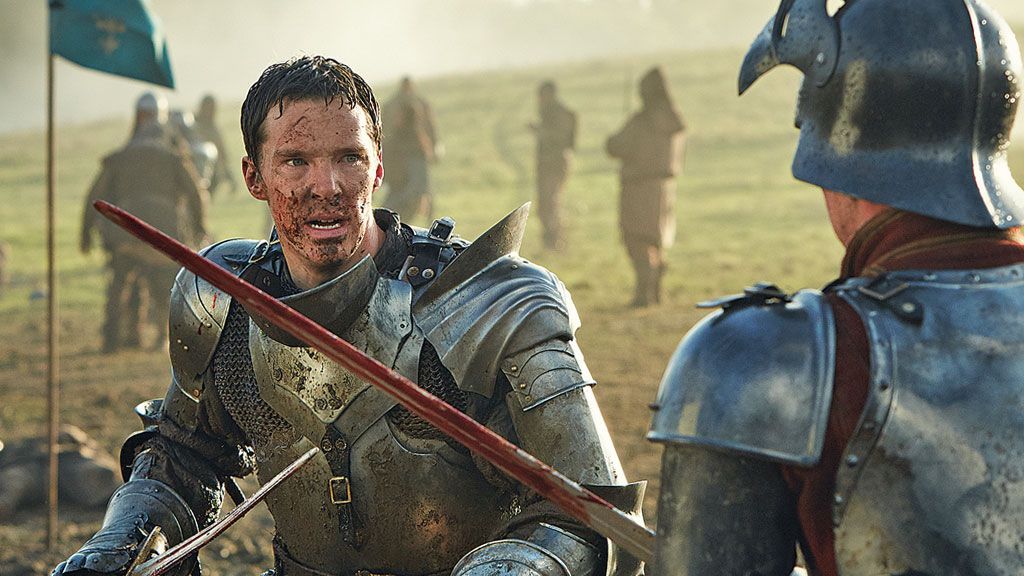
    This is the second and last season of the “Hollow Crown”, with it brings some mixed blessings. The one thing I was looking forward to was the portrayal of the mercurial,  often played with a wink, Richard III, portrayed by Benedict Cumberbatch. I used the word play as this is one of those Shakespearean characters that is based on a real person but possibly was written as what we would recognize as an ‘arch’ or archetypal villain – a shame as he was always going to be a villain to Shakespeare as instructed by Queen Elizabeth. As Richard III, Cumberbatch, like many of his best roles can be quiet, as well as loud, so here he is at his finest when we see him go from the battles to intimate conversations – this is a great role from an actor whose reputation only seems to grow as the years roll on.

    One of the biggest and most obvious changes from series one to two, was to let one director, Dominic Cooke, let loose on the entire season which lends itself to keeping the tone and look the same throughout, which is not to say that this is a negative but it does mean the flourishes from story to story seen in series one are gone. Cooke who has no real credited television experience is a National Theatre director of some note, which of course means he is no stranger to directing Shakespeare, but his inexperience can be seen throughout this run.

    The story of a dictator coming to power seems extremely relevant, maybe more so today than when these plays were conceived and written. It seems that when these television series were conceived to be remade for this new millennium the producers had an inkling of what was to come to pass in late 2016. When we are faced with what we prefaced with in the post-Trump, post-Truth era – has there ever been a monarch who shaped themselves as well as their enemies through a writer like Shakespeare – was he the Fox News of his time? Probably not, as well as being a little harsh from me, that really does more credit to the way Trump came to power than he deserves. But as the next eight years unfold we are going to see narratives form around Trump, his allies as well as the Republican Party that are going to shape politics for the foreseeable future.

    Of course where would a Shakespeare play or plays be without the actors, we have Tom Sturridge as King Henry VI, Sophie Okonedo as Queen Margaret, Hugh Bonneville as Gloucester and rounding out the cast are the always magnificent Michael Gambon and Judi Dench. There is no doubt that the casting is excellent, but the most exciting actor to watch, for me, is the electrifying Sophie Okonedo who brings such authenticity to her performances in everything she appears in, this is no truer than her portrayal of Queen Margaret – as well as Cumberbatch as Richard III, it is Okonedo who the audience is unable to take their eyes off.

    If you are looking for absolutely great television that is epic in scope in this age of “Game of Thrones”, then this and the first series of the “Hollow Crown” are for you, this is the very origins of epic storytelling as well as the chase for power where people will do anything for it and in this age of Trump, Brexit and the upcoming elections in the UK you could worse than looking to Shakespeare for lessons on morality and the hunger for power at any cost.

  • Trailer: “Doctor Sleep” (2019)

    Trailer: “Doctor Sleep” (2019)

    Warner Bros. Pictures has now released the full trailer for “Doctor Sleep,” the upcoming sequel to “The Shining” and once again based on the novel by Stephen King.

    A now grown-up Danny Torrance (Ewan McGregor) carries the trauma of the Overlook Hotel into adulthood and has become a reflection of his murderous father, with lingering rage and a drinking problem that dulls his pain as well as his ‘shining’ powers.

    Those powers return when he embraces sobriety and uses his gift to help the dying at a hospice. He establishes a psychic connection with a girl (Kyliegh Curran) who shares his extreme abilities, and who is being targeted by a cult who make others like them suffer painful deaths in order to absorb their powers.

    Rebecca Ferguson also stars as the leader of the cult while Carl Lumbly, Bruce Greenwood, Jacob Tremblay, Alex Essoe, Emily Alyn Lind, Jocelin Donahue and Zahn McClarnon. Mike Flanagan (“The Haunting of Hill House,” “Gerald’s Game”) helms the new film with Trevor Macy and Jon Berg producing. It opens November 8th.

  • DVD review: “New Amsterdam – Season One” (2019)

    “New Amsterdam – Season One” (2019)

    Television Drama

    22 Episodes

    Created by: David Schulner

    Featuring: Ryan Eggold, Freema Agyeman, Janet Montgomery, Jocko Sims, Anupam Kher and Tyler Labine

    New Amsterdam follows Dr. Max Goodwin as he becomes the medical director of one of the United States’ oldest public hospitals, aiming to reform the neglected facility by tearing up its bureaucracy in order to provide exceptional care to patients.

    “New Amsterdam” is one of the latest in a long line of dramas set in hospitals or medical establishments, the reason they have remained so popular is the natural storytelling that they are able to elicit through the stories of the staff to the revolving nature of the incoming patients that are as varied as society itself. Many of these hospital dramas set their sites on a particular ward or floor of the hospitals that they inhabit however “New Amsterdam” seems to have too much enthusiasm in attempting to tell stories hospital; wide which leaves it feeling scattershot which is a shame as it seems to lack real cohesion. This new series is based on Dr. Eric Manheimer’s book on New York City’s Bellevue Hospital ‘Twelve Patients: Life and Death at Bellevue Hospital’, which attempts to give a warts and all look at the events that occur in a public hospital.

    What could have been a great show in the way it involves many characters as well as their lives the main critical issue is that the series is built around on person who is just not that engaging. The main character portrayed by Ryan Eggold is such a trope laden cypher of a person that it is not only the feeling of been there, done that but he actually becomes a bit laughable after just one episode.

    The supporting cast of “New Amsterdam” does its level best to rise above the material from wildly different sectors of the hospital. Over in the emergency room, Janet Montgomery’s Lauren Bloom is whipsmart and matter of fact about the harder parts of her job. She’s a bright spot, or at least she is whenever the show’s not forcing romantic chemistry between her and Jocko Sims’ cardiac surgeon Floyd who, again, would be better off without their unconvincing flirtation. Iggy (Tyler Labine) works with sick and displaced children; physician Vijay (the ever reliable Anupam Kher) floats in between them all.

    Elsewhere, however, Freema Agyeman is almost completely wasted as Helen Sharpe, a talented doctor who got too caught up in New Amsterdam’s PR game to practice medicine. She knows New Amsterdam like the back of her hand, but Max doesn’t understand or care why she needs to occasionally go on TV to raise awareness and money in order for it to keep running. So even though Helen starts off as a promising (and necessary) counterbalance to Max’s schemes, she quickly becomes all about his vision once the script decides he needs her on his side.

    “New Amsterdam” tries hard to be everything to everyone but that broad appeal might start to become grating as it serves far too many masters. It has been renewed for a second season so it will be interesting to see if it makes some changed to the narrative, jettisoning the parts that do not work and highlighting the parts that do, a triage if you will.

    Episodes:

    Pilot: Dr. Max Goodwin is hired as the new Medical Director at New Amsterdam hospital and starts out his career by firing everyone in the cardio-thoracic surgical department because of their statistics. He asks his fellow colleagues what he can do to make their ability to practice medicine easier and grants all the wishes, much to the dismay of the staff that work with him. Also, Dr. Goodwin butts heads with the chief of oncology, Dr. Helen Sharpe, as he believes that she spends too much time on television and not enough time practicing medicine leading him to give her an ultimatum. Max also meets the head of emergency, Dr. Lauren Bloom, who wants to be able to treat as many patients throughout her shift as she can, and Dr. Iggy Frome who is the chief of psychiatry and is dealing with a teenage patient who feels completely abandoned. Dr. Bloom must deal with her fling with Dr. Floyd Reynolds ending as he becomes the new head of cardio-thoracic surgery and explains to her they can’t have a relationship based on her skin color. Max asks Dr. Bloom to take a biopsy of his throat based on a fear he has.

    Rituals:Max finds out that he has cancer and looks to Dr. Sharpe for help, although every time she tries to explain things to him he can’t seem to make time for her. Dr. Frome and Dr. Kapoor attempt to help a pediatric patient. Dr. Bloom tries to convince Dr. Reyonds that they might have something that is worth while and that not dating her for her skin color is not right. Max must deal with a crisis after his pregnant wife is admitted to the hospital with their unborn child’s life in danger. As Dr. Sharpe continues to try to convince Max to make a plan about his cancer diagnosis he continues to try to convince her that although bringing in money to the hospital is important they’re in the business of saving lives and that is more important.

    Every Last Minute:Dr. Fulton is unhappy with all the changes that Max has been making at New Amsterdam. Dr. Frome and Dr. Kapoor try to diagnose a patient who believes he is dead and invisible, but they accidentally lose the patient who wanders off. Dr. Bloom treats a patient that is an inmate at Rikers. The young inmate is pregnant and is desperate not to give birth while in prison. Max gives the widow of a wealthy donor a tour of the hospital to convince her to donate 10 million dollars to New Amsterdam. Max convinces her to donate the money to fund a new nursery and a kangaroo care unit at Rikers Island for babies born in the prison.

    Boundaries:Dr. Frome is excited that his community garden has been funded, but is horrified that it is sponsored by Volt Cola. It is the annual cardiothoracic surgeon conference and Baptist’s cardiothoracic surgeon suffers a medical emergency forcing New Amsterdam to pick up the overflow as Baptist cannot accept ambulances without a cardiothoracic surgeon. Dr. Bloom works to keep the ED running smoothly as they receive the additional patients. One of the residents accidentally takes her Adderall, which was hidden in an ibuprofen bottle. Dr. Sharpe deals with a young girl whose cancer has returned and is now terminal. Max finds a homeless woman with an infected foot who at first rejects medical treatment, but then also asks Max to help her brother.

    Cavitation:A journalist visits New Amsterdam and is given full access and agrees to shadow Max for the entire day. Max’s voice is hoarse and Dr. Sharpe agrees to run a test to see if his cancer has spread. Dr. Kapoor’s son comes to visit him at the hospital. Dr. Sharpe visits a fertility doctor and learns that she unlikely to have children without medical intervention. Two young boys come in with gunshot wounds. Initially only one of them seems to be in critical condition, how ever as time progresses the second boy’s condition worsens. Despite their best efforts the second boy dies. The journalist writes his article, which praises how hard the doctors worked to save the two boys lives.

    Anthropocene:The doctors at New Amsterdam prepare for their annual fundraising gala. Dr. Frome’s parents are in town and his daughter is excited to see them. Dr. Kapoor tries to give his gala tickets to Ella, but she misunderstands and believes he is inviting her to go with him. Dr. Fulton preps Max for the gala and reiterates the importance of raising money for the hospital. Dr. Reynolds treats a Rikers inmate who claims that the guards are drugging them. Dr. Bloom, Dr. Kapoor, and Dr. Sharpe treat a father and son who begin displaying strange symptoms and later both the father and son have seizures. Georgia surprises Max and attends the gala and manages to secure donations. At the end of the night Max reveals his cancer diagnosis to her.

    Domino Effect:Max and Georgia talk to Dr. Sharpe about his cancer treatment. He has been putting off having his back molars removed as they are in the way of radiation that will be used. All of the doctors work to coordinate a domino surgery with two other hospitals. When the first donor pulls out the entire domino surgery is put in jeopardy. A man and his daughter come in, with the daughter needing new lungs. With the father’s willingness to donate to a complete stranger they are able to go through with the domino surgery and also save his daughter’s life. Max finally has his oral surgery to have his molars removed.

    Three Dots:Dr. Kapoor is handling a patient named Amy, a young Asian-American that has been suffering from migraines. He refers her to Dr. Frome after medication does not help, saying that the migraines may be stress induced. Her mother however refuses, saying that Amy’s headaches are not due to stress. Amy ends up jumping in front of an F train as they leave to go home and ends up back at the ER. Dr. Kapoor, Dr. Frome, and Max work to try to figure out a way to get Amy the help she needs. Max faces his own fears about his cancer when he becomes close to a patient that is a Rabbi. The Rabbi initially refuses his high risk surgery, but decides to move forward with it after Max reveals to him that he has cancer. After Max informs Dr. Sharpe that he wants to find a clinical trial instead of moving forward with the planned chemo and radiation, she says there are complications which would hurt his quality of life.

    As Long As It Takes:Dr. Sharpe looks in to getting Max in a clinical trial for his cancer. The trial director accepts Max as a patient, but also asks her out on a date after they hit it off well with each other. Dr. Frome deals with a trans teen that is eager to have surgery to complete his transition. But his parents refuse. Meanwhile, Dr. Bloom is confronted about her exhaustion and the errors she has been making in the ER. Sarah, the woman that received Luna’s heart, is admitted in to the hospital and it is determined she needs a new heart. Max ends up becoming emotionally invested in her case. While out in a remote location to scatter the cremated remains of his sister’s heart Max ends up collapsing while alone with Georgia.

    Six or Seven Minutes:Georgia performs a tracheotomy on Max with Dr. Sharpe’s guidance and Max is taken to New Amsterdam Hospital. We see flashbacks to when Max and Georgia met, their engagement, and what happened right before he took his new job at New Amsterdam. Everyone is informed by Dr. Sharpe of Max’s cancer diagnosis. Dr. Bloom hands Max’s case off to another ER doctor and eventually admits to Dr. Sharpe that she is exhausted from overworking and had planned to ask Max for some time off. Meanwhile Dr. Fulton takes over as temporary Medical Director. Dr. Reynolds performs a surgery that Dr. Fulton originally denied and offers to pay for it himself. The doctors realize how much Max has impacted them and the hospital. Max wakes up and decides to step down and go through with chemo, but all the doctors including Dr. Fulton want him to remain as Medical Director while receiving treatment and agree to help pick up the slack.

    A Seat at the Table:Max begins chemo, but refuses to sit for the three hour sessions, instead taking his IV pole with him as he continues to work. After a few days he starts to feel fatigued from the chemo and finally admits to Dr. Sharpe that he doesn’t want people to see him in a weakened state. At the same time he tries to help save the hospital money by providing a homeless patient, whose frequent hospital visits has costs New Amsterdam over a million dollars in one year, an apartment. He realizes though that the patient simply likes being in the hospital and gives him a job. Dr. Frome works with a father whose son experiences hallucinations of a wolf attacking him. Dr. Sharpe tries to confront Dr. Bloom about her admission of being overworked. Dr. Reynolds is forced to admit to something that happened to him while he was an intern in Connecticut that a reporter digs up.

    Anima Sola:Dr. Frome reports a veteran surgeon at New Amsterdam who he believes is no longer capable of performing surgery. He and Max end up having him stay on in a consulting role. Dr. Sharpe struggles with Dr. Bloom, who is still practicing even after admitting to abusing Adderall. They work on treating a group of vineyard workers that come in with similar symptoms. Dr. Sharpe has trouble putting faith in Dr. Bloom because of her admission and realizes that the relationship and work environment is no longer sustainable. She ends up reporting her to Max. Dr. Kapoor and Dr. Reynolds work together to treat a mother who became blind after spending 9 months in the ICU after giving birth to her daughter. Max begins to feel nausea caused by his chemo and struggles to keep up with his day to day responsibilities. He has his first round of radiation and immediately feels soreness in his throat.

    The Blues:Dr. Bloom is required to be evaluated by Dr. Frome and eventually opens up about her family and how she left behind her struggling mother and younger sister to go to school in Washington instead of staying behind in New York to care for them. She reveals that her sister is in rehab and that she feels responsible for what happened. Max tries to find employees at the hospital that are doing obsolete jobs, but does not want to fire them, but find them a new job at the hospital. Dr. Kapoor struggles to figure out what is going on between his son and the woman at the coffee stand he likes. He ends up making the situation worse and breaks down in tears.

    The Foresaken:Dr. Bloom is on leave so Dr. Candelario takes charge of the ED and implements new rules including a 10 minute limit to consult and diagnose for efficiency. Dr. Reynolds learns what happened to Dr. Bloom and goes to visit her. Dr. Sharpe finds a drug addict mother and her baby outside the hospital. The mother ends up giving up the baby, who is in withdrawal. Dr. Sharpe becomes attached to the baby girl and even considers adopting her, believing it’s a sign from the universe as she is desperate to have children, but would have difficulty conceiving. However the baby’s father comes to claim his daughter explaining that he only found out about her and his ex after it was too late. Dr. Sharpe learns that Dr. Panthaki has two children from a previous relationship. Max works to save Dr. Fulton’s job as Dean, but in the end is unsuccessful. Dr. Fulton tells Max that hiring him as Medical Director was the best thing he ever did and hopes that Max can save the hospital.

    Croaklahoma:Max finds it difficult to listen to his fellow chemo patients cracking jokes about their cancer and realizes that the reality of his diagnosis and prognosis has hit him hard and finds little humor. This spills over in to the birthing class he attends with Georgia as well as criticizing Dr. Sharpe after one of the chemo patients gets an infection. The Pope is at New Amsterdam giving a presentation and the staff butt heads with his staff and security. Dr. Kapoor and Dr. Frome are detained after their actions and comments are accidentally interpreted as death threats to the Pope. Dr. Reynolds and Max work to help a family that is struggling to pay for their son’s anti rejection medication after receiving a heart transplant. Dr. Sharpe finds herself overly involved in one of her patients after his legal guardian attempts to protect him from his girlfriend who he believes does not have his best interests at heart.

    King of Swords:A historic blizzard hits New York City, crippling the city. Max discovers that a nearby accident is making it impossible for ambulances to reach New Amsterdam and decides to send doctors to the patients instead. Working in teams of two, teams of doctors are dispatched. Dr. Reynolds tries to save a man that slipped and was impaled on a fence spike while rushing to deliver his husband’s insulin. Dr. Frome gets stuck on the roof with a suicidal patient while trying to fix his weather antenna. Dr. Kapoor’s patient ends up in critical condition and most likely will not make it through the night and he goes out in the blizzard to retrieve her husband. Max and Dr. Sharpe respond to an unresponsive woman, who claims to be psychic and says things to both Max and Dr. Sharpe, which cause them to evaulate their relationship with each other. As they return to the hospital and begin speaking to each other about what their patient told them, the hospital’s power goes out. Meanwhile Dr. Bloom struggles at rehab, sidestepping requests to help a patient that has overdosed and is stealing medication.

    Sanctuary:During a power outage, Max and Dr. Sharpe attempt to calm patients. Their one maintenance worker activates a backup battery that will provide a floor of the hospital for a few hours and attempts to fix the backup generator, but is electrocuted. Dr. Reynolds with assistance from Dr. Candelario attempts open heart surgery without aid from machines while the power is out. Dr. Kapoor and Dr. Hartman are stuck in an elevator and attempt to help Agnes treat a new mother. Dr. Frome suggests asking a Riker’s inmate that used to work for DWP who is at the hospital to help fix the generator. The inmate is reluctant at first, but eventually succeeds in getting the generator back up. Dr. Sharpe confronts Max and admits that she cannot be his friend, doctor, and Deputy Medical Director, finding the combination of the duties too difficult to manage. She tells him that she will be passing his cancer treatment to another doctor.

    Five Miles West:Max meets his new oncologist, Dr. Stauton, a no-nonsense woman that is not pleased at his inconsistent chemo and radiation schedule. She immediately schedules his next radiation treatment. Max learns that the hospital plans to sell medical debt off, and to help, he instead has the former patients work off their bill by providing services to the hospital. He reschedules his radiation session and receives a rude awakening from Dr. Stauton about the reality of his situation. Dr. Sharpe and Dr. Reynolds attempt to diagnose a patient with cystic fibrosis, but soon discover she had stopped taking one of her medications. Dr. Frome and Max work to try to reunite a father whose son was born unexpectedly at New Amsterdam after the surrogate mother requires an emergency c-section and enters a coma. Their surrogacy contract that was signed in New Jersey is not recognized in New York and the mother’s parents initially refuse to hand the child over even though the child is not biologically their daughter’s.

    Happy Place:Dr. Stauton wants Max to have a feeding tube inserted since he has lost weight because of the nausea resulting from his chemo and his throat being raw from radiation. He reluctantly agrees. An NYPD officer that was run over during a traffic stop arrives in the ED along with her partner and much of her colleagues. It is initially thought that the man that struck her was drunk behind the wheel, but Dr. Sharpe learns that he suffered a stroke and is ill. Dr. Reynolds performs the officer’s surgery, but she doesn’t make it. The officers decide to donate money their fallen comrade would’ve received to help pay for his treatment so he can recover. Dr. Kapoor and Dr. Frome work with a deaf patient that just received a cochlear implant. And Dr. Frome faces the fact that Jemma no longer needs him.

    Preventable:Max wakes up miserable and realizes his hair has started to fall out, he goes in to work with a knit beanie to cover his head and starts having mood swings. Dr. Reynolds leads a morbidity and mortality (M&M) conference about the police officer that died in the previous episode. Max pushes the M&M conference too far and ends up insulting Dr. Reynolds in front of his colleagues and staff and a rift develops between the two. Dr. Sharpe sees Max’s mood has changed and talks to Dr. Stauton and learns that Max’s cancer is not responding to the chemo or radiation. Dr. Reynolds realizes that Max is having difficulty accepting that people can die for no reason and the two reconcile. He tells Max to fight for his life and Max agrees to do an experimental treatment that involves a double dosage of chemo. Dr. Kapoor deals with a patient leaving him poor reviews on a website and later works on the patient. Dr. Frome works with a patient whose mother has taken a new job in Missouri and is very reluctant to move back with her. The social worker assigned to the case believes that Dr. Frome’s relationship with the boy and his other patients cross a line and files a formal complaint and investigation against him.

    This is Not the End:Max has begun his new treatment and his tumor has begun to shrink, but he is gravely weakened by the double dose of chemo. After learning of patients delaying seeing a doctor because of lack of insurance Max creates a New Amsterdam family insurance plan and hands them out to everyone much to the dismay of Karen Brantley. Dr. Sharpe and Ms. Dobbs begins the review of Dr. Frome and it becomes clear that his relationships with his patients go beyond normal therapeutic relationships. However during this review his former patient admits to being sexual abused by an aunt and Dr. Frome admits that he is causing patients to only want to talk to him about such issues making him rethink the way he treats his patients. Dr. Sharpe is taken a back by Max’s state and decides to find another means of treatment for him and send him home. Her re-commitment to Max puts a strain on her relationship with Dr. Panthaki. Dr. Bloom returns with the intent of resigning and looks for Max. She finally tracks him down to his apartment where she finds him covered in blood.

    Luna:Georgia’s placenta has ruptured and she is bleeding out. Dr. Bloom and Max work quickly to try to save her life as well as their unborn baby. Dr. Bloom is forced to perform a c-section before the ambulance arrives. Dr. Sharpe and the paramedics arrive in the nick of time to save Georgia’s life. Dr. Frome and Dr. Kapoor are treating a man with severe PTSD from a pipe bomb explosion at a club. Dr. Frome struggles with not crossing any ethical barriers after accusations were brought against him with Dr. Kapoor providing him with support and counsel. Dr. Reynolds brings Evie home for dinner with the intent of proposing with the family ring, but his mother questions the match. Without the support of his family he proposes without a ring in the middle of the street. Nurse Acosta deals with a lawyer that has ingested a balloon of cocaine and is being uncooperative. He realizes too late that the lawyer has escaped from police custody and commandeered an ambulance, which he crashes in to the ambulance that was bringing Max, Georgia, Luna, Dr. Sharpe, and Dr. Bloom to New Amsterdam. Max appears to have survived the crash simply dazed holding Luna. Georgia is given a quick okay by Dr. Kapoor. Dr. Bloom is shown getting CPR. Dr. Sharpe is not seen in the aftermath. Someone is shown getting covered by a white sheet, but it’s unknown who that person is.

  • Blu-ray/DVD review: “The Hustle” (2019)

    “The Hustle” (2019)

    Comedy

    Running time: 94 minutes

    Written by: Stanley Shapiro, Paul Henning, Dale Launer, and Jac Schaeffer

    Directed by: Chris Addison

    Featuring: Anne Hathaway, Rebel Wilson, Alex Sharp and Dean Norris

    Josephine Chesterfield: “Why are women better suited to the con than men?”

    Penny: “Cause we’re used to faking it?”

    Recently released on DVD and Blu-ray is the remake “The Hustle” (2019) with a gender swapped cast that takes the original “Dirty Rotten Scoundrels” (1988) (which was a remake of “Bedtime Story” (1964)) updates the story somewhat with what audiences might expect, a very routine story and outcome that offers nothing new in terms of story, humour or narrative, one might actually see this a step backward as it feels unfunny, almost painful to actually view. 

    The original in this case “Dirty Rotten Scoundrels” featured Michael Caine and Steve Martin in the leads as two conmen who are attempting to outdo each other as well as proving who is the better at their job, it was directed by Frank Oz who like his leads had proven he could transcend his own Muppet career priding a hit movie that was funny but contained a plot and narrative that audiences would love, it has become classic. 

    It may be easy and reductive to say that movies that swap male leads for female ones have come about because we are now in a post #metoo environment (as well as some supposed ‘woke’ environment) but that is simply not the case. It is true to say that there are possibly more that have been put into production in the present environment with this one, the recent “Oceans 8” (2018) and the comedy “What men want” (2019) which have all met with varying degrees of success, like any other movie. In terms of “The Hustle”, which did make money on a modest budget, we have a totally uninspiring movie that thinks once male characters are swapped out for female ones the hard work has been done, unfortunately that is far from the truth. 

    The movie revolves around Penny, who has been a small-time con artist trapping men into giving her money, whereas Josephine is a sophisticated con artist who cons the world’s richest men out of their money. The two con artists meet on their way to the French Riviera for the first time. However, Penny gets arrested, after which Josephine pays her bail and advises Penny leave the country. Penny finds out she was conned by Josephine and starts to plan revenge. 

    “The Hustle” has been directed by Chris Addison who here is making his first movie, which shows as he deploys many set ups and shots that seem like they exist just for their stars, are inconsistent, feeling like both actresses are pulled in different directions, almost different movies. Addison is best known for playing Ollie Reeder in the “The Thick of it” as well as being a stand-up comedian. Some of this inconsistency might stem from the fact that the movie has been written by four people, not only that but all men, which seems incongruous to the central idea of the movie, that is a gender swapped version of “Dirty Rotten scoundrels”. Even on the surface of this movie once the credits roll one of the first things to notice is that there are no women involved in the direction or writing, something that once the movie rolls is obvious. The actual comedy is played for cheap laughs as well as demeaning towards gender, to me this is a huge mistake. Even thinking back to “Dirty Rotten scoundrels” the humour was actually very physical with a one upmanship that kept the entire narrative interesting without actually debasing someone based on their gender. I actually felt sorry for both Hathaway and Wilson that they had to spout some of the terrible lines contained within this movie, as both are exceptionally talented actresses who have made their names in interesting movies as well as moving around genres at ease. 

    As you would expect from both Anne Hathaway and Rebel Wilson they are both extremely fun as well as eminently watchable, both are talented actresses who do their best to keep the movie alive as well as engaging the audience. If there was any doubt in the ability of both actresses to draw an audience then it should be put to rest as they are the only reason to see this movie whether on the big or the small screen. What an audience actually gets out of this movie is questionable, it is tired in almost all the ways anyone could think of, the plot is a complete re-tread with no originality that asks nothing of anyone in front of, or behind the camera.

    In a movie like “The Hustle” there needs to be something more present to keep a plot driving forward especially in a comedy that is a remake and one that changes the gender of the protagonists. Keeping the overall plot similar to its source material is fine, this is present in most remakes with tweaks made to update situations and other aspects to make sure that a remake is worth pursuing in the first place. If the movie had been at least a bit more original with its humour as well as the use of that humour by the main characters this could have been a successful movie, but instead it is reduced to a put down marathon that seems to think that being a woman is funny enough, which it isn’t, it just pushes male driven stereotypes of feminism, something a woman writer might have been able to tell the boys.

  • Trailer: “Bad Boys for Life” (2020)

    Trailer: “Bad Boys for Life” (2020)

    Sony Pictures have released the first trailer for “Bad Boys for Life,” the third film in the action franchise which is slated to open in cinemas in January.

    Adil El Arbi and Bilall Fallah co-direct the project which co-stars Will Smith returning as Detective Mike Lowrey, Martin Lawrence as Marcus Burnet and Joe Pantoliano as Captain Howard.

    In the new film, Burnett is now a police inspector and Lowrey is in a midlife crisis. Both unite when an Albanian mercenary, whose brother they defeated, promises revenge and puts a contract out on Mike.

    Paola Nunez, Jacob Scipio, Alexander Ludwig, Vanessa Hudgens, and Charles Melton co-star in the film in which AMMO, a special squad assembled by the Miami PD. Theresa Randle, DJ Khaled, Nicky Jam and Massi Furlan co-star.

  • Trailer: “Jojo Rabbit” (2019)

    Trailer: “Jojo Rabbit” (2019)

    The story revolves around a lonely German boy (Roman Griffin Davis) whose only ally is his imaginary friend Adolf Hitler (Waititi). The kid’s world view is turned upside down when he discovers his single mother (Scarlett Johansson) is hiding a young Jewish girl (Thomasin McKenzie) in their attic. 

    Aided only by his idiotic imaginary friend, Adolf Hitler (Taika Waititi), Jojo must confront his blind nationalism. Sam Rockwell, Stephen Merchant, Alfie Allen and Rebel Wilson co-star in the project which premieres at the Toronto Film Festival.

  • 4K Blu-ray review: “Brightburn” (2019)

    “Brightburn” (2019)

    Action

    Running Time: 118 minutes

    Written by: Mark Gunn and Brian Gunn

    Directed by: David Yarovesky

    Featuring: Elizabeth Banks, David Denman, Jackson A. Dunn, Matt Jones and Meredith Hagner

    Brandon Breyer: “Mom, who am I?”

    Mrs. Breyer: “You are a gift. I know it’s been difficult for you lately, that you feel different from other kids. You are different. After your dad and I got married, we prayed for a baby for so long. One night, someone listened.”

    Critical Commentary

    Released on 4K Blu-ray/ DVD is what could be called the latest superhero movie, “Brightburn” (2019), this time with a twist in that the hero is actually a villain, his origin being one many should be familiar with, it is the Superman story, but instead of growing up good, with a purpose to protect humanity, this one tells the story of an alien super being with a destiny to destroy humanity, or at least bring us to our knees. On the very surface this movie may seem like an interesting idea, which to be fair it is, however that is all it is a very good idea that asks an important question about nature versus nurture which is something that has been asked for decades. Where this movie falls down is that it side steps any serious analysis of that question which would have been interesting and turns our antagonist into nothing more than a side show with some serious stalker issues as well as many other elements that can be found in any moderate slasher movie, which in case people have not noticed is so outdated modern horror movies don’t even use anymore. Not only that but evil, or bad Superman has been a range of storylines in comics for decades which reached its (possible) nadir with an alternate version, ‘Superman: Red Son’ which posited a reality where Kal-El was raised in the USSR. It was executed much better in the comics giving it the gravitas it deserved. This new movie is an attempt to frame something radical without actually offering much that is new or original which is a missed opportunity, the fault would have to be laid at the feet of the writers, directors and a producer who really should know better.

    With a movie like “Brightburn” the experience as well as talent of the creators has to be addressed, here we find a screenplay by Mark Gunn and Brian Gunn who are the brothers of director (here producer) Jason Gunn as well as actor Sean Gunn. One need only look at their experience to see they have very little in creating original material, here all the heavy lifting is carried out by previous writers of any origin story mixed with the actual comics of ‘Superman’, any ‘Superman’ based television show or movie, in fact ninety percent of the plot of this movie is as ‘Superman’ derivative as anyone could ask for with a hint of a ‘bad seed’ and a generic slasher movie thrown in for good measure. This screenplay says nothing new at all, it does not push the genre forward anywhere at all, which is a crime when a central idea like this is put forward. This is what is most unfortunate about this movie, it had a chance to deconstruct the super hero movie in a way not seen since the M. Night Shyamalan genre defying “Unbreakable” (2000) did with not only an original story, but great characters, excellent performances and a well thought out narrative, most of which is missing in “Brightburn”.

    It is not only the writers who are out of their depth, director David Yarovesky, has only one other movie under his belt, a low budget horror movie five years ago which failed to make waves. As a director when at the helm of a movie like this, a vision needs to be created and maintained which definitely does not happen here, with a low budget (US$7 million) the special effects as well as stunts and other onscreen action needs to be believable, fit within the narrative and not cheat an audience as to what they are viewing. In this case it nearly works but the skill of Yarovesky, is exposed, we do not see Brandon fly until the last scenes which is a letdown for many reasons, the action is a little mundane and takes place offscreen. I realise why all this was executed this way but it adds nothing, maybe if we had never seen a comic book movie before it may have added tension instead of frustration, but it does not really work for me. If there was ever a template for this type of movie, that is a low budget, genre defying, original and surprising piece of work it is the great Monsters” (2010) written and directed by Gareth Edwards. With that movie we had new insight into a genre that at that point had been done to death, but with a good story wrapped around a micro budget the director was able to inform an audience about an entirely new world, some of those lessons could have been used here.

    “Brightburn” concerns a mother, Tori (Elizabeth Banks) whose dreams of motherhood come true with the arrival of a mysterious baby boy. Brandon (Jackson A. Dunn) appears to be everything Tori and her husband Kyle (David Denman) ever wanted—bright, talented, curious about the world. But as Brandon nears puberty, a powerful darkness seems to manifest within him, and Tori becomes consumed by terrible doubts about her son. Once Brandon begins to act on his twisted urges, those closest to him find themselves in grave danger, as the miracle child transforms into a vicious predator unleashed on an unsuspecting Kansas town.

    One would think that a movie about a superpowered boy would be led by that actor but the main and outstanding performance in “Brightburn” is the always reliable Elizabeth Banks who as a protective mother plays the part to perfection in that she has to portray someone who has been waiting on motherhood her entire life and presented with a gift from above wants to believe in that right to the end of the movie, where she must embrace the reality of what her child is as well as the choice she must make. However, the way in which this unfolds lets her down as she only has moments to portray this betrayal when really it needed much longer to give her the central part she deserved. To say that Banks is the shining light in this movie is an understatement, the rest of the characters seem underwritten to the degree that the actors portraying them are given very little to do and end up being cut out shapes with little empathy which is needed when asked to view a movie with such limited scope. In terms of Jackson A. Dunn the young actor playing Brandon, he has the difficult part of playing an alien, not really knowing who he is and in that regard he seems to do that well, although there is such limited range in the character it is truly difficult to know whether it was what was required or is he just wooden, which is what comes off the screen. 

    At a taught ninety minutes “Brightburn” begins as it is going to end, really saying very little, offering a movie that feels like we have been there and done that many times before with the relatively original way in which the story is actually about a ‘bad seed’ which as I have said is nothing new, I mean it is even a sub-genre, and not a very good one, even John Carpenters “Village of the Damned” (1995) is a better movie, it has better actors and at least gives credit to the original novel.If “Brightburn” had been a little honest it could have not only commented on nature versus nurture, but could have actually had some fun with it as well offering three dimensional charters that would have elicited emotion, even the conclusion is a little routine with some of the more interesting outcomes contained within the end credits which is a little insulting after having put up with a plot that is not that interesting in the first place. 

    In saying that if you want to see a middle of the road action movie then you will not be let down, it has obvious hints to ‘Superman’, if you are a non-comic book reader or do not see many comic book movies then this may be quite original to you which is not a bad thing. However if you are an avid reader and viewer of comic book material this will offer very little in the way of newness or originally but it is not inherently a bad movie. 

    Technical Commentary

    Special Features

    Special Features:

    • “Hero-Horror!” featurette: It’s not often filmmakers successfully and seamlessly combine both Horror and Superhero into a genre-bending “Hero-Horror” category.
    • “Nature vs. Nurture” featurette: Hear from Actor Jackson A. Dunn, Producer James Gunn, Screenwriters Brian and Mark Gunn and understand the creative process involved in flipping the script of the traditional “Superhero” and diving into what motivates and moves our new Anti-hero, Brandon Breyer.
    • Filmmaker Commentary with Director David Yarovesky, DP Michael Dallatorre, and Costume Designer Autumn Steed
    • 3 “Quick Burns” Vignettes hosted by Actor Elizabeth Banks, Producer James Gunn & Director David Yarovesky
  • Full Trailer: “Terminator: Dark Fate” (2019)

    Full Trailer: “Terminator: Dark Fate” (2019)

    Paramount Pictures has released the full trailer and poster for “Terminator: Dark Fate,” the James Cameron-produced and Tim Miller-directed franchise refresh opening in cinemas on November 1st.

    Though the sixth installment in the series, this effectively ignores the events of everything post-“Terminator 2: Judgement Day” and brings Linda Hamilton back into the mix as Sarah Connor while also introducing Mackenzie Davis as the new main character Grace.

    A new type of Terminator is sent back to terminate a new target and a new group of heroes will cross paths with Sarah and the original Terminator (Arnold Schwarzenegger) who will team up with them to make their own fate. 

    Gabriel Luna serves as the new Terminator antagonist in this. Diego Boneta and Natalia Reyes co-star. The film opens in cinemas November 1st.

  • Blu-ray/DVD review: “What men what” (2019)

    “What men want” (2019)

    Comedy

    Running time: 117 minutes

    Written by: Tina Gordon, Alex Gregory and Peter Huyck

    Directed by: Adam Shankman

    Featuring: Taraji P. Henson, Aldis Hodge, Richard Roundtree, Wendi McLendon-Covey and Tracy Morgan

    Sister: “That’s just Jasmine tea. If you don’t count the weed, and the peyote, and the crack.”

    Recently released on DVD and Blu-ray is the remake “What men want” (2019) with a gender swapped cast that takes the original “What women want” (2000) updates the story somewhat with what audiences might expect a pretty routine story and outcome that offers nothing really new in terms of story or anything else really. 

    The original featured Mel Gibson as a man who after an accident could hear women’s thoughts, this one replaces that male character with Taraji P. Henson, who after years of appearing in support roles now commands leads in her own movies. Henson after her breakout on television with the excellent “Empire” (2015-present) as well as the big screen success of the historical biography “Hidden Figures” (2016) has cemented herself as an actress who can hold her own onscreen as well as portray three dimensional characters no matter the quality of the material which is evident here. One of the reasons that Henson is so effective here as well as almost all the material she is able to perform is that she has a wealth of experience as a true character actor that holds her in good stead as she has appeared in almost every genre as well as working with amazing talent both in front of and behind the camera which adds to her knowledge as not only an actress but someone who is able to choose her projects carefully. 

    It may be easy and reductive to say that movies that swap male leads for female ones have come about because we are now in a post #metoo environment (as well as some supposed ‘woke’ environment) but that is simply not the case. It is true to say that there are possibly more that have been put into production in the present environment with this one, the recent “Oceans 8” (2018) and the comedy “The Hustle” (2019) which have all met with varying degrees of success, like any other movie. In terms of “What men want” we get a passable comedy that cashes in on this new environment but at the same seems to know exactly what movie this is, a light weight genre piece that is not only instantly forgettable but is not offensive in any way hoping to draw in as many audience members as possible. It succeeds far more than either of the other two movies by actually being funny, as opposed to the terribly unfunny “The Hustle” and not carrying baggage like “Oceans 8” had to as well as cramming in too many leads and sidelining too many actually funny actresses. What this movie does is to place Taraji P. Henson at the centre of the movie and let her do what she does best, that is to actually be funny as well as being the thing that propels the narrative around the plot driving it to its ultimate, and yes predictable conclusion, so that this movie actually works. 

    “What men want” is based around Ali Davis a successful sports agent who is constantly boxed out by her male colleagues. She expected to be made partner at the agency she works at. However, she does not receive the title since someone did not vote for her. After her boss tells her that part of the reason why she didn’t make partner is basically because she doesn’t connect well with men, she begins to question what more she needs to do to succeed in a man’s world. At her friend Mari’s bachelorette party, Ali and her friends are introduced to a psychic named Sister. Ali and her friends then go out to a club, while dancing, another one of Ali’s friends, Cierra, accidentally bumps her, causing her to fall back and hit her head on the bar counter, becoming unconscious. She wakes up in the hospital and she can hear men’s thoughts. With her newfound power, Ali looks to outsmart her colleagues.

    Directed by Adam Shankman who has a long history with not only musicals but comedies as well, he brings his skill to bear here to engage the audience as much as possible although there are certain limitations with the script that keep him from making anything really spectacular or commenting on anything of real social importance even though this seems ripe for exploitation especially with its female cast as well as the fact that its main character is also African-American.

    This is a perfectly harmless remake with its strengths definitely built around Henson who shines in almost everything she does. I would recommend this as a rental as it will be a nice entertaining night at home, some laughs and not a lot of baggage to weigh it down with.

  • Blu-ray/DVD review: “Wonder Park” (2019)

    “Wonder Park” (2019)

    Animation

    Running time: 110 minutes

    Written by: Josh Appelbaum and André Nemec

    Directed by: Dylan Brown

    Featuring:  Brianna Denski, Matthew Broderick, Jennifer Garner, Ken Hudson Campbell, Kenan Thompson, Ken Jeong, Mila Kunis, John Oliver, Kath Soucie, Norbert Leo Butz and Kevin Chamberlin

    Mom: “I never want you to stop using your imagination. But without wrecking the neighbourhood.”

    Critical review

    Released recently on DVD and Blu-ray is one of the latest animated family movies among what could now be considered a glut of animated movies, the rather uninspiring “Wonder Park” (2019). There is no real need to go to deep on this movie, all of the story beats are mostly covered in the trailer which itself is fairly routine. The animation in this story is good but not great, there are no surprises or hints at anything beyond the main plot that we see play out through a predictable narrative. This is not a bad movie at all, in fact I can see it having a life on streaming services as well racking up some DVD sales for repeat viewings as at the very least it offers eye candy for the very young. 

    What I do find interesting is that it was not long ago that actually having an animated movie released in a given year was a novelty, so much so that a Studio could almost guarantee having a box office hit. However now it seems that there is such an expectancy on Studios to have animated movies that many have become dull, unimaginative and some cases cash grabs to pay off previous animated hits, or to even stumble onto a budding franchise.  

    Looking back on the abundance of animated movies it is unimaginable to think of a time when animated movies were not coming out every month or so but in the mid-nineties that is exactly the industry Hollywood found itself in. For example, the highest grossing (and only) animated movie in both 1995 and 1996 was Pixar’s (Disney) “Toy Story” (1994). The next animated movies to be released were in 1998, with the double header and similarly themed “Antz” (1998) and “A Bug’s Life” both doing quite well with the latter coming out on top. It was not until 2006 when animated movies hit double figures with a huge eighteen movies in production and the number rising steadily over the next fourteen years, this year alone there has been that many animated movies released, by the end of the year that figure will be a record thirty-seven, making up at least 15% of the total US box office. 

    What this means is that almost all major and minor studios have their fingers in the animation business which has led to a finite number of people working on a huge mass of movies that require development as well as subtly otherwise they end up either too childish or lost without a true artists hand to guide them. This is why we end up with movies like “Wonder Park” that are limited in appeal as well as not having something that drives them to be special enough to break through the crowded marketplace. 

    The movie revolves around June Bailey, a girl with a bright imagination, her mother comes up with the story of Wonderland, a magical amusement park run by a group of animals: Boomer, a big blue bear who greets guests; Greta, a wild boar; Gus and Cooper, beaver brothers; Steve, a porcupine who is the park’s safety manager and is in love with Greta; and Peanut, the leader of the park and a chimpanzee who has the ability to create rides by listening to June’s mother’s voice. Over time, Mrs. Bailey starts to get sick and is sent away for recovery, June starts alienating from Wonderland, and burns the blueprints of the park out of frustration. Sometime later, Mr. Bailey sends June to math camp, after misinterpreting a note from her father as a cry for help, she uses her friend Banky to create a distraction on the bus to escape and return home, but instead she finds a broken-down Wonderland in the woods.

    Technical Review

    “Wonder Park” arrives on Blu-ray with a BD-50 disc, the disc is housed in an eco-friendly case with an identical slipcover. The disc loads to an animated main menu with traditional navigation options. 

    Video

    “Wonder Park” enjoys a bright, colorful, detailed 2.39:1 1080p transfer. While the human character animation isn’t overly detailed, the animal characters have been concentrated to stand out which is similar to the plot itself. Colours are robust with plenty of bright primary yellows, blues, and reds. Black levels are great with deep inky blacks and strong shadows. Free of any compression issues, this is an often splendid and beautiful picture. 

    Audio

    “Wonder Park” gets a lot of life out of its Dolby TrueHD 7.1 mix. Dialogue comes through crystal clear without any issue. Sound effects are placed to keep surrounds engaged virtually at all times. The 7.1 track keeps the action lively and exciting. 

    Extras

    • Sing Along with June – The Pi-Song (HD 1:13)
    • Gus the Yodeling Beaver Deleted Scene (HD 00:53)
    • The Wonder Chimp Channel (HD 5:04)
    • Making Noises – It’s Actually a Job! (HD 4:14)
    • June’s Guide to Wonderland (HD 2:00)
    • June’s Welcoming Crew (HD 2:34)
    • How to Draw Boomer and the Wonder Chimps
  • Trailer: “Joker” (2019)

    Trailer: “Joker” (2019)

    Warner Bros. Pictures has released the full trailer for “Joker,” the upcoming original, standalone film exploring the origin of the famed DC Comics villain starring Joaquin Phoenix in the role.

    Phoenix plays Arthur Fleck, a man facing the cruelty and outright scorn of society along with the indifference of a system that allows him to spiral from vulnerability into depravity. A clown-for-hire by day, he strives to be a stand-up comic at night…but finds that the joke always seems to be on him.

    Caught in a cyclical existence teetering on the precipice of reality and madness, one bad decision brings about a chain reaction of escalating, ultimately deadly, events. “Joker” opens in cinemas everywhere on October 4th.

    Zazie Beetz, Bill Camp, Frances Conroy, Brett Cullen, Glenn Fleshler, Douglas Hodge, Marc Maron and Shea Wingham co-star in the Todd Phillips-directed film which opens October 4th.

  • Trailer: “The Laundromat” (2019)

    Trailer: “The Laundromat” (2019)

    Netflix has now released the first trailer for Steven Soderbergh’s “The Laundromat” which deals with the recent Panama Papers scandal.

    The scandal involved leaked documents which showed how Panamanian law firm Mossack Fonseca allowed the wealthy and the connected to funnel money illegally in and around the world. 

    Meryl Streep, Antonio Banderas, Gary Oldman, David Schwimmer, Robert Patrick, Sharon Stone, Matthias Schoenaerts, Jeffrey Wright, Chris Parnell, James Cromwell and Melissa Rauch star. Scott Z. Burns penned the script based on Jake Bernstein’s novel “Secrecy World”.

    “The Laundromat” opens in select cinemas on September 27th ahead of a Netflix release on October 4th.

  • 4K blu-ray review: “Pokémon Detective Pikachu” (2019)

    “Pokémon Detective Pikachu” (2019) 

    Action/Comedy

    Running Time: 104 minutes

    Written by: Dan Hernandez, Benji Samit, Rob Letterman and Derek Connolly

    Directed by: Rob Letterman

    Featuring: RyanReynolds, Justice Smith, Kathryn Newton, Suki Waterhouse, Omar Chaparro, Chris Geere, Ken Watanabe and Bill Nighy

    Tim Goodman: “I don’t need a Pokémon, period.”

    Detective Pikachu: “Then what about a world class detective? Because if you wanna find your pops, I’m your best bet.”

    Critical Commentary

    This week the latest video game adaption hits the small screen in the form of “Pokémon Detective Pikachu” (2019) that while having a decent premise as well as some emotional plot points that are refreshing, is ultimately predictable with a third act that suffers from what almost all major blockbusters these days suffer from, that is too much of everything, but it does have enough style over substance to keep audiences entertained for most of its run time. However it will ultimately fade into the background as more weightier movies are released throughout the year. This is the very first movie based on the ‘Pokémon’ franchise created by Satoshi Tajiri and the 2016 video game Detective Pikachu, judging from the way audiences have embraced it this will be the first of many which should succeed as long as the story changes and moves forward, as a straight sequel to his movie may struggle with originality. 

    What the writers and director have done with Pokémon Detective Pikachu” is something that many video game as well as comic book movies have successfully done over the past ten years or more, that is merge existing characters, in this case the Pokémon, with a classic story, in this case it is a detective story as well as a buddy cop movie and of course the requisite fish out of water narrative that pits a reluctant hero with a mystery to solve and of course with lots of supporting characters and revelations to follow. That is not a criticism, just a fact that assists the filmmakers and studios to endear their new property to not only existing audiences but to new ones as well.

    Co-written and directed by Rob Letterman who has either been making animated movies or as is the case with this new movie, adaptations of one sort or another, it has to be said with very mixed success. His last movie was the R.L. Stine “Goosebumps” (2015) sort of adapatation, which was a minor success at the box office but a bigger critical hit as it was as original as it could be while maintaining a very good plot that was bolstered by a logical narrative and very good CGI. Unlike his previous movies “Pokémon Detective Pikachu” comes from one of the most popular properties on the planet, he does extremely well in harnessing a story while at the same time building a new world that audiences must be onboard with almost from the outset, if he fails in that then the movie falls apart. So much work is done with the first half of the story that by the time the second half as well as the climax of the movie arrives it becomes a big bloated mess, the saving grace, as well as the reason to see the movie is the performance by Ryan Reynolds, the special effects and the humour that is offered all the way through the story. All three of these elements sans the Ran Reynolds performance are present in all of Letterman’s movies, so he does have a style which is required when making the genre of movies he is involved in.  

    “Pokémon Detective Pikachu” concerns Tim Goodman a 21-year-old insurance salesman who had given up Pokémon training due to the death of his mother and the absence of his father Harry. While hanging out with his friend Jack, Tim learns that Harry has presumably died while investigating a case. He travels to Ryme City to collect Harry’s assets. Tim meets Lucy Stevens, a fluff columnist who wants to be a reporter and is suspicious of Harry’s death. While reminiscing in his apartment, Tim encounters a deerstalker-clad Pikachu that can speak and only he can somehow understand. From here the story moves along becoming the movie I have already described but I will not spoil the plot points as they are enjoyable to uncover as the movie moves along at a very good pace.

    This movie is built around two elements the CGI effects as well as the central voice performance by superstar Ryan Reynold who mostly gives a ‘Deadpool’ like PG performance which is actually very good. The rest of the supporting cast are all very good, the standout is Bill Nighy who almost always steals every scene he appears in, he is really the second lead as it transpires. Playing opposite Reynolds voice is his onscreen partner Justice Smith whose largest part was in “Jurassic World: Fallen Kingdom” (2018) where the part was an afterthought and actually not memorable at all. Here Smith does very well and the difficulty factor would have been large as he often acting in front of green screen and inanimate objects so he acquits himself exceptionally well. Overall the acting throughout the movie is very good especially for the genre it is within as well as it being full of special effects. 

    As “Pokémon Detective Pikachu” is absolutely full of CGI effects they need to be of the highest standard possible with absolutely great backgrounds and foregrounds to highlight the world that all the real and made up characters inhabit. This is a fantastic looking movie with a mostly bright colour palette that shines even in the scenes set at night. It helps that this movie has a cinematographer like the legendary John Mathieson who aids the director with expertise making this movie look cinematic like few special effect’s movies have been which is a credit and makes it look amazing.

    This is a very good movie with some issues such as the last half but it contains enough to make it an enjoyable trip into a new world that offers a lot of humour with the requisite heart that is needed to keep audiences engaged. Not only that but it is lovely looking, retaining some of the game elements but not making it an overly complicated narrative which us a plus in terms of video game adaptations. “Pokémon Detective Pikachu” should also be viewed on a big screen as it will reward that medium as there is a lot going onscreen which means the eyes need to roam over the lush visuals. 

    Technical Commentary

    Warner Home Video brings “Pokémon Detective Pikachu”to Ultra HD Blu-ray as a two-disc combo pack. The dual-layered UHD66 disc sits comfortably opposite a Region Free, BD50 disc, and both are housed inside a black, eco-cutout case with a shiny slipcover and collectible trading card. At startup, viewers are taken to a static screen with the usual options along the bottom and music playing in the background.

    Video

     “Pokémon Detective Pikachu” comes to Ultra HD equipped with a great-looking HEVC H.265 encode that, while delivering a small step-up in some areas, is not a strong upgrade from its Blu-ray counterpart. To be sure, the 2160p transfer, upscaled from a 2K digital intermediate, shows slightly sharper lines, but the differences are imperceptible. In fact, much of the CG visuals fall the softer side and ever-so-lightly out of focus, and there are several poorly-resolved moments throughout.

    Much of this might be due to John Mathieson’s heavily-stylized cinematography, displaying a lightly muted design with lots of heavy, dark shadows to supply the plot with a neo-noir mood. This effects overall contrast, which is more noticeably subdued and gives daylight sequences a grayish overcast tone, ultimately making the 2.39:1 image feel somewhat flat and slightly dull.

    As with the contrast and brightness, the 4K video doesn’t show a significant improvement in the overall palette. The stylized photography still displays a strong orange and teal color scheme that strongly pushes the blues, which adds to the visual’s noir aesthetic. But the overall enhancements are honestly nuanced and very subtle. In the end, however, the 4K video doesn’t offer the upgrade we’d expect from the format.

    Audio

    “Pokémon Detective Pikachu”  debuts in home theaters with an excellent and largely satisfying Dolby Atmos soundtrack that’s sure to please the fans but one that doesn’t quite compare to some of the best tracks available. 

    Extras

    • Detective Mode: Picture-in-Picture mode with pop-up trivia, BTS footage, various facts on Pokémon lore, short featurettes, Easter eggs and cast & crew interviews. 
    • Creating the World of Detective Pikachu (HD, 21 min): A five-part short doc exhaustively detailing the movie’s making with various interviews and BTS footage.
    • Mr. Mime’s Audio Commentary (HD, 3 min): Exactly as it sounds but fun as well.
    • My Pokémon Adventure (HD, 2 min): Justice Smith shares his love of this universe.
    • Ryan Reynolds: Outside the Actor’s Studio (HD, 2 min): The actor talks about his preparation and dedication for the role.
    • Music Video (HD, 3 min): Rita Ora and Kygo perform “Carry On.”
    • Alternate Opening (HD, 2 min).
  • DVD review: “Tin Star: Series 1 and 2” (2017-present)

    “Tin Star: Series 1 and 2” (2017-present)

    Drama

    10 Episodes

    Produced & Created by: Rowan Joffe

    Featuring: Tim Roth, Christina Hendricks, Leanne Best, Christopher Heyerdahl, Roark Critchlow

    Angela: “He tried to hang herself, Jim. Because of what you did. Because of Jack.“

    There is a popular term being used at the moment, that this is the ‘Golden Age’ of television, which is a ridiculous thing to say, as that age was in the 1950s, when the idea of what television could be started to take shape. That was when some of the most original and cutting edge television was made, watching some of those programs can be very refreshing. There is also the attitude that we are in the best time of television where writers are the kings of the medium – this might be truer, but it is not a new idea. One thiing is for sure, there are more scripted shows than ever with a few of them being great, a larger number being very good, but a large amount being a complete waste of time. The trick is of course knowing which ones to start viewing as well as when to give up or stay with them. The beauty is that many of these series are only normally up to ten episodes so its not a long term commitment if they do not follow through on their initial promise.

    That brings us to the latest drama featuring Tim Roth in the main role as an English police officer who has been transplanted to the Canadian Rockies, something that is already an original idea. Couple that with the opening ten minutes of the first episode, this is a show that digs its hooks into you and will not let go for its first season.

    There is little real need to explain a plot with this show as it would remove any mystery or drama as this is show that really shouldn’t be spoiled at all.

    “Tin Star” is based around former London police detective Jim Worth is the new police chief of Little Big Bear, a small town in the Canadian Rockies, where he has moved with his family to escape his past. The influx of migrant workers because of a new big oil company, headed by the mysterious Mrs. Bradshaw, forces Worth to confront the resulting wave of crime that threatens the town. Worth’s stand against the criminals results in vigilante groups attacking him and his family, leading Worth to slip into the violence of his past.

    Many modern police dramas, particularly those on pay sites or cable channels will touch on family matters as well as any home life – this is mainly to broaden the main character’s appeal, as well as give depth to his life, making him three dimensional. The show may even create some kind of drama at home, making this an integral part of the plot. What “Tin Star” has done is to integrate the home and work life, making them interwined in a very natural way that causes almost all of the players to, at some time, interact with everyone else. It also negates the reason for the main character to have some kind of double life separating his work and home. This also means he can be as honest as he can be with the people most important in his life – this is something many stories will not do. Honesty in a television drama is something that is normally not used as a narrative device, in fact what this main character finds is that honesty is all he has left after the first few episodes. This is a person that has made some mistakes as well as lied to many people, this show illustrated in a stylised way what can happen when the chickens come home to roost.

    “Tin Star” involves many different genres, it is political, it is definitely nourish, has action, involves minorities and uses its landscape as a fully fledged element that is rarely seen in this kind of show. What it doesn’t do, which many many shows do, is make the actual story a ‘slow burn’, the narrative moves along at a surprising pace. I found this refreshing, not only did it keep me interested but it also helped to maintain the point of the story – which I can say is very good. The main part of the story is completely resolved by the end of the last episode, as well as many of the subplots are fully explained. What is done, however, is that if there was a second season (which I believe there is) there is enough in the closing minutes to continue some kind of story – which is pretty fantastic.

    The casting of the show, in part due to the nature of the transplanting of an English family to Canada is just great, and it may be in part due to the juxtaposition of many English accents around so many Canadian, as well as Native American, accents that seems to keep the show fresh each episode. With Tim Roth in the lead as the Sheriff you get immediate legitimacy as well as an actor that knows his craft, can play many different emotions as well as someone who is extremely physical both being able to inhabit a space specifically as well as not being afraid to really commit to a part in a unique way. The cast is expansive but I loved seeing Christina Hendricks playing someone who is more than the she seems, particularly in the first few episodes. In fact she has such a good story arc that I hope she returns at some point for any subsequent seasons. Lastly, there is the Canadian charater actor Christopher Heyerdahl, who genre fans will know from his years of work on many different science fiction and horror shows, here he plays a man who has secrets that are revealed slowy and as such subtle changes in performance is required, Heyerdahl is more than capable of showing us these.

    Rowan Joffe the creator of “Tin Star” is an experienced writer/director, who has worked with many top talents as well as being behind some pretty good movies. He has created a show that is compelling, as well as fitting in with his previous work. His work often involves people that have become isolated for a variety of reasons, that incorporate a variety of genres, which is unique in itself. This is probably why “Tin Star” has been such a success in terms of the finished show – he has also used the location as well as showing how this landscape affects the characters as well as the motivations behind some of the arrivals to the town. Some of the same themes that are presened here are also in the new film “Wind River” (2017) to a lesser or greater extent – I am sure that is a coincidence.

    Episodes:

    Season One

    Fun and (S)Laughter: An alcoholic small-town police chief’s life is shattered by unspeakable tragedy.

    The Kid: Wracked with guilt, Jim attempts to bury his grief by continuing with the murder investigation of Dr Susan Bouchard. Instinctively believing it’s connected to his own tragic loss.

    Comfort of Strangers: Jim wakes up after a drunken blackout to find his daughter, Anna, has disappeared. Elsewhere, Whitey decides to tidy up a loose end.

     Jack: The Worth family reunite to say farewell to a loved one. Mrs Bradshaw faces a difficult decision after learning that a damaging story has been leaked to the press. 

    Bait: Jim is banished from the family home and Angela takes the family’s safety into her own hands. To lure Jim into his sights, Whitey executes a ruthless plan.

    Cuckoo: Whitey visits the Worth home to exact his revenge but finds himself suddenly on the back foot. Gagnon is confronted by Elizabeth regarding his interest in bringing Jim down.

    Exposure: Anna and Whitey grow even closer, as Angela calls on Jim to finish what she asked for. Elizabeth uncovers a dreadful event at a nearby reserve.

    This be the Verse: Jack looks to interrogate Frank, all the while Anna tries to escape from Little Big Bear. Elizabeth discovers a key witness but Gagnon exploits her weakness.

    Fortunate Boy: The truth is finally revealed. Somewhere in the English countryside, Jack Devlin works a case that will, ultimately, have tragic repercussions.

    My Love is Vengeance: Leaving a trail of broken promises in his wake, Jack sets out to take his revenge, while Angela seeks to bring Anna home.

    Season Two

    Prairie Gothic: Following directly on from the events of My Love is Vengeance, Jack lies bleeding on the mountainside, having been shot by Anna. Terrified by her own actions, a confused Anna flees, swiftly pursued by Angela, who leaves Jack to die. Anna reaches an Ammonite community on the border of Little Big Bear, where she tries to commit suicide; but is saved from death by teenager Rosa Nickel, daughter of the local pastor. Meanwhile, Jack awakens from a period of unconsciousness and manages to make his way into the forest, where he sets alight to Whitey’s cabin to signal for help.

    Resist Not Evil (Elizabeth and Johan’s Story): Anna begins to integrate with the Ammonite community, being baptised by Father Johan in a desperate attempt to leave her former life behind. Elizabeth and Angela continue to hide out at her company mansion, which has now been cut off from the grid. Father Johan struggles to conceal a shipment of cocaine that he has smuggled across the border from Mexico for a cartel of dangerous criminals. A deranged Jack continues to cause misery amongst the Ammonite community with his tirade of abuse, climaxing with him driving his police truck through the community church in the middle of a service.

    Consequences: Johan panics when the cartel come calling for the drugs, but they are nowhere to be found. Jaclyn manages to track down Elizabeth and Anna and demands $100,000 in return for her silence. As Elizabeth tries to raise the required funds, she finds herself unwittingly caught in the middle of the feud between Jack and Frank.

    Jack and Coke (Jack and Angela’s Story): As the same day plays out from the perspective of Jack and Angela, Angela approaches Jack for help in an attempt to help a desperate Elizabeth. Jack concocts an elaborate plan to mix Johan’s drugs with baby powder in order to double the quantity, but when Frank refuses his offer of a deal, he decides to rob Randy’s Roadhouse, unaware that an illegal poker game involving several wealthy townsfolk is taking place in the backroom.

    The Bagman Cometh: Anna pleads with Jack to help Johan out of his predicament. Jack offers to help on the understanding that Johan opens up to his family about his secret life. Sarah questions Johan’s motives for smuggling cocaine, to which he reveals that he was forced into a life of crime after the cartel murdered his brother as repayment for an unpaid loan taken against diesel supplies for a harvest crop which failed, leaving the family penniless and unable to pay back what they owe.

    Age of Anxiety: Jack comes face to face with the cartel’s bagman, who after fearing retribution from his superiors, decides to take his own life – but not before telling Jack that ‘Liverpool’ is coming for him. Denise interrogates Elizabeth over the disappearance of Jaclyn, prompting an unexpected accusation of murder towards Jack and Angela.

    Subterranean Fire: Jack negotiates the safe return of the drugs, allowing Johan to meet with the cartel to give them what they are rightfully owed. Sarah organises for Rosa to leave the colony to spend him with her cousin in Nelson. Jack, continually haunted over Whitey’s death, decides to extract the truth from Frank once and for all.

    Wild Flower: As Jack, Angela and Anna prepare to flee back to England on false passports, they come across Rosa’s lifeless body on the roadside. Whilst re-uniting Rosa with her family, Jack receives an unexpected delivery containing photographs of his loved ones. Aware that the threat against him is edging ever closer, Jack approaches the colony for help in slaying all of his demons once and for all.

    The Unseen: As Jack’s past finally comes back to haunt him, he executes his plan of action with the help from an unexpected source.

  • Trailer: “The King” (2019)

    Trailer: “The King” (2019)

    Netflix has now set a launch date and released the first trailer for “The King,” a new film adaptation of parts of the latter parts of The Henriad by “The Rover” and “Animal Kingdom” director David Michod.

    Timothee Chalamet and Joel Edgerton lead the cast which blends Shakespeare’s two-part Henry the IV plays and Henry V into one narrative and changes the dialogue to make it more accessible.

    Chalamet will play the young disgraced Henry V who inherits the crown during a rocky time in English history and must learn how to be king with the help of Falstaff (Edgerton).

    Robert Pattinson plays French prince The Dauphin, Ben Mendelsohn is King Henry IV, Lily-Rose Depp will play French Princess Catherine, Tom Glynn-Carney is Hotspur, and Thomasin Harcourt McKenzie is Philippa. Edgerton co-wrote the script with Michod.

  • New trailer: “Midsommar: Director’s Cut” (2019)

    New trailer: “Midsommar: Director’s Cut” (2019)

    24 has released a trailer for “Hereditary” director Ari Aster’s new ‘director’s cut’ version of his sunlight-drenched folk horror thriller “Midsommar” which hits cinemas this weekend, nearly two months after the original theatrical cut arrived.

    The new promo makes fun of how the theatrical cut, at two-and-half-hours, is already long and this new three-hour unrated version pushes one’s commitment levels even further with the tagline ‘Sommar Never Ends’. Reviews of the new cut have so far been quite positive – saying it fleshes out the Dani and Christian central conceit more and the ending feels more earned.

    Jack Reynor and Florence Pugh star in the film as a couple who travels to Sweden to visit a famed mid-summer festival. What begins as an idyllic vacation soon turns into an increasingly violent and bizarre competition at the hands of a pagan cult. Will Poulter, William Jackson Harper, Ellora Torchia and Archie Madekwe also star.

  • DVD review: “Cobra Kai Season One” (2018)

    “Cobra Kai Season One” (2018)

    Television

    3-stars

    10 Episodes

    Produced by: Jon Hurwitz, Hayden Schlossberg, and Josh Heald

    Featuring: Ralph Macchio and William Zabka

    Amanda: “What is going on?”

    Anthony: “Dad is about to fight this guy.”

    Daniel: “Amanda, just please go inside. This is between me and Sensei Lawrence.”

    Amanda: “Yeah, you two seem to have this pretty well in hand. Just a normal Saturday afternoon, a couple of grown men about to kick each other into a pool? You know, as much as I would love to watch you and your childhood karate rival duke it out, I kind of don’t want to get any blood on the patio. So what do you say we try to resolve this over some breakfast instead?”

    Daniel: “You want to go inside?”

    Johnny: “I could eat.”

    Released this month on DVD is the spiritual sequel to “The Karate Kid” (1984) in the form of “Cobra Kai” (2018).
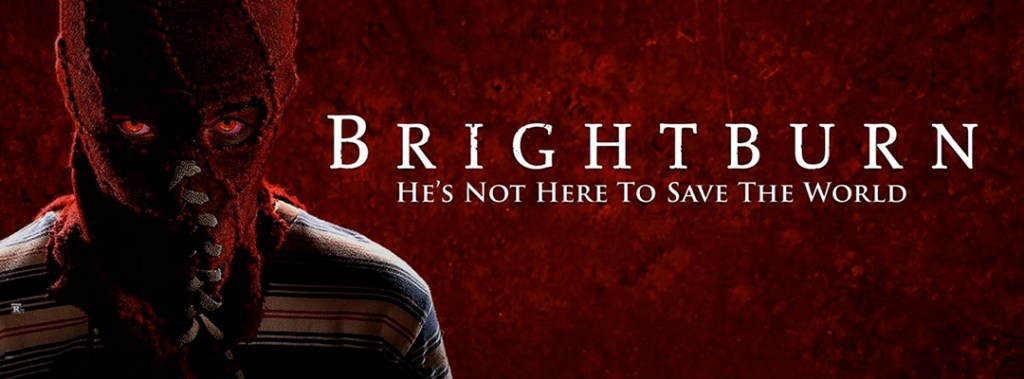
    There is no way that this spiritual sequel to the ‘Karate Kid’ franchise, “Cobra Kai” (2018) should have worked, it was a new entry into a dead ultimately futile series (especially after the last two entries) being streamed on YouTubeRed (a new service) with original as well as nearing sixty-year-old leads that have both been defined by their roles in the original “Karate Kid” (1984). But what the creators, producers and writers have done, wisely, is to create a story that seems as natural as the original, taking what was so great about the first one, transplanting it to a new time but in the same location with updated references as well as the use of some cunning flashbacks to the original movie, not hiding the ages of the players as well as being able to see the supporting characters of that original, including Noriyuki “Pat” Morita, Elisabeth Shueand Martin Kove. There definitely is a reliance on the original movie, the creators have taken for granted that the audience viewing this will have at least a passing familiarity with the movie, in particular the relationship between Danny and Johnny as well the pivotal role that the now deceased Mr. Miyagi played in both of their lives. In many other cases this sort of storytelling may have been a weakness but this is such a beloved movie that it does not hinder the narrative one iota, or the way in which the audience is informed in regard to characters motivations throughout the ten episodes.

    “Cobra Kai” takes place 34 years after the original film and follows a “down-and-out Johnny Lawrence, who seeks redemption by reopening the infamous Cobra Kai karate dojo, reigniting his rivalry with a now successful Daniel LaRusso, who has been struggling to maintain balance in his life without the guidance of his mentor, Mr. Miyagi. The show is about two men addressing past demons and present frustrations the only way they know how: through karate.”

    Running parallel to the conflict are the story arcs of Lawrence and LaRusso’s students. For instance, there are the students of Cobra Kai: a group of picked-on underdog teenagers who find a camaraderie and self-confidence under Johnny’s tutelage, only to take their mentor’s aggressive philosophy too far as they begin to degenerate into the notorious thuggery of former Sensei Kreese’s era. In contrast, Johnny’s estranged son, Robby Keene, comes under the wing of Daniel, who proves a positive influence to the boy as he begins to seek redemption while learning the philosophies of Mr. Miyagi. Meanwhile, Daniel’s daughter, Samantha, is caught in the middle of these conflicts as she learns who her true friends are and a better path to follow.

    Of course when dealing with a reimagining or a sequel of something that was created over thirty years ago the one word that screams louder than any other is nostalgia. In many cases the word nostalgia can mean to evoke feelings from the past, while in and of itself nostalgia is not negative it can be when linking it to movies and television shows. This is because many reboots and sequels are unimaginative, looking for a quick easy way to make audiences happy, taking shortcuts as well as relying on goodwill from the past. However, in the case of “Cobra Kai” what the creators have done is keep the story and action rooted in the present but with a clear foot in the past. This works extremely well as it reminds us what we loved about “The Karate Kid” but takes the characters moving them forward into the modern day, not relying per se on actions in the past as well see new rivalries from as well as some kind of understanding of past actions.

    It is vital for this show to exude nostalgia, something I am not a fan of as life by its very nature is all about change, everything and everyone changes so as a society we should always be looking to the next hill, embracing newness as well as embracing the change that will be inevitable for us all. One of the key reasons that nostalgia works in “Cobra Kai” is while we are re-introduced to the characters as well as being forced to confront their old age as well as their new situations the flashbacks are reassuring in that we know these people, as well as their motivations, with their new lives in the present we accept them more readily than meeting them cold. The other reason that this new show works is that it reminds us of a time where life was a little slower as well as more recognisable, as opposed to the world we find ourselves in now with upheaval in almost every walk of life – particularly politically, can it be a coincidence that the original was made under a Reagan Republican government?. It is no surprise that the flashbacks are juxtaposed with scenes from the present, as well as diminishing as the new story takes hold, we start to enjoy not only the older characters new journey but also the new characters that in turn have their own arcs – linked to the previous narrative.

    Unlike the original that revolved around the character of Danny this new show mainly takes the point of view of Johnny, his issues, his past and where he is trying to be with the life that he desperately wants, as well as the correcting of the mistakes of his life since the conclusion of “The Karate Kid”. This is one of the strengths of the new show as we see where he came from as a child as well as his non-apologetic character that seems to steam through life despite his attitude or his disdain for so much that would normally be the opposite to the perceived norm. What is interesting is the way in which Johnny’s attitude changes in small ways but enough to make him a sympathetic character, sometimes more so than Danny, which is saying something, especially after the way the original movie ended. As with Johnny we see Danny as a more complicated person than anyone could have imagined, he makes many mistakes with his relationships, more so than he would like but like Johnny he keeps moving ahead no matter what. What is interesting as well is something Johnny does not have, the way in which Danny’s wife makes comments about decisions or situations that he finds himself in, she is an anchor who actually keeps Danny’s worlds stable. Sure Johnny has his star pupil but both of them lack perspective or experience so they seem to continually move through life without any idea of consequences.

    Returning to their iconic 1980s characters are stars Ralph Macchio and William Zabka as Danny and Johnny respectively who both bring very different traits to their characters. Zabka is the one that is the revelation as a multi leveled character who shines in this second go at Johnny, as the lead he knows when to play the comedy as well as the drama, he also has chemistry with everyone he shares a scene with. What is great is to see him playing comedy to the extent he does, he has some of the best lines in the show as well as all the great scenes. Macchio was of course one of the great young actors of the 1980s but in the 1990s and 2000s became more known for playing himself particularly on television. What is great is to see him not in an ironic way as Danny, not only that but as an adult with issues of his own away from Karate – he really has to make some decisions that impact not only himself but his family – Macchio knows this character so well that it is easy to forget that he is a talented actor.

    I loved this show it had everything going for it in terms of drama as well as comedy. It also is not afraid to comment on the current political climate as well as improving on stereotypes that existed in the 1980s when the source material was produced. It also is not afraid to look back while maintaining its narrative firmly in the present, as well as being as original as anything else on television at the moment.

    Episodes:

    1. Ace Degenerate– Thirty four years after losing to Daniel LaRusso in the 1984 All Valley Under-18 Karate Championship, Johnny Lawrence struggles to make a living as a handyman while Daniel runs a successful car dealership chain in the San Fernando Valley.
    2. Strike First– Miguel begins his karate training with Johnny bullying him for his asthma and low self-esteem. Johnny is informed by the health department that the dojo needs a lot of work before he can officially teach students. Meanwhile, Daniel and his wife get into an argument after discovering that Samantha has invited her friends over to their home for a pool party in their absence. While reconciling with his daughter, Daniel finds out that Samantha is romantically interested in a boy called Kyler and offers to invite him to a family dinner.
    3. Esqueleto– Johnny tries to recruit more students to the dojo and Daniel decides to chaperone the school Halloween dance. Miguel’s karate training is stepped up as Johnny urges him to use the Cobra Kai creed of “Strike hard. Strike first. No mercy” in his everyday life and urges him to attend the Halloween dance.
    4. Cobra Kai Never Dies– Robby learns of the new dojo and is embarrassed by his father’s recruitment methods. Meanwhile, a LaRusso Auto billboard is vandalized and evidence leads Daniel to suspect Johnny as the culprit.
    5. Counterbalance– Miguel shows improvement in both his karate skills and his general health. Daniel tries to make a shady deal that could shut down Cobra Kai, but hurts innocent business owners in the process. Samantha’s heavy-set classmate Aisha Robinson joins Cobra Kai despite Johnny’s initial misgivings about training girls.
    6. Quiver– Daniel tries unsuccessfully to persuade Samantha to go back to karate. The footage of Miguel’s fight at school goes viral and brings many new students to the Cobra Kai dojo but Johnny cannot suppress his old ways and bullies them, embarrassing Eli in front of the entire class
    7. All Valley– Johnny uses painful methods to train his new students. Miguel asks Johnny for advice on girls and Johnny manages to give him a boost of confidence which leads to Miguel asking Samantha out on a successful date.
    8. Molting– Despite Daniel’s strong objections, the All Valley Sports Karate Board decides that Cobra Kai is allowed to compete in the All Valley Karate Tournament, so Johnny ups his game with additional training and unconventional methods steals one of the motorcycles, and rides off to confront Daniel.
    9. Different but Same– After Johnny’s car is burned by Daniel’s cousin and his thugs, Johnny confronts Daniel at his home. However, before they come to blows, Amanda quickly defuses the looming fight with an invitation to peacefully discuss the matter over breakfast and they reach an agreement: in addition to Louie being fired, Johnny would receive a trade-in car from their business in compensation.
    10. Mercy– Cobra Kai returns to the annual All Valley Under-18 Karate tournament with a full team led by Miguel. Robby too participates as a fighter unaffiliated with any dojo.