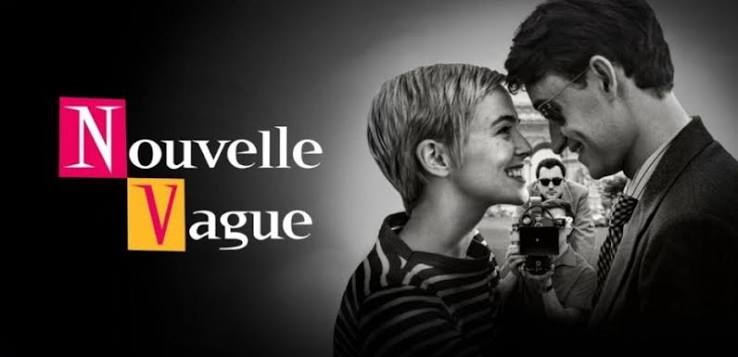
“Nouvelle Vague” (2025)
Drama

Running Time: 106 minutes
Written by: Holly Gent and Vincent Palmo
Directed by: Richard Linklater
Featuring: Guillaume Marbeck, Zoey Deutch and Aubry Dullin
Jean-Luc Godard: “We control our thoughts, which mean nothing. Not our emotions, which mean everything.”
Few movements in cinema have had as profound an influence on filmmaking as the French New Wave. Emerging in the late 1950s, it challenged established conventions and transformed the language of cinema forever. Directors such as Jean-Luc Godard, François Truffaut, Claude Chabrol, Éric Rohmer and Jacques Rivette became synonymous with innovation, youthful rebellion and artistic freedom. Richard Linklater’s Nouvelle Vague is both a celebration and an examination of that extraordinary moment in film history. Rather than simply offering a conventional historical drama, Linklater crafts a deeply affectionate recreation of the period, focusing on the making of one of the movement’s defining works while capturing the excitement of a generation discovering that cinema could be anything they imagined.
This Blu-ray release presents the film in a presentation worthy of its subject, offering excellent image quality, immersive audio and supplements that enhance appreciation of both the production and the remarkable cinematic revolution it depicts.
Richard Linklater has long been fascinated with filmmakers, artists and creative communities. Throughout his career he has explored conversations, ideas and the passage of time, making him an ideal director to tackle the story of the French New Wave. Rather than approaching the material with reverence alone, he embraces the youthful energy that made the movement so revolutionary.
The film follows the creative explosion surrounding Jean-Luc Godard as he embarks upon the production of Breathless. Around him are fellow filmmakers, critics and actors who would become legends, each contributing to an artistic movement that rejected studio conventions in favour of spontaneity, location shooting and personal expression.
Instead of relying on broad historical exposition, Nouvelle Vague immerses viewers in the cafés, apartments, editing rooms and Paris streets where ideas were exchanged. The result feels wonderfully intimate, allowing audiences to witness history unfolding almost by accident.
One of Linklater’s greatest achievements is resisting the temptation to turn the film into a museum piece. Although every costume, hairstyle and location has clearly been researched meticulously, the film feels alive rather than academic.
His direction mirrors many techniques pioneered by the New Wave itself. Scenes unfold naturally. Conversations drift into philosophical discussions before returning to practical filmmaking concerns. Characters interrupt one another, argue passionately about cinema and discover ideas through experimentation rather than certainty.
Linklater understands that these filmmakers were young people challenging authority rather than cultural icons. Their confidence often bordered on arrogance, yet their enthusiasm remains infectious.
The pacing is relaxed but consistently engaging. Viewers interested in film history will appreciate the numerous references, while newcomers can simply enjoy the story of ambitious artists determined to reinvent their craft.
The ensemble cast deserves enormous praise for avoiding caricature. Playing famous filmmakers presents obvious challenges because audiences arrive with preconceived images of these cultural giants.
Instead of imitations, the performances capture personalities.
The actor portraying Jean-Luc Godard perfectly balances brilliance, insecurity, humour and stubbornness. His relentless questioning of cinematic convention becomes the dramatic engine of the film.
Equally compelling are the portrayals of François Truffaut and Claude Chabrol. Their friendships, rivalries and mutual admiration reveal how collaborative the French New Wave actually was despite each director possessing a distinctive artistic voice.
The actresses portraying the performers who worked with these directors likewise avoid reducing them to supporting figures. They demonstrate how essential the actors were in shaping this new cinematic language.
Throughout the cast there is a remarkable sense of chemistry, making every café discussion and production meeting feel spontaneous.
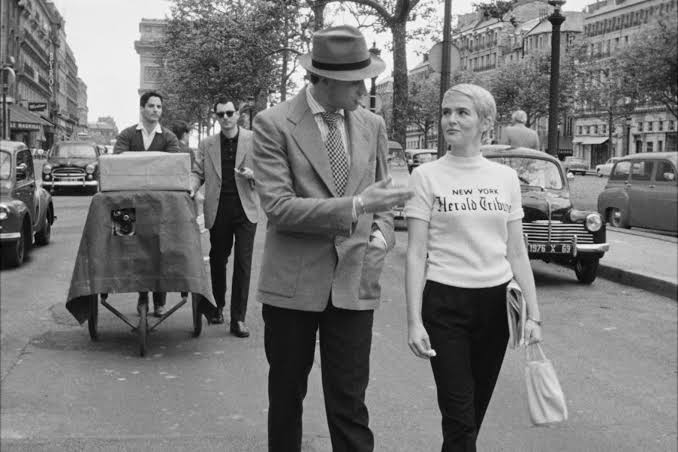
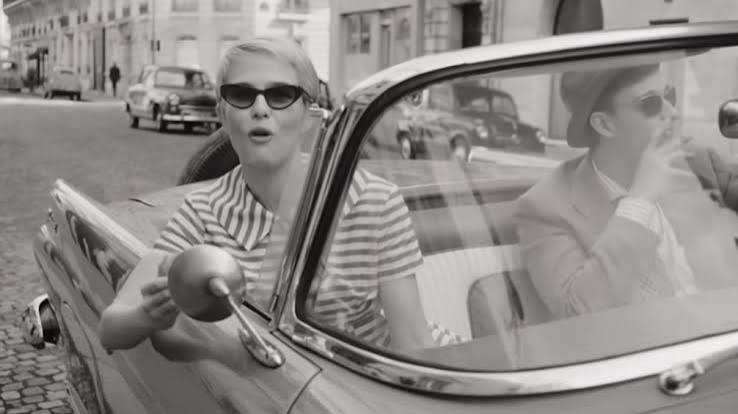
One of the film’s greatest pleasures lies in its recreation of Paris at the end of the 1950s.
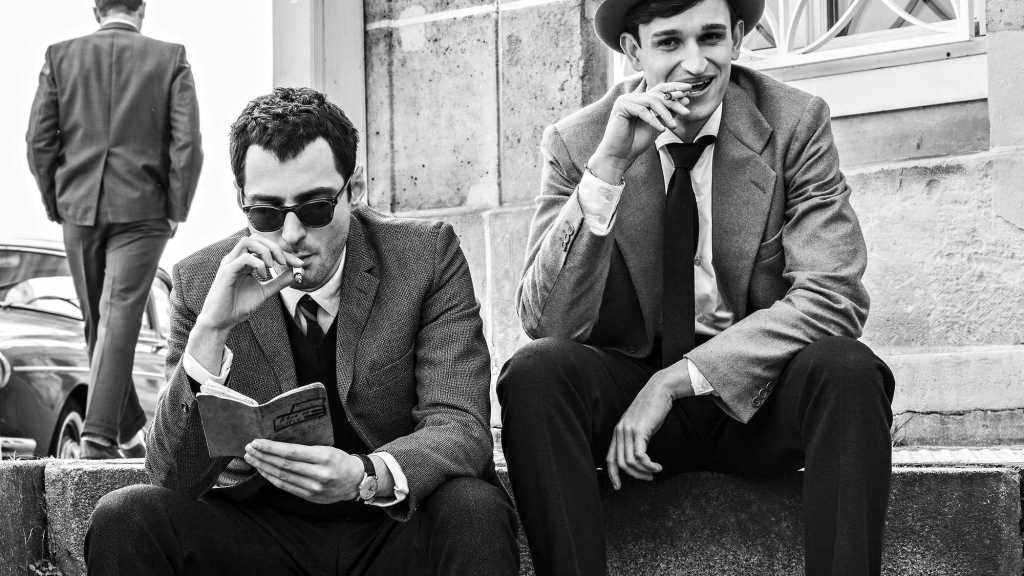
The production design never feels artificial. Streets appear lived-in rather than reconstructed for nostalgia. Cafés bustle with life, apartments overflow with books and film magazines, while production offices radiate organised chaos.
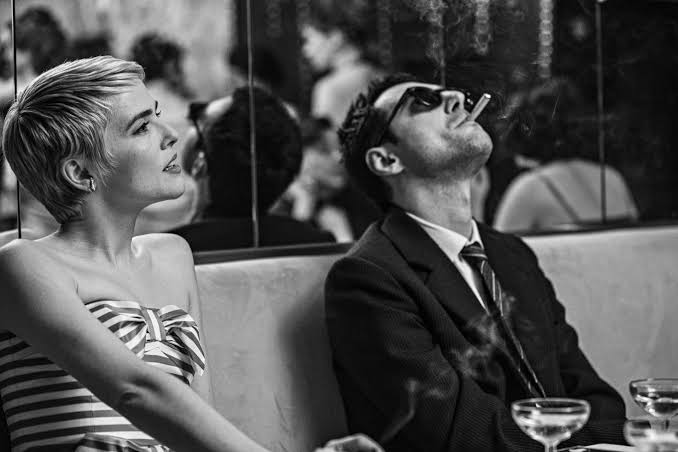
The cinematography beautifully echoes the visual style of the era without becoming a simple imitation. Black-and-white photography captures extraordinary tonal range, giving the image both elegance and authenticity.
Camera movement frequently recalls Godard’s own experiments while maintaining Linklater’s personal visual identity.
Rather than merely copying the French New Wave, the film demonstrates why its visual innovations remain so influential today.
The screenplay succeeds because it recognises that cinema is built upon ideas.
Many scenes consist primarily of conversations about editing, framing, criticism, storytelling and artistic freedom. Under normal circumstances such dialogue might feel static, yet Linklater transforms these exchanges into compelling drama.
Film lovers will delight in discussions referencing American noir, Italian neorealism and classical Hollywood filmmaking. The screenplay illustrates how passionately these young critics consumed cinema before reinventing it.
Importantly, viewers need not possess encyclopaedic knowledge of film history. The emotional core concerns creative risk, friendship and the courage to reject accepted rules.
Although Nouvelle Vague is about filmmaking, it speaks to wider themes.
It explores youth challenging tradition.
It celebrates artistic collaboration while acknowledging creative rivalry.
It examines the relationship between criticism and creation, asking whether analysing art prepares someone to make great art themselves.
Most importantly, it argues that genuine innovation often comes from individuals willing to ignore conventional wisdom.
These ideas resonate far beyond cinema.
The Blu-ray presentation is superb.
The AVC encode faithfully reproduces the film’s monochrome photography with remarkable precision. Contrast remains consistently strong throughout, allowing deep blacks without crushing shadow detail.
Grayscale reproduction is especially impressive. Every shade between bright whites and rich blacks appears natural, giving faces tremendous depth while preserving subtle textures in clothing and architecture.
Fine detail is outstanding.
Stone buildings reveal decades of weathering.
Cobblestone streets exhibit exceptional texture.
Hair, fabrics and period props all display remarkable clarity.
Film grain appears natural and consistent, reinforcing the production’s authentic photographic aesthetic. Thankfully, there is no evidence of excessive digital noise reduction or artificial sharpening.
Compression remains excellent even during darker interiors, where shadow detail remains stable and free from distracting artefacts.
This is a reference-quality black-and-white Blu-ray presentation.
The DTS-HD Master Audio soundtrack may not be designed as a showcase for explosive dynamics, but it perfectly complements the film.
Dialogue remains crystal clear throughout.
Every conversation in cafés, apartments and production meetings is presented naturally with excellent vocal fidelity.
Ambient sounds create convincing environments.
Street traffic, footsteps, restaurant chatter and subtle room acoustics immerse viewers in late-1950s Paris.
The musical score enhances emotion without overwhelming dialogue.
Dynamic range is modest yet entirely appropriate for such an intimate production.
Surround channels provide gentle environmental support rather than aggressive directional effects.
This is an elegant, carefully balanced audio presentation.
The supplements significantly enhance appreciation of both the film and the historical movement it depicts.
A feature-length commentary from Richard Linklater proves fascinating, discussing the extensive research involved in recreating the French New Wave while explaining his stylistic choices.
Behind-the-scenes documentaries explore production design, costume recreation and location scouting throughout Paris.
Interviews with cast and crew reveal the challenge of portraying legendary filmmakers without reducing them to impersonations.
Film historians contribute thoughtful discussions about the real historical events, providing valuable context for viewers unfamiliar with the era.
Deleted scenes and promotional materials round out an informative collection.
Rather than functioning as simple marketing material, these supplements become an engaging introduction to one of cinema’s most influential artistic revolutions.
Nouvelle Vague is more than a historical recreation. It is a passionate love letter to cinema itself and to the artists who transformed the medium through imagination, courage and sheer determination.
Richard Linklater proves an inspired choice to tell this story, balancing historical authenticity with warmth, humour and genuine affection for his subjects. The performances humanise figures often treated as untouchable legends, while the screenplay reminds us that every revolution begins with people willing to ask difficult questions.
The Blu-ray presentation serves the film exceptionally well. The monochrome image is breathtaking, preserving every nuance of the carefully crafted cinematography, while the audio presentation and supplements provide a rewarding home cinema experience.
For admirers of the French New Wave, Richard Linklater or cinema history in general, this Blu-ray is an essential addition to any collection. More importantly, it captures the exhilarating moment when a handful of young filmmakers changed movies forever—a reminder that true artistic innovation rarely arrives through convention, but through the courage to imagine something entirely new.



Leave a Reply