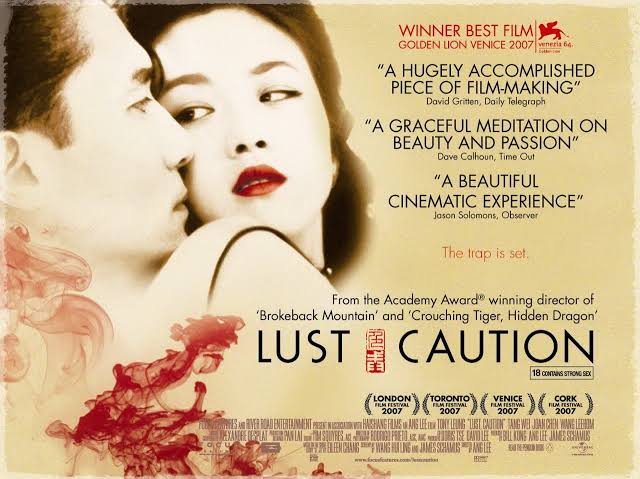
“Lust, Caution” (2007)
Drama

Running Time: 158 minutes
Written by: Wang Hui-ling and James Schamus
Directed by: Ang Lee
Featuring: Tony Leung Chiu-wai, Tang Wei, Anupam Kher, Joan Chen, Wang Leehom and Shyam Pathak
Kuang Yu Min: “We must all pitch in. Our soldiers are fighting for their lives at the front… while these Hong Kongers continue their leisurely lives. We have to wake them up with our drums and gongs!”
Few filmmakers have navigated as many genres with as much confidence as Ang Lee. From intimate family dramas to martial arts epics, literary adaptations and emotionally devastating romances, Lee has consistently demonstrated an ability to blend visual elegance with profound emotional insight. Lust, Caution (2007) remains one of his boldest and most controversial achievements—a richly layered espionage thriller that is as much about obsession, identity and betrayal as it is about wartime resistance. Released on Blu-ray by Kino Lorber, the film finally received the high-definition presentation it had long deserved, allowing one of the most visually sumptuous films of the twenty-first century to shine.
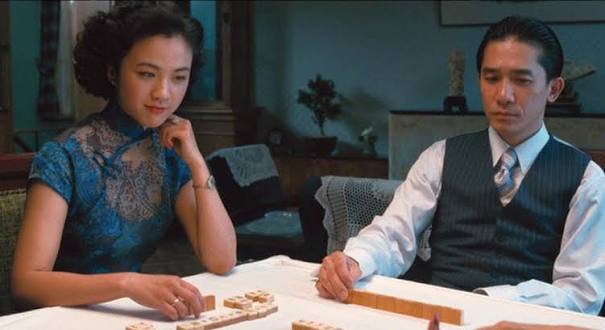
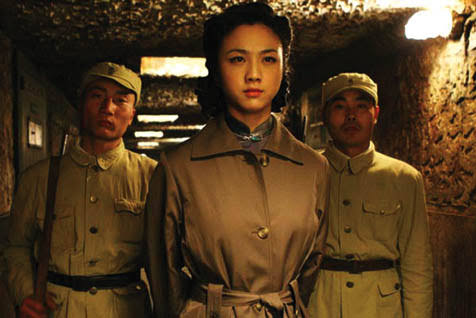
Set during the Japanese occupation of Shanghai in the early 1940s, Lust, Caution follows Wong Chia Chi (Tang Wei), a university student recruited into an amateur resistance movement. Her mission appears straightforward: infiltrate the social circle of the powerful Mr. Yee (Tony Leung Chiu-wai), a high-ranking collaborator working for the Japanese puppet government, seduce him, and create an opportunity for his assassination. What begins as patriotic duty gradually evolves into an emotionally and psychologically devastating relationship in which love, lust, deception and survival become impossible to separate.
Rather than presenting espionage as glamorous adventure, Ang Lee strips away the genre’s familiar conventions. There are no spectacular action sequences or elaborate gadgets. Instead, tension comes from whispered conversations, lingering glances and the constant fear that one wrong word or misplaced expression could result in torture or death. Every social gathering feels like a battlefield where appearances are weapons.
Lee’s direction is astonishingly assured. The deliberate pacing may surprise viewers expecting a conventional thriller, but every carefully measured scene builds emotional pressure. The film unfolds almost like a tragic opera, each encounter between Wong and Mr. Yee drawing the characters deeper into emotional territory neither fully understands.
The screenplay, adapted from the novella by Eileen Chang, refuses simplistic morality. No one emerges as entirely heroic or villainous. Instead, everyone is compromised by war, circumstance and desire. This moral ambiguity gives the story extraordinary power, forcing audiences to question every decision long after the credits roll.
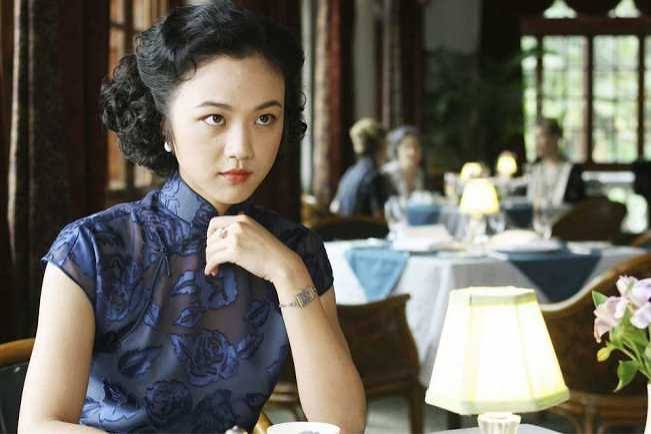
Tang Wei delivers one of the greatest debut performances in modern cinema. Her portrayal of Wong Chia Chi requires extraordinary emotional range. At first she appears almost innocent, a young woman swept up by idealism and patriotic fervour. As her mission progresses, however, Wong becomes increasingly fractured. The role demands subtle shifts between performance and authenticity, as Wong herself is constantly acting—pretending to be Mrs. Mak while slowly losing sight of where the disguise ends and her true self begins.
Tang communicates this internal collapse largely through silence. Tiny changes in posture, fleeting expressions and hesitant movements reveal the enormous psychological burden she carries. It is a remarkably restrained performance that becomes more heartbreaking with every viewing.
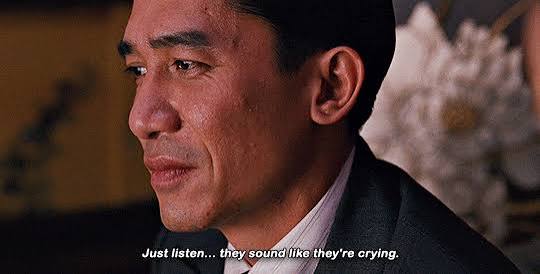
Equally magnificent is Tony Leung as Mr. Yee. Leung has long been one of Asian cinema’s finest actors, and here he creates one of his most complex characters. Mr. Yee is undeniably cruel, responsible for horrific acts of political repression, yet Leung never allows him to become a one-dimensional monster. Beneath the icy professionalism lies profound loneliness and emotional exhaustion.
The chemistry between Tang and Leung is extraordinary precisely because it is built upon uncertainty. Neither character fully trusts the other, yet each becomes emotionally dependent on the relationship. Their scenes together carry an intensity rarely achieved in modern cinema.
Much of the controversy surrounding Lust, Caution centred upon its explicit love scenes, which resulted in an NC-17 rating in the United States and censorship in several countries. Those approaching the film expecting erotic spectacle, however, will likely misunderstand Lee’s intentions.
The sexual encounters are deliberately uncomfortable, often bordering on violent, serving as extensions of the characters’ shifting power dynamics rather than moments of romantic fulfilment. Physical intimacy becomes another form of psychological warfare, revealing vulnerabilities neither character can express verbally.
Without these scenes, the emotional trajectory of the relationship would lose much of its devastating complexity. Lee uses sexuality not to provoke but to expose emotional truth. The explicit content is essential to understanding how Wong’s mission gradually transforms into something infinitely more dangerous than political assassination.
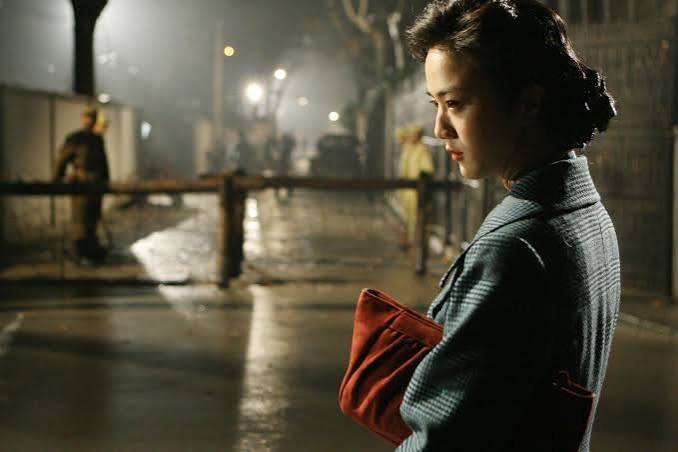
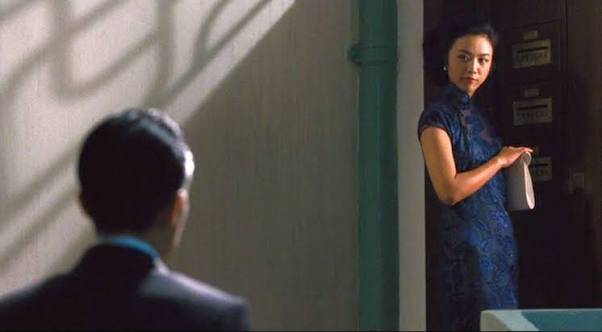
Rodrigo Prieto’s cinematography is breathtaking throughout. Every frame feels meticulously composed without becoming artificial. Shanghai is recreated with extraordinary richness, capturing both glamorous high society and the constant shadow of wartime occupation.
Warm amber lighting dominates luxurious interiors, while cooler greys and muted blues accompany moments of isolation and fear. Costumes, jewellery, furniture and architecture immerse viewers completely in the period.
Prieto’s camera frequently lingers just long enough to allow emotional discomfort to develop naturally. Long takes create almost unbearable tension, while carefully controlled movement mirrors the characters’ emotional restraint.
The visual style remains elegant throughout, but beneath that beauty lies constant unease. Every exquisite image reminds viewers that violence lurks just outside the frame.
Alexandre Desplat’s haunting musical score deserves equal praise. Rather than overwhelming scenes with melodrama, the music quietly reinforces the emotional uncertainty surrounding the characters.
Elegant piano passages and restrained orchestration complement the film’s deliberate pace, allowing silence to remain just as important as music. The soundtrack constantly reminds viewers that beneath every beautiful surface lies imminent tragedy.
The Blu-ray presentation is superb and does full justice to Lee and Prieto’s remarkable visual design. Presented in 1080p, the transfer exhibits exceptional detail, natural film grain and beautifully balanced colours. The richly textured costumes, polished wood interiors and atmospheric lighting all benefit enormously from high-definition presentation. Blacks are deep without crushing shadow detail, while skin tones remain consistently natural. This release faithfully reproduces the film’s carefully stylised cinematography and remains an excellent showcase for the source material.
Audio is equally impressive. The Mandarin DTS-HD Master Audio soundtrack offers crystal-clear dialogue, subtle environmental ambience and an immersive presentation of Alexandre Desplat’s restrained score. Although this is not an aggressively dynamic soundtrack, every element feels perfectly balanced, allowing the film’s emotional nuances to come through with remarkable clarity.
The supplementary material is relatively modest but worthwhile. Film historian Eddie Von Mueller provides an informative audio commentary exploring the film’s historical context, production, symbolism and narrative complexity. An archival featurette, Tiles of Deception & Lurid Affections, includes interviews with Ang Lee and key cast and crew members discussing the adaptation, performances and recreation of wartime Shanghai. A theatrical trailer rounds out the package. While fans might have hoped for a more expansive collection of extras, the commentary alone significantly enhances appreciation of the film.
Nearly two decades after its original release, Lust, Caution has lost none of its emotional impact. If anything, time has strengthened its reputation as one of Ang Lee’s greatest achievements. It is an uncompromising work that refuses easy answers, blending political intrigue with devastating emotional intimacy.
This is not simply a spy thriller or historical romance. It is a meditation on performance, identity, loyalty and the terrifying unpredictability of human desire. Every viewing uncovers new emotional and thematic layers, revealing just how carefully constructed every scene truly is.
The Blu-ray presentation allows modern audiences to experience the film with exceptional audiovisual quality. While the extras may not be exhaustive, the outstanding transfer and strong audio presentation make this an essential addition to any serious film collection.


Leave a Reply