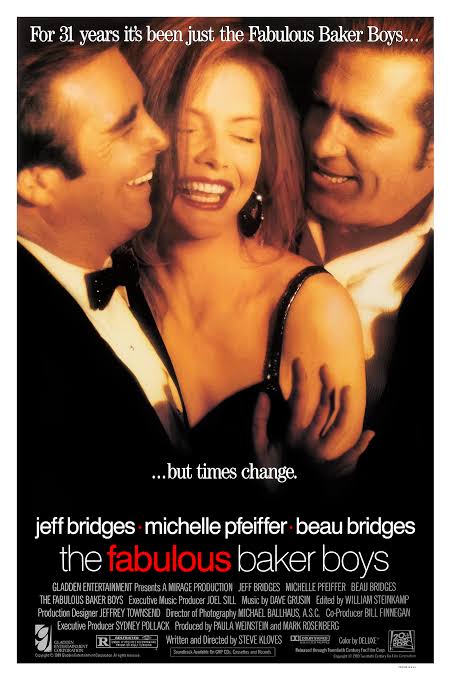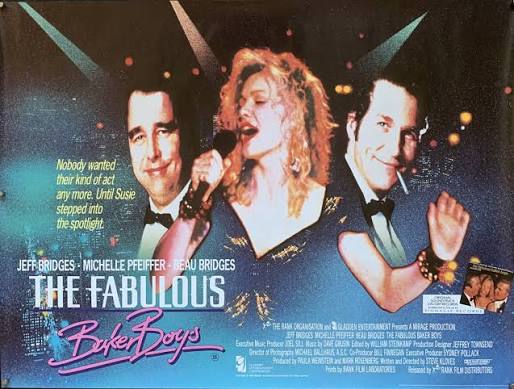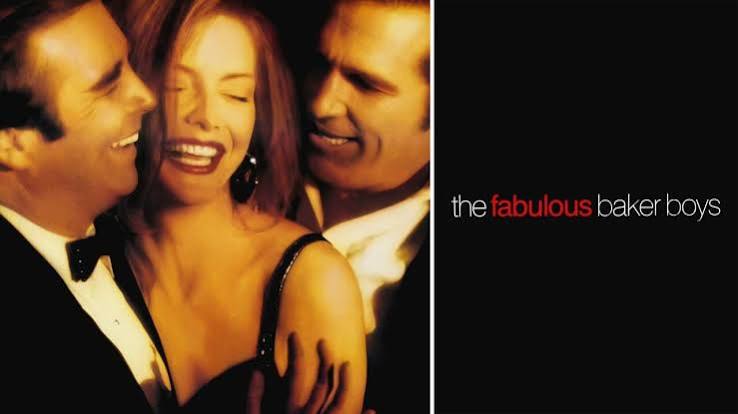
“The Fabulous Baker Boys” (1989)
Drama

Running Time: 114 minutes
Written and directed by: Steve Kloves
Featuring: Jeff Bridges, Michelle Pfeiffer and Beau Bridges
Jack Baker: “You let that guy turn us into clowns tonight. We were always small time, but we were never clowns.”
Some films announce themselves with spectacle. Others quietly slip into your memory through atmosphere, performances, and emotional honesty. The Fabulous Baker Boys belongs firmly in the latter category. Released in 1989, writer-director Steve Kloves’ debut remains one of the most sophisticated and emotionally resonant American dramas of its era. More than three decades later, it has lost none of its charm, its melancholy, or its effortless cool.
The Blu-ray release gives audiences the opportunity to rediscover this understated masterpiece in high definition, reminding viewers why it has become one of the defining adult dramas of the late 1980s. While modern cinema often favours speed and spectacle, The Fabulous Baker Boys succeeds by embracing quiet moments, subtle emotions, and characters who feel wonderfully human.
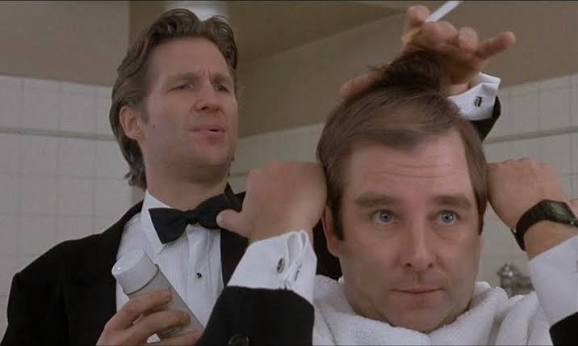
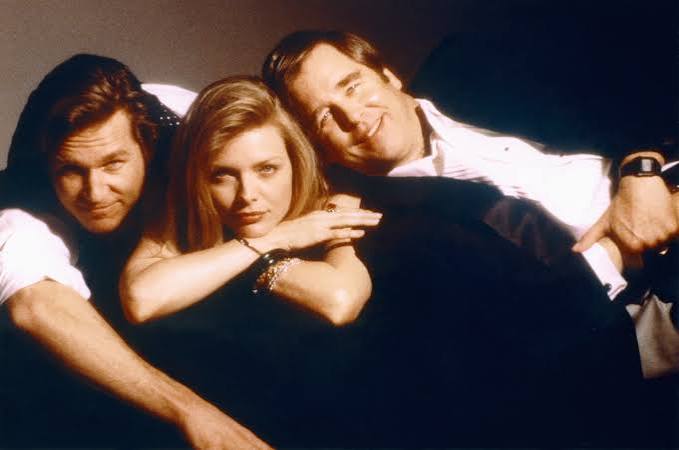
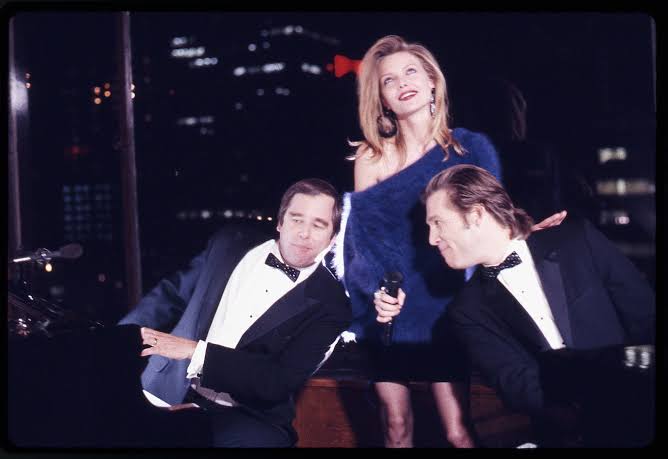
Frank and Jack Baker (played by real-life brothers Beau Bridges and Jeff Bridges) have spent years making a modest living performing piano duets in hotel lounges, cocktail bars, and restaurants around Seattle. They’re good musicians but hardly stars. Their act has become stale, audiences are shrinking, and their bookings are disappearing.
Desperate to reinvigorate their careers, they decide to hire a female vocalist. After auditioning a string of forgettable singers, they discover Susie Diamond, played magnificently by Michelle Pfeiffer.
Susie is funny, sharp, vulnerable, and effortlessly charismatic. She isn’t polished in the traditional sense, but possesses something far more valuable—personality. Once she joins the act, the performances suddenly come alive, attracting larger audiences and renewed interest. But success comes with complications as romantic tensions develop between Susie and Jack, while Frank struggles to hold together both the business and his relationship with his younger brother.
On paper, the story sounds familiar. In execution, it is remarkably nuanced. Kloves avoids melodrama at almost every opportunity, preferring emotional realism over manufactured conflict.
Jeff Bridges delivers one of the greatest performances of his remarkable career.
Jack Baker is immensely talented but emotionally guarded. He possesses natural musical gifts but lacks ambition, choosing instead to drift through life with an almost self-destructive passivity. Bridges communicates enormous emotional depth through silence, glances and understated expressions rather than lengthy speeches.
Jack is a man who has quietly accepted disappointment, convincing himself he doesn’t care about success because it is easier than risking failure.
It is an extraordinarily layered performance that rewards repeated viewings.
Beau Bridges is equally impressive as Frank, the older brother desperately trying to keep both the act and his family together.
Frank understands business, responsibility and compromise in ways Jack never has. While Jack dreams without acting, Frank survives by accepting reality.
Their relationship forms the emotional backbone of the film. The brothers genuinely feel like siblings, complete with decades of shared history, affection, irritation and resentment. Their arguments are never explosive simply for dramatic effect. Instead, they reflect years of accumulated frustrations that can no longer remain buried.
The chemistry between the real-life brothers gives every conversation authenticity.
Although both Bridges brothers are exceptional, this is undoubtedly Michelle Pfeiffer’s film.
Her portrayal of Susie Diamond transformed her career and earned an Academy Award nomination.
Rather than portraying Susie as merely the beautiful newcomer disrupting the brothers’ partnership, Pfeiffer creates a fully realised woman with intelligence, humour and vulnerability.
She is independent without becoming stereotypically “strong.” She is sexy without becoming objectified. She is emotionally complex without becoming overly dramatic.
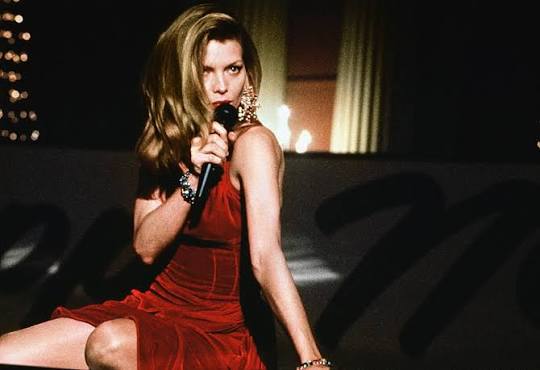
Her famous performance of “Makin’ Whoopee,” draped across a grand piano in a shimmering red dress, has become one of the most iconic musical sequences in modern cinema. Yet what makes the scene memorable isn’t simply its sensuality.
It reveals absolute confidence masking profound loneliness.
Pfeiffer performs the song with extraordinary presence, making it one of cinema’s truly unforgettable nightclub performances.
Unlike many musical dramas, The Fabulous Baker Boys doesn’t use music simply as entertainment.
The performances reveal character.
Every piano duet tells us something about Frank and Jack’s relationship. Every vocal performance illustrates Susie’s growing confidence. Every jazz standard reflects emotions the characters cannot openly express.
Dave Grusin’s Oscar-winning score beautifully complements the film, blending seamlessly with the classic American songbook performed throughout.
Jazz lovers will especially appreciate how authentic the musical sequences feel. Nothing is over-produced or artificially glamorous.
Instead, the film celebrates working musicians whose performances matter deeply, even if they’re taking place in half-empty lounges.
Long before writing the Harry Potter screenplays, Steve Kloves demonstrated exceptional maturity as both writer and director.
His screenplay avoids obvious plot twists, preferring believable emotional development.
Conversations unfold naturally.
Characters interrupt each other.
Silences become meaningful.
Moments of awkwardness remain unresolved.
The result feels remarkably contemporary despite being made in 1989.
Kloves also demonstrates remarkable visual restraint, allowing performances to dominate rather than flashy direction.
German cinematographer Michael Ballhaus creates one of the most elegant visual presentations of late-1980s American cinema.
Seattle becomes more than simply a backdrop.
Rain-soaked streets.
Neon reflections.
Hotel lounges.
Dimly lit cocktail bars.
Empty rehearsal spaces.
Everything contributes to the film’s bittersweet atmosphere.
Warm amber lighting dominates the nightclub interiors while cooler blues and greys define the characters’ private lives.
The visual contrast subtly reinforces the difference between performance and reality.
The Blu-ray presents the film in a strong 1080p transfer that faithfully preserves its cinematic appearance. Fine film grain remains intact, colours retain their warm, natural look, and detail is noticeably improved over older DVD editions. Some darker scenes still show the limitations of the original photography, but the presentation remains organic and film-like rather than artificially processed.
Black levels are generally satisfying, allowing the dimly lit clubs and lounges to maintain their intimate atmosphere. Close-ups particularly benefit from the increased resolution, highlighting subtle facial expressions that are essential to the performances.
Audio is presented in a lossless 2.0 LPCM track that suits the material perfectly. Dialogue remains consistently clear, while Dave Grusin’s score and the numerous jazz standards sound warm, rich and well balanced. The piano performances possess convincing tonal depth, and the intimate sound design preserves the feeling of sitting in a small nightclub listening to a live performance.
This is not a film that requires aggressive surround effects. The straightforward stereo presentation accurately reflects the original theatrical experience.
The Blu-ray includes a worthwhile collection of supplements, including deleted scenes and vintage behind-the-scenes featurettes featuring the cast. Some editions also include additional archival material such as commentary tracks, depending on the distributor and release. While not exhaustive by boutique-label standards, the extras provide valuable context for appreciating the production and the performances.
The Fabulous Baker Boys has aged with extraordinary grace.
Its exploration of artistic compromise, sibling rivalry, unrealised dreams and unexpected love feels every bit as relevant today as it did in 1989.
Jeff Bridges delivers one of the finest performances of his career.
Beau Bridges provides the emotional anchor.
Michelle Pfeiffer gives a truly iconic performance that remains one of the defining screen roles of her generation.
Combined with Steve Kloves’ intelligent screenplay, Michael Ballhaus’ gorgeous cinematography and Dave Grusin’s unforgettable music, the result is a film of remarkable elegance and emotional honesty.
The Blu-ray faithfully presents this modern classic with pleasing picture quality, excellent lossless audio and a respectable selection of bonus features, making it an easy recommendation for both longtime admirers and newcomers.
Some films shout for your attention.
The Fabulous Baker Boys simply sits down at the piano, plays a few perfect notes, and quietly reminds you why great filmmaking never goes out of style.