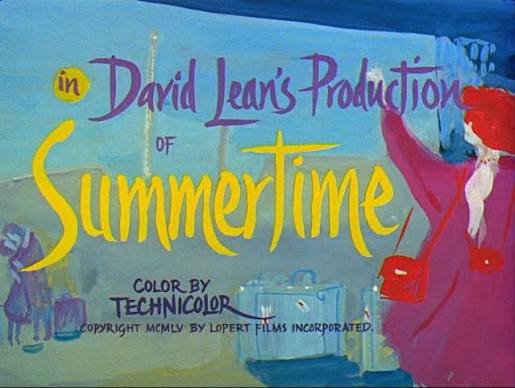
“Summertime” (1955)
Drama

Running Time: 100 minutes
Written by: David Lean and H. E. Bates
Directed by: David Lean
Featuring: Katharine Hepburn, Rossano Brazzi, Darren McGavin and Isa Miranda
Renato de Rossi: “You are like a hungry child who is given ravioli to eat. ‘No’ you say, ‘I want beefsteak!’ My dear girl, you are hungry. Eat the ravioli.”
Few filmmakers have captured the emotional complexity of longing and romance with the elegance of David Lean, and while his reputation often rests upon monumental epics such as The Bridge on the River Kwai, Lawrence of Arabia, and Doctor Zhivago, Summertime remains one of his most intimate and deeply personal achievements. Released in 1955 and starring the incomparable Katharine Hepburn, this bittersweet romantic drama is both a touching character study and an unforgettable cinematic postcard of Venice at its most enchanting. The Criterion Collection’s Blu-ray release finally gives this overlooked masterpiece the presentation it has long deserved, allowing modern audiences to appreciate the film’s visual beauty and emotional subtlety in stunning high definition. The Blu-ray features a 4K restoration sourced from the original film elements, preserving the rich Technicolor photography with impressive clarity.
Unlike the sweeping historical spectacles that would define the second half of Lean’s career, Summertime is a small-scale story driven almost entirely by character. Yet its emotional scope is enormous. It explores loneliness, middle age, missed opportunities, and the universal desire to be loved with remarkable sensitivity, never descending into melodrama or sentimentality.
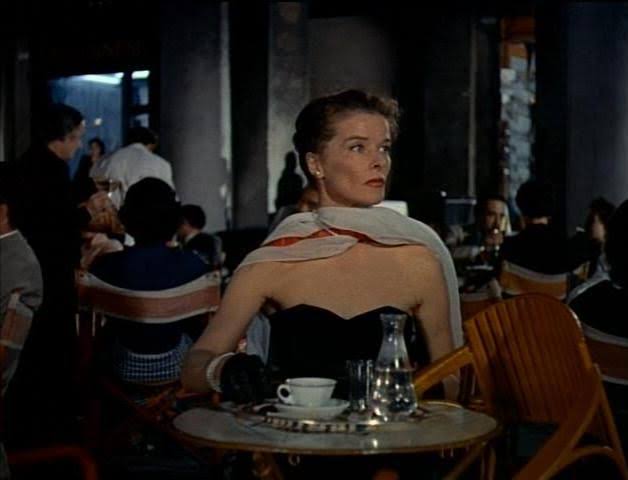
Katharine Hepburn stars as Jane Hudson, a middle-aged American secretary from Ohio who has spent years saving every spare dollar to fulfill her lifelong dream of visiting Venice. Alone but determined, Jane arrives as an eager tourist, armed with a camera and guidebook, hoping to absorb every ounce of the city’s romance and beauty. She soon encounters Renato de Rossi (Rossano Brazzi), an attractive antiques dealer whose warmth and charm awaken feelings Jane has long buried. Their growing relationship, however, is complicated by realities that neither can escape.
What makes the film extraordinary is its refusal to embrace conventional Hollywood fantasy. Lean allows romance to blossom naturally while acknowledging that life rarely offers perfect endings. The bittersweet nature of Jane’s experience ultimately becomes the source of the film’s emotional power.
Katharine Hepburn delivers one of the finest performances of her remarkable career. Rather than portraying one of her trademark confident, witty heroines, she creates a woman filled with insecurities beneath a brave exterior. Jane is intelligent, independent, and accomplished, yet painfully aware of the years that have slipped away without love or marriage.
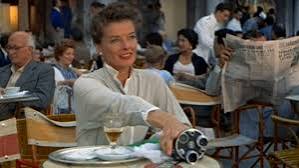
Hepburn captures every awkward social moment with astonishing honesty. Whether nervously attempting conversation, struggling with unfamiliar customs, or trying to maintain dignity after embarrassment, she makes Jane completely believable. The performance is filled with tiny gestures and expressions that communicate far more than dialogue ever could.
Her emotional openness is especially striking. Jane experiences joy, vulnerability, jealousy, hope, disappointment, and acceptance, sometimes within the same scene. Hepburn never asks the audience to pity Jane; instead, she earns our empathy through authenticity.
Rossano Brazzi provides the perfect counterbalance. Renato is charming without being impossibly idealized. He possesses warmth and genuine affection for Jane, but he is also a man bound by obligations and compromises. Brazzi wisely avoids making Renato either hero or villain, instead presenting him as a complicated adult making imperfect choices.
The chemistry between Hepburn and Brazzi feels wonderfully mature. Their romance grows through conversation, shared experiences, and mutual loneliness rather than youthful passion. It is refreshingly adult and emotionally believable.
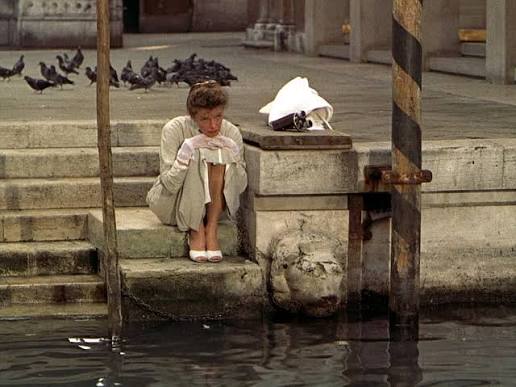
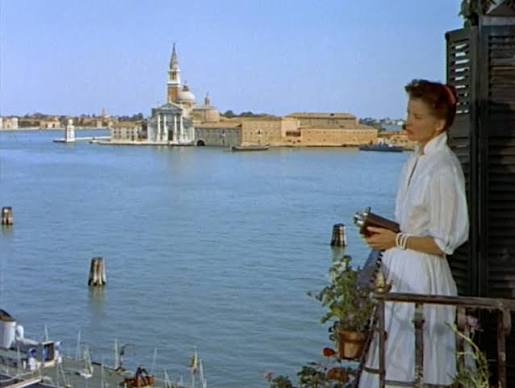
One cannot discuss Summertime without celebrating Venice itself. David Lean transforms the city into one of cinema’s greatest locations. Every canal, bridge, piazza, and narrow street contributes to the emotional atmosphere.
Rather than using elaborate studio recreations, Lean filmed extensively on location, allowing Venice to become an active participant in the narrative. The bustling markets, quiet canals, café terraces, churches, and sunlit squares create an immersive sense of place that remains breathtaking nearly seventy years later.
Jack Hildyard’s Oscar-winning cinematography is magnificent. The glowing Technicolor photography captures shimmering reflections on the canals, golden evening light, and the city’s distinctive architecture with painterly precision. Venice has rarely looked more inviting.
David Lean’s direction demonstrates why he was among the greatest visual storytellers in cinema history. Even in this relatively modest production, every frame is carefully composed. Lean understands exactly when to let silence speak louder than dialogue, allowing facial expressions and visual details to reveal emotional truths.
His pacing is deliberate but never slow. The film unfolds like an actual holiday, allowing viewers to wander alongside Jane through museums, cafés, antique shops, and hidden alleyways. This leisurely structure deepens our connection with both the character and the city.
Lean also displays remarkable restraint. Lesser directors might have exaggerated the emotional conflicts, but Lean trusts his audience to appreciate life’s ambiguities. The result feels timeless rather than dated.
Arthur Laurents’ screenplay, adapted from his play The Time of the Cuckoo, balances humour and melancholy beautifully. Jane’s awkward encounters with fellow tourists and locals often generate genuine laughs, while her emotional journey never loses credibility.
The dialogue feels natural and understated. Conversations frequently revolve around ordinary subjects, yet beneath them lie questions about aging, loneliness, self-worth, and the courage required to embrace happiness when it unexpectedly appears.
The supporting cast contributes significantly to the film’s charm. Isa Miranda brings warmth and wisdom to Signora Fiorini, whose quiet observations often guide Jane toward emotional honesty. Even the smaller characters help create a convincing portrait of Venice filled with colourful personalities.
The Criterion Blu-ray presentation is exceptional. The new restoration reveals levels of detail that previous home-video editions simply could not reproduce. Fine textures in costumes, architectural details, water reflections, and facial close-ups all exhibit impressive clarity while maintaining a pleasing film-like appearance. Colors are vibrant yet natural, faithfully reproducing the richness of the original Technicolor photography without appearing artificially enhanced.
Grain reproduction is consistent throughout, giving the presentation an organic cinematic quality. Contrast is excellent, with deep blacks and beautifully rendered highlights that enhance the luminous Venice locations.
The monaural soundtrack is naturally limited by its age but remains clean and well-balanced. Dialogue is consistently intelligible, Alessandro Cicognini’s delicate musical score sounds warm, and environmental sounds help immerse viewers in Venice’s bustling atmosphere. Criterion wisely avoids unnecessary digital manipulation, preserving the original sonic character.
Criterion also includes a worthwhile selection of supplements that examine the film’s production, David Lean’s career, and Katharine Hepburn’s extraordinary performance. These extras provide valuable historical context while enhancing appreciation for a film that has sometimes been overshadowed by Lean’s later epics.
What makes Summertime endure is its emotional honesty. It recognises that happiness may be temporary, that love sometimes arrives too late, and that meaningful experiences can transform us even if they do not last forever. Jane’s journey ultimately becomes less about finding lasting romance than discovering the courage to embrace life fully, despite disappointment and uncertainty.
Modern audiences may also appreciate how progressive the film remains in its treatment of an older female protagonist. Rather than relegating Jane to comic relief or maternal stereotypes, the film acknowledges her desires, dreams, sexuality, and emotional complexity with remarkable compassion.
In many ways, Summertime feels surprisingly contemporary. Its themes of solo travel, self-discovery, and emotional vulnerability resonate just as strongly today as they did in 1955.
Summertime stands among David Lean’s most graceful achievements—a mature, emotionally rich romance elevated by Katharine Hepburn’s magnificent performance and some of the most beautiful location photography ever committed to film. The Criterion Blu-ray provides an outstanding presentation of this classic, allowing its visual splendour and emotional depth to shine brighter than ever.
For admirers of classic Hollywood, David Lean, Katharine Hepburn, or simply beautifully crafted romantic cinema, this Blu-ray is an essential addition to any collection. It serves as a reminder that some of the greatest love stories are not those that promise happily-ever-after endings, but those that capture the fleeting moments that change our lives forever.
 spryfilm.com