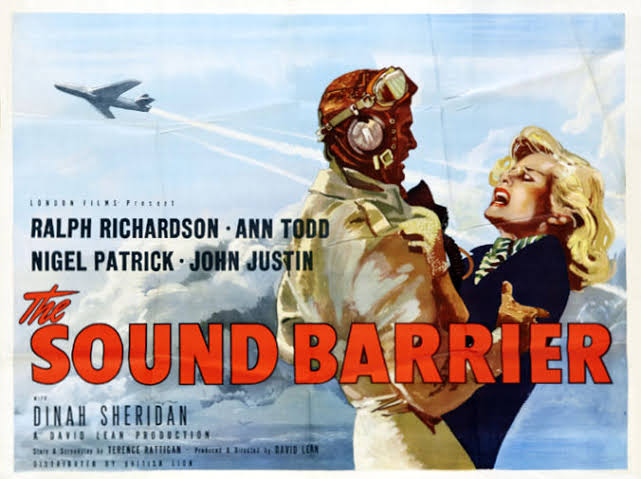
“The Sound Barrier” (1952)
Drama

Running Time: 117 minutes
Written by: Terence Rattigan
Directed by: David Lean
Featuring: Ralph Richardson, Ann Todd, Nigel Patrick, John Justin and Denholm Elliott
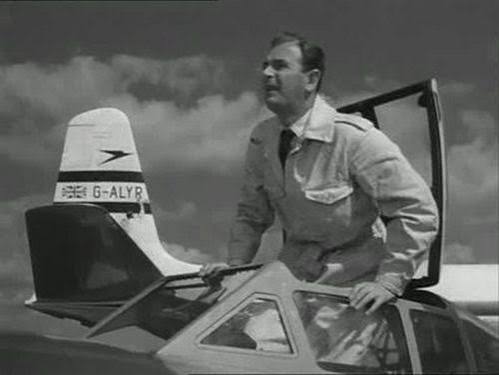
Tony Garthwaite: “What’s so ruddy peculiar about the speed of sound? We all know exactly what it is, don’t we? 750 miles per hour at ground level. Now if we go slower than that we can hear ourselves going, and if we go faster we can hear ourselves coming. It’s a mere matter of acoustics.”
Few filmmakers have explored the intersection of personal ambition and national identity as compellingly as David Lean, and while The Sound Barrier is often overshadowed by his later epics, this 1952 drama deserves recognition as one of the director’s most fascinating works. Released between The Passionate Friends and Hobson’s Choice, it represents a transitional period in Lean’s career, combining intimate character drama with spectacular technical filmmaking. This new Blu-ray finally gives the film the high-definition presentation it has long deserved, allowing modern audiences to appreciate both its visual splendour and its historical importance.
Inspired by the race to break the sound barrier in the years immediately following the Second World War, The Sound Barrier captures an era when aviation represented the very frontier of human achievement. Rather than simply telling a story of engineering triumph, Lean and playwright Terence Rattigan examine the emotional cost of relentless ambition, creating a thoughtful drama that remains surprisingly modern.
At its heart, The Sound Barrier is less about aircraft than about obsession. Industrialist John Ridgefield, played with commanding authority by Ralph Richardson, is determined to push British aviation to new heights regardless of the sacrifices required. Ridgefield embodies post-war Britain’s desire to remain at the forefront of technological innovation, yet his single-minded pursuit often blinds him to the emotional consequences of his decisions.
Richardson delivers one of the finest performances of his career. Rather than portraying Ridgefield as an outright villain, he presents a man convinced that progress inevitably demands sacrifice. His confidence borders on arrogance, but it is tempered by an unmistakable belief that he is serving a greater cause.
Opposite him, Nigel Patrick gives an equally impressive performance as Tony Garthwaite, the gifted test pilot willing to risk everything for aviation history. Patrick perfectly captures the mixture of courage, competitiveness and fatalism that defines professional test pilots. His calm exterior conceals the awareness that every flight could be his last.
Meanwhile, Ann Todd provides the emotional anchor as Susan Ridgefield, caught between loyalty to her father and love for her husband. Todd’s understated performance prevents the film from becoming merely a procedural account of technological progress. Through her, Lean reminds viewers that every scientific milestone leaves emotional casualties behind.
Even before his celebrated widescreen masterpieces, Lean had established himself as one of Britain’s greatest visual storytellers. The Sound Barrier demonstrates many of the stylistic qualities that would later define The Bridge on the River Kwai, Lawrence of Arabia, and Doctor Zhivago.
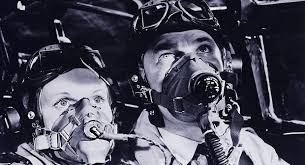
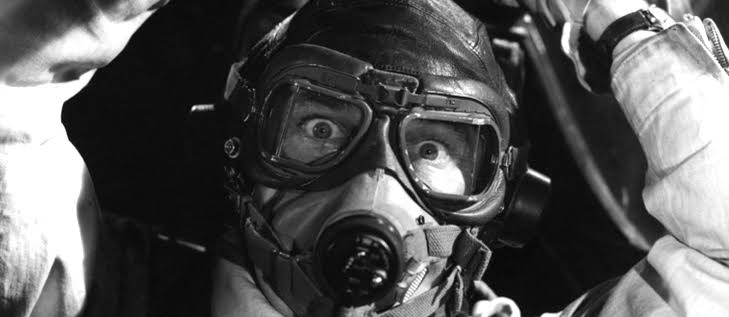
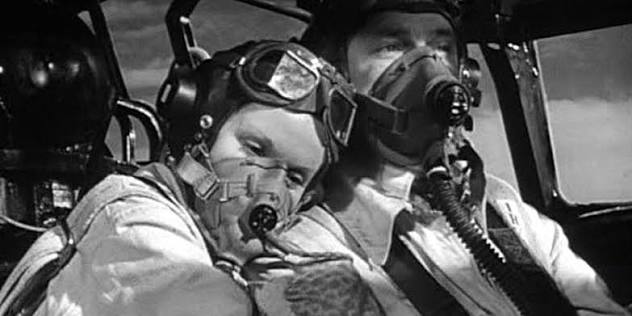
Lean brings remarkable intensity to scenes that largely consist of engineers discussing aerodynamics or pilots preparing for test flights. Every cockpit sequence builds suspense through careful editing, expressive close-ups and meticulous pacing.
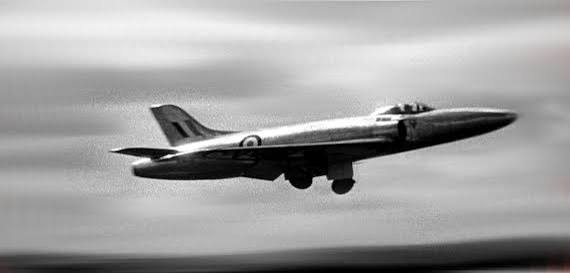
The flying scenes remain astonishing. Made decades before digital effects, they rely on genuine aircraft photography, detailed models and convincing practical effects that continue to impress. Lean understands exactly how to communicate speed, danger and exhilaration without overwhelming the audience.
The breaking of the sound barrier itself is presented not as spectacle for its own sake but as the culmination of years of sacrifice, experimentation and loss. This restraint gives the achievement greater dramatic weight.
Rattigan’s screenplay avoids simplistic hero worship. Instead, it asks uncomfortable questions about the ethics of progress.
How many lives should be risked in pursuit of scientific advancement?
Can ambition ever be separated from ego?
Does technological achievement justify personal tragedy?
These questions give the film lasting relevance. Although centred on early jet aviation, the themes resonate today in discussions surrounding space exploration, artificial intelligence and scientific experimentation.
The dialogue is characteristically intelligent without becoming inaccessible. Rattigan trusts audiences to engage with complex emotional and moral dilemmas rather than providing easy answers.
The supporting cast is uniformly excellent.
Denholm Elliott, in one of his early film roles, demonstrates the screen presence that would later make him one of Britain’s finest character actors.
John Justin and Joseph Tomelty also contribute memorable performances, creating believable professional relationships among pilots and engineers.
What makes the ensemble particularly effective is the authenticity of the interactions. These characters speak like professionals immersed in an extraordinary field rather than movie stereotypes.
One of the film’s greatest achievements lies in its convincing portrayal of aviation technology.
The cockpit interiors feel authentic.
The engineering discussions possess credibility.
The aircraft photography remains remarkably convincing.
Lean integrates documentary realism with dramatic storytelling so seamlessly that viewers become fully invested in every test flight.
Even seventy years later, many aerial sequences possess more genuine excitement than effects-heavy modern action films.
This Blu-ray presentation represents a significant improvement over previous home-video editions.
The black-and-white cinematography displays impressive clarity throughout. Fine textures in uniforms, aircraft surfaces and facial detail are consistently resolved, revealing craftsmanship that was often obscured on DVD.
Contrast is excellent, producing rich blacks without crushing shadow detail while maintaining bright highlights during exterior flying sequences.
Film grain appears natural and stable, preserving the cinematic appearance without excessive digital manipulation.
Damage has been reduced considerably. Minor speckles and occasional age-related imperfections remain, but these rarely distract from viewing and serve as reminders of the film’s vintage.
The restoration particularly benefits the aerial photography, where increased definition allows viewers to appreciate the complexity of the practical effects and location photography.
The mono soundtrack is presented with impressive clarity.
Dialogue remains consistently intelligible throughout.
Malcolm Arnold’s stirring musical score possesses surprising warmth and dynamic range considering the recording’s age.
Aircraft engines carry satisfying weight, and while modern surround enthusiasts should temper expectations, the sound faithfully represents the original theatrical experience.
Background hiss and distortion are kept to a minimum through sensitive restoration.
The Blu-ray offers a worthwhile collection of supplementary material exploring both the film’s production and its historical context.
Commentary tracks provide valuable insight into Lean’s evolving directorial style, while archival interviews help place the film within Britain’s post-war aviation industry.
Featurettes examining the real race to break the sound barrier deepen appreciation for the historical inspiration behind the drama.
Image galleries, trailers and booklet essays further enhance the package, making this an attractive release for collectors.
The Sound Barrier remains one of David Lean’s most underrated achievements. Overshadowed by his later epics, it nevertheless showcases many of the qualities that would make him one of cinema’s greatest directors: visual precision, emotional intelligence, superb performances and technical mastery.
Its thoughtful exploration of ambition, sacrifice and innovation feels every bit as relevant today as it did in 1952. The aerial photography continues to impress, the performances remain compelling, and Terence Rattigan’s screenplay provides genuine intellectual depth.
This Blu-ray finally presents the film with the respect it deserves. The excellent restoration highlights Lean’s meticulous craftsmanship, while the solid audio presentation and informative supplements make it a valuable edition for collectors.
For admirers of David Lean, British cinema, aviation history or intelligent post-war drama, this Blu-ray is highly recommended. It may not possess the sweeping scale of Lean’s later masterpieces, but in its own quieter, more introspective way, The Sound Barrier stands as one of the great British films of the 1950s—a compelling reminder that the greatest frontiers are often as much emotional as technological.