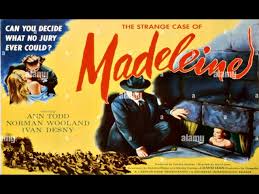
“Madeleine” (1950)
Drama

Running Time: 114 minutes
Written by: Ann Todd, Ivan Desny, Norman Wooland and Leslie Banks
Directed by: David Lean
Featuring: Ann Todd, Claude Rains and Trevor Howard
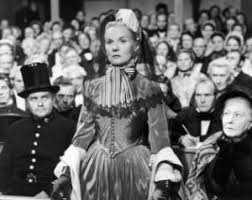
Scots Divine: “The wicked shall be destroyed! This daughter of a rich man in her devilry defied the most sacred laws of God and man. She dresses in purple and fine linen, but her heart is black, black with sin. “Vengeance is mine” said the Lord, and the retribution will be just upon this murderess, this daughter of Satan. Just! And merciless! Her she comes.”
There is a quiet confidence to Madeline (1950), a film that has gradually earned recognition as one of the finest British courtroom dramas of its era. Directed with remarkable sensitivity by David MacDonald and starring Ann Todd in one of her finest performances, the film recounts the infamous nineteenth-century Scottish murder case of Madeline Smith. More than seventy years after its original release, this elegant restoration on Blu-ray gives modern audiences an opportunity to rediscover a sophisticated and emotionally involving classic that deserves far more attention than it has traditionally received.
Unlike many crime films of its period, Madeline is less interested in sensationalising its notorious source material than examining the social conventions and emotional pressures that surrounded the case. Rather than focusing exclusively on the mystery itself, the screenplay explores themes of reputation, class, romance, and the impossible expectations placed upon women in Victorian society. The result is a drama that feels surprisingly modern in both its psychological depth and moral ambiguity.
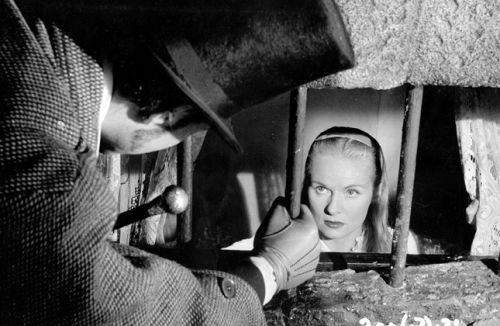
The story follows Madeline Smith, the daughter of a wealthy Glasgow family whose seemingly respectable life hides a secret romantic relationship with a lower-class clerk, Emile L’Angelier. As her family pressures her toward a more socially acceptable marriage, Madeline finds herself trapped between love, duty, and the rigid expectations of respectable society. When L’Angelier dies suddenly after being poisoned with arsenic, suspicion naturally falls upon Madeline, leading to one of Britain’s most famous murder trials.
One of the film’s greatest strengths is its refusal to provide easy answers. Historically, the real Madeline Smith was acquitted under the unique Scottish verdict of “Not Proven,” leaving the public to debate her guilt for generations. The film wisely embraces that ambiguity, allowing audiences to draw their own conclusions rather than forcing a definitive interpretation. That uncertainty gives the narrative a compelling tension that remains effective even for viewers already familiar with the historical outcome.
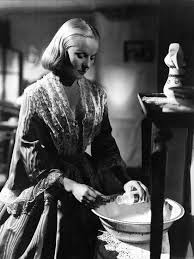
Ann Todd delivers an exceptional central performance. Few actresses of the period could communicate such emotional complexity through subtle facial expressions alone. Todd portrays Madeline as intelligent, vulnerable, determined and frightened—often all within the same scene. She avoids melodramatic excess, instead creating a nuanced portrait of a woman slowly losing control of her carefully ordered world.
What makes Todd’s work particularly impressive is the ambiguity she maintains throughout. Is Madeline an innocent victim of circumstance? A desperate woman making terrible decisions? Or something even more complicated? Todd never overplays any interpretation, allowing the audience to wrestle with these questions throughout the film.
The supporting cast is equally impressive. Norman Wooland brings an unsettling persistence to Emile L’Angelier, making him both sympathetic and increasingly obsessive as the relationship deteriorates. Meanwhile, Ivan Desny provides welcome warmth as Madeline’s respectable suitor, highlighting the impossible choice facing the heroine.
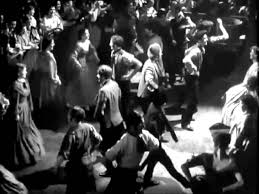
The screenplay carefully builds emotional pressure instead of relying on sudden twists. Conversations become psychological battlegrounds, social gatherings conceal hidden anxieties, and seemingly ordinary domestic scenes gradually accumulate dramatic weight. By the time the courtroom sequences arrive, the audience is already deeply invested in the characters rather than simply curious about the verdict.
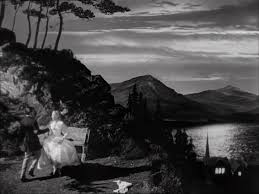
Visually, Madeline is a beautiful example of post-war British studio filmmaking. The black-and-white cinematography captures Victorian Glasgow with impressive richness and atmosphere. Interiors are elegantly lit, balancing refinement with an underlying sense of emotional confinement. Wealthy drawing rooms, shadowy streets and imposing courtrooms all contribute to a visual language that reflects the rigid social hierarchy governing every aspect of Madeline’s life.
Costume and production design deserve particular praise. The Victorian world feels authentic without becoming ostentatious. Every dress, piece of furniture and architectural detail enhances the illusion of period realism while reinforcing themes of appearance, status and respectability.
The courtroom scenes are especially effective because they avoid theatrical excess. Rather than turning the trial into a bombastic spectacle, the film presents the legal proceedings with measured restraint. This approach allows the testimony and emotional reactions of the characters to generate the drama naturally. The famous Scottish legal system, with its unique “Not Proven” verdict, becomes an integral part of the narrative rather than simply historical trivia.
Watching the film today, one is struck by how progressive some of its themes remain. The pressure placed upon women to maintain appearances, the destructive consequences of gossip, and the conflict between personal freedom and family expectation all resonate strongly with contemporary audiences. While unmistakably a product of 1950 British cinema, Madeline often feels decades ahead of its time in its treatment of female agency and social hypocrisy.
This Blu-ray presentation allows the film to shine as never before. The high-definition restoration preserves the crisp textures of the original photography while revealing fine detail often lost on previous home video editions. Close-ups benefit enormously from the increased resolution, particularly during Ann Todd’s subtle performance, where every glance and expression carries emotional significance.
Contrast is consistently excellent, with rich blacks and clean whites providing impressive depth throughout. Shadow detail remains strong during darker sequences, while the grayscale is beautifully balanced, allowing costumes and period interiors to display remarkable dimensionality. Grain reproduction appears natural and film-like, avoiding the excessive digital processing that sometimes affects catalogue releases.
The restoration also treats damage with admirable restraint. Dirt, scratches and print wear have been substantially reduced without sacrificing the organic character of the original photographic image. The result is a presentation that respects the film’s age while making it highly enjoyable for modern viewers.
Audio quality is equally satisfying. Dialogue remains consistently clear, an important consideration given the film’s emphasis on conversation and courtroom testimony. The musical score supports the drama without overwhelming it, and background effects retain an appropriate sense of atmosphere. While naturally limited by its original mono recording, the soundtrack has been cleaned effectively and serves the film well.
As is often the case with boutique Blu-ray releases devoted to classic British cinema, the supplementary features provide valuable historical context. Commentary tracks, archival interviews, image galleries and essays examining both the true Madeline Smith case and the film’s production deepen appreciation for the picture. These extras transform the release from a straightforward presentation into an excellent exploration of one of Britain’s most intriguing historical mysteries.
What perhaps surprises modern viewers most is just how mature Madeline feels. Many courtroom dramas from this era now appear stage-bound or overly theatrical, but Madeline maintains a natural dramatic rhythm. Its emphasis on psychology over spectacle gives it lasting power, while its refusal to simplify complex moral questions keeps the story engaging long after the final verdict.
Although it may lack the international reputation of some better-known British classics from the same period, Madelinestands comfortably alongside many of the finest dramas produced by the British film industry during the 1940s and 1950s. Its intelligent script, superb central performance, handsome production values and thoughtful direction combine to create an absorbing historical drama that rewards repeated viewing.
This Blu-ray release finally gives Madeline the presentation it has long deserved. Beautifully restored and presented with respect for its cinematic heritage, it serves as both an excellent introduction for newcomers and a welcome upgrade for longtime admirers. For collectors of classic British cinema, courtroom dramas or Victorian mysteries, this release is easy to recommend.



Leave a Reply