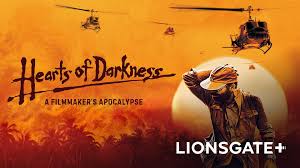
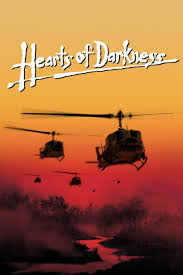
“Hearts of Darkness: A Filmmaker’s Apocalypse” (1991)
Documentary

Running Time: 96 minutes
Written by: Fax Bahr and George Hickenlooper
Directed by: Fax Bahr and George Hickenlooper
Featuring: Eleanor Coppola, Francis Ford Coppola, Robert Duvall, Dennis Hopper, George Lucas, John Milius and Martin Sheen
Francis Ford Coppola: “My greatest fear is to make a really shitty, embarrassing, pompous film on an important subject, and I am doing it. And I confront it. I acknowledge, I will tell you right straight from… the most sincere depths of my heart, the film will not be good.”
There are great documentaries, there are great films about filmmaking, and then there is Hearts of Darkness: A Filmmaker’s Apocalypse. More than three decades after its original release in 1991, this extraordinary chronicle of the making of Apocalypse Now remains one of the finest behind-the-scenes documentaries ever produced. The arrival of the film on standalone 4K Ultra HD Blu-ray is therefore more than just another catalogue release—it is the elevation of a documentary masterpiece to the same status long enjoyed by the film whose troubled production it chronicles.
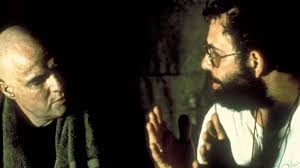
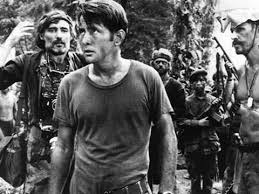
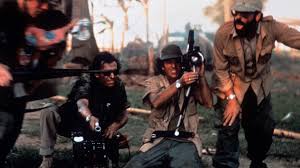
For anyone who loves cinema, Hearts of Darkness is essential viewing. It documents the chaotic, often catastrophic production of Francis Ford Coppola’s Vietnam epic, a shoot so plagued by disasters, delays, budget overruns, health crises and creative uncertainty that it threatened to destroy both the film and the filmmaker behind it. The documentary draws heavily from footage shot by Eleanor Coppola during production, combined with later interviews that reveal just how close the entire project came to collapse.
What makes the documentary so remarkable is that it is not merely a “making-of” feature. It becomes its own compelling drama. As Coppola struggles against impossible odds in the Philippines, the production itself begins to mirror the descent into madness depicted in Joseph Conrad’s Heart of Darkness and ultimately adapted into Apocalypse Now. The filmmaker becomes a protagonist trapped in his own epic journey, battling financial ruin, artistic doubt and mounting pressure from every direction.
Watching Hearts of Darkness today is still a jaw-dropping experience. Modern audiences are accustomed to polished studio productions and carefully managed publicity. What Eleanor Coppola captured feels startlingly raw and intimate. We witness Martin Sheen’s serious health problems, the endless delays caused by weather, Marlon Brando arriving unprepared, and Francis Ford Coppola openly questioning whether he is creating a masterpiece or a disaster.
The honesty is breathtaking.
There is a sense throughout that nobody involved knows whether Apocalypse Now will ever be finished. Coppola’s now-famous reflections about the production becoming a metaphor for the Vietnam War itself remain among the most revealing comments ever made by a major filmmaker. Rather than celebrating Hollywood glamour, the documentary exposes filmmaking as an act of obsession that can consume everyone involved.
The passage of time has only increased the film’s power. What may have once seemed like a fascinating production diary now feels like a priceless historical document. Many of the participants are no longer with us, and the documentary preserves their thoughts and experiences at a pivotal moment in film history. It captures an era when ambitious filmmakers could still gamble everything on a personal vision. As several modern reviewers have noted, productions of this scale are rarely undertaken in the same way today.
The headline attraction of this release is the new 4K restoration. Some collectors questioned whether a documentary assembled largely from 16mm footage could truly benefit from Ultra HD treatment. The answer, after viewing this release, is a resounding yes.
No restoration can completely transform source materials that are inherently rough and archival in nature, nor should it. The goal here is authenticity rather than artificial polish. The presentation preserves the documentary’s film-like appearance while extracting impressive levels of detail and stability from the original elements. Grain remains natural and consistent, textures appear stronger, and contrast is significantly improved.
The improvements are particularly noticeable in Eleanor Coppola’s original footage. Faces display more nuanced detail, jungle landscapes possess greater depth, and colour reproduction feels richer without becoming exaggerated. Blacks are deeper and more stable, helping to give the image a more cinematic appearance.
Importantly, the restoration respects the limitations of the source. Scratches, fluctuations and occasional imperfections remain visible in certain archival sections, but these elements are part of the historical record rather than flaws to be erased. The presentation strikes an admirable balance between preservation and enhancement.
This is not the sort of disc that will be used to demonstrate the capabilities of a new television. Instead, it demonstrates something more valuable: how sensitive restoration work can bring new life to historically important material.
The audio presentation serves the documentary well. Dialogue remains clear and intelligible throughout, which is crucial given the film’s interview-heavy structure. The various recordings, ranging from production sound to later interviews, are blended effectively while maintaining their original character.
The soundtrack does not aim for immersion or spectacle. Instead, it provides a faithful reproduction of the documentary’s eclectic audio sources. Music, narration and production recordings coexist naturally, creating a cohesive listening experience that supports the narrative without drawing attention to itself.
Collectors will be pleased that the standalone release is accompanied by a substantial collection of supplementary material. Various editions include archival interviews, documentaries, featurettes and newly produced content that further explores both the creation of Apocalypse Now and the legacy of Hearts of Darkness itself. Several releases also feature extensive physical extras and collector-oriented packaging.
Particularly fascinating are the retrospective pieces that place the documentary in context. What was once viewed as an extraordinary account of a troubled production has become recognised as one of the most important documentaries ever made about filmmaking. The supplements help illuminate why its reputation has only grown over time.
One of the most striking aspects of revisiting Hearts of Darkness today is how many viewers regard it as equal to—or even better than—the film it documents. That sentiment frequently appears among cinephiles and film historians, and it is easy to understand why. The documentary possesses the same themes of obsession, ambition and madness that define Apocalypse Now, but presents them in a form that feels startlingly real.
It is also a powerful tribute to Eleanor Coppola, whose footage and persistence made the project possible. Without her extraordinary documentation, one of cinema’s greatest stories would have remained largely untold. The documentary stands as both a companion piece to Apocalypse Now and a major artistic achievement in its own right.
Hearts of Darkness: A Filmmaker’s Apocalypse remains one of the greatest documentaries ever made and one of the most fascinating examinations of artistic creation ever captured on film. The 4K restoration gives this landmark work the presentation it deserves, preserving its rough-hewn authenticity while revealing new levels of visual detail and clarity.
For fans of Apocalypse Now, the release is indispensable. For film students, it is practically required viewing. And for anyone interested in the creative process, it offers a gripping, often terrifying reminder of what can happen when artistic ambition collides with reality.


Leave a Reply