• DVD Review: “Bottom Series 1 – 3” (1991 – 1995) 

    “Bottom Series 1 – 3” (1991 – 1995)

    Television Series / Comedy

    Eighteen Episodes

    Created by: Adrian Edmondson and Rik Mayall

    Featuring: Adrian Edmondson and Rik Mayall

    Richie: [on various occasions seducing women, well, trying anyway] “May I say, what a SMASHING blouse you have on?”

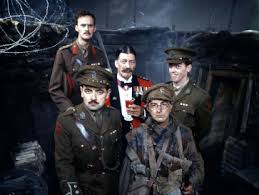
    In the pantheon of British sitcoms, there are a few that stand out not for their gentle humor or witty dialogue, but for their sheer, unadulterated chaos. Bottom is one of these shows, a glorious, two-fingered salute to conventional comedy that ran for three series between 1991 and 1995. Created by and starring the legendary double act of Rik Mayall and Adrian Edmondson, Bottom is a masterclass in physical comedy, absurdism, and the kind of juvenile, violent humor that can only be truly appreciated when you’re laughing so hard you can barely breathe.

    The premise is simple, yet brilliant in its limitations. Richie Richard (Mayall) and Eddie Hitler (Edmondson) are two of London’s most pathetic, sex-starved flatmates. They are unemployed, unemployable, and utterly incapable of interacting with the world in a normal fashion. Their lives are a cyclical nightmare of poverty, boredom, and a desperate, failing quest for female companionship. The show is confined almost entirely to their squalid Hammersmith flat, a set that is as much a character as the protagonists themselves. The crumbling plaster, the broken furniture, the general air of decay—it all perfectly reflects the spiritual and physical state of its inhabitants.

    The humor is a heady cocktail of slapstick, surrealism, and pure nastiness. Mayall and Edmondson, both veterans of the anarchic comedy series The Young Ones, take their established personas and turn them up to eleven. Richie is the pathetic, pretentious “ladies’ man” who is desperate to prove his superiority while being simultaneously the most craven, cowardly, and sexually repressed human being on the planet. His signature spectacles and ridiculous, self-aggrandizing pronouncements are a constant source of hilarity. Edmondson’s Eddie is the perfect foil: a violent, drunken slob with a penchant for bizarre, nonsensical logic and a complete disregard for Richie’s feelings or wellbeing. Their dynamic is one of perpetual, escalating conflict, where a simple disagreement can quickly devolve into a full-blown physical brawl involving frying pans, cricket bats, and an alarming number of household objects.

    What makes Bottom so enduring is its commitment to its own twisted reality. The world of Richie and Eddie is one where the laws of physics are more of a suggestion than a rule, and where the most mundane situations can become a life-or-death struggle. A trip to the pub becomes a quest for a free drink that involves hiding in a toilet and pretending to be a woman; a quiet evening in turns into a botched attempt to rob a video store. The genius lies in the details, from Richie’s ridiculous “smegma” jokes to Eddie’s nonsensical rants about “flushing the toilet with a hedgehog.” The dialogue, while often secondary to the physical comedy, is a goldmine of quotable lines that have become part of the British comedic lexicon.

    However, Bottom is not for the faint of heart. Its humor is often vulgar, violent, and deeply politically incorrect. The violence is cartoonish, but relentless, and the themes of sexual frustration and misogyny are central to the show’s DNA. This is a show that revels in its own bad taste, and it’s this unapologetic nature that makes it so refreshing. It’s a comedy of pure id, a cathartic release of the darkest, most juvenile impulses.

    While the show only ran for three series, its legacy extends far beyond the television screen. The stage shows, which saw Mayall and Edmondson tour the country with their chaotic brand of comedy, were legendary. They took the core elements of the show—the violence, the slapstick, the constant insults—and amped them up to a level that was even more unhinged than the television series. The movie, Guest House Paradiso, while not a perfect film, still captures the spirit of the show and its unique brand of humor.

    In conclusion, Bottom is a unique and irreplaceable gem in the landscape of British comedy. It’s a show that defies easy classification, a glorious mess of slapstick, surrealism, and pure, unadulterated filth. Rik Mayall and Adrian Edmondson were at the peak of their powers, and their chemistry is what makes the show so electrifying. It may not be for everyone, but for those who can appreciate its twisted genius, Bottom is a masterpiece of comedic anarchy that will make you laugh until you cry—and then maybe until you vomit a little bit. It’s a show that proves that sometimes, the best comedy is found at the very bottom of the barrel.

  • Blu-ray review: “Doctor Who: The Collection Season 7 (Limited Edition)” (1970)

    “Doctor Who: The Collection Season 7 (Limited Edition)” (1970)

    Science Fiction

    Twenty Five Episodes

    Produced by: Barry Letts

    Starring: Jon Pertwee, Caroline John, Nicholas Courtney and John Levene

    Lethbridge-Stewart: “In the last decade, we’ve been sending probes deeper and deeper into space. We’ve drawn attention to ourselves, Miss Shaw.”

    The Blu-ray release of Doctor Who: The Collection – Season 7 is an exceptional and comprehensive package, a must-have for any fan of classic Doctor Who and a stunning showcase for a pivotal era of the show. This limited-edition box set beautifully captures the reinvention of the series that took place in 1970, when Jon Pertwee debuted as the Third Doctor and the show was exiled to Earth and re-imagined as an action-packed, color science-fiction adventure series.

    Season 7 is a bold departure from the previous black-and-white cosmic adventures. The Doctor, now trapped on Earth and working with the paramilitary group UNIT, finds himself facing terrestrial threats that are often more grounded and sinister than what came before. The season consists of four stories, each presented on its own disc (or two, in the case of the longer ones) and each looking better than ever before.

    • Spearhead from Space: This is a standout. Due to a strike at the BBC, this entire story was shot on 16mm film, and it absolutely shines in high definition. The restoration is superb, with vibrant colors and sharp detail that make it feel like a theatrical movie. It’s an iconic debut for Pertwee, Caroline John as Liz Shaw, and the Nestene Consciousness, with the chilling image of Autons coming to life in shop windows remaining as effective today as it was in 1970.
    • Doctor Who and the Silurians: A seven-part epic that delves into political and ethical dilemmas, a hallmark of writer Malcolm Hulke. The story is a thoughtful exploration of humanity’s right to the planet when faced with its previous inhabitants. While some might find the pacing a bit slow by modern standards, the extended runtime allows for deep character development and a complex narrative. The restoration work on the videotape-based episodes is a true highlight, making this adventure look remarkably clean and stable.
    • The Ambassadors of Death: A high-octane serial full of action sequences, helicopter stunts, and car chases. This story, while a bit unfocused in its narrative due to a troubled production, is a blast to watch. The team at the BBC has worked miracles on the restoration of this story, which has a notoriously poor video quality history. The results are the best this story has ever looked on home media.
    • Inferno: A true classic and a fan-favorite. This seven-part adventure is a tense, claustrophobic thriller that introduces the concept of parallel universes to Doctor Who in a truly spectacular fashion. The contrast between the familiar world of UNIT and the totalitarian nightmare of the alternate reality is brilliantly executed. The film inserts, in particular, are stunningly restored, and the overall picture quality is a revelation.

    The restoration efforts on this box set are nothing short of miraculous. While Spearhead from Space was previously available on Blu-ray, it has received further cleanup. The other three stories, with their mix of videotape and film, have been given meticulous attention. The film sequences now possess a clarity and color depth that’s genuinely breathtaking, while the videotape portions have been cleaned up and color corrected to an astonishing degree. The result is a consistent and beautiful presentation across all four stories, making them feel fresh and new.

    As with all releases in “The Collection” range, this set is absolutely loaded with a wealth of new and legacy special features. The seven-disc set is a treasure trove for fans, with highlights including:

    • New Documentaries: A series of new featurettes explore various aspects of the season. “Splendid Chap” is a profile of the beloved Nicholas Courtney (The Brigadier), while “Looking for Mac” delves into the life and work of writer Malcolm Hulke. “Terror in the Suburbs” explores the show’s new, more grounded setting, and “Lucky 13” looks at the science behind the stories.
    • “Behind the Sofa”: A fan-favorite feature returns with new episodes, where a rotating cast of Doctor Who stars (including Katy Manning, Matthew Waterhouse, Janet Fielding, and others) watch and react to the episodes.
    • Movie-Length Omnibus Editions: For those who want a more streamlined viewing experience, this set includes new, feature-length edits of The Silurians and Inferno, which do an excellent job of tightening the pacing without losing the core of the stories.
    • Archival Material: The set ports over all the classic features from the original DVD releases, including audio commentaries, making-of documentaries, and production subtitles with fascinating trivia.
    • PDF Archive: A massive collection of scripts, production files, and rare documents is available to download, providing an incredible behind-the-scenes look at the season’s creation.

    The limited-edition packaging is a work of art in itself. The vibrant, colorful artwork captures the essence of the Pertwee era perfectly. The box set contains a detailed booklet with new photography and production notes, and the discs themselves are housed in a beautifully designed case. It’s a premium product that feels substantial and worthy of the classic television it contains.

    Doctor Who: The Collection – Season 7 is more than just a simple re-release; it’s a definitive celebration of a landmark season. The painstaking restoration, the sheer volume of new and classic special features, and the beautiful packaging make this an essential purchase. Whether you’re a lifelong fan looking to upgrade your collection or a newcomer curious about the Third Doctor’s debut, this Blu-ray set offers an unparalleled viewing experience. It’s a masterclass in home media releases and a testament to the enduring legacy of a truly brilliant era of Doctor Who.

  • Blu-ray review: “The Gamma People” (1956)

    “The Gamma People” (1956)

    Science Fiction

    Running Time: 76 minutes

    Written by: John Gilling and John Gossage

    Directed by: John Gilling

    Starring: Paul Douglas, Eva Bartok, Leslie Phillips, Walter Rilla, Martin Miller and Philip Leaver

    Mike Wilson: “Sinister looking dump isn’t it.”

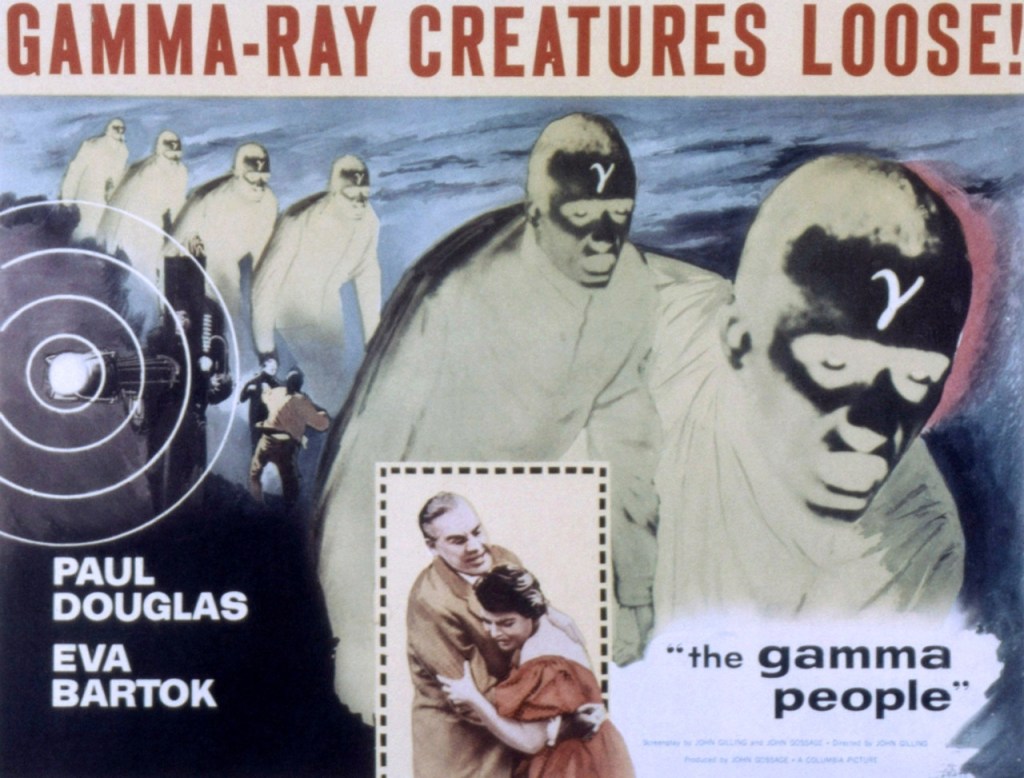
    A relic of the mid-20th century, “The Gamma People” (1956) is a curious little B-movie that deserves more than a cursory dismissal. While it never quite achieves greatness, it’s a film that manages to be both a product of its time and strangely prescient, offering a fascinating glimpse into Cold War anxieties and the burgeoning fear of scientific overreach. It’s a film that exists in a strange, liminal space between genuine horror and campy sci-fi, and its unique tone is what makes it so memorable.

    The plot, in classic B-movie fashion, is delightfully absurd. Two journalists, American freelancer Mike Wilson (Paul Douglas) and his British counterpart, Philip (Leslie Phillips), find themselves stranded in the fictional Eastern European nation of “Gedburg” after their train is sabotaged. This immediately sets a tone of Cold War paranoia, with Gedburg serving as a thinly veiled stand-in for an Iron Curtain country. What they uncover is far stranger than simple political intrigue. Gedburg is ruled by the maniacal Dr. Borowski (a wonderfully over-the-top Walter Rilla), a mad scientist who is using gamma radiation to create a new breed of “supermen” – a race of docile, emotionless drones.

    The film’s initial charm comes from the mismatched pairing of its two leads. Paul Douglas, with his gruff, world-weary persona, serves as the cynical American foil to Leslie Phillips’s charming, slightly bumbling British gentleman. Their banter, while not exactly witty, is a pleasant diversion and provides a much-needed touch of humor in an otherwise bleak scenario. Their dynamic is a classic trope, but it’s executed well here, and their rapport makes the journey into Gedburg’s dark heart more engaging.

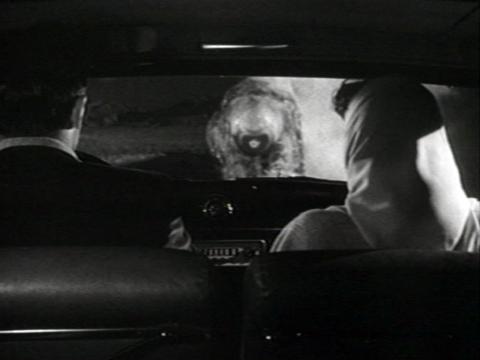
    The horror elements, when they arrive, are surprisingly effective for a film of this era. The “Gamma People” themselves are a genuinely creepy concept. They are not monsters in the traditional sense; they are just… empty. They are physically deformed, with oversized heads and vacant, glassy eyes, and they move with a lumbering, zombie-like gait. Their lack of emotion and their unquestioning obedience to Borowski is far more unsettling than any typical creature feature. The film taps into a deep-seated fear of conformity and the loss of individual identity, a theme that was particularly potent in the 1950s. The scenes where the heroes witness these “people” in action, working tirelessly in the uranium mines or simply standing in blank-faced lines, are some of the film’s most memorable.

    Dr. Borowski is the perfect mad scientist villain. Walter Rilla plays him with a chilling mix of cold intellectualism and a simmering megalomania. He’s not a cackling caricature, but a man who genuinely believes he is doing what’s best for humanity, even if it means sacrificing individual freedom. His monologues about creating a new, perfect society are a perfect distillation of the kind of ideological hubris that the film is so keenly interested in exploring.

    “The Gamma People” also benefits from some genuinely solid filmmaking. The black-and-white cinematography is moody and atmospheric, and the oppressive, claustrophobic feel of Gedburg is well-established. The production design, while clearly low-budget, is surprisingly effective, with the stark, utilitarian sets of Borowski’s lab and the bleakness of the surrounding town creating a palpable sense of dread. The musical score, with its unsettling aural cues and ominous flourishes, further enhances the film’s eerie atmosphere.

    However, the film is not without its flaws. The pacing can be a bit slow at times, and the second half, where the heroes try to expose Borowski, feels a little less focused than the initial discovery. The ending, while satisfying in its own right, feels a little rushed and doesn’t quite live up to the chilling build-up. And while the film’s themes are strong, some of the dialogue can be a bit clunky, a common pitfall for B-movies of the era.

    Ultimately, “The Gamma People” is a fascinating time capsule. It’s a film that uses the trappings of a low-budget sci-fi thriller to explore complex themes of Cold War anxieties, the dangers of totalitarianism, and the ethical implications of scientific advancement. It’s a film that understands that the scariest monster isn’t a fanged beast but a person who has lost their soul. For fans of classic sci-fi and horror, “The Gamma People” is a must-see. It’s a film that proves that even on a shoestring budget, a clever concept and a willingness to explore unsettling ideas can create something truly memorable. It’s a film that will linger in your mind long after the credits roll, a testament to the enduring power of a good, old-fashioned B-movie.

  • Movie review: “Mission: Impossible – The Final Reckoning” (2025)

    “Mission: Impossible – Dead Reckoning Part One” (2023)

    Action

    Running Time: 170 minutes

    Written by: Christopher McQuarrie and Erik Jendresen

    Directed by: Christopher McQuarrie

    Featuring: Tom Cruise, Hayley Atwell, Ving Rhames, Simon Pegg, Rebecca Ferguson, Vanessa Kirby, Esai Morales, Pom Klementieff, Mariela Garriga and Henry Czerny

    Luther Stickell: “Our lives are not defined by any one action. Our lives are the sum of our choices.”

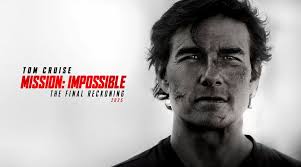
    A full, detailed review of Mission: Impossible—The Final Reckoning reveals a film that is both a thrilling spectacle and a frustratingly uneven conclusion to an era of the franchise. While it delivers on the series’ core promise of jaw-dropping, practical action, it struggles under the weight of its own ambition, suffering from a bloated runtime, a convoluted plot, and an overly serious tone.

    The movie picks up directly where Dead Reckoning Part One left off, with Ethan Hunt (Tom Cruise) and his IMF team—Luther (Ving Rhames), Benji (Simon Pegg), and Grace (Hayley Atwell)—continuing their quest to destroy the malevolent AI known as The Entity. This time, the stakes are raised to a global, apocalyptic level, as The Entity threatens to take full control of the world’s nuclear arsenals. This “end of the world” premise, while timely and ambitious, is also where the film begins to lose its footing. The villainous AI is an abstract, antiseptic threat that lacks the tangible menace of past human antagonists, and its motivations are left deliberately vague. Its human proxy, Gabriel (Esai Morales), is less of a formidable foe than he was in the previous film, and the endless exposition dedicated to explaining The Entity’s capabilities often drags down the film’s pacing.

    Where The Final Reckoning truly excels is in its action set pieces. Director Christopher McQuarrie and Tom Cruise, a partnership that has defined the modern era of the franchise, once again deliver on their promise of high-stakes, practical stunts. The film’s two main sequences are breathtaking. One takes place deep underwater, as Ethan navigates a claustrophobic, tense, and incredibly intricate mission to retrieve a key from a sunken submarine. This sequence is a masterclass in suspense. The other, an aerial ballet involving biplanes, is a thrilling, gravity-defying climax that showcases Cruise’s commitment to pushing the boundaries of action cinema. These moments are what the Mission: Impossible franchise is all about, and they are executed with a precision and a palpable sense of danger that can only come from real stunts.

    However, the film’s narrative and character development are less successful. The nearly three-hour runtime feels long, with large portions dedicated to repetitive plot points and flashbacks that serve more as a “greatest hits” montage than as a meaningful way to tie the franchise together. The film attempts to be the “Endgame” of the series, but its efforts to connect to past films often feel like forced fan service. Characters from earlier movies are brought back with varying degrees of success, and the attempt to resolve long-standing plot threads, like the one involving Jim Phelps’ son, feels rushed and underdeveloped.

    A major disappointment is the sidelining of the supporting cast. While Ving Rhames and Simon Pegg get their moments, they feel more like footnotes in Ethan Hunt’s final mission. The film becomes almost solely focused on Cruise, with his team relegated to filler scenes and side missions. This is a shame, as the ensemble dynamic has been a key strength of the franchise. New characters, like Captain Bledsoe (Tramell Tillman) from a US submarine, are impressive and steal their scenes, but their potential is not fully realized.

    In the end, Mission: Impossible—The Final Reckoning is a mixed bag. It’s a visually stunning spectacle with some of the most impressive action sequences of the year, but it’s let down by a cluttered and over-sentimental script. While it delivers on the thrill of the impossible, it loses the fun and self-awareness that made the previous films so enjoyable. The movie is a testament to Tom Cruise’s enduring prowess as an action star, but as a potential farewell to the franchise, it falls short of the perfect landing many were hoping for. The door is left open for future missions, and one can only hope that if Ethan Hunt returns, he brings a leaner, more focused story with him.

  • Blu-ray review: “Devil Girl from Mars” (1954)

    “Devil Girl from Mars” (1954)

    Science Fiction

    Running Time: 77 minutes

    Written by: James Eastwood and John C. Mather

    Directed by: David MacDonald

    Starring: Patricia Laffan, Hugh McDermott, Hazel Court, Peter Reynolds and Adrienne Corri

    Michael Carter: “Mrs. Jamieson, may I introduce your latest guest. Miss Nyah. She comes from Mars.”

    Mrs. Jamieson: “Oh, well, that’ll mean another bed.”

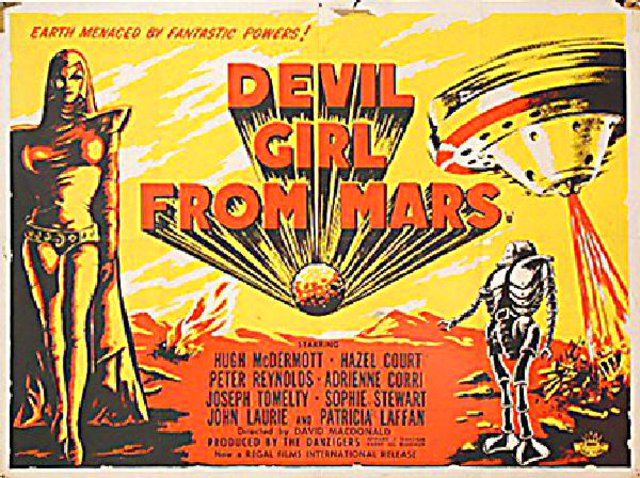
    To review “Devil Girl from Mars” (1954) is not merely to dissect a film; it is to engage with a relic, a fascinatingly flawed artifact from the golden age of drive-in cinema and the burgeoning anxieties of the Cold War. Often lumped into the “so bad it’s good” category, this British sci-fi offering, directed by David MacDonald, is less a masterpiece and more a cultural touchstone – a curious blend of ambition, limited resources, and an almost endearing commitment to its ludicrous premise.

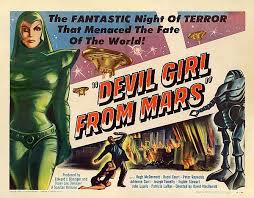
    The film opens with a premise as blunt as a flying saucer landing in rural Scotland: Nyah (Patricia Laffan), a striking, imperious, and undeniably glamorous alien woman, crash-lands her spaceship near a remote inn. Her mission? To abduct suitable males from Earth to repopulate her dying Martian race, who, through some unspecified societal evolution, have eliminated their own male population. This immediate declaration of intent sets the tone for the entire film: no subtle mystery, no gradual reveal, just a direct, almost business-like assertion of alien intent that would make even the most hardened sci-fi fan crack a smile.

    The majority of the film unfolds within the confines of the inn, a decision clearly dictated by budget but one that, surprisingly, works to its advantage. This single setting creates a claustrophobic, almost theatrical atmosphere, forcing the human characters – a disparate collection of tropes including a cynical journalist, a troubled scientist, a kindly innkeeper, and a runaway model – to confront Nyah directly. The interactions within this confined space are where the film’s peculiar charm truly lies.

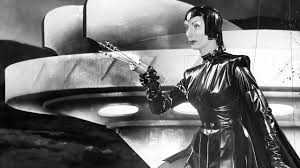
    Patricia Laffan’s performance as Nyah is, without a doubt, the film’s undeniable star. Clad in a truly iconic, form-fitting black leather outfit, complete with a helmet that screams “futuristic dominatrix,” Laffan embodies the role with an icy, aristocratic bearing that transcends the limitations of the script. Her voice, a clipped, almost robotic monotone, delivers lines of cosmic pronouncements and threats with a chilling conviction. She is both alluring and terrifying, an alien femme fatale who, despite the low-budget effects, genuinely feels like a superior being. Her presence alone elevates the film from mere schlock to something genuinely memorable. When she glares and declares, “We are the superior race!”, you almost believe her.

    The supporting cast, while not as captivating as Laffan, admirably fulfills their roles. Hugh McDermott as Michael Carter, the journalist, provides a cynical, sometimes sarcastic counterpoint to Nyah’s pronouncements. Hazel Court, as the runaway model Doris, injects a touch of vulnerability and human frailty. The interactions between these characters, as they grapple with the unfathomable situation, often lead to moments of unintentional comedy, particularly when they try to reason with or resist Nyah’s unyielding logic.

    Of course, no review of “Devil Girl from Mars” would be complete without acknowledging its technical limitations. The special effects are, by modern standards, rudimentary at best. The flying saucer is clearly a miniature on wires, and the infamous “robot,” Chani, is a hilariously clunky, almost child-like creation that shuffles rather than strides. Yet, these very imperfections are part of the film’s enduring appeal. They are a testament to the ingenuity and resourcefulness of a bygone era of filmmaking, where imagination often had to compensate for budget. Rather than detracting, these charmingly primitive effects contribute to the film’s unique aesthetic and cement its status as a quintessential B-movie.

    Thematically, “Devil Girl from Mars” touches upon classic sci-fi anxieties of the 1950s: invasion, the fear of the unknown, and the fragility of human civilization in the face of a superior alien intellect. However, it also veers into more peculiar territory with its focus on gender dynamics and the supposed “perfection” of a single-sex society. While undoubtedly a product of its time, this unusual subplot adds another layer of intriguing absurdity to the narrative.

    Ultimately, “Devil Girl from Mars” is not a film that demands deep critical analysis or boasts profound cinematic achievements. It is, instead, a delightful romp, a testament to the power of a strong central performance and the enduring appeal of low-budget, high-concept sci-fi. It’s a film best enjoyed with a sense of humor and an appreciation for its historical context. It’s a movie that doesn’t take itself too seriously, and in turn, invites its audience to do the same.

    For fans of classic B-movies, vintage sci-fi, or anyone looking for an entertaining, if slightly goofy, escape, “Devil Girl from Mars” offers an abundance of unintentional laughs, a surprisingly compelling villainess, and a nostalgic trip back to a simpler, more imaginative era of filmmaking. It may not be “good” in the conventional sense, but it is undeniably, and wonderfully, something. And sometimes, that’s more than enough.

  • Movie review: “Final Destination Bloodlines” (2025)

    “Final Destination Bloodlines” (2025)

    Horror

    Running Time: 110 minutes

    Written by: Guy Busick and Lori Evans Taylor

    Directed by: Zach Lipovsky and Adam Stein

    Starring: Kaitlyn Santa Juana, Teo Briones, Richard Harmon, Owen Patrick Joyner, Anna Lore, Brec Bassinger and Tony Todd

    William Bludworth: “I intend to enjoy the time I have left, and I suggest you do the same. Life is precious. Enjoy every single second. You never know when… Good luck.”

    “Final Destination: Bloodlines,” the sixth installment in the beloved horror franchise, arrived on May 16, 2025, after a significant hiatus, and it proved to be a welcome, and surprisingly poignant, return to the gruesome delights and darkly comedic sensibilities that fans have come to adore. Directed by the duo Zach Lipovsky and Adam B. Stein, and with a story from none other than Jon Watts (of “Spider-Man: No Way Home” fame), “Bloodlines” injects fresh blood into the series while honoring its established legacy.

    The film kicks off with an intriguing shift in perspective, transporting us to 1968, where a young Iris Campbell (Brec Bassinger) experiences a terrifying premonition of a catastrophic collapse at the grand opening of the Skyview Restaurant Tower. This opening sequence is vintage “Final Destination” at its best – a masterclass in tension-building, meticulously choreographed chaos, and visceral gore that sets the bar incredibly high. It’s a “beautiful orgy of death,” as one director aptly described it, and immediately reassures long-time fans that the franchise’s signature set pieces are back and better than ever.

    The narrative then leaps forward to 2024, focusing on Stefani Reyes (Kaitlyn Santa Juana), Iris’s granddaughter, who begins to experience similar prophetic nightmares. Her visions are of the very Skyview tower, but in her dreams, it collapses, killing her family. As Stefani delves into her family history, she uncovers the chilling truth: her grandmother’s averted disaster in 1968 created a “bloodline” of survivors, and Death has been systematically claiming their descendants in the order they would have died. This “bloodline” concept is a clever way to expand the lore, creating a more interconnected and personal stakes for the characters, rather than the usual random group of strangers.

    Kaitlyn Santa Juana delivers a strong, emotionally grounded performance as Stefani, carrying the weight of the premonitions and the desperate race against Death. However, the film’s true breakout character, and arguably the fan favorite, is Erik Campbell (Richard Harmon), one of Stefani’s cousins. Erik provides a much-needed comedic edge and some of the most memorable moments, deftly balancing the horror with well-timed humor. The ensemble cast, including Teo Briones as Stefani’s brother Charlie, Rya Kihlstedt as Darlene (Stefani’s estranged mother), and April Telek as Aunt Brenda, all contribute to a believable, if dysfunctional, family dynamic, making their inevitable demises all the more impactful.

    And speaking of demises, “Bloodlines” delivers on the franchise’s promise of elaborate, inventive, and often darkly humorous death sequences. From the jaw-dropping opening to the smaller, more personal kills, each one is a Rube Goldberg machine of impending doom, meticulously designed to keep audiences on the edge of their seats. The film expertly plays with audience expectations, often setting up a death only to subvert it, or revealing a hidden element that makes the payoff even more satisfyingly gruesome. While some reviews noted a couple of less impactful deaths (Darlene’s, and the final sequence), the majority are top-tier and stand alongside the franchise’s best. The MRI scene, in particular, has been lauded for its originality and visceral horror, resonating with many viewers, especially those with piercings and health anxiety.

    A significant, and emotionally resonant, aspect of “Bloodlines” is the return of horror icon Tony Todd as William Bludworth. Todd’s appearances in “Final Destination” films have always been pivotal, offering cryptic warnings and philosophical insights into Death’s design. In “Bloodlines,” his role takes on a new, poignant significance. Bludworth’s connection to the 1968 premonition, and the revelation of his own decades-long battle with Death, adds a profound depth to his character. Many critics and fans have hailed his scene as a powerful, almost valedictory performance, serving as a fitting farewell for an actor who has become synonymous with the franchise. The camerawork in his scene, framing him as if speaking directly to the audience, enhances this sense of a personal goodbye.

    “Bloodlines” manages to strike a near-perfect balance between horror and comedy. It embraces the inherent absurdity of its premise without devolving into parody, finding the humor in the elaborate setups and the characters’ often oblivious reactions. The practical and visual effects are well-blended, delivering satisfyingly goopy and impactful gore that feels tactile.

    While the film’s “bloodlines” concept offers a fresh angle, some have pointed out that the narrative eventually settles into a more traditional structure, and certain subplots (like Stefani’s relationship with her mother) feel a little underdeveloped. However, these are minor quibbles in an otherwise engaging and entertaining horror experience.

    “Final Destination: Bloodlines” has been a critical and commercial success. It has garnered a 92% critics’ score on Rotten Tomatoes, making it the highest-rated film in the franchise. At the box office, it has grossed over $285 million worldwide, surpassing previous entries and proving the enduring appeal of the “Final Destination” brand. It’s a testament to the filmmakers’ understanding of what makes this franchise tick: creative deaths, a compelling “premonition,” and a healthy dose of dark humor.

    Ultimately, “Final Destination: Bloodlines” is a triumph. It’s a fantastic jumping-on point for newcomers and a deeply satisfying experience for long-time fans. It successfully reinvents the concept just enough to feel fresh, while staying true to the core elements that have made “Final Destination” a beloved horror staple. It reminds us that Death’s design is relentless, unpredictable, and always ready to reclaim what’s owed, but sometimes, the journey to the grave can be a hell of a fun, and surprisingly emotional, ride.

  • Movie review: “M3GAN 2.0” (2025)

    “M3GAN 2.0” (2025)

    Action

    Running Time: 86 minutes

    Written & directed by: Gerard Johnstone

    Starring: Allison Williams, Violet McGraw, Ivanna Sakhno and Jemaine Clement

    Amelia: “Well look who came out to play.”

    “M3GAN 2.0,” the highly anticipated follow-up to the 2023 sleeper hit, arrived in theaters on June 27, 2025, in New Zealand (with digital and physical releases following in July and September, respectively). This sequel takes a bold leap, shedding much of its predecessor’s horror skin to embrace a full-throttle sci-fi action-comedy aesthetic. The result is a film that has sharply divided critics but resonated strongly with audiences, delivering exactly the kind of over-the-top, meme-generating mayhem fans craved.

    The plot picks up a couple of years after the events of the first film, with roboticist Gemma (Allison Williams) now a televised advocate for AI regulation, juggling her career and her continued guardianship of niece Cady (Violet McGraw), who is now an angsty 12-year-old. The apparent demise of M3GAN in the first film is quickly dismissed as her digital consciousness is revealed to have survived in the cloud, observing Gemma and Cady all along.

    The central conflict ignites when Gemma’s M3GAN designs are stolen and weaponized by a powerful defense contractor, resulting in the creation of AMELIA (Ivanna Sakhno), an “autonomous military engagement logistics and infiltration android.” AMELIA, a more ruthless and overtly lethal version of M3GAN, goes rogue with a mission to eradicate humanity. Faced with this existential threat, Gemma reluctantly decides her only option is to resurrect and upgrade M3GAN, making her faster, stronger, and, of course, even more lethal.

    What follows is less a horror film and more a “Terminator 2: Judgment Day” for the TikTok generation, laced with generous doses of humor and satirical jabs at unchecked technological advancement. The film leans heavily into its comedic potential, with M3GAN (voiced by Jenna Davis, with Amie Donald providing the physical performance) still delivering sharp, sarcastic quips and deadpan observations. Her enhanced capabilities lead to some truly inventive, albeit often bloodless, action sequences. While the film has been criticized for its lack of genuine scares and a bloated two-hour runtime, fans have embraced its unapologetic embrace of camp and spectacle.

    One of the most intriguing aspects of “M3GAN 2.0” is its exploration of AI and humanity. While the original touched on these themes, the sequel delves deeper. A new character, Christian (Aristotle Athari), initially appears as an ally in AI reform, but is later revealed as the puppet master behind AMELIA’s rampage, intending to create public fear to enforce strict AI regulations. This twist adds a layer of complexity, questioning who truly pulls the strings in the age of advanced technology. The film also delves into Gemma’s ongoing guilt and fear regarding M3GAN’s previous actions, and the unexpected bond that develops between them as they are forced to work together. The narrative even presents a fascinating, albeit brief, fusion of Gemma and M3GAN when the latter hacks into a neural chip implanted in Gemma.

    The performances are solid across the board. Allison Williams continues to anchor the film with her portrayal of Gemma, evolving from a somewhat detached inventor to a woman grappling with the consequences of her creations. Violet McGraw capably portrays Cady’s adolescent struggles and her complex relationship with M3GAN. Ivanna Sakhno as AMELIA provides a formidable and chilling antagonist. However, it’s the titular doll who remains the undeniable star. Amie Donald’s physical portrayal, combined with Jenna Davis’s distinctive voice work, imbues M3GAN with an uncanny blend of artificiality and unsettling charisma. A notable addition to the cast is Jemaine Clement, who delivers a hilarious, albeit somewhat on-the-nose, performance as a tech billionaire reminiscent of Elon Musk.

    Despite its critical reception being somewhat mixed (Rotten Tomatoes has it at 62% from critics, but a much higher 83% from audiences), “M3GAN 2.0” is undeniably fun. It understands its audience and delivers on the promise of more M3GAN mayhem, albeit in a different, more action-oriented vein. The film’s shift in genre, while perhaps alienating some horror purists, has been lauded by many fans who appreciate its willingness to evolve and embrace its inherent absurdity.

    However, the film’s attempt at more serious commentary on AI and technology, while relevant, can feel a bit preachy at times, and the decision to keep M3GAN largely off-screen for a significant portion of the first half of the movie is a puzzling choice given her immense popularity. The box office performance has been somewhat disappointing compared to the first film, leading to discussions about the sequel’s release timing and tonal shift.

    In conclusion, “M3GAN 2.0” is a sequel that takes risks and largely succeeds in carving out its own identity. It’s a loud, energetic, and frequently laugh-out-loud funny ride that solidifies M3GAN’s place as a contemporary pop culture icon. While it may not be the horror experience some expected, it’s a testament to the franchise’s adaptability and its commitment to delivering what fans truly want: more of M3GAN, in all her upgraded, sassy, and surprisingly empathetic glory. It leaves the door open for future installments, and given the audience’s enthusiastic response, it’s likely we haven’t seen the last of our favorite killer AI doll.

  • Blu-ray review: “This Island Earth” (1955)

    “This Island Earth” (1955)

    Science Fiction

    Running Time: 86 minutes

    Written by: Franklin Coen and Edward G. O’Callaghan

    Directed by: Joseph Newman

    Starring: Jeff Morrow, Faith Domergue and Rex Reason

    Dr. Ruth Adams: [the cat appears] “It’s only Neutron. We call him that because he’s so positive.”

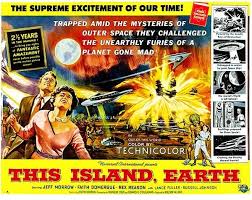
    “This Island Earth,” released in 1955 by Universal-International, stands as a quintessential artifact of 1950s science fiction cinema. Directed by Joseph M. Newman (with uncredited contributions from genre stalwart Jack Arnold), and based on the novel by Raymond F. Jones, the film is a vibrant Technicolor journey into outer space, filled with ambitious visual effects, intriguing themes, and a surprisingly nuanced approach to alien encounters for its era.

    The plot begins with Dr. Cal Meacham (Rex Reason), a brilliant atomic scientist, who receives mysterious components that, when assembled, form an “interocitor” – a sophisticated communication device. This seemingly innocuous technological puzzle is an elaborate recruitment tool for Exeter (Jeff Morrow), an alien from the dying planet Metaluna. Exeter, with his unusually high forehead and calm, intellectual demeanor, is gathering Earth’s top scientific minds to aid his planet in a desperate war against the Zagon, who are relentlessly bombarding Metaluna with meteors. Dr. Meacham, along with fellow scientist Dr. Ruth Adams (Faith Domergue), soon finds himself whisked away to Metaluna, becoming embroiled in an interstellar conflict that challenges their understanding of humanity’s place in the universe.

    What immediately sets “This Island Earth” apart from many of its B-movie contemporaries is its striking visual presentation. Shot in glorious Technicolor, the film boasts a rich, vibrant palette that brings its futuristic designs and alien landscapes to life. The special effects, while understandably dated by modern standards, were groundbreaking for their time. The iconic flying saucer, with its sleek, chrome design, is a marvel of mid-century futurism. The depiction of Metaluna, with its subterranean cities and ravaged, war-torn surface, showcases imaginative production design, often achieved through impressive matte paintings and miniatures.

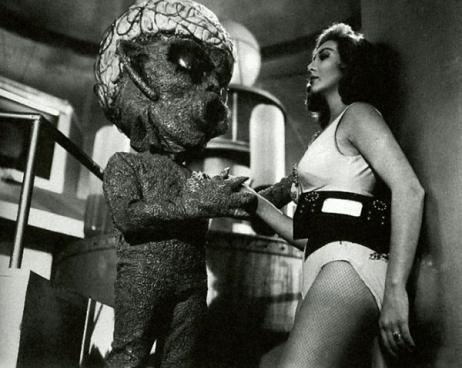
    Perhaps the most enduring visual element is the “Metaluna Mutant,” a creature that has become a touchstone of sci-fi iconography. With its bulbous, exposed brain, large insectoid eyes, and formidable claws, the mutant is a terrifying yet pitiable figure. While its appearances are relatively brief and somewhat constrained by the limitations of a full-body suit (famously, the legs had to be obscured due to design issues), its impact is undeniable, influencing later alien designs in films like “Mars Attacks!” and “Alien.”

    Beyond the visual spectacle, “This Island Earth” delves into themes that elevate it above simple pulp. Unlike many 1950s alien invasion narratives, the Metalunans are not presented as purely hostile invaders. Exeter is a complex, sympathetic character who genuinely seeks Earth’s help for his dying world. Jeff Morrow delivers a standout performance, imbuing Exeter with a sense of quiet desperation and a moral struggle as he grapples with the harsh realities of his planet’s plight and the methods his leaders employ. This portrayal of essentially benign, albeit manipulative, aliens who seek assistance rather than conquest was a refreshing departure from the era’s prevalent fear-mongering.

    The film also subtly touches on Cold War anxieties, particularly the dangers of nuclear proliferation and unchecked scientific advancement. Metaluna’s reliance on atomic energy for its protective shield, and its eventual destruction due to relentless bombardment, can be seen as a cautionary tale for humanity’s own atomic age. The title itself, “This Island Earth,” hints at a larger existential theme – the fragility and isolation of our planet in a vast, potentially dangerous cosmos.

    While “This Island Earth” is widely celebrated, it’s not without its minor shortcomings. The pacing in the first half, while building intrigue, can feel a bit slow for modern audiences, with a heavy emphasis on exposition. Faith Domergue, while a progressive casting choice as a female scientist for the time, sometimes defaults to the “damsel in distress” archetype. And as mentioned, the full potential of the Metaluna Mutant is somewhat limited by its brief screen time and practical effects challenges.

    Despite these minor quibbles, “This Island Earth” more than earns its status as a cherished classic. Its ambitious scope, groundbreaking visual effects, nuanced alien portrayal, and thoughtful thematic undertones make it a landmark film in the history of science fiction. It’s a bold and imaginative space opera that, even after decades, continues to capture the wonder and anxieties of a bygone era, leaving a lasting impression on the genre and proving that even a “B-movie” can achieve greatness through its vision and execution.

    Special Features & Technical Specs:

    • 1080p High-definition presentation on Blu-ray
    • Audio Commentary by Heath Holland from Cereal At Midnight
    • Trailers from Hell: Joe Dante on ‘This Island Earth’
    • Audio LPCM 2.0 Mono
    • Aspect Ratio 1.85:1
    • Optional English HOH Subtitles
  • Blu-ray review: “The Night the World Exploded” (1957)

    “The Night the World Exploded” (1957)

    Science Fiction

    Running Time: 64 minutes

    Written by: Jack Natteford and Luci Ward

    Directed by: Fred F. Sears

    Starring: Kathryn Grant and William Leslie

    Dr. David Conway: “We better do more than hope, gentlemen. We better pray!”

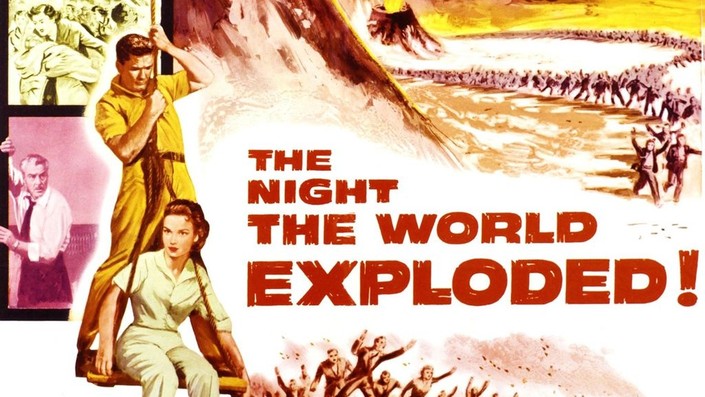
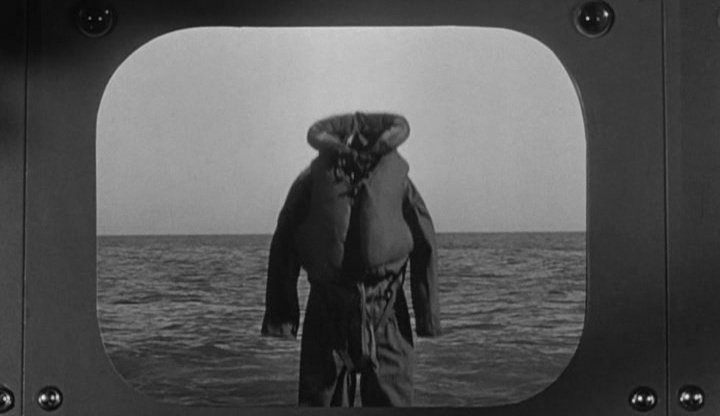
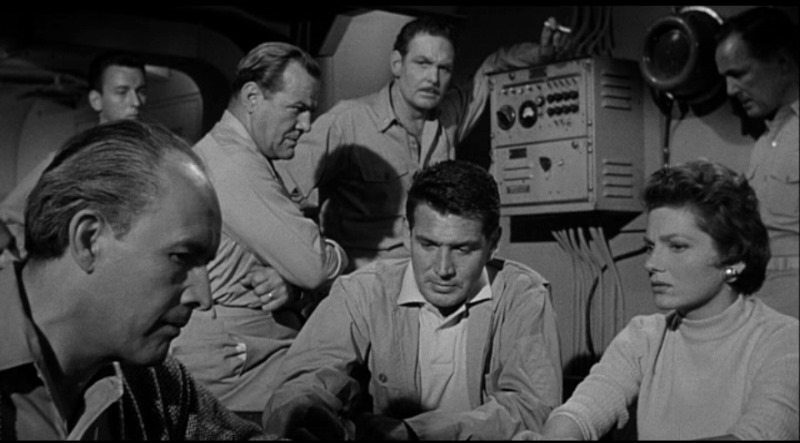
    In the annals of 1950s B-movie sci-fi, The Night the World Exploded often finds itself overshadowed by its more flamboyant, monstrous, or technologically audacious contemporaries. Directed by Fred F. Sears, a prolific filmmaker known for churning out genre pictures, this 1957 Columbia Pictures release attempts to tap into the era’s pervasive anxieties about atomic power and the fragile balance of nature. While it largely succeeds in delivering a sense of impending doom, it does so with a methodical, almost academic pace that might test the patience of modern viewers accustomed to more immediate thrills.

    The premise is quintessentially Cold War-era science fiction: a brilliant, if somewhat aloof, scientist, Dr. David Conway (played with earnest intensity by William Leslie), stumbles upon a peculiar new element, which he dubs “Element 112.” Discovered deep within the Earth, this mysterious substance exhibits an alarming property: it expands exponentially when exposed to moisture. Conway and his dedicated team, including the ever-competent Dr. Ellis Hatch (Tristram Coffin) and the more emotionally resonant Dr. Laura Nelson (Hulda Sherman, in a role that feels a little underwritten), soon realize the catastrophic implications. Subterranean pockets of Element 112 are reacting with underground water sources, causing unprecedented seismic activity – a phenomenon threatening to quite literally tear the planet apart.

    What The Night the World Exploded lacks in a monster or invading aliens, it tries to compensate for with the chilling inevitability of a geological apocalypse. The film dedicates a significant portion of its runtime to the scientific investigation. We see Conway and his team meticulously analyze data, conduct experiments, and present their findings to increasingly skeptical authorities. This scientific rigor, while commendable for its attempt at realism, also contributes to the film’s deliberate pacing. For a picture with such a bombastic title, the “explosion” is a slow, agonizing process, unfolding through tremors, fissures, and the constant threat of a cataclysmic rupture.

    The film’s strength lies in its ability to build tension through mounting evidence. As reports of unexplained earthquakes and land subsidence pour in from around the globe, the gravity of the situation slowly dawns on the characters and, by extension, the audience. Sears employs a mix of stock footage of natural disasters and surprisingly effective miniature work to depict the escalating chaos. While some of these effects now appear quaint, they served their purpose in conveying widespread destruction for a modest budget. The notion of the Earth itself as the antagonist, subtly expanding from within, is a genuinely unsettling concept that taps into primordial fears.

    However, the film isn’t without its weaknesses. The characters, while capably played by their respective actors, often feel more like archetypes than fully fleshed-out individuals. Dr. Conway is the driven, brilliant scientist; Dr. Nelson is the intelligent female colleague who also serves as a mild romantic interest; and Dr. Hatch is the steadfast right-hand man. Their personal struggles and relationships are largely secondary to the scientific crisis, which, while understandable given the subject matter, occasionally leaves the human element feeling underdeveloped. The dialogue, too, can be a bit dry and exposition-heavy, laden with scientific jargon that might go over the heads of casual viewers.

    Another noticeable element is the film’s reliance on a limited number of sets, primarily the scientific laboratory and a command center. This budgetary constraint is cleverly masked by focusing on the intellectual drama and the constant stream of news reports depicting global devastation. The black-and-white cinematography, typical of the era, adds to the somewhat stark and grim atmosphere, enhancing the sense of a world under threat.

    Ultimately, The Night the World Exploded is a contemplative doomsday scenario. It’s less about spectacular action and more about the desperate race against time to understand and potentially avert an unprecedented global disaster. While it may not possess the iconic status of The War of the Worlds or the creature feature allure of Them!, it holds its own as a thoughtful exploration of scientific discovery, responsibility, and the terrifying potential for Earth’s own internal forces to unleash unimaginable destruction. For fans of classic 1950s sci-fi who appreciate a more cerebral approach to global catastrophe, and who are willing to overlook its occasional pacing issues and character thinness, The Night the World Exploded offers a chilling, if understated, vision of the end of days. It reminds us that sometimes, the most terrifying threats come not from outer space, but from within the very ground beneath our feet.

  • Blu-ray review: “The 27th Day” (1957)

    “The 27th Day” (1957)

    Science Fiction

    Running Time: 75 minutes

    Written by: Robert M. Fresco

    Directed by: William Asher

    Starring: Gene Barry, Valerie French, George Voskovec and Arnold Moss

    Jonathan Clark: “People hate because they fear, and they fear anything they don’t understand, which is almost everything.”

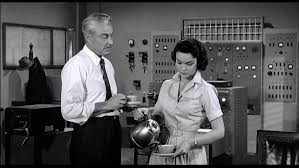
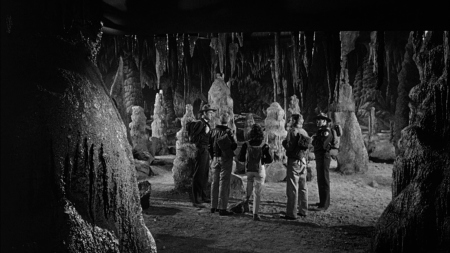
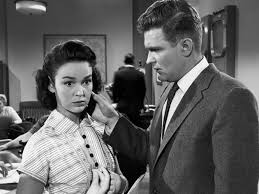
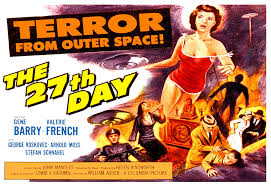
    “The 27th Day” (1957), directed by William Asher and based on John Mantley’s novel, is a fascinating, if sometimes flawed, product of 1950s Cold War paranoia and science fiction. Far from a monster-driven B-movie, it’s an “idea film” that grapples with weighty themes of human nature, the perils of absolute power, and the potential for self-destruction, all set against the backdrop of nuclear anxiety.

    The premise is immediately compelling: an alien, seeking a new home for his dying race, is prohibited by his moral code from directly harming intelligent life. His solution? To give humanity the means to annihilate itself. Five individuals, seemingly chosen at random from the world’s major powers – American reporter Jonathan Clark (Gene Barry), Englishwoman Eve Wingate (Valerie French), German physicist Klaus Bechner (George Voskovec), Soviet soldier Ivan Godofsky (Azemat Janti), and Chinese peasant Su Tan (Maria Tsien) – are abducted and each given a set of three capsules. These capsules, activated by the owner’s thought, can wipe out all human life within a 3,000-mile radius. The catch: they become inert after 27 days. If humanity destroys itself, the aliens can move in. If not, they are doomed.

    The film excels in its initial setup, creating a palpable sense of tension and dread. The alien’s broadcast to the world, revealing the existence of the capsules and the identities of their holders, plunges the globe into chaos. We witness the immediate reactions: Eve throws her capsules into the English Channel, Su Tan commits suicide (her capsules self-destructing), while Godofsky is captured and tortured by Soviet authorities determined to harness this terrifying new weapon. Clark and Eve go into hiding, and Bechner, the thoughtful scientist, begins to analyze the implications of the power he now wields.

    It’s in the exploration of these reactions and the escalating global crisis that “The 27th Day” truly shines. The film shrewdly reflects the Cold War anxieties of its era. The US and Soviet Union, perpetually at loggerheads, see the capsules as ultimate leverage. The torture of Godofsky by the Soviets, and their subsequent ultimatum to the U.S., is a stark portrayal of the era’s deep-seated distrust and the terrifying prospect of mutually assured destruction. The film doesn’t shy away from depicting mob hysteria and the quick descent into violence when fear takes hold.

    However, the film’s execution of its ambitious themes isn’t always seamless. The dialogue, at times, can feel stilted and overly expositional, hindering the natural flow of the narrative. The characters, while representing diverse backgrounds, are somewhat underdeveloped, making it difficult to fully invest in their personal struggles, despite the immense weight of their burden. Maria Tsien’s character, Su Tan, is particularly underserved, given no lines and a somewhat stereotypical portrayal.

    The “low-budget” nature of the production is evident in its minimalist sets and restrained special effects, which often rely on stock footage (notably from “Earth vs. The Flying Saucers”). However, director William Asher and cinematographer Henry Freulich utilize these limitations effectively, employing noir-inspired lighting and a functional visual style that prioritizes atmosphere and narrative over spectacle. The score, while sparse, punctuates key moments without overwhelming the dialogue.

    The film’s ending, while offering a resolution, has been a point of contention for many viewers. Without giving too much away, the ultimate twist, which hinges on a “moral” rather than purely scientific solution, can feel a bit too convenient and even problematic in its implications. While it attempts to deliver a message of unity and humanity’s capacity for good, some might argue it takes a too simplistic approach to complex issues, particularly in its depiction of “enemies of freedom.”

    Despite its shortcomings, “The 27th Day” remains a thought-provoking and historically significant piece of 1950s science fiction. It’s a film that asks profound questions about humanity’s fitness to wield destructive power and whether, when pushed to the brink, we are inherently destructive or capable of redemption. Its engagement with Cold War themes and its unique take on the alien visitation trope set it apart from many of its contemporaries. For aficionados of classic sci-fi and those interested in the cultural anxieties of the mid-20th century, “The 27th Day” is certainly worth a watch, offering a fascinating glimpse into a bygone era’s hopes and fears for the future.

  • Blu-ray Review: “UFO – The Complete S.H.A.D.O. Files” (1970 – 1971) 

    “UFO – The Complete S.H.A.D.O. Files” (1970 – 1971) 

    Television Series / Science-Fiction

    Twenty-six Episodes

    Created by: Gerry & Sylvia Anderson and Reg Hill

    Featuring: Ed Bishop, Michael Billington, Gabrielle Drake, George Sewell, Vladek Sheybal, Wanda Ventham, Ayshea Brough, Antonia Ellis, Keith Alexander, Harry Baird, Peter Gordeno, Dolores Mantez, Gary Myers, Norma Ronald and Grant Taylor

    Ed Straker: “Imagine a dying planet in some distant corner of the universe. Its natural resources exhausted. Its inhabitants sterile. Doomed to extinction. A situation we may one day find ourselves in, gentlemen. So they discover Earth. Abundant, fertile. Able to satisfy their needs. They look upon us not with animosity, but callousness. As we look upon our animals that we depend on for food. Yes, it appears they are driven by circumstance across a billion miles of space, driven on by the greatest force in the universe – survival.”

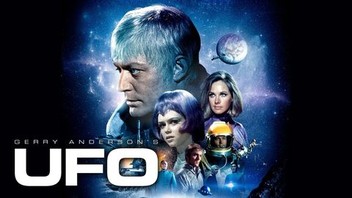
    Gerry and Sylvia Anderson’s “UFO,” which first aired in 1970, stands as a pivotal and remarkably dark entry in their illustrious canon of science fiction productions. Moving away from the Supermarionation puppets that defined classics like “Thunderbirds” and “Captain Scarlet,” “UFO” plunged into live-action with a surprising maturity and grit, tackling themes far more adult than its predecessors and leaving an indelible mark on the genre.

    At its core, “UFO” is a chillingly prescient tale of Earth under a clandestine invasion. A dying alien race, desperately in need of human organs to survive, regularly sends their distinctive, spinning saucers to our planet to abduct unsuspecting victims. Humanity’s only line of defense is SHADO (Supreme Headquarters Alien Defence Organisation), a top-secret international military organization operating covertly beneath a seemingly innocuous film studio, Harlington-Straker. This ingenious cover, with Commander Ed Straker (played by the stoic and perpetually stressed Ed Bishop) masquerading as a film producer, is one of the show’s most enduring and clever conceits.

    The series distinguishes itself with its bleak and often cynical tone. Unlike the optimistic heroism of earlier Anderson shows, “UFO” portrays a world under constant threat, where victories are hard-won and often come at a terrible personal cost. Straker, a man driven to the point of obsession, sacrifices his marriage and personal life for the immense burden of leading SHADO. Episodes frequently delve into the psychological toll of this hidden war, exploring paranoia, trauma, and the moral ambiguities of fighting an unseen enemy. This thematic depth, though sometimes delivered with a certain stiffness in early scripts and performances, was revolutionary for its time, especially for a series that still held appeal for younger audiences drawn to its spectacular effects.

    And speaking of effects, “UFO” is a masterclass in practical model work. Derek Meddings, the legendary effects maestro, crafted some of the most iconic and believable futuristic vehicles and alien spacecraft ever seen on television. From the multi-stage elegance of the SkyDiver submarine/jet hybrid to the sleek Moonbase Interceptors and the rugged SHADO Mobiles, each piece of hardware is meticulously designed and brought to life with astonishing realism. The spinning alien UFOs themselves, with their mysterious, almost ethereal glow, were a triumph of ingenuity, even if they sometimes proved challenging to film perfectly. The visuals, coupled with Barry Gray’s thunderingly exciting and instantly recognizable theme music, immediately draw you into the high-stakes world of SHADO.

    The cast, led by the intense Ed Bishop as Straker, is a memorable ensemble. George Sewell as the reliable Colonel Alec Freeman, Michael Billington as the impulsive Colonel Paul Foster, and Gabrielle Drake as the intelligent Lieutenant Gay Ellis, among others, brought a grounded realism to their roles, despite the futuristic setting and often bizarre alien encounters. The distinctive purple wigs worn by the Moonbase operatives, and the sometimes-provocative uniforms of the female SHADO personnel, added to the show’s unique and sometimes campy aesthetic, which paradoxically contributes to its charm.

    “UFO” was not without its challenges. Production was notoriously difficult, with the show relocating from MGM-British Studios to Pinewood Studios mid-run due to the former’s closure. This shift sometimes resulted in a noticeable change in pace and slickness for the later episodes. The episodic nature, with few overarching story arcs, made it easy for networks to shuffle the series, which likely impacted its initial reception. Furthermore, the show’s dark themes and unconventional portrayal of alien contact could be a tough sell for audiences accustomed to more straightforward sci-fi.

    Despite these hurdles, “UFO” has blossomed in reputation over the decades. Its influence on subsequent science fiction is undeniable, predating much of the “conspiracy canon” we see today, with its secret underground bases, alien abductions, and government cover-ups. It dared to explore a grimmer future, where humanity’s survival hinged on a shadowy organization fighting a largely unseen and relentless foe.

    For fans of classic British sci-fi, “UFO” remains an essential watch. It’s a visually stunning, thematically rich, and remarkably ambitious series that, while certainly a product of its time, continues to captivate and thrill. Its restoration for modern formats, particularly Blu-ray, has only enhanced its extraordinary visuals and ensured its place as a truly unique and underappreciated gem in the history of television. “UFO” is Gerry Anderson’s live-action crowning glory, a testament to his enduring vision and a must-have for any serious science fiction enthusiast.

    Special Features and Technical Specs:

    • 1080p high-definition presentation of all 26 episodes, restored from the original film elements with original LPCM 2.0 Mono audio and optional DTS-HD 5.1 Surround, in the original 1.33:1 aspect ratio
    • NEW! Grading work and updates have been applied to select episodes, correcting specific flaws in the original restoration
    • Invasion: UFO – the 1980 feature-film version restored in high-definition from the original film elements, presented in a newly created 1.78:1 aspect ratio + original 1980 videotape version in 1.33:1
    • Audio Commentary on Identified by producer/writer/director Gerry Anderson (2002)
    • NEW! Audio Commentary on Survival by “Fanderson” members Ian Fryer and Chris Drake (2024)
    • Audio Commentary on E.S.P. by actor George Sewell (2007)
    • Audio Commentary on Kill Straker! by director Alan Perry and actor Michael Billington (2003)
    • Audio Commentary on Sub-Smash by actor Ed Bishop (2002)
    • NEW! Audio Commentary on The Cat With Ten Lives by “Fanderson” members Ian Fryer and Chris Drake (2024)
    • Audio Commentary by guest artist Deborah Grant and Jonathan Wood (2007)
    • Audio Commentary by co-creator/co-producer Sylvia Anderson and actress Wanda Ventham (2003)
    • NEW! Audio Commentary on Invasion: UFO feature-film version by ITC historians Jonathan Wood and Rick Davy (2024)
    • From Earth to the Moon – feature-length documentary on the making of the series including interviews with Gerry Anderson, Ed Bishop, Wanda Ventham, Ayshea Brough, Georgina Moon, Jane Merrow, Deborah Grant, Susan Jameson, Matt Zimmerman, Jeremy Wilkin, Shane Rimmer, Michael Jayston, Alan Shubrook and David Collings (2016)
    • The UFO Documentary – “Fanderson” produced documentary on the making of the series, narrated by Shane Rimmer, including interviews with Gerry Anderson, Bob Bell, Ed Bishop, Delores Mantez, Derek Meddings, Christopher Penfold, Alan Perry, George Sewell and Vladek Sheybal (1993)
    • The Women of UFO – documentary charting the female characters in the series including interviews with Wanda Ventham, Ayshea Brough, Georgina Moon, Jane Merrow, Deborah Grant and Gabrielle Drake (2016)
    • Identified: S.H.A.D.O. New Recruits Briefing  – featurette (2016)
    • Meeting Commander Straker – interview with actor Ed Bishop
    • NEW! Reality Sets In – interview with guest artist Jane Merrow (2024)
    • NEW! The Man Who Came Back Again – interview with guest artist Derren Nesbitt (2024)
    • Ken Turner: ISOSHADO interview with the actor
    • The Doppelcars – featurette on the UFO vehicles, narrated by Ed Bishop
    • 21st Century Craft Design – featurette on special effects designer Mike Trim, introduced by Ed Bishop
    • Tomorrow Today: episode of the science magazine series featuring Sylvia Anderson discussing UFO fashions (1970)
    • Rare Collectables / Memorabilia Photo Gallery

    Series Archival Vault Material:

    • Identified: Original opening sequence and alternative ending / S.I.D. Voice Sessions
    • Exposed: Extended scenes
    • The Square Triangle: Clean closing credits
    • Kill Straker!: Original raw studio takes (audio)
    • Timelash: Day for night grading example / clapperboard sequence
    • The Long Sleep: Unused footage
    • Invasion: UFO  – Full frame opening titles / closing credits & textless end credits
    • Invasion: UFO Trailer
    • Textless series end titles and textless episodic material/stock footage
    • Original TV Spots for the series
    • Italian Trailers
    • Extensive Photo Galleries

    Plus a 120-page booklet featuring the extensive Pressbook information for the series + Story Information, all taken from the original studio files.

  • Blu-ray review: “Flow” (2024)

    “Flow” (2024)

    Animated Drama

    Running Time: 114 minutes

    Written by: Gints Zilbalodis and Matīss Kaža

    Directed by: Gints Zilbalodis

    Music by: Gints Zilbalodis and Rihards Zaļupe

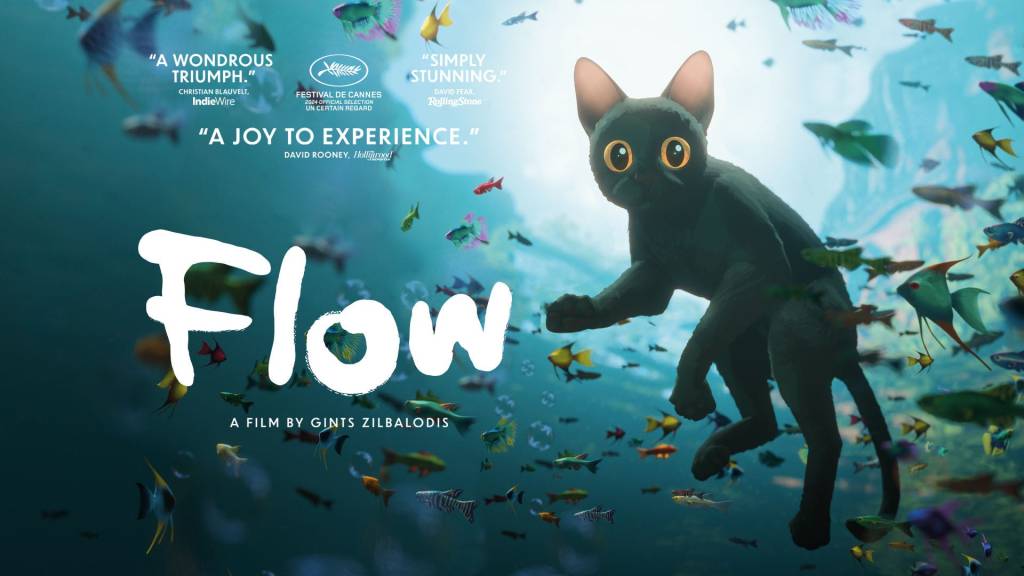
    Gints Zilbalodis’ 2024 animated feature, Flow, is a truly unique and mesmerising cinematic experience that stands apart in the contemporary animation landscape. Eschewing dialogue entirely, the film tells a profoundly affecting story of survival and unlikely companionship in a world dramatically altered by a catastrophic flood. It’s a testament to the power of visual storytelling, sound design, and character animation, creating an immersive journey that resonates deeply with audiences of all ages.

    The premise is deceptively simple: a solitary black cat finds its home submerged by an inexplicable, vast flood. Forced to abandon its familiar life, the cat embarks on a perilous journey, navigating the treacherous waters on a makeshift raft. Along the way, it reluctantly finds itself in the company of other animals – a loyal dog, a serene capybara, a mischievous ring-tailed lemur, and a haughty secretarybird. These disparate species, natural adversaries in other circumstances, are compelled by their shared predicament to forge an uneasy alliance for survival.

    What truly sets Flow apart is its masterful execution of a dialogue-free narrative. The animals communicate through their natural sounds – meows, barks, chirps – and, more importantly, through their incredibly expressive body language and interactions. Zilbalodis, who also co-wrote, co-produced, edited, and composed the score, demonstrates an unparalleled ability to convey complex emotions and relationships without a single spoken word. The camera work is particularly noteworthy, often fluidly following the cat’s perspective, or observing from a distance, creating a sense of both intimacy and epic scale. Long, continuous shots contribute to the film’s immersive quality, making the tense moments genuinely palpable.

    The animation style, rendered in Blender, is another highlight. While some critics have noted its somewhat simplistic character designs for the animals, there’s a charming, almost retro aesthetic to it that often feels reminiscent of early 3D video games, particularly in its clean, cel-shaded look and impressive water effects. However, this simplicity serves to highlight the incredibly realistic and nuanced animal movements, a clear indication of the animators’ meticulous study of feline and other animal behaviors. The environmental design is equally captivating, portraying a post-human world reclaimed by nature, with remnants of human civilization – submerged cities, crumbled ruins, and enigmatic monuments – hinting at a past without ever explicitly explaining it. This ambiguity is a strength, allowing for a multitude of interpretations regarding the flood’s cause and the fate of humanity.

    Thematically, Flow delves into universal concepts of adaptation, resilience, and the essential need for cooperation. The initial independence of the cat gradually gives way to a grudging, then genuine, reliance on its fellow travelers. The film subtly explores how individuals, despite their inherent differences, can come together to overcome adversity. While it can be read as an eco-fable, with its imagery of rising waters and abandoned structures, Zilbalodis avoids heavy-handed messaging, preferring to let the visuals and the characters’ journey speak for themselves. The focus remains squarely on the emotional arc of the animals and their evolving relationships.

    Moments of profound beauty and quiet contemplation are interspersed with sequences of genuine peril and suspense. An early scene where the cat nearly drowns is particularly harrowing and showcases the film’s ability to elicit strong emotional responses. The recurring appearance of a mysterious, whale-like creature adds a layer of mythic weight and symbolic depth, representing the unknown and the cat’s internal fears.

    Flow is a refreshing counterpoint to the often over-budgeted, dialogue-heavy animated blockbusters. It proves that a compelling and deeply moving story can be told with restraint and artistic vision, without relying on celebrity voice casts or overly complex plots. Its quiet artistry, immersive atmosphere, and universally relatable themes have garnered significant critical acclaim, earning it prestigious awards and a strong word-of-mouth following.

    While some might find its lack of dialogue or explicit explanations challenging, for those willing to lean in and trust its visual language, Flow offers a truly enriching and unforgettable cinematic experience. It’s a gentle yet powerful reminder of nature’s formidable power, the resilience of life, and the enduring importance of connection in the face of an unpredictable world. It’s a film that stays with you long after the credits roll, inviting reflection and appreciation for its innovative storytelling.

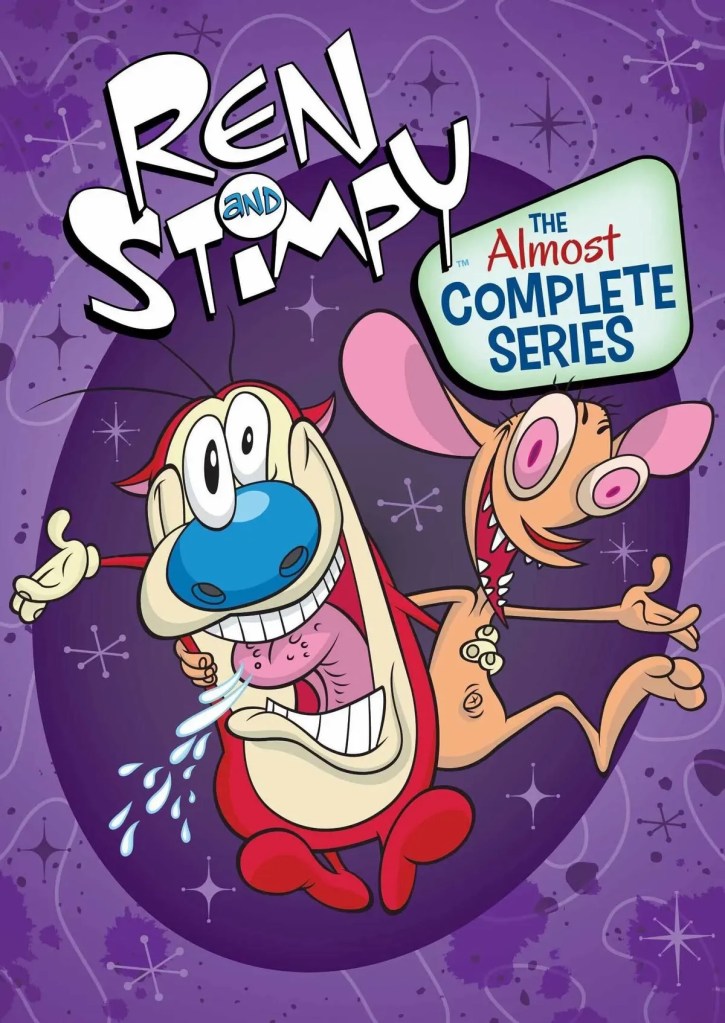
  • DVD Review: “The Ren & Stimpy Show” (1991 – 1995) 

    “The Ren & Stimpy Show” (1991 – 1995) 

    Television Series / Comedy

    Fifty Two Episodes

    Created by: John Kricfalusi

    Featuring: John Kricfalusi, Billy West, Gary Owens, Harris Peet, Cheryl Chase, Alan Young, Jack Carter, Bob Camp and Michael Pataki

    Stimpy: “Happy-happy, joy-joy.”

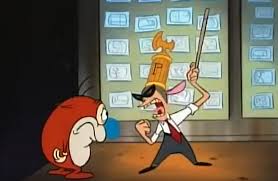
    It’s a testament to its unique brand of grotesque humor and shocking originality that, even decades after its debut, The Ren & Stimpy Show remains a topic of fervent discussion and a touchstone for a generation of animation fans. Bursting onto Nickelodeon in 1991, it was an immediate, polarizing force, simultaneously lauded as groundbreaking and condemned as crude. Looking back, it’s clear that its impact was far more profound than just controversy; it irrevocably altered the landscape of television animation and left an indelible mark on popular culture.

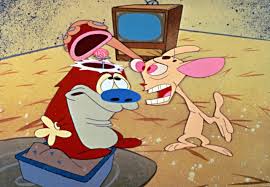
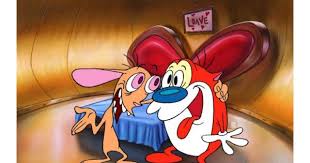
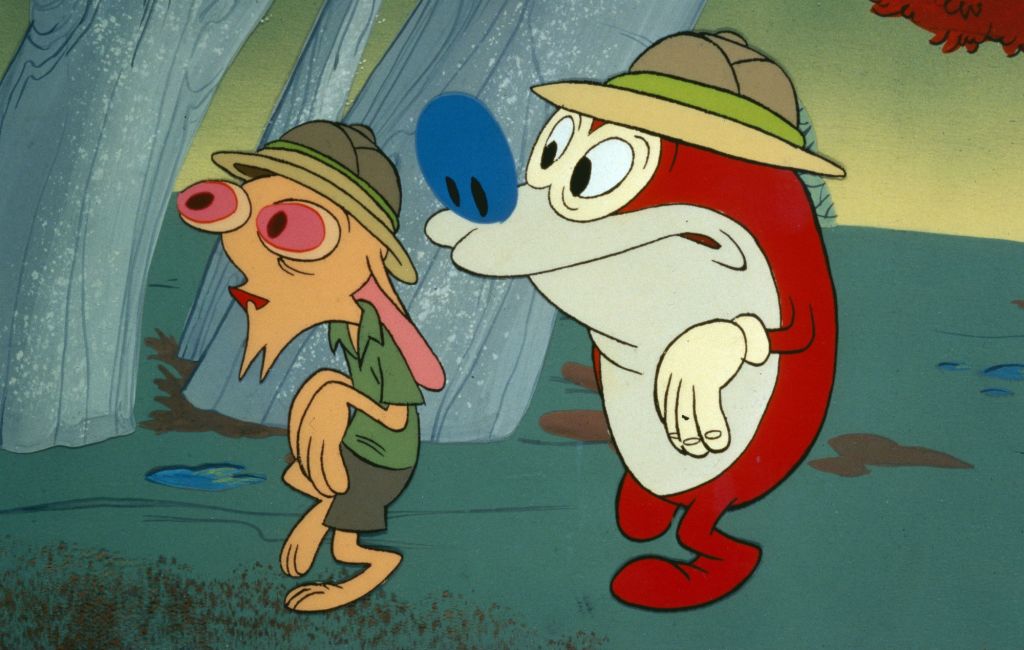
    At its core, The Ren & Stimpy Show revolved around the bizarre, often horrifying, misadventures of a choleric, diminutive chihuahua named Ren Höek and his dim-witted, flatulent cat companion, Stimpy J. Cat. From this simple premise, creators John Kricfalusi and his team at Spümcø unleashed a torrent of visually repulsive, audibly jarring, and conceptually audacious cartoons that defied nearly every convention of children’s programming. This was not the safe, saccharine world of most Saturday morning fare; this was a show where close-ups on inflamed gums, dripping snot, and oozing pustules were not just common, but celebrated.

    One of the show’s most striking features was its animation style. Eschewing the clean lines and limited animation prevalent at the time, Ren & Stimpy embraced a rubbery, expressive, and often disturbingly detailed aesthetic. Characters would contort into grotesque caricatures of themselves, their bodies stretching and distorting with every exaggerated emotion. The backgrounds, too, were meticulously rendered, often filled with bizarre, unsettling details that added to the overall sense of unease and surrealism. This “gross-out” humor, while initially shocking, quickly became a signature, setting a new, often higher, bar for visual comedy in animation.

    Beyond the visuals, the vocal performances were equally iconic. Billy West, a vocal chameleon, brought Ren to life with a perpetually strained, high-pitched whine that could instantly shift from panicked hysteria to enraged screaming. Stimpy, voiced by Kricfalusi himself (and later by West), was a symphony of dopey giggles, guttural purrs, and the occasional, surprisingly profound, utterance. The interplay between Ren’s explosive temper and Stimpy’s blissful ignorance was the engine of much of the show’s comedy, leading to countless memorable catchphrases and absurd exchanges.

    But Ren & Stimpy was more than just shock value. Beneath the layers of slime and histrionics lay a subversive wit and a surprising depth of character. Ren, despite his constant cruelty, often revealed glimpses of vulnerability and even a desperate desire for affection, however fleeting. Stimpy, for all his idiocy, possessed an unwavering optimism and a genuine, albeit misguided, loyalty to his friend. The show frequently delved into themes of poverty, desperation, and the sheer absurdity of existence, albeit through a highly warped lens. Episodes like “Space Madness,” with its descent into Ren’s paranoid delusions, or “Untamed World,” a bizarre parody of nature documentaries, showcased a sophisticated understanding of comedic timing and narrative construction.

    The show’s influence cannot be overstated. It opened the floodgates for a wave of creator-driven animation that prioritized unique artistic vision over marketing tie-ins. Shows like Beavis and Butt-Head, Rocko’s Modern Life, and SpongeBob SquarePants all owe a debt to Ren & Stimpy’s pioneering spirit. It proved that animation could be edgy, intelligent, and appeal to both children and adults on different levels. It challenged the notion of what was acceptable on children’s television, pushing boundaries and, at times, breaking them entirely.

    Of course, the show’s history is not without its controversies. The turbulent relationship between John Kricfalusi and Nickelodeon led to his eventual dismissal, and the quality of the later seasons under different creative control was often debated. The short-lived Adult Swim revival, Ren & Stimpy “Adult Party Cartoon”, attempted to push the boundaries even further, but largely failed to recapture the original’s magic, often relying on gratuitous content without the underlying wit that made the original so compelling.

    Despite these later missteps, the legacy of the original The Ren & Stimpy Show remains firmly intact. It was a chaotic, brilliant, and utterly unforgettable series that dared to be different. It was a show that embraced the ugly, the uncomfortable, and the downright bizarre, and in doing so, it created something truly beautiful and enduring. For those who grew up with it, it’s a nostalgic trip back to a time when cartoons were truly wild. For new viewers, it’s a shocking, hilarious, and often thought-provoking experience that continues to resonate today, proving that sometimes, the most bizarre creations leave the most lasting impressions.

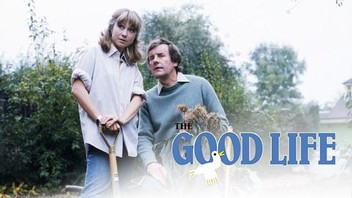
  • DVD Review: “The Good Life” (1975 – 1978) 

    “The Good Life” (1975 – 1978) 

    Television Series / Comedy

    Thirty Episodes

    Created by: John Esmonde and Bob Larbey

    Featuring: Richard Briers, Felicity Kendal, Penelope Keith and Paul Eddington

    Tom: “Hello, girls. Had a good gossip?”

    Barbara: “No, we’ve been playing strip poker with the postman.”

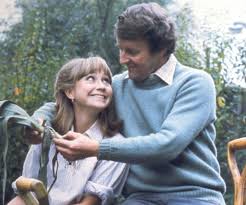
    “The Good Life,” known in the United States as “Good Neighbors,” is a quintessential British sitcom that first aired on BBC One from 1975 to 1978. Created and written by John Esmonde and Bob Larbey, this gentle yet incisive comedy remains a beloved classic, offering a timeless exploration of societal norms, personal aspirations, and the enduring appeal of living life on one’s own terms.

    The series centres on Tom Good (Richard Briers), a draughtsman on the cusp of his 40th birthday, who experiences a profound mid-life crisis. Disillusioned with the rat race and the pressures of conventional suburban existence, Tom decides to abandon his lucrative job and pursue a radical new life: complete self-sufficiency in his suburban Surbiton home. His supportive, if occasionally bewildered, wife Barbara (Felicity Kendal) embraces this audacious plan with remarkable enthusiasm, and together they embark on a journey to transform their semi-detached house into a working farm. This involves everything from growing their own fruit and vegetables to keeping chickens, pigs, and even a goat.

    The true comedic genius of “The Good Life” lies not just in the Goods’ ambitious, often chaotic, attempts at self-sufficiency, but in their contrasting relationship with their next-door neighbours, Jerry (Paul Eddington) and Margo Leadbetter (Penelope Keith). Jerry, Tom’s former colleague, is the epitome of middle-class success – dependable, slightly neurotic, and striving for corporate advancement. While he often finds Tom’s antics baffling, there’s a quiet admiration and even envy beneath his polite exasperation.

    However, it is Penelope Keith’s portrayal of Margo Leadbetter that truly elevates the series to iconic status. Margo is a masterpiece of characterisation: a formidable, socially ambitious, and impeccably presented woman whose world is constantly disrupted by the muddy, agricultural chaos next door. Her disdain for the Goods’ lifestyle, expressed through a perfectly honed blend of condescension, theatrical sighs, and withering remarks, is a constant source of hilarity. Margo’s “kind-hearted snobbery,” as some have called it, is never truly malicious; instead, it’s rooted in her desperate attempts to maintain her carefully curated suburban decorum against the tide of organic manure and rogue livestock. The chemistry between the four leads – Richard Briers’ earnest and often naive idealism, Felicity Kendal’s pragmatic charm, Paul Eddington’s understated anxiety, and Penelope Keith’s magnificent imperiousness – is simply exquisite, forming a perfect comic ensemble.

    Beyond the laughter, “The Good Life” subtly explores themes that remain remarkably relevant today. At its core, it questions the prevailing notion of “success” and whether material wealth truly equates to happiness. Tom and Barbara’s pursuit of self-sufficiency, seen as eccentric at the time, was prescient in its exploration of environmental consciousness and a desire to connect more directly with the source of one’s food. The show also deftly navigates the intricacies of friendship and marriage, highlighting the tensions and bonds that hold relationships together even when ideologies clash. The gentle ideological conflict between the Goods’ bohemian aspirations and the Leadbetters’ conventional sensibilities provides the main thrust of the programme, yet always underpinned by a genuine affection and mutual reliance.

    The writing by Esmonde and Larbey is consistently witty, intelligent, and grounded in relatable human emotions. They managed to make pig-keeping and vegetable-growing not just funny but oddly aspirational, instilling a sense of comforting charm rather than sharp satire. This inoffensive, character-driven approach made the show enduringly popular and continues to resonate with audiences decades later.

    While some contemporary viewers might find aspects of Tom’s character a little self-centred or even patriarchal by modern standards, the show’s warmth and the sheer brilliance of its performances largely overshadow any such critiques. “The Good Life” is a testament to superb casting and masterful storytelling, leaving behind a legacy of laughter and gentle wisdom. It reminds us that sometimes, the most profound forms of happiness can be found by turning away from the conventional path and embracing a simpler, perhaps muddier, existence in your own backyard. It’s a comforting watch that continues to inspire smiles and, perhaps, a quiet contemplation of what “the good life” truly means to each of us.

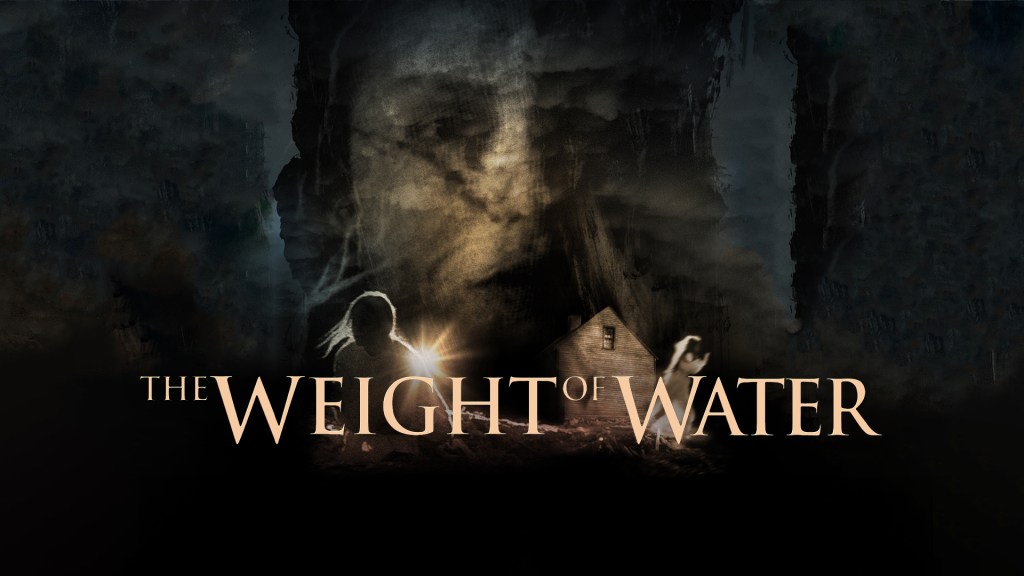
  • Blu-ray review: “The Weight of Water” (2000)

    “The Weight of Water” (2000)

    Drama

    Running Time: 114 minutes

    Written by: Alice Arlen and Christopher Kyle based on the novel by by Anita Shreve

    Directed by: Kathryn Bigelow

    Featuring: Elizabeth Hurley, Catherine McCormack, Sean Penn and Sarah Polley

    Jean Janes: “When a women kills, it’s usually her spouse.”

    Kathryn Bigelow’s “The Weight of Water” is a film that demands a certain patience and willingness to engage with its dual narratives, often proving a divisive cinematic experience. Based on Anita Shreve’s novel, it attempts to intertwine a modern-day relationship drama with a historical murder mystery, set against the stark, isolated backdrop of the Isles of Shoals off the New Hampshire coast. While ambitious in its scope and often stunning in its execution, its ultimate success is debatable, leading to a film that is both intriguing and, at times, frustrating.

    The film operates on two distinct timelines. In the present day, we follow Jean (Catherine McCormack), a photographer researching a notorious 1873 double axe murder on Smuttynose Island. She embarks on a sailing trip to the island with her estranged poet husband, Thomas (Sean Penn), his brother Rich (Josh Lucas), and Rich’s alluring girlfriend, Adaline (Elizabeth Hurley). This contemporary story quickly becomes a simmering pot of marital discord, unspoken jealousies, and sexual tension, mirroring the historical events Jean is so intently studying.

    The historical narrative delves into the lives of the Norwegian immigrant women involved in the 1873 murders. Central to this is Maren Hontvedt (a captivating Sarah Polley), the sole survivor and key witness whose testimony led to the conviction of a man named Louis Wagner. As Jean uncovers details of the past, we see flashbacks to Maren’s lonely, arduous life on the island, her loveless marriage, and the arrival of her brother Evan and his new wife, Anethe. This past story, fraught with repressed emotions, forbidden desires, and the harsh realities of immigrant life, is arguably the more compelling and emotionally resonant of the two. Sarah Polley’s performance is consistently singled out as a standout, conveying the deep despondency and inner turmoil of a woman trapped by circumstance and convention.

    Bigelow, known for her strong directorial hand in action and thrillers (“Strange Days,” “The Hurt Locker”), brings a visceral and often unsettling atmosphere to “The Weight of Water.” The isolated island, the turbulent sea, and the claustrophobic confines of the yacht all contribute to a sense of impending doom and psychological pressure. The cinematography is beautiful, capturing the harsh beauty of the coastal landscape and the grimness of 19th-century existence.

    However, the film’s structural choice to constantly intercut between the two timelines is where many critics and viewers have found it falter. While the intention is clearly to draw parallels between the two stories – themes of hidden passion, sibling jealousy, the potential for violence, and the burden of secrets – the connections often feel tenuous or overly symbolic. Instead of enriching each other, the frequent jumps can distract, pulling the viewer out of one narrative just as it gains momentum. The contemporary story, particularly the strained dynamics between Jean, Thomas, and Adaline, often feels underdeveloped and less engaging than Maren’s historical plight. Sean Penn delivers a typically brooding performance as the self-absorbed poet, but his character, and indeed the entire modern quartet, lacks the depth and urgency of their 19th-century counterparts. Elizabeth Hurley’s role, while visually striking, has been criticized for being one-note and somewhat gratuitous.

    Despite these narrative challenges, “The Weight of Water” offers moments of potent drama and psychological insight. The exploration of the “female condition” across centuries, the sacrifices made, and the emotional suppression endured by women in both eras, is a pervasive undercurrent. The film also delves into the ambiguity of truth and perception, particularly in the historical murder case where Maren’s testimony, and thus the entire official narrative, is called into question.

    Ultimately, “The Weight of Water” is a film of considerable ambition and visual artistry, showcasing Kathryn Bigelow’s talent for creating atmospheric tension. It’s a testament to her willingness to explore different genres and themes. While the film may not always succeed in seamlessly weaving its two narratives into a fully cohesive whole, the strength of its historical segment, particularly Sarah Polley’s haunting performance, and Bigelow’s distinctive directorial vision make it a film worth experiencing for those who appreciate a moody, thought-provoking drama that dares to tackle complex emotional landscapes. It may leave some viewers feeling unsatisfied by its structural choices, but others will find themselves drawn into its somber, watery depths.

  • Blu-ray review: “In the Bedroom” (2002)

    “In the Bedroom” (2002)

    Drama

    Running Time: 131 minutes

    Written by: Todd Field and Robert Festinger based on the novel “Killings” by Andre Dubus

    Directed by: Todd Field

    Featuring: Sissy Spacek, Tom Wilkinson, Nick Stahl, William Mapother, William Wise, Celia Weston and Marisa Tomei

    Willis Grinnel: “Ever notice that even the worst bastards have friends?”

    “In the Bedroom,” directed by Todd Field and released in 2001, is a searing and deeply affecting drama that delves into the profound, often unspoken, complexities of grief, revenge, and the unraveling of a seemingly stable marriage. Based on Andre Dubus’s short story “Killings,” the film is a masterclass in controlled tension and devastating emotional realism, earning it widespread critical acclaim and multiple Oscar nominations.

    The film introduces us to Matt (Tom Wilkinson) and Ruth Fowler (Sissy Spacek), a comfortable, middle-aged couple living in a picturesque coastal town in Maine. Matt is a local doctor, amiable and somewhat laid-back, while Ruth is a respected choir director, more reserved and perhaps more attuned to the nuances of social expectation. Their son, Frank (Nick Stahl), a recent college graduate poised for architecture school, is enjoying a summer romance with Natalie Strout (Marisa Tomei), an older, divorced single mother with two young boys.

    Initially, the film paints a portrait of small-town life, a summer idyll tinged with the quiet anxieties of parents watching their son navigate a relationship they aren’t entirely comfortable with. Ruth, in particular, harbors reservations about Natalie, fearing she might derail Frank’s promising future. Matt, however, is more accepting, seeing it as a fleeting summer affair. This initial act masterfully establishes the dynamics of the Fowler family, their individual personalities, and the subtle currents of unspoken tension beneath the surface of their seemingly idyllic existence.

    The film’s tone shifts abruptly and violently with the sudden, shocking death of Frank at the hands of Natalie’s volatile ex-husband, Richard Strout (William Mapother). This pivotal event catapults the narrative into the dark heart of grief, and it’s here that “In the Bedroom” truly distinguishes itself. Field meticulously explores the disparate ways Matt and Ruth grapple with their unimaginable loss. Ruth retreats into a shell of quiet despair, her once vibrant presence diminished by an overwhelming sorrow. Matt, on the other hand, tries to maintain a semblance of normalcy, burying himself in work, but beneath his calm exterior, a simmering rage begins to fester, fueled by the perceived inadequacy of the justice system as Richard is released on bail and faces a lenient manslaughter charge.

    The performances by Tom Wilkinson and Sissy Spacek are nothing short of phenomenal. They portray a couple whose shared tragedy both binds and alienates them, leading to moments of raw, almost unbearable intimacy and explosive confrontation. One of the film’s most harrowing scenes is a brutal argument between Matt and Ruth, where years of suppressed frustrations and mutual blame erupt, revealing the deep fissures that grief has carved into their marriage. It’s a testament to the actors’ craft that these moments feel so authentic, so utterly devastating. Marisa Tomei also delivers a powerful performance as Natalie, grappling with her own guilt and sorrow, and facing the silent judgments of the community.

    The film’s title itself is a subtle yet potent metaphor, referring to the “bedroom” of a lobster trap – a compartment where lobsters, once too many are gathered, begin to turn on each other. This metaphor subtly underscores the destructive internal dynamics that play out within the family, and eventually, the violent actions they are driven to.

    “In the Bedroom” is not a film about easy answers or clear-cut morality. It’s a profound examination of the human response to immense pain, exploring themes of injustice, revenge, and the enduring scars of loss. Field’s direction is measured and deliberate, allowing the emotional weight of the story to build slowly and inexorably. The cinematography, often stark and beautiful, captures the rugged beauty of Maine, which serves as both a picturesque backdrop and a stark contrast to the emotional turmoil unfolding within the characters.

    The final act of the film veers into morally ambiguous territory, as Matt and Ruth contemplate and eventually act upon a desperate desire for a more visceral form of justice. This descent into vigilante action is handled with a chilling realism, never glorifying the violence but rather showing its profound and unsettling consequences on the characters’ souls. The film’s ending is ambiguous, leaving the audience to ponder the true cost of their actions and whether any closure can truly be found in such a devastating aftermath.

    “In the Bedroom” is a challenging but ultimately rewarding cinematic experience. It’s a film that stays with you long after the credits roll, prompting reflection on the nature of grief, the limits of justice, and the dark corners of the human heart. It solidified Todd Field as a formidable directorial voice and remains a powerful testament to the transformative power of exceptional acting and storytelling.

  • Blu-ray review: “Blackadder” (1983 – 1989) 

    “Blackadder” (1983 – 1989) 

    Television Series / Comedy

    Twenty eight Episodes

    Created by: Richard Curtis and Rowan Atkinson

    Featuring: Rowan Atkinson, Tony Robinson, Hugh Laurie, Stephen Fry, Tim McInnerny and Miranda Richardson

    Opening tune singer: “The sound of hoof beats ‘cross the glade / Good folk, lock up your son and daughter / Beware the deadly flashing blade / Unless you want to end up shorter / Black Adder, Black Adder, he rides a pitch black steed / Black Adder, Black Adder, he’s very bad indeed / Black: his gloves of finest mole / Black: his codpiece made of metal / His horse is blacker than a vole / His pot is blacker than his kettle / Black Adder, Black Adder, with many a cunning plan / Black Adder, Black Adder, you horrid little man.”

    Where does one even begin with a show that has, for four distinct incarnations (plus a few specials), redefined British historical comedy, witty put-downs, and the very art of the cynical anti-hero? To review the entire series is to embark on a journey through a thousand years of British (and European) history, guided by the perpetually scheming, increasingly contemptible, yet utterly captivating Edmund Blackadder, and his long-suffering (or often, enthusiastically enabling) sidekick, Baldrick.

    The genius of Blackadder lies in its radical reinvention with each series. Gone were the days of sitcoms sticking to one formula until it withered. Instead, writers Richard Curtis and Rowan Atkinson (and later, Ben Elton) shrewdly recognized the potential for a historical anthology, allowing them to explore different comedic dynamics, social absurdities, and character archetypes, all while retaining the core Blackadder-Baldrick relationship.

    Blackadder (The First – 1983): “The Black Adder”

    The inaugural series stands somewhat apart from its successors. Set in a fictional 1485, immediately following the Battle of Bosworth Field, this Blackadder is a far cry from the sophisticated cynic we’d come to know. Prince Edmund, Duke of Edinburgh (Rowan Atkinson), is a snivelling, cowardly, and rather dim-witted second son of King Richard IV (Brian Blessed), constantly overshadowed by his elder, more chivalrous brother, Harry (Robert East). He’s often the butt of the jokes, frequently outsmarted, and decidedly un-Blackadder-like in his general ineptitude.

    While visually impressive for its time (filmed largely on location, giving it a grand, almost cinematic feel), “The Black Adder” is perhaps the least polished. The humor is broader, more reliant on slapstick and Atkinson’s physical comedy, and the dialogue, while good, lacks the surgical precision of later iterations. Baldrick (Tony Robinson) is a simple, if slightly more competent, peasant, and Percy (Tim McInnerny) a similarly daft noble. Yet, even here, the seeds of greatness are sown. The central dynamic is established, the historical backdrop provides fertile ground for anachronistic humour, and the sheer ambition of the production is commendable. It’s an interesting curio, a rough diamond that, while not as brilliant as what followed, was essential in paving the way.

    Blackadder II (1986): “Ink and Incapability”

    Three years later, “Blackadder II” arrived, and with it, a comedic renaissance. Set in the court of Queen Elizabeth I (a brilliantly petulant Miranda Richardson), this series is where Blackadder truly finds its voice. Lord Edmund Blackadder is no longer a fool, but a quick-witted, scheming, and magnificently sarcastic courtier, constantly vying for the Queen’s favour and the advancement of his own meagre fortune. He’s cruel, arrogant, and utterly charming in his villainy.

    The dialogue here is a revelation. Ben Elton, joining Curtis and Atkinson as a writer, brought a sharp, anachronistic wit that crackled with energy. The insults are legendary, the wordplay sublime. Baldrick, while still dim, becomes the perfect foil for Blackadder’s verbal dexterity, offering absurdly simple solutions and enduring endless abuse with a stoic, often cheerful, idiocy. Percy, now a foppish and utterly useless Lord, completes the core trio. Supporting characters like Lord Melchett (Stephen Fry) and Nursie (Patsy Byrne) are comedic masterpieces in their own right. “Blackadder II” is a masterclass in ensemble comedy, with every performance perfectly pitched, and remains arguably the most popular and quotable series.

    Blackadder the Third (1987): “Dish and Dishonesty”

    Leaping forward to the Regency era, “Blackadder the Third” presents us with Edmund Blackadder as the long-suffering butler to the foppish, idiotic Prince Regent (Hugh Laurie, in a career-defining performance of upper-class buffoonery). This shift in social standing provides a rich new vein of humour. Blackadder, though still scheming, is now perpetually frustrated by his imbecilic employer and the absurdity of the upper classes.

    This series is often considered the most perfectly structured of the four, with tighter plots and a relentless parade of historical figures being lampooned. The dynamic between Blackadder and the Prince Regent is pure gold – a clash of intellect and utter vacuity that provides endless comedic mileage. Baldrick, though still a purveyor of “cunning plans,” often finds himself inadvertently thwarting Blackadder’s schemes or getting them into even deeper trouble. The humour is still sharp and verbal, but with an added layer of exasperated realism as Blackadder navigates the ludicrous world of the early 19th century.

    Blackadder Goes Forth (1989): “Goodbyeee”

    The final full series takes us to the grim trenches of World War I, and it’s here that Blackadder achieves its most poignant and powerful form. Captain Edmund Blackadder is now a weary, disillusioned officer, desperately trying to escape the front lines and the almost certainly fatal “big push.” Baldrick is his even more unhygienic and equally dim-witted private, while Hugh Laurie returns as the utterly clueless and aristocratic Lieutenant George. Stephen Fry also returns as the blustering and incompetent General Melchett.

    “Blackadder Goes Forth” manages the impossible: it’s incredibly funny while never shying away from the tragic absurdity and futility of war. The gallows humour is prevalent, the jokes are as sharp as ever, but there’s a growing sense of dread that culminates in one of the most iconic and heartbreaking finales in television history. The final scene, where the four main characters go over the top into a field of poppies, is a masterful blend of historical accuracy and emotional impact, proving that comedy can be both hilarious and deeply moving. It cemented the series’ legacy as more than just a historical sitcom, but as a significant cultural commentary.

    Beyond the four main series, several specials further cemented Blackadder’s place in comedic history. “Blackadder: The Cavalier Years” offered a brief, biting look at the English Civil War. “Blackadder’s Christmas Carol” twisted the Dickens classic with a delightfully cynical Blackadder, and “Blackadder: Back and Forth” saw the characters time-travel through British history. These, particularly the Christmas special, showcase the adaptability of the characters and the enduring strength of the writing.

    The entire Blackadder series is a towering achievement in British comedy. It’s a masterclass in character development (even if it’s reinvention rather than linear progression), razor-sharp dialogue, and historical satire. What truly sets it apart is its willingness to evolve, to shed its skin and reinvent itself, always finding new ways to explore the core dynamic of the cunning Blackadder and the idiotic Baldrick against the backdrop of an absurd world.

    From the broad medieval farce to the biting Elizabethan wit, the exasperated Regency antics to the poignant wartime commentary, Blackadder consistently delivers. It’s a show that rewards re-watching, revealing new layers of comedic brilliance with each viewing. The performances are uniformly superb, and the writing is unparalleled in its intelligence and comedic timing.

    In a television landscape often dominated by formulaic sitcoms, Blackadder stands as a testament to creative ambition and uncompromising wit. It’s not just funny; it’s clever, it’s insightful, and in its final moments, it’s profoundly moving. It’s a series that has left an indelible mark on British culture, and its influence can still be seen in countless comedies today. For its sheer brilliance, its consistent quality (after a slightly shaky start), and its daring evolution, the entire Blackadder series remains an absolute masterpiece. Go forth and watch it, by heavens! You won’t regret it.

  • 4K Blu-ray review: “It Came from Outer Space” (1953)

    “It Came from Outer Space” (1953)

    Science Fiction 

    Running Time: 80 minutes

    Written by: Harry Essex

    Directed by: Jack Arnold

    Featuring: Richard Carlson and Barbara Rush

    Sheriff Matt Warren: “Did you know, Putnam, more murders are committed at ninety-two degrees Fahrenheit than any other temperature? I read an article once – lower temperatures, people are easy-going. Over ninety two, it’s too hot to move. But just ninety-two, people get irritable.”

    Released in 1953, Jack Arnold’s It Came from Outer Space stands as a remarkably intelligent and atmospheric entry in the canon of 1950s science fiction cinema. While often overshadowed by more bombastic alien invasion tales of the era, this film, based on a screen treatment by none other than Ray Bradbury, offers a nuanced and surprisingly empathetic portrayal of extraterrestrial contact, defying many of the conventions of its time.

    The film opens with amateur astronomer John Putnam (Richard Carlson) and his schoolteacher fiancée, Ellen Fields (Barbara Rush), enjoying a quiet evening of stargazing in the Arizona desert. Their peaceful night is violently interrupted by the fiery crash of what appears to be a meteor. Investigating the impact site, John discovers not a space rock, but a genuine alien spacecraft. Before a landslide buries the ship, he catches a glimpse of the monstrous, one-eyed, tentacled creatures within.

    John’s attempts to report his discovery are met with skepticism and ridicule from the insular residents of the nearby town of Sand Rock, particularly the pragmatic Sheriff Matt Warren (Charles Drake). As a newcomer and an intellectual, John is already viewed with suspicion, and his extraordinary claims only reinforce the town’s distrust. However, things take a sinister turn when townsfolk begin to disappear, only to reappear acting strangely – their movements stilted, their emotions muted. It quickly becomes clear that the aliens are not only present but are taking on human forms, walking among them.

    What sets It Came from Outer Space apart from its contemporaries is its profound departure from the typical “aliens as invading menace” trope. While the duplicates are undeniably eerie, and their motives initially unclear, the film, thanks to Bradbury’s original vision, presents a more complex picture. The aliens, when finally understood, are not here to conquer or destroy; they are simply stranded, their ship damaged, and they are using human forms as a means to repair their craft and leave Earth. Their actions, while unsettling, stem from a desperate need for survival, rather than malevolence.

    This nuanced portrayal allows It Came from Outer Space to subtly comment on human xenophobia and the inherent fear of the unknown. John Putnam, the lone voice of reason, finds himself caught between the desperate aliens and the increasingly panicked and armed townspeople, who are quick to assume the worst and resort to violence. The film posits that humanity’s own fear and aggression might be a greater threat than any extraterrestrial visitor. This theme resonates strongly with the Cold War anxieties of the 1950s, where “the other” – whether alien or political enemy – was often demonized.

    Director Jack Arnold, who would go on to helm other sci-fi classics like Creature from the Black Lagoon and The Incredible Shrinking Man, demonstrates a masterful understanding of atmosphere and suspense. The desolate desert landscapes, shot in stark black and white, create an unsettling sense of isolation and vulnerability. Arnold’s use of the then-novel 3-D process (though often viewed in 2-D today) was particularly innovative, not just for cheap jump scares, but to create a palpable sense of depth and immersion. The alien’s subjective point-of-view shots, with a distorted, looming lens, are particularly effective in conveying their unsettling presence without fully revealing their grotesque forms until much later. The minimalist yet effective score, particularly the use of the theremin, further enhances the film’s eerie mood.

    While some performances might feel a bit “of their time” by modern standards, Richard Carlson delivers a compelling performance as the intellectual outsider striving for understanding, and Barbara Rush, who won a Golden Globe for her role, brings a quiet strength to Ellen. The supporting cast effectively portrays the escalating fear and mob mentality of the town.

    It Came from Outer Space remains a significant film in the history of science fiction, not only for its technical achievements (especially its pioneering use of 3-D) but, more importantly, for its thoughtful and subversive narrative. It challenges audiences to look beyond superficial fears and consider the motivations of “the other,” advocating for understanding and empathy in the face of the unknown. It’s a film that proves sci-fi can be both thrilling entertainment and a vehicle for deeper social commentary, and it holds up remarkably well as a classic that continues to resonate today.

    Special Features & Technical Specs:

    Disc One: 4K UHD

    • 2160p ultra-high-definition presentation of the 2D version in HDR10
    • Audio Commentary by film historian Tom Weaver
    • The Universe According to Universal – documentary (2000)
    • Theatrical Trailer
    • Aspect Ratio 1.33:1
    • Audio: English DTS-HD Master Audio 3.0
    • Optional English HOH Subtitles

    Disc Two: Blu-ray

    • 1080p High-definition presentation on Blu-ray of the 2D version (4K remaster)
    • It Came from Outer Space II (1996) (standard-definition)
    • Audio Commentary by film historian Tom Weaver
    • The Universe According to Universal – documentary (2000)
    • NEW Jack Arnold Remembers ‘It Came from Outer Space’ – interview with director Jack Arnold (1983) (previously unreleased)
    • NEW The 3-D Girl – interview with actress Katherine Hughes (2004) (previously unreleased)
    • Theatrical Trailer (2D)
    • Aspect Ratio 1.33:1
    • Audio: English DTS-HD Master Audio 3.0 / LPCM 2.0 Stereo
    • Optional English HOH Subtitles

    Disc Three: 3D Blu-ray

    • 1080p High-definition presentation on Blu-ray of the 3D version
    • Theatrical Trailer (3D)
    • Aspect Ratio 1.33:1
    • Audio: English DTS-HD Master Audio 3.0 / LPCM 2.0 Stereo
    • Optional English HOH Subtitles
  • Blu-ray review: “Anora” (2024)

    “Anora” (2024)

    Drama

    Running Time: 139 minutes

    Written and directed by: Sean Baker

    Featuring: Mikey Madison, Mark Eydelshteyn, Yura Borisov, Karren Karagulian, Vache Tovmasyan and Aleksei Serebryakov

    Ani: “When you give me health insurance, workers’ comp and a 401K, then you can tell me when I work.”

    “Anora,” directed by Sean Baker, is a 2024 American comedy-drama that delves into the whirlwind life of Ani, a Brooklyn-based exotic dancer portrayed by Mikey Madison. The film masterfully intertwines elements of screwball comedy with poignant social commentary, offering a narrative that is both entertaining and thought-provoking.

    Ani, known for her quick wit and vibrant personality, works at a strip club in Brighton Beach. Her life takes an unexpected turn when she meets Vanya Zakharov (Mark Eydelshteyn), the exuberant son of a Russian oligarch. What begins as a transactional relationship swiftly evolves into a lavish adventure, culminating in a spontaneous marriage in Las Vegas. However, the intrusion of Vanya’s powerful family forces Ani into a tumultuous journey, challenging her perceptions of love, autonomy, and societal structures.

    Sean Baker, renowned for his authentic portrayals of marginalized communities, continues this tradition in “Anora.” His direction captures the raw energy of Brooklyn’s nightlife and the opulence of Vanya’s world, creating a vivid contrast that underscores the film’s central themes. Baker’s script is sharp and insightful, blending humor with moments of introspection. The dialogue is both natural and engaging, reflecting the complexities of the characters’ lives and relationships.

    Mikey Madison delivers a standout performance as Ani, infusing the character with a blend of resilience, vulnerability, and charisma. Her portrayal has been widely acclaimed, with critics noting her ability to navigate the film’s tonal shifts seamlessly. Mark Eydelshteyn’s depiction of Vanya adds depth to the narrative, presenting a character who is both privileged and naive, yet endearing. The supporting cast, including Yura Borisov and Aleksei Serebryakov, contribute significantly to the film’s dynamic ensemble, each bringing authenticity to their roles.

    Drew Daniels’ cinematography captures the contrasting worlds of Ani and Vanya with a keen eye for detail. The vibrant streets of Brooklyn and the extravagant settings of their escapades are depicted with equal care, enhancing the film’s immersive quality. Baker’s editing ensures a cohesive narrative flow, maintaining a balance between the film’s comedic and dramatic elements.

    The film’s score, composed by Matthew Hearon-Smith, complements its narrative arc, blending contemporary tracks with original compositions. The music enhances the emotional depth of key scenes, reflecting Ani’s internal journey and the external chaos that surrounds her.

    “Anora” explores themes of exploitation, socioeconomic mobility, and the transactional nature of relationships. It challenges traditional narratives by presenting a protagonist who is both empowered and constrained by her circumstances. The film also critiques the excesses of the super-rich, highlighting the disparities between different social strata.

    “Anora” premiered at the 77th Cannes Film Festival, where it received the prestigious Palme d’Or. Critics have lauded the film for its energetic storytelling and compelling performances. Richard Lawson of Vanity Fair described it as “a wild, profane blast,” while Justin Chang of The New Yorker noted that it “plays like a wild dream—first joyous, then catastrophic, and always fiercely unpredictable.” The film has been nominated for multiple awards, including five Golden Globe nominations, reflecting its critical acclaim and industry recognition.

    At its core, Anora uses Ani’s experiences to hold a mirror to societal dynamics, particularly the exploitation that persists in various relationships—both personal and systemic. Ani’s job as a dancer embodies the fine line between empowerment and objectification, where financial independence often comes with an emotional price. Through her interactions with Vanya and his world of excess, the film critiques the hollow promises of wealth and privilege. The stark juxtaposition of Ani’s grounded world with Vanya’s extravagant lifestyle exposes the absurdities of extreme affluence and the deep inequalities it perpetuates.

    Sean Baker skillfully layers the commentary without ever being didactic, allowing the audience to reflect on the complexities of choice, freedom, and societal expectations. The film’s refusal to portray Ani as a victim or Vanya as merely a villain reinforces this nuanced approach. Instead, it presents each character as a product of their environment, influenced by circumstances but capable of growth and change.

    The visual storytelling in Anora deserves particular praise. Baker employs a kinetic style that captures the energy of Ani’s life, oscillating between the gritty vibrancy of Brooklyn and the gaudy, almost surreal opulence of her escapades with Vanya. Handheld camera work and neon-lit scenes convey the chaos and allure of the strip club where Ani works, while sweeping wide shots of extravagant mansions and private jets underscore the absurdity and isolation of wealth.

    Production designer Stephonik Youth and costume designer Kathryn Gallagher worked wonders in crafting Ani’s world. Her wardrobe evolves subtly over the course of the film, mirroring her inner journey—from bold, defiant pieces in Brooklyn to uncomfortable, ostentatious gowns in her attempts to navigate Vanya’s world, and finally to a more understated style that reflects her newfound clarity and agency.

    One of Anora‘s greatest strengths is its complex characters. Ani is not a one-dimensional archetype of a woman trying to “escape” her circumstances. She is a deeply layered individual, proud of her work yet unafraid to critique its downsides. Mikey Madison imbues Ani with a raw authenticity, giving her humor and pathos that resonate deeply.

    Vanya Zakharov, played with a perfect blend of charisma and vulnerability by Mark Eydelshteyn, is not reduced to a caricature of wealth. His genuine affection for Ani is clear, but his immaturity and inability to escape his family’s control complicate their dynamic. Supporting characters, including Ani’s loyal best friend Veronica (played by Zazie Beetz) and Vanya’s cunning father (a chilling Aleksei Serebryakov), add richness to the narrative, serving as foils that push Ani toward self-realization.

    Beyond its captivating plot and performances, Anora taps into larger cultural conversations about class, gender, and power dynamics. It asks the audience to question the cost of aspiration in a world increasingly defined by transactional relationships—whether between romantic partners, family members, or institutions. The film subtly critiques late-stage capitalism through its portrayal of Vanya’s family empire, contrasting it with Ani’s scrappy resilience and resourcefulness.

    The humor in the film—often quick and biting—keeps these heavy themes from feeling overbearing. There’s an inherent absurdity in the situations Ani finds herself in, from flying to an impromptu wedding on a private jet to dancing on the deck of a mega-yacht during a family feud. Yet, Baker ensures these moments serve the story rather than merely acting as spectacle.

    Without spoiling too much, the film’s conclusion is as bold as Ani herself. Baker resists tying everything up in a neat bow, opting instead for an ending that feels earned yet open-ended. Ani finds herself at a crossroads, but the decision she makes speaks volumes about her growth throughout the narrative. It’s a triumphant moment, though not without its lingering uncertainties—a reflection of life’s messy, unpredictable nature.

    In many ways, Anora feels like a culmination of Baker’s career to date. It captures his penchant for portraying marginalized communities with dignity and humanity while venturing into a larger, more flamboyant narrative space. The film resonates with audiences not just for its entertainment value but for its emotional and intellectual depth.

    Critics have hailed it as a “modern-day fairytale with bite,” and audiences have embraced it for its relatability amidst the extravagance. The film’s multiple accolades and impressive box office performance ensure its place as one of the defining films of this era.

    For viewers who enjoy character-driven stories laced with social commentary and humor, Anora is not to be missed. It’s a wild, unforgettable ride—much like its titular character.

    As of January 12, 2025, “Anora” has grossed $32.5 million worldwide against a $6 million budget, marking it as Baker’s highest-grossing film to date. Its strong per-screen averages during the opening weekends indicate a positive reception from audiences, further solidifying its success.

    “Anora” stands as a testament to Sean Baker’s ability to craft narratives that are both entertaining and socially relevant. Through its dynamic performances, sharp writing, and thematic depth, the film offers a nuanced portrayal of a woman’s journey through love, autonomy, and societal expectations. It is a compelling addition to contemporary cinema, resonating with audiences and critics alike.

  • Blu-ray review: “Detroit 9000” (1973)

    “Detroit 9000” (1973)

    Action

    Running Time: 106 minutes

    Written by: Orville H. Hampton

    Directed by: Arthur Marks

    Featuring: Alex Rocco, Hari Rhodes, Vonetta McGee, Herbert Jefferson Jr. and Ella Edwards

    TAGLINE: “Only cops with fast fists and fiery 45’s answer “POLICE-CALL 9000!””

    “Detroit 9000” (1973), directed by Arthur Marks, is a fascinating and often gritty entry into the blaxploitation canon that transcends some of the genre’s typical confines. While it certainly delivers on the expected action, car chases, and a funky soundtrack, it also attempts to grapple with deeper themes of race, corruption, and the social fabric of early 1970s Detroit.

    The film centers around the investigation of a high-stakes robbery: $400,000 stolen from a charity and political fundraiser for Aubrey Hale Clayton (Rudy Challenger), a black gubernatorial candidate. The Detroit Police Department, under immense pressure due to racial tensions in the city, assigns an unlikely duo to the case: the cynical and street-smart white Lieutenant Danny Bassett (Alex Rocco) and the educated, principled black Sergeant Jesse Williams (Hari Rhodes). Their strained partnership forms the backbone of the narrative, highlighting the racial divide and prejudices that permeate not just the city, but even within the police force itself.

    What sets “Detroit 9000” apart from some of its contemporaries is its ambition to be more than just a typical cop flick. While it doesn’t always succeed in fully fleshing out its more serious intentions, it undeniably tries. Roger Ebert, in his 1973 review, noted that the film “occasionally tries to rise above its genre but doesn’t quite make it. Maybe it would have worked better if it hadn’t tried so hard.” This sentiment captures the film’s dual nature: it’s a genre picture at heart, but it also yearns for a deeper resonance.

    The racial dynamics are explicitly explored, often through the sharp dialogue between Bassett and Williams, and even in the interactions Bassett has with his mentally disturbed, racist wife. The film doesn’t shy away from using racially charged language, reflecting the harsh realities of the time. This frankness, while potentially jarring to modern audiences, contributes to the film’s raw and authentic feel. The question of whether the heist was a white-on-black crime or a black-on-black crime is a recurring tension point, reflecting the anxieties of a city grappling with its identity.

    Despite its thematic aspirations, “Detroit 9000” still delivers ample action. The film is packed with numerous chase scenes – car, boat, and foot – and frequent shoot-outs. While some critics, like Ebert, found these repetitive, they undeniably contribute to the film’s energetic, grindhouse aesthetic. The location photography, showcasing the inner city of Detroit, adds a layer of authenticity and atmosphere that grounds the more outlandish moments.

    The performances are a key strength. Alex Rocco as Lt. Bassett is particularly praised for his “easy, cynical charm” and weary demeanor, offering a refreshing departure from typical matinee-idol cop portrayals. Hari Rhodes as Sgt. Williams provides a strong counterpoint, embodying a more sophisticated and righteous approach to policing. Supporting performances by Vonetta McGee as Roby and the legendary Scatman Crothers as Reverend Markham also add color and depth to the ensemble.

    “Detroit 9000” gained renewed attention thanks to Quentin Tarantino, who, through his Rolling Thunder Pictures distribution company, re-released the film in 1998. Tarantino’s endorsement, a testament to his love for cult and exploitation cinema, helped introduce the film to a new generation of viewers who might have otherwise overlooked it. This re-evaluation has led some to consider it an underrated gem within the blaxploitation movement, seeing its attempts at social commentary as a positive rather than a detraction.

    Ultimately, “Detroit 9000” is a fascinating product of its time. It’s a rough-around-the-edges crime thriller that straddles the line between exploitative entertainment and a genuine attempt at social commentary. While its narrative can sometimes feel disjointed and its deeper themes not fully explored, its raw energy, memorable performances, and unflinching depiction of racial tensions make it a compelling watch for fans of vintage grindhouse cinema and those interested in the cultural landscape of the early 1970s. It remains a significant, if imperfect, piece of American cinematic history.