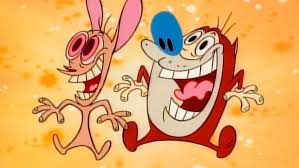
“The Ren & Stimpy Show” (1991 – 1995)
Television Series / Comedy

Fifty Two Episodes
Created by: John Kricfalusi
Featuring: John Kricfalusi, Billy West, Gary Owens, Harris Peet, Cheryl Chase, Alan Young, Jack Carter, Bob Camp and Michael Pataki
Stimpy: “Happy-happy, joy-joy.”
It’s a testament to its unique brand of grotesque humor and shocking originality that, even decades after its debut, The Ren & Stimpy Show remains a topic of fervent discussion and a touchstone for a generation of animation fans. Bursting onto Nickelodeon in 1991, it was an immediate, polarizing force, simultaneously lauded as groundbreaking and condemned as crude. Looking back, it’s clear that its impact was far more profound than just controversy; it irrevocably altered the landscape of television animation and left an indelible mark on popular culture.
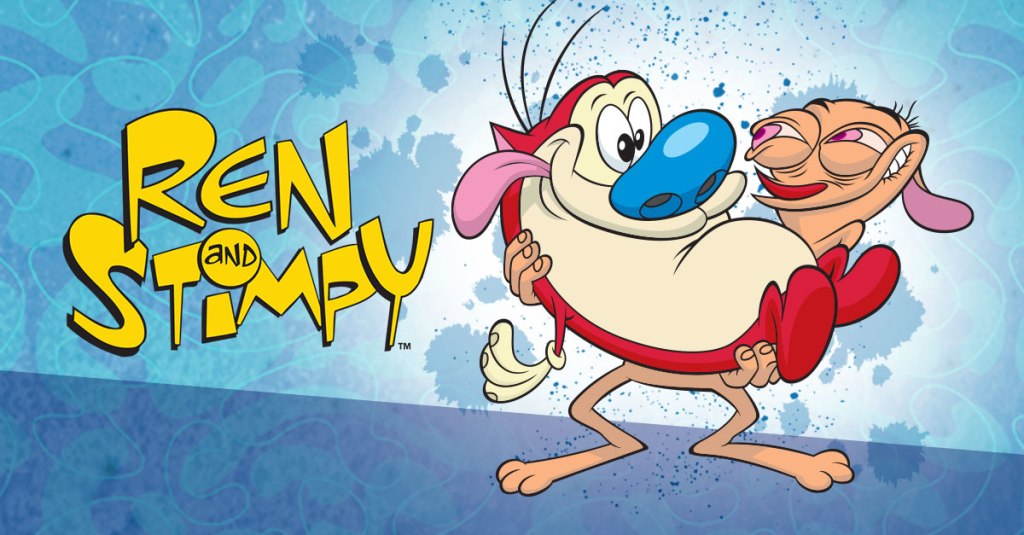
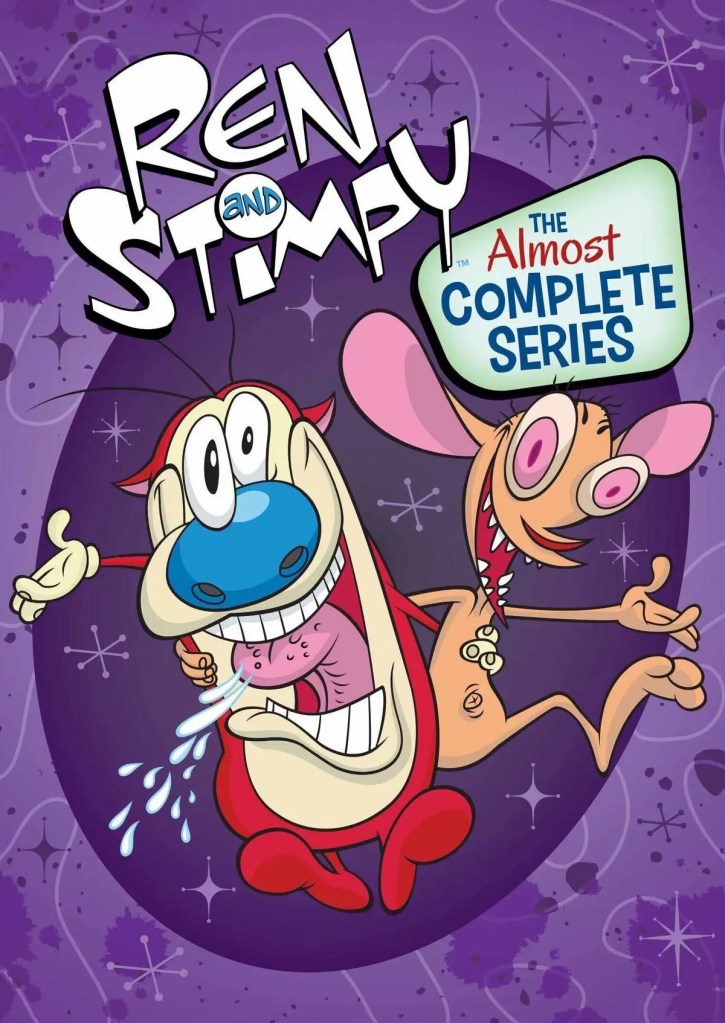
At its core, The Ren & Stimpy Show revolved around the bizarre, often horrifying, misadventures of a choleric, diminutive chihuahua named Ren Höek and his dim-witted, flatulent cat companion, Stimpy J. Cat. From this simple premise, creators John Kricfalusi and his team at Spümcø unleashed a torrent of visually repulsive, audibly jarring, and conceptually audacious cartoons that defied nearly every convention of children’s programming. This was not the safe, saccharine world of most Saturday morning fare; this was a show where close-ups on inflamed gums, dripping snot, and oozing pustules were not just common, but celebrated.
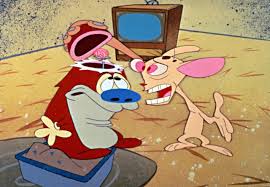
One of the show’s most striking features was its animation style. Eschewing the clean lines and limited animation prevalent at the time, Ren & Stimpy embraced a rubbery, expressive, and often disturbingly detailed aesthetic. Characters would contort into grotesque caricatures of themselves, their bodies stretching and distorting with every exaggerated emotion. The backgrounds, too, were meticulously rendered, often filled with bizarre, unsettling details that added to the overall sense of unease and surrealism. This “gross-out” humor, while initially shocking, quickly became a signature, setting a new, often higher, bar for visual comedy in animation.
Beyond the visuals, the vocal performances were equally iconic. Billy West, a vocal chameleon, brought Ren to life with a perpetually strained, high-pitched whine that could instantly shift from panicked hysteria to enraged screaming. Stimpy, voiced by Kricfalusi himself (and later by West), was a symphony of dopey giggles, guttural purrs, and the occasional, surprisingly profound, utterance. The interplay between Ren’s explosive temper and Stimpy’s blissful ignorance was the engine of much of the show’s comedy, leading to countless memorable catchphrases and absurd exchanges.
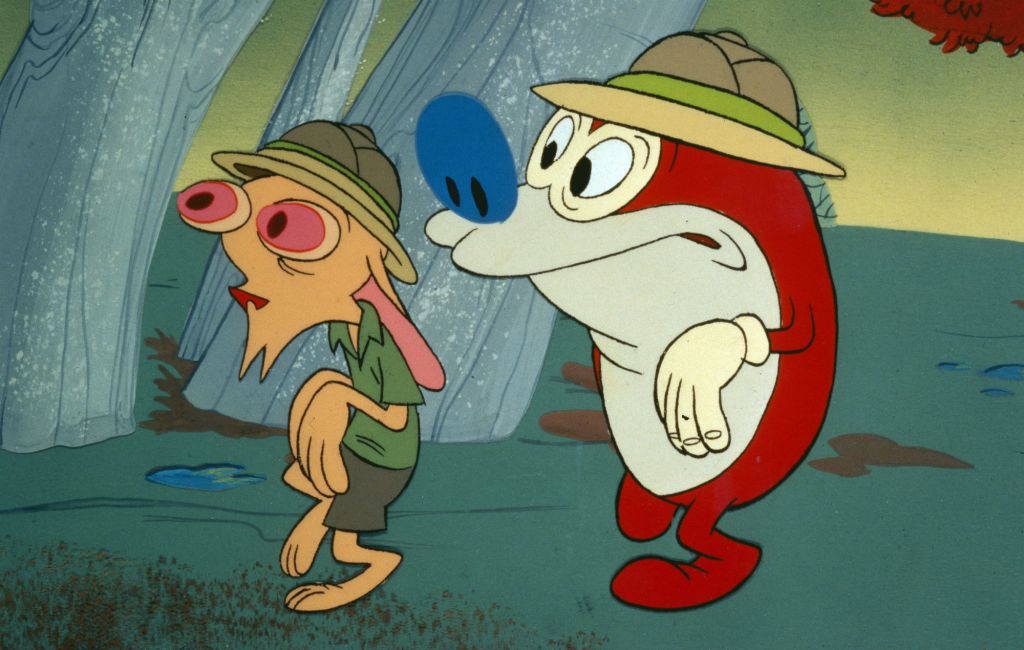
But Ren & Stimpy was more than just shock value. Beneath the layers of slime and histrionics lay a subversive wit and a surprising depth of character. Ren, despite his constant cruelty, often revealed glimpses of vulnerability and even a desperate desire for affection, however fleeting. Stimpy, for all his idiocy, possessed an unwavering optimism and a genuine, albeit misguided, loyalty to his friend. The show frequently delved into themes of poverty, desperation, and the sheer absurdity of existence, albeit through a highly warped lens. Episodes like “Space Madness,” with its descent into Ren’s paranoid delusions, or “Untamed World,” a bizarre parody of nature documentaries, showcased a sophisticated understanding of comedic timing and narrative construction.
The show’s influence cannot be overstated. It opened the floodgates for a wave of creator-driven animation that prioritized unique artistic vision over marketing tie-ins. Shows like Beavis and Butt-Head, Rocko’s Modern Life, and SpongeBob SquarePants all owe a debt to Ren & Stimpy’s pioneering spirit. It proved that animation could be edgy, intelligent, and appeal to both children and adults on different levels. It challenged the notion of what was acceptable on children’s television, pushing boundaries and, at times, breaking them entirely.
Of course, the show’s history is not without its controversies. The turbulent relationship between John Kricfalusi and Nickelodeon led to his eventual dismissal, and the quality of the later seasons under different creative control was often debated. The short-lived Adult Swim revival, Ren & Stimpy “Adult Party Cartoon”, attempted to push the boundaries even further, but largely failed to recapture the original’s magic, often relying on gratuitous content without the underlying wit that made the original so compelling.
Despite these later missteps, the legacy of the original The Ren & Stimpy Show remains firmly intact. It was a chaotic, brilliant, and utterly unforgettable series that dared to be different. It was a show that embraced the ugly, the uncomfortable, and the downright bizarre, and in doing so, it created something truly beautiful and enduring. For those who grew up with it, it’s a nostalgic trip back to a time when cartoons were truly wild. For new viewers, it’s a shocking, hilarious, and often thought-provoking experience that continues to resonate today, proving that sometimes, the most bizarre creations leave the most lasting impressions.


Leave a Reply