Featuring: Ron O’Neal, Roscoe Lee Browne, Sheila Frazier, Robert Guillaume, Jacques Sernas and William Berger
Tagline:“That Superfly Dude is Back!”
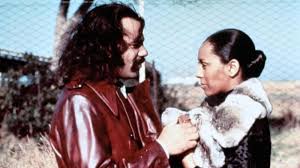
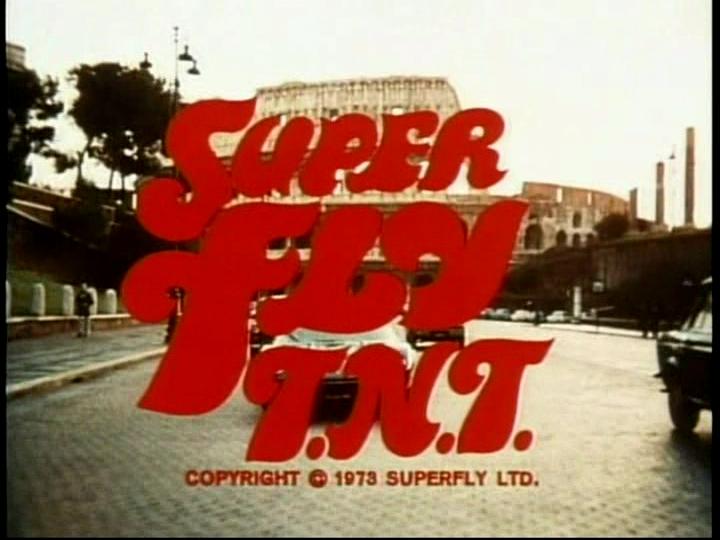
“Super Fly T.N.T.” (1973) is a curious and often-maligned sequel to the groundbreaking blaxploitation hit “Super Fly” (1972). While the original is celebrated for its gritty portrayal of inner-city life, Ron O’Neal’s iconic portrayal of Youngblood Priest, and a legendary Curtis Mayfield soundtrack, “Super Fly T.N.T.” takes a drastic geographical and thematic detour, resulting in a film that often feels disconnected from its predecessor, yet still offers some intriguing, albeit flawed, elements.
The film picks up with Priest (Ron O’Neal, who also takes over directorial duties) and his girlfriend Georgia having ostensibly left the drug game behind. They’ve relocated to Rome, seemingly enjoying a life of luxury, complete with a Lamborghini and a swanky apartment. However, Priest, bored with his newfound tranquility, finds himself drawn into a new scheme when he’s approached by Dr. Lamine Sonko (Roscoe Lee Browne), an African revolutionary in need of arms to overthrow a tyrannical regime in his home country. What begins as a quiet retirement quickly escalates into a transcontinental adventure involving gun-running and political intrigue.
One of the most striking departures from the original is the absence of Curtis Mayfield’s iconic soundtrack. Instead, “Super Fly T.N.T.” features music by the British-Ghanaian-Caribbean band Osibisa. While Osibisa’s Afro-rock sounds are undeniably energetic and interesting in their own right, they lack the raw, soulful, and deeply embedded narrative quality that Mayfield brought to the first film. The change in musical tone reflects the film’s shift in setting and ambition, but it’s a hard act to follow, and for many fans, this is where “T.N.T.” first stumbles.
The plot itself, with its jump from Harlem drug dealing to international arms dealing and African revolution, is ambitious, perhaps to a fault. On one hand, it attempts to elevate the character of Priest beyond the confines of the ghetto, giving him a more globally conscious purpose. This could be seen as a progressive move for the blaxploitation genre, which often focused solely on domestic urban struggles. On the other hand, the execution often feels sluggish and under-resourced. The “dirt-cheap production values” are apparent, particularly in the Roman and African sequences, which sometimes lack the visual flair and authentic feel of the original’s Harlem backdrop.
Ron O’Neal’s performance as Priest remains charismatic, though perhaps a little less world-weary and more outwardly bored than in the first film. His decision to direct also offers an interesting insight into his vision for the character and the franchise. He attempts to infuse the film with more thoughtful dialogue, reportedly with the help of writer Alex Haley. However, the narrative pacing is a significant issue. The first half, set in Rome, can be quite dull, with long stretches of aimless scenes. The action picks up somewhat in the latter half when the setting shifts to Africa, but even then, it struggles to maintain consistent momentum.
Despite its flaws, “Super Fly T.N.T.” does have some memorable moments. Robert Guillaume, later known for his role in “Benson,” delivers a surprising full-length rendition of the operatic aria “O Sole Mio” in a Roman café, a truly unexpected and delightful highlight. The underlying theme of Priest’s struggle to find purpose beyond his life of crime, and his eventual pivot towards a cause he deems worthy, is a compelling concept, even if the film doesn’t fully explore its depths.
Ultimately, “Super Fly T.N.T.” stands as a curious footnote in the blaxploitation canon. It’s an attempt to expand the scope of a successful formula, but it largely fails to recapture the raw energy and cultural resonance of its predecessor. It serves as a testament to how crucial a strong sense of place, a compelling narrative, and an unparalleled soundtrack were to the original “Super Fly.” While it might appeal to completists and those interested in the more experimental edges of blaxploitation, it remains a critical and commercial misfire, more notable for what it isn’t than for what it is.
Featuring: Atsumi Tanezaki, Saori Hayami and Takuya Eguchi
Manga: “As soon as you understand, go home.”
Spy x Family: Season Two dives deeper into the endearing, chaotic, and surprisingly heartfelt lives of the Forger family, solidifying its place as a standout in the anime landscape. While the core premise remains delightfully intact—a spy, an assassin, and a telepath pretending to be a normal family for the sake of world peace—Season Two expands on its strengths while subtly evolving its characters and their relationships.
One of the most notable aspects of Season Two is its increased focus on Yor Forger, the quiet yet deadly assassin. While Anya often stole the show in the first season with her adorable antics and mind-reading mischief, this season truly allows Yor to shine. We see her navigate more dangerous assignments, grapple with her burgeoning maternal instincts, and even question her purpose as an assassin in light of her growing affection for Loid and Anya. The “Cruise Ship Arc” is a particular highlight, providing an extended, high-stakes scenario where Yor’s skills are put to the ultimate test, and her internal struggles are brought to the forefront. These episodes offer some of the series’ most brutal and elegantly animated action sequences, all while deepening Yor’s character and underscoring her fierce dedication to her makeshift family.
Loid, the master spy Twilight, continues his meticulous efforts to maintain the facade of a normal family for the sake of Operation Strix. However, Season Two subtly emphasizes his growing emotional investment in Anya and Yor. His internal monologues, often filled with strategic calculations, are increasingly punctuated by genuine concern and even affection. This slow but steady shift in his priorities, from mission-focused to family-centric, is a compelling undercurrent that adds depth to his character. The comedic misunderstandings between Loid and Yor, often stemming from their secret lives, remain a source of consistent laughter, but they are now layered with a more palpable sense of care and reliance on one another.
Anya, of course, remains the heart of the show. Her telepathic abilities continue to be the source of both hilarious misinterpretations and crucial plot advancements. She frequently finds herself in comical predicaments, often trying to manipulate situations based on her incomplete understanding of adult thoughts. Yet, her desire to help her “Papa” and “Mama” is always sincere, even if her methods are unconventional. This season sees her pushing her academic pursuits (with varying degrees of success) and continuing to foster her unique bond with Bond, the precognitive dog. The interplay between Anya’s innocent perspective and the dangerous realities her parents face creates a unique blend of humor and tension that Spy x Family executes flawlessly.
Beyond the main trio, the supporting cast continues to enrich the world. Franky, Loid’s informant, gets some delightful comedic moments, often reluctantly dragged into the Forgers’ shenanigans. Yuri, Yor’s brother and a member of the Secret Police, provides an ongoing source of dramatic irony and conflict, particularly in his unwavering suspicion of Loid. Even minor characters contribute to the lively atmosphere and expand the rich tapestry of the Cold War-esque setting.
Visually, Spy x Family: Season Two maintains the high standard set by its predecessor. The animation by Wit Studio and CloverWorks is consistently fluid and expressive, particularly during action sequences and the characters’ exaggerated reactions. The character designs are charming and distinctive, perfectly capturing the essence of Tatsuya Endo’s original manga. The vibrant color palette and detailed backgrounds further immerse viewers in the fictional nations of Ostania and Westalis. The soundtrack, while perhaps not as immediately memorable as some, effectively underscores both the comedic and tense moments, enhancing the overall viewing experience.
While the season largely excels, some viewers might find that the pacing occasionally leans into more episodic, slice-of-life moments, especially in the earlier half, before delving into larger, more interconnected arcs. This isn’t necessarily a flaw, as these smaller stories contribute to character development and world-building, but those looking for constant high-stakes espionage might notice a slight shift. However, the balance between heartwarming domesticity and thrilling spy action remains a core strength.
In conclusion, Spy x Family: Season Two is a triumphant return for the beloved series. It successfully builds upon the established foundation, delving deeper into its characters’ psyches and relationships while delivering on both its comedic and action-packed promises. The enhanced focus on Yor, the continued evolution of Loid’s emotional landscape, and Anya’s unwavering charm make this season a must-watch for fans and newcomers alike. It’s a testament to the series’ unique blend of genre elements and its profound exploration of what it means to be a family, even one built on secrets and deception. The season leaves you eager for more of the Forger family’s elegant adventures.
Featuring: Shugo Nakamura, Jun Kasama, Shinichiro Kamio, Subaru Kimura and Kenta Miyake
Sakuragi Hanamichi:“Once you give up, the game is truly over.”
“The First Slam Dunk” arrived with a weight of expectation that few anime films could hope to bear. For decades, Takehiko Inoue’s Slam Dunk manga and its beloved 90s anime adaptation have held a sacred place in the hearts of basketball fans and anime enthusiasts worldwide. This film, coming over 25 years after the original anime concluded, wasn’t just a continuation; it was a reimagining, a stylistic overhaul, and a deep dive into the emotional core of one of the most iconic sports stories ever told. The result is a masterclass in animation, storytelling, and the sheer power of sport.
At its core, “The First Slam Dunk” retells the legendary match between Shohoku High and the seemingly invincible Sannoh Kogyo, a game widely considered the climax of the original manga. While this might initially sound like a simple recap, Inoue, who wrote and directed the film, ingeniously weaves a new narrative thread through this familiar territory: the perspective of Ryota Miyagi, Shohoku’s often-overlooked point guard. This shift is arguably the film’s greatest strength and its most daring gamble.
By focusing on Ryota, the film immediately differentiates itself. We are privy to his childhood, his deep bond with his older brother Sota (a prodigious basketball talent himself), and the profound grief and determination that shape him after tragedy strikes. This personal journey is interspersed with the high-stakes Sannoh game, creating a powerful emotional parallel. Ryota’s struggles, his quiet leadership, and his relentless drive to honor his brother resonate deeply, adding layers of pathos and vulnerability to a character previously seen mostly through the lens of his quick wit and agility. This narrative choice isn’t just an addition; it recontextualizes the entire Shohoku team’s struggle, making their collective pursuit of victory feel even more earned and poignant.
Visually, “The First Slam Dunk” is a revelation. Inoue’s decision to blend traditional 2D animation with advanced 3D CGI was met with initial skepticism by some purists, but the execution speaks for itself. The characters retain the expressive quality of their 2D origins, particularly in close-ups and character interactions, while the 3D elements truly shine during the basketball sequences. The fluidity, weight, and kinetic energy of the players’ movements on the court are unprecedented. Every dribble, every jump shot, every block, and every sprint feels incredibly real and impactful. The camera work is dynamic, putting the viewer right in the action, whether it’s tracking Hanamichi Sakuragi’s explosive rebounds or feeling the intensity of Hisashi Mitsui’s desperate three-pointers. The film captures the raw physicality and strategic nuances of basketball with a fidelity that surpasses its predecessors and sets a new benchmark for sports anime.
Even for those familiar with the Sannoh match, the film’s portrayal is nothing short of breathtaking. The pacing is masterful, allowing moments of intense action to breathe alongside quieter character beats. The tension is palpable, the stakes are clear, and the feeling of a true underdog battle against a seemingly insurmountable opponent is expertly maintained. Each Shohoku player gets their moment to shine, and their individual struggles and triumphs are integral to the team’s overall narrative. From Akagi’s determination to dominate the paint to Rukawa’s evolving understanding of teamwork, and especially Sakuragi’s hilarious yet heroic growth, the film beautifully captures the essence of what makes each character so compelling. The film also understands the power of silence, using it effectively to heighten dramatic moments, especially towards the climax of the game.
The sound design is exceptional, contributing immensely to the immersive experience. The squeak of sneakers on the court, the thud of the ball, the roar of the crowd, and the sharp whistle of the referee all combine to create an authentic atmosphere. The score, a modern, rock-infused soundtrack, complements the action perfectly, amplifying the energy and emotional intensity without ever overwhelming the scene.
One of the film’s remarkable achievements is its accessibility. While long-time fans will revel in the faithful recreation of iconic moments and the deepened character insights, newcomers can easily jump in and understand the core story and emotional arcs. The film cleverly provides enough context for the characters and their dynamics without getting bogged down in extensive exposition. It trusts the audience to connect with the passion and struggle on display.
If there are any minor critiques, some might argue that the film occasionally sacrifices screen time for certain fan-favorite characters (like Coach Anzai or some of the Sannoh players) in favor of Ryota’s expanded backstory. However, this trade-off is ultimately justified by the profound emotional impact of Ryota’s narrative and how it elevates the entire viewing experience. The shift in animation style, while incredibly effective, may take a few minutes for absolute purists to adjust to, but once immersed, its benefits quickly become undeniable.
“The First Slam Dunk” is more than just a sports anime film; it’s a profound character study, a technical marvel, and a loving homage to a timeless story. It captures the essence of what makes Slam Dunk so special: the grit, the passion, the humor, the camaraderie, and the sheer joy and heartbreak of competitive basketball. Takehiko Inoue has not just delivered a film; he has delivered a slam dunk, a resounding victory that satisfies long-time fans and welcomes a new generation to the court. It’s a powerful reminder that sometimes, to move forward, you must first look back, but with a fresh pair of eyes and an unwavering heart. Absolutely essential viewing.
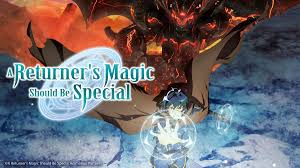
“A Returner’s Magic Should Be Special: Season One” (2023-present)
Television Series / Anime
Twelve Episodes
Created by: Takamitsu Kōno
A Returner’s Magic Should Be Special arrived on the anime scene with a hefty reputation, adapting a popular webtoon beloved for its intricate magic system, time-travel premise, and compelling character development. Season One, produced by Arvo Animation, takes on the ambitious task of translating this rich narrative into animated form. While it delivers on many fronts, presenting an engaging story with a distinct identity, it also faces the inherent challenges of adapting a lengthy source, resulting in a season that is good, but perhaps not yet great.
At its core, A Returner’s Magic Should Be Special is a tale of redemption, foresight, and the relentless pursuit of a better future. The story centers on Desir Arman, one of the last remaining mages struggling against the catastrophic Shadow Labyrinth – a desolate realm where humanity faces utter annihilation by formidable monsters. In a desperate final stand, alongside his closest companions, Desir witnesses the end of the world. However, instead of succumbing to death, he finds himself inexplicably transported back thirteen years to the moment he first enrolled in the Hebrion Academy, the continent’s most prestigious magic institution.
Armed with intimate knowledge of future events, the strengths and weaknesses of his future allies (and enemies), and a keen understanding of the Shadow Labyrinth’s mechanics, Desir makes a solemn vow: he will prevent the apocalypse. His mission involves gathering and training the future heroes who once failed, correcting past mistakes, and ensuring humanity is prepared for the inevitable invasion. This ‘returner’s’ perspective provides a fascinating narrative hook, allowing for both intense action and strategic planning, all underpinned by a palpable sense of urgency.
Season One diligently lays the groundwork for Desir’s ambitious plan. We see him systematically recruiting key individuals, not just for their raw talent but for their potential to overcome their flaws and reach their true capabilities. The early arcs focus heavily on the academy setting, which serves as a crucial training ground and a place for Desir to influence his future comrades. The battles, particularly those within the Shadow Labyrinth simulations and the real-world encounters, are generally well-choreographed and visually engaging, showcasing Desir’s unique magical analysis abilities rather than raw power.
One of the season’s strengths lies in its ability to highlight Desir’s intelligence. He isn’t overpowered in a typical fantasy sense; his advantage comes from his knowledge and his tactical mind. Watching him outmaneuver opponents or turn seemingly insurmountable odds in his favor through strategic thinking is genuinely satisfying.
However, the pacing can feel uneven at times. As with many adaptations of lengthy webtoons or light novels, the anime struggles to compress a vast amount of material into a limited number of episodes. This often results in certain plot points feeling rushed or character developments happening a little too quickly. While the core narrative beats are hit, some of the more nuanced interactions or the slower build-up of tension from the source material are inevitably condensed, which might leave viewers unfamiliar with the webtoon feeling that some emotional moments or revelations could have landed with more impact.
The ensemble cast is undoubtedly one of the anime’s biggest assets. Desir Arman is a compelling protagonist. He carries the weight of a dying world on his shoulders, but his resolve is unwavering. His interactions with his future companions – particularly Romantica Eru and Pram Schneider – form the emotional core of the series.
Romantica, initially depicted as an arrogant but gifted mage, undergoes significant growth as Desir helps her confront her insecurities and truly harness her potential. Pram, the enigmatic swordswoman, slowly opens up and reveals her strength and loyalty under Desir’s guidance. Even side characters, like the stoic Azest and the mischievous Adjest, hint at deeper backstories and significant roles to play, leaving viewers eager to see their future development.
The anime does a commendable job of showcasing the bonds forming between these characters, emphasizing teamwork and mutual support. This focus on camaraderie, rather than just individual power, is a refreshing aspect of the show.
Arvo Animation delivers a competent visual package for A Returner’s Magic Should Be Special. Character designs are faithful to the webtoon’s distinct art style, maintaining their charm and expressiveness. The magical effects are generally well-rendered, particularly when Desir employs his analysis magic, visualizing complex calculations and spell structures. The action sequences, while not consistently fluid at the highest level, are clear enough to follow the strategic ebb and flow of combat.
However, the animation doesn’t quite push any boundaries. While visually pleasing, it occasionally lacks the dynamic flair or consistent fluidity that would elevate it to a truly spectacular level. Backgrounds can sometimes appear a bit static, and certain frames might feel less polished than others. That being said, it never detracts significantly from the viewing experience, and for a series heavily reliant on dialogue and strategic thinking, the visual execution is more than adequate.
The sound design effectively complements the magical battles, with satisfying spell effects and impactful sword clashes. The voice acting, both in Japanese and English dubs, generally captures the essence of the characters, delivering lines with appropriate emotion and conviction.
The musical score by Kenta Higashioji is a highlight, featuring tracks that range from tense and dramatic during confrontations to inspiring and hopeful during moments of triumph. The opening and ending themes are also well-chosen, setting the tone for the series and providing catchy bookends to each episode.
A Returner’s Magic Should Be Special: Season One offers a solid and enjoyable entry into the world of time-traveling fantasy. Its compelling premise, intelligent protagonist, and focus on character development make it an easy recommendation for fans of the genre. While the pacing could be smoother and the animation occasionally less dynamic than some contemporaries, these are minor criticisms in the grand scheme.
The season successfully establishes Desir’s mission, introduces a fascinating cast of characters, and hints at the larger, more complex world that lies ahead. It’s a series that genuinely invests in its characters’ growth and the strategic elements of its plot. With its strong foundation, A Returner’s Magic Should Be Special has significant potential to evolve into an even more captivating anime in its subsequent seasons, provided it continues to refine its pacing and perhaps elevate its animation to match the ambition of its narrative. For now, it’s a worthwhile watch that leaves you eager for Desir Arman’s next move in his desperate bid to save humanity.
Detective Inspector Liz Darby:“You also have Joan, and that makes you vulnerable.”
Jack Darby:“No. That makes me tougher.”
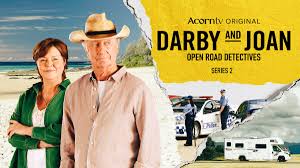
“Darby and Joan” returned for its second series, bringing back the unlikely duo of retired detective Jack Darby (Bryan Brown) and British nurse Joan Kirkhope (Greta Scacchi) as they navigate the picturesque, yet surprisingly perilous, Australian outback. The first series established a charming premise: two individuals, each on their own journey of self-discovery and escape, coincidentally finding themselves solving mysteries while exploring the vast landscape. Series 2 largely continues this winning formula, while also attempting to delve a little deeper into the characters’ personal lives and the overarching mystery that connects them.
The heart of “Darby and Joan” remains the chemistry and dynamic between Bryan Brown and Greta Scacchi. Brown’s portrayal of Jack Darby is effortlessly laconic, his gruff exterior often belying a sharp mind and a surprising warmth. He delivers his lines with a dry wit that perfectly captures the essence of the seasoned, slightly world-weary detective. Scacchi, as Joan, is equally compelling. Her character is a delightful blend of British politeness and burgeoning resilience, a woman gradually shedding the constraints of her past and embracing adventure. Their evolving relationship, filled with understated affection, mutual respect, and a good dose of playful banter, is a joy to watch. It’s not about grand romantic gestures, but about the quiet companionship and understanding that builds between two people who truly see and appreciate each other. This genuine connection elevates the series beyond a simple procedural.
Each episode in Series 2, much like the first, largely presents a standalone mystery, often tied to the unique characters and small communities Darby and Joan encounter on their travels. From peculiar disappearances to suspicious deaths, the cases are generally well-constructed, offering enough twists and turns to keep viewers engaged without becoming overly complex. The charm lies in how Darby’s investigative instincts and Joan’s keen observations (and sometimes accidental blunders) combine to unravel the truth.
What distinguishes Series 2 is a more pronounced attempt to weave the individual episodic mysteries into the larger tapestry of Joan’s quest to understand her husband’s death. This overarching narrative, which was somewhat sidelined in the first series, gains more prominence here, adding a layer of emotional depth and intrigue. While some might find the resolution of this central mystery a little too neat or perhaps not as impactful as the build-up suggests, it certainly provides a stronger backbone for the season.
Just as in the first series, the Australian landscape is arguably the third main character. Series 2 continues to showcase the breathtaking beauty and diversity of the country, from sun-drenched coastal towns to dusty outback roads and quirky, isolated settlements. The cinematography is excellent, capturing the vastness and the unique character of each location. This visual appeal is more than just a backdrop; it’s integral to the show’s identity, reflecting the characters’ journey and the sense of exploration. The road trip element remains strong, offering a delightful sense of discovery with each new setting.
While “Darby and Joan” Series 2 is an enjoyable watch, it’s not without its minor imperfections. Some of the individual mysteries, while entertaining, can feel a tad predictable at times, or rely on conveniences to move the plot forward. The pacing, while generally relaxed and fitting for the genre, might feel a bit slow for viewers accustomed to more fast-paced procedurals. Additionally, as mentioned, the resolution of Joan’s personal mystery, while satisfying in its own way, could have perhaps carried more emotional weight given the anticipation built throughout both seasons.
“Darby and Joan” Series 2 is a comforting and engaging return for fans of the first season. It successfully capitalizes on the undeniable chemistry of its lead actors, offers a pleasant array of episodic mysteries, and continues to highlight the stunning Australian scenery. While it doesn’t dramatically reinvent the wheel, it subtly deepens the character arcs and provides a more cohesive narrative throughline. It’s a gentle, character-driven mystery series that offers both escapism and a touch of genuine human connection. If you enjoyed the first series, you’ll find plenty to appreciate in this charming continuation. It’s perfect viewing for those who enjoy a leisurely pace, compelling characters, and a beautiful backdrop to their crime-solving adventures.
Featuring: Demi Moore, Margaret Qualley and Dennis Quaid
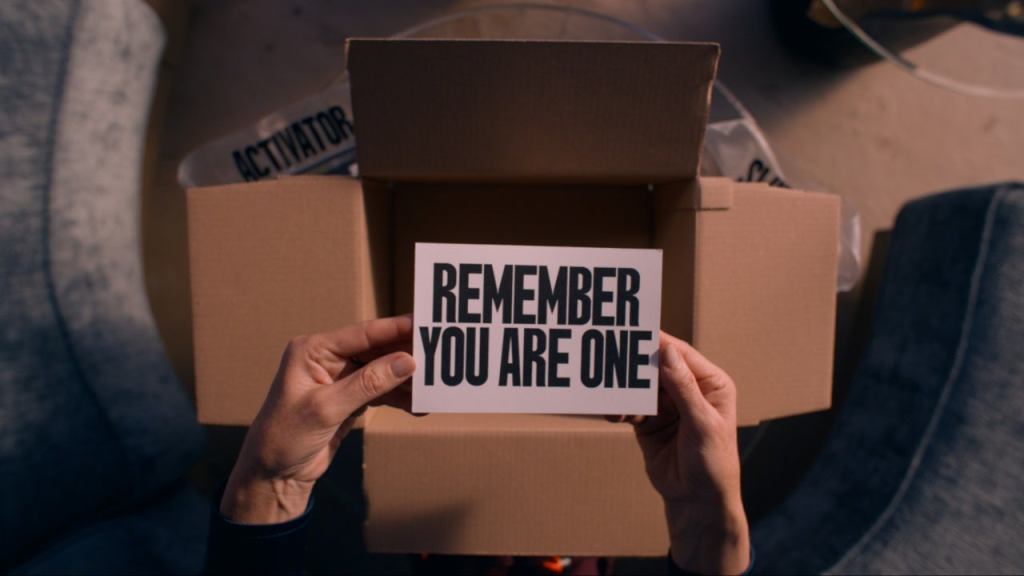
The Substance:“Have you ever dreamt of a better version of yourself? Younger, more beautiful, more perfect. One single injection unlocks your DNA, starting a new cellular division, that will release another version of yourself. This is the Substance. You are the matrix. Everything comes from you. Everything is you. This is simply a better version of yourself. You just have to share. One week for one and one week for the other. A perfect balance of seven days each. The one and only thing not to forget: You. Are. One. You can’t escape from yourself.”
Critical Commentary
Coralie Fargeat’s The Substance is a provocative and unsettling exploration of aging, celebrity culture, and the lengths to which we’ll go to maintain youth and relevance. This body horror-tinged satire offers a biting critique of Hollywood’s obsession with appearance and the exploitation of women in the entertainment industry.
The film centers around Elizabeth Sparkle (Demi Moore), a once-beloved aerobics star whose career has faded with time.Feeling discarded and undervalued, she encounters a mysterious substance that promises to rejuvenate her. Initially hesitant, Elizabeth succumbs to the temptation and soon finds herself transformed, but the changes are far from superficial. As the substance takes hold, Elizabeth’s body undergoes a disturbing metamorphosis, accompanied by a growing sense of unease and a loss of control.
The Substance is a visually arresting film, with Fargeat’s direction showcasing a flair for the grotesque and the surreal.The cinematography is both beautiful and disturbing, capturing the film’s unsettling atmosphere and the grotesque transformations that Elizabeth undergoes. The film’s score is equally unsettling, adding to the tension and unease.
Moore delivers a powerful performance as Elizabeth, capturing the character’s desperation, fear, and growing madness.Her transformation is both physical and emotional, as she struggles to reconcile her newfound youth with the loss of her identity. Margaret Qualley is equally impressive as Emma, Elizabeth’s estranged daughter, who becomes embroiled in her mother’s dangerous obsession.
Beyond its surface-level critique of Hollywood’s obsession with youth and beauty, The Substance also explores themes of identity, motherhood, and the complexities of female aging. Elizabeth’s transformation is not merely a physical one but a profound exploration of the ways in which women are defined by their appearance and their societal roles.
The film’s portrayal of motherhood is particularly poignant. Elizabeth’s relationship with her daughter, Emma, is strained,and her desperate pursuit of youth can be seen as a reflection of her own unfulfilled maternal desires. The film suggests that the pressure on women to be both successful and nurturing can be overwhelming, and that the pursuit of perfection can lead to self-destruction.
The Substance also offers a chilling commentary on the exploitation of women in the entertainment industry. The mysterious substance that Elizabeth encounters can be seen as a metaphor for the promises of fame and fortune that are often dangled in front of aspiring actresses. The film suggests that these promises are often empty, and that women are frequently treated as disposable commodities.
The Substance is a thought-provoking and disturbing film that offers a scathing critique of Hollywood’s obsession with youth and beauty. It’s a cautionary tale about the dangers of chasing after unattainable ideals and the consequences of sacrificing one’s identity for fleeting fame. While the film’s tone may be dark and disturbing, it’s ultimately a powerful and unforgettable cinematic experience.
Technical Commentary
Video
Presented in native 2160p with gorgeous Dolby Vision color expansion, the film looks every bit as striking as it did in theaters. Saturation borders on overdone on occasion, with sun-blasted flesh tones, but is only remaining faithful to the original photography and the director’s intentions at every turn. Beauty is presented with hyper-realistic oranges, pinks and fuschias, madness with clinical whites and splashes of vivid yellow and green, and the culmination of Elisabeth’s healthcare regiment with garish reds and blues. It’s a cavalcade of tones, handled masterfully and without incident by MUBI’s 4K presentation.
Audio
The DTS-HD Master Audio 5.1 surround track doesn’t disappoint in that regard. From the opening minutes there is a growing ferocity lurking within the film’s soundscape; one that only gains in intensity and volume as the story barrels along. LFE output is brash and assertive, making its presence known at every turn whether by way of the score or the thick, meaty chewing, tearing, rending or squelching that requires weight and heft. The rear speakers are also teeming with activity.
Kambei Shimada:“This is the nature of war: By protecting others, you save yourselves. If you only think of yourself, you’ll only destroy yourself.”
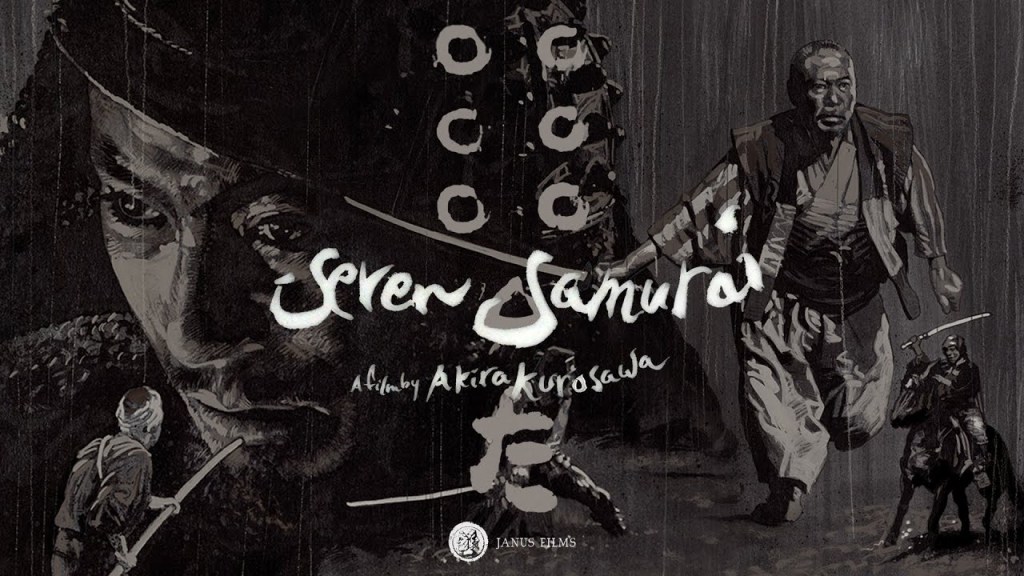
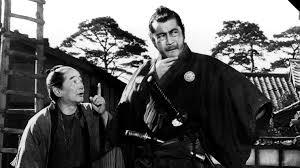
Akira Kurosawa’s Seven Samurai (1954) is widely regarded as one of the greatest films ever made, and the 2024 remastered version brings a fresh clarity and brilliance to this epic tale of honor, sacrifice, and survival. This remaster does more than just clean up the picture and audio—it brings Kurosawa’s masterwork into sharper focus, allowing modern audiences to experience the visual and narrative intricacies with a new appreciation.
The 2024 remaster enhances the film’s already stunning cinematography. Each frame, meticulously crafted by Kurosawa, feels revitalized. The black-and-white imagery is crisp, with deeper contrasts that highlight the film’s iconic compositions: from sweeping landscapes to intimate character close-ups. The battle scenes, particularly the climactic final showdown in the rain, feel more visceral and dynamic than ever. With improved film grain and sharper resolution, details like the wind in the grass or the glistening of rainwater pop with new life.
The sound design has also benefited immensely from the remastering process. Fumio Hayasaka’s score, with its minimalist and evocative rhythms, emerges more powerfully, reinforcing the film’s emotional stakes. The dialogue, though often sparse, is now clearer, allowing for the subtleties of the actors’ performances—particularly those of Takashi Shimura (Kambei) and Toshiro Mifune (Kikuchiyo)—to resonate more deeply. The ambient sounds of nature, swords clashing, and the tumult of battle feel more immersive, pulling viewers into the chaos of feudal Japan.
The remastered Seven Samurai not only enhances the technical aspects of the film but also reinforces the timelessness of its story. The themes of communal solidarity, self-sacrifice, and the struggle against oppression remain as potent today as they were 70 years ago. Kurosawa’s deep humanism, the complexity of his characters, and the philosophical undertones resonate even more clearly through this pristine restoration.
What sets Seven Samurai apart, beyond its technical brilliance, is Kurosawa’s mastery of storytelling. The 2024 remaster allows viewers to engage more fully with the film’s intricate pacing and character development. Each of the seven samurai, initially defined by their unique personalities and skills, gradually reveals deeper layers of humanity. Kambei, the wise and weary leader, becomes even more compelling as the improved clarity allows us to notice the subtle shifts in his expressions—his stoic leadership juxtaposed with the burden of the many battles he has fought.
The chaotic and comical Kikuchiyo, played by the magnetic Toshiro Mifune, benefits particularly from the restoration. His dynamic physicality is given new life through the sharper image, making his exaggerated movements more fluid and expressive. This highlights his status as both an outsider and a heart-wrenching, tragic figure, seeking acceptance and purpose among the samurai elite.
In addition to individual character depth, the remaster sharpens the film’s exploration of class and social dynamics. The tension between the samurai, peasants, and bandits feels more palpable, enhanced by the detailed restoration of their faces, costumes, and surroundings. The remaster allows viewers to pick up on small, previously unnoticed moments that reveal much about the social order of the time, and Kurosawa’s layered critique of heroism and sacrifice.
Though Seven Samurai runs nearly three and a half hours, its pacing is masterful, and the remastered version somehow feels even more immersive and engaging. Kurosawa’s gradual buildup of tension, as the villagers and samurai prepare for the bandit attack, feels more immediate. The restored version emphasizes the rhythm of the film, from moments of quiet planning and strategy to bursts of intense action.
The battle sequences, already some of the most thrilling ever filmed, gain new energy in this remaster. The improved contrast and definition make it easier to follow the fluid choreography of the samurai’s combat. Kurosawa’s innovative use of slow motion, especially in the climactic rain-soaked duel, feels fresh and modern, adding an epic grandeur to the fight scenes. The tension between life and death is more pronounced, pulling audiences into the high stakes of each skirmish.
One of the most remarkable aspects of the remastered Seven Samurai is how much more emotionally powerful the film feels. The small but crucial details in the actors’ faces, the weariness of their bodies, and their quiet moments of reflection now have a heightened sense of gravity. The villagers’ fear, desperation, and eventual courage are rendered with vivid realism, making their story even more relatable.
The ending—both triumphant and melancholic—strikes with greater force. Kurosawa’s conclusion, where the surviving samurai look over the graves of their fallen comrades, hits harder in the restored version. The weight of the losses, contrasted with the villagers’ relief, reminds viewers of the cost of war, even in defense of justice.
Kurosawa’s influence on global cinema is undeniable, and this remaster only reinforces his stature. The meticulous framing, the deep-focus shots, and the use of weather as an emotional backdrop are techniques that directors from Sergio Leone to George Lucas have drawn upon. In the remastered version, Kurosawa’s visionary use of these elements feels more immediate, almost as if the film was made for today’s audiences rather than seven decades ago.
Additionally, Seven Samurai remains a testament to the idea of the ensemble cast. The group dynamics, both among the samurai and between the samurai and villagers, form the emotional core of the film, and the restoration enhances this communal energy. Whether it’s the quiet camaraderie around the fire or the strategizing in the midst of battle, the remaster emphasizes the humanity that bonds these characters together, even in the face of overwhelming odds.
For long-time fans, the 2024 remaster of Seven Samurai is an opportunity to see the film in its finest form, preserving the integrity of Kurosawa’s original vision while polishing it for modern screens. For newcomers, it’s a perfect way to experience this cinematic milestone with all its grandeur intact. Whether watching for the first time or the hundredth, this remastered version is a testament to the enduring power of Seven Samurai as one of cinema’s crowning achievements.
Featuring: Adrian Edmondson, Rik Mayall, Nigel Planer, Christopher Ryan and Alexei Sayle
Rick:“I suppose you think it’s pretty weird, don’t you Mike? Well, you’d be right. ‘Cause THAT’S the kind of guy I am, right? WEIRD. Which is why I go over people’s heads. A bit like an aeroplane! You think I’m an aeroplane, don’t you, Mike? Well, I’m not.”
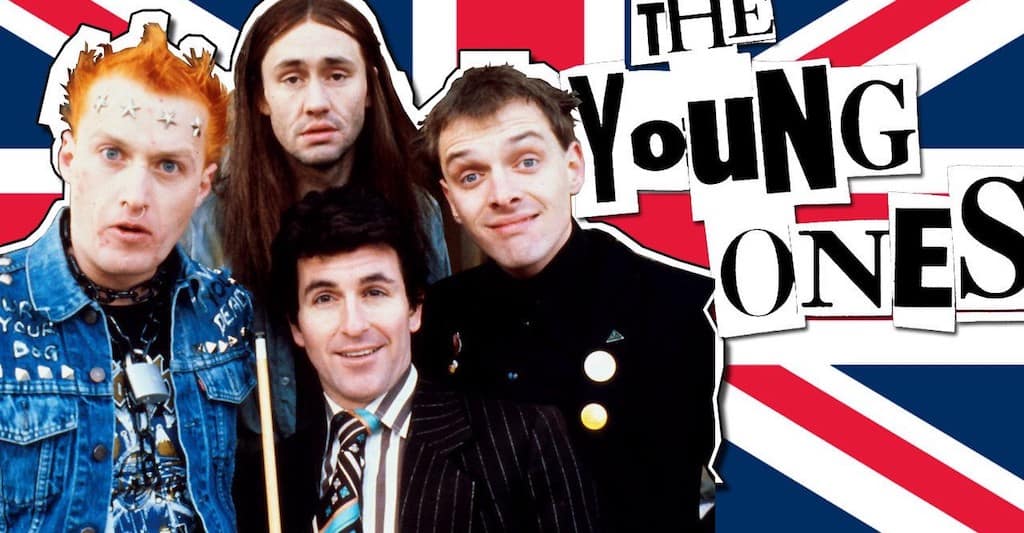
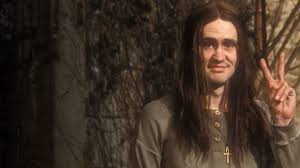
In the landscape of British television comedy, few series have left as disruptive, anarchic, and hilarious a mark as The Young Ones. First broadcast on BBC2 between 1982 and 1984, this bizarre, aggressive, and frequently surreal sitcom detonated onto TV screens like a Molotov cocktail of punk rock, slapstick violence, and blistering satire. Even four decades later, it remains one of the boldest comedies ever to grace the small screen—madcap, politically charged, and completely unwilling to play by the rules.
The series centers on four university students sharing a dilapidated house:
Rick (Rik Mayall) – A self-proclaimed “people’s poet,” Rick is a preening, narcissistic anarchist who worships Cliff Richard and believes he’s the moral backbone of his generation, despite being cowardly, vain, and petulant.
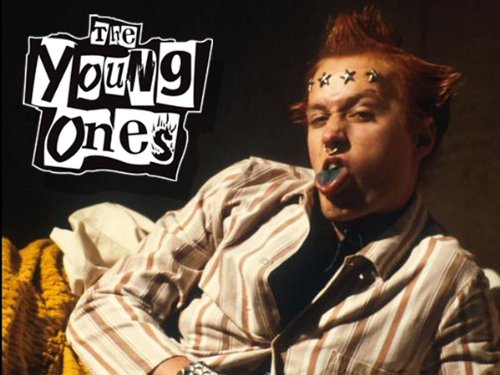
Vyvyan (Adrian Edmondson) – A sociopathic medical student with metal spikes in his forehead, Vyvyan is a whirlwind of destruction. He drinks motor oil, punches through walls, and maintains an intense hatred for Rick.
Neil (Nigel Planer) – A perpetually depressed hippie obsessed with lentils and gloom, Neil is the house doormat, always saddled with chores and the others’ disdain.
Mike (Christopher Ryan) – The “cool” one of the group, Mike is a small-time schemer and self-styled ladies’ man, often serving as a straight man to the others’ chaos, but just as corrupt and greedy.
These characters are not just caricatures—they’re exaggerated, weaponized versions of youth stereotypes in Thatcher-era Britain. Each represents a type of student archetype lampooned and pushed into grotesque absurdity, revealing the dysfunction beneath surface identities.
What sets The Young Ones apart is not just its cast of misfits but its form. The show frequently smashes through traditional sitcom conventions. Narrative continuity is often abandoned mid-episode in favor of surreal cutaways, puppet interludes, animated sequences, and musical numbers. Entire plotlines can hinge on the appearance of talking rats or a nuclear bomb falling on the house, only to reset completely the next week.
Some episodes barely have a story—”Boring” lives up to its title by deliberately undermining its own premise, while “Flood” ends with a siege by a vampire horde. It’s not so much a sitcom as it is a live-action cartoon with sociopolitical subtext and rock bands.
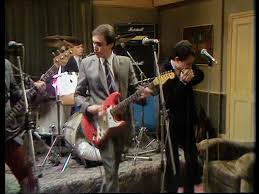
Crucially, The Young Ones wasn’t just a comedy—it was also a platform for emerging alternative culture. Each episode featured a live musical performance from then-cutting-edge acts like Madness, Motörhead, and The Damned. This wasn’t incidental: it was part of a clever strategy to classify the show as “variety” and evade the BBC’s strict comedy runtime limits.
But these performances weren’t filler—they gave the show a raw, punky energy. The Young Ones wasn’t commenting on the culture of its time; it was part of it.
Though it seems anarchic and scatterbrained on the surface, The Young Ones is a masterclass in targeted satire. Thatcher’s Britain, class divides, academic pretension, radical politics, and youth apathy are all savagely mocked. Rick’s “anarchism” is performative and shallow, a biting jab at performative activism. Neil’s peace-and-love ideology collapses under its own passive helplessness.
Even the constant violence—characters are beaten, exploded, or crushed in every episode—can be read as a critique of both the state of the world and the escapism of traditional comedy. The Young Ones doesn’t comfort the viewer—it shouts in their face and then drops a piano on them.
The Young Ones only ran for 12 episodes, but its influence is seismic. It helped launch the careers of Rik Mayall and Adrian Edmondson, who would go on to further success with Bottom and The Comic Strip Presents. The show also played a key role in the rise of the “alternative comedy” scene in the UK, paving the way for everything from Blackadderto Spaced and The Mighty Boosh.
Its subversive humor has been cited as an influence on American comedies like South Park and It’s Always Sunny in Philadelphia, though few shows have dared to reach quite the same fever pitch of absurdity.
In many ways, The Young Ones shouldn’t work. It’s loud, messy, juvenile, and filled with gags that are more violent than clever. But therein lies its genius. It captures the manic energy of youth—its contradictions, its performative ideologies, its wild creativity—with shocking honesty and relentless hilarity.
Forty years on, The Young Ones remains a singular achievement: part sitcom, part sketch show, part punk gig, and part middle finger to the establishment. It’s not for everyone, and it never wanted to be. But for those who get it, it’s still one of the funniest, most original shows ever made.
Featuring: Dervla Kirwan, Stephen Tompkinson, Tony Doyle and Tina Kellegher
Father Peter Clifford:“Assumpta, I’m a Catholic priest.”
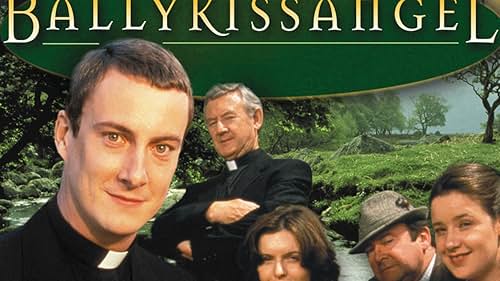
Ballykissangel is one of those rare television dramas that manages to be both quaint and quietly profound. First broadcast on BBC One in 1996, the series ran for six seasons and a Christmas special before ending in 2001. Created by Kieran Prendiville, Ballykissangel was produced by World Productions and filmed on location in the picturesque village of Avoca in County Wicklow, Ireland. It presents itself on the surface as a charming slice-of-life story about a small Irish village—but underneath the bucolic exterior lies a surprisingly layered drama filled with romance, community tension, culture clash, and spiritual questioning.
While Ballykissangel never reached the prestige TV heights of some of its BBC contemporaries, it held a unique place in the television landscape of the late 1990s and early 2000s. It combined the gentleness of Heartbeat or All Creatures Great and Small with subtle doses of political commentary, emotional depth, and ecclesiastical introspection. At its best, it was funny, warm, and heartbreaking in equal measure.
The story begins with the arrival of Father Peter Clifford (Stephen Tompkinson), a young English Catholic priest who is assigned to the small Irish parish of Ballykissangel. From the outset, Peter is both an outsider and an observer, his modern views often clashing with the traditional values of his new parishioners. Much of the early drama revolves around Peter’s adjustment to this new world and the town’s suspicion of the “English priest.”
But what makes Ballykissangel more than just a culture-clash comedy is how deftly it weaves personal stories and relationships into its narrative. The show is interested not just in Peter’s fish-out-of-water journey, but in the entire tapestry of the village—its farmers, teachers, shopkeepers, and rogues. It paints a portrait of a close-knit, sometimes claustrophobic community with genuine affection and insight.
Faith is a recurring theme, but never in a didactic or moralizing way. The series often explores the limits of institutional religion, the humanity of clergy, and the grey areas of personal belief. Father Clifford is a man of faith, but he’s also plagued by doubt, desires, and a strong sense of social justice. This duality is never treated as contradictory—instead, it’s what makes him compelling.
At the center of the show’s emotional heart, particularly in its first three seasons, is the relationship between Peter Clifford and Assumpta Fitzgerald (played by the magnetic Dervla Kirwan). Assumpta is the strong-willed, cynical owner of the village pub, and her chemistry with Peter is palpable from their first scene together. The series walks a delicate line between exploring their unspoken attraction and maintaining the tension of Peter’s vows as a priest.
This will-they-won’t-they dynamic is among the most compelling elements of Ballykissangel, made all the more poignant by the fact that it cannot end in the usual romantic comedy fashion. When their relationship finally does evolve into something tangible, it comes at great emotional and narrative cost—and the fallout is both controversial and devastating for longtime fans.
While Peter and Assumpta may be the show’s emotional anchor in the early years, the strength of Ballykissangel lies in its ensemble. Characters like Brian Quigley (Tony Doyle), the entrepreneurial wheeler-dealer who serves as both antagonist and comic relief, add flavor to the village. Quigley is a shrewd businessman with a dubious moral compass, but his charisma makes him a perennial favorite.
Niamh Quigley (Tina Kellegher), Brian’s daughter, represents another facet of the show’s character-driven appeal. Her marriage to Garda Ambrose Egan (Peter Hanly), and the domestic drama that unfolds therein, offers a more grounded, everyday depiction of love and compromise.
Other memorable figures include Father MacAnally (Niall Toibin), the stern, old-guard cleric who disapproves of Peter’s modern methods; Kathleen Hendley (Aine Ni Mhuiri), the ever-watchful shopkeeper; and Eamon Byrne (Liam Heffernan), the shy, awkward farmer with a heart of gold.
The community of Ballykissangel itself becomes a character. Festivals, funerals, pub nights, local scandals, and hurling matches provide the fabric of rural Irish life, portrayed with affection but never sentimentality.
After the departure of both Stephen Tompkinson and Dervla Kirwan at the end of Season 3, the show underwent a significant tonal shift. While the production retained its signature pastoral charm and continued to explore community life, many viewers felt the loss of its original emotional center. The subsequent seasons brought in new characters, including Father Aidan O’Connell (Don Wycherley) and Frankie Sullivan (Victoria Smurfit), who tried admirably to recapture the magic—but with mixed results.
There were still strong storylines in later seasons—particularly around Niamh’s struggles with widowhood, and the exploration of new romantic entanglements—but the show never quite regained the spark of its early years. The balance of drama, comedy, and character introspection sometimes veered into melodrama or sitcom-like contrivance.
The series ended rather abruptly with a Christmas special in 2001, which left many narrative threads unresolved. While not necessarily a satisfying conclusion, the ending did feel somewhat appropriate for a show that was never about grand arcs but rather the ebb and flow of life in a small town.
Kieran Prendiville’s writing is filled with warmth and sharp observation. The scripts, especially in the early seasons, are laced with humor that is organic rather than forced, and pathos that arises naturally from character. While the show rarely veers into high drama, it has moments of emotional gravity that land with unexpected weight.
The direction and cinematography take full advantage of the lush Irish landscape, with rolling hills, misty valleys, and stone walls providing a backdrop that is almost therapeutic in its beauty. The use of traditional Irish music in the score further enhances the immersive experience.
Though Ballykissangel never achieved the international fame of Downton Abbey or the cultural currency of Father Ted, it developed a devoted fanbase and left a lasting impression on those who followed it. It offered a rare and respectful depiction of rural Irish life, without resorting to caricature or condescension.
In an age of fast-paced television and high-concept dramas, Ballykissangel stands as a reminder of the power of slow storytelling. It doesn’t rely on plot twists or spectacle. Instead, it invests in people—their flaws, kindnesses, conflicts, and contradictions.
The deaths of actors Tony Doyle and Birdy Sweeney during the show’s run were felt deeply by fans, not just because of their roles, but because Ballykissangel had succeeded in making its fictional world feel personal.
Ballykissangel is not a perfect show. It’s uneven at times, and its final seasons meander more than they soar. But when it was good, it was transcendent in its quiet way. It’s a story about belonging, about faith and doubt, and about the power of community in an increasingly disconnected world.
For those willing to invest in its rhythms, Ballykissangel offers not just entertainment but solace. It’s the kind of show that invites you in, hands you a pint, and lets you sit by the fire as stories unfold—slowly, organically, and always with heart.
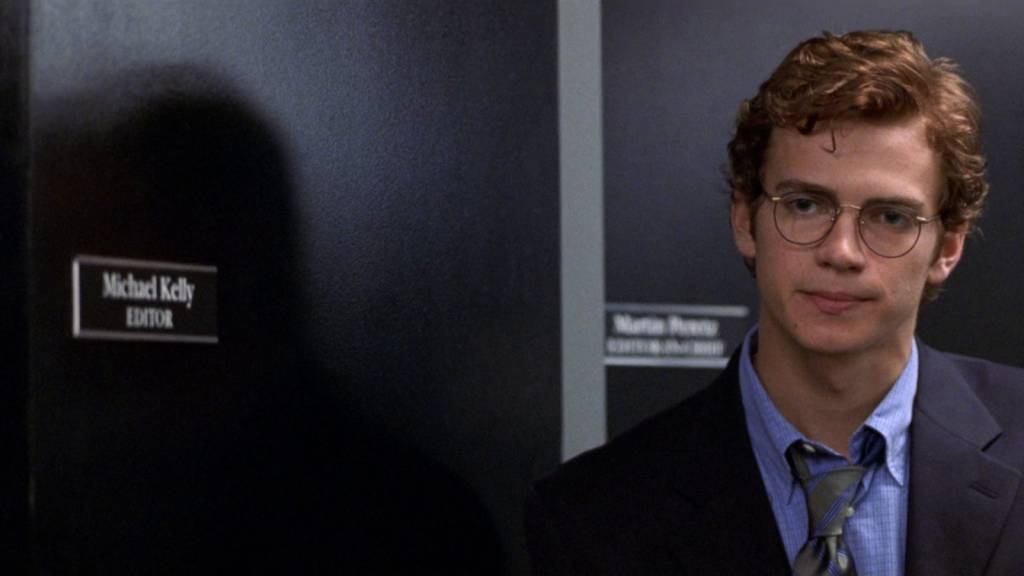
In a time when journalistic integrity is under constant scrutiny, Shattered Glass emerges as both a haunting reminder and a gripping cautionary tale. Based on the true story of Stephen Glass, a young and rising star at The New Republic who was revealed to have fabricated the majority of his articles, this 2003 drama is a chilling exploration of ambition, fraud, and the fragile line between perception and truth.
The film is set in the late 1990s, a time when The New Republic was considered the “in-flight magazine of Air Force One”—a publication with enormous cultural and political influence. Stephen Glass, portrayed with calculated vulnerability by Hayden Christensen, is a charismatic young journalist who wins over his peers with self-deprecation, humor, and apparent talent. However, as cracks begin to form in one of his high-profile stories, an editor at Forbes Digital Tool (played by Steve Zahn) begins to investigate its veracity, triggering a domino effect that ultimately exposes a vast web of deceit.
The screenplay, written by director Billy Ray, is based on the 1998 Vanity Fair article by Buzz Bissinger. It sticks closely to the real events and benefits enormously from its grounded, methodical pacing. Ray doesn’t sensationalize the scandal but rather allows the horror to build slowly through understated moments and mounting tension.
Hayden Christensen’s portrayal of Glass is arguably the best performance of his career. While known to many as Anakin Skywalker in the Star Wars prequels, Christensen demonstrates a far more nuanced range here. He plays Glass not as a clear-cut villain, but as a deeply insecure and manipulative individual who is desperate to be liked, to be seen, and most of all, to matter. His charm is disarming, and that’s precisely what makes his deception so believable—and so dangerous.
Opposite him, Peter Sarsgaard delivers a quietly commanding performance as Charles Lane, the new editor of The New Republic who must confront the possibility that his star writer is a fraud. Sarsgaard’s subtle transformation—from a cautious, slightly unsure editor trying to win over his staff, to a moral anchor determined to uphold journalistic standards—is the film’s beating heart. His restraint provides a powerful counterpoint to Christensen’s increasingly desperate Glass.
Billy Ray directs with a quiet intelligence. He avoids flashy techniques, instead choosing a clean, almost clinical aesthetic that mirrors the film’s thematic concerns. The camera often lingers on Glass’s face as he lies, catching the flickers of guilt and calculation. These moments are where the film is most powerful, inviting the viewer into the mindset of a fabricator who is not psychopathic, but profoundly weak.
What’s especially disturbing—and compelling—is how long Glass got away with it. His colleagues, editors, and even readers were enamored with his voice, his persona, and his narrative flair. The film makes clear that Glass’s success wasn’t only a personal failing; it was also an institutional one.
In hindsight, Shattered Glass feels prophetic. Released before the rise of social media, before the “fake news” crisis, and before the era of widespread digital misinformation, the film captures an earlier but no less relevant moment of moral panic in journalism. It raises enduring questions: What happens when storytelling becomes more important than facts? How do editors balance trust and skepticism? And what kind of damage can a single individual do when no one’s looking too closely?
There is a moment late in the film where Charles Lane, confronting the magnitude of Glass’s deception, says to his staff: “He handed us fiction after fiction, and we printed them all as fact. Just because we found him entertaining. It’s indefensible. Don’t you see that?” That line encapsulates the tragedy—not just of Glass’s fall, but of a collective failure to safeguard truth.
The visual style of Shattered Glass is deliberately restrained. Cinematographer Mandy Walker (later known for Hidden Figures and Mulan) gives the film a sleek, almost antiseptic look—crisp office lighting, neutral color palettes, and a general sense of order that contrasts sharply with the chaos Glass is sowing behind the scenes. The clean, quiet newsroom becomes an ironic setting: a place meant for uncovering truth that is, in reality, sheltering deceit.
There’s an eerie stillness to much of the film. Ray and Walker make frequent use of static shots and long takes, especially in scenes where Glass is spinning elaborate lies. These choices create a slow burn of tension, encouraging the viewer to scrutinize every word, every hesitation. Even Glass’s voiceovers—excerpts from his own fabricated stories—are delivered with a glossy, dreamlike quality, reinforcing the illusion he so carefully crafts for others and perhaps even for himself.
The music by Mychael Danna is similarly understated, providing a subtle emotional undercurrent without ever drawing attention to itself. It’s not there to tell you how to feel, but to gently emphasize the quiet dread of discovery, the sadness of betrayal.
What makes Shattered Glass so compelling is that it avoids pathologizing Stephen Glass. He is not presented as a sociopath or a malicious con man, but as a fundamentally insecure person whose need for approval becomes pathological. There’s something heartbreaking about his compulsions. He seems to genuinely believe that if he just tells people what they want to hear—and does it with enough charm—they’ll never stop liking him.
This emotional desperation is what makes his lies so insidious. He constructs entire stories, fake websites, voicemail lines, and even characters to prop up his fabrications. Yet when confronted, his first instinct is not self-reflection but deflection. “Did I do something wrong?” he asks, over and over. Not what he did wrong, but if. It’s the language of someone who doesn’t know where the line is anymore—or perhaps never did.
The film wisely avoids a full psychological diagnosis. Instead, it lets viewers draw their own conclusions, and in doing so, highlights a disturbing possibility: that someone can be deeply likable, even sympathetic, and still be an agent of immense damage.
Though modest in its box office take, Shattered Glass was critically acclaimed. Reviewers praised its intelligence, its tight script, and its refusal to turn a real-world scandal into melodrama. Peter Sarsgaard in particular received widespread recognition, including a Golden Globe nomination, for his portrayal of Charles Lane. In fact, some critics argued that his character arc—from soft-spoken outsider to moral compass—was the true emotional core of the film.
Hayden Christensen’s performance was more polarizing. Some reviewers were surprised by his effectiveness, given his wooden performance in Star Wars: Attack of the Clones just a year earlier. But in hindsight, Christensen’s awkwardness and anxious energy serve the character of Stephen Glass perfectly. He’s always a little too polished, a little too eager to please—qualities that, in the context of this film, make him both magnetic and terrifying.
Over time, Shattered Glass has earned a quiet but durable reputation as one of the best journalism films ever made, standing alongside All the President’s Men, Spotlight, and Zodiac. It is routinely cited in journalism schools and ethics courses, not just for its story, but for its careful dramatization of the mechanisms by which unethical behavior is enabled.
Viewed through a contemporary lens, Shattered Glass is even more chilling than it was in 2003. The lines between fact and fiction have only blurred further in the internet age, with deepfakes, conspiracy theories, and algorithm-driven news echo chambers muddying our sense of truth. In some ways, Stephen Glass feels like a proto-influencer—a person who realized early on that narrative is currency, and that audiences are often more interested in stories that feel true than in stories that are true.
The film also underscores the systemic vulnerabilities of institutions that fail to scrutinize their own stars. Glass thrived not only because he was clever, but because the culture of The New Republic was overly trusting and, at times, enamored with flair over substance. The film doesn’t wag its finger at these editors—but it does quietly indict their blindness.
In an era where media credibility is constantly under fire, Shattered Glass remains not just a historical account but a relevant, ongoing warning. It asks: what are we willing to believe, and why? And once trust is broken, can it ever be fully restored?
Shattered Glass is more than a biopic or a scandal drama. It’s an incisive character study and a morally resonant exploration of truth, integrity, and the consequences of their absence. With compelling performances—especially from Christensen and Sarsgaard—and a tightly focused narrative, the film remains one of the most intelligent and unsettling portrayals of journalistic ethics ever made.
Even more than two decades later, its message continues to echo: the truth may be boring, but it’s also essential—and infinitely more valuable than a well-told lie.
Special Features & Technical Specs:
1080p High-definition presentation on Blu-ray
Audio Commentary by writer/director Billy Ray and former “New Republic” editor Chuck Lane
Evolution and Education — interview with director Billy Ray (2025)
Every Quote, Every Detail — interview with producer Craig Baumgarten (2025)
Editorial Integrity — interview with editor Jeffrey Ford (2025)
Featuring: Fred Williamson, D’Urville Martin and Don Pedro Colley
Tagline:“Somebody warn the West. Nigger Charley ain’t running no more.”
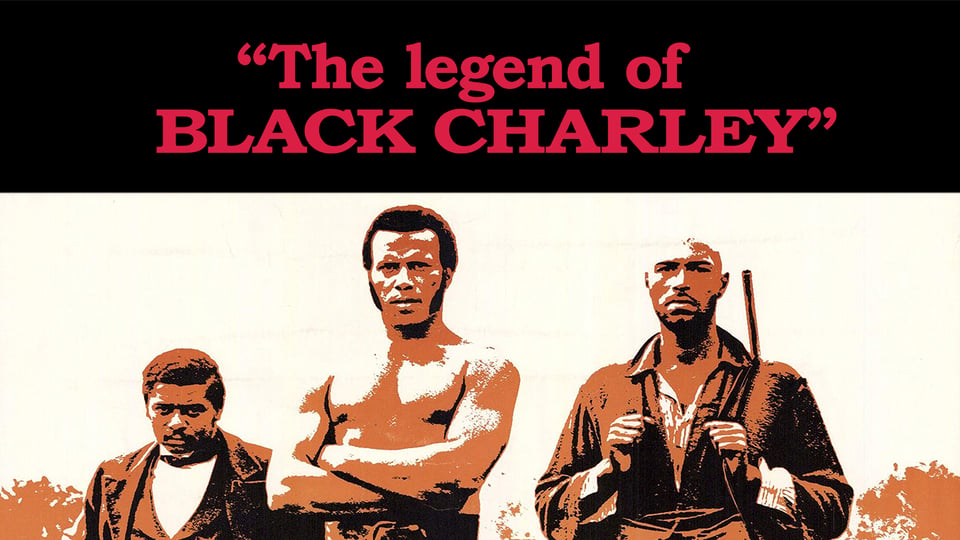
The Legend of Black Charley, directed by Martin Goldman and released in 1972, is a fascinating and underdiscussed entry in the genre of Blaxploitation Westerns. Starring Fred Williamson in the title role, the film mixes the classic Western template with themes of racial justice and Black empowerment in post-Civil War America. Though it may not be as polished or widely remembered as some of its contemporaries, The Legend of Black Charley deserves credit for breaking ground in both its genre and its social commentary.
At its core, The Legend of Black Charley is a Western adventure that follows Charley, a former slave turned gunfighter, who takes control of his destiny and seeks to carve out a place of dignity and freedom in a violent and hostile America. When the film begins, Charley is owned by a cruel plantation master who has no intention of freeing his slaves, even after the Emancipation Proclamation. Charley’s refusal to remain in bondage leads to a daring and violent escape, after which he embarks on a journey across the lawless West, encountering both racist white pursuers and fellow Black men also looking for justice and autonomy.
This setup flips the script on the traditional Western hero. Instead of the white cowboy figure we often see in films of this era, Charley is a Black man fighting for freedom—not only his own, but symbolically for his entire race. His transformation from an enslaved man to a self-determined hero is both cathartic and radical, especially considering the time in which the film was made. It’s a bold reclamation of the American mythos through a Black lens.
Fred Williamson, already a rising star in the Blaxploitation wave of the early ’70s, delivers a charismatic and commanding performance as Black Charley. His screen presence is undeniable—he embodies quiet strength, righteous anger, and a simmering confidence that makes him compelling to watch even when the script wavers.
Williamson doesn’t just play Charley as a vengeance-seeking archetype; there’s nuance to the way he handles the character’s trauma, loyalty to his friends, and desire to build a new life rather than just destroy the old one. His performance elevates the material and gives the film an emotional center it might have otherwise lacked.
The film’s production values are modest. Shot on a low budget, The Legend of Black Charley often looks and feels rough around the edges, with uneven editing, amateurish sound design, and uninspired cinematography. However, these limitations also lend the movie a raw, unvarnished quality that suits its themes. This isn’t a sanitized, studio Western; it’s a gritty, desperate struggle for survival and justice in a world built to crush men like Charley.
That said, the pacing can drag at times, and some of the supporting performances feel flat or wooden. The screenplay, credited to Goldberg and others, tends to lean on blunt exposition and occasionally stilted dialogue. But these flaws don’t obscure the film’s ambitions—they just remind us that this was an early, audacious effort rather than a fully realized masterpiece.
What makes The Legend of Black Charley truly important is its political and cultural stance. Made during the height of the civil rights and Black Power movements, the film doesn’t shy away from the racial violence and systemic injustice of American history. In fact, it places them front and center, using the Western framework to tell a story of rebellion and self-liberation.
Charley is not just fighting for his life; he’s fighting against the very idea that Black men and women are destined to be subjugated. The villains of the film—the slave owners, the bounty hunters, the corrupt lawmen—are unrepentant symbols of white supremacy. The film never tries to redeem them or offer a false middle ground. Instead, it offers resistance.
This defiant tone set The Legend of Black Charley apart from many of its peers. It’s not an exploitation film in the shallow sense—it’s a declaration of identity and a rewriting of who gets to be a hero in American stories.
The film did well enough to warrant a sequel, The Soul of Nigger Charley (1973), and a third installment, Boss Nigger(1975), which Williamson also directed. These films pushed the concept even further, and together they form an unofficial trilogy of radical Black Westerns.
Though The Legend of Black Charley is rarely included in the canon of great Westerns, its influence can be felt in later efforts to diversify and deconstruct the genre. From Mario Van Peebles’ Posse (1993) to more recent films like The Harder They Fall (2021), the lineage is clear.
The Legend of Black Charley may not be a perfect film, but it’s a vital one. With Fred Williamson’s magnetic performance, a strong anti-racist message, and the sheer novelty of a Black-led Western in the early 1970s, it earns its place in cinema history. For viewers interested in genre-bending, politically charged storytelling—or anyone looking to understand the roots of Black representation in film—this is a ride worth taking.
Featuring: Michael B. Jordan, Hailee Steinfeld, Miles Caton, Jack O’Connell, Wunmi Mosaku, Jayme Lawson, Omar Miller and Delroy Lindo
Jedidiah:“You keep dancing with the devil… one day he’s gonna follow you home.”
Ryan Coogler’s Sinners is a film that defies easy categorization. It’s a heady mix of historical drama, supernatural horror, musical, and action thriller, all set against the backdrop of the American South in 1932. Coogler reunites with his frequent collaborator, Michael B. Jordan, who delivers a powerful dual performance as twin brothers Smoke and Stack. This ambitious project is both a testament to Coogler’s visionary storytelling and a complex, sometimes messy, exploration of American history, race, and the enduring power of music.
The film immerses the viewer in the sweltering, segregated world of Mississippi during the Jim Crow era. Coogler meticulously crafts the atmosphere, from the dusty cotton fields to the vibrant, yet precarious, juke joints that serve as sanctuaries for the Black community. The production design is stunning, and the cinematography captures both the beauty and the brutality of the landscape.
Smoke and Stack return to their hometown after years away, bearing both the scars of their past and the ambition to build a better future. They pool their resources to open a juke joint, a place where their community can gather, celebrate, and find respite from the oppressive realities of their lives. Jordan’s portrayal of the twins is a highlight of the film. He imbues Smoke with a quiet intensity and a haunted past, while Stack is more charismatic and prone to impulsive action. The supporting cast is equally strong, with standout performances from:
Miles Caton as Sammie, their musically gifted cousin, whose talent becomes a focal point of the unfolding supernatural events.
Music is not merely a backdrop in Sinners; it’s a central character and a powerful force. Coogler explores the deep connection between Black American music, particularly the blues, and spirituality. The film posits that this music can transcend the boundaries between the living and the dead, attracting both beauty and danger.
Sammie’s extraordinary musical talent draws the attention of a sinister presence, embodied by the enigmatic Remmick (Jack O’Connell). Remmick’s arrival marks a shift in the film, as the historical drama elements give way to a more overt horror narrative. The film blends vampire mythology with elements of Southern Gothic and African folklore, creating a unique and unsettling supernatural world.
Sinners is not just a horror film; it’s deeply engaged with themes of race, cultural appropriation, and the legacy of slavery. The vampires in the film can be interpreted as a metaphor for the predatory forces that have historically exploited and oppressed Black communities. The film explores how cultural expressions, including music, can be both a source of strength and a target for appropriation.
The narrative also delves into the characters’ personal struggles for redemption and their search for a place to belong. Smoke and Stack are haunted by their pasts, and their desire to build a juke joint is tied to their yearning for a sense of home and community.
Sinners is a film of immense ambition and undeniable power. Coogler’s direction is masterful, and the film is visually stunning, with a rich and evocative atmosphere. The performances are uniformly excellent, and the film’s exploration of music and its spiritual significance is both captivating and thought-provoking.
However, the film’s ambition can also be its downfall. At times, the sheer number of ideas and genres it juggles can feel overwhelming, leading to moments of tonal inconsistency and narrative messiness. The shift from historical drama to supernatural horror, while intriguing, is not always seamless. Some subplots could have been more fully developed, and the film’s pacing occasionally falters.
Despite its flaws, Sinners is a bold and unforgettable cinematic experience. It’s a film that lingers in the mind, prompting reflection on its complex themes and its powerful imagery. Coogler has crafted a unique and challenging work that blends genres and defies expectations. It is a film that is sure to be discussed and debated for years to come.
Written by: Franklin Adreon, Ronald Davidson, Norman S. Hall, Joseph F. Poland and Sol Shor
Directed by: William Witney and John English
Featuring: Edward Ciannelli, Robert Wilcox, William Newell, C. Montague Shaw, Ella Neal and Dorothy Herbert
Bob Wayne:“Then some of the rumors about this mysterious Dr. Satan are true!”
Gov. Bronson:“All of them are probably true! Dr. Satan’s spies have penetrated even the police department. The situation is so serious that I’m going to call four companies of the National Guard!”
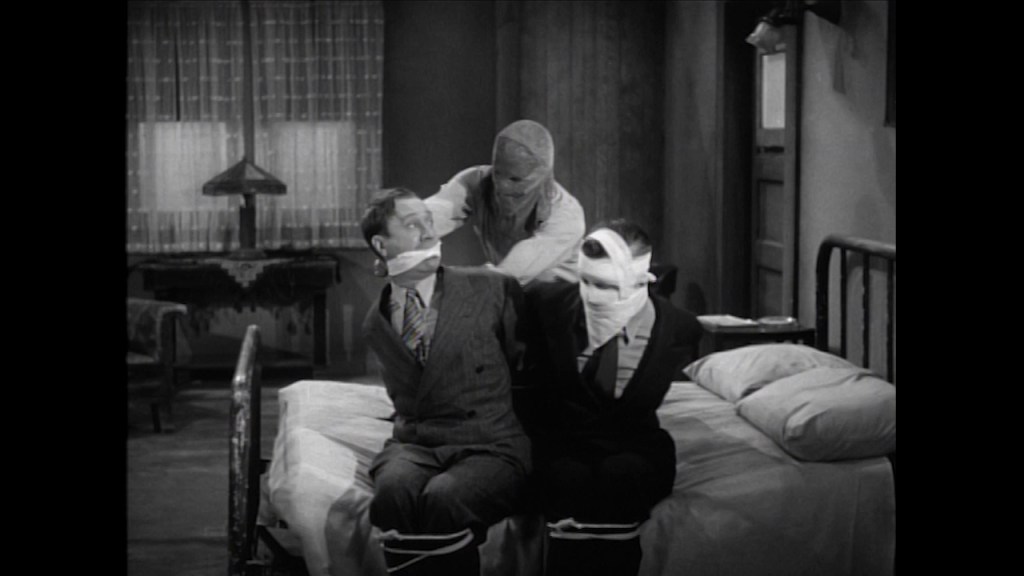
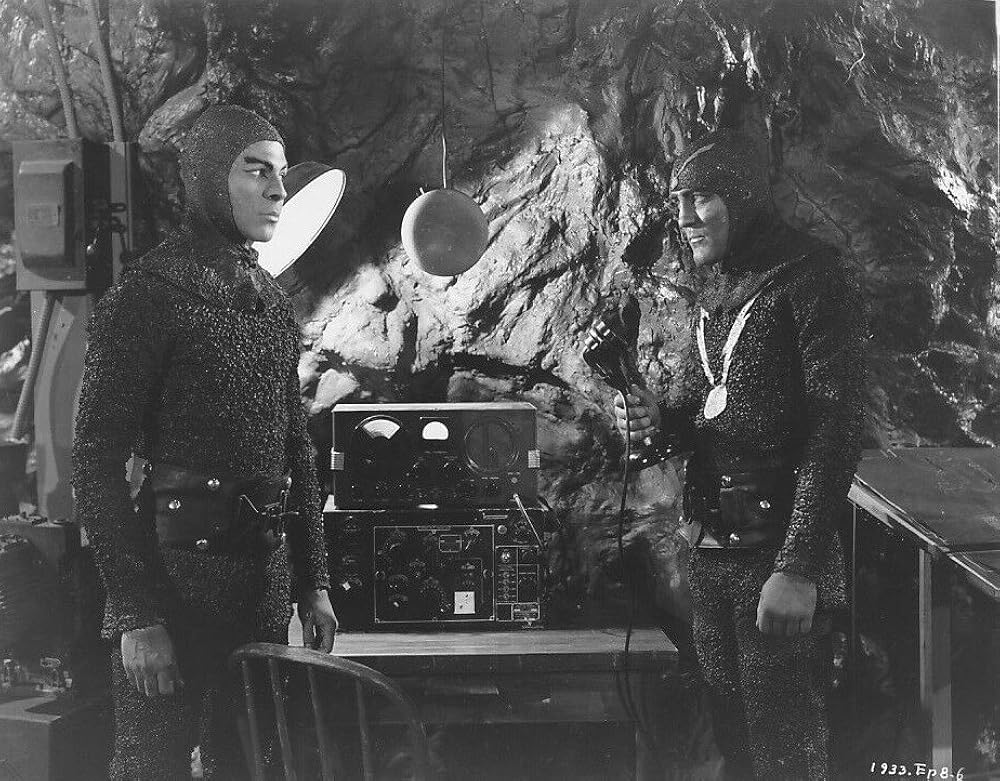
Mysterious Doctor Satan, directed by William Witney and John English, is one of the crown jewels of Republic Pictures’ famous serial output—a thrilling, kinetic, and slightly loopy 15-chapter adventure packed with mad science, masked heroes, robot menaces, and pure pulp spirit. It’s widely regarded among film historians as one of the very best movie serials ever made, and for good reason.
At its heart, the story is classic early superhero fare. The serial follows Bob Wayne (Robert Wilcox), a man who, after witnessing the murder of his guardian by the criminal mastermind Doctor Satan (Edward Ciannelli), dons a masked identity as “The Copperhead” to seek justice. Doctor Satan himself is a wonderfully theatrical villain, complete with a shadowy lair, an army of henchmen, and a fiendish plan to conquer the world by creating an army of robots. Opposing him are Bob, plucky journalist Lois Scott (Ella Neal), and a few sturdy law enforcement allies.
The plot is a colorful mélange of kidnapping attempts, narrow escapes, car chases, fistfights, and cliffhangers—essentially, everything audiences loved about serials distilled into one dense, headlong rush. While many chapter plays of the 1930s and 1940s feel repetitive or padded, Mysterious Doctor Satan keeps its momentum unusually high. It thrives on sharp, tight editing, brisk pacing, and a sense that something new or dangerous could happen at any moment.
The performances are, understandably, broad, but some shine in surprising ways. Edward Ciannelli’s Doctor Satan is a standout. Rather than overplaying his villainy with cackling or campiness, Ciannelli imbues the character with a genuinely sinister presence. He’s oddly understated for a pulp villain, and that restraint makes him more believable—and more frightening. Robert Wilcox brings a clean-cut likability to Bob Wayne, even if he lacks the larger-than-life charisma of some other serial stars. Ella Neal is serviceable as the intrepid reporter, although she’s given less to do than one might hope.
The production values deserve particular praise. Republic Pictures was the master of serial action, and here they put that expertise to stunning use. The stunts, orchestrated by the legendary Yakima Canutt and others, are spectacular. Car chases skid dangerously close to realism, fistfights are brutal and convincing, and explosions have genuine heft. Scenes are rarely static; even dialogue moments are directed with dynamic camera movement or a ticking clock of tension.
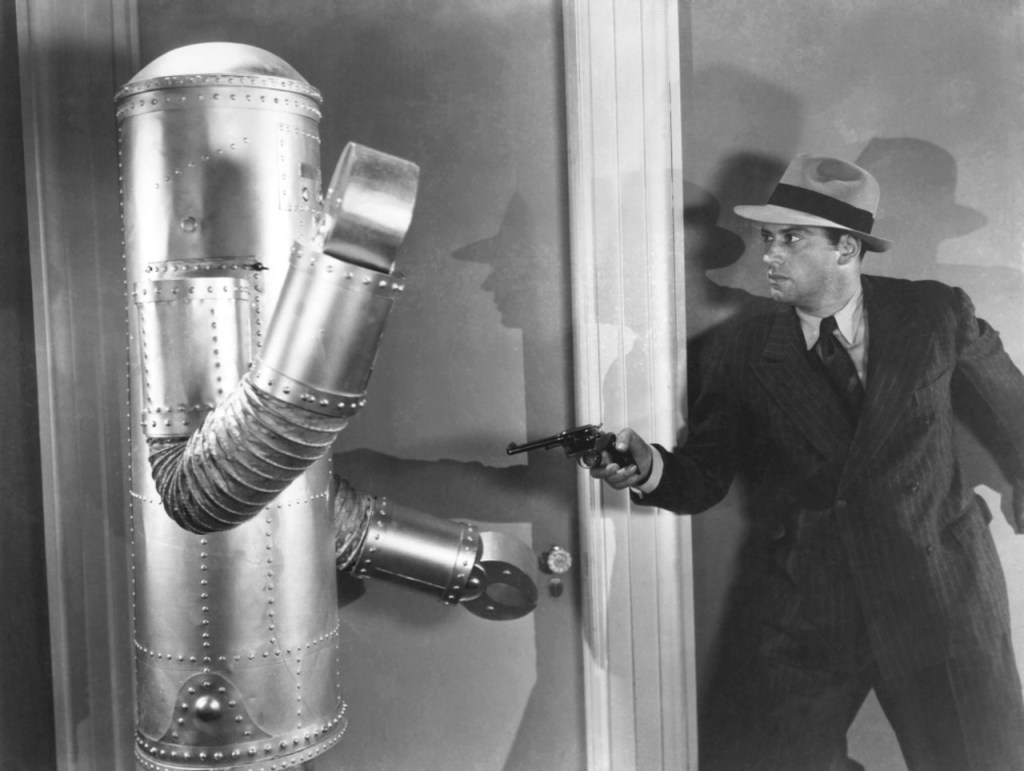
Special attention must be given to the “robot”—a hulking, helmeted, metallic figure that has become iconic in serial lore. From a modern perspective, the robot looks delightfully clunky, more like a man in a tin can than a fearsome automaton. But at the time, it must have seemed thrilling and uncanny. Its sheer size and mechanical strangeness still carry an eerie charm today, perfectly embodying the serial’s pulp science-fantasy tone.
Mysterious Doctor Satan is also notable for its unusual development history. It was originally intended to be a Superman serial, but licensing negotiations with DC Comics fell through. Rather than abandon the project, Republic retooled the story, changing the protagonist into the Copperhead—a vigilante in a simple mask and fedora. Knowing this adds a certain fascination: you can see traces of the original Superman DNA throughout, particularly in the way Bob Wayne switches between his civilian identity and his masked alter ego, and in the way Lois resembles an early, no-nonsense version of Lois Lane.
Despite its many strengths, the serial isn’t flawless. Like almost all Republic serials, it reflects some dated attitudes and occasional narrative clumsiness. Female characters, while brave, are still largely relegated to roles of being kidnapped or imperiled. There’s also a formulaic rhythm to the chapters: Bob Wayne gets into danger, a cliffhanger looms, and a clever escape follows. But these are features, not bugs, for genre fans.
Stylistically, Witney and English direct with impressive economy and flair. Their understanding of kinetic action, use of vertical movement (characters climbing, falling, jumping), and emphasis on physicality make each chapter a model of propulsive storytelling. Even today, many modern action directors could learn from their clean, comprehensible way of staging fights and chases.
One of the joys of Mysterious Doctor Satan is how many of its individual chapters deliver strong, self-contained thrills. Some highlights include:
Chapter 1: “Doctor Satan’s Man of Steel” The opening chapter sets a perfect tone. We’re immediately thrust into the action: the murder of Bob Wayne’s guardian, the introduction of the sinister Doctor Satan, and the Copperhead’s origin. The quick pacing and the sense of “no time to waste” hooks the audience fast—essential for a serial.
Chapter 4: “Doctor Satan’s Trial” This chapter features one of the more inventive cliffhangers: Bob Wayne is trapped in a courtroom rigged with a deadly device. The set-piece suspense is heightened by clever editing and a genuine sense of danger. It also shows how Doctor Satan manipulates people in power, adding an extra layer of menace to his character.
Chapter 7: “The Monster Strikes” This is where the robot comes into full view, causing havoc. Watching the mechanical giant plod through scenes, smashing and grabbing, is pure pulp joy. It’s one of the serial’s most iconic images, and the effects (though quaint today) are extremely charming.
Chapter 13: “The Flaming Coffin” The later chapters pile on the danger, and this one stands out for a particularly brutal cliffhanger: Bob trapped inside a coffin that’s about to be set on fire. It’s a grim and memorable image that really ups the stakes late in the story.
Chapter 15: “Doctor Satan’s Ultimate Fate” The final confrontation between the Copperhead and Doctor Satan is satisfying without feeling rushed. Many serials stumble at the end, but here, the showdown is staged with energy and a real sense of payoff. Doctor Satan gets a fate worthy of his chilling persona.
Deeper Analysis: Why Mysterious Doctor Satan Endures
Beyond the stunts and cliffhangers, Mysterious Doctor Satan has endured because it taps into something primal about serialized storytelling: the endless battle of good vs. evil, dramatized in a vivid, heightened way. Each chapter escalates the tension, layering betrayals, deathtraps, robot attacks, and double-crosses, creating a serial that feels alive and constantly in motion.
The aesthetic also matters. Republic’s serials had a distinct “house style”—gritty yet clean, shadowy yet dynamic. The sets (especially Doctor Satan’s various hideouts) have a wonderful atmosphere, part industrial wasteland, part gothic horror. You can feel the fingerprints of 1930s horror films here, mixed with the rising tide of superhero adventure that would dominate the next two decades.
Then there’s the thematic resonance. The very idea of a masked hero fighting against a technologically empowered villain taps into the fears and hopes of the era. 1940 was a time of escalating global conflict and uncertainty. A villain like Doctor Satan, using science for evil, embodied cultural anxieties about unchecked technological progress. Meanwhile, the Copperhead offered a fantasy of a lone individual, with courage and ingenuity, standing against seemingly unstoppable evil—a very American dream at the time.
Mysterious Doctor Satan is a deliriously entertaining time capsule of golden-age serial storytelling. It’s earnest, breathless, and bursting with imagination. For aficionados of classic adventure stories, pulp fiction, superhero origins, or vintage sci-fi oddities, it’s a must-see. Even casual viewers, if they can surrender to its old-fashioned rhythms and enjoy the ride, will find it a surprisingly exhilarating experience.
Not just a relic of a bygone era, Mysterious Doctor Satan remains, in its charming, robot-stomping way, a little bit timeless.
“The NeverEnding Story – 40th Anniversary Limited Edition 4K UHD + Blu-ray Exclusive Replica Storybook Packaging – Imprint Collection #365” (1984)
Fantasy
Running Time: 94 minutes
Written by: Wolfgang Petersen and Herman Weigel
Directed by: Wolfgang Petersen
Featuring: Noah Hathaway, Barret Oliver, Tami Stronach, Patricia Hayes, Sydney Bromley, Gerald McRaney and Moses Gunn
Rock Biter:“They look like big, good, strong hands, don’t they? I always thought that’s what they were.”
Few fantasy films have endured in the collective memory quite like The NeverEnding Story. Released in 1984, directed by Wolfgang Petersen (who had just found international acclaim with Das Boot), the film stands as a landmark of 1980s fantasy cinema — ambitious, flawed, enchanting, and utterly sincere in ways that modern movies often shy away from. Though it is an adaptation of only about half of Michael Ende’s 1979 novel (and controversially so — Ende famously hated the film), Petersen’s vision succeeds in conjuring a world that feels genuinely limitless, even despite budgetary constraints.
The story follows Bastian Balthazar Bux (Barret Oliver), a sensitive, bullied boy grieving the death of his mother and the emotional absence of his stern father. Seeking refuge from his everyday misery, Bastian hides in an old bookstore and steals a mysterious book titled The NeverEnding Story. As he reads, he discovers that the fantasy world of Fantasia is being consumed by a malevolent force called “The Nothing.” Meanwhile, a young warrior, Atreyu (Noah Hathaway), is tasked with saving the realm by finding a cure for the ailing Childlike Empress (Tami Stronach).
What sets The NeverEnding Story apart is its metafictional structure: Bastian’s reading impacts the story, and the story demands his participation. This elevates the film beyond a simple fairy tale. It becomes a meditation on grief, imagination, courage, and the loss of innocence. Fantasia is explicitly stated to be the realm of human imagination, underlining a surprisingly melancholy point — that when people stop dreaming, wonder itself disappears.
The underlying sadness of the story, a recognition that childhood fades and magic dims, gives the film an emotional weight that makes it endure.
For its time, The NeverEnding Story boasted one of the largest budgets in West German cinema history, and it shows. The practical effects, while occasionally creaky to modern eyes, possess a tangible, hand-crafted beauty that CGI rarely replicates. The film’s creatures — such as the giant Rockbiter, the racing snail, Morla the giant turtle, and, most famously, Falkor the luckdragon — have a tactile reality that makes Fantasia feel like a place you could actually touch.
The design of Fantasia itself is varied and ambitious, ranging from sweeping plains to decaying swamps to the crystalline Ivory Tower. The Swamps of Sadness scene, where Atreyu loses his horse Artax, remains devastating precisely because of the physical reality of the set. It’s muddy, suffocating, and grim — a symbolic landscape of grief rendered literal. Scenes like this give the movie a mythic resonance far greater than most children’s films.
Composer Klaus Doldinger, with Giorgio Moroder providing additional music (including the infectious title song performed by Limahl), gives the film a soundscape that is both dreamy and driving. The iconic synth-heavy theme song may be kitschy by today’s standards, but it’s undeniably memorable — a sonic time capsule of 1980s fantasy.
The child actors are uneven but earnest, which arguably suits the tone of the story. Barret Oliver captures Bastian’s vulnerability without becoming whiny, and Noah Hathaway as Atreyu carries a stoic but believable sense of duty and loss. Tami Stronach, appearing as the Childlike Empress, has a haunting, ethereal presence that lingers in the imagination far longer than her brief screen time would suggest.
The adult cast is mostly peripheral, but they help ground the frame story. Particularly notable is Thomas Hill as the curmudgeonly but kindly bookstore owner, who understands the power of the book in ways Bastian cannot yet grasp.
Michael Ende’s disdain for the film was well-publicized — he felt Petersen’s adaptation dumbed down and distorted the philosophical heart of his book. And indeed, the film truncates the novel’s deeper metaphysical explorations. In the second half of the novel (which the movie does not cover), Bastian himself enters Fantasia and confronts his own darker impulses. The movie ends on a triumphant but arguably simplistic note: Bastian saves Fantasia and gets to ride Falkor for revenge on his bullies.
If there’s a major flaw to The NeverEnding Story, it’s this: the pacing feels a bit off in the second half, where emotional beats occasionally get rushed. And the final scenes — wherein Bastian’s adventures become wish-fulfillment fantasies — feel slightly at odds with the more somber, introspective mood that dominates the first two-thirds.
Additionally, while the visual effects are often brilliant, a few moments (like the flying scenes with Falkor) show their seams. However, these technical imperfections somehow contribute to the film’s old-school charm.
Despite its rocky relationship with Ende, The NeverEnding Story was a commercial success and has since become a cult classic. It spawned two inferior sequels — The NeverEnding Story II: The Next Chapter (1990) and The NeverEnding Story III (1994) — which lack the mythic ambition and emotional depth of the original.
Today, the film is remembered not only for its fantastical imagery but for its emotional potency. It’s rare to find a children’s movie willing to confront grief, despair, and existential dread so openly. Petersen treated his young audience with respect, assuming they could handle sadness, confusion, and even terror — and because of that, The NeverEnding Story has remained beloved for generations.
Special Features and Technical Specs:
Disc One: Original US Theatrical Cut on 4K UHD
Dolby Vision presentation of the 94-minute Theatrical Cut on 4K UHD, restored from the original 35mm negative by Imprint Films
Audio Commentary by writer/director Wolfgang Petersen
Audio Commentary by ‘Future Noir’ author Paul M. Sammon (2024)
Original Aspect Ratio 2.35:1
Audio English DTS-HD 5.1 Surround / LPCM 2.0 Stereo
Optional English Subtitles
Disc Two: Original US Theatrical Cut on Blu-ray
1080p High-definition presentation on Blu-ray of the 4K restoration of the 94-minute Theatrical Cut
Audio Commentary by writer/director Wolfgang Petersen
Audio Commentary by ‘Future Noir’ author Paul M. Sammon (2024)
Finding Fantasia: Adapting The NeverEnding Story – featurette on the book adaptation with producer/director Lisa Downs (2024)
Flights of Fantasy: Inside the scores of The NeverEnding Story– featurette with film music historian Daniel Schweiger (2024)
Reimagining The NeverEnding Story featurette
The Making of The NeverEnding Story featurette (in German with optional subtitles)
A World of Fantasies feature documentary (in German with optional subtitles)
Theatrical Trailer
NeverEnding Story music video by Limahl
Original Aspect Ratio 2.35:1
Audio English DTS-HD 5.1 Surround / LPCM 2.0 Stereo
Optional English Subtitles
Disc Three: German Extended Cut on 4K UHD
HDR10 presentation of the 104-minute German Extended Cut on 4K UHD
Storyboard Comparison
Original Aspect Ratio 2.35:1
Audio English DTS-HD 5.1 Surround / Dolby Digital 2.0 Stereo
Optional English Subtitles
Disc Four: German Extended Cut on Blu-ray
1080p High-definition presentation on Blu-ray of the 4K restoration of the 104-minute German Extended Cut
Original Aspect Ratio 2.35:1
Audio English DTS-HD 5.1 Surround / Dolby Digital 2.0 Stereo
Optional English Subtitles
Disc Five: Life After NeverEnding Story (2024 feature-length documentary) on Blu-ray
Featuring: Judd Holdren, Aline Towne, Wilson Wood, Lane Bradford, Stanley Waxman, John Crawford, Craig Kelly, Ray Boyle and Leonard Nimoy
Zombies of the Stratosphere is one of those wonderfully pulpy, endearingly earnest science-fiction serials that could only have come from the early 1950s. Directed by Fred C. Brannon and produced by Republic Pictures, the 12-part serial follows heroic Larry Martin (played by Judd Holdren) — a government agent equipped with a rocket-powered flight suit — as he tries to thwart an invasion plot cooked up by Martians and their human allies. Their goal? Detonate a nuclear device to dislodge Earth from its orbit, making way for Mars to take Earth’s place closer to the sun.
Yes, the plot is as insane as it sounds — and it’s all part of the charm.
First, let’s address the obvious: despite the title, the movie contains no actual zombies. The “Zombies” in question are Martian invaders who, aside from their blank expressions and single-mindedness, have little in common with the undead. Leonard Nimoy, decades before Star Trek, appears in a small role as one of the Martians — a fascinating piece of trivia for fans, even though his screen time is brief and dialogue minimal.
The serial’s structure is pure cliffhanger: each short chapter ends with Larry Martin or his allies (Aline Towne as Sue Davis, Wilson Wood as Bob Wilson) in mortal peril, only to miraculously survive through often hilariously contrived means. This rhythm gives the story a breathless, manic energy, even if it means you can only ever engage with it on a surface level.
From a production standpoint, Zombies of the Stratosphere is a classic Republic affair: quick, cheap, and scrappy. Special effects consist largely of visible wires, miniature models, stock footage, and repurposed sets from previous serials like King of the Rocket Men and Radar Men from the Moon. The rocket flight scenes — with Larry Martin zipping through the air — are simultaneously charming and ridiculous, thanks to the unmistakable dummies used in wide shots.
But even with these limitations, there’s a real earnestness in the filmmaking. Fred C. Brannon and his team understood the power of straightforward, action-packed storytelling. The dialogue is purely functional, the performances are flat but serviceable, and the costumes — particularly the Martian outfits — are delightfully campy. Everything is engineered not to explore ideas but to move the story forward, scene after scene, fight after fight.
What really gives Zombies of the Stratosphere its staying power today is its snapshot of early Cold War anxieties. The Martian plan to swap orbits with Earth by detonating atomic bombs is pure science-fiction nonsense, but it taps into the real, palpable fear of nuclear annihilation that hung over 1950s America. Even in such an absurd setting, the destructive power of the bomb is treated with gravity, and the villainous use of atomic energy would have resonated with contemporary audiences on a deeper level than perhaps the filmmakers realized.
Viewed today, the serial’s flaws — its wooden acting, repetitive plotting, and primitive effects — are part of its charm. Zombies of the Stratosphere is a time capsule of an era when “space invaders” weren’t just fictional villains but thinly veiled metaphors for Communists or existential threats from “outside.” Its goofy earnestness is refreshing, especially compared to the ironic, self-aware tone of much later science fiction.
Zombies of the Stratosphere is an emblem of early American science fiction serials: earnest, imaginative, and clunky all at once. It stands as the third and final entry in Republic Pictures’ “rocket man” saga (following King of the Rocket Men and Radar Men from the Moon), reusing many props, costumes, and even whole sequences from its predecessors. To modern viewers, it often plays like a patchwork quilt of mid-century sci-fi clichés — but that’s also exactly what gives it its retro charm.
The story is a straightforward one: Martians, realizing their planet is dying, hatch a desperate plan to relocate to Earth’s orbit. This would require the total destruction of Earth as we know it. They team up with Earth-based criminals to steal the necessary atomic technology, and only rocket-powered government agent Larry Martin and his small team stand in their way.
Despite the ludicrous premise, the plot hits many notes that mirror real-world fears of the era. Postwar America lived in the shadow of nuclear annihilation and space-race anxieties. Here, extraterrestrial invaders — “zombies” in name only — symbolize an external, existential threat, while the emphasis on atomic bombs reflects deep-seated worries about mankind’s own destructive potential.
Even though the serial never lingers on these anxieties intellectually (this is a children’s matinee serial, after all), it’s fascinating how they slip in through the back door of the story. Underneath the ray guns and rocket packs, Zombies of the Stratosphere quietly mirrors a nation’s insecurity about science, technology, and survival.
Directed by Fred C. Brannon, the serial was shot quickly and cheaply, relying on the Republic Pictures formula: action first, plot second, character third. Brannon, a veteran of dozens of serials, directs competently but without much flair. The real “stars” are the gadgets — most notably Larry Martin’s jetpack, a holdover from earlier serials that became iconic for mid-century sci-fi fans.
The effects are primitive even by 1950s standards. Rocket flights are accomplished with visibly dangled models or stiff dummies, and most “special effects” involve a lot of stock footage explosions. Set design is extremely minimalist — caves, warehouses, and bare rooms stand in for everything from Martian headquarters to atomic labs. Yet there’s a kind of rugged charm in the way the film simply pushes forward, refusing to let a small budget slow down its high-stakes story.
The acting is largely perfunctory. Judd Holdren as Larry Martin plays the square-jawed hero with all the personality of a cardboard cutout. His dialogue is delivered with the clipped, earnest cadence typical of low-budget serial heroes. Aline Towne, one of Republic’s go-to serial actresses, gives a solid turn as Sue Davis, though her role is mostly confined to being the supportive (and occasionally endangered) assistant.
One of the most fascinating elements in hindsight is the small role played by Leonard Nimoy. Barely recognizable under his Martian makeup and delivering only a few lines, Nimoy nonetheless brings an odd intensity to the part — a brief glimpse of the screen presence that would later make him iconic as Spock in Star Trek.
As was standard for serials, each chapter ends with a cliffhanger: explosions, crashes, or characters trapped under falling debris. These endings are often resolved by slight rewrites in the next chapter, leading to continuity errors that are charming rather than frustrating. The repetition of plot devices — kidnappings, rocket chases, and last-minute rescues — gives the serial a rhythmic, almost hypnotic quality.
The entire 12-chapter run clocks in at about three and a half hours, but no one section ever feels particularly long. If anything, the serial’s biggest flaw is its sameness: after a few chapters, you can predict almost exactly how each encounter will unfold.
When it was released in 1952, Zombies of the Stratosphere was considered fairly routine — another entry in a long line of cheap Saturday morning thrills. But today it holds a special place in science fiction history. Not only because of its early connection to Leonard Nimoy, but also because it captures an era when America was simultaneously looking to the stars and fearing what it might find there.
In many ways, it’s a precursor to the more sophisticated science fiction stories that would emerge later in the decade and into the 1960s. Without the stiff earnestness of these early serials, the genre might never have evolved into the thoughtful explorations we see in films like The Day the Earth Stood Still (1951) or even 2001: A Space Odyssey (1968).
For fans of old-school science fiction, retro-futurism, and low-budget ingenuity, Zombies of the Stratosphere is a genuine delight — a relic from a time when imagination was often more important than plausibility, and when even the cheapest production could ignite a young viewer’s sense of wonder.
Zombies of the Stratosphere is by no means “good” in the conventional sense — it’s hokey, rushed, and largely disposable. But it’s also a genuine artifact of 1950s popular culture: a low-budget spectacle made with ambition, optimism, and just enough imagination to make up for its technical shortcomings. If you love retro science fiction, model spaceships on wires, or the early roots of pop culture legends like Leonard Nimoy, it’s well worth your time.
Featuring: George Wallace, Aline Towne and Roy Barcroft
Graber:“How ’bout a ride to town, mister?”
Motorist:“Sure. Hop in.”
Graber:“There’s a man in a flying suit chasing us. Step on it.”
Motorist: “Huh?”
“Radar Men from the Moon” is a fascinating piece of mid-century science fiction—a 12-chapter Republic serial that embodies both the charm and the clumsiness of early 1950s American genre filmmaking. Directed by Fred C. Brannon and starring George Wallace as the heroic Commando Cody, the serial is a breezy, low-budget adventure that manages to capture the spirit of its time, even as it stumbles under the weight of its limited resources and paper-thin script.
At its core, Radar Men from the Moon is a story of invasion and resistance. Earth is facing devastating attacks, traced back to a militaristic society on the Moon led by the ruthless Retik (portrayed with an oddly aloof menace by Roy Barcroft). Commando Cody, a scientist-adventurer equipped with a jetpack and a helmet that looks suspiciously like a modified motorcycle accessory, is tasked with stopping the lunar threat before humanity is conquered.
The serial format dictates a structure of constant cliffhangers—explosions, fisticuffs, daring escapes—which gives the story a relentless energy. However, viewed today as a single experience (many fans have watched condensed movie versions), the repetitive beats of Radar Men become very apparent. Car chases, shootouts, and fistfights are recycled with minor variations across chapters, which can be both endearing and numbing depending on the viewer’s patience.
Visually, Radar Men from the Moon is delightfully scrappy. The special effects, though primitive by today’s standards, are impressive given the tiny budget. The flying sequences—Cody soaring across rocky terrain with the help of wires and models—are charmingly inventive. Republic Pictures, for all its penny-pinching, had a way of squeezing every ounce of excitement out of their sets and props. The lunar landscape is essentially an earth desert with a few painted backdrops, but the filmmakers push forward with a kind of blissful confidence that almost makes you believe in it.
The performances are earnest if not especially nuanced. George Wallace plays Cody as a straight-laced man of action, and while his delivery is sometimes stiff, he conveys a certain everyman likability. Aline Towne, as Joan Gilbert, is one of the few female characters, and she is refreshingly portrayed as a capable assistant rather than a typical 1950s damsel in distress. Roy Barcroft’s Retik is less a vivid villain and more a gruff bureaucrat of evil; he’s not quite the colorful megalomaniac one might expect from a space opera, but he fits the serial’s no-frills tone.
One of the most interesting things about Radar Men today is how it reflects the anxieties of its era. In 1952, America was deep into the Cold War, and the fear of technological inferiority and sudden destruction loomed large. The serial’s Moon men plot can easily be read as an allegory for communist infiltration and nuclear attack paranoia, albeit in the goofiest possible packaging. There’s also an implicit belief in the redemptive power of American ingenuity—Cody isn’t a soldier; he’s a scientist-adventurer, using his inventions (like the jetpack and a “radar ray”) to outwit the lunar threat.
Of course, the serial is not without its major flaws. The dialogue is often laughably stiff, the action scenes blend together after a while, and the villains’ grand plan—shooting Earth with radar rays—isn’t exactly chillingly believable. The film’s Moon Men are indistinguishable from ordinary humans, save for the occasional futuristic jumpsuit or gun, betraying the production’s bare-bones approach to science fiction world-building.
Still, for all its limitations, Radar Men from the Moon has a scrappy charm that’s hard to resist. It’s a sincere attempt to bring pulpy adventure to the screen with whatever means were available. It helped cement the visual language of rocket-powered heroes—laying groundwork for later characters like The Rocketeer—and remains a crucial artifact of 1950s sci-fi cinema.
If you’re a fan of old serials, vintage sci-fi, or simply curious about the roots of pop culture’s love affair with rocketmen and alien invasions, Radar Men from the Moon is an essential, if occasionally tedious, viewing experience. Watch it with a sense of humor, a sense of history, and an appreciation for the boundless optimism of early science fiction storytelling.
“Adventure! Suspense! Rocket Men battling Moon Men in a desperate struggle for Earth’s survival!”
This could easily have been the tagline for Radar Men from the Moon, a quintessential early 1950s serial that now feels like a charming time capsule of America’s postwar imagination. It’s rough, earnest, and entirely unpretentious — and because of that, it’s surprisingly rewarding to revisit.
The story is simple to the point of being skeletal: mysterious attacks are devastating Earth’s infrastructure. Enter Commando Cody, a government scientist who deduces that the attacks originate from the Moon. Naturally, he straps on his jet-powered rocket suit, dons his iconic crash helmet, and blasts off in a spaceship to confront the extraterrestrial threat.
Cody’s confrontations with the Moon’s would-be conquerors, led by the coldly methodical Retik, form the backbone of the serial’s twelve episodes. Each chapter ends in a cliffhanger, a strategy designed to lure audiences back into theaters week after week. Viewed consecutively today, these cliffhangers (car plunges, explosions, fistfights on cliff edges) can seem formulaic, but at the time they were genuinely thrilling.
There’s a primitive kind of narrative propulsion here — a straightforward, earnest momentum that carries you from one brawl to the next. Plot depth and character development are practically nonexistent, but that wasn’t the goal. This was about sensation, about keeping you on the edge of your seat for 15 minutes, then leaving you desperate for the next installment.
Commando Cody himself is a fascinating figure — not a superhero in the comic book sense, but a sort of government-sponsored adventurer. In many ways, he reflects an idealized American postwar archetype: practical, inventive, brave, and utterly dependable. Cody is a man of science, not magic; his rocket suit is a product of human ingenuity, not alien technology.
George Wallace’s portrayal is earnest, if not exactly dynamic. Cody is less a character than a function — a clean-cut man in a leather jacket and tie who happens to also own a rocket ship. There’s no internal conflict, no character arc; Cody is simply good, and that’s all that matters.
By today’s standards, the effects are laughably crude — but to dismiss them would be to miss the spirit of the thing. The rocket flying sequences, accomplished through clever wirework and miniature models, are pure early Hollywood ingenuity. You can see the strings, you can spot the reused shots from previous Republic serials like King of the Rocket Men (1949), but that just adds to the handmade charm.
The Moon sets are just California hills with slightly weirder rock formations and painted matte backgrounds, but when you watch it with a childlike imagination, they feel otherworldly. The costumes, especially the Moon soldiers’ quilted uniforms and goofy-looking “ray guns,” are the stuff of classic pulp illustration.
Retik and his moon men represent the classic “other” — cold, calculating, and driven by expansionist ideology. There’s a subtle whiff of Cold War propaganda here. The Moon Men are militaristic, secretive, and intent on subjugating Earth through superior technology — clear stand-ins for American anxieties about Soviet technological advancement.
Yet Radar Men doesn’t dive deeply into political metaphor; it prefers the simple, black-and-white world of good guys and bad guys. That simplicity gives it an almost mythic quality. There’s something comforting about the absolute certainty that good will triumph, no matter how many explosions, laser battles, or attempted kidnappings occur along the way.
Despite its many shortcomings, Radar Men from the Moon has had a lasting impact on pop culture. It helped popularize the visual archetype of the flying rocket man, influencing everything from The Rocketeer (both the comics and the 1991 Disney film) to countless sci-fi serial parodies.
It also became a frequent target for affectionate ridicule. Mystery Science Theater 3000 famously featured Radar Men from the Moon in its first season, lovingly mocking its cheap effects, stilted dialogue, and endless fight scenes — helping introduce a new generation to its charming absurdities.
More seriously, Radar Men represents an era when science fiction was still close to pulp adventure — before the more complex, cerebral science fiction of the later 1950s and ’60s. It’s a bridge between Buck Rogers and Forbidden Planet, a relic of a time when “the future” meant jetpacks, ray guns, and manly men punching their way across the galaxy.
Radar Men from the Moon is not a “good” movie in the traditional sense. Its acting is stiff, its story paper-thin, and its budgetary limitations painfully obvious. But it’s a joyful movie — a relic from a more innocent time when filmmakers chased big dreams with small resources. Watching it today is less about plot or polish and more about tapping into a spirit of wide-eyed optimism.
If you love cheesy sci-fi, vintage adventure serials, or simply want to experience a formative chapter in the evolution of science fiction on screen, Radar Men from the Moon is a delightful watch. Imperfect, yes — but also imaginative, earnest, and weirdly inspiring.
“Agatha Christie’s Marple: Series One to Three” (2004-2013)
Television
Twenty three Episodes
Created by: Agatha Christie
Featuring: Geraldine McEwan and Julia McKenzie
Miss Jane Marple:“When gentlemen of a certain age fall in love, they get the disease very badly.”
Agatha Christie’s Miss Marple series, known for its charming and astute elderly detective, has been a beloved staple in the mystery genre for decades. The TV adaptation, simply titled “Marple,” has taken this timeless character and her intriguing cases from the pages of classic literature to the small screen with a grace and style that has captivated audiences.
“Marple” revolves around the character of Miss Jane Marple, a seemingly innocuous elderly lady living in the quaint village of St. Mary Mead. However, beneath her benign exterior lies a sharp mind and a keen understanding of human nature. Each episode presents a standalone mystery, often involving murder, deceit, and complex human relationships. Miss Marple’s strength lies in her ability to see through the facades people put up and deduce the truth with her unparalleled intuition and logic.
The series does a commendable job of staying true to the essence of Christie’s original stories while also adding a fresh perspective. The writers have taken some liberties, occasionally merging different elements from various stories or adding new subplots, but these changes generally serve to enhance the narrative and keep it engaging for both newcomers and long-time fans of the books.
The portrayal of Miss Marple has seen different actresses bringing their unique touches to the character. Geraldine McEwan and Julia McKenzie, who have played the iconic role in the series, each bring their own charm and nuances to Miss Marple. McEwan’s portrayal is marked by a twinkle of mischief and a gentle, almost whimsical demeanor, while McKenzie brings a more grounded and earnest interpretation, with a quiet but steely resolve.
The supporting cast in each episode is often composed of well-known British actors, adding a layer of quality and familiarity. The guest stars deliver strong performances, making each mystery feel substantial and the suspects well-rounded. The casting directors have done an excellent job of selecting actors who can bring depth and believability to their roles, whether they are portraying victims, suspects, or accomplices.
The production design of “Marple” is a visual treat, perfectly capturing the period setting with meticulous attention to detail. The quaint villages, grand manors, and lush countryside settings are all beautifully rendered, creating an immersive experience for the viewer. The costume design is equally impressive, with outfits that are both period-accurate and visually appealing.
Cinematography plays a crucial role in establishing the tone of the series. The use of light and shadow, along with careful framing, adds to the suspense and drama of the mysteries. The series often employs close-ups to capture the subtle expressions of the characters, allowing the audience to glean insights into their thoughts and motivations, much like Miss Marple herself.
One of the enduring themes of “Marple” is the exploration of the darker side of human nature. The series delves into the complexities of love, jealousy, greed, and revenge, all of which are common motives for the crimes Miss Marple investigates. Through her observations and interactions, the series offers a commentary on the capacity for both good and evil within people, regardless of their outward appearances.
Miss Marple herself is a fascinating character study. Her age and gender often lead others to underestimate her, but she uses these assumptions to her advantage, often playing the role of a harmless old lady while she carefully unravels the truth. Her sharp intellect, combined with her deep empathy and understanding of human nature, makes her an exemplary detective. The series also touches on her personal life, including her friendships and the experiences that have shaped her worldview, adding layers to her character beyond her role as a sleuth.
The TV series “Marple” has left a significant mark on the landscape of British television and the broader mystery genre. It has introduced Agatha Christie’s timeless detective to a new generation of viewers, ensuring that Miss Marple remains a relevant and beloved figure in popular culture. The show’s success has helped to revive interest in Christie’s work, leading many viewers to discover or revisit her original novels and other adaptations.
The series also stands as a testament to the enduring appeal of the classic whodunit format. In an era where crime dramas and thrillers often rely on high-tech gadgets, complex forensics, and gritty realism, “Marple” proves that there is still a place for more traditional, character-driven mysteries. The show’s focus on clever deduction, intricate plotting, and rich character development offers a refreshing alternative to more contemporary approaches to the genre.
“Marple” inevitably invites comparisons to other adaptations of Christie’s work, most notably the long-running “Poirot” series starring David Suchet. While both series share a commitment to faithfully bringing Christie’s stories to life, they differ in tone and style. “Poirot” often has a more formal and polished aesthetic, befitting its Belgian detective’s meticulous nature, whereas “Marple” embraces a cozier, more intimate atmosphere that aligns with its village settings and the character’s unassuming persona.
Other Miss Marple adaptations, such as the films starring Margaret Rutherford and the BBC series featuring Joan Hickson, have also left their mark. Each actress brings a distinct interpretation to the role, and “Marple” stands out for its balance between honoring these past portrayals and carving out its own unique identity. The show’s willingness to innovate while remaining true to the spirit of the source material sets it apart in the crowded field of Christie adaptations.
“Marple” has generally been well-received by audiences and critics alike. Viewers appreciate the series’ faithful yet fresh take on Christie’s stories, the high production values, and the strong performances, particularly by McEwan and McKenzie. The show’s ability to maintain suspense and intrigue across multiple seasons has been a key factor in its popularity.
However, some purists have taken issue with the liberties the series occasionally takes with the source material. These changes, such as merging characters or altering plot points, are seen by some as unnecessary deviations. Despite this, the overall reception remains positive, with many acknowledging that such adaptations are often necessary to keep the stories engaging for modern audiences.
“Marple” is a masterful adaptation that honors Agatha Christie’s beloved character while also bringing a fresh and engaging perspective to her stories. With strong performances, beautiful production design, and well-crafted mysteries, the series offers a delightful and intellectually stimulating viewing experience. It captures the charm and complexity of Miss Marple and her world, making it a must-watch for fans of classic mysteries and quality television alike.
Featuring: Stephen Young, Austin Willis and Cec Linder
“Seaway” is a Canadian drama series that aired during the 1965–1966 television season. Set against the backdrop of the newly constructed Saint Lawrence Seaway, the series offers a compelling blend of adventure, drama, and crime-solving narratives. Despite its brief run of 30 episodes, “Seaway” has left an indelible mark on Canadian television history.
The series was created by Abraham Polonsky, a notable figure in the film industry. Produced by Seaway Films in collaboration with the UK’s Associated Television (ATV), the show received funding from the Canadian Broadcasting Corporation (CBC). This partnership aimed to produce a series that would appeal to both Canadian and international audiences. Notably, “Seaway” was one of the most expensive Canadian television productions of its time, with a total cost of $3 million.
“Seaway” follows the adventures of Nick King, portrayed by Stephen Young, a ship owners’ agent tasked with investigating crimes related to shipping along the Saint Lawrence Seaway. He is assisted by retired Admiral Leslie Fox, played by Austin Willis, who represents the Department of Transport. Together, they tackle issues ranging from smuggling and espionage to mutiny and murder, reflecting the complexities and challenges of maintaining order in this vital waterway. The series was primarily filmed in various locations along the seaway, notably Toronto and Montreal, adding authenticity to its setting.
Stephen Young’s portrayal of Nick King brings a blend of determination and charisma to the role, effectively embodying the character’s commitment to justice. Austin Willis, as Admiral Fox, provides a seasoned and authoritative presence, offering a counterbalance to King’s youthful vigor. The chemistry between the two leads is a cornerstone of the series, driving much of the narrative forward. The show also features Cec Linder as Inspector Provist, adding depth to the investigative team. Notable guest stars include Gordon Pinsent, Barry Morse, Sally Kellerman, and Faye Dunaway, whose appearances contribute to the series’ dynamic storytelling.
The series comprises 30 episodes, each delving into different facets of maritime law enforcement and the challenges faced by those policing the seaway. Episodes such as “Shipment from Marseilles” and “Last Voyage” explore smuggling operations, while “Mutiny” and “Ghost Ship” delve into internal conflicts aboard vessels. The two-part episodes “Don’t Forget to Wipe the Blood Off” and “Gunpowder and Paint” were notably filmed in color, a rarity for the series, which was predominantly shot in black-and-white.
Upon its release, “Seaway” received positive reviews for its engaging storytelling and high production values. User reviews on IMDb highlight the show’s well-crafted scripts and compelling performances. One reviewer notes, “Good scripts, well directed and well played by all concerned,” emphasizing the quality of the series. Another reviewer praises Austin Willis’s performance, stating, “The late Austin Willis, one of my all-time favorite actors, was brilliant in this one.”
Despite its acclaim, “Seaway” faced challenges in securing a broader audience, particularly in the United States. The decision to film primarily in black-and-white limited its appeal during a time when color television was becoming the standard. Nevertheless, the series found a lasting presence in international markets. In Australia, for instance, “Seaway” has enjoyed numerous reruns over the decades, often occupying late-night and early-morning time slots.
“Seaway” stands as a testament to the ambition and creativity of Canadian television production in the mid-20th century.Its blend of maritime adventure and crime drama, bolstered by strong performances and authentic settings, offers a unique viewing experience. While it may not have achieved enduring mainstream success, “Seaway” remains a noteworthy chapter in television history, reflecting the complexities of law enforcement along one of North America’s most crucial waterways.
Burt Reynolds:“Having done 300 television shows and almost 60 movies, I’m tired of having guys who are younger than some sandwiches I’ve had telling me to turn left at the couch. There’s no appreciation of actors and no sense of history.”
“I Am Burt Reynolds” is a documentary directed by Adrian Buitenhuis that offers an in-depth exploration of the life and career of the iconic actor Burt Reynolds. Originally released in 2020, the film features interviews with close friends, family members, and colleagues, including Loni Anderson, Jon Voight, Bruce Dern, and director Adam Rifkin. Through these conversations and archival footage, the documentary paints a comprehensive portrait of Reynolds, highlighting both his professional achievements and personal challenges.
The documentary delves into Reynolds’ rise to stardom, emphasizing his roles in films such as “Deliverance” and the “Smokey and the Bandit” series. These performances solidified his status as a charismatic leading man, known for his rugged masculinity and charm. Reynolds’ decision to pose nude for a 1972 Cosmopolitan centerfold is also discussed, showcasing his willingness to challenge Hollywood norms and his playful engagement with his sex symbol
Beyond his cinematic accomplishments, “I Am Burt Reynolds” sheds light on the actor’s personal life, including his tumultuous relationships and financial difficulties. His ex-wife, Loni Anderson, provides candid insights into their marriage, touching upon Reynolds’ addiction to prescription painkillers and the strains it placed on their relationship. The documentary also addresses his financial woes, including a 1996 bankruptcy filing, attributing these challenges to a combination of lavish spending and misguided investments.
A recurring theme in the film is the portrayal of Reynolds as the epitome of traditional Hollywood masculinity. Interviewees frequently highlight his virility and charm, positioning him as a “man’s man” in an era where such figures were celebrated. This emphasis, while reflective of Reynolds’ public persona, has been noted by some reviewers as potentially overshadowing a more nuanced exploration of his character. For instance, Joe Reid of PRIMETIMER observes that the documentary’s focus on Reynolds’ masculinity might detract from deeper insights into his complexities and vulnerabilities.
The documentary has received mixed reviews from critics and audiences alike. Some viewers appreciate the comprehensive overview of Reynolds’ life, praising the inclusion of interviews with those who knew him intimately. An IMDb user review notes that the film is “interesting, informative and entertaining,” particularly valuing the analyses provided by close friends and colleagues. However, others feel that certain aspects of Reynolds’ life, such as his early marriages and specific film roles, are glossed over, leaving gaps in the narrative. Another IMDb reviewer points out the omission of significant relationships and projects, suggesting that the documentary could have provided a more complete picture of the actor’s life.
Strengths of the Documentary
1. Archival Footage and Nostalgic Appeal
One of the greatest strengths of I Am Burt Reynolds is its extensive use of archival footage. Seeing Reynolds in his prime, whether behind the scenes on film sets or during interviews, reminds audiences why he was such an enduring presence in Hollywood. The documentary includes rare footage of Reynolds’ personal life, offering glimpses into the man behind the Hollywood persona.
For longtime fans, the film provides a nostalgic trip down memory lane. The clips from his iconic films, combined with heartfelt commentary from those who knew him best, make for an engaging watch.
2. Strong Interview Lineup
The documentary features a strong lineup of interviewees, including actors, directors, and close friends. Bruce Dern and Jon Voight offer insightful perspectives on Reynolds’ career and legacy. Loni Anderson, his ex-wife, shares personal anecdotes about their tumultuous relationship, giving the documentary an emotional core.
Adam Rifkin, who directed Reynolds in The Last Movie Star (2017), provides one of the most touching segments, discussing how the actor approached his later years in Hollywood with grace and humility.
3. Honest Depiction of His Personal Struggles
Unlike many celebrity documentaries that gloss over personal difficulties, I Am Burt Reynolds does not shy away from discussing Reynolds’ struggles with financial troubles, addiction, and failed relationships.
His well-documented bankruptcy in the 1990s is covered in detail, showing how Reynolds went from being one of the highest-paid actors in Hollywood to facing serious financial ruin. The film also touches on his issues with painkiller addiction, which developed after years of performing his own stunts. These moments add depth to the documentary, making it more than just a highlight reel of his greatest hits.
Weaknesses of the Documentary
1. Lack of Deeper Psychological Insight
While I Am Burt Reynolds does a solid job covering the major events of Reynolds’ life, it occasionally feels more like a surface-level biography rather than a deep exploration of the man himself.
The documentary presents Reynolds as a rugged, masculine figure but doesn’t dig deeply into his insecurities, regrets, or inner struggles. His complicated relationship with fame, his personal demons, and his thoughts on his own career choices are touched upon but never fully explored.
2. Overemphasis on Masculinity
One recurring theme throughout the documentary is Reynolds’ status as a “man’s man.” While this is undeniably a key aspect of his image, the film leans heavily into this idea without critically examining it. Was this persona a shield he used to hide vulnerabilities? Did it impact his career choices? The documentary hints at these questions but never fully explores them.
Some critics have pointed out that this focus on Reynolds’ masculinity comes at the expense of a more nuanced portrait. Joe Reid of PRIMETIMER noted that while the documentary celebrates Reynolds’ rugged image, it could have gone further in examining how this image may have boxed him in as an actor and a person.
3. Some Key Relationships Are Glossed Over
While the film covers his relationship with Loni Anderson in detail, it glosses over some of his other significant relationships, including his deep connection with actress Sally Field. Reynolds once referred to Field as “the love of his life,” yet the documentary barely touches on their relationship. This omission feels like a missed opportunity, as their story was a major part of his personal and professional life.
“I Am Burt Reynolds” serves as a tribute to a multifaceted actor whose influence on Hollywood remains significant. While the documentary succeeds in celebrating Reynolds’ charm, talent, and contributions to the film industry, it occasionally falls short in fully capturing the complexities of his personal journey. For fans and newcomers alike, the film offers valuable insights but may leave some viewers yearning for a deeper exploration of the man behind the moustache.
Featuring: Burt Reynolds, Jack Weston, Lauren Hutton and Jerry Reed
Bama McCall:“Don’t you ever knock on the door or nothin’? I mean, you could’ve caught a fella with his britches down.”
Burt Reynolds’ Gator (1976) is an intriguing mix of action, comedy, and backwoods crime drama, serving as a sequel to White Lightning (1973). This time around, Reynolds not only stars as Gator McKlusky but also steps behind the camera for his directorial debut. The result is a film that is part moonshine adventure, part caper, and part good ol’ boy charm, with Reynolds’ signature smirk leading the way.
After his adventures in White Lightning, ex-con and former moonshine runner Gator McKlusky (Burt Reynolds) is reluctantly pulled back into law enforcement schemes. Federal agents blackmail him into helping them take down a corrupt and violent crime boss, Bama McCall (played with oily menace by Jerry Reed). The setting shifts from deep Arkansas to the Georgia swamps, giving the film an atmospheric, Southern gothic feel that Reynolds would return to throughout his career.
As Gator infiltrates Bama’s criminal empire, he quickly finds himself torn between his old habits and his sense of justice. Along the way, he encounters a feisty, idealistic TV reporter, Aggie Maybank (Lauren Hutton), who serves as both a love interest and a moral compass. The stakes rise when Gator’s own family and friends are threatened, forcing him to take a stand against Bama’s cruelty.
As a first-time director, Reynolds shows a knack for blending action and humor, though the film sometimes struggles with tonal consistency. There are moments of genuine tension—especially in the final act—but they are often interrupted by scenes of slapstick comedy or romantic banter that occasionally undercut the film’s darker themes. Still, Reynolds’ charisma shines through, and his chemistry with the supporting cast keeps the film engaging even when the pacing falters.
Jerry Reed, better known for his musical career and later collaborations with Reynolds in Smokey and the Bandit, delivers a chilling performance as the sadistic and charming Bama McCall. Reed’s ability to balance affability with cruelty makes him a memorable villain, and his scenes with Reynolds crackle with tension. Lauren Hutton adds some depth to what could have been a generic love interest role, though her character often feels like she’s from a different film entirely—a more serious drama rather than a swampy action-comedy.
The action sequences in Gator are well-staged, especially the high-speed chases through the backwaters of Georgia. Reynolds was known for his love of fast cars and daring stunts, and he doesn’t disappoint here. The swamp boat chase is a highlight, showcasing Reynolds’ flair for exciting set pieces.
The humor, on the other hand, is hit-or-miss. Some comedic moments—such as Gator’s interactions with bumbling lawmen—feel forced, as if Reynolds was still figuring out his directorial style. Other times, the humor works perfectly, thanks to Reynolds’ effortless charm and natural comedic timing.
While Gator doesn’t quite reach the heights of White Lightning, it remains an entertaining ride, buoyed by Burt Reynolds’ magnetic presence and Jerry Reed’s villainous turn. The film blends crime drama, action, and Southern-fried humor into a stew that’s occasionally over-seasoned but still enjoyable.
For fans of Reynolds, Gator is a must-watch, showcasing both his on-screen persona and his first attempt at directing. It may not be his most polished work, but it’s an essential chapter in the Burt Reynolds legend—a film filled with fast boats, tough guys, and plenty of swampy charm. If you’re in the mood for a breezy, beer-and-popcorn kind of movie with a ‘70s vibe, Gator is worth a watch.