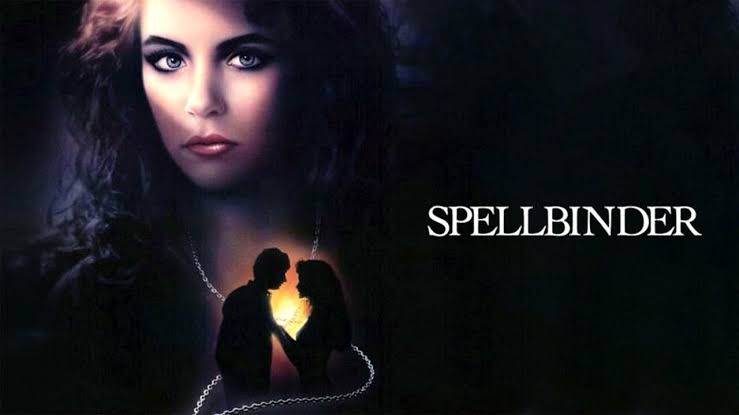
“Spellbinder” (1998)
Horror

Running Time: 99 minutes
Written by: Tracy Tormé
Directed by: Janet Greek
Featuring: Timothy Daly, Kelly Preston and Rick Rossovich
Mrs. White: [referring to Miranda] “We want her back.”
Jeff Mills: “What is this, some kind of joke?”
Mrs. White: “Take this as a warning. There won’t be another.”
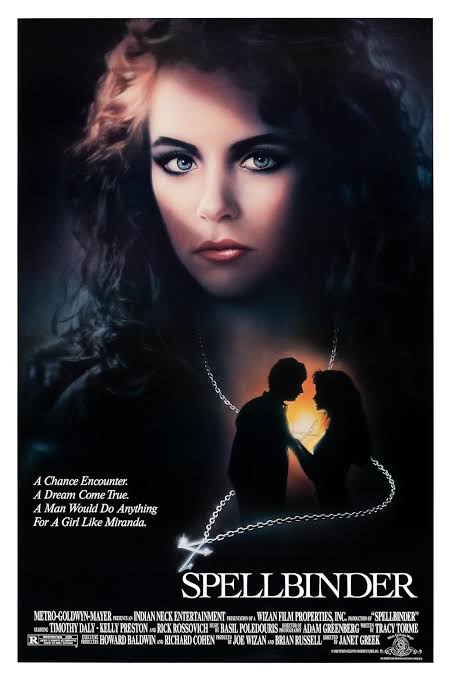
There are certain films that seem destined to live in the shadows of home video history. Neither major classics nor complete obscurities, they occupy that fascinating middle ground where cult appreciation gradually grows over decades. Spellbinder (1988) is one such film. Directed by Janet Greek and written by Tracy Tormé, this supernatural thriller arrived during a period when Hollywood was experimenting with blends of horror, romance, mystery, and psychological suspense. While it never became a major box-office success, the film has steadily developed a loyal following thanks to its unusual storyline, atmospheric presentation, and a finale that remains genuinely shocking even by modern standards.
The arrival of Spellbinder on 4K Ultra HD is therefore something of a surprise and a welcome one. For fans who have long known the film through VHS tapes, television broadcasts, and older Blu-ray editions, this new release offers the opportunity to reassess a neglected gem from the late 1980s. The result is a presentation that reveals both the strengths and limitations of the production while reminding viewers why the film has earned its cult reputation.
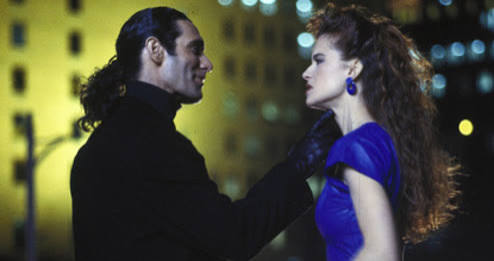
The story follows attorney Jeff Mills, played by Timothy Daly, whose life changes dramatically when he rescues a mysterious young woman named Miranda Reed, portrayed by Kelly Preston. After witnessing what appears to be domestic abuse, Jeff intervenes and offers Miranda protection. The two quickly develop a romantic relationship, but strange events begin occurring around them.
Miranda seems frightened of her past and reluctant to discuss where she came from. As Jeff becomes increasingly invested in their relationship, he discovers that dark forces may be pursuing her. What initially appears to be a straightforward thriller gradually transforms into something far more sinister, involving witchcraft, secret covens, manipulation, and supernatural conspiracies.
One of the film’s greatest strengths is the way it slowly unfolds its mysteries. Rather than revealing its supernatural elements immediately, Spellbinder spends much of its running time operating as a romantic thriller. This measured approach allows viewers to become emotionally invested in the characters before introducing increasingly disturbing developments.
The screenplay cleverly balances ambiguity and revelation. For much of the film, audiences are never entirely sure whether Miranda is a victim, a manipulator, or something even more dangerous. This uncertainty generates tension throughout the narrative and helps maintain interest even during quieter scenes.
At the centre of the film stands Kelly Preston, delivering what is arguably one of the strongest performances of her career. Preston possesses an effortless charisma that makes Miranda immediately appealing, yet she simultaneously projects an undercurrent of mystery that keeps viewers off balance.
The role requires her to shift between vulnerability, seduction, fear, and menace, often within the same sequence. Preston handles these transitions with impressive confidence. She creates a character who remains fascinating precisely because she can never be fully understood.
Watching the film today, one is reminded of what a talented and versatile performer Preston was. While she became better known for lighter roles in later years, Spellbinder demonstrates her ability to anchor a dark psychological thriller with genuine conviction.
Timothy Daly provides an effective counterbalance. His performance as Jeff emphasizes the character’s growing confusion and desperation. As the mysteries deepen, Daly successfully communicates the feeling of a man slowly losing control of his understanding of reality.
Director Janet Greek deserves considerable credit for the film’s effectiveness. Rather than relying on excessive gore or elaborate special effects, she focuses on creating an atmosphere of unease.
Los Angeles becomes a surprisingly effective setting for the story. The city’s bright sunshine contrasts sharply with the occult darkness lurking beneath the surface. Greek frequently uses shadows, reflections, and carefully composed interiors to create visual tension.
The pacing may feel deliberate by contemporary standards, but it serves the narrative well. The film’s gradual escalation allows the supernatural elements to emerge naturally rather than overwhelming the story from the outset.
What remains most impressive is the film’s confidence. It never feels the need to explain everything immediately. Instead, it trusts audiences to piece together clues and become immersed in its increasingly bizarre mythology.
Any discussion of Spellbinder inevitably arrives at its conclusion. Without revealing specifics, it is safe to say that the film contains one of the most memorable twist endings of the late 1980s.
Many thrillers promise shocking revelations but fail to deliver. Spellbinder succeeds because its final surprise feels both unexpected and carefully prepared. The clues are present throughout the film, yet few viewers will fully anticipate where the story ultimately leads.
The ending transforms the entire film retrospectively. Subsequent viewings become particularly rewarding as audiences recognize details and foreshadowing that may have seemed insignificant initially.
This conclusion remains the primary reason many genre fans continue recommending the film decades after its release.
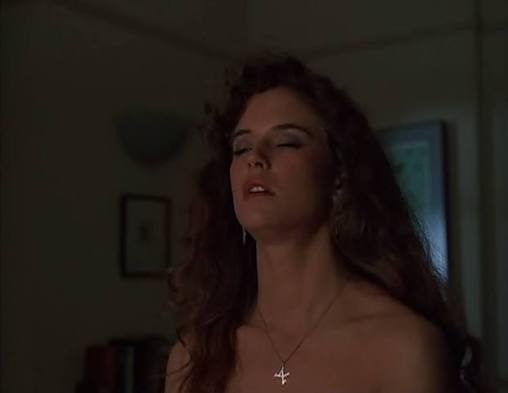
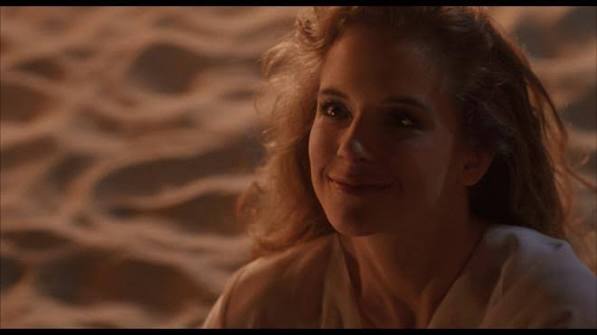
The new 4K transfer represents a substantial improvement over previous home-video presentations. Derived from a fresh restoration, the image finally exhibits the texture and detail expected from a film-shot production of this era.
Grain reproduction appears natural and consistent. Importantly, the transfer avoids the excessive digital manipulation that has plagued some catalogue releases. Fine detail is noticeably stronger, especially in facial textures, clothing, and environmental backgrounds.
The film’s colour palette benefits considerably from the HDR grading. Flesh tones appear more accurate and stable, while darker sequences reveal improved shadow detail. Night scenes, which are crucial to the film’s atmosphere, display enhanced depth without sacrificing black levels.
The increased resolution also highlights the production design. Interior locations possess a richness and dimensionality that were often obscured on older releases. Decorative details, occult imagery, and background textures become more apparent throughout.
There are occasional signs of the film’s modest budget. Certain optical effects and composite shots inevitably reveal their age under 4K scrutiny. However, these limitations belong to the original production rather than the restoration itself.
Overall, this presentation respects the film’s photographic origins while providing a significant visual upgrade.
The audio presentation is similarly satisfying. Dialogue remains clear and consistently intelligible throughout. The musical score benefits from increased presence, helping reinforce the film’s atmosphere of mystery and suspense.
Surround activity is understandably restrained given the film’s vintage, but the soundstage feels appropriately expansive during key supernatural sequences. Environmental effects and ambient sounds are reproduced with pleasing clarity.
Most importantly, the mix preserves the character of the original soundtrack rather than attempting unnecessary modernisation. Fans seeking authenticity should be pleased with the results.
Collectors will naturally be interested in the supplemental material accompanying the release. Depending on the distributor and region, the package typically includes interviews, commentary tracks, archival materials, and discussions exploring the film’s production history.
Particularly valuable are retrospective interviews that place Spellbinder within the broader landscape of late-1980s horror cinema. These features help illuminate the creative decisions behind the film and provide welcome recognition for a production that has often been overlooked.
The supplements contribute significantly to the overall value of the release, transforming it from a simple catalogue upgrade into a meaningful celebration of a cult favourite.
Spellbinder remains one of the more intriguing supernatural thrillers of the 1980s. Combining romance, mystery, horror, and occult intrigue, it offers a distinctive experience that continues to surprise modern audiences. Its intelligent screenplay, strong performances, atmospheric direction, and unforgettable ending have allowed it to endure long after many better-known genre films have faded from memory.
The 4K Ultra HD release provides the best opportunity yet to appreciate the film. The restoration is impressive, the audio presentation is strong, and the overall package treats the movie with the respect it deserves. While Spellbinder may never achieve the mainstream recognition of other horror classics from the era, it stands as a rewarding discovery for genre enthusiasts and a welcome rediscovery for longtime fans.
For collectors of cult horror and supernatural thrillers, this 4K edition is highly recommended. It rescues a fascinating late-1980s oddity from relative obscurity and finally presents it in a form worthy of its enduring reputation.



Leave a Reply