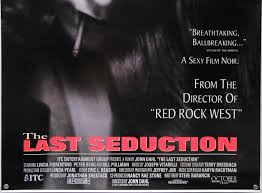
“The Last Seduction” (1994)
Drama

Running Time: 110 minutes
Written by: Steve Barancik
Directed by: John Dahl
Featuring: Linda Fiorentino, Peter Berg and Bill Pullman
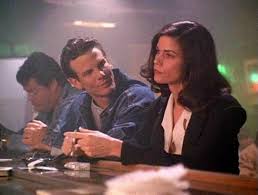
Mike Swale: “I’m trying to figure out whether you’re a total fucking bitch or not.”
Bridget Gregory: “I am a total fucking bitch.”
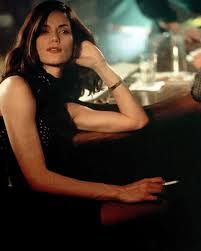
Few films from the 1990s have aged as well as The Last Seduction. Released in 1994 and directed by John Dahl, this razor-sharp neo-noir thriller remains one of the most deliciously cynical crime films of its era. Anchored by the unforgettable performance of Linda Fiorentino as the manipulative and utterly ruthless Bridget Gregory, the film combines classic noir traditions with a distinctly modern attitude, creating a thriller that is as seductive as it is morally corrosive.
The arrival of The Last Seduction on 4K Ultra HD provides the perfect opportunity to revisit a film that has long enjoyed cult status among crime-thriller enthusiasts. More than simply a showcase for visual restoration, this release serves as a reminder of why the film remains one of the defining neo-noirs of the 1990s.
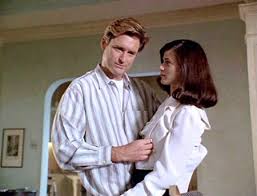
At first glance, The Last Seduction appears to follow familiar noir territory. Bridget Gregory persuades her husband Clay, played by Bill Pullman, to steal a substantial sum of money from a drug deal. Once he succeeds, Bridget immediately double-crosses him, fleeing with the cash and leaving him desperate to track her down.
Relocating to a small town in New York State, Bridget reinvents herself and quickly becomes involved with Mike Swale, played by Peter Berg. What follows is a masterclass in manipulation as Bridget effortlessly bends nearly everyone around her to her will.
The brilliance of the screenplay lies in its refusal to soften Bridget’s character. Many thrillers attempt to make their antiheroes sympathetic, but The Last Seduction does the opposite. Bridget is intelligent, selfish, calculating, and often shockingly cruel. Yet she remains endlessly fascinating because the film never apologizes for her behavior. Instead, it invites the audience to admire her audacity while recoiling from her actions.
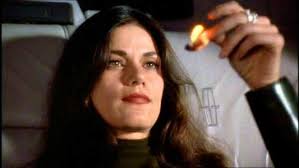
Linda Fiorentino delivers one of the great performances of the decade. Her Bridget is simultaneously charismatic and terrifying. Every line is delivered with razor-sharp precision, every smile concealing another layer of deception. It is a performance that dominates the film from beginning to end and remains the primary reason why The Last Seductioncontinues to be discussed more than thirty years after its release.
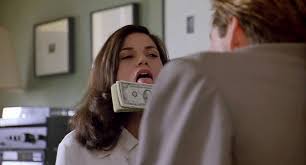
What makes the film especially effective is its understanding of power dynamics. Bridget rarely resorts to violence herself. Her weapon is intelligence. She studies people, identifies their weaknesses, and exploits them without hesitation. Watching her manipulate those around her becomes both entertaining and deeply unsettling.
Director John Dahl had already demonstrated a talent for modern noir with films such as Red Rock West, but The Last Seduction may represent the purest expression of his style.
The film embraces many traditional noir elements: crime, greed, betrayal, sexual manipulation, and moral ambiguity. However, it updates these conventions for the modern era. Bridget is not merely a femme fatale in the classic sense; she is an active architect of the narrative. Rather than reacting to circumstances, she creates them.
The screenplay by Steve Barancik is exceptionally clever. Dialogue crackles with wit and menace. Conversations often feel like strategic battles, with characters constantly maneuvering for advantage. The script’s dark humor remains one of its greatest strengths, allowing the film to maintain a playful edge even as its story grows increasingly sinister.
Dahl’s direction complements the material perfectly. He avoids flashy stylistic excess, instead focusing on atmosphere and character. The result is a film that feels sleek and confident, trusting its story and performances to generate suspense.
The move to 4K Ultra HD is a significant upgrade for a film that has often been available only in respectable but limited presentations.
The new restoration preserves the movie’s intentionally restrained visual style while revealing considerably more detail than previous editions. This was never a glossy Hollywood production overflowing with vibrant colors or spectacular cinematography. Instead, the film relies on subtle lighting and carefully controlled compositions to create mood.
The 4K presentation benefits enormously from improved contrast. Black levels are richer and more stable, helping to reinforce the noir atmosphere. Shadow detail is notably stronger, allowing viewers to appreciate nuances that were often lost in earlier home-video releases.
Textures throughout the image receive a welcome boost. Facial detail is sharper, clothing textures are more distinct, and environmental details appear more natural and refined. Grain reproduction is generally excellent, maintaining the filmic appearance that fans expect from a respectful restoration.
Color grading remains faithful to the original aesthetic. The film’s muted palette has not been artificially enhanced, preserving the grounded, realistic look that suits the story. Flesh tones appear natural and consistent, while highlights show improved stability and balance.
Importantly, the restoration avoids the excessive digital manipulation that can plague catalogue releases. The image retains its organic character, making this presentation feel authentic rather than artificially modernized.
While The Last Seduction is hardly a title that screams for HDR fireworks, the format nonetheless contributes meaningful improvements.
High Dynamic Range enhances subtle lighting variations and adds depth to the image. Interior scenes benefit particularly from improved shadow handling, while daylight sequences exhibit more natural brightness and dimensionality.
The HDR grading focuses on refinement rather than spectacle, which is exactly the correct approach for a film of this type. The result is a more nuanced image that respects the original cinematography.
The audio presentation is similarly faithful.
Dialogue remains the centerpiece of the mix, and clarity is excellent throughout. Given the screenplay’s emphasis on verbal sparring and manipulation, this is particularly important. Every line is reproduced with impressive precision.
The soundtrack and score are well balanced, creating atmosphere without overwhelming the dialogue. Surround activity is understandably restrained compared with contemporary action-oriented releases, but the soundstage remains immersive and effective.
Low-frequency effects are limited, reflecting the film’s modest production style, yet the overall presentation feels clean and natural. As with the video restoration, the emphasis is on authenticity rather than unnecessary modernization.
The accompanying supplements provide valuable context for the film’s production and legacy. Retrospective interviews, critical discussions, and archival materials help illuminate how The Last Seduction emerged from the independent-film landscape of the early 1990s.
Particularly interesting are discussions regarding Linda Fiorentino’s performance and the film’s complicated awards history. Because the movie premiered on cable television before its theatrical release, it became ineligible for Academy Award consideration despite widespread critical acclaim. Many critics at the time considered Fiorentino’s performance worthy of serious awards recognition.
These supplements help place the film within the broader evolution of neo-noir cinema and reinforce its status as a genre classic.
More than three decades after its release, The Last Seduction remains a remarkably confident and provocative thriller. Its refusal to provide easy moral lessons, combined with Linda Fiorentino’s extraordinary lead performance, gives it a lasting power that many contemporaries lack.
John Dahl’s direction is elegant and assured, the screenplay remains wickedly entertaining, and the film’s exploration of manipulation and greed continues to feel fresh. Most importantly, Bridget Gregory stands as one of cinema’s great femme fatales—a character who commands attention every moment she appears on screen.
This 4K Ultra HD edition treats the film with the respect it deserves. The restoration enhances image quality without compromising the original aesthetic, the audio presentation remains faithful and effective, and the supplementary materials add meaningful appreciation for the film’s enduring legacy.
For fans of noir, crime thrillers, and intelligent character-driven cinema, The Last Seduction remains essential viewing. This 4K release is easily the best way to experience one of the smartest, darkest, and most entertaining thrillers of the 1990s.