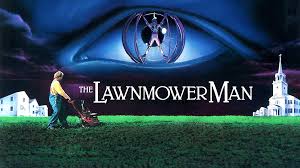
“The Lawnmower Man” (1992)
Science Fiction

Running Time: 108 / 142 minutes
Written by: Brett Leonard and Gimel Everett
Directed by: Brett Leonard
Featuring: Jeff Fahey, Pierce Brosnan, Jenny Wright, Geoffrey Lewis and Austin O’Brien
Dr. Lawrence Angelo: “This is all so new.”
Jobe Smith: “It’s not new. I realized that nothing we’ve been doing is new. We haven’t been tapping into new areas of the brain – we’ve just been awakening the most ancient. This technology is simply a route to powers that conjurers and alchemists used centuries ago. The human race lost that knowledge and now I’m reclaiming it through virtual reality.”
Dr. Lawrence Angelo: “You’re moving too fast. Even with all these new abilities, there are dangers. Man may be able to evolve a thousand-fold through this technology, but the rush must be tempered with wisdom.”
There are few films more firmly rooted in the strange technological optimism and paranoia of the early 1990s than The Lawnmower Man. Released in 1992, directed by Brett Leonard, and only tenuously connected to a short story by Stephen King, the film has endured not because it is flawless, but because it is gloriously ambitious. It is one of those movies that aimed directly at the future and landed somewhere wonderfully bizarre between cyberpunk nightmare, philosophical science fiction, and unintentional camp. Decades later, the film has become a cult artifact of the virtual reality boom before virtual reality actually existed in any meaningful consumer form.
The 4K restoration Blu-ray release from Scream Factory finally gives the film the sort of lavish treatment cult fans always believed it deserved. While this is technically a Blu-ray sourced from a new 4K scan rather than a UHD disc presentation, the release nevertheless feels definitive in many respects, especially because it includes both the theatrical and director’s cuts alongside an excellent collection of supplements. The restoration itself originates from a new 4K scan of the interpositive, with additional director’s cut footage sourced from original camera negative materials.
What becomes immediately apparent upon revisiting The Lawnmower Man today is how deeply sincere the film is. Modern audiences accustomed to detached irony may initially laugh at its dated CGI or its overheated performances, but beneath the primitive digital imagery lies a film genuinely fascinated by the possibilities and dangers of technological evolution. Leonard was clearly striving for something visionary rather than merely commercial. The result may occasionally stumble, but it never feels lazy.
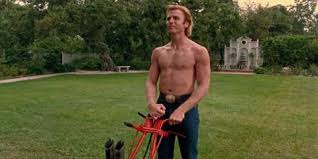
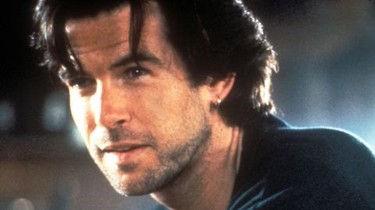
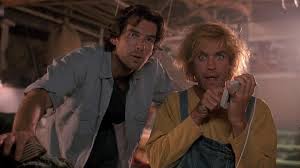
The premise remains irresistible. Dr. Lawrence Angelo, played by Pierce Brosnan with an earnest intensity bordering on desperation, is a scientist experimenting with intelligence enhancement through virtual reality immersion and psychoactive drugs. His test subject becomes Jobe Smith, portrayed by Jeff Fahey in one of the most committed performances of his career. Jobe begins the film as a mentally disabled gardener abused by nearly everyone around him, but Angelo’s experiments rapidly transform him into a super-intelligent being whose consciousness eventually exceeds human limitations altogether.
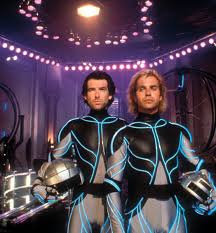
Watching the film now, one can see how heavily it borrows from Flowers for Algernon, Frankenstein, and classic cautionary science fiction. Yet The Lawnmower Man filters these influences through the hyperactive visual language of early-90s techno culture. The film is drenched in neon lighting, industrial sound design, and digital hallucinations that now resemble a forgotten CD-ROM game from the Windows 95 era. Instead of diminishing the experience, however, this dated quality has become part of its charm.
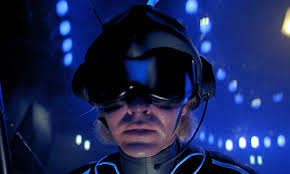
The computer-generated imagery was groundbreaking at the time, even if modern eyes inevitably see the seams. The famous cyberspace sequences remain fascinating artifacts of cinematic experimentation. Their abstract digital landscapes, floating geometric bodies, and impossible camera movements reflect filmmakers attempting to visualize the internet years before mainstream society fully understood what the internet might become. There is something oddly prophetic about the movie’s fear that networked intelligence could transcend human morality.
The restoration highlights these visual ambitions remarkably well. Grain remains present and organic throughout much of the presentation, especially in darker scenes, while detail levels are significantly improved over older DVD releases. Flesh tones appear natural, contrast is stronger, and the image retains a pleasingly filmic texture rather than succumbing to excessive digital noise reduction. The transfer does reveal the limitations of some visual effects work, of course. The CGI sequences often appear softer and less refined because of the technological constraints of the era, but that softness is authentic to the production rather than a flaw of the restoration.
Importantly, Scream Factory resisted the temptation to over-process the image. In an era where many catalogue restorations suffer from aggressive smoothing and artificial sharpening, this release feels respectful to the original cinematography. Among physical media collectors, there is ongoing debate about restorations that sacrifice film grain for a falsely “clean” appearance, particularly on some modern 4K releases. Thankfully, The Lawnmower Man avoids most of those pitfalls. The presentation may not possess the razor-sharp precision of contemporary digital filmmaking, but it looks authentically cinematic.
The audio presentation is equally strong. Both cuts include DTS-HD Master Audio 5.1 mixes alongside the original 2.0 audio configuration. The surround mix proves surprisingly immersive during the VR sequences, with electronic effects swirling aggressively through the rear channels. Dan Wyman’s electronic-heavy score benefits tremendously from the expanded soundscape, helping create the unsettling sensation that reality itself is fragmenting.
Performance-wise, the film remains anchored almost entirely by Jeff Fahey. It is difficult to overstate how much emotional credibility he brings to material that could easily collapse into absurdity. His transformation from childlike innocence to godlike menace unfolds gradually enough to remain believable within the film’s heightened world. Fahey never plays Jobe as a joke, and that sincerity gives the film its tragic center.
Pierce Brosnan, meanwhile, delivers one of the more fascinating performances of his pre-James Bond career. Long before he became synonymous with suave sophistication, Brosnan frequently played emotionally vulnerable intellectuals. Dr. Angelo is a man whose scientific idealism blinds him to ethical catastrophe, and Brosnan communicates genuine guilt and fear as his experiment spirals beyond control.
The supporting cast adds texture as well. Jenny Wright brings warmth and humanity to the film, while Geoffrey Lewis lends his trademark eccentricity to the small-town environment surrounding Jobe’s transformation. The contrast between rustic Americana and futuristic cyberspace gives the movie a uniquely strange atmosphere, almost like a Stephen King small-town horror story colliding with William Gibson cyberpunk fiction.
One of the greatest strengths of this release is the inclusion of both the theatrical cut and the longer director’s cut. The differences are substantial enough to justify viewing both versions. The theatrical version moves faster and emphasizes spectacle, while the director’s cut allows character relationships and thematic ideas more room to breathe. According to production history, studio executives pushed for a tighter, more effects-oriented presentation during the original release. The longer cut restores quieter moments that better contextualize Jobe’s evolution and Angelo’s growing moral crisis.
The supplemental features are excellent and elevate the set beyond a simple catalogue upgrade. The standout is the feature-length documentary Cybergod: Creating The Lawnmower Man, which explores the film’s production, visual effects breakthroughs, and cult legacy in considerable depth. Interviews with Leonard, Fahey, and various crew members reveal how ambitious the production truly was for its time. The documentary also captures the transitional moment in Hollywood when digital imagery was beginning to reshape filmmaking itself.
The audio commentary with Leonard and producer Gimel Everett is another highlight. Rather than offering dry technical information, the track conveys genuine passion for the project. Leonard in particular remains deeply invested in the film’s themes and technological aspirations, and his enthusiasm becomes infectious even when discussing production compromises.
Collectors will also appreciate the inclusion of deleted scenes, conceptual artwork, storyboards, trailers, and behind-the-scenes galleries. These materials reinforce how much imagination fueled the project, even when the available technology struggled to fully realize the filmmakers’ vision.
Ironically, the film’s dated CGI now enhances its appeal rather than diminishing it. Modern audiences have become accustomed to photorealistic digital effects, but The Lawnmower Man represents an era when cyberspace was still mysterious and abstract. The primitive polygons and surreal wireframe imagery possess a dreamlike quality absent from contemporary blockbuster aesthetics. The film feels less like polished corporate entertainment and more like a fever dream about the coming digital age.
That dream is also unexpectedly relevant today. The film’s anxieties about artificial intelligence, networked consciousness, surveillance technology, and humanity losing control of its own creations no longer seem purely speculative. In many ways, The Lawnmower Man anticipated conversations that dominate modern technological discourse. Its depiction of a rapidly evolving intelligence escaping institutional control resonates differently in the age of machine learning and algorithmic influence.
Of course, the film is not without flaws. Some performances are broad, certain dialogue exchanges are unintentionally hilarious, and the pacing occasionally drags in the extended cut. The rural side characters sometimes feel lifted from a different movie entirely. Yet these imperfections are inseparable from the film’s identity. The Lawnmower Man belongs to a fascinating category of ambitious science fiction that reaches beyond its grasp but remains compelling because of the attempt itself.
This Blu-ray restoration ultimately serves as both preservation and reevaluation. It allows viewers to appreciate the movie not merely as a nostalgic curiosity, but as an important cultural artifact from a moment when Hollywood was trying to imagine the digital future. The release respects the film’s eccentricities while presenting it with a level of technical care that reveals strengths hidden beneath decades of dismissive reputation.
For cult film fans, physical media collectors, and lovers of strange 1990s science fiction, this release is enormously rewarding. It may not transform The Lawnmower Man into an undisputed masterpiece, but it absolutely confirms its status as one of the most fascinating techno-thrillers of its era. The film remains weird, uneven, visionary, ridiculous, and hypnotically entertaining all at once.
And honestly, that is exactly why it deserves a place in any serious genre collection.



Leave a Reply